
Nepal–UAE Trade: Why This Lane Matters
The United Arab Emirates is one of Nepal’s most important trading partners. Official trade data shows that UAE imports from Nepal reached about USD 4.56 million in 2023, with knotted carpets, blankets, and chemical products among the top exports. At the same time, the UAE exported around USD 266 million worth of goods to Nepal, driven largely by gold, computers, and copper wire. Over the past five years, Nepal’s exports to the UAE have grown at an annual rate above 10%, while imports remain large due to gold and machinery demand.
For shippers, this means two things: there is steady, growing demand for Nepalese products in the UAE, and a constant flow of high‑value goods moving from UAE suppliers into the Nepali market. A well‑managed freight setup on this lane is not a luxury; it is a requirement if businesses want to capture these opportunities without constant delays and surprises.
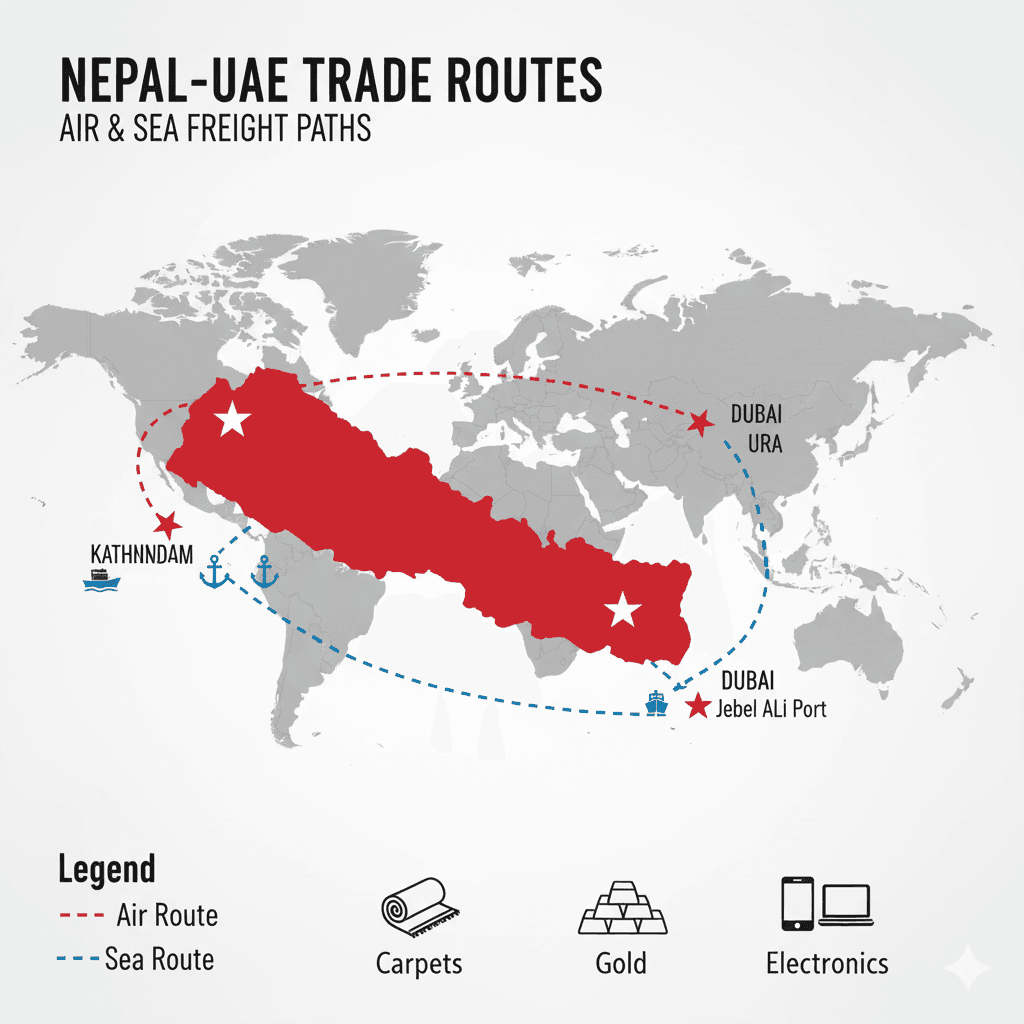
What Typically Ships Between Nepal and the UAE
From Nepal to the UAE, exports are light but growing. Carpets, textiles, blankets, pesticides, and foodstuffs like cereal and grain preparations make up much of the volume. These are often high‑value per kilo and suited to air freight or carefully planned sea LCL shipments.
From the UAE to Nepal, the picture flips: gold dominates in value terms, alongside electronics such as computers, copper wire, and other industrial inputs. Gold shipments are highly regulated and use secure, specialized air freight channels, while computers and machinery can move via air or sea depending on urgency and order size.

Shipping From Nepal to the UAE: Modes, Transit Time, and When to Use Them
Air Freight Nepal → UAE
Air freight is the workhorse for most commercial shipments from Nepal to Dubai, Abu Dhabi, Sharjah, and other UAE hubs.
- Transit time: Usually 2–5 days airport‑to‑airport, and about 3–7 days door‑to‑door depending on collection and final delivery within the UAE.
- Best for: Carpets, handicrafts, garments, samples, high‑value parcels, and urgent commercial cargo.
- Benefits: Fast customs clearance in the UAE, multiple daily flights via regional hubs, and strong security for high‑value goods.
Sea and Multimodal Nepal → UAE
Because Nepal is landlocked, sea freight first moves by road or rail to an Indian port such as Kolkata, then by container ship to Jebel Ali or other UAE ports.
- Transit time: Roughly 4–6 weeks door‑to‑door, depending on schedules and inland handling.
- Best for: Larger or heavier shipments where cost per unit is more important than speed.
- Benefits: Lower per‑kilo cost, particularly for bulk orders of textiles, non‑urgent household goods, or industrial inputs.
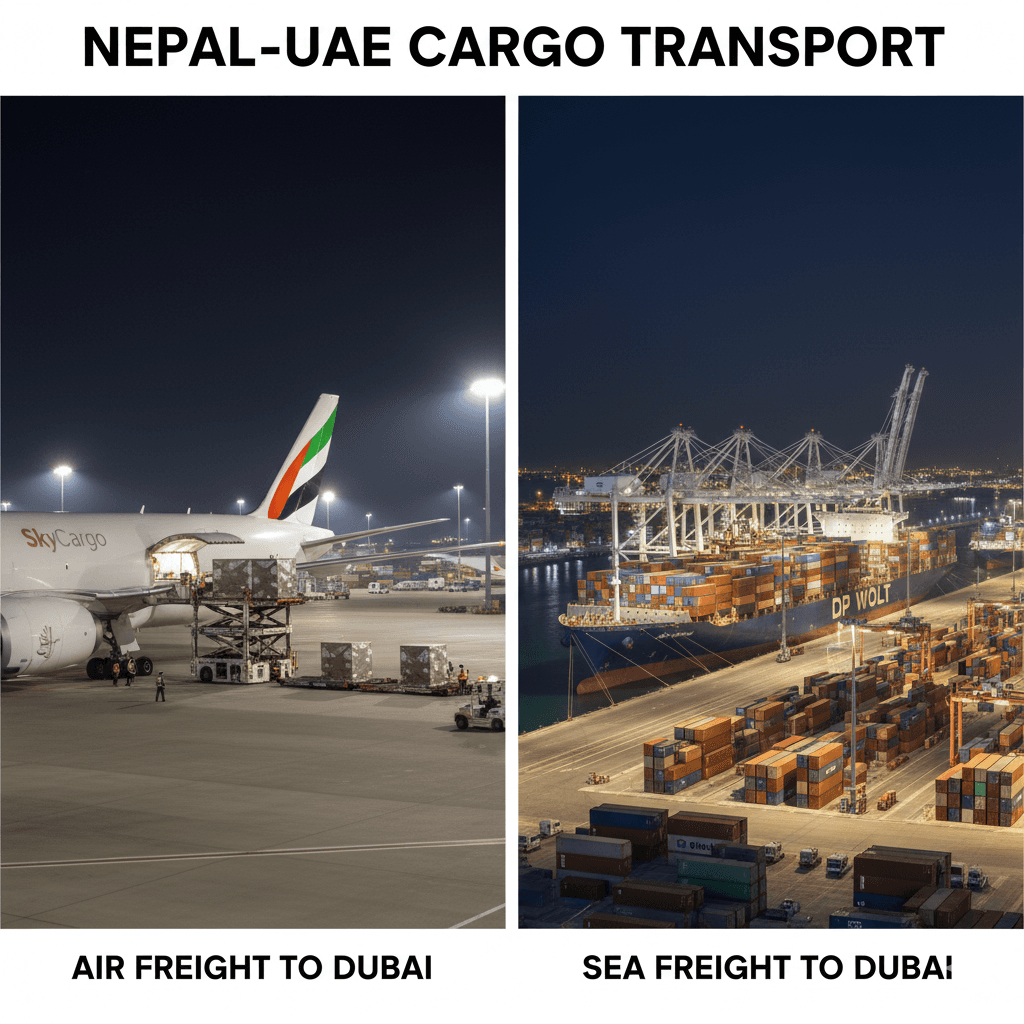
Shipping From the UAE to Nepal: Serving a High‑Value Import Market
Air Freight UAE → Nepal
Air freight is dominant for UAE to Nepal due to the high value and sensitivity of goods.
- Transit time: Often 2–4 days airport‑to‑airport (Dubai/Abu Dhabi to Kathmandu), and around 3–6 days including door‑to‑door movements.
- Best for: Gold and precious metals under strict legal channels, electronics, computers, spare parts, pharmaceuticals, and premium consumer goods.
- Benefits: Reduced risk of theft or damage, controlled chain of custody, and fast turnaround for time‑critical goods.
Sea Freight UAE → Nepal (via India)
For bulkier, less time‑sensitive goods like construction materials or some machinery shipments can move by sea from UAE ports to Indian ports, then inland to Nepal by rail or road.
- Transit time: Approximately 4–8 weeks door‑to‑door, depending on routing and customs at Indian and Nepali borders.
- Best for: Large, heavy cargo where air is uneconomical and where schedules allow for longer lead times.
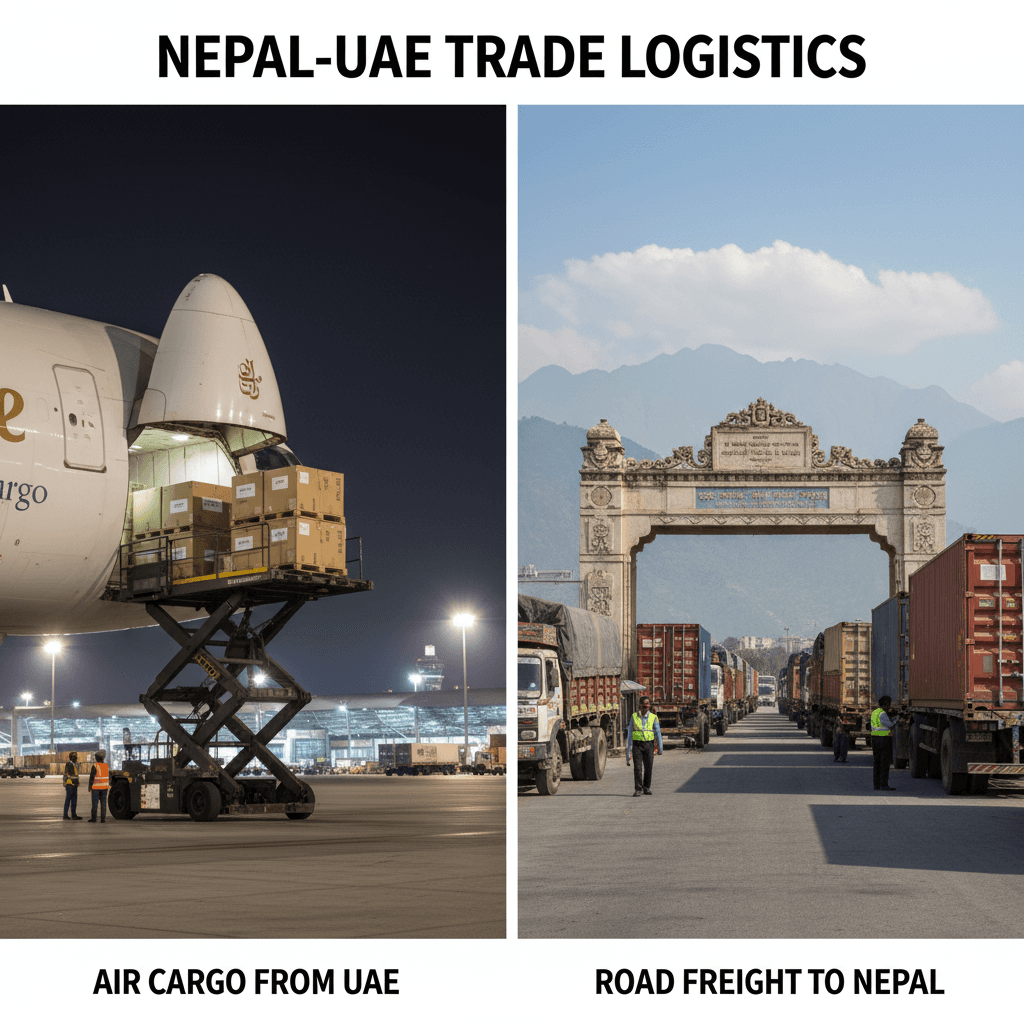
Key Shipping Challenges on the Nepal–UAE Lane
Whether you are shipping from Nepal to the UAE or from the UAE to Nepal, the main challenges are similar:
- Landlocked complexity on the Nepal side: Every sea shipment must cross at least one extra border and be coordinated with inland transport, adding time and paperwork.
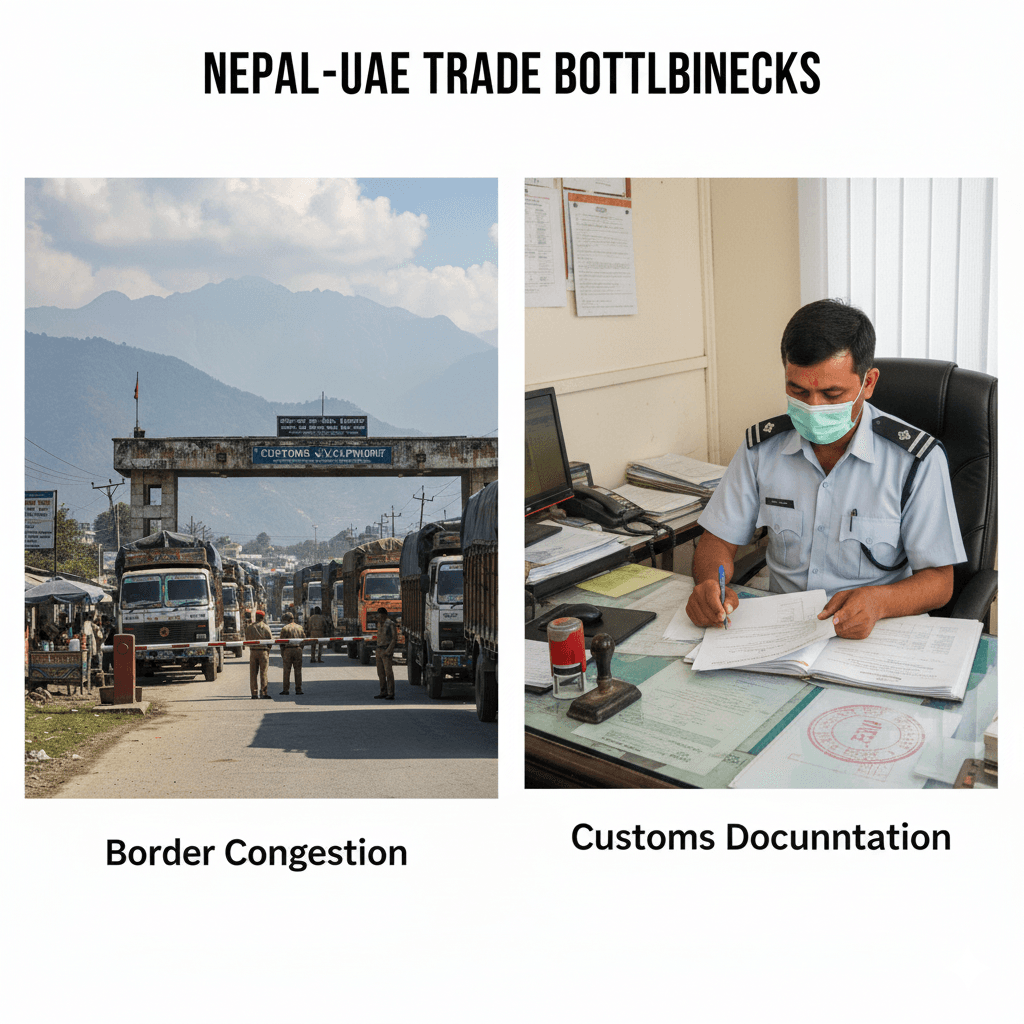
- Customs rules and valuation: Gold, electronics, and high‑value goods face strict scrutiny; incorrect HS codes or under‑valuation can trigger inspections, fines, or delays.
- Capacity and seasonality: Peak seasons around festivals, tourism waves, and gold demand can tighten space on air and sea routes and push rates higher.
- Documentation quality: Missing or inconsistent invoices, origin certificates, or packing lists are a regular cause of holds and storage charges.
These challenges make it risky to treat the Nepal–UAE lane as just another point‑and‑click shipment. A knowledgeable forwarder who understands both markets regulations, carriers, and trade patterns can dramatically cut avoidable cost and risk.
How a Professional Forwarder Adds Value on Nepal–UAE Shipping
For SEO and for real‑world usefulness, highlight exactly how a freight forwarder on this corridor helps:
- Route design: Choosing optimal combinations of air, sea, and road for cost and speed, including via Indian or Gulf hubs.
- Customs preparation: Getting HS classification, valuation, and documentation right before cargo moves, especially for gold, textiles, and electronics.
- Consolidation: Combining multiple small shipments into larger units to reduce per‑kilo rates and handling fees.
- Transparent pricing: Explaining what is included (freight, handling, clearance) and where extra charges could arise (storage, demurrage, special handling).
- End‑to‑end tracking: Providing clear visibility and updates from pickup to delivery so shippers can keep buyers informed and plan cash flow.
Putting It All Together: How to Choose Your Nepal–UAE Shipping Strategy
When planning shipping between Nepal and the UAE, ask four questions:
How urgent is the delivery?
If you must deliver within a week, air freight is your primary option.
How valuable and fragile is the cargo?
High‑value or sensitive goods justify tighter security and faster modes.
What is the shipment size?
Small, high‑value items travel best by air; large, heavy loads often belong on sea + inland combinations.
How complex are the regulations?
If the cargo is heavily regulated like gold, chemicals, or food products work with a forwarder who has experience on this lane and can guide documentation and compliance.
Aligning these answers with an experienced Nepal–UAE freight partner lets you turn a challenging corridor into a predictable, repeatable part of your business. Whether you are a UAE buyer sourcing unique products from Nepal or a Nepali exporter reaching high‑value Gulf markets, smart shipping on this route can unlock new customers without overwhelming your operations.
Related posts
1970-01-01
Sea + Air Freight: How SeaSky Helps Businesses Ship Smarter
2026-10-12
B2B Logistics in Nepal: Cross-Border Delivery for Businesses
2026-10-12
France to Nepal Shipping Guide: Air Freight, Sea Freight, Customs and Documents
2026-10-08