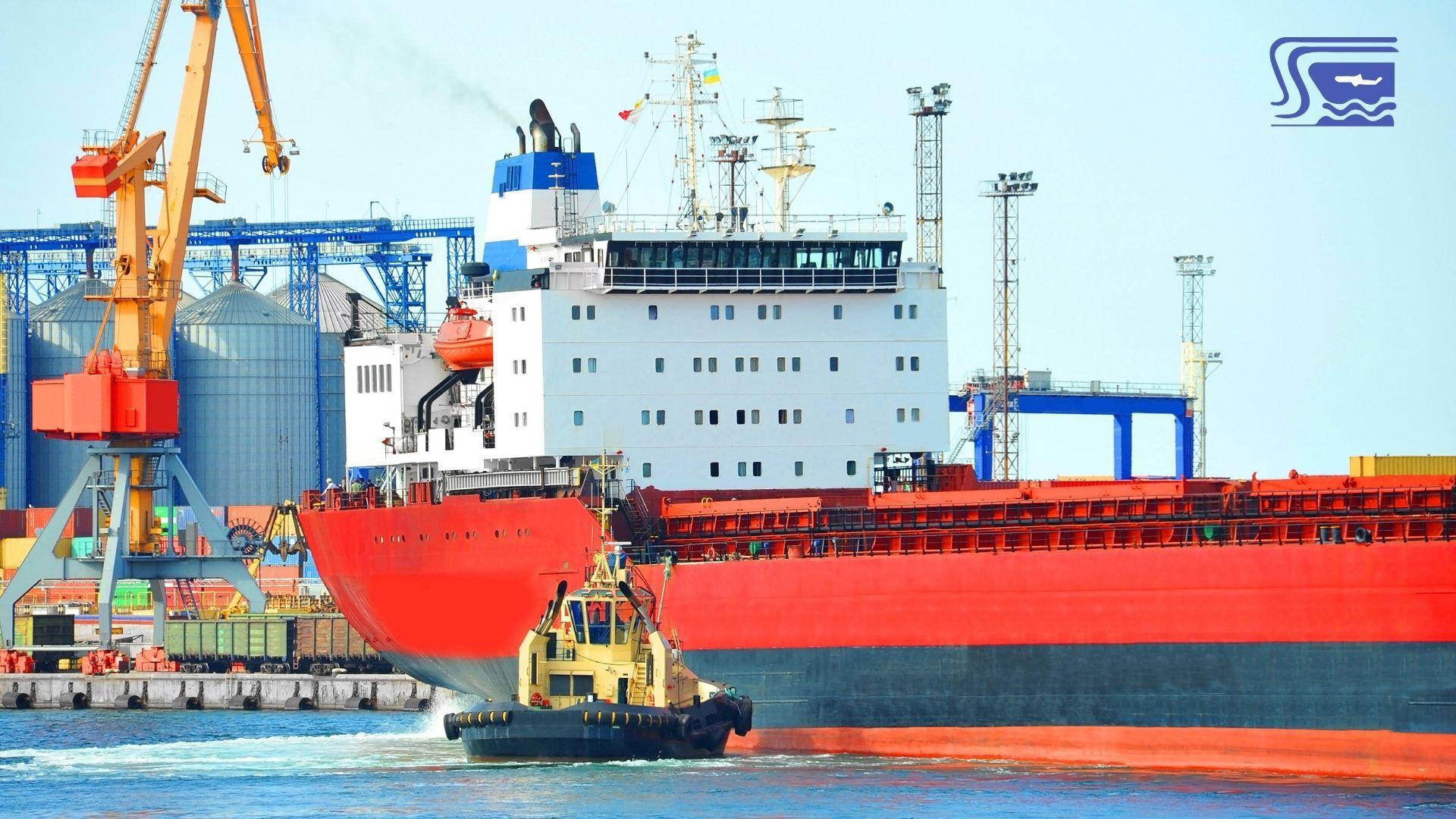
What Is Bulk Cargo Shipping?
Bulk cargo shipping is one of the quiet engines behind trade in and out of landlocked Nepal and Bhutan. Sea Sky Cargo Service (SSCS) has built a specialty around moving large volumes safely by road and rail from Indian ports, while protecting both the quality and quantity of the cargo from ship’s hold to inland destination. SSCS also extends this expertise across other South Asian corridors, giving shippers one point of control for bulk movements in the region.
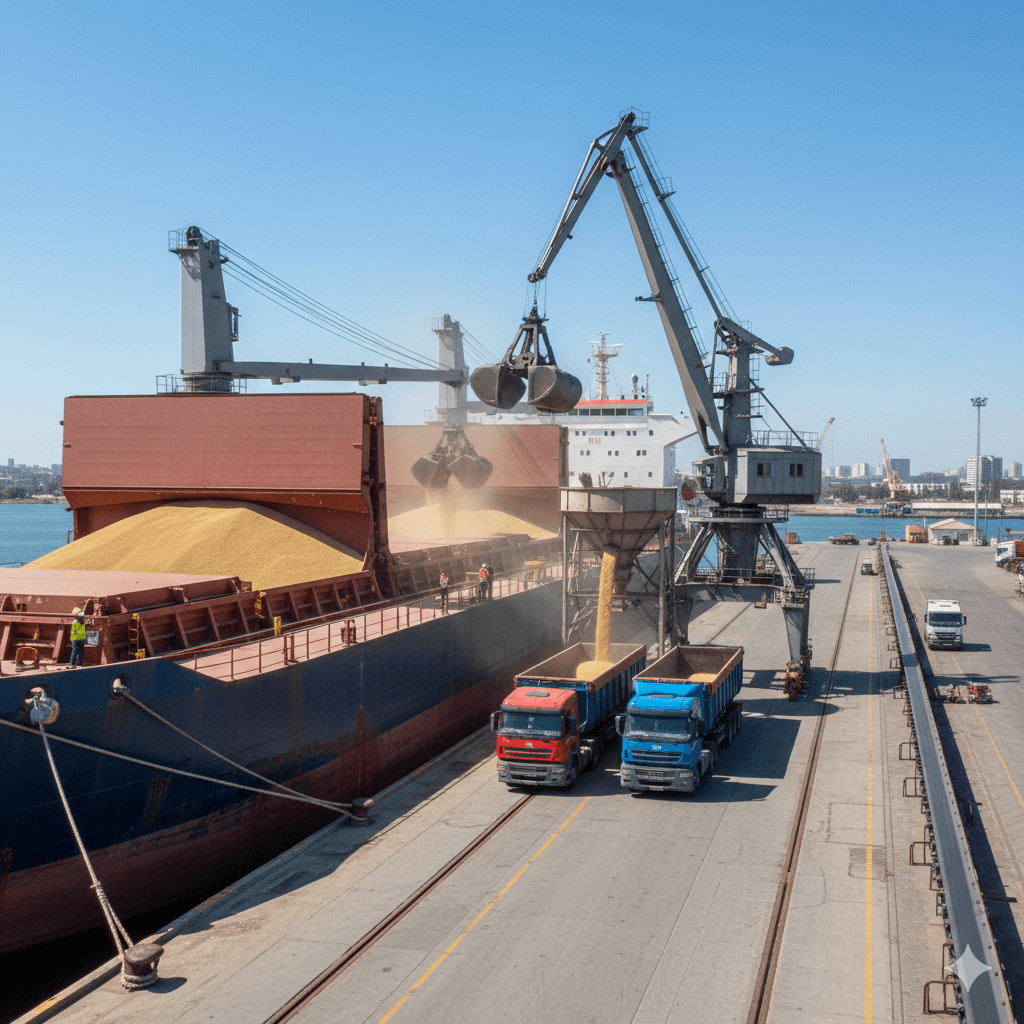
Bulk Cargo Shipping With SSCS
Bulk cargo means goods moved in big, loose quantities, usually without individual packaging poured, dropped, or pumped straight into a ship, rail wagon, or tanker truck. Typical examples include grains, fertilizers, ores, coal, petroleum products, vegetable oils, and industrial liquids. In the case of Nepal and Bhutan, SSCS organizes bulk movements primarily through Kolkata and Haldia ports in India, which act as the sea gateways for these landlocked countries.
From there, SSCS arranges transport to:
- Nepal – by a combination of road and rail from Kolkata/Haldia up to inland depots and final receivers.
- Bhutan – by road from Indian ports to the Bhutan border and onward to interior destinations via Bhutanese trucks.
Because goods are loaded and discharged in such large volumes, SSCS focuses on tight control of loading procedures, weight reconciliation, sealing, and handling so that the quality (no contamination, no damage) and the quantity (no unexplained losses) remain within agreed tolerances.
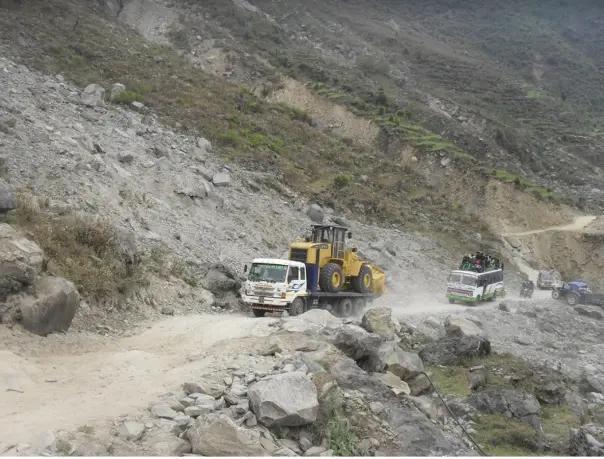
Road and Rail Solutions for Landlocked Nepal and Bhutan
Due to regulatory and transit rules, Nepalese and Bhutanese trucks generally cannot operate on Indian roads, so SSCS builds its bulk solutions around a carefully selected fleet of Indian carriers combined with local vehicles on each side of the border. SSCS:
- Maintains its own roster of trusted Indian bulk haulage partners for the Kolkata/Haldia–Nepal/Bhutan corridor.
- Coordinates rail wagons where appropriate for heavy flows into Nepal (for example, fertilizers or grains), then arranges final‑mile delivery by truck.
- Oversees cross‑border trans‑shipment at key gateways: Indian trucks unload or transfer at the Nepal or Bhutan border, and local trucks complete delivery to inland mills, factories, or storage sites.
This design keeps shipments compliant with transit rules while still giving shippers a single coordinator and unified reporting instead of dealing with separate Indian, Nepalese, and Bhutanese carriers.
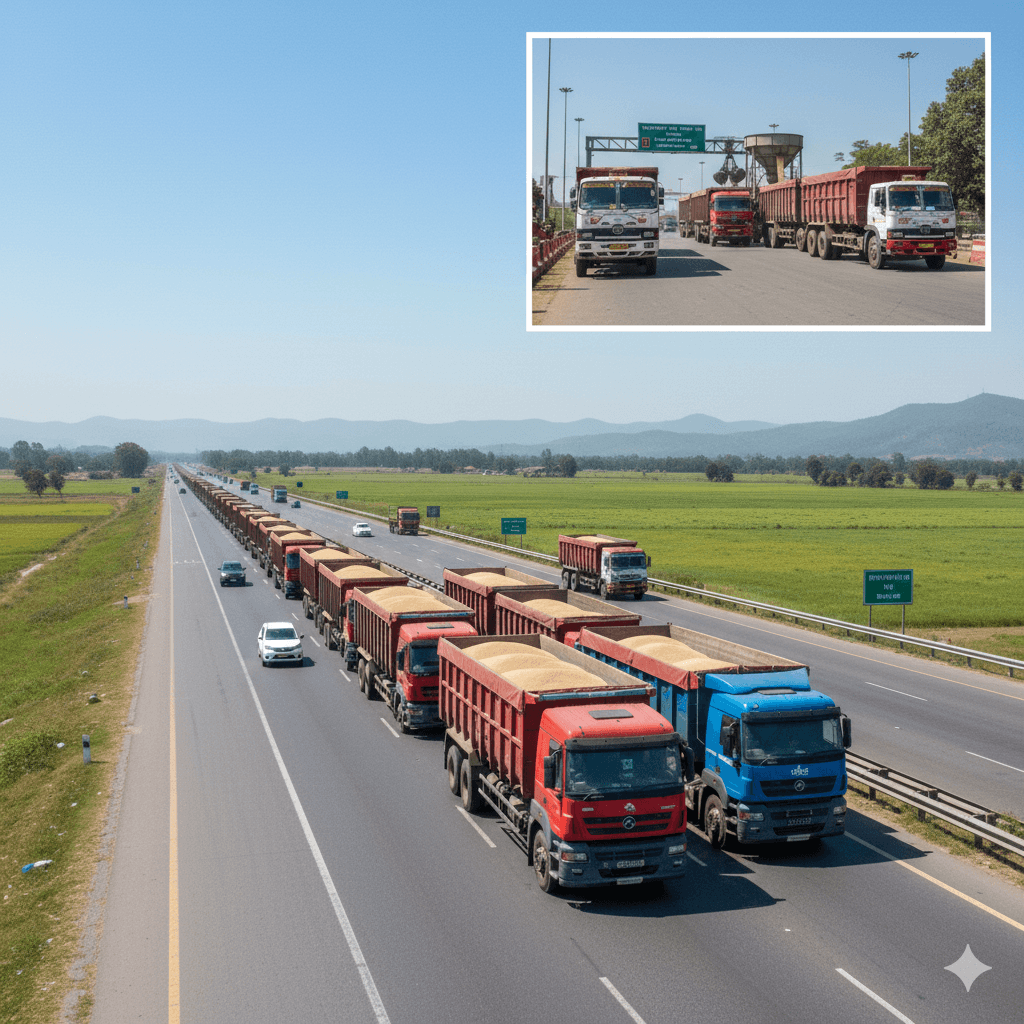
Full Agency Service: From Ship’s Hold to Final Silo
SSCS operates as a full bulk agency, not just a transporter. That means the company manages the complete chain from the arrival of the vessel at Kolkata/Haldia all the way to the consignee’s silo, tank farm, or warehouse. Typical services include:
- Pre‑arrival planning – cargo nominations, berth and discharge planning with the port, and coordination with receivers.
- Loading and discharging supervision – overseeing ship unloaders, grab cranes, conveyors, hoppers, or pipeline systems to make sure cargo is handled gently and efficiently.
- Sampling and quality checks – arranging laboratory testing, temperature checks, moisture readings, and contamination controls as required by the commodity.
- Weighbridge control and quantity reconciliation – matching ship figures, port weighbridge data, wagon/truck weights, and final receipts to minimize disputes.
- Cargo distribution planning – allocating tonnage across multiple inland customers, plants, or storage locations in Nepal and Bhutan.
- Documentation and customs – coordinating bills of lading, cargo manifests, certificates of quality and origin, customs entries, and other regulatory paperwork.
Because SSCS also works across other South Asian markets, the same template can be extended to movements that start or end outside Nepal and Bhutan, giving regional traders a single set of processes instead of reinventing them country by country.
Dry Bulk vs Liquid Bulk: How SSCS Handles Each
Bulk cargo falls broadly into dry bulk and liquid bulk, and each requires a different technical and operational approach.
Dry Bulk
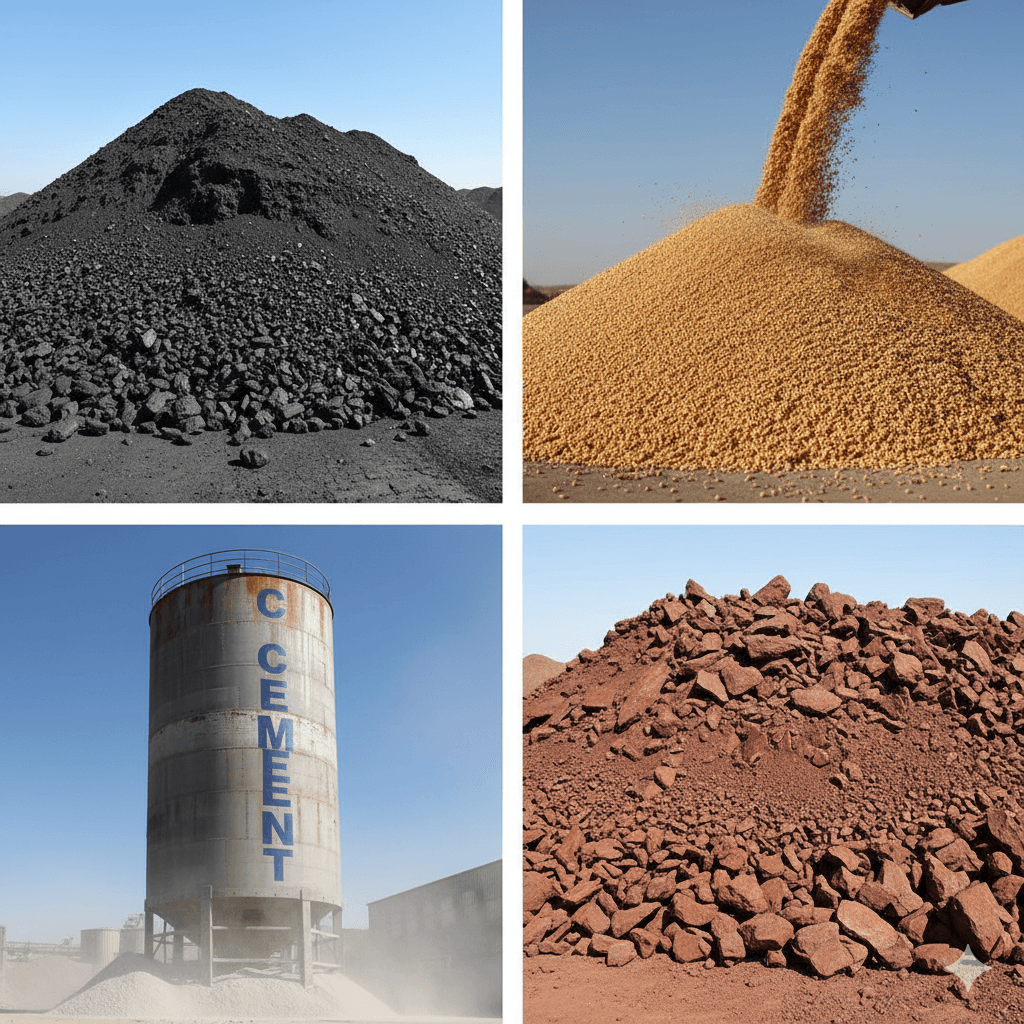
Dry bulk is solid cargo loaded loose into a hold, wagon, or truck. Examples include:
- Bulk minerals – bauxite, sand, gravel, limestone, salt.
- Cement and clinker – for construction and infrastructure projects.
- Chemicals in solid form – fertilizers, plastic pellets and granules, resin powder, synthetic fibers.
- Energy commodities – coal and coke for power or industry.
- Agricultural products – animal feed, pellets, flour, sugar, seeds, starches.
- Grains – wheat, maize, rice, barley, oats, rye, sorghum, soybeans.
- Metals and ores – ferrous and non‑ferrous ores, ferroalloys, pig iron, scrap metal, taconite pellets.
- Wood‑based products – wood chips and similar biomass cargoes.
SSCS’s role in dry bulk is to:
- Choose the right combination of covered and open transport so products are protected from rain, dust, and contamination.
- Plan safe loading, trimming, and securing of cargo in rail wagons and trucks to prevent shifting and loss.
- Minimize spillage at every transfer point (ship–hopper, hopper–truck, truck–silo) with the correct equipment and procedures.
Liquid Bulk
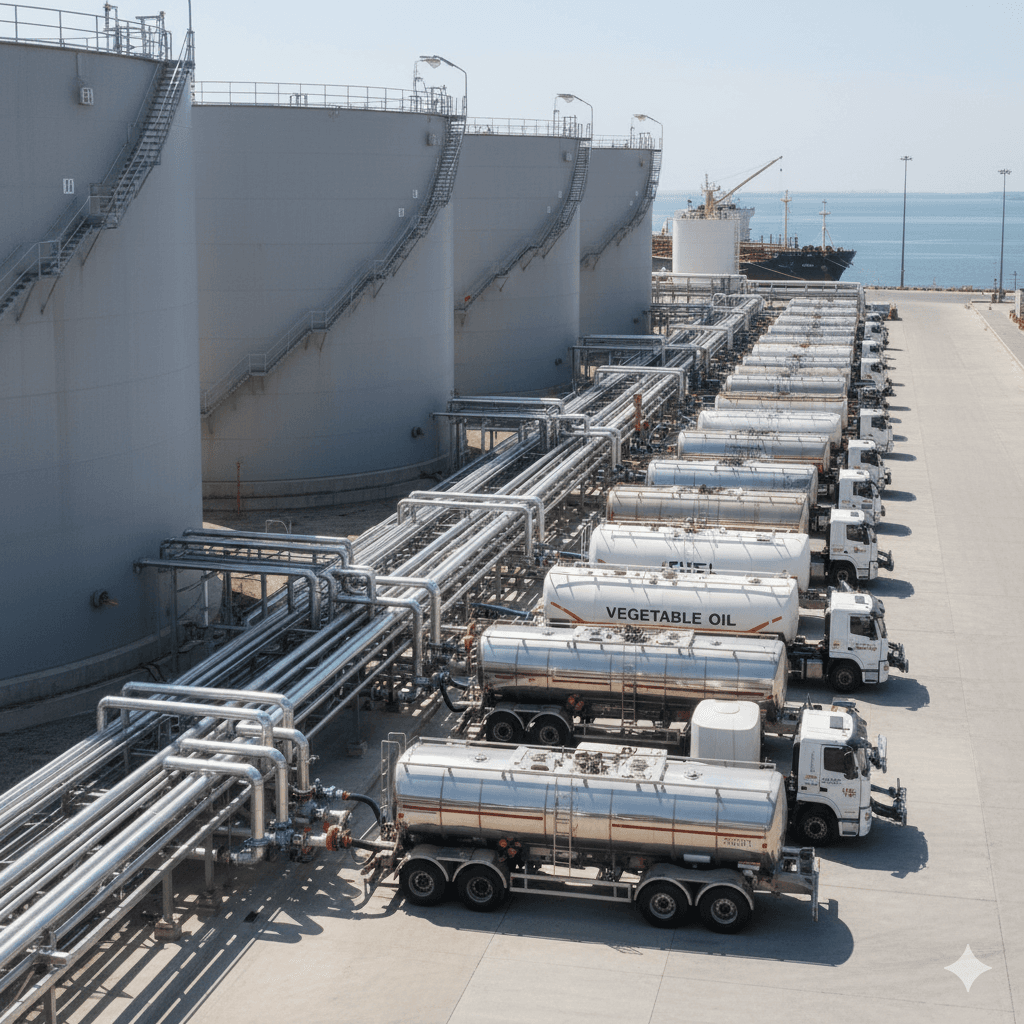
Liquid bulk is carried in sealed tanks on ships, barges, railcars, or tanker trucks, with all transfer operations handled by pumps and pipelines. Typical commodities include:
- Petroleum products and gasoline.
- Liquefied gases like LNG (liquefied natural gas).
- Liquid chemicals and hazardous liquids.
- Vegetable oils, cooking oils, and edible fats.
- Fruit juices and food‑grade liquids.
- Latex and rubber in liquid form.
- Industrial liquids such as liquid nitrogen or other cryogenic products.
For liquids, SSCS makes sure:
- The correct tankers and lines are used (food‑grade vs chemical, stainless vs coated, insulated or not).
- Pumping rates and temperatures are controlled to protect product integrity.
- Tank cleaning, sealing, and sampling are properly documented to avoid disputes between shipper and receiver.
Whether solid or liquid, the overriding objective remains the same: maintain quality and quantity from ship to inland destination, with transparent measurement at every stage.
Break‑Bulk and How It Fits Into the Picture
While bulk cargo usually moves loose, many heavy or awkwardly‑shaped commodities still move as break‑bulk—individual large units loaded piece by piece, often on geared or gearless ships.
- Gearless vessels do not have their own cranes, so they depend on port equipment. These ships must berth at terminals with sufficient lifting capacity.
- Geared vessels carry their own cranes or derricks, letting them work at more basic berths that lack shore‑side heavy‑lift gear.
Freight for break‑bulk is normally calculated per Freight Ton/Revenue Ton based on the greater of weight in metric tons (MT) or volume in cubic meters (CBM).
SSCS supports clients whose supply chains mix bulk and break‑bulk by:
- Coordinating discharge of bagged or unitized bulk (for example, big‑bags of minerals or fertilizers) alongside loose bulk flows.
- Planning heavy‑lift operations for machinery or steel that share the same ship or corridor as bulk imports.
- Choosing between geared and gearless options based on port infrastructure, cargo weight, and cost.
This flexibility is particularly useful for large projects in Nepal and Bhutan that need both raw materials (bulk) and specialized equipment (break‑bulk) arriving through the same ports and corridors.
Why Shippers Choose Sea Sky for Bulk Movements
Bulk shipping is a volume game, but it is also a trust game. A small percentage loss or quality issue on a large tonnage quickly becomes a serious cost and poor communication makes it even worse. Sea Sky positions its bulk service around a few clear promises:
- Quality and quantity protection – strong controls at loading, discharge, and each land transfer point.
- Reliable South Asian network – experienced partners and associates across India, Nepal, Bhutan, and neighboring markets, all coordinated under a single agency.
- Transparent, timely reporting – shipment status, weight reconciliation, and incident reporting delivered clearly instead of vague or misleading updates.
- Complete documentation and customs handling – from bills of lading and manifests to port papers and customs declarations, handled end‑to‑end so clients can focus on trading rather than chasing forms.
For traders, manufacturers, mills, and project owners who depend on steady flows of raw materials or fuels, Sea Sky’s bulk cargo service offers a way to turn complex multi‑country movements into a predictable, well‑documented routine whether the cargo is a trainload of fertilizer for Nepal, edible oils for Bhutan, or any other dry or liquid bulk crossing South Asia’s gateways.
Related posts
1970-01-01
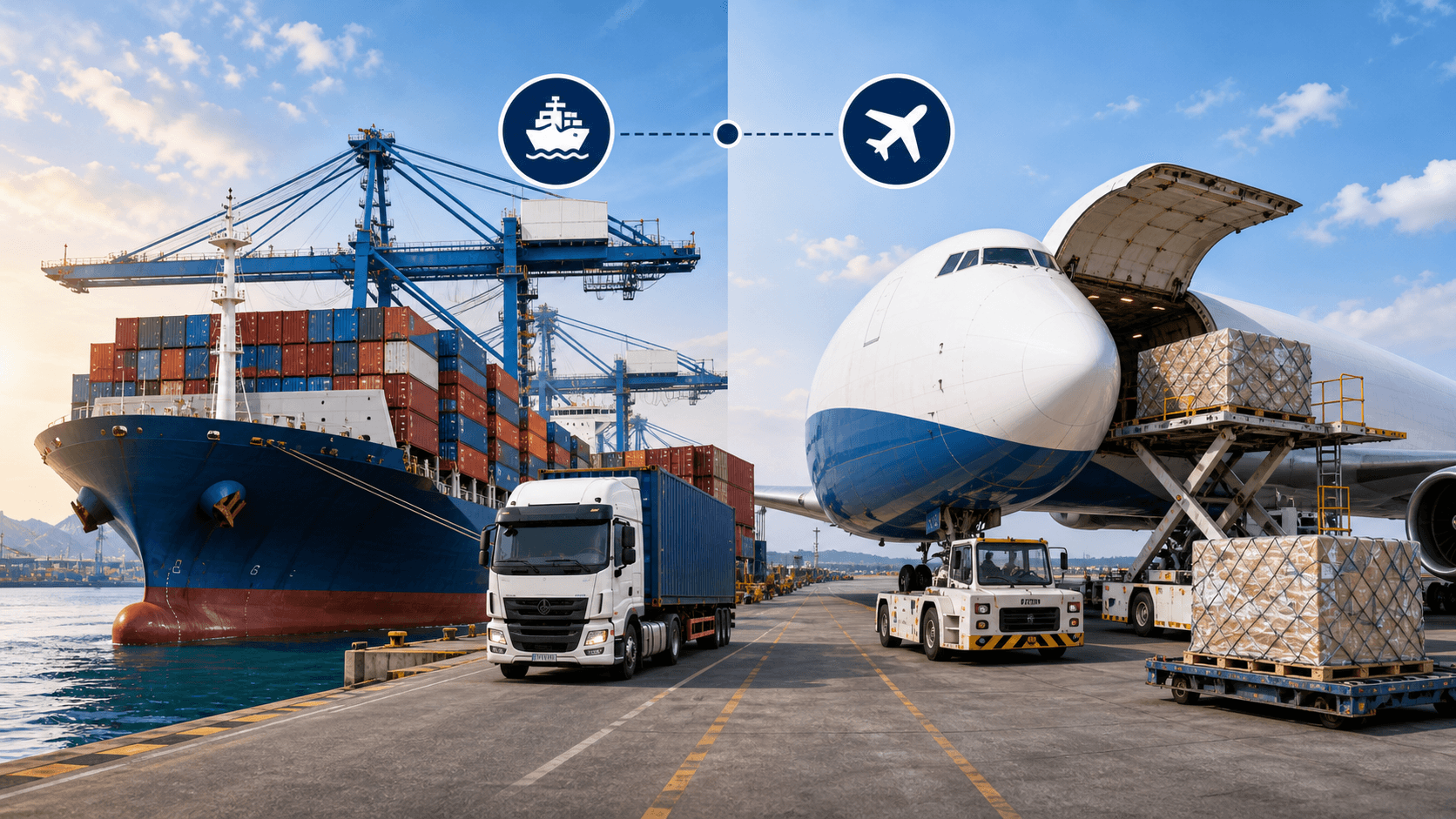
Sea + Air Freight: How SeaSky Helps Businesses Ship Smarter

2026-10-12
France to Nepal Shipping Guide: Air Freight, Sea Freight, Customs and Documents

2026-10-08
Italy to Nepal Shipping Guide 2026: Freight, Customs and Documents
2026-10-07