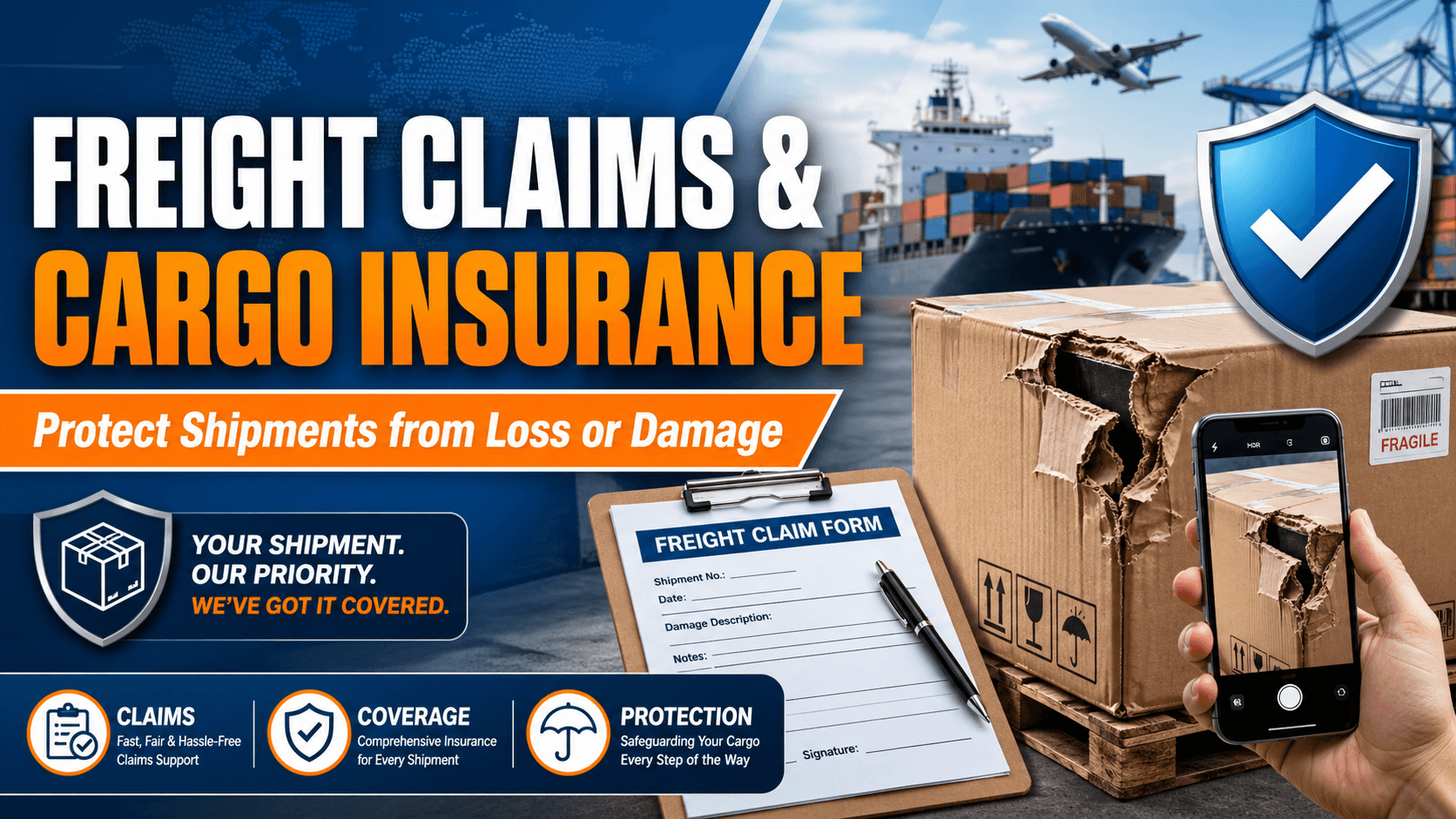
Protecting Your Shipments from Loss or Damage
Cargo can be damaged, lost, stolen, delayed, or misdelivered at almost any point in transit, which is why freight claims and cargo insurance matter so much. For hesitant new clients, the key question is not whether risk exists, but how to recover quickly and prove the loss properly when something goes wrong.
Cargo insurance does not prevent accidents, but it can protect your financial exposure when goods are physically lost or damaged during transport. A good freight partner should also help you understand what is covered, what is excluded, and what evidence you need if a claim becomes necessary.
What Cargo Insurance Covers
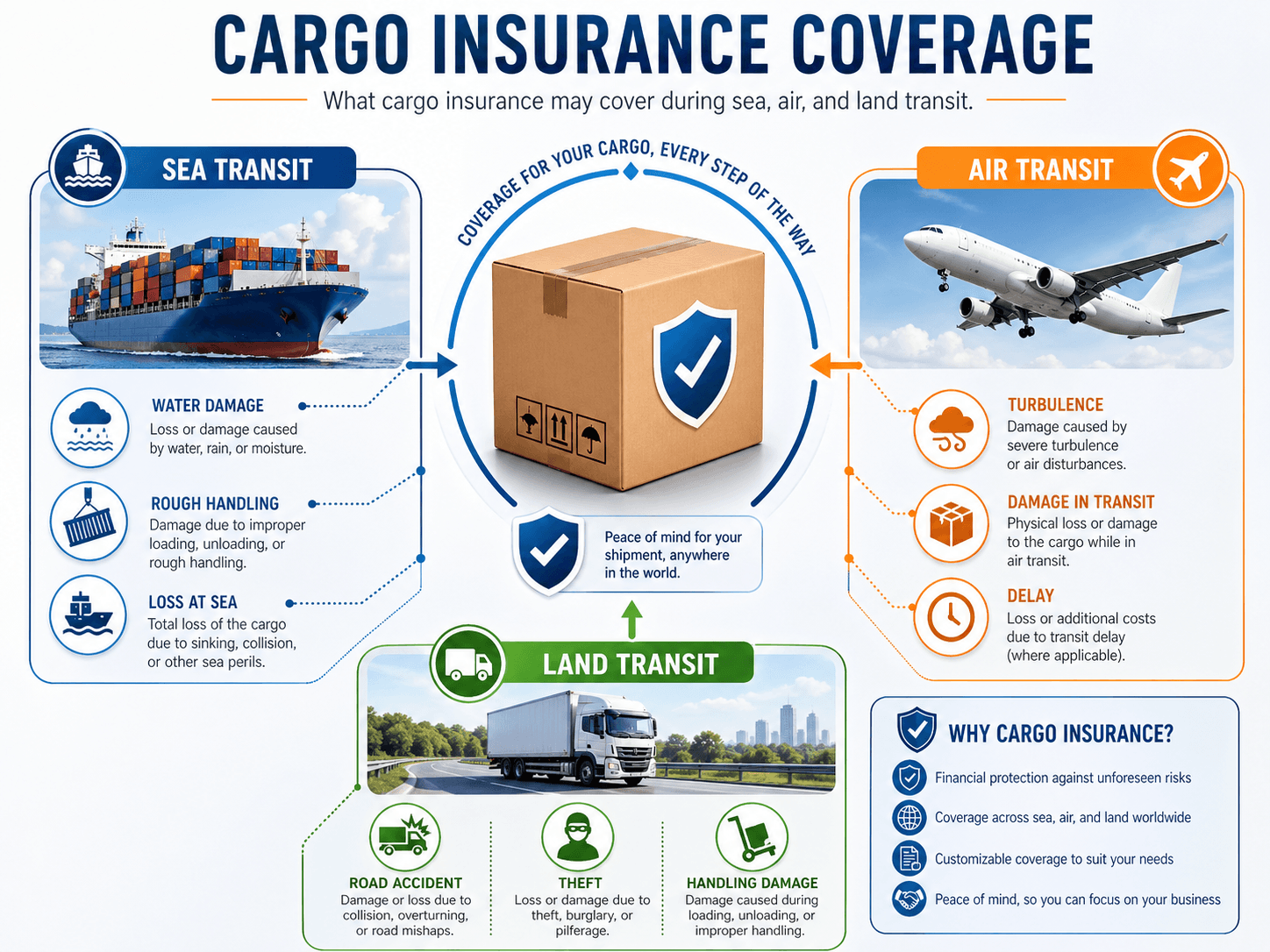
Cargo insurance generally covers physical loss or damage to goods while they are in transit by sea, land, or air. Typical cover can include risks like collision, overturning, fire, theft, pilferage, unloading damage, and other transport-related perils depending on the policy type.
Not every loss is covered. Common exclusions include poor packaging, ordinary wear and tear, delay-only losses, inherent product defects, and situations where the shipper did not follow required handling or documentation rules. That is why insurance must be paired with good packing and correct paperwork.
When Claims Apply
A freight claim usually applies when the cargo arrives damaged, partially missing, completely missing, or visibly tampered with during transit. In some cases, a claim may also arise if there is major handling damage during loading, unloading, or transshipment.
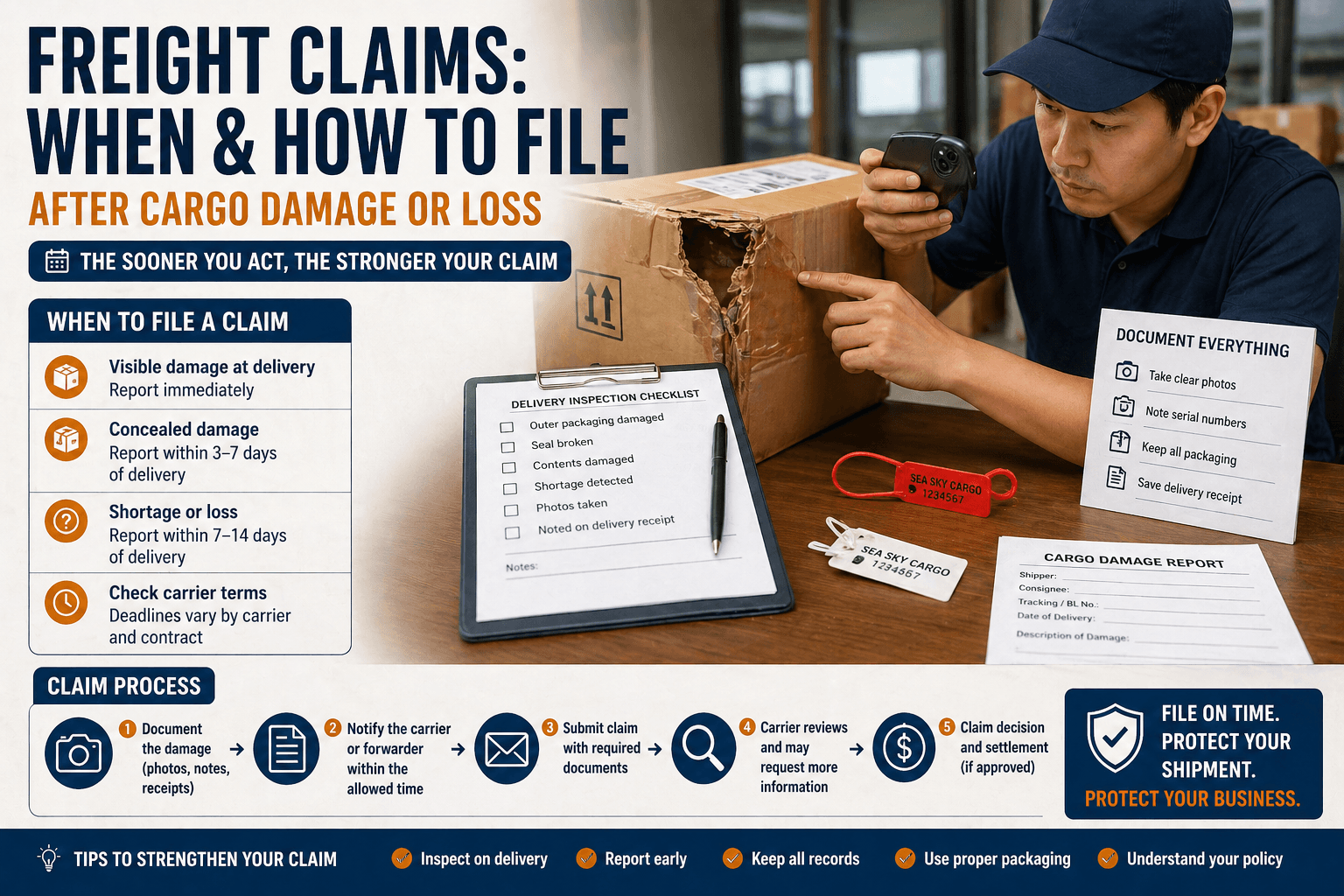
The claim process works best when the damage is discovered immediately at delivery. If the consignee accepts goods without checking them, it can become harder to prove when the loss occurred and who is responsible.
How the Claims Process Works
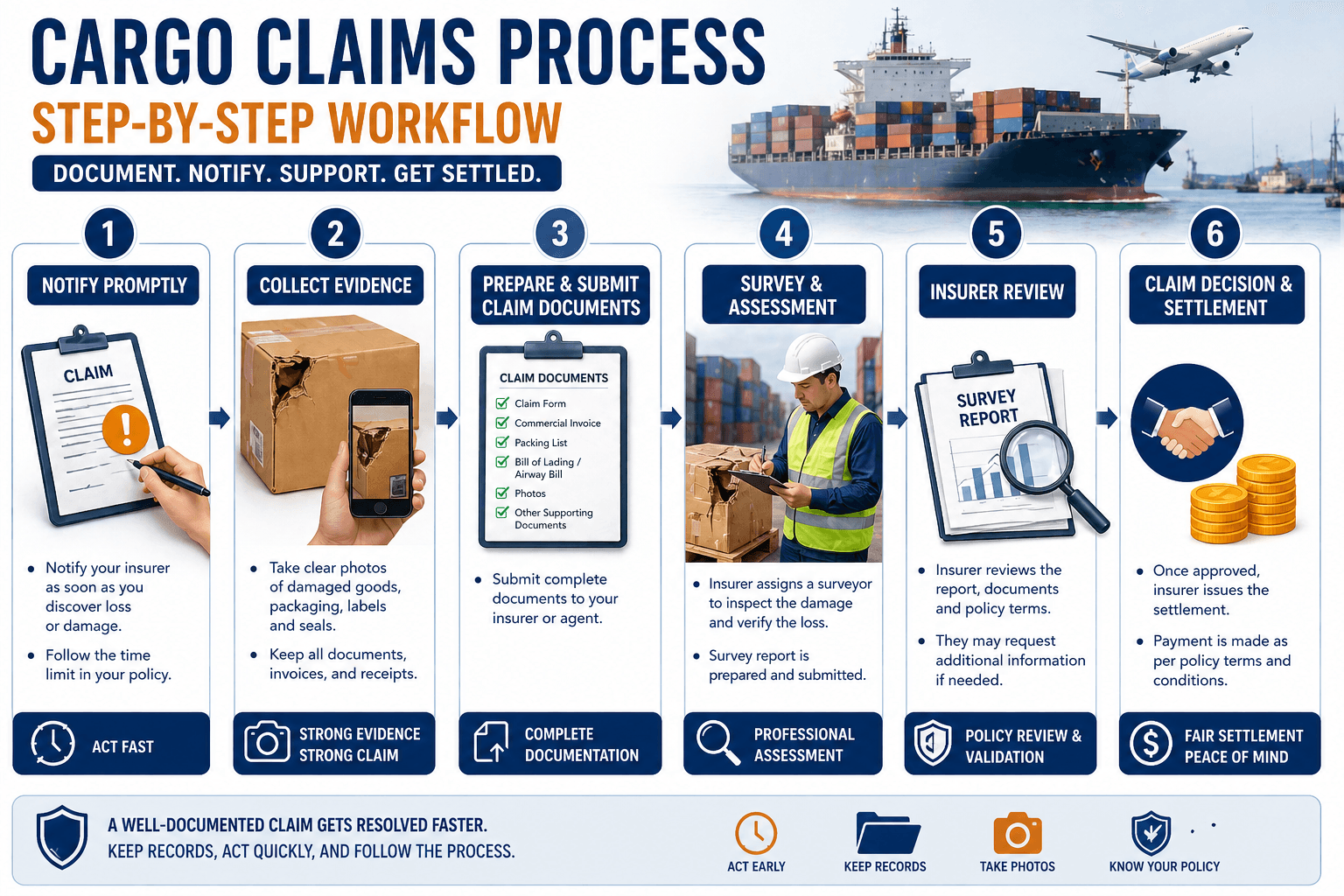
The first step is to notify the carrier, freight forwarder, or insurer as soon as the issue is discovered. Most claim guidance recommends acting quickly, securing the cargo, and keeping the damaged goods in their post-incident condition whenever possible.
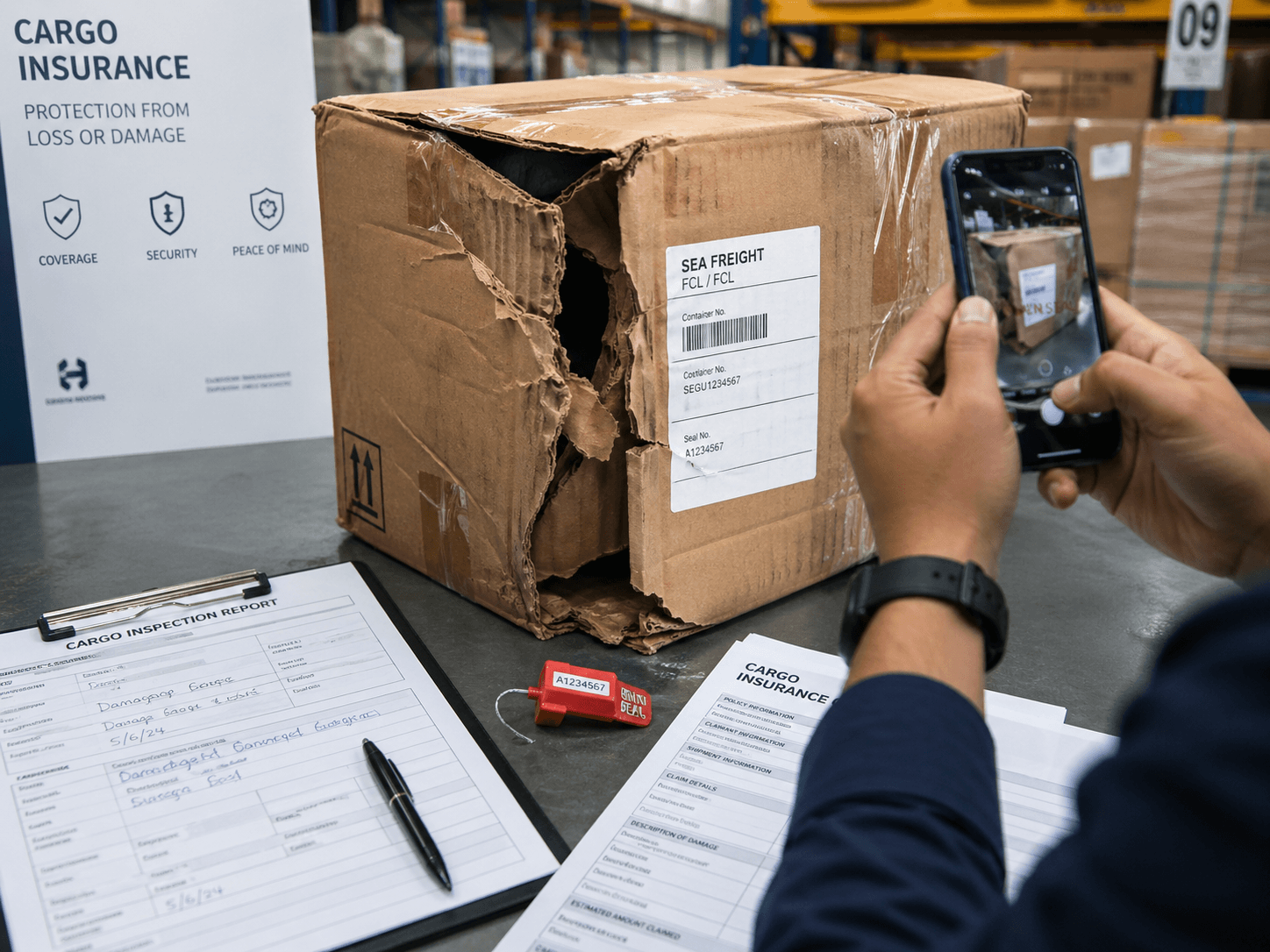
Then you gather evidence. That usually includes photos of the damage, packing condition, container or seal details, delivery notes, invoices, packing lists, and any surveyor or inspection report if one is required. The better the evidence, the smoother the claim review is likely to be.
Documents You Need
A strong claim file usually includes:
- Commercial invoice.
- Packing list.
- Transport document or bill of lading / airway bill.
- Delivery receipt.
- Photos of the damage.
- Seal number and container condition if relevant.
- Surveyor report or incident note where applicable.
Some policies or carriers may ask for additional proof depending on the mode of transport and the severity of the loss. Keeping these records organized from the start can save days or weeks later if you need to claim.
Common Claim Scenarios
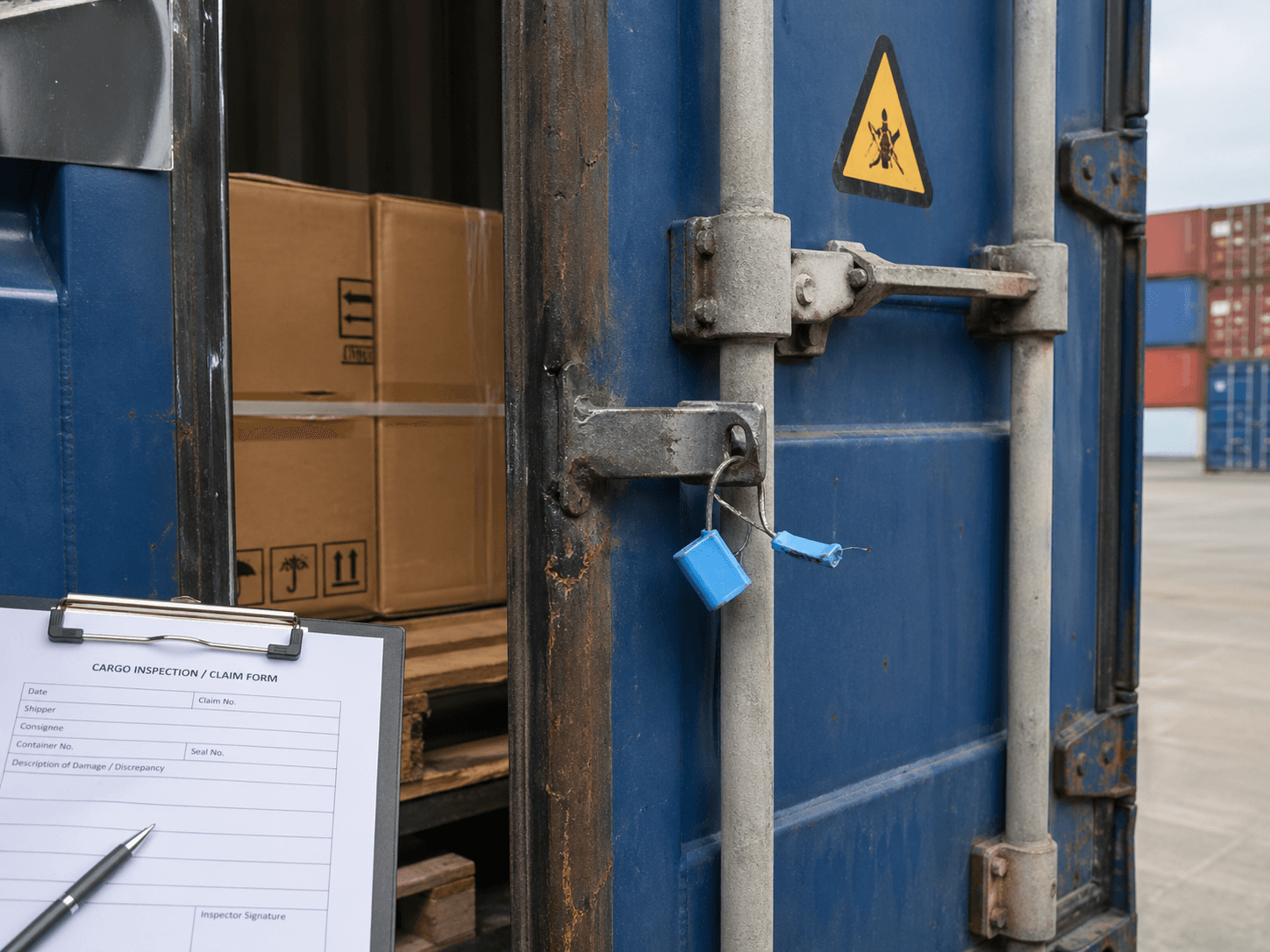
One common scenario is damage during loading or unloading, especially for fragile or heavy cargo. Another is container-related damage where the cargo arrives with a broken seal, water ingress, or clear signs of handling problems.
Theft and pilferage are also common claim triggers, especially when shipments move through multiple handoff points or warehouse stops. In some cases, the cargo itself may be fine, but the packaging was inadequate, which can weaken the claim if the insurer finds the shipper did not prepare properly.
Why Claims Get Denied
Claims are often denied or reduced because the shipper filed too late, failed to preserve evidence, or could not prove the cargo was properly packed. Missing documents, inconsistent descriptions, or incorrect cargo values can also create problems during settlement.
Another issue is misunderstanding what the policy actually covers. Some policies respond to physical loss but not to delay-only losses or business interruption, so shippers should not assume every shipping problem is automatically insurable.
Sea Sky’s Approach
Sea Sky’s value is in helping clients reduce avoidable risk before shipment and stay organized if something goes wrong. For hesitant new clients, this matters because claims are much easier to manage when cargo is packed properly, documents are correct, and the shipment is monitored closely from origin to destination.
A practical Sea Sky process should include pre-shipment guidance, cargo handling coordination, and help assembling the evidence needed for a claim if damage or loss occurs. That combination gives new shippers more confidence because they are not left alone after the cargo leaves the warehouse.
How to Protect Your Shipments
The best way to avoid claim problems is to prevent the loss from the beginning. Use strong packaging, confirm the cargo value, check policy terms, and make sure the shipment details match your invoice and transport documents.
It also helps to choose the right level of cover for the cargo type and route. High-value or fragile goods may need broader protection than basic transit cover, especially if they are moving through multiple handoffs or challenging corridors.
Conclusion
Freight claims and cargo insurance are not just paperwork they are part of protecting your business cash flow when shipments are exposed to real-world transit risk. If you understand what is covered, what is excluded, and how to document a loss, you can recover faster and with fewer surprises.
Sea Sky helps new and experienced shippers reduce risk, prepare the right documents, and respond properly if a claim becomes necessary. If you want safer shipping and clearer protection for your cargo, talk to Sea Sky’s logistics team for a cargo risk assessment or request a quote with insurance guidance today.
Related posts
1970-01-01
Sea + Air Freight: How SeaSky Helps Businesses Ship Smarter

2026-10-15
Last-Mile Delivery in Nepal: How Businesses Can Reduce Delays and Delivery Costs
2026-10-13
Last-Mile Logistics in Nepal: Challenges, Costs and Solutions

2026-10-12