New Tariff on All Countries
Donald Trump’s new 10% tariff on all countries sounds like something that only Washington and Wall Street should worry about. But if you’re a Nepali exporter or small business owner, this move reaches all the way to your loom in Bhaktapur, your factory in Biratnagar, or your warehouse in Patan.
Below is a fact‑based breakdown of what’s actually been announced, and what it could mean for Nepal.
What exactly has Trump done?
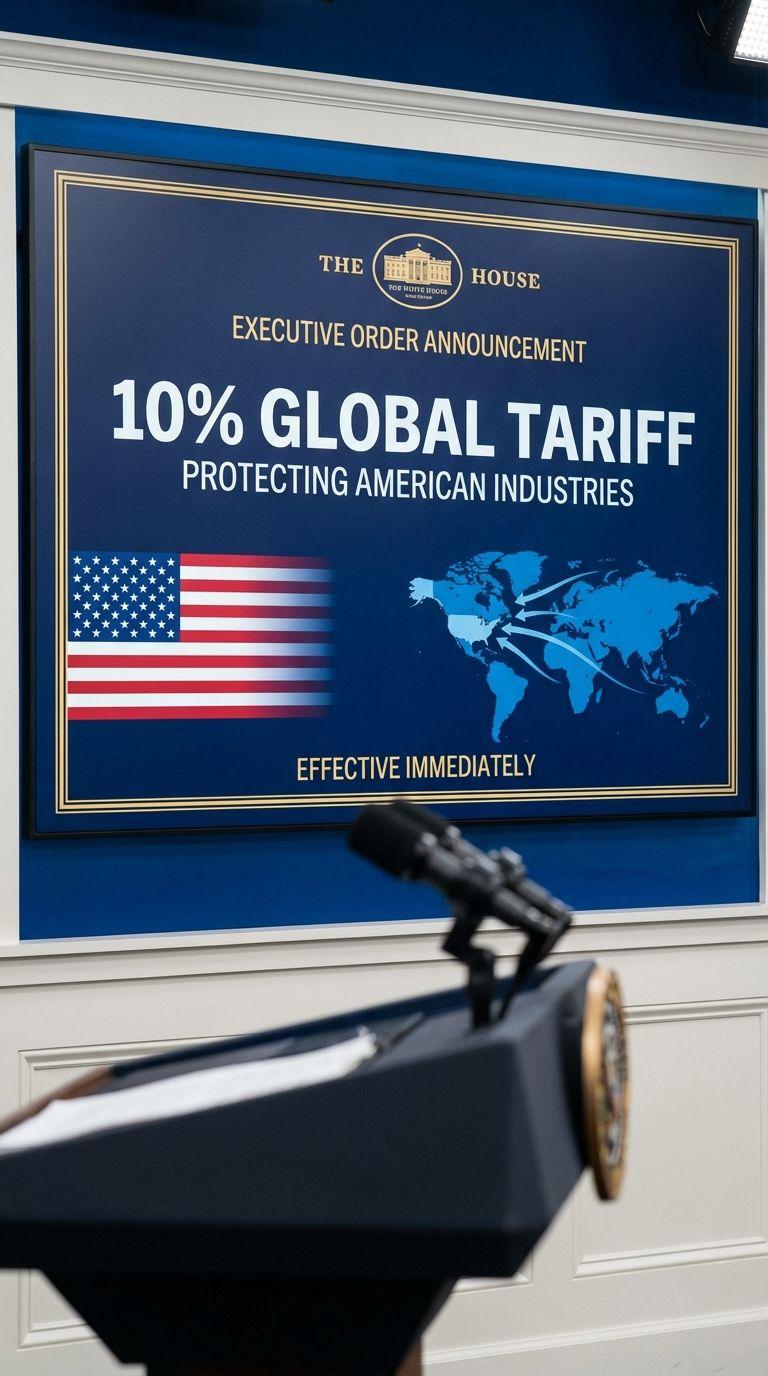
On 2 April 2025, President Trump issued an executive order under the International Emergency Economic Powers Act (IEEPA) applying a 10% “global tariff” on all imports into the US.
Key points:
- The 10% tariff is across the board – it applies to imports from “nearly all other countries.”
- For some 50‑plus countries listed in an annex, the tariff can rise to 11–50% under a “reciprocal” schedule, depending on perceived unfair trade practices.
- In early 2026, after court challenges, Trump reaffirmed a temporary 10% tariff on all trading partners for 150 days while the administration prepares further investigations and country‑specific hikes.
- The 10% rate stacks on top of any existing US import duties under the normal tariff schedule.
The policy is a sharp break with the pre‑2017 model, where the US offered many low‑income countries unilateral tariff preferences.
Where does Nepal currently stand with the US?
Even though Nepal is a small exporter, the US is a critical market:
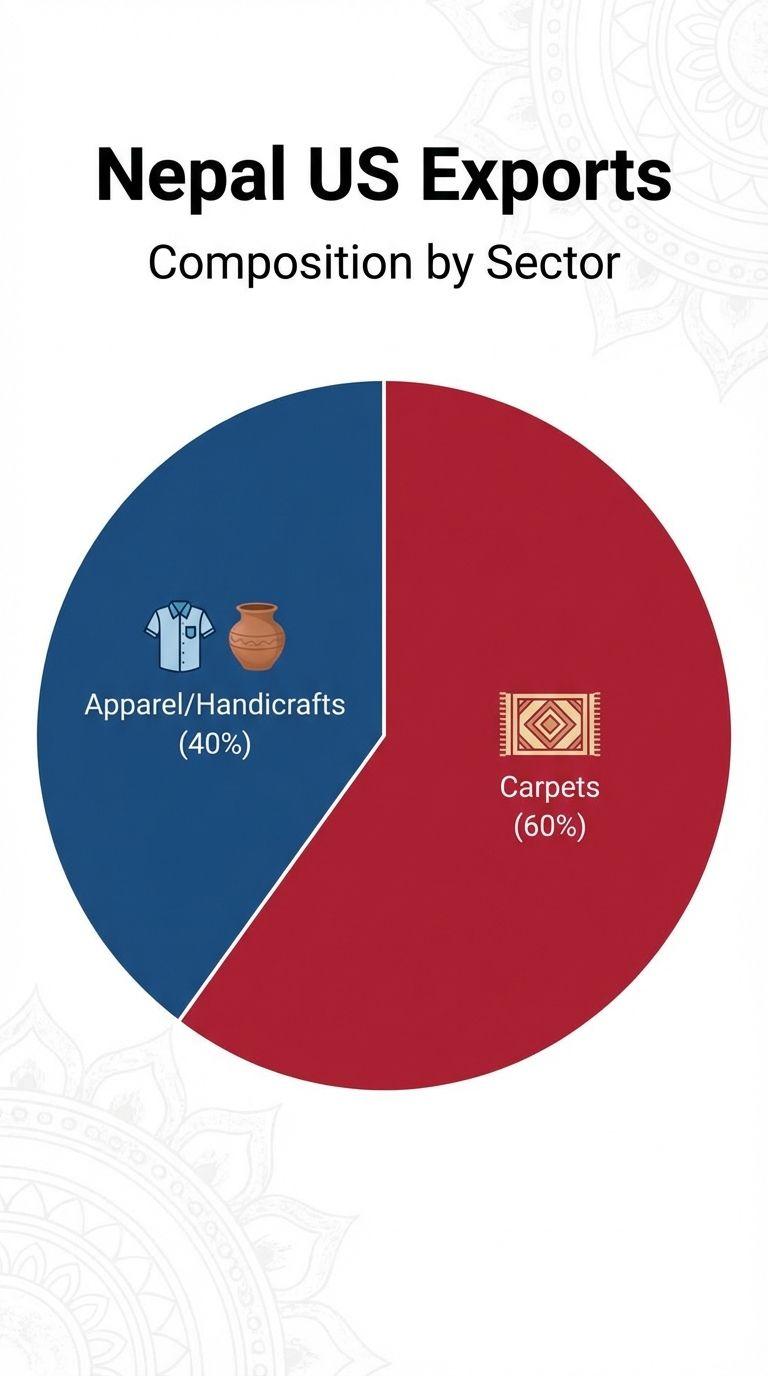
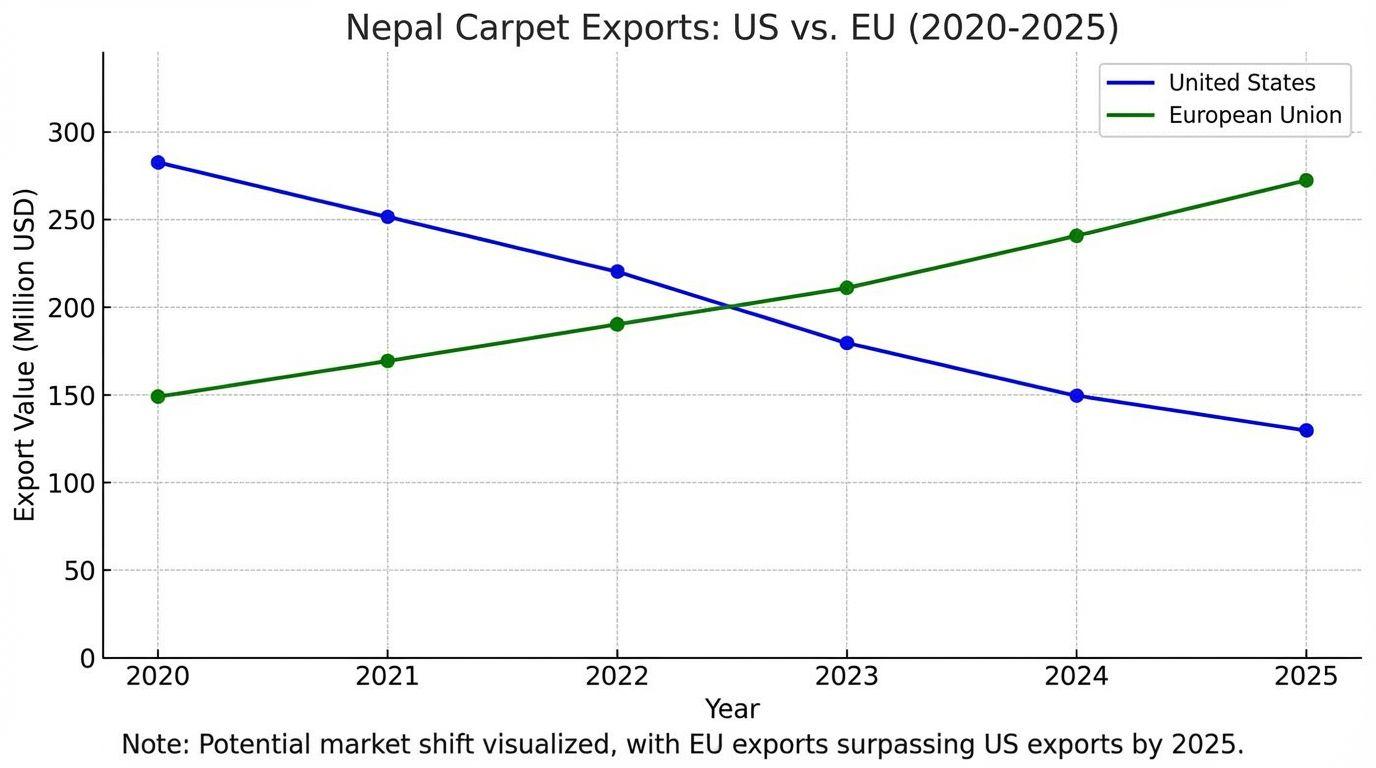
- Carpets and textile floor coverings: exports to the US reached about US$52.8 million in 2022, and the US takes roughly 60% of Nepal’s carpet exports.
- Carpets are one of Nepal’s highest value‑added exports, with around 80% domestic value addition, according to industry estimates.
- Nepal also enjoys a limited Nepal Trade Preference Program (NTPP) that gives duty‑free access for 77 products (including some carpets, pashmina and handicrafts) until at least 2025; Kathmandu has formally asked Washington to extend it beyond LDC graduation in 2026.
Before Trump’s global tariff, many of these products either:
- Entered duty‑free under NTPP or the US GSP‑style preferences, or
- Faced “normal” MFN tariffs in the 3–12% range, depending on product.
The 10% global tariff is additional to whatever structure applied before.
Direct impact: a 10% tax on almost every Nepali export to the US
For a Nepali exporter shipping to the US, the headline effect is simple:
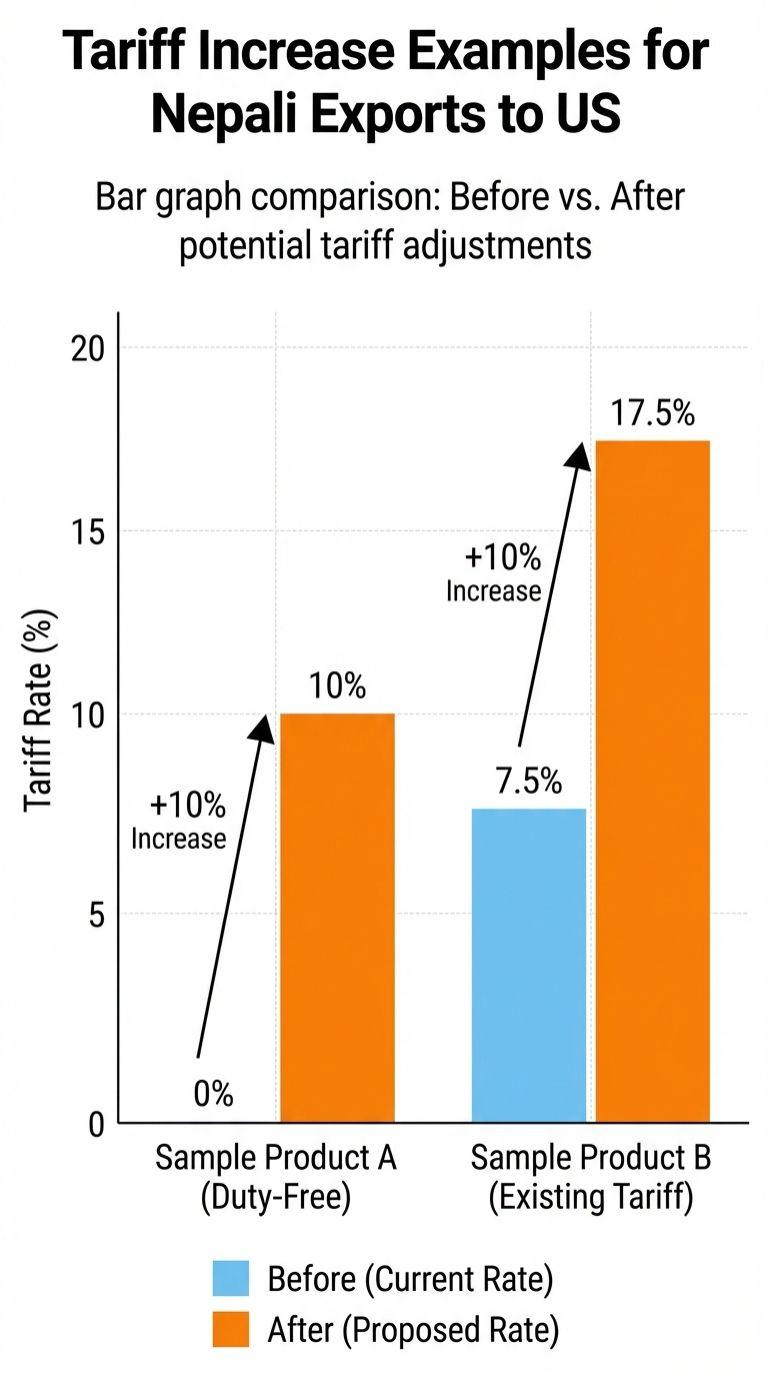
- Whatever duty rate applied to your product now has an extra 10 percentage points added.
Examples (illustrative):
- A carpet line that previously entered duty‑free under NTPP would now face 10% duty at the US border.
- A garment with, say, a 7.5% MFN duty would now face 17.5% (7.5% + 10%).
- A handicraft item with a 3% duty would jump to 13%.
Because many Nepali products are price‑sensitive (buyers compare with India, Bangladesh, Turkey, etc.), a sudden 10% price disadvantage can be enough to:
- Push buyers to switch suppliers, or
- Force exporters to cut their own margins to keep landed prices similar.
UN trade experts warn that across‑the‑board US tariffs of this type could have a “catastrophic” impact on developing and least‑developed countries, reducing export earnings and reversing development gains.
How exposed is Nepal compared to other developing countries?
Several features make countries like Nepal especially vulnerable:
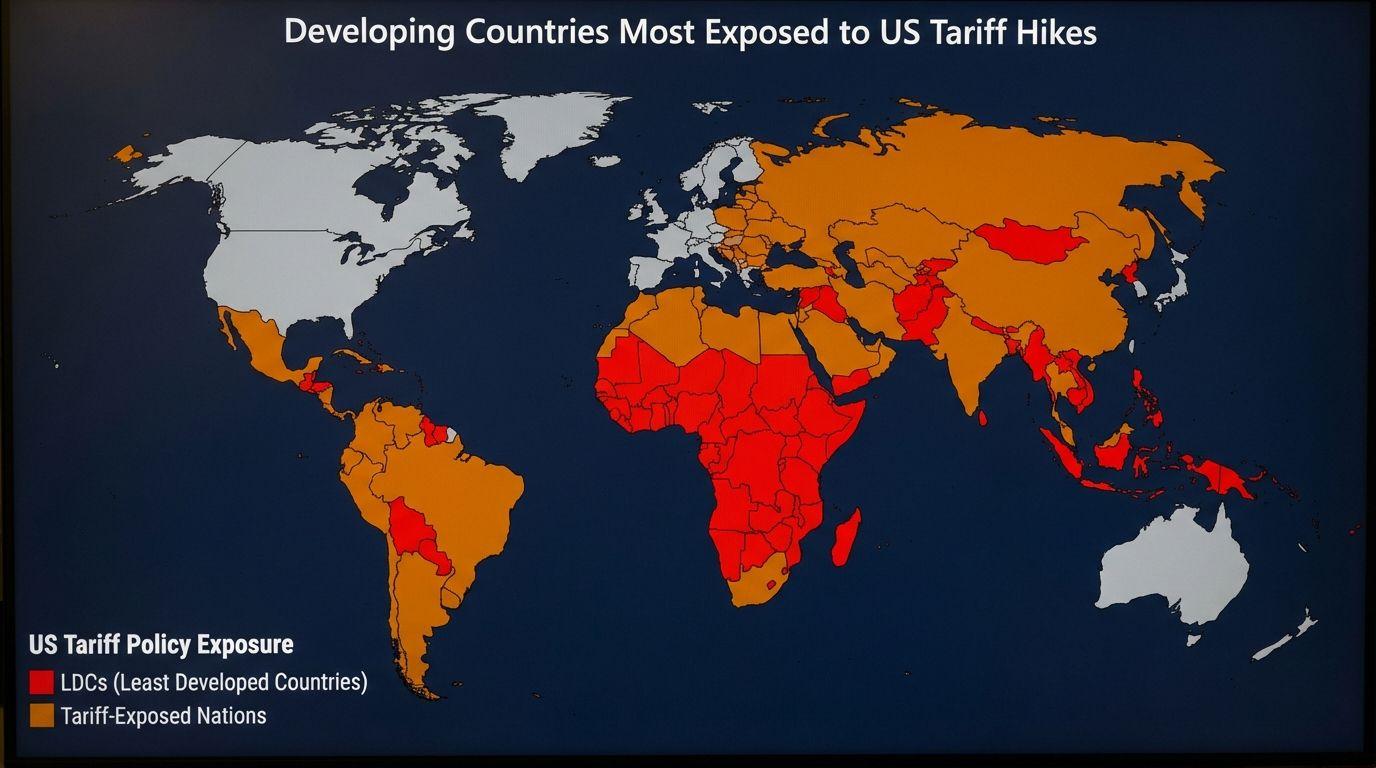
- UNCTAD notes that least developed countries (LDCs) and landlocked developing economies face some of the sharpest effective tariff increases when across‑the‑board hikes are imposed.
- A 2025 UN/ITC analysis estimated that new US tariffs could push the trade‑weighted average tariff on LDC exports to the US up to around 44% in some scenarios, versus roughly 7% that those LDCs charge on US imports.
- For landlocked developing countries (LLDCs) like Nepal, the average US tariff level is already higher (estimated around 17.1%), and blanket surcharges increase that gap further.
In short: Nepal sells relatively little to the US, but pays relatively high tariffs on that small basket. Carpets and garments are exactly the kind of textile exports UNCTAD flags as highly exposed.
What this could mean for Nepali exporters
1. Carpets and rugs
- Carpets are one of Nepal’s most successful export stories; the US takes about 60% of total carpet exports, worth almost Rs 2.3–3.9 billion in recent fiscal data.
- A flat 10% tariff on a high‑value product immediately raises shelf prices in an already competitive US market.
Likely outcomes:
- Order pressure: US buyers may ask for 10–15% price cuts to absorb the tariff. For a producer whose net profit margin might only be 8–12%, that’s extremely painful.
- Shift to Europe: Manufacturers may try to redirect volume to the EU, where Nepal still enjoys GSP/EBA‑style duty‑free access until at least 2029.myrepublica.
- Upselling “premium”: Some high‑end buyers may accept higher prices if Nepal can sell a stronger story (hand‑made, fair labour, high value‑add). But mass‑market segments will be under real pressure.
2. Apparel and textiles
- While the EU is a bigger garment buyer than the US for Nepal, some niche apparel, scarves, and pashmina do go to American retailers.
- These items already face US textile tariffs that are often in the teens; adding 10% on top further erodes competitiveness, especially against Bangladesh, Vietnam, and now an India–US FTA‑style framework if one emerges.
Small factories may see:
- Cancelled or downsized US orders.
- Increased demand to produce private‑label goods for EU/UK instead of US.
3. Niche manufactured goods and handicrafts
Even where values are lower:
- A 10% tariff can matter for price‑sensitive handicraft, jewellery, felt products and small manufactured components.
- Many of these are exported by micro and small enterprises, for whom a single US buyer could represent 30–50% of revenue.
These firms have the least buffer to absorb shocks.
Macro‑level impact on Nepal’s economy
While the absolute trade figures are small relative to big economies, a sustained 10% US tariff could still have outsized local consequences:
- Reduced carpet and textile exports threaten thousands of jobs in weaving clusters around Kathmandu Valley and other hubs.
- Lower export earnings may contribute to pressure on foreign currency reserves, given Nepal’s structural trade deficit.
- If exporters close or scale back, fiscal revenues from corporate tax and VAT on associated services fall as well.
Global forecasts from the International Trade Centre warned that broad tariff escalations could reduce global trade by 3–7% and cut world GDP by around 0.7%, with developing nations bearing the brunt.
Nepal, as a small open economy, would feel this mostly through:
- Weaker external demand for its niche export lines.
- Knock‑on effects on associated services like freight forwarding, logistics, and packaging.
What small Nepali businesses can realistically do
You can’t change US policy from Kathmandu, but you can adjust how you respond.
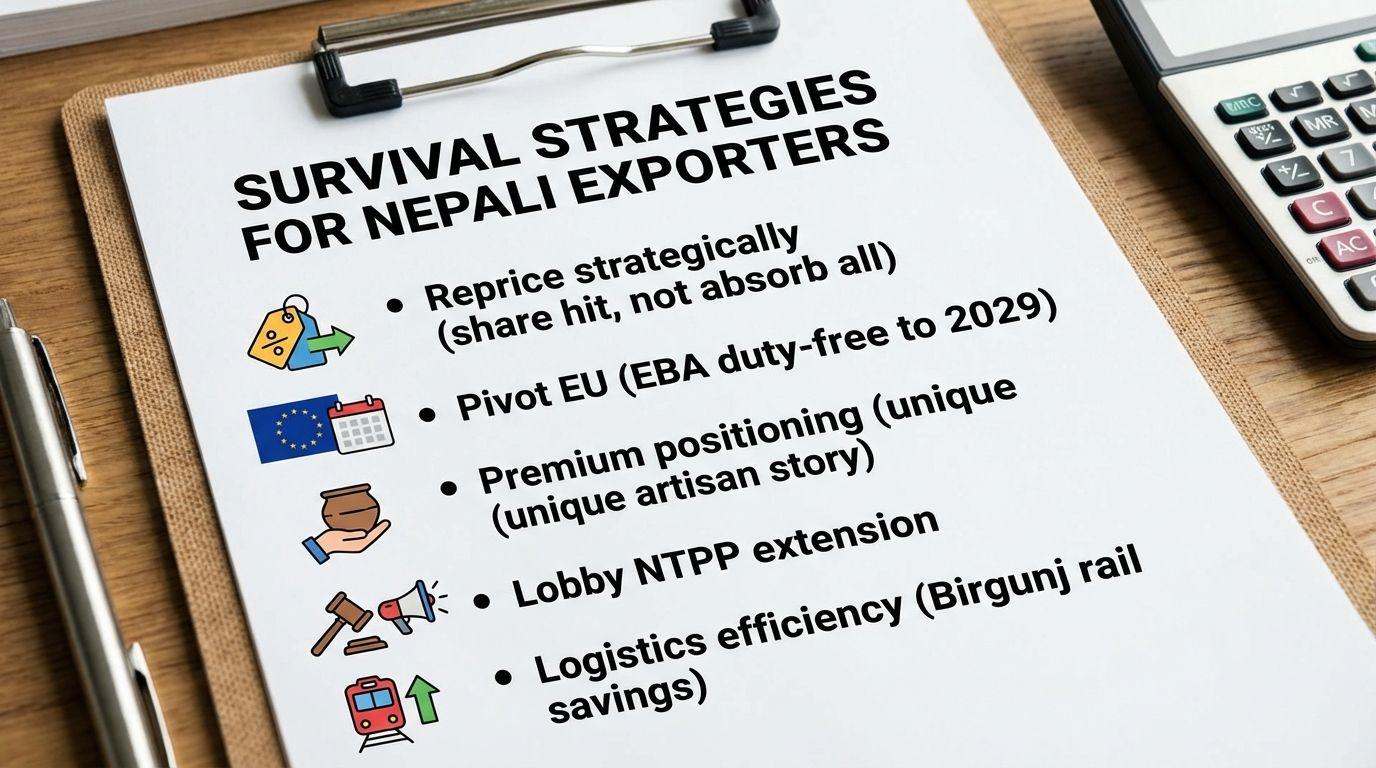
1. Re‑price smartly, not blindly
- Run landed‑cost calculations with and without the 10% tariff.
- In some higher‑margin, premium segments, you might share the hit (e.g., you absorb 3–5%, buyer absorbs the rest).
- For razor‑thin segments, consider walking away from orders that are no longer viable rather than bleeding cash.
2. Diversify markets while preferences last
- The EU GSP/EBA framework for Nepal is expected to run at least until 2029, giving duty‑free or reduced tariffs on many textiles and handicrafts.
- UN and ITC analysts explicitly suggest vulnerable countries redirect some export focus from the US to Europe and regional markets as US tariffs rise.
- For carpets and pashmina, this could mean doubling down on Germany, France, the Netherlands, and the Nordics, where demand for ethical, artisan goods is solid.
3. Move up the value chain
Tariffs are applied as a percentage of declared value. One survival strategy is to:
- Target higher price points with strong branding (e.g., certified hand‑knotted carpets with storytelling, sustainable production).
- Offer design services, custom sizing, and small batch exclusives where US buyers have less leverage to switch to cheaper alternatives.
A 10% surcharge hurts less when the buyer sees your product as unique rather than a commodity.
4. Lean on trade preferences you still have
- Stay on top of any extension or modification of the Nepal Trade Preference Program (NTPP). Kathmandu has formally requested continuation beyond 2025 to smooth the LDC graduation process.
- If the US carves out exemptions or lower rates for certain HS codes or for LDCs in implementing the 10% baseline, exporters must be ready to document origin, labor standards, and compliance to benefit.
5. Strengthen logistics and cost control
If policy makes you more expensive at the border, you have to become more efficient inside Nepal and along the route:
- Use multimodal logistics (rail via Birgunj to Kolkata, consolidated shipments) to cut per‑unit freight costs.
- Work with freight forwarders who can optimize packaging, container utilization, and routing to compensate partly for tariff losses.
What to watch in the coming months
For Nepali exporters and small businesses, three things will matter:
US implementation details
- Will certain least‑developed countries or specific HS codes be partially exempted from the 10%?
- Will Congress or courts limit the duration or scope beyond the current 150‑day window mentioned in early 2026 reporting?
Extension (or expiry) of Nepal’s US trade preferences
- If NTPP is not renewed and the 10% tariff becomes entrenched, effective tariffs on some key Nepali products could jump from 0% to well over 10% overnight.
EU and regional trade dynamics
- As India and Bangladesh negotiate deeper trade deals with major markets, Nepal’s relative position shifts again. UNCTAD already warns that tariffs on developing Asian exporters’ textiles could reach average rates in the teens or higher under current tensions.
Bottom line for Nepali exporters
Trump’s 10% global tariff is not just a headline, it is a real additional cost slapped on almost every product you send to the United States. For sectors like carpets and apparel, where Nepal has fought hard to carve out a niche, this means tighter margins, tougher negotiations, and a probable shift in market focus over the next few years.
The policy won’t automatically destroy Nepal’s exports, but it raises the bar: only the most differentiated, efficient, and market‑savvy Nepali businesses will remain competitive in the US. For the rest, the smart move may be to ride out this tariff era by leaning harder into Europe, regional partners, and higher‑value niches while lobbying, through industry bodies and government, for every preference and exemption still on the table.
Related posts
1970-01-01
Sea + Air Freight: How SeaSky Helps Businesses Ship Smarter
2026-10-06
Freight Forwarding Documents in Nepal: Complete Import and Export Checklist
2026-10-05
Landed Cost in Nepal: A Step-by-Step Import Cost Worksheet
2026-10-04