1. What is project cargo?
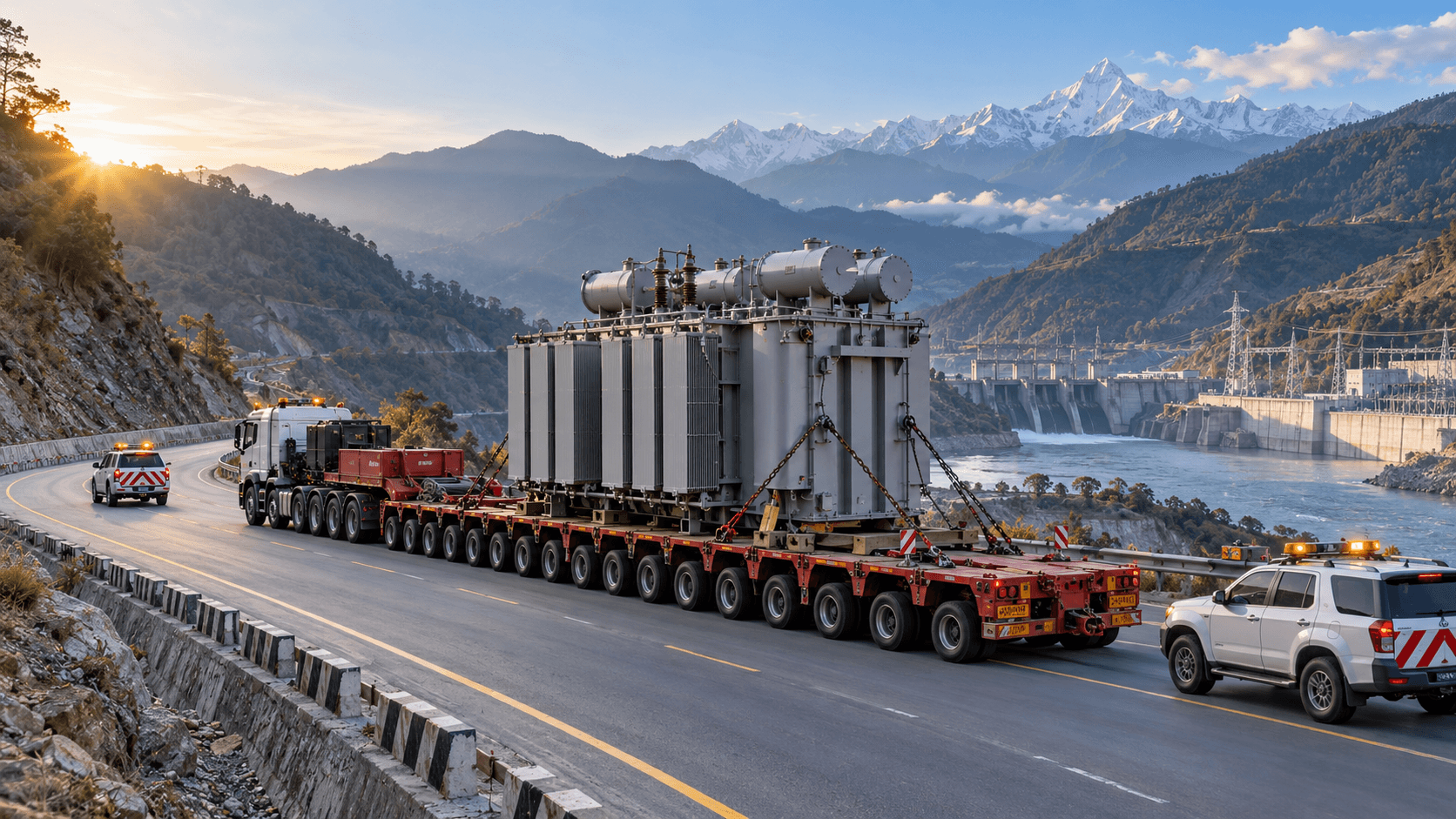
A project cargo shipment can fail before the vehicle moves. An incorrect weight may lead to the wrong trailer. An unchecked bridge may block the selected route. A missing lifting detail can leave expensive machinery waiting at the project site without a safe unloading method. Project cargo in Nepal is freight that needs a shipment-specific logistics plan because of its size, weight, value, shape, handling sensitivity, route or delivery conditions. It may be one exceptionally heavy unit or hundreds of coordinated packages that must reach a project site in sequence. The equipment name does not determine the plan. Two transformers with similar ratings can have different transport weights, centres of gravity, removable accessories, lifting points and site requirements. Nepal adds a chain of handoffs. International equipment may arrive through an Indian port, move under the applicable transit procedure to a border or inland customs facility, clear Nepal Customs, and then travel over roads with changing widths, gradients, bridge conditions and overhead clearances.
| Term | What it describes | Typical Nepal examples |
|---|---|---|
| Heavy lift cargo | Cargo requiring specialized lifting and transport planning because of its weight | Transformers, generators, turbines and mill components |
| Oversized or out-of-gauge cargo | Cargo exceeding the normal dimensions of a container, vehicle or route | Kiln sections, vessels, long structures and large machinery |
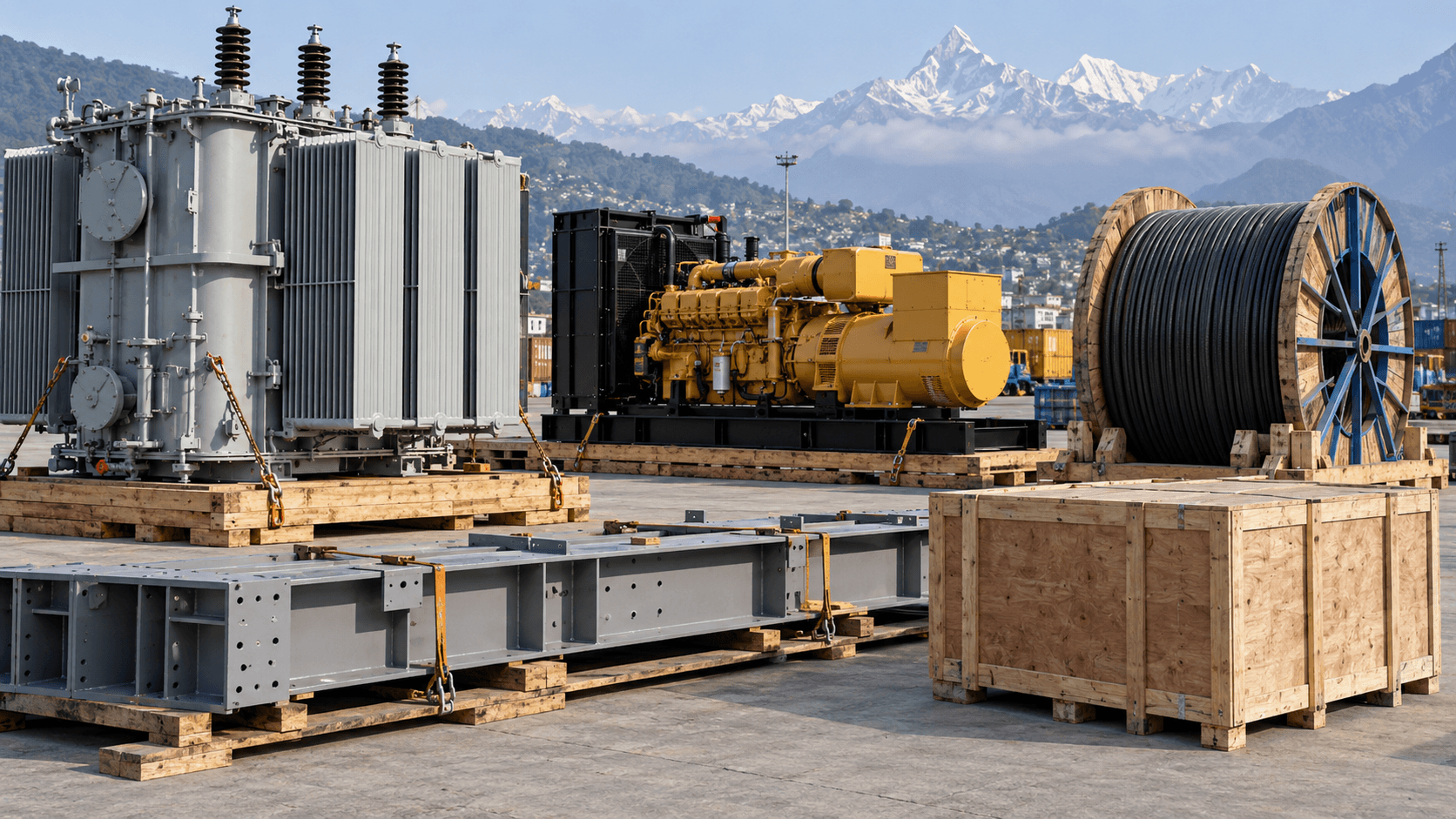
| Industrial machinery transport | Movement of production and infrastructure equipment | Crushers, cable drums, plant modules and fabrication equipment |
| Project cargo | The complete coordinated operation | International freight, customs, permits, lifting, inland transport and site delivery |
2. Start with a verified cargo data pack
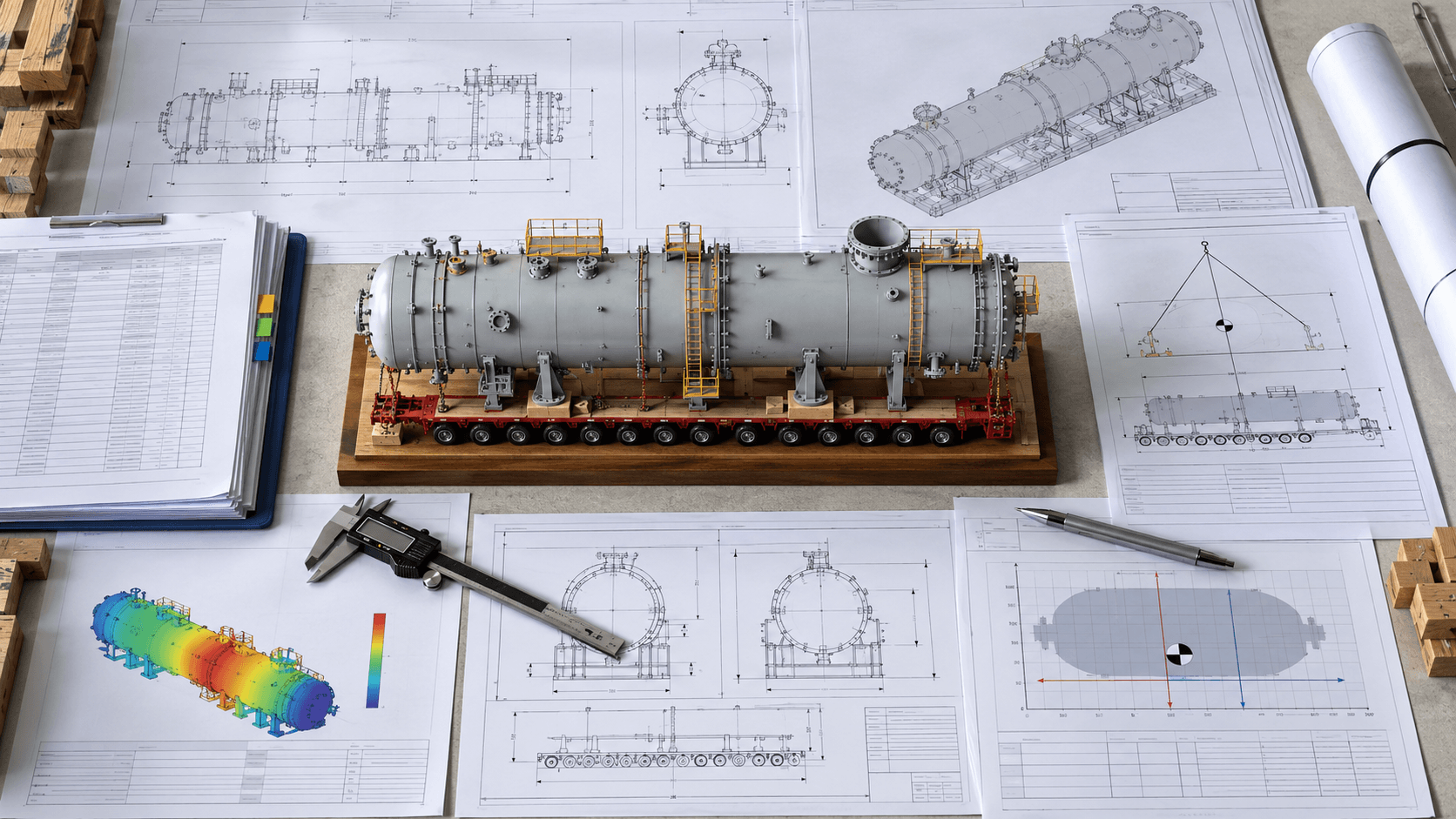
Collect final technical information from the manufacturer, supplier and responsible engineer before choosing the route or vehicle. Estimated measurements are not enough. A small change in loaded height can determine whether the cargo passes below a cable, clears a gate or remains stable on a steep approach.
Prepare one record for every transport unit:
- Exact length, width and height in transport condition
- Gross transport weight, including frame, packing and removable accessories that will remain fitted
- Centre-of-gravity location and approved support points
- Approved lifting and lashing points
- General-arrangement, transport and lifting drawings
- Package number and packing-list reference
- Maximum permitted tilt, vibration or acceleration
- Parts that may be removed to reduce dimensions or weight
- Weather, moisture and corrosion-protection requirements
- Cargo value and shipment-specific insurance information
- Origin, proposed Nepal entry route and final site coordinates
- Required delivery sequence, site access and unloading plan
Descriptions such as “one set of machinery” are too vague for trailer selection, route work, lifting calculations or customs review. The engineering records should also agree with the commercial invoice, packing list and transport document. Resolve differences before dispatch.
Use the verified data pack as the controlled source for quotations and revisions. Record the drawing number and revision date so a packing change does not quietly invalidate the transport plan.
3. Conduct a physical route survey
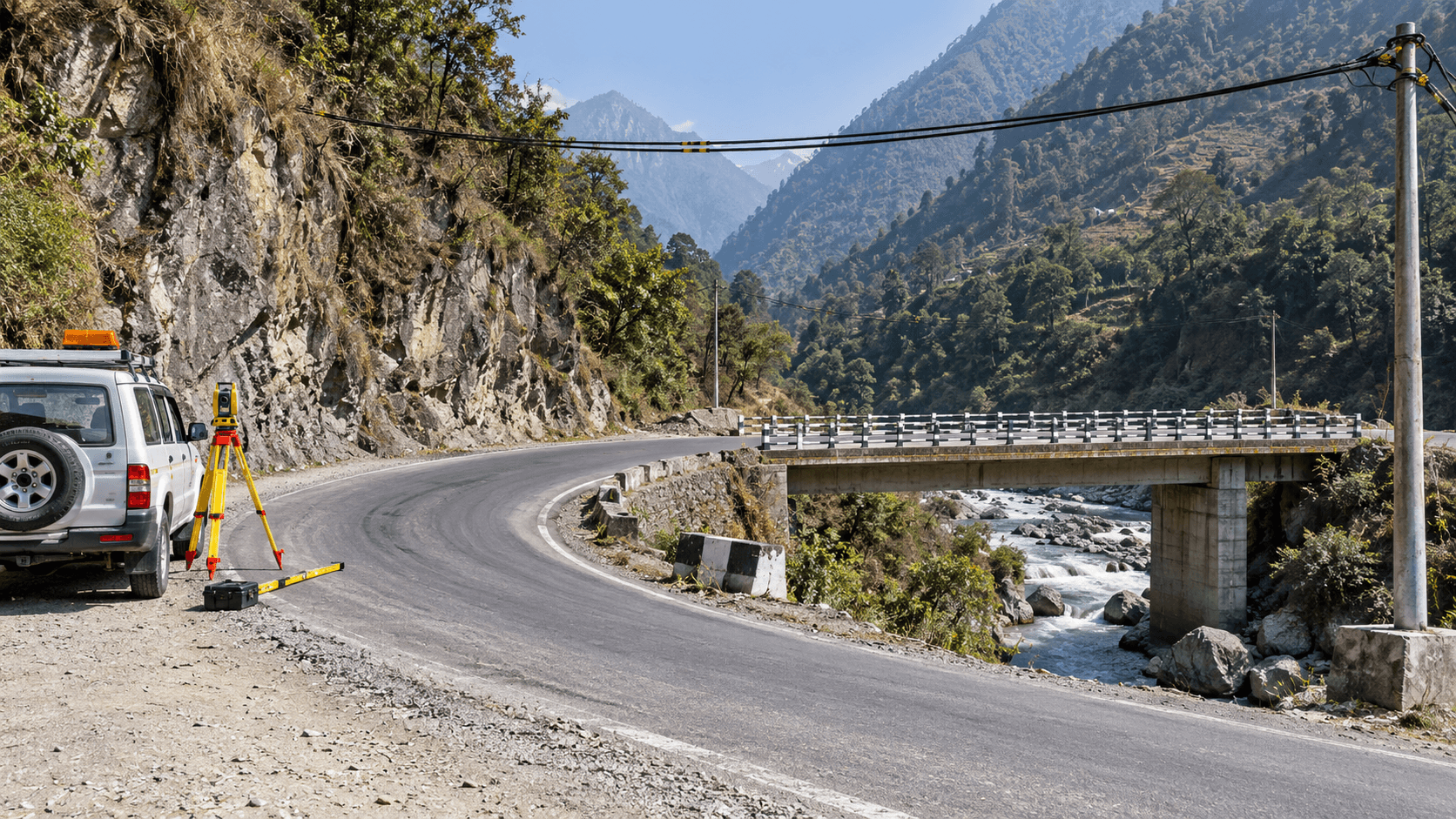
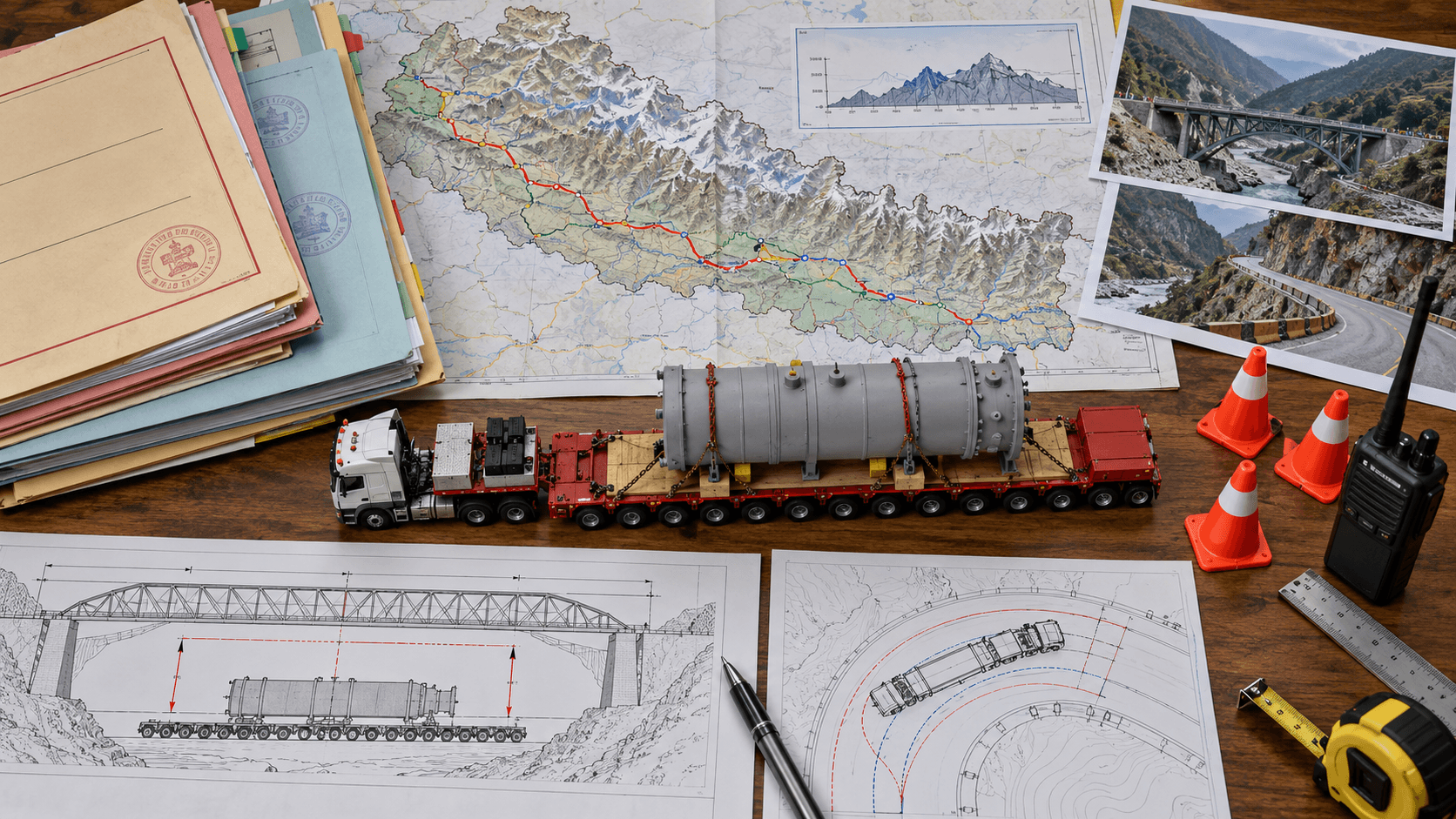
A map can suggest a corridor, but it cannot confirm that an oversized combination will pass. A physical route survey should follow the proposed movement from the port, border, inland customs location or warehouse to the final unloading position.
The survey should check:
- Usable road width, pavement condition and weak shoulders
- Sharp turns, hairpins, roundabouts and reversing areas
- Gradients, crests, dips and low-clearance approaches
- Bridge and culvert geometry, condition and available engineering information
- Tunnels, gates, toll plazas and checkpoint layouts
- Overhead cables, signs, branches and other obstructions
- Railway crossings, towns, markets and congested sections
- Safe holding locations and emergency stopping areas
- Roadworks, seasonal exposure and likely landslide or flood points
- The project road, gate, laydown area and unloading position
For heavy cargo, total weight is only one part of the assessment. Axle spacing, axle loads, turning path, loaded ground clearance and weight concentration can change whether a bridge, curve or temporary road is suitable. A qualified engineer should assess structural questions that exceed the logistics survey team’s competence.
Survey the actual planned vehicle configuration where possible. A technically capable multi-axle trailer may still be unable to turn through a junction or pass a crest without grounding.
Identify alternatives and their limits. Weather, maintenance, local events and construction can affect a preferred route shortly before movement. Check the Department of Roads’ highway traffic updates again before dispatch; a general opening notice is not a technical approval for an abnormal load.
4. Check permits and authority requirements early
Oversized or heavy equipment may require movement permission or coordination with road, transport, traffic, police, municipal, utility, customs or project authorities. The applicable process depends on the route, vehicle registration, cargo dimensions, combination weight, axle loads, timing, obstructions and current local requirements.
Possible requirements can include:
- Abnormal-load or heavy-vehicle movement approval where applicable
- Route, axle-load or road-use confirmation
- Traffic management and escort arrangements
- Time-of-day restrictions or temporary traffic control
- Utility coordination for overhead cables
- Permission to alter or temporarily remove an obstruction
- Bridge, culvert or temporary-road engineering review
- Border, customs and transit documents
Do not reuse an old approval as if it covers the new movement. Cargo dimensions, axle configuration, route condition and authority instructions may have changed. Apply with the verified cargo and vehicle configuration and keep the approval conditions inside the execution file.
Nepal Traffic Police guidance states that truck loads must be secured, must not project dangerously, and must not exceed the permitted or manufacturer-recommended towing load. Review the current truck-driver safety guidance and confirm shipment-specific requirements with the competent authorities before movement.
The logistics provider can coordinate applications and contacts, but only the responsible authority can grant permission. Permit coordination should therefore begin before the vessel, border arrival or site delivery date becomes critical.
5. Select the right trailer and transport equipment
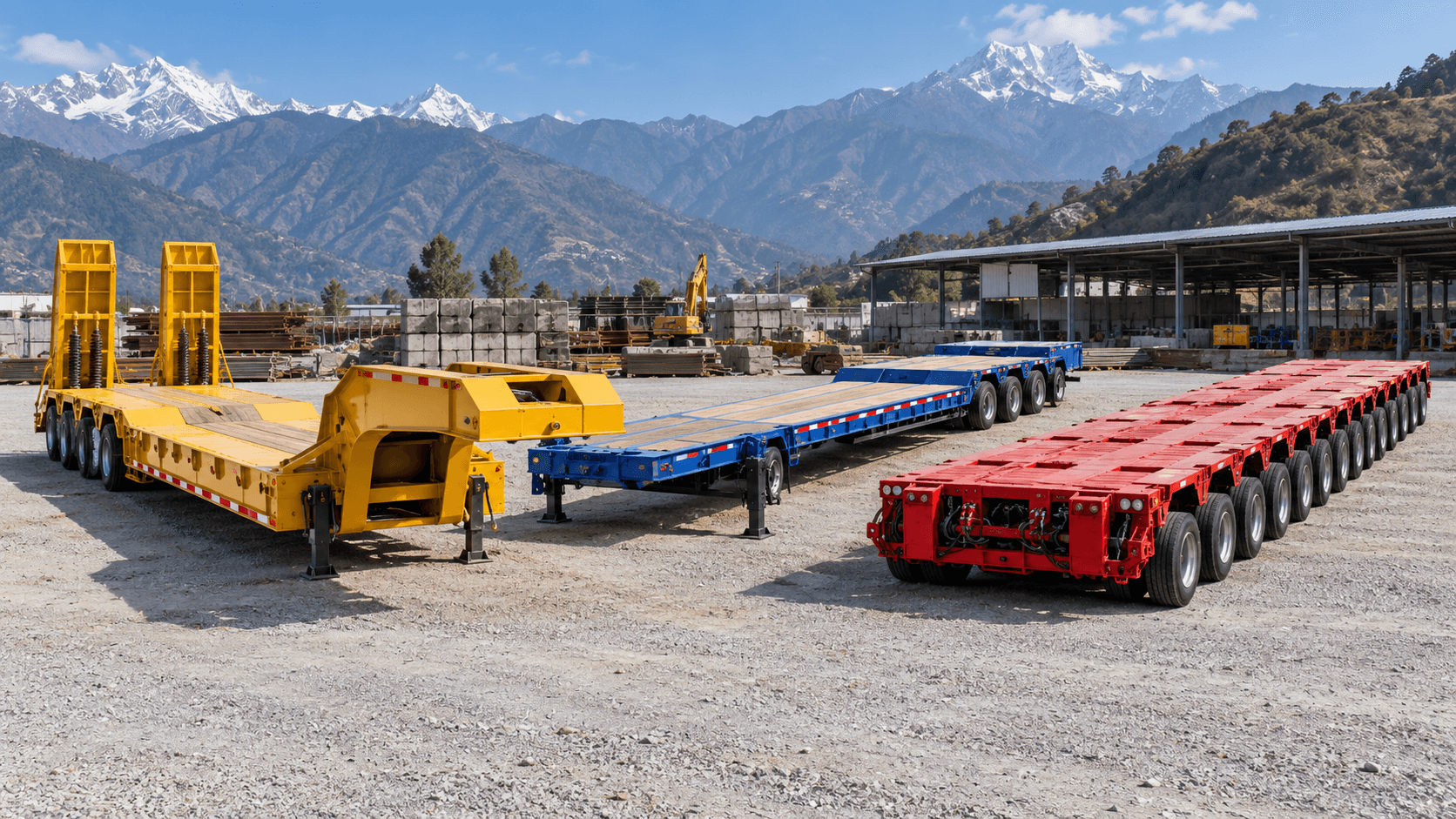
The safest vehicle is not automatically the largest available trailer. Equipment selection must match the cargo dimensions, support points, centre of gravity, axle-load distribution, route geometry, loaded ground clearance and unloading method. Select the configuration after the route survey and preliminary structural review. Check tractor capability, braking, steering, coupling, tire loading and the movement’s speed and gradient limits. Sea Sky Cargo can coordinate transport resources through qualified partners based on the approved plan. Review the Project Cargo service, Road Freight service and Trailer Capacity guide when comparing equipment. Published trailer dimensions are a starting reference, not approval for a specific cargo. Final suitability depends on the verified load, exact unit, route and responsible technical assessment.
| Transport equipment | Possible use | Critical checks |
|---|---|---|
| Low-bed trailer | Tall machinery, construction equipment and industrial units needing lower loaded height | Deck capacity, ground clearance, ramp angle and turning path |
| Flatbed or high-bed trailer | Long, heavy or containerized units that remain within the route envelope | Loaded height, support positions, restraint and overhead clearance |
| Multi-axle trailer | Heavy units needing weight distribution across more axle lines | Axle spacing, legal or approved loads, steering geometry and bridge assessment |
| Hydraulic modular trailer | Exceptionally heavy or awkward units requiring adjustable suspension or modular axle lines | Engineering design, ground bearing, power unit, operator competence and route width |
| Extendable trailer | Long structural sections, vessels and equipment frames | Rear swing, turning radius, support locations and route obstruction |
6. Prepare an engineered lifting plan
Heavy lift cargo in Nepal needs a lift plan for each loading, transshipment and unloading point. Knowing only the cargo weight is insufficient because crane capacity changes with working radius, boom length, configuration, ground condition and rigging arrangement.
A qualified lifting professional should establish:
- Confirmed lifting weight and centre of gravity
- Approved lifting points and allowable sling angles
- Crane type, configuration and rated capacity at the required radius
- Crane position, outrigger arrangement and ground-bearing pressure
- Spreader beams, slings, shackles and certified accessories
- Lift path, tailing method where required and landing supports
- Exclusion zone, communication method and stop-work authority
- Wind, weather, visibility and equipment limits
- Personnel roles, supervision, emergency and abort procedure
A crane’s advertised maximum capacity does not mean it can lift that weight at every radius. Confirm the load chart for the selected configuration and include rigging weight and any other load below the hook.
Ground condition matters equally. Soft fill, slopes, underground services, unfinished access roads and inadequate mats can make a nominally capable crane unsafe. The lifting contractor or qualified engineer must approve the final setup.
The unloading plan should be ready before the cargo leaves origin. That prevents a heavy unit from arriving at a site without a prepared crane pad, adequate laydown area, tested lifting gear or installation sequence.

7. Plan packing, lashing and cargo protection
Heavy equipment can be damaged by vibration, moisture, impact, abrasion or incorrect restraint. Protection should reflect the route, season, handling points, storage exposure and manufacturer limits.
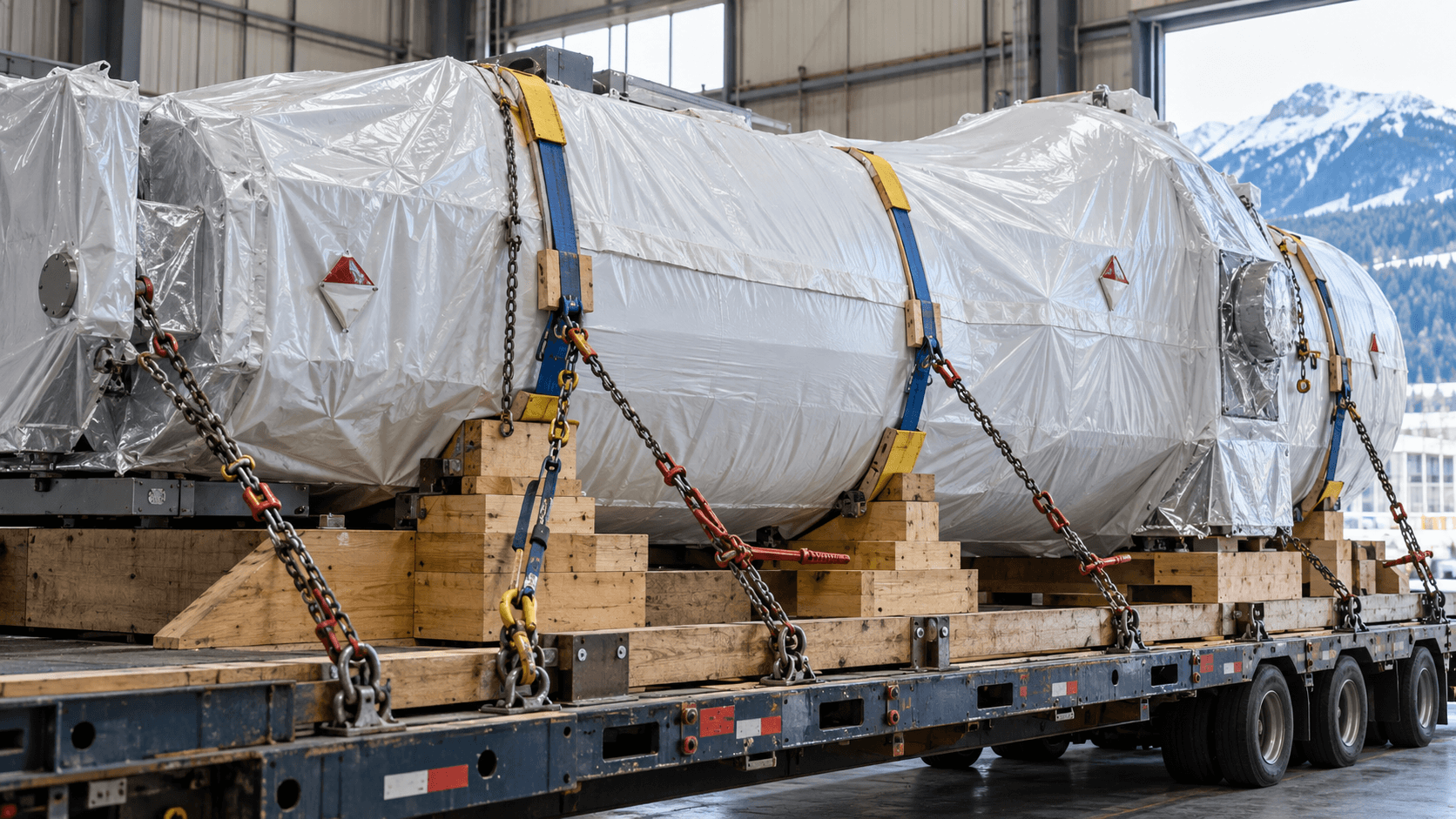
Depending on the equipment, the plan may include export-grade crates or frames, weatherproof wrapping, moisture barriers and desiccants, corrosion protection, protected lifting points, transport saddles, marked centre-of-gravity positions, shock or tilt indicators and secured loose accessories.
The restraint system must address forces from acceleration, braking, cornering, vibration and road gradients. Chains, tensioners, blocking, friction material and supports should be selected for the specific cargo and trailer. Do not copy an arrangement from a visually similar shipment.
Document the restraint calculation or approved method, chain capacity, connection points and inspection sequence. Check lashings before departure and at planned stops, especially after rough roads, steep climbs or long descents.
Packaging and lashing responsibilities should be written into the handoff plan. A carrier’s inspection does not replace the manufacturer’s transport instructions or the responsible engineer’s approval.
Planning unusual cargo?
Send Sea Sky Cargo the cargo dimensions, weight, origin and final delivery point for an initial route and document review.
8. Coordinate international freight and customs
Many Nepal project-cargo movements have several transport stages. Equipment may move from a factory to an overseas port, travel by container, flat rack, breakbulk or roll-on/roll-off service, transit an Indian gateway, cross the border or reach an inland customs facility, clear Nepal Customs and continue by specialized road transport.
The logistics plan may need to connect:
- Factory pickup, origin lifting and export clearance
- Container, flat-rack, breakbulk or other carrier booking
- Port handling, lifting points and discharge method
- Indian customs transit and onward road or rail-linked movement
- Nepal customs clearance and any project-specific import arrangements
- Specialized inland transport, delivery sequence and site unloading
Common documents include the commercial invoice, detailed packing list, bill of lading or transport document, certificate of origin where applicable, HS-code support, technical catalogue, general-arrangement drawings, serial numbers, insurance records, authorizations, permits and transit documents.
The customs description should match the physical equipment and supporting project records. Vague descriptions can create classification, valuation or inspection questions. Check the current Customs Tariff 2026/27 and shipment-specific permits before dispatch; published tariff information does not replace an official assessment.
Sea Sky’s Ocean Freight service covers the marine leg, while the Importer of Record service and customs-clearance guide explain import and clearance coordination. Final customs decisions remain with the competent authority.

9. Build a project-cargo risk register
A risk register turns possible problems into specific controls, owners and response plans. Update it whenever the route, cargo data, vehicle, schedule, weather or site conditions change. Write each risk as an operational statement. “Overhead cable risk” is only a label. A usable control records the location, measured clearance, loaded cargo height, responsible utility contact, approved mitigation and the person authorized to release movement. Review insurance with the insurer or broker. Heavy lifts, abnormal road movement, insufficient packing, unattended storage and particular transit stages may have conditions or exclusions. Confirm the actual policy wording rather than assuming broad cover.
| Risk | Useful control | Evidence or trigger |
|---|---|---|
| Incorrect cargo data | Supplier and engineer approve the controlled data pack | Signed drawing revision and final packing measurements |
| Route obstruction | Physical survey, clearance schedule and dispatch-day route check | Survey report, authority contact and current road notice |
| Bridge or culvert concern | Obtain competent engineering assessment before movement | Assessment scope and approved vehicle configuration |
| Trailer or crane mismatch | Select from verified load, radius, route and support conditions | Equipment datasheet, load chart and method statement |
| Customs or permit delay | Review the file and submission lead time before cargo dispatch | Document checklist, owner and authority status |
| Monsoon or weather exposure | Define thresholds, holding points and cargo protection | Forecast, road status and stop-or-go decision |
| Unprepared site | Confirm road, gate, crane pad, laydown area and unloading sequence | Site readiness sign-off before final dispatch |
| Cargo damage | Approved packing, lashing, inspection and insurance conditions | Photos, checklists and incident-notice procedure |

10. Prepare an execution-day method statement
The movement-day method statement should tell every participant what happens, in what order and under whose authority. It converts the approved plan into a practical sequence.
Confirm:
- Cargo, tractor, trailer, tires, brakes, coupling and lashing inspection
- Permit, customs and transport-document availability
- Driver, escort and site briefing
- Communication channels and one movement coordinator
- Departure window, speed limits and stopping rules
- Critical turns, gradients, bridges, clearances and approved holding points
- Weather and route-status checks
- Traffic-control and utility responsibilities
- Lashing inspection points and incident-reporting method
- Site arrival, crane readiness and unloading sequence
- Emergency contacts, contingency route and stop-work authority
One coordinator should maintain communication among the driver, escorts, transport provider, lifting team, project site and relevant authorities. Every participant should understand who can stop movement.
If actual conditions differ from the approved plan, stop and assess the change. A blocked road, unstable crane position, altered vehicle or unexpected clearance is not something to solve through roadside improvisation.
Use a final release checklist immediately before movement. Approval documents, route condition, cargo securement and destination readiness can all change after the planning meeting.

11. Illustrative project-cargo scenarios
The following examples are hypothetical planning scenarios. They do not represent claims about completed Sea Sky Cargo projects.
Hydropower transformer or turbine component
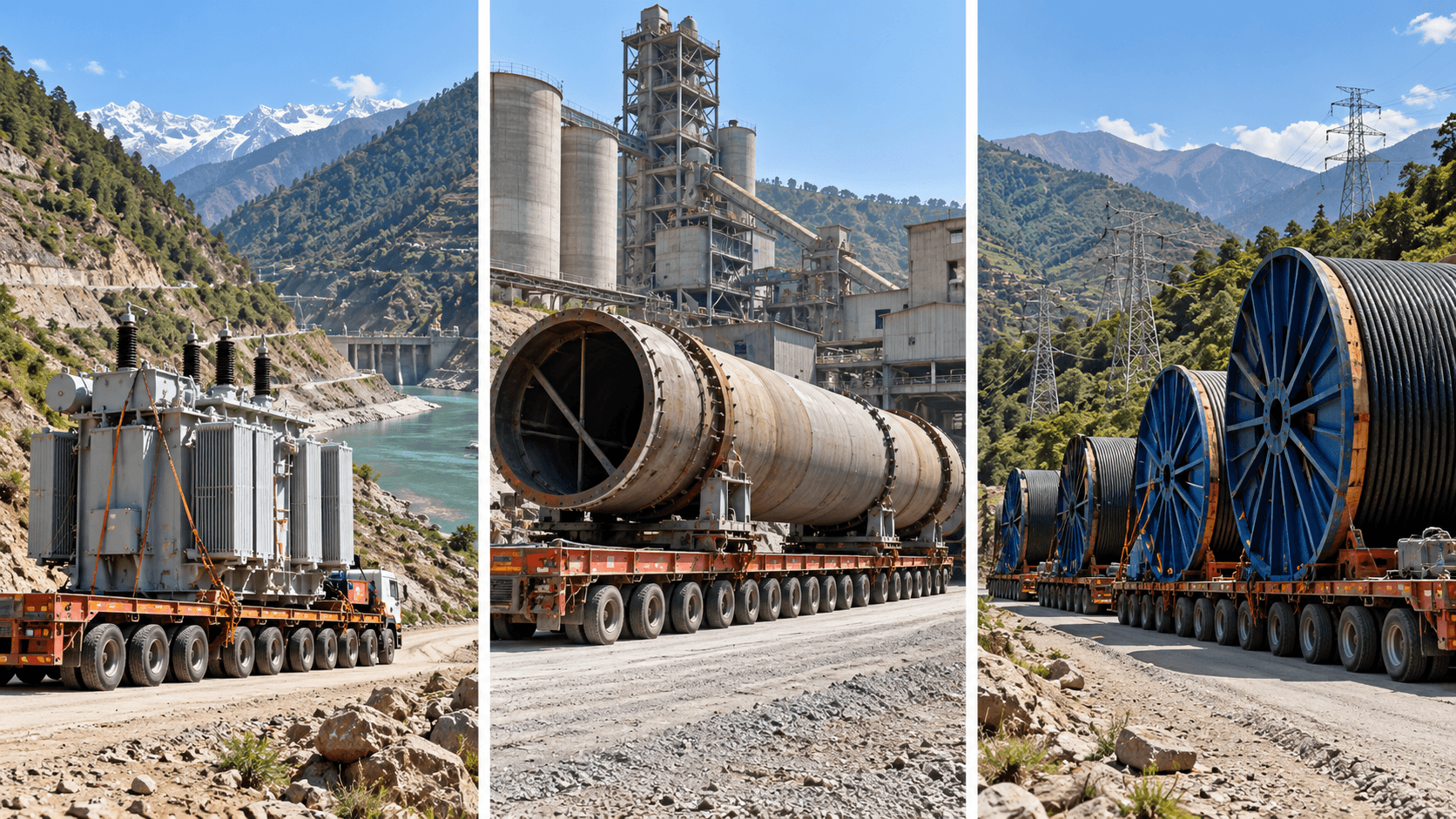
A heavy unit arrives through an Indian port and must reach a river-valley project. Port lifting, customs-transit documents, axle-load distribution, a physical route survey and site crane-pad readiness must be connected. Narrow project-road turns may require an engineered temporary measure approved by the responsible parties. The lifting contractor prepares a separate unloading plan from the confirmed centre of gravity and lifting points.
Cement mill or kiln equipment
A project imports a mill shell, kiln section and supporting machinery in several large packages. The heaviest unit controls part of the vehicle and route plan, while the complete shipment needs installation-based delivery sequencing. Conventional, flat-rack and breakbulk options are compared package by package. Plant-gate access, turning space, temporary storage and crane positions are confirmed before arrival.
Transmission structures and cable drums
Steel structures, insulators and large cable drums must reach several sites. Individual units may not need the same lift plan as a transformer, but long loads, drum stability, delivery sequence and remote access create risk. The plan maps every destination, checks site roads and assigns suitable vehicles. Cable drums receive approved chocking and restraint, and delivery waits for the receiving site to be ready.
Each case starts with the same discipline: verified data, a route that has been assessed for the selected configuration, clear authority responsibilities and an unloading method prepared in advance.
12. How Sea Sky Cargo supports project cargo in Nepal
Sea Sky Cargo coordinates the commercial and operational parts of oversized equipment shipping in Nepal. Support can include initial cargo and document review, route comparison, port and border coordination, route-survey organization, qualified transport sourcing, road and ocean freight, customs-document support, permit-process coordination, lifting-partner coordination and delivery sequencing.
The role is to connect suppliers, carriers, customs handling, transport partners, project teams and technical specialists into one workable logistics plan. Sea Sky Cargo does not replace the authorities that approve movement or the qualified professionals responsible for structural, vehicle or lift engineering.
For a useful preliminary review, send:
- Origin and exact pickup location
- Final Nepal delivery coordinates
- Package count, dimensions and gross weight for every unit
- Engineering drawings, transport drawings and photographs
- Lifting, support and lashing points
- Centre-of-gravity details and removable parts
- Cargo value and preferred schedule
- Delivery sequence and site-access information
- Available unloading equipment and crane-pad details
- Customs, permit and insurance status
Incomplete information can support only a preliminary estimate. Final equipment, route, method and price require technical review and, where necessary, a physical survey and authority confirmation.
Safe project cargo movement begins with verified information and a realistic route. Solve the difficult parts before shipment starts so the equipment, schedule, workers and communities along the route are protected.

Frequently asked questions
What is project cargo in Nepal? Project cargo covers oversized, heavy, high-value or operationally complex freight that needs shipment-specific routing, handling, permits and delivery planning.
Which trailers are used for heavy lift cargo in Nepal? Depending on the verified load and route, options may include low-bed, flatbed, extendable, multi-axle or hydraulic modular trailers. Final selection requires cargo data, vehicle details and route assessment.
Does oversized equipment require a route survey? A route survey is normally needed when cargo dimensions, weight or vehicle configuration could conflict with roads, bridges, turns, overhead structures or site access.
Who prepares the lifting plan? A qualified lifting professional, crane provider or responsible engineer should prepare and approve the plan using confirmed cargo, crane, rigging and site information.
Are special permits required? They may be. Requirements depend on the route, dimensions, axle loads, gross weight, timing and current authority instructions. Confirm each movement with the competent authorities.
Can Sea Sky Cargo coordinate customs and inland transport? Sea Sky Cargo can coordinate freight, customs-document support and inland transport planning according to the cargo, route, authority requirements and service availability.
What information is needed for a project-cargo quote? Send drawings, dimensions, weight, centre of gravity, lifting points, origin, delivery coordinates, schedule, site-access details, customs status and unloading plan.
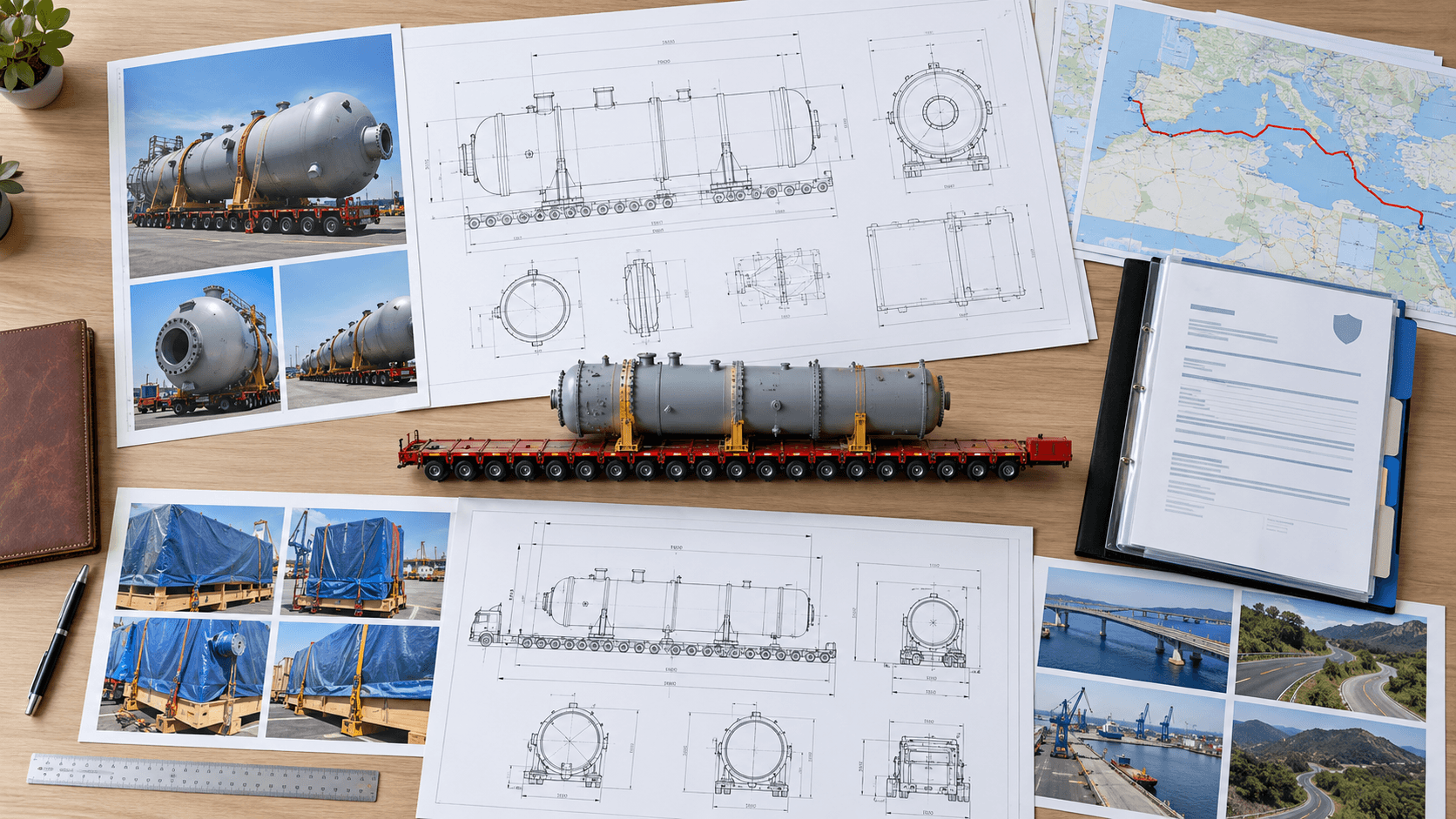
Moving oversized machinery or heavy industrial equipment?
Send the drawings, dimensions, weight, origin and delivery point so Sea Sky Cargo can coordinate a project-cargo planning review.
Related posts

1970-01-01
Sea + Air Freight: How SeaSky Helps Businesses Ship Smarter

2026-10-12
France to Nepal Shipping Guide: Air Freight, Sea Freight, Customs and Documents

2026-10-08
Italy to Nepal Shipping Guide 2026: Freight, Customs and Documents

2026-10-07