Nepal–Europe Trade in Numbers
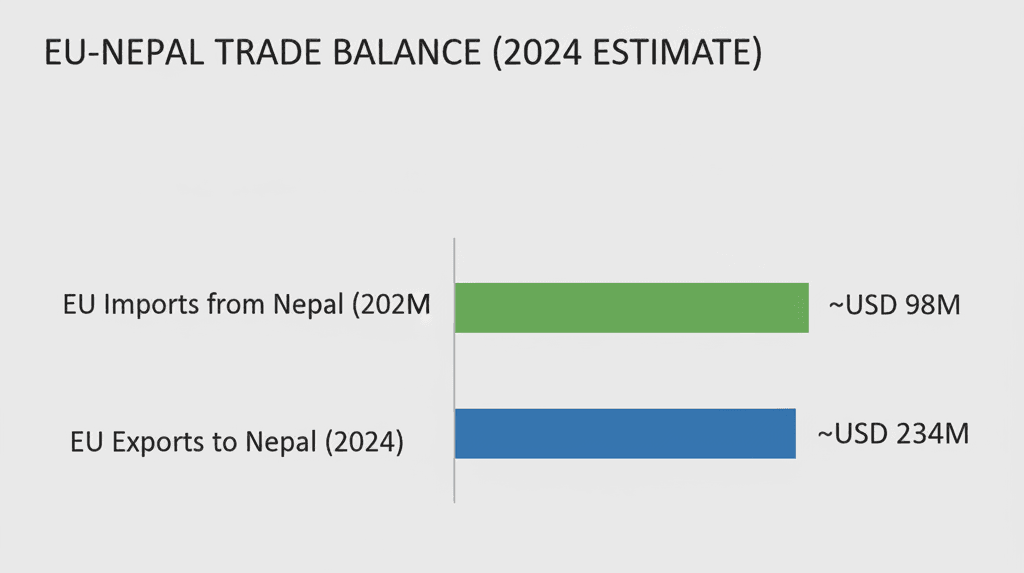
Trade between Nepal and the European Union has grown steadily over the last decade, making Europe one of Nepal’s most important long‑haul corridors. EU imports from Nepal reached about USD 97.9 million in 2024, driven mainly by textiles, carpets, handicrafts, tea, spices, and specialty products. Over the same period, EU exports to Nepal were around USD 233.7 million, led by machinery, medical devices, pharmaceuticals, and aircraft‑related equipment.
In total, EU–Nepal goods trade is estimated at roughly EUR 492 million in 2023, accounting for around 4% of Nepal’s total trade and making the EU Nepal’s third‑largest trading partner. This growing flow of goods is exactly what creates demand for reliable, repeatable shipping options in both directions Nepal to Europe and Europe to Nepal.
Shipping From Nepal to Europe: Options, Transit Times, and When to Use Them
Air Freight From Nepal to Europe
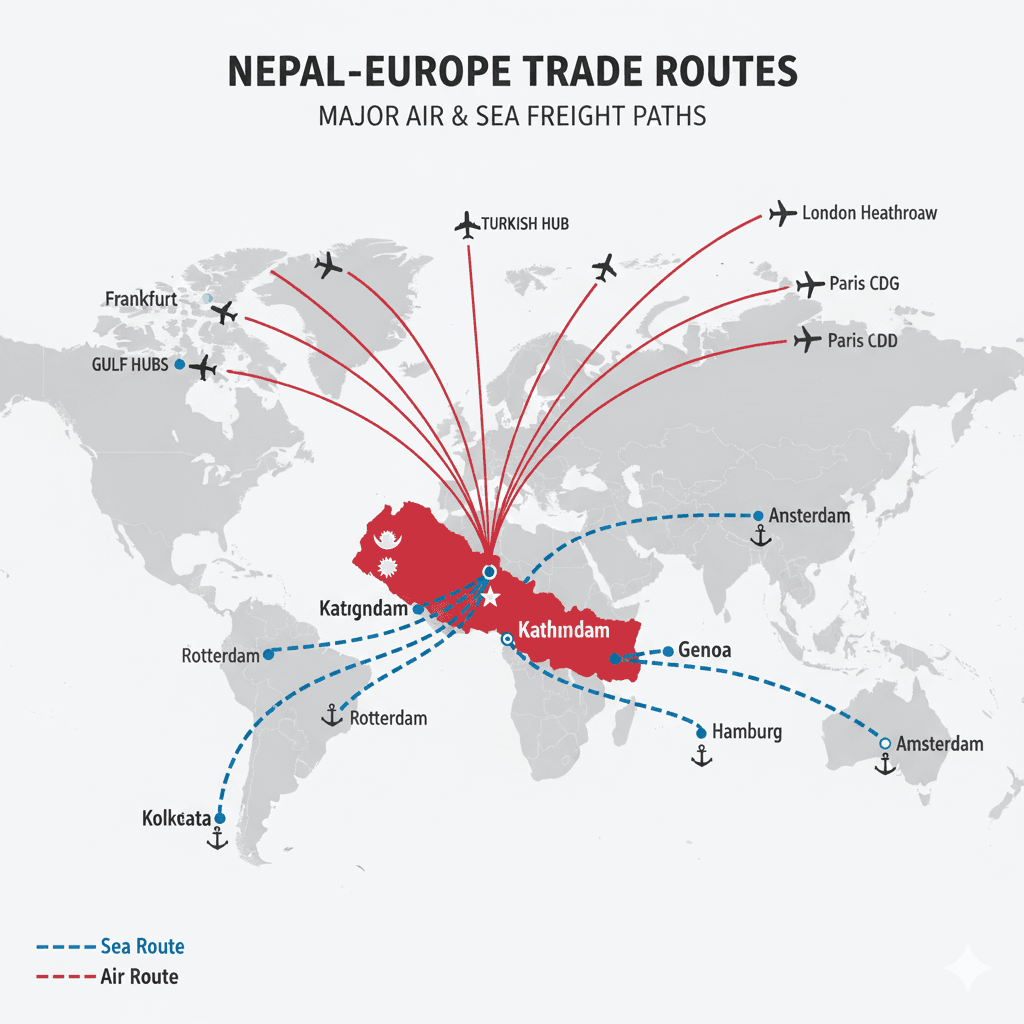
For time‑sensitive exports garments, samples, electronics, high‑value handicrafts air freight is often the preferred mode. From Kathmandu (KTM), cargo typically connects via hubs such as Doha, Dubai, Istanbul, or Delhi before reaching European airports like Frankfurt, London, Amsterdam, or Paris.
- Transit time: Usually 3–7 days door‑to‑airport or door‑to‑door, depending on routing and customs at destination.
- Best for: High‑value, urgent, or fragile cargo where speed and condition matter more than cost.
- Typical pattern: Consolidated airfreight (LCL by air) is increasingly popular for SME exporters of spices, tea, handicrafts, and textiles heading to Europe, reducing cost per kilo by sharing pallets.
Sea Freight From Nepal to Europe
Nepal is landlocked, so ocean freight moves via Indian or Bangladeshi ports commonly Kolkata/Haldia or, for some lanes, Visakhapatnam and Chattogram. Cargo travels by road or rail from inland points like Birgunj ICD to these ports, then by container ship to European gateways such as Rotterdam, Hamburg, Antwerp, or Genoa.
- Transit time: Around 3–5 weeks port‑to‑port, or roughly 4–8 weeks door‑to‑door including inland legs and customs, depending on the European destination and sailing schedule.
- Best for: Bulky, non‑urgent shipments carpets, bulk garments, raw materials, and machinery where cost per unit must stay low.
- Cost advantage: Sea freight can be 60–80% cheaper than air on a per‑kilo basis for larger shipments, according to recent Nepal freight comparisons.
Shipping From Europe to Nepal: Imports, Modes, and Lead Times
On the import side, Europe supplies Nepal with high‑tech and high‑value goods. In 2024, top EU exports to Nepal included roughly USD 40.8M in machinery, USD 39.5M in optical/medical devices, USD 35.6M in pharmaceuticals, and USD 28M in aircraft‑related equipment. These product types shape how Europe‑to‑Nepal shipping works.
Air Freight Europe → Nepal
- Use cases: Pharmaceuticals, medical equipment, urgent spare parts, fashion, electronics, and e‑commerce parcels.
- Transit time: 3–7 days from major European hubs to Kathmandu, often via Istanbul, Doha, Dubai, or Delhi.
- Service pattern: Carriers and forwarders often offer door‑to‑door express and economy air options, with tracking and customs brokerage bundled in.
Sea + Inland Europe → Nepal
- Use cases: Heavy machinery, vehicles, construction materials, large projects, and bulk goods.
- Route: European port → transshipment or direct service to South Asian ports → rail/road to Birgunj ICD or other border points → distribution in Nepal
- Transit time: Commonly 4–8 weeks door‑to‑door, depending on origin city, port choice, and inland infrastructure.
Because machinery and pharmaceuticals are high‑value, many European exporters blend modes using sea for non‑urgent parts and air for critical components or high‑margin shipments. A good forwarder in Nepal coordinates with European partners so importers see a single, integrated plan rather than disjointed quotes.
Key Challenges on the Nepal–Europe Corridor (Both Directions)
Despite growing trade, the corridor faces structural challenges:
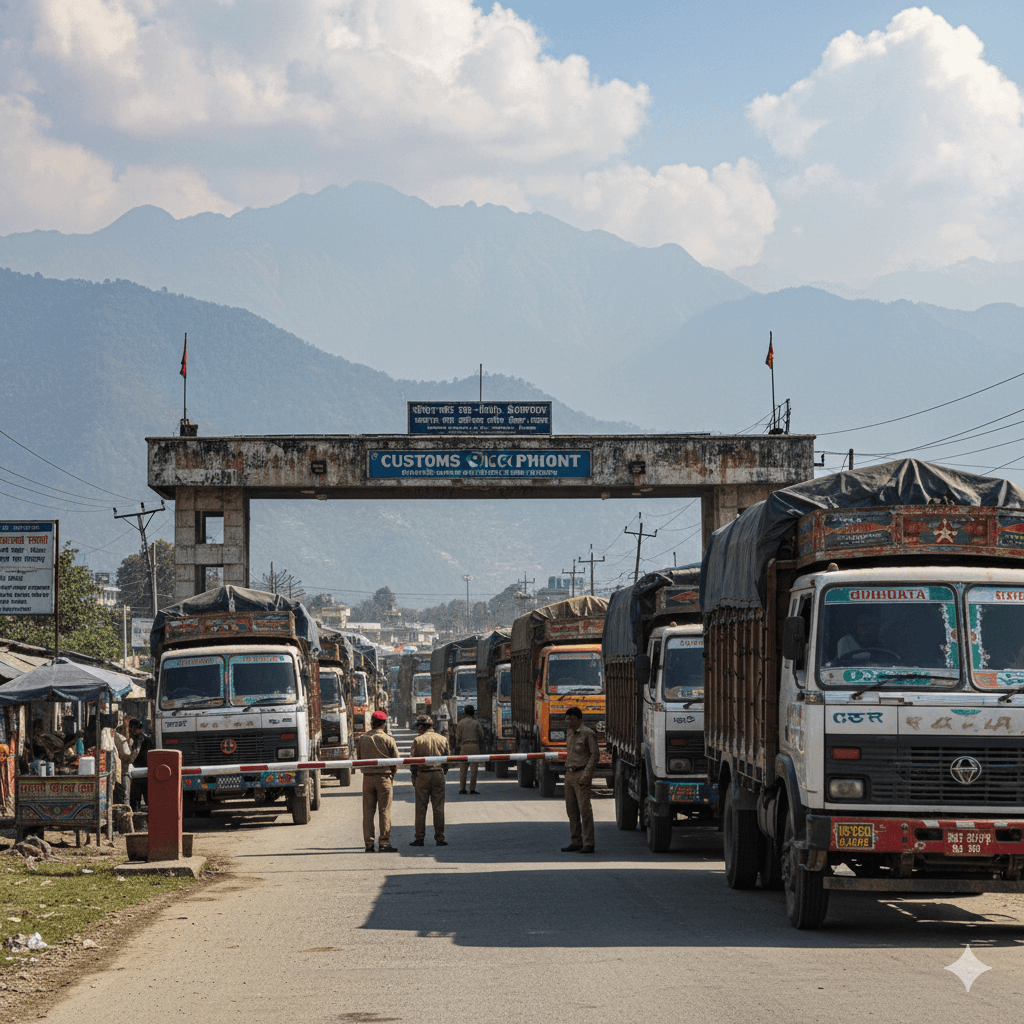
- Landlocked geography: All sea moves must cross at least one border and sometimes multiple jurisdictions, adding complexity and time.
- Infrastructure constraints: Limited dry ports, congested border points, and variable road quality in parts of South Asia introduce delays and higher logistics costs.
- Customs and regulatory differences: Nepalese exporters benefit from EU’s “Everything But Arms” (EBA) preferences, but only if origin rules, documentation, and HS classification are correct; mistakes can forfeit zero‑duty advantages.
- Cost sensitivity: Nepal’s overall trade deficit remains high, with a trade balance deficit of about USD 970 million in October 2025, making efficient logistics critical to export competitiveness.
These issues are precisely why shippers moving goods between Nepal and Europe usually lean on experienced freight forwarders local knowledge at the Nepal end combined with strong European partnerships is essential.
Choosing Air vs Sea: Practical Scenarios
To make this SEO‑friendly and useful, frame choices around common search intent like “shipping from Nepal to Europe cost vs time” and “Europe to Nepal freight options.”
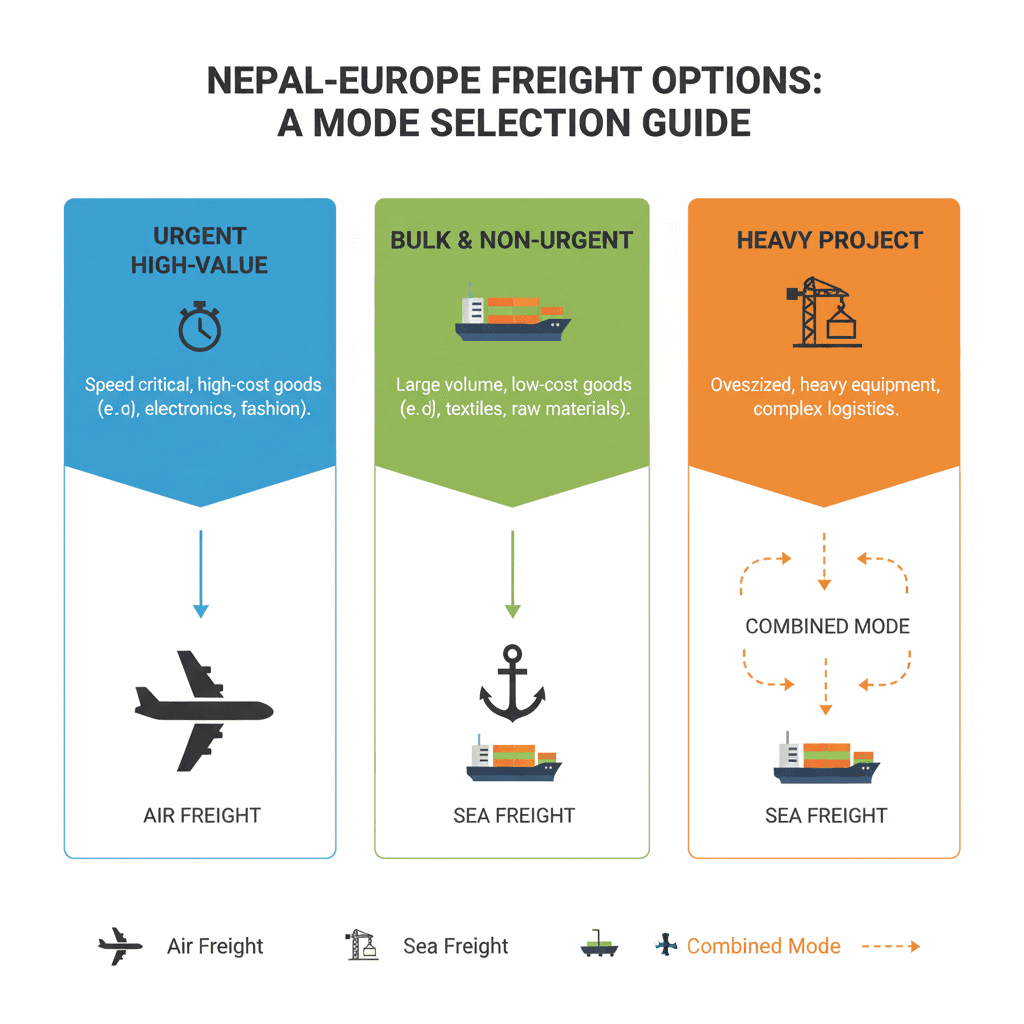
Scenario 1 – High‑value handicrafts from Kathmandu to Germany
- Small volume, high margin, strict delivery date for a trade fair.
- Best choice: Consolidated airfreight (3–5 days) with strong packing and insurance, even at a higher rate per kilo.
Scenario 2 – Large carpet order to a warehouse in Italy
- Several tons, flexible delivery window.
- Best choice: Sea freight via Kolkata to an Italian port, 4–6 weeks total, possibly with LCL or FCL based on volume; cost per square meter far lower than air.
Scenario 3 – Machinery from France to a hydropower project in Nepal
- Oversized equipment, strict commissioning schedule.
- Best choice: Combination of sea freight to Kolkata + heavy‑haul road/rail to Nepal; critical spares by air. Needs project‑cargo expertise and route surveys.
By presenting concrete examples, your blog will answer real user queries like “how long does shipping to Europe take from Nepal?” and “cheapest way to ship machinery from Europe to Nepal” directly.
How a Nepal‑Based Forwarder Optimizes Both Directions
A forwarder like Sea Sky (you can adjust name/branding as needed) adds SEO‑relevant value by:
- Consolidation and routing: Using LCL air and sea consolidations to cut per‑kilo costs for European lanes while maintaining acceptable transit times.
- Customs and preferences: Ensuring EU‑bound exports meet EBA origin rules and documentation standards so buyers receive promised duty‑free treatment.
- Door‑to‑door planning: Combining European pickup/delivery with Nepalese inland legs so shippers see one plan, not fragmented quotes.
- Mode mixing: Designing hybrid movements (sea + air, or sea + truck + rail) for better trade‑offs between speed and cost.
Structuring your blog around these concrete benefits will help it rank for phrases like “shipping from Nepal to Europe,” “freight from Europe to Nepal,” “air freight Nepal Europe transit time,” and “sea freight Nepal to EU cost” while genuinely helping exporters and importers understand their options.
Related posts
1970-01-01
Sea + Air Freight: How SeaSky Helps Businesses Ship Smarter
2026-10-12
France to Nepal Shipping Guide: Air Freight, Sea Freight, Customs and Documents
2026-10-08
Italy to Nepal Shipping Guide 2026: Freight, Customs and Documents
2026-10-07