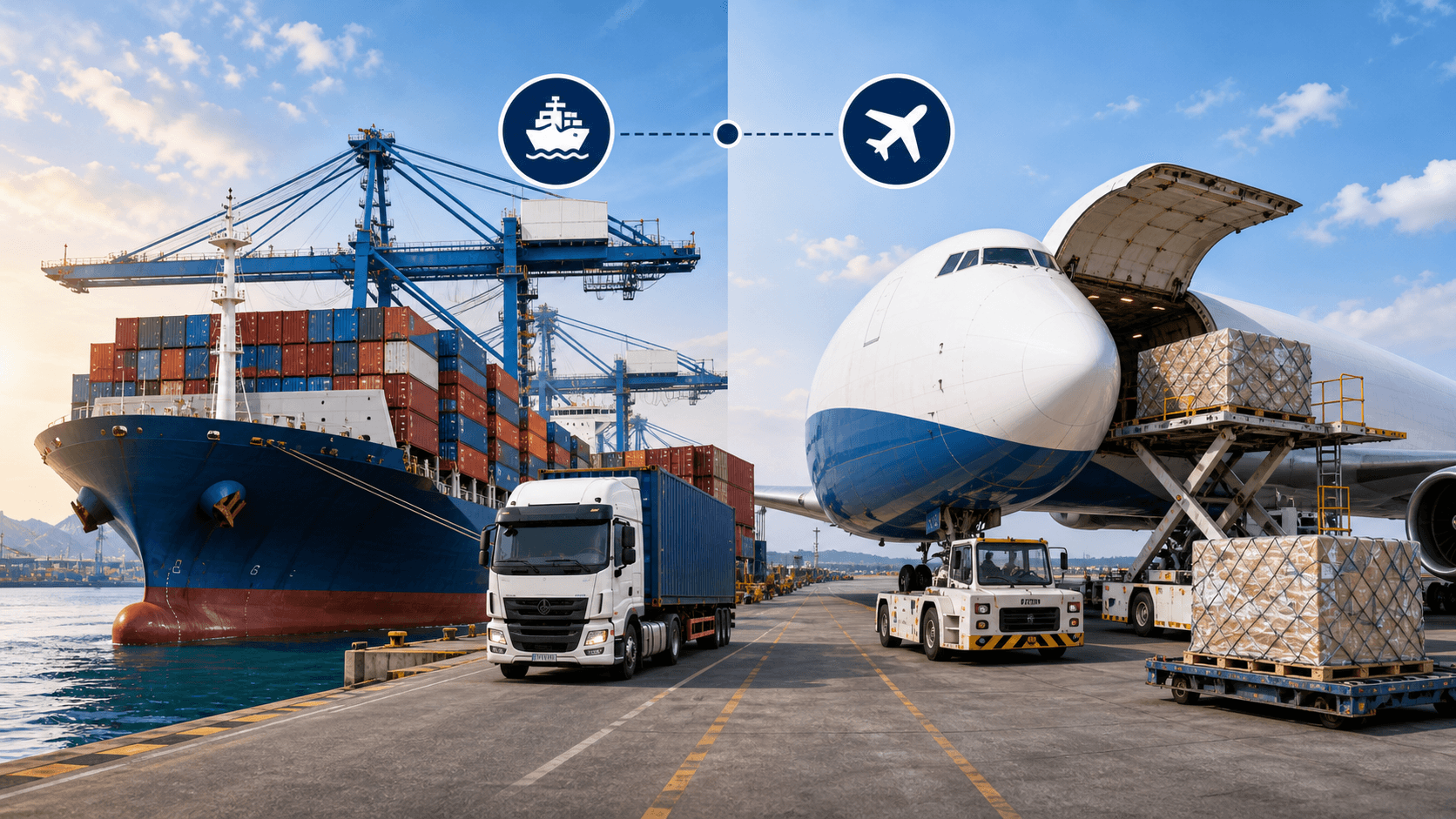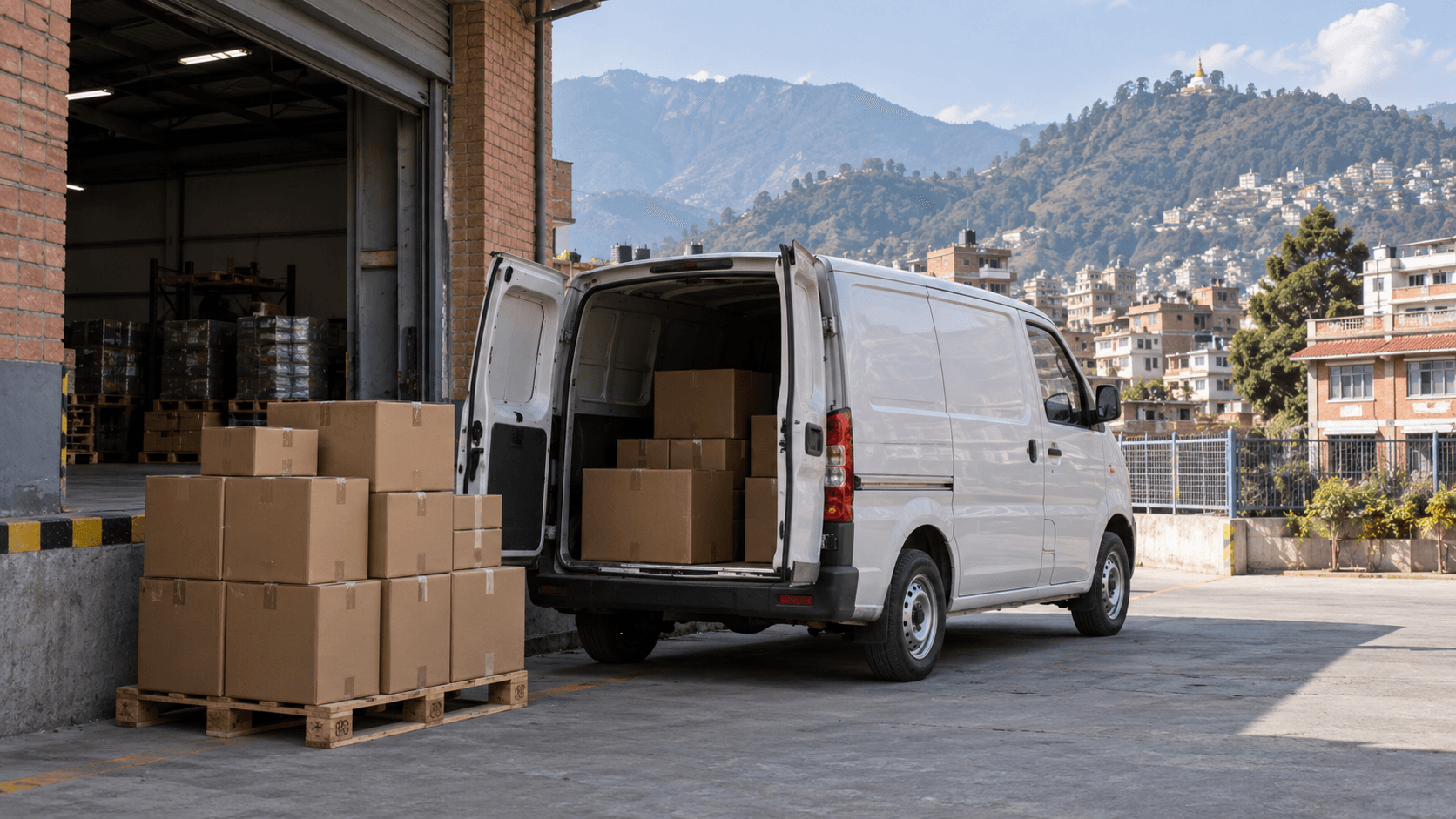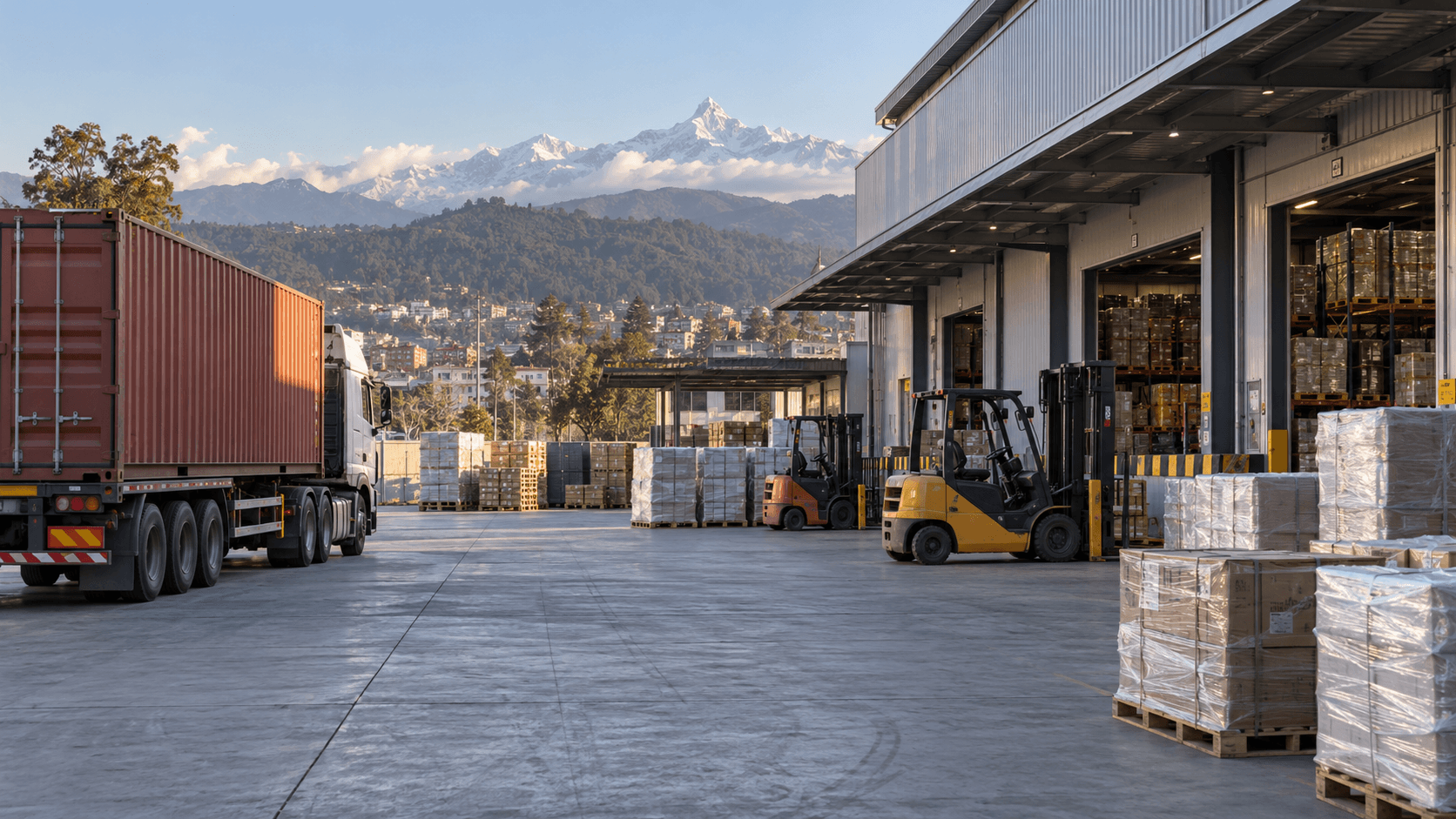
What is breakbulk cargo?
Moving oversized or heavy cargo through an Indian port is not the same as booking a standard container. Machinery, steel structures, plant equipment, transformers and construction materials may be too long, wide, tall, heavy or irregular for a 20-foot or 40-foot container. They need a handling plan built around the actual cargo.
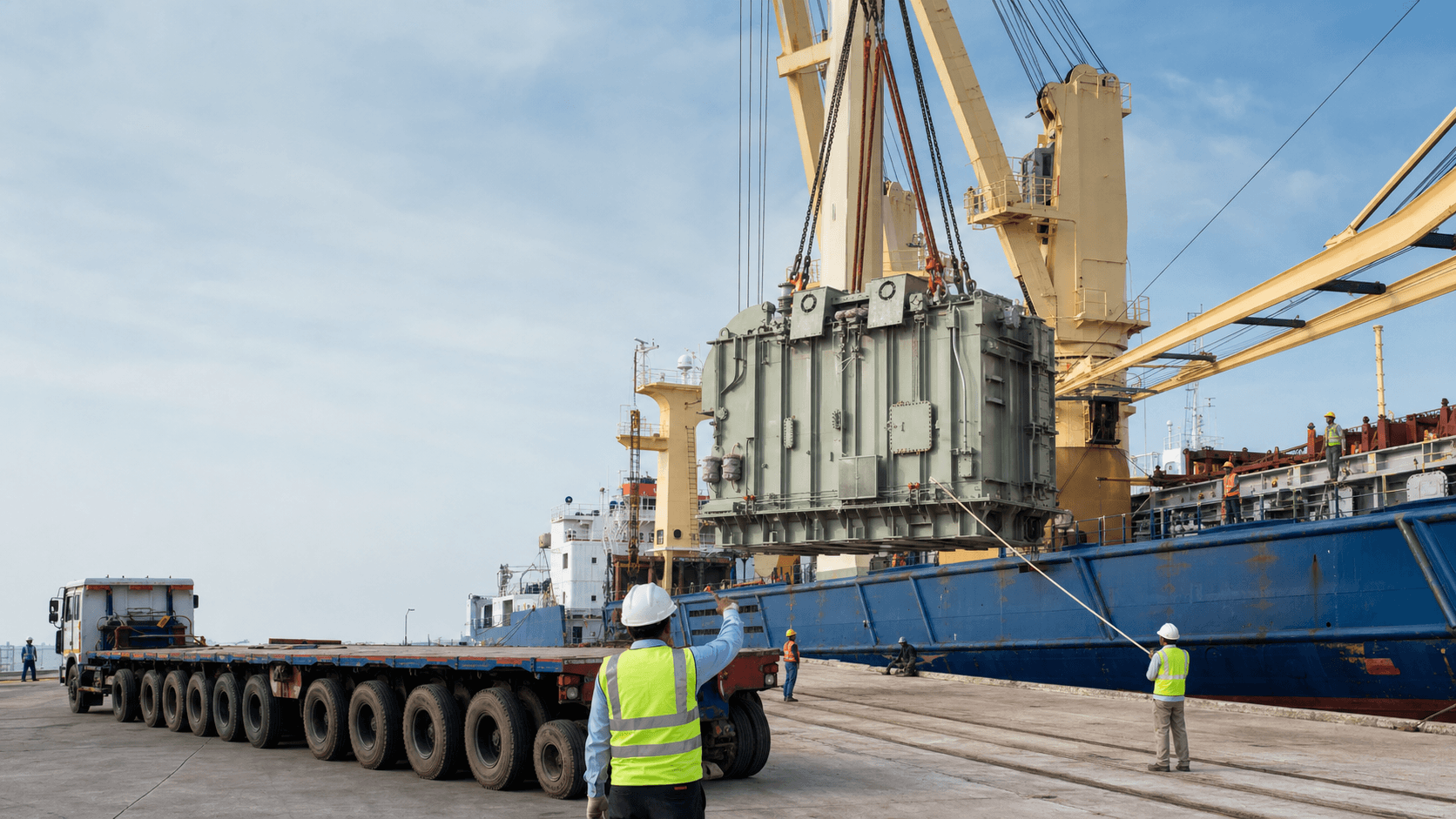
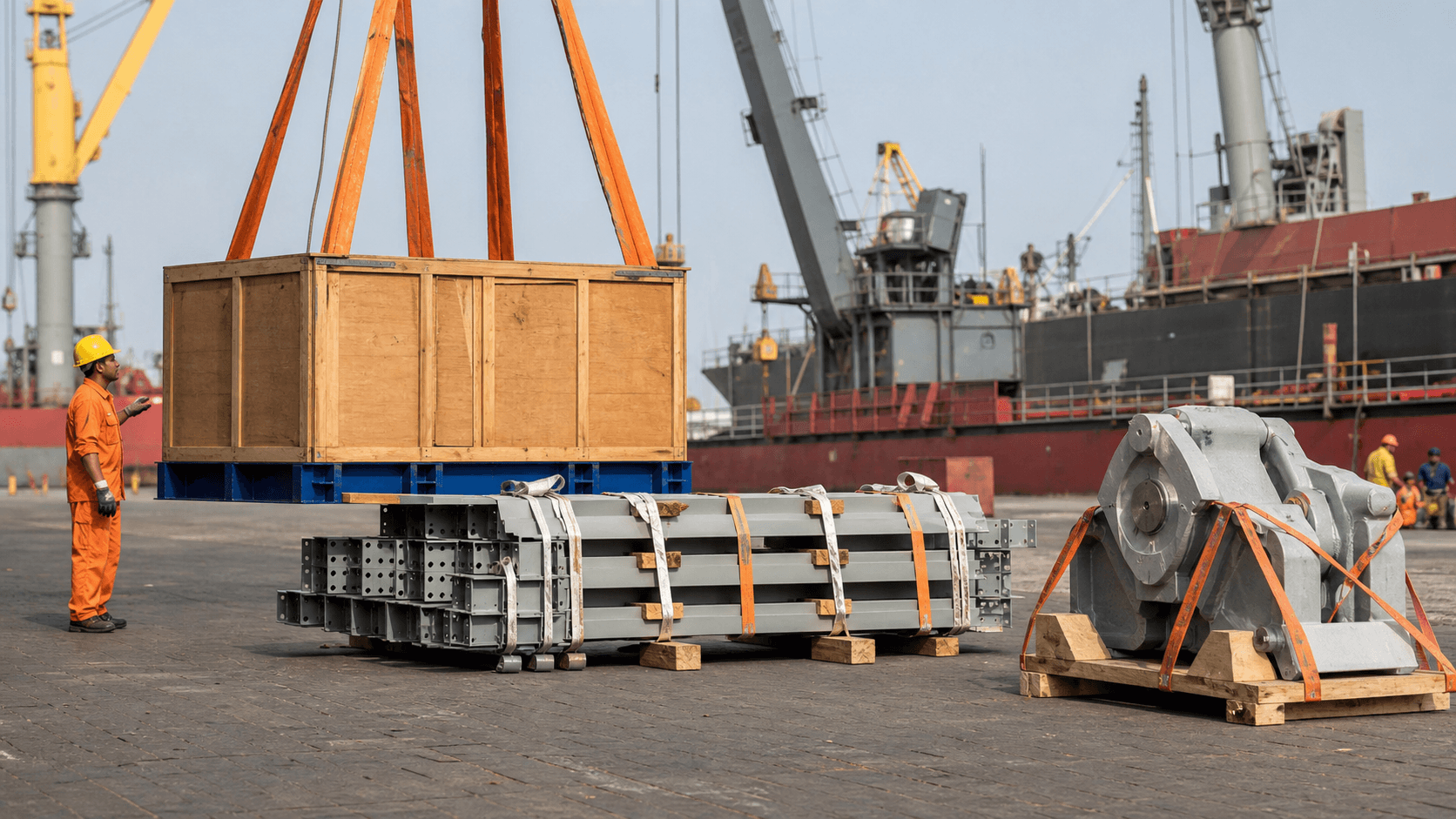
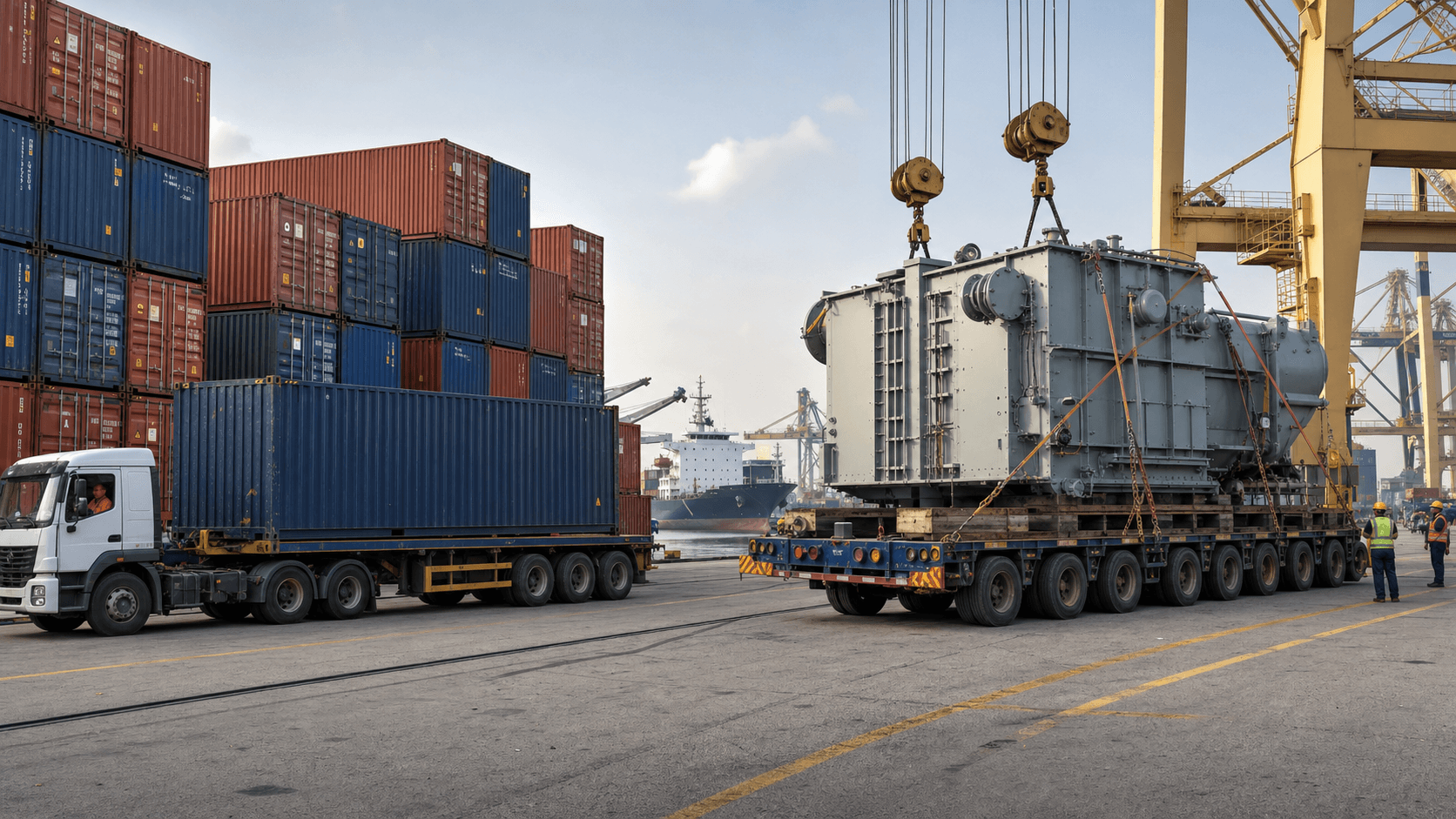
Breakbulk cargo is shipped as individual units instead of being enclosed in a standard container. A unit may be crated, bundled, skidded, wrapped or handled as a bare piece. The terminal and vessel lift, stow and secure each unit separately.
Common examples include:
- Heavy machinery, factory equipment and production lines
- Transformers, generators and power-project components
- Steel pipes, beams, structures and fabricated modules
- Construction equipment, vehicles and industrial parts
- Oversized wooden crates and project-cargo packages
- Cargo whose weight or lifting requirements exceed standard container limits
Breakbulk may be the right method when container loading is physically impossible or would create unsafe weight distribution, lifting or securing conditions. Cargo that can use a flat rack or open-top container may instead move as out-of-gauge container freight. This guide to out-of-gauge freight through Kolkata explains that related option.
The decision should be made from verified dimensions, package weights, lifting points, packing strength and route restrictions, not from a cargo name alone. A press, transformer and steel module can all be called project cargo while needing completely different equipment.
Why Indian ports matter for Nepal-bound cargo
Nepal is landlocked, so ocean cargo must use a seaport outside the country before continuing inland. Indian gateways can connect international vessel services with rail-linked or road movement toward Nepal. For a broader view of those handoffs, see the cargo services in Nepal guide.
Kolkata and Haldia are familiar gateways for Nepal-linked traffic, while Visakhapatnam or another Indian port may be considered according to the vessel service, cargo type, terminal capability, transit arrangement and inland destination. A port name should never be selected only because its ocean rate appears lowest.
Breakbulk cargo may require:
- A shore crane, vessel crane or tandem-lift arrangement
- Suitable quay space and temporary storage
- Survey, tally, stevedoring and cargo-supervision services
- A heavy-duty or multi-axle trailer positioned at the right time
- Transit, customs and port documents prepared before arrival
- Oversize permits, escort plans and border coordination
- Safe lashing, dunnage and weather protection
Every extra handoff introduces cost and risk. The route should therefore be planned port to door: ocean leg, discharge, storage, customs or transit procedure, inland vehicle, border process and delivery-site access.
What does a breakbulk freight forwarder do?
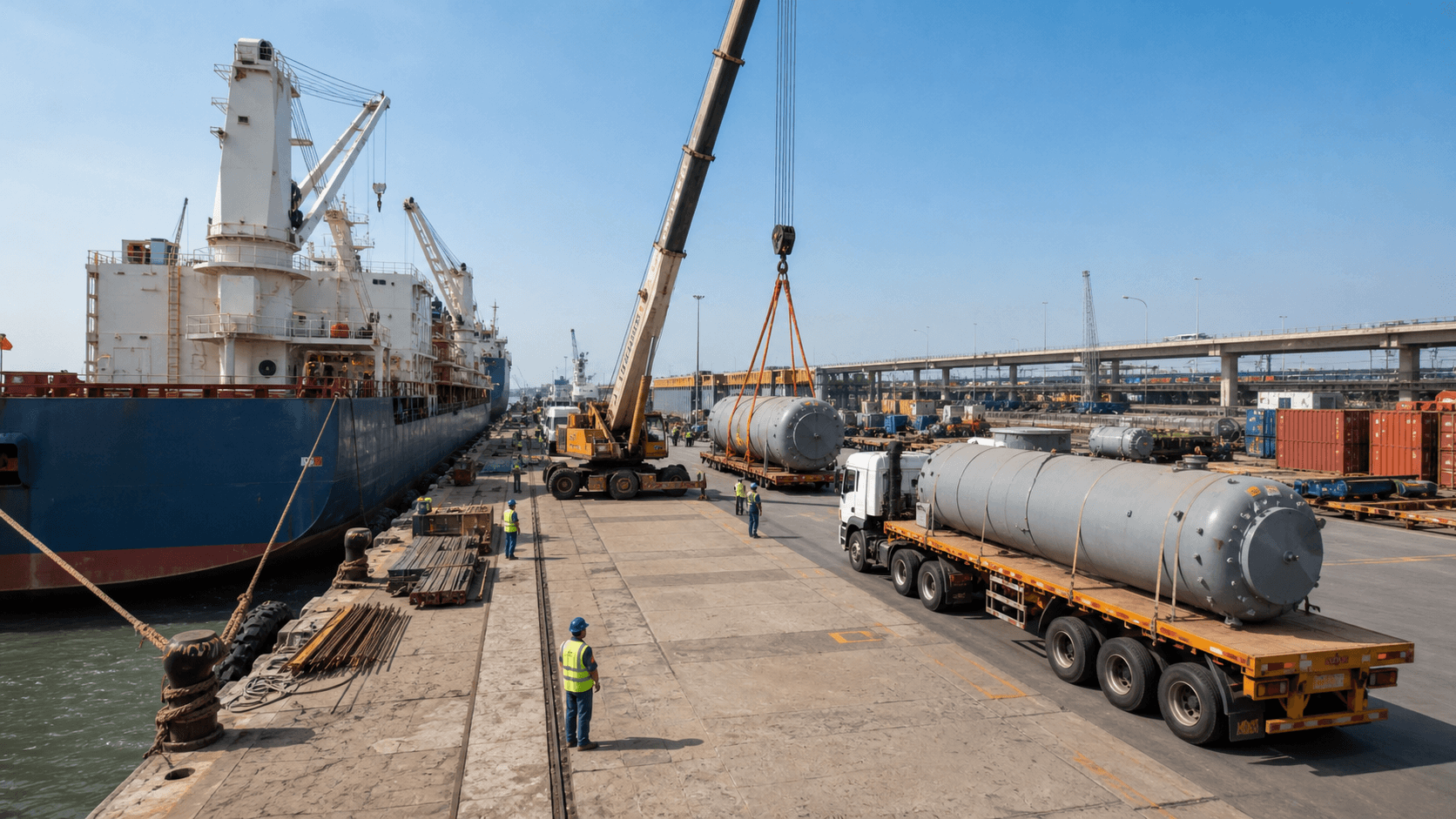
A breakbulk freight forwarder turns cargo information into an executable movement plan. The work begins before the booking, because the shipping line, terminal, customs team and inland carrier all need a consistent understanding of what will arrive and how it can be handled.
The forwarder's responsibilities can include:
- Checking the dimensions, unit weights, centre of gravity and lifting points
- Comparing vessel services and selecting a suitable Indian port
- Confirming terminal restrictions, crane capacity and discharge method
- Coordinating the ocean booking, stevedores, surveyors and port agent
- Reviewing commercial, transport, customs and transit documents
- Arranging the correct trailer, permits, escorts and route survey
- Planning lashing, dunnage, tarpaulin or other cargo protection
- Coordinating the Indian port, Nepal border and final delivery site
The difficult part is often the connection between modes. A vessel may be able to carry the cargo while the discharge crane cannot lift it, or a port may accept it while the planned trailer cannot pass a bridge or site entrance. A capable forwarder checks those interfaces before committing the route.
For ocean planning, Sea Sky's ocean freight service can be combined with destination handling and inland coordination instead of treating each leg as an isolated booking.
Choosing the right Indian port for breakbulk cargo
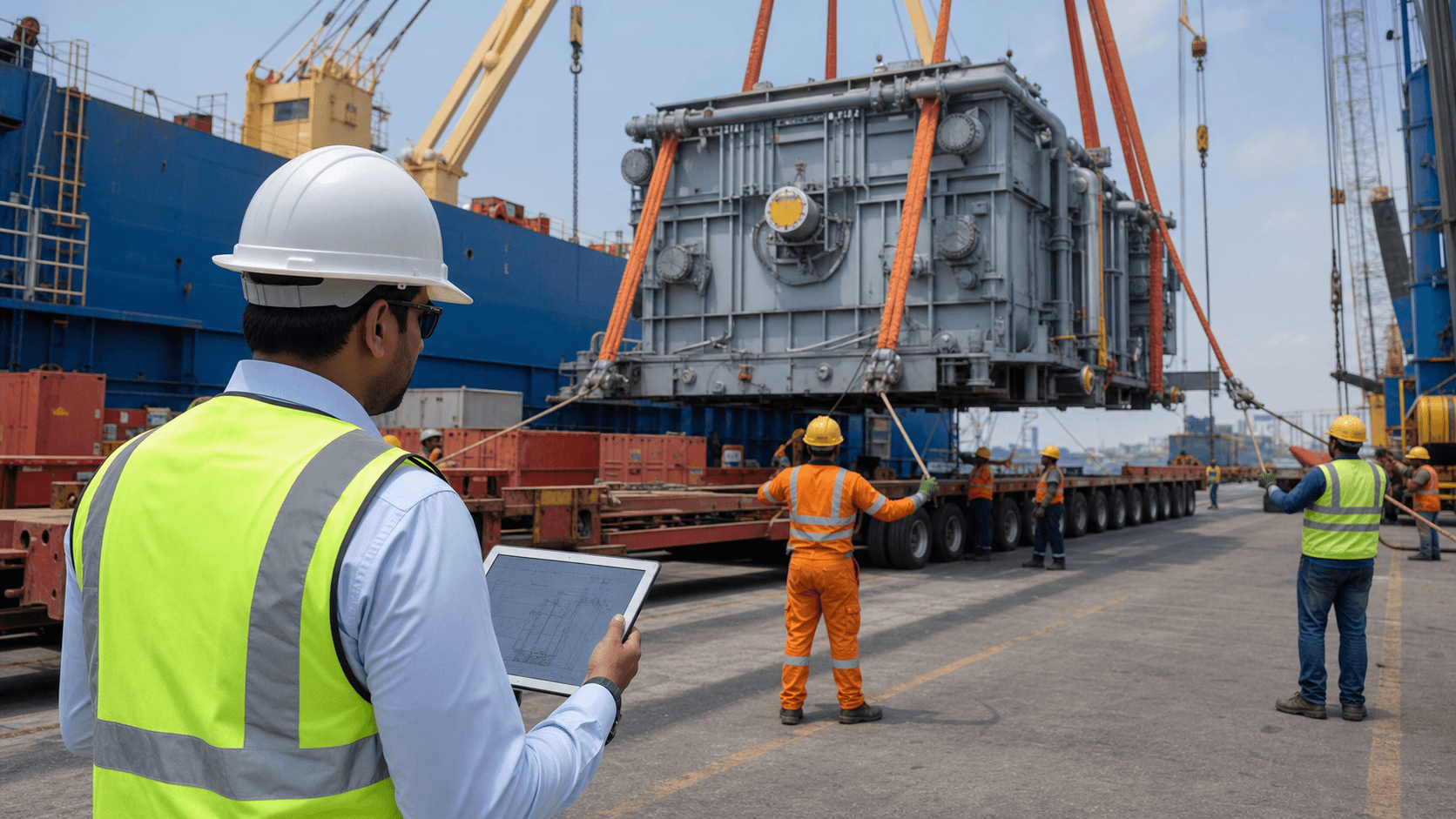
Not every Indian port is suitable for every heavy or oversized shipment. Port selection depends on vessel access, terminal capability, cargo-handling rules, inland connectivity and the final delivery location in Nepal.
Ask these questions before comparing the total route cost:
- Does the vessel service accept the cargo dimensions and unit weights?
- Can the terminal safely discharge and store the cargo?
- Are crane capacity, spreader beams and certified lifting gear available?
- Can a suitable trailer enter the terminal and load beside the cargo?
- What free time, storage, handling and survey charges may apply?
- Is the onward road or rail-linked corridor practical for the cargo envelope?
- Which customs and transit procedures apply at that gateway?
- How far is the port from the Nepal border and final delivery site?
A cheaper port can become the expensive choice if it adds storage days, a long repositioning move, equipment shortages or a difficult oversize corridor. Compare the complete landed movement and the operational risk, not only the sea-freight line item.
The final choice should be confirmed in writing with the carrier, terminal and inland transporter against a common cargo list. Provisional dimensions or a generic label such as 'one machine' are not enough for a safe quotation.
Documents and customs checks before booking
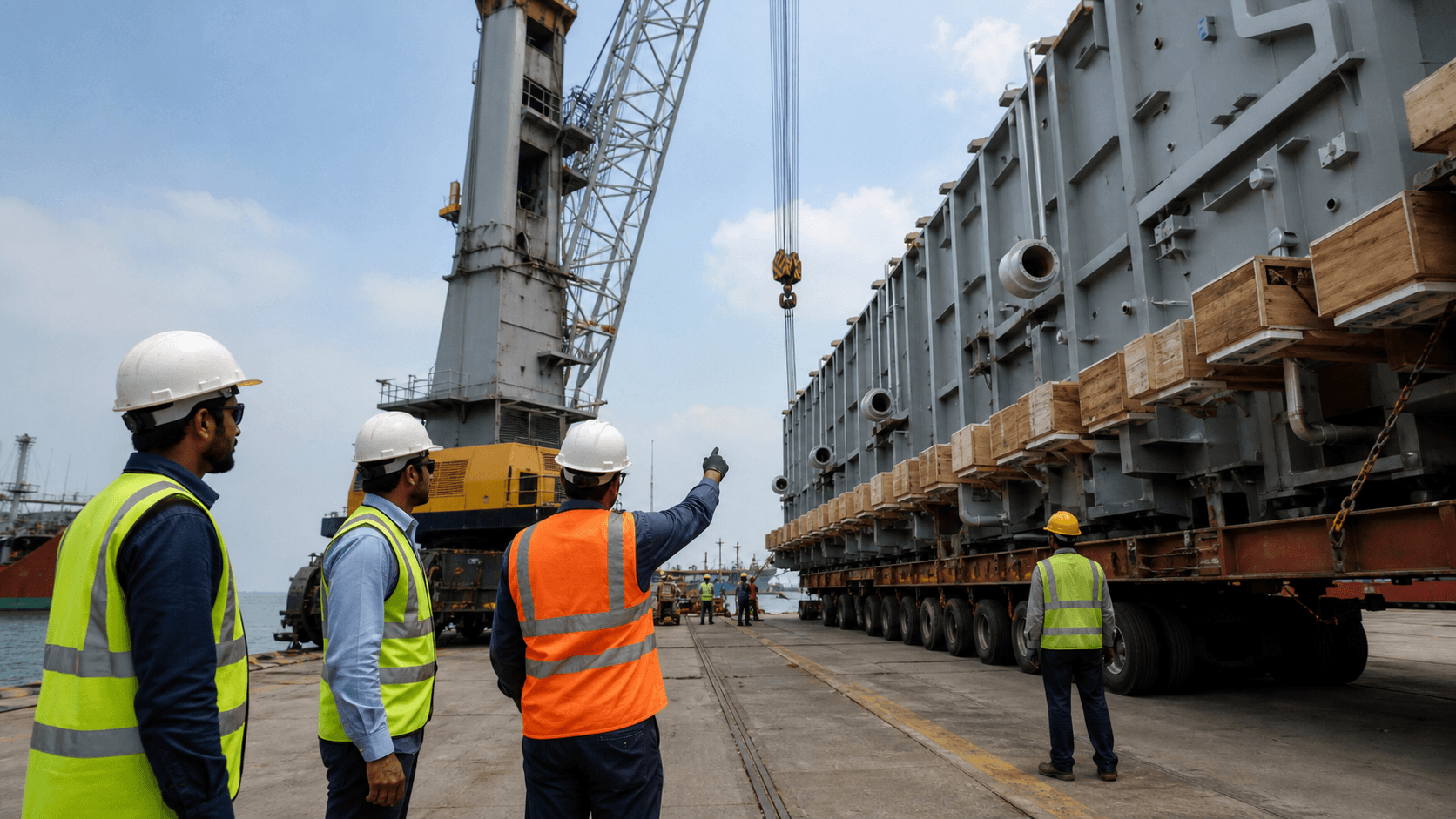
Incomplete or inconsistent documents are a common cause of breakbulk delay. The booking file, bill of lading instructions, customs declaration and physical cargo must describe the same shipment. Even a small difference in package count, weight or description can stop a handoff while the parties seek clarification.
A typical file may include:
- Commercial invoice and detailed packing list
- Bill of lading instructions and final transport document
- Certificate of origin and insurance document when applicable
- Length, width, height, gross weight and net weight for every package
- Technical specification, cargo drawings and clear photographs
- Centre-of-gravity and lifting-point details
- Lifting, lashing or transport plan when required
- Import, transit, project and buyer documents
- Agent authorization letter and product-specific permits when applicable
The packing list should show dimensions and gross weight by package, not only a combined total. The forwarder also needs to know whether projections, loose accessories or a skid change the transport envelope. For customs preparation, review Sea Sky's customs-clearance guide before the cargo departs.
Document requirements vary by commodity, origin, transaction and route. Classification, valuation, licenses and transit formalities should be checked with the responsible customs professionals. The goal of a pre-booking review is to identify gaps early, while drawings, packing and shipping instructions can still be corrected.

Need a document check before booking breakbulk cargo?
Share the cargo dimensions, weights, packing details and proposed route. Sea Sky can review the shipment file and flag missing port, customs or inland-planning information.
Breakbulk vs container shipping
Container and breakbulk shipping solve different cargo problems. A standard container protects compatible cargo within a repeatable handling system. Breakbulk gives the carrier and terminal more flexibility for pieces that cannot safely fit within that system, but each piece receives more individual handling. Choose breakbulk when the cargo cannot fit safely inside a standard container, exceeds practical payload limits, needs crane handling as a separate unit or forms part of a project shipment. Open-top and flat-rack containers can bridge the gap for some out-of-gauge pieces, so compare all technically viable options before booking. A mode decision should include packing, ocean freight, terminal handling, survey, storage, equipment positioning, customs and inland delivery. The apparent cheapest method can change once these costs are added.
| Planning factor | Standard container | Breakbulk cargo |
|---|---|---|
| Best suited to | Regular cargo within container dimensions and payload | Oversized, heavy or irregular individual units |
| Loading method | Cargo packed inside a 20-foot, 40-foot or high-cube unit | Each unit lifted, stowed and secured separately |
| Handling | Standardized terminal equipment and processes | Cargo-specific crane, rigging, survey and stevedoring plan |
| Weather exposure | Container provides an outer enclosure | Packing and weather protection must suit open handling |
| Inland movement | Standard chassis or container trailer where permitted | Trailer and route selected from the cargo dimensions and axle loads |
| Main risk | Payload, packing, detention and container availability | Lifting, securing, port readiness and route restrictions |
Common problems and a practical planning checklist
Breakbulk problems are expensive because they often surface when the vessel, crane, terminal or special vehicle is already committed. The most common failures are incorrect dimensions, an unconfirmed lifting method, weak packing, missing permits, unsuitable trailers, customs mismatches and an inland route that was assumed rather than surveyed.
Before requesting a firm quotation, prepare:
- Cargo name, function and HS classification information
- Package count and dimensions for every individual unit
- Gross weight per unit and total shipment weight
- Current photographs, drawings and packing method
- Marked lifting points and centre-of-gravity information
- Origin pickup and final delivery addresses
- Preferred port or route, if one has already been proposed
- Delivery deadline and any shutdown or project-site schedule
- Available commercial, customs, buyer and project documents
- Site access details, unloading method and receiving equipment
The forwarder can then test vessel acceptance, crane and rigging needs, terminal readiness, trailer capacity and corridor restrictions. If dimensions may change after final packing, state that clearly and keep the rate provisional until the final cargo list is issued.
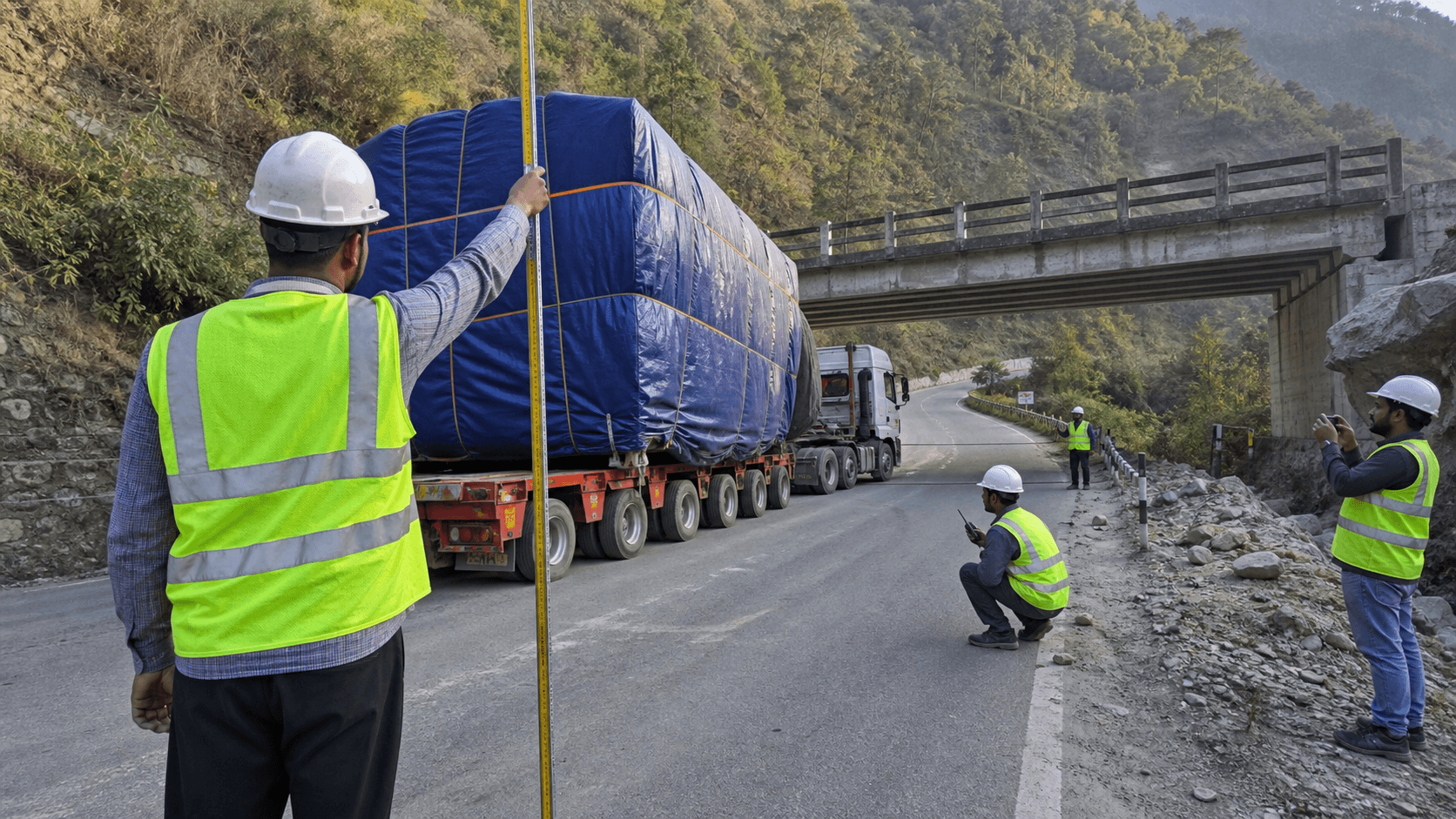
For high or wide cargo, a route survey may need to check bridges, overhead lines, toll lanes, turning radii, gradients and delivery-site access. Loading and lashing should follow an approved method, with survey evidence retained when the contract or insurer requires it.
Moving breakbulk cargo from an Indian port to Nepal
Discharge at the Indian port is only the start of the inland operation. The cargo still needs release or transit processing, a suitable vehicle, a workable border route and a delivery plan for the final site in Nepal.
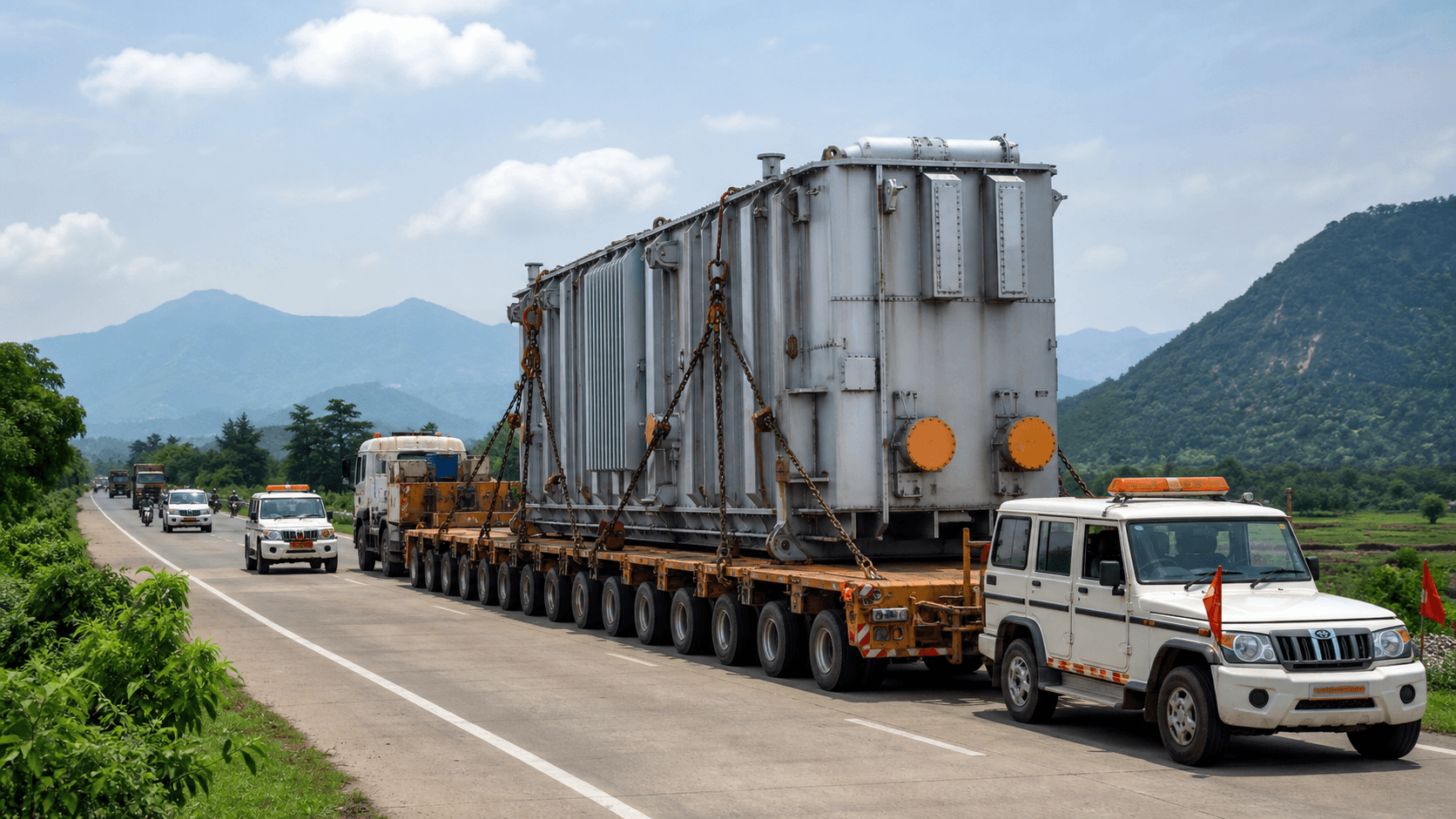
Heavy and oversized pieces may use low-bed, hydraulic modular or multi-axle trailers. The correct configuration depends on package dimensions, total and axle loads, ground clearance, route geometry and unloading method. Sea Sky's trailer-capacity reference and road freight service provide starting points, but the equipment must be confirmed against the actual cargo and route.
The inland plan should cover:
- Port loading slot and vehicle-entry requirements
- Transit and customs handoffs in India and Nepal
- Oversize permits, escorts and movement-hour restrictions
- Bridge capacity, road width, overhead clearance and turning radius
- Border facilities and any need to transfer or reposition cargo
- Weather, road condition and seasonal constraints
- Final-site access, crane availability and safe unloading
Route planning should happen before the vessel arrives. A special trailer may need time to mobilize, and permits or route work can take longer than ordinary trucking. Regional alternatives such as China-Nepal cargo routes involve different border and corridor conditions; they should be compared only when origin, cargo and trade arrangements make them relevant.
A dependable plan names who controls each handoff and what triggers the next step. That clarity matters when several parties are working across the port, transit corridor, border and delivery site.
How Sea Sky Cargo supports breakbulk movements
Sea Sky Cargo supports freight forwarders, importers, exporters and project teams planning heavy cargo through Indian ports and onward to Nepal. The aim is to expose operational gaps before the cargo moves, when the port, documents and inland route can still be adjusted.
Support can include:
- Breakbulk and project-freight planning
- Indian port and ocean-carrier coordination
- Cargo-dimension and document review
- Customs, transit and border coordination
- Heavy trailer selection and inland route planning
- Survey, loading, lashing and delivery coordination
- Practical updates across the port-to-Nepal movement
Early involvement is especially useful for overseas forwarders quoting a Nepal destination. Enter the cargo type, dimensions, weight, origin, proposed port and delivery site through the get a quote page. Sea Sky can then request any drawings needed and identify the questions that must be answered before the route is priced and promised to the client.
A reliable breakbulk freight forwarder to an Indian port does more than book space. The forwarder connects lifting, port handling, documents, customs, the inland vehicle and final delivery into one workable plan. For Nepal-bound heavy cargo, that coordination is what turns a freight rate into a shipment that can actually move.
Frequently asked questions
What is a breakbulk freight forwarder?
A breakbulk freight forwarder manages cargo that cannot move safely inside a standard container. The work can include carrier booking, lifting and terminal planning, documentation, customs coordination, surveys, special trailers and inland delivery.
Which Indian ports handle breakbulk cargo for Nepal-bound shipments?
Kolkata, Haldia, Visakhapatnam or another suitable Indian gateway may be considered. The right port depends on vessel service, cargo dimensions and weight, terminal capability, customs or transit arrangements, inland route and final destination.
Is breakbulk shipping better than container shipping?
Breakbulk is usually more suitable for oversized, heavy or irregular cargo that cannot fit safely within container limits. Standard containers are generally more predictable for compatible commercial cargo. Flat racks and open-top containers may also be compared for some out-of-gauge pieces.
What documents are needed for breakbulk cargo?
Common documents include a commercial invoice, detailed packing list, bill of lading, certificate of origin, insurance information, package dimensions and weights, technical drawings, lifting details and any required import, transit or product permits. Requirements vary by shipment.
Can breakbulk cargo move from an Indian port to Nepal?
Yes. It can continue by road or a rail-linked and road route, depending on the corridor and cargo. Oversized units may need special trailers, permits, escorts, route checks, customs coordination and a prepared unloading site.
The safest time to solve breakbulk questions is before booking. Accurate cargo data and a port-to-door plan reduce the chance that the shipment reaches an Indian port without the documents, lifting method or inland equipment needed to continue.
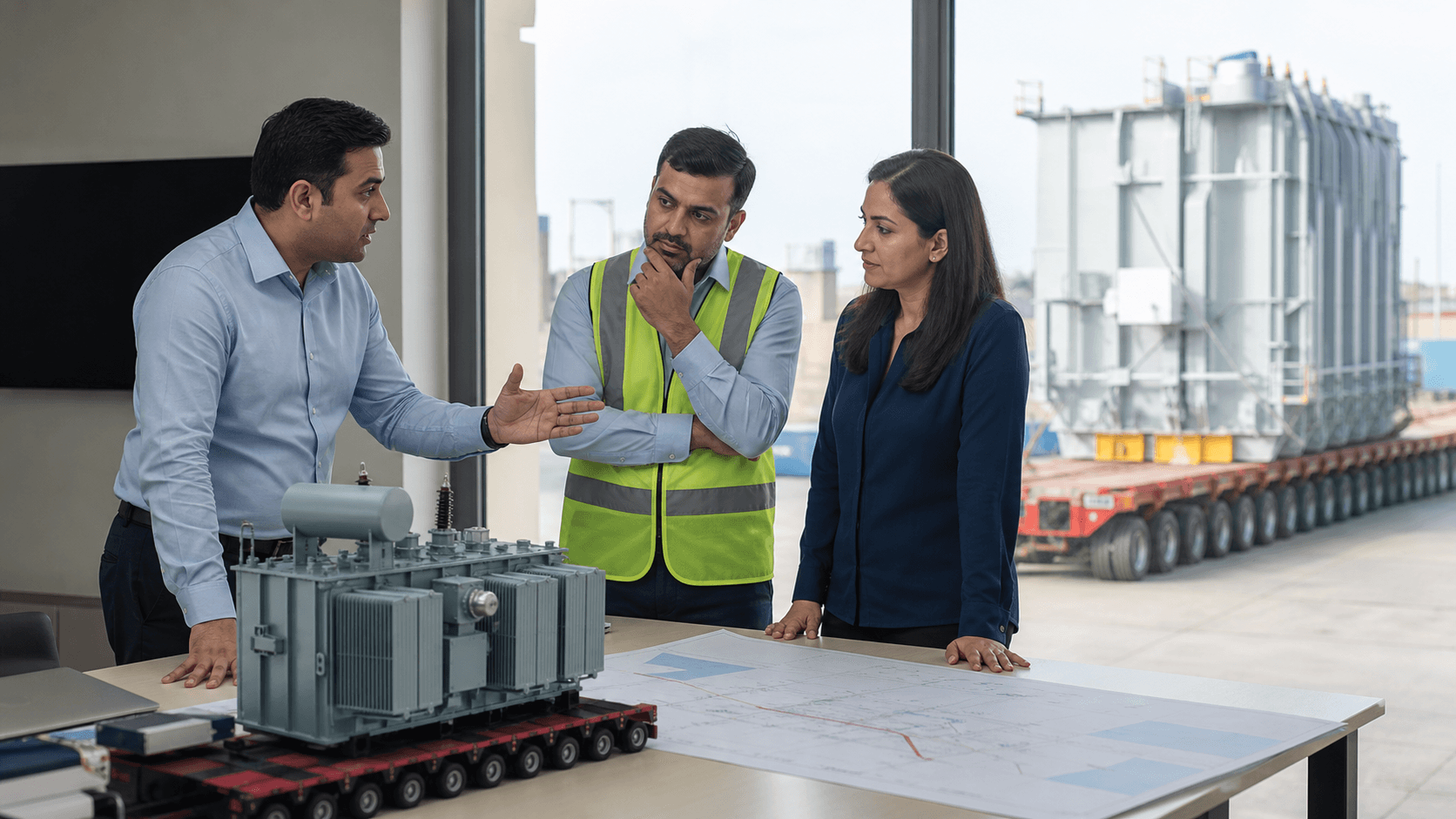
Planning oversized cargo through an Indian port?
Sea Sky coordinates breakbulk freight, Indian port handling, customs documentation and Nepal-bound inland movement for heavy and project cargo.