What freight means
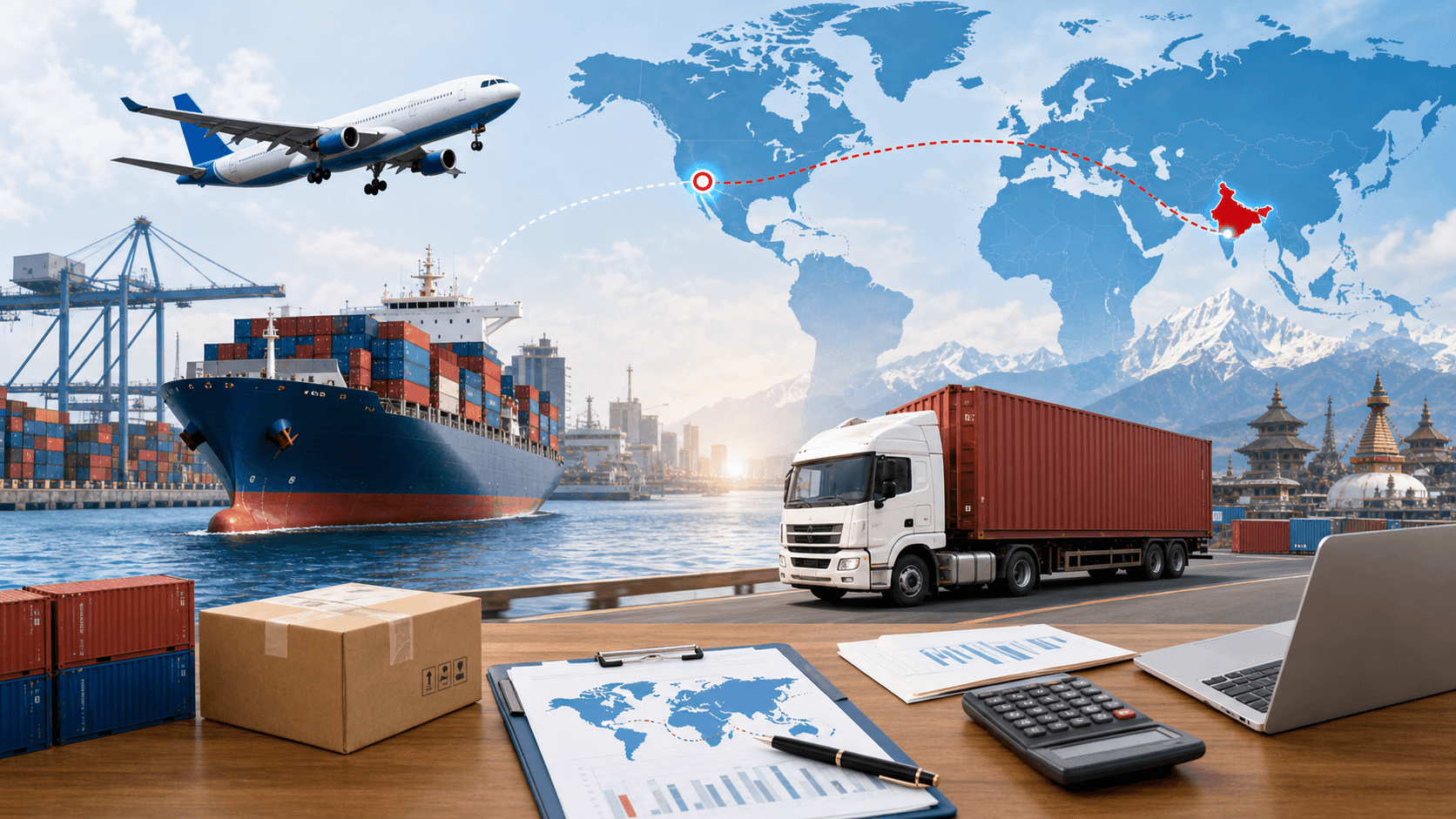
Freight is commercial cargo moved in larger quantities by air, sea, road, or multimodal transport. It is different from small parcel shipping because freight usually requires booking space, shipment documents, customs processing, and often a freight forwarder to coordinate the move.
For businesses, freight shipping is useful when cargo is too large, too heavy, too urgent, or too valuable to send as a simple parcel. That is why freight to and from the USA is often managed as a full logistics project instead of a single carrier booking.
Freight to the USA
Freight to the USA is usually the right option for exporters shipping commercial goods from Nepal or other regions into the American market. Typical cargo may include garments, carpets, handicrafts, industrial items, project cargo, or business stock.
Sea freight is often used for larger or less urgent shipments because it is more cost-efficient for bulk cargo. Air freight is better for urgent, high-value, or time-sensitive cargo where delivery speed matters more than shipping cost.
Freight from the USA
Freight from the USA usually refers to imports entering Nepal or another destination from the American market. Businesses often use this route for electronics, machinery, branded products, spare parts, samples, retail stock, and specialized commercial cargo.
Imports from the USA require strong document control because customs authorities often review product value, origin, HS code, and import requirements before release. If the paperwork is unclear, the shipment may face delays even when the freight line itself is fast.
Sea and air options
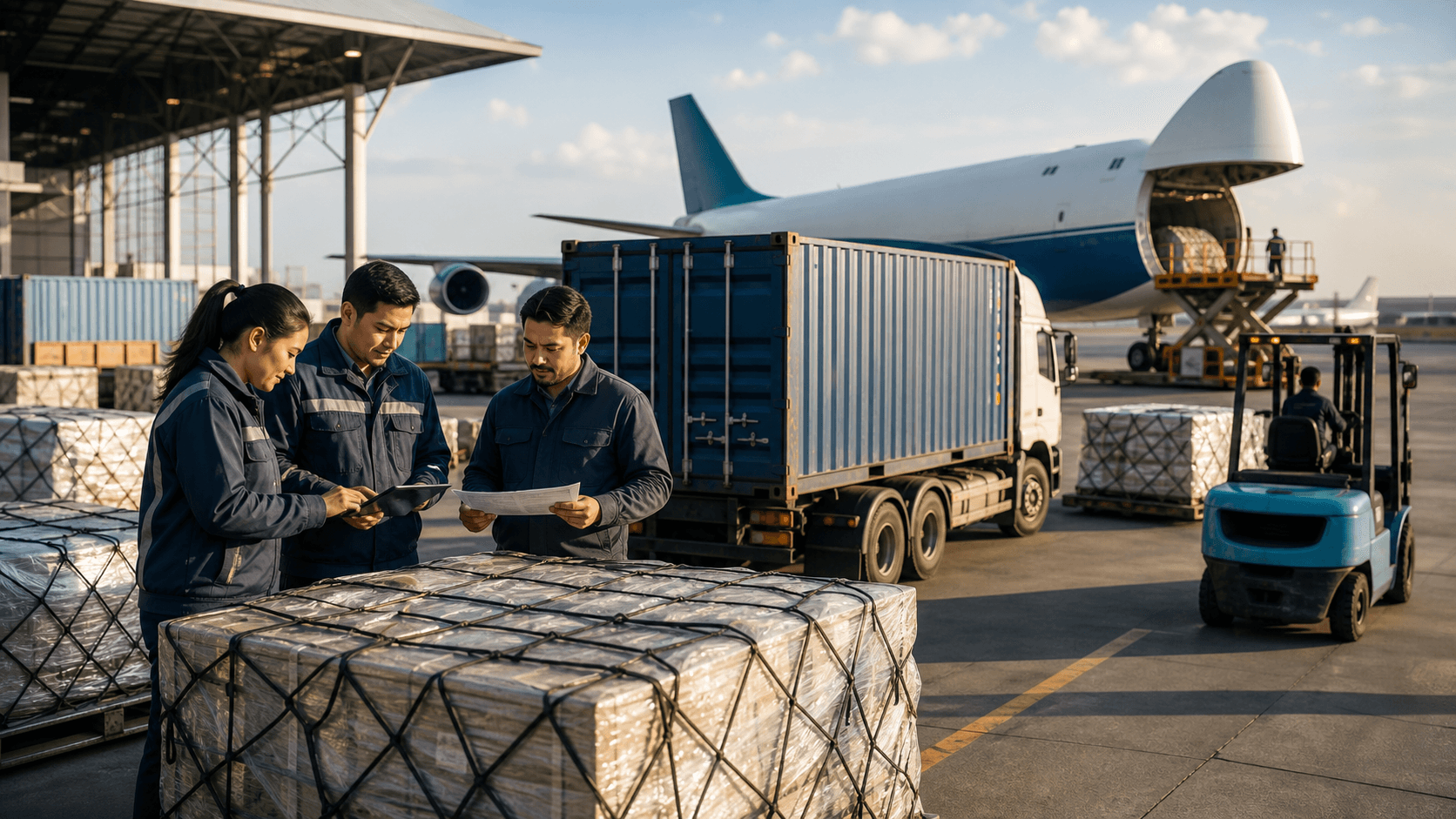
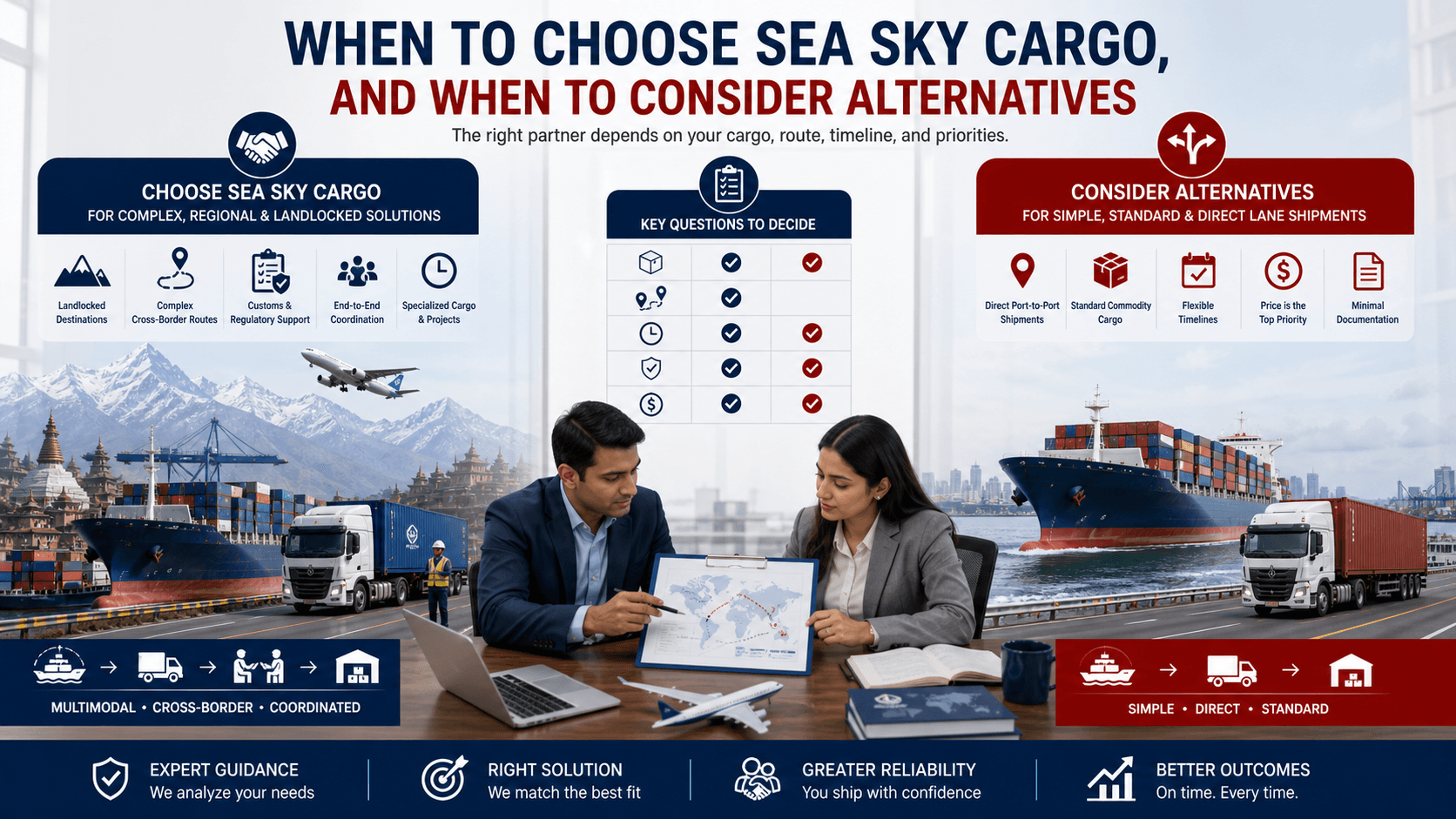
The main shipping options for USA freight are sea freight and air freight. Sea freight is usually the better fit for heavy or high-volume cargo, while air freight works best when the shipment is small, urgent, or expensive enough that speed is worth the extra cost.
A good logistics partner should help you decide which mode fits the cargo, not just quote one transport rate. Sea Sky’s shipping guides show that it handles air, sea, and land-linked logistics, which is useful for businesses that need flexible routing.
Documents needed
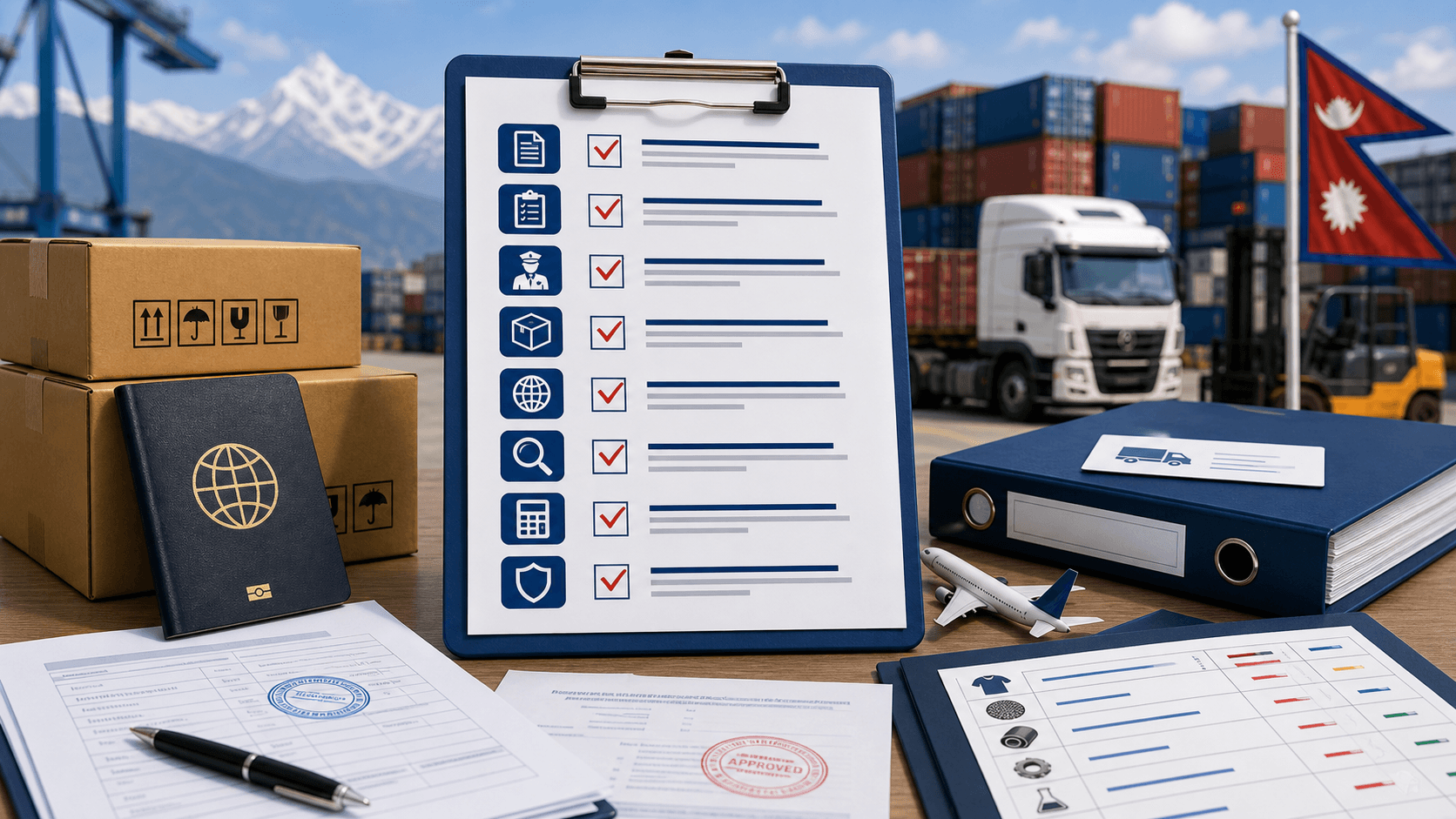
The most important freight documents are the commercial invoice, packing list, transport document such as a bill of lading or airway bill, and any origin or customs form required by the destination country. For imports into Nepal, customs may also require company registration, PAN/VAT details, permits, or product-specific certificates depending on the shipment.
Document accuracy matters on both sides of the route. Mismatched values, vague product descriptions, or missing permits can slow down customs clearance and increase storage or handling costs.
Customs and clearance
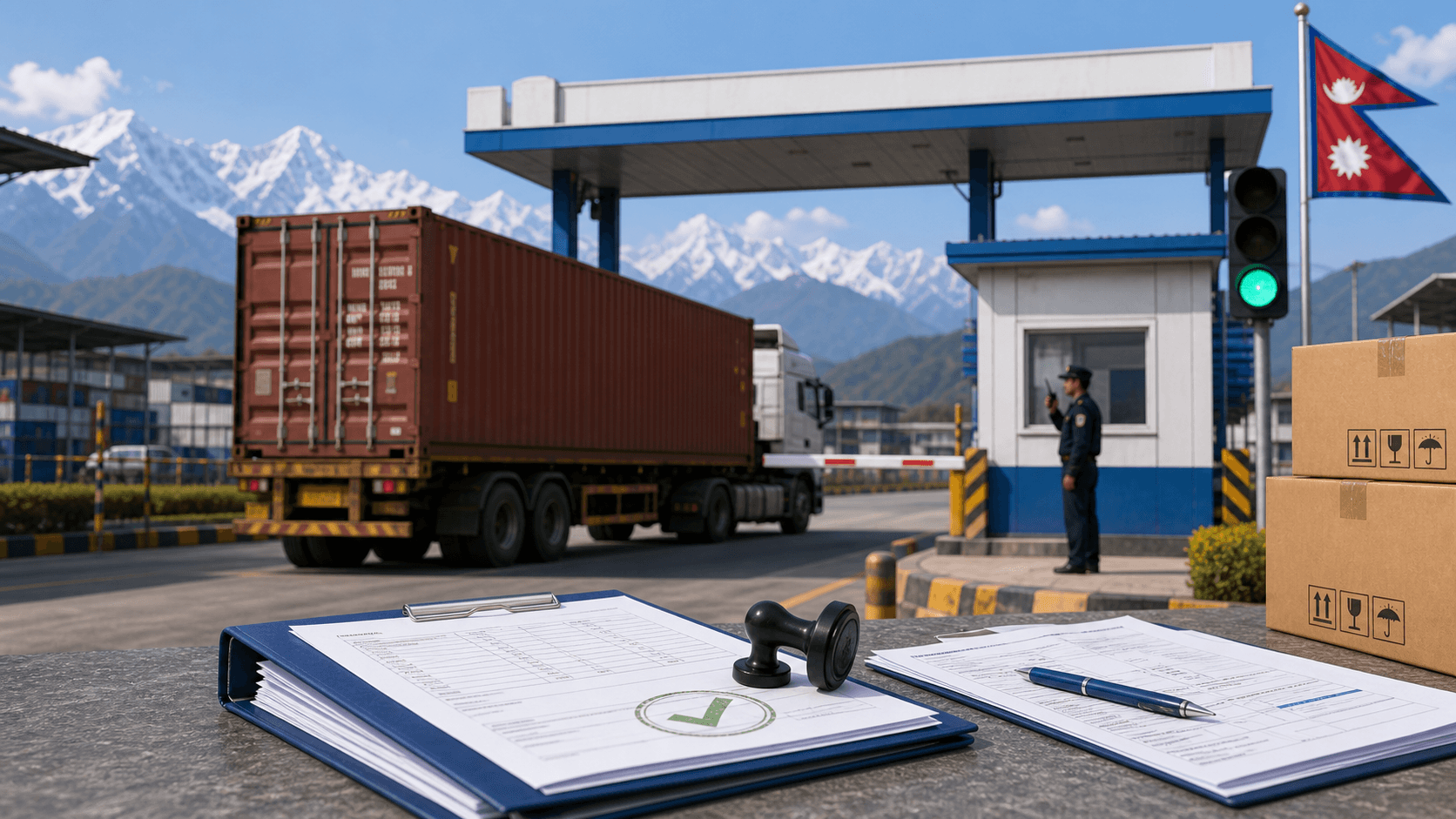
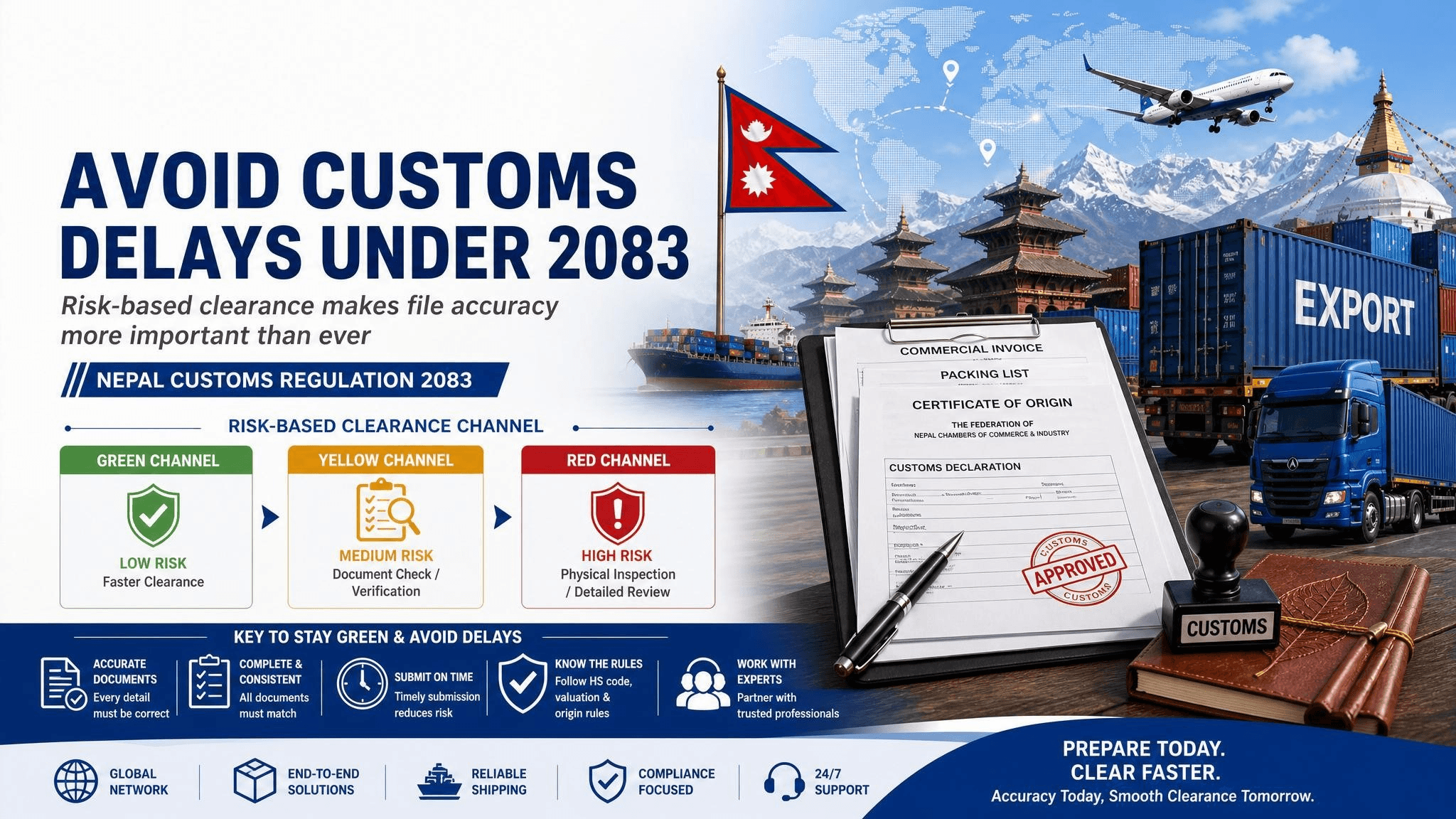
Customs clearance is often the most important step in freight to and from the USA. In practice, customs reviews the declared value, product description, HS code, and any permit or compliance requirement before release.
For freight from the USA into Nepal, customs charges and import taxes may apply based on the product and declared CIF value. For freight to the USA, exporters need to make sure the outbound paperwork is correct and that the shipment is ready for inspection if required.
Transit time and planning
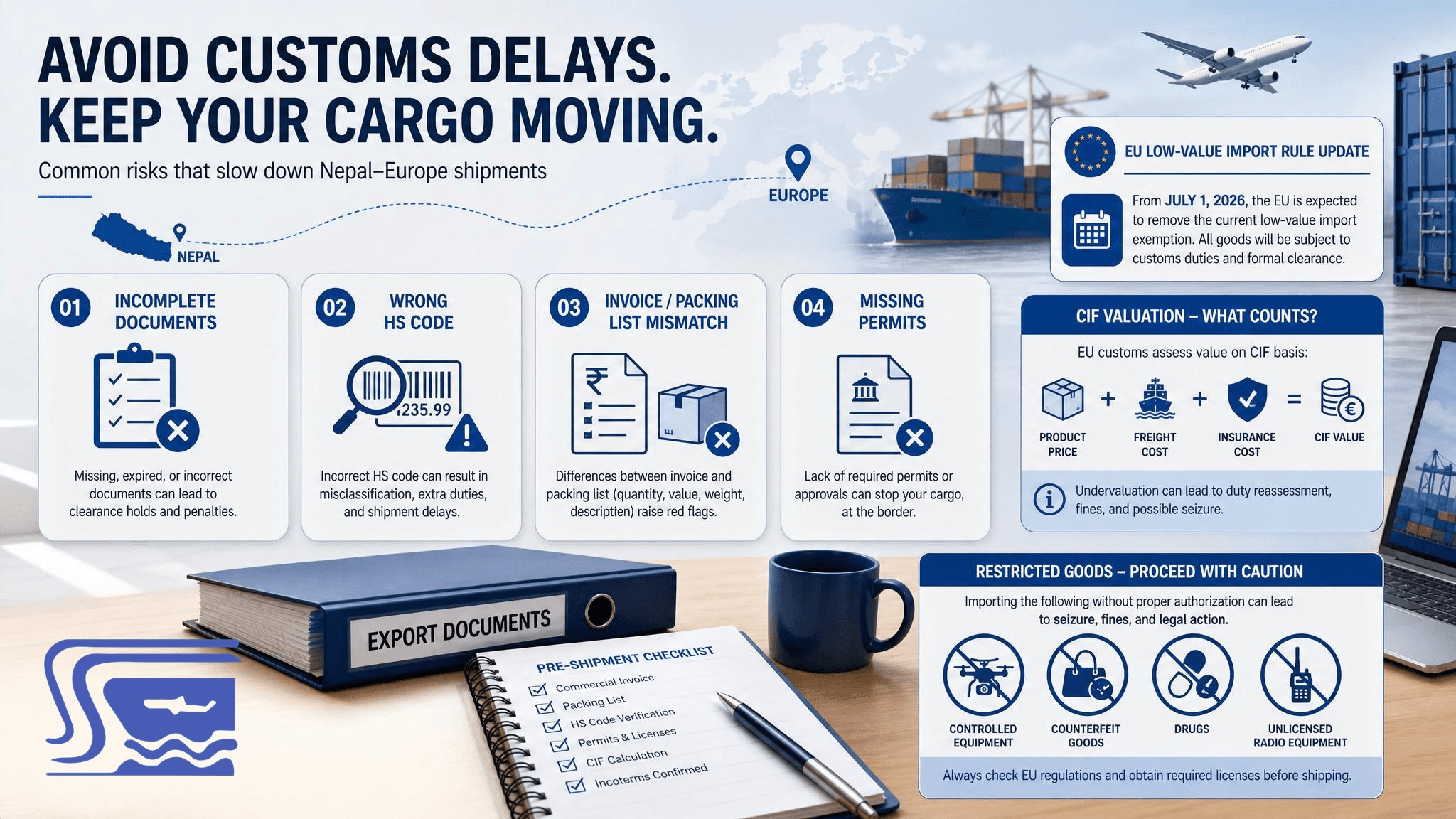
Transit time depends on the mode, route, and customs readiness. Air freight is much faster, while sea freight takes longer but usually offers better value for larger shipments.
Planning should always include possible customs delay, carrier booking time, and inland transport after arrival. A shipment that is perfectly booked but poorly documented can still arrive late in the customer’s hands.
Common delays
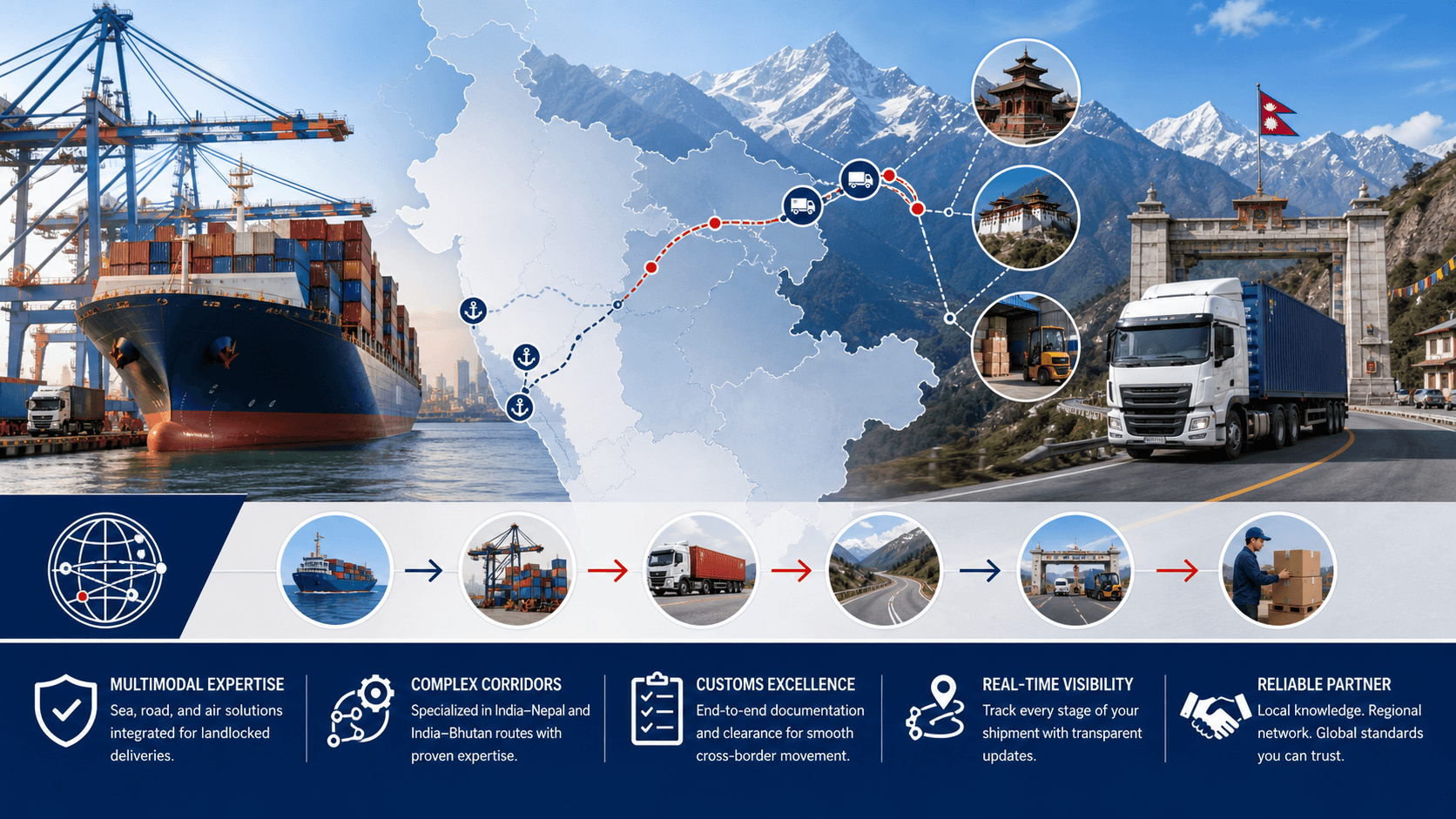
The most common delays in USA-related freight are caused by missing documents, unclear product descriptions, wrong HS codes, or permit problems. Another frequent issue is underestimating how long customs review or carrier handling may take once the cargo arrives.
Businesses can reduce delays by sharing draft documents early, confirming cargo details before booking, and choosing the freight mode that matches the product. Small mistakes at the start often become expensive problems later in the chain.
Why Sea Sky Cargo is useful
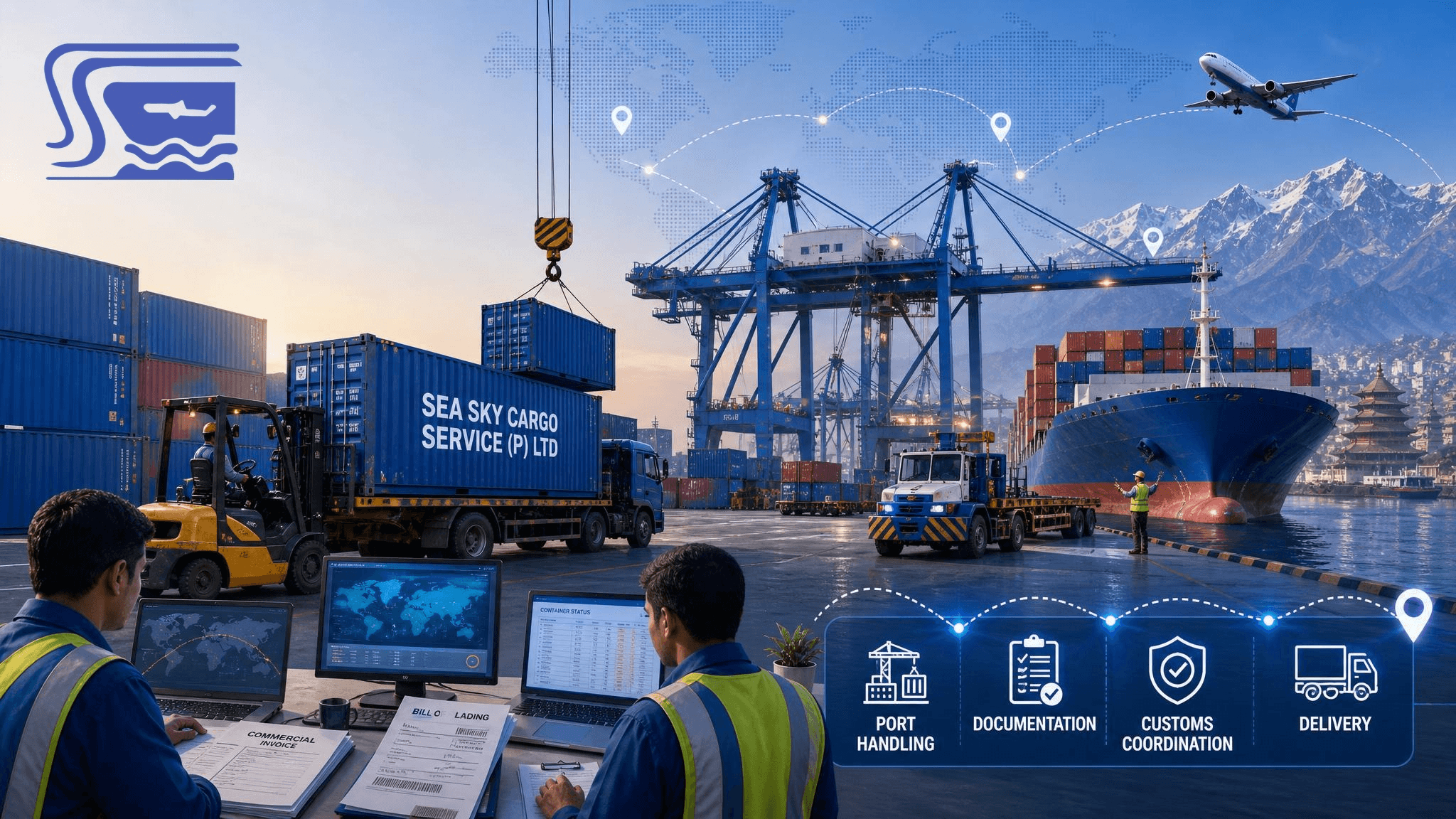
Sea Sky Cargo positions itself as a freight forwarding company with experience in international cargo, project shipments, customs support, and South Asia logistics. Its public guides also show support for bookings, customs coordination, and multimodal planning, which are especially helpful for USA-bound and USA-origin cargo.
That makes Sea Sky practical for businesses that need more than a simple shipment rate. For freight to and from the USA, the company’s mix of air freight, sea freight, and customs support can help reduce avoidable mistakes and keep cargo moving.
Conclusion
Freight to and from the USA works best when the shipper treats the move as a full logistics process, not just a transport booking. The key is to match the shipping mode to the cargo, prepare documents early, and plan for customs before the shipment leaves.
If you want a business-friendly blog that ranks well, this topic should naturally cover air freight, sea freight, customs, documents, delays, and route planning for both directions. Contact SeaSky for a quote or consultation if you want help with reliable freight shipping to or from the USA.

Get Quotes
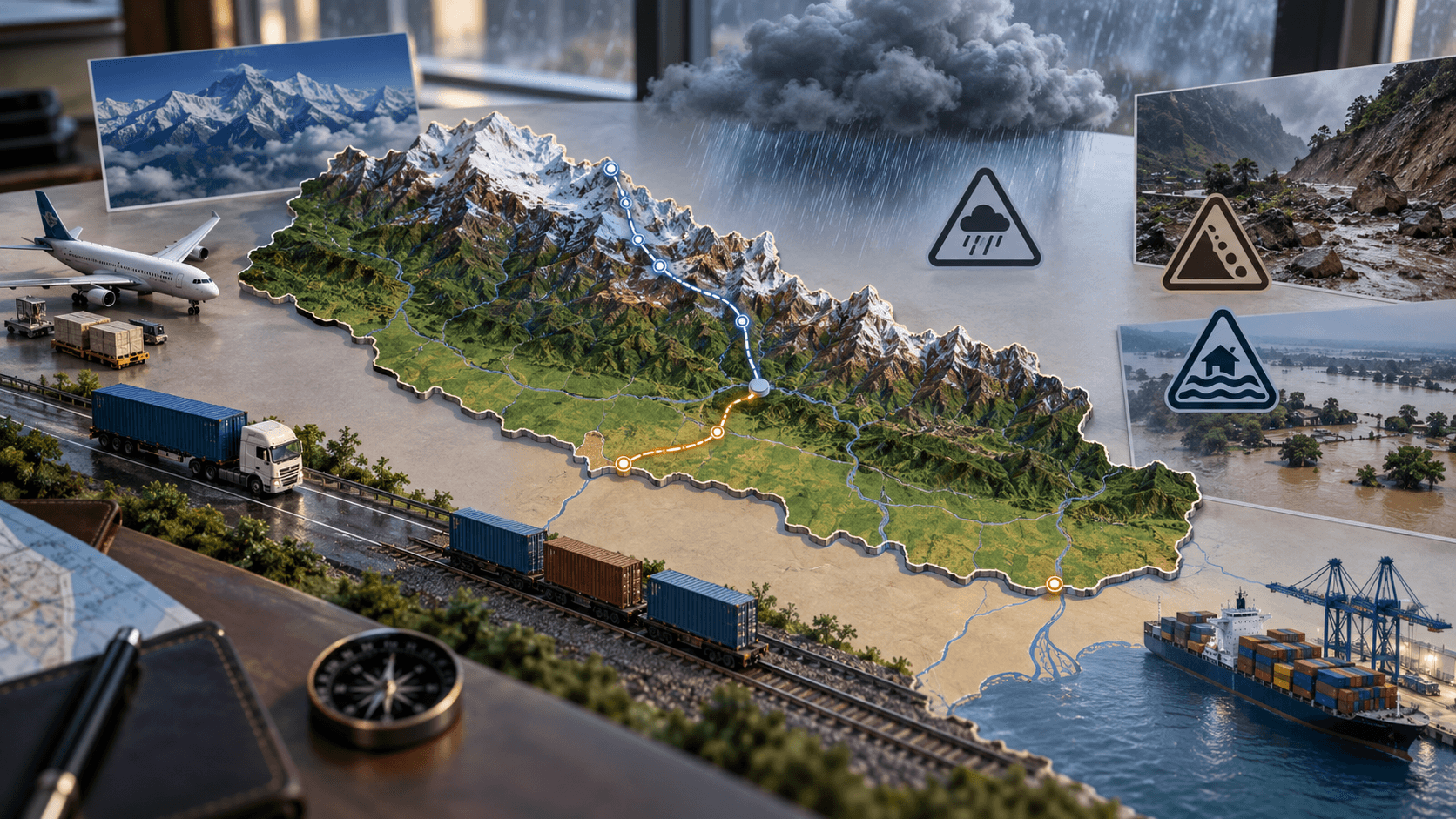
Built for freight forwarders handling FCL, OOG, heavy or project cargo into Nepal and South Asia. Use it to check routes, documents, handoffs and risk points before quoting your client.
Related posts
1970-01-01
Sea + Air Freight: How SeaSky Helps Businesses Ship Smarter
2026-10-01
Freight Forwarder vs Customs Clearing Agent in Nepal: Which Do You Need?
2026-09-28
E-commerce Logistics Nepal: Cross-Border Shipping from China, India, and the Gulf
2026-09-27