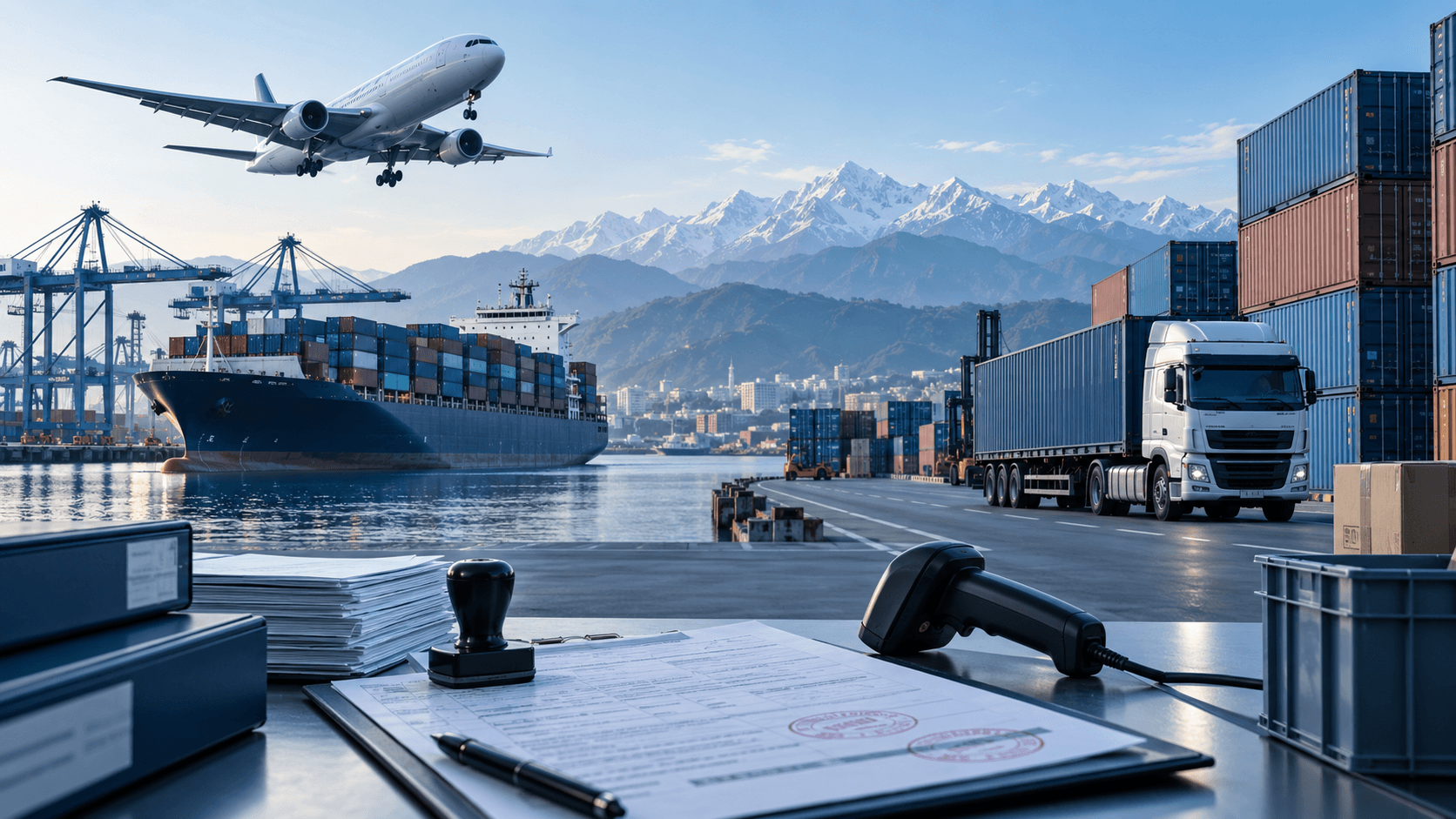
1. What does a freight forwarder do?
Importing or exporting cargo involves more than arranging a truck or paying customs duty. A shipment can require supplier coordination, international freight booking, transport documents, customs declarations, tax payment, cargo release and final delivery. Two service providers are often involved: a freight forwarder and a customs clearing agent.
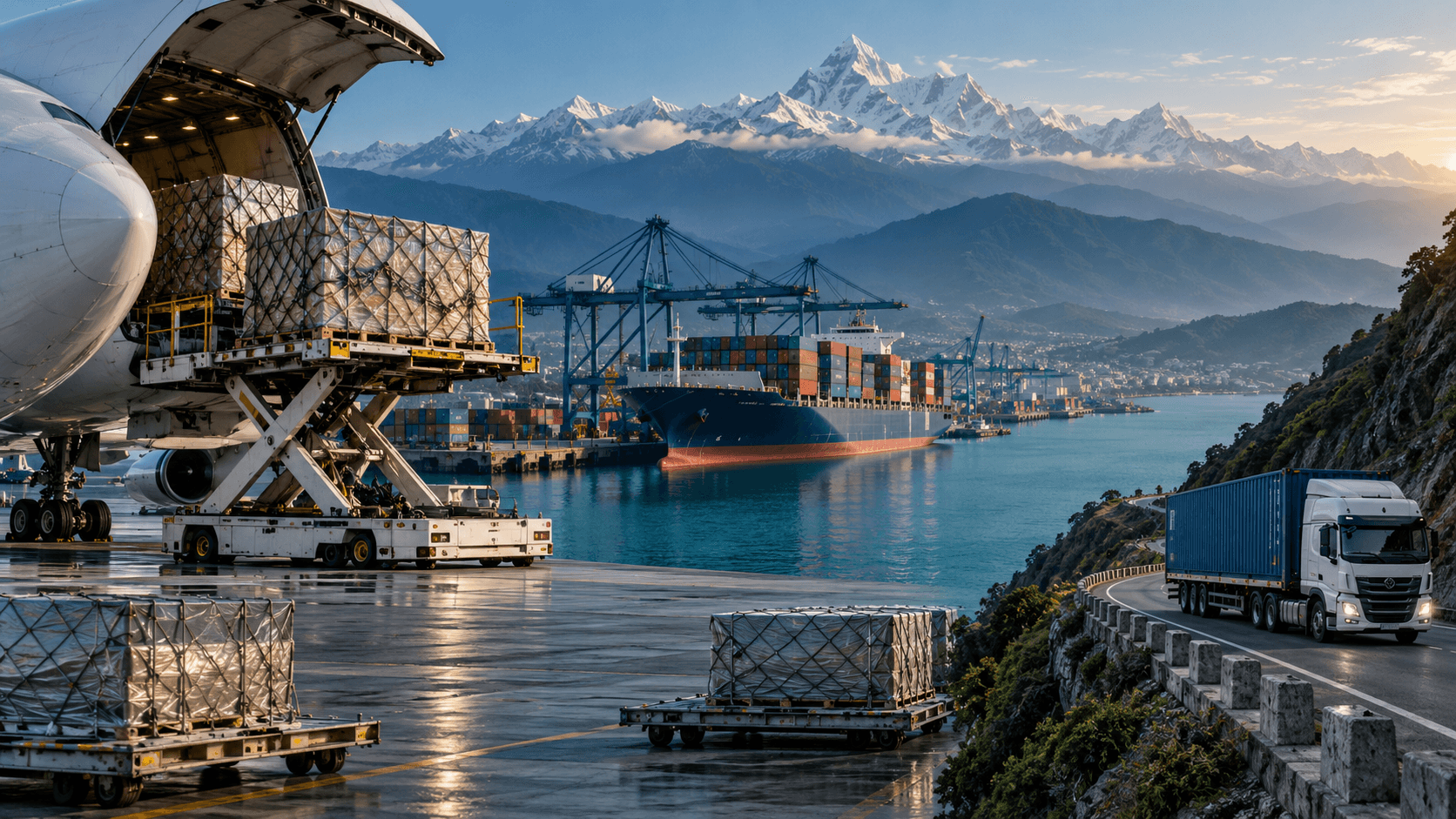
A freight forwarder coordinates how cargo moves from its origin to the agreed destination. The forwarder evaluates the shipment and helps select a suitable combination of air, sea, road, rail-linked or multimodal transport. This role is especially important for Nepal because overseas sea cargo normally reaches an Indian gateway before continuing inland, while regional cargo can use border routes and urgent shipments may move by air.
A freight forwarder may assist with:
- Supplier pickup and origin coordination
- Air, sea, road or multimodal freight booking
- LCL, FCL and cargo-consolidation planning
- Route, schedule and carrier comparison
- Bill of lading or airway bill coordination
- Port, terminal, border and inland transport arrangements
- Cargo insurance coordination when requested
- Indian port-to-Nepal movement and final-delivery planning
- Communication among suppliers, carriers, agents and importers
The forwarder’s central responsibility is the transport journey. A capable forwarder looks beyond the first freight price and considers transit time, handling points, route reliability, cargo restrictions and the complete delivery requirement. See Sea Sky Cargo’s freight forwarding in Nepal guide for a wider overview.
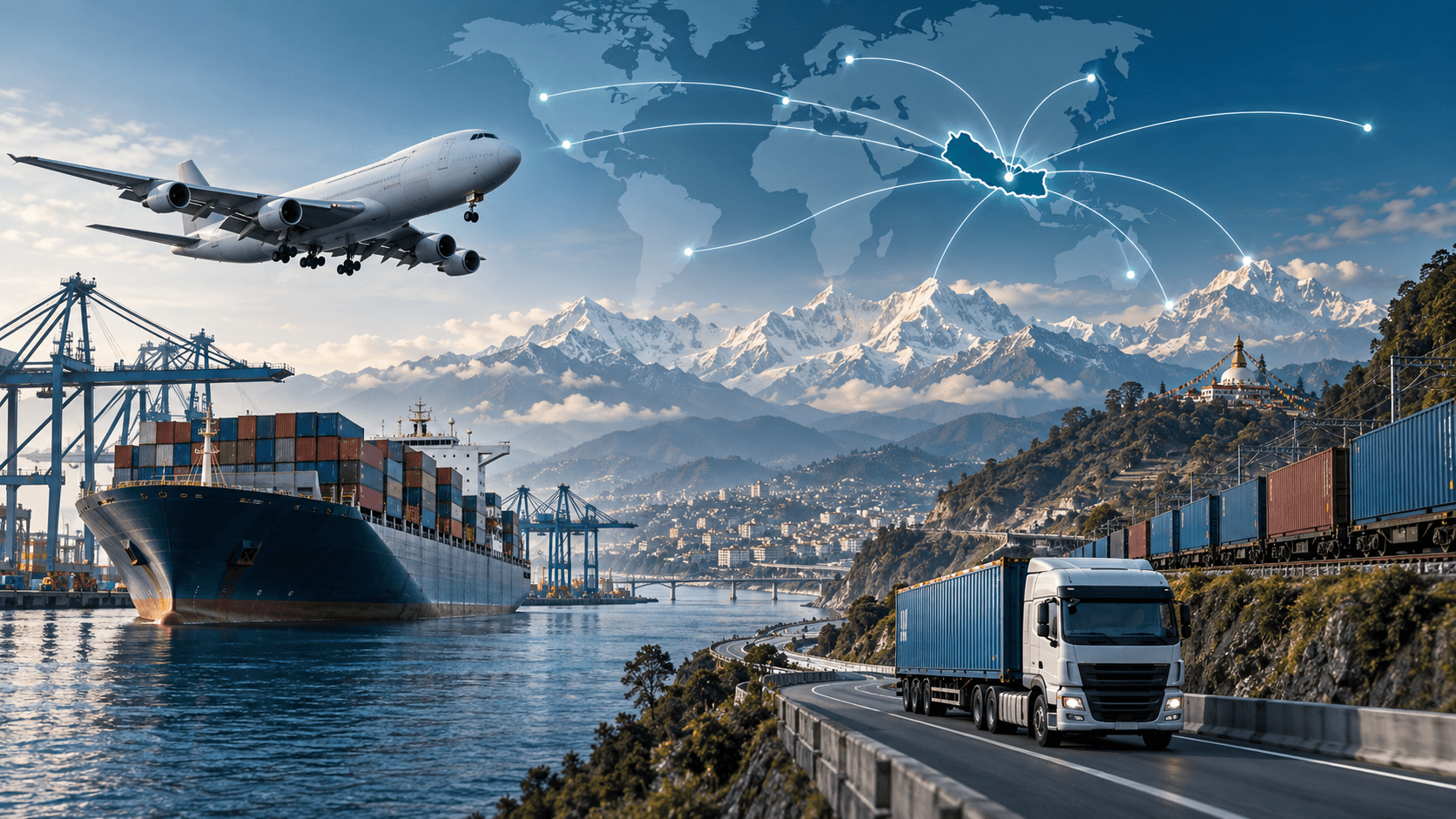
2. What does a customs clearing agent do?
A customs clearing agent specializes in the declaration, supporting documents and procedures needed for customs assessment and cargo release. For an import into Nepal, the file may need to establish what the goods are, their value, origin, quantity, importer, transport reference and whether a permit or product-specific certificate applies.
A customs clearing agent may assist with:
- Reviewing the commercial invoice and packing list
- Preparing or submitting the customs declaration under the applicable process
- Checking supporting documents and importer authorization
- Presenting the file to the relevant customs office
- Responding to document queries and coordinating inspections
- Facilitating payment of assessed duty, VAT and other applicable charges
- Coordinating cargo release after customs approval
The agent helps prepare and process the file, but does not control the final result. Classification, valuation, admissibility, duty assessment, inspection selection and release remain subject to the competent authorities. The Nepal Department of Customs publishes current notices and customs resources, including the Customs Tariff 2026/27 and current regulations.
For a dedicated importer checklist, use Sea Sky Cargo’s customs-clearance agent guide.
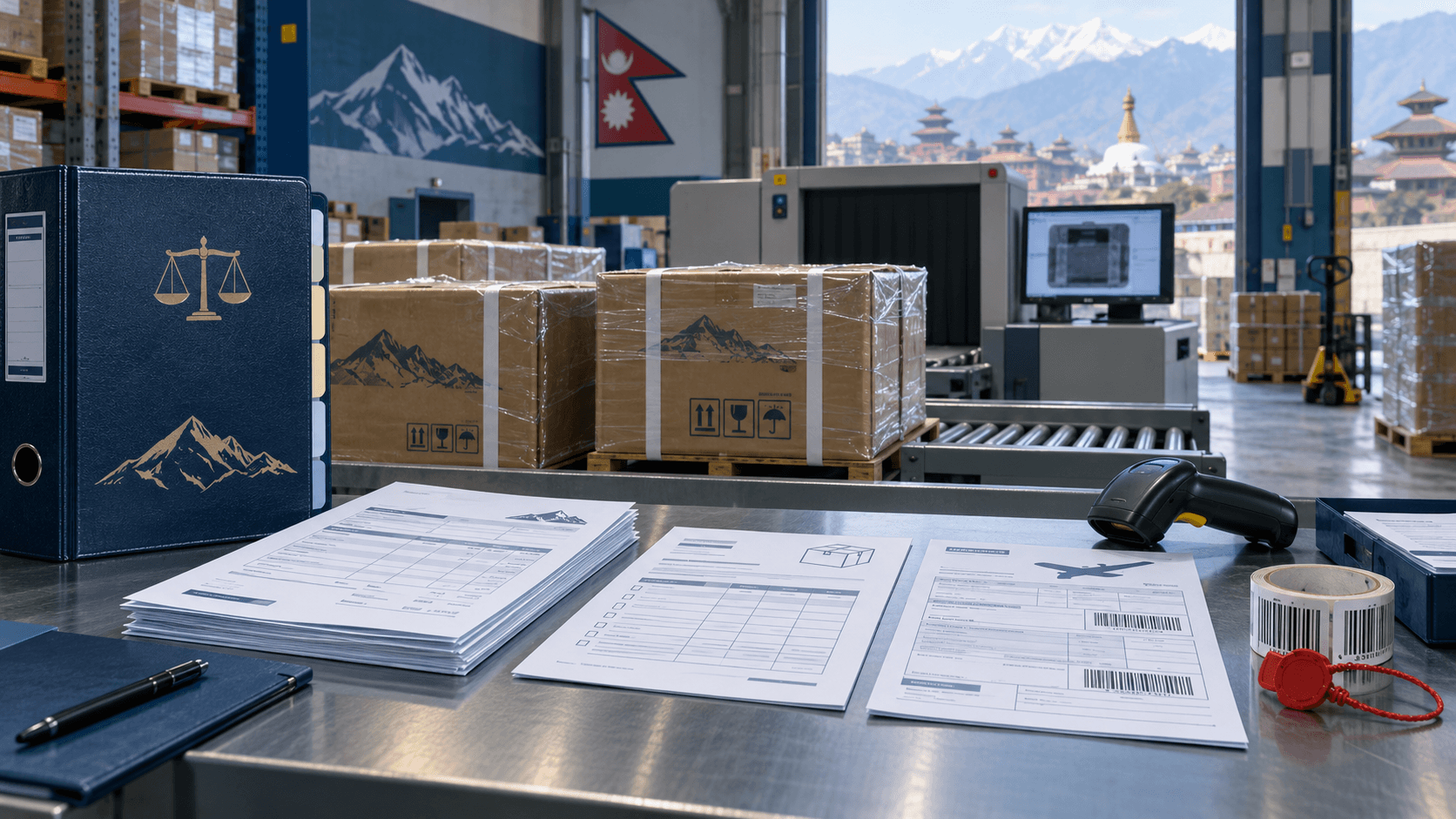
3. Freight forwarder vs customs clearing agent: the main difference
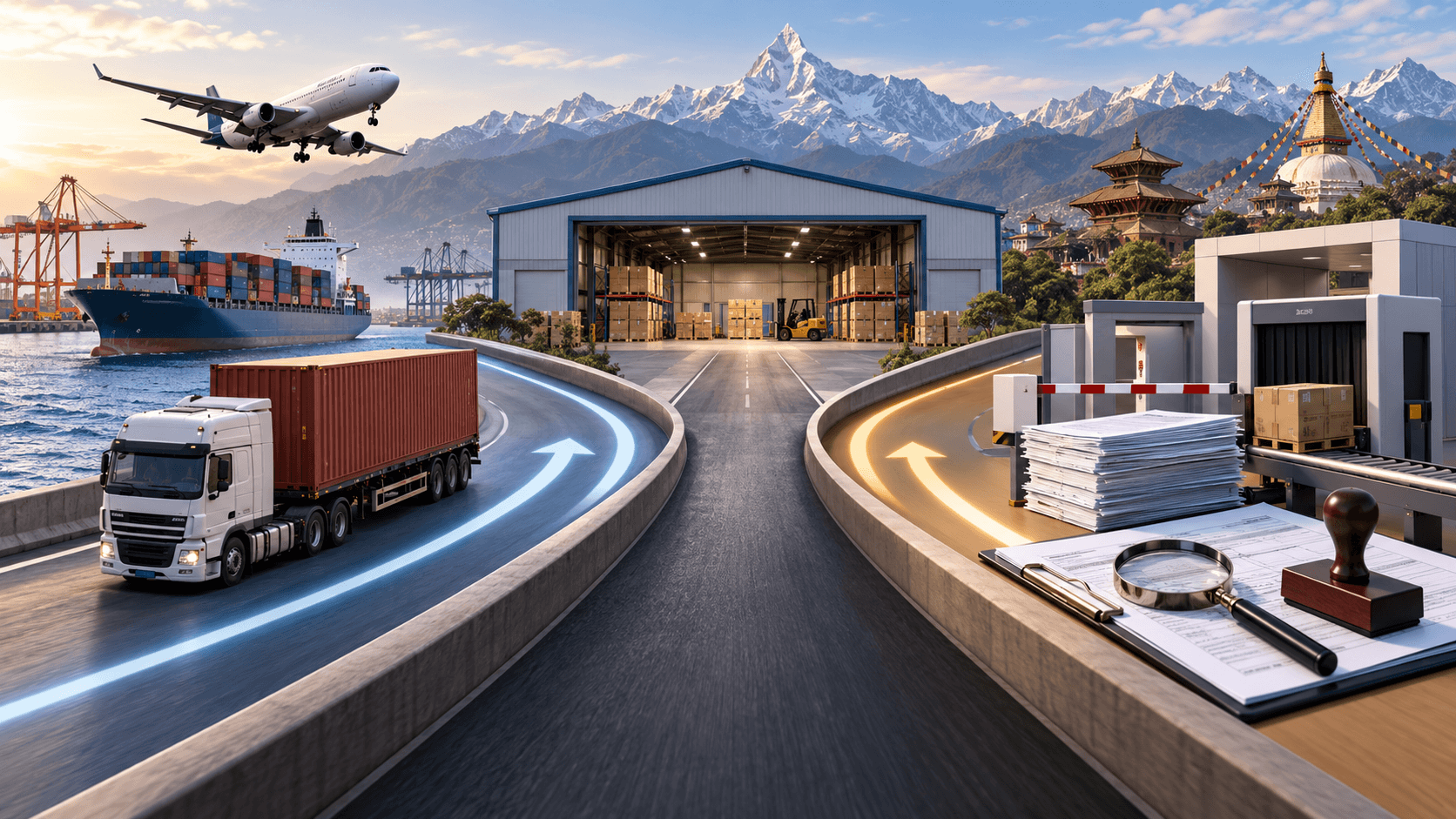
The easiest distinction is simple: a freight forwarder arranges how the cargo travels; a customs clearing agent helps process the cargo through customs. Their work connects, but neither role automatically replaces the other. For machinery imported from China, the forwarder might arrange pickup, international transport, border movement and delivery planning. The clearing agent might prepare the Nepal customs declaration, submit technical records and coordinate release after assessment. A single logistics company can coordinate both scopes, but the quotation should still name each stage and responsible party.
| Responsibility | Freight forwarder | Customs clearing agent |
|---|---|---|
| Primary focus | Cargo movement and transport coordination | Customs declaration, document processing and release |
| Typical decisions | Mode, carrier, route, consolidation, schedule and delivery plan | Required file, declaration details, customs query response and inspection coordination |
| Main documents | Booking confirmation, bill of lading, airway bill or road document | Invoice, packing list, transport document, authorization, permits and classification support |
| Where work happens | Supplier, warehouse, airport, port, border and delivery point | Relevant customs office, terminal or inspection location |
| What the provider cannot guarantee | Carrier schedule, border conditions or exact transit outcome | Classification, valuation, duty amount, inspection result or release time controlled by authorities |
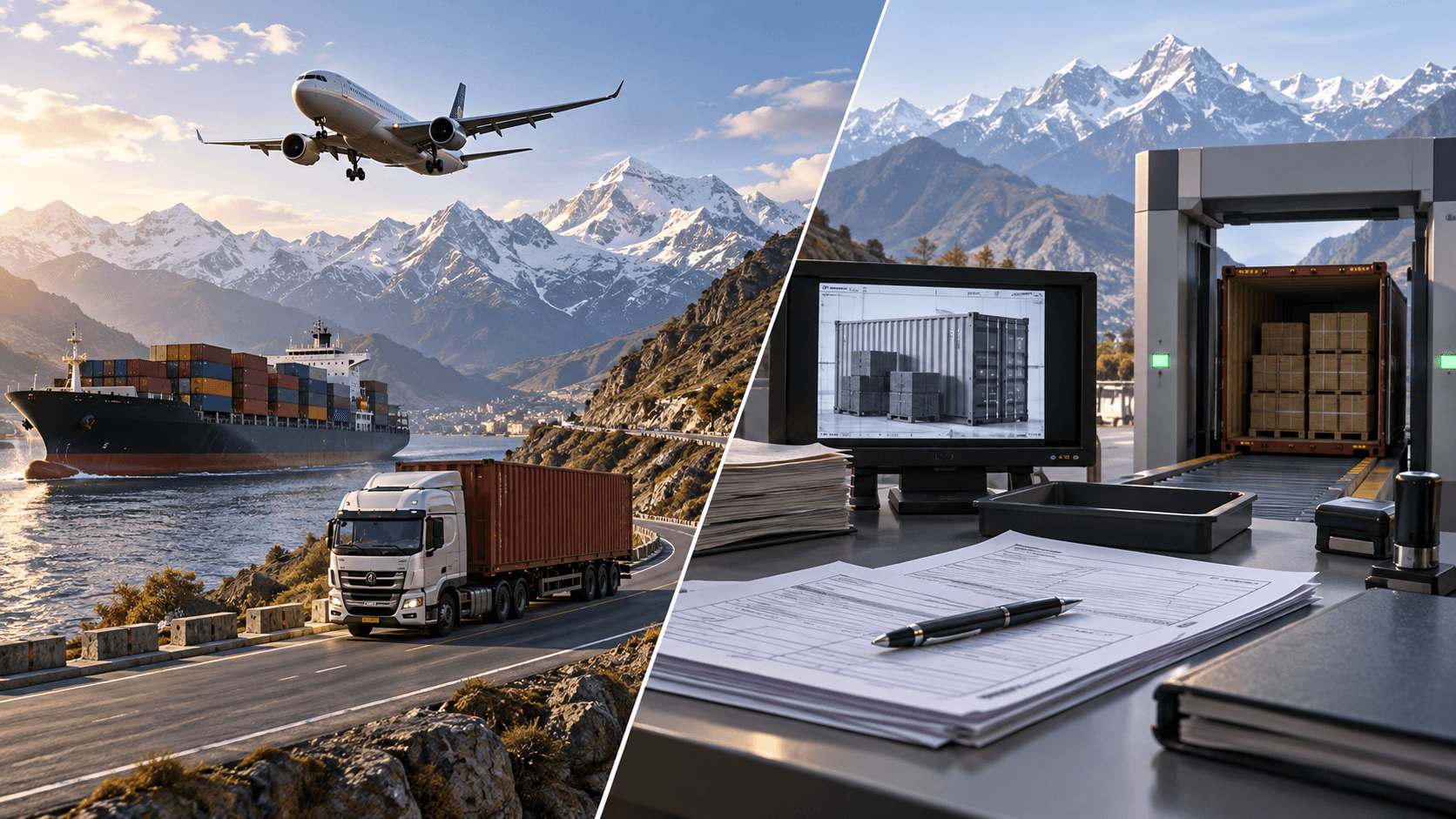
4. Who arranges air, sea and road freight?
International and inland transport is normally coordinated by the freight forwarder. The correct mode depends on cargo dimensions, chargeable weight, urgency, value, origin, carrier acceptance, budget and the final delivery point.
Air freight is commonly considered for urgent spare parts, electronics, medical cargo, samples, high-value goods and time-sensitive shipments. The forwarder compares routes, checks package dimensions, calculates chargeable weight, books space and coordinates terminal delivery. Review Sea Sky Cargo’s air freight service.
Sea freight can suit machinery, furniture, raw materials, industrial goods, large commercial orders and full-container shipments. The forwarder compares LCL and FCL, coordinates origin handling and connects the ocean leg with transit and inland movement toward Nepal. Review the sea freight service.
Road freight is used for cargo from India or China, Indian gateway-to-Nepal movement and final delivery inside Nepal. The forwarder should confirm the route, vehicle, package dimensions, weight, border or transit plan and unloading requirement before booking. Review the road freight service and China-to-Nepal cargo service.
For the complete booking sequence, see the live international freight booking guide.
5. Who handles customs documents and cargo release?
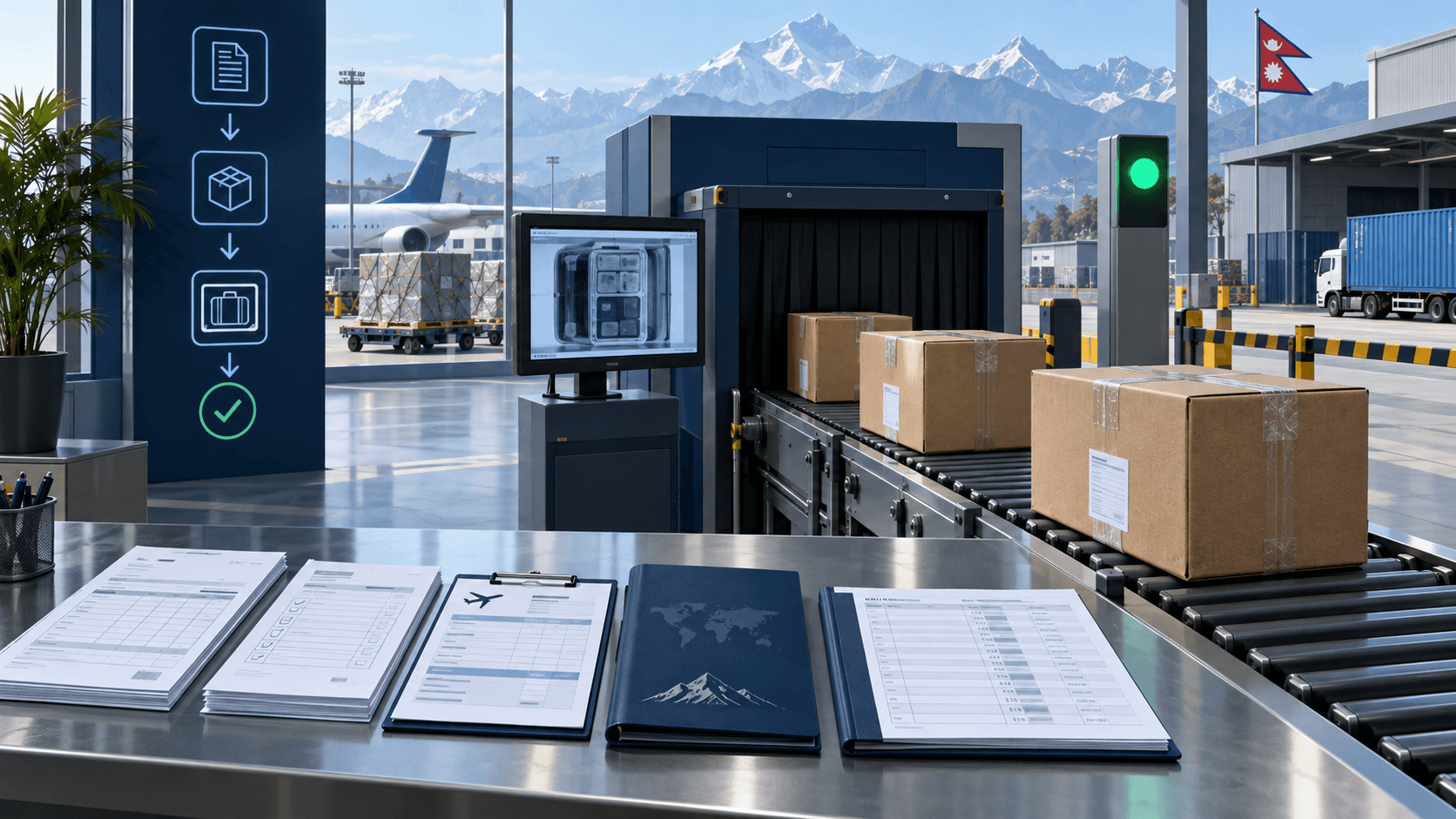
The customs clearing agent normally manages the clearance workflow using information supplied by the importer, exporter, supplier and forwarder. A typical commercial file can include:
- Commercial invoice and detailed packing list
- Bill of lading, airway bill or road transport document
- Certificate of origin when applicable
- Importer registration, PAN/VAT and EXIM details as applicable
- Insurance document when applicable
- HS-code information and product literature
- Import permit, approval or product-specific certificate when required
- Agent authorization and shipment-specific supporting records
The agent checks whether the file is ready for the relevant procedure, but the importer remains responsible for accurate commercial and product information. Descriptions such as “machine parts,” “electronic items” or “food products” may be too vague. Material, function, model, composition, quantity and technical specifications can be needed for a proper review.
Use the HS code guide to understand classification basics. Treat any preliminary HS-code or duty guidance as planning information until the competent authority assesses the actual goods and documents.
6. When do Nepal importers need both services?
Many commercial shipments need both freight forwarding and customs-clearance support. Coordinating the two before dispatch lets the transport plan and customs requirements use the same cargo description, document set, route and timeline. You will commonly need both when importing commercial cargo, moving sea freight through an Indian gateway, using several transport modes, importing LCL or FCL cargo, bringing in machinery or regulated goods, arranging border-to-warehouse delivery, consolidating several suppliers or handling an unfamiliar product. When using only one provider, confirm exactly where its responsibility begins and ends. Do not assume “door-to-door,” “air cargo service” or “customs support” includes every charge and handoff unless the written quotation says so.
| Situation | Likely service need |
|---|---|
| Your organization already has an appointed customs representative | Freight forwarder may be sufficient for the transport scope |
| Supplier or overseas buyer controls the international freight | Customs agent may be sufficient at destination, with delivery arranged separately |
| Cargo is already at the airport, border or terminal | Customs agent for declaration and release; forwarder or transporter may still be needed after release |
| New commercial import with no established providers | Coordinate both services before supplier pickup |
| Sea cargo through an Indian port with Nepal delivery | Both services are normally needed across the complete movement |
7. When might you need only a freight forwarder?
You may primarily need freight-forwarding assistance when customs clearance is already managed by your organization, consignee or an appointed licensed agent. The forwarder can then focus on the transport stages while exchanging arrival and document information with the party responsible for clearance.
Examples include an exporter whose overseas buyer manages import clearance, a Nepal business with an established customs representative, domestic transport after goods have already cleared customs, or a shipment where another party is contractually responsible for destination clearance.
Confirm the handoff point before booking. The forwarder still needs to know which documents and milestones the clearing party requires, and the clearing party needs the transport reference and expected arrival. A freight-only instruction should identify who receives the arrival notice, who pays terminal charges, who obtains release from the carrier and who books the final vehicle.
Do not assume customs clearance is included because the provider calls the quote “door-to-door.” Ask whether the term describes physical transportation only or includes the clearance service, government assessments, storage exposure and delivery after release.
Need freight forwarding, customs clearance or both?
Send Sea Sky Cargo your cargo details, route and documents before dispatch for an initial scope review.
8. When might you need only a customs clearing agent?
You may primarily need a clearing agent when transportation is already arranged but the cargo still needs customs processing. This can happen when a supplier books freight under the agreed Incoterm, a shipment has already reached the airport or border, an importer has a direct carrier arrangement, or an overseas partner controls the international booking.
Give the agent the complete file and the live transport status as early as possible. The agent may need the arrival notice, transport-document reference, original or endorsed documents, importer authorization, product information, permits and payment arrangements before cargo can be presented for clearance.
Transport is not automatically finished when customs releases the goods. Airport collection, terminal gate procedures, container return, truck booking, unloading and warehouse delivery may still require a forwarder or local transporter. If a container has a free-time limit, assign responsibility for release, pickup and empty return before arrival.
A customs-only appointment should state whether the agent’s scope ends at the customs release order, terminal gate-out or delivery point. This keeps clearance fees separate from carrier, terminal, storage, demurrage, detention and transport costs.
9. Practical example: sea freight through an Indian port
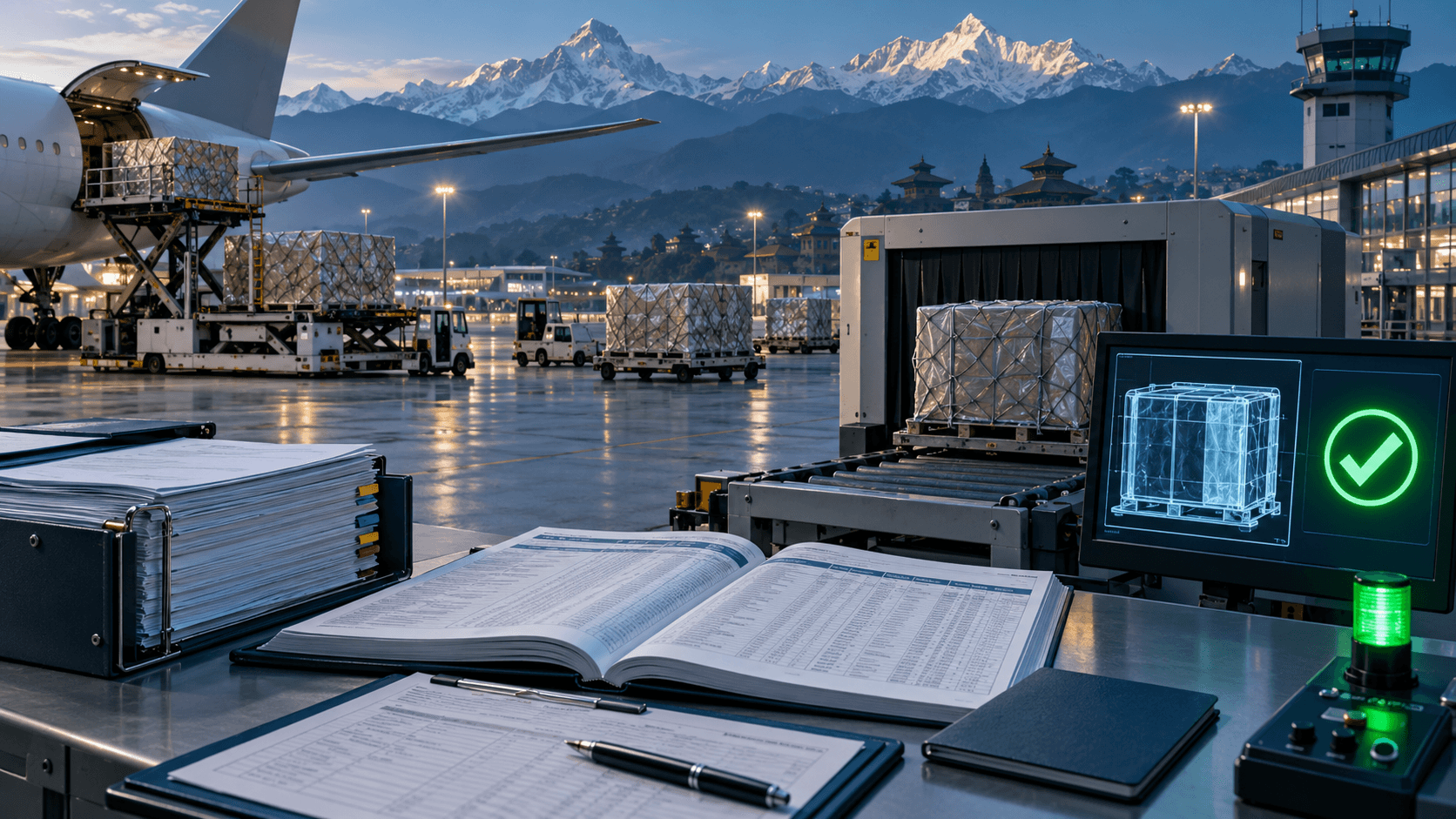
Suppose a Nepal importer purchases commercial furniture under an FOB arrangement. The freight forwarder can coordinate origin-port handoff, ocean booking, LCL or FCL handling, transport documents, arrival at the Indian gateway, the applicable transit movement toward Nepal and final-delivery planning.
The customs clearing agent can review the import file, prepare the declaration, support classification questions, submit permit records where applicable, coordinate assessment or inspection, facilitate the duty-and-tax payment process and complete the release steps after approval.
The Incoterm matters. FOB generally defines seller and buyer responsibilities around loading at the named port, but it does not by itself arrange Nepal customs clearance or warehouse delivery. The importer should still confirm freight, port, transit, customs and delivery scopes separately.
If only an origin forwarder is hired, the quotation may stop at the discharge port. Indian-port handling, transit toward Nepal, customs clearance, storage exposure and final delivery can remain unarranged. A complete scope should show the endpoint and list exclusions.
10. Practical example: air cargo to Kathmandu
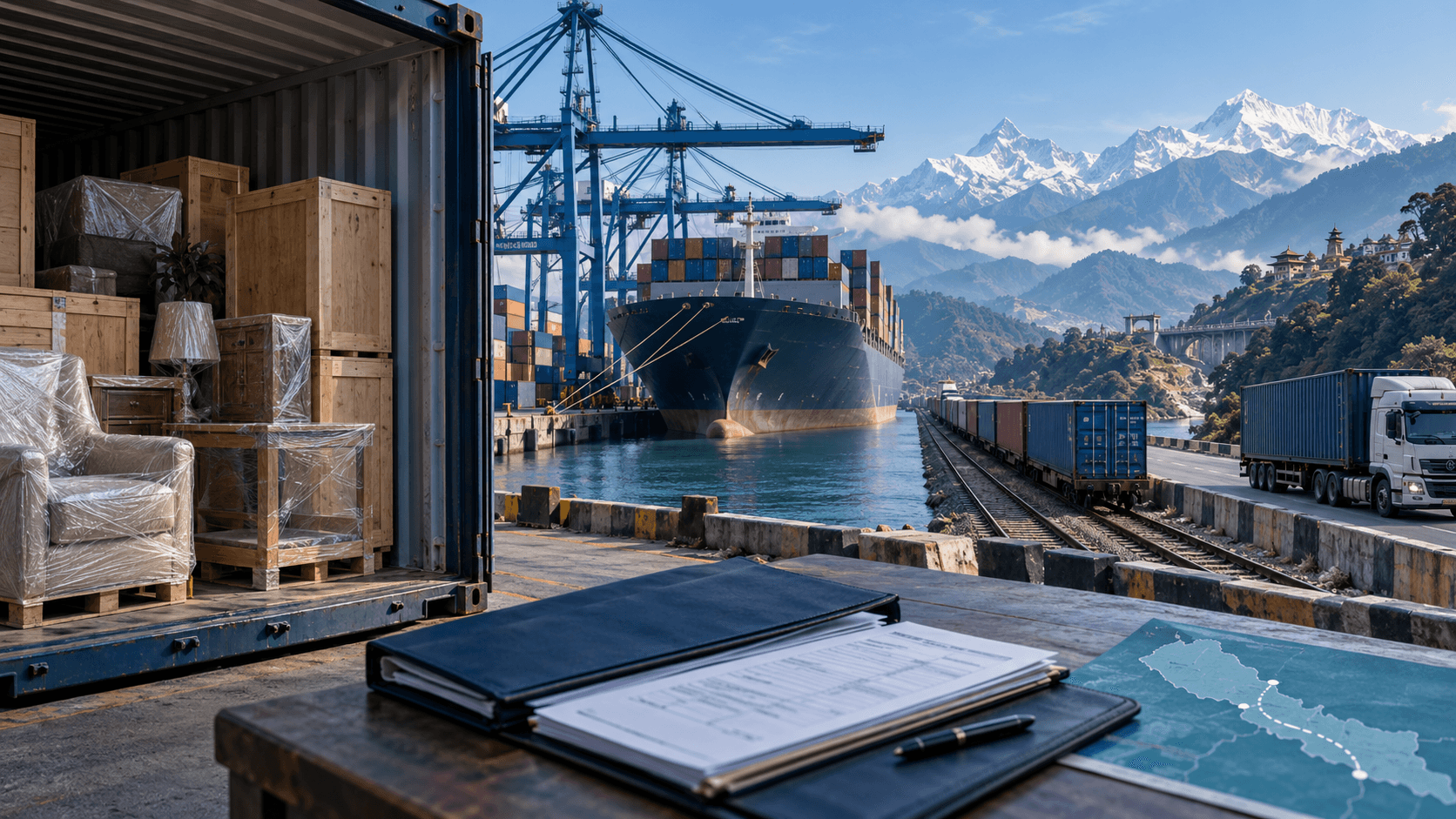
Consider an urgent replacement part moving by air to Kathmandu. The freight forwarder can collect the cargo, confirm airline acceptance, check chargeable weight, book the flight, coordinate the airway bill and share arrival information.
The customs agent can use the invoice, packing list, airway bill, technical description and any required permit to prepare the customs file and coordinate assessment and release. After release, the forwarder or a local transport provider can deliver the item to the importer.
Urgency does not remove the document requirements. Before pickup, confirm the exact part description, model, material, function, value, country of origin and consignee details. Batteries, chemicals, liquids, medical items and other controlled cargo may need extra carrier acceptance or regulatory documents.
Ask whether the air quote is airport-to-airport, airport-to-door or door-to-door, and whether terminal handling, clearance service, duty and tax, storage and final delivery are included. That one question prevents many surprise charges.
11. Documents importers should prepare before dispatch
Document review should happen before the cargo leaves origin. Corrections are usually easier before the transport document is finalized, a vessel sails or an aircraft departs.
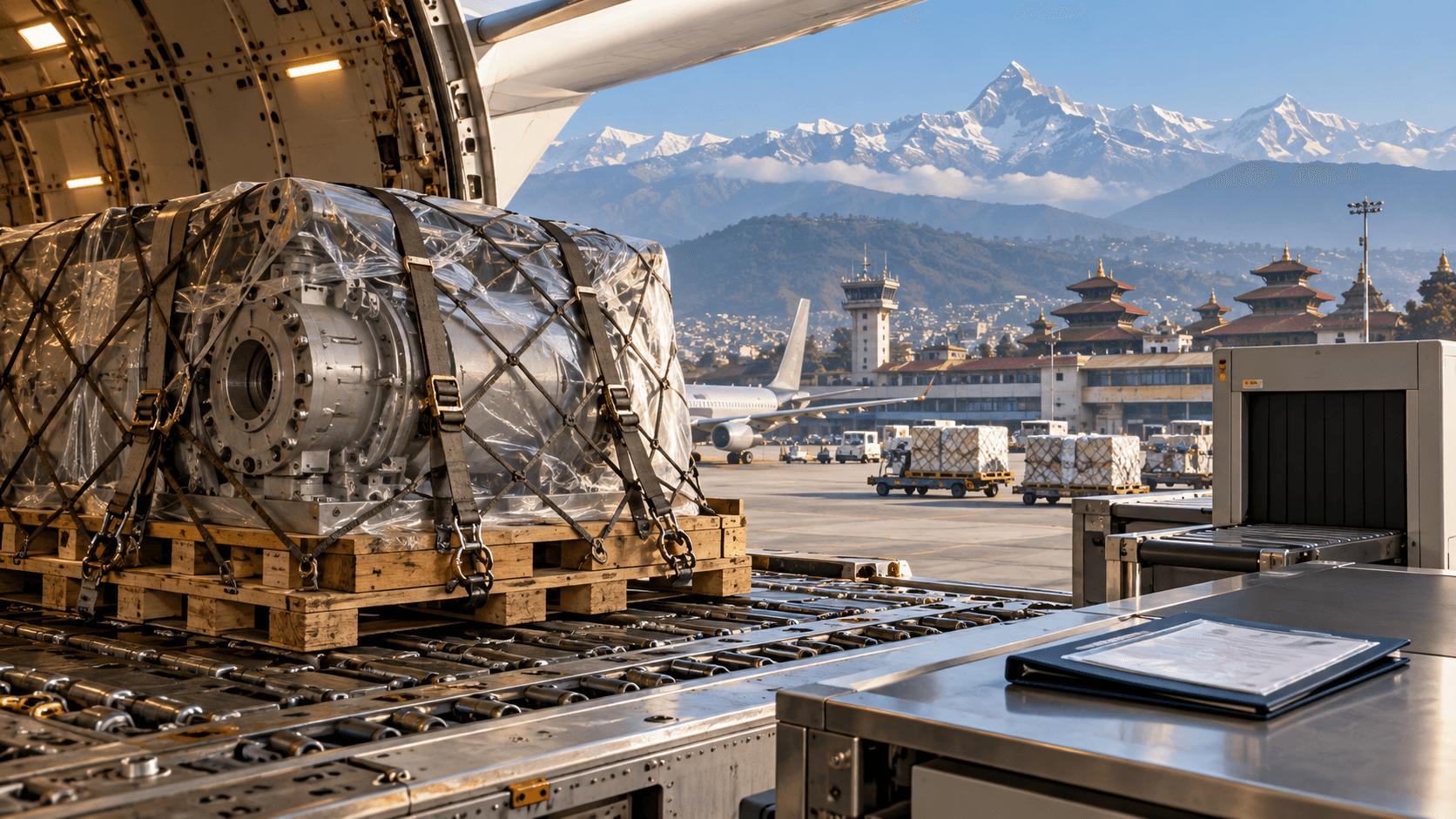
Prepare the commercial invoice, packing list, transport document instructions, certificate of origin where applicable, insurance certificate where applicable, product catalogue or technical sheet, import permit or regulatory certificate when required, importer registration details and customs-agent authorization.
The invoice and packing list should agree on:
- Precise product description, model and material or function
- Quantity, unit of measure and package count
- Net and gross weight and package dimensions
- Unit price, total value and currency
- Seller, buyer and consignee details
- Country of origin and agreed shipping terms
- Marks, numbers and references used on the packages
Give the same controlled document set to the forwarder and the clearing agent. If a commercial detail changes, issue a clear revision and tell every party. Quietly circulating two invoice versions can create booking, declaration and payment discrepancies.
12. Common mistakes when hiring separate providers
Separate providers can work well when roles, handoffs and deadlines are explicit. Share the carrier schedule with the customs agent and the customs-document status with the forwarder. Each provider should know what must be ready before cargo pickup, arrival, assessment, release and delivery. Keep quotations, approvals, correspondence, transport documents, declarations, tax receipts and delivery evidence in one shipment record. This makes cost review and future imports easier.
| Mistake | Why it causes trouble | Better control |
|---|---|---|
| Assuming freight includes clearance | The quote may cover only pickup and transportation | Ask for the exact endpoint, inclusions and exclusions in writing |
| Checking permits after dispatch | Regulated cargo can face storage, delay, return or enforcement risk | Confirm permits and carrier acceptance before pickup |
| Giving different documents to each provider | Descriptions, weights or values may not match | Maintain one approved shipment file and revision log |
| Choosing only by the lowest rate | Origin handling, destination charges, customs work or delivery may be missing | Compare the same scope and endpoint |
| Using vague cargo descriptions | Freight safety and customs classification cannot be reviewed properly | Provide model, material, function, composition and technical literature |
| No single coordinator | Arrival notices, cutoffs and document deadlines can be missed | Assign one owner and define escalation contacts |
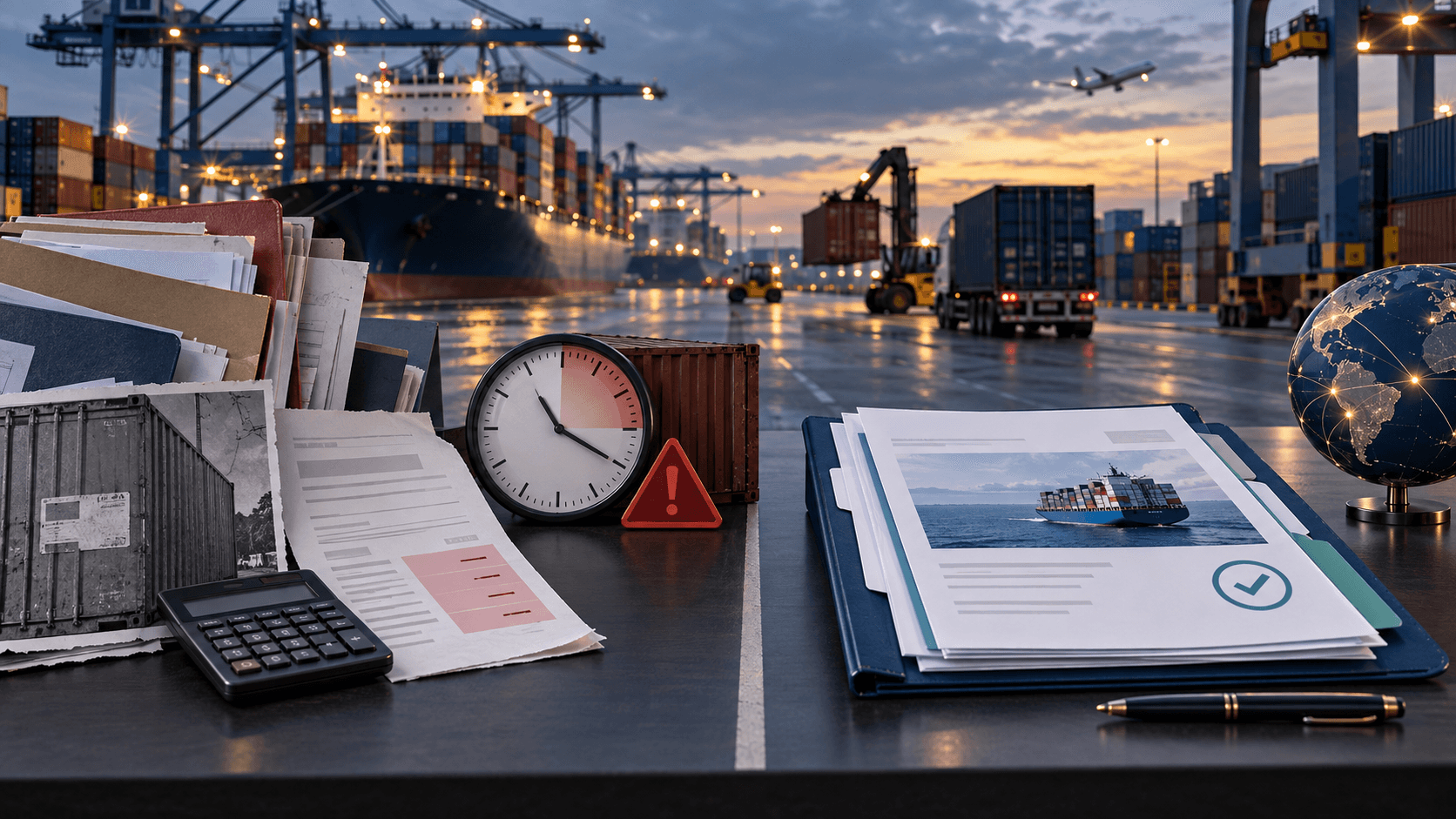
13. Questions to ask and warning signs to watch
Ask the freight forwarder: Which stages and locations are included? Is the quote port-to-port, port-to-door or door-to-door? Who issues and checks the transport document? Are origin and destination handling, customs coordination and final delivery included? Which charges are excluded?
Ask the customs clearing agent: Which documents and originals are required? Does the product need a permit or certificate? Is an authorization letter required? When must the file be available? Who coordinates an inspection? Which amounts are government assessments and which are service fees?
Be cautious if a provider guarantees a customs result without reviewing the cargo, suggests an inaccurate description or value, gives a final duty amount without checking the HS code and evidence, cannot explain its service boundary, refuses to list excluded charges, or asks you to dispatch a regulated product before checking requirements.
Also be careful when a high-value or time-sensitive shipment has no written quotation, named coordinator or escalation path. Responsible providers explain assumptions and uncertainties. Customs treatment depends on the actual goods, documents and current rules; no provider controls an authority’s final decision.
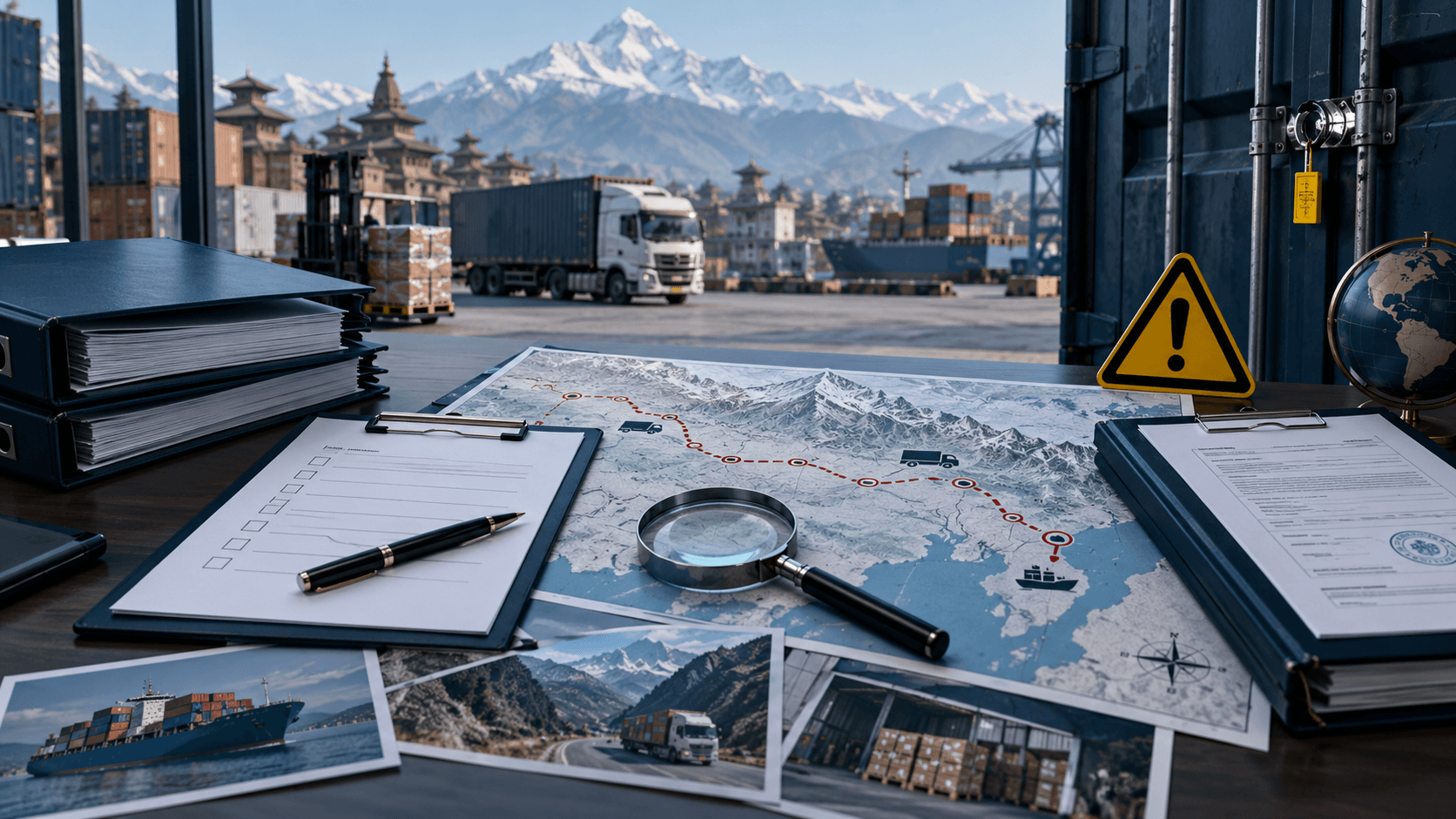
14. How Sea Sky Cargo coordinates freight and customs
Sea Sky Cargo helps Nepal importers connect transportation planning with customs-document preparation. Depending on the cargo and agreed scope, support may include air, sea and road freight, LCL and FCL planning, supplier pickup, China-to-Nepal or Indian-port-to-Nepal coordination, document review, customs-clearance coordination, HS-code guidance, permit-question review and final delivery planning.
The purpose is to make the transport and customs stages operate as one shipment plan. Final classification, valuation, duty assessment, inspection, permit approval and cargo release remain subject to the relevant authorities.
Send the product description, commercial invoice, packing list, origin, destination, package count, dimensions, gross weight, value, preferred timeline and any permit or technical information available. Sea Sky Cargo can then identify the likely service scope and questions that should be resolved before dispatch.
Conclusion: a freight forwarder manages how cargo moves, while a customs clearing agent manages the documentation and procedures needed for clearance and release. Many Nepal commercial imports need both. Coordinating them early exposes missing documents, route gaps, permit questions and excluded costs while there is still time to correct the plan.
Is a freight forwarder the same as a customs clearing agent? No. A freight forwarder mainly coordinates transportation; a customs clearing agent processes declarations and supporting documents for clearance.
Can a freight forwarder arrange customs clearance? Some forwarders coordinate clearance through qualified agents or partners. Confirm the declarant role, service scope and exclusions in writing.
Do I need a customs clearing agent for every shipment? It depends on the goods, importer, customs procedure and available in-house capability. Commercial and regulated shipments commonly need professional customs support.
Who determines customs duty in Nepal? The relevant customs authority makes the final classification, valuation and tax assessment under the current rules and shipment facts.
Who arranges delivery after customs clearance? The quotation decides. A forwarder may arrange delivery, or the importer may appoint a separate transporter.
What should I send Sea Sky Cargo for an initial review? Send the product description, invoice, packing list, origin, destination, package dimensions, gross weight, value and preferred delivery timeline.
Not sure which service your shipment requires?
Sea Sky Cargo can review your cargo, route and documents and explain which freight, customs and delivery stages need coordination.
Related posts
1970-01-01
Sea + Air Freight: How SeaSky Helps Businesses Ship Smarter
2026-09-28
E-commerce Logistics Nepal: Cross-Border Shipping from China, India, and the Gulf
2026-09-27
Monsoon Logistics in Nepal: How to Plan Shipments Around Floods and Landslides
2026-09-25