
1. When Your Business Needs a Bhutan Freight Forwarder
Choosing a freight forwarding company for Bhutan cargo starts with the shipment you need to complete. Identify the pickup point, product, packed size and weight, importer and final delivery address. Then assess whether the forwarder can connect those requirements into a clear transport, document and receiving plan.
A forwarder can be especially valuable when several parties must coordinate the journey. These may include an overseas supplier, an Indian transporter, customs representatives, a Bhutan importer and a warehouse or project site. Agree who owns each task before the load is collected.
- A first commercial import. You need help understanding the handoffs and information the carrier and customs representatives require.
- Multiple suppliers. Collection and consolidation must fit the cargo-ready dates and departure plan.
- Machinery or project cargo. Vehicle selection, lifting, route access and unloading need early coordination.
- Seasonal or time-sensitive stock. The delivery window must allow for document readiness, border processing and receiving.
- Regulated goods. The commodity needs product-specific permission and carrier-acceptance checks.
- A shipment already delayed. The carrier, agent and consignee need a shared plan for release, storage or redelivery.
Define the problem you want the company to solve. For example, delivering six mixed retail pallets from a supplier in Kolkata to a warehouse in Thimphu needs a different proposal from moving a heavy crate from an Indian port to a remote project site.
Use the same cargo description and endpoint when approaching forwarders. That gives each company a fair basis for proposing a route and identifying the unresolved items.

2. What the Freight Service Should Include
Ask for a written scope from pickup through the agreed endpoint. A complete proposal should identify which tasks the forwarder performs, which are handled by partners and which remain with the supplier or importer.
Before Collection
Look for a review of packed cargo, collection access, ready date, delivery terms and required permissions. For mixed or unusual goods, the forwarder should explain which technical details, photographs or samples of documents it needs before confirming the booking.
During Transport and Border Processing
Confirm the main carrier, vehicle or mode, intended crossing, any consolidation or transfer, customs-document handoff and shipment milestones. Ask how the forwarder will coordinate with the export and import representatives and how it will report an outstanding action.
At Destination
Agree the collection point after release, final delivery address, receiving hours, unloading responsibility and proof of delivery. If a truck cannot reach the site, the quotation should identify how access will be checked and who can approve a smaller vehicle, extra handling or a holding point.
Cargo insurance, inspection, packing, storage and lifting equipment should have an explicit place in the scope. Ask whether they are included, available at extra cost or arranged by another party.
Keep a task list with a named owner for supplier release, export documentation, main transport, Bhutan import clearance, tax payment, delivery and unloading. Review it alongside the quote before issuing a booking instruction.

3. Assess Road Freight Through Jaigaon–Phuentsholing
For an India-to-Bhutan freight forwarder, route knowledge should translate into specific operating details. Jaigaon–Phuentsholing is a major commercial gateway, and a proposal using it should identify the actual customs and handling facilities and the onward road to the receiver.
Ask how the vehicle arrangement works. Will one vehicle complete the delivery, or will the cargo be transferred? Who approves and supervises a transfer? How are package count, condition and seals recorded? Confirm the handling equipment for heavy or fragile pieces.
The forwarder should base vehicle selection on final cargo measurements, gross weight, stackability and route access. For machinery, request a review of lifting points, axle distribution, bridge and height restrictions, and unloading. For temperature-controlled cargo, agree monitoring and continuity during waiting and inspection.
Ask for a milestone estimate from supplier readiness through delivery. Establish the assumptions behind departure, border processing and receiver availability, and agree when the estimate will be updated.
India-supplied goods, overseas cargo transiting an Indian port and Nepal-origin exports moving through India have different document and release arrangements. Confirm which transaction the company is quoting. For details of the road export journey, use the route-specific guide. India-to-Bhutan shipping guide.
If the cargo starts in Nepal, ask the forwarder to explain the selected Indian transit entry and exit points and responsibility for closing the transit record. Nepal-to-Bhutan cargo guide.

4. Evaluate Customs and Transit-Document Support
Ask the company to name the parties responsible for export declarations, any transit procedure and the Bhutan import entry. Confirm the authorization needed from your business and which information the importer must provide directly.
Useful customs support begins before dispatch. The representative needs accurate product descriptions, origin, invoice value, quantities and supporting specifications to review classification and valuation. A forwarder should identify missing inputs and hand them to the responsible representative while there is time to correct them.
Ask for the product’s full Bhutan tariff classification and the basis of any tax estimate or claimed relief. Manufacturing origin, supporting evidence and the applicable scheme matter. Record assumptions that have yet to be confirmed.
Bhutan’s DRC guide gives a standard GST rate of 5 percent, with treatment and exemptions determined under the law. It also states that import GST is payable at customs clearance. Have the representative show applicable duty, GST and other levies separately from the freight company’s service fees. DRC GST guidance.
For food, plant and animal products, ask who checks BFDA permissions and certificates. For communication equipment, confirm whether BICMA technical clearance or type approval is relevant. The forwarder should identify the responsible authority and the party handling the application. BFDA import information and BICMA application forms.
Ask what happens if customs requests a correction, inspection or further evidence. You need a contact, an action owner and a way to track the response. Regulatory release remains an authority decision.
5. Confirm Delivery to Phuentsholing, Thimphu and Paro
A delivery city is only the start of a receiving plan. Give the street or site address, contact, access details and unloading requirements so the forwarder can price the final leg.
Phuentsholing
Ask which facility releases the goods and how they will reach the local consignee. Confirm whether the charge covers collection, local trucking, waiting and unloading. A short local distance can still involve appointments and handling.
Thimphu
Review the onward vehicle, access road and receiving hours. If the main truck is unsuitable for the final approach, agree the transfer point and smaller vehicle before dispatch. Identify any crane, forklift or labour arrangement.
Paro and Other Locations
For road cargo, confirm the full route and final site access. For air cargo, ask about airline acceptance, airport handling, customs release, collection and onward delivery. For a remote or heavy-cargo destination, request a route or site review where needed.
Ask when the delivery estimate starts and what must be ready for that clock to begin. Confirm release, vehicle availability, road access and the receiver’s appointment.
Agree how a failed delivery, closed approach road or unavailable unloading equipment will be handled. A named approved holding point and an extra-cost approval process can prevent an avoidable dispute.

Compare a Complete Bhutan Freight Plan
Share your pickup location, cargo details, packed dimensions and Bhutan delivery address.
6. How to Request and Compare Freight Quotes
Send every forwarder the same shipment brief and ask for the same delivery endpoint. Compare the total payable scope, timing assumptions, responsibilities and unresolved items.
Request a line-by-line offer showing origin collection, main freight, border handling, customs-agent services, delivery, unloading and optional services. Ask for government taxes to be itemized or clearly marked as estimates or excluded.
A Worked Quote Comparison
Consider two hypothetical offers in the same currency for the same cargo and delivery scope. Offer A shows 80,000 for the main movement, with 12,000 in border handling and 18,000 in destination delivery payable separately. Its comparable total is 110,000. Offer B shows 105,000 including those two services.
Under those assumptions, Offer B is lower by 5,000. The comparison still needs matching vehicle, timing, handling, insurance and tax assumptions. These figures explain the calculation and represent no current freight rate.
Check the Assumptions
- Are both offers based on the same package count, measurements and gross weight?
- Do both end at the same warehouse or unloading point?
- Are government taxes, third-party fees and optional services treated consistently?
- Is the departure plan appropriate for the cargo-ready date?
- Which items remain subject to inspection, measurement, carrier acceptance or permit review?
- What currency, exchange-rate basis, payment terms and validity period apply?
Ask the company to revise the quote if a material input changes. A packing change or different delivery address can change the vehicle and final cost. How to read a freight quote.

7. Information and Documents Needed for a Freight Quote
A preliminary quote needs reliable cargo information. Share what is confirmed and label estimates clearly. Detailed booking and customs requirements can then be checked with the responsible parties.
- Route. Full pickup and delivery locations, preferred mode if any, and the requested delivery window.
- Goods. Specific commodity, manufacturing origin, model or material where relevant, intended use and approximate value.
- Packing. Package count, packaging type, length, width and height of each piece, gross weight and stackability.
- Timing. Supplier-ready date, collection restrictions and any fixed receiving appointment.
- Handling. Lifting points, fragile parts, temperature requirements, batteries, liquids, chemicals and other special characteristics.
- Transaction. Agreed Incoterm and named place, exporter and importer roles, and the status of relevant permissions.
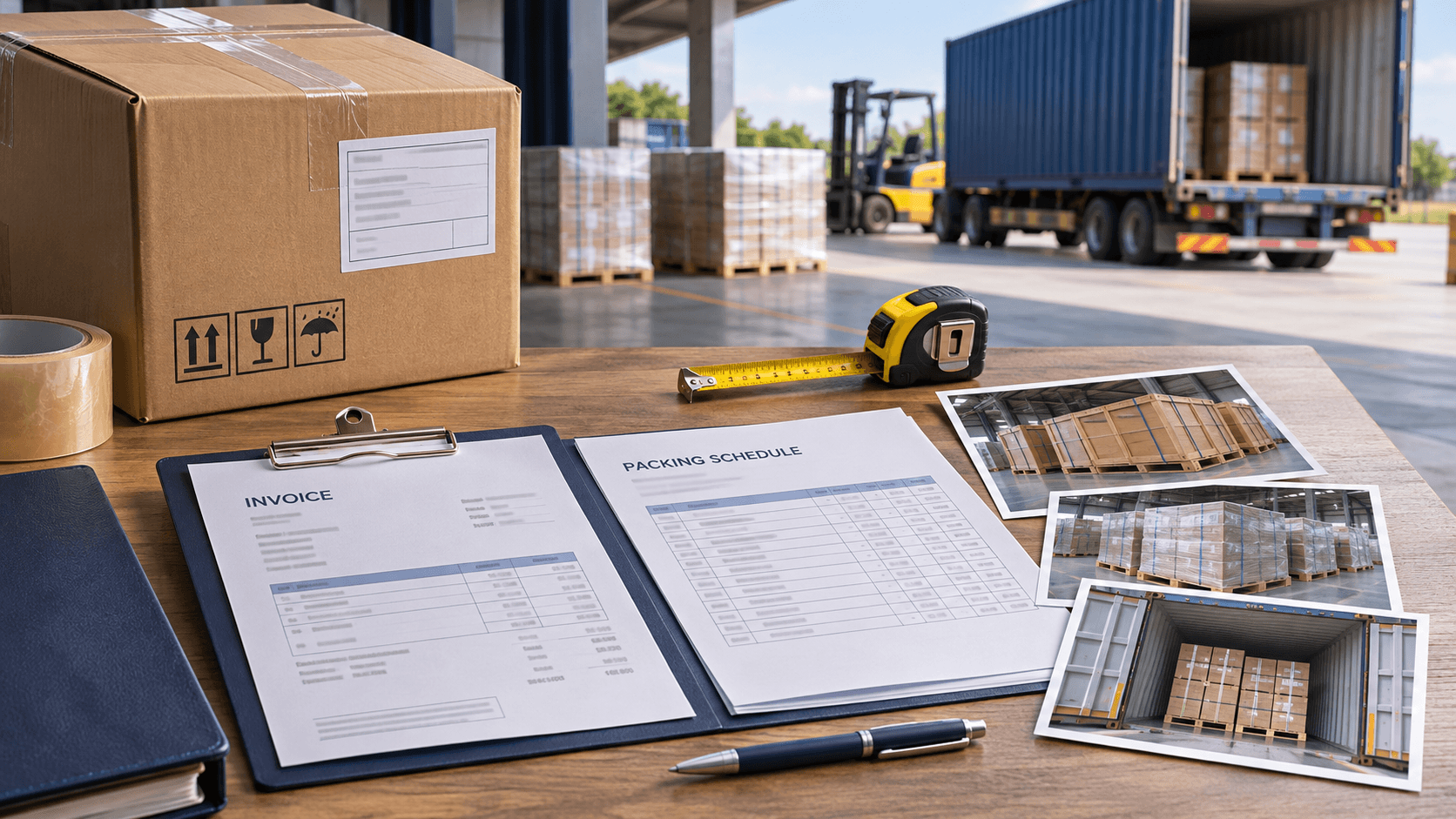
Useful attachments include a draft commercial invoice or pro forma invoice, a provisional packing list, cargo photos and technical specifications. For a machine, show the packed item and access for lifting. For mixed stock, provide a package-level schedule that reconciles the quantities.
Before booking, have the representatives confirm the final invoice, packing list, transport records, declarations, origin evidence and applicable approvals. Keep the final file consistent after inspection or repacking. Freight-forwarding document checklist.
A Quote Request You Can Adapt
“Please quote collection from our supplier in Kolkata to our warehouse in Thimphu for six stackable pallets of new retail garments. Each packed pallet measures 120 × 100 × 140 cm and weighs 180 kg gross, for a total of 1,080 kg. Cargo will be ready on the date shown in the attached order. Please show pickup, export and import-agent services, border handling, delivery, unloading responsibility, tax assumptions, timing and exclusions separately.”
Replace the example with your actual goods, dates, measurements and agreed delivery terms. State whether the dimensions are final and whether the receiving warehouse has a forklift.
8. Questions to Ask Before Hiring a Freight Forwarder
Use the answers to decide whether the proposed service fits your shipment. Ask for clarification in the written offer wherever an answer affects price, timing or custody.
- Who will handle the shipment at each stage? Name the carrier, representatives and destination contact where available.
- Have you handled comparable cargo? Ask about similar size, handling and regulatory requirements and request relevant examples the company can share.
- Which route and facilities are proposed? Confirm the border, yard or airport and final delivery point.
- What must be ready before pickup? Establish the document, permit, payment and packaging conditions.
- Who submits the customs and transit records? Confirm the authorization and importer information required.
- Will the cargo be transferred? Agree equipment, supervision, condition records and responsibility.
- What supports the timing estimate? Ask about departure, operating hours, release and receiving assumptions.
- How will updates work? Set the milestones, contact channel and escalation process.
- What happens during a delay or damage incident? Ask about staging, evidence, carrier notification and claims handling.
- What could change the invoice? Confirm waiting, storage, inspection, redelivery and other additional-charge rules.
Evaluate the clarity and consistency of the answers alongside the price. If a company identifies a permit issue or access constraint early, ask what evidence or action will resolve it before you approve dispatch.
For heavy or temperature-sensitive cargo, discuss a shipment-specific handling plan. For repeat stock, agree a receiving and invoice review after the first movement before setting a regular schedule.

9. Hidden Charges and Responsibilities to Clarify
Charges often become surprises when the quote leaves the trigger or responsibility unclear. Ask how each possible charge is calculated, when it starts and who can approve it.
- Pickup and delivery waiting. What free waiting period applies, and how are extra hours or days charged?
- Border or yard storage. Which facility charges it, and when does the charge clock begin?
- Loading and unloading. Are labour, crane, forklift, special lifting and after-hours work included?
- Transfer and repacking. What happens if the cargo or vehicle needs an authorized change?
- Inspection and document corrections. Which service or third-party costs may arise?
- Restricted delivery access. Who pays for a smaller truck, another attempt or an alternate receiving point?
- Insurance. Is cover arranged, what journey is covered, and what deductible or notice requirement applies?
- Container charges. For sea-linked cargo, who tracks free time, empty return and any demurrage or detention?
- Currency and payment. Can exchange-rate adjustments, bank charges or credit terms affect the amount due?
Separate government levies from commercial service fees and retain the assessment or third-party evidence needed to reconcile the invoice. Agree whether the forwarder needs approval before exceeding an allowance.
Ask about cargo liability and insurance before booking. Review insured parties, valuation, transfers, temporary storage and claims deadlines with the appropriate provider. Freight cargo insurance guide.
For an overseas shipment moving through an Indian port, review the carrier’s container clock alongside the inland plan. Demurrage and detention guide.

10. Why Consider Sea Sky Cargo for Bhutan Freight?
Sea Sky Cargo was established in 1988 and describes Bhutan among the South Asian markets it supports through its regional operations and associates. Its published services include freight forwarding, project cargo, consolidation, inland transport and packing-related support. About Sea Sky Cargo.
For Bhutan cargo, the team can review your shipment profile and coordinate the agreed route, carrier, document handoff, border arrangements and delivery tasks with relevant partners. Its regional freight services include Bhutan. Regional cargo services.
- Shipment-based planning. Start with the actual pickup, product, packed cargo and receiving requirements.
- Road and regional coordination. Review the selected route and the parties responsible at each handoff.
- Document review. Check commercial-record consistency and coordinate with the appointed customs representatives.
- Delivery preparation. Confirm access, receiving hours, handling and unloading arrangements within the agreed scope.
- Quote clarity. Request named inclusions, exclusions, assumptions and a process for approving extra costs.
Ask Sea Sky Cargo to show those points in the proposal for your load. Confirm who provides updates and which items remain subject to carrier acceptance, permit review or regulatory release.
Need a freight forwarding company for Bhutan cargo? Send Sea Sky Cargo your pickup location, cargo type, weight, dimensions and delivery city for a route review and quotation. Add the cargo-ready date, manufacturing origin, value, package photos and any special handling or permit requirements. Request a Bhutan freight quotation.

Need a Freight Forwarding Company for Bhutan Cargo?
Send Sea Sky Cargo your pickup location, cargo type, weight, dimensions and delivery city for a route review and quotation.
Related posts

1970-01-01
Sea + Air Freight: How SeaSky Helps Businesses Ship Smarter

2026-11-14
India to Bhutan Shipping Guide: Road Freight, Customs and Border Documents
2026-11-11
Nepal to Bhutan Cargo Guide: Road Freight, Customs and Documents
2026-11-09