What Changed for EVs in Nepal in 2083? New Tax Rules, Rates, and Budget Impact
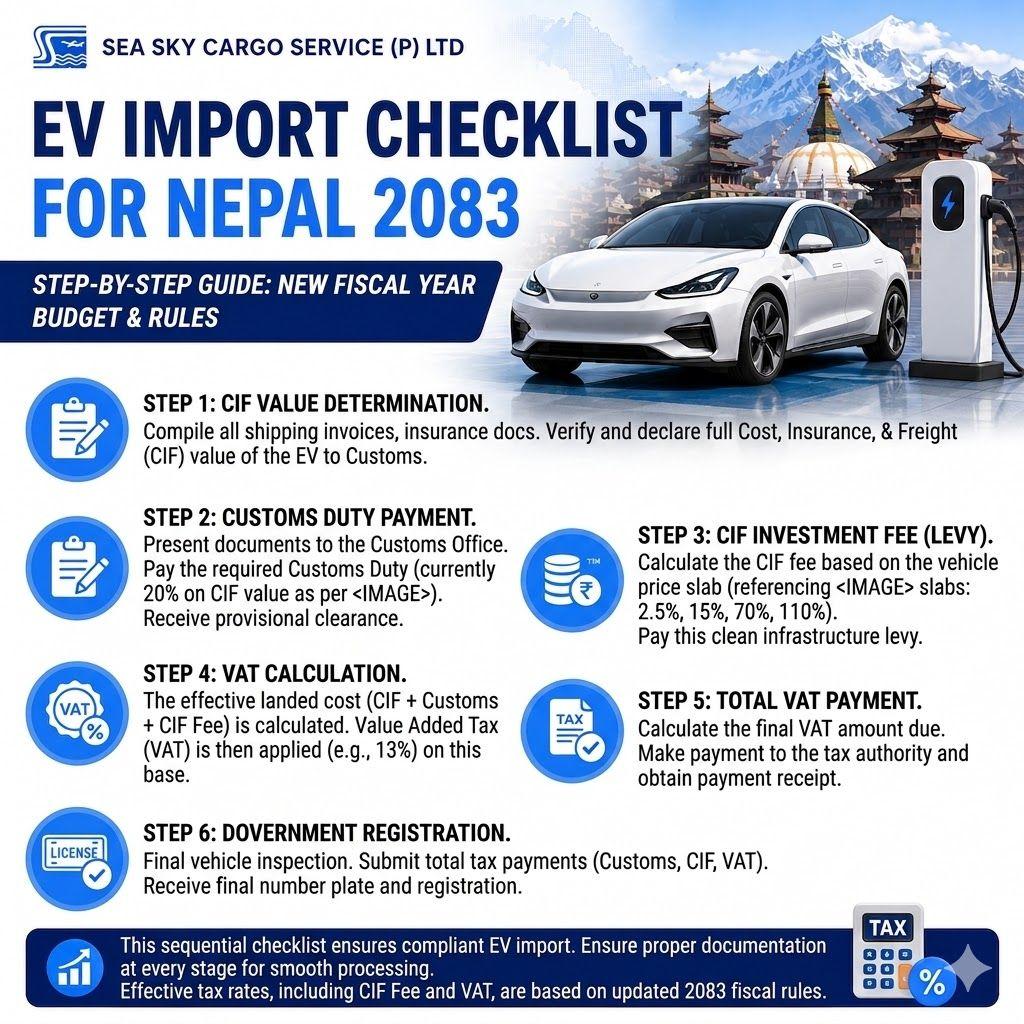
Nepal’s 2083 EV budget changes are a major shift from a motor-power-based system to a value-based import tax structure. Under the new fiscal framework, EV taxation is now tied to vehicle price, with a flat customs duty and a new clean infrastructure levy replacing the older excise model.
For buyers, importers, and EV dealers, this is important because the new rules change total landed cost, especially for mid-range and premium electric vehicles. The budget also reflects a policy shift toward funding charging infrastructure and battery management through import-stage levies.
What changed in 2083
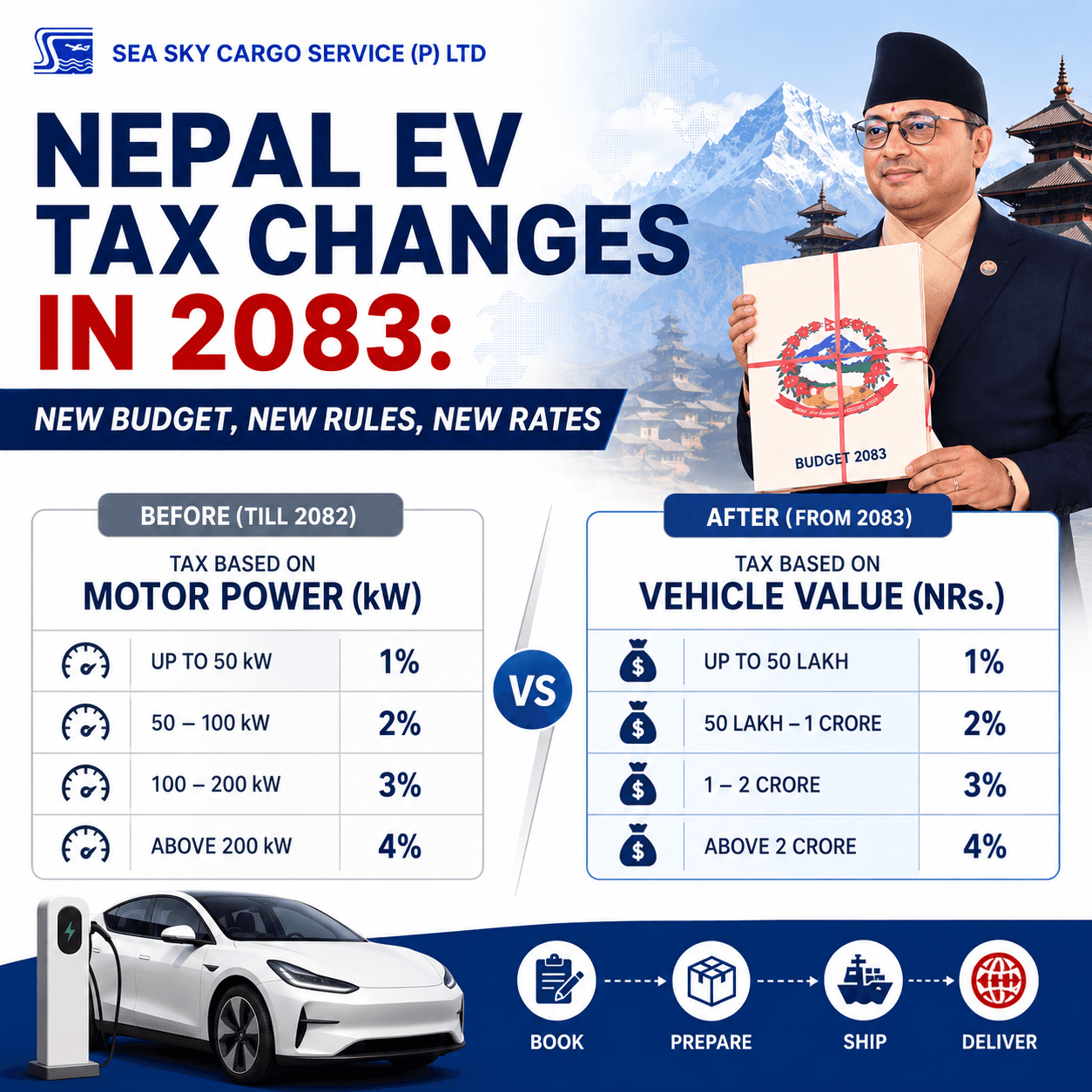
The biggest change is that EV tax is no longer based on motor peak power. Instead of separate slabs for 50 kW, 100 kW, 200 kW, and higher, Nepal now applies a value-based system with a uniform customs duty and an additional clean infrastructure fee.
This means two EVs with similar motor power can now face different tax outcomes if their declared import values are different. That is a major departure from the earlier system, which focused primarily on motor capacity.
New tax structure
The new framework reported in the latest budget coverage introduces:
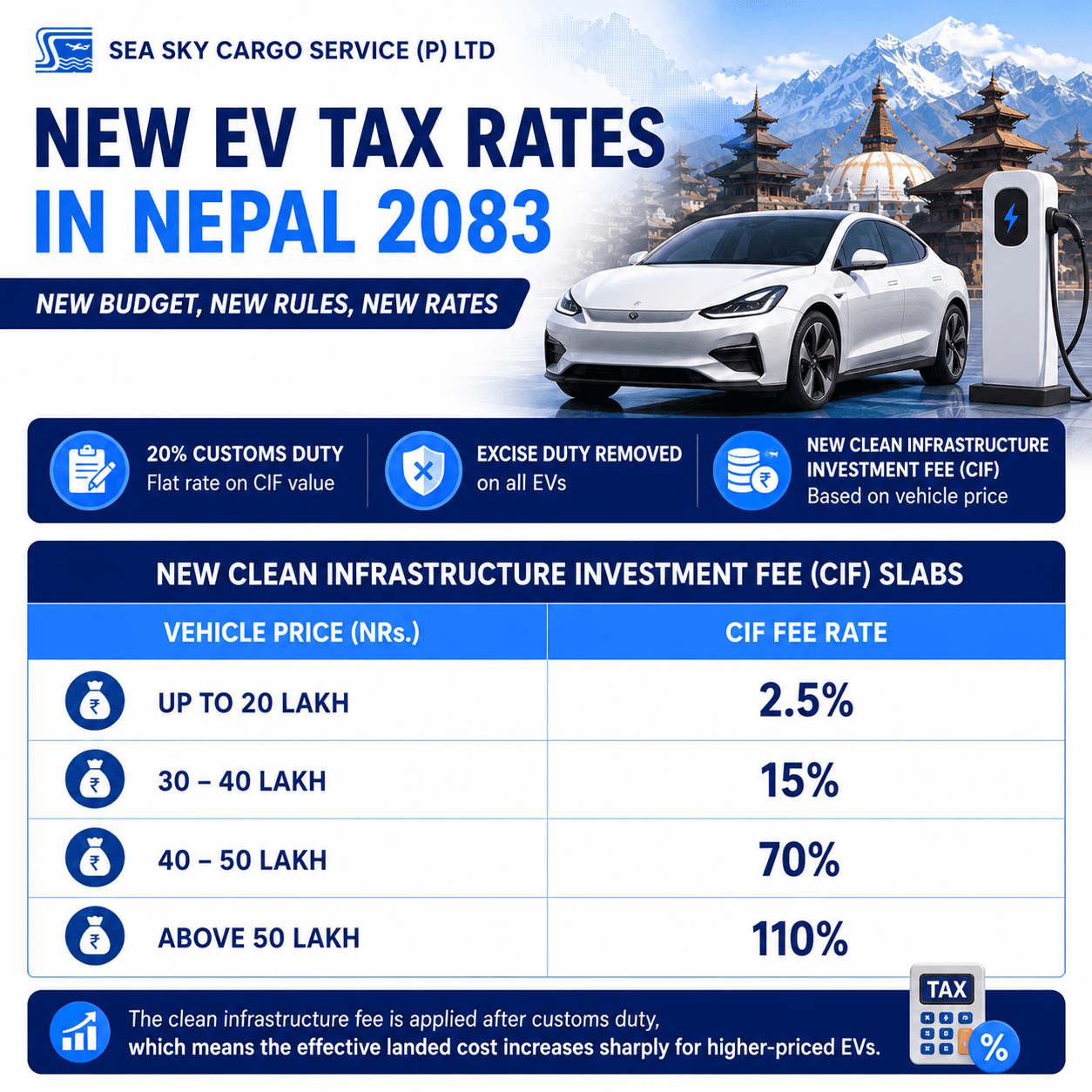
- A flat 20% customs duty on EV imports, calculated on CIF value.
- Removal of excise duty on EVs.
- A new clean infrastructure investment fee based on vehicle price.
The price-based fee is the most significant new layer. Reported slabs show:
- Up to Rs 20 lakh: 2.5% levy.
- Rs 30–40 lakh: 15% levy.
- Rs 40–50 lakh: 70% levy.
- Above Rs 50 lakh: 110% levy.
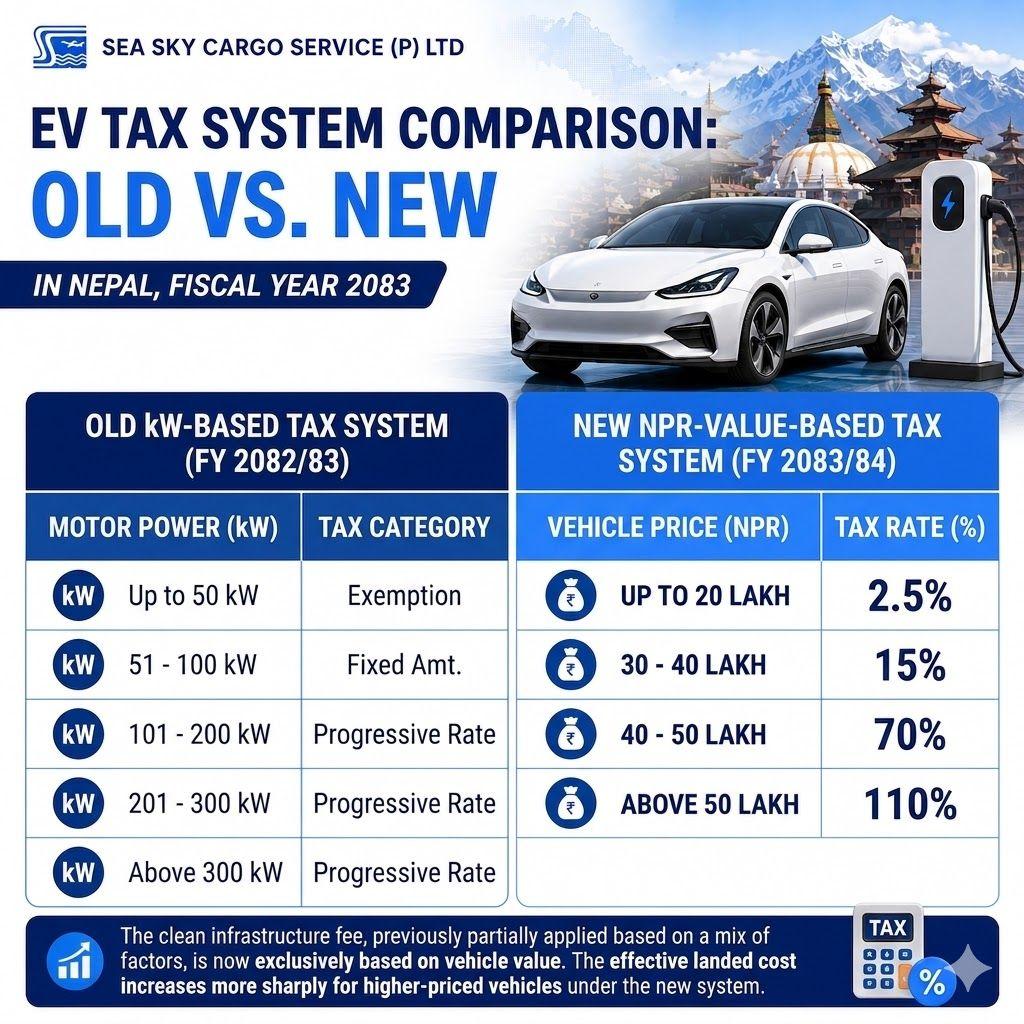
One important detail is that the fee appears to be applied after customs duty, which means the effective landed cost increases sharply for higher-priced EVs.
How it differs from the old system
Under the previous structure, EV taxes in Nepal were based on motor power bands. Public references from the 2082/83 tax regime show customs duty and excise duty ranging across categories such as up to 50 kW, 51–100 kW, 101–200 kW, and above 300 kW.
That earlier system was relatively predictable for buyers because the tax bracket depended on motor size. The new system shifts the focus to vehicle value, which can affect pricing strategy for importers, especially if a higher-spec EV crosses into a much steeper levy band.
What this means for buyers
For buyers, the most practical result is that some lower- to mid-priced EVs may remain relatively attractive, while premium models can become much more expensive to import. Because the additional levy rises steeply with price, the gap between entry-level and high-end EV pricing is likely to widen.
Importers should now calculate landed cost much earlier in the buying process. The quoted showroom price alone is no longer enough; taxes, customs duty, and the new clean infrastructure fee need to be modeled before ordering the vehicle.
Charging and infrastructure angle
A major reason for the new policy is infrastructure funding. The budget framework links the clean infrastructure fee to charging expansion and battery management systems, suggesting the government wants EV imports to help finance the broader ecosystem.
Budget reporting also notes support for EV charging station industries, including a 1% customs duty on machinery for charging-station production and assembly, plus a five-year income tax exemption for such industries. That shows the policy is not just about taxes; it is also about building the market around EV adoption.
Budget implications for dealers
Dealers and fleet buyers will need to adjust pricing, inventory planning, and customer communication. Since the new levy is value-sensitive, two similar vehicles from different brands may end up with very different tax outcomes depending on declared price and segment.
That makes tax planning more important than ever. Dealers should review model mix, landed cost, and expected customer demand before importing stock under the 2083 regime
What to do next
If importing an EV into Nepal in 2083, the safest approach is to verify:
- Declared CIF value.
- Customs duty calculation.
- Clean infrastructure fee band.
- VAT treatment.
- Road tax and registration steps.
For buyers, this means requesting a full landed-cost estimate before purchase. For importers and dealers, it means updating pricing sheets, sales quotes, and import planning immediately.
Conclusion
Nepal’s 2083 EV budget changes mark a major shift from motor-power-based taxation to value-based import taxation with a clean infrastructure levy. The result is a simpler customs duty structure on paper, but a more segmented and price-sensitive total tax burden in practice.
For consumers, that means pricing will matter more than ever. For importers and dealers, it means EV sourcing strategy and landed-cost modeling must be updated immediately to stay competitive.
Need a vehicle import or logistics quote? Sea Sky can help you plan EV shipping, customs handling, and cross-border delivery with the new tax rules in mind.
Get Quotes
Built for freight forwarders handling FCL, OOG, heavy or project cargo into Nepal and South Asia. Use it to check routes, documents, handoffs and risk points before quoting your client.
Related posts
1970-01-01
Sea + Air Freight: How SeaSky Helps Businesses Ship Smarter
2026-10-12
B2B Logistics in Nepal: Cross-Border Delivery for Businesses
2026-10-12
France to Nepal Shipping Guide: Air Freight, Sea Freight, Customs and Documents

2026-10-08