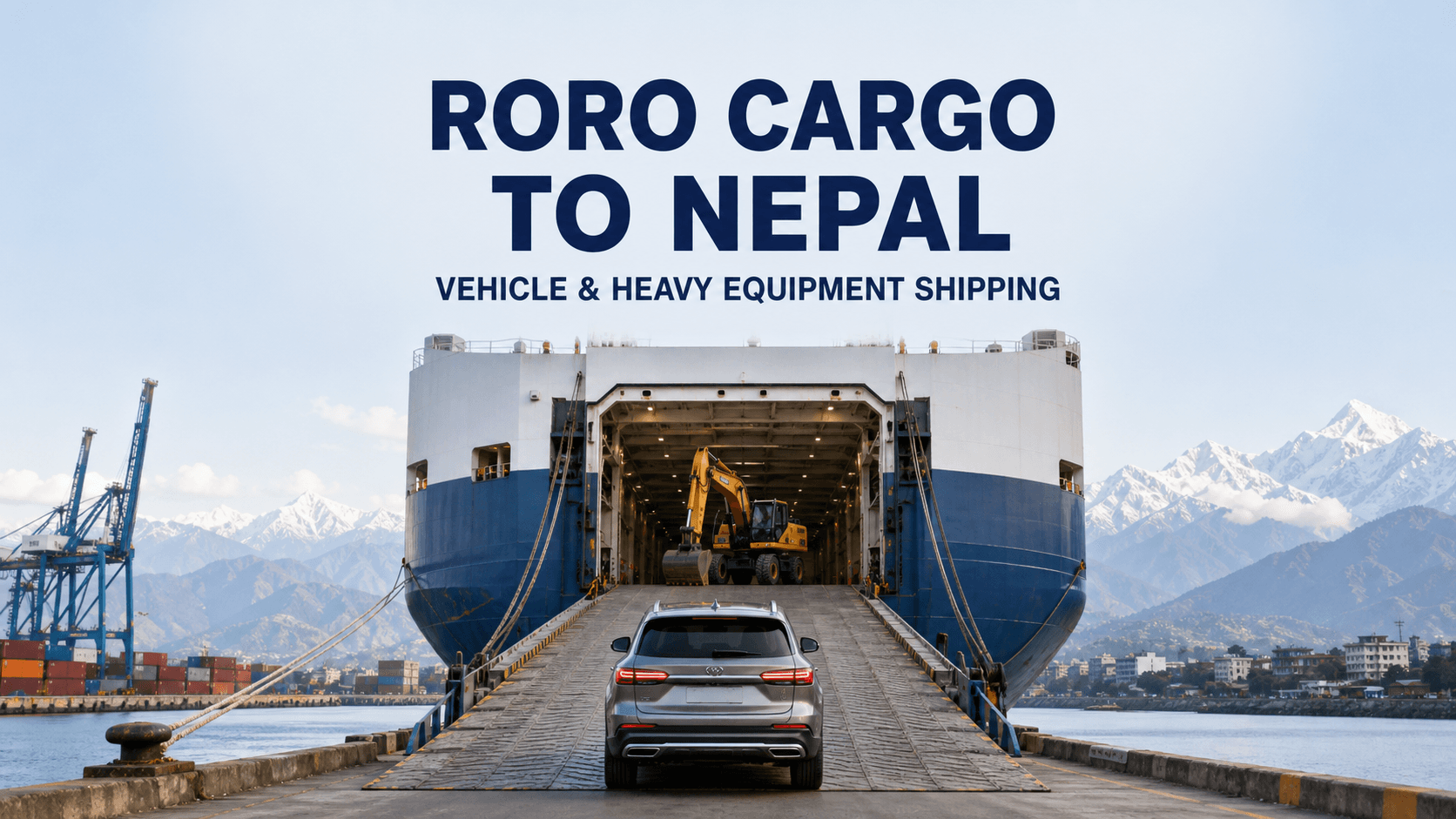
What is RoRo cargo?
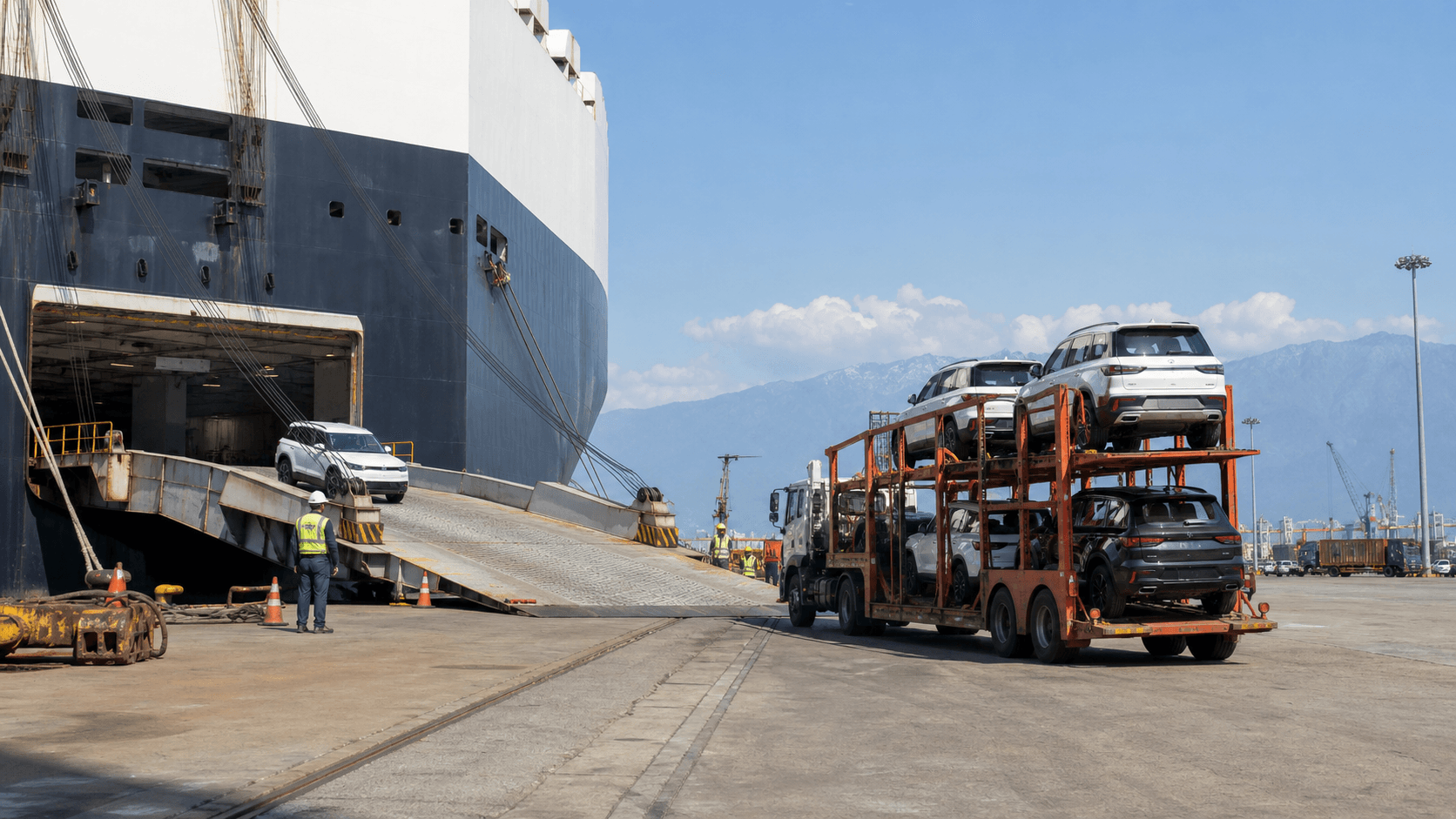
RoRo means roll-on/roll-off. Instead of lifting cargo into a ship with a crane, suitable wheeled cargo moves across a vessel ramp and onto an enclosed vehicle deck. A roadworthy car may be driven aboard, while some approved machines can move under their own power or with terminal equipment.
Once the unit reaches its assigned position, trained vessel personnel secure it for the sea voyage. This loading method is designed for vehicles and mobile equipment, so it can reduce the dismantling and lifting needed for a conventional container or breakbulk movement.
RoRo is a transport method, not a complete Nepal delivery by itself. Nepal has no seaport, which means the ocean leg must connect with port handling, Indian transit, border formalities, Nepal customs clearance and inland delivery. Sea Sky's RoRo cargo service brings those stages into one practical movement.
- The cargo must fit the carrier's ramp, deck-height, weight and securing limits.
- The vehicle or machine condition must match the booking declaration.
- Non-running units need advance approval and a confirmed handling method.
- Loose goods inside a vehicle are subject to carrier and customs restrictions.
- A Nepal shipment needs an inland plan beyond the discharge port.
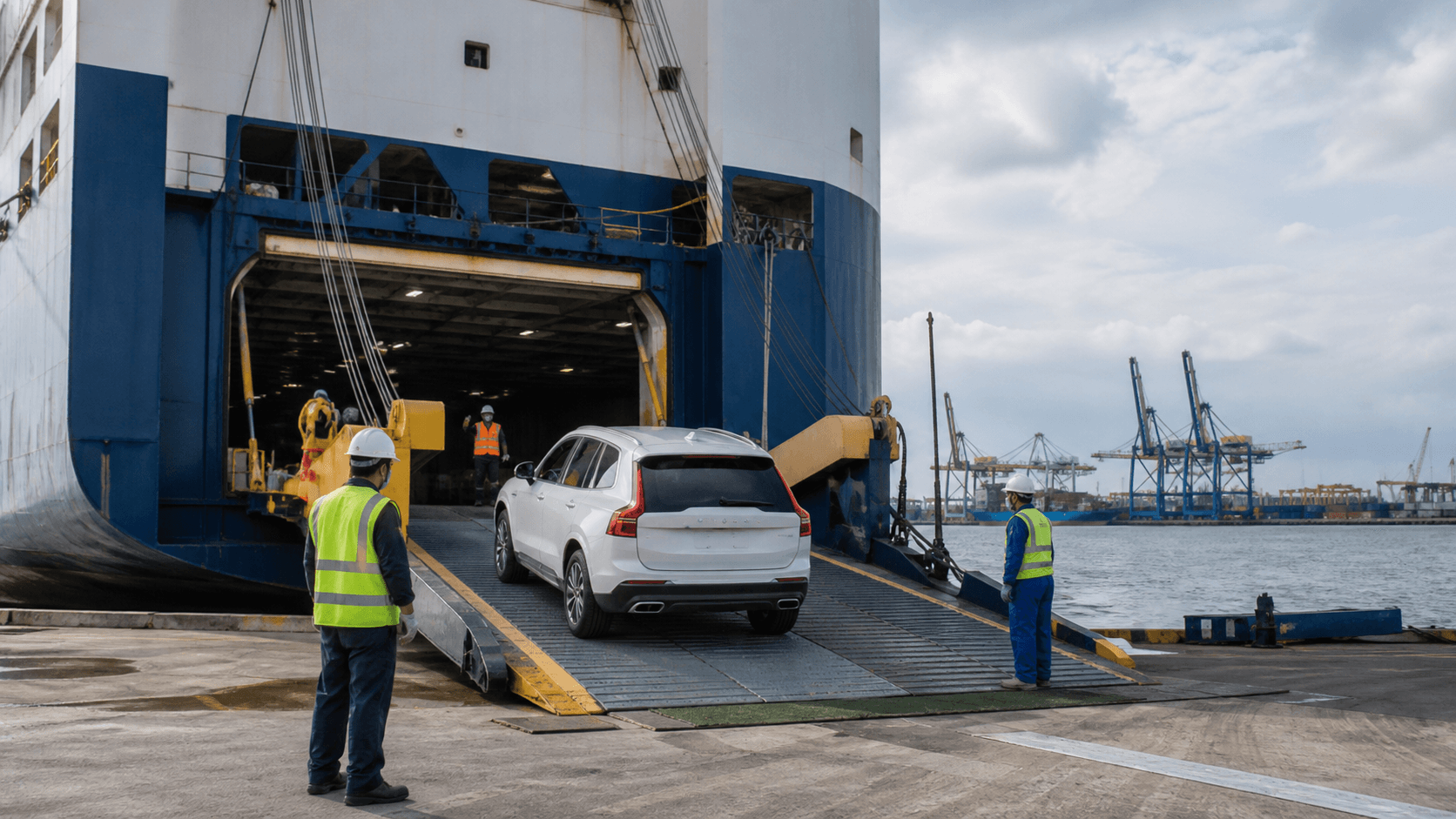
Which vehicles and equipment can ship by RoRo?
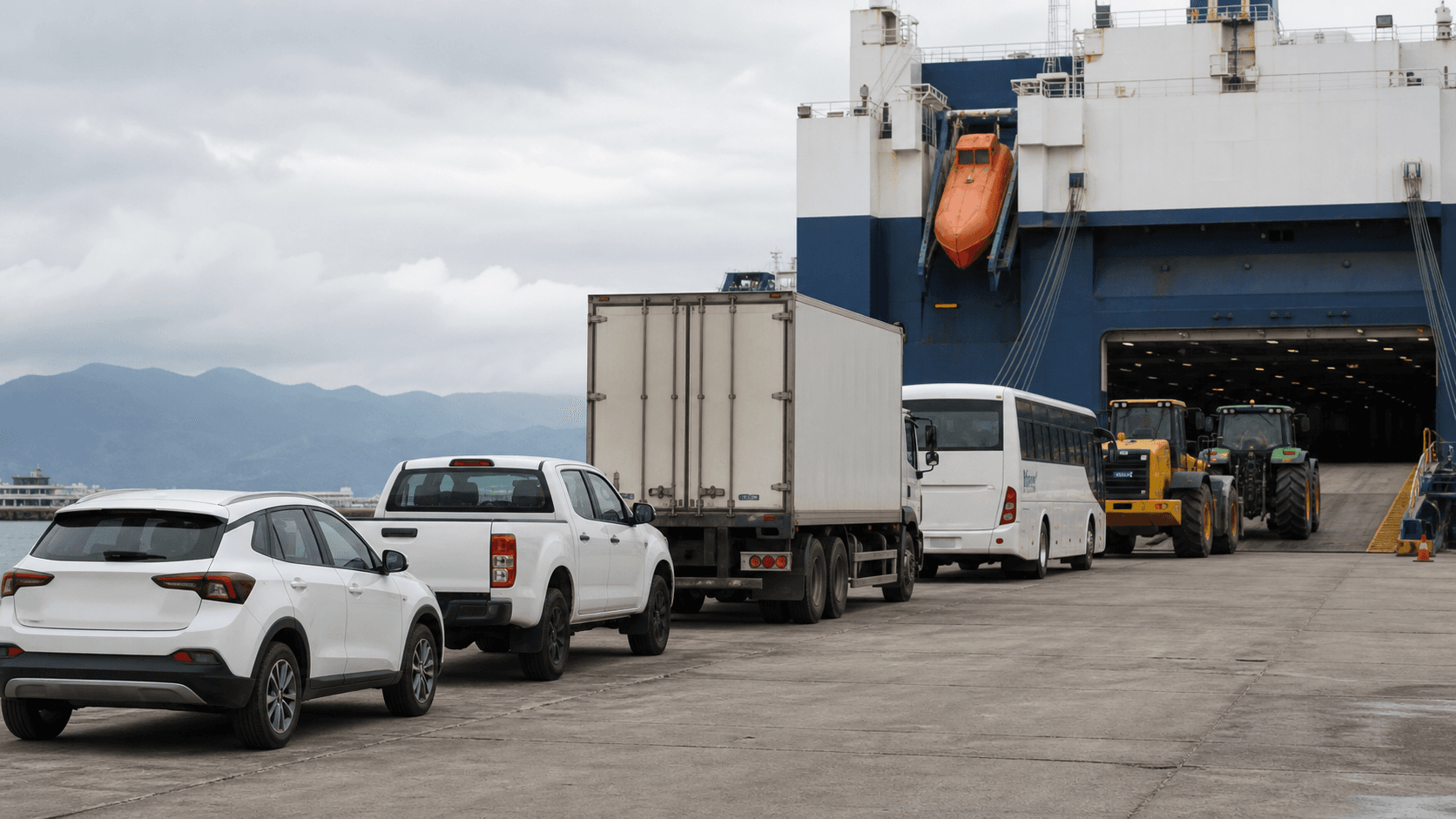
RoRo works best when the cargo can roll and the carrier can safely move, position and secure it. Passenger vehicles are the most familiar example, but many commercial and project units can also be candidates. Acceptance depends on the exact vessel, route, port facilities and unit condition. Tracked machinery, static industrial equipment and units that cannot safely roll may need a mafi trailer, flat rack, breakbulk or another project-cargo method. A good forwarder checks the actual cargo before recommending RoRo. Sea Sky can also compare project cargo and breakbulk cargo when the unit does not fit a standard RoRo movement.
| Cargo type | Typical examples | Planning point |
|---|---|---|
| Passenger vehicles | Cars, SUVs, pickups and vans | Confirm dimensions, condition, ownership documents and carrier rules |
| Commercial vehicles | Trucks, buses, tractors and trailers | Check deck height, axle weight, turning clearance and road permits |
| Construction equipment | Wheeled loaders, cranes, rollers and mobile machinery | Provide accurate operating weight, dimensions and attachment details |
| Agricultural equipment | Tractors, harvesters and wheeled implements | Confirm cleanliness, movable parts and biosecurity requirements |
| Special-purpose units | Ambulances, fire vehicles and utility vehicles | Declare fitted equipment, batteries and any controlled contents |
RoRo vs container vs breakbulk shipping
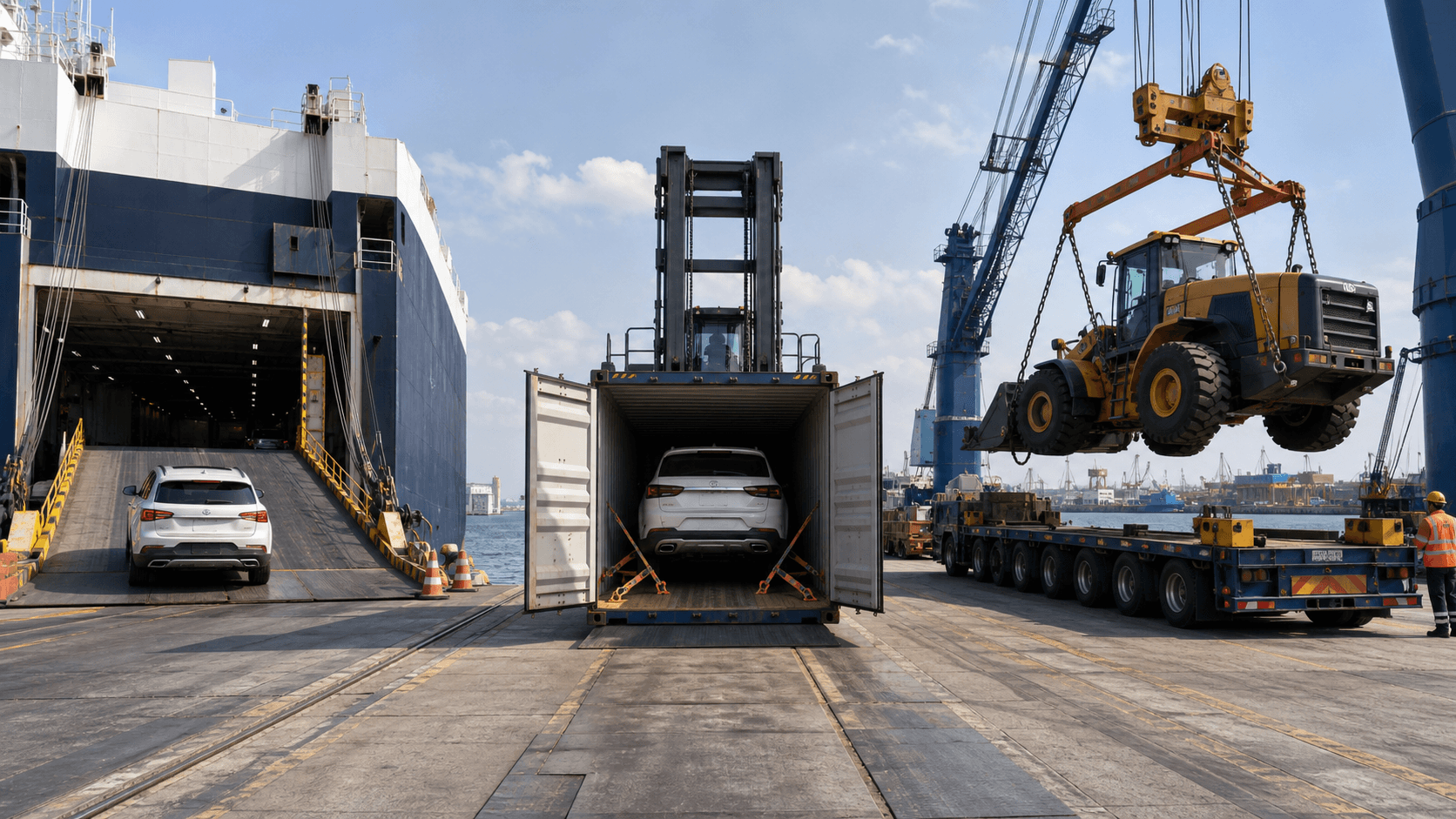
The right method depends on the cargo, route and total landed movement. RoRo is not automatically the cheapest option, and a container is not automatically the safest. The useful comparison includes ocean freight, origin handling, destination charges, inland transport, customs requirements, cargo protection and the work needed to prepare the unit. A running SUV may be a natural RoRo candidate. A compact car plus spare parts may work better in a container if the carrier permits the packing plan. A non-running excavator with attachments may need flat-rack or breakbulk handling. Sea Sky's ocean freight service can compare the complete route instead of quoting one leg in isolation.
| Factor | RoRo | Container or flat rack | Breakbulk |
|---|---|---|---|
| Best suited to | Operable vehicles and wheeled equipment accepted by the carrier | Smaller vehicles, dismantled machinery or cargo needing enclosed space | Large, heavy or irregular units that require lifting |
| Loading method | Rolls across a ramp onto the vessel deck | Loaded into or secured onto container equipment | Lifted by crane using an engineered handling plan |
| Cargo access | Carrier-controlled vehicle deck | Sealed container where standard equipment is used | Unit is handled individually at the port |
| Preparation | Operating condition, dimensions, cleanliness and carrier compliance | Container fit, blocking, bracing and possible dismantling | Lifting points, slings, cradles and detailed method statement |
| Main constraint | Sailing coverage and vessel acceptance | Internal dimensions, payload and safe securing | Specialized handling, port capability and lifting cost |
How RoRo cargo reaches Nepal
A Nepal-bound RoRo shipment normally has at least two transport environments: an international ocean leg and an inland transit leg. The vehicle first moves from the seller or factory to the nominated load port. After carrier acceptance and export formalities, it is loaded onto a suitable RoRo or combined cargo vessel. Because Nepal is landlocked, the unit is discharged at a suitable Indian gateway under the current carrier and transit arrangement. Kolkata or Haldia may be used for some movements, but the correct port depends on sailing availability, cargo acceptance, customs procedure and the inland route. The unit then moves under the required transit process toward the approved Nepal border point. The inland leg should be planned before the vessel arrives. Sea Sky's road freight service and port-to-door cargo guide explain why transporter selection, border readiness and final delivery access matter as much as the sailing itself.
| Route stage | What happens | What must be coordinated |
|---|---|---|
| Origin handover | Vehicle reaches the load port or carrier terminal | Booking reference, condition, export documents and terminal deadline |
| Ocean transport | Unit is loaded, secured and carried on a RoRo vessel | Sailing, vessel acceptance, bill of lading and shipment updates |
| Indian port arrival | Cargo is discharged and processed for the inland leg | Port charges, release documents, transit filing and transporter readiness |
| India-Nepal transit | Vehicle moves by an approved road or multimodal arrangement | Transit documents, route, permits, border timing and secure transport |
| Nepal clearance and delivery | Import formalities are completed before final handover | Customs valuation, duties and taxes, registration needs and delivery access |
The RoRo shipping process step by step
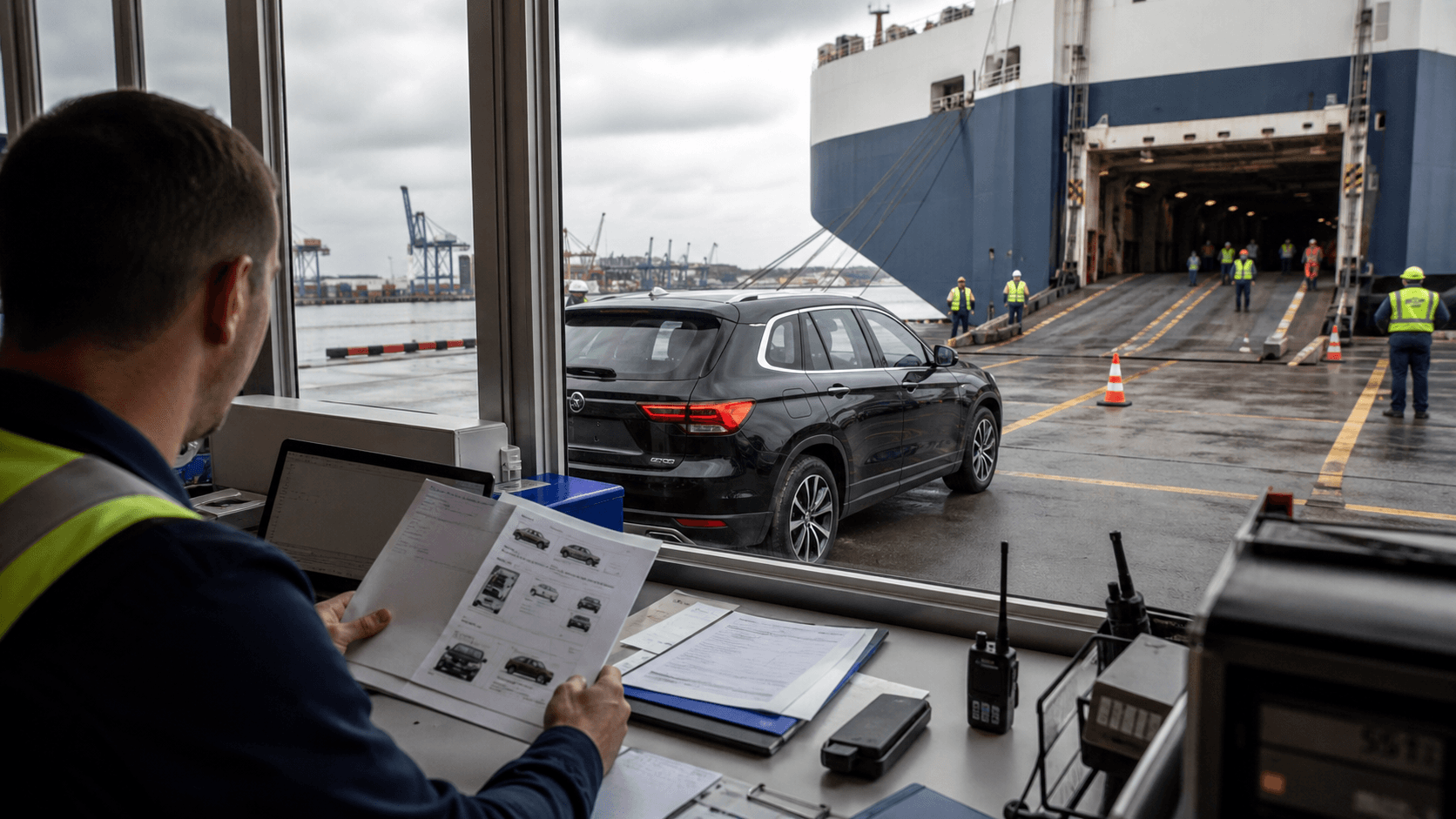
A reliable RoRo booking begins with accurate cargo facts. A model name alone is not enough because accessories, body conversions, attachments and operating condition can change the space, handling and inland transport requirements. The booking confirmation should identify who controls each handoff. A low ocean rate can become expensive when destination handling, storage, transit movement or final unloading has been left outside the plan.
| Step | Action | Important confirmation |
|---|---|---|
| 1. Cargo review | Share make, model, year, dimensions, weight, value, location and condition | Running or non-running status and any modifications |
| 2. Route check | Compare RoRo sailings and connected Nepal delivery options | Load port, discharge port, border route and destination |
| 3. Quote and booking | Confirm included charges, validity and booking terms | Ocean, terminal, transit, clearance and delivery scope |
| 4. Document preparation | Align commercial, ownership, export and import documents | Names, chassis number, value and cargo description match |
| 5. Vehicle preparation | Clean, inspect and prepare the unit to carrier instructions | Fuel, battery, keys, alarms and loose items follow the approved rules |
| 6. Port handover | Deliver before the terminal cut-off and record condition | Gate acceptance and condition report are complete |
| 7. Loading and sailing | Terminal and vessel teams position and secure the unit | Shipment documents and sailing status are issued |
| 8. Arrival and inland movement | Release, transit, border, Nepal clearance and delivery are coordinated | Documents and transporter are ready before storage time builds |
Planning a vehicle or equipment shipment to Nepal?
Share the origin, destination, make and model, operating condition, dimensions, weight, cargo-ready date and available documents. Sea Sky can check whether RoRo is suitable and plan the connected port-to-door movement.
How to prepare a vehicle for RoRo shipment
Carrier instructions take priority because fuel, battery, alarm and key rules can vary by route and vessel. The preparation goal is consistent: the unit must be safe to handle, accurately declared and free from unapproved loose cargo.
- Confirm that steering, brakes, tires and transmission are suitable for terminal movement.
- Repair significant fluid leaks and report any mechanical limitation before handover.
- Clean the exterior, wheel arches and underbody to support inspection and route-specific cleanliness rules.
- Remove personal goods, valuables and unapproved spare items from the cabin and luggage areas.
- Disable alarms only as instructed and provide the required number of working keys.
- Follow the carrier's exact fuel-level, battery and electric-vehicle charging requirements.
- Secure or remove detachable accessories, tools, buckets, mirrors, antennas and other projections.
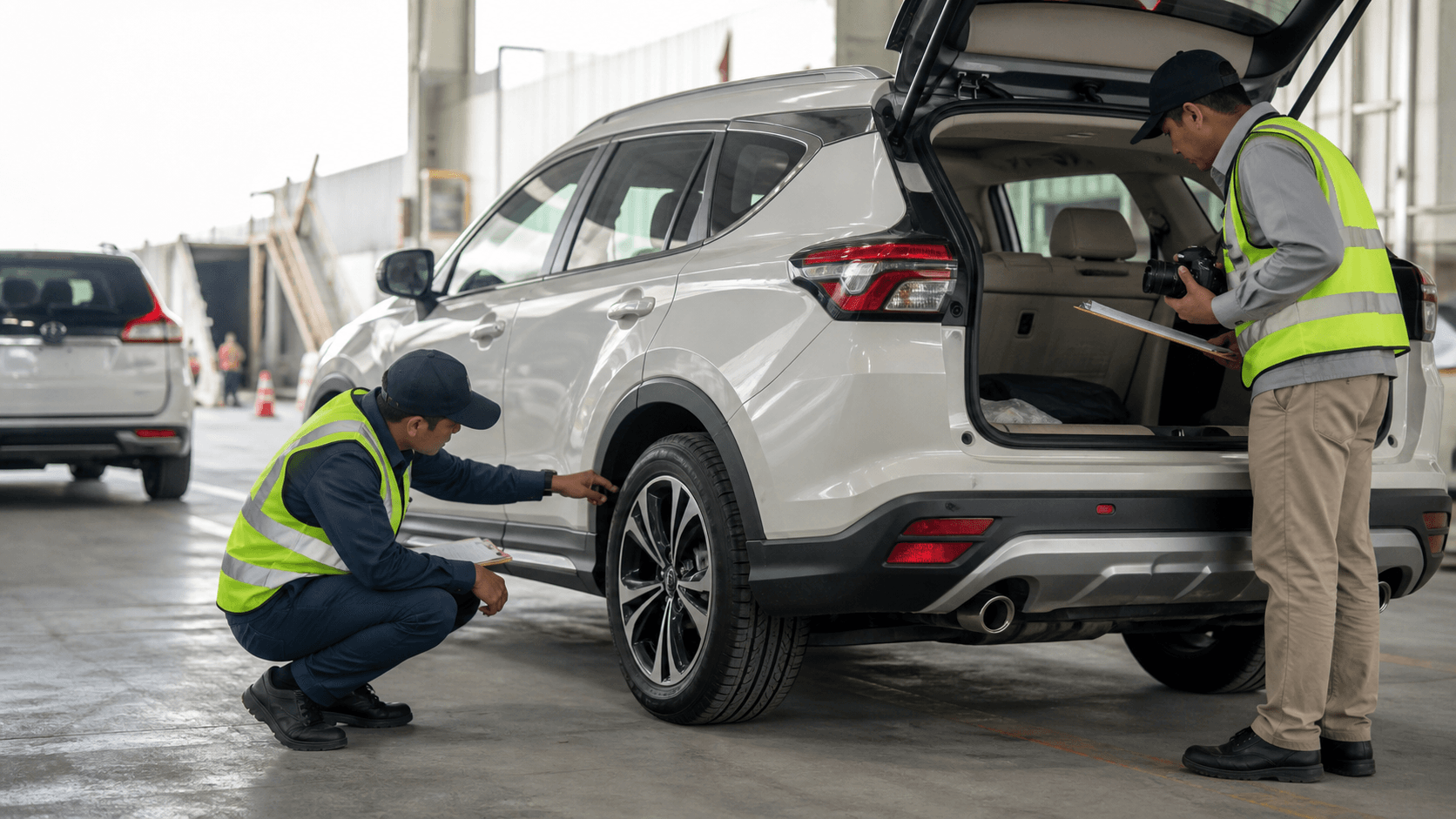
- Photograph every side, the interior, odometer and existing damage before terminal delivery.
- Verify the chassis or VIN number against the invoice, ownership record and booking.
- Declare modifications such as roof racks, armored bodies, refrigeration units or mounted machinery.
For a used vehicle or machine, a dated condition survey can reduce arguments about pre-existing damage. For high-value units, discuss survey scope and cargo insurance before the cargo enters the terminal.
Documents and customs planning for Nepal
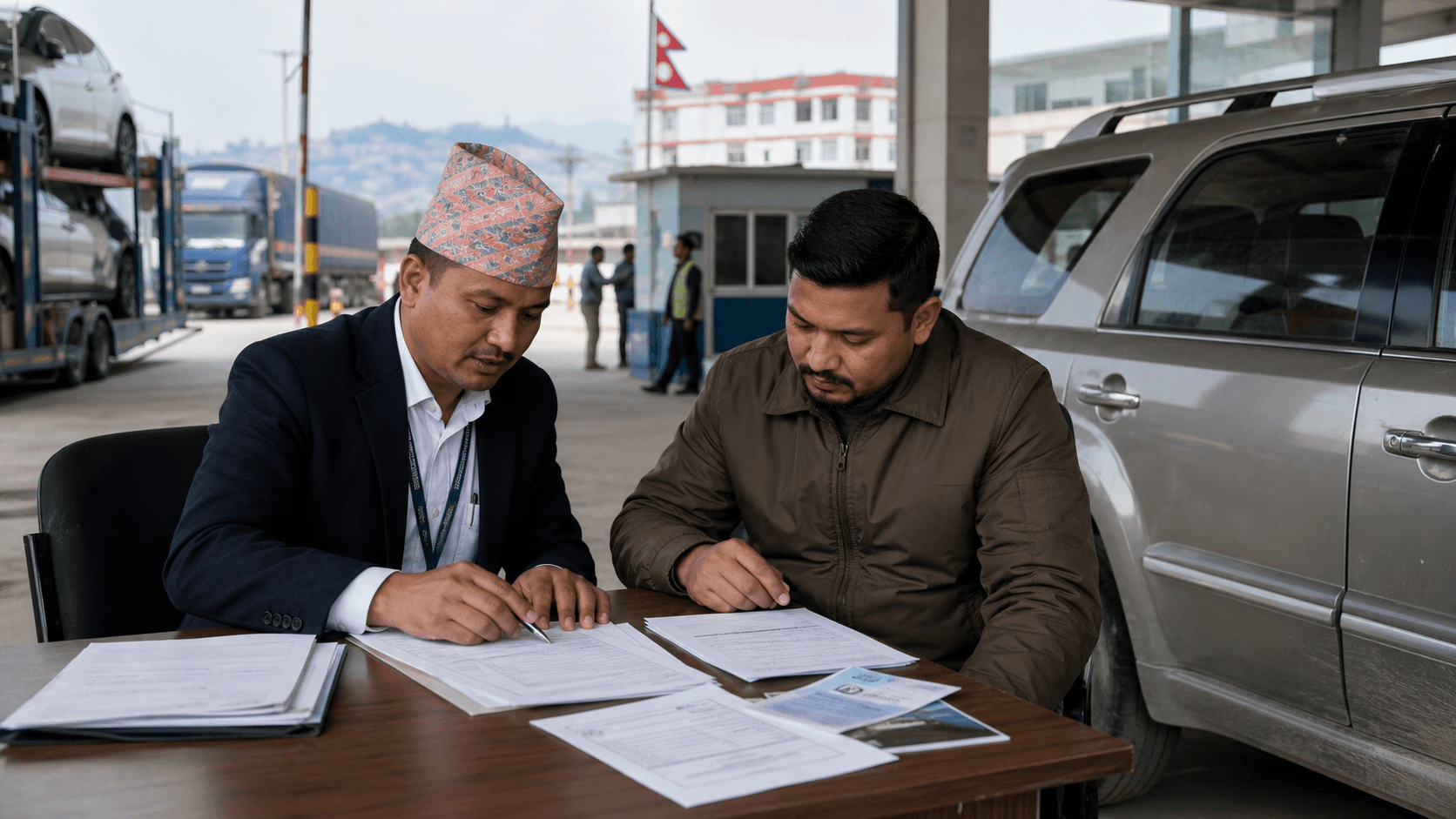
Document requirements change with the vehicle, importer, origin, route and current regulation. A new commercial vehicle, a used private car, diplomatic cargo and a construction machine may not follow the same approval path. Confirm the file before the cargo is booked, not after it reaches the port. Descriptions and identification numbers should match exactly. A small inconsistency in the chassis number, consignee name, value or model description can interrupt port release or customs processing. Sea Sky's customs clearance service can review the shipment file and identify questions that should be resolved before dispatch. Duty, tax, import eligibility and registration are separate decisions. Obtain a current customs and regulatory review for the exact unit rather than relying on an old shipment or a general online estimate.
| Document or information | Why it matters |
|---|---|
| Commercial invoice | Supports the transaction value, buyer and seller details and customs declaration |
| Packing list or cargo specification | Records the unit, accessories, dimensions, weight and package details where applicable |
| Bill of lading | Identifies the shipper, consignee, ports, cargo description and carrier contract |
| Ownership or registration record | Supports title history and the right to export or import the vehicle |
| Chassis or VIN and engine details | Must align across the physical unit and shipment documents |
| Certificate of origin | May support origin verification or a route-specific customs requirement |
| Insurance certificate | Shows the agreed transit coverage when cargo insurance is arranged |
| Import approval, permit or letter | May be required for the cargo type, importer status or special-use vehicle |
| Transit documents | Support movement from the Indian gateway to the approved Nepal entry point |
What affects the cost of RoRo cargo to Nepal?
RoRo pricing is usually influenced by the space and handling profile of the unit, not just its purchase price. Length, width, height and weight must be accurate because the carrier uses them to plan deck space, ramp limits and securing. For a useful quote, send the origin address, destination, make, model, year, chassis number if available, operating condition, exact dimensions, gross weight, value, cargo-ready date and photographs. Oversized machinery may also need axle loads, attachment dimensions and lifting or towing information. Ask whether the price includes origin pickup, port fees, ocean freight, destination handling, Indian transit, Nepal clearance support and final delivery. The get a quote form gives Sea Sky the details needed to build a clearer comparison.
| Cost factor | How it affects the quote |
|---|---|
| Origin and load port | Changes pickup, export handling, terminal charges and available sailings |
| Vehicle dimensions and weight | Determines deck space, handling category and inland transport requirements |
| Running condition | Non-running cargo can require special equipment, labor and carrier approval |
| Ocean route and schedule | Carrier coverage, transshipment and seasonal capacity influence freight |
| Port and documentation charges | Terminal handling, release, survey and filing costs vary by movement |
| Indian transit and border route | Distance, transporter type, permits, tolls and waiting time affect inland cost |
| Nepal customs and taxes | Depend on classification, value, origin, engine or equipment details and current rules |
| Final delivery | Destination access, unloading, escorts and specialized trailer needs add to scope |
| Insurance and survey | Coverage level, cargo value and inspection requirements affect premium and fees |
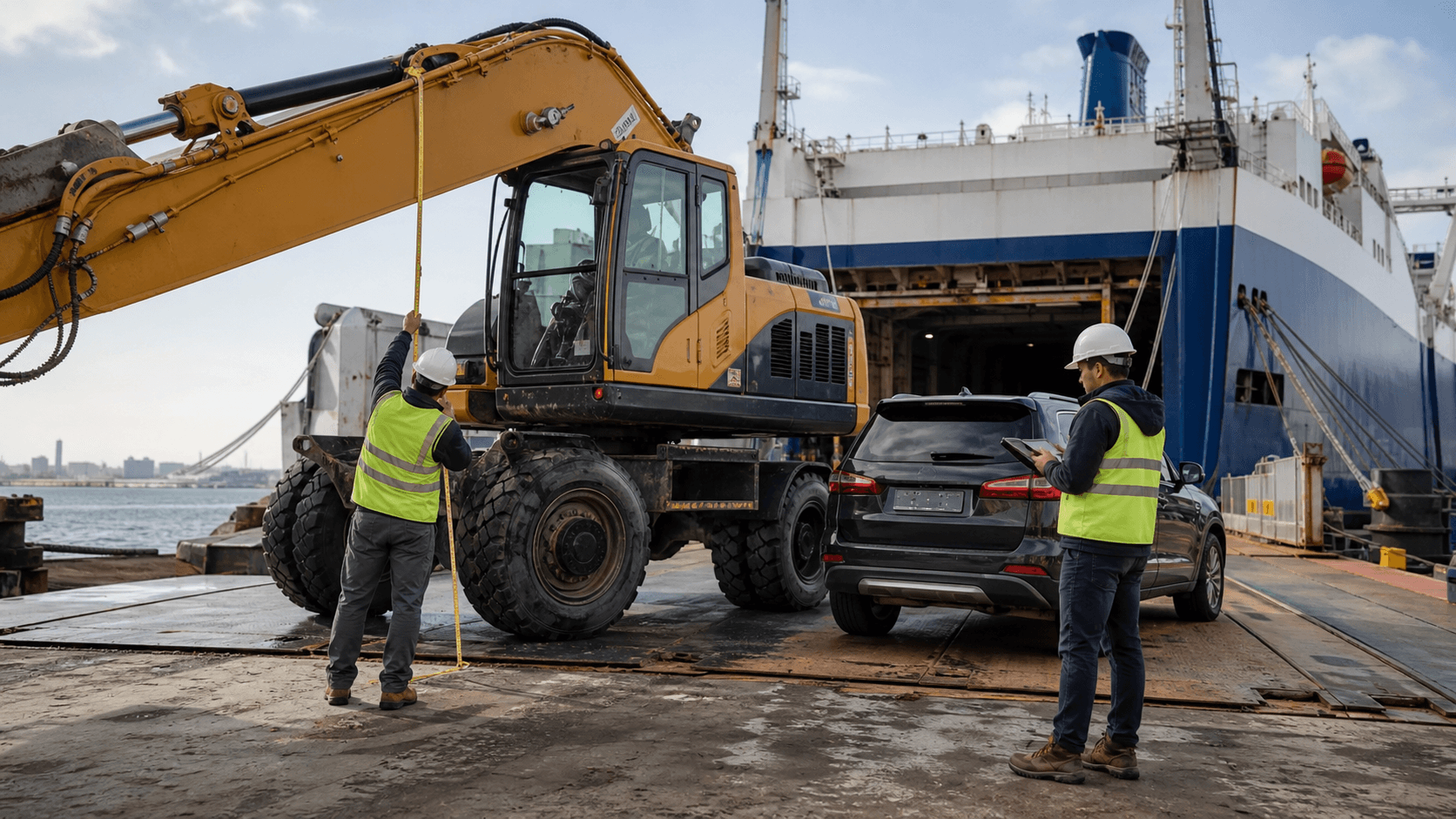
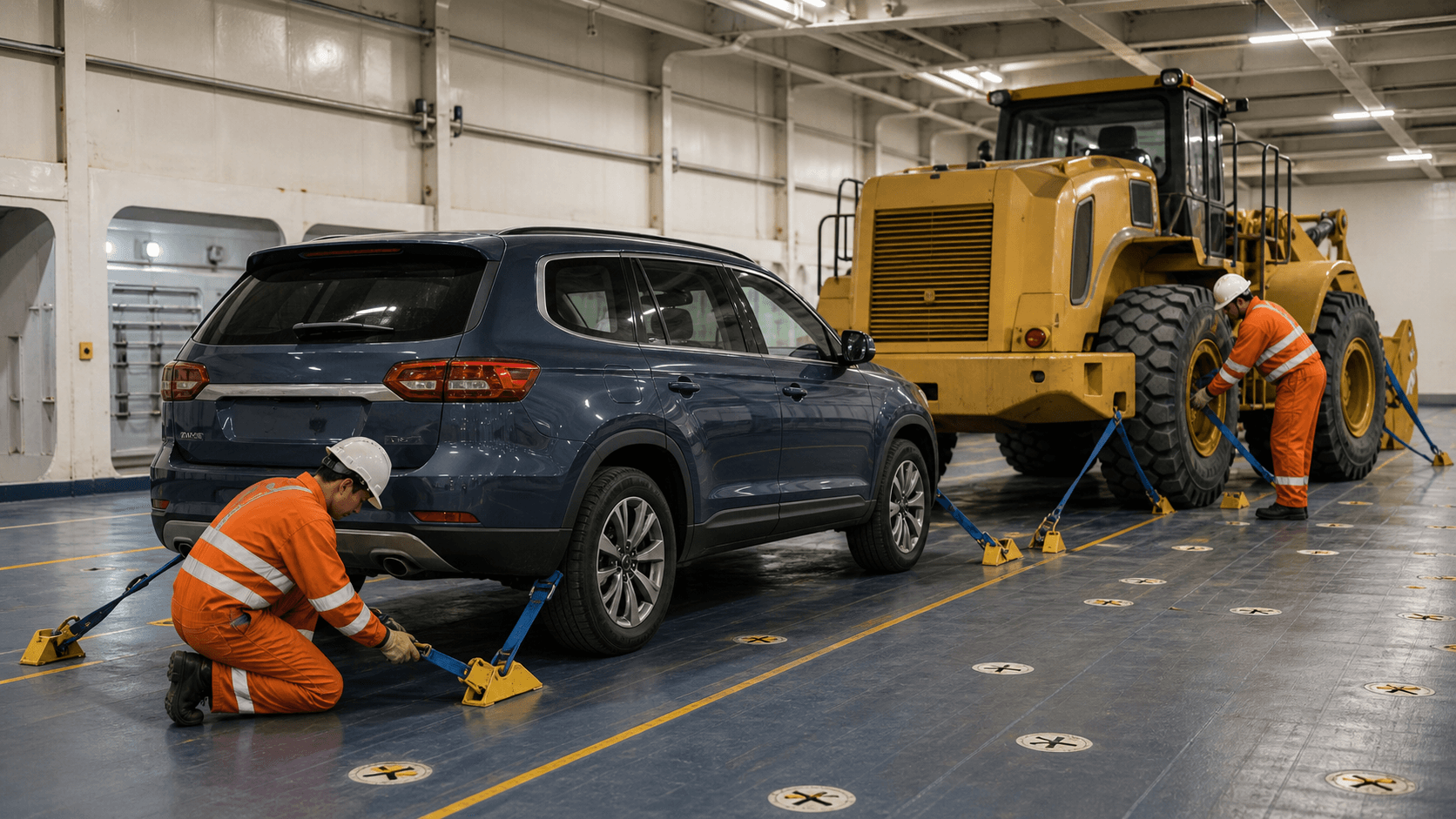
Cargo securing, inspections and risk control
Vehicles on a RoRo deck are exposed to vessel motion, close operating spaces and multiple handling stages. Proper stowage and securing are therefore central to the movement. Vessel personnel use the ship's approved cargo-securing procedures, suitable lashing points and equipment such as wheel chocks and restraints.
The shipper still has important responsibilities. The cargo description, weight, dimensions and condition must be accurate. The unit should be mechanically safe for the agreed handling method, and suitable securing points must be available where required. Any leak, weak towing point, unusual attachment or mobility problem should be disclosed before delivery to the terminal.
- Keep a dated photo record before port handover and again after delivery.
- Review terminal condition reports and report discrepancies promptly.
- Confirm whether the insurance covers ocean, port, transit, border and final delivery legs.
- Check deductibles, exclusions, valuation basis and claim-notification deadlines.
- Use a qualified surveyor when cargo value, condition or project risk justifies it.
- Plan the inland transporter and unloading site for the unit's weight and dimensions.
Insurance does not replace good preparation. It works best beside an accurate booking, clean documentation, condition evidence, professional securing and a controlled chain of handovers.
How Sea Sky Cargo supports RoRo shipments
A RoRo shipment to Nepal crosses carrier, port, transit, border, customs and road-delivery responsibilities. Sea Sky Cargo helps connect those responsibilities around the actual unit and destination rather than stopping at the ocean booking.
- Review the vehicle or machine and check whether RoRo is a realistic option.
- Compare RoRo with container, flat-rack or breakbulk alternatives when needed.
- Coordinate origin information, booking details and port handover requirements.
- Check commercial and transport documents for consistency before dispatch.
- Plan Indian port handling, transit movement, Nepal customs support and delivery.
- Arrange suitable road equipment for cars, trucks or heavier wheeled machinery.
- Keep the importer informed through the major shipment handoffs.
Can a non-running vehicle ship by RoRo? Sometimes, but only when the carrier and terminals approve the condition and handling method. Share the steering, braking, towing and mechanical condition before requesting space.
Can personal goods stay inside the vehicle? Do not assume they can. Carrier, port, customs and insurance rules may restrict loose goods. Remove unapproved contents and declare any permitted accessories.
Is RoRo always cheaper than a container? No. The answer depends on dimensions, route, sailing availability, port charges, inland transport and preparation. Compare the complete delivered cost.
How early should the shipment be planned? Begin before purchase or dispatch when possible. Import eligibility, document alignment, carrier acceptance and inland transport can affect whether the proposed movement works.
For heavy units, Sea Sky can also review trailer capacity and destination access. Share the full cargo profile through the quote form to receive a route-specific plan.

Get a complete RoRo route and cost plan
Sea Sky Cargo can coordinate the ocean booking, port handling, transit documents, customs support and inland delivery needed to move suitable vehicles and wheeled equipment to Nepal.
Related posts
1970-01-01
Sea + Air Freight: How SeaSky Helps Businesses Ship Smarter
2026-09-28
E-commerce Logistics Nepal: Cross-Border Shipping from China, India, and the Gulf
2026-09-27
Monsoon Logistics in Nepal: How to Plan Shipments Around Floods and Landslides
2026-09-25