1. Choose and Verify a Chinese Clothing Supplier
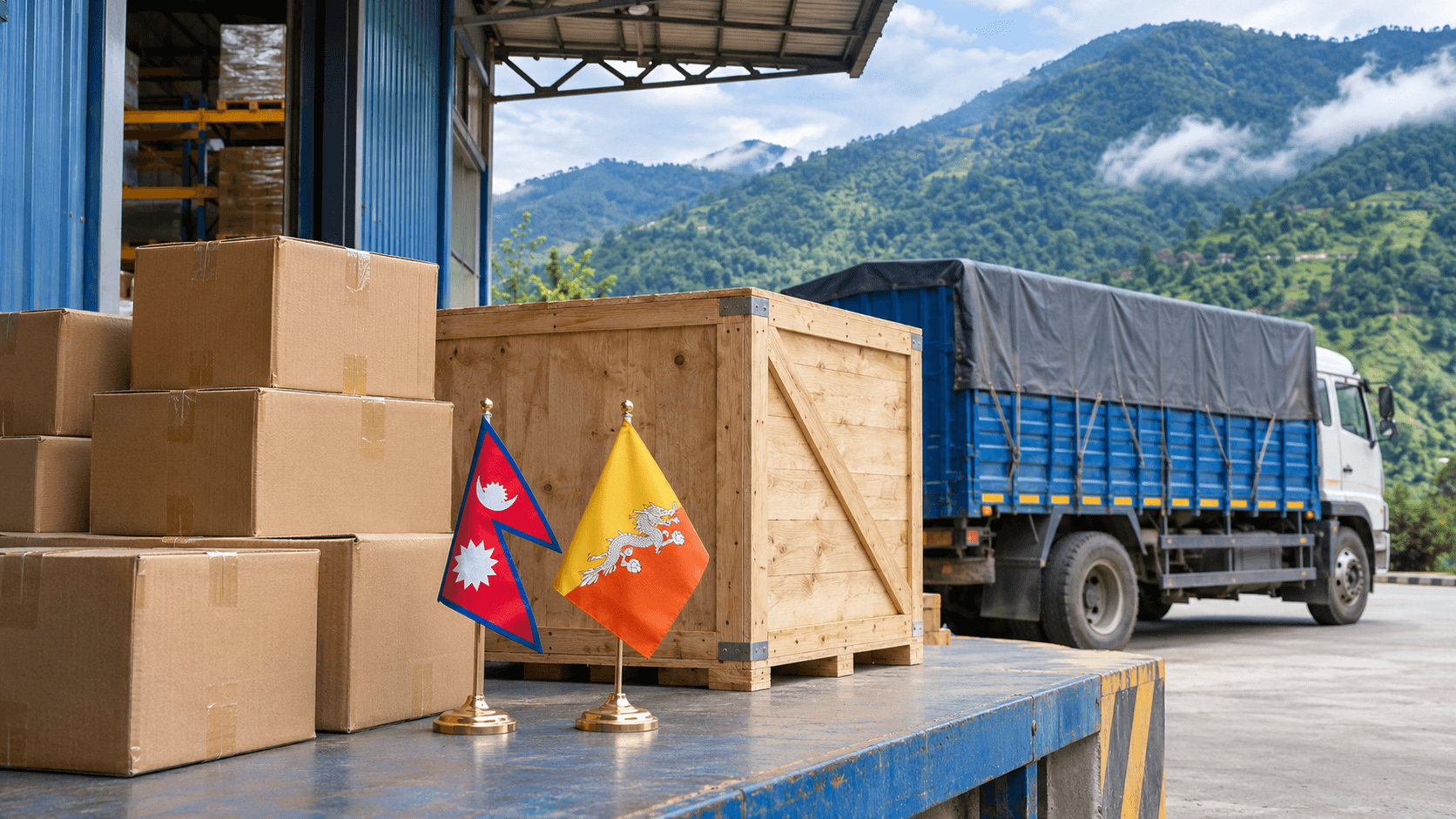
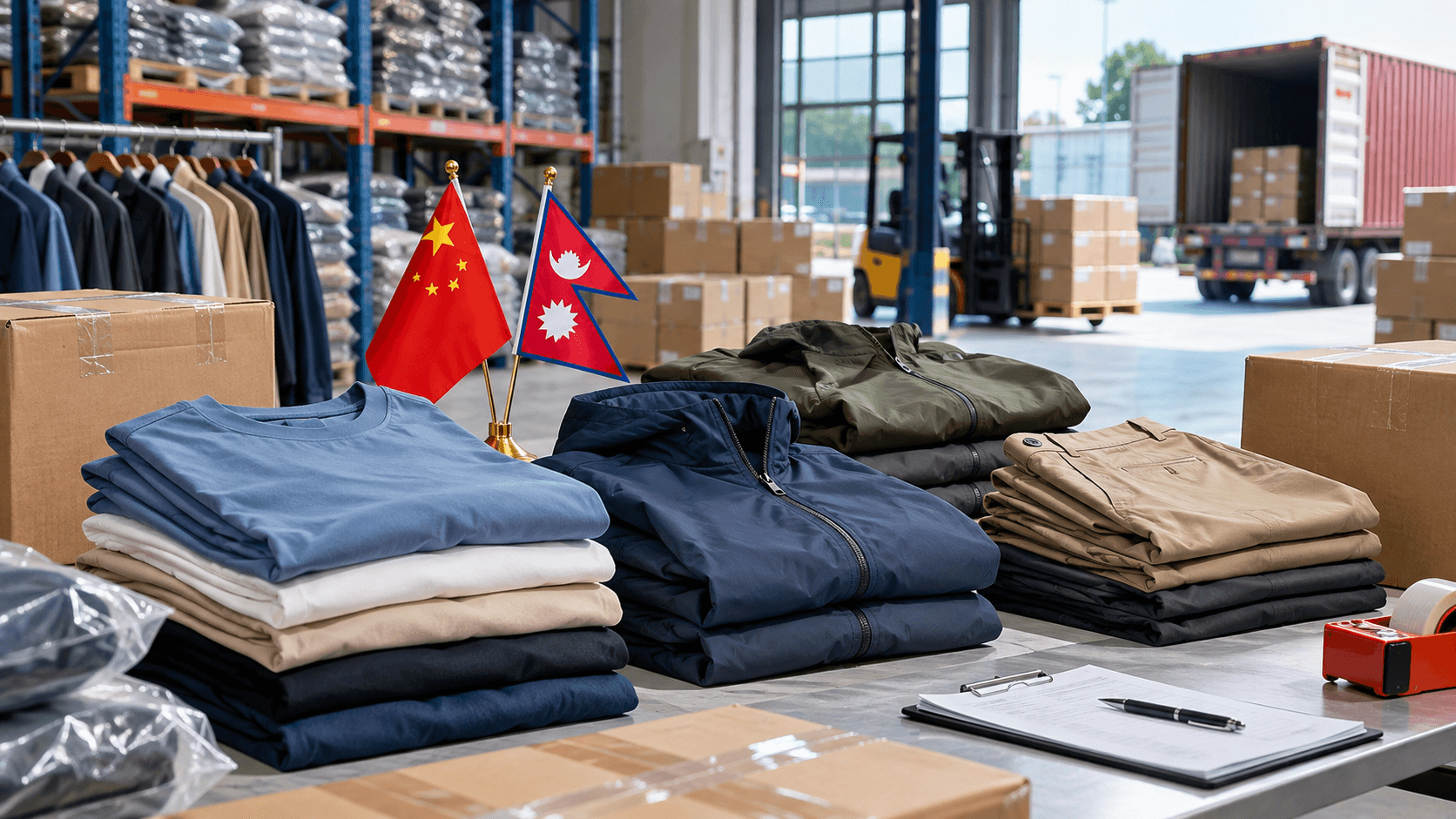
To import clothes from China to Nepal, start with a defined product order, a verified supplier and an importer who is ready to clear the goods in Nepal. Then choose a freight route that fits your packed cargo, selling season and delivery deadline. A low price per piece can quickly lose its appeal if the fabric differs from the sample, the size mix is wrong or the cartons arrive after the selling window.
This guide focuses on new commercial clothing and garment imports for wholesalers, retailers and clothing businesses. For the wider China-import process across product categories, use Sea Sky Cargo’s general guide. Import goods from China to Nepal.
Suppliers may be garment factories, trading companies, wholesalers or sourcing agents. Ask which role the seller performs and who will manufacture, invoice and export your order. If several companies are involved, record the relationships before paying a deposit.
Request the supplier’s Chinese legal name, business licence, Unified Social Credit Code and operating address. China’s National Enterprise Credit Information Publicity System can help check registration details. Compare the registered entity with the contract and invoice. Independently confirm any change to bank details through an established contact. Shanghai government guidance on company registration records.
Ask for recent product photos, a live video of the relevant goods and the production or stock location. For a significant order, consider an independent inspection before the balance payment. Keep a written record of the agreed fabric, measurements, packing, defect criteria, delivery date and remedy for shortages or non-conforming goods.

2. Agree Samples, MOQ, Fabric and SKU Details
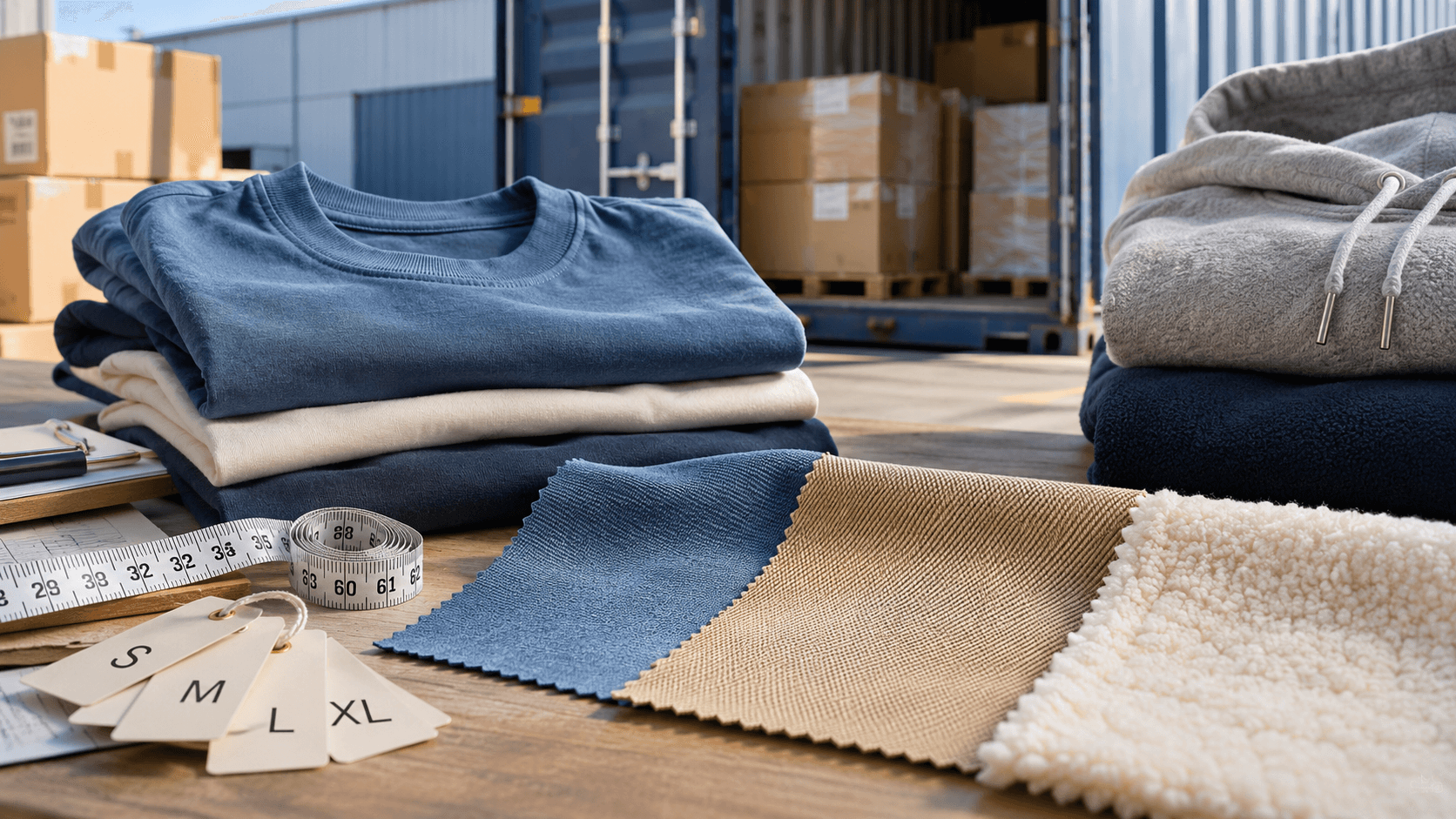
Order representative samples before committing to wholesale quantities. Evaluate fit, fabric weight, opacity, stitching, trims, print quality and colour consistency. Where relevant, test washing, shrinkage, colour transfer, pilling and seam strength against the standard agreed with the supplier.
Keep an approved reference sample and a written specification. A photograph alone leaves too much open to interpretation. Make sure the bulk order uses the agreed material and measurements.
- Product identity. Record the style number, garment type, intended wearer, sleeve and leg length, and construction.
- Fabric. State knit or woven construction, fibre percentages, fabric weight where relevant, lining and coating.
- Size and colour. Use actual garment measurements with tolerances, colour references and quantity per variant.
- Finishing. Agree trims, fasteners, embroidery, printing, care information and required labels.
- Packing. Specify units per inner pack, size ratios, units per carton and whether mixing styles is permitted.
Confirm whether the minimum order quantity applies per style, fabric, colour or size. For example, an MOQ of 500 pieces per colour across three colours means 1,500 pieces before any additional size restrictions. Ask whether small repeat orders will have the same unit price and fabric availability.
Give every sellable variant a stable SKU. A black cotton T-shirt in medium and the same style in large need distinct records. Use those SKUs on the purchase order and stock records, and agree how they will map to the invoice and packing list. Allow time for sampling, bulk production, inspection, freight, clearance and shop delivery before announcing a launch.
3. Check Garment HS Codes and Nepal Customs Requirements
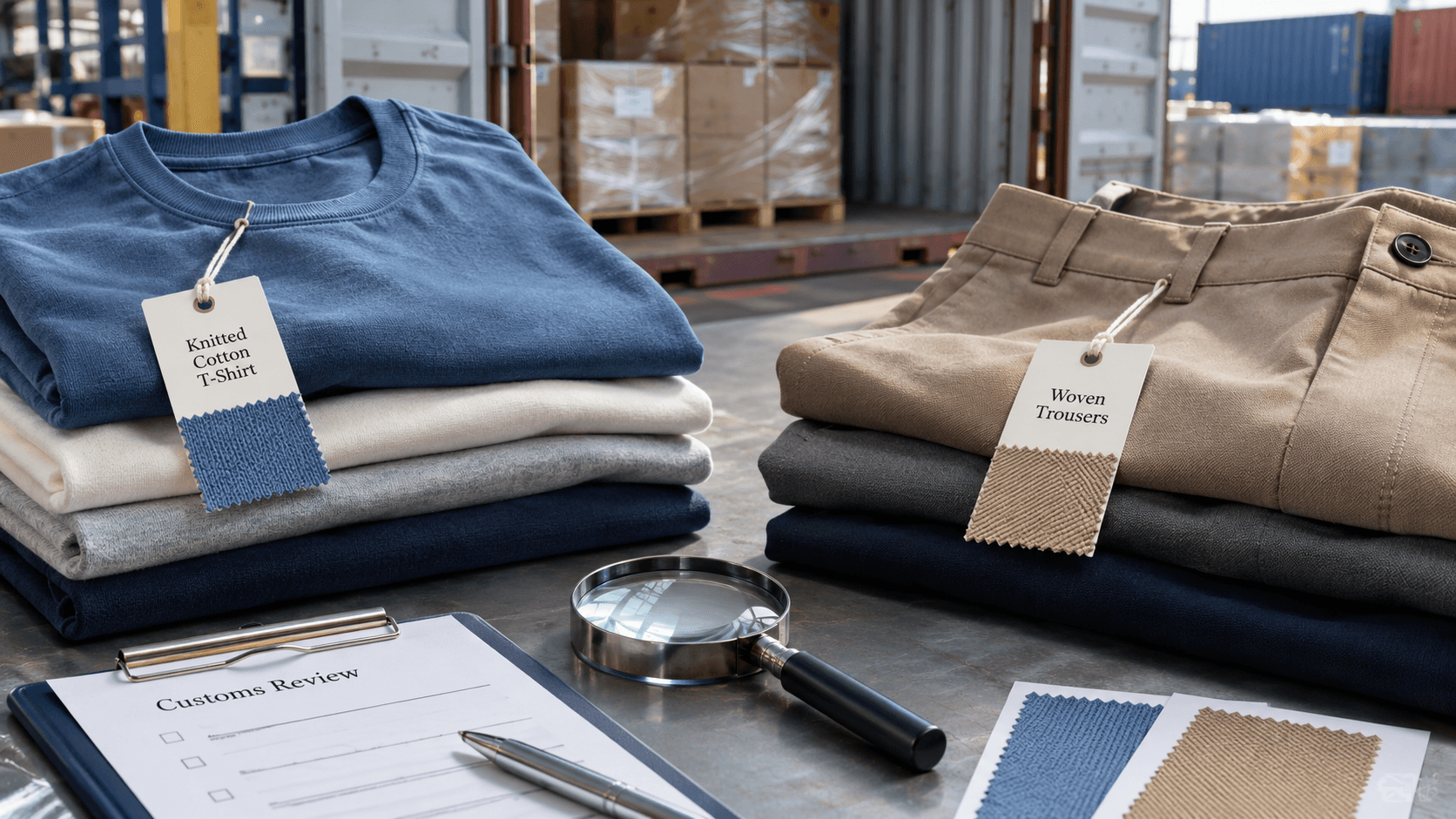
Begin classification with the actual garment. The description should identify what it is, how its fabric is constructed and its fibre composition. These details can change the heading, subheading and Nepal tariff treatment.
Chapter 61 generally covers knitted or crocheted apparel and clothing accessories. Chapter 62 generally covers apparel and accessories made from other textile constructions. Chapter notes and exceptions still apply. The following headings are starting points for discussion with the customs representative.
- 6109 covers T-shirts, singlets and other vests that are knitted or crocheted.
- 6110 covers knitted or crocheted jerseys, pullovers, cardigans and similar articles.
- 6203 includes specified men’s or boys’ woven garments such as trousers and jackets.
- 6204 includes specified women’s or girls’ woven garments such as dresses, skirts and trousers.
These examples identify four-digit headings. Select the complete Nepal tariff line using the garment’s construction, composition, design and other classification facts. The Chinese supplier’s export code can support the review, but the Nepal declaration needs the appropriate local classification. WCO garment nomenclature.
Check customs duty on clothes in Nepal against the current fiscal-year tariff. Review valuation, origin, applicable VAT and any other charge or approval for the goods. Do this before accepting a wholesale price as your final landed cost. Nepal Customs integrated tariff and Nepal Single Window tariff search.
Confirm the importing business’s registration, PAN/VAT position and valid EXIM details with the appointed representative. Nepal Customs provides an EXIM registration and renewal portal. Ask the agent to identify any additional product requirements for the exact goods, especially specialist protective clothing or garments with unusual materials. Official EXIM portal.
For branded stock, obtain evidence that the goods and branding are legitimate and that the supply is authorized where required. Review used clothing, returns, mixed clearance bales and new retail garments separately before purchase.
4. Prepare the Clothing Import Documents
Prepare the document file while the order is being produced. Send drafts to the customs representative early enough to correct inconsistent descriptions, quantities or names before the cargo leaves the supplier.
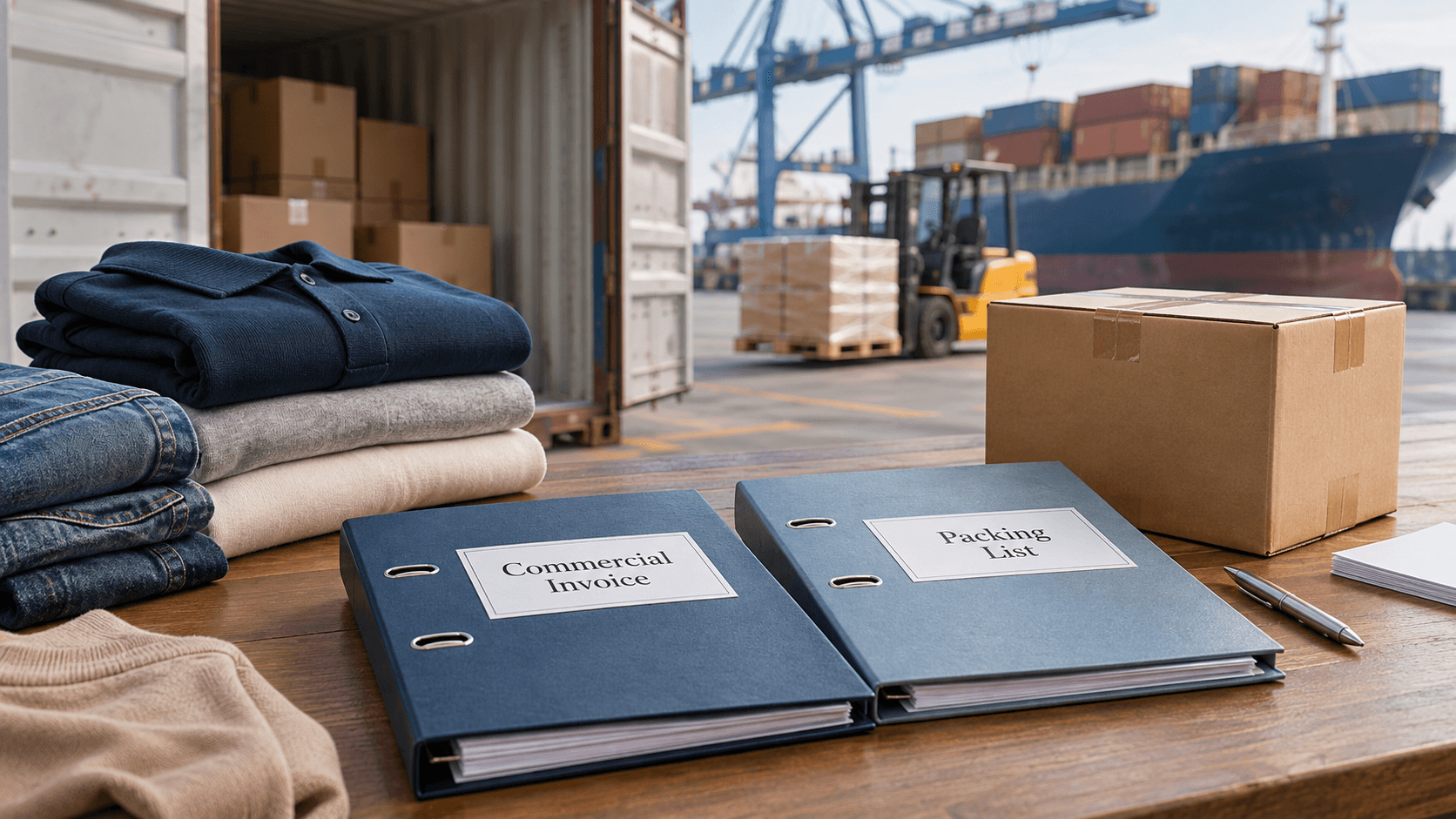
Commercial Invoice
Include the seller and buyer, invoice reference and date, currency, payment and delivery terms, and a specific description for each product line. Record quantities, unit prices and line totals. Use the agreed Incoterm with its named place. Describe garments in enough detail to support classification, including relevant construction and fibre composition.
Packing List
List carton numbers, contents, quantities, net and gross weights, and final external dimensions. Show the style, size and colour breakdown or attach a clear carton-level schedule. Make it possible to locate a particular SKU without opening every carton.
Transport and Supporting Records
Obtain the applicable road transport or air waybill records for the booked service. Depending on the transaction, the file may also include the purchase order, payment or banking records, insurance evidence, importer authorization, origin evidence and product-specific approvals. Confirm the final requirements with the relevant carrier and customs representative.
Cross-check the invoice quantity against both the packing list and the actual carton count. If an inspection or repacking changes the load, update the records. Ask who will supply originals or electronic copies and when those records must reach the clearance team. Freight-forwarding documents for Nepal imports.
5. Compare Road Freight and Air Freight from China
Road Freight for Planned Wholesale Stock
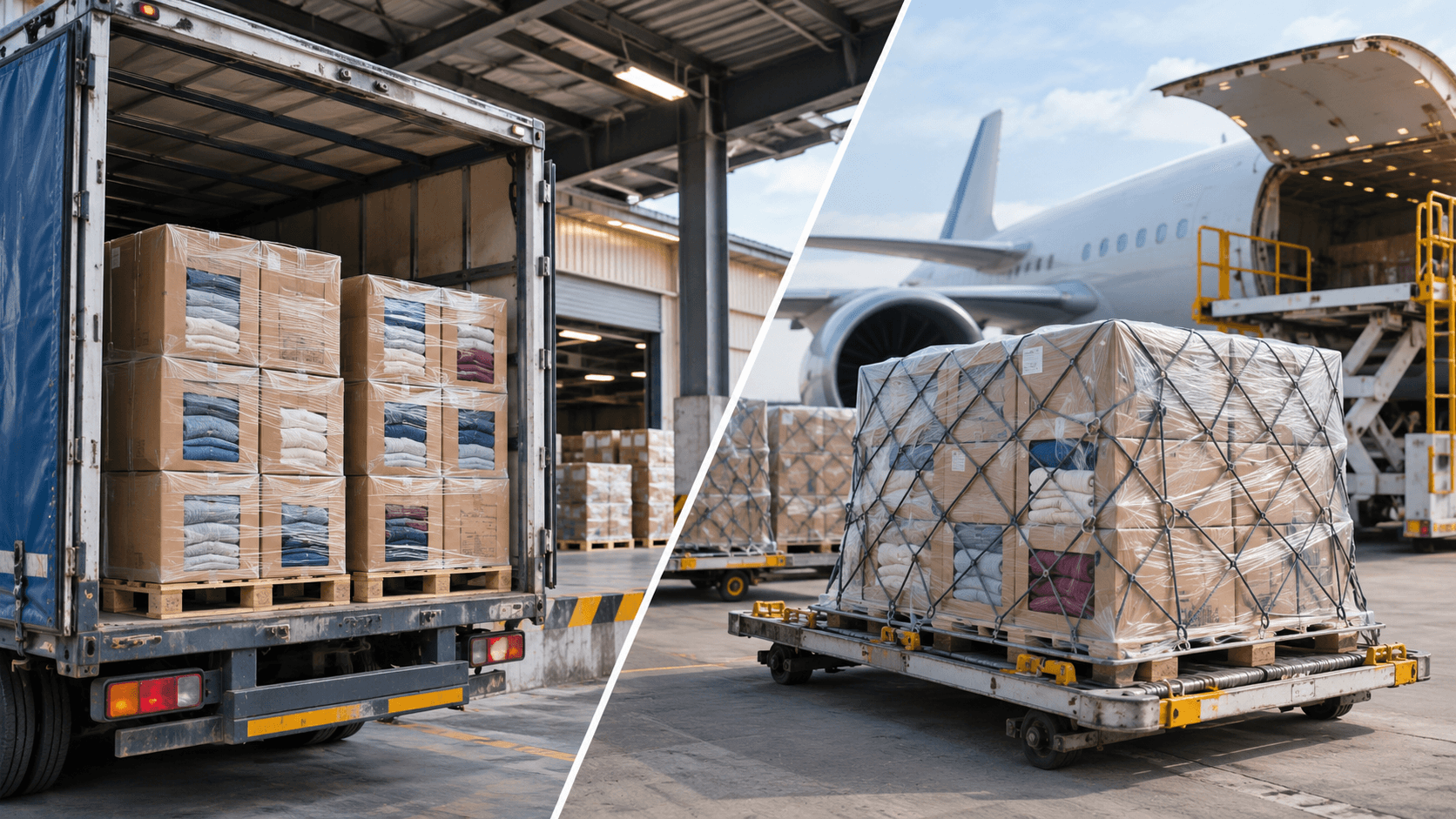
Road freight can be worth comparing for a consolidated wholesale order when the selected border route, equipment and onward delivery arrangement are available. Request a quote from the supplier’s actual city to your Nepal warehouse. Include collection, consolidation, export handling, border transfers where used, clearance support and delivery.
Confirm which crossing the offer uses, whether it is accepting the intended cargo, and whether access restrictions affect the quoted vehicle or handling plan. Ask when the timing estimate starts and how the supplier-ready date, consolidation cutoff and border movement affect it. Keep the booking tied to a confirmed route. China-to-Nepal cargo services.
Air Freight for Samples and Time-Sensitive Replenishment
Air freight may suit samples, a small launch order or urgent replenishment. Compare its higher transport cost against the commercial value of receiving the stock earlier. Check the operating carrier, actual routing, cargo acceptance, chargeable weight, terminal charges and clearance and delivery scope.
Clothing cartons can be light for their size. Ask how the carrier calculates volumetric weight, including the applicable divisor, rounding and minimum charge. Give the final packed dimensions of every carton. A tightly packed T-shirt order and a shipment of bulky padded jackets can have very different rating profiles.
Compare the Same Delivery Endpoint
Ask both offers to show transport, origin handling, destination handling, clearance service, taxes, delivery and possible storage or waiting charges. Compare the date stock can reach the receiving warehouse. A main transport estimate needs allowances for the stages before departure and after arrival.
Where stock is time-sensitive, consider whether an urgent portion and a later balance make sense. Price the extra handling and separate document requirements before splitting the shipment.
Check Your Clothing Shipment Before Dispatch
Send supplier city, garment types, carton count, packed dimensions and weight, and Nepal delivery location.
6. Pack Clothes and Label Every Carton
Pack clothing to protect it from moisture, dirt, crushing and handling. Agree the packaging with the supplier before production finishes, and ask the forwarder to review unusual carton sizes or handling requirements.
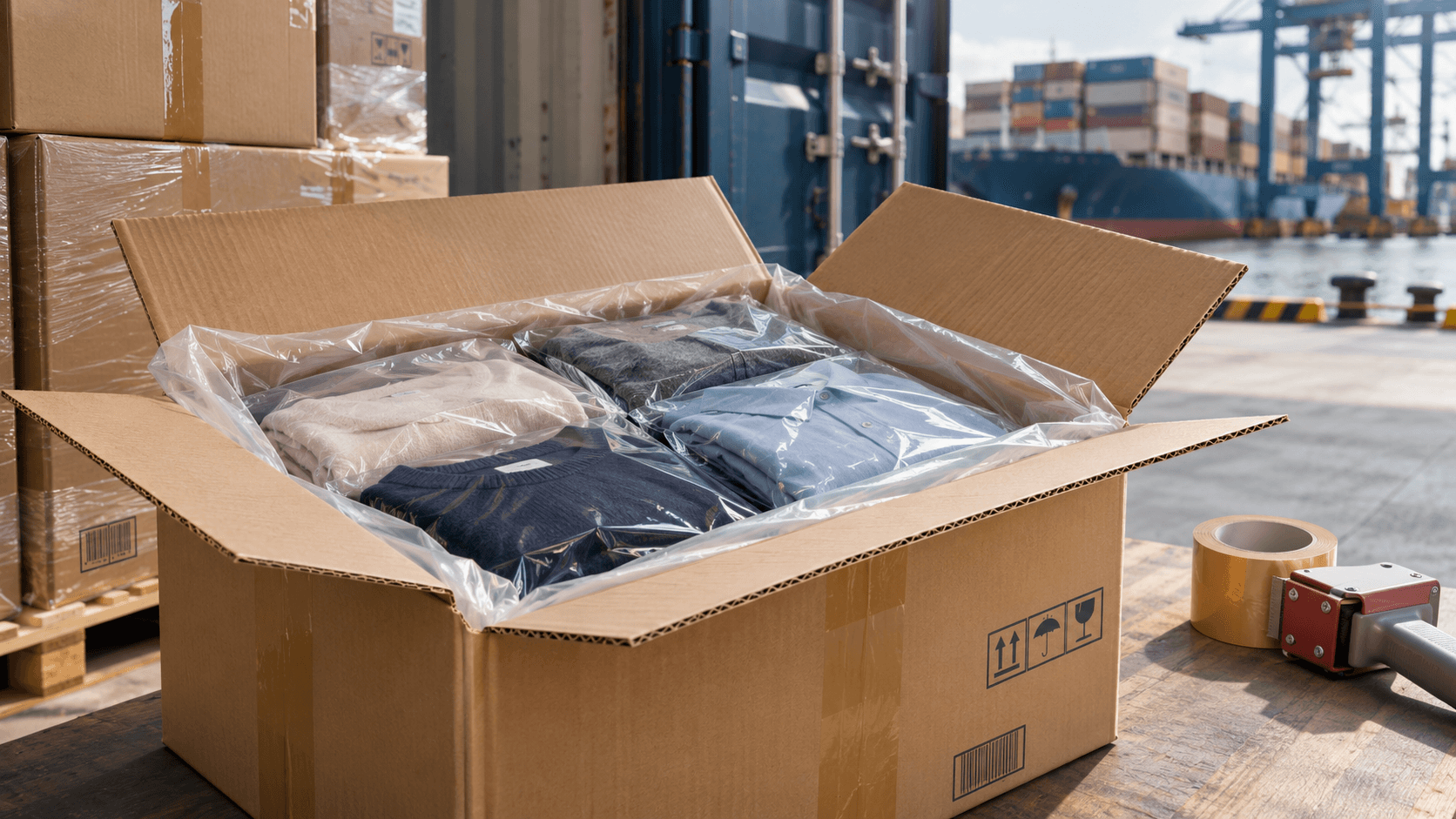
- Use appropriate inner bags or liners for the product and journey. Pack only dry goods and dry packaging.
- Use cartons strong enough for the packed weight and expected stacking. Seal them securely and protect vulnerable edges.
- Keep packing quantities and size ratios consistent, or provide a precise breakdown for mixed cartons.
- Mark the shipment reference, consignee or agreed shipping mark, carton number, total carton count and gross weight as required by the handling plan.
- Record final external carton dimensions after sealing. Include any bulges or projections in the measurement.
- Provide receiving instructions for cartons that must remain upright, stay dry or carry no top load.
Vacuum or compression packing may reduce volume for suitable garments, but check how the fabric, insulation, trims and retail presentation recover after opening. Test the method on a sample and agree the acceptable condition before using it for the full order.
Keep garment labels, carton labels and commercial records consistent. Confirm applicable origin, fibre, care and retail labelling requirements for your product with the importer’s adviser. A carton mark helps cargo handling, while the product labels support the receiving and sales process.
Photograph a sample packed carton, its marks, its contents and the closed shipment before pickup. Keep the carton schedule so the receiving team can check quantities by SKU.
7. Calculate Total Landed Cost and Cost per Piece
Build a worksheet through the warehouse or shop where you want the goods delivered. Start with the supplier price and agreed Incoterm, then add only the transport and service stages that remain payable. Check what is already included in the seller’s price.
- Goods purchase value by style or SKU.
- China collection, consolidation, inspection and export charges where payable.
- International freight and arranged cargo insurance.
- Nepal customs duty, VAT and other applicable government charges, calculated on the proper bases.
- Border or airport handling, customs-agent services, storage and other destination charges.
- Final trucking, unloading, bank charges and other agreed costs.
Nepal’s standard VAT rate is 13 percent. For imports, have the customs representative confirm the taxable base and treatment for the actual tariff line. Keep the customs-value calculation and tax estimate visible in the worksheet. IRD VAT guidance.
Worked Budget Example
Assume a hypothetical order of 1,000 garments has the following budgeted amounts. These are worksheet inputs to explain addition and allocation, and each figure needs a shipment-specific quote or customs calculation.
- Garments purchased from the supplier — NPR 400,000.
- Freight and origin movement payable separately — NPR 80,000.
- Cargo insurance — NPR 5,000.
- Combined import taxes entered from the representative’s estimate — NPR 160,000.
- Handling and clearance services — NPR 25,000.
- Warehouse delivery and unloading — NPR 15,000.
The total cash budget is NPR 685,000, or NPR 685 per piece when divided equally across 1,000 garments. The NPR 160,000 tax input illustrates how to carry a separately calculated estimate into the worksheet. Ask for its classification, customs-value and tax breakdown before using an amount for a purchase decision.
Allocate shared freight and handling fairly across different products. Padded jackets may use more carton space than lightweight T-shirts, so a single equal-per-piece allocation can hide the true margin by SKU. Record exchange-rate assumptions and keep a separate contingency for unresolved charges.
If the business can claim eligible input VAT, have its accountant distinguish the cash needed at import from the cost used in margin reporting. Reconcile the budget against the customs assessment and final service invoices when the shipment closes. Landed-cost worksheet for Nepal imports.

8. Follow the China-to-Nepal Clothing Import Process
- Define the order. Confirm garment specifications, size and colour quantities, target selling date and delivery location.
- Verify the supplier and approve samples. Agree the contract, payment milestones, inspection criteria and remedy for defects.
- Check importer and customs readiness. Review business records, EXIM status, garment classification and applicable requirements.
- Plan the route. Compare road and air proposals using the supplier city, forecast carton sizes and delivery endpoint.
- Inspect and finalize packing. Check the bulk goods against the approved specification and record final cartons, dimensions and weights.
- Approve the document set. Reconcile invoice, packing list, quantities and the booked route with the carrier and representative.
- Dispatch on the confirmed booking. Obtain the transport reference and agree updates for collection, departure, border or airport arrival and release.
- Complete Nepal clearance. Respond to classification, valuation, document or inspection queries through the responsible representative and pay assessed charges.
- Arrange delivery. Confirm release, truck access, unloading and receiving hours before collection.
- Receive and reconcile. Check carton condition, count garments by SKU, document shortages or damage and compare final cost with the budget.
Keep one shared shipment record with the supplier, order reference, document versions, carton schedule, booking, payments and receiving evidence. Assign an owner for each unresolved item so questions do not wait between the supplier, forwarder and importer.
For a first order, make the receiving check detailed enough to improve the repeat purchase. Record actual fabric quality, sizes, defect rate, transport time and cost by style.

9. Avoid Common Clothing Import Mistakes
- Ordering against photographs alone. Approve physical samples and measured specifications before bulk production.
- Misreading the MOQ. Check minimums per style, colour and size, including repeat-order terms.
- Using vague customs descriptions. Give the actual garment type, construction and fibre composition.
- Applying one HS code to every style. Review materially different garments and fabrics separately.
- Changing quantities after documents are issued. Update the invoice and carton schedule after repacking or inspection.
- Quoting freight from unpacked weights. Use final gross weights and external dimensions.
- Treating a supplier’s delivered price as a complete customs plan. Identify the importer, declaration value, tax payment and delivery responsibilities in writing.
- Booking stock too close to the selling season. Allow for production, inspection, route availability, clearance and delivery.
- Ignoring brand ownership and product labels. Confirm the legitimacy of branded goods and applicable labelling requirements before dispatch.
- Skipping the receiving check. Count and inspect promptly, retain evidence and meet carrier, supplier and insurer notice deadlines.
Review the first shipment before making a larger repeat order. Repeated sizing errors, weak cartons or poor carton-level records can become more expensive as order volume grows.

10. How Sea Sky Cargo Helps Clothing Importers
Sea Sky Cargo can review the cargo profile and coordinate the agreed China-to-Nepal freight, document handoff, customs-support and delivery steps. For a clothing order, the starting information is specific to the garments and their packaging.
- Compare feasible road and air options against the supplier location, packed cargo and delivery window.
- Review collection, consolidation and garment-carton handling requirements with the relevant partners.
- Check consistency between the invoice, packing list and booking details.
- Coordinate the garment classification and customs-readiness review with the appointed representative.
- Define the quotation’s inclusions, exclusions and destination charges.
- Coordinate release, collection and the agreed Nepal delivery arrangement.
Confirm the exact service scope and the parties responsible for customs decisions, product approvals and inspections before booking. Share new cargo details if the supplier changes the packing or garment mix. Nepal customs-clearance guide.
Importing clothes from China? Send Sea Sky your supplier city, garment types, carton count, packed weight and Nepal delivery location for a route, document and customs-readiness review. Add packed carton dimensions, fabric composition, cargo-ready date and special handling needs where available. Request a clothing shipment review.
Importing Clothes from China?
Send Sea Sky your supplier city, garment types, carton count, packed weight and Nepal delivery location for a route, document and customs-readiness review.