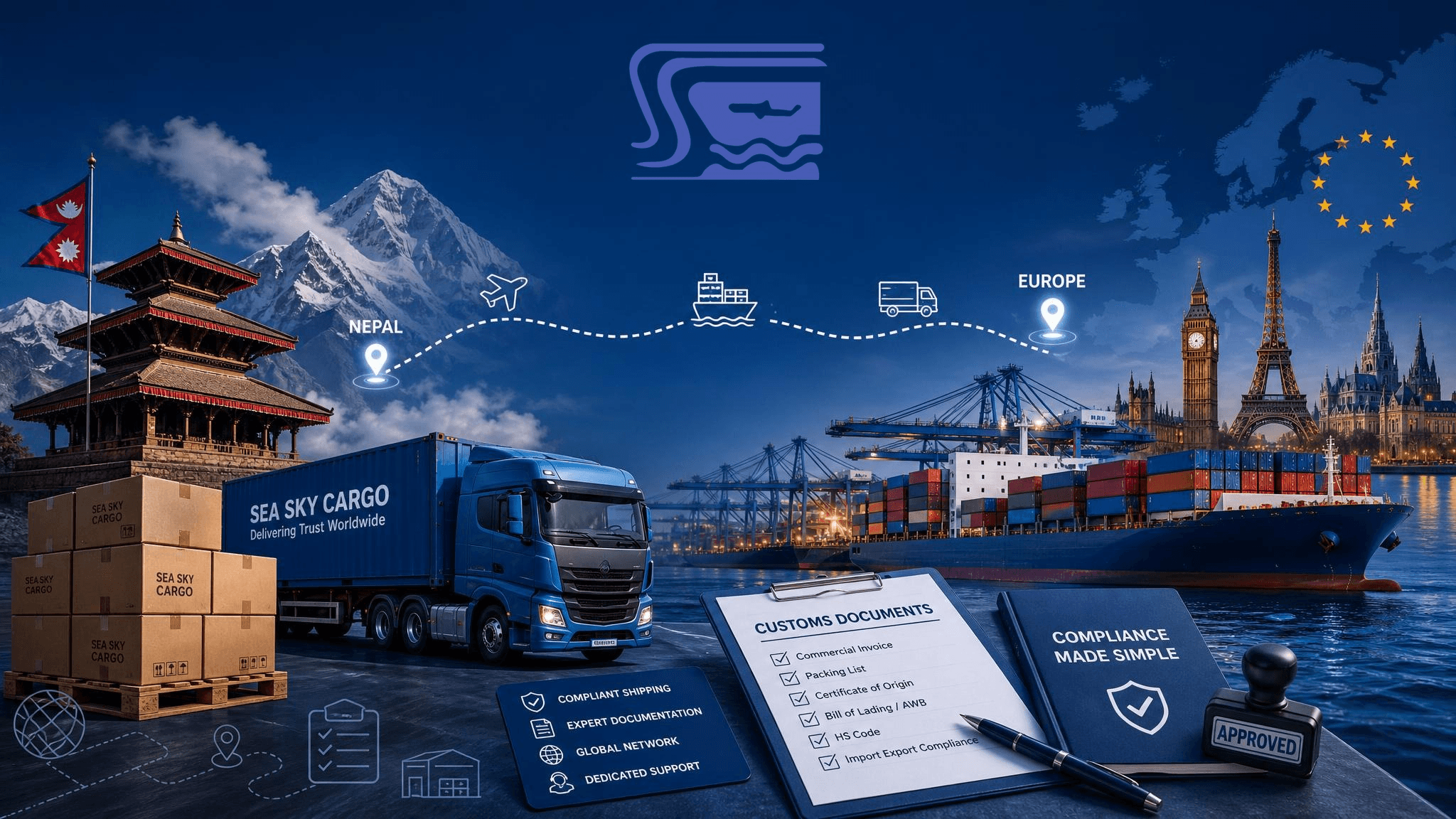
Shipping from Nepal to Europe: 2026 Cost, Compliance & Easy Booking
Importing to Nepal from Europe: Customs, Timing, and Savings Tips
Shipping between Nepal and Europe in 2026 is easier than many businesses expect, but it is not automatic. The best results usually come from choosing the right route early, preparing the customs file before pickup, and comparing total landed cost instead of only the freight quote.
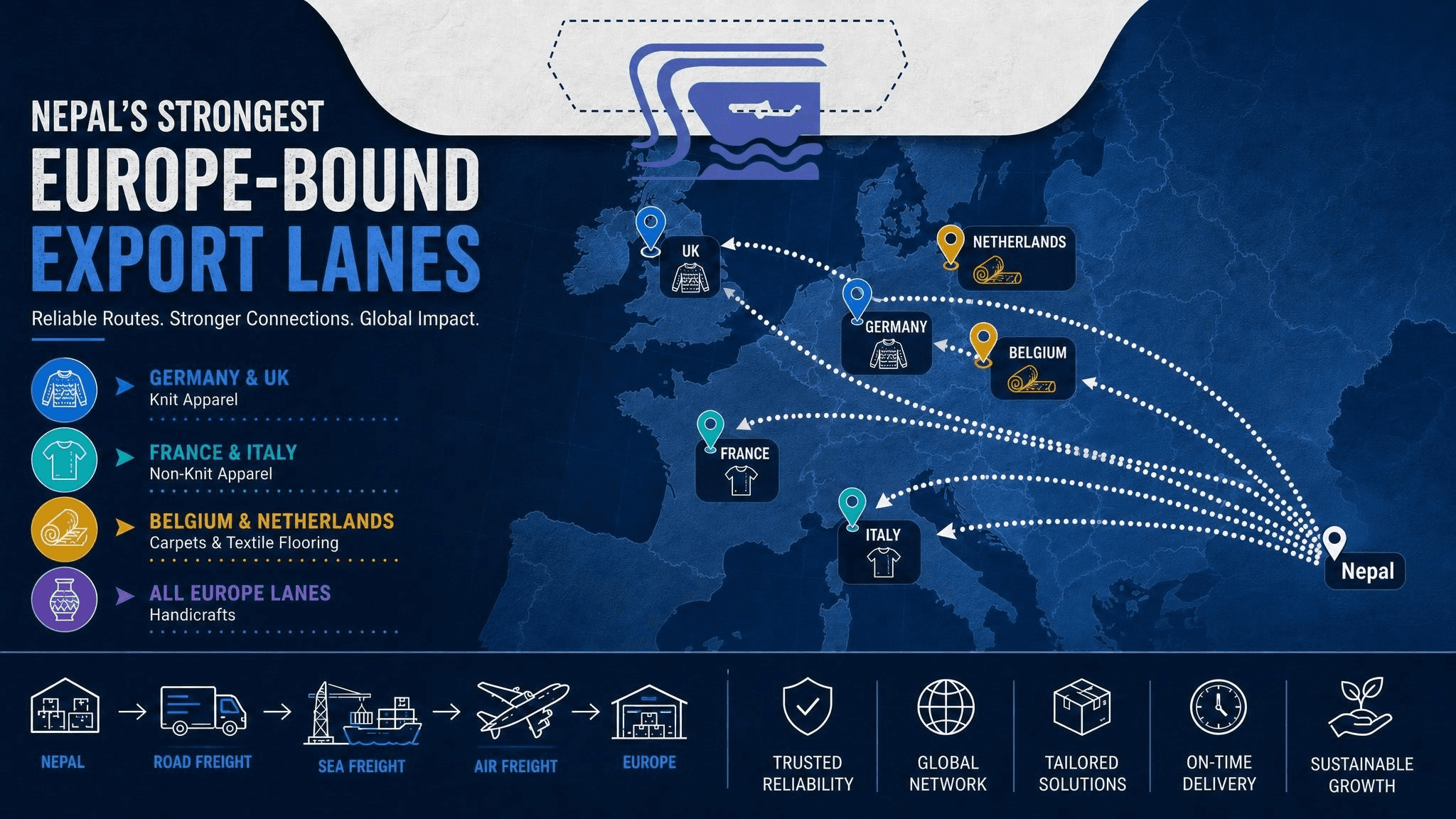
For most exporters in Nepal, Europe remains attractive because it offers strong demand for apparel, carpets, handicrafts, and specialty goods. Current EU-facing trade patterns show Germany, the UK, France, Italy, Belgium, and the Netherlands as especially relevant destinations for Nepal-origin products.
Main destinations
The strongest Europe-bound lanes from Nepal usually center on:
- Germany and the UK for knit apparel.
- France and Italy for non-knit apparel.
- Germany and Belgium for carpets and textile floorings.
- The Netherlands and the UK for handicrafts and textile-based artisan goods.
Most urgent cargo leaves Nepal by air from Tribhuvan International Airport and connects through major transit hubs before final delivery in Europe. Sea-led cargo usually goes overland toward India and then onward by ocean freight to Europe, which works better for bulk or lower-urgency shipments.
Return routes from Europe to Nepal usually follow the reverse pattern. Urgent, high-value, or low-volume imports often arrive by courier or air freight, while larger commercial shipments move by ocean freight to India and then continue overland into Nepal for customs clearance and inland delivery.
Step-by-step booking
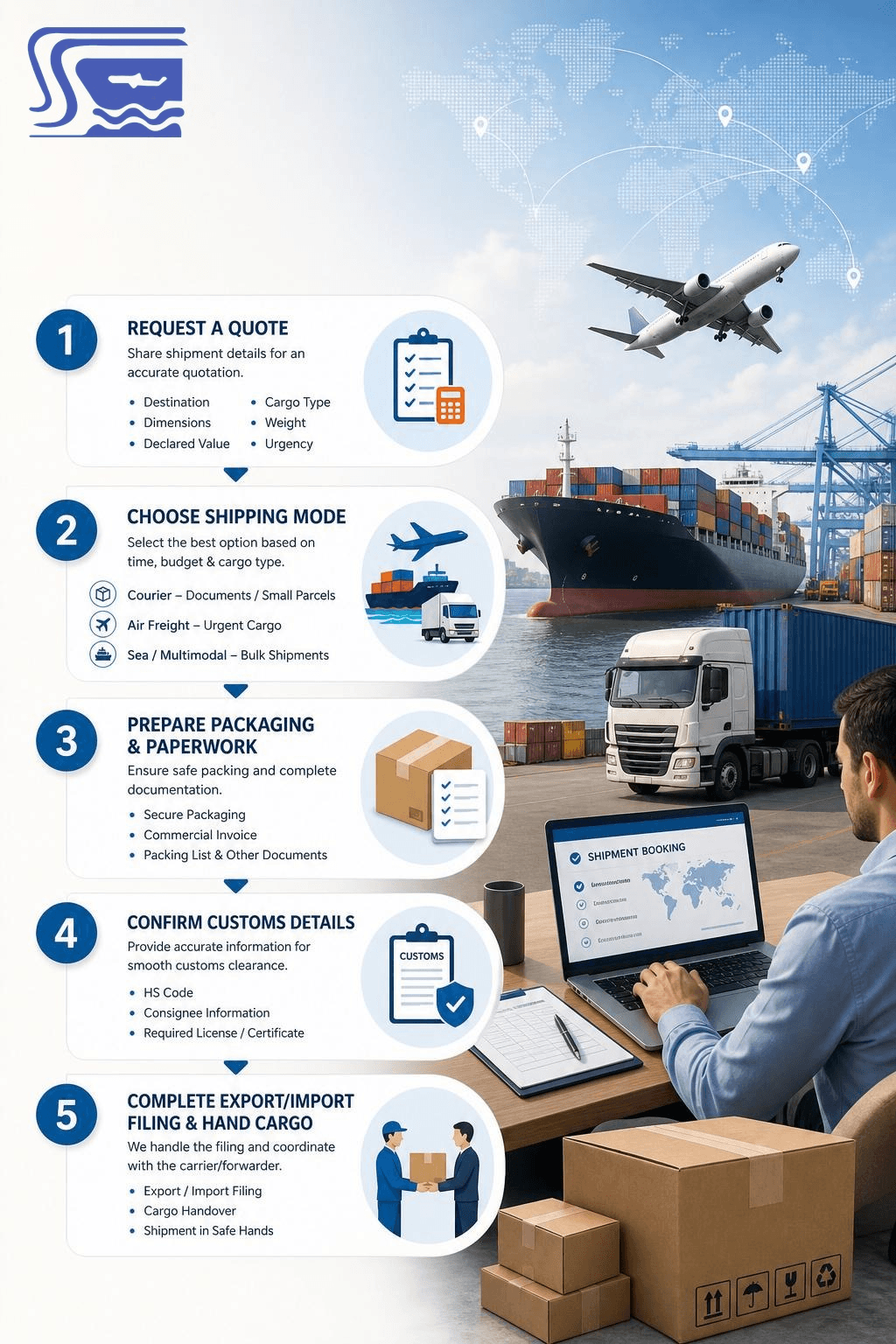
A smooth booking process usually follows these steps:
- Request a quote with destination, cargo type, dimensions, total weight, declared value, and urgency level.
- Choose the right mode: courier for documents and small parcels, air freight for urgent commercial cargo, sea or multimodal for bulk shipments.
- Prepare packaging and align all paperwork before dispatch.
- Confirm customs details, including HS code, consignee information, and any required license or certificate.
- Complete export or import filing and hand the cargo to the carrier or forwarder
This sequence matters because many delays happen before the shipment even starts moving. When the invoice, packing list, HS code, and consignee details do not match, customs questions can stop a shipment that would otherwise move quickly.
Documents needed
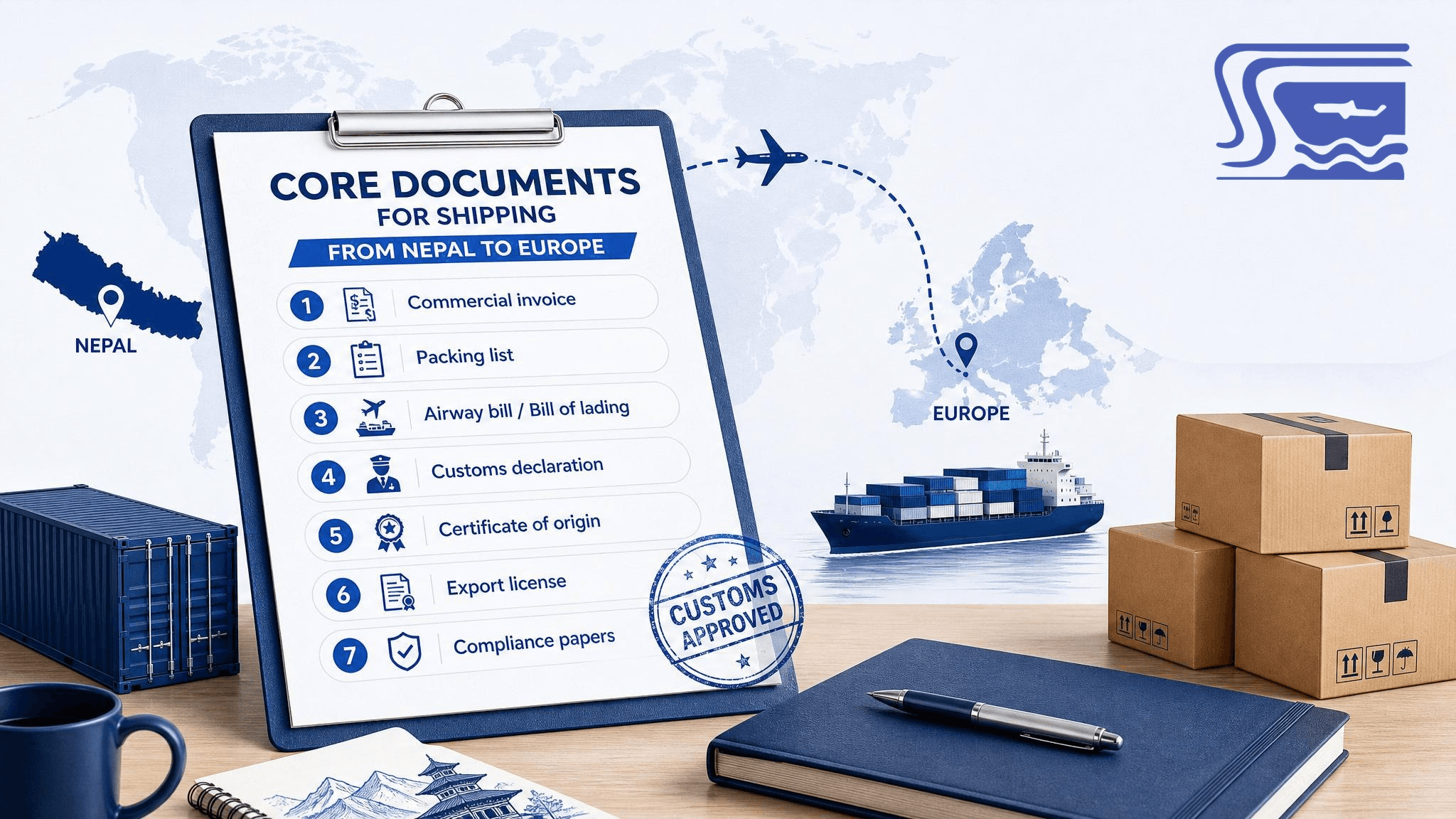
For shipping from Nepal to Europe, the core documents usually include:
- Commercial invoice.
- Packing list.
- Airway bill or bill of lading.
- Customs declaration form.
- Certificate of origin, when required.
- Export license, if the goods are controlled or restricted.
- Supporting compliance papers such as fumigation records for wood packing or product-specific certificates where needed.
For importing from Europe into Nepal, standard commercial shipments often require the same core file plus taxpayer or company registration records, and sometimes insurance documents, banking papers, or import licenses depending on the goods.
The HS code is especially important because it affects customs classification, tariff treatment, and whether authorities request more information. On the Europe side, some shipments may also need importer-side compliance such as an EORI-linked customs process or product-specific documentation tied to labeling, chemicals, or textiles.
Useful official references:
- EU Customs Info for EU customs rules and procedures.
- Nepal Customs for Nepal import and export procedures.
Typical costs
Freight cost in 2026 depends heavily on shipment size, urgency, destination city, and density. Published Nepal-Europe guides place air freight to Europe around $7 to $12 per kg, while one route-specific guide quotes roughly NPR 875 to 1,200 per kg, equivalent to about $6.5 to $9 per kg depending on shipment profile.
Sea-led multimodal pricing is much more shipment-specific, but one 2026 Nepal shipping guide places a 20-foot container to Europe at roughly $2,000 to $3,000 before many of the usual add-ons such as handling, documentation, insurance, and inland costs. Courier prices vary more sharply by slab and destination, but sample public rates to the UK include £40 up to 0.5 kg, £55 up to 1 kg, and £225 up to 25 kg, while larger lots above 25 kg may be around £7 per kg depending on dimensions and customs treatment.
Customs and delays
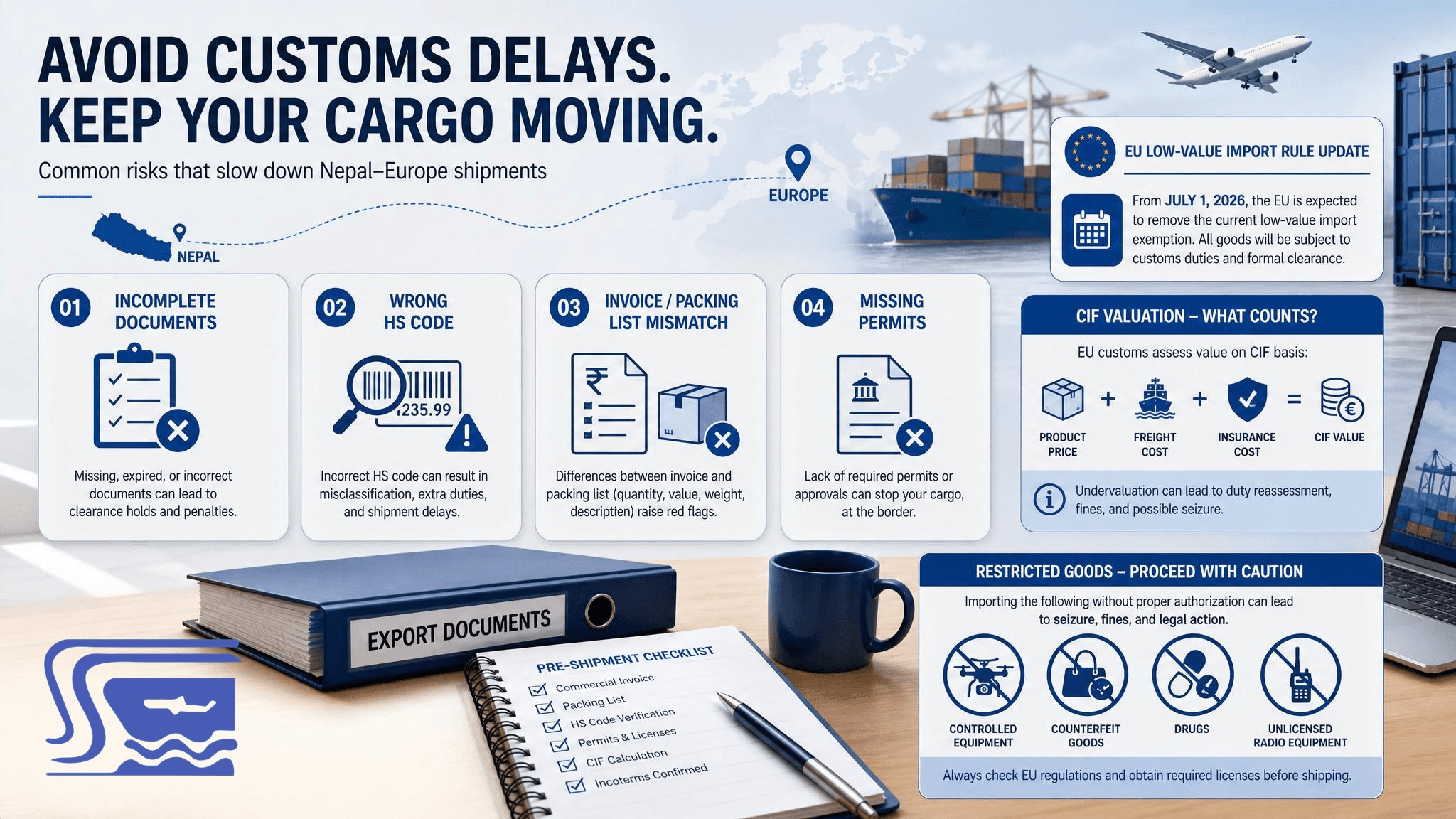
The most common causes of delay are incomplete documents, wrong HS codes, mismatched descriptions across invoice and packing list, and missing permits for restricted goods. On Nepal imports, CIF-based valuation is also important because freight and insurance usually form part of the customs value, which means the tax base is not just the product price.
Europe-bound shippers should also pay attention to low-value import rule changes in the EU. FedEx Nepal notes that from July 1, 2026, the EU will remove the current de minimis exemption and apply new customs duty rules for low-value imports, including a €3 customs duty per declaration line for many shipments under €150, with added product-data requirements from shippers.
Restricted goods can create larger problems than simple delay. Nepal import documentation guidance notes tighter controls or restrictions for items such as arms-related materials, certain communications equipment, harmful goods, and some sensitive product categories, while other parcel guidance also flags drugs, counterfeit goods, and unlicensed radio equipment as prohibited or restricted.
Savings tips
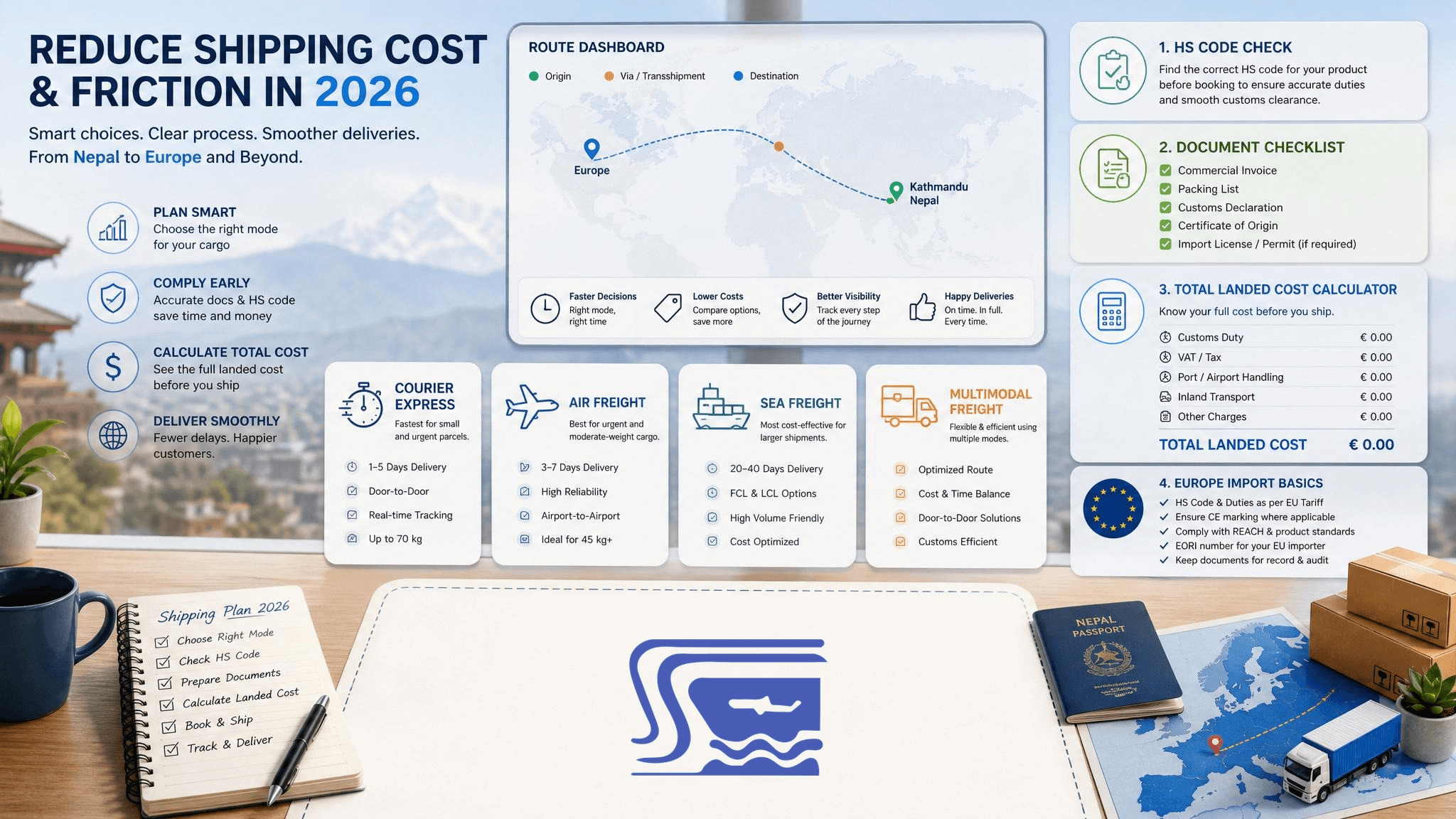
To reduce cost and friction in 2026:
- Choose courier only when speed matters more than per-kg cost.
- Use air freight for urgent commercial goods with moderate weight.
- Use sea or multimodal freight for larger shipments that can tolerate longer transit
- Confirm the HS code before booking, not after the shipment is in motion.
- Prepare invoice, packing list, customs declaration, origin documents, and licenses in advance.
- Compare total landed cost, including customs, VAT, handling, and inland delivery, not just freight.
- Watch for destination-side rule changes, especially for EU low-value imports in 2026.
For businesses shipping regularly, consolidation can also improve unit economics. That matters especially on Europe lanes where cargo is not urgent enough to justify premium courier but still benefits from structured air-freight planning.
Conclusion
Contact SeaSky for hands-on customs clearance help and booking support for Nepal-Europe and Europe-Nepal shipments, especially when the cargo needs document review, route planning, or customs coordination before dispatch.
Related posts
1970-01-01
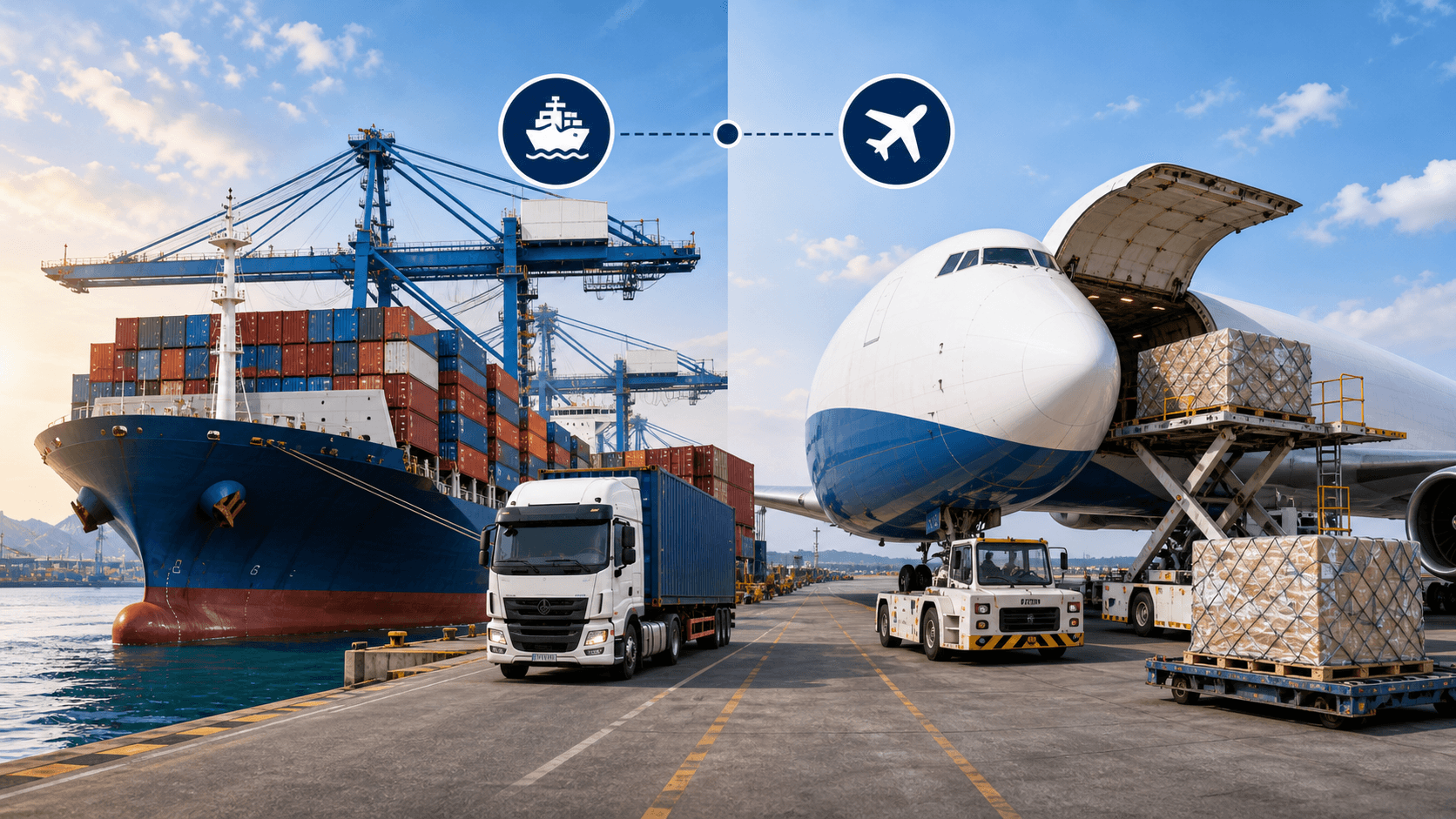
Sea + Air Freight: How SeaSky Helps Businesses Ship Smarter
2026-10-15
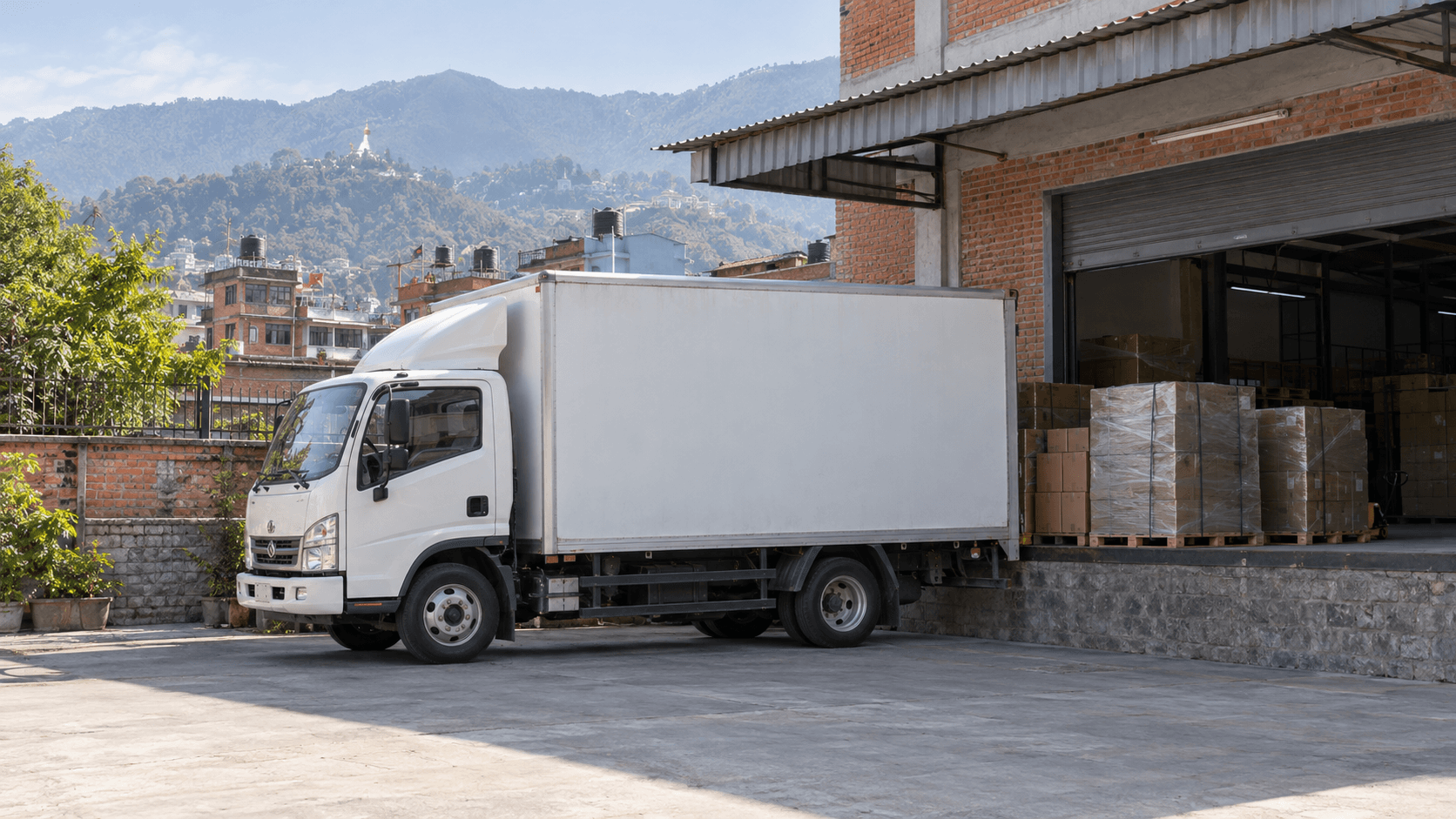
Last-Mile Delivery in Nepal: How Businesses Can Reduce Delays and Delivery Costs
2026-10-13
Last-Mile Logistics in Nepal: Challenges, Costs and Solutions
2026-10-12