Introduction
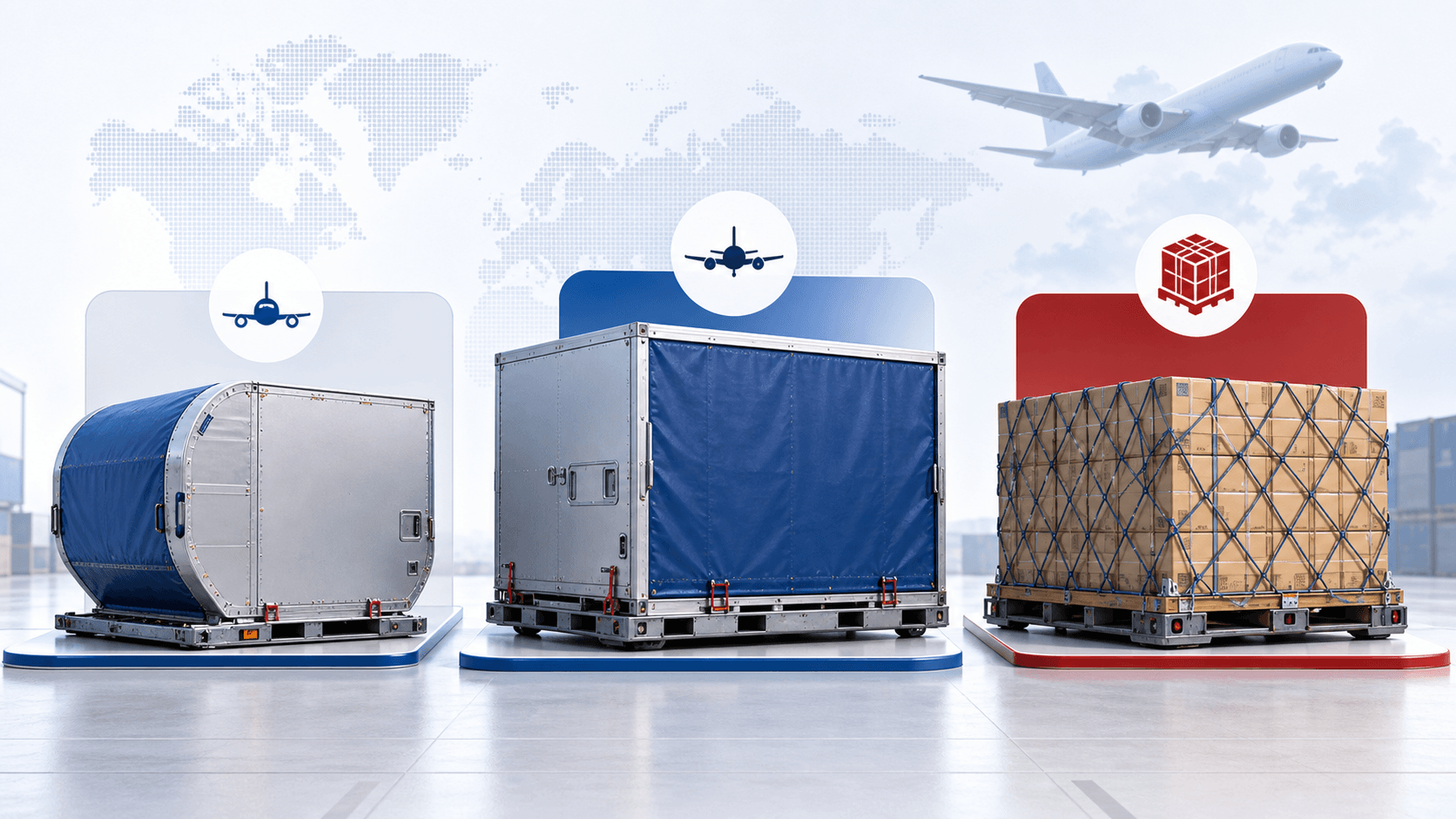
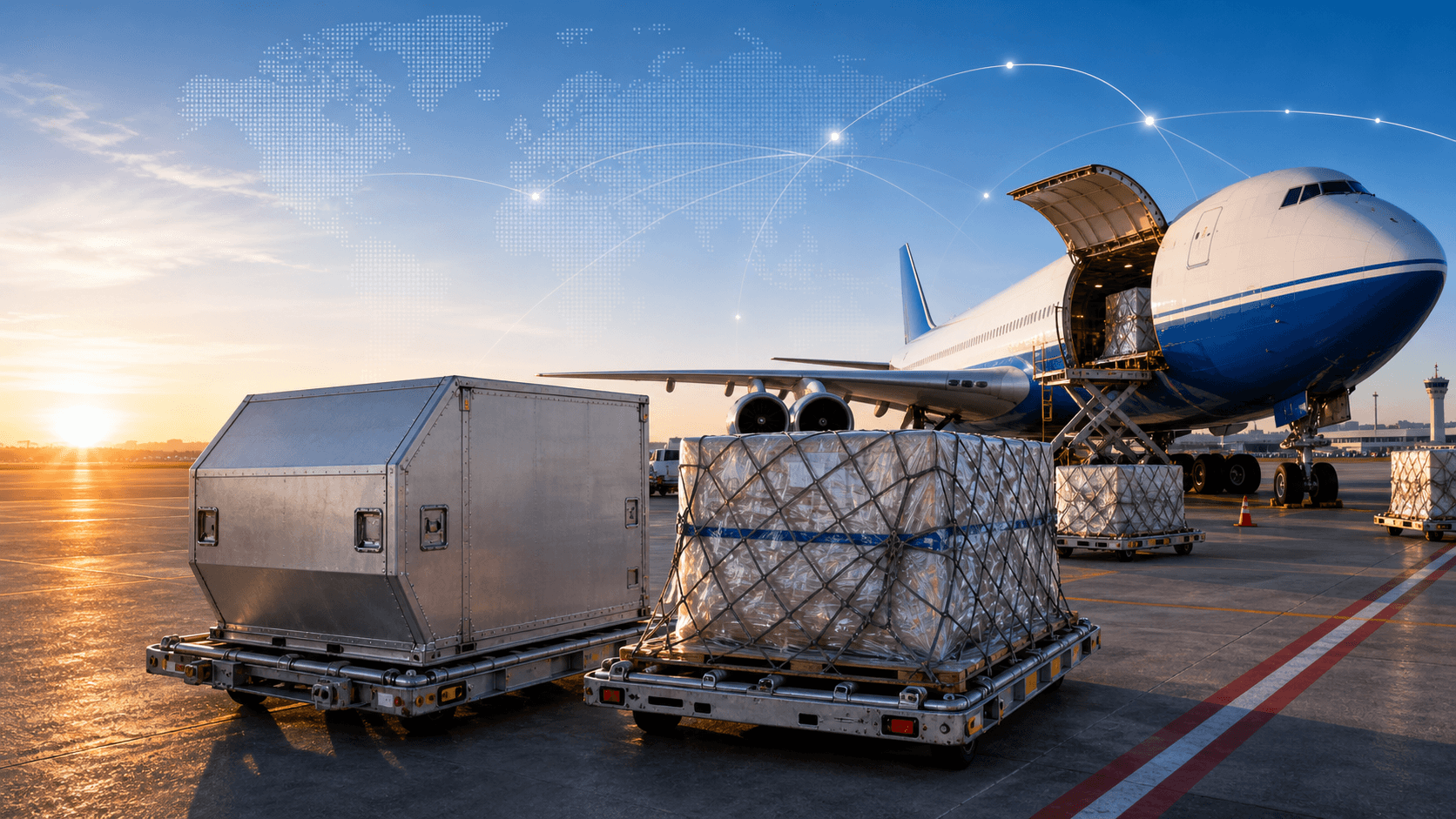
Air cargo containers, also called Unit Load Devices or ULDs, are the standard containers and pallets used to move freight by aircraft. They help airlines load cargo safely, protect goods during transit, and fit freight efficiently into the aircraft's cargo hold.
For businesses shipping internationally, understanding air cargo containers is useful because the container type affects packaging, weight limits, aircraft compatibility, and handling speed. If a shipment is packed in the right ULD, it is easier to load, easier to protect, and often easier to move through the air freight process.
What air cargo containers are
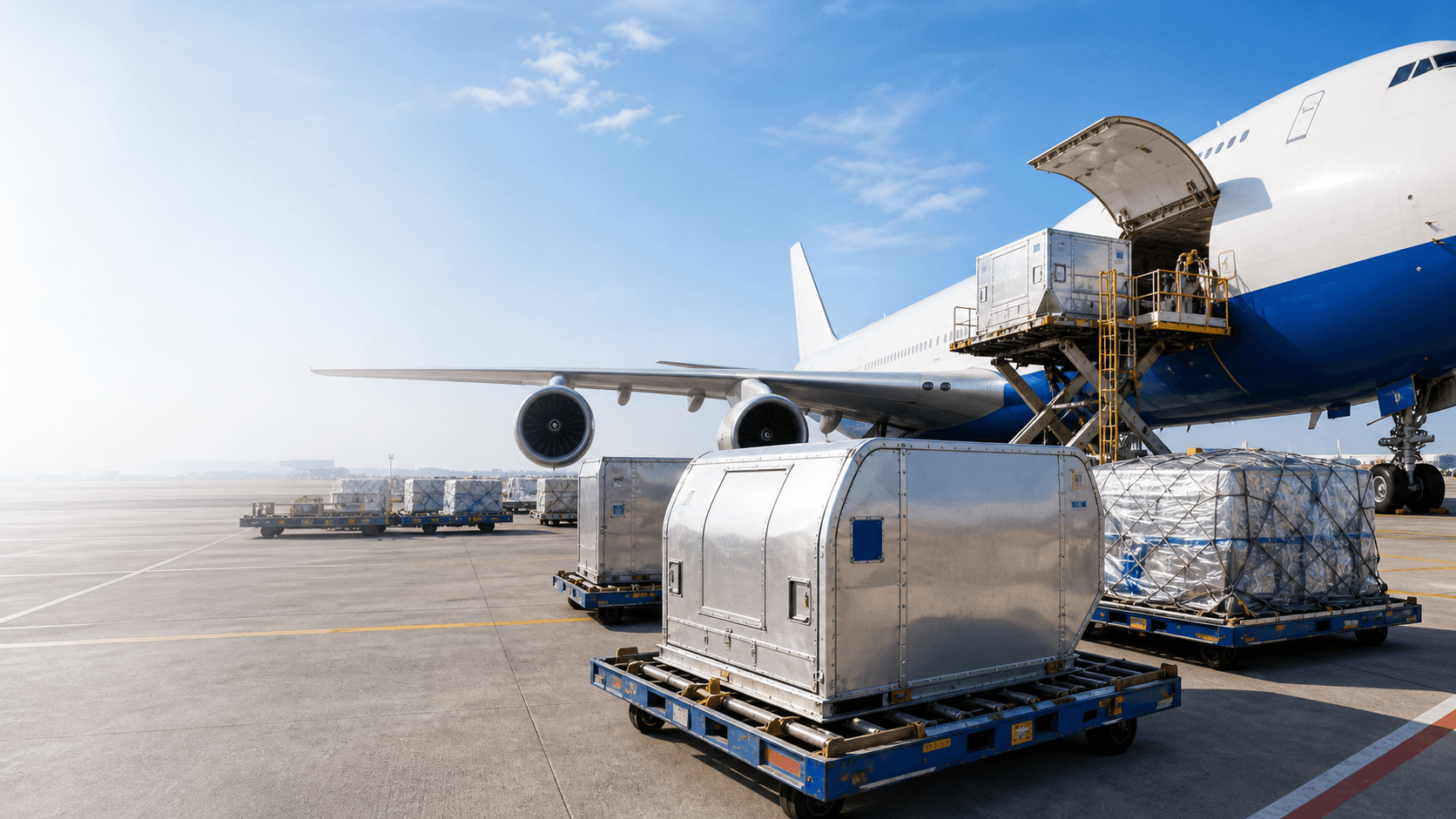
An air cargo container is a standardized load unit used to carry freight on an aircraft. In airline logistics, these units are built to fit aircraft cargo bays and to keep freight stable during loading, flight, and unloading.
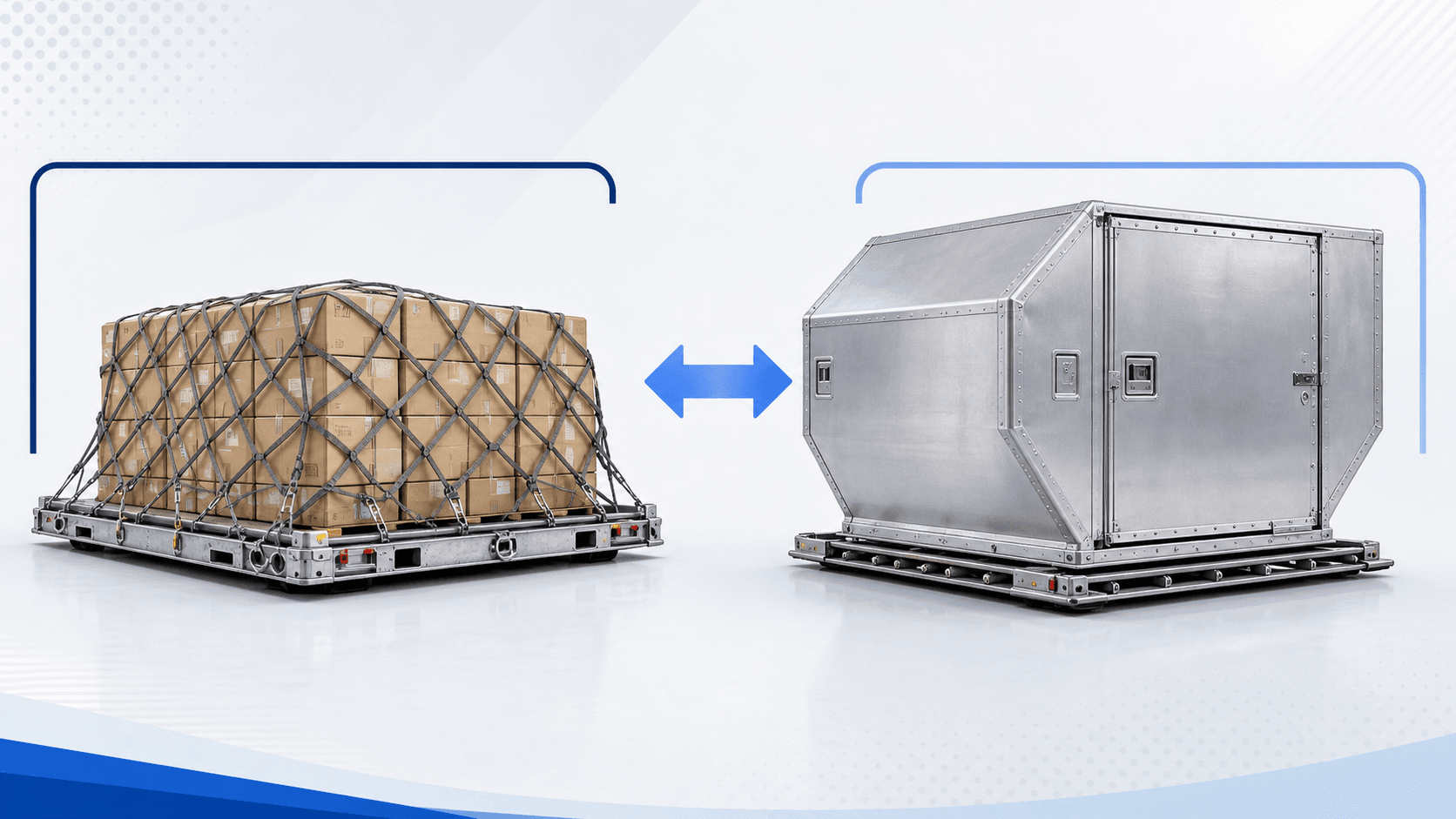
There are two main categories: pallets and containers. Pallets are flat aluminum bases used for cargo secured with nets or straps, while containers are enclosed or semi-enclosed units that protect cargo from weather and handling exposure.
Why airlines use ULDs
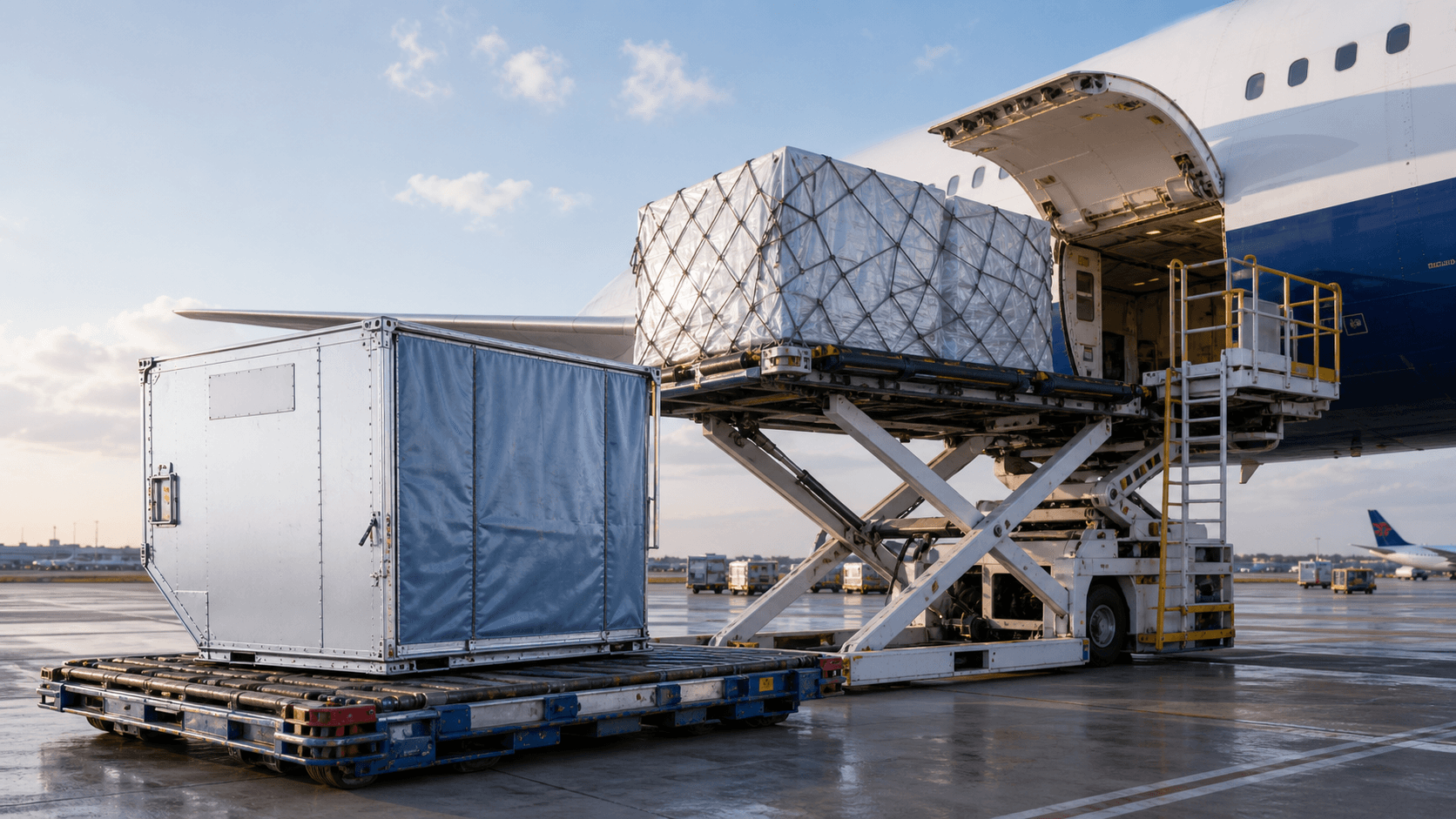
Airlines use ULDs because they make cargo handling faster, safer, and more efficient. Instead of loading loose boxes one by one, freight can be consolidated into a unit that fits the aircraft's cargo space more cleanly.
ULDs also help reduce damage and improve load control. For shippers, this means better protection, better space planning, and more predictable handling during international shipping.
Main container types
Air cargo containers come in different shapes and sizes because aircraft cargo holds are not all the same. The most common types include lower-deck containers, main-deck containers, and pallets.
Lower-deck containers are designed for the belly of passenger and cargo aircraft, while main-deck containers and pallets are used on freighter aircraft for larger cargo volumes. Common ULD codes include LD3, LD6, LD7, LD8, and pallet types such as PAG and PMC.
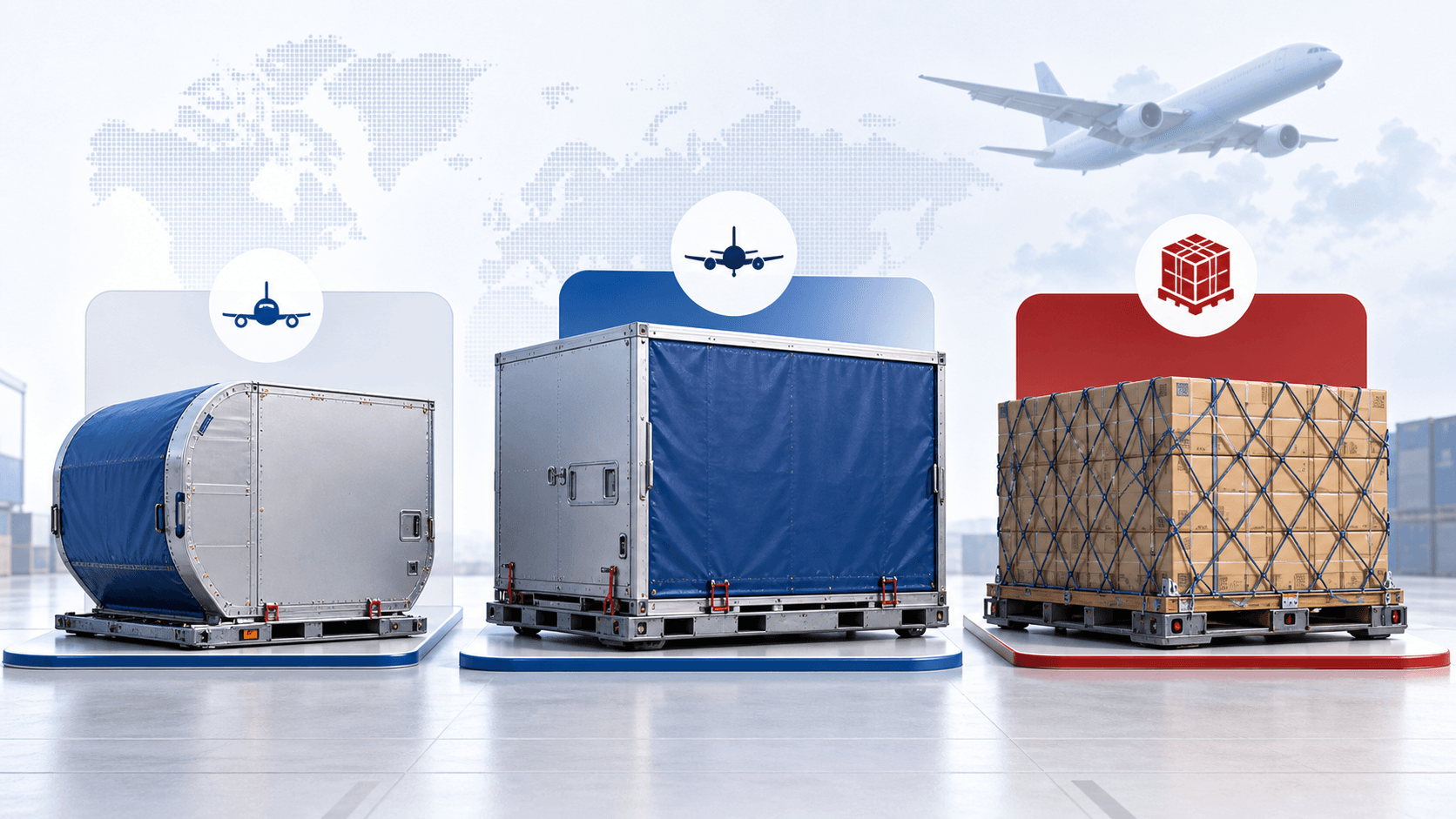
Common ULD examples
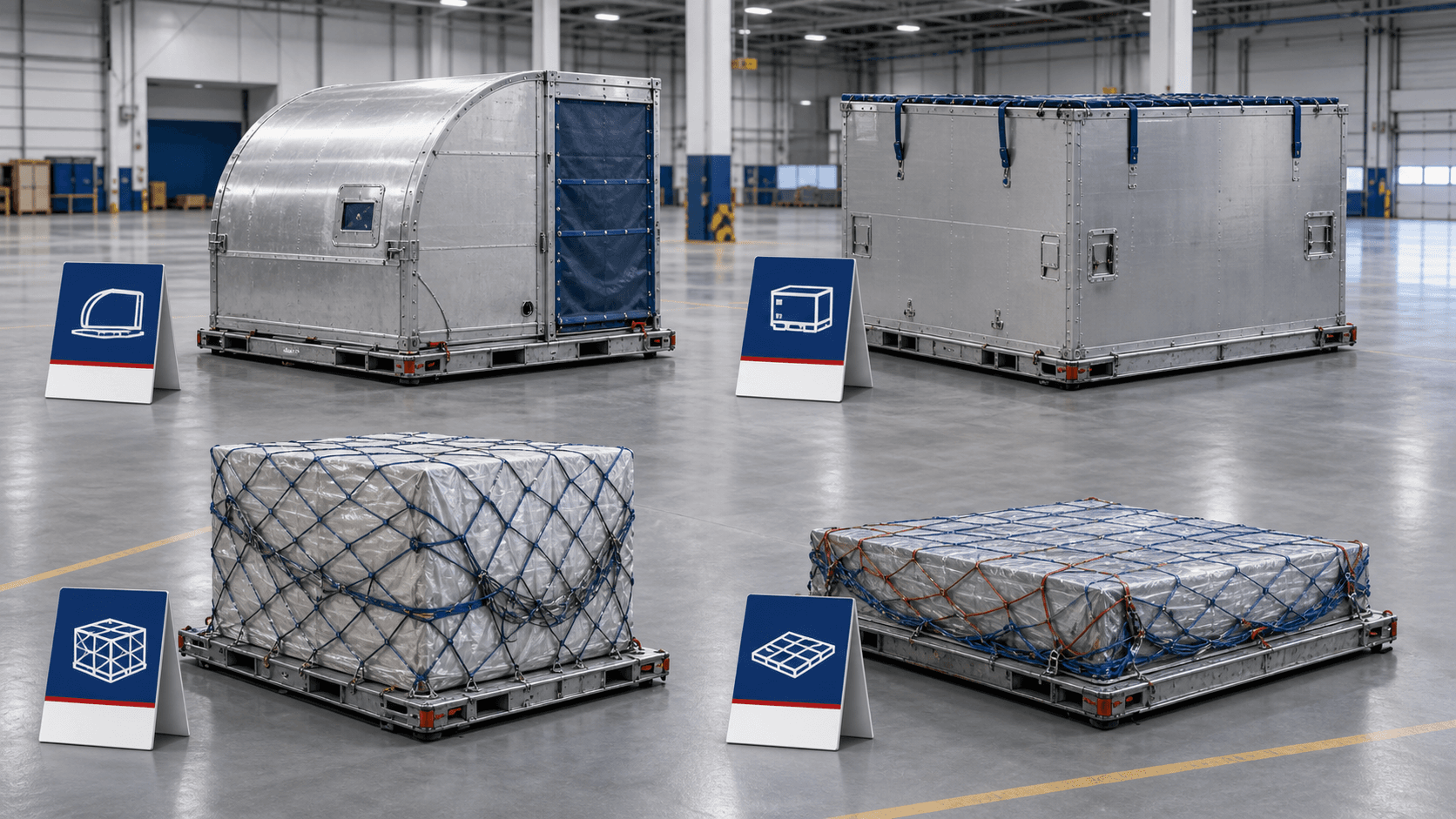
Some of the most widely used air cargo container and pallet types are listed below.
LD3 / AKE: General cargo, mail, and smaller shipments. Common lower-deck unit used on many passenger aircraft.
LD6 / ALF: Larger general cargo. Used for bigger volume than LD3.
LD7 / AKE-style larger unit: Medium to large cargo loads. Often used for efficient volume handling.
PAG pallet: Oversized or high-volume freight. Flat pallet secured with netting.
PMC pallet: Heavy or bulky cargo. Larger pallet format with higher weight capability.
These units vary by aircraft compatibility, door clearance, cubic capacity, and maximum gross weight. That is why the freight forwarder must match the cargo to the right unit before booking.
Sizes and capacity
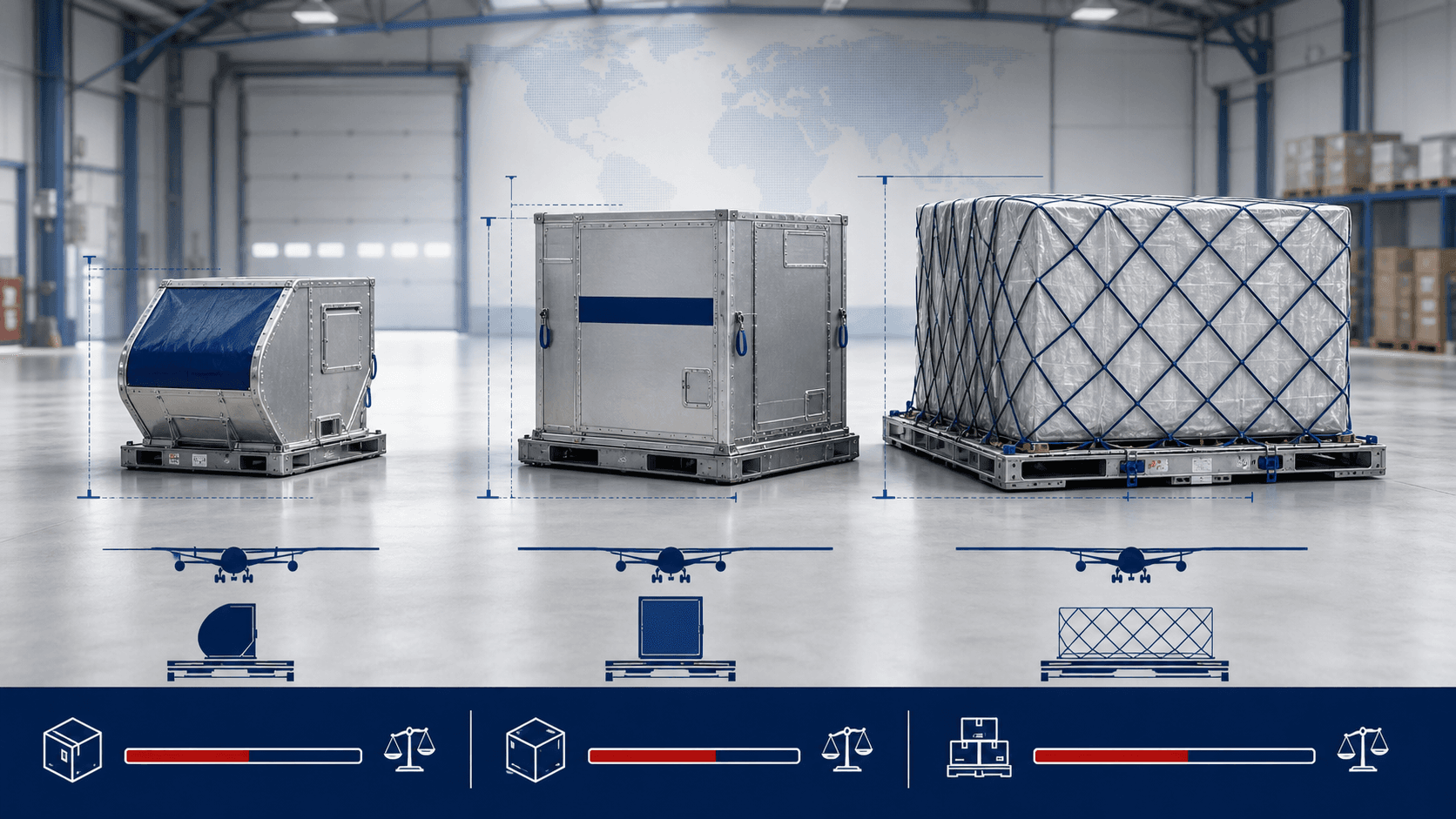
ULDs have strict dimensions because they need to fit the aircraft hold exactly. For example, one common LD3-style container has a volume of about 4.3 m3, while larger pallets such as PAG and PMC can hold much more cargo volume and weight.
One source lists LD3 at about 156 x 153 x 163 cm with a max gross weight of around 1,588 kg, while PAG and PMC pallets are much larger and can support over 11,000 kg depending on build and aircraft. These limits are not just technical details; they determine what can be shipped safely and legally.
Which cargo fits which container
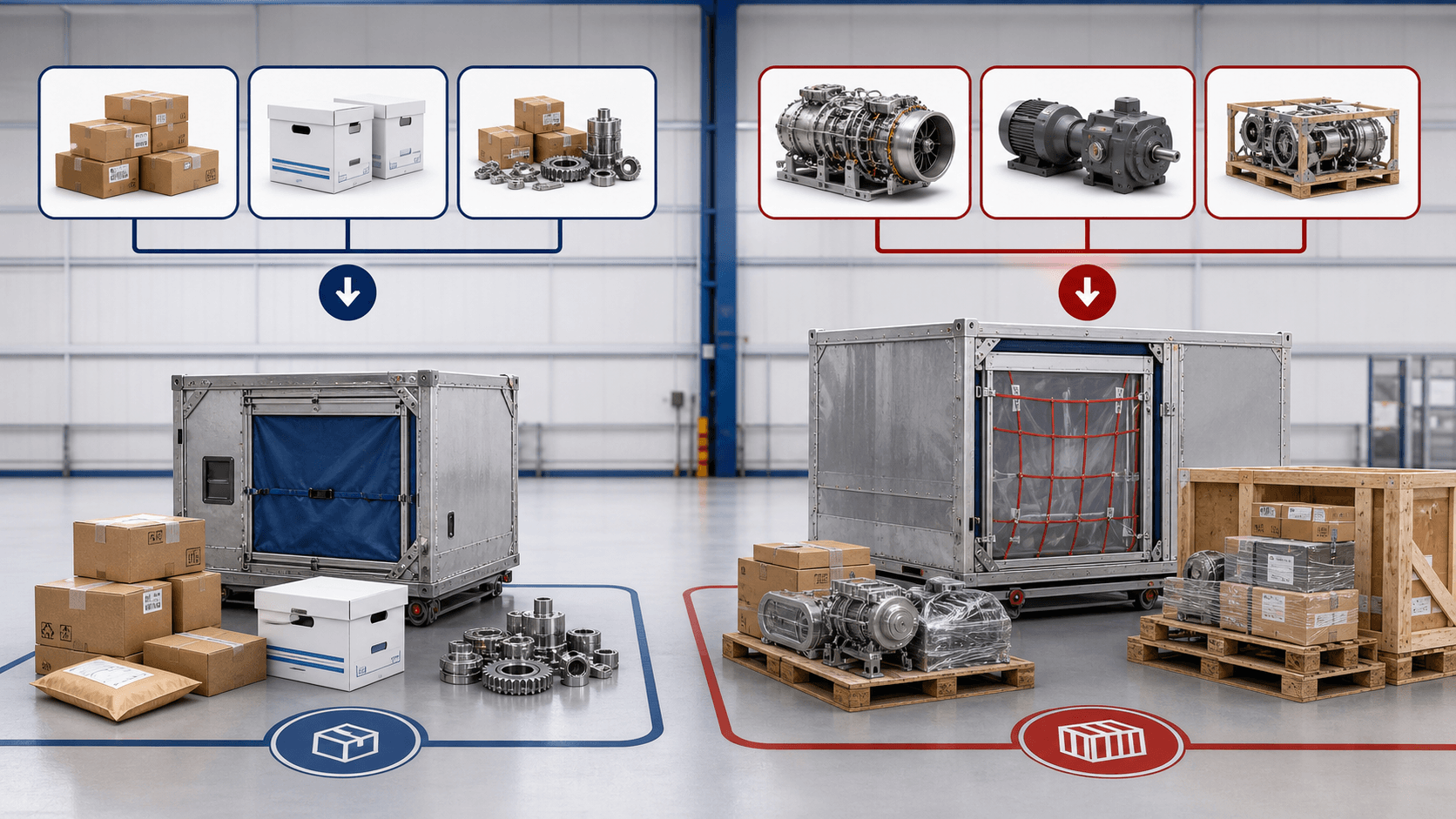
Small and medium cargo usually fits best in lower-deck containers like LD3 or similar ULDs. These are commonly used for general commercial goods, parcels, documents, spare parts, and lightweight freight.
Larger or denser cargo often needs a bigger container or a pallet. This is common for industrial parts, boxed commercial shipments, irregular freight, and some types of equipment that need more floor area than a small container can offer.
Air freight shipping process
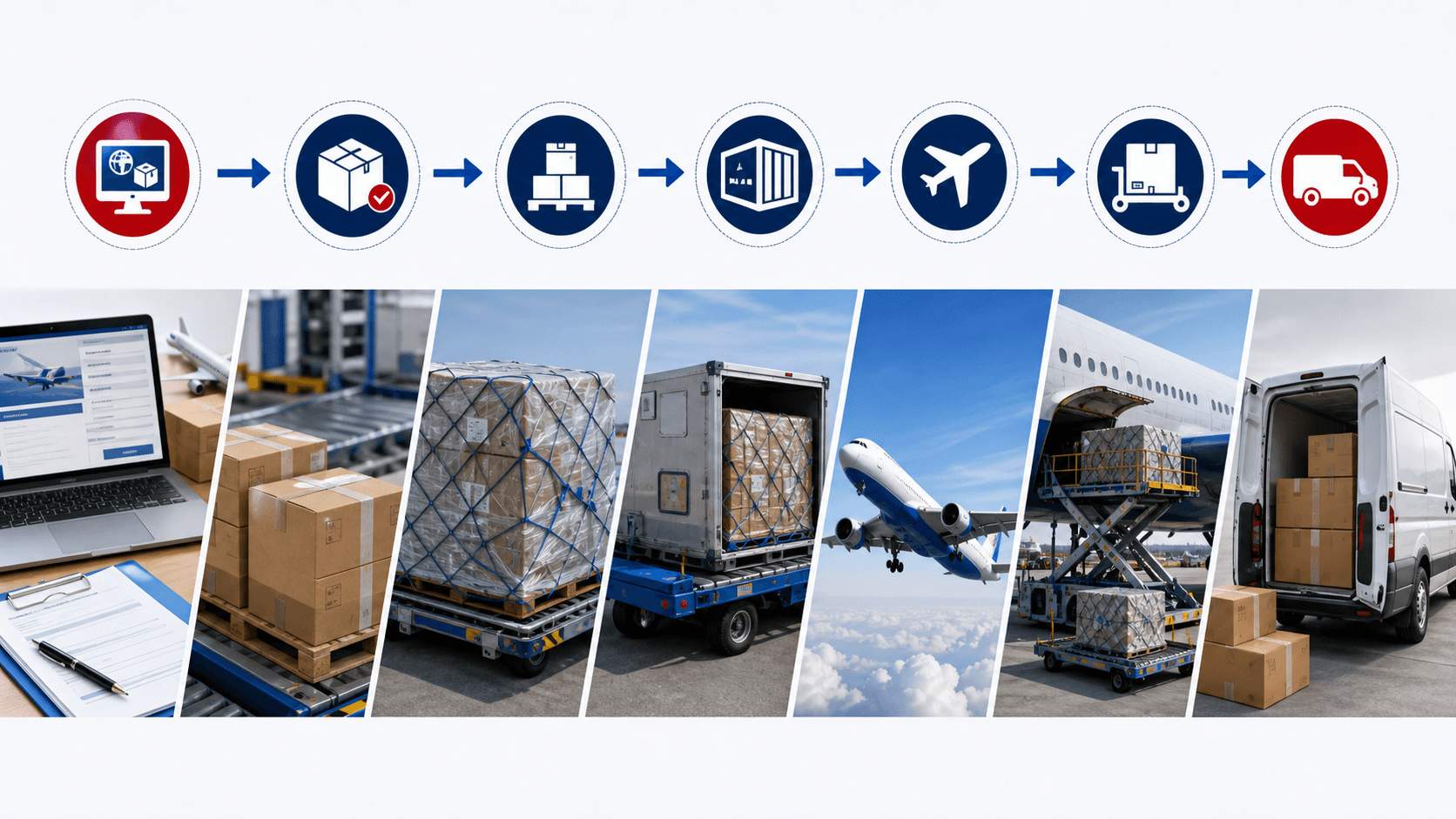
The air freight process starts with cargo assessment. The shipper or freight forwarder checks the cargo type, weight, dimensions, packaging, and destination before choosing the right ULD and flight.
Next, the cargo is packed, labeled, and built into a container or pallet according to airline rules. After that, the shipment is tendered to the airline, loaded onto the aircraft, flown to destination, and then deconsolidated or delivered after arrival. Good planning at the beginning prevents rework and reduces the chance of rejected cargo at the airport.
Why packaging matters
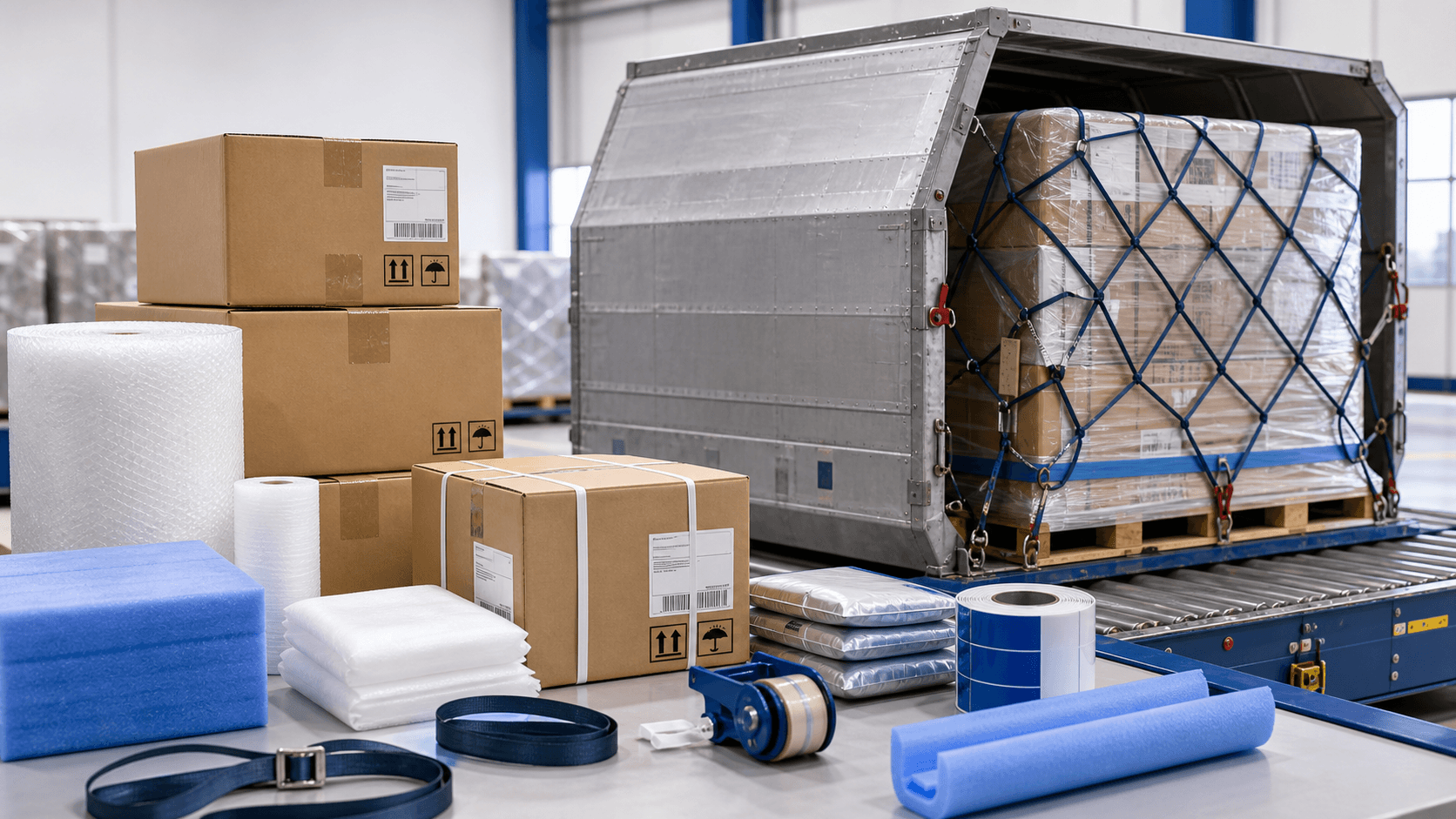
Packaging is very important in air freight because the cargo must stay stable during loading, takeoff, flight, and unloading. Loose, weak, or poorly labeled cargo can shift inside the ULD and increase the risk of damage or delay.
Proper packaging also helps make the best use of cubic space. Since air cargo is priced largely by weight and volume, better packaging can improve efficiency and lower shipping waste.
Common mistakes
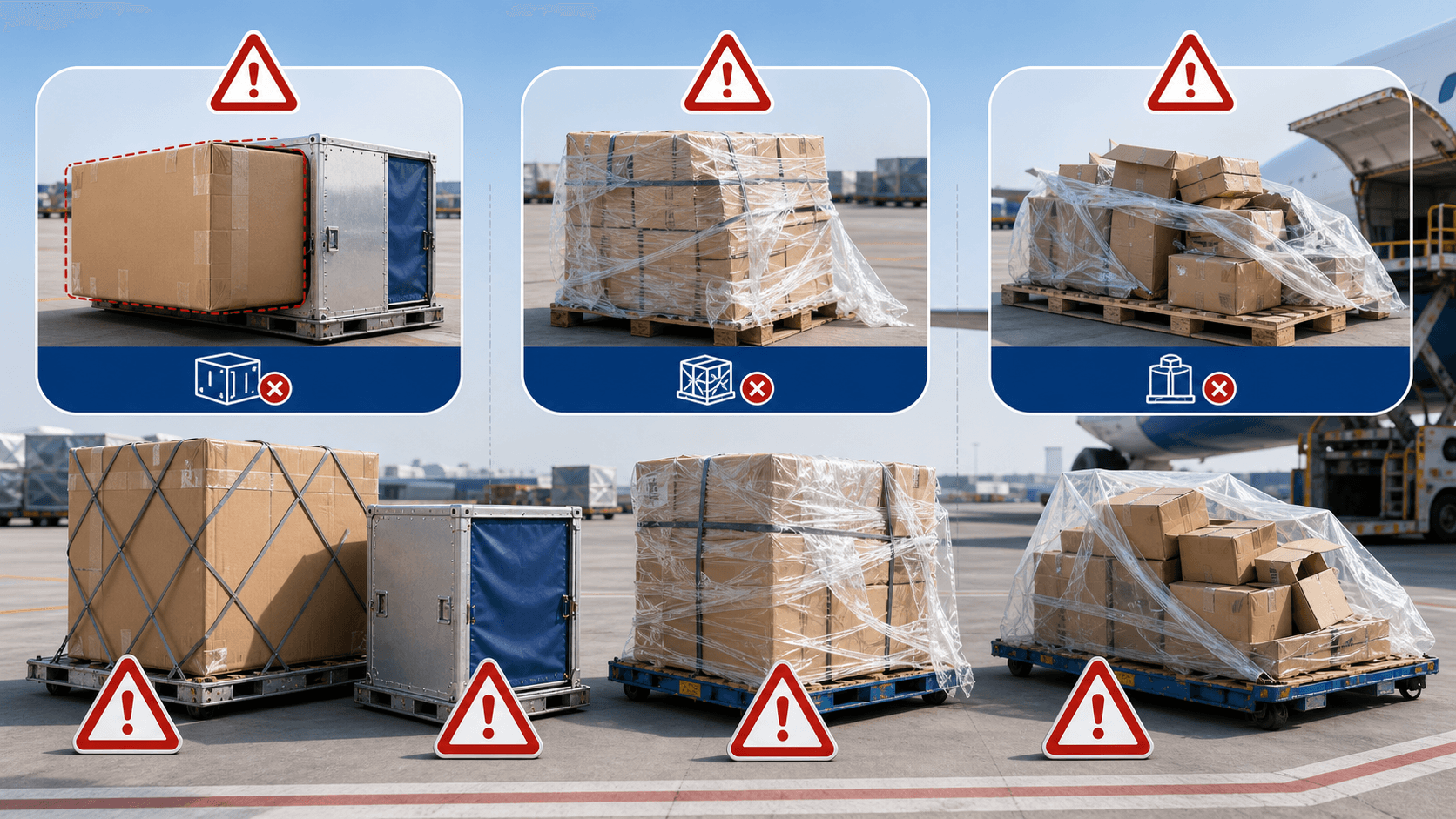
One common mistake is choosing the wrong container type. Another is assuming that a shipment can be loaded just because it fits physically, without checking weight limits, door clearance, or airline compatibility.
Shippers also sometimes ignore the difference between pallets and containers. A pallet is open and secured with nets, while a container is enclosed, so each one is better for different cargo types. Choosing the wrong one can raise handling risk or waste space and money.
Why Sea Sky helps
Sea Sky Cargo can help businesses choose the right air cargo container, prepare the freight properly, and coordinate the shipment from booking to delivery. Its broader logistics profile shows experience in air freight, international shipping, customs support, and complex cargo handling, which is important when air cargo needs careful planning.
That matters because air freight is not just about speed. It is also about choosing the right ULD, protecting the goods, and making sure the shipment is accepted and moved without avoidable issues. Sea Sky's logistics approach is useful for businesses that want practical help rather than just an airline rate.
Conclusion
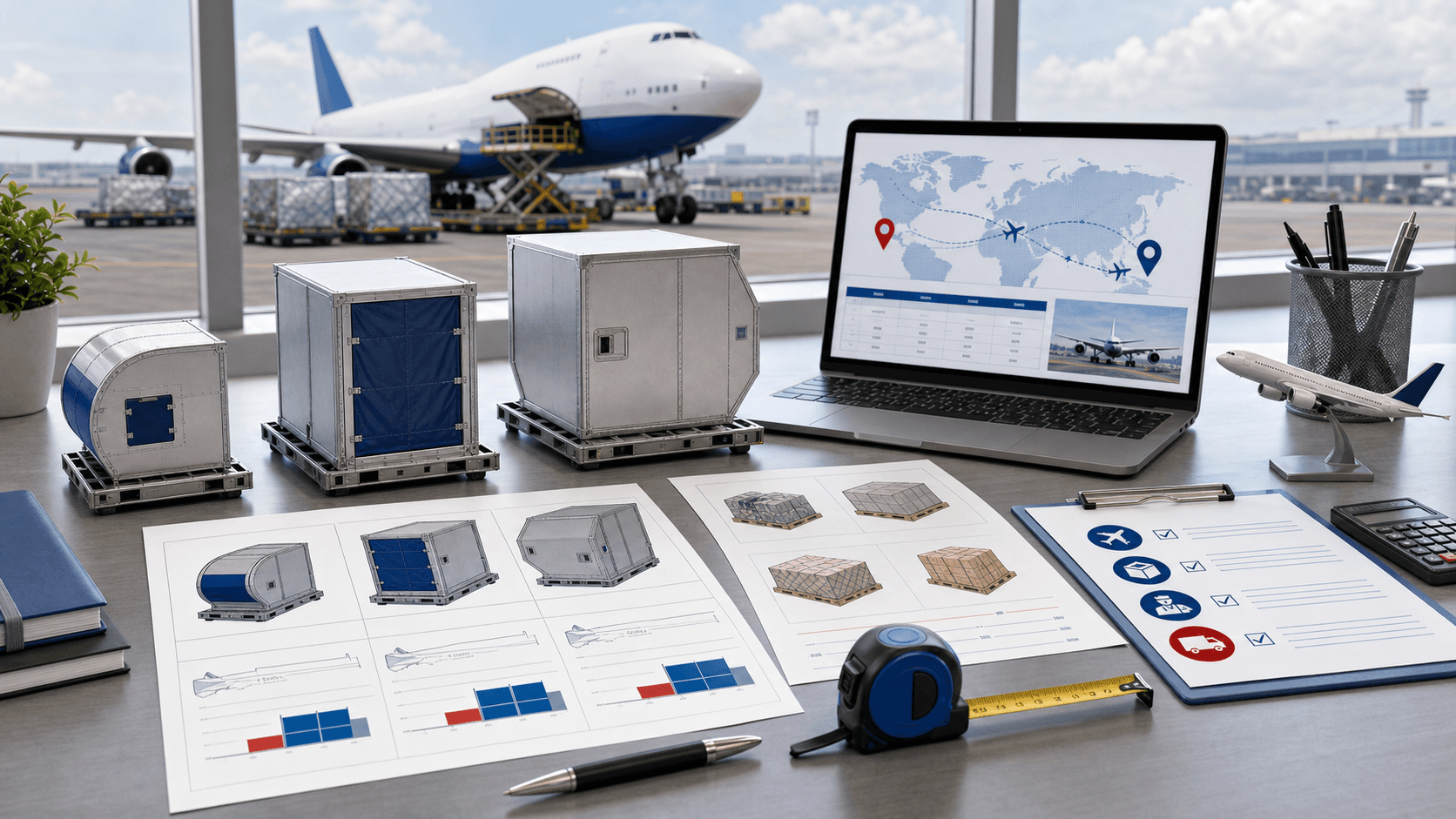
Air cargo containers are a core part of modern air freight because they make shipping safer, faster, and more efficient. Once businesses understand container types, sizes, and the air freight process, they can pack better, book smarter, and avoid costly delays.
For companies shipping internationally, the smartest approach is to match the cargo to the correct ULD and work with a logistics partner that understands both cargo handling and customs. Contact SeaSky for a quote or consultation if you want help with air cargo containers, airline pallets, and air freight shipping.
Related posts
1970-01-01
Sea + Air Freight: How SeaSky Helps Businesses Ship Smarter
2026-10-06
Freight Forwarding Documents in Nepal: Complete Import and Export Checklist
2026-10-05
Landed Cost in Nepal: A Step-by-Step Import Cost Worksheet
2026-10-04