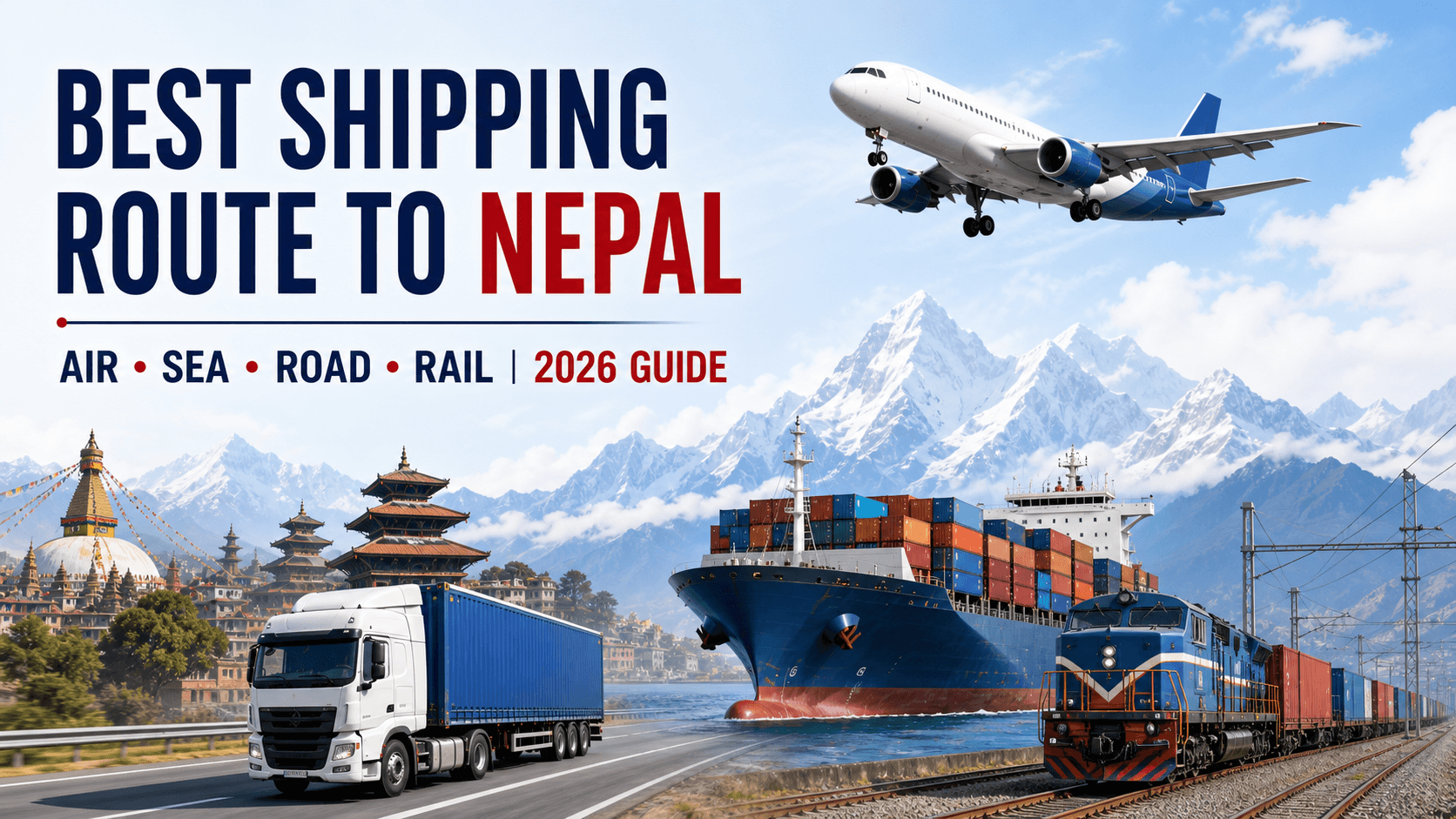
Why the shipping route matters for Nepal imports
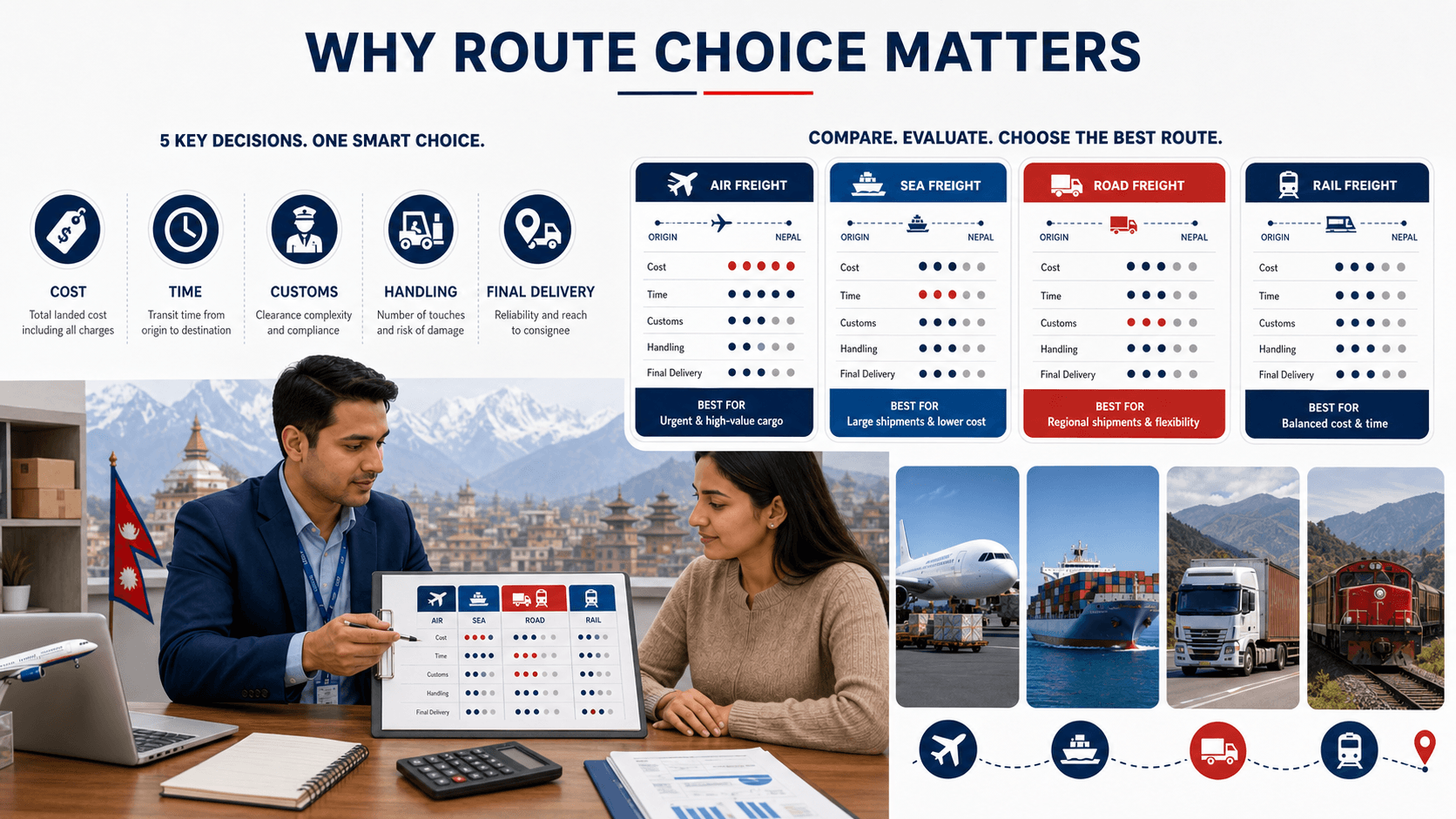
Choosing the best shipping route to Nepal is not only about finding the lowest freight quote. A route that looks inexpensive can become costly if cargo waits at a port, faces document corrections, requires extra handling or misses the required delivery date.
Because Nepal is landlocked, international cargo often combines air, sea, road, rail and customs clearance. The right choice should match cargo size, value, urgency, origin country, permits, final delivery location and risk tolerance.
- Cargo size and weight
- Product value and urgency
- Origin country and destination city
- Customs documents and permits
- Handling and damage risk
- Full landed cost and delivery plan
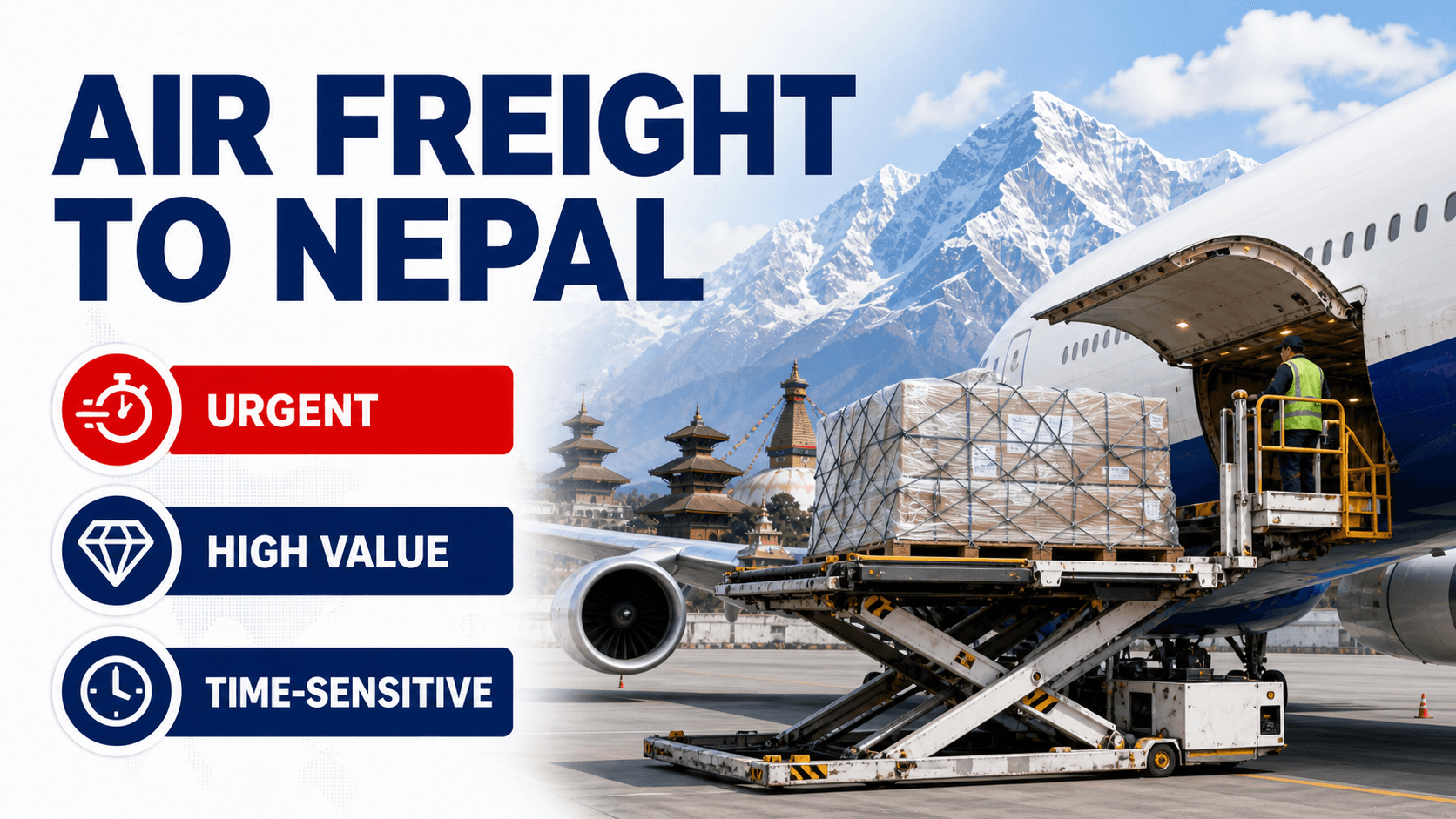
Air freight to Nepal: fastest for urgent cargo
Air freight is usually the fastest route for urgent, lightweight, high-value or time-sensitive cargo such as samples, electronics, medical goods, fashion items and spare parts.
The tradeoff is cost. Airlines usually charge by actual or volumetric weight, whichever is higher, so a large lightweight carton may cost more than expected.
Choose air when delay costs more than freight, the cargo is small or valuable, or the arrival deadline is strict. Avoid it for heavy, oversized and non-urgent cargo. See air freight to Nepal.
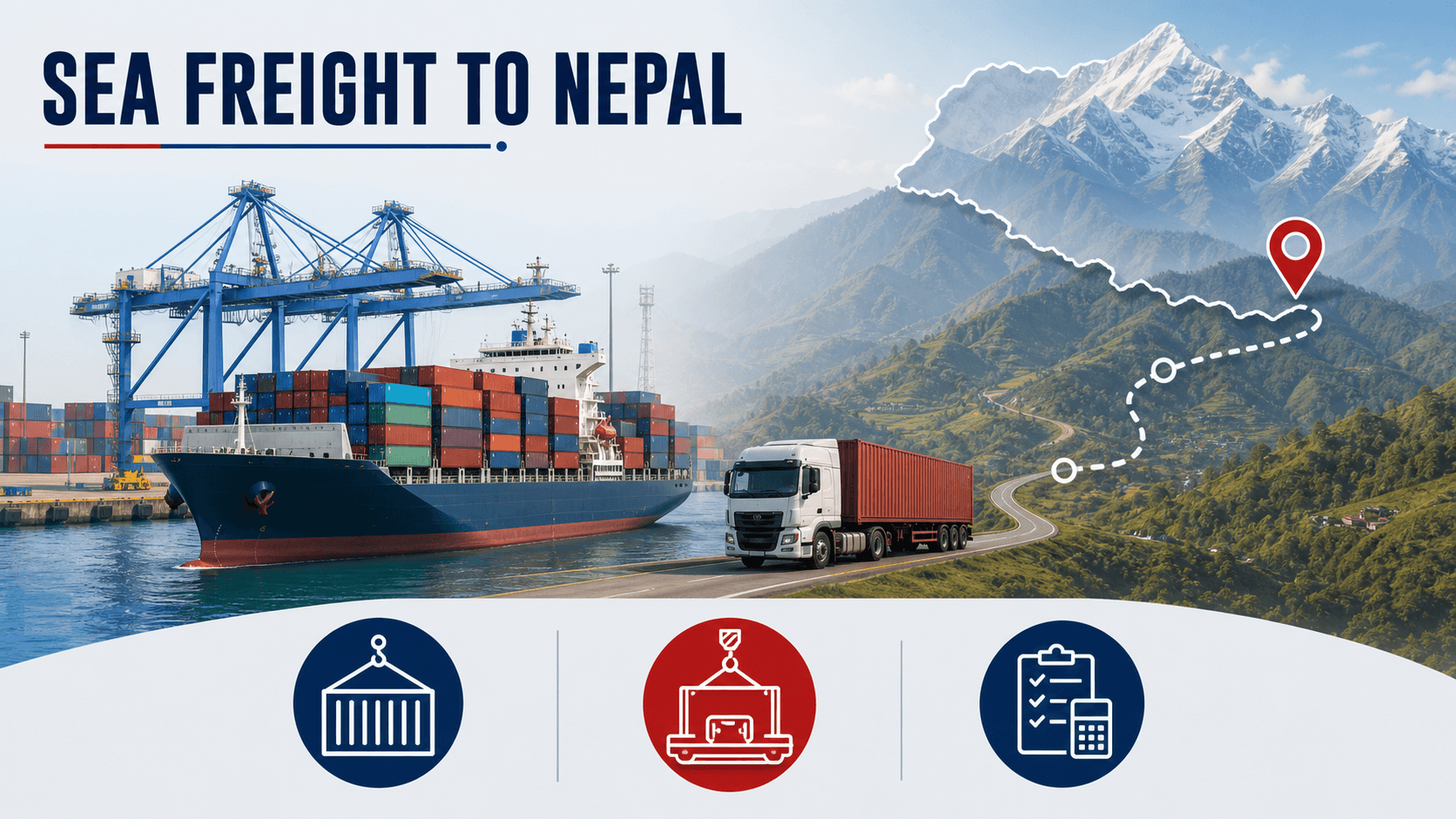
Sea freight through Indian ports: best for large cargo
Nepal has no seaport, but overseas imports can move by sea to an Indian gateway and continue inland by road or rail. Sea freight often suits full containers, LCL cargo, machinery, raw materials, furniture, construction materials and other large non-urgent shipments.
The complete plan should include ocean freight, Indian-port handling, transit documents, inland movement, Nepal customs and final delivery. Kolkata, Haldia and Visakhapatnam may be considered depending on the shipping line, cargo and destination.
Choose sea freight when cargo is large, heavy and cost-sensitive. Avoid it when the shipment is urgent or port-delay risk does not fit the timeline. See sea freight to Nepal.
Road freight to Nepal: flexible from India and China
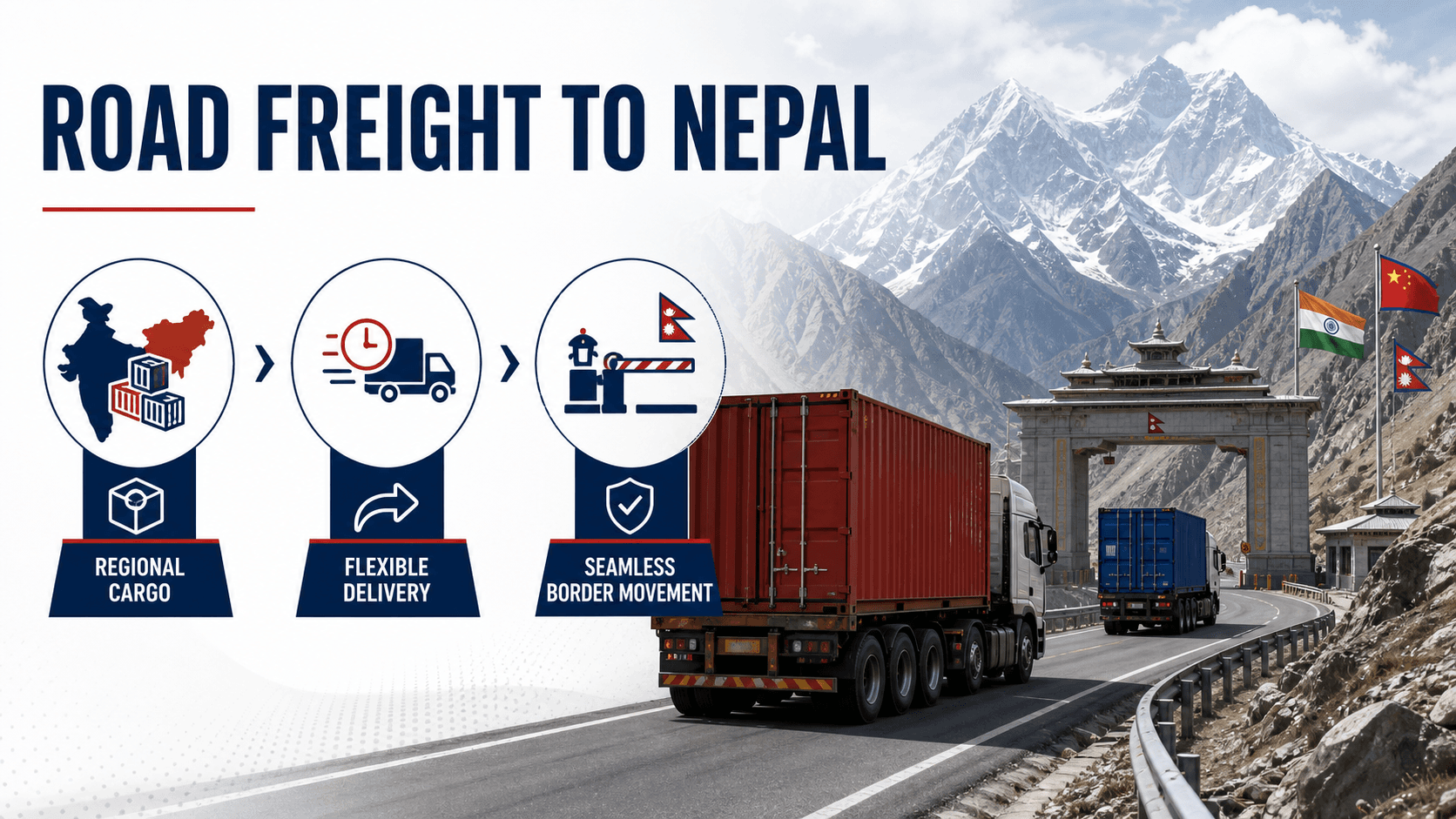
Road freight is central to Nepal logistics because most cargo eventually needs a truck for border movement or final delivery. It is commonly used for India-to-Nepal cargo, China-to-Nepal cargo, full and partial truckloads, machinery and commercial supplies.
Choose road when the cargo comes from India or China, door-to-door flexibility matters, or the final destination is inside Nepal. Road conditions, border availability, permits and special handling still need to be checked before dispatch.
See road freight to Nepal for route support.
Rail cargo to Nepal: useful for port-linked bulk movement
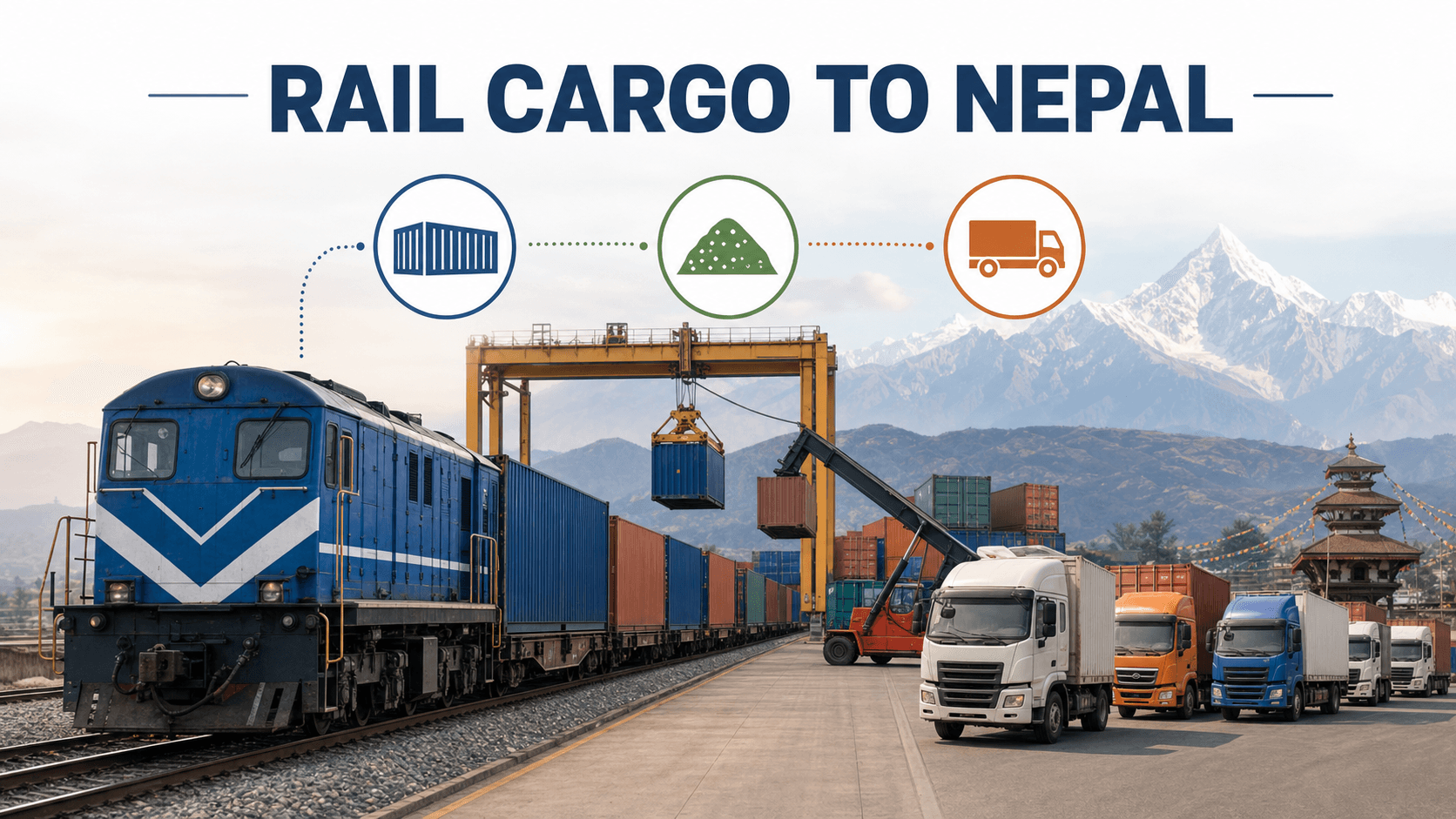
Rail-linked cargo is becoming more relevant for containers, industrial materials and cost-sensitive shipments moving from Indian ports toward Nepal. Recent cargo-train developments serving Biratnagar show how rail can support eastern Nepal routes.
Rail rarely completes the whole journey. A truck may still be needed from the terminal to the warehouse, factory or project site.
Choose rail when the shipment is large or regular, arrives through an Indian port, and the destination suits a rail-linked corridor. Avoid it when urgent door-to-door flexibility is more important. See rail cargo to Nepal.
Cheapest route vs fastest route
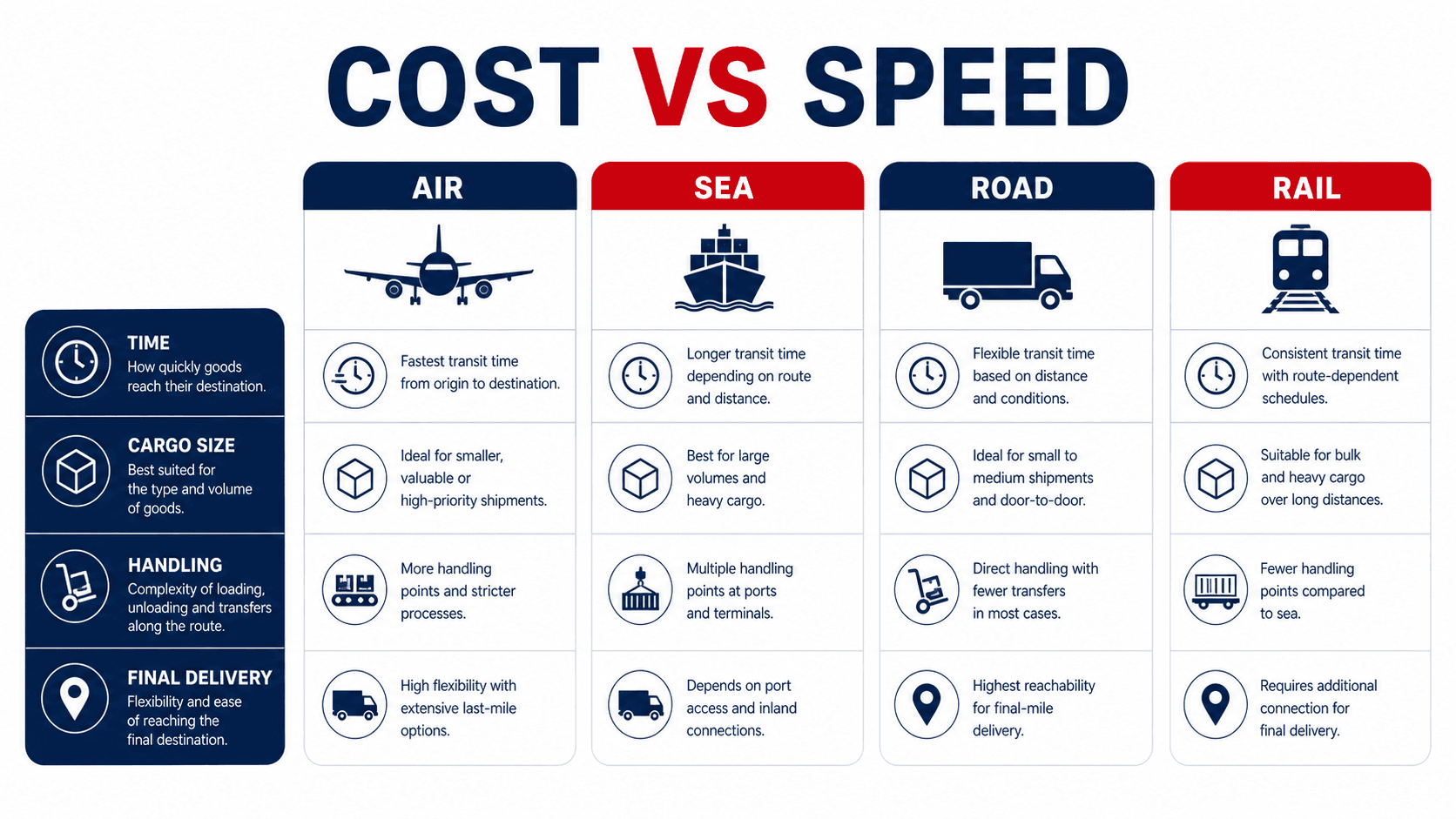
The lowest base rate is not necessarily the lowest landed cost. Port storage, customs corrections, handling, inland delivery and missed deadlines can erase an apparent saving. Compare the full route, inclusions, customs readiness and final delivery rather than only the headline freight price.
| Primary need | Route to compare first | Main tradeoff |
|---|---|---|
| Urgent or high-value cargo | Air | Higher freight cost |
| Large overseas shipment | Sea | Longer transit and port handling |
| India or China regional cargo | Road | Border and road conditions |
| Port-linked bulk or containers | Rail | Terminal and final-road coordination |
| Complex origin-to-door movement | Multimodal | More handoffs to manage |
Need help checking the route before booking?
Share the cargo type, weight, dimensions, origin, deadline and documents. Sea Sky can compare the practical air, sea, road and rail options.
Best shipping route by cargo type
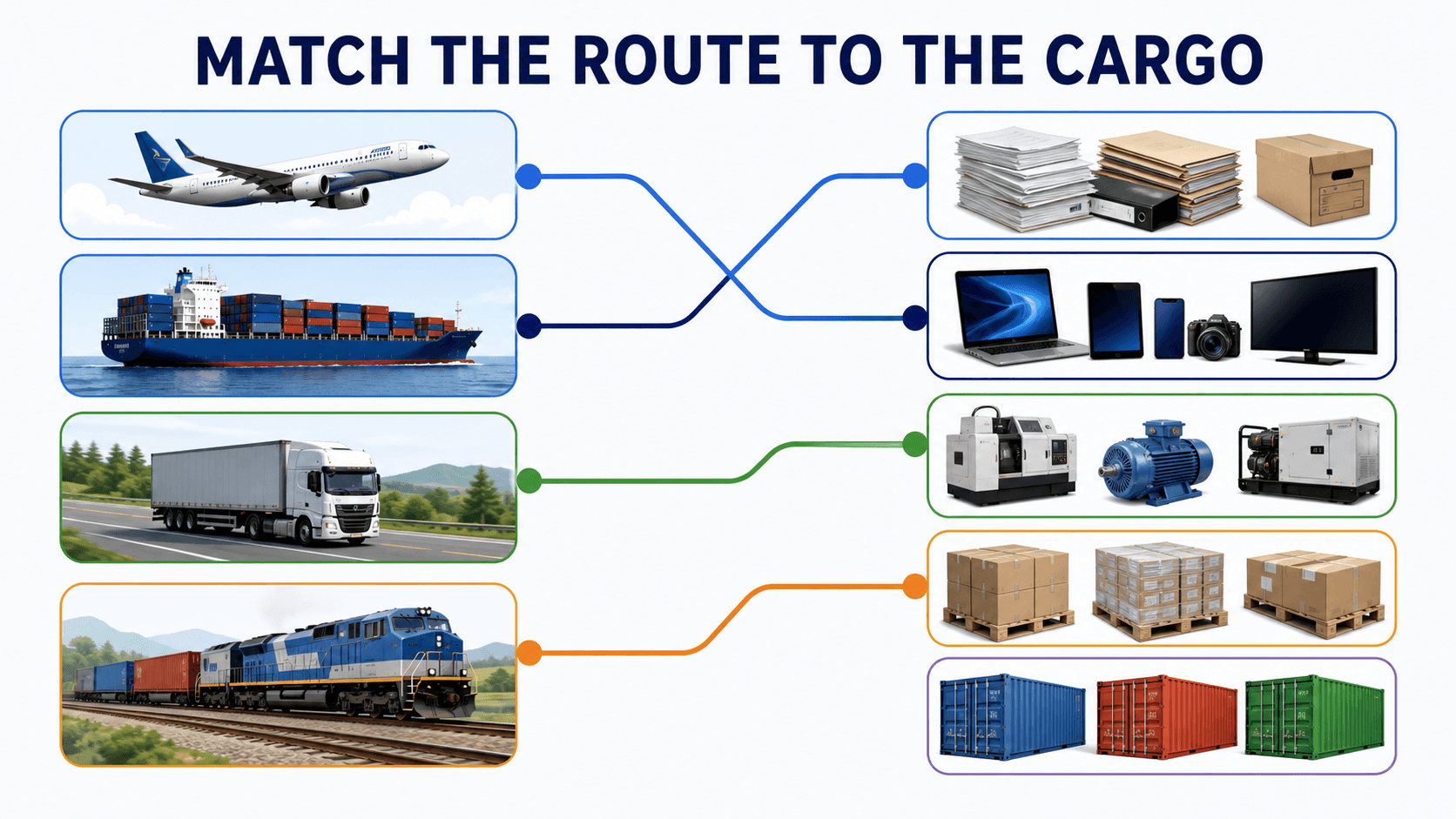
Different cargo calls for different planning. Documents and samples usually favor air. Machinery may use sea, road or multimodal routes. India-origin goods often favor road, while larger Kolkata-linked cargo for eastern Nepal may justify a rail comparison.
| Cargo type | Route commonly compared |
|---|---|
| Documents and samples | Air |
| Small high-value electronics | Air or road |
| Machinery and industrial goods | Sea, road or multimodal |
| China-to-Nepal commercial goods | Road or air |
| India-to-Nepal goods | Road |
| Large overseas imports | Sea plus inland movement |
| Eastern Nepal cargo through Kolkata | Rail-linked or road movement |
Documents needed before choosing a route
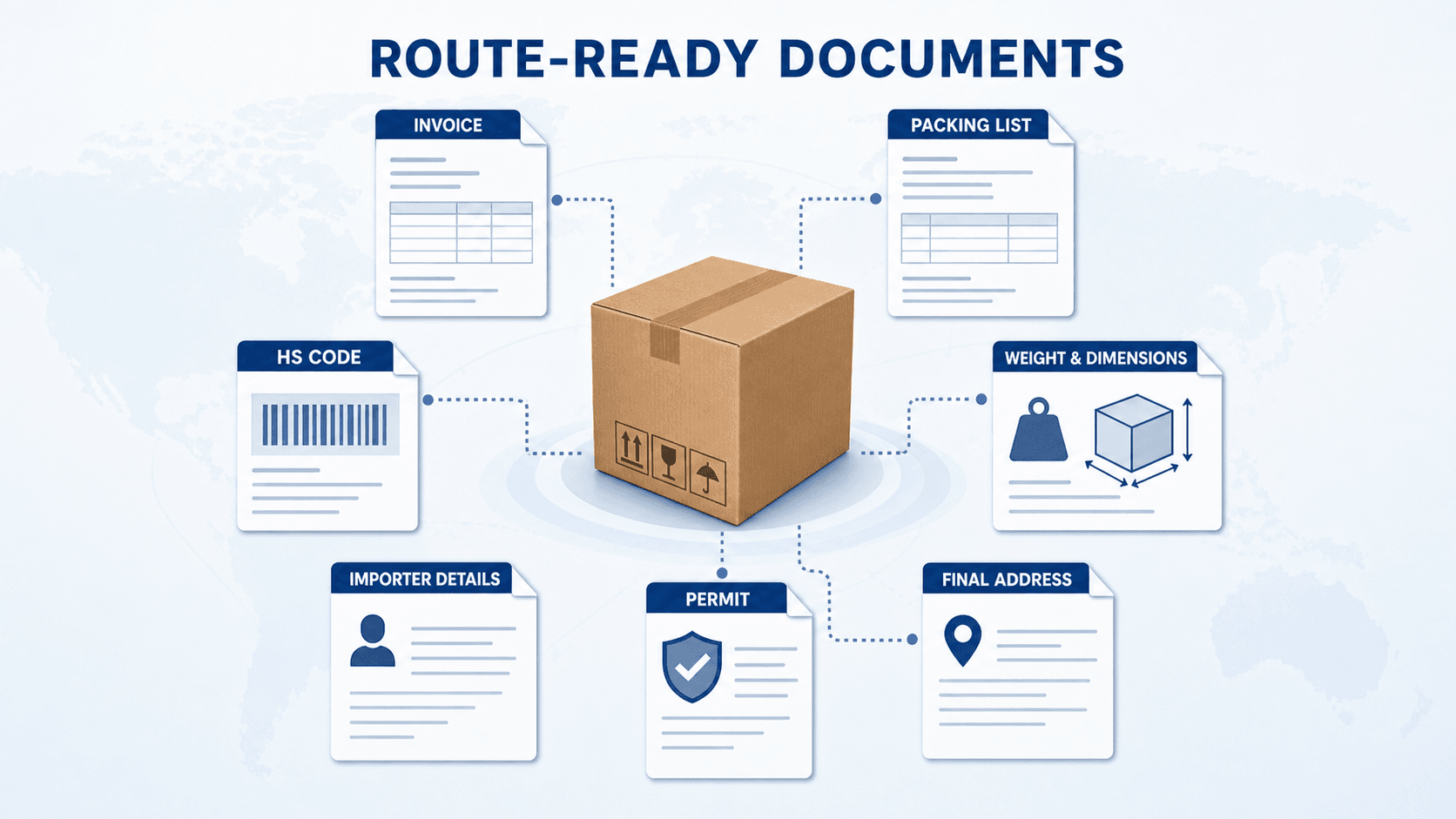
Route comparisons are only useful when the shipment facts are accurate. Prepare the cargo file before requesting prices.
- Commercial invoice and packing list
- Clear product description and HS code
- Packed weight, dimensions and package count
- Supplier pickup location and final Nepal address
- Importer PAN or VAT details
- Certificate of origin where required
- Import permit or approval where required
- Technical sheet, catalogue and insurance where applicable
Regulated goods such as food, medicine, chemicals, telecom devices, batteries, cosmetics, vehicles and agricultural products may require extra approval.
Customs clearance can change the best route
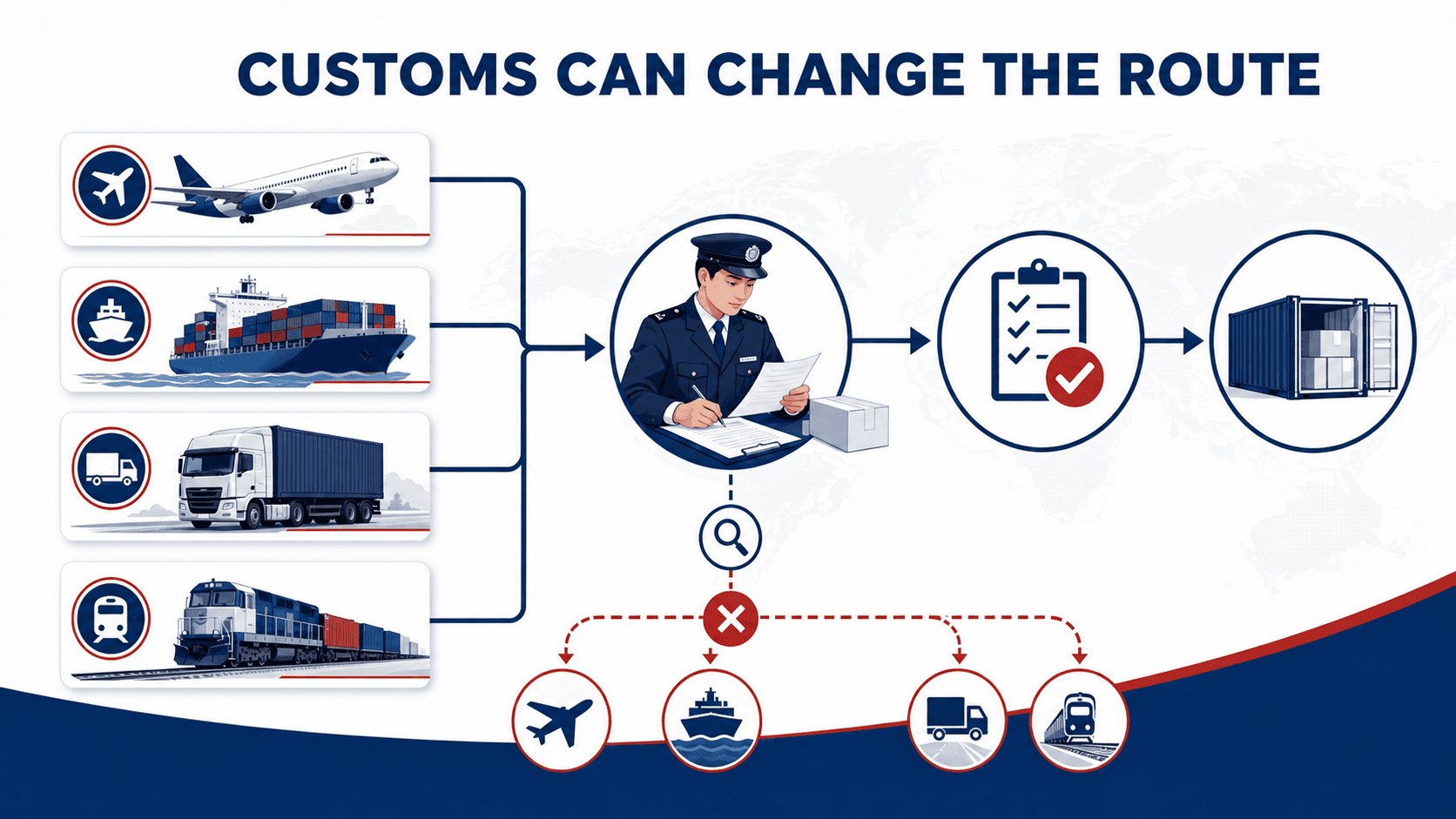
A route may look good on paper but fail if the customs file is not ready. Nepal clearance can involve HS-code verification, valuation, duty and VAT calculation, permit review, inspection, declaration, payment and cargo release.
Confirm customs requirements before the supplier dispatches the goods, especially for a first import or regulated product. Review the HS-code guide and Sea Sky's customs clearance support before booking.
Common route-planning mistakes
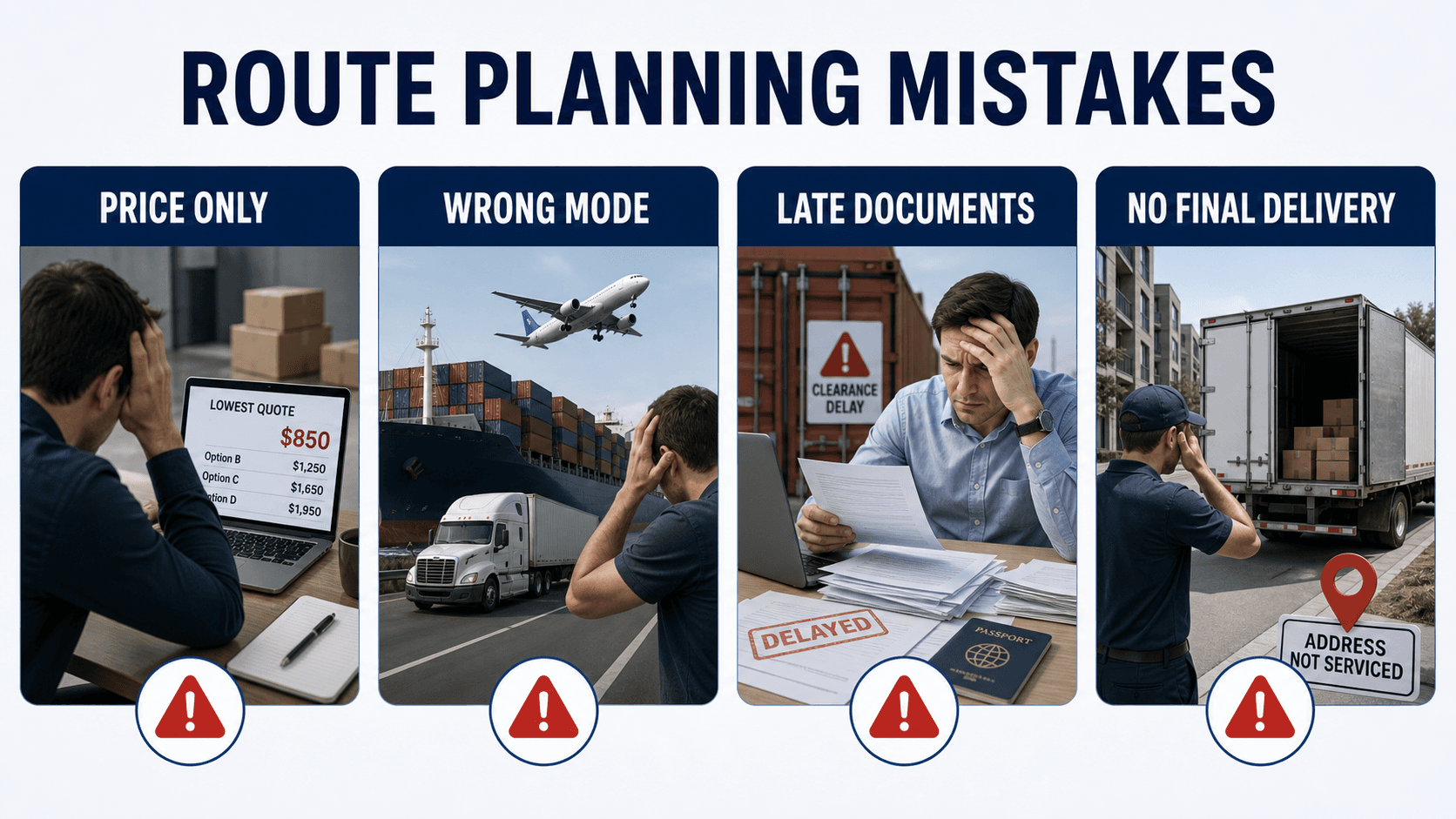
Common mistakes include comparing only freight price, ignoring total landed cost, using air for heavy non-urgent cargo, using sea when delivery is urgent, missing inland charges, checking documents too late, using the wrong HS code and failing to plan final delivery.
Supplier advice can help, but it does not replace Nepal-specific customs and route planning. Compare cost, time, risk, documents and the complete delivery sequence before booking.
How Sea Sky Cargo helps choose the right route
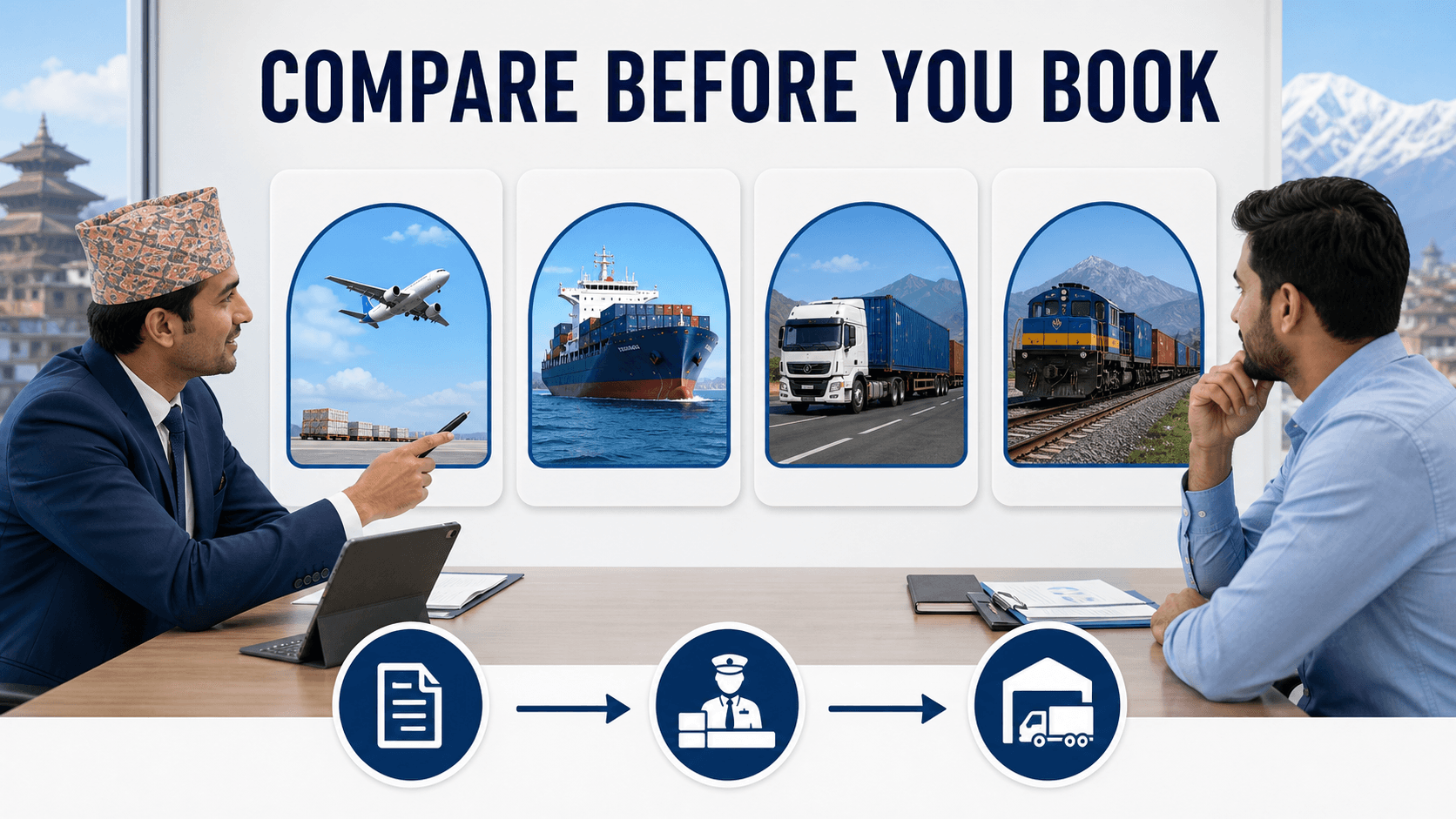
Sea Sky Cargo helps importers compare air, sea, road, rail and multimodal routes around the actual shipment instead of the headline rate alone.
Support can include route comparison, booking, document review, customs coordination, HS-code guidance, import-duty planning, port or border movement and final delivery.
Share cargo size, urgency, budget, origin and document status through the get quote page for a practical route comparison.
Frequently asked questions
What is the best shipping route to Nepal? It depends on cargo size, urgency, origin and budget. Air is fastest, sea suits large imports, road is flexible for India and China, and rail may suit port-linked bulk cargo.
What is the cheapest route? Sea may be cost-effective for large overseas cargo, while road may suit regional shipments. Compare total landed cost, not only freight.
Can Nepal receive sea freight? Yes. Cargo normally reaches an Indian port and continues inland by road or rail.
Is rail cargo available? Rail-linked movement is available on suitable India-Nepal corridors and can help with containers or bulk cargo.
Can Sea Sky compare routes? Yes. Sea Sky can compare modes, review documents and plan customs and final delivery.
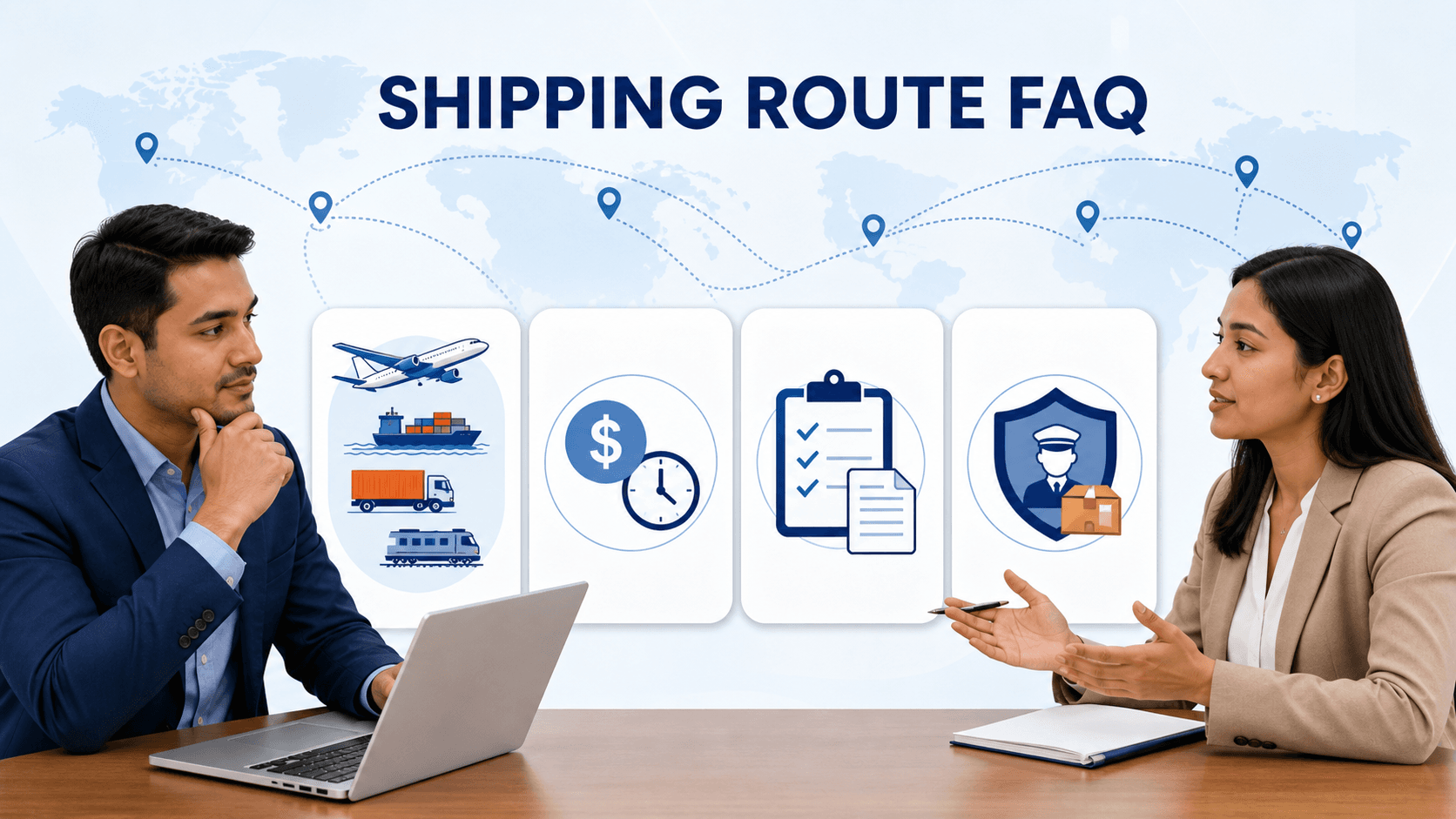
Choose the route around the actual shipment
Sea Sky can compare route, landed cost, customs readiness and final delivery before your cargo moves.
Related posts
1970-01-01
Sea + Air Freight: How SeaSky Helps Businesses Ship Smarter
2026-10-26
Cargo for Tihar: How to Import Festival Stock to Nepal on Time
2026-10-15
Last-Mile Delivery in Nepal: How Businesses Can Reduce Delays and Delivery Costs
2026-10-13