1. What Last-Mile Logistics Means for Nepal Businesses
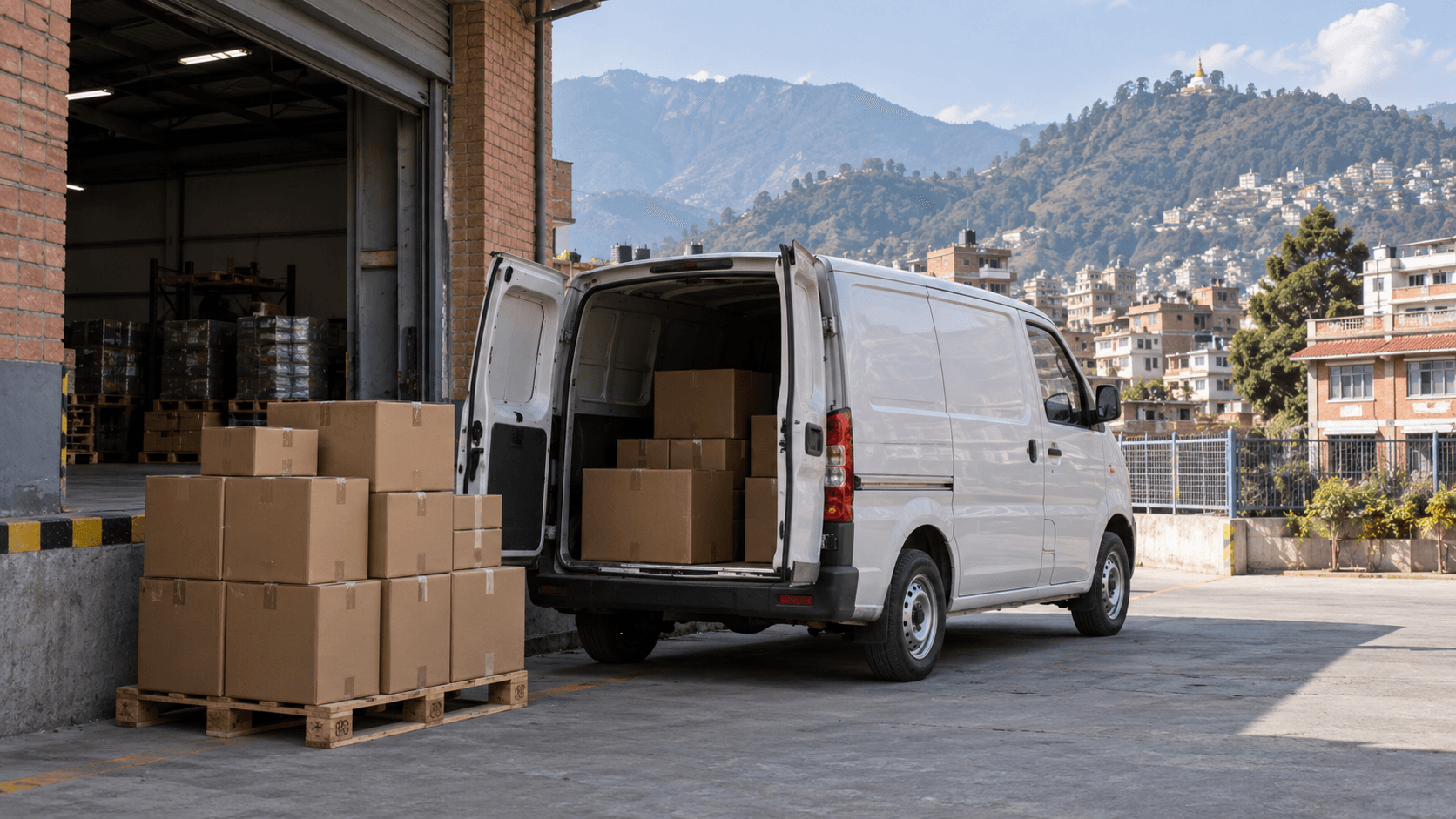
Last-mile logistics is the final delivery stage between a distribution point and the consignee’s receiving location. In Nepal, that destination may be a shop in Kathmandu, a factory warehouse, a hotel, a regional distributor or a project site reached by a difficult access road. The distance can be much longer than one mile.
For a business, delivery is complete when the agreed goods have reached the agreed handover point, their condition and quantity have been recorded, and receipt has been confirmed. A vehicle arriving near the address is only part of that job.
- Warehouse-to-door delivery of stock, spare parts and business supplies
- Business-to-business distribution between warehouses, factories and retail outlets
- The final delivery leg of an international import after the necessary release procedures
- Parcel delivery to consumers, using a service suited to the item and location
Port-to-door is a wider service. An Indian port-to-Nepal movement includes transit, border formalities and inland transport as well as final delivery. Birgunj ICD is an inland container depot, and Tribhuvan International Airport is an airport cargo gateway; neither is a Nepal seaport.
Last-mile cost depends on the route, cargo and receiving conditions. A global percentage of delivery cost should not be used as a Nepal pricing rule. This guide focuses on the operational choices a business can control.
2. Kathmandu Delivery Challenges and Practical Solutions
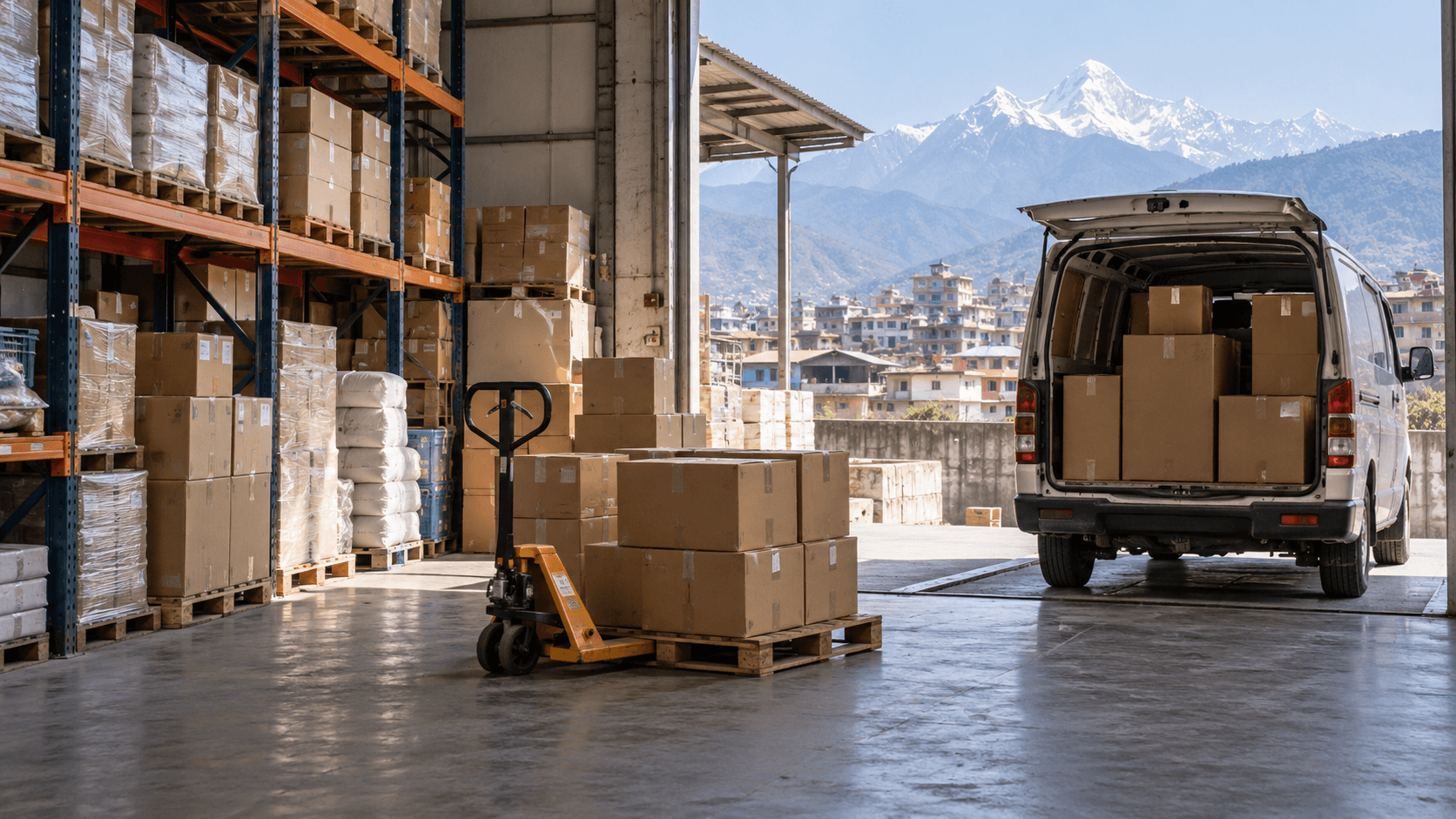
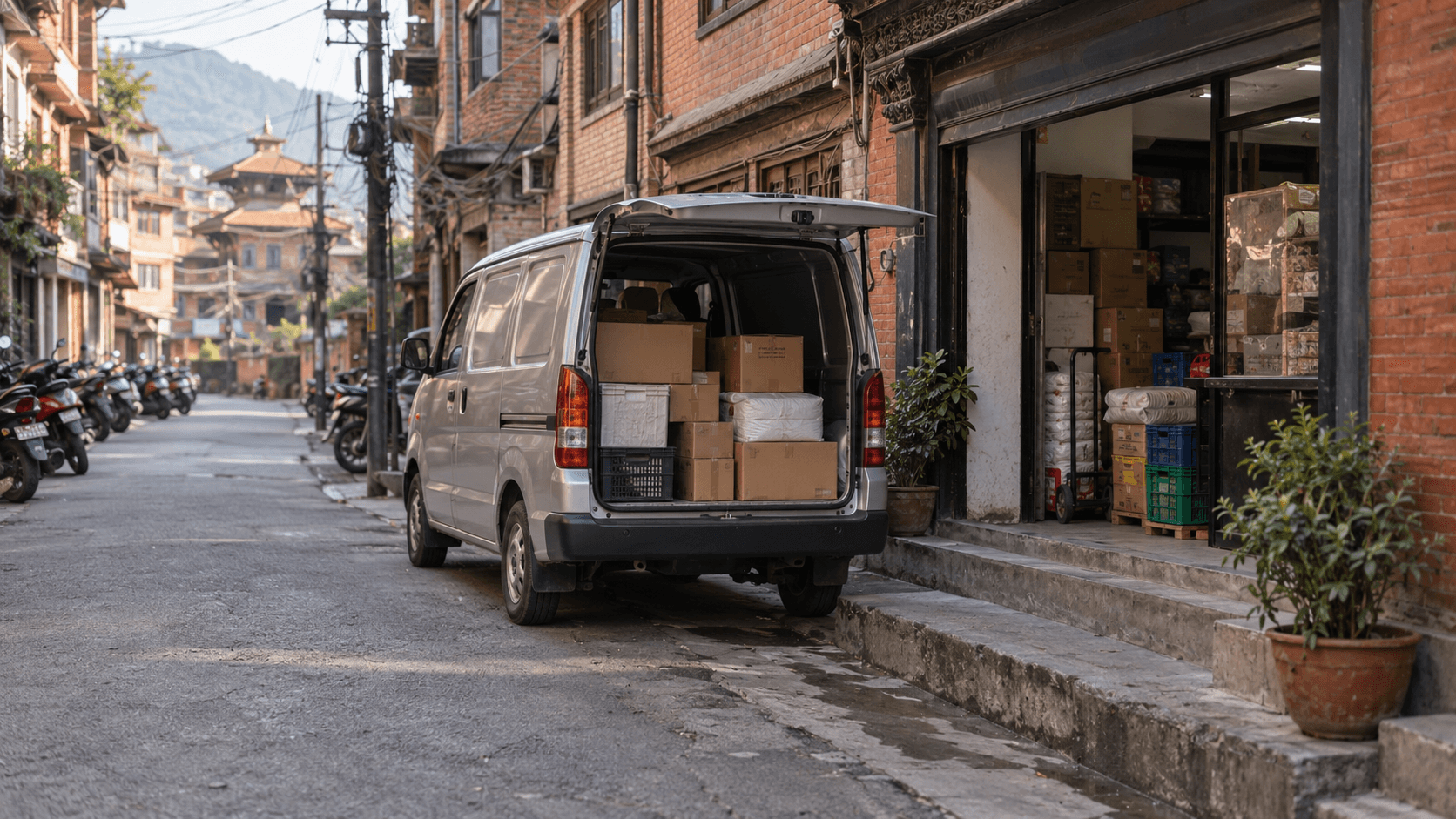
A short drive across Kathmandu Valley can involve congestion, narrow approach streets, limited stopping space and a receiving team that works only within certain hours. A large truck may reach the neighborhood but be unable to enter the final lane, turn at the gate or unload without blocking access. Plan the final approach before assigning the vehicle. Ask the consignee for the delivery entrance, a location pin, gate dimensions where relevant, stopping arrangements and the name of the person who can authorize receipt. A shopfront address may differ from its loading entrance. Avoid promising same-day or next-day delivery across the whole valley. Availability depends on the booking cutoff, pickup readiness, destination, vehicle, route and service terms. A confirmed delivery appointment is more useful than a general promise of fast delivery. Transfers into smaller vehicles add handling, time and cost. Include them in the quotation and packaging plan, especially for fragile goods, electronics and equipment that must remain upright.
| Challenge | Practical delivery plan |
|---|---|
| Congestion and variable journey time | Group nearby stops and agree a realistic receiving window |
| Narrow lanes or tight turns | Check access and arrange a suitable smaller vehicle or planned transfer point |
| Limited unloading space | Reserve a receiving bay and confirm who provides handling equipment |
| Commercial vehicle restrictions | Check the current rules for the route, vehicle and delivery time |
| Recipient unavailable | Confirm the appointment and an authorized backup contact |
| Multiple stops | Sequence deliveries around access, opening hours and cargo compatibility |
3. Kathmandu Valley vs. Remote-Area Delivery
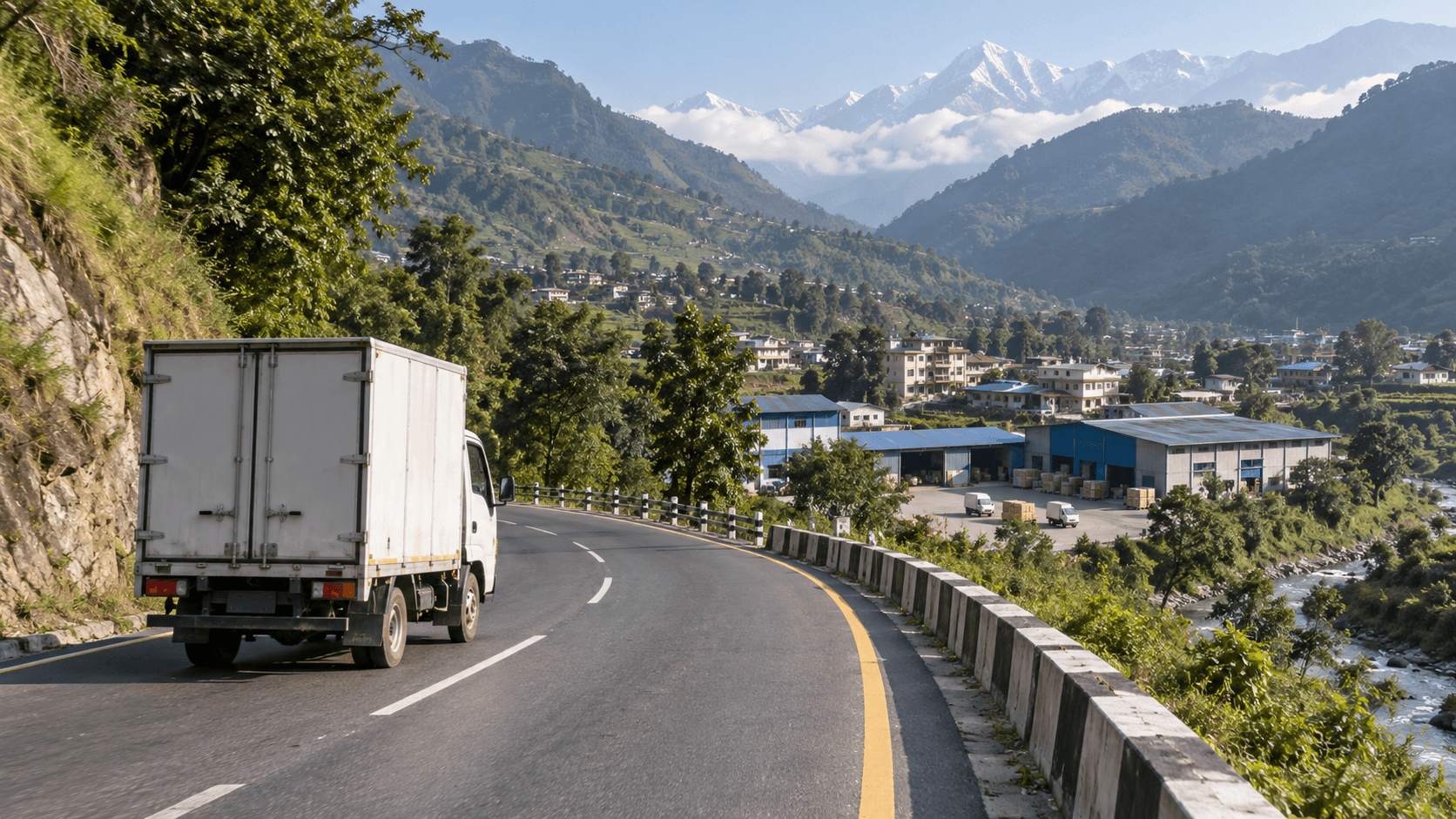
Valley distribution and remote-area delivery need different assumptions. Urban movements often depend on stop density and access; regional and mountain deliveries depend more heavily on road continuity, vehicle suitability, consolidation schedules and the distance beyond the main transport corridor. A district name is not enough to confirm coverage. Establish whether the quote ends at the consignee’s premises, a town depot or the nearest vehicle-accessible point. If the destination lies beyond road access, any onward movement requires a separate assessment and explicit agreement. Before dispatch, check the Department of Roads route-status dashboard and official road notices, then confirm local access with the operator and consignee. For weather-sensitive movements, review the DHM weather and flood bulletins. Check the timestamp and coverage of each update; a main highway report may not describe the final access road. Consolidating remote deliveries can spread transport cost across more cargo, but may mean waiting for the next scheduled departure. Agree that tradeoff before making a customer delivery commitment.
| Planning factor | Kathmandu Valley | Remote or mountain destination |
|---|---|---|
| Receiving point | Shop, warehouse or business gate | Road-accessible site, local depot or agreed transfer point |
| Vehicle selection | Size and turning space may limit access | Road surface, gradient, bridges and route restrictions matter |
| Scheduling | Pickup cutoff and recipient time window | Confirmed service frequency and current route conditions |
| Extra handling | Transfer to a smaller vehicle where needed | Additional transfer or a specialist arrangement where needed |
| Delivery estimate | Based on the booked service and address | Based on the exact site and complete access route |
4. Address, Access and Unloading Checks Before Booking
Good delivery instructions combine a formal address with practical access details. Nepal has postal codes; use the applicable code from Nepal Post and confirm the receiving location directly. A landmark or map pin is useful, but should supplement the address rather than replace the business and contact information.
- Business name, province, district, municipality or rural municipality, ward and locality
- Street or tole, building identifier where available, and applicable postal code
- Map pin for the vehicle entrance and a useful nearby landmark
- Recipient name, phone number, receiving hours and backup contact
- Gate width and height, turning space, road surface and vehicle restrictions
- Delivery floor, lift access, stairs and distance from vehicle to handover point
- Unloading method, equipment capacity and the party providing labor
Record the handover scope in plain language: at the vehicle, unloading bay, ground-floor store or another agreed place. Door delivery should not be assumed to include carrying goods upstairs, installation, assembly or crane work.
For machinery and heavy cargo, arrange a site assessment when the access or lifting plan is uncertain. The vehicle, lifting equipment, surface and safe operating area must suit the packed dimensions and weight. See the project cargo guide for more involved site movements.
Confirm these details before the truck leaves the warehouse. Discovering an access problem at the gate can create waiting time, a second vehicle requirement and a missed receiving appointment.
5. B2B Courier vs. Freight Forwarding for Final Delivery
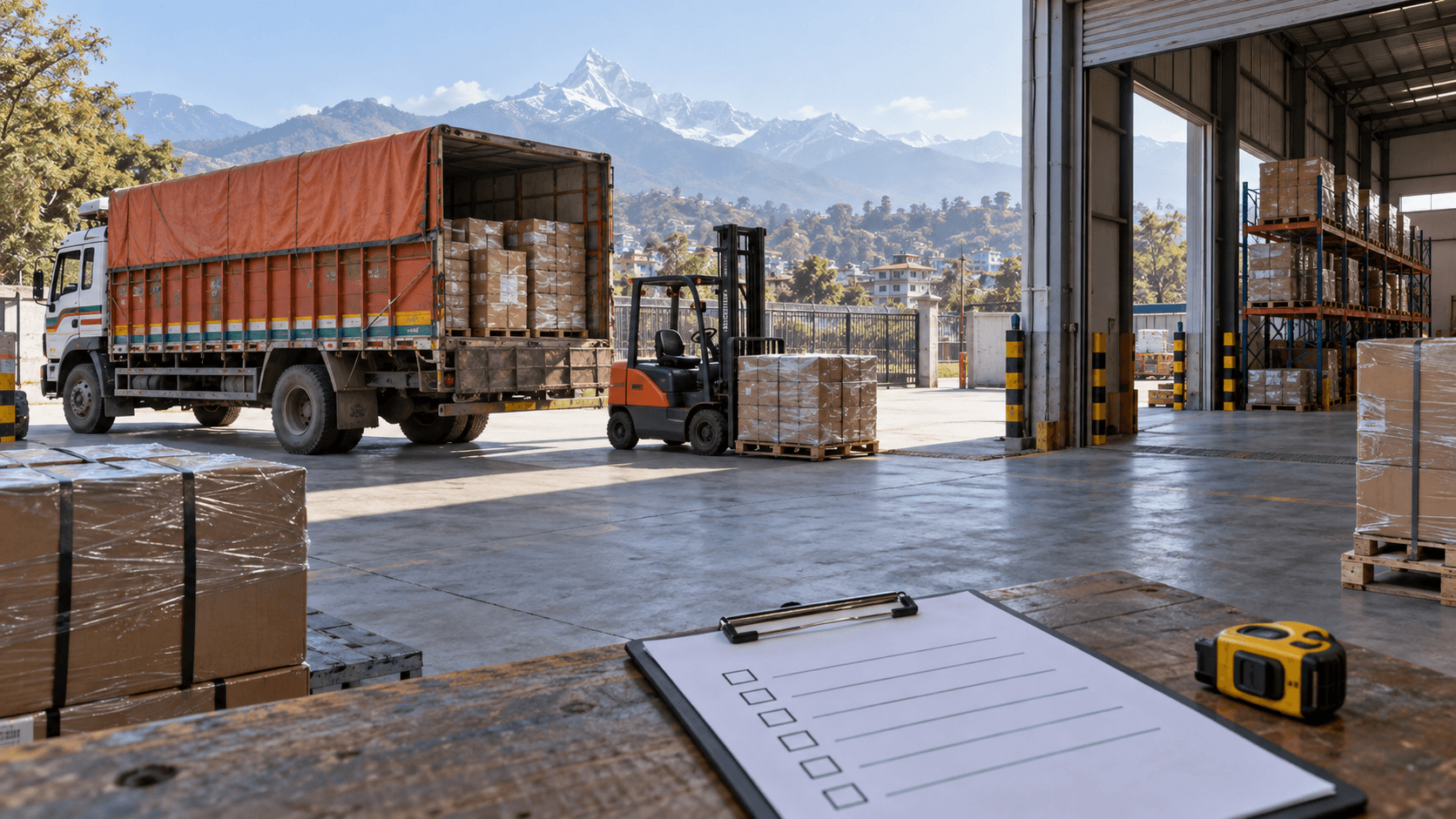
Courier networks are often suitable for accepted parcels, documents, samples and small spare parts. Freight coordination is useful when the delivery involves pallets, containers, machinery, special vehicles, customs handoffs or a complex unloading plan. There is no universal 50 kg or 100 kg cutoff. Packed dimensions, piece weight, restrictions, value and destination coverage matter as much as total shipment weight. A small battery or chemical sample may need special acceptance, while a larger ordinary carton may fit a carrier’s parcel service. Ask what the delivery charge includes: pickup, loading, handling, taxes on the service, unloading, waiting allowance, additional attempts and proof of delivery. The lowest quoted amount is meaningful only when the scope is comparable. The B2B cross-border logistics guide explains how to connect the international movement with the receiving plan.
| Delivery requirement | Options to compare |
|---|---|
| Urgent documents within a served area | Document courier with a confirmed service window |
| Small commercial samples or spare parts | Business parcel or courier service with suitable acceptance terms |
| Retail stock on pallets | Shared or dedicated truck delivery |
| Container from an ICD to a warehouse | Freight coordination, suitable truck and unloading plan |
| Machinery for a project site | Specialist vehicle, route and site planning |
| Final leg after an international shipment | Courier or freight arrangement matched to cargo, release status and destination |

6. How Warehouse-to-Door Delivery Works
A repeatable dispatch process reduces wrong items, missed appointments and disputes. Each order should connect the purchase or delivery reference to the physical packages and the person authorized to receive them.
- Confirm the order, delivery address, cargo readiness and agreed service scope.
- Pick the correct goods and check item quantities against the order.
- Pack for the route, label each package and record dimensions, weight and any handling needs.
- Assign a vehicle and confirm the recipient appointment, route and unloading plan.
- Count and inspect the packages at loading, record discrepancies and dispatch.
- Provide the agreed status updates and notify the consignee of material delays.
- Complete the handover, record proof of delivery and close or escalate any exception.
Keep packages grouped by destination and load them in a sequence that supports safe unloading. Mixed cargo must be compatible; food, chemicals, fragile goods and high-value items may need different handling or separation.
Use weather-resistant packaging appropriate to the cargo and season. A covered vehicle helps, but packaging also needs to protect against handling, vibration and the agreed transfer stages. Temperature-controlled cargo requires a confirmed temperature range and suitable equipment.
If an order is not ready at the booked pickup time, tell the operator promptly. An empty trip or delayed loading can affect other deliveries and may incur charges under the service terms.
7. Connecting Customs Release with Final Delivery
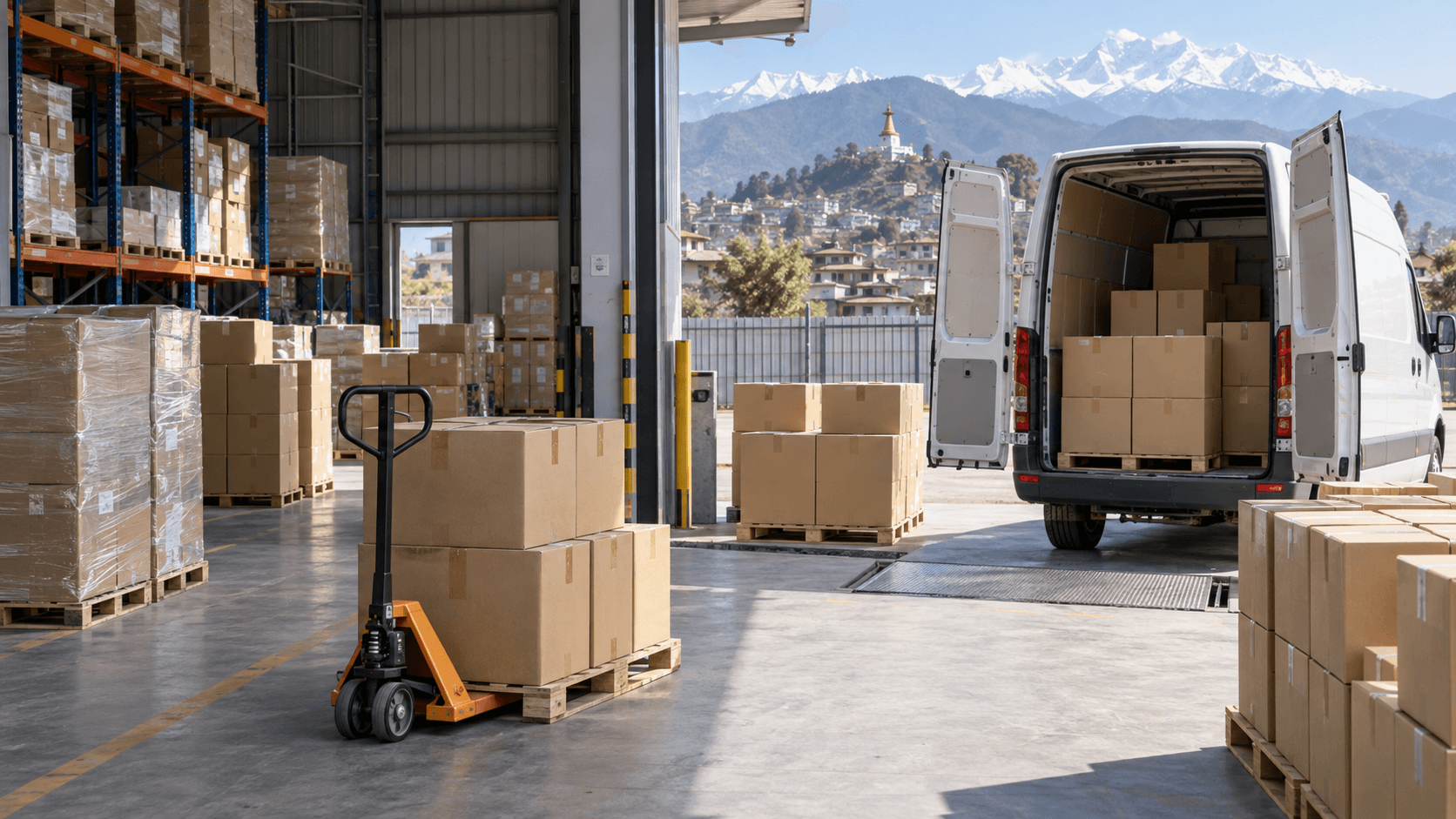
For imported cargo, final-delivery planning can begin before arrival, but physical dispatch must follow the required customs and terminal release conditions. Do not book an unconditional warehouse appointment from the aircraft or vessel arrival date alone.
Cargo arriving at TIA, Birgunj ICD or a border customs point may need document review, assessment, payment, examination, terminal processing and transport coordination. Track release readiness separately from the estimated arrival time.
- Confirm the customs representative, importer contact and document status
- Identify outstanding permits, payments and carrier or terminal release requirements
- Check cargo count, condition and seal information where applicable
- Coordinate the collection vehicle with the release window and receiving appointment
- Assign responsibility for container unloading, return location and equipment deadlines
See the freight-forwarding documents guide and customs clearance and forwarding roles when preparing the handoff. Product-specific requirements should be checked before the cargo reaches the delivery stage.
For ocean imports, the port-to-door cargo guide covers the wider Indian-port-to-Nepal movement. Keep port, transit and customs charges distinct from the final local-delivery quotation.
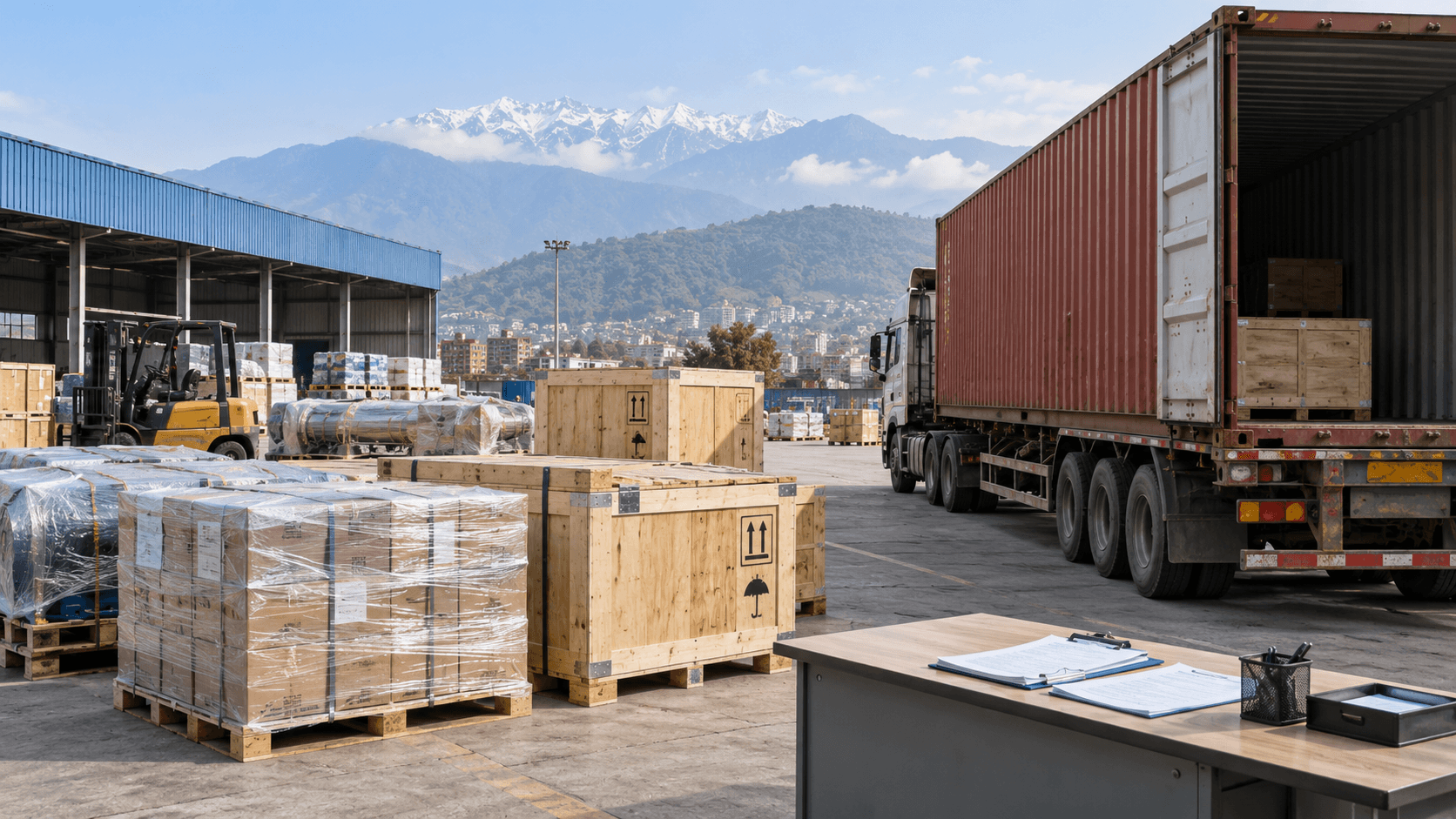
Plan the Final Delivery Before Cargo Arrives
Share the route, packed cargo details, delivery entrance and unloading needs. Sea Sky Cargo can review the vehicle and receiving plan.
8. Last-Mile Delivery Costs and Delay Charges
A last-mile quote should be based on the exact pickup and destination, cargo dimensions and weight, vehicle, delivery window and handover scope. Distance matters, but it does not capture the cost of waiting, extra handling or difficult access. Worked Delivery-Cost Example This is an illustrative local business delivery, not a current Sea Sky tariff. Assume all quoted figures are in NPR and before any applicable service tax. The vehicle and route are accepted, ordinary loading is included, and the consignee pays an agreed unloading charge.
| Cost item | What to confirm |
|---|---|
| Vehicle or base delivery charge | Route, stops, load size and dedicated or shared service |
| Fuel and other surcharges | Whether included, fixed or subject to an agreed adjustment |
| Remote-area or access allowance | Exact area covered and any transfer arrangements |
| Loading and unloading | Labor, forklift, crane, floor delivery and responsibility |
| Waiting time | Free allowance, start point, billing unit and rate |
| Additional attempt or return | Trigger, approval and charge for another movement |
| Special handling or protection | Fragile, temperature-sensitive, restricted or oversized cargo |
| Tax and insurance | Applicable service tax and any separately arranged cargo cover |
9. Tracking and Technology for Kathmandu Routes
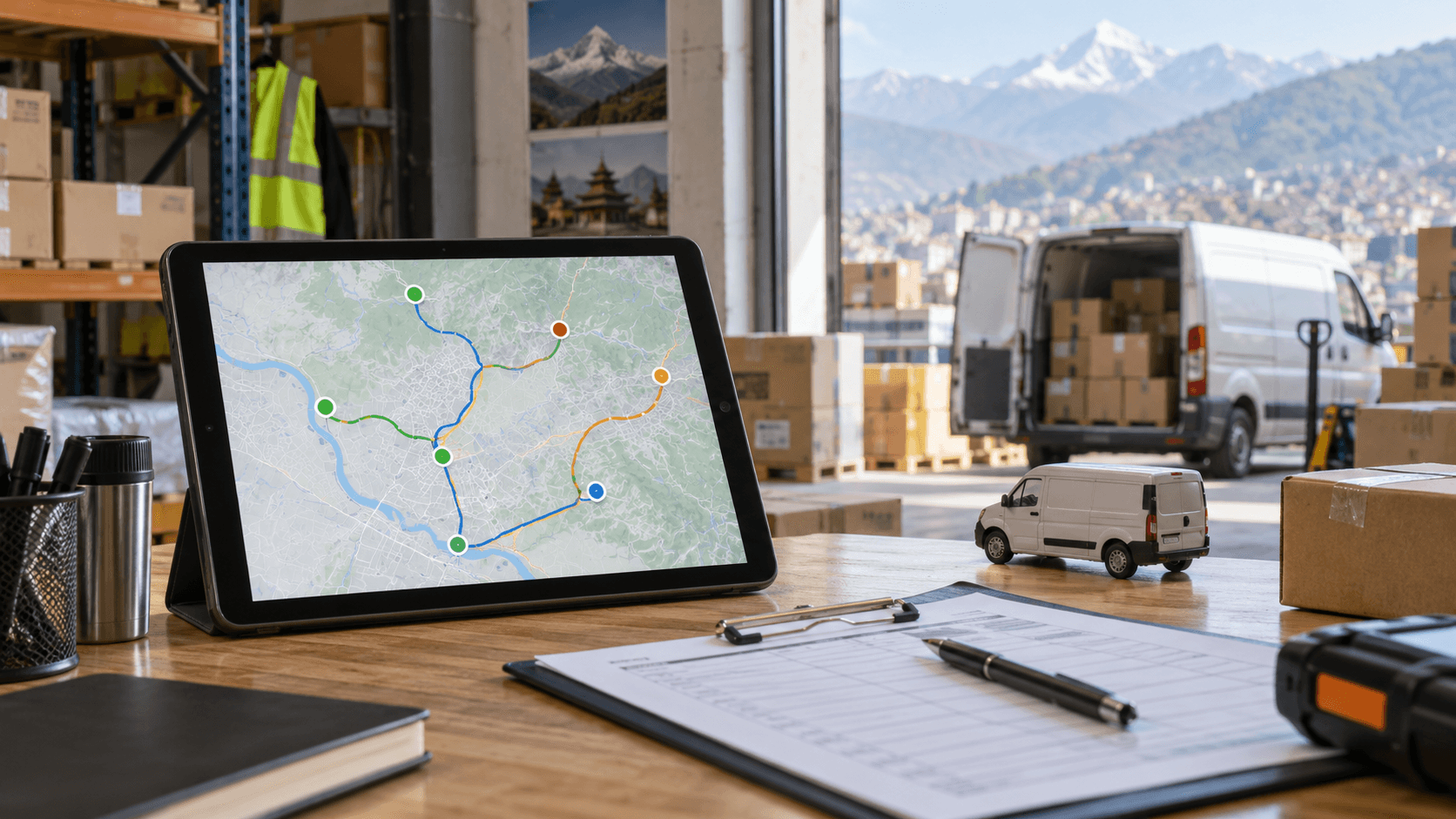
Tracking should help the receiving business make a decision: prepare an unloading team, move an appointment or investigate a delay. A useful update identifies the shipment, current milestone, last update time, exception and next action.
Milestone tracking and continuous GPS tracking are different services. A dispatched status may only mean cargo has left the hub; it does not necessarily provide the vehicle’s live location. Confirm the available visibility, update frequency and communication channel before booking.
- Maintain a checked address record with the delivery entrance and receiving instructions
- Use scan or count checkpoints at picking, loading and handover where the service supports them
- Plan routes around vehicle access, cargo compatibility and customer time windows
- Send revised arrival estimates when material delays occur
- Keep an offline contact and reference method for areas with weak connectivity
Route software can suggest a sequence, but the driver and dispatcher still need current road and access information. The shortest mapped route may not be suitable for the vehicle or its cargo.
For business reporting, agree a few useful measures: on-time delivery against the agreed window, successful first attempt, damage or shortage incidents, and time taken to return POD. Compare equivalent routes and service scopes rather than treating every delay as the same problem.
10. Proof of Delivery and Receiving Exceptions
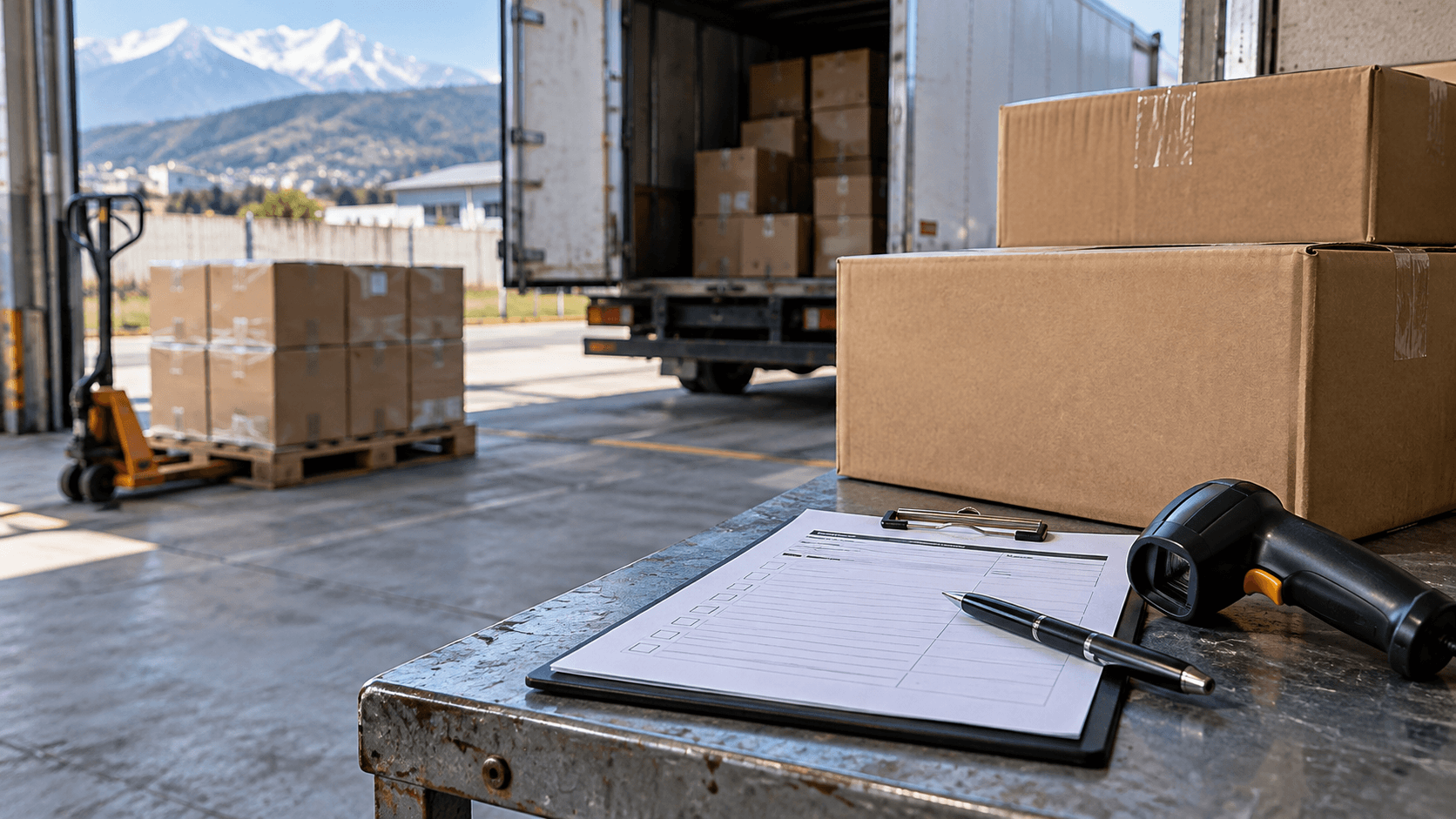
Proof of delivery, or POD, records the agreed handover. Its format can be paper or digital, but it should connect the correct shipment and package count to the receiving location and authorized recipient.
- Delivery or purchase-order reference and delivery date/time
- Business location and the authorized recipient’s name or confirmation
- Number of packages handed over and any discrepancy
- Visible condition of packaging and recorded damage or shortage
- Signature, stamp or agreed electronic confirmation
- Photographs or location evidence where appropriate and agreed
A GPS point shows a device’s location, not by itself that the correct goods were received. A signature on its own may also be insufficient if the reference, quantity or exceptions are missing. Agree the evidence required for your business process.
If packaging is damaged or items are short, record the specific issue at handover and notify the shipper or handling team promptly. Preserve packaging and follow the applicable carrier and insurer procedures. Signing for receipt should not be treated as a substitute for the agreed inspection process.
Delivering to security staff, a neighboring premises or another person requires the consignee’s authorization and a clear record. Capture only the personal information and photographs needed for the delivery record, and share them through the agreed business channel.
11. Returns and Reverse Logistics in Nepal
Reverse logistics moves goods back from a delivery point for inspection, correction, repair, replacement or another authorized outcome. A failed attempt, a wrong item and a damaged shipment should be recorded separately because the responsibility and next step may differ.
Before dispatch, agree the rules for recipient unavailability, refusal, an incorrect address, partial receipt and visible damage. State who authorizes redelivery, how long goods may be held, and who pays the return or extra attempt.
- Create a return or exception reference linked to the original order.
- Confirm the reason, package condition and authorized collection point.
- Arrange suitable packaging, vehicle and any special handling.
- Count and inspect returned goods in a designated receiving area.
- Separate stock awaiting inspection from goods approved for sale.
- Authorize restocking, repair, replacement or disposal through the responsible business team.
A domestic return should not automatically become a return to the overseas supplier. Re-exporting imported goods is a separate customs and transport movement that needs its own document and commercial review.
Track recurring causes such as address errors, wrong picks, poor packaging and missed appointments. Correcting those causes can reduce repeat transport and handling. Confirm whether returns management is part of the selected provider’s service; it is not included merely because outbound delivery was booked.
12. Warehousing and Fulfillment Across Nepal Hubs
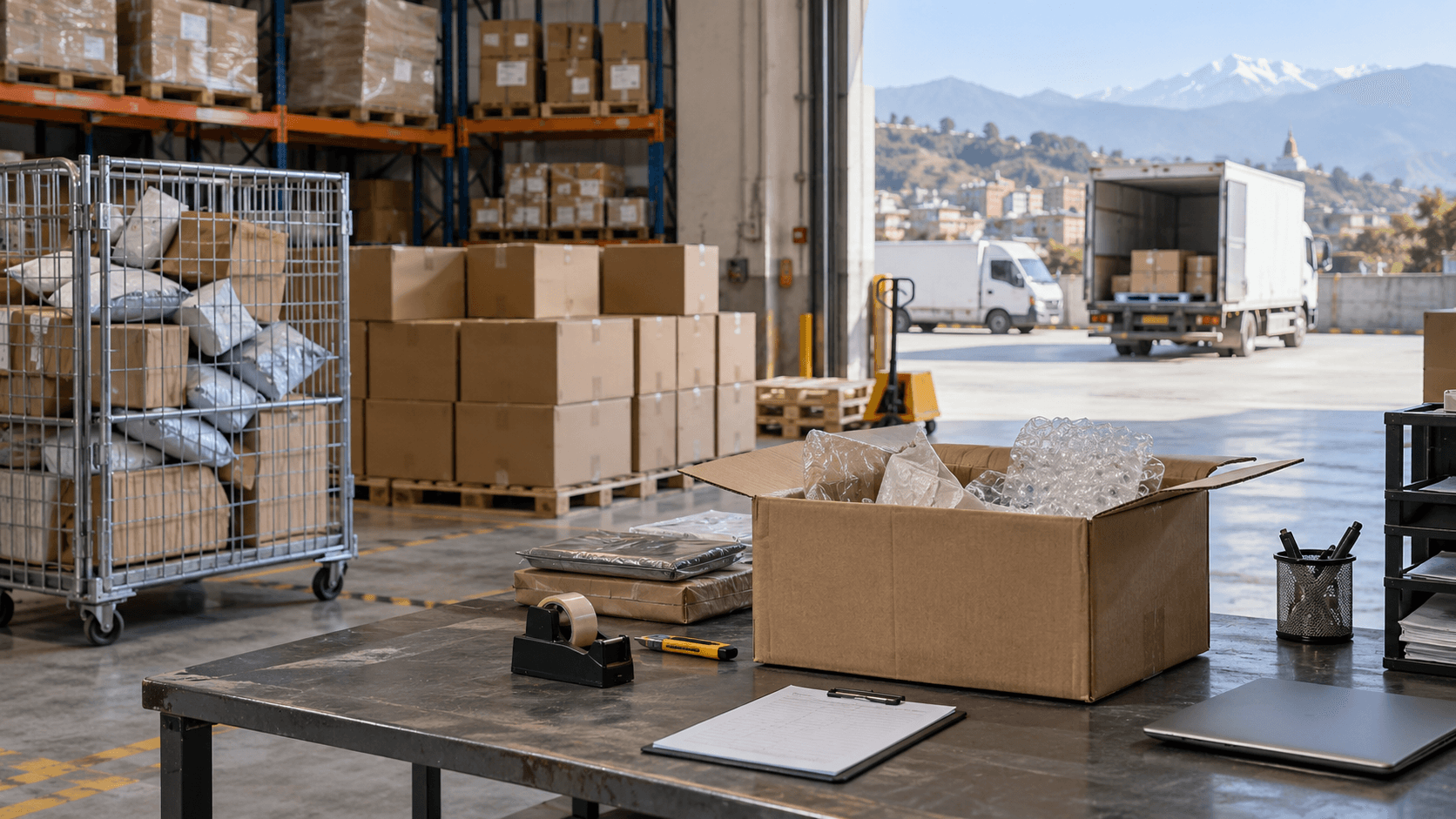
The right distribution setup depends on where orders originate, where customers are concentrated, how often deliveries run and what the stock requires. More warehouses can shorten some delivery legs, but also add rent, handling, stock control and replenishment work. Businesses may evaluate Kathmandu Valley for valley demand, Birgunj for a relevant import corridor, and regional locations such as Biratnagar, Bhairahawa, Pokhara, Nepalgunj or other demand centers. These are planning examples, not a claim that a particular provider operates a facility in every location. Check security, vehicle access, unloading space, fire precautions, handling equipment and any temperature-control needs. Confirm backup arrangements for equipment or power failures where the cargo depends on them. Keep the fulfillment process simple: accurate stock locations, an order cutoff, a picking check, appropriate packing, dispatch records and an exception area. A reliable warehouse handoff supports the delivery team before the vehicle leaves.
| Model | When to assess it | Tradeoff to examine |
|---|---|---|
| One central warehouse | Stock is concentrated and orders can follow planned routes | Longer delivery distance for some customers |
| Regional stock location | Repeat demand justifies local inventory | Extra inventory and facility costs |
| Cross-dock or transfer point | Cargo can be sorted into onward vehicles with limited storage | Tighter timing and another handling stage |
| Scheduled route consolidation | Several compatible deliveries share a corridor | Customers may wait for the next route departure |

13. How Sea Sky Cargo Helps with Final Delivery
Sea Sky Cargo can help connect freight arrival, customs coordination and onward business cargo movement with a practical final-delivery plan. Its road freight services and wider freight operations provide the context for warehouse, factory and site delivery enquiries.
The shipment review should establish the exact route, vehicle, cargo handling and receiving conditions. Confirm availability for the requested address and date, including any local partner or transfer arrangement.
- Coordinate customs and terminal release with transport readiness where required
- Plan warehouse pickup and the suitable vehicle for the cargo
- Review delivery access, receiving windows and unloading needs
- Coordinate business, factory, warehouse or project-site handoffs within the agreed scope
- Agree milestone updates, recipient contacts and delivery evidence
- Identify extra handling, waiting, remote-access and return requirements before booking
Continuous live GPS, parcel-network coverage, floor delivery, cold-chain handling and returns management should be confirmed individually. The service quotation should state the capabilities actually arranged for the shipment.
What to Send for a Delivery Quote
Share the pickup and final delivery addresses, location pins, goods description, package count, packed dimensions, weight, value, ready date and preferred window. Add contact details, customs or terminal release status where relevant, unloading requirements and photographs of difficult access points.
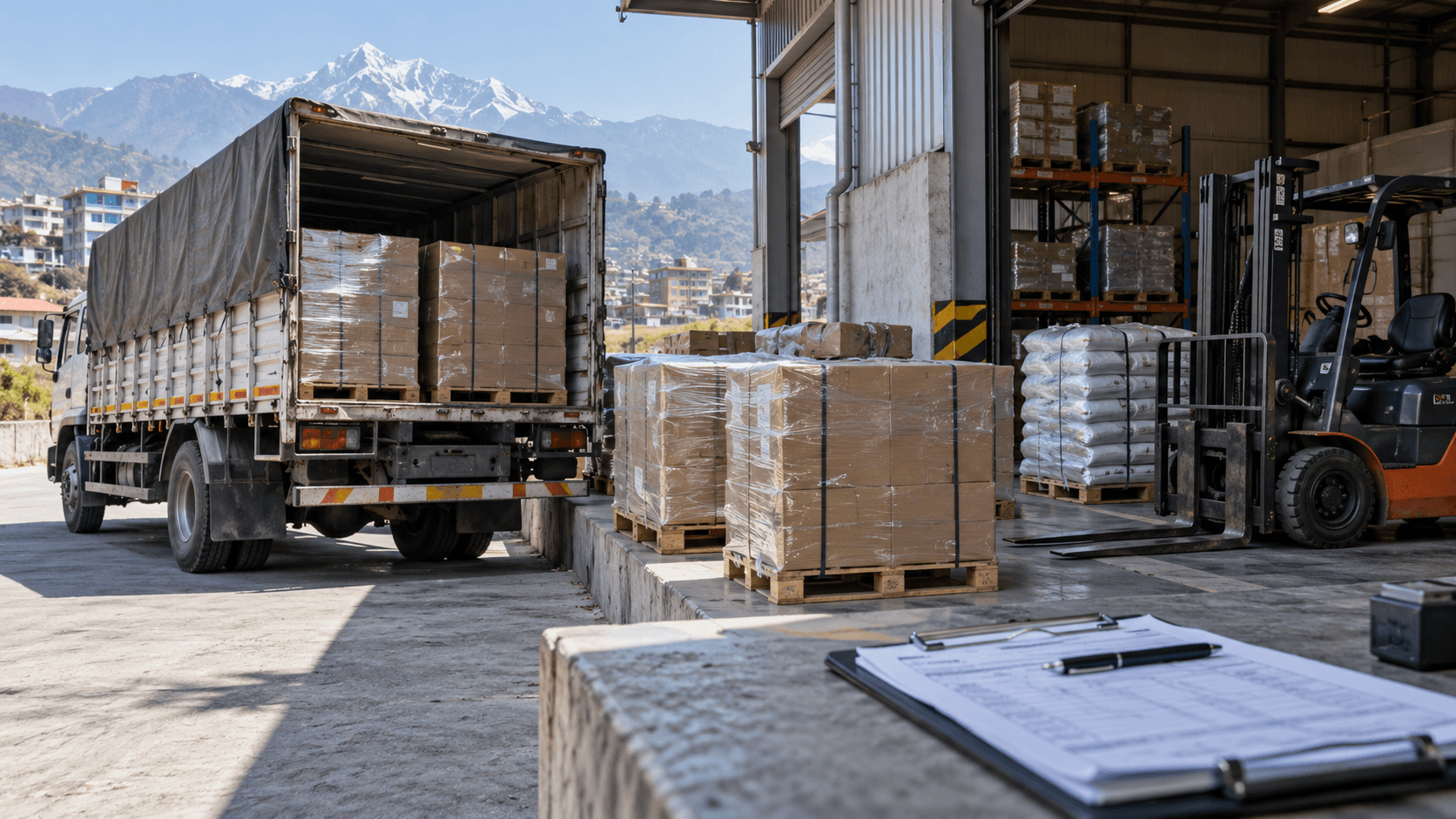
Need reliable last-mile delivery in Nepal? Sea Sky Cargo can coordinate customs clearance, warehouse pickup, business delivery and final-mile cargo movement for your shipments. Request a delivery plan. For the complete international movement, see the freight forwarding guide.
14. Frequently Asked Questions
What is last-mile logistics in Nepal? It is the final delivery stage from a warehouse or distribution point to the agreed receiving location. It can serve shops, factories, offices, project sites and consumers, and may cover a substantial distance.
Is same-day delivery available throughout Kathmandu Valley? It depends on the provider, pickup cutoff, cargo, address, route and receiving window. Ask for confirmation for the specific shipment before promising same-day delivery.
How much does last-mile delivery in Nepal cost? Cost depends on distance, cargo size and weight, vehicle, access, unloading, waiting, remote-area arrangements and the number of attempts. Request an itemized quote for the exact route and handover scope.
Can a large truck deliver directly to my business? Only if the approach road, gate, turning space, restrictions and unloading setup suit the vehicle and cargo. A smaller vehicle or transfer arrangement may be needed.
What address details should I provide? Provide the business name, administrative address, locality, applicable postal code, delivery-entrance map pin, contact number, receiving hours and access instructions.
Does door delivery include unloading or carrying goods upstairs? That depends on the service agreement. Confirm the precise handover point, unloading responsibility, floor delivery and any crane or forklift requirement in advance.
What should proof of delivery contain? The shipment reference, date and time, receiving location, package count, authorized recipient confirmation and any damage or shortage notes. Photos or location records may supplement the agreed receipt process.
What happens if the recipient is unavailable? Follow the agreed exception process: contact the recipient, hold the cargo safely and obtain instructions for another attempt or return. Charges and holding time depend on the service terms.
Can Sea Sky Cargo help deliver imports from TIA or Birgunj ICD? Sea Sky can review customs-release and final-delivery coordination for the shipment. Share the cargo details, release status, destination and unloading needs so the team can confirm scope and availability.
Can imported goods be returned to the overseas supplier? That requires a separate international return or re-export plan, including document, customs and transport review. A domestic delivery return does not automatically include that service.

Need Reliable Last-Mile Delivery in Nepal?
Sea Sky Cargo can coordinate customs clearance, warehouse pickup, business delivery and final-mile cargo movement for your shipments.
Related posts
1970-01-01
Sea + Air Freight: How SeaSky Helps Businesses Ship Smarter
2026-10-12
B2B Logistics in Nepal: Cross-Border Delivery for Businesses

2026-10-12
France to Nepal Shipping Guide: Air Freight, Sea Freight, Customs and Documents

2026-10-08