1. The full journey: from vessel to Kathmandu warehouse
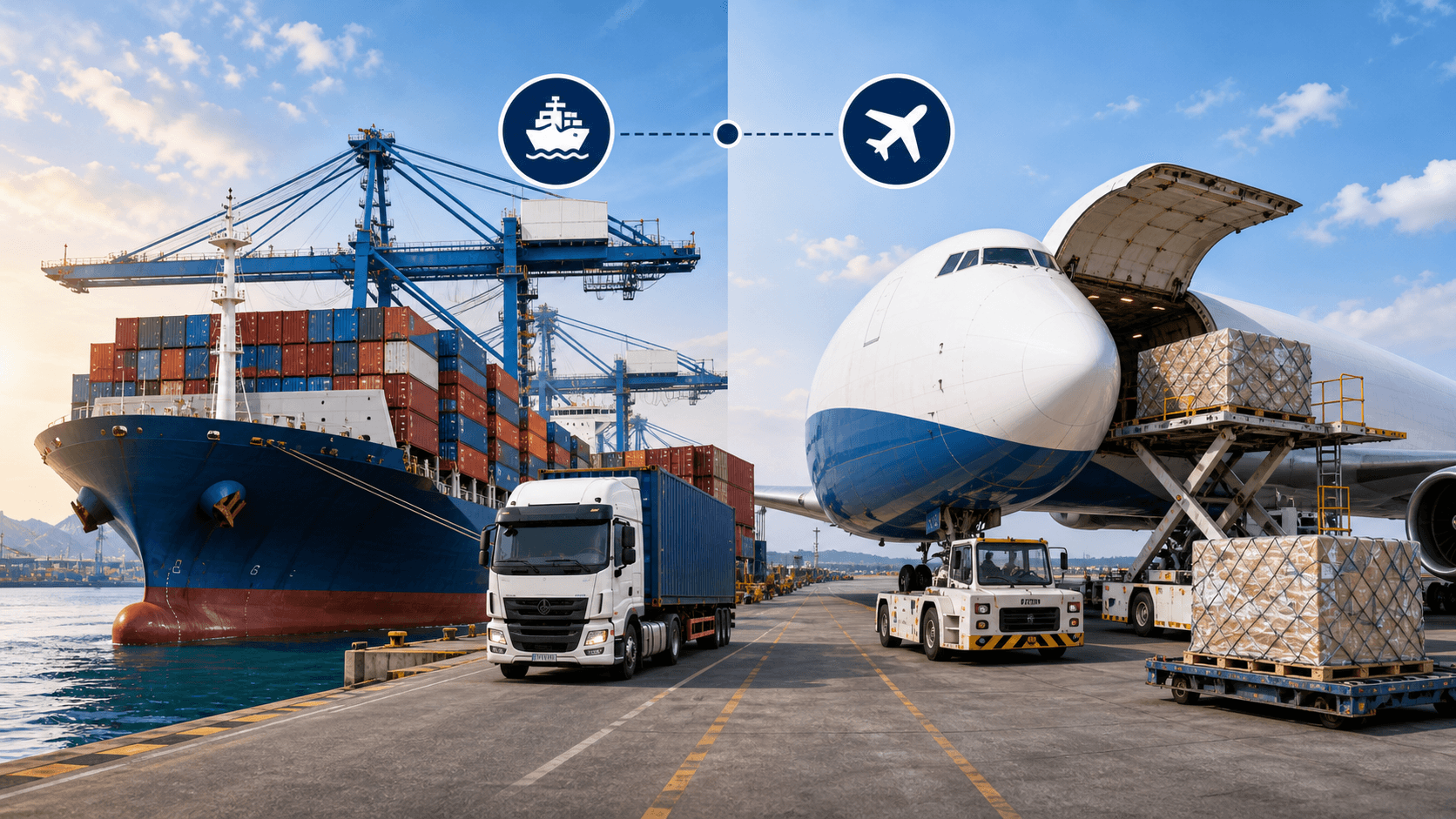
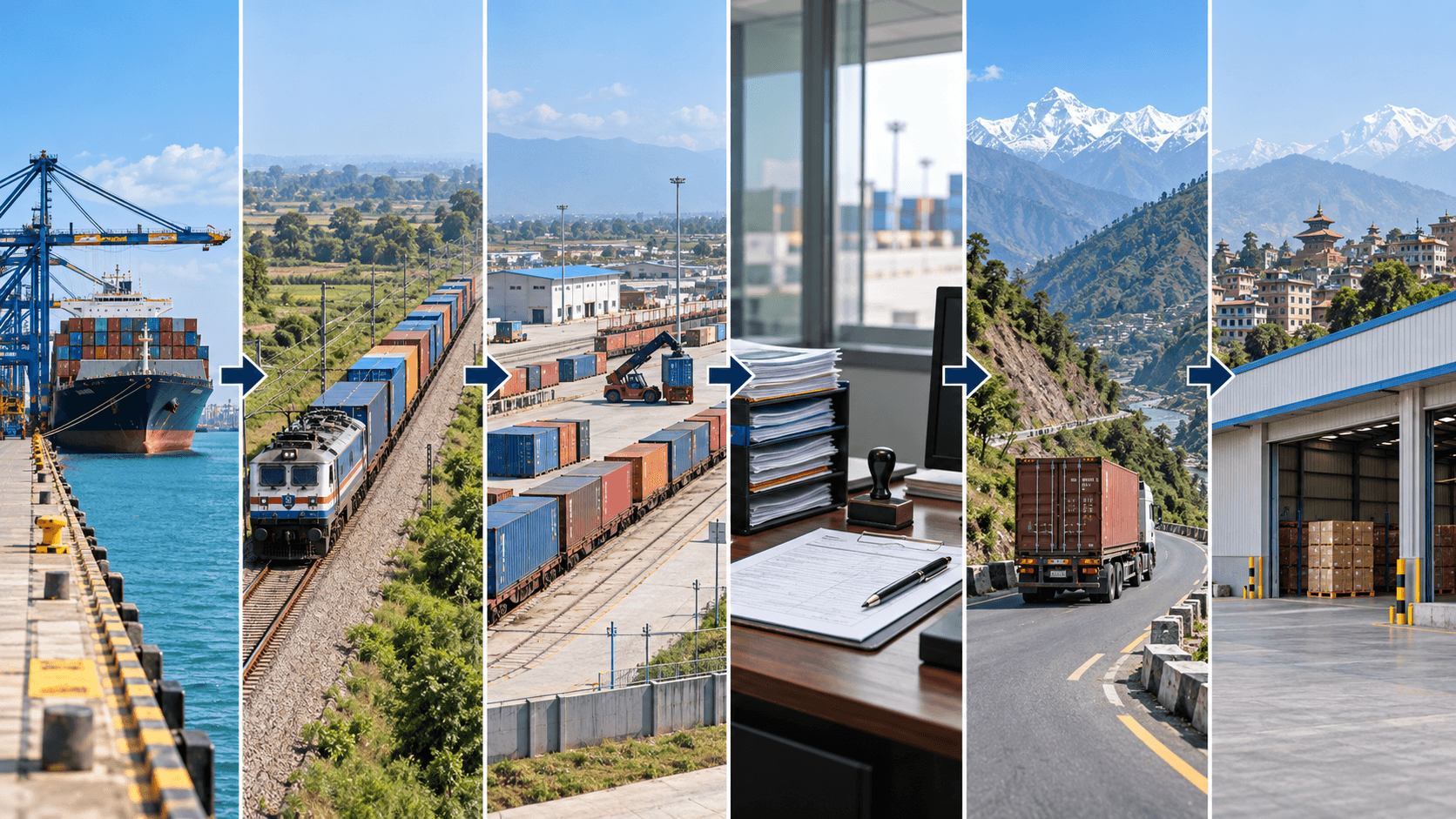
For many sea-linked imports into Nepal, Birgunj is a transfer point rather than the final destination. Cargo normally moves from an Indian seaport under transit procedures, reaches the railway-based Birgunj Inland Clearance Depot (ICD), clears Nepal Customs and then continues by road to the importer’s premises. The Nepal Intermodal Transport Development Board describes Birgunj ICD as a railway-based inland depot used for cargo moving between India or third countries and Nepal. That distinction matters: the vessel leg ends at the Indian seaport; Birgunj is an inland rail and road terminal. See the Board’s official ICD operating document. A delay at any handoff can affect the next one. A truck booked too early may wait while Customs finishes assessment; a truck booked too late may leave a released container in the yard. The best plan links the expected release window, vehicle availability and warehouse slot before gate-out. For a wider view of the port-to-door chain, see the port-to-door cargo service guide.
| Stage | What happens | Planning owner |
|---|---|---|
| Indian seaport | Container discharge, port handling and transit preparation | Shipping line, port agent and forwarder |
| Transit to Nepal | Rail or approved inland movement toward Birgunj | Carrier and transit partners |
| Birgunj ICD arrival | Terminal intake, yard positioning and document matching | ICD operator and local coordinator |
| Customs clearance | Declaration, assessment, payment, inspection if selected and release | Importer and licensed customs agent |
| Gate-out | Truck, release evidence and terminal formalities are matched | Trucker, forwarder and ICD operator |
| Kathmandu delivery | Road transit, warehouse appointment, unloading and empty return if applicable | Trucker, importer and warehouse |
2. What happens at Birgunj ICD?
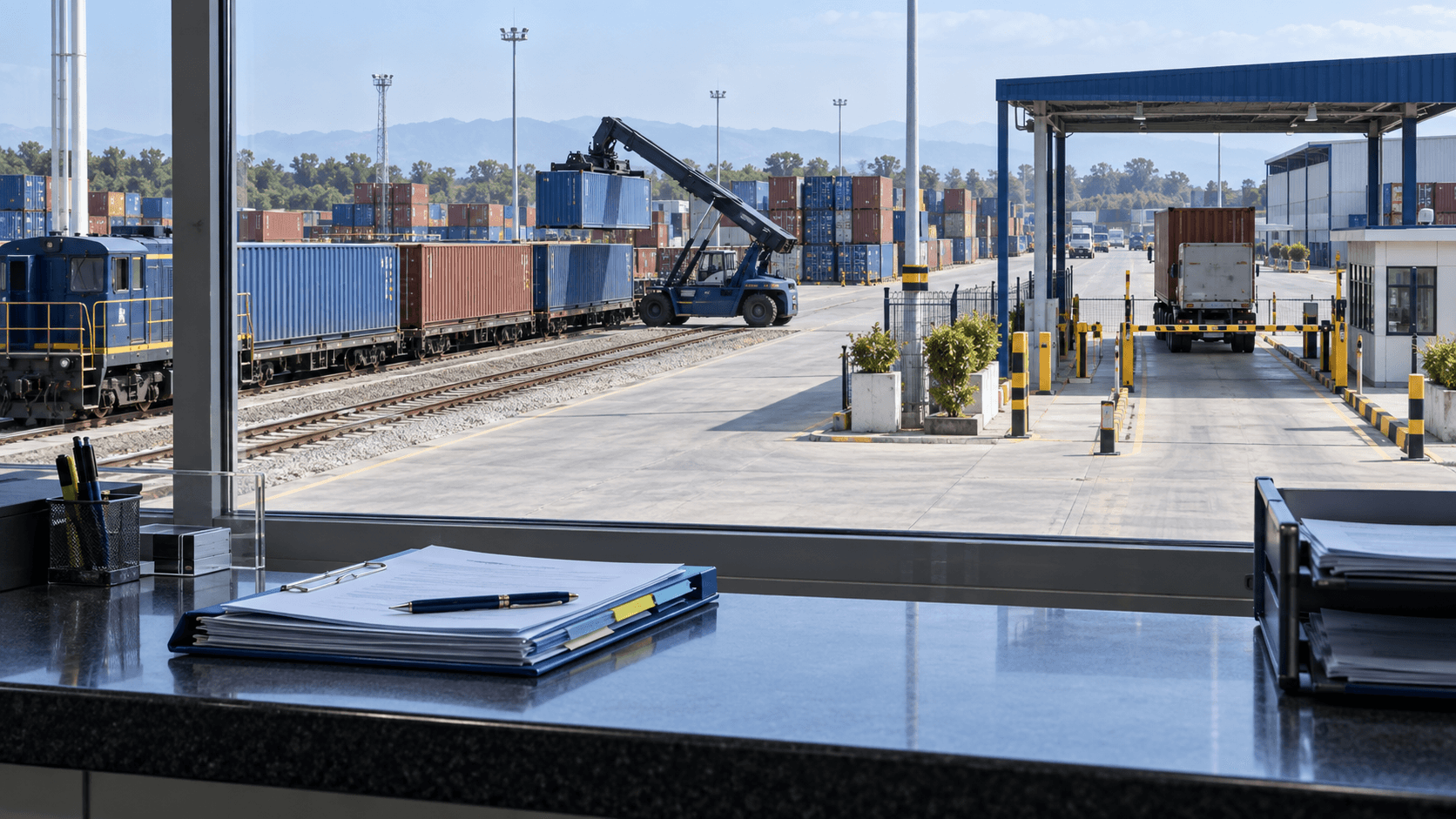
At Birgunj ICD, terminal handling and customs clearance happen in a connected sequence, but they are not the same task. The terminal controls container intake, yard location, lifting and gate procedures. Nepal Customs controls declaration review, classification, valuation, duty and VAT assessment, inspection selection and release. A typical import file may include the customs declaration, commercial invoice, packing list, bill of lading or other transport document, insurance evidence, company and tax registration details, permits or recommendations for regulated goods, and an agent appointment when a customs agent is used. The exact requirement depends on the commodity, origin, payment method and customs procedure. Birgunj Customs lists core documents for commercial imports in its official FAQ. Do not treat “customs released” and “truck departed” as the same timestamp. Gate processing, lifting, document handover and vehicle positioning can still take time after release. Nepal Customs reports electronic modules at Birgunj for declaration and clearance steps, including NECAS, selectivity, exit notes and e-payment; the Department of Customs system overview is the authoritative reference for current system coverage. If classification or permit readiness is uncertain, use the Nepal customs tariff guide and import permit guide as planning resources, then confirm the shipment-specific position with the customs agent and relevant authority.
| Milestone | Operational meaning | What the importer should confirm |
|---|---|---|
| Terminal intake | The container and manifest data are received into the ICD process | Container number and document references match |
| Declaration lodged | The customs file has been submitted for assessment | HS code, value, origin and permits are supported |
| Assessment and payment | Customs determines applicable duty and tax; payment is completed | Payment evidence and any query response are available |
| Inspection completed | Physical or documentary checks, if selected, are closed | Seal and repacking arrangements are clear |
| Customs release | Customs has released the goods | The release is visible to the parties arranging gate-out |
| Terminal gate-out | ICD and transport formalities are complete and the vehicle exits | Truck details, delivery instruction and empty-return plan are confirmed |
3. How Birgunj to Kathmandu trucking works
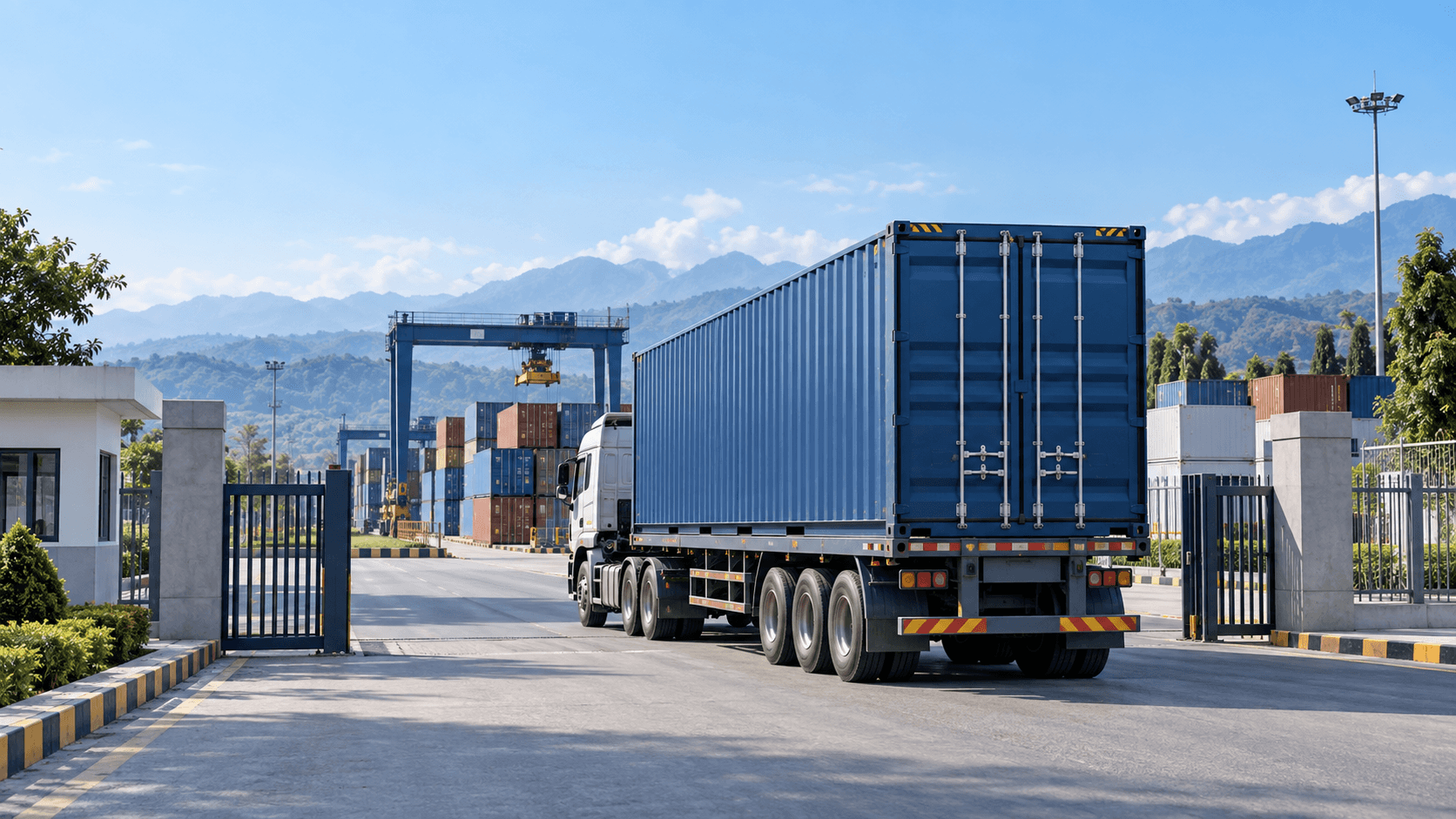
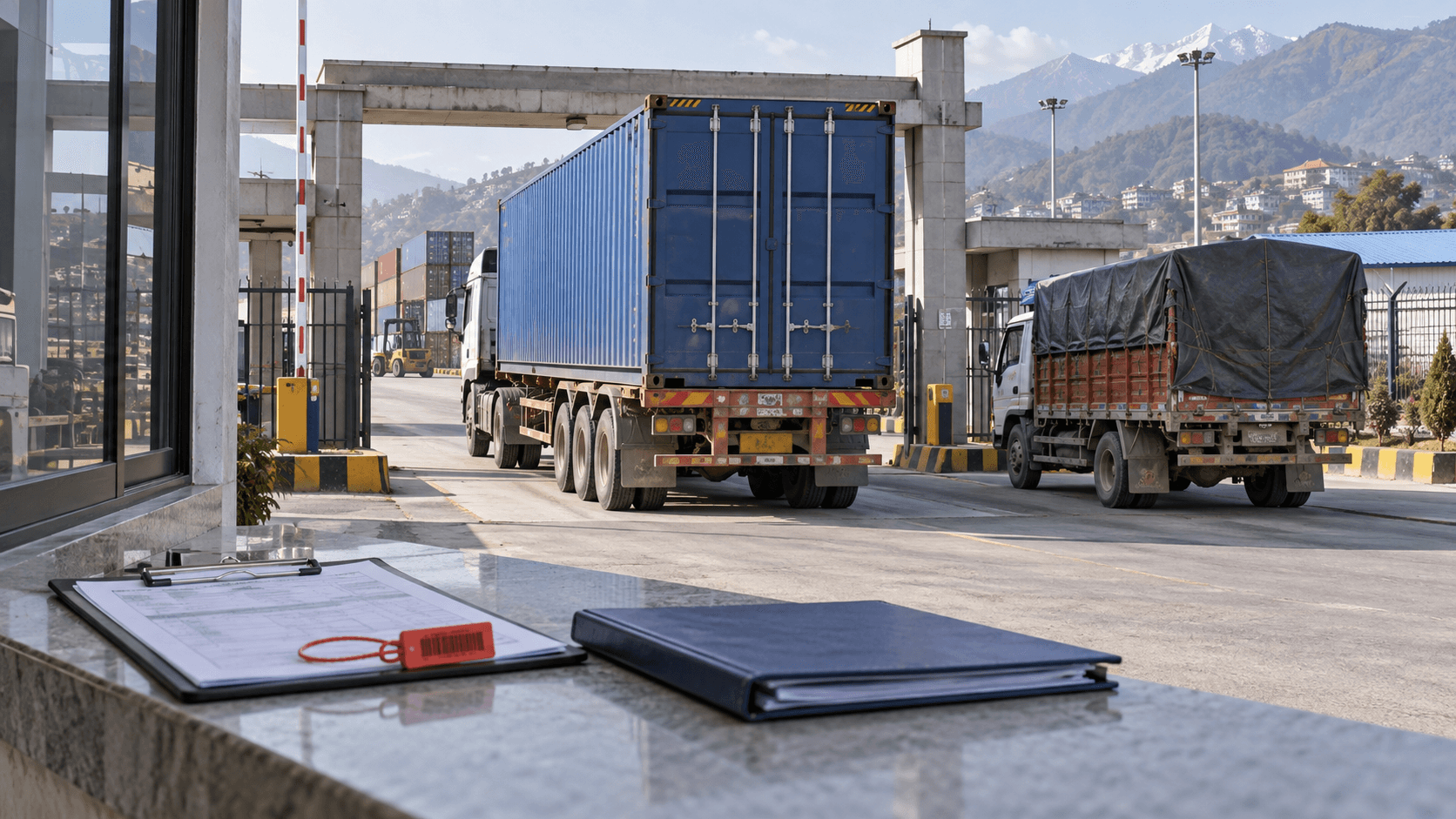
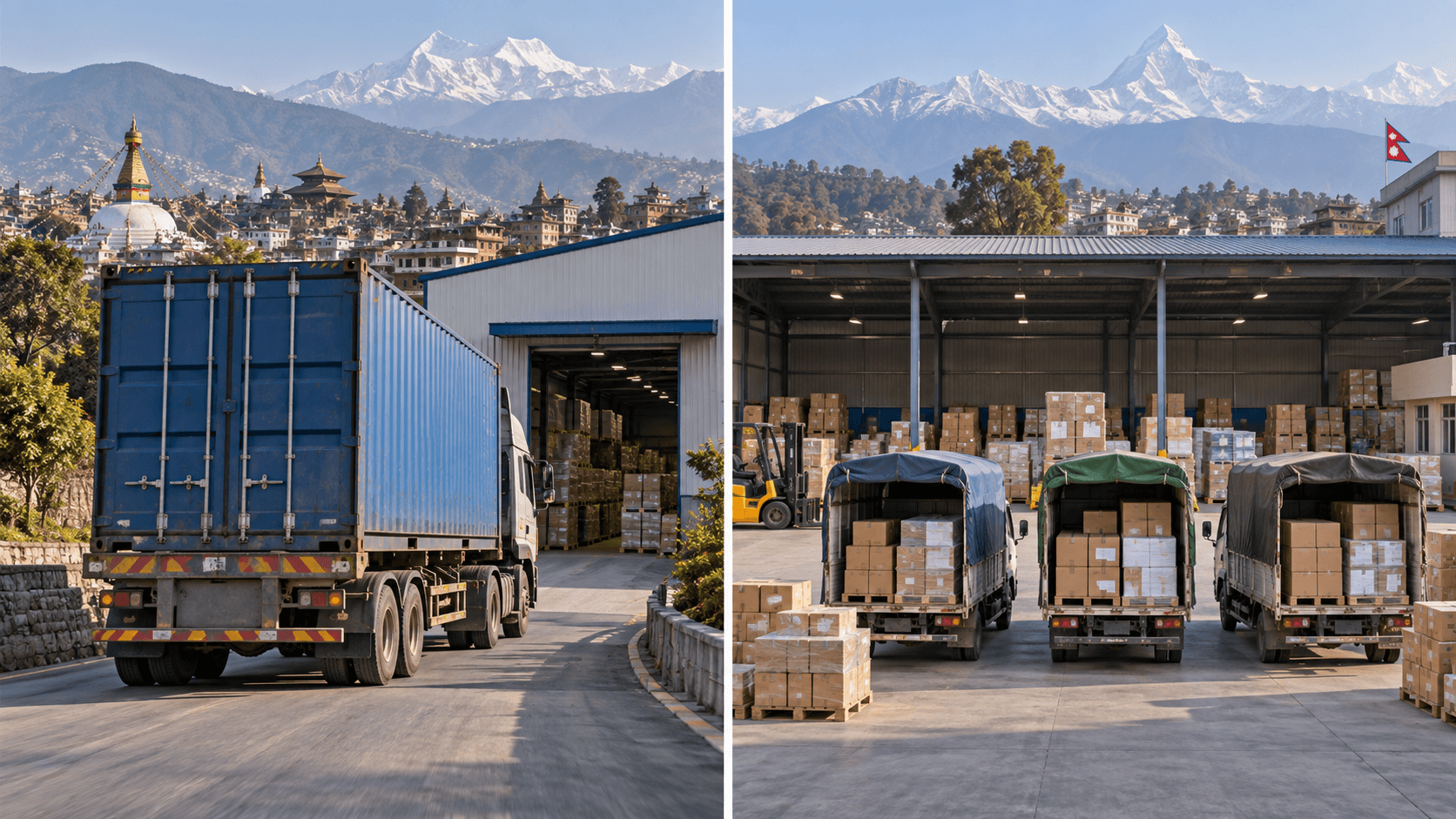
The road movement can begin only when the cargo is legally released and the terminal permits gate-out. The forwarder or trucking provider then matches the load with a suitable vehicle. A 20-foot container can be very heavy even when its volume looks modest, while a 40-foot container needs more turning room and a delivery site that can accept the chassis safely.
- Confirm the move type: intact FCL container, stripped cargo, LCL consignment or special equipment.
- Match the vehicle: container chassis, covered truck, flatbed or another approved configuration based on cargo, dimensions and weight.
- Issue the delivery instruction: consignee, exact location pin, warehouse contact, receiving hours and unloading method.
- Complete gate-out: match the truck and driver details with the customs release and terminal documents.
- Track road milestones: departure, corridor checkpoints, valley entry and revised ETA when conditions change.
- Close delivery: record arrival, condition and unloading; obtain proof of delivery and arrange the empty container return where required.
For an intact FCL move, verify the seal number before departure and again on arrival. For stripped or LCL cargo, use a vehicle that protects the packages from rain, dust, movement and unauthorized access. The handover record should note package count and visible condition.
Warehouse access deserves an early check. A large vehicle may be unable to enter a narrow Kathmandu road or turn inside the yard. The provider may need a smaller transfer vehicle, a different unloading point or a timed delivery. These choices affect both price and risk, so they belong in the quote request rather than as a surprise at the gate.
If your shipment is crossing from India by road rather than arriving at the rail-served ICD, review the cross-border shipping guide because the border and vehicle process can differ.
4. Typical transit time from Birgunj to Kathmandu
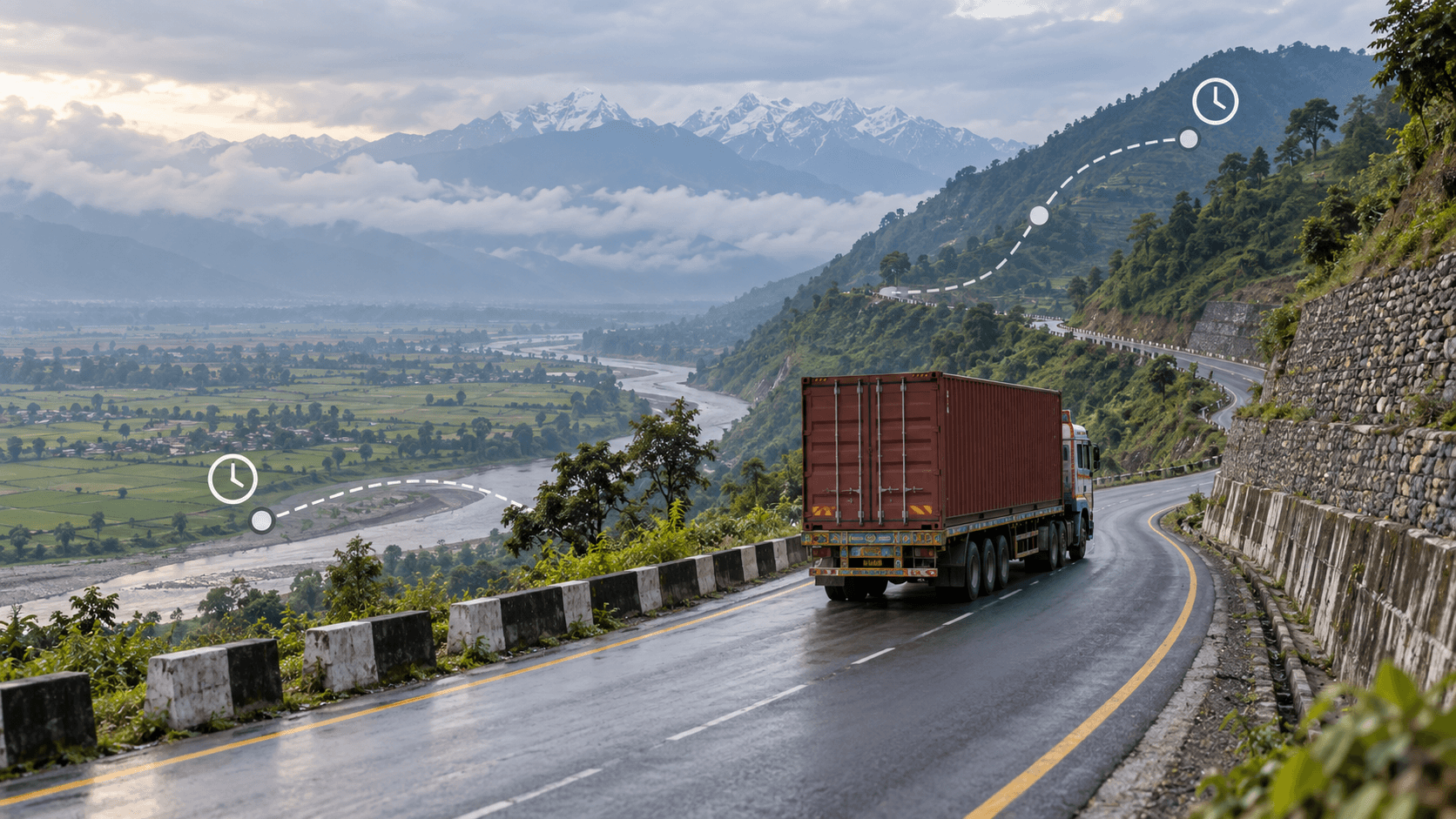
There is no single guaranteed Birgunj-to-Kathmandu transit time. For planning, about 8–12 hours of driving can be a useful base range for a heavy vehicle when the corridor is open and traffic is manageable. The more practical operational window is often one to three days from confirmed customs release to completed delivery, because truck positioning, terminal gate-out, movement windows, rest, traffic and warehouse receiving all sit around the driving time. Nepal’s Department of Roads treats Birgunj–Narayanghat–Mugling and the onward Kathmandu approach as a major trade corridor. The exact dispatch route can change with vehicle size, weight, restrictions, maintenance, landslides and temporary closures, so the trucker should confirm the usable route on the day of movement. The Department’s Birgunj–Kathmandu corridor project material provides official corridor context. These are planning ranges, not service guarantees. Monsoon landslides, accidents, roadworks, festival traffic and emergency restrictions can extend the journey. Ask for the assumptions behind an ETA and request an update after gate-out rather than relying only on the estimate issued before release. During the pre-Dashain and pre-Tihar import peaks, reserve capacity early and leave buffer days between expected delivery and any production, retail or installation deadline.
| Time layer | Indicative planning range | Main variables |
|---|---|---|
| Truck positioning at Birgunj | Same day to one day | Vehicle availability, container size, cargo weight and peak demand |
| ICD gate-out after release | Several hours to one day | Lifting queue, document matching, gate workload and operating hours |
| Road driving time | About 8–12 hours | Traffic, road condition, legal movement windows, stops and weather |
| Kathmandu receiving | Several hours to one day | Valley traffic, access, appointment and unloading readiness |
| Operational release-to-delivery plan | Often one to three days | Combination of all the above; longer when disrupted |
5. Cost components of Birgunj–Kathmandu container trucking
A dependable quote shows what is included, what is provisional and what can trigger an extra charge. A low headline rate can become expensive if terminal work, waiting, difficult access or empty return sits outside the quoted scope. To compare quotes fairly, send every bidder the same brief: container size and number, gross cargo weight, commodity, customs-release estimate, ICD or pickup point, exact delivery pin, access restrictions, receiving hours, unloading equipment and required empty-return point. Ask for line items and rate validity. Also ask what happens if release slips by a day, the terminal cannot position the container, the road closes, or unloading exceeds the free period. These are normal operating questions, not pessimism. Sea Sky Cargo can quote shipment-specific costs after checking the load and current operating conditions; a generic online figure would hide the variables that matter most.
| Cost component | What it covers | Question to ask |
|---|---|---|
| Base transport | Vehicle and normal road movement from the agreed Birgunj point to the Kathmandu delivery point | Is the quote for 20-foot, 40-foot or loose cargo, and what weight is assumed? |
| Fuel adjustment | Fuel-related surcharge or rate validity tied to fuel changes | Is it fixed through the validity period? |
| ICD handling | Lifting, positioning or gate-related terminal work when included by the provider | Which terminal charges are included and which are paid separately? |
| Waiting and detention | Vehicle time beyond the agreed free period at origin or destination | How many free hours apply and when does charging begin? |
| Access or transfer | Smaller vehicle, labor or alternate unloading point for a restricted delivery site | Can the booked vehicle reach and turn at the warehouse? |
| Special movement | Permit, escort, night movement or equipment for oversized, heavy or controlled cargo | Does the cargo need a route survey or special approval? |
| Empty return | Return of the unloaded carrier container to the named depot or yard | Is return included, to which location and within what free-time limit? |
| Tax and third-party charges | VAT or other separately billed official or third-party items | Is the total tax-inclusive and supported by documents? |

Need a Birgunj delivery plan before the container arrives?
Share the container size, cargo weight, expected release date and Kathmandu delivery point. Sea Sky Cargo can prepare the trucking plan and an itemized quote.
6. Common delays and how to avoid them
Most delays become expensive when teams discover them after the truck has been assigned. A simple readiness check before customs release protects the schedule and reduces avoidable waiting. If Customs selects the shipment for inspection, let the process finish before treating a trucking date as firm. If the problem is a classification or valuation query, provide evidence through the customs agent; changing details without documentary support can create more questions. For the road leg, use milestone communication: gate-out confirmed, corridor progress, revised ETA and valley entry. During monsoon or a major festival, build buffer into the receiving plan and keep warehouse staff reachable. The truck should never be pushed to ignore closures, rest requirements or safe operating limits to protect an optimistic ETA. For a deeper checklist on classification errors, see the wrong HS code guide.
| Delay point | Early warning | Practical prevention |
|---|---|---|
| Customs query or inspection | HS code, value, origin or permit evidence is incomplete | Review the file before arrival and keep supporting records ready |
| Document mismatch | Container, package count, weight or consignee details differ between documents | Reconcile invoice, packing list, bill of lading and declaration before submission |
| Truck shortage | Peak-season demand or a special chassis is needed | Reserve a vehicle against an expected release window and reconfirm when assessment progresses |
| ICD queue | High yard workload or delayed positioning | Track both customs status and terminal gate-out readiness |
| Road disruption | Heavy rain, landslide notices, roadworks or accidents | Check the corridor before dispatch and keep a time buffer |
| Warehouse not ready | No bay, forklift, labor, access approval or receiving appointment | Confirm a named receiver, equipment, space and backup plan before departure |
| Empty-return risk | Depot, cut-off or responsibility is unclear | Put the return location, deadline and charge responsibility in writing |

7. FCL vs LCL: how the last mile differs
The best last-mile plan depends on whether the importer controls the whole container or owns only part of a consolidated load. The terms FCL and LCL describe the ocean or consolidation arrangement; the final Nepal delivery may use a container chassis, covered truck or smaller distribution vehicle. FCL can reduce cargo handoffs, but the importer must manage container access, unloading time and empty return. LCL can suit smaller volumes, but the extra deconsolidation and sorting steps create more handling and can make the release schedule less predictable. Do not choose only by shipment volume. Consider cargo fragility, urgency, consolidation schedule, destination access, unloading capability and the full landed cost. The LCL shipping to Nepal guide explains consolidation, CBM pricing and handling in more detail.
| Planning point | FCL | LCL or deconsolidated cargo |
|---|---|---|
| Cargo control | One consignee normally uses the container | Several consignments share the origin container |
| Birgunj handling | Container may move intact after clearance when permitted and operationally suitable | Cargo is separated and released by consignment through the applicable facility and process |
| Road vehicle | Usually a 20-foot or 40-foot container chassis, subject to weight and access | Covered truck or smaller vehicle matched to package volume and weight |
| Pricing basis | Commonly per container plus listed extras | Commonly by consignment, weight, volume and delivery requirements |
| Handoffs | Fewer cargo-handling points if the seal remains intact | More sorting and handling points |
| Warehouse need | Space and equipment to unload the container promptly | Space to receive packages; vehicle access is often easier |
| Empty return | Usually a critical part of the plan | Normally handled within the consolidation and delivery arrangement rather than by the consignee |
8. How to plan your Birgunj–Kathmandu movement
Before supplier dispatch or vessel arrival:
- Confirm the shipping route, expected Indian-port arrival and likely Birgunj arrival window.
- Match the importer name, invoice, packing list, bill of lading and permit details.
- Review the likely HS code, duty and VAT treatment with the customs agent.
- Tell the forwarder the cargo weight, container size and any dangerous, oversized or sensitive characteristics.
- Survey the Kathmandu delivery point for road width, height, turning space, ground strength and unloading equipment.
- Decide whether the container can be unloaded within the carrier’s free time.
As customs clearance progresses:
- Share an expected release window with the trucking team and reserve the correct equipment.
- Keep funds and supporting evidence ready for assessment and payment.
- Confirm whether an inspection, terminal positioning or repacking step is pending.
- Issue one written delivery instruction with the location pin, receiver, phone number, hours and unloading method.
After customs release:
- Reconfirm the truck, gate-out documents and realistic departure window.
- Verify the container and seal for an intact FCL move, or the package count for loose cargo.
- Confirm the warehouse appointment before the truck exits Birgunj.
- Track gate-out, route progress and revised ETA.
- Record delivery condition and proof of delivery, then close the empty-return loop.
Keep a single coordinator responsible for the handoffs. When the customs agent, trucker, warehouse and importer receive different instructions, even a correctly cleared shipment can wait.

9. How Sea Sky Cargo manages Birgunj–Kathmandu trucking
Sea Sky Cargo can coordinate the workstream from customs readiness at Birgunj through delivery in Kathmandu. The goal is to keep the document, terminal, vehicle and warehouse milestones on one operational plan.
- Customs coordination: organize the shipment file with the importer and licensed customs agent, follow assessment milestones and communicate release status.
- Vehicle selection: match the container, weight, cargo type and destination access with suitable equipment.
- Itemized quotation: identify the base move, included handling, waiting terms, access assumptions and empty-return responsibility.
- Dispatch scheduling: connect the expected customs release and terminal gate-out with vehicle availability and warehouse hours.
- Milestone updates: report release, gate-out, route progress, revised ETA and delivery completion.
- Exception handling: coordinate a practical response to road disruption, equipment changes or a revised receiving slot.
For repeat importers, standing instructions can record the normal warehouse hours, access limits, unloading equipment, preferred update contacts and empty-return process. Each shipment still needs a current route and capacity check.
Customs assessment, inspection and release remain decisions of Nepal Customs, and road conditions can change after dispatch. Sea Sky Cargo coordinates the parties and information needed to respond; it does not promise an official customs outcome or an unsafe delivery deadline.
You can also review Sea Sky Cargo’s broader cargo services in Nepal and customs clearance agent guide.
10. Need reliable Birgunj–Kathmandu trucking?
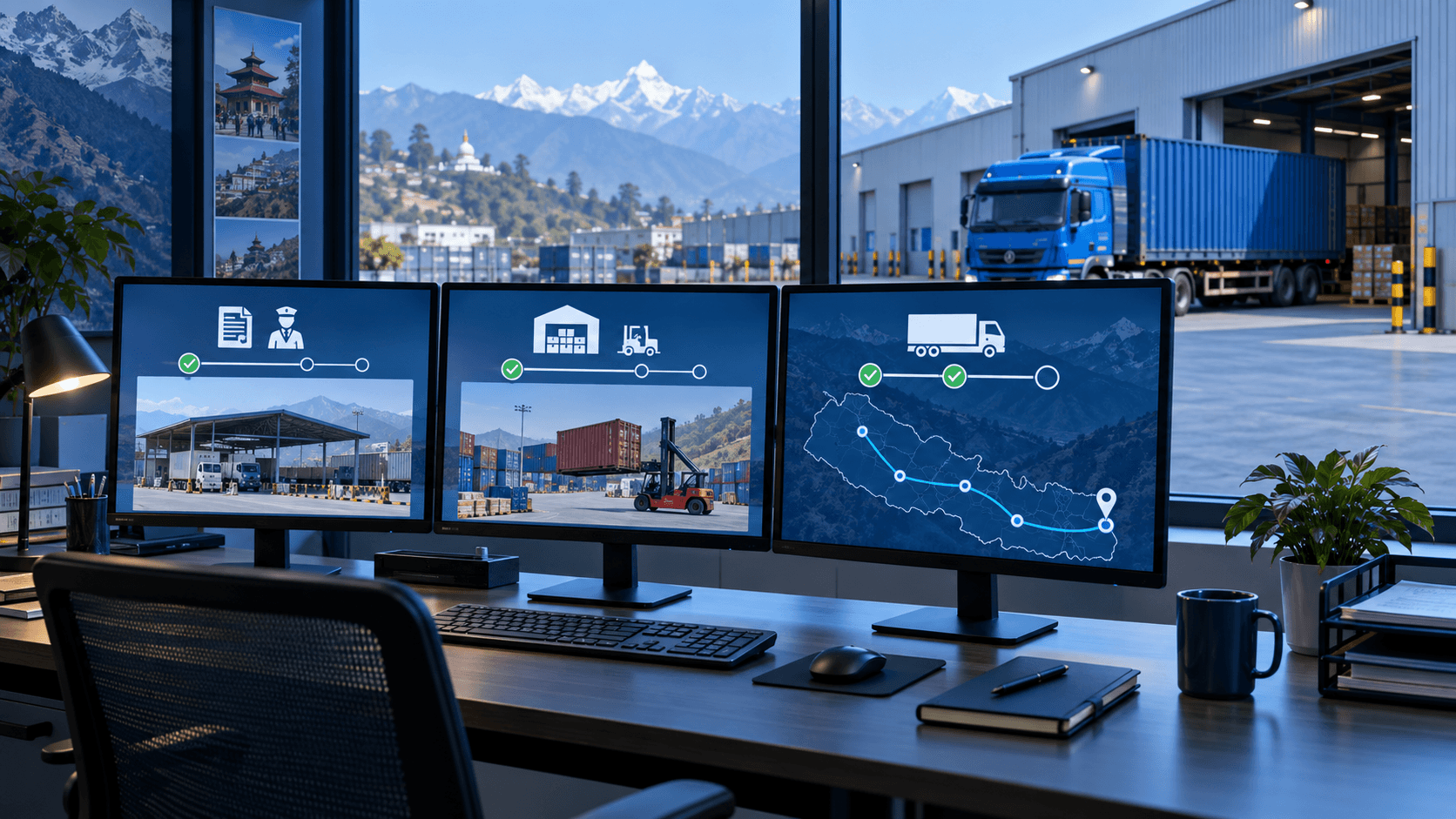
The last road leg is most predictable when customs readiness, terminal status, truck capacity, warehouse access and empty return are planned together. Send Sea Sky Cargo the shipment facts early enough to check the full move instead of waiting until the container is already released. Include these details in your quote request: container size and quantity, gross cargo weight, commodity, expected Birgunj release date, delivery location pin, warehouse access notes, receiving hours, unloading method and required empty-return location. Sea Sky Cargo can coordinate customs clearance at Birgunj, book suitable trucks and manage delivery to your Kathmandu warehouse. Use the quote form to request a shipment-specific plan and itemized price. Frequently asked questions
| Question | Practical answer |
|---|---|
| How long does Birgunj to Kathmandu trucking take? | Use about 8–12 hours as an indicative driving range and often one to three days from confirmed customs release to completed delivery. Conditions can extend both. |
| Is empty-container return included? | Only when the quotation says so. Confirm the return yard, deadline, transport responsibility and any waiting or detention terms. |
| Can a 40-foot container reach every Kathmandu warehouse? | No. Road width, turns, overhead clearance, ground strength and unloading space must be checked. A transfer vehicle may be needed. |
| Does FCL always move intact to Kathmandu? | Not always. Customs, terminal procedures, weight, destination access, carrier rules and the delivery plan determine whether the container moves intact or cargo is transferred. |
| What documents should I send for planning? | Start with the invoice, packing list, transport document, commodity and HS-code information, permits if applicable, container details and the exact delivery requirements. |

Need reliable Birgunj–Kathmandu trucking?
Sea Sky Cargo can coordinate customs clearance at Birgunj, book suitable trucks and manage delivery to your Kathmandu warehouse.