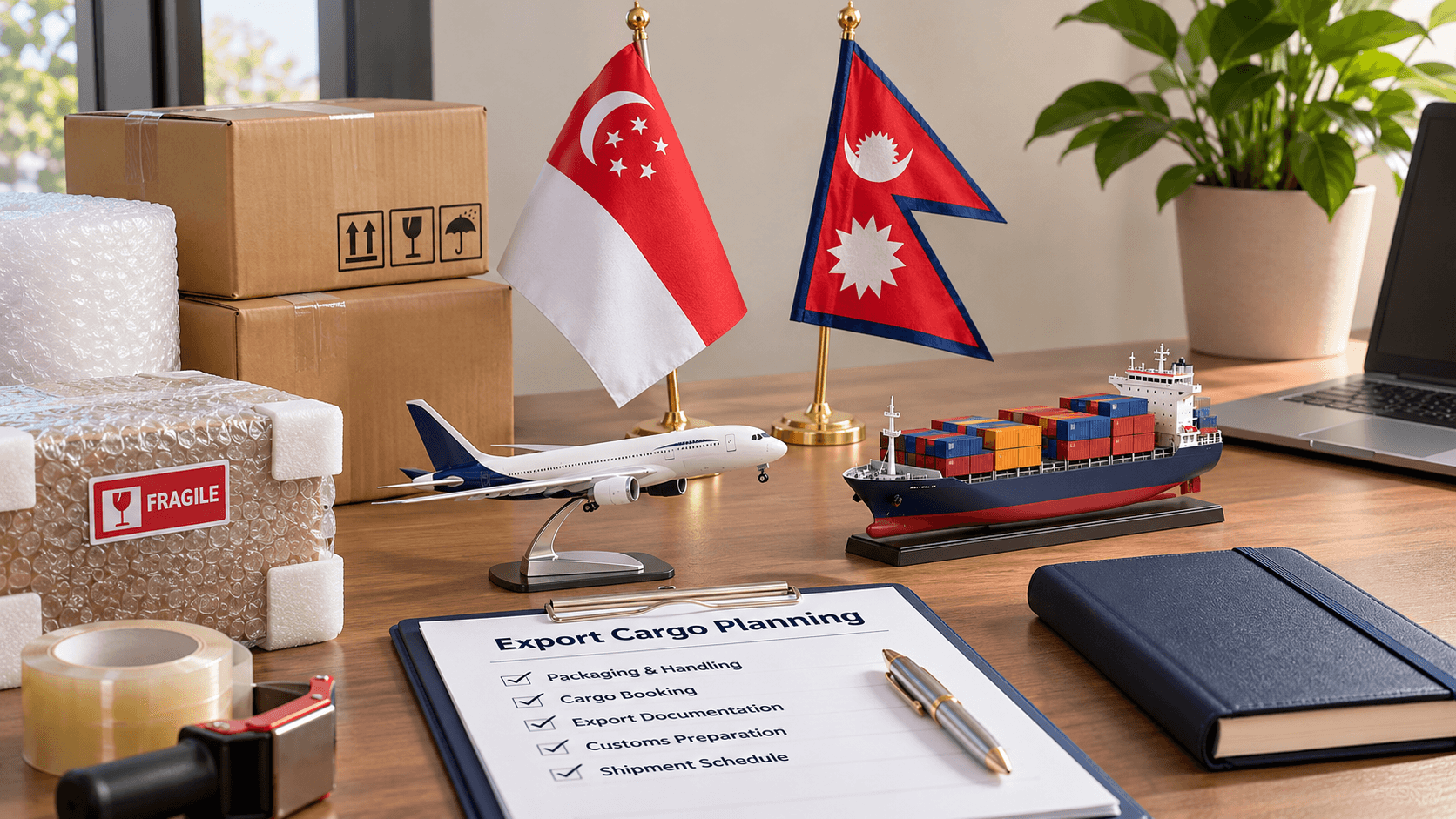
1. Singapore to Nepal Shipping: Plan the Complete Route
Singapore to Nepal shipping can begin with a local supplier, a regional distributor or cargo arriving from another country. The right plan depends on what is being shipped, where it was made, how it is packed and which transport and customs procedures apply.
Air cargo can move from Singapore toward Kathmandu under a booked airline routing. Sea cargo normally uses an Indian gateway followed by customs-controlled inland transit to Nepal. Compare each offer through the same final delivery address, including the handling and clearance stages after the main transport leg.
This guide covers commercial cargo, air and sea options, LCL and FCL, Singapore export and transshipment preparation, Indian-port transit, Nepal documents, landed cost and receiving arrangements.
Planning cargo from Singapore to Nepal? Send Sea Sky Cargo your commodity, package details, pickup address and Nepal destination for a route and quote review. Request a shipment review.
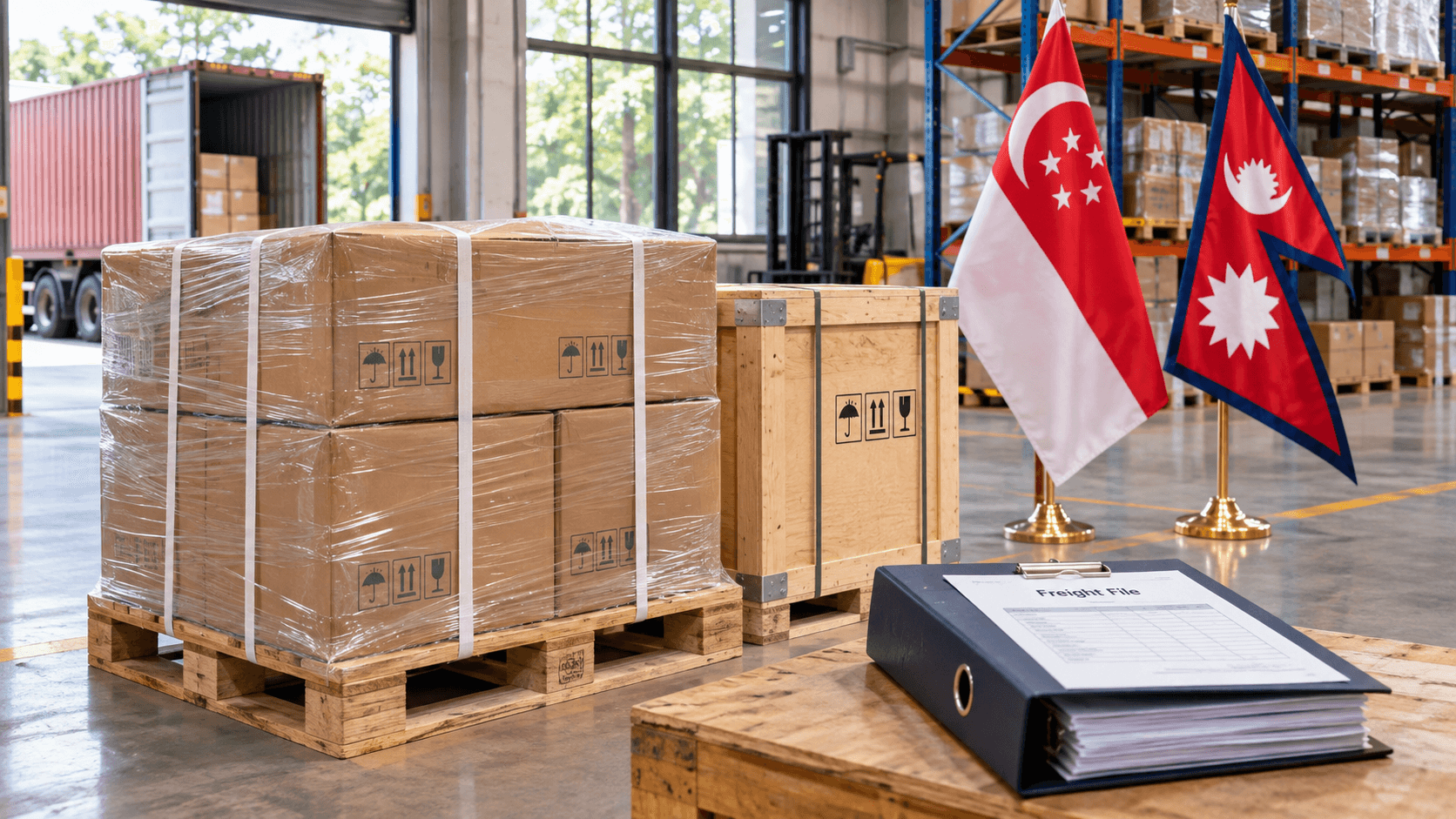
2. Products and Cargo Information to Review
Possible cargo includes electronics, machinery, consumer products, chemicals, food and healthcare supplies. These examples are planning categories; they do not establish current trade volumes or automatic acceptance.
- Electronics and telecom equipment: identify batteries, wireless functions, model and intended use.
- Machinery: provide packed measurements, weight, lifting points and centre of gravity where available.
- Chemicals, lubricants and aerosols: identify composition and transport classification before booking.
- Consumer goods and cosmetics: confirm ingredients, labelling and any product approvals.
- Pharmaceuticals and medical products: check registration, import permission, storage and handling requirements.
- Food and beverages: provide ingredients, processing, shelf life, origin and temperature needs.
Measure every piece after packing, including skids, handles, protective framing and other projections. Provide photographs for crates and irregular cargo. State stackability honestly: a package that cannot bear a top load can affect capacity and price.
Distinguish the Singapore seller, exporter and country of origin. A product bought from a Singapore distributor may have been manufactured elsewhere. Keep the commercial and origin records consistent.
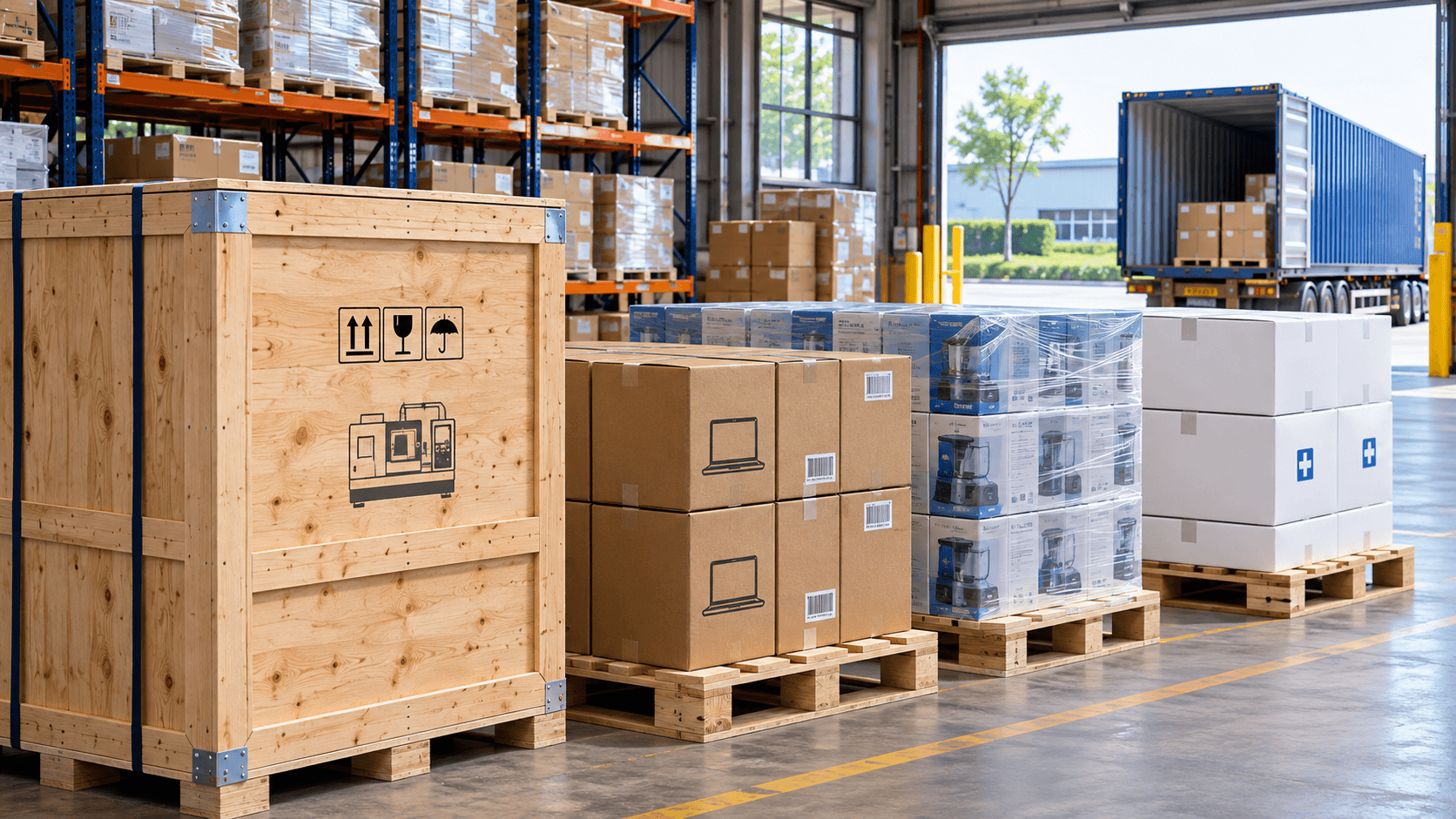
3. The Singapore-to-Nepal Shipping Process
- Identify the goods, parties, origin, final delivery address and agreed Incoterm.
- Confirm product restrictions, permits and transport acceptance before pickup.
- Finalize packaging, piece-level measurements, weights and commercial documents.
- Confirm the Singapore export, re-export or transshipment procedure and responsible declaring party.
- Arrange the booked air or ocean movement, including any connection.
- For sea cargo, coordinate the agreed Indian gateway and inland customs-transit movement.
- Prepare the Nepal import file before arrival at the agreed customs point.
- Complete customs, carrier and terminal releases, then arrange collection and delivery.
Several tasks run in parallel. Document preparation should not wait for arrival. A carrier booking does not confirm product-market permission, and an initial fit review does not guarantee uplift or customs release.
Agree who follows each handoff: supplier release, permit readiness, terminal acceptance, departure, connection, border arrival, clearance and delivery. A useful status update identifies the milestone completed and the next action required.
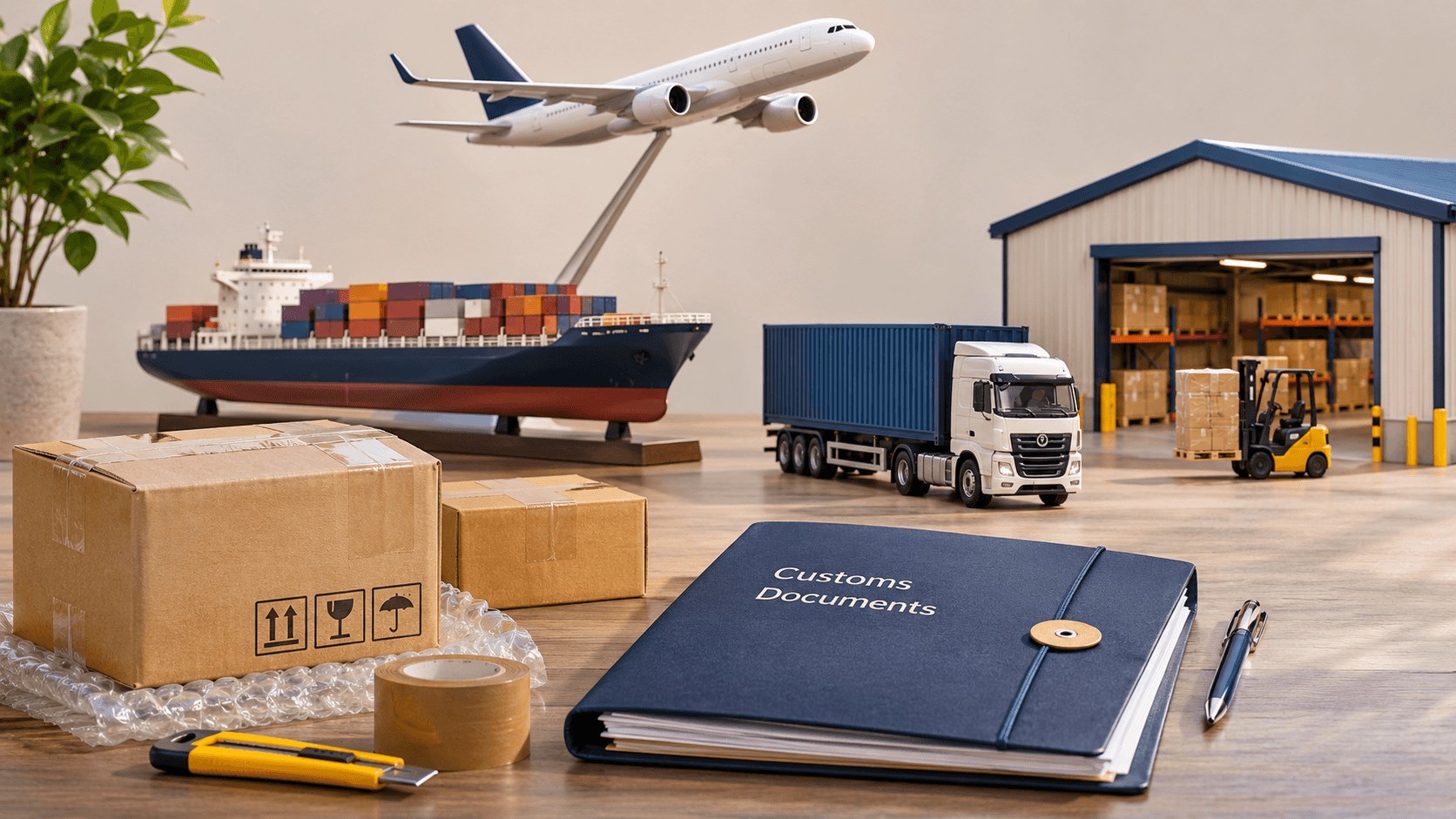
4. Air Freight from Singapore to Nepal
Air freight is worth comparing for urgent replenishment, samples, high-value goods and accepted temperature-sensitive cargo. There is no universal 500 kg cutoff: dimensions, density, value, deadline and complete delivery cost determine whether it is appropriate.
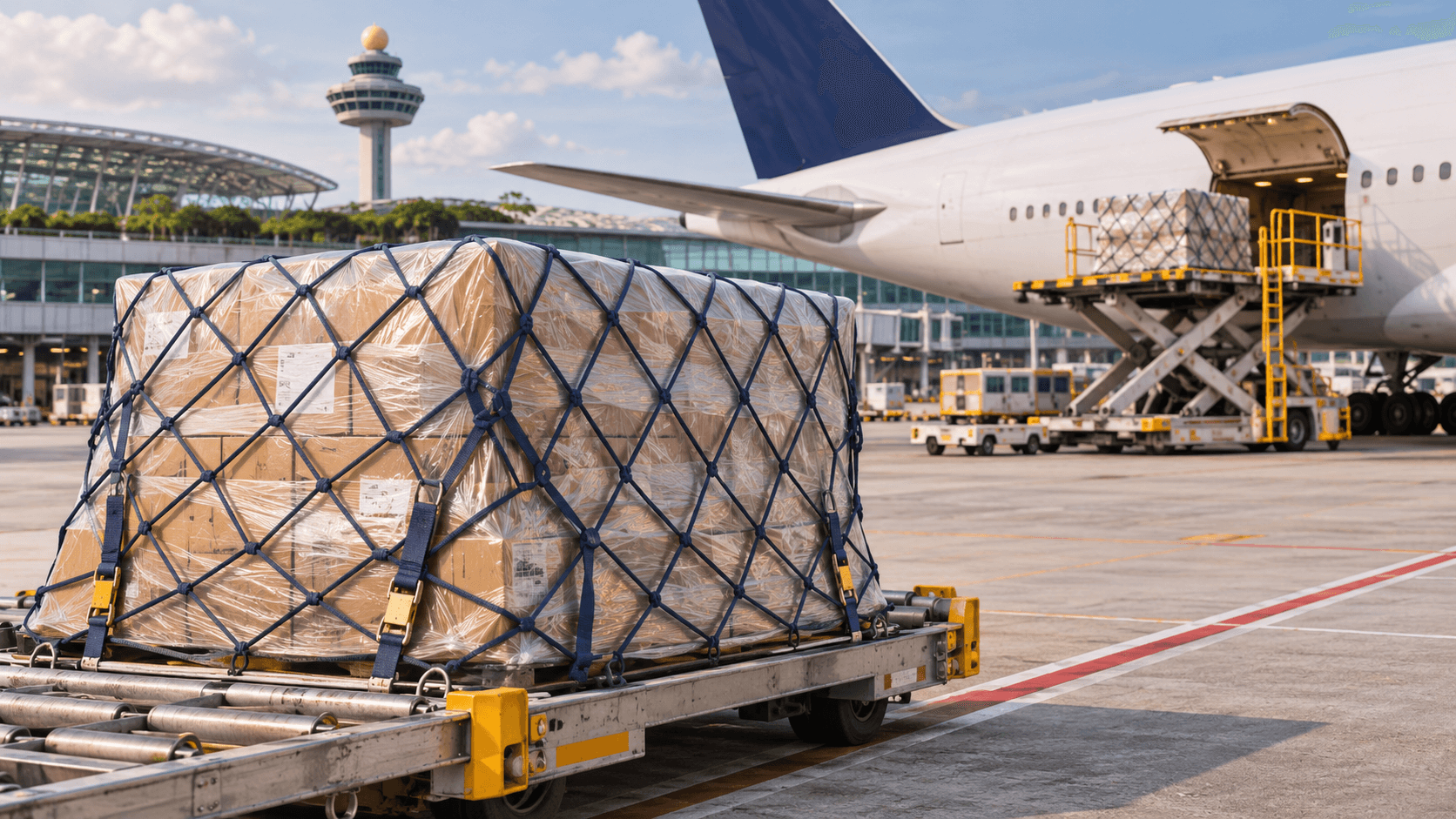
Changi Airport is the Singapore air gateway to review. Confirm the operating carrier, actual routing, direct or connecting service, cargo acceptance and available space for the requested date. Passenger schedules and airline brands alone do not establish that a cargo booking is available.
A connection can change aircraft type and cargo-door limits. For large or dense pieces, review every sector and transfer station. The airline container and pallet guide explains why nominal ULD dimensions are planning references rather than acceptance guarantees.
A 3–7 day door-to-door estimate can only be assessed against a dated service proposal. Confirm whether the clock starts at collection, terminal acceptance or flight departure, and whether clearance and delivery are included. Do not treat a general range as a current booking commitment.
Ask how actual and volumetric weight, rounding, minimums, screening and special handling affect the quote. Confirm insurance separately. See air freight services for coordination scope.
5. Sea Freight from Singapore to Nepal
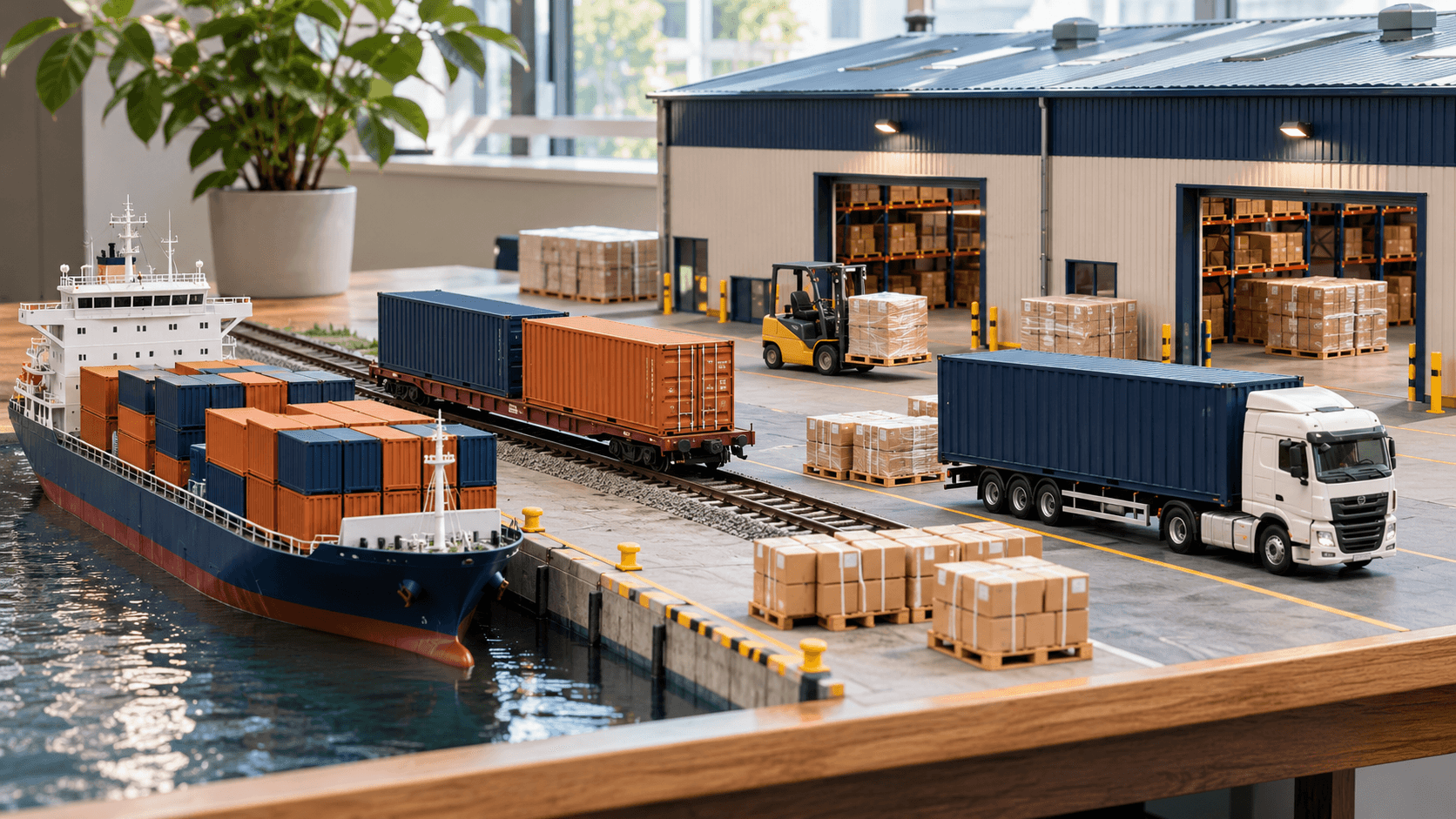
Sea freight can suit heavier, bulkier or less urgent cargo when the complete route is workable. The shipment needs both an ocean service and an inland plan from the selected gateway to Nepal.
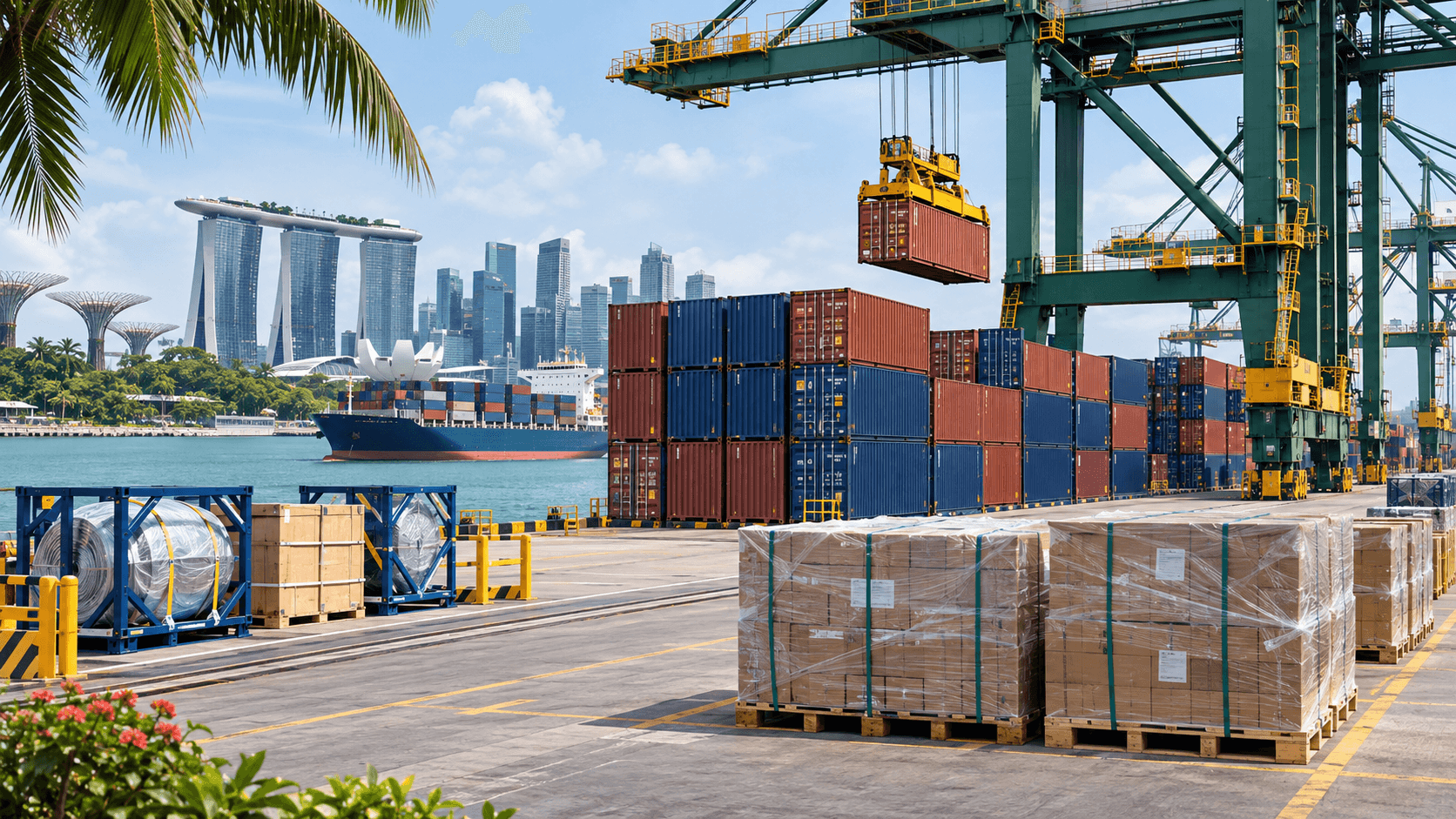
Kolkata/Haldia and Visakhapatnam are gateways described by the Consulate General of Nepal in Kolkata. Confirm the specific sailing, transshipment if any, carrier release arrangement and accepted inland service for the booking.
Do not assume that any Indian port is interchangeable for Nepal transit. If a proposal uses another gateway, obtain confirmation of the legal procedure, border or inland terminal, handling arrangement and full delivery cost before accepting it.
A broad 20–35 day door-to-door estimate is not a current sailing commitment. Review supplier readiness, cutoff, departure, ocean connections, Indian-port arrival, transit preparation, inland departure and Nepal clearance separately.
Include origin charges, ocean freight, destination release, port/CFS handling, inland transit, Nepal clearance, delivery, unloading and container return where relevant. Use the ocean freight service page and port-to-door cargo guide to define the endpoint.

6. LCL vs FCL: Compare Cost, Handling and Timing
LCL shares container space; FCL books a full-container movement. Choose using the actual cargo and complete route cost rather than a fixed cubic-metre threshold. LCL does not always deconsolidate at Birgunj, and it is not necessarily charged only per CBM. Confirm the actual consolidation/deconsolidation locations and minimum charges. An automatic 5–10 day addition is not a reliable substitute for the current service schedule. FCL may reduce some package handling, but it does not guarantee faster customs clearance or give the shipper control over every operational step. Seals can be checked and cargo can be inspected under the applicable process. Where both options are practical, request comparable offers to the same warehouse address. Include CFS/terminal fees, transit, free time, delivery and receiving costs. Read the freight consolidation guide.
| Planning Question | LCL | FCL |
|---|---|---|
| How space is booked | Shared consolidation | Full-container booking |
| Common rating basis | Weight or measure, with minimums and local charges | Container freight plus applicable handling and route costs |
| Handling | Consolidation and deconsolidation steps | Loading, inspections if required, unloading and empty return |
| Timing questions | Consolidation cutoff, departure and package release | Equipment, sailing, inland movement and releases |
| Destination questions | Where cargo is broken down and collected | Where to unload and return the empty container |
7. Singapore Export, Re-export and Transshipment Planning
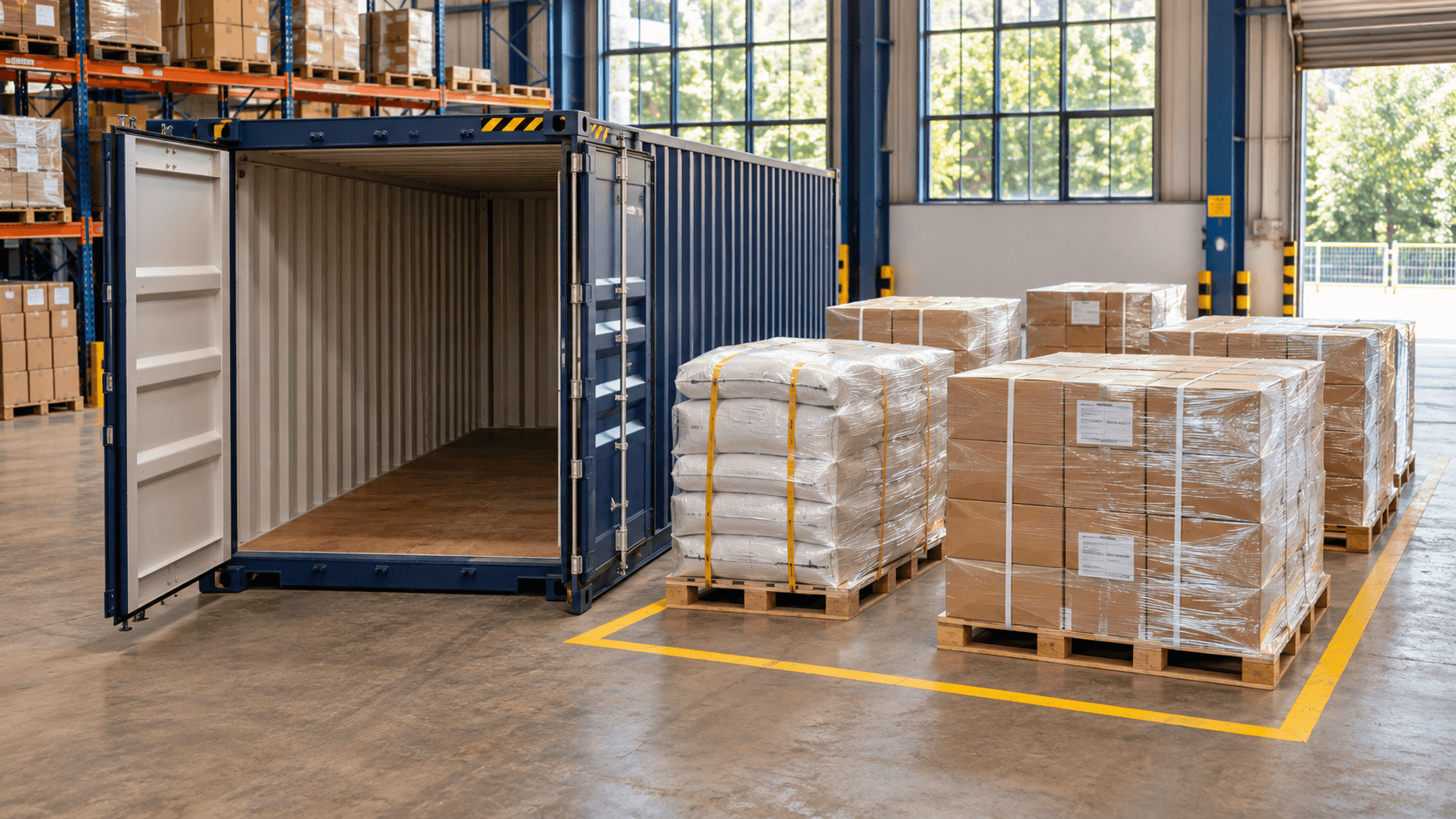
Cargo originating with a Singapore supplier and cargo passing through Singapore from another country can require different procedures. Establish whether the shipment is a local export, re-export, transshipment or another customs movement before preparing the declaration.
Singapore Customs export guidance explains export control and permit procedures. Confirm the exporter, declaring agent, applicable permit or exemption and any competent-authority approval for the actual goods.
TradeNet is Singapore’s single window for import, export and transshipment permit applications. A supplier invoice or warehouse release is not the same as the required customs permission.
For cargo arriving from another country, confirm the warehouse or terminal location, movement between facilities, incoming and outgoing transport references, connection cutoff and who submits the appropriate records. A hub’s connectivity does not guarantee a short transfer or uninterrupted movement.
Controlled or strategic goods require an additional review, including end-use and end-user information where applicable. Singapore Customs publishes guidance on enhanced transshipment and transit controls. Obtain the current procedure for the actual movement rather than relying on an assumed free-trade-zone exemption.
Consolidating suppliers can be useful when goods, documents, ready dates and handling conditions align. Compare the additional warehouse and reporting steps against the benefit of a combined departure.
8. Indian-Port Transit and Nepal Arrival
The Embassy of India commerce brief identifies the revised Treaty of Transit signed in June 2023. Confirm the operational instructions and route applicable to the booked shipment.
- Coordinate the transport documents and carrier release at the Indian gateway.
- Prepare the applicable customs-transit declaration or electronic records through the responsible party.
- Confirm required seals, tracking and references for the movement.
- Book the accepted rail or road leg to the specified Nepal facility.
- Coordinate arrival, transit completion and Nepal import formalities.
- Obtain customs and carrier/terminal releases before collection.
Birgunj ICD at Sirsiya is linked by rail through Raxaul. Road-border facilities are distinct. Identify the actual terminal, border and customs point in the booking rather than directing every road load to the rail ICD.
CTD, cargo tracking and a carrier delivery order perform different functions. Use the Customs Transit Declaration guide to organize the India transit review. An arrival notice is not a release confirmation.
Plan for the handoff to the Nepal customs representative before cargo arrives. Consistent package counts, container references, values and descriptions reduce avoidable queries.
Check Your Documents Before Dispatch
Share cargo details, origin, invoice, packing list and permit status for a shipment review.
9. Documents for Singapore-to-Nepal Cargo
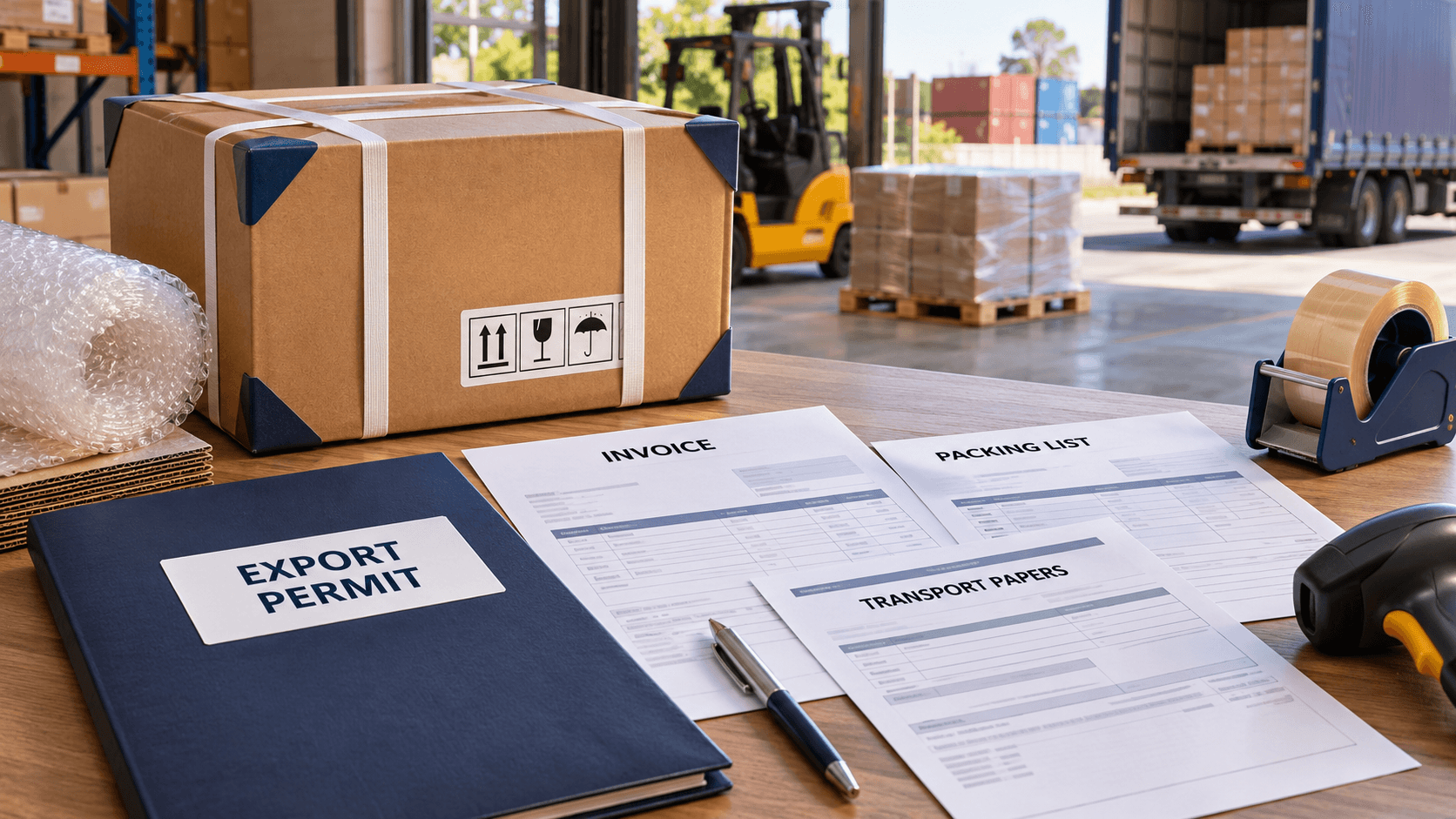
The required file depends on the product, origin, transport, transaction and applicable procedures. Confirm format, originals or electronic records, issuer and responsible party before dispatch.
- Commercial invoice with parties, specific description, quantities, values, currency and agreed Incoterm.
- Packing list with marks, contents, package count, net/gross weights and packed dimensions.
- Air waybill or bill of lading and applicable release instructions.
- Singapore export/re-export/transshipment permit or exemption information as applicable.
- Importer registration, EXIM and PAN/VAT details in Nepal as applicable.
- Origin evidence where required or used for a tariff claim.
- Insurance certificate or policy where arranged.
- Product licences, technical approvals, health or phytosanitary documents where required.
- India transit records and Nepal customs declaration/authorization as applicable.
A certificate must state the actual origin; exporting goods from Singapore does not automatically make them Singapore-origin. Origin evidence and the shipping route should support any preferential claim.
An Indian BIS reference is not a universal Nepal electronics requirement. Identify the responsible Nepal authority and the applicable product standard or approval. Banking documents should be included where the payment arrangement or procedure requires them, rather than described as compulsory for every shipment.
Cross-check names, values, quantities and weights across the invoice, packing list, booking and permits. If packaging changes, update the data before tender. Read the freight-forwarding documents guide and customs clearance agent guide.
10. HS Codes, Origin, Customs Duty and VAT
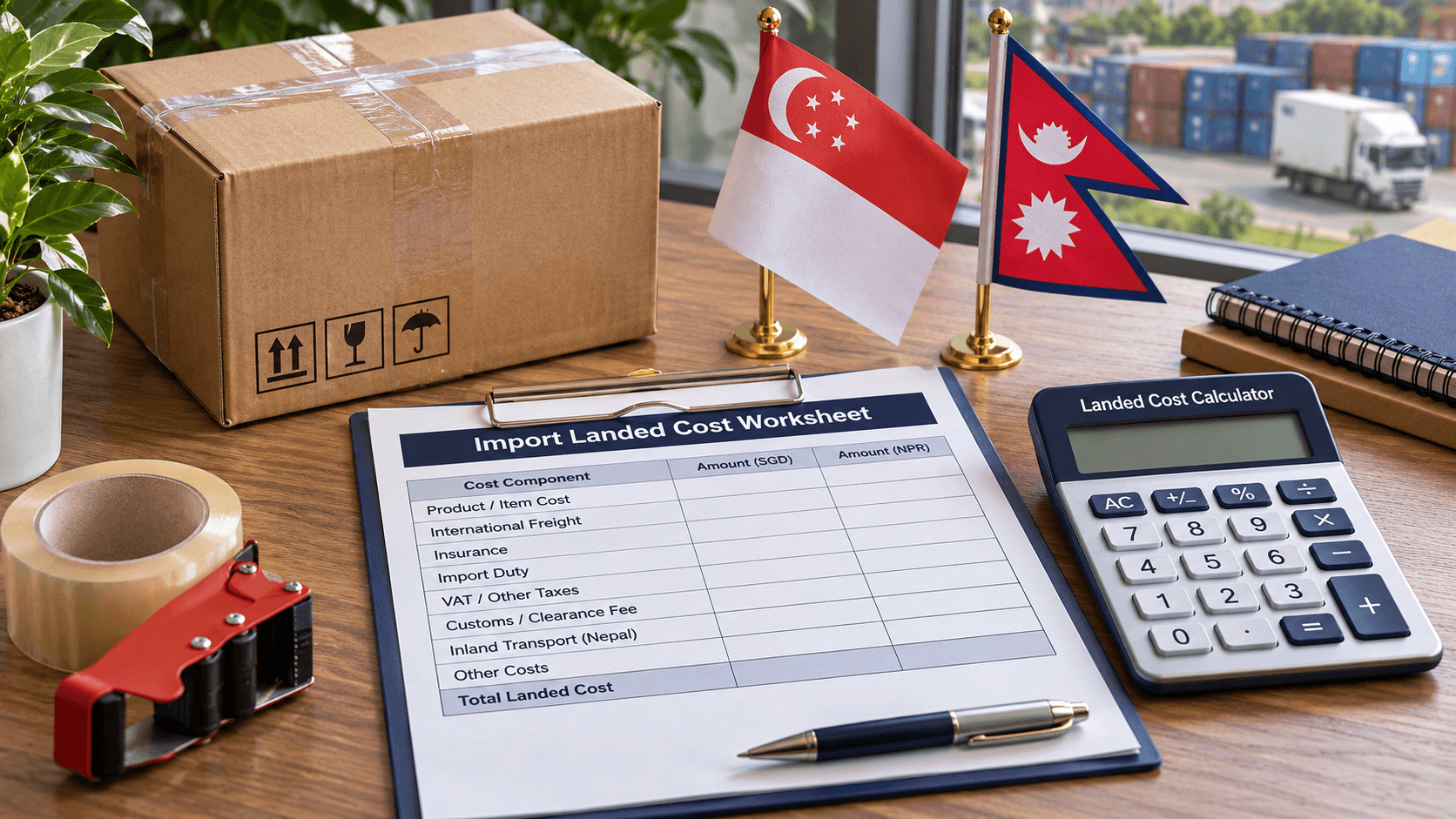
Determine the full product classification, customs value, actual origin and current fiscal-year treatment before estimating Nepal import taxes. A general product label such as electronics or chemicals is insufficient to select one duty rate. Use the Nepal Department of Customs integrated tariff or Nepal National Single Window tariff search with the product facts and the appointed representative. Confirm applicable duty, VAT, excise, other levies and any relief for the actual goods. Singapore dispatch does not itself establish eligibility for SAARC preferences. Singapore is not a SAFTA contracting state; the UN overview of SAFTA concerns trade concessions among its contracting states. Any proposed preference must identify the applicable scheme, qualifying origin, transport conditions and valid evidence. Separate a budgeting worksheet from the legal customs-value and tax-base calculation. The Incoterm helps allocate commercial responsibilities but does not bind customs to a supplier’s tax estimate. Do not apply a universal electronics duty percentage or treat a simplified tax example as a final assessment. Keep confirmed costs separate from allowances and avoid adding freight twice where it is included in the supplier price. See the landed-cost worksheet guide and Incoterms guide.
| Worksheet Item | What to Check |
|---|---|
| Goods and classification | Specific product and full HS classification |
| Origin | Manufacturing origin and evidence, distinct from Singapore seller address |
| Customs value | Applicable valuation rules and required additions |
| Taxes | Product-specific duty, VAT, excise, other charges and exemptions |
| Logistics | Origin, freight, gateway, transit, handling and delivery |
| Receiving | Unloading, equipment and empty return if relevant |
11. Batteries, Electronics, Chemicals and Other Regulated Cargo
Review carrier safety acceptance and Nepal import permission as separate tasks. Physical fit in a container or aircraft does not establish admissibility.
Batteries and Battery-Powered Goods
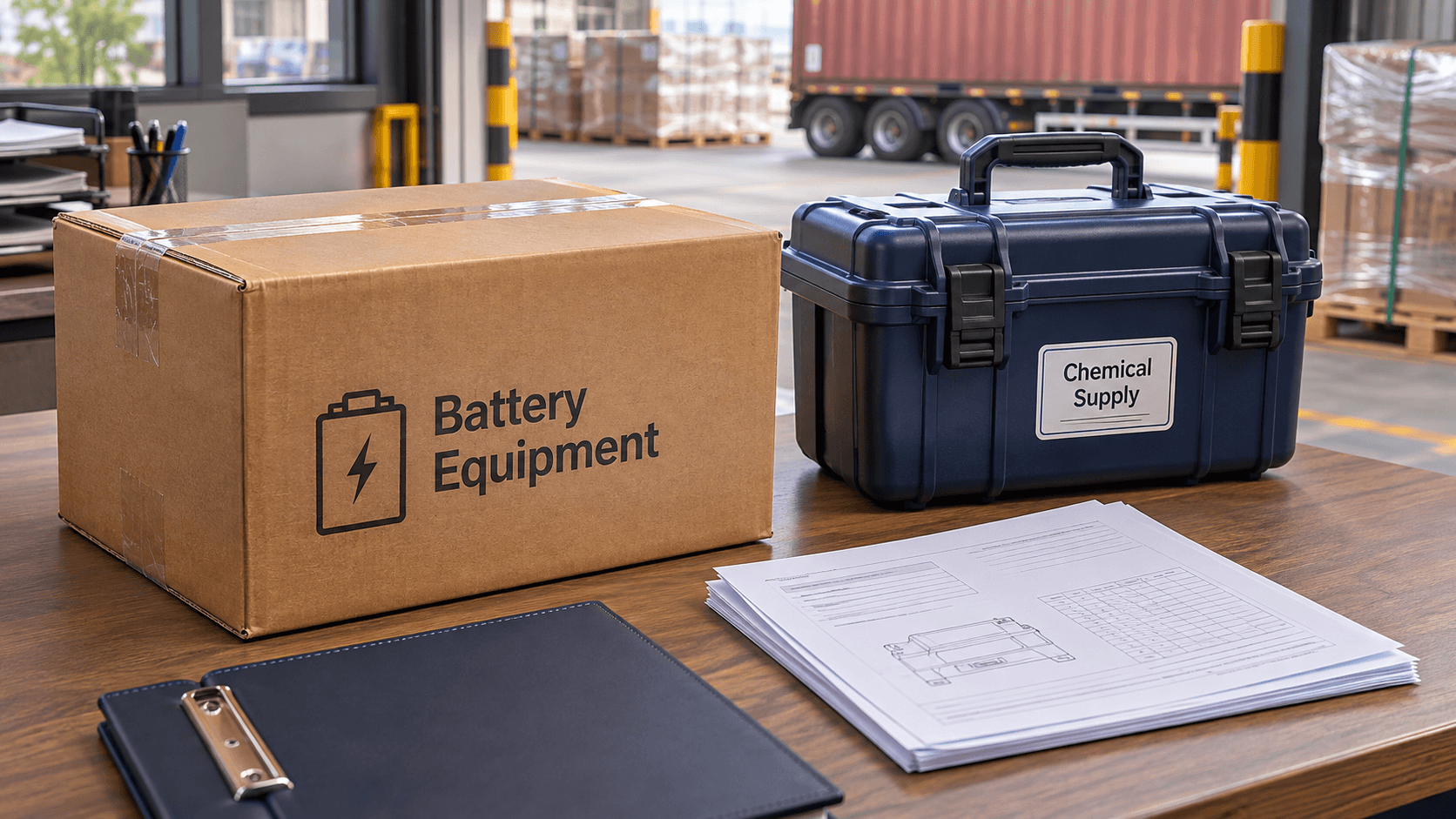
Provide the battery chemistry, configuration, capacity or rating, quantity, condition and intended transport mode. Lithium batteries can require testing evidence, packaging, marks, labels and documents under the applicable air or sea rules. Damaged, defective or recalled batteries need a specific review. Do not book them as ordinary parts.
Electronics and Telecom Equipment
Identify wireless/radio functions, models and intended use. Check current type approval or import authorization where applicable with the Nepal Telecommunications Authority. A generic electronics invoice is not enough to determine approval needs.
Chemicals and Hazardous Materials
Provide a current safety data sheet and technical details for classification review. An SDS supports the process but does not by itself establish that a consignment is accepted for transport. Confirm UN classification where applicable, quantity, packaging, segregation, carrier requirements and Nepal permits with the responsible specialists.
Food, pharmaceuticals, medical supplies and controlled goods can involve additional competent authorities and storage requirements. Confirm these before pickup. Sea Sky Cargo can coordinate the information review and the agreed dangerous-goods service steps, subject to operator and regulatory acceptance.
12. Cost Factors and Quote Comparison
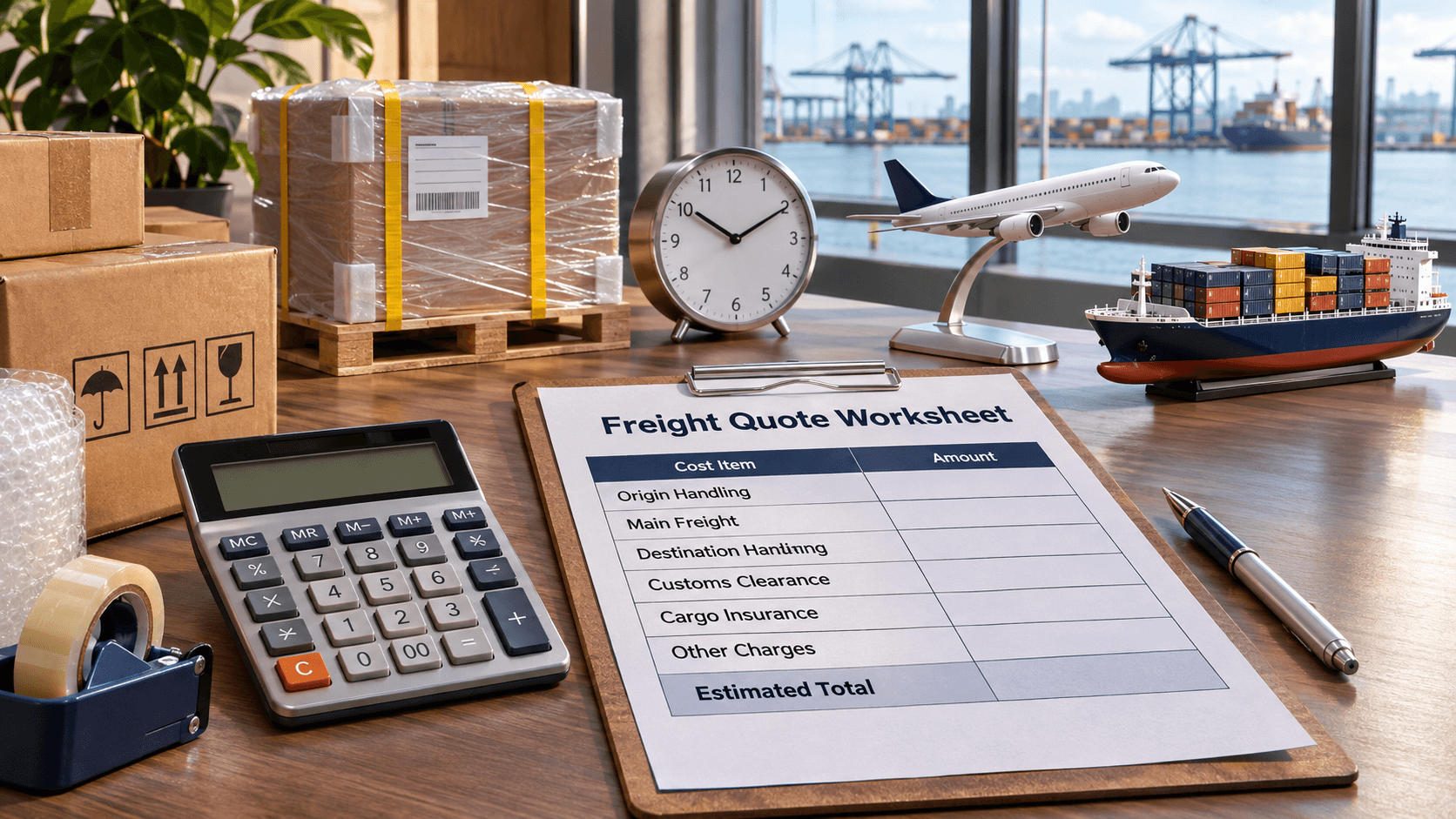
A useful Singapore-to-Nepal quote shows which stages it covers. Airport-to-airport, port-to-port and door-to-door offers are not directly comparable without adding the missing stages.
- Origin collection, loading, storage, documentation and export handling.
- Air or ocean freight, surcharges and the applicable rating basis.
- Consolidation, terminal/CFS, screening and special handling.
- Indian gateway release, transit preparation and rail/road movement where used.
- Nepal broker services, applicable government levies and inspection-related costs.
- Final delivery, access restrictions, unloading, equipment and empty return.
- Insurance for the agreed journey and cargo, based on an actual offer.
- Storage, waiting, repacking, rebooking or demurrage/detention if incurred.
Normalize the commodity, packed dimensions, weights, pickup point, destination, ready date and Incoterm across offers. Ask which charges are fixed, estimated, excluded or payable at actual cost, and which currency and validity period apply.
Do not apply a generic insurance premium percentage or assume all delay charges have the same free-time rule. Compare the actual service terms and retain a clearly identified contingency for unresolved items.
Request a milestone-based timing estimate alongside the price. Use the freight quote guide and demurrage/detention guide to check the exclusions.
13. Delivery to Kathmandu, Birgunj and Other Cities
Confirm the exact warehouse or site address before booking. Delivery planning depends on the arrival gateway, required releases, vehicle availability, road conditions and site access.
Kathmandu
Air cargo normally requires terminal collection after the applicable customs, carrier and handling releases before local delivery. Sea cargo needs the agreed inland movement from the Nepal receiving point. Confirm unloading labour or equipment, receiving hours and vehicle access.
Birgunj
For sea cargo, identify whether collection is from the rail-linked ICD or another agreed facility. A local warehouse movement still needs the correct releases and collection instructions. Air cargo arriving in Kathmandu requires a separate road-delivery arrangement if Birgunj is the final destination.
Pokhara, Biratnagar and Other Destinations
Choose the arrival and onward plan against the actual destination rather than assuming all cargo must pass through one city. Heavy pieces, narrow access, remote locations and weather can require extra preparation.
A generic one-to-three-day delivery statement should not be treated as a commitment. Obtain a dated estimate from release and vehicle readiness, including loading, road movement and receiving requirements. For containers, agree the empty-return location and deadline before dispatch.
14. How Sea Sky Cargo Can Coordinate the Shipment
Sea Sky Cargo can review Singapore-to-Nepal cargo details and coordinate the agreed origin, freight, transit, customs-support and delivery tasks with the relevant partners.
- Compare feasible air and sea options against the cargo profile.
- Review packed measurements, weights, photographs and handling requirements.
- Coordinate origin collection and booking requests within the agreed scope.
- Review commercial document consistency and permit readiness.
- Coordinate the selected Indian gateway and Nepal receiving point for sea cargo.
- Prepare the handoff to the appointed customs representatives.
- Arrange collection, delivery and receiving requirements where agreed.
- Provide milestone updates through the agreed communication process.
The quotation should identify the parties performing customs functions and the actual service coverage. Carrier space, equipment, final acceptance and uplift remain subject to the operators; customs and other authorities control regulatory decisions.
Send the supplier address, goods description, country of origin, value, package count, final dimensions and weight per piece, cargo-ready date, Nepal address and document/permit status. Declare batteries, chemicals, liquids and temperature requirements at the start.
Shipping cargo from Singapore to Nepal? Sea Sky Cargo can compare routes, review your documents and coordinate the agreed clearance and final delivery steps. Request a shipment-specific quote. Read freight forwarding in Nepal for wider coordination support.
15. Frequently Asked Questions
Is there direct sea freight to Nepal? Nepal is landlocked. Sea cargo normally combines an ocean gateway with inland transit and Nepal customs clearance; confirm the actual route and contracted delivery endpoint.
Is air freight always best below 500 kg? No. Compare dimensions, chargeable weight, urgency, value, restrictions and complete delivery cost.
Does buying from Singapore make goods Singapore-origin? No. The seller location, export country and manufacturing origin can differ. Use accurate origin records.
Do Singapore goods automatically receive SAARC preferential duty in Nepal? No. Singapore dispatch or a Singapore invoice does not establish a SAFTA preference. Confirm the applicable tariff and any valid scheme for the actual origin and goods.
Is LCL always slower by five to ten days? No. Timing depends on the booked consolidation, departure, handling and release arrangement. Ask for the actual service estimate.
Which documents are needed? Common review inputs include invoice, packing list, transport documents, importer details and applicable export, product, origin, transit and customs records. The final list depends on the shipment.
Can batteries or chemicals move on this route? Some can be accepted subject to correct classification, packaging, documentation, carrier approval and regulatory requirements. Others may be restricted or prohibited.
How should I request a quote? Send pickup and delivery addresses, commodity, origin, package count, packed dimensions and weights, ready date, value, special characteristics and document status.
Plan Your Singapore-to-Nepal Cargo
Send packed cargo details, pickup and delivery addresses, and your required delivery window.
Related posts
1970-01-01
Sea + Air Freight: How SeaSky Helps Businesses Ship Smarter
2026-11-03
Canada to Nepal Shipping Guide: Freight, Customs and Documents
2026-10-30
Incoterms for Nepal Importers: The Hidden Costs Behind EXW, FOB, CIF and DDP

2026-10-27