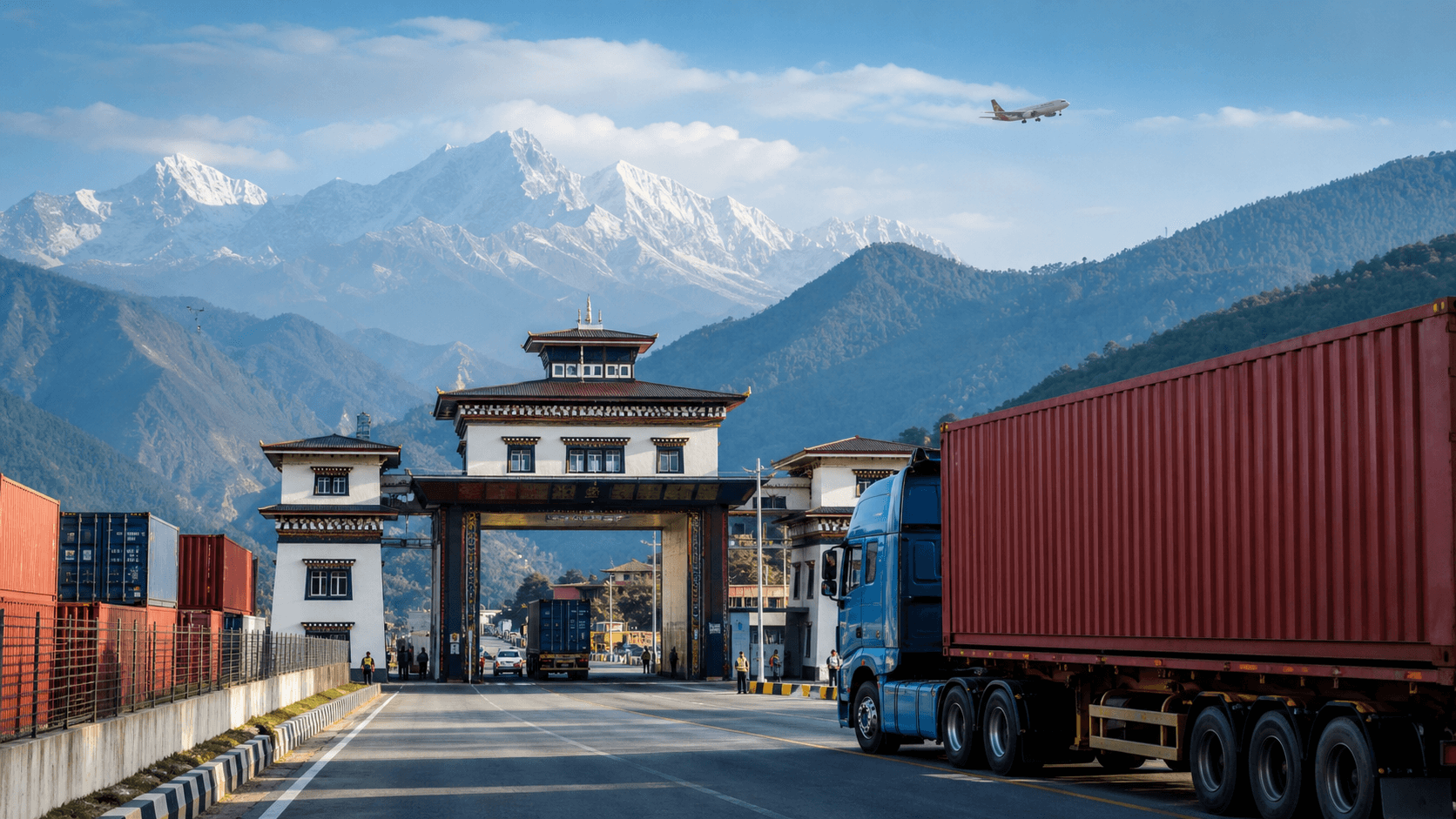
What cross-border shipping means for a business
Cross-border shipping is the commercial movement of goods from one country to another. It includes more than the truck, aircraft, vessel or train carrying the cargo. A complete shipment connects supplier pickup, export clearance, international or regional transport, transit procedures, import customs, tax and duty payment, cargo release and final delivery.
For a Nepal business, one order can involve several companies and jurisdictions. An overseas supplier may deliver to an origin warehouse, a carrier may move the international leg, a destination partner may manage the port or airport handoff, a customs representative may prepare the declaration, and a local truck may complete delivery. Every handoff needs a named responsible party and a matching document.
Cross border shipping becomes predictable when the commercial agreement and the logistics plan are built together. The important questions are: who controls each stage, which documents trigger the next movement, which costs are included, and who acts if the shipment is held or delayed?
- Nepal importers buying raw materials, machinery or finished goods
- Nepal exporters selling garments, handicrafts, tea, herbs or manufactured products
- Freight forwarders arranging cargo for customers in South Asia
- Distributors moving regular B2B replenishment shipments
- Project teams shipping equipment, spare parts or oversized cargo
- E-commerce and wholesale businesses importing commercial stock

The cross-border shipping process from order to delivery
A shipment should be planned as one connected workflow even when several service providers handle it. The sequence below is a useful starting point for commercial cargo moving to or from Nepal. The most expensive problems usually begin before pickup: an unclear product description, an unconfirmed permit, an Incoterm misunderstood by the buyer, or a quote that stops at a port rather than the final warehouse. Resolve those gaps while the cargo is still with the supplier.
| Stage | What happens | What the business should confirm |
|---|---|---|
| 1. Product and trade check | The buyer and seller identify the exact goods, value, origin and intended use | HS code, restrictions, permits and buyer or seller eligibility |
| 2. Commercial agreement | Price, payment method and Incoterm are agreed | Where cost and risk transfer and which services are excluded |
| 3. Freight planning | The forwarder compares route, mode, carrier and schedule | Packed weight, dimensions, cargo-ready date and delivery deadline |
| 4. Export preparation | Cargo is packed, labelled, documented and cleared at origin | Invoice, packing list, export declaration and product certificates |
| 5. International or regional transit | Cargo moves by air, sea, road, rail or a multimodal combination | Tracking milestones, handoffs, free time and exception contacts |
| 6. Import customs | Classification, valuation, permits, taxes and inspections are handled | Importer details, declaration evidence and payment readiness |
| 7. Release and delivery | Released cargo moves to the warehouse, project or customer | Vehicle access, unloading equipment, receiving hours and proof of delivery |
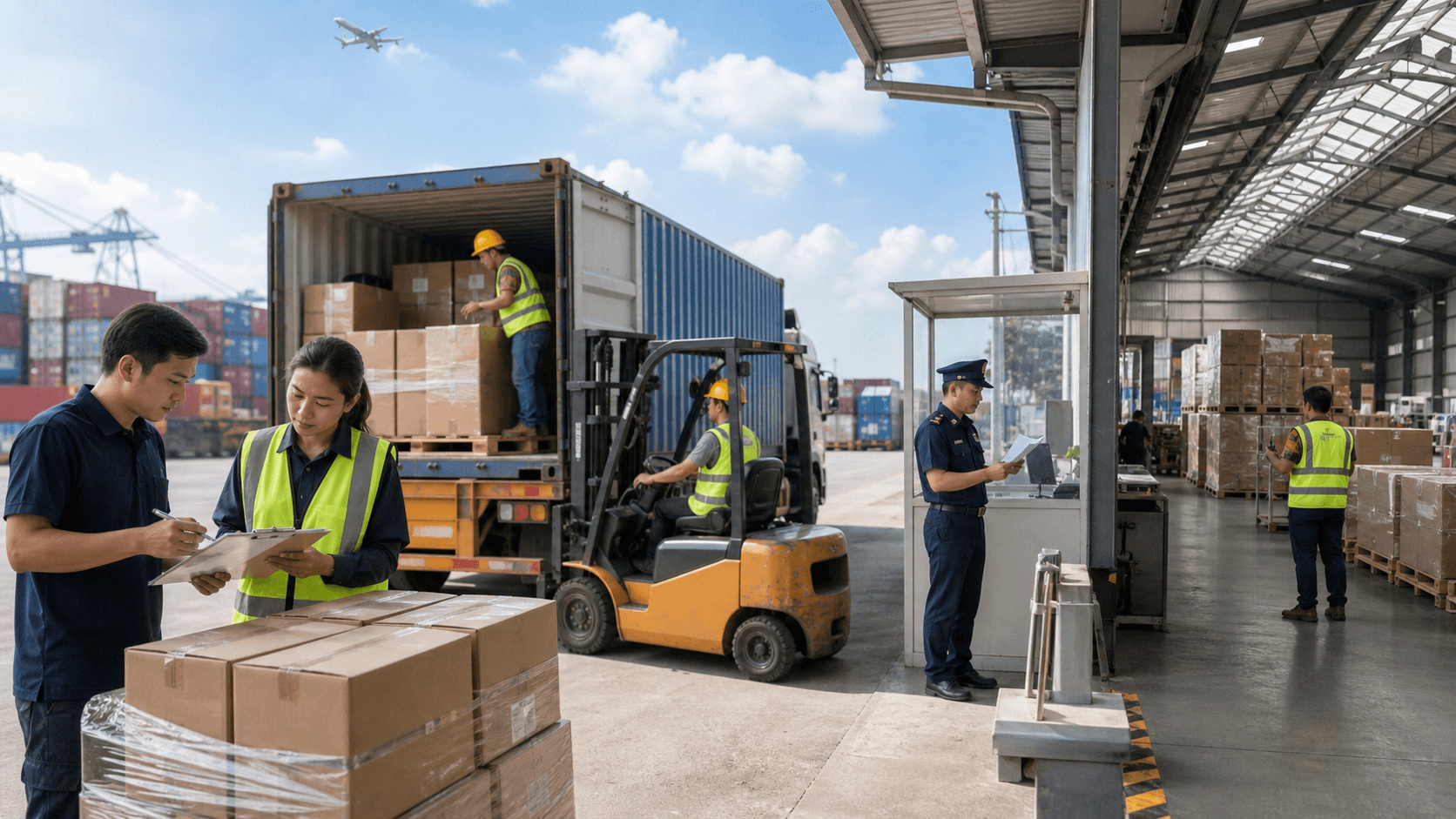
Choose the route around the cargo and trade lane
There is no single best mode for every cross-border shipment. The practical route depends on origin, destination, cargo size, urgency, value, border access, permits and final-delivery conditions. Start with the service requirement, then compare total cost and risk. Use Sea Sky's air freight, ocean freight, road freight and rail freight pages to compare the service scope. The cross-border trade lane comparison goes deeper into mode selection without repeating the business process covered here.
| Shipping option | Useful for | Check before booking |
|---|---|---|
| Air freight | Urgent, lighter, valuable or time-sensitive goods | Chargeable weight, airline acceptance, airport handling and customs readiness |
| Cross-border road freight | India-Nepal, China-Nepal, regional B2B cargo and final delivery | Border route, vehicle type, road condition, permits and waiting exposure |
| Sea freight plus inland transit | Large, heavy or non-urgent overseas cargo, LCL and FCL | Gateway port, destination charges, free time, rail or road connection and Nepal transit |
| Rail-linked freight | Containers and higher-volume port-to-inland cargo | Terminal, schedule, last-mile truck and responsibility at transfer points |
| Multimodal freight | Routes that need different modes for international and inland legs | One clear plan for every handoff, document and charge |
Quick planning tool
Which freight mode should you compare first?
Starting recommendation
Compare air with sea plus inland transit
This shipment sits in the middle: air may protect the timeline, while sea can lower freight cost. Compare chargeable weight, port timing, inland transit and customs risk.
Ask Sea Sky to compare the routesPlanning guide only. Product restrictions, dimensions, border status and customs documents can change the route.
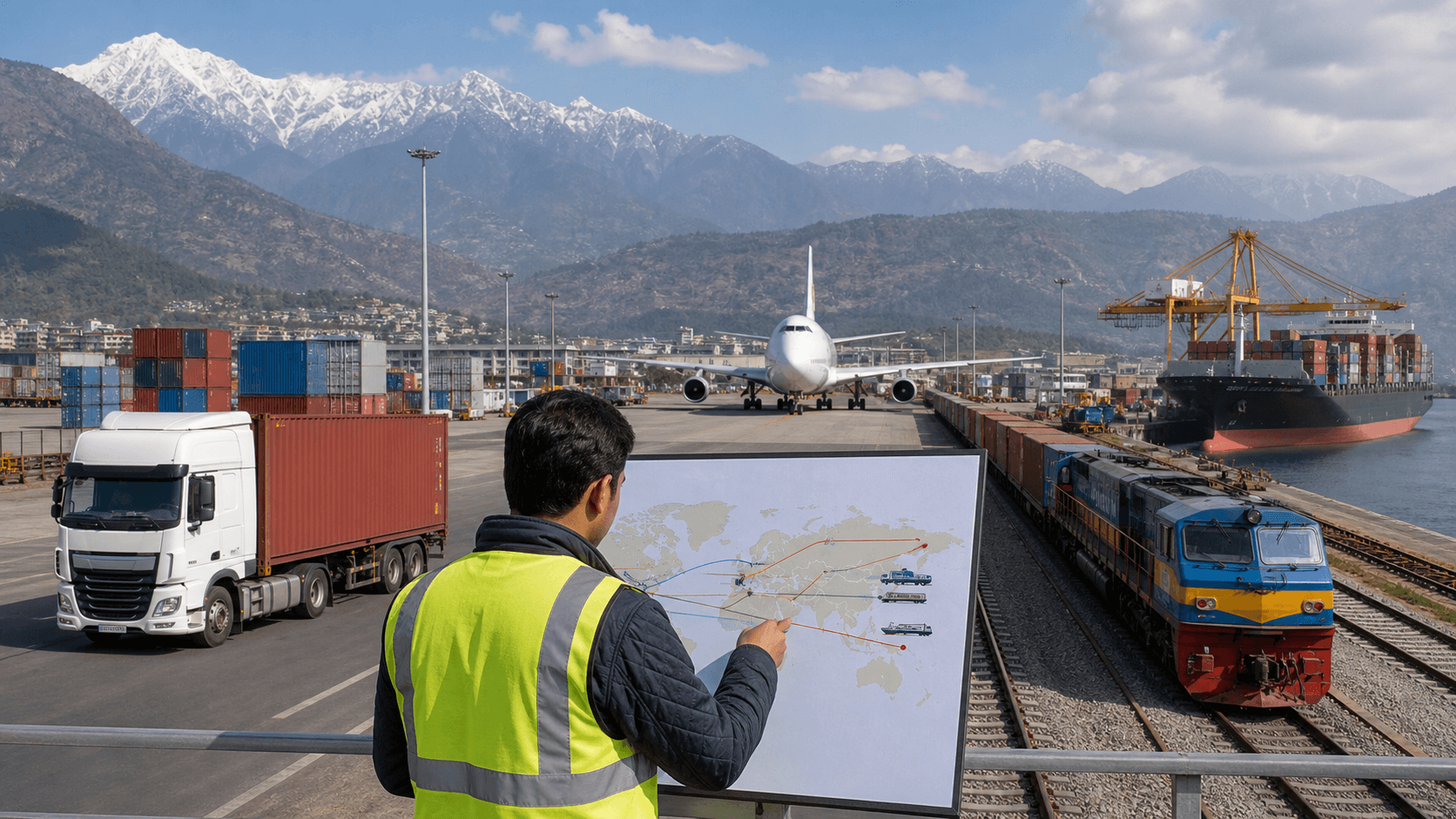
Incoterms define responsibility, not the complete route
Incoterms help the buyer and seller define where delivery happens, which party arranges specified transport stages and where risk transfers. They do not replace the sales contract, customs law, cargo insurance terms or a detailed forwarding scope.
For example, EXW may leave the buyer responsible for collecting cargo from the seller's premises and arranging most of the movement. FOB places specific origin responsibilities on the seller for sea or inland-waterway shipments, but the buyer still needs the main freight and destination plan. CIF includes named-port cost, insurance and freight under defined terms, yet it does not automatically include Nepal inland transit, import clearance, duty, VAT or warehouse delivery. DAP or DPU can extend the seller's delivery responsibility, while DDP adds import-duty responsibility and requires careful confirmation that the seller can legally perform the destination obligations.
Do not select an Incoterm because its three letters look convenient on a pro-forma invoice. Ask for the named place, the exact version, the included charges and the operational handoff. Read the detailed FOB vs CIF guide for Nepal importers before agreeing to an overseas purchase.
- Who books and pays the origin pickup?
- Who completes export clearance?
- Who chooses the international carrier?
- Where does cargo risk transfer?
- Who pays destination terminal and handling charges?
- Who acts as importer and completes customs clearance?
- Who pays duty, VAT and other government charges?
- Who arranges the final vehicle and unloading?

Cross-border shipping documents checklist
The document set depends on the product, route, origin, destination, payment method and current regulations. A freight booking can start with preliminary information, but customs clearance needs consistent commercial and transport evidence.
- Commercial invoice with buyer, seller, currency, value and clear product descriptions
- Packing list with package count, contents, net and gross weight and dimensions
- Air waybill, bill of lading, road consignment note or rail transport record
- HS code and enough technical information to support classification
- Certificate of origin when required for customs or a preference claim
- Import or export licence, permit, recommendation or no-objection document where applicable
- Insurance certificate when required by the contract, bank or customs valuation process
- Importer and exporter registration, PAN, VAT or EXIM details as applicable
- Letter of credit, advance-payment evidence or bank documents where required
- Agent authorization letter for the customs or clearing representative
- Product catalogue, specification, safety data sheet or test certificate for technical or regulated cargo
- Special packing declaration, dangerous-goods declaration or temperature instructions where applicable
The invoice, packing list and transport document should tell the same story. Product name, quantity, package count, value, origin, weight and parties must not contradict each other. Avoid vague descriptions such as "parts," "samples" or "general goods" when a precise commercial description is available.
For Nepal exports, the required evidence can also depend on the product and destination preference. Exporters should confirm current customs, banking, certificate-of-origin and product-specific requirements before dispatch.
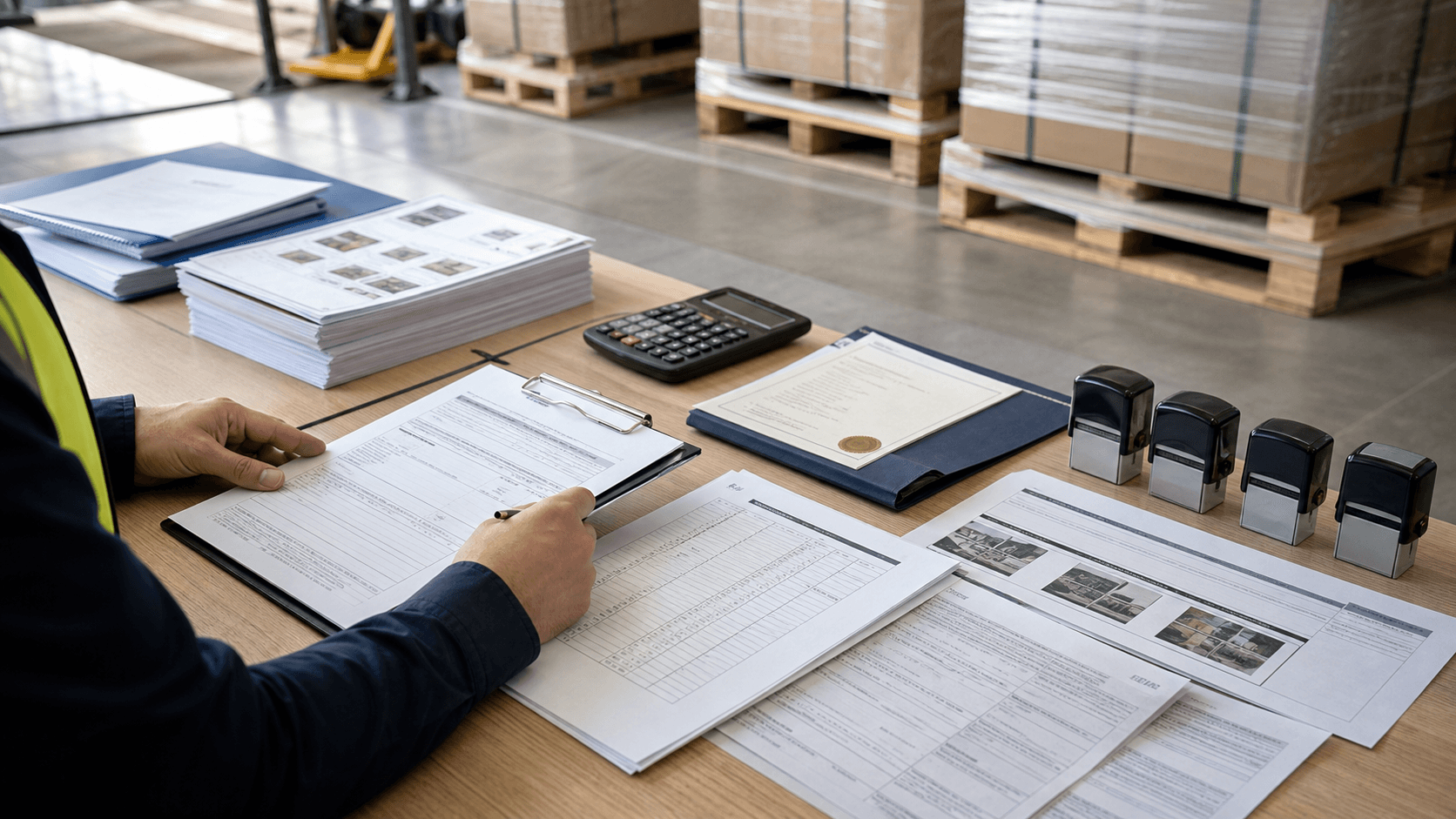
Customs clearance, HS codes and permits
Customs turns the shipment file into a legal import or export declaration. The process may include document review, HS-code classification, customs valuation, origin checks, permit verification, physical inspection, assessment of duty and taxes, payment, release and post-clearance recordkeeping.
The HS code affects duty rates, restrictions, permit questions and trade statistics. It must be supported by what the product is made of, what it does, how it is presented and how it will be used. A supplier code can be a useful starting point, but the importer remains exposed if that code does not match the destination rules or the actual product.
Regulated cargo may need approval from an agency responsible for health, agriculture, food, communications, environment, transport, security or another product area. The freight forwarder can coordinate the file, but the importer or exporter should confirm product eligibility and obtain the required approvals before the cargo departs.
Review the wrong HS code guide, Nepal import permit guide and Sea Sky's customs clearance service. Current notices, tariff schedules and product-specific rules should always be checked for the actual shipment.
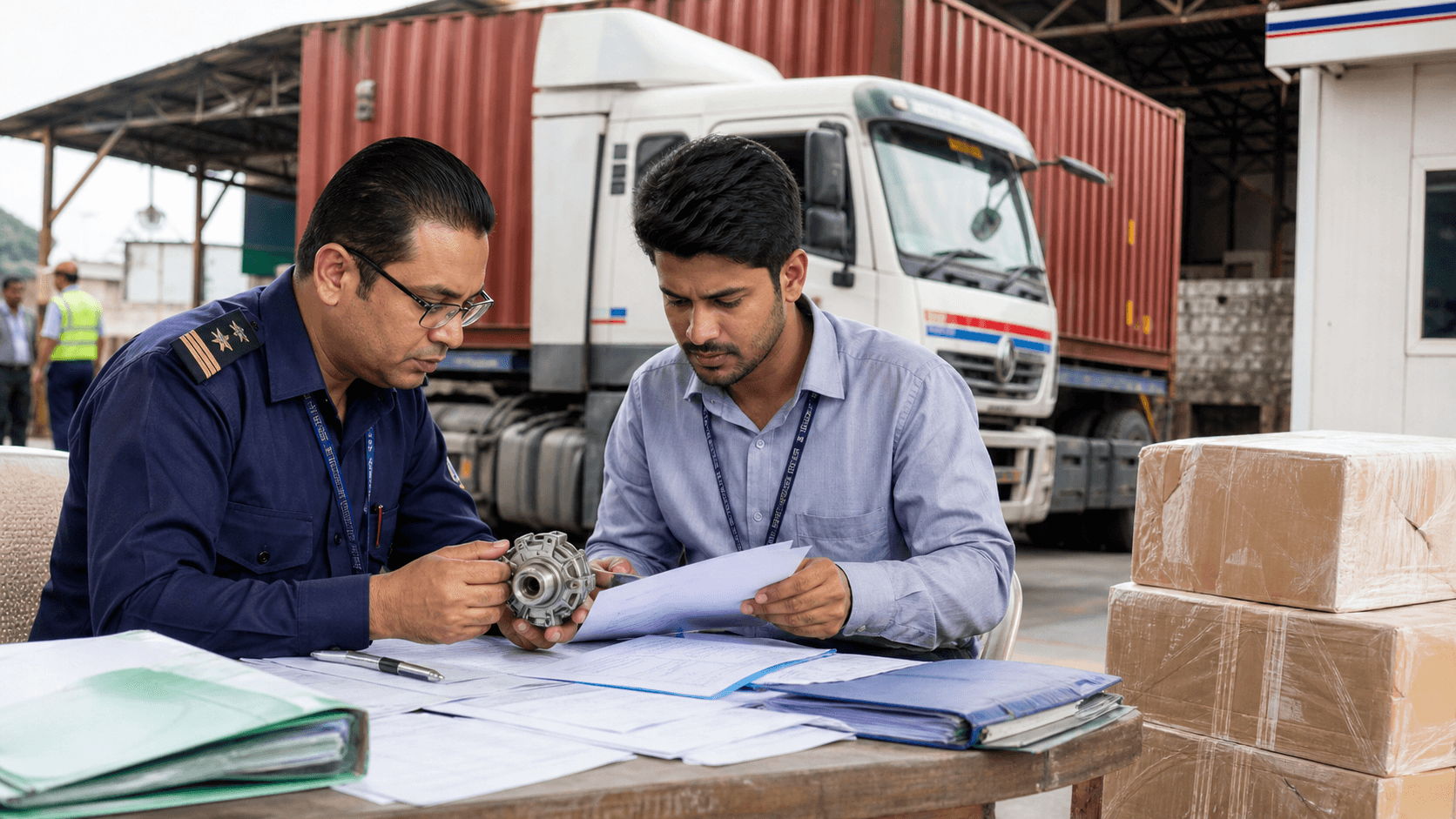
Is your cross-border shipment ready to book?
Share the cargo, origin, destination, packed weight and dimensions, commercial terms, deadline and available documents. Sea Sky Cargo can review the route and customs handoffs before dispatch.
Calculate landed cost instead of comparing freight alone
The lowest freight rate is not always the lowest delivered cost. A useful cross-border quote shows where the scope starts and ends, which charges are fixed, which are estimates and which costs are excluded. Ask whether the quote is airport-to-airport, port-to-port, border-to-border, door-to-port or door-to-door. Check the currency, validity period, chargeable weight or volume basis, free time, tax treatment and the assumptions used for customs and delivery. For sea cargo moving through an Indian gateway, review the port-to-door cargo guide. For smaller shared-container cargo, the LCL shipping to Nepal guide explains consolidation and destination charges in more detail.
| Cost group | Possible items |
|---|---|
| Origin | Supplier pickup, export packing, documentation, export clearance and terminal handling |
| Main transport | Air, ocean, road or rail freight, fuel surcharge and security or carrier fees |
| Transit and destination | Port, airport, rail terminal, border, deconsolidation, handling and delivery-order charges |
| Customs and government | Duty, VAT, excise where applicable, permit fees and inspection-related charges |
| Inland delivery | Truck, trailer, tolls, unloading, crane, forklift, site waiting and warehouse delivery |
| Risk and exceptions | Insurance, storage, demurrage, detention, re-delivery, document correction and cargo survey |

Important cross-border routes connected to Nepal
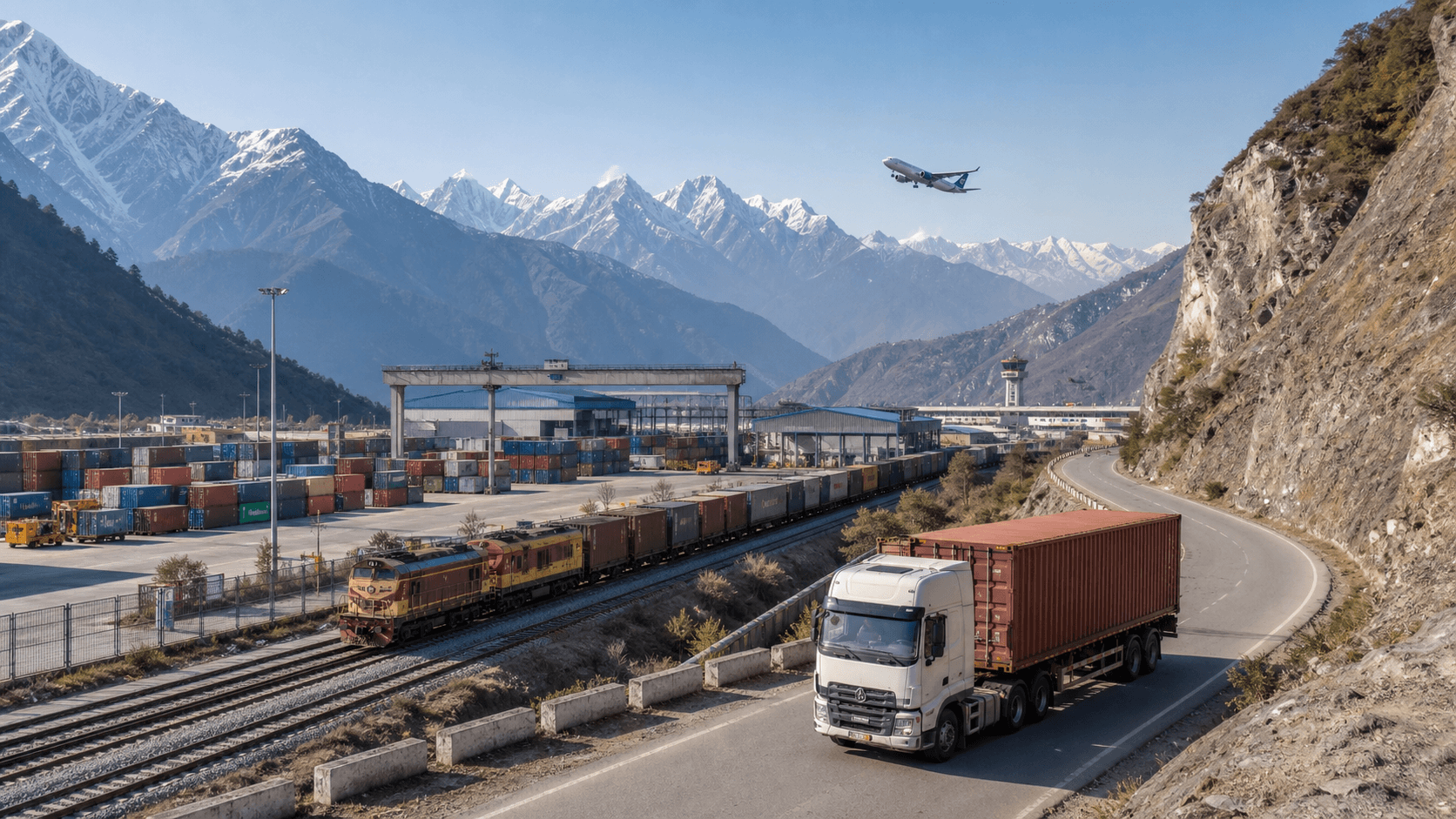
Nepal's geography makes route coordination especially important. Regional cargo can move by road through India or China, while overseas sea cargo normally needs an Indian port and an inland connection. Air cargo can arrive or depart through an international airport and then move by road after customs release.
- India-Nepal road freight for commercial goods, raw materials and regular replenishment
- China-Nepal road freight for supplier cargo, machinery, electronics and consolidated loads
- Overseas sea freight to an Indian gateway followed by rail-linked or road movement toward Nepal
- International air freight for urgent, valuable, time-sensitive or smaller commercial shipments
- Nepal exports moving by road to India or connecting to overseas air and sea networks
- Project, breakbulk, RoRo and oversized cargo requiring route surveys and special equipment
A route can change when border operations, weather, carrier schedules, road conditions or regulatory notices change. Confirm the live routing before pickup. Sea Sky's China-to-Nepal road cargo guide, breakbulk cargo guide and international freight booking guide cover specialist lanes and cargo profiles.
How businesses reduce cross-border delays and cargo risk
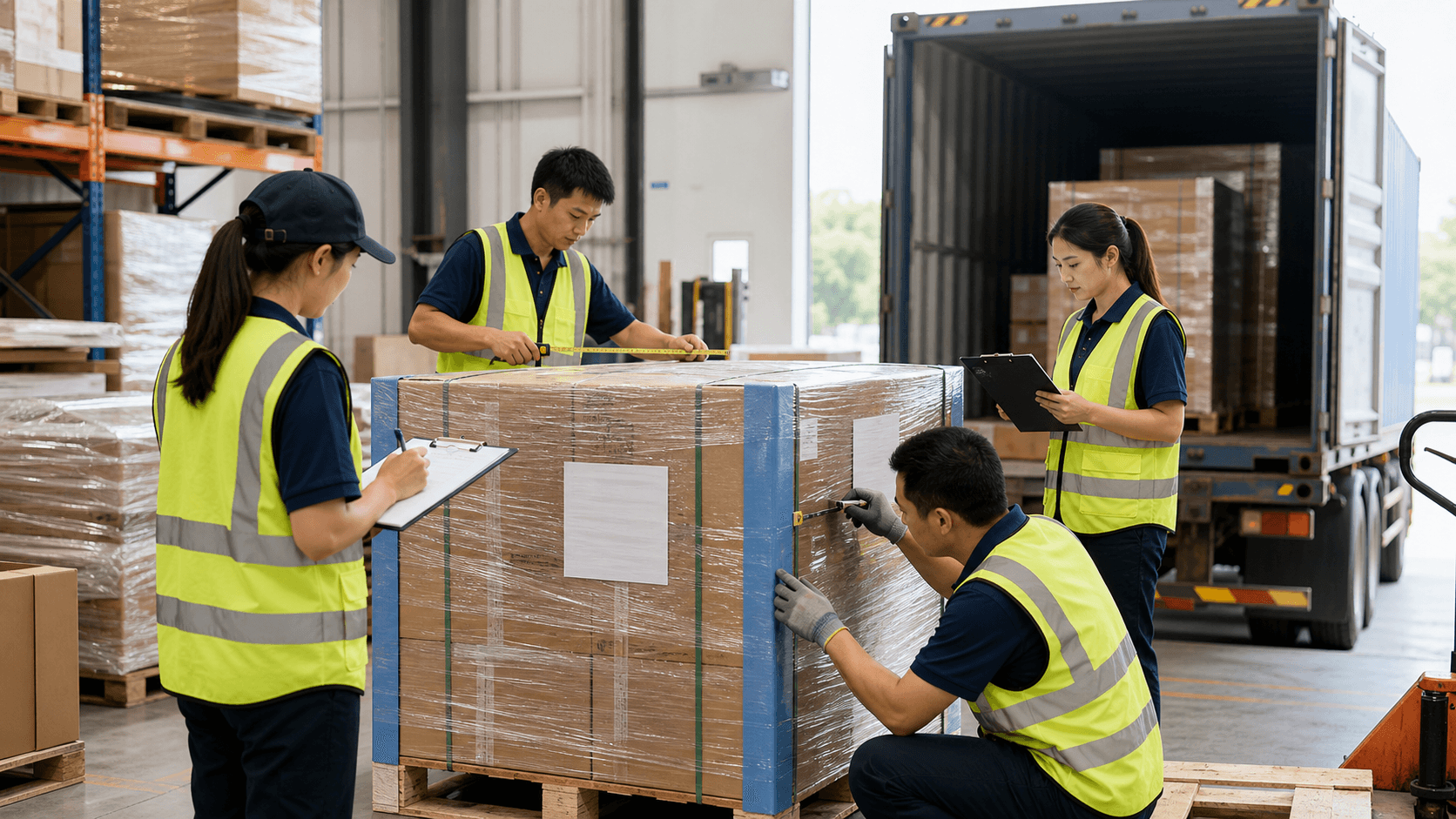
Most avoidable delays come from mismatched information or late decisions rather than from distance alone. A disciplined pre-dispatch review gives the supplier, forwarder, importer and customs representative time to correct the file before storage and waiting costs begin.
- Classify the exact product before requesting the final freight quote
- Confirm permits and restrictions before paying the supplier or dispatching cargo
- Measure the packed cargo, not only the unpacked product
- Use an Incoterm with a named place and a written division of charges
- Match invoice, packing list and transport-document information
- Choose packaging for the full route, including transfers and road vibration
- Insure cargo according to its value, route, packing and risk profile
- Name the importer, customs contact and destination receiver before departure
- Track milestones and escalate exceptions before free time expires
- Prepare unloading equipment and site access before final delivery
Cargo insurance and carrier liability are not the same. Understand the insured risks, exclusions, deductible, valuation basis, geographic scope and claim evidence before transit. The freight and cargo insurance guide explains the questions a Nepal business should ask.
How Sea Sky Cargo supports cross-border shipping
Sea Sky Cargo helps Nepal importers, exporters, overseas suppliers and freight-forwarding partners coordinate cross-border shipments around the real cargo and agreed service scope.
- Air, sea, road, rail and multimodal route comparison
- Supplier pickup and booking coordination
- LCL, FCL and commercial cargo planning
- Shipment document review before dispatch
- HS-code and import-permit preparation support
- Nepal customs-clearance coordination
- Indian-port, border and inland handoff planning
- Heavy, oversized, project and special-cargo planning
- Warehouse or final-delivery coordination
- Communication with destination partners and customs representatives under the agreed scope
Sea Sky does not replace the importer, exporter, regulator, bank, carrier, insurer or destination customs broker where those parties have legal responsibilities. The aim is to connect their requirements into one workable shipment plan and make exclusions visible before booking.
Send the product description, HS code if known, origin, destination, Incoterm, package count, packed weight and dimensions, cargo-ready date, required arrival date and available documents through the get quote page.

Frequently asked questions about cross-border shipping
What is cross-border shipping? Cross-border shipping is the movement of commercial goods between countries, including export procedures, international or regional transport, import customs and final delivery.
How does cross-border shipping to Nepal work? Cargo may move directly by air or road, or by sea to an Indian gateway followed by rail-linked or road transit. The importer then completes Nepal customs requirements before release and delivery.
What documents are needed for cross-border shipping? Common documents include a commercial invoice, packing list, transport document, HS-code information, importer and exporter details, certificate of origin where required, permits for regulated goods and customs declarations.
How long does a cross-border shipment take? Timing depends on origin, destination, freight mode, carrier schedule, border or port conditions, customs readiness, inspections and final delivery. A route-specific estimate is more useful than a generic promise.
How much does cross-border shipping cost? Cost depends on weight, dimensions, mode, route, Incoterm, handling, customs charges, duty and tax, inland delivery and exception risk. Compare the complete delivered scope.
Which Incoterm is best for a Nepal importer? There is no universal best term. The buyer should choose one that matches its ability to control origin, freight, customs and delivery, then confirm every included and excluded charge.
Can Sea Sky arrange door-to-door cross-border shipping? Sea Sky can coordinate door-to-door planning where the route, cargo, destination-partner coverage and customs responsibilities allow it. The final quote should state the precise scope.
Can Sea Sky handle LCL and FCL cargo? Yes. Sea Sky can help plan shared-container and full-container shipments, including origin booking, Indian-port or inland handoffs and Nepal delivery coordination.
Does a freight forwarder pay customs duty for the importer? Duty and tax responsibility belongs to the party identified under the transaction and destination rules. A forwarder or customs representative can coordinate assessment and payment processes under an agreed scope, but the importer should understand its legal and financial responsibility.
What causes cross-border shipping delays? Common causes include unclear product descriptions, wrong HS codes, missing permits, document mismatches, carrier changes, border congestion, inspections, unpaid charges, packaging problems and an unprepared delivery site.

Plan the whole border-to-door movement
Get a shipment-specific comparison covering freight mode, document readiness, customs coordination, border or port handoffs and delivery in Nepal or abroad.