Door-to-Door vs. Port-to-Port Cargo: Which Service Is Right for Your Nepali Business?
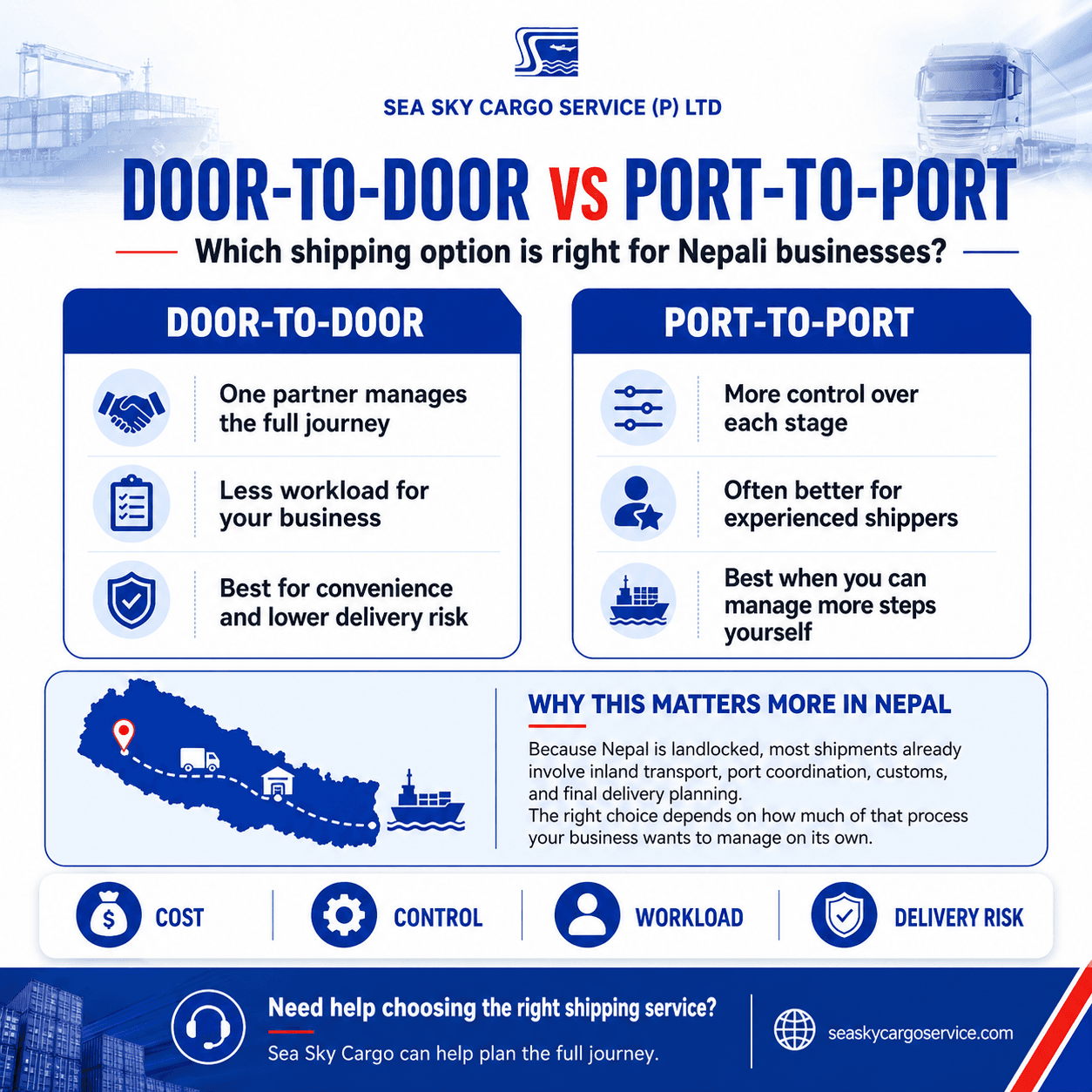
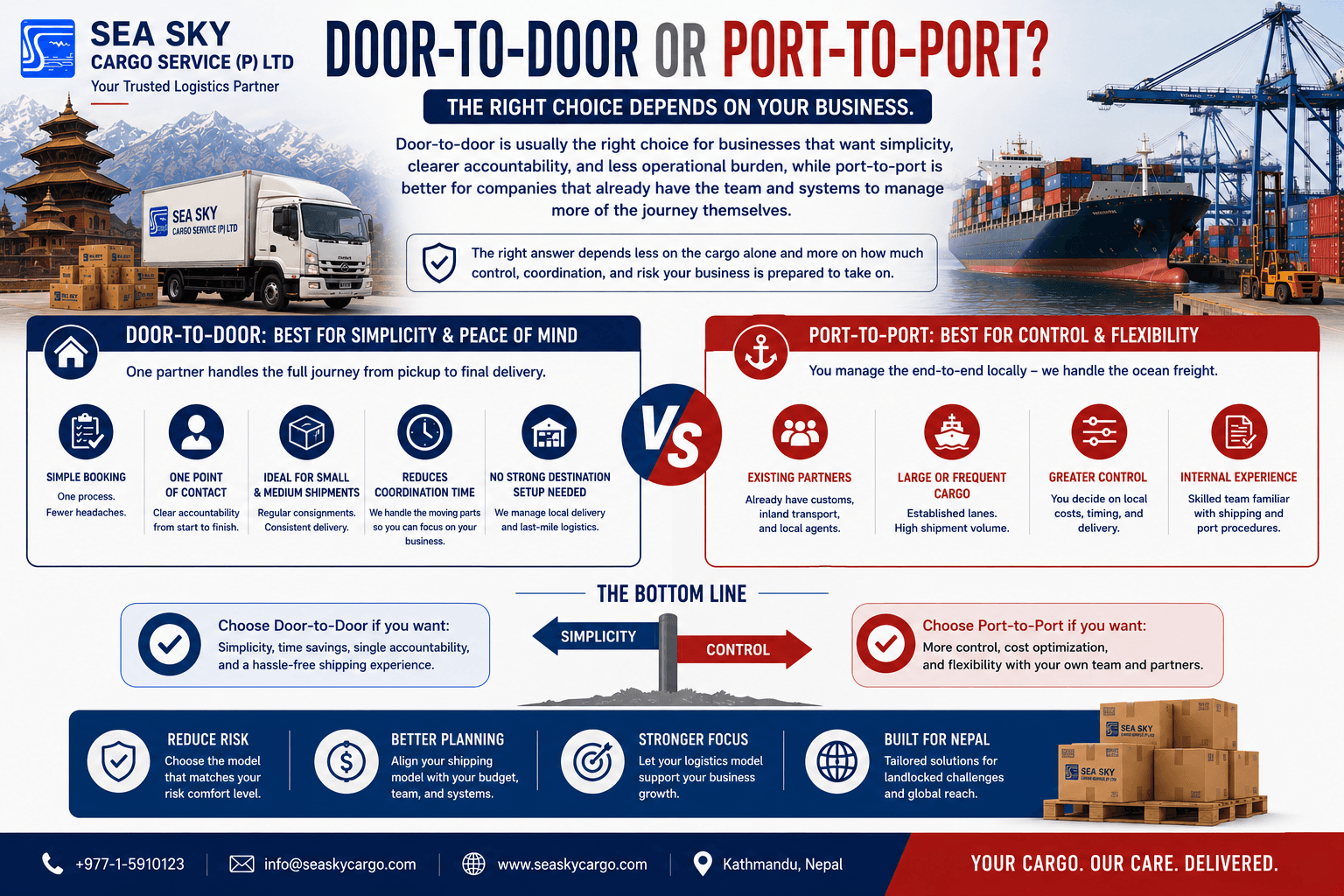
For Nepali businesses, the choice between door-to-door and port-to-port shipping affects cost, control, workload, and delivery risk. Door-to-door is usually better for businesses that want a single logistics partner to manage the full journey, while port-to-port works better for experienced importers or exporters who want more control and can handle more steps themselves.
Because Nepal is landlocked, this decision matters even more than it does in coastal countries. Most international cargo from Nepal already involves inland movement, port coordination, customs handling, and final delivery planning, so the “right” service depends on how much of that process your business wants to manage on its own.
What each service means
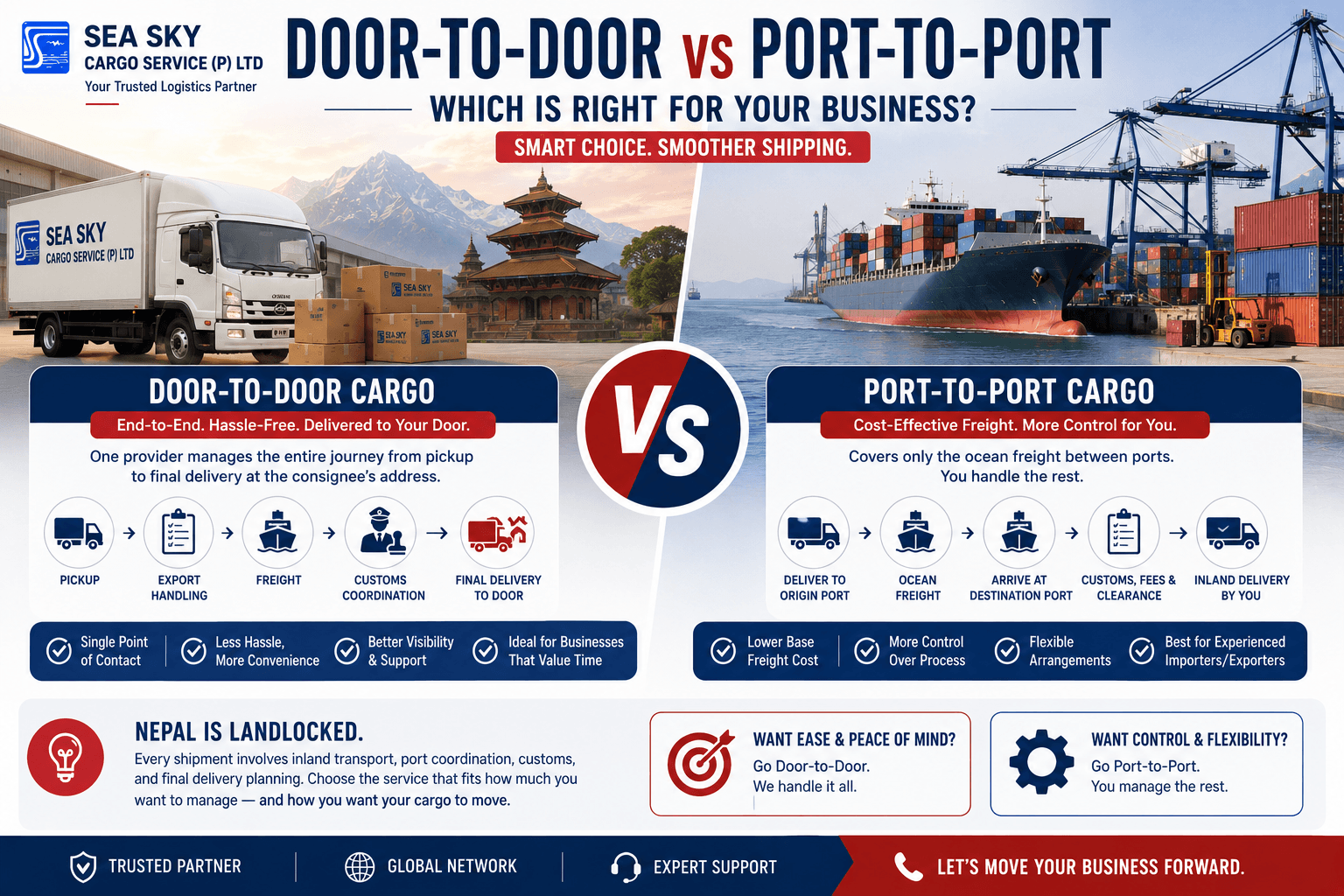
Door-to-door cargo is an end-to-end logistics service where one provider manages pickup, export handling, freight, customs coordination, and final delivery to the consignee’s address. This option is designed to reduce complexity and give the shipper a single point of contact from origin to destination.
Port-to-port cargo covers only the movement between the origin port and destination port, which means the shipper or consignee usually handles pickup, inland transport, customs clearance, terminal fees, and final delivery separately. This can lower the base freight cost, but it also increases the number of parties involved and the amount of coordination required.
Direct comparison
| Factor | Door-to-Door | Port-to-Port |
|---|---|---|
| Best for | Businesses that want convenience and one provider handling the full route | Businesses with their own logistics team or trusted local agents |
| Scope | Pickup, freight, customs coordination, and final delivery | Port loading and ocean/air segment only |
| Cost style | Higher upfront price, often fewer surprise steps | Lower base freight, but more separate charges later |
| Control | Less hands-on, more outsourced | More control, more responsibility |
| Complexity | Lower for the shipper | Higher for the shipper |
| Hidden cost risk | Lower if the quote is truly end-to-end | Higher due to terminal, storage, and local handling charges |
| Accountability | One main logistics contact | Split across multiple providers |
Benefits of door-to-door
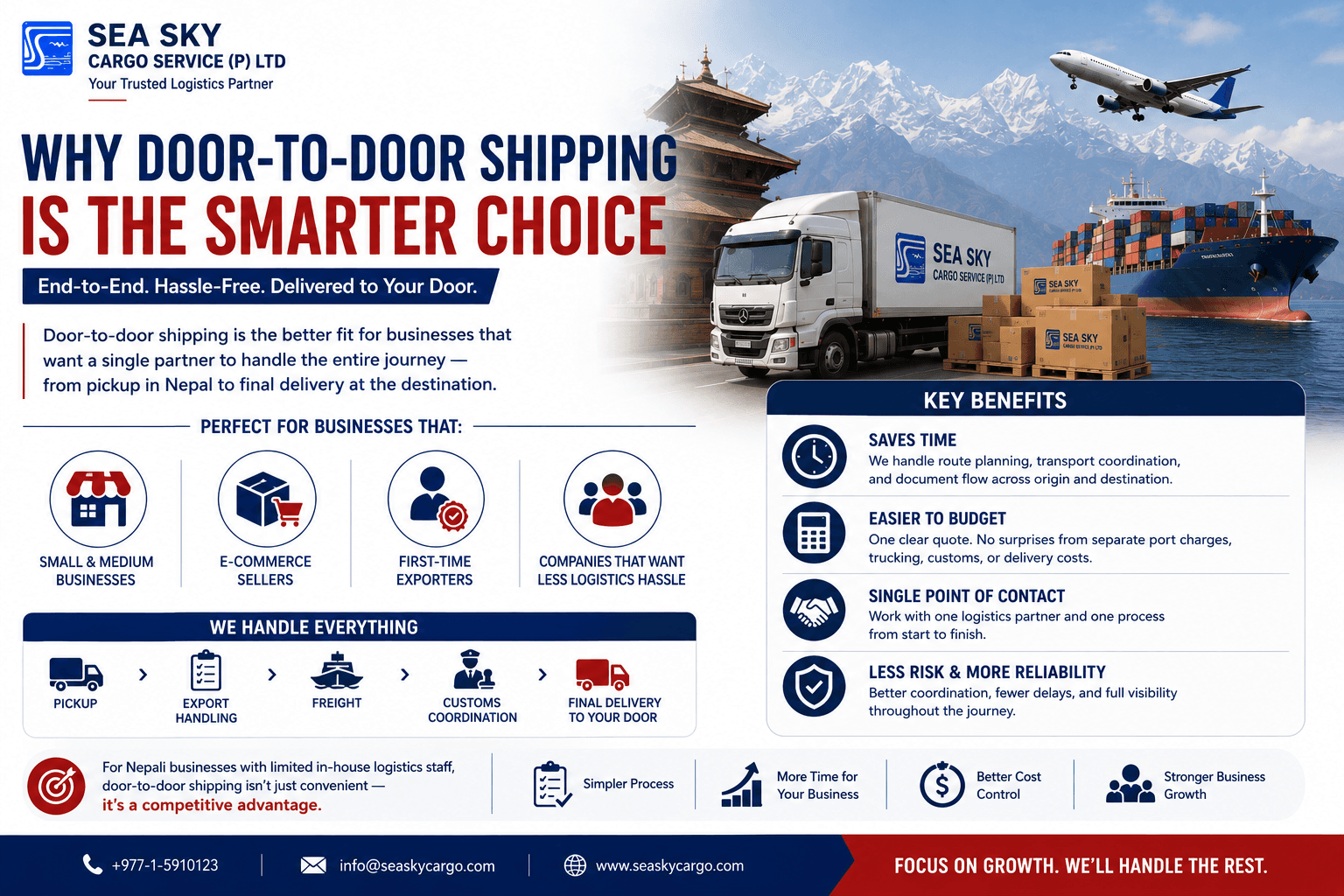
Door-to-door shipping is usually the better fit for small and medium-sized businesses, first-time exporters, e-commerce sellers, and companies that do not want to manage every stage of international logistics themselves. It saves time because the forwarder handles the route planning, transport coordination, and much of the document flow across origin and destination.
This model is also easier to budget if the quote is clear. Instead of managing separate port charges, local trucking, customs coordination, and final delivery through different vendors, the shipper can work with one logistics partner and one process. For Nepali businesses with limited in-house logistics staff, that simplicity can be a major advantage.
Benefits of port-to-port
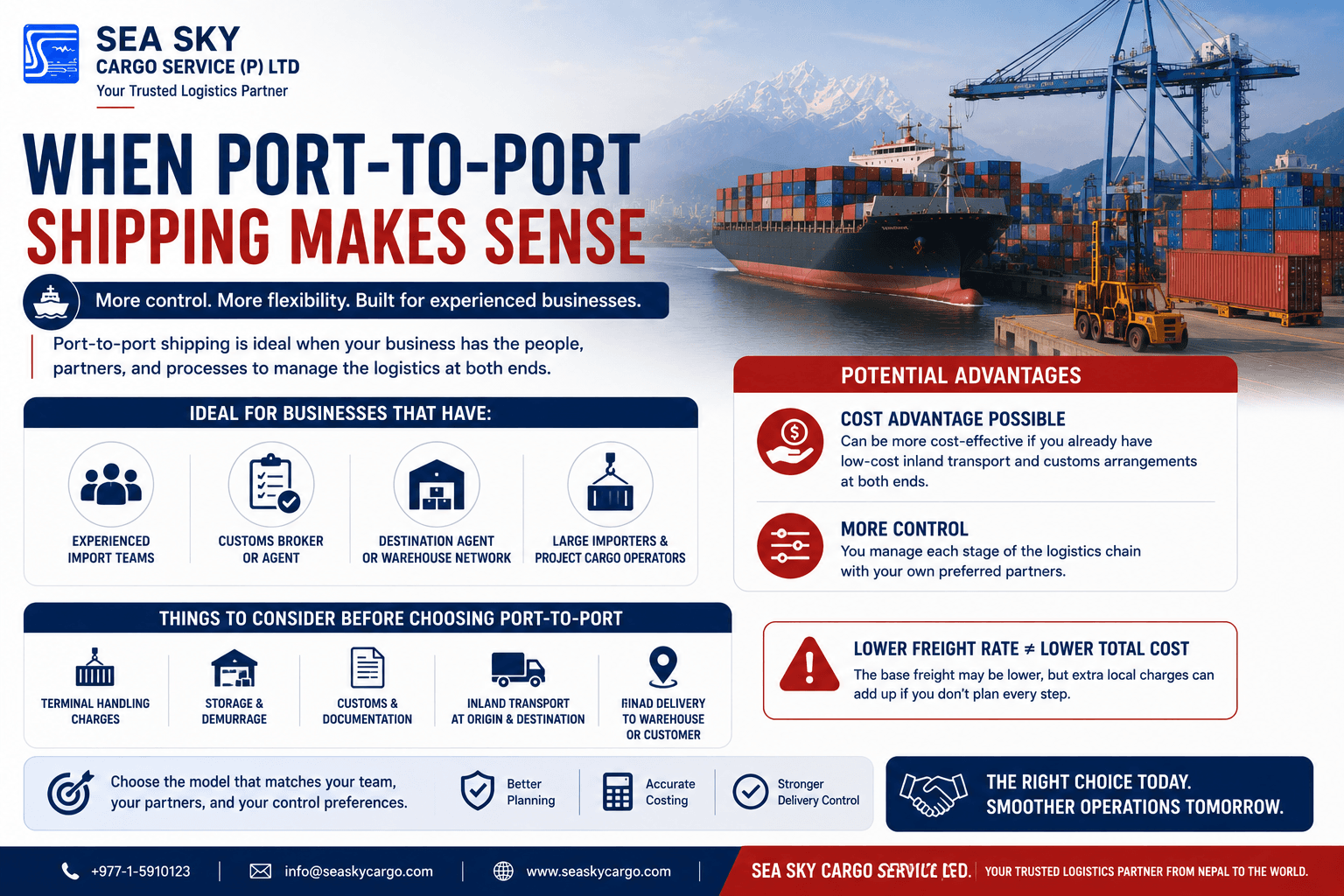
Port-to-port shipping can make sense when the business already has a capable import team, customs broker, destination agent, or warehouse network. It is often used by larger importers, project cargo operators, and companies that want tighter control over each stage of the logistics chain.
This option may also offer cost advantages if the shipper already has low-cost inland transport and customs arrangements at both ends. However, the lower headline rate can be misleading if the business has not calculated terminal handling, storage, documentation, and local delivery charges separately.
Best-fit scenarios
Choose door-to-door if your business:
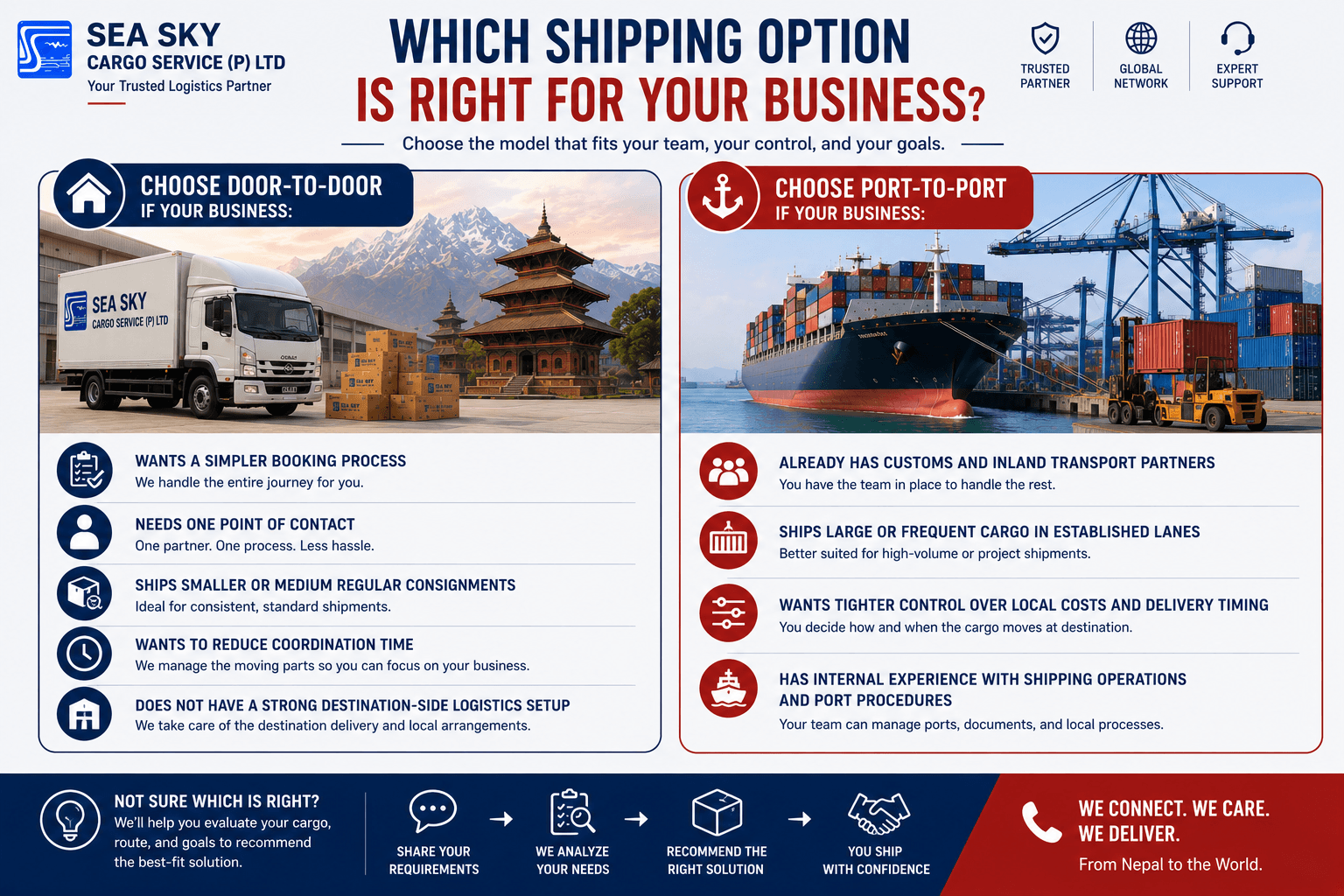
- Wants a simpler booking process.
- Needs one point of contact.
- Ships smaller or medium regular consignments.
- Wants to reduce coordination time.
- Does not have a strong destination-side logistics setup.
Choose port-to-port if your business:
- Already has customs and inland transport partners.
- Ships large or frequent cargo in established lanes.
- Wants tighter control over local costs and delivery timing.
- Has internal experience with shipping operations and port procedures.
Cost considerations
Door-to-door usually costs more at the quote stage because it includes more service components. Port-to-port often looks cheaper at first because it covers only the freight segment, but it can become more expensive overall if the shipper faces unexpected charges at the destination port or loses time coordinating separate providers.
For Nepali businesses, this difference is important because inland legs are not optional. Since cargo must connect through Indian ports or other transit systems, a “cheap” port-to-port rate may still leave the business responsible for a lot of complicated work after the vessel arrives.
Why this matters in Nepal
Nepal’s landlocked geography makes logistics more layered than in many markets. Even a standard international shipment often involves domestic pickup, border or port movement, customs support, and inland delivery after arrival.
That is why service choice matters so much. A business that wants speed, predictability, and lower coordination effort often benefits more from door-to-door service, while a business with specialized logistics teams may still prefer port-to-port for certain routes or large-volume contracts.
Why Sea Sky is relevant
Sea Sky’s company profile lists both door-to-door and broader freight capabilities including airfreight, ocean freight, project cargo, break-bulk, inland transport, warehousing, and cross-border logistics support. That means the company is positioned to support either a full-service door-to-door requirement or a more segmented freight movement depending on the business need.
For decision-makers, that flexibility matters. The best logistics partner is not the one pushing one model for every shipment, but the one that can recommend the right structure based on cargo type, internal capacity, budget, and route complexity.
Conclusion
Door-to-door is usually the right choice for Nepali businesses that want simplicity, clearer accountability, and less operational burden, while port-to-port is better for companies that already have the team and systems to manage more of the journey themselves. The right answer depends less on the cargo alone and more on how much control, coordination, and risk your business is prepared to take on.
Need the easier option? Get a door-to-door quote from Sea Sky today and compare the full cost before you book.
Related posts
1970-01-01
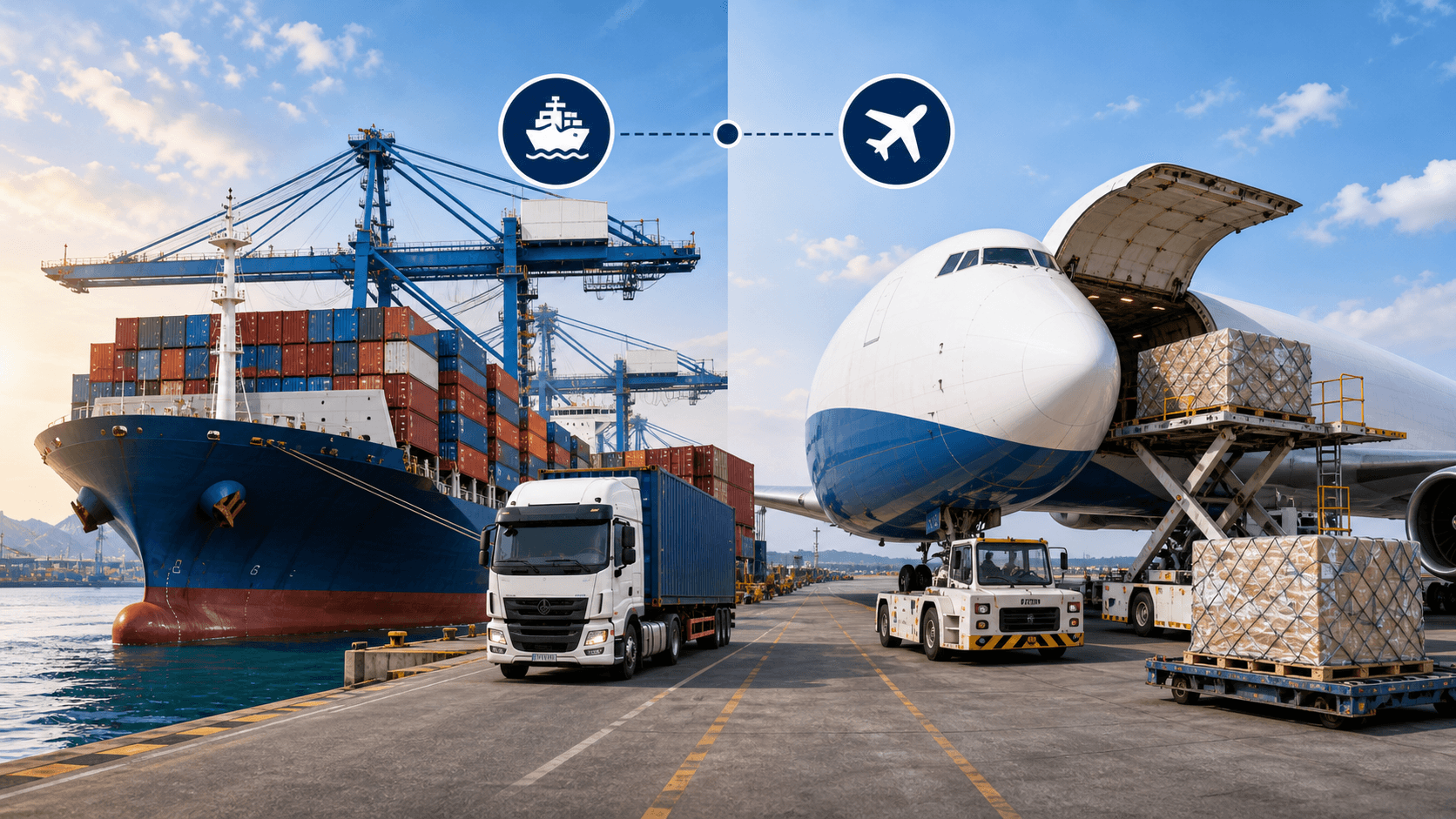
Sea + Air Freight: How SeaSky Helps Businesses Ship Smarter
2026-10-01
Freight Forwarder vs Customs Clearing Agent in Nepal: Which Do You Need?
2026-09-28
E-commerce Logistics Nepal: Cross-Border Shipping from China, India, and the Gulf
2026-09-27