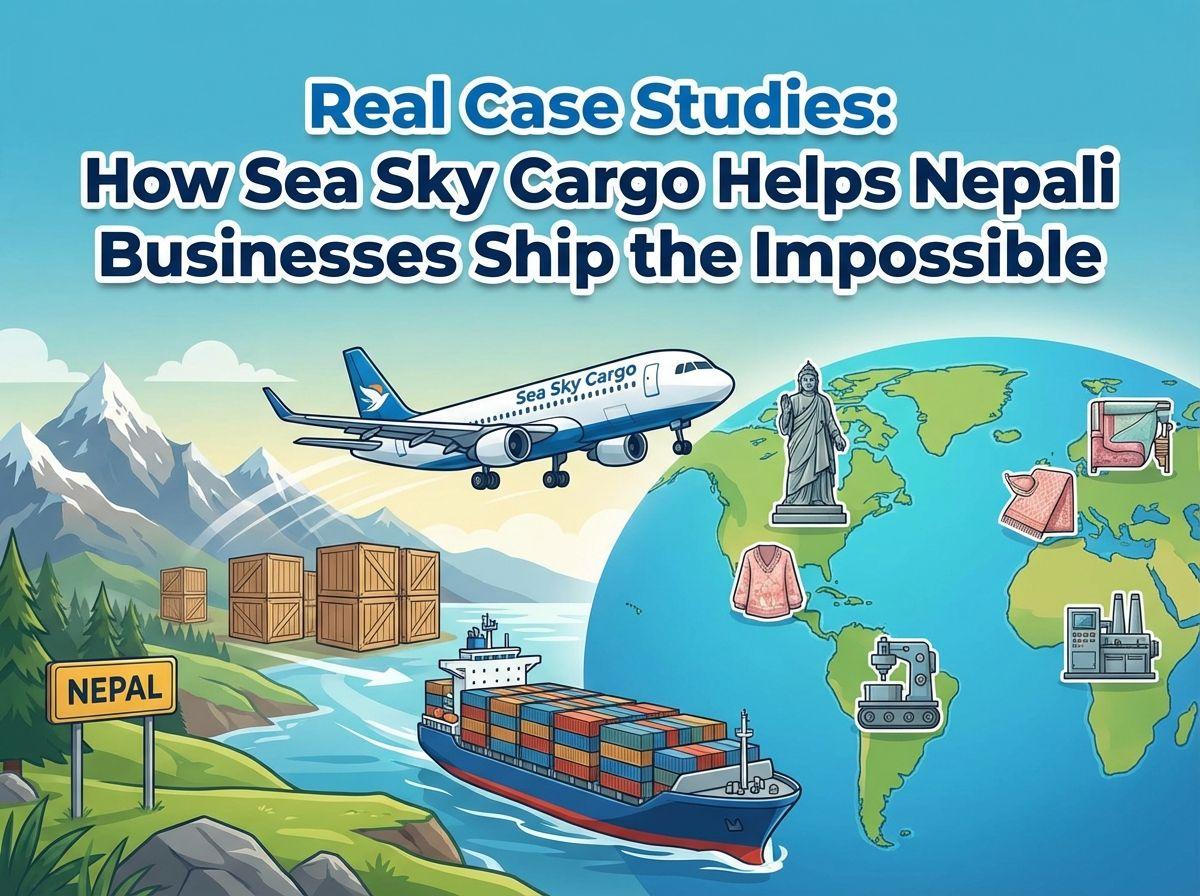
Introduction: From Carpet Exporter to Project Logistics Leader
Sea Sky Cargo Service started in 1988 when its founder registered the company to export carpets from Kathmandu using the then‑new ocean gateway through Kolkata instead of only expensive air freight. Over nearly four decades, that small exporter‑focused firm has grown into a South Asia‑wide project and freight specialist, trusted by hydropower developers, UN missions, embassies, INGOs, and hundreds of Nepali SMEs shipping carpets, pashmina, herbs, and handicrafts worldwide.
Related: Cross Border Shipping
This blog looks at real project references and case studies from Sea Sky’s own record: a 70 MW hydropower plant, UN peacekeeping support, cross‑border RORO vehicles, and everyday exporters. Together, they show what a serious cargo company in Nepal can do when planning, local know‑how, and transparency come together.
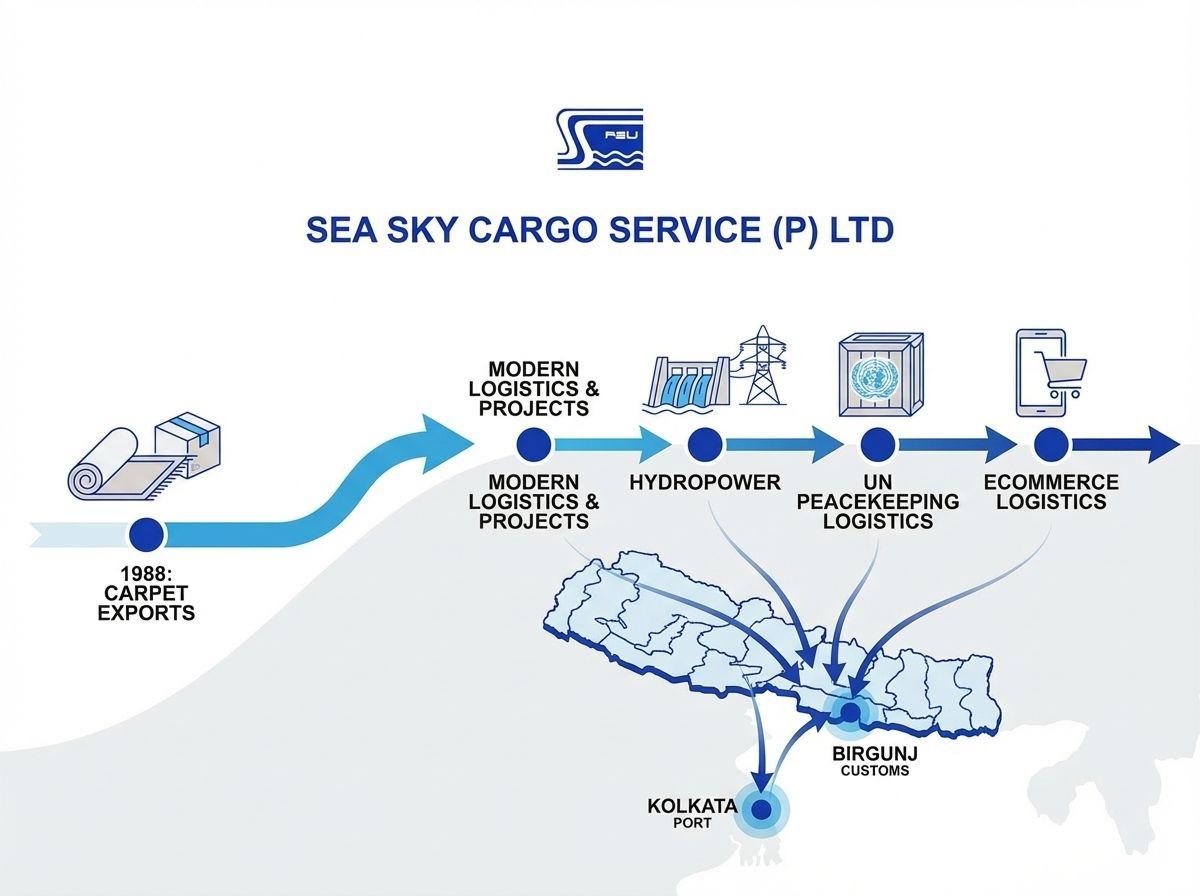
Case Study 1: 70 MW Marsyangdi Hydropower Project
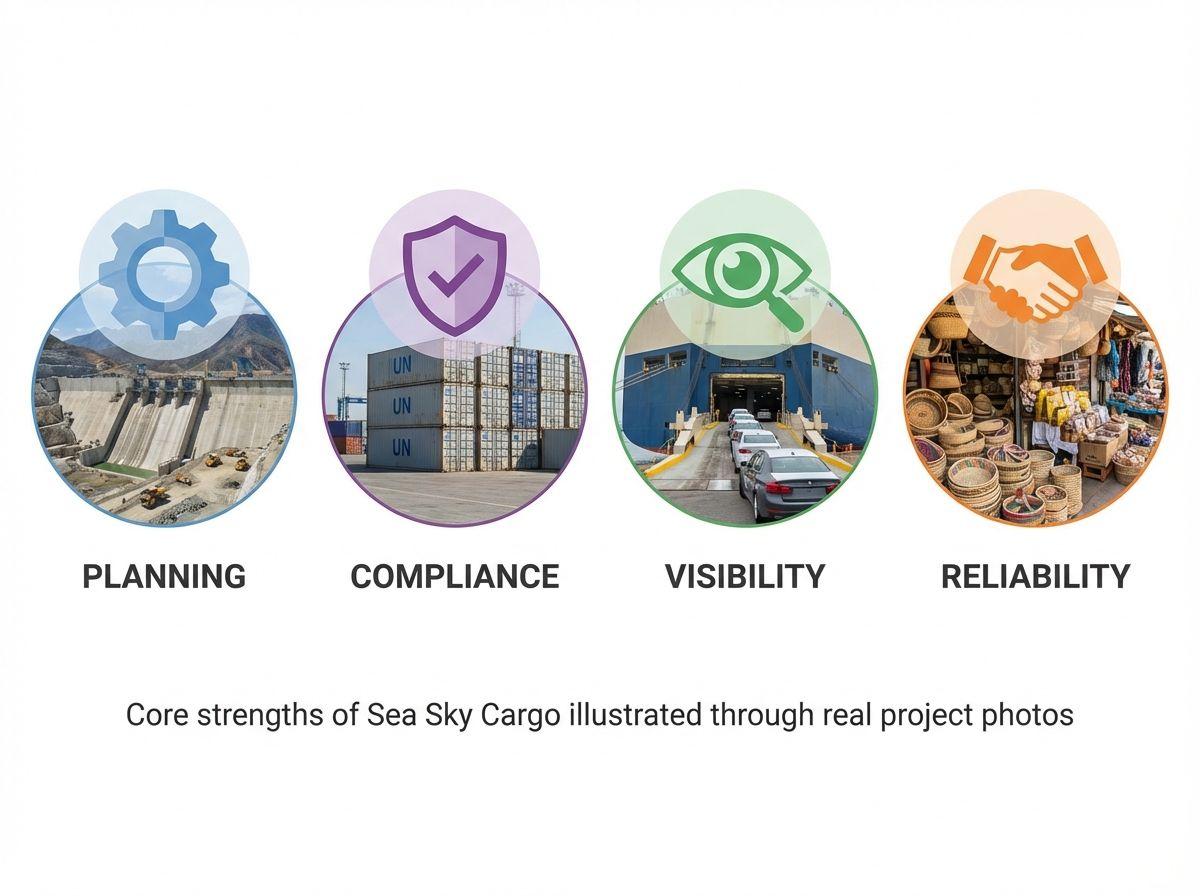
When the 70 MW Marsyangdi Power Project needed to move precision‑engineered turbines and heavy equipment from Europe to a remote river valley in Nepal, Voith Siemens and the Nepal Electricity Authority chose Sea Sky Cargo as logistics partner. The mission: deliver multiple containers and oversized pieces 15 TEUs plus four 20‑foot flat racks safely from European ports, through Indian gateways, across difficult roads, and onto foundations at the project site.
Sea Sky started with end‑to‑end route engineering. The team mapped the entire journey sea legs from Europe, transshipment at gateway ports, Indian rail/road into Nepal, bridge load limits, gradients, and clearances identifying where low‑bed trailers, police escorts, or night‑time moves would be required. They coordinated with port and customs authorities from Hamburg to Kolkata and Birgunj, ensuring paperwork for oversize pieces, flat‑rack loads, and Nepal‑bound transit was correct before any cargo moved.
Because turbine parts are both heavy and delicate, Sea Sky used custom rigging plans, certified handlers, and tailor‑made flat‑rack lashing schemes to prevent any torsion or vibration damage en route. Continuous progress updates and tracking gave Voith Siemens and NEA full visibility on each consignment, from vessel departure to final site delivery.
The result: mission‑critical hydropower components arrived on time and intact, helping keep Marsyangdi’s construction and commissioning on schedule and reinforcing Sea Sky’s reputation as a hydropower and project‑cargo specialist in Nepal and Bhutan.
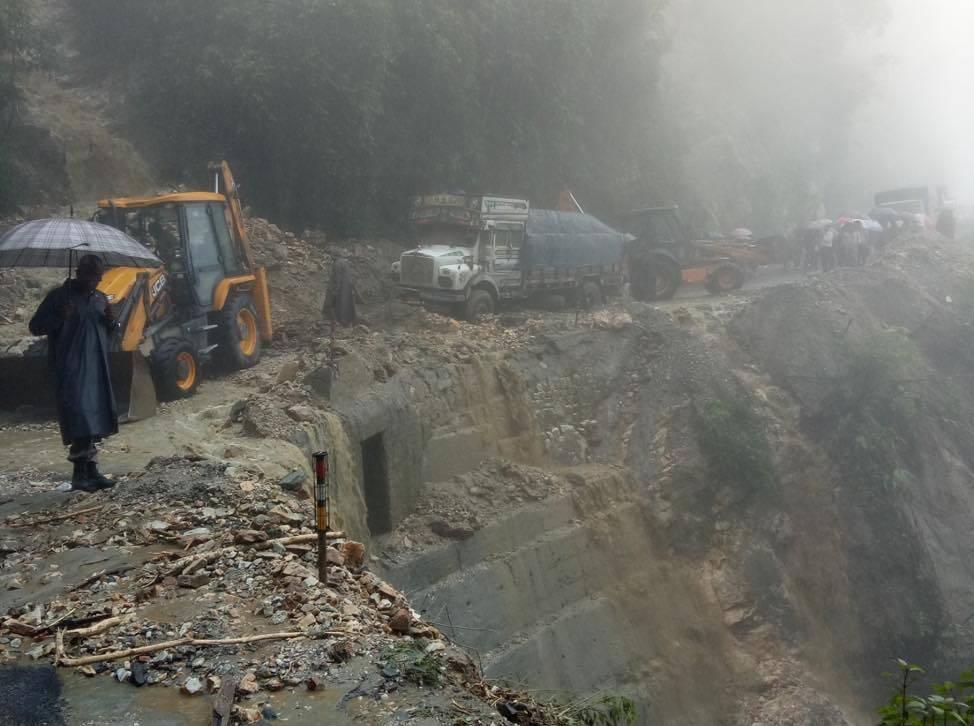
Case Study 2: UNMIN Peacekeeping & Humanitarian Logistics
Peacekeeping logistics is unforgiving: security, compliance, and timing must all be perfect. When the United Nations Mission in Nepal (UNMIN) needed a logistics partner to move mission equipment and humanitarian supplies into Kathmandu, Sea Sky managed the complete flow as a specialized project.seaskycargoservice
The operation involved multiple consignments 12 x 40‑foot containers, plus 8 x 40‑foot and 1 x 20‑foot containers in another phase loaded with sensitive communications gear, vehicles, and relief materials. Sea Sky engineered a door‑to‑door solution from overseas origin ports to UNMIN’s facilities in Nepal, aligning every step with UN procurement rules and international regulations on restricted items, security, and documentation.seaskycargoservice
With over 37 years’ experience by then, Sea Sky laid out a meticulous movement plan: booking secure carriers, arranging bonded transit through Indian ports, handling customs and security checks, and timing last‑mile deliveries around UN site restrictions and curfews. Dedicated staff focused on compliance and documentation, from export licenses to import clearances, so UNMIN cargo moved without legal or procedural snags.
Just as critical was transparent communication. Sea Sky provided real‑time tracking and proactive status reports, giving UN stakeholders continuous visibility over where each container was, what formalities had been cleared, and when to expect arrivals. That combination of compliance, visibility, and reliability led UN officials to highlight Sea Sky’s role as a trusted logistics partner for mission‑critical cargo in a landlocked, complex environment like Nepal.
[a]Sea Sky handling UNMIN containers and equipment in Kathmandu.[/a]
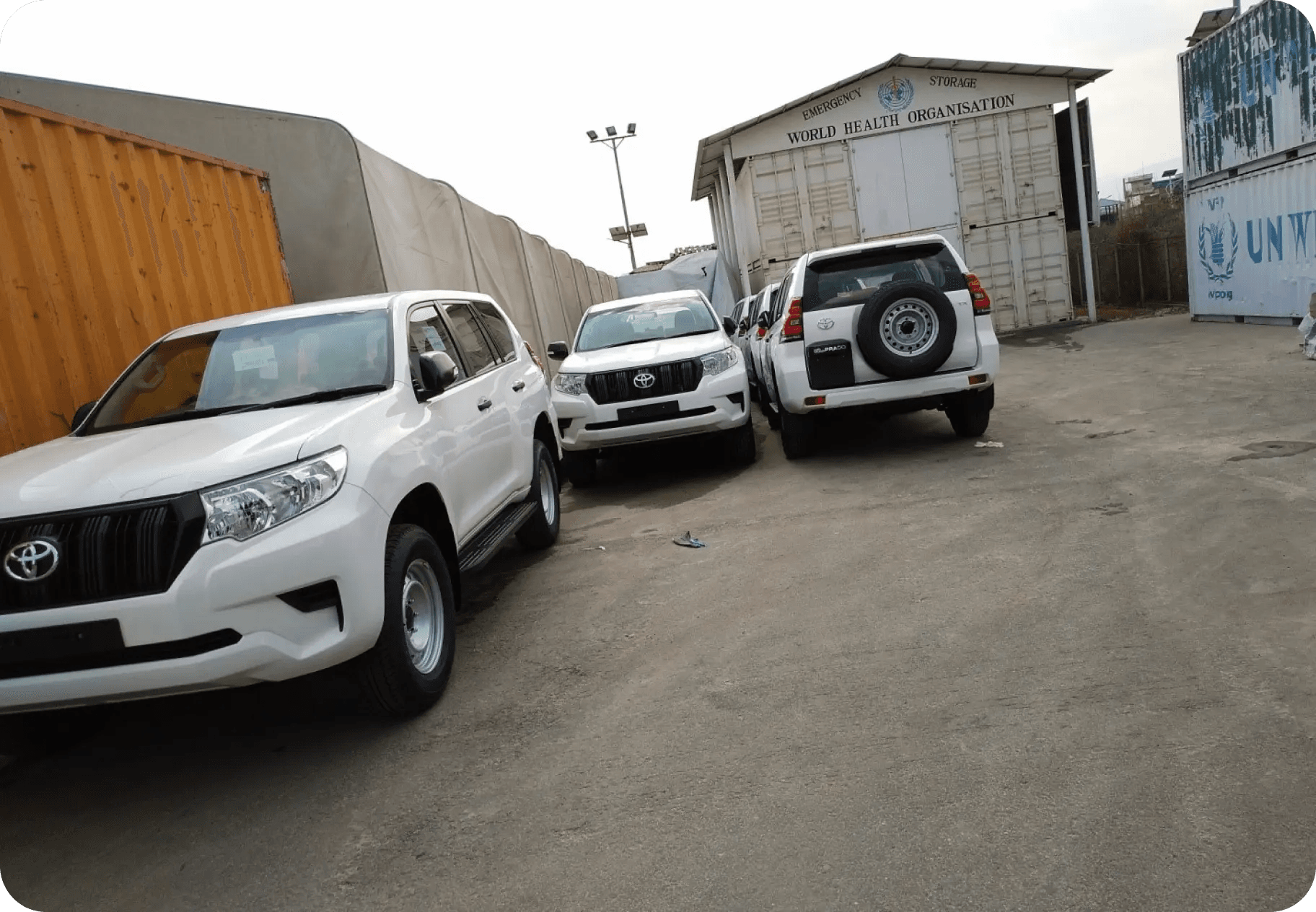
Case Study 3: Cross‑Border RoRo Vehicles for Embassies & INGOs
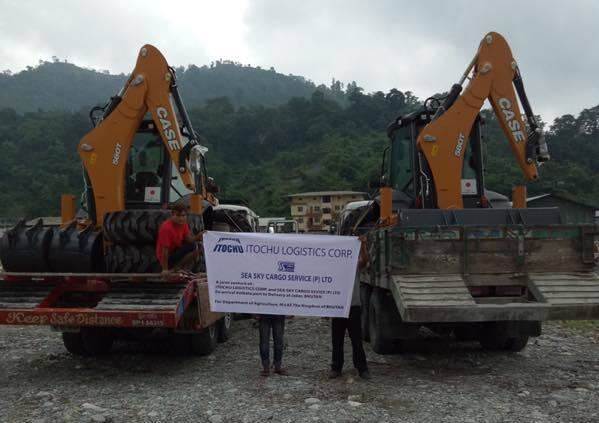
Beyond containers and flat‑racks, Sea Sky also moves vehicles and machinery using RoRo (Roll‑on/Roll‑off) plus road, a mode especially suited for diplomatically sensitive and INGO fleets. According to Sea Sky’s public RoRo guide, the company has moved large numbers of vehicles from different countries to South Asian markets—India, Afghanistan, Bhutan, Bangladesh, Maldives, Nepal, Pakistan, and Sri Lanka—primarily for diplomats and INGOs.seaskycargoservice
For Nepal and Bhutan, Sea Sky typically receives vehicles at Kolkata port, then organizes secure road transport through India to destinations like Kathmandu or Phuentsholing, often serving embassies and agencies such as IFRC, WHO, UNDP, and individual diplomatic staff. RoRo shipping lets vehicles roll directly on and off specialized vessels at origin ports, avoiding containerization costs and heavy crating, while Sea Sky’s inland network ensures the road leg respects customs, carnet, and duty‑exemption rules for diplomatic consignments.
What makes these projects notable is not only the cross‑border complexity multiple customs regimes, temporary import or duty‑exempt status, diplomatic security requirements but also the need for zero damage and tight timelines. Sea Sky’s track record includes delivering such vehicle fleets across South Asia without cargo damage, coordinating with port authorities, customs, and embassy security units to keep everything compliant and on schedule.
Case Study 4: Everyday Exporters - Carpets, Pashmina, Herbs & Handicrafts
Not every success story involves megawatts or peacekeeping. A large share of Nepal’s export potential comes from SMEs and family businesses producing carpets, pashmina, handmade paper, tea, herbs, spices, and handicrafts. Sea Sky’s cross‑border shipping blog describes how the company helps these exporters turn complex international logistics into a predictable routine so they can focus on production and sales.seaskycargoservice
For first‑time exporters, Sea Sky often starts by explaining basics—Incoterms, HS codes, packing standards, and the sea‑versus‑air trade‑offs for each market. The team helps register exporters, prepare commercial documents, and choose suitable modes (for example, LCL via Kolkata to Europe for small carpet consignments, or consolidated air freight from TIA for high‑value pashmina shipments). By handling customs clearance, warehousing, and last‑mile delivery abroad through partner networks, Sea Sky becomes a plug‑in logistics department for small brands who otherwise couldn’t handle complex paperwork alone.
For high‑volume traders large garment manufacturers or established handicraft exporters Sea Sky focuses on capacity, routing, and cost control. The company designs multi‑season shipping plans, secures space with core carriers, and aligns shipments with buyers’ deadlines in Europe, the US, and the Gulf. Digital tools give these clients real‑time visibility across multiple shipments, while a single Sea Sky coordinator keeps responsibilities clear, reducing miscommunication between factories, buyers, and multiple local agents.
The result is a growing set of exporters who can confidently quote international customers, knowing duty estimates, transit times, and logistics costs up front rather than losing orders due to uncertainty about how to move goods out of a landlocked country.
Project Reference Snapshot: More Nepali Power & Industrial Projects
Sea Sky’s published project reference list adds further examples beyond Marsyangdi and UNMIN. It includes multi‑year movements for projects like the Bhote Koshi Power Company (Atlas Polar shipments from Canada, 25 TEUs including 40’ open‑top equipment) and Middle Marsyangdi Hydro Power Project, among others. These projects involved heavy lift components, open‑top and flat‑rack containers, and multiple TEUs over long time windows, all routed via South Asian ports and challenging inland corridors to remote construction sites.
Taken together, these references show Sea Sky’s core specialization: engineering complete logistics chains for engineering works, hydropower plants, breweries, refineries, and large construction projects where standard 20’ or 40’ containers simply don’t suffice.
What These Case Studies Prove About Sea Sky’s Approach
Looking across hydropower, UN missions, embassy fleets, and SME exporters, clear patterns emerge in how Sea Sky works:
- Deep planning before movement – Route surveys, compliance checks, and risk assessments are done before cargo leaves origin, reducing the chance of expensive surprises at Indian transit points or Nepali borders.
- Project mindset even for “normal” cargo – Whether it’s a single flat‑rack turbine or multiple LCL pallets of carpets, Sea Sky treats each as a mini‑project with a defined plan, milestones, and clear responsibilities.
- Regulatory and customs fluency – From CTD procedures at Kolkata to special rules for UN and diplomatic consignments, Sea Sky uses its long experience to navigate paperwork and compliance efficiently.
- Transparent communication and tech – Real‑time tracking, proactive updates, and client portals increase trust for both global institutions and small Nepali exporters.
Thinking About Your Own Shipment?
If you’re planning a hydropower project, NGO operation, diplomatic move, or just want to send your products abroad with fewer headaches, these case studies show what’s possible with the right partner. Sea Sky’s experience from 70 MW power plants to UN missions and small handicraft exporters means your shipment benefits from lessons learned on some of Nepal’s most demanding logistics jobs.
You can adapt the same approach for your cargo: share your project details, let an experienced team map the full route, and insist on transparent planning, pricing, and communication from day one.
Related posts
1970-01-01
Sea + Air Freight: How SeaSky Helps Businesses Ship Smarter
2026-10-01
Freight Forwarder vs Customs Clearing Agent in Nepal: Which Do You Need?
2026-09-28
E-commerce Logistics Nepal: Cross-Border Shipping from China, India, and the Gulf
2026-09-27