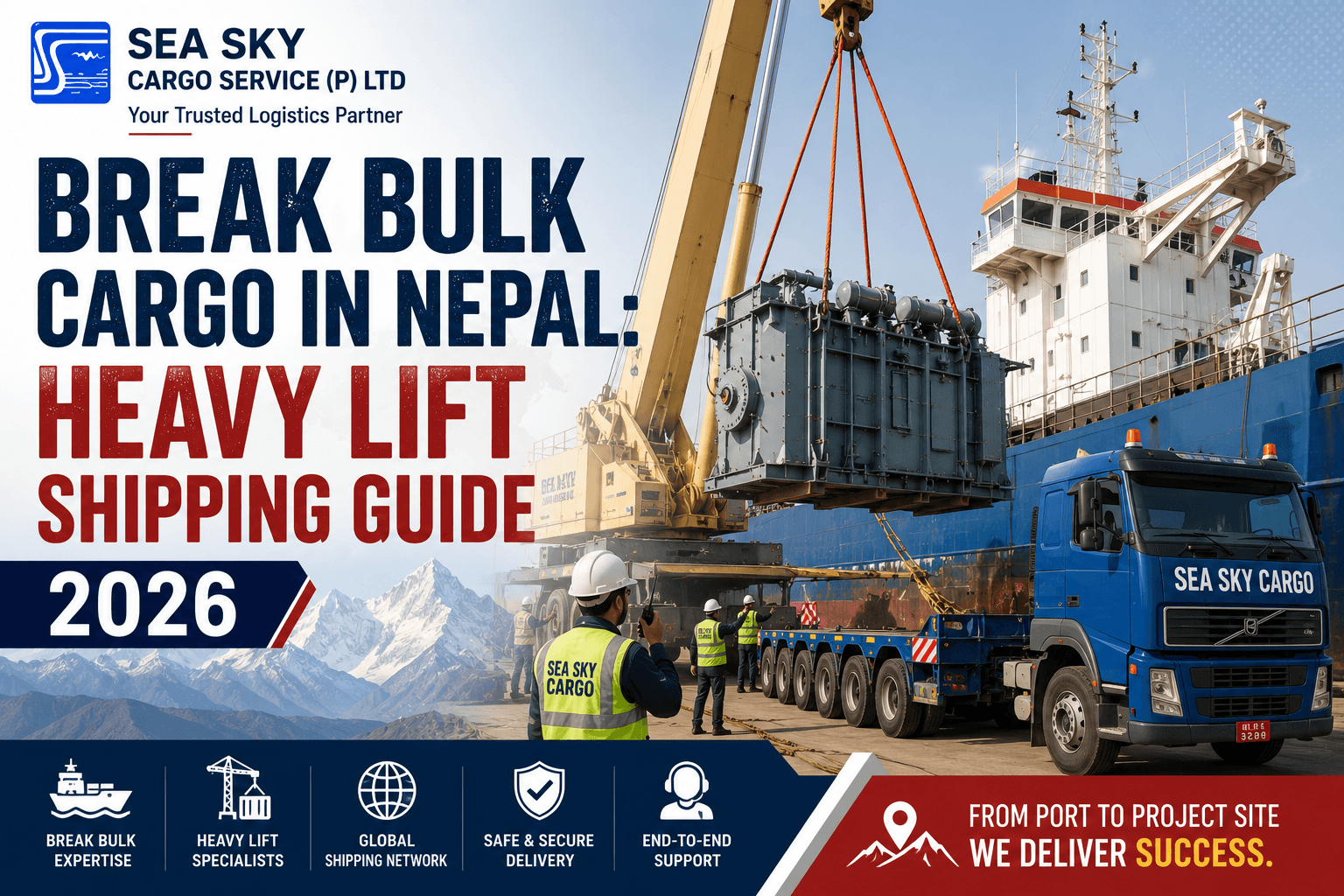
Break Bulk Cargo in Nepal: Heavy Lift Shipping Guide 2026
Break bulk cargo is the right solution when a shipment is too large, too heavy, or too irregular to fit neatly into a container. In Nepal, this matters for project cargo, industrial machinery, steel, generators, construction equipment, and other oversized freight that needs specialized handling from port to final site.
Sea Sky Cargo has long-standing experience in project and break-bulk movements, including heavy lift and out-of-gauge cargo across South Asian routes. That makes break bulk a natural service area for shippers who need more than standard container freight.
What Break Bulk Means
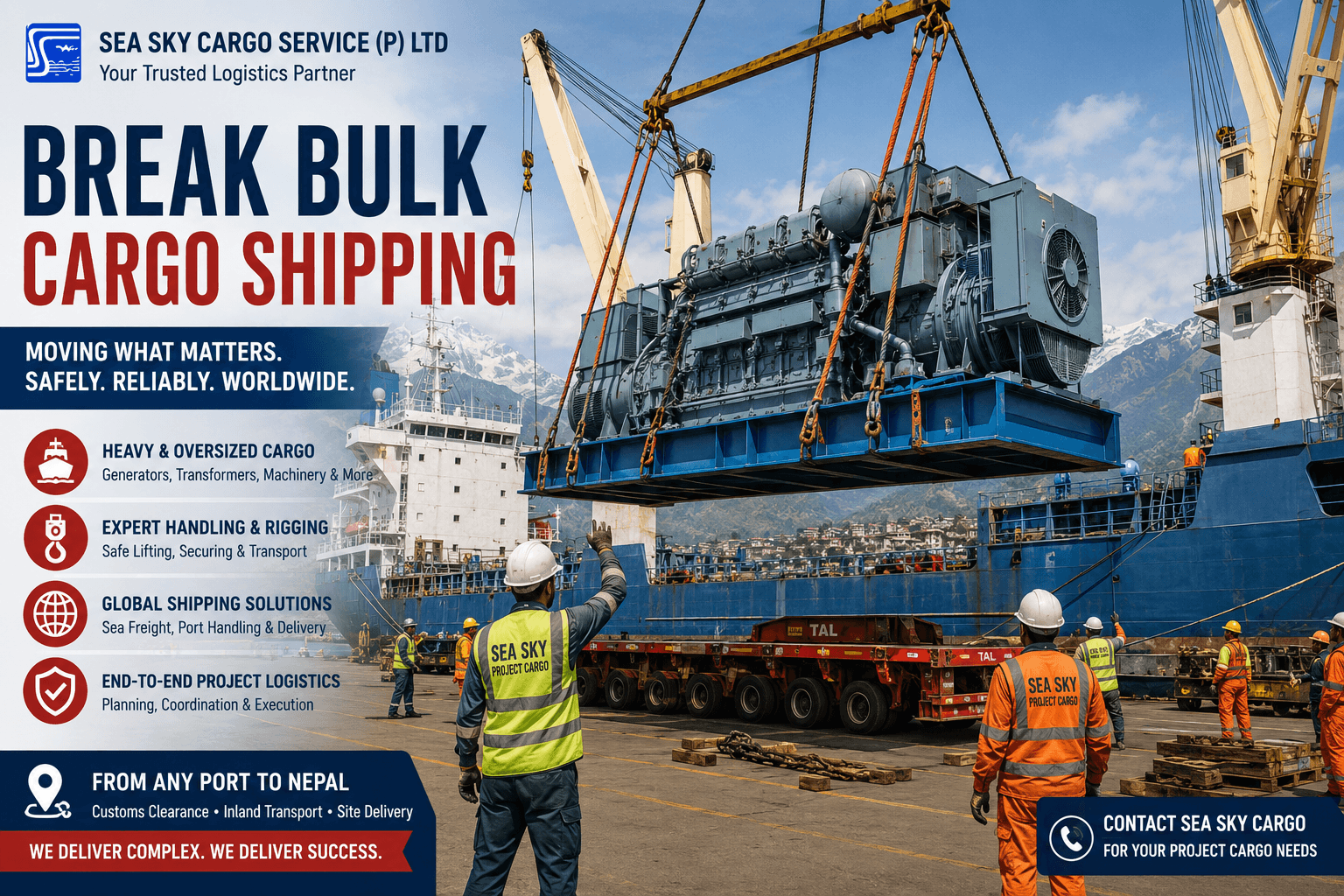
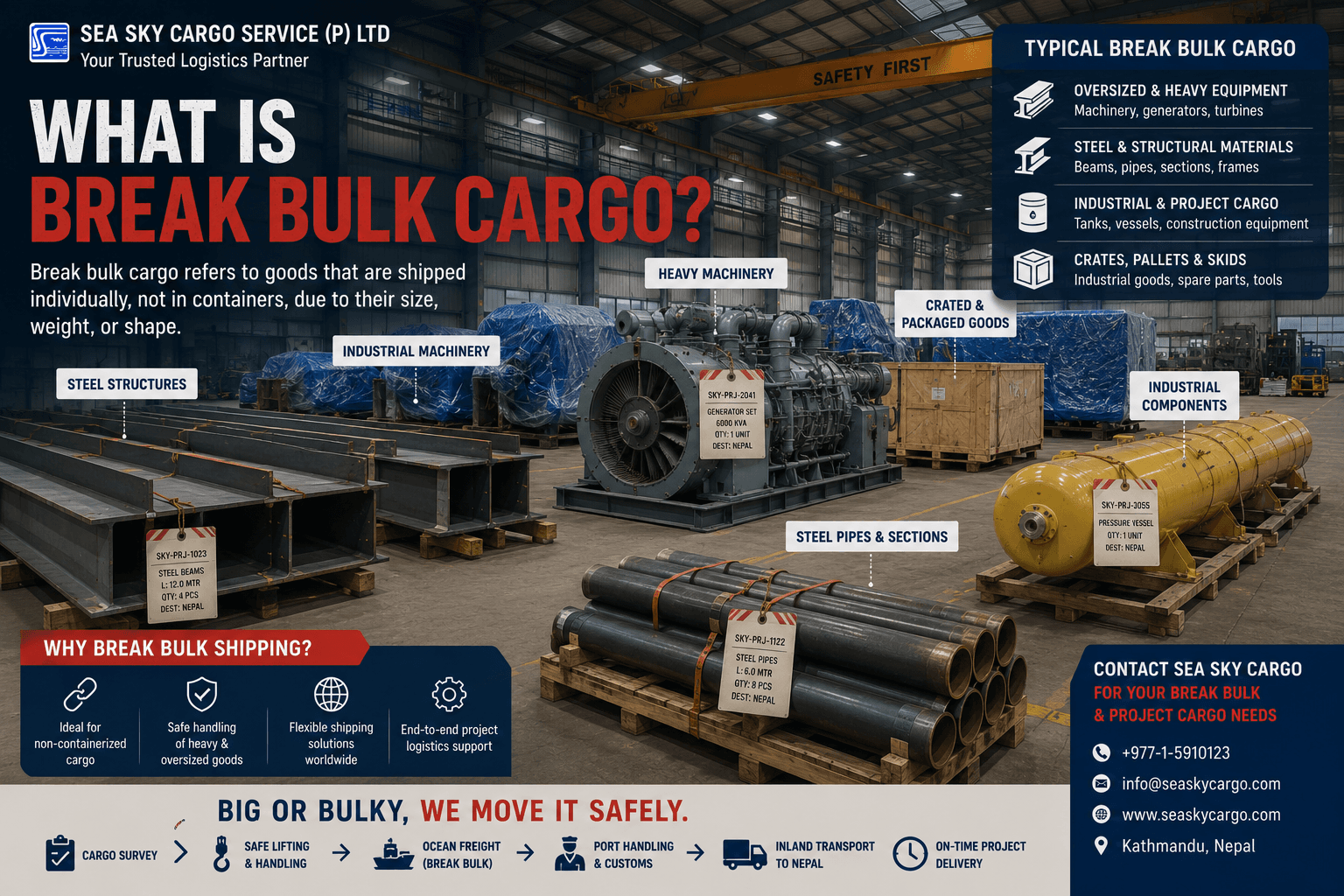
Break bulk cargo refers to goods that are shipped as individual pieces rather than packed into a container or moved in loose bulk form. These items are usually too large, heavy, long, or awkwardly shaped for standard containerization.
Typical break bulk items include machines, turbines, steel beams, large pipes, transformers, plant equipment, and industrial components. Because each piece is handled separately, the shipment requires careful planning, lifting gear, and more detailed coordination than ordinary freight.
When to Use It
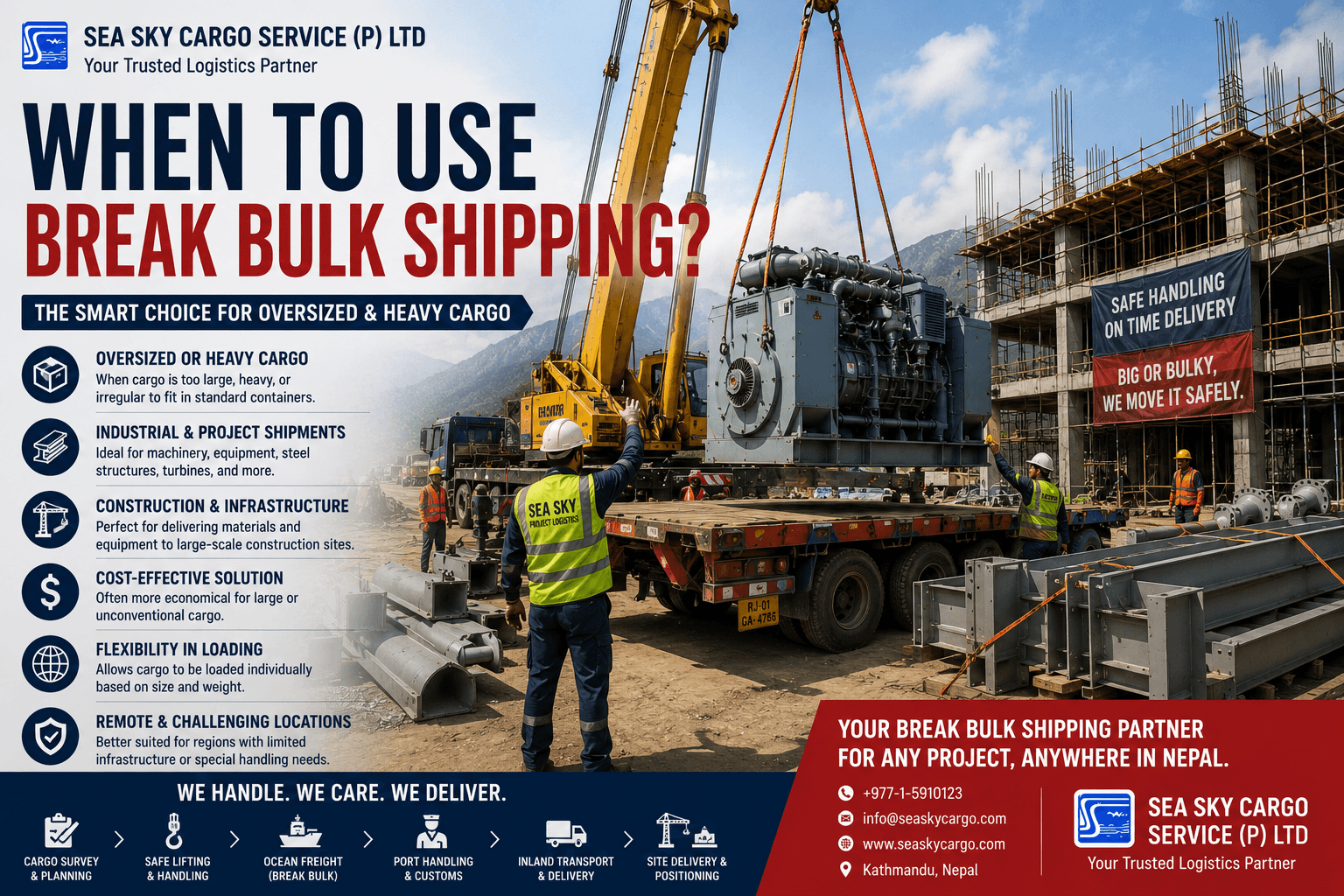
Break bulk is the right choice when:
- The cargo is oversized or out of gauge.
- The weight exceeds normal container handling limits.
- The goods are irregularly shaped.
- The shipment must be loaded as individual units.
- A project requires direct site delivery after port arrival.
It is especially useful for infrastructure, energy, construction, and manufacturing projects. Sea Sky’s own logistics history includes project cargo and heavy lift movements, which often depend on break bulk or other non-standard shipping methods.
Break Bulk vs Container
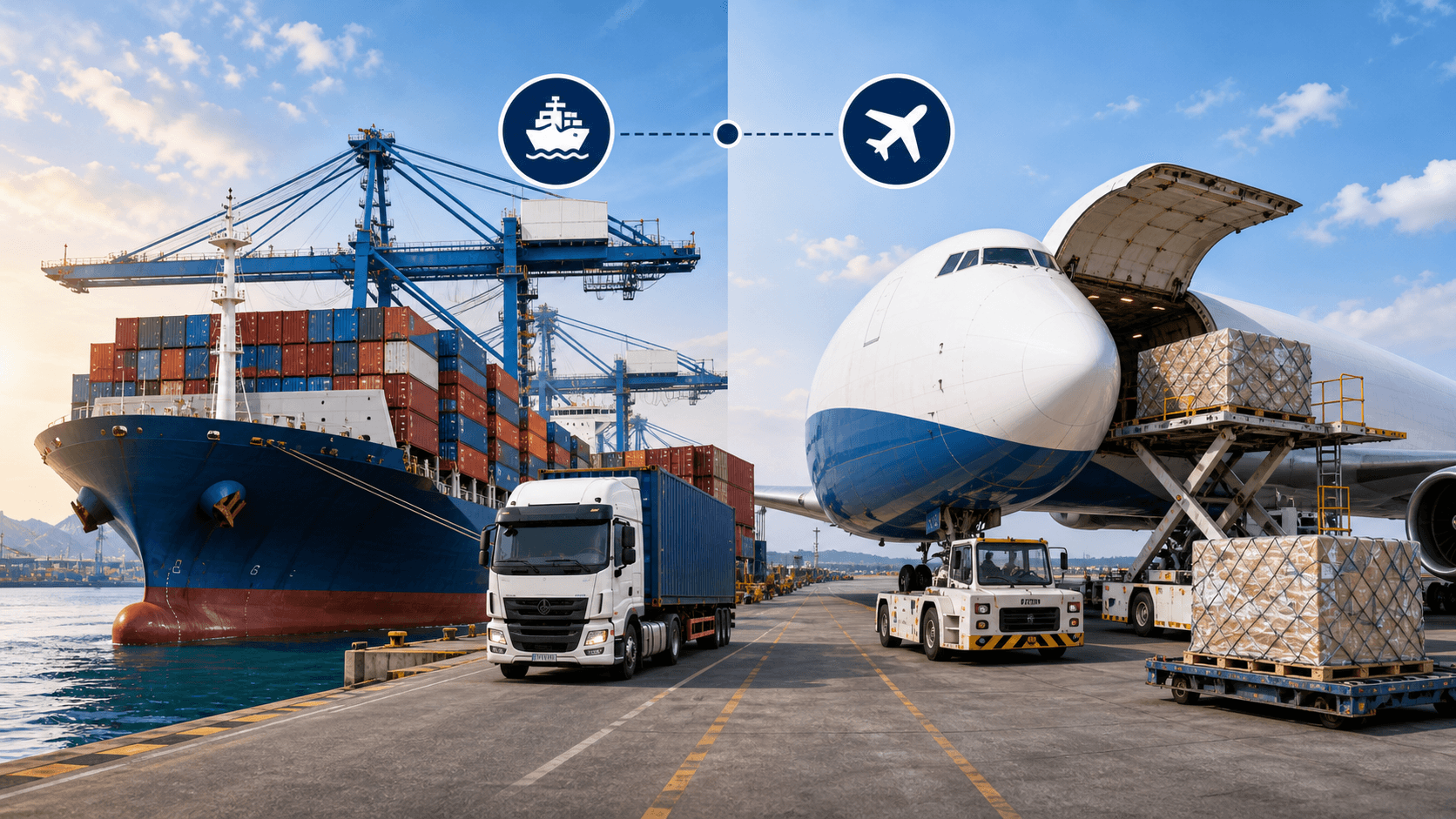
Break bulk and container shipping solve different problems. Containers are ideal for boxed, palletized, and standard cargo, while break bulk is used for freight that cannot realistically fit into a container or would be inefficient to dismantle just for packing.
| Factor | Break Bulk | Container |
|---|---|---|
| Best for | Oversized, heavy, irregular cargo | Standard freight and packaged goods |
| Handling | Individual piece handling | Packed in a sealed container |
| Equipment | Cranes, slings, flatbeds, trailers | Container cranes, forklifts |
| Planning | High-detail project coordination | More standardized workflow |
| Use case | Industrial and project cargo | General trade cargo |
How It Moves
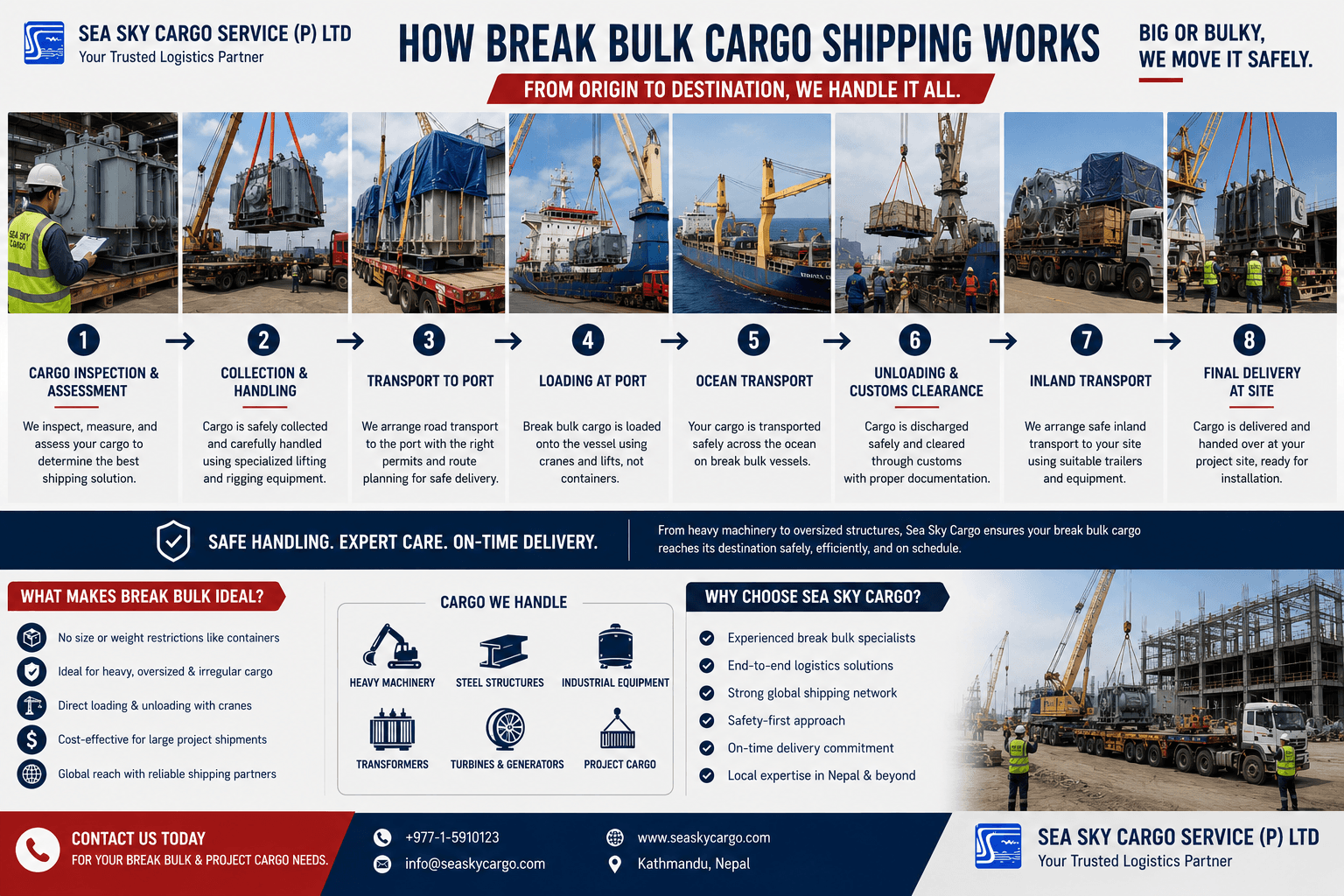
Break bulk shipping starts with engineering the shipment plan. The forwarder checks dimensions, weight, lifting points, destination access, and whether the cargo needs special equipment or route approval.
Then the cargo is packed, secured, and moved to the port or terminal. Depending on the route, it may travel by flat rack, open top, heavy trailer, or direct break bulk vessel handling before final inland delivery.
A typical flow is:
- Inspect and measure cargo.
- Choose lifting and transport method.
- Prepare documents and customs file.
- Move to port or terminal.
- Load as individual pieces.
- Ship to destination.
- Unload and deliver to site.
Documents and Planning
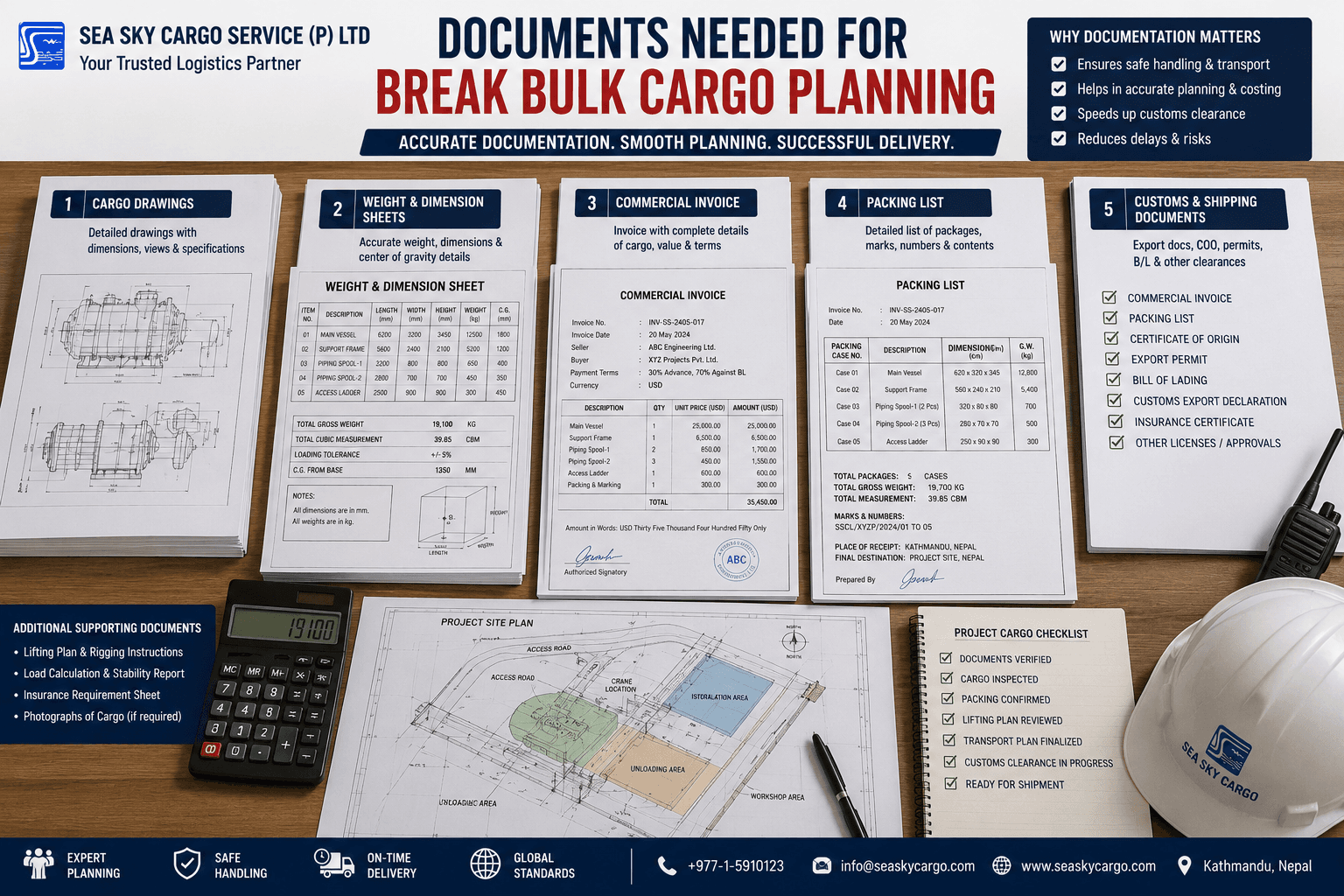
Because break bulk cargo is often tied to project work, documentation matters a lot. Shippers should expect to provide cargo dimensions, weight certificates, packing details, invoices, customs documents, and any permits needed for oversize or special cargo.
Planning is just as important as paperwork. The logistics team must know whether roads can support the cargo, whether cranes are available, and whether the final delivery site can receive the load safely. That is why break bulk is usually managed as a project rather than a normal shipment.
Sea Sky Advantage
Sea Sky is especially relevant for break bulk because its public company profile and logistics history highlight project cargo, heavy lift, RORO, flat racks, and break bulk handling. The company also has a long track record in cross-border logistics for Nepal and South Asia, which is important when the cargo has to move through multiple countries and terminals.
For shippers, that means Sea Sky can help with route design, port coordination, customs support, and final delivery planning instead of just booking a shipment. That full-service approach is especially useful for projects where delays are expensive and every step has to line up.
Common Risks
Break bulk cargo has more handling steps than container freight, so risk management is essential. Common issues include lifting damage, weather exposure, port delays, and poor coordination between port, transporter, and project site.
Another risk is underestimating route constraints. A shipment may be possible on paper but impossible on a road, bridge, or project site if clearances and lifting plans are not checked early. Good planning reduces these risks before the cargo starts moving.
Conclusion
Break bulk cargo is one of the most important solutions for Nepal’s heavy and oversized freight needs in 2026. It is the right choice when a shipment is too large or too specialized for containers and needs careful, project-based handling from origin to destination.
Sea Sky has the experience and service range to support these complex movements, especially for project cargo, heavy lift, and out-of-gauge freight. Talk to Sea Sky’s logistics team for a break bulk quote or request a project cargo plan today