How to Book International Cargo from Nepal: Step-by-Step Process & Cost Guide
Booking international cargo from Nepal is easier when you understand the process before the shipment starts. In 2026, most shipments move by air for speed, by sea for cost savings, or by road and multimodal freight for regional routes and flexible delivery.
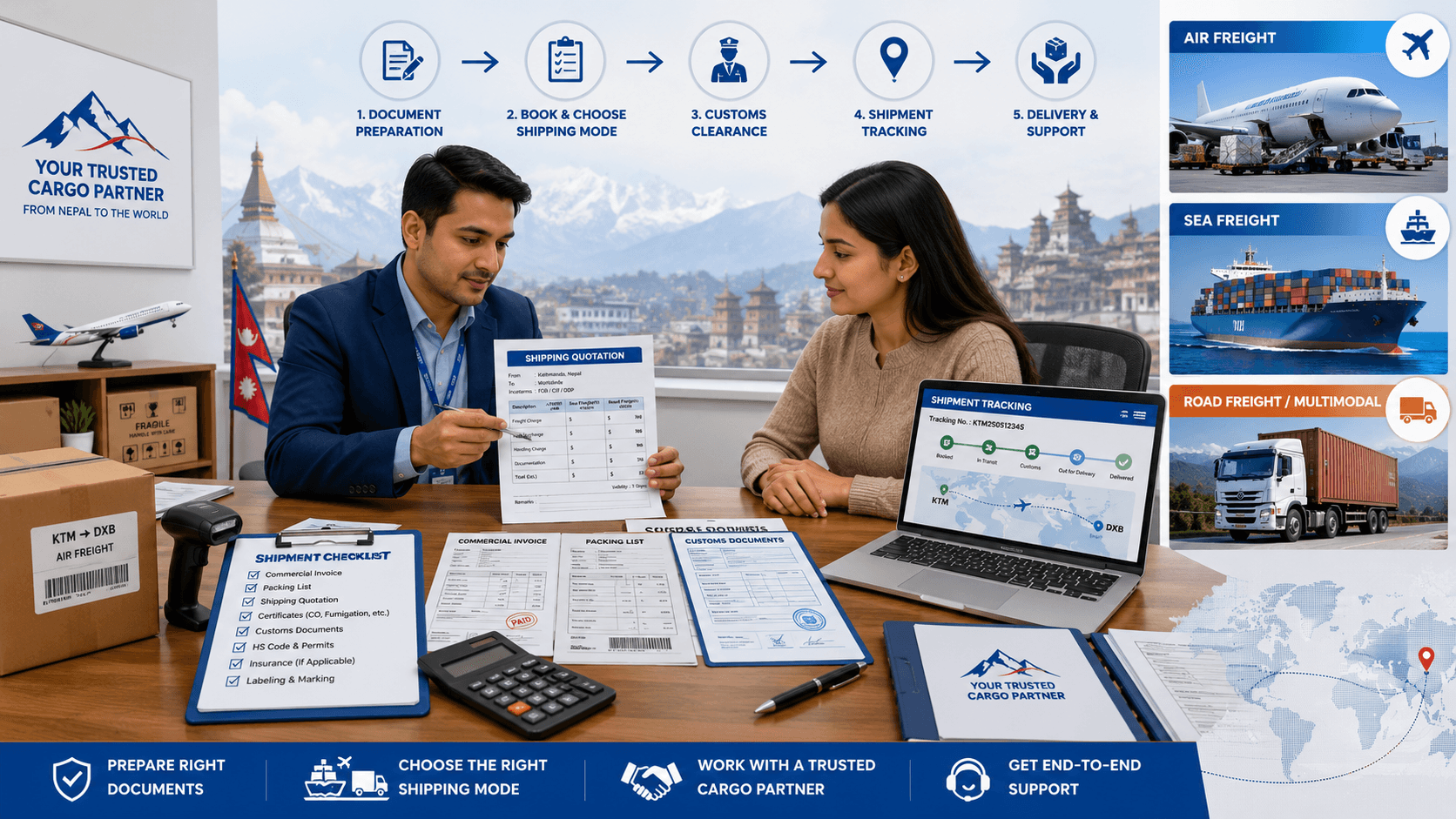
For businesses, exporters, and individuals, the key is to prepare the right documents, choose the right shipping mode, and work with a cargo partner that can handle customs, tracking, and delivery support from start to finish.
Why start with the mode
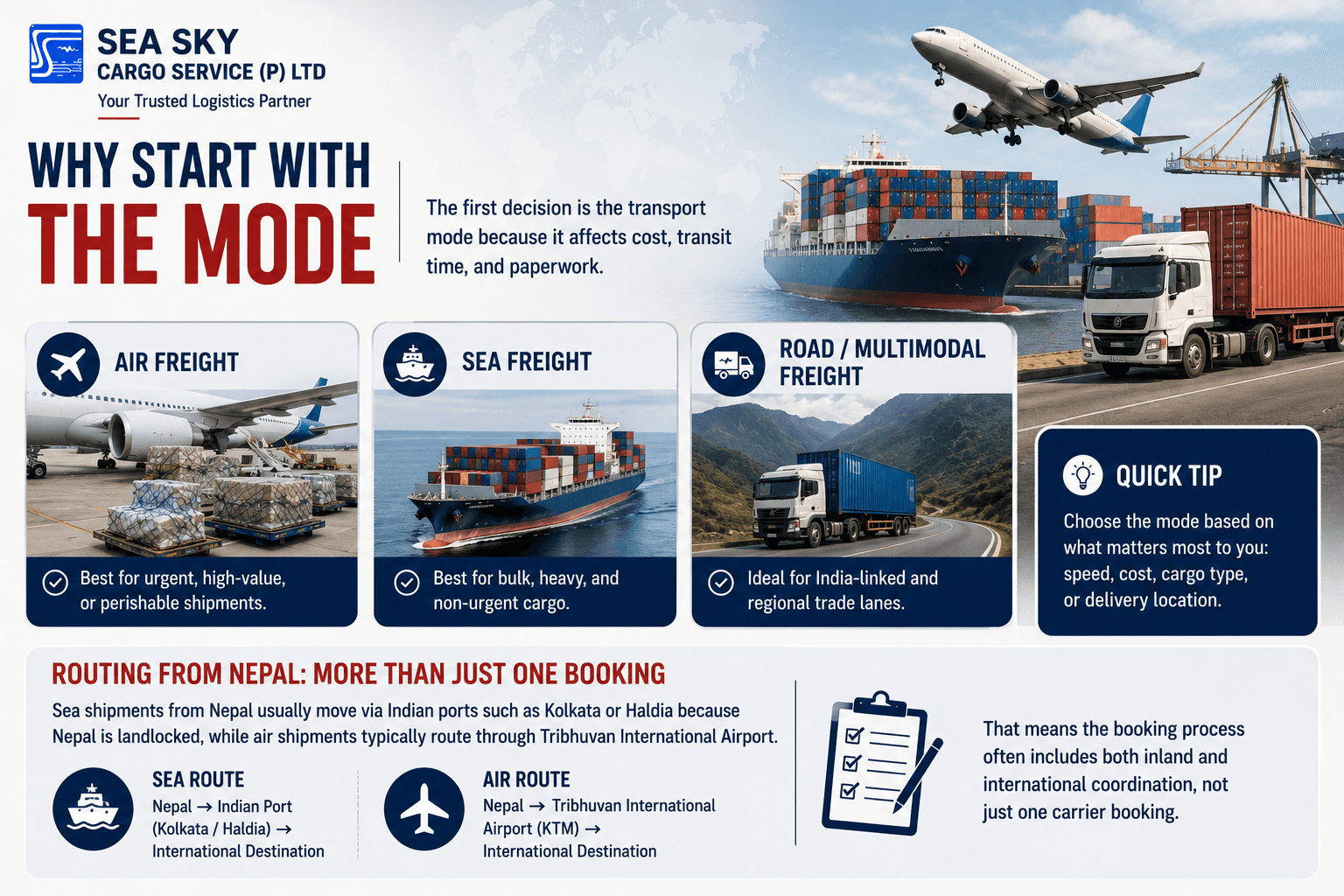
The first decision is the transport mode because it affects cost, transit time, and paperwork. Air freight is usually best for urgent, high-value, or perishable shipments, while sea freight works better for bulk, heavy, and non-urgent cargo; road or multimodal freight is often useful for India-linked and regional trade lanes.
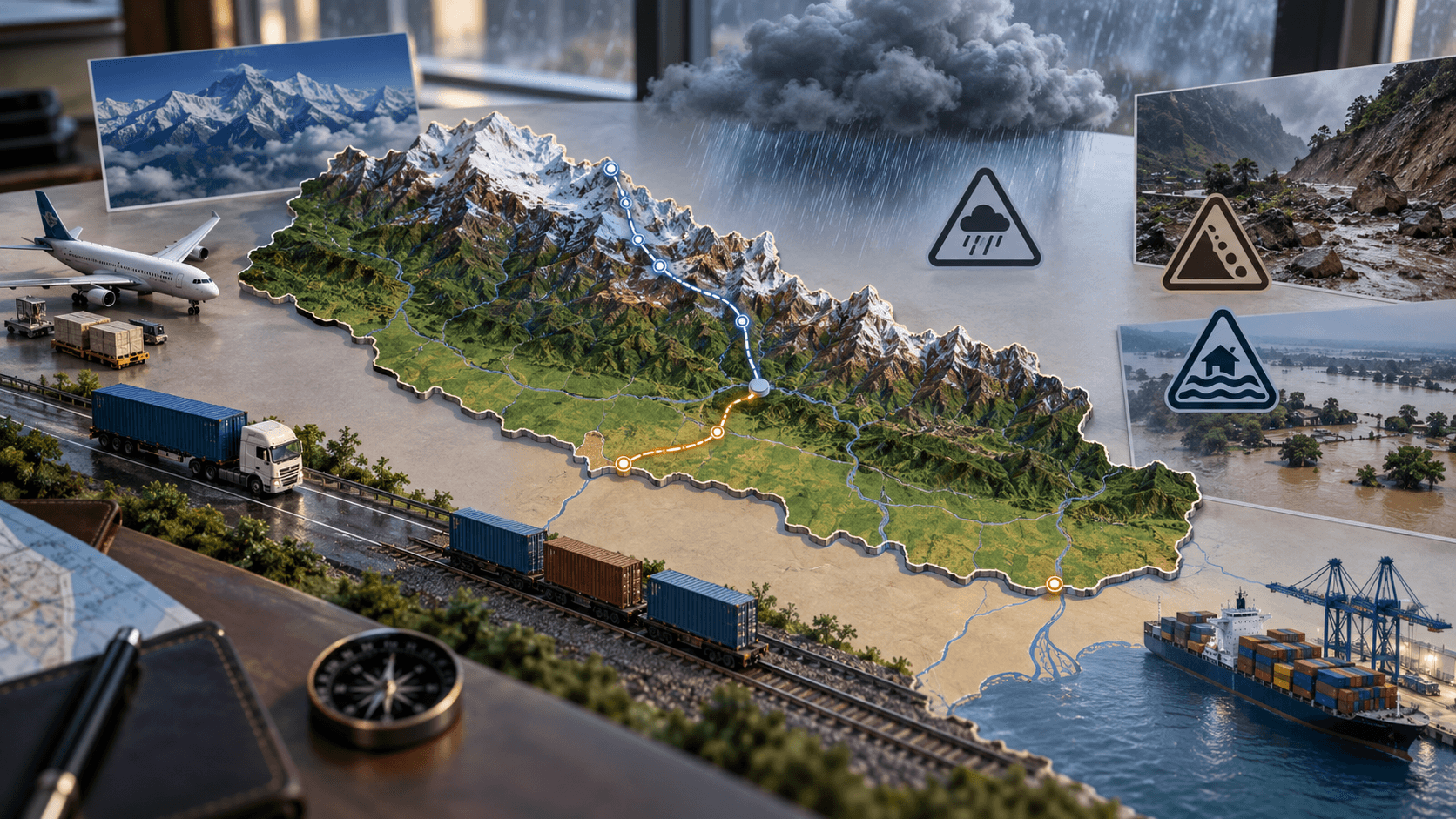
Sea shipments from Nepal usually move via Indian ports such as Kolkata or Haldia because Nepal is landlocked, while air shipments typically route through Tribhuvan International Airport. That means the booking process often includes both inland and international coordination, not just one carrier booking.
Step-by-step process
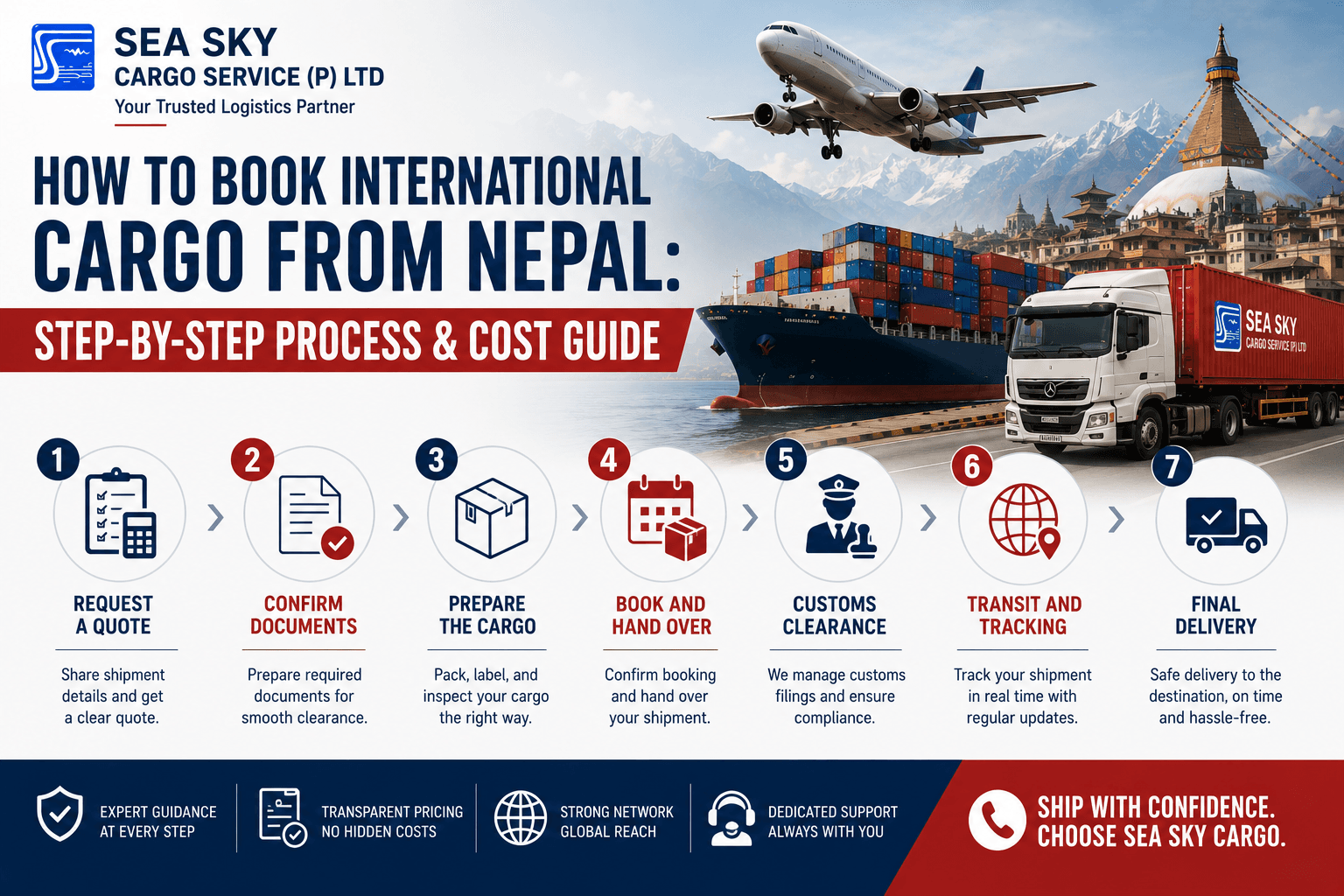
1. Request a quote
Start by sharing the basic shipment details with your cargo partner:
- Pickup location.
- Destination country and city.
- Cargo type.
- Weight and dimensions.
- Number of pieces.
- Preferred delivery speed.
Accurate dimensions and cargo type matter because freight rates are usually based on weight, volume, cargo class, and route. A trusted forwarder should then suggest the best mode and provide a written quote with clear charges.
2. Confirm documents
Most international shipments from Nepal require:
- Commercial invoice.
- Packing list.
- Customs declaration.
- Bill of lading or airway bill after booking.
- Certificate of origin or other compliance documents when required.
Special cargo may need extra paperwork, such as fumigation certificates for wooden packing or product-specific permits for regulated goods. If the documents do not match the cargo, customs delays become much more likely.
3. Prepare the cargo
Before dispatch, the goods must be packed for the mode you chose. Air cargo often needs secure, lightweight packaging, while sea freight and long-haul multimodal cargo may need stronger crating, moisture protection, or palletization.
This stage is also where labeling, measurement, and cargo condition checks should happen. If your shipment is fragile, high-value, or oversized, your forwarder should recommend specific packing and handling methods.
4. Book and hand over
Once the quote is approved and the documents are ready, the cargo is booked with the carrier or freight network. Depending on the service, the cargo may be picked up from your location or dropped at a warehouse, cargo office, or airport terminal.
At this point, you should receive booking confirmation, shipment reference details, and the next steps for customs and transit. A reliable cargo partner will also explain what happens at every stage instead of leaving you to guess.
5. Customs clearance
Customs is one of the most important steps in international shipping from Nepal. The shipment must be declared correctly, and the supporting documents must match the goods, value, and destination requirements.
For exports, forwarders often help prepare customs filings and supporting papers. If the shipment is incomplete or mislabeled, it can be held at customs and create extra costs.
6. Transit and tracking
After clearance, the shipment moves into international transit. Air shipments may reach Europe in a few days, while sea freight can take several weeks depending on the route and final destination.
A good cargo partner should provide tracking, status updates, and communication during transit. This is especially important for businesses managing stock, deadlines, or customer deliveries.cargonepal+1
7. Final delivery
The last stage is destination handling and delivery. Some bookings are airport-to-airport or port-to-port, while others include full door-to-door service with final-mile coordination
Before booking, make sure you know whether the quote includes destination charges, customs at destination, and final delivery to the consignee. That clarity prevents disputes and surprise costs later.
Cost guide
Courier-style shipments to nearby countries can be lower, but urgent express services usually cost more. For example, one 2026 Nepal-to-India guide lists rates starting around NPR 1,100 per kg for economy road service and up to NPR 2,500 per kg for express air service.
The final rate is usually affected by:
- Weight and dimensions.
- Destination country.
- Air, sea, or road mode.
- Urgency.
- Customs and documentation needs.
- Insurance and delivery scope.
Typical timelines
Transit time depends on route and service level. Sea Sky’s published air freight guidance says Nepal-to-Europe air cargo can reach destination in roughly 3 to 5 days for direct or well-connected lanes, while US routes via hubs may take about 5 to 10 days.
Sea freight generally takes much longer. The same 2026 shipping guidance notes that sea routes from Nepal via Kolkata can take roughly 25 to 40 days depending on destination and inland movement. Customs processing and pickup timing can add extra days if the documents are not ready in advance.
What to expect
If you are booking international cargo for the first time, expect a process that involves more coordination than local delivery. You will usually need to answer questions about cargo value, packaging, destination, and consignee details before the booking is confirmed.
You should also expect checks around customs, compliance, and packaging quality. The smoother the information at the start, the smoother the shipment tends to be later.
Why Sea Sky helps
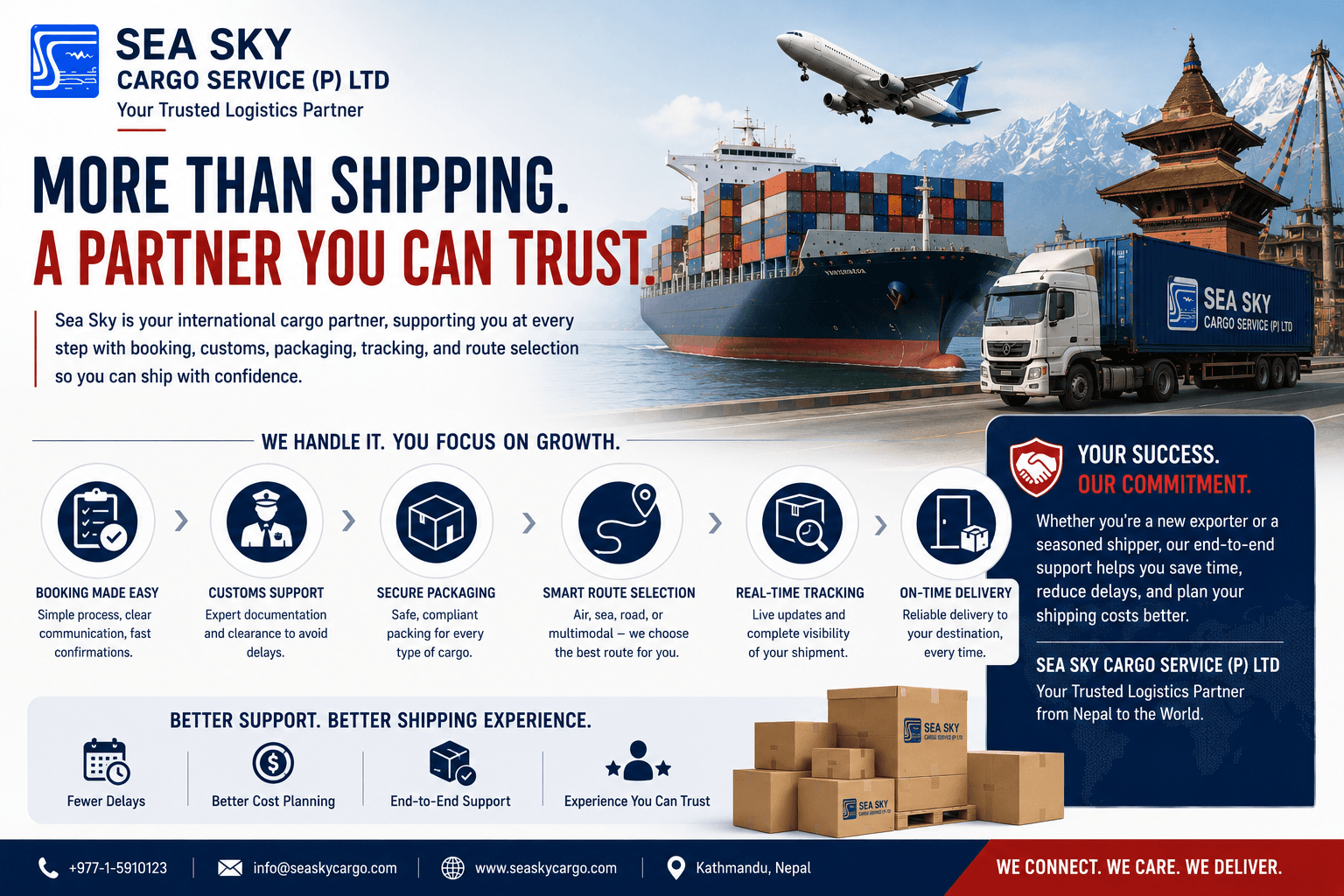
Sea Sky’s international shipping content and company materials position it as a cargo partner that helps with booking, customs, packaging, tracking, and route selection rather than just selling a rate. That is useful for customers who want support at each stage instead of managing documents and carriers alone.facebook+4
For new exporters and frequent shippers alike, that kind of support can reduce delays, improve cost planning, and make booking much easier.
Conclusion
Booking international cargo from Nepal is simpler when you break it into clear steps: choose the mode, prepare the documents, pack correctly, book with a trusted forwarder, clear customs, track the shipment, and confirm delivery. The biggest gains come from preparation and from choosing a cargo partner that explains the process clearly and keeps your shipment moving.
Ready to ship internationally from Nepal? Book now through Sea Sky Cargo Service, request a quote, or contact the team for route, pricing, and customs guidance today.
Related posts
1970-01-01
Sea + Air Freight: How SeaSky Helps Businesses Ship Smarter
2026-10-01
Freight Forwarder vs Customs Clearing Agent in Nepal: Which Do You Need?
2026-09-28
E-commerce Logistics Nepal: Cross-Border Shipping from China, India, and the Gulf
2026-09-27