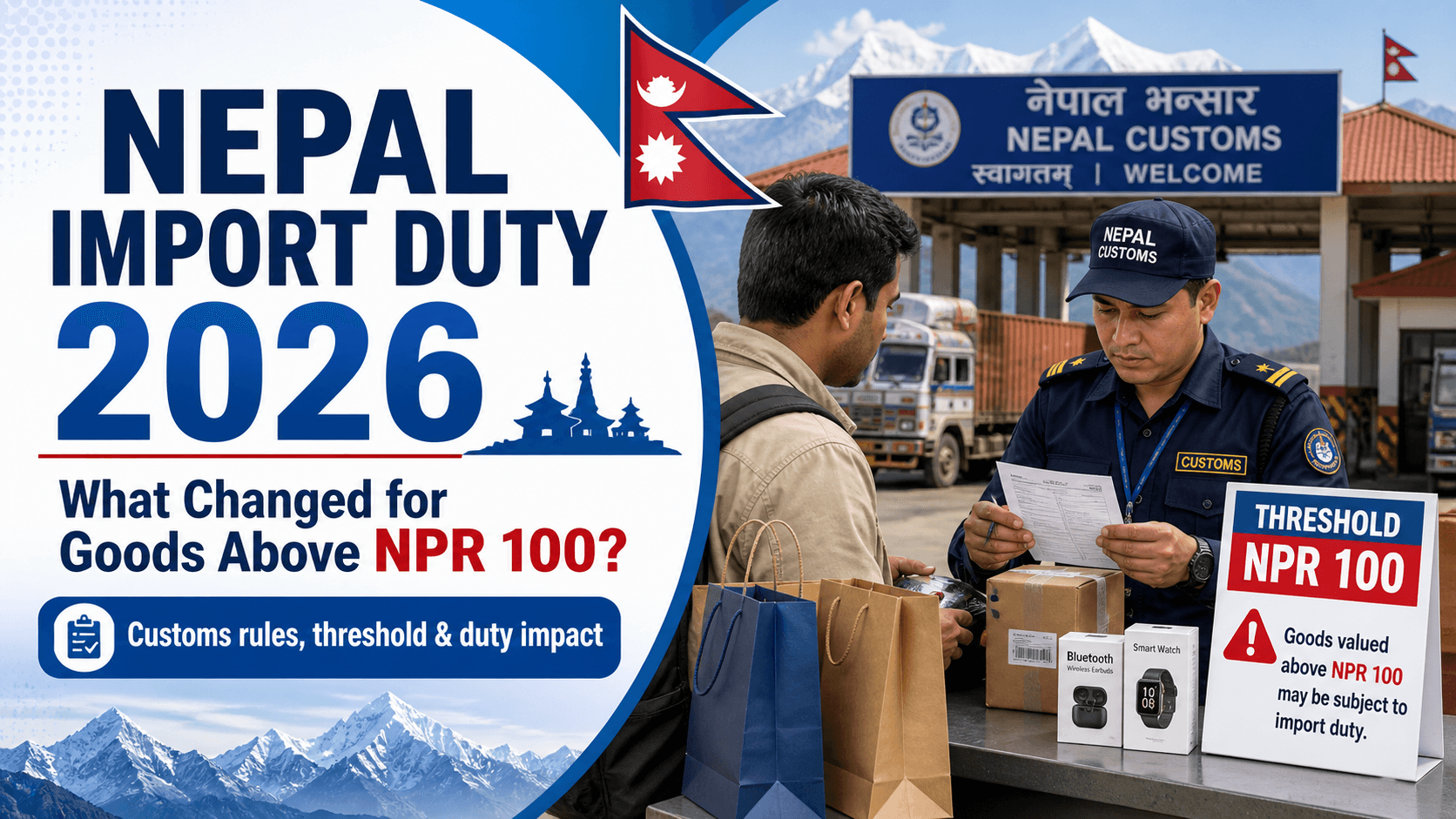
Nepal Import Duty 2026: What Changed for Goods Above NPR 100
Nepal’s import duty rules have drawn attention in 2026 because customs officials are now strictly enforcing a long-standing rule on goods brought from India that are valued above NPR 100. The change is not that Nepal invented a brand-new tax on every item; rather, the government began actively applying an existing customs provision that had been loosely enforced for years.
For travelers, small traders, and border residents, this means even low-value purchases can now attract customs duty if the total value goes above the NPR 100 threshold. For commercial importers, the normal customs system still applies, with duty determined by HS code, product category, and the official tariff schedule.
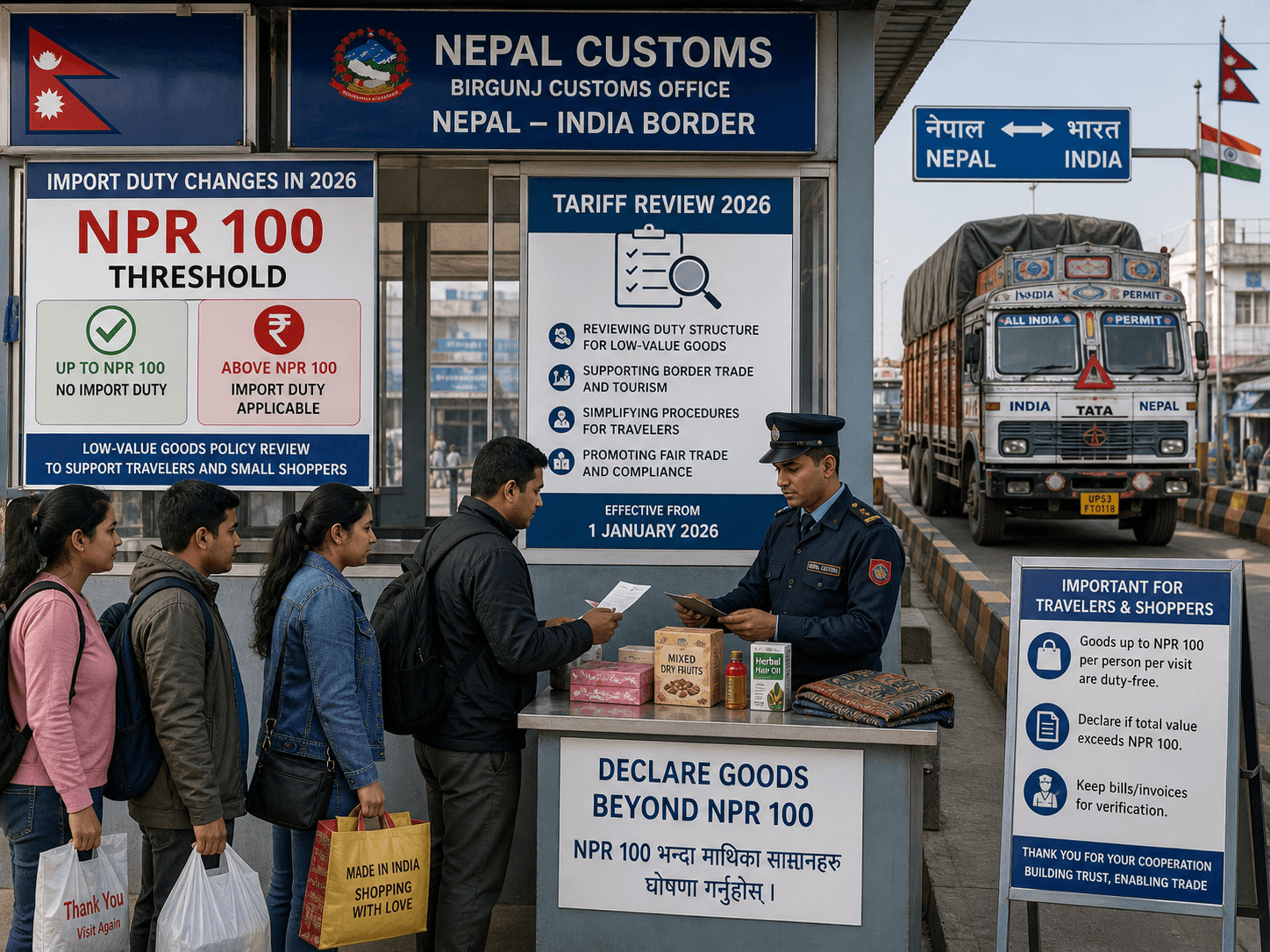
What Actually Changed
The most visible change in 2026 is stricter enforcement at Nepal–India border points. Border agencies began checking goods more closely and requiring duty payment on items whose value exceeds NPR 100, which was previously often ignored for small personal purchases.
News reports and official comments say the rule itself already existed in Nepal’s customs law, but implementation was inconsistent before this year. The government’s current position is that it is enforcing the law more strictly to reduce informal imports and revenue leakage.
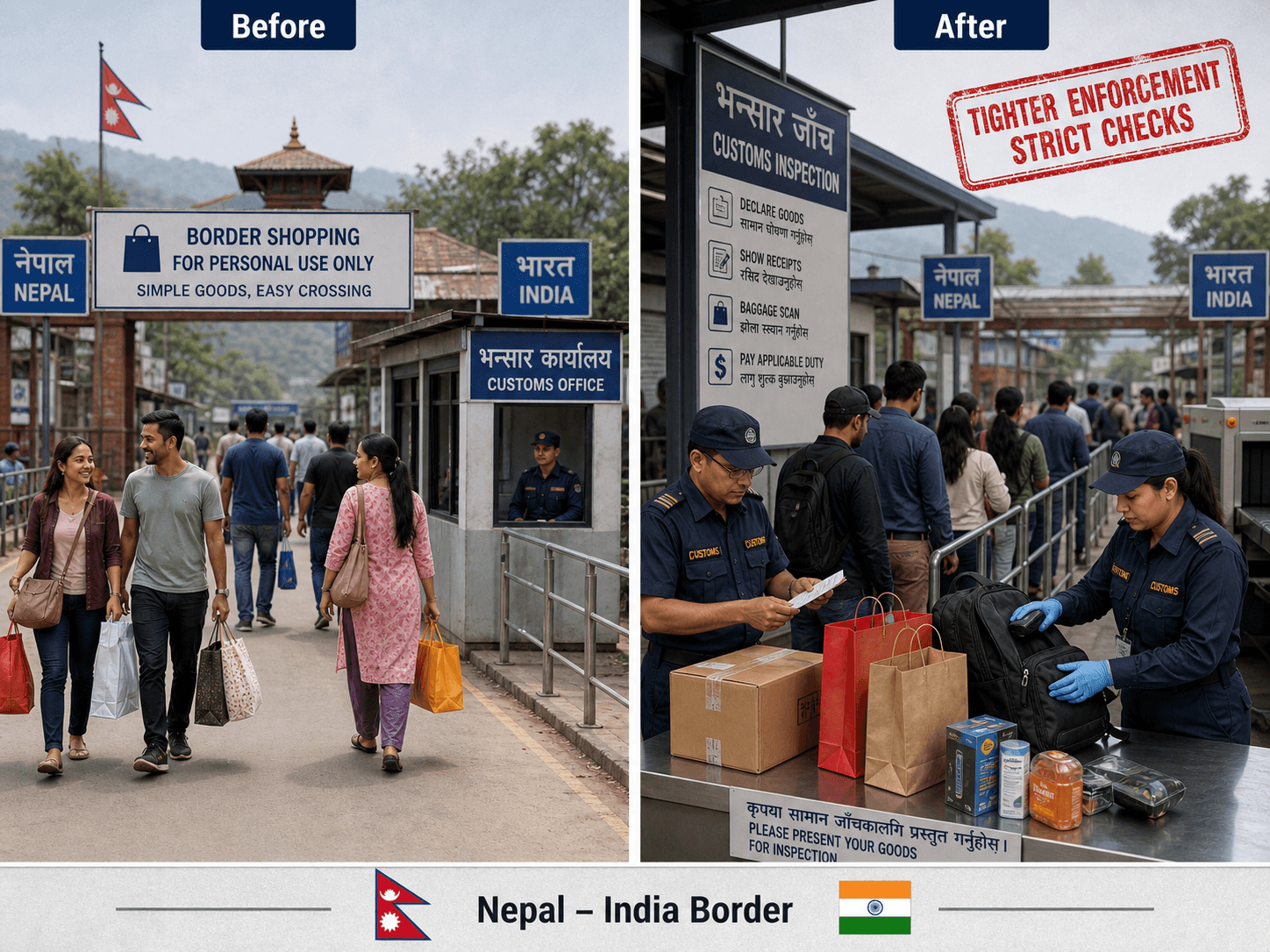
What “Goods Above NPR 100” Means
This rule refers to the value of goods a person carries from India into Nepal. If the total value of the items is more than NPR 100, customs can apply duty and VAT based on the product type and tariff rules.
That means the threshold is extremely low and mostly affects everyday border shopping such as groceries, clothing, medicine, or household items. Reports from the border indicate that even simple purchases can now trigger a customs check if they exceed that limit.
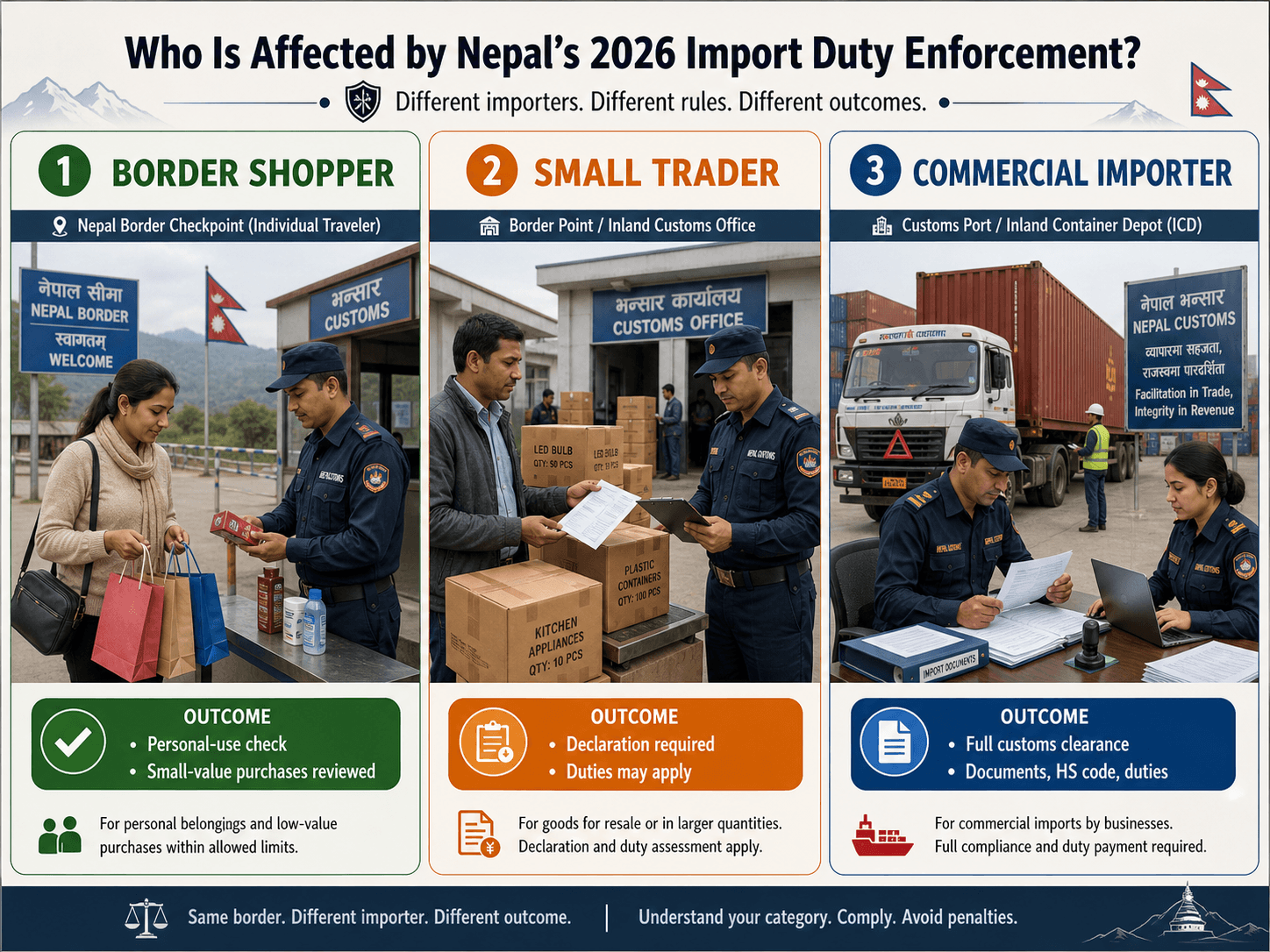
Who Is Affected
The rule affects different groups in different ways.
- Border residents and casual shoppers are the most directly affected because they often cross with small purchases from India.
- Small traders who used to bring informal goods across the border are now facing stricter checks and longer queues.
- Commercial importers are less affected by the NPR 100 threshold itself, because they already clear goods through formal customs and pay duty based on HS code and customs value. Related: Seasky Cargo Service
The practical effect is that informal or semi-formal border shopping has become much more expensive, while formal trade continues under the normal customs framework.
Duty Rates and Taxes
Public reporting indicates that the rate applied to goods over NPR 100 can range from around 5% to 80%, depending on the item. In addition, Nepal still charges 13% VAT on imported goods, and normal commercial imports may also face excise or other product-specific charges.
The exact tax depends on the HS code and the official customs tariff. That means a grocery item, medicine, textile, or vehicle part can all be taxed differently even if they are bought from the same market across the border.
Why Nepal Enforced It
Officials say the goal is to stop informal imports and protect revenue. Nepal’s border markets have long seen residents crossing to India for small purchases, and authorities now want those flows to be properly taxed.
Border traders and some residents argue the rule is too strict for daily life, because even small purchases can go over NPR 100 very quickly. The policy has therefore become both a revenue issue and a politically sensitive border issue.
What This Means for Businesses
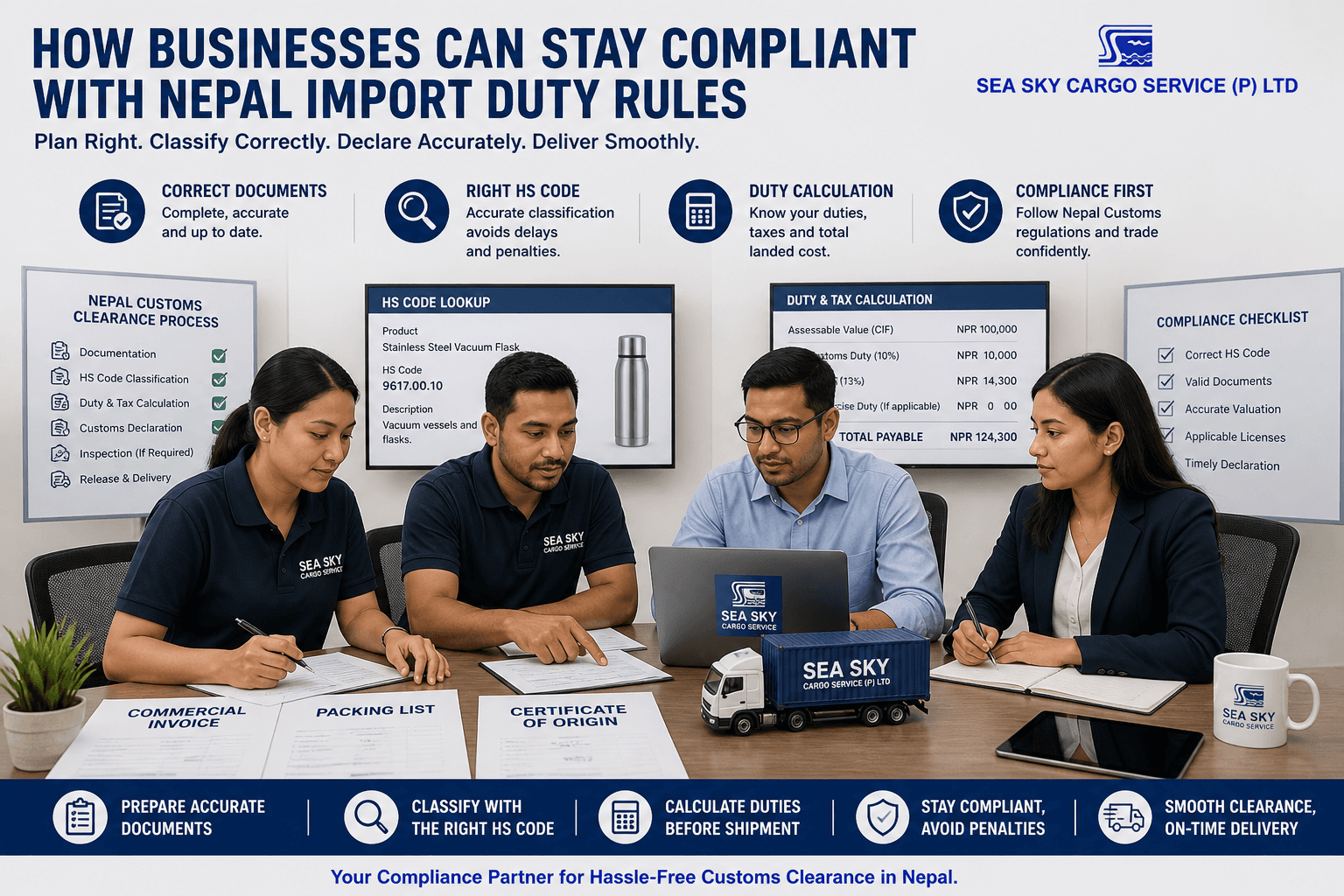
For businesses that import formally, the biggest takeaway is to stay fully compliant. That means using the correct HS code, declaring true value, and making sure all import documents are complete before the shipment reaches customs.
For companies that depend on goods from India, this rule also reinforces the need to use a logistics partner that understands both border procedures and tariff classification. Sea Sky can help reduce risk by handling documents, classification, and customs coordination so your cargo does not get delayed by avoidable errors.
What Shippers Should Do Now
If you are shipping commercially, take these steps:
- Verify the HS code before shipment.
- Prepare invoice, packing list, and import declaration in advance.
- Estimate duty, VAT, and any extra charges before booking.
- Use a customs-aware logistics partner for border movement and clearance.
If you are an individual carrying purchases from India, assume that anything above NPR 100 may be checked and taxed, especially at major border crossings.
Conclusion
Nepal’s 2026 import-duty story is mainly about stricter enforcement of an existing rule at the India border, not a completely new customs system. The key line to remember is that goods valued above NPR 100 can now attract duty, and the real tax rate depends on the HS code, product type, and whether the shipment is personal or commercial.
If you import regularly, the best protection is compliance, proper documentation, and a logistics partner that understands Nepal customs. Sea Sky can help you plan shipments, classify goods, and clear cargo with fewer surprises.