
What is the REX system?
REX stands for Registered Exporter System. It is used under certain preferential trade arrangements to certify the origin of goods through an origin statement made by a registered exporter.
For a Europe-bound shipment, the practical question is simple: can the exporter prove that the goods qualify as originating in Nepal under the applicable origin rules? If the answer is yes and the documents are prepared correctly, the European importer may be able to claim preferential duty treatment for eligible goods.
REX does not replace good export preparation. The shipment still needs a correct HS code, product description, commercial invoice, packing list, freight document, and any product-specific certificate or buyer requirement.
Why REX matters for Nepali exporters
Europe is an important market for Nepali products such as pashmina, carpets, handicrafts, garments, tea, coffee, herbs, handmade paper, jewelry and natural products. Buyers often compare landed cost before placing repeat orders.
When eligible goods can use a preference claim, the importer may pay less duty at destination. That can make Nepali products more competitive, especially when the buyer is comparing similar goods from several countries.
- Supports origin proof for eligible Nepal-made goods
- Helps European buyers claim preference where rules allow it
- Improves buyer confidence in export documentation
- Can make Nepali products more price competitive
- Reduces confusion around origin paperwork before dispatch
For exporters, REX is not only paperwork. It can influence whether a buyer sees the shipment as easier and more cost-effective to import.
REX number vs certificate of origin
A REX number and a certificate of origin both relate to product origin, but they are not the same thing. Exporters should not assume every shipment only needs one document. Requirements can depend on destination country, HS code, shipment value, applicable trade scheme, buyer instructions and destination customs practice. If your buyer asks about a REX number Nepal requirement, confirm the product and destination first instead of copying a standard document set.
| Item | What it means | Planning note |
|---|---|---|
| REX number | Identifies a registered exporter who can make origin statements for eligible shipments | Use only when the goods and scheme qualify |
| Origin statement | Text placed on a commercial document to declare qualifying origin | Must match the shipment and rules of origin |
| Certificate of origin | A separate document confirming where goods originate | May still be requested by buyer, bank or customs |
Which Nepali products can benefit?
Many Nepali export products may be relevant for preferential trade discussions, but eligibility depends on the product category, HS code and rules of origin.
- Pashmina shawls and scarves
- Handmade carpets and rugs
- Garments and textiles
- Handicrafts and felt products
- Tea, coffee, herbs and essential oils
- Handmade paper, jewelry and accessories
- Wooden, bamboo, natural fiber and agricultural products
Not every Nepal-linked product automatically qualifies. Exporters must check product eligibility and origin rules before claiming preference. This is especially important when a product uses imported raw materials, fabric, packaging, components or accessories.
For broader route planning, read the guide on export from Nepal to Europe.
Rules of origin for Nepal to Europe exports
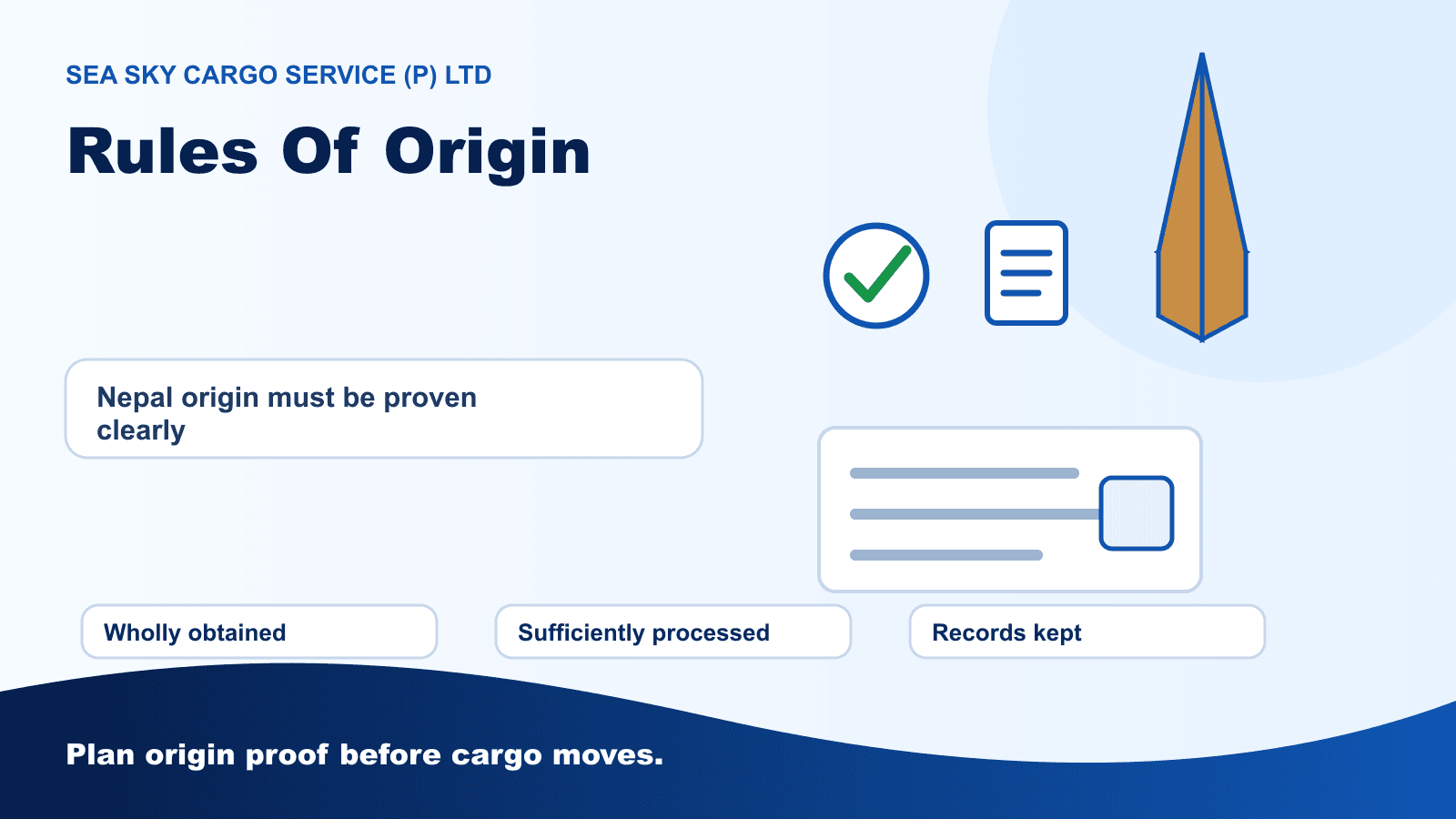
Rules of origin are the most important part of the REX system. They decide whether goods can be treated as originating from Nepal.
A product may qualify if it is wholly obtained in Nepal or sufficiently processed or manufactured in Nepal. Tea grown and processed in Nepal may be easier to prove as Nepal-origin. Garments made in Nepal using imported fabric may need to meet specific processing rules before qualifying.
- Raw material origin
- Manufacturing process
- HS code and product category
- Value addition or processing requirement
- Production and sourcing records
- Buyer documentation requirement
Simple packaging, labeling or minor handling may not be enough. If the origin rule is not met, the buyer may not receive the expected duty preference.
Documents needed before exporting to Europe
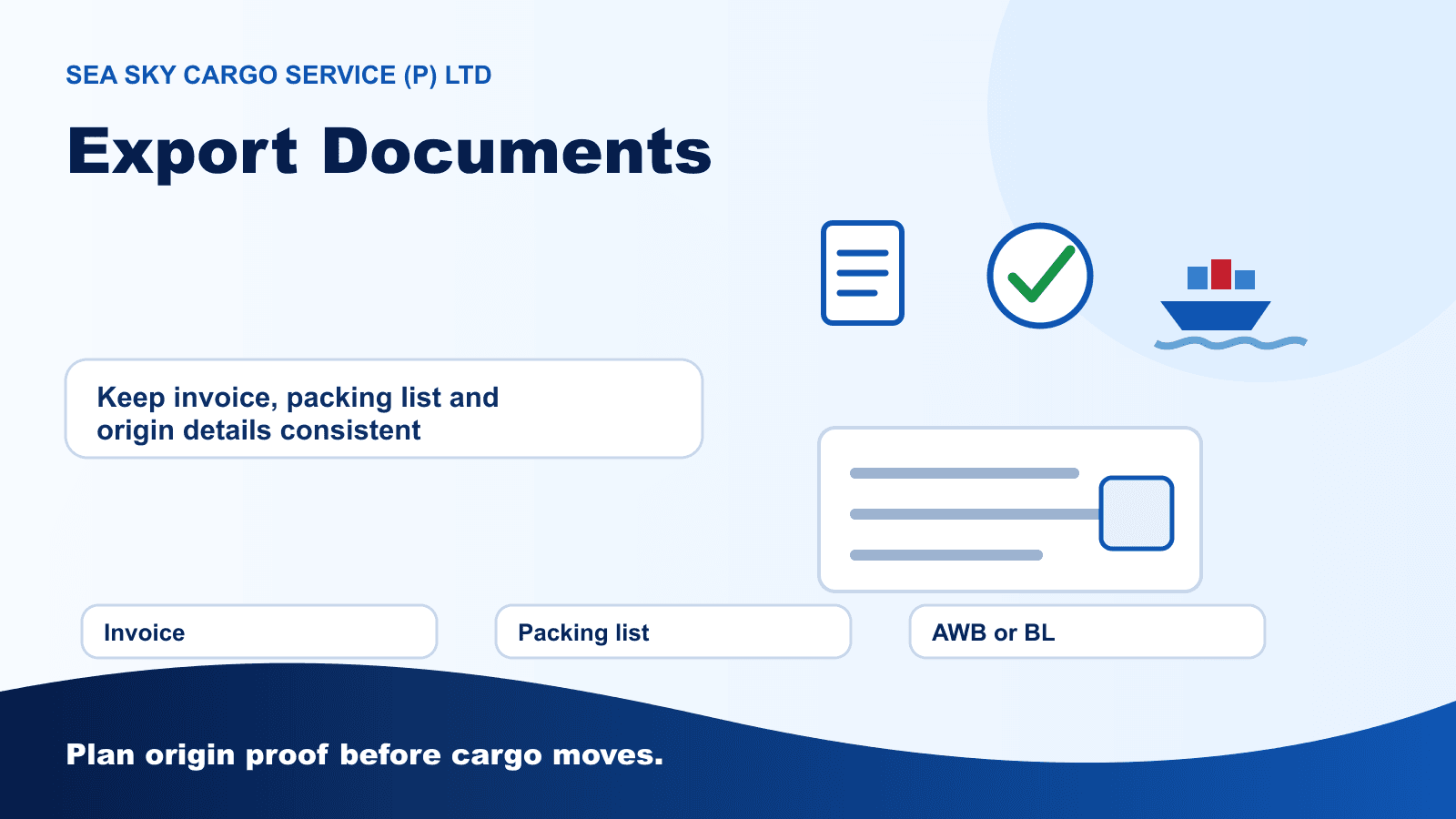
Export documents should be clear, consistent and prepared before dispatch. If documents are incomplete, the shipment may be delayed or the buyer may face customs problems in Europe. The invoice, packing list, origin statement and freight document should all describe the cargo consistently. Vague product descriptions can create avoidable questions at destination.
| Document | Why it matters |
|---|---|
| Commercial invoice | Shows buyer, seller, product, value and transaction details |
| Packing list | Confirms package count, weights, dimensions and contents |
| Airway bill or bill of lading | Connects the cargo to the carrier movement |
| HS code details | Supports duty, compliance and rules-of-origin checks |
| Origin statement or certificate | Supports the buyer's origin and preference claim where applicable |
| Product-specific certificates | May be needed for food, herbs, cosmetics, plant or wooden goods |
Need to check documents before exporting to Europe?
Share the product, HS code, buyer country, packed weight, dimensions and available origin documents. Sea Sky can help review the route and export file before dispatch.
Air freight vs sea freight for Europe shipments
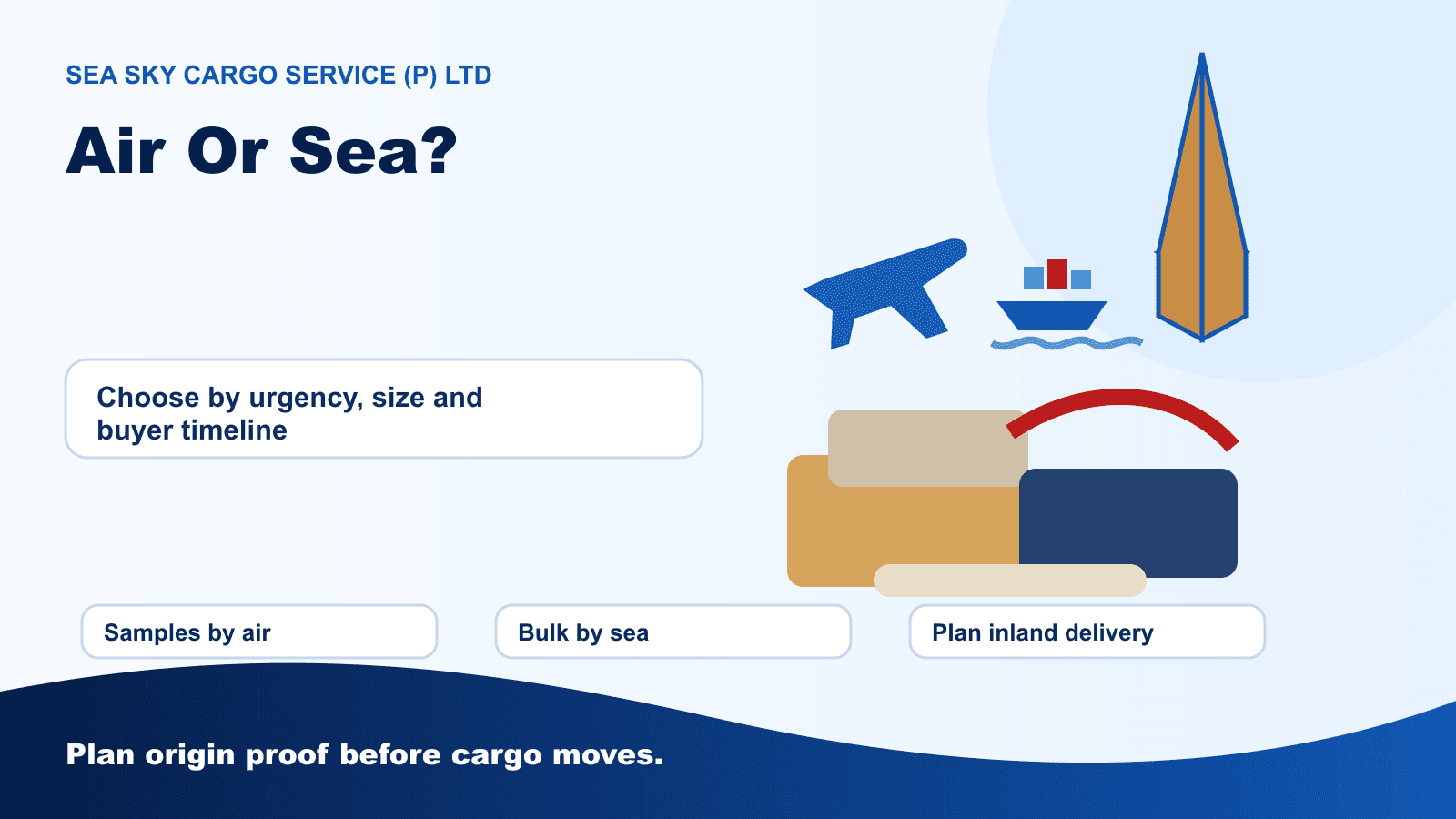
Nepal to Europe shipments can move by air freight or sea freight depending on product type, shipment size, urgency and buyer requirement. Many exporters start with air freight service for samples or first orders. Once volume grows, sea freight service may become more practical. For a full booking checklist, use the international shipment guide before confirming freight.
| Freight mode | Best fit | Planning point |
|---|---|---|
| Air freight | Samples, urgent orders, small high-value goods, fashion, tea and specialty items | Check chargeable weight, airline restrictions and document cutoff |
| Sea freight | Carpets, bulk handicrafts, furniture, larger commercial orders and cost-sensitive cargo | Plan Indian port, inland movement, transit time and final delivery |
Common mistakes exporters make with REX
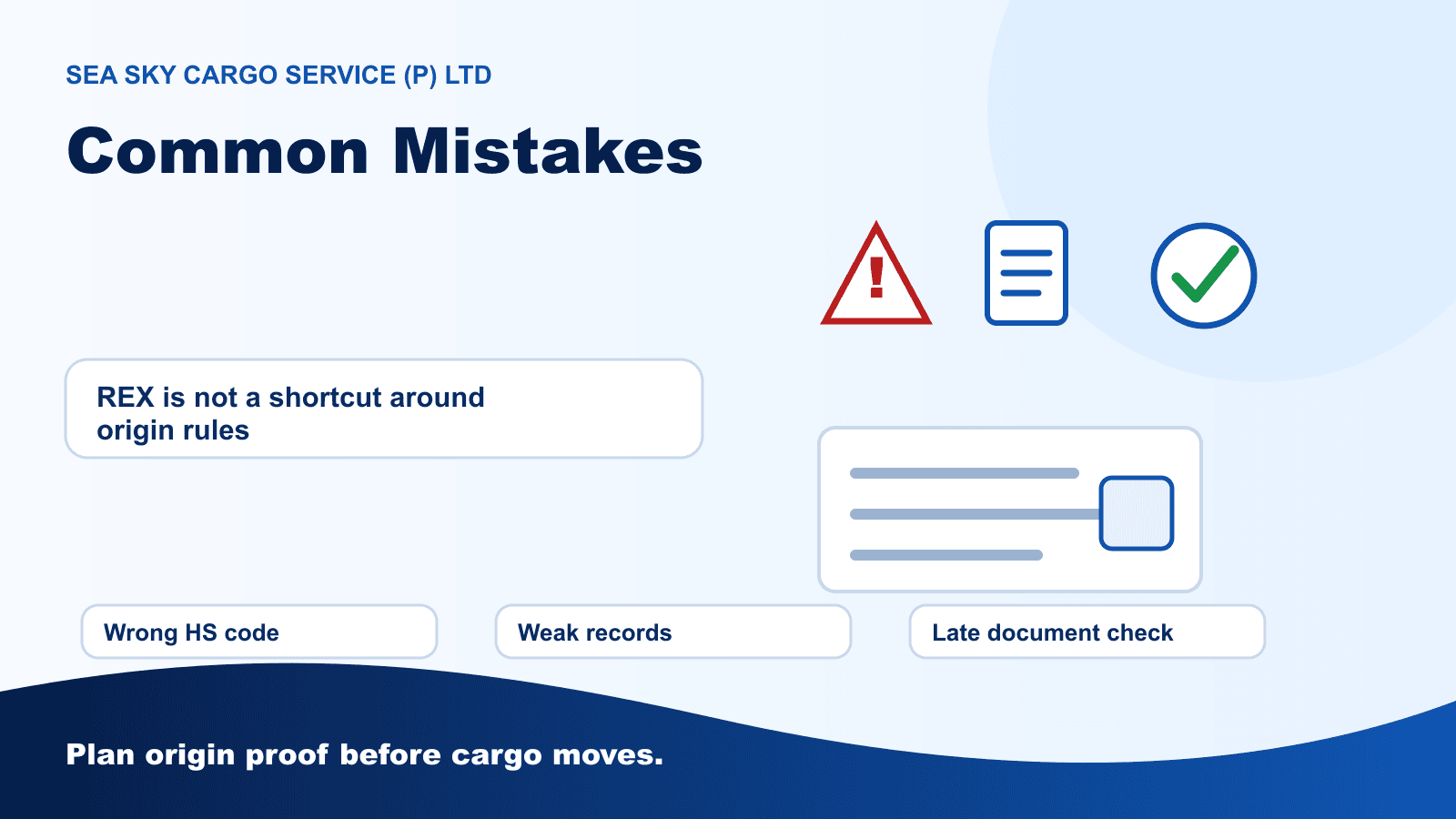
Many exporters face issues because they treat REX as a shortcut. It is not a shortcut. Goods must still meet the correct origin rules and documents must be accurate.
- Assuming all Nepali goods qualify automatically
- Using REX without checking HS code
- Not confirming rules of origin
- Giving vague product descriptions
- Missing origin statement details
- Confusing REX with normal export registration
- Not keeping production or sourcing records
- Preparing documents only after the cargo is ready
- Ignoring product-specific EU import rules
The safest habit is to confirm requirements before quoting, packing or dispatching the cargo. REX should support a clean export file, not rescue a weak one at the last minute.
How to prepare before shipping goods to Europe
Before shipping, exporters should follow a simple pre-dispatch checklist.
- Confirm product HS code
- Check whether the product may qualify for preference
- Confirm rules of origin
- Prepare invoice and packing list
- Confirm buyer details and destination country
- Check if REX number or origin statement is needed
- Prepare product certificates if required
- Choose air or sea freight
- Confirm packaging quality
- Review export documents before dispatch
- Confirm delivery terms with the buyer
This reduces delays and gives the buyer confidence before the cargo leaves Nepal. If customs preparation is unclear, Sea Sky can also help review customs clearance in Nepal requirements around the export file.
How Sea Sky Cargo helps with Europe exports
Sea Sky Cargo helps Nepali exporters plan shipments to Europe with practical freight and document support. The goal is to make the shipment file, freight route and customs plan ready before dispatch.
- Nepal to Europe export shipment planning
- Air freight to Europe
- Sea freight to Europe
- Export document review
- HS code guidance
- Origin document preparation support
- REX-related document guidance
- Packaging and shipment planning
- Customs clearance coordination
- Buyer shipment requirement support
If you are exporting Nepali products to Europe, share product details, buyer country, packed weight, dimensions and available documents through the get quote page. Sea Sky can help review the shipment before dispatch.
Frequently asked questions
What is the REX system? The REX system is the Registered Exporter System used to certify the origin of goods under certain preferential trade arrangements.
What is a REX number? A REX number identifies a registered exporter who can make origin statements for eligible shipments under applicable rules.
Do all Nepali exporters need a REX number? Not always. It depends on destination, product, shipment value, trade scheme and buyer requirements.
Does REX guarantee duty-free export to Europe? No. The goods must meet rules of origin and product eligibility requirements before preferential duty can apply.
Which Nepali products may benefit from REX? Products such as pashmina, carpets, garments, tea, coffee, handicrafts, herbs and handmade goods may be relevant, but eligibility depends on HS code and origin rules.
Can Sea Sky Cargo help with Europe export shipments? Yes. Sea Sky Cargo can help with freight planning, export document review, HS code guidance and shipping coordination for Nepal to Europe exports.
Export Nepali products with a cleaner shipment plan
Sea Sky Cargo can help compare air and sea freight, review export documents, prepare customs details and coordinate Europe-bound cargo from Nepal.