
Europe Demand in Nepal 2026: Trade Trends and Shipping Opportunities
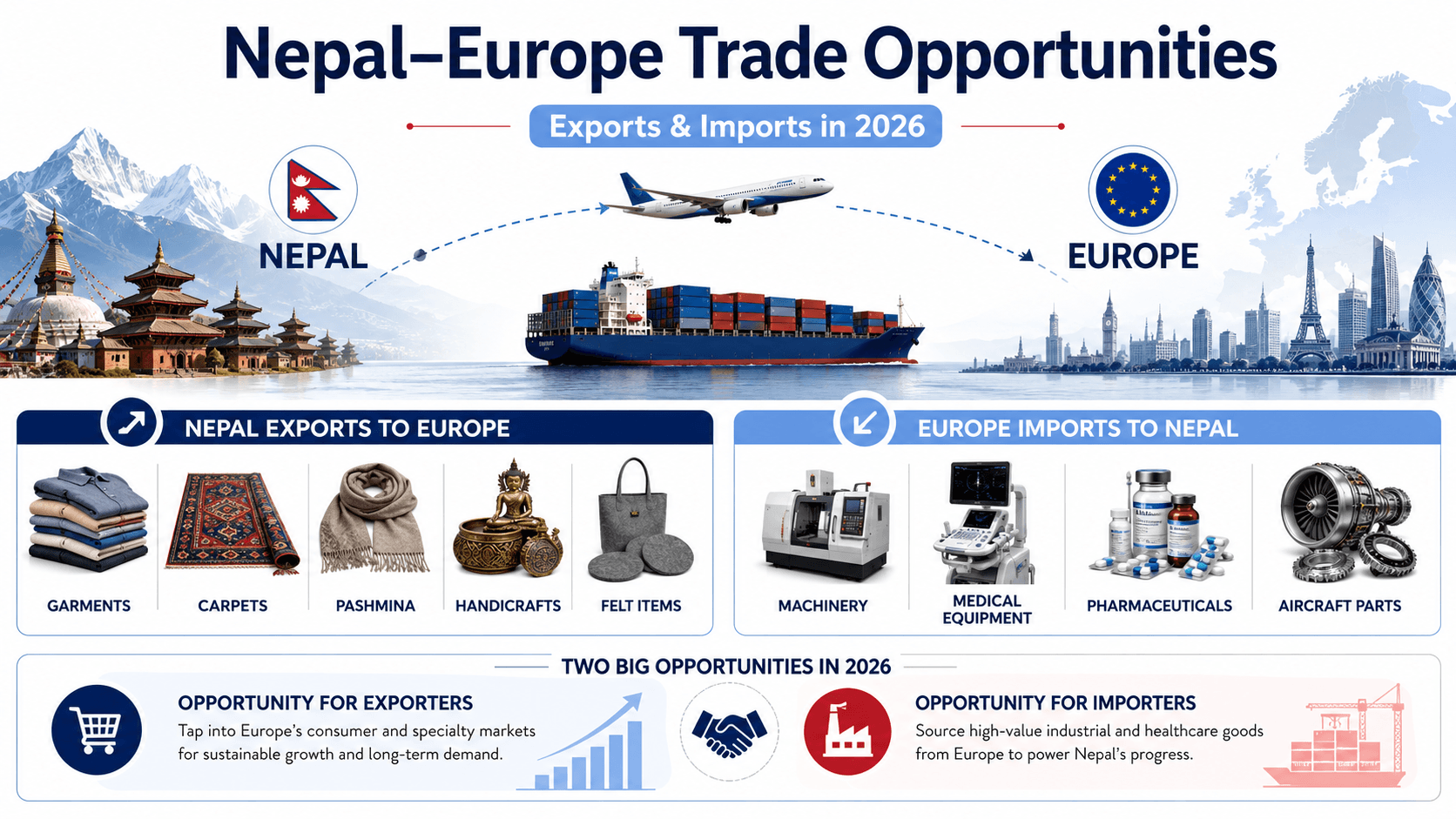
Europe remains one of the most important trade regions for Nepal in 2026. Demand runs both ways: Europe buys Nepali products such as garments, carpets, pashmina, handicrafts, and felt items, while Nepal imports European machinery, medical equipment, pharmaceuticals, and aircraft parts.
For Nepali businesses, this creates two opportunities at once. Exporters can target Europe’s consumer and specialty markets, while importers can source high-value industrial and healthcare goods that support Nepal’s own growth.
Why Europe matters
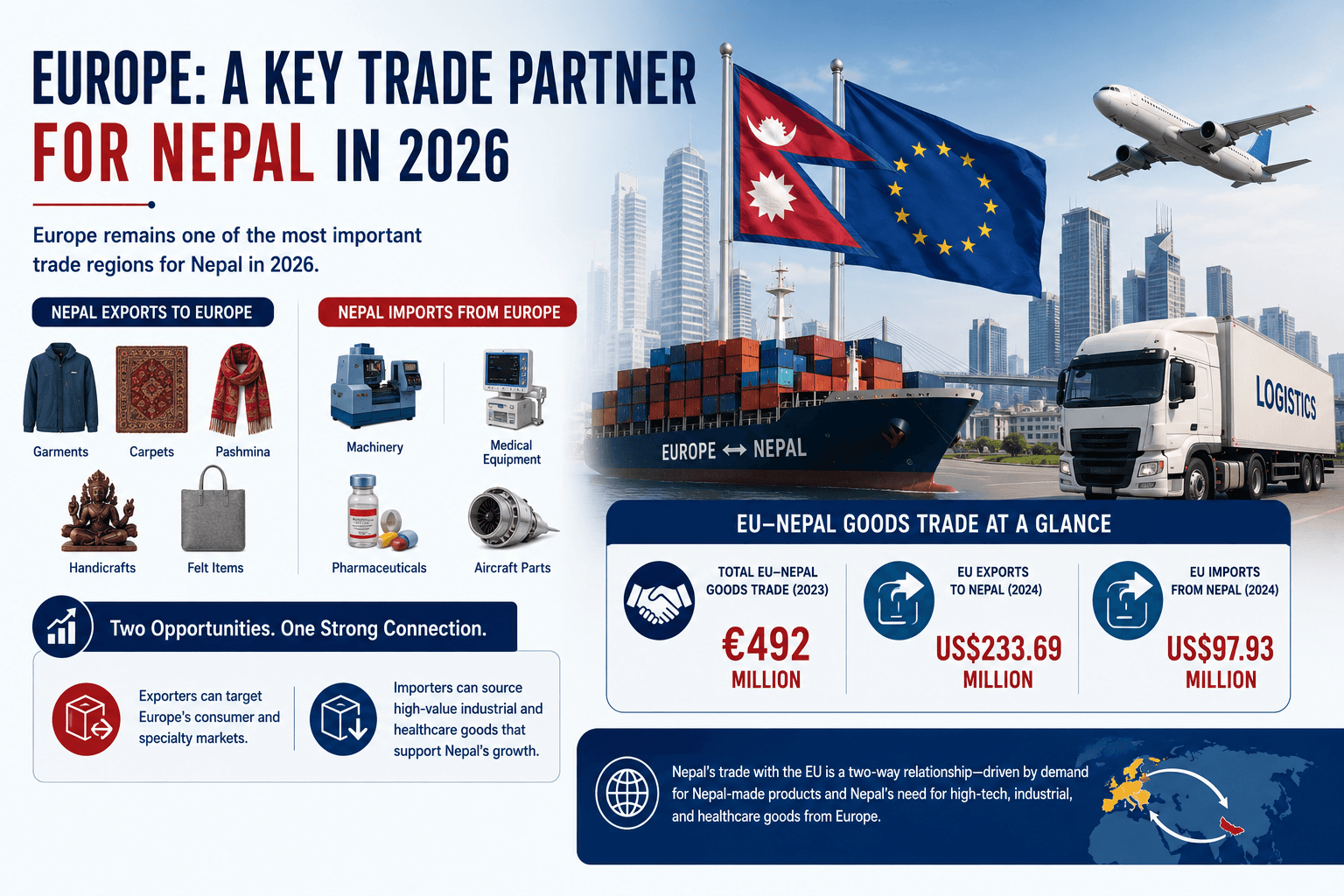
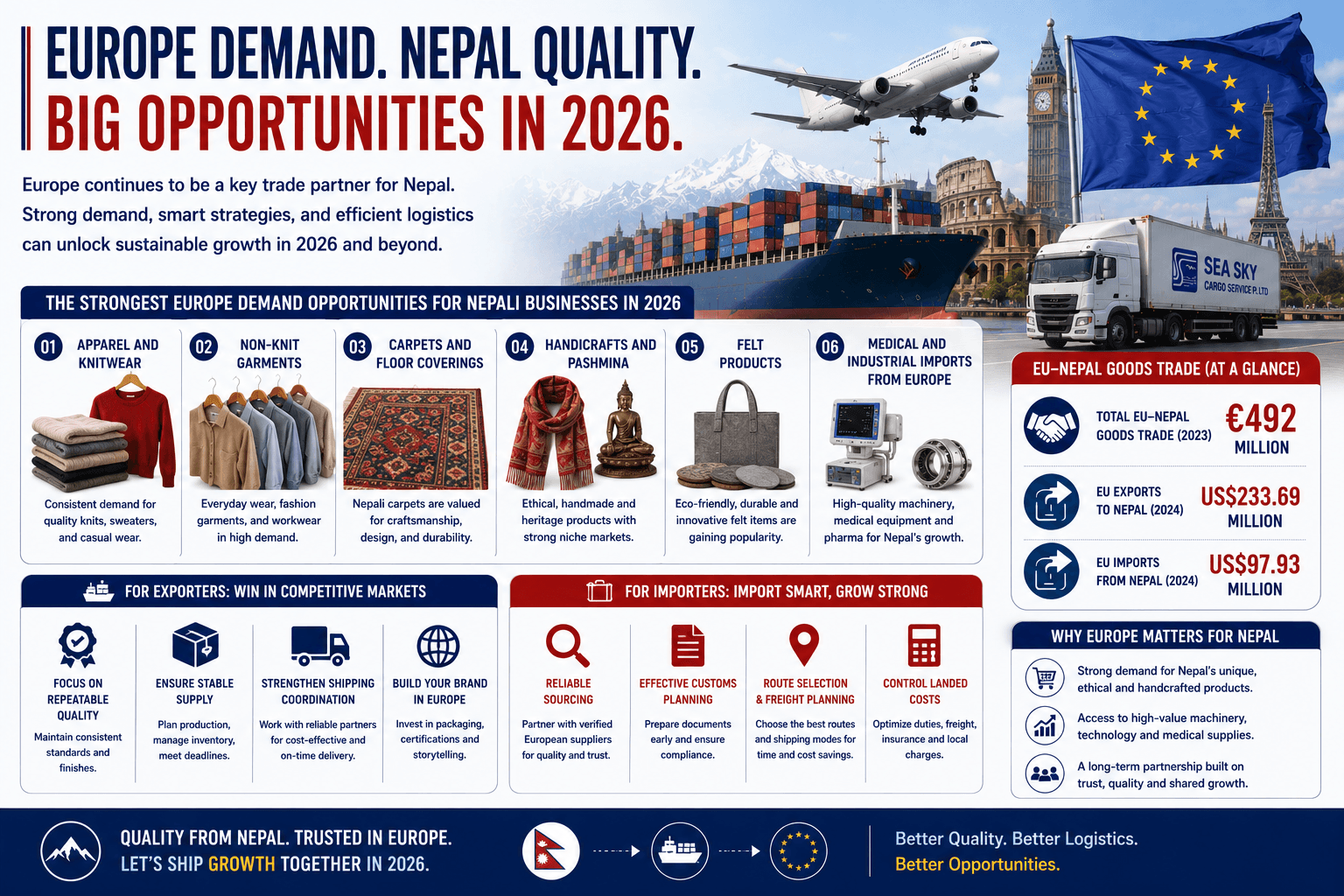
The European Union is still a major partner for Nepal’s trade profile. Official trade data shows EU–Nepal goods trade at about €492 million in 2023, with EU exports to Nepal around US$233.69 million in 2024 and EU imports from Nepal about US$97.93 million in 2024.
That trade mix matters because Nepal is not only selling to Europe; it is also buying essential high-tech and industrial goods from Europe. The result is a supply chain relationship built on both demand for Nepal-made products and Nepal’s need for imported equipment and medicines.
What Europe buys
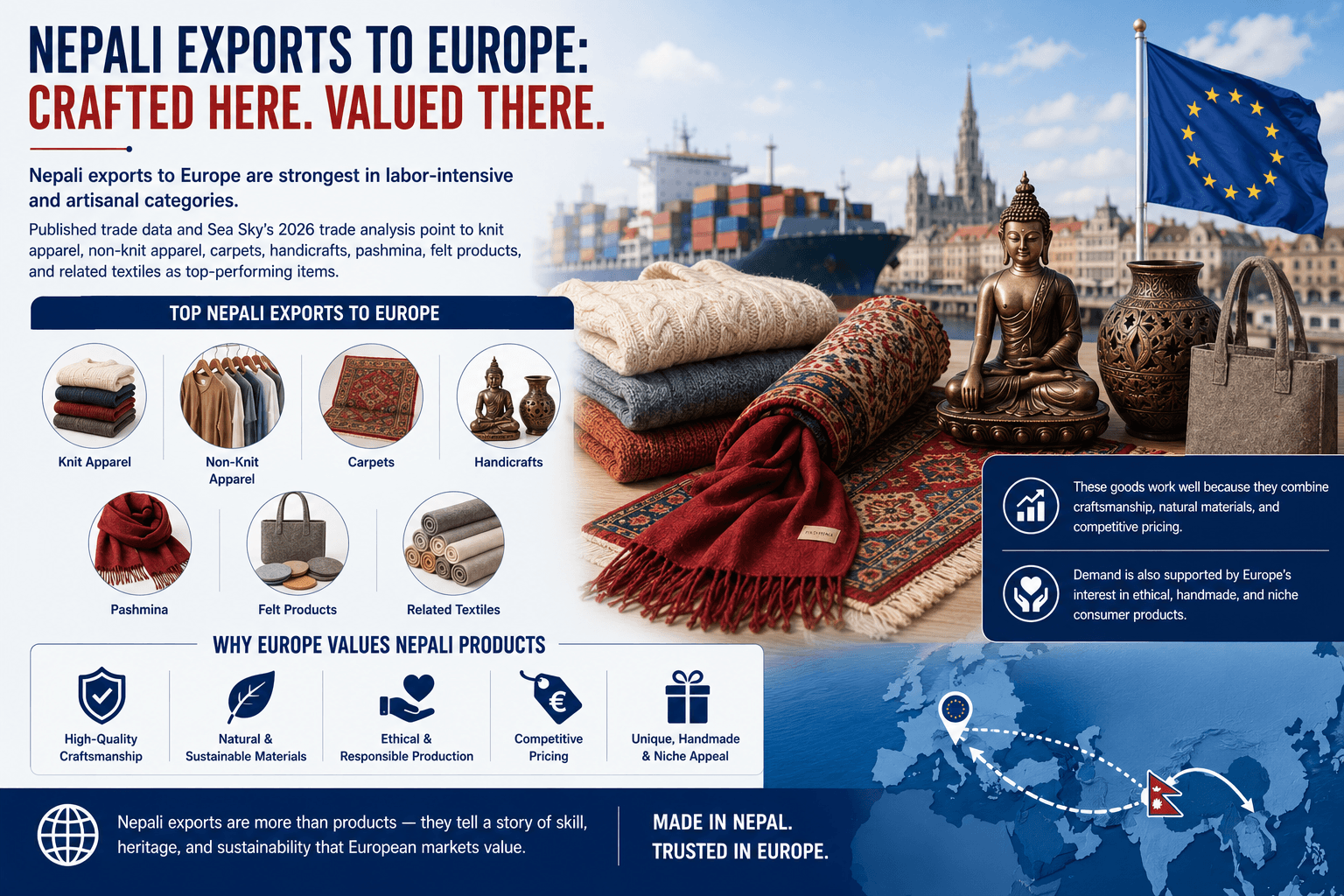
Nepali exports to Europe are strongest in labor-intensive and artisanal categories. Published trade data and Sea Sky’s 2026 trade analysis point to knit apparel, non-knit apparel, carpets, handicrafts, pashmina, felt products, and related textiles as top-performing items.
These goods work well because they combine craftsmanship, natural materials, and competitive pricing. Demand is also supported by Europe’s interest in ethical, handmade, and niche consumer products.
What Nepal buys
On the import side, Europe is a source of machinery, optical and medical equipment, pharmaceuticals, and aircraft parts. These categories are important because they support hospitals, factories, hydropower, aviation, and infrastructure development in Nepal.
This means Europe’s demand in Nepal is not only about exports to Europe. It also includes Nepal’s demand for European goods that raise productivity and improve domestic service quality.
2026 demand shift
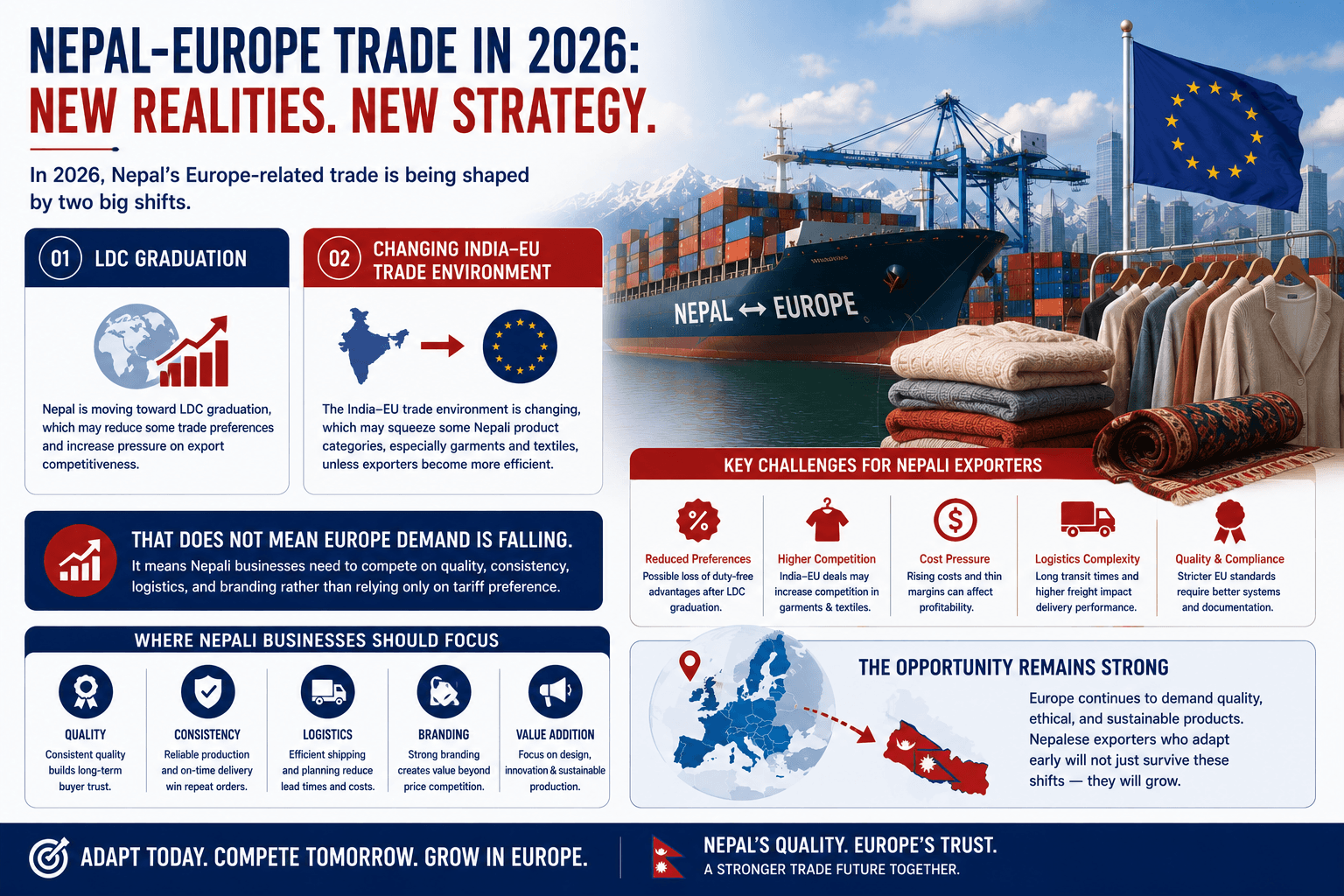
In 2026, Nepal’s Europe-related trade is being shaped by two big shifts. First, Nepal is moving toward LDC graduation, which may reduce some trade preferences and increase pressure on export competitiveness. Second, the India–EU trade environment is changing, which may squeeze some Nepali product categories, especially garments and textiles, unless exporters become more efficient.
That does not mean Europe demand is falling. It means Nepali businesses need to compete on quality, consistency, logistics, and branding rather than relying only on tariff preference.
Logistics reality
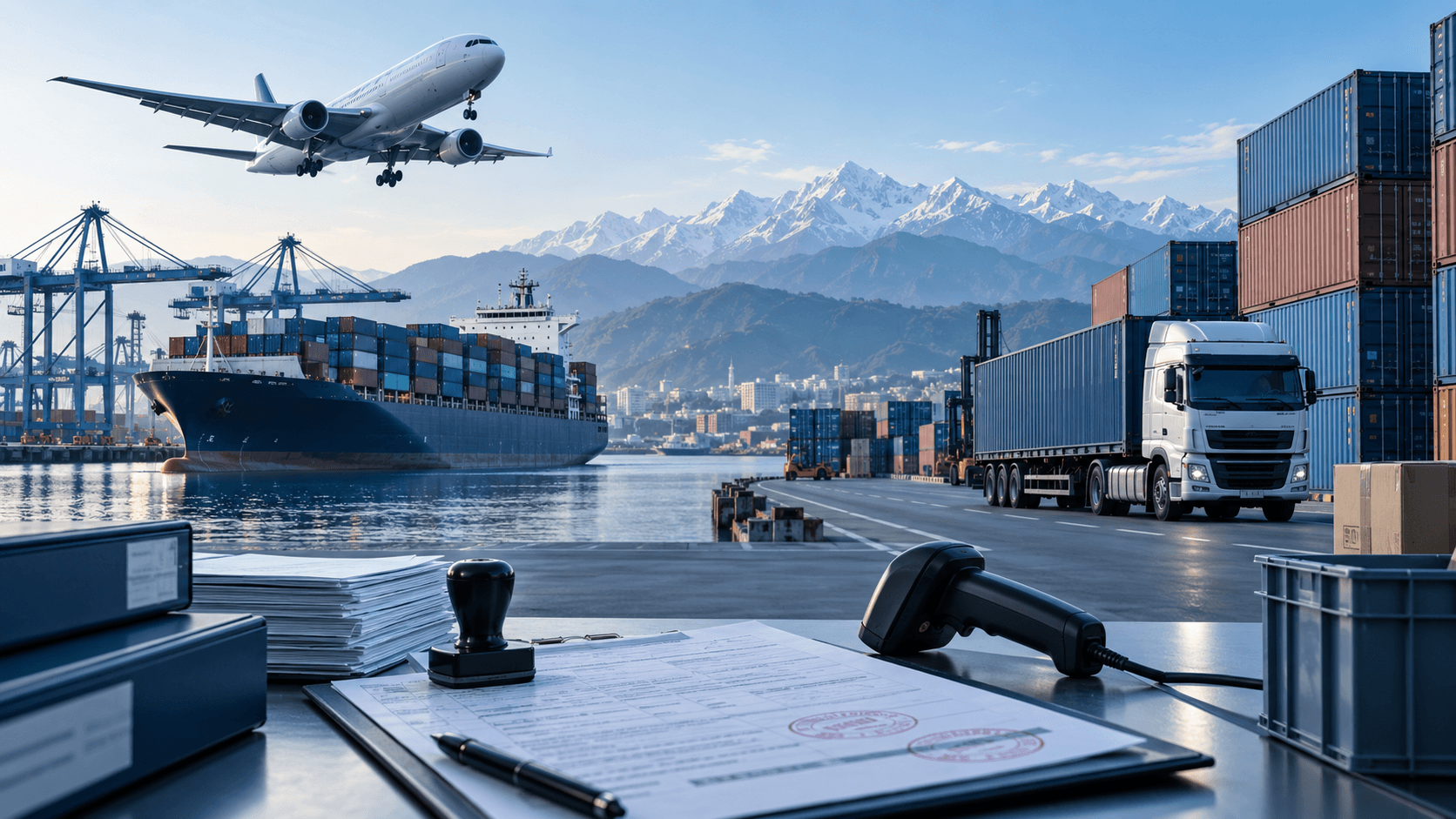
Europe-bound shipments from Nepal usually move through air freight for speed or through sea freight via Indian ports for lower cost on bulk cargo. For many exporters, logistics is one of the biggest success factors because freight cost, transit time, and customs coordination directly affect final market competitiveness.
Sea Sky’s trade and shipping content highlights Europe routes, air freight from Nepal to Europe, and sea-freight options that help businesses manage these costs and timelines more effectively.
Best opportunities
The strongest Europe demand opportunities for Nepali businesses in 2026 are:
- Apparel and knitwear.
- Non-knit garments.
- Carpets and floor coverings.
- Handicrafts and pashmina.
- Felt products.
- Medical and industrial imports from Europe.
For exporters, the best approach is to focus on repeatable quality, stable supply, and strong shipping coordination. For importers, the priority is reliable sourcing, customs planning, and route selection that keeps landed costs under control.
Sea Sky’s role
Sea Sky can support businesses entering the Europe corridor by helping with route planning, export and import logistics, freight mode selection, and customs coordination. That matters because Europe-linked shipments often need both speed and compliance, especially when time-sensitive goods or branded products are involved.
For companies that want to grow in Europe-linked trade, a partner with air, sea, and cross-border capability can reduce friction and improve consistency.
Conclusion
Europe demand in Nepal in 2026 is strong but more competitive than before. Nepali exporters still have opportunities in garments, carpets, handicrafts, and pashmina, while importers continue to depend on Europe for machinery, medicines, and technical equipment.
The winners will be businesses that pair good products with strong logistics. Sea Sky can help those businesses move faster, control costs, and ship with confidence into the Europe corridor.
Talk to Sea Sky’s logistics team for Europe shipping support or request a quote for your next export or import shipment today.
Related posts
1970-01-01
Sea + Air Freight: How SeaSky Helps Businesses Ship Smarter
2026-10-05
Landed Cost in Nepal: A Step-by-Step Import Cost Worksheet
2026-10-04
Demurrage vs Detention for Nepal Imports: Free Time, Indian Port Charges and How to Avoid Them
2026-10-01