Strait of Hormuz Closure 2026: What It Means for Your Cargo
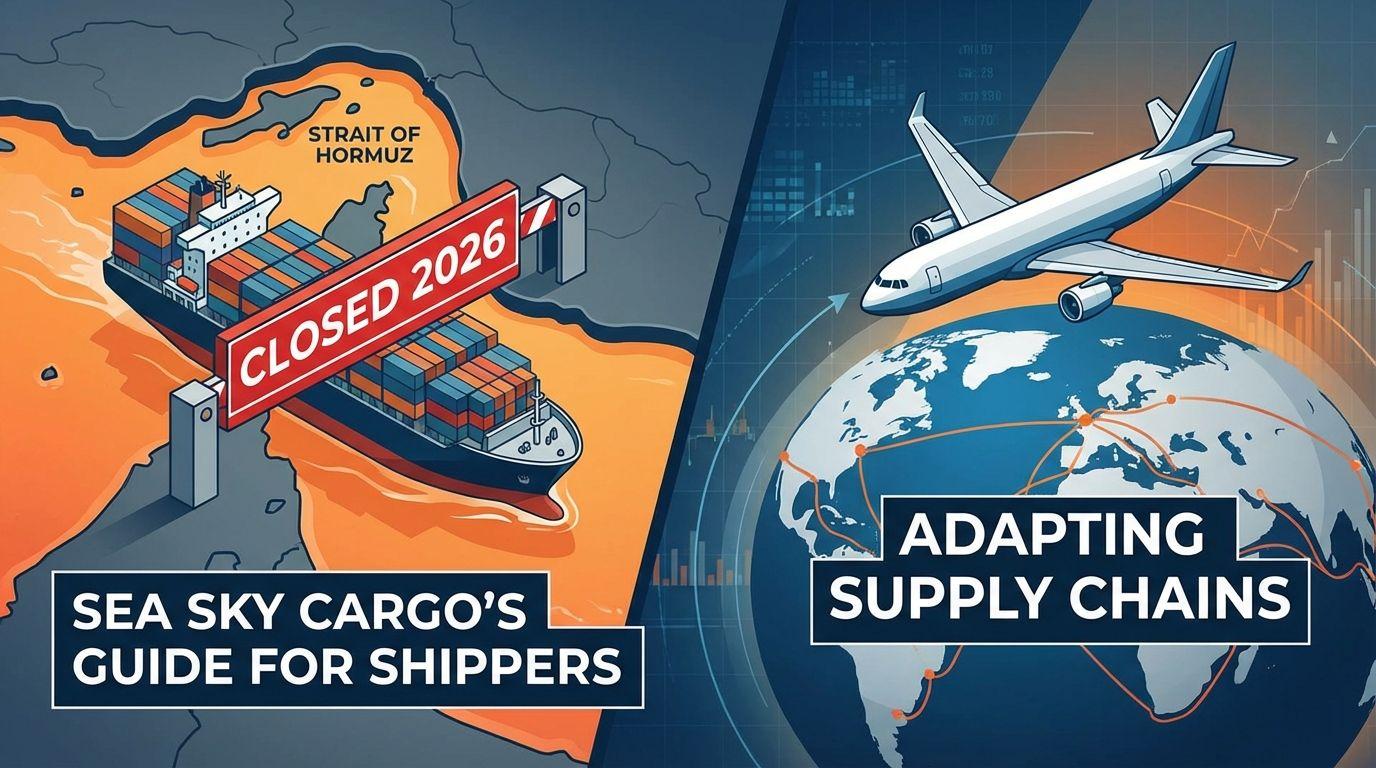
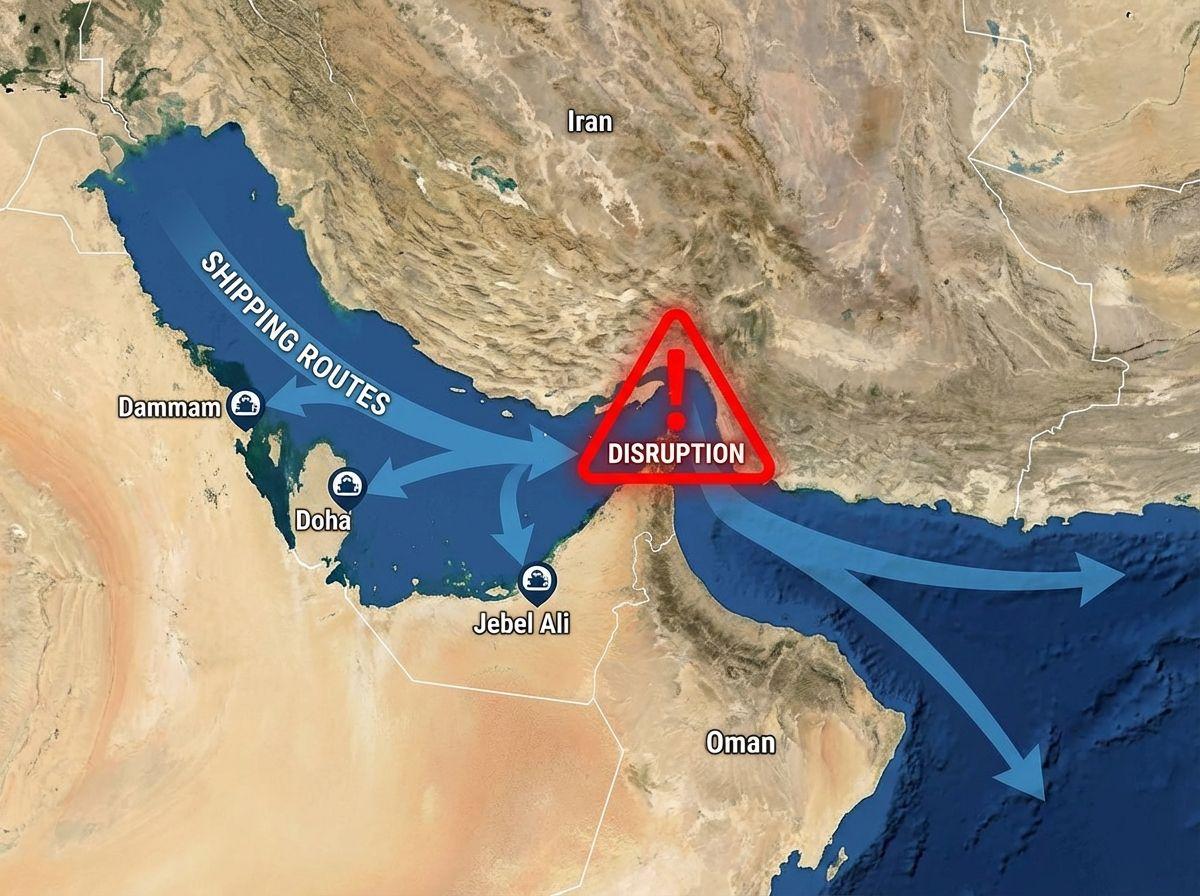
The Strait of Hormuz is a narrow sea passage between Iran and Oman that connects the Persian Gulf to the Arabian Sea. Ports like Jebel Ali, Abu Dhabi, Dammam, Doha, Kuwait, and Basra all depend on this route. Around 20% of global seaborne oil and a significant share of LNG and container traffic normally pass through this chokepoint, which makes it one of the most sensitive spots in global trade
Since early March 2026, rising tensions and attacks on vessels have led to what analysts describe as an effective closure: commercial ship movements through Hormuz have plunged by up to 90%, many major carriers have suspended Gulf calls, and insurance premiums on any vessel trying to transit the area have surged. For exporters and importers in our region, this is not a distant news story it changes how and where your cargo can move, and at what price.
How Shipping Lines Are Responding
Global carriers are reacting fast to protect ships, crews, and cargo:
- Suspended or limited bookings to Gulf ports
Container lines have scaled back or paused new bookings into ports that require Hormuz transit, especially for cargo linked to Western shippers. - Diversions and early discharge
Many vessels have been diverted to safer ports outside the Gulf or have declared “end of voyage” and discharged cargo at the nearest safe hub, with deviation charges passed back to shippers and receivers. - Longer routes via Africa
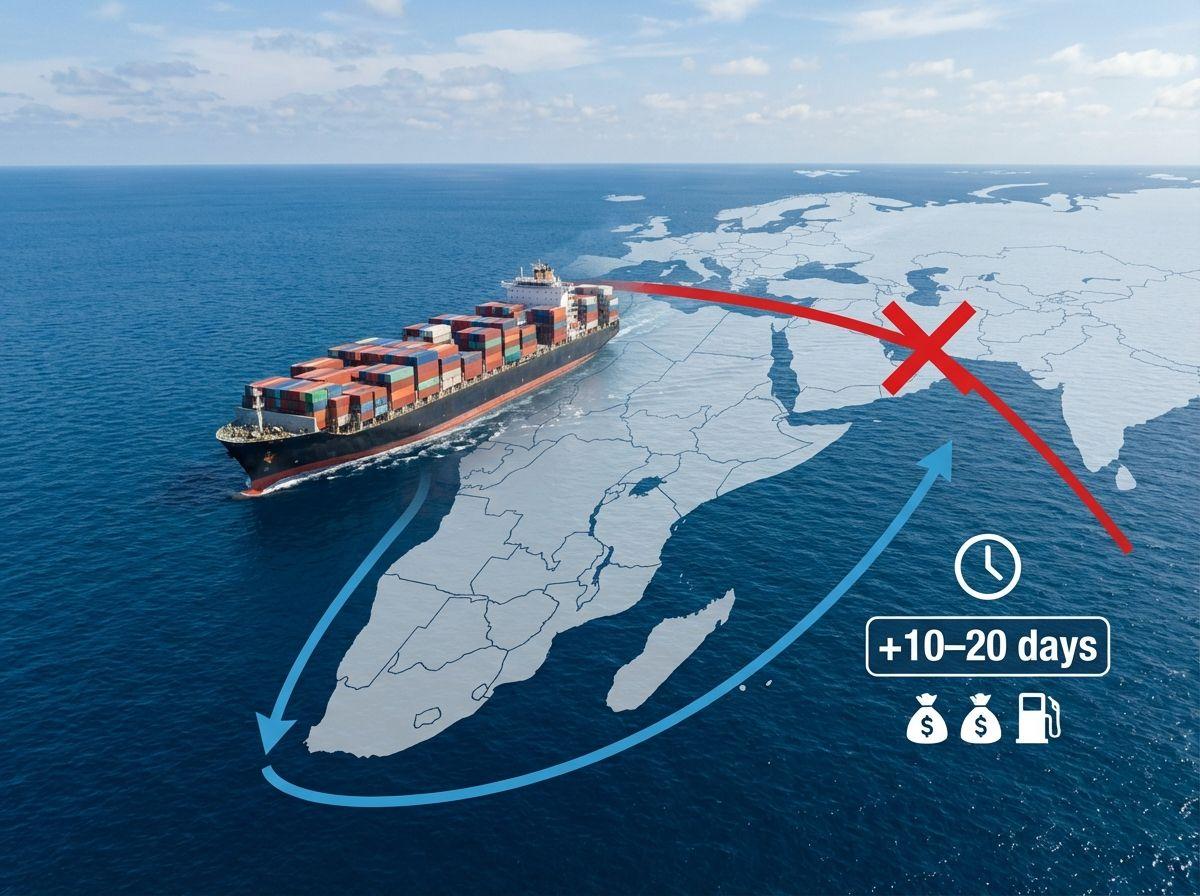
With both the Red Sea and Hormuz under pressure, ships are increasingly sailing around the Cape of Good Hope. This adds 10–20 days to typical Asia Europe and Middle East–US journeys and pushes fuel consumption sharply higher. - New surcharges and premiums
Carriers and insurers have applied war‑risk premiums and emergency bunker surcharges, which can lift all‑in ocean freight rates by 20–40% in affected trades.
For cargo owners, the combination of longer transit times, route changes, and extra surcharges is already visible in spot rate quotes and schedule reliability.
What This Means for Sea Sky Cargo Customers
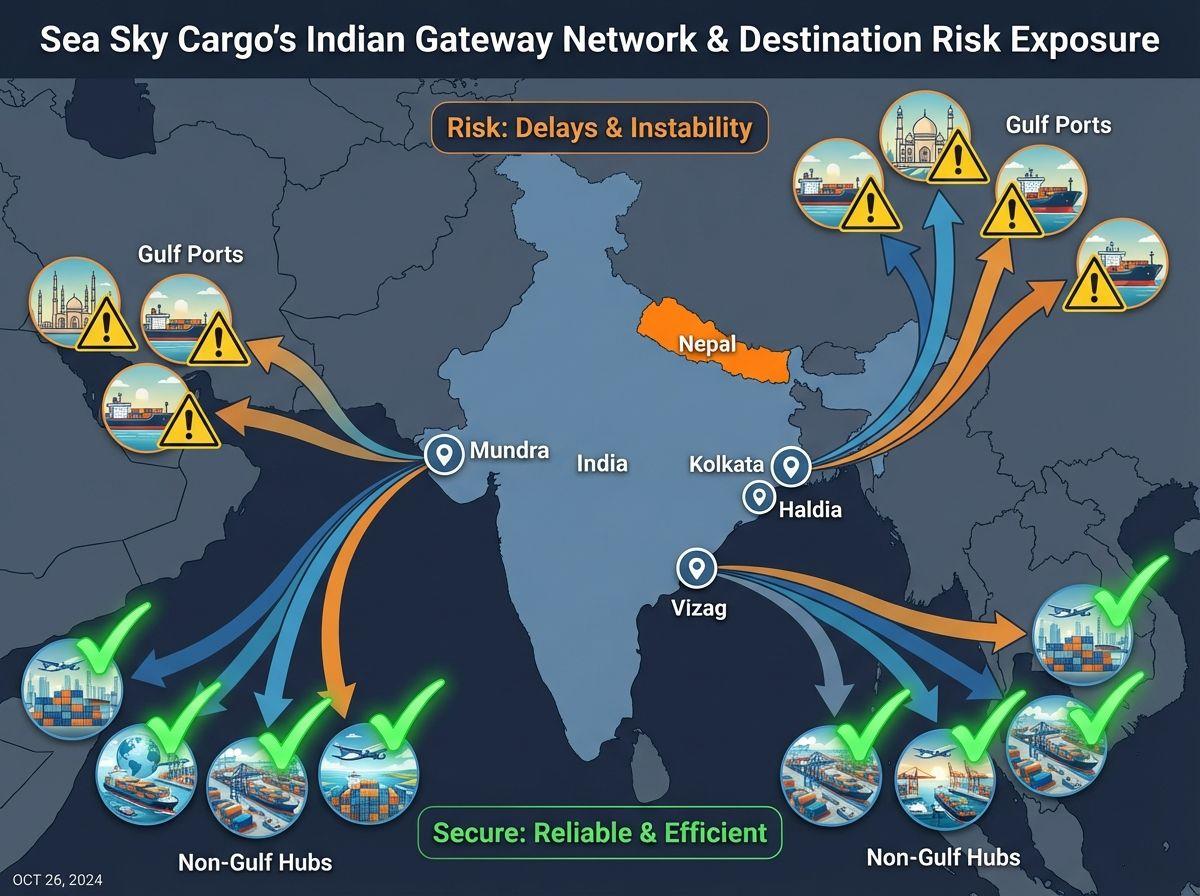
Sea Sky Cargo Service works mainly with exporters and importers in Nepal and South Asia, using Indian gateways like Kolkata, Haldia, Vizag, Mundra and, for regional trades, ports in the Middle East, Africa, and Europe. The Hormuz disruption affects you in two main ways:
1. Direct impact if your cargo uses Gulf ports
If your shipments move to or from UAE, Qatar, Bahrain, Kuwait, eastern Saudi Arabia, Iraq, or Iran by sea, you are directly exposed:
- Bookings to Gulf ports may be restricted, rerouted, or temporarily stopped by some carriers.
- Existing containers might be discharged at alternative ports outside the Gulf such as Salalah or Khor Fakkan, with extra handling, storage, and inland transport required to reach the final destination.
- Door‑to‑door transit times can extend by two to three weeks, especially if vessels are rerouted via Africa.
Sea Sky is already working voyage by voyage with partner lines to see which Gulf calls remain open, what detours are in force, and what alternatives are realistic for cargo owners from Nepal and the region.
2. Indirect impact on all other trade lanes
Even if you never ship to the Gulf, Hormuz still matters:
- Bunker prices and freight rates are rising as oil and LNG flows are disrupted and ships sail longer routes, driving up fuel consumption.
- Equipment and vessel imbalances are appearing as ships and containers get stuck or rerouted, which can mean shortages of empty containers and more “blank sailings” on Asia–Europe and Asia–US trades.
- If your buyers in Europe, North America, or East Asia rely on Gulf‑origin energy or feedstocks, they may face higher input costs or delayed production, which can affect your order volumes or delivery deadlines.
Sea Sky’s network teams in Kolkata, Birgunj, and partner hubs are monitoring these knock‑on effects closely to keep you informed before you commit to new orders.
How Sea Sky Cargo Helps You Navigate the Hormuz Crisis
In a fast‑changing situation, having a forwarder who understands both global routing and South Asian inland realities makes a real difference. Here is how Sea Sky supports you:
Route and port re‑engineering
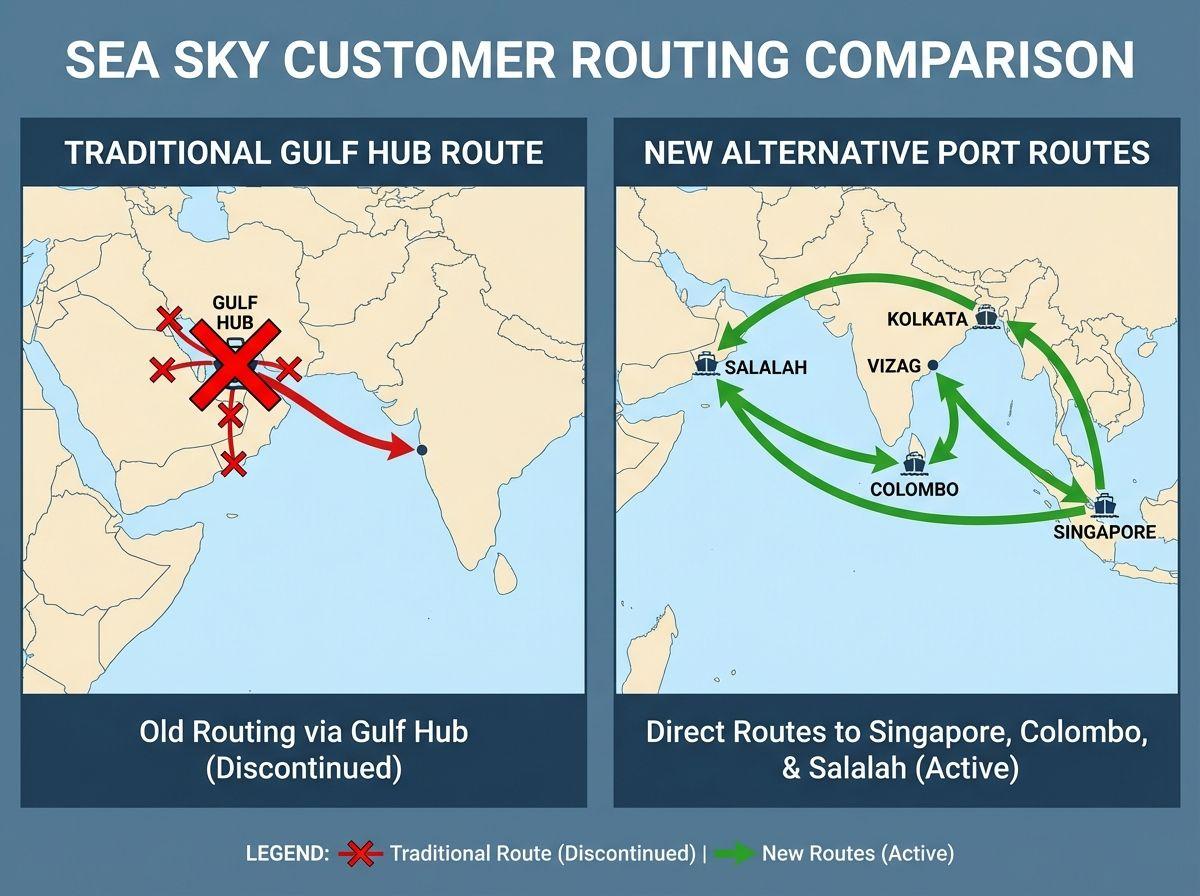
- We work with multiple ocean carriers to identify alternative transhipment hubs outside the Gulf such as Singapore, Port Klang, Colombo, Salalah, Jeddah or Mediterranean hubs depending on your destination.
- For Gulf‑bound cargo, we analyse whether it is more reliable to ship to a non‑Gulf port and truck inland, or to temporarily switch to nearby markets that are less affected.
Transparent pricing and surcharges
- Every quote we send during this period clearly breaks out base ocean freight, war‑risk premium, emergency bunker or diversion surcharges, and inland costs.
- We actively compare options (for example, different routings or different carriers) so you can decide if faster but more expensive is really necessary for a given shipment.
Mode and Incoterm advice
- For high‑value or time‑critical cargo, Sea Sky can propose air freight solutions via hubs outside the Gulf, combined with our strong road and customs capabilities on the Nepal side.
- We review your Incoterms (FOB, CIF, DAP, DDP) with you and your buyer so it is clear who carries which risks and which extra costs if routes change or ships are delayed.
Real‑time visibility
- Our operations team tracks diverted and delayed vessels and shares ETA updates, port changes, and customs implications as soon as we receive them from carriers and agents.
- For sensitive cargo (project equipment, reefers, high‑value goods), we add extra monitoring and contingency planning so you always know your options if the situation worsens.
Practical Steps Sea Sky Recommends to Exporters Right Now
Whether you are a first‑time exporter or a long‑time Sea Sky partner, these are simple moves that reduce risk:
- Map your exposure
- List all shipments and customers that use Gulf ports or Gulf‑based transhipment hubs.
- Share this list with our team so we can check each route against the latest carrier advisories.
- Add realistic lead time
- For routes that might be diverted via Africa or alternative hubs, build an extra 10–20 days into your planning.
- Update your buyers now so delivery promises stay credible even if the crisis lasts longer.
- Lock in priority equipment early
- With container imbalances growing, book slots and equipment as early as possible, especially in peak weeks, to avoid last‑minute shortages.
- Plan “Plan B” destinations
- For some shipments, it may be smarter in the short term to accept delivery at an alternative port or to target a different region until Hormuz stabilises. Sea Sky can model these scenarios and show you landed‑cost comparisons.
- Stay informed through one channel
- Rather than chasing rumours or conflicting social‑media updates, rely on carrier notices, official maritime sources, and your forwarder. Our team monitors UNCTAD, industry data providers, and carrier bulletins every day so you don’t have to
What This Means for Nepal’s Exporters Specifically
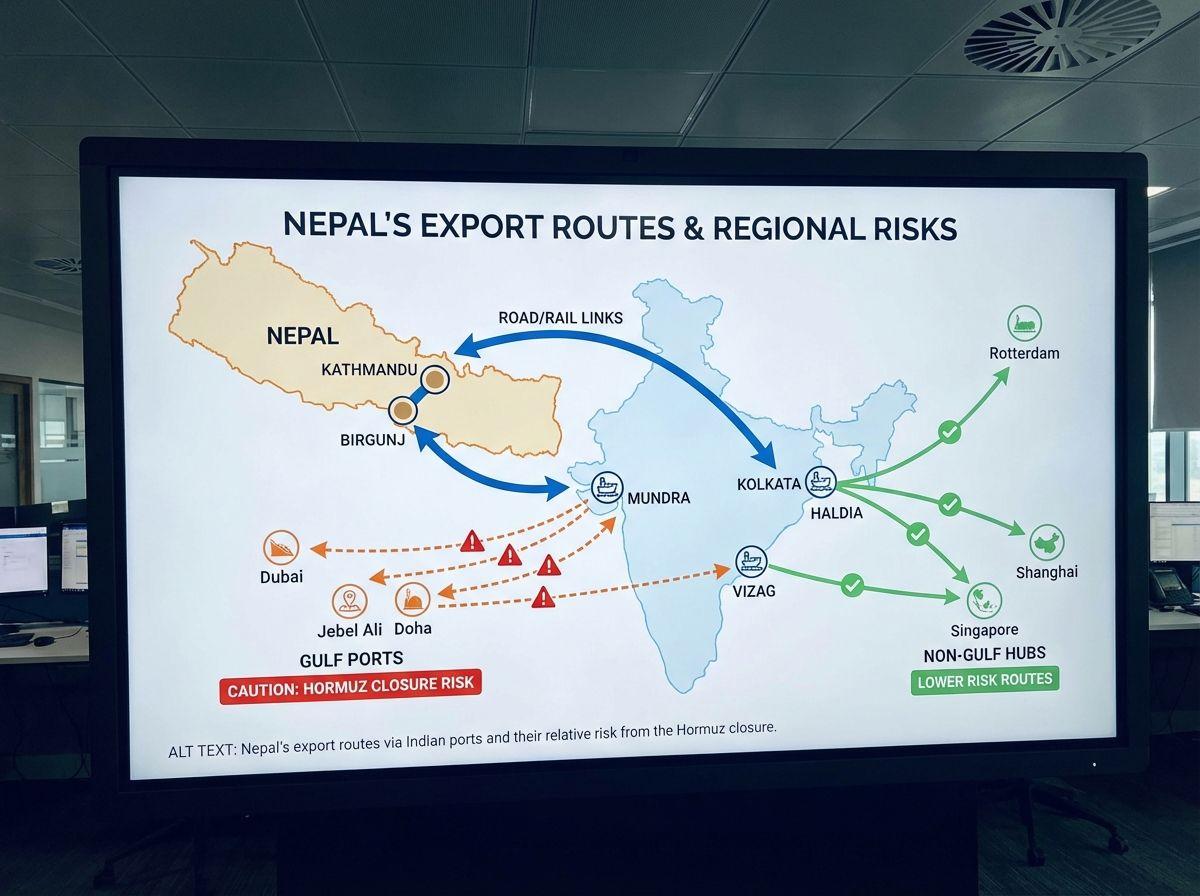
For Nepal, most sea shipments already move via Indian ports (Kolkata, Haldia, Vizag, Mundra), then onward to destination. You are most affected if:
- Your final buyers are in Gulf countries, or
- Your containers normally trans‑ship via Gulf hubs on the way to Africa, Europe, or the Americas.
Sea Sky’s combination of rail/road expertise to Indian ports and wide carrier network allows us to quickly re‑route via non‑Gulf hubs when possible, while keeping your inland leg (Kathmandu–Birgunj–port) unchanged. This helps you maintain continuity with minimal changes on the Nepal side, even as the deep‑sea leg is re‑engineered.
Sea Sky’s Message: Stay Calm, Re‑plan Smart
The closure of the Strait of Hormuz is serious, but with the right information and a flexible logistics partner, it doesn’t have to stop your business. Routes, rates, and risks are moving, but you don’t need to manage that alone.
If you have cargo already on the water, are planning new exports, or simply want to understand how this crisis affects your specific trade lane, Sea Sky Cargo Service is ready to review your situation route by route and design the safest, most cost‑effective plan available under current conditions.
Contact Sea Sky Cargo Service Pvt. Ltd
- Phone: +977-1-5570460
- Email: [email protected]
Contact Sea Sky Cargo Service Pvt. Ltd
Built for freight forwarders handling FCL, OOG, heavy or project cargo into Nepal and South Asia. Use it to check routes, documents, handoffs and risk points before quoting your client.