Cold Chain Logistics in Nepal: 2026 Guide to Safe Shipping
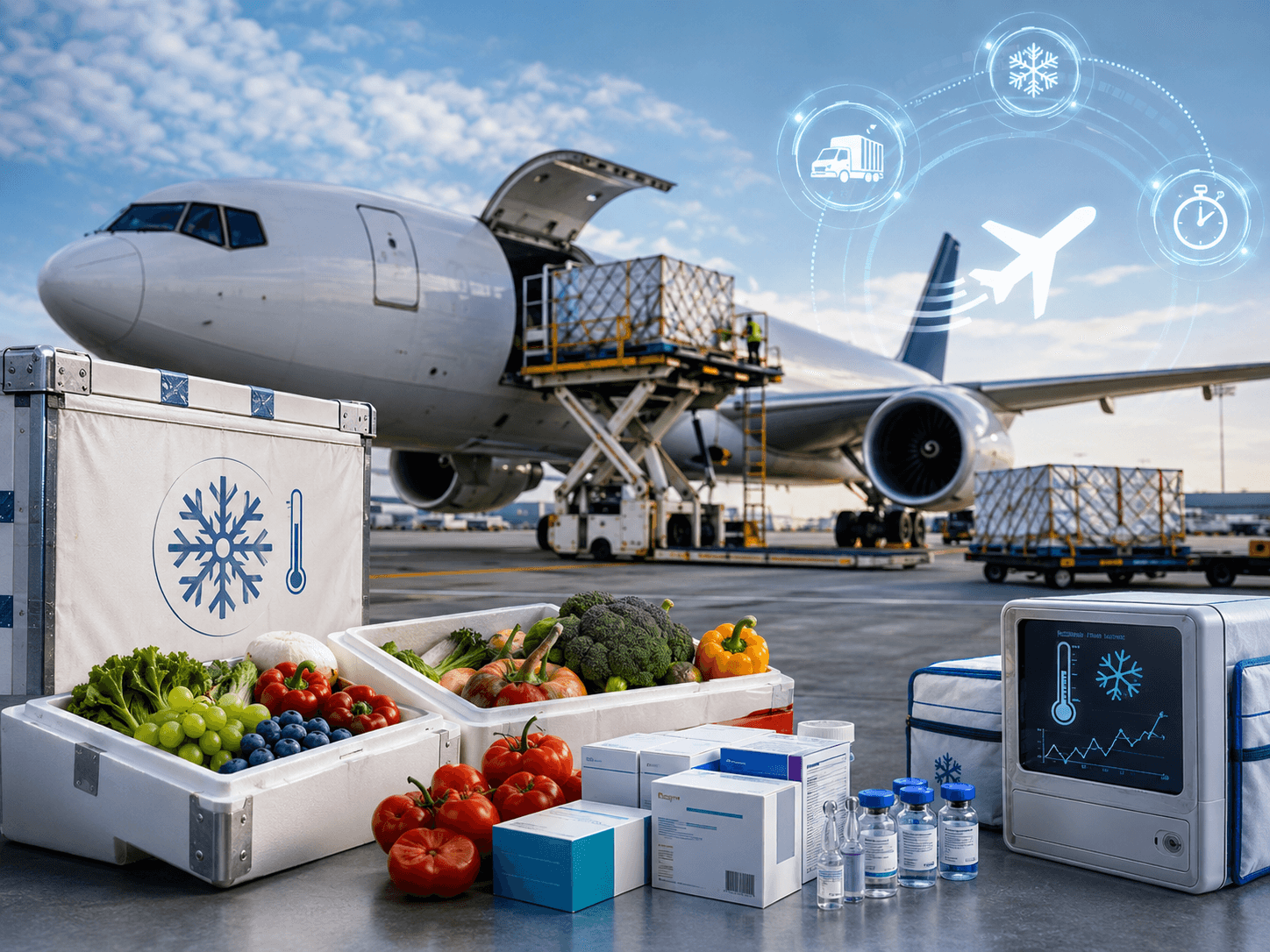
Cold chain logistics is one of the most important parts of modern shipping in Nepal. It keeps temperature-sensitive products such as food, flowers, pharmaceuticals, and vaccines safe from spoilage while they move through storage, transport, and delivery.
In 2026, demand for cold chain services is rising because more Nepali businesses are exporting fresh products, more pharmacies need reliable temperature control, and more buyers expect quality that matches international standards. For exporters and importers, the real challenge is not just moving cargo fast it is keeping the cargo at the right temperature at every stage.
What Cold Chain Means
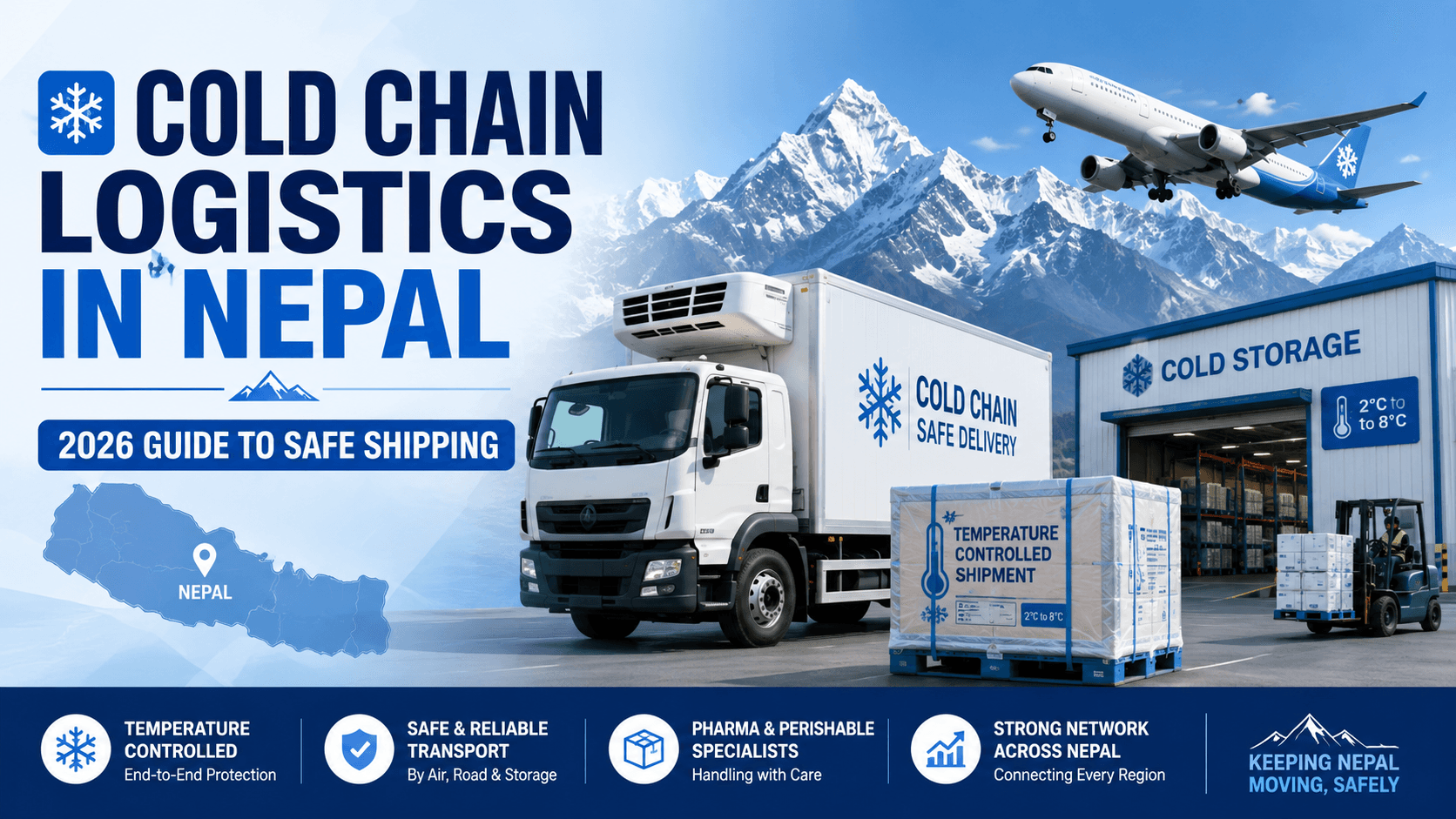
Cold chain logistics is the controlled process of moving products while keeping them within a safe temperature range. It covers everything from pre-cooling and storage to refrigerated transport, airport handling, and final delivery
This matters because many products lose value quickly if they warm up or freeze unexpectedly. Fresh produce can wilt, flowers can lose freshness, and medicine can become unusable if the chain is broken even for a short time.
Why It Matters in Nepal
Nepal has strong potential in agriculture and pharma logistics, but its geography and infrastructure make temperature control harder than in many other markets. Mountain roads, changing weather, transit delays, and power interruptions can all create risk for sensitive cargo.
At the same time, the market opportunity is real. Cold chain demand is growing because farmers, cooperatives, exporters, hospitals, and distributors need reliable solutions that reduce waste and protect product quality.
Products That Need Cold Chain
Cold chain is essential for:
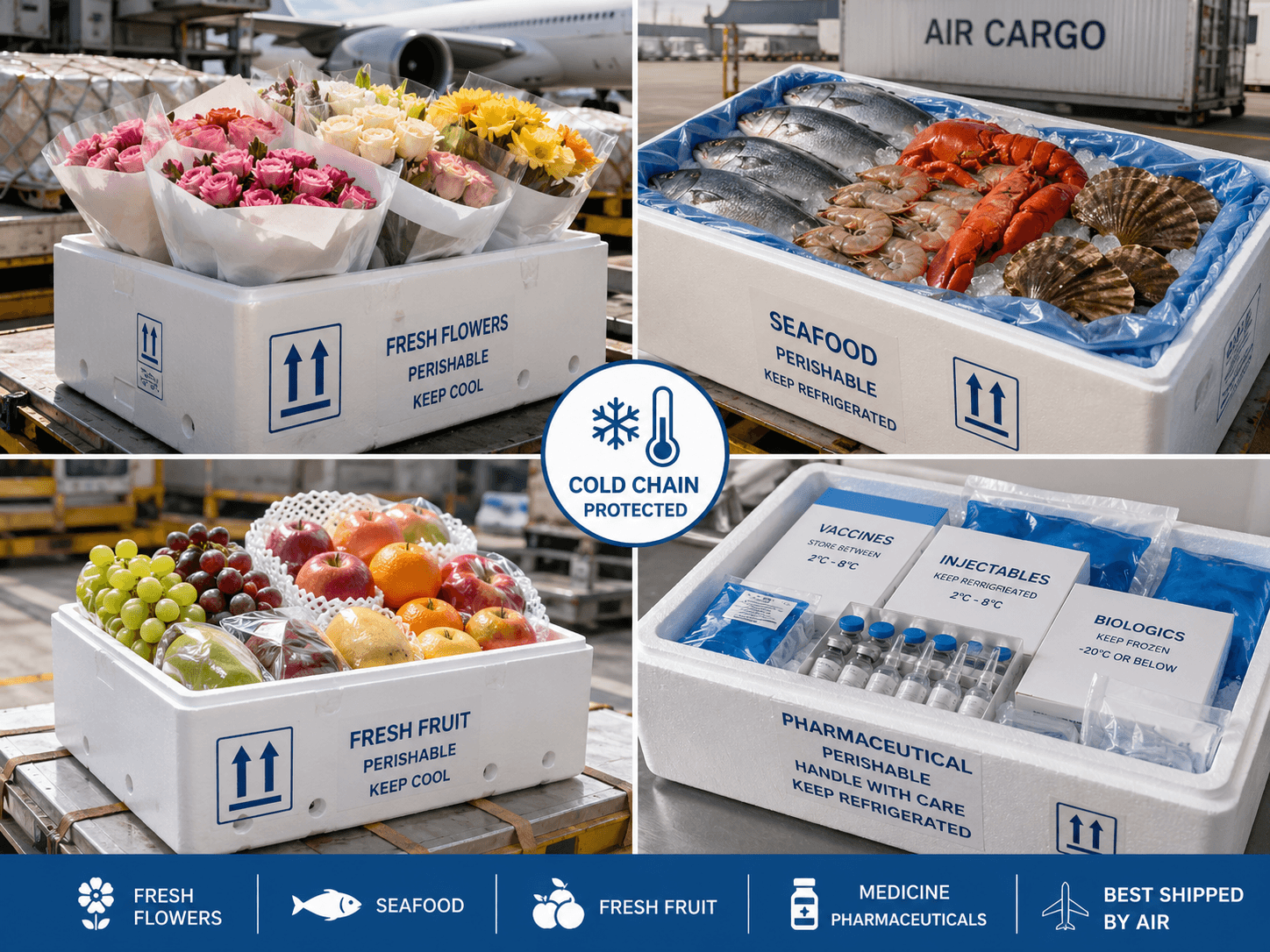
- Fresh fruits and vegetables.
- Flowers and ornamental plants.
- Dairy products.
- Meat and seafood.
- Vaccines and medicines.
- Laboratory and diagnostic materials.
These products are either highly perishable or highly sensitive to temperature shifts. Even short exposure during loading or unloading can reduce shelf life or compromise product quality.
Main Cold Chain Components
A reliable cold chain usually includes:
- Pre-cooling at origin.
- Refrigerated storage.
- Reefer trucks or temperature-controlled vehicles.
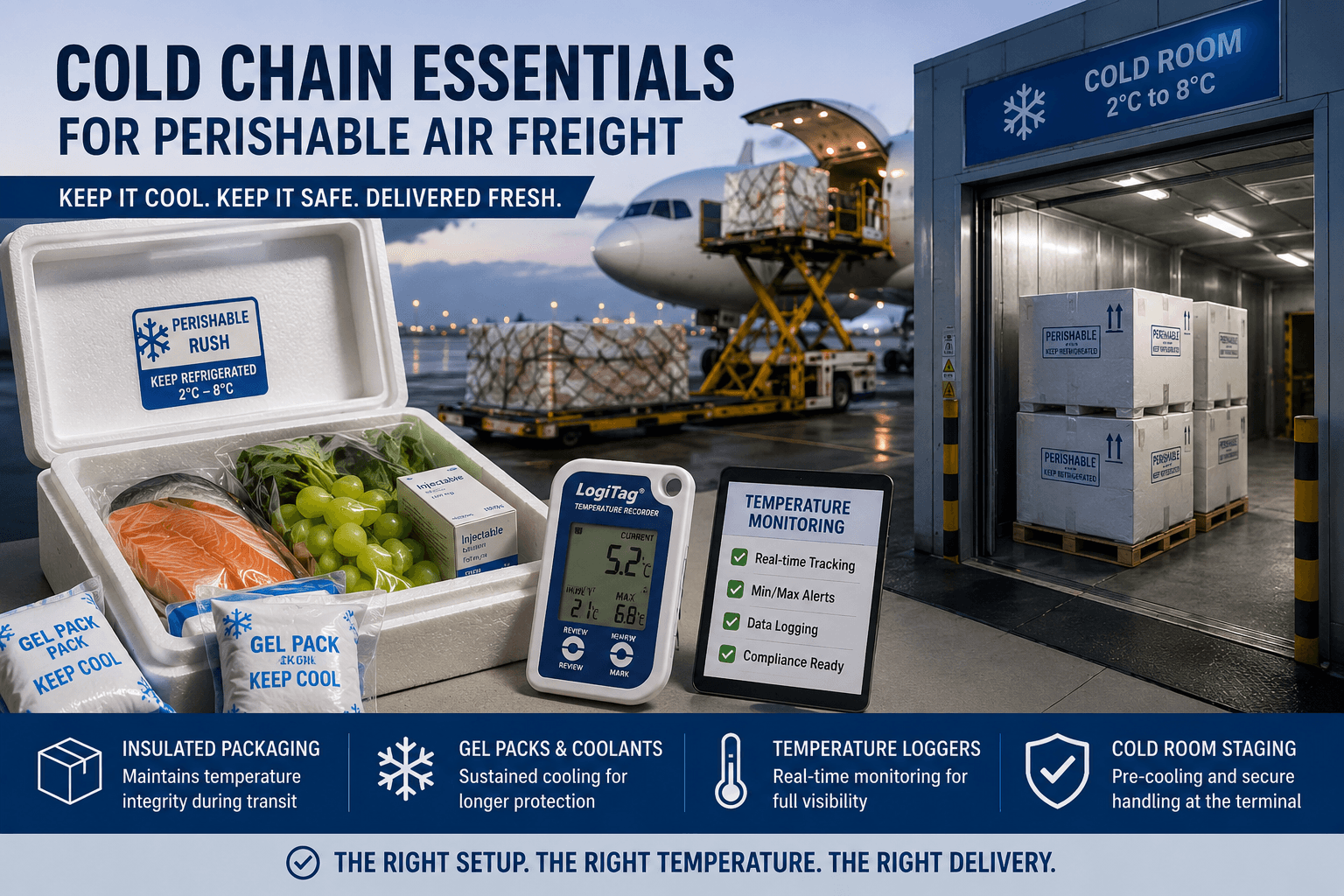
- Airport cold rooms.
- Insulated packaging.
- Temperature loggers and live tracking.
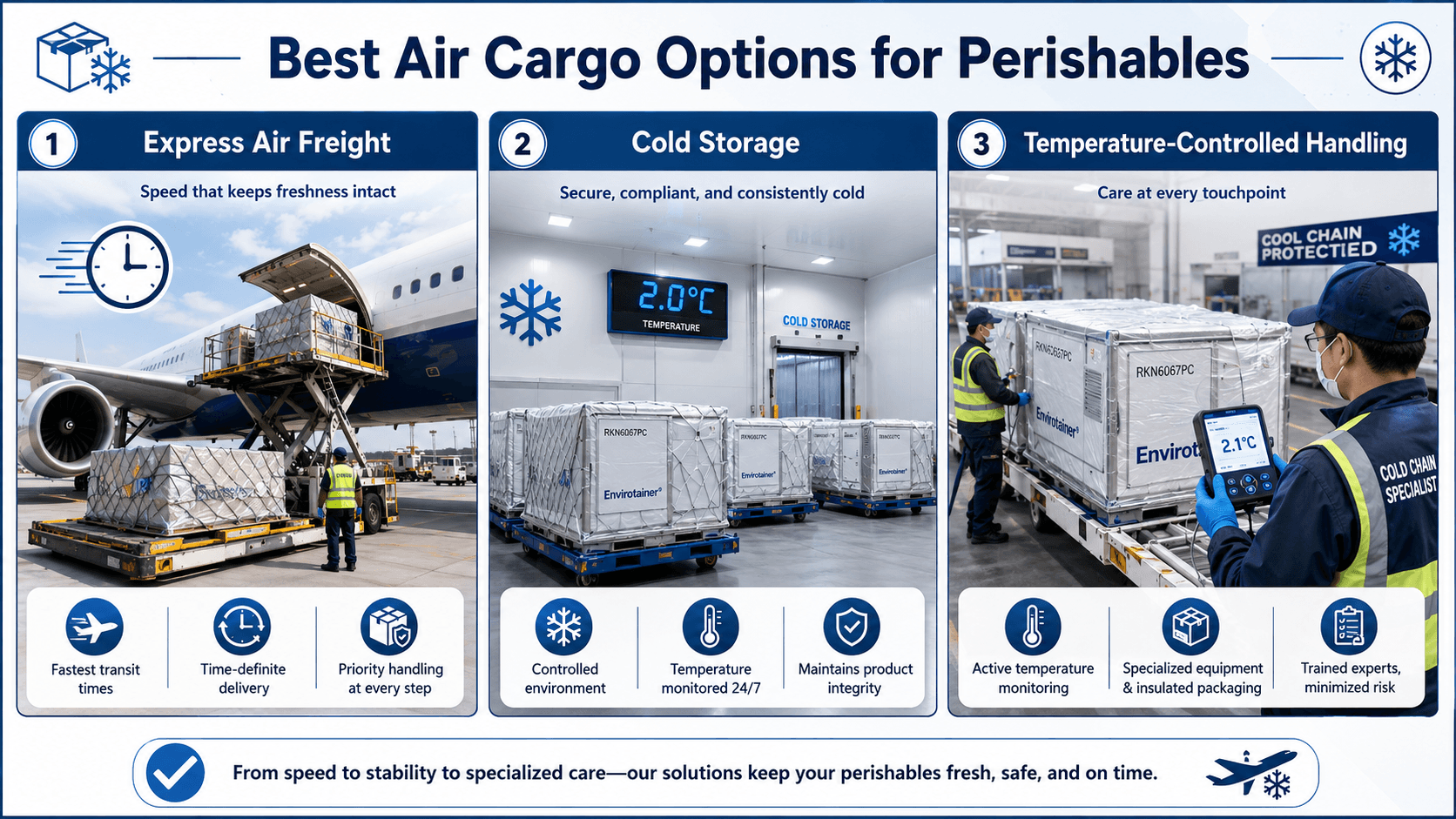
Sea Sky’s cold-chain guidance also highlights pre-trip reefer calibration, insulated packaging, and quick transfer through airport cold rooms to reduce exposure. That combination helps keep the shipment stable even when transit conditions are difficult.
Air vs Road vs Reefer
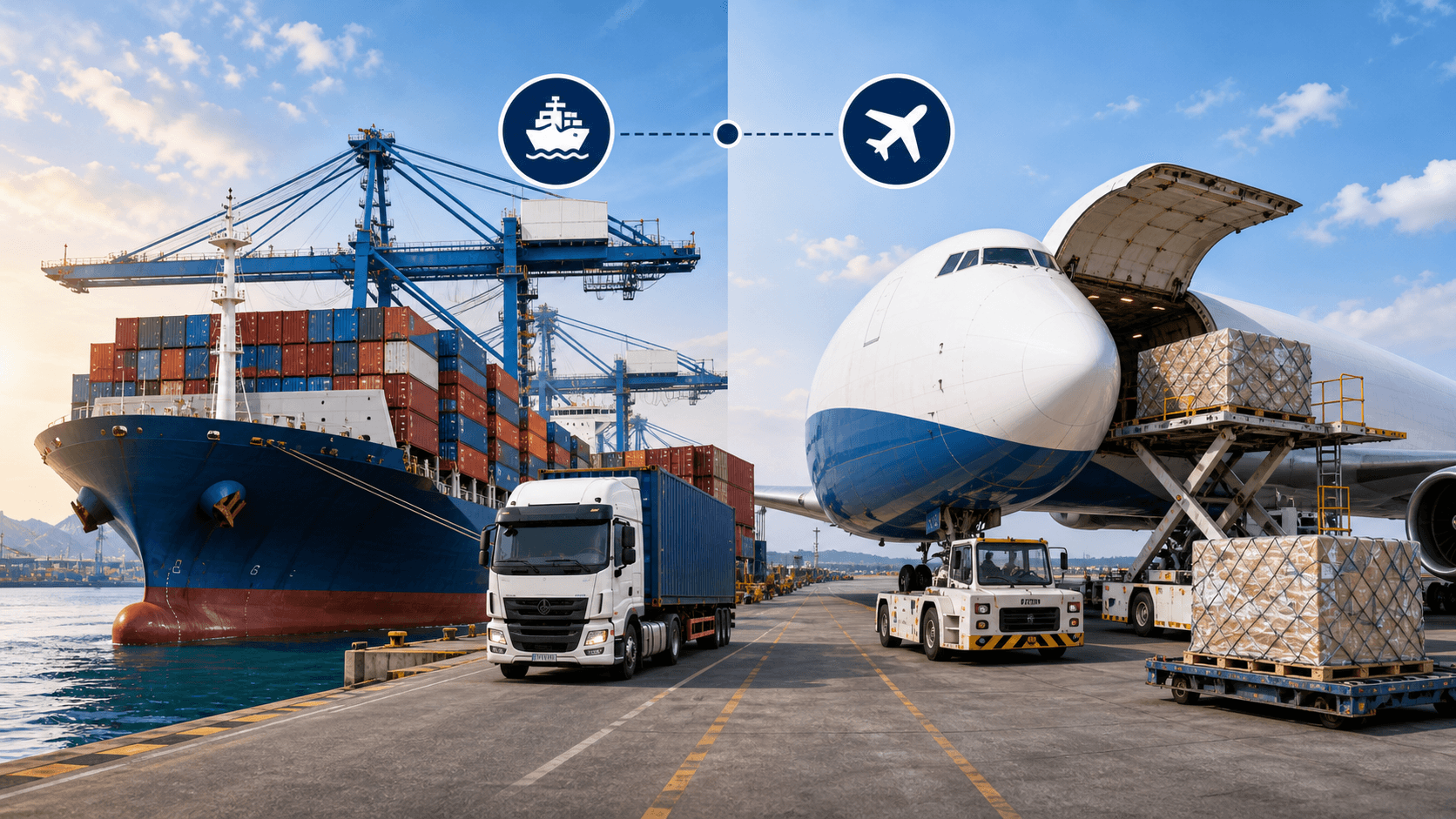
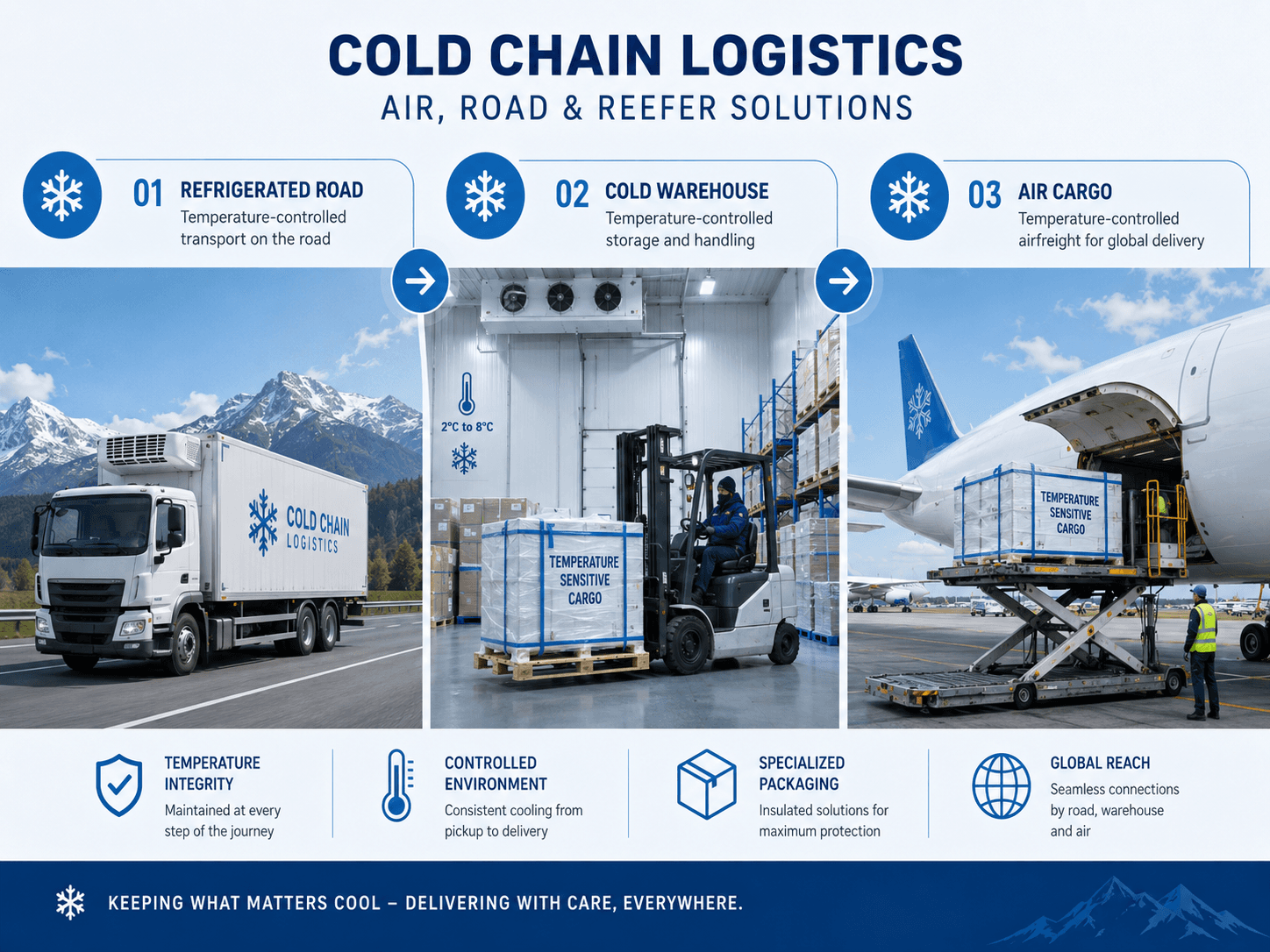
Different cargo needs different movement methods. Air freight is best for urgent, high-value perishables; reefer trucks are ideal for domestic or cross-border refrigerated transport; and cold rooms help bridge storage gaps.
The best setup is usually a mix of these options. For example, goods may be pre-cooled at origin, moved by reefer truck to the airport, transferred through a cold room, and then flown out on an express service.
Common Risks
Cold chain fails most often because of:
- Poor pre-cooling.
- Delays at loading or border points.
- Power interruptions.
- Wrong packaging.
- Temperature fluctuations during transfer.
Nepal’s climate and transport conditions make these problems more serious. If a shipment sits too long in the sun or a reefer is not calibrated properly, the goods can lose freshness before they even reach the market.
How Sea Sky Helps
Sea Sky can help with cold chain planning, refrigerated movement, airport coordination, and real-time shipment monitoring. That matters because cold chain logistics is not only about transport it is about controlling the full journey from pickup to delivery.
Sea Sky’s experience with temperature-sensitive cargo means shippers can get advice on pre-cooling, packaging, transit timing, and which transport mode is safest for the product. For businesses new to cold chain, that support can prevent expensive spoilage and lost sales.
Best Practices
To reduce risk, shippers should:
- Pre-cool products before dispatch.
- Use insulated packaging and temperature labels.
- Keep handoff times short.
- Track shipments continuously.
- Plan for delays and backup power needs.
These steps matter because a cold chain is only as strong as its weakest handoff. If one link fails, the entire shipment can be affected.
Conclusion
Cold chain logistics is becoming more important in Nepal as food, pharma, and flower shipments grow in value and complexity. Businesses that want to protect product quality need more than fast transport they need a full temperature-controlled system.
Sea Sky can help exporters and importers design a cold chain plan that fits the product, route, and delivery deadline. Talk to Sea Sky’s logistics team for cold chain shipping support or request a temperature-controlled cargo quote today.
Get Quotes
Built for freight forwarders handling FCL, OOG, heavy or project cargo into Nepal and South Asia. Use it to check routes, documents, handoffs and risk points before quoting your client.