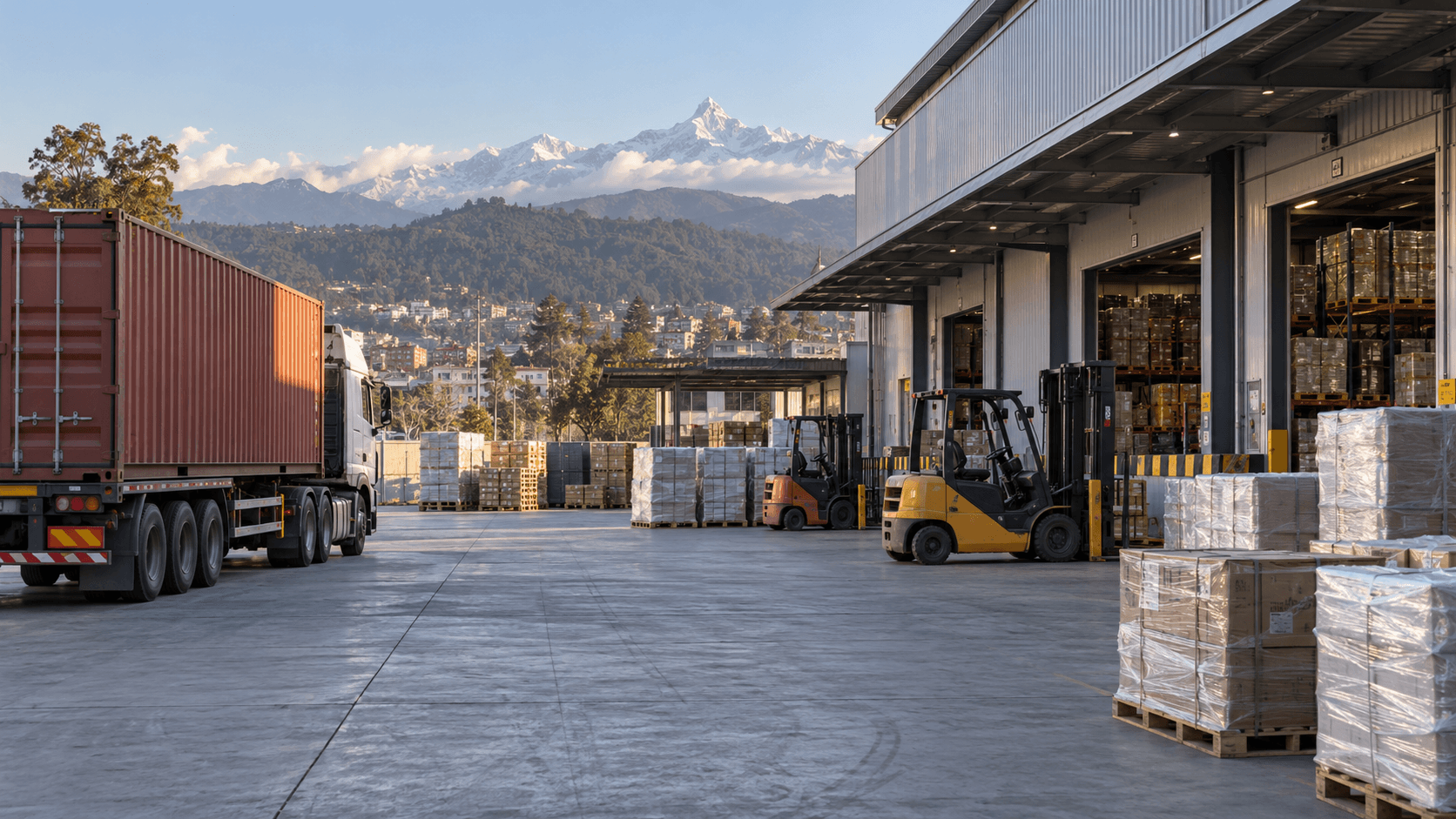
1. What Is B2B Logistics?
B2B logistics is the movement of goods between businesses: a supplier delivering components to a factory, an importer replenishing a warehouse, or a Nepali exporter fulfilling an overseas wholesale order. For Nepal businesses, cross-border delivery brings freight, customs, documentation and final warehouse receipt into one shipment plan. The practical goal is to have usable stock available when the business needs it. A container reaching a port or an aircraft landing in Kathmandu is only one milestone; clearance, release, inland transport and unloading still affect the date goods can enter production or go on sale. Importers bringing machinery, retail inventory or raw materials into Nepal Exporters sending carpets, pashmina, tea, handicrafts and manufactured goods abroad Manufacturers coordinating components and production supplies Wholesalers and distributors moving stock between business locations E-commerce sellers importing inventory before dispatching individual customer orders B2B does not automatically mean heavy freight, and a B2C parcel is not automatically exempt from customs. Choose the delivery service from the cargo facts and required outcome.
| Factor | B2B movement | B2C movement |
|---|---|---|
| Destination | Factory, warehouse, shop or business site | Usually an individual customer |
| Shipment profile | From a small spare part to full containers | Often individual parcels |
| Receiving requirements | Appointments, purchase orders, unloading and proof of delivery | Address access and parcel handover |
| Customs documents | Depend on goods, value, origin and destination | Also depend on goods, value, origin and destination |
| Pricing | Shipment quotations or contracted rates | Often parcel tariffs or account rates |
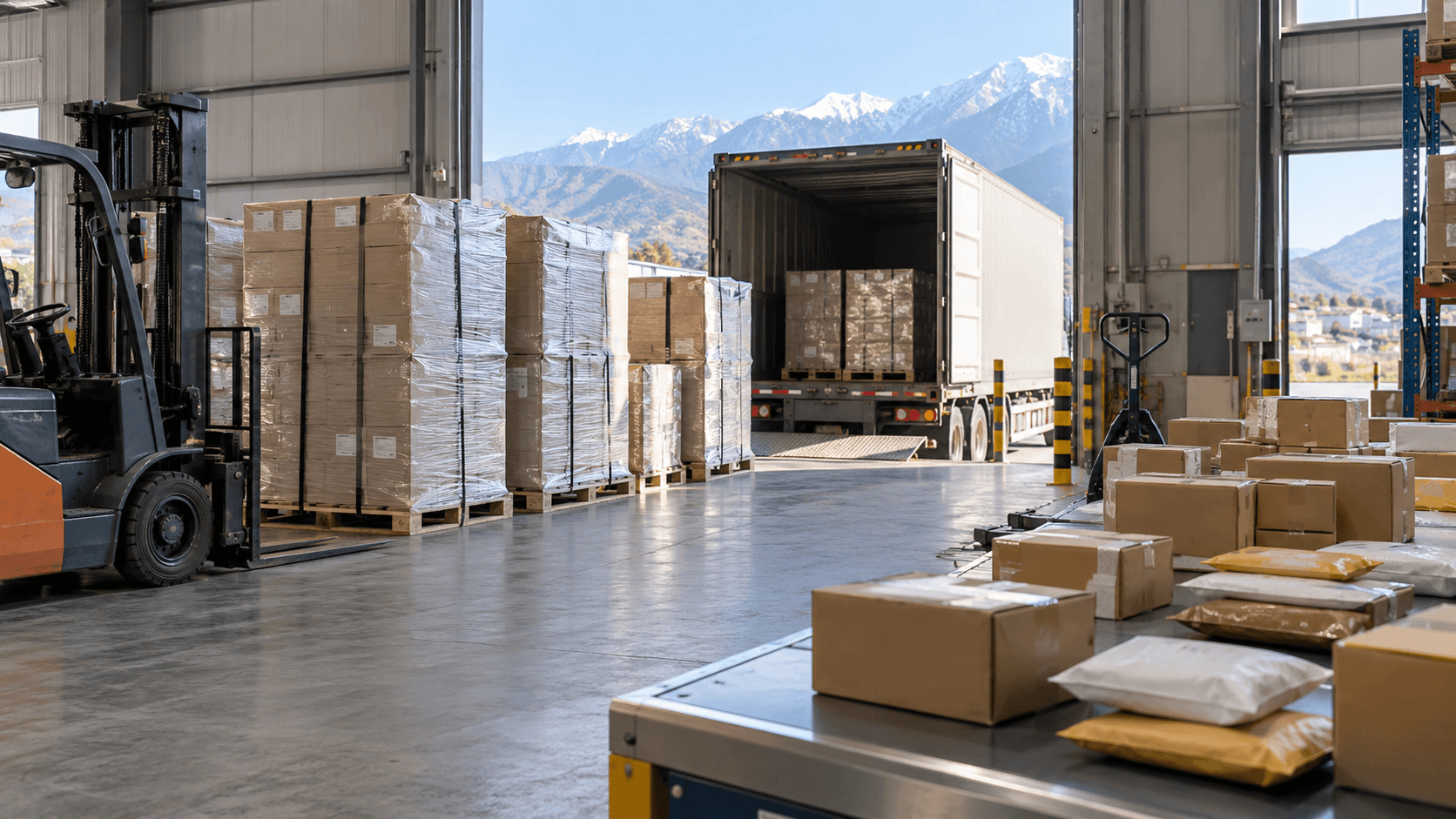
2. Why Nepal Businesses Need Cross-Border Delivery
Nepal businesses source raw materials, equipment and finished goods from India, China, Europe, the Gulf and other markets. Exporters need dependable outbound routes and destination-market compliance. These movements connect purchasing decisions to production schedules, stock availability and cash flow.
Nepal is landlocked, but international cargo has several entry options. Shipments can arrive by air, cross a land border from India or China, or use an Indian seaport followed by an approved inland transit route. Ocean freight therefore requires a connected sea-and-land plan.
The Indian Embassy’s commerce overview identifies Kolkata/Haldia and Visakhapatnam as gateways for Nepal’s third-country transit trade. The correct gateway, border and inland mode still depend on the booking and applicable procedures.
- A missing permit can delay goods even when transport runs on schedule
- Port free time and container-return obligations can affect delivery cost
- Roadworks, weather, border processing and receiving-site access can shift the arrival date
- A purchasing team, finance team and warehouse may each need different shipment updates
Build the schedule back from the date stock must be usable. Allow for production readiness, pickup, main transport, clearance and warehouse receipt, then assign responsibility for each handoff.
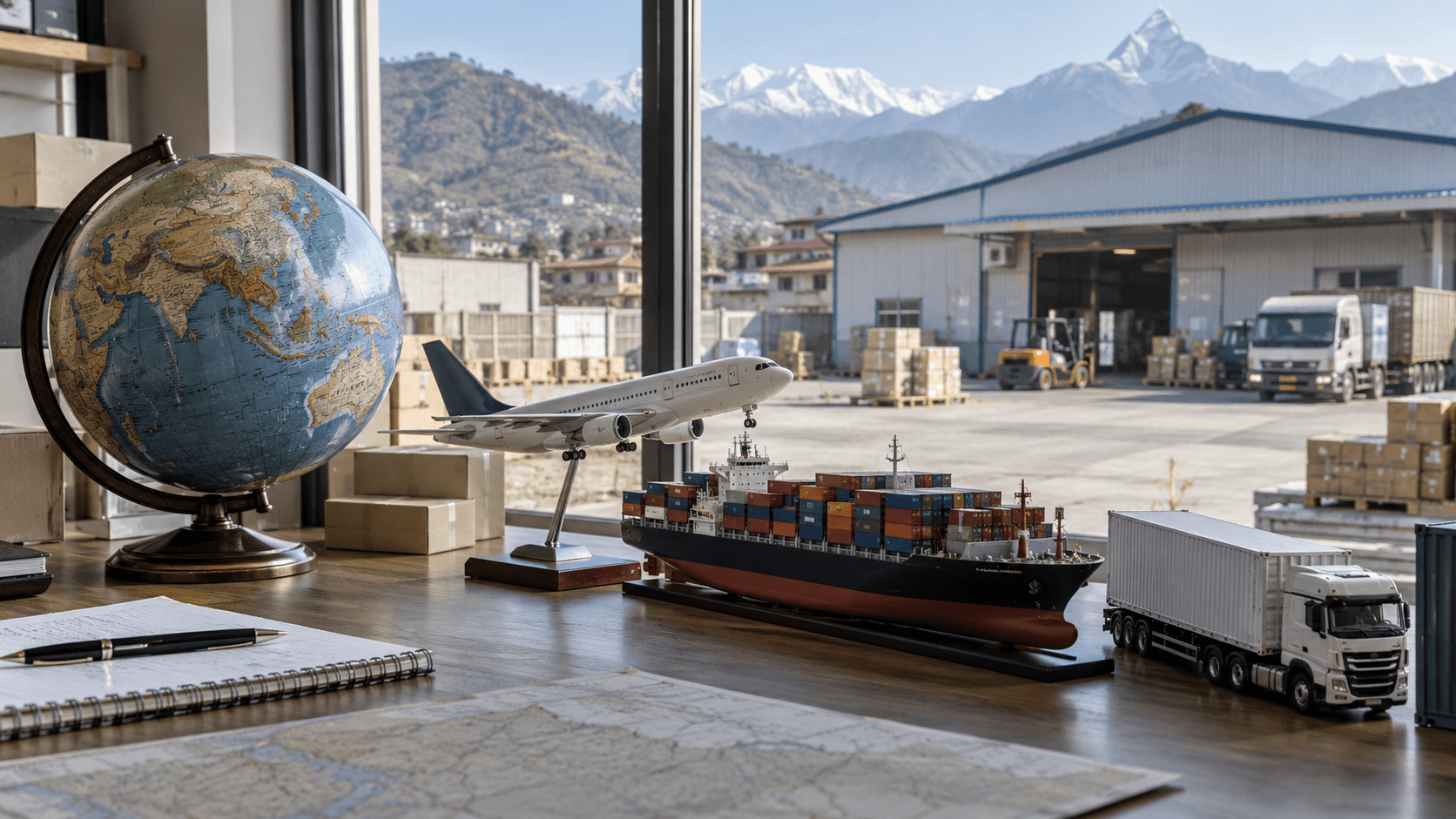
3. B2B Courier vs. Freight Forwarding
A B2B courier service usually offers an integrated parcel network with collection, transport, tracking and delivery under defined service terms. Freight forwarding coordinates a shipment across carriers and handling partners, with more flexibility for pallets, containers, unusual dimensions and complex routes. There is no universal weight cutoff between the two. A compact spare part may suit express courier, while a light but oversized package may need freight handling. Couriers can handle commercial customs formalities through their own arrangements; the importer must still supply accurate documents and any required approvals. Ask whether the quotation includes brokerage, duty and tax collection, disbursement fees, remote-area delivery and returns. A door-to-door label alone does not identify who pays import taxes or provides permits. For the roles involved, see the freight forwarder versus customs clearing agent guide. Select a service with a clear receiving and clearance plan, rather than relying on a headline price per kilogram.
| Shipment | Options to compare | Decision factor |
|---|---|---|
| Urgent business documents | Document courier | Destination service and delivery commitment |
| Samples or a replacement part | Express courier and air freight | Packed dimensions, value, restrictions and total charges |
| Regular stock replenishment | Consolidated air, road or sea freight | Order frequency, stock cover and shipment size |
| Large machinery | FCL, open-top, flat-rack or other suitable freight | Dimensions, lifting, securing and access |
| Wholesale handicrafts | Air consolidation or sea LCL/FCL | Fragility, handling and required arrival date |
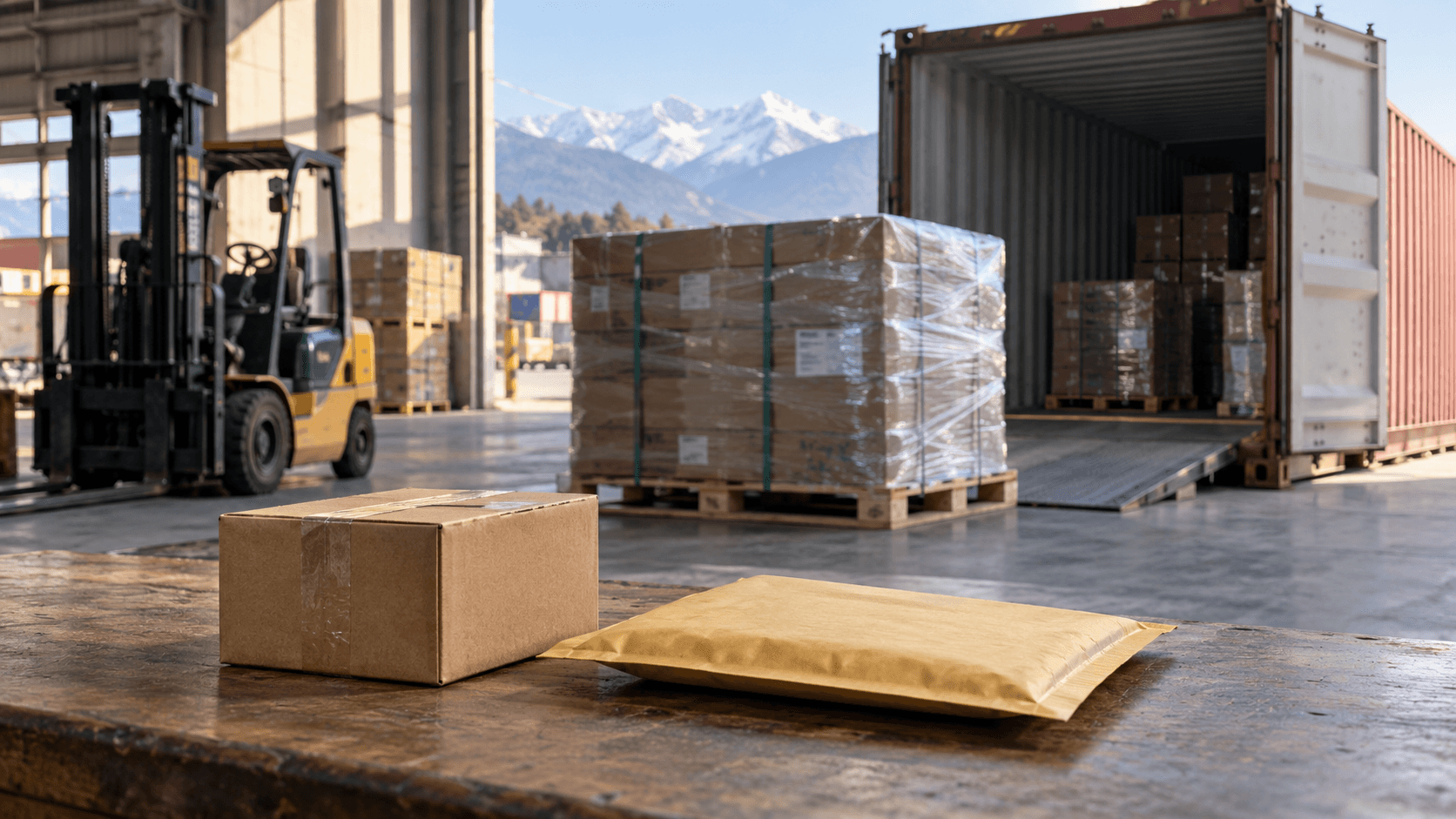
4. Air Freight for Urgent Business Cargo
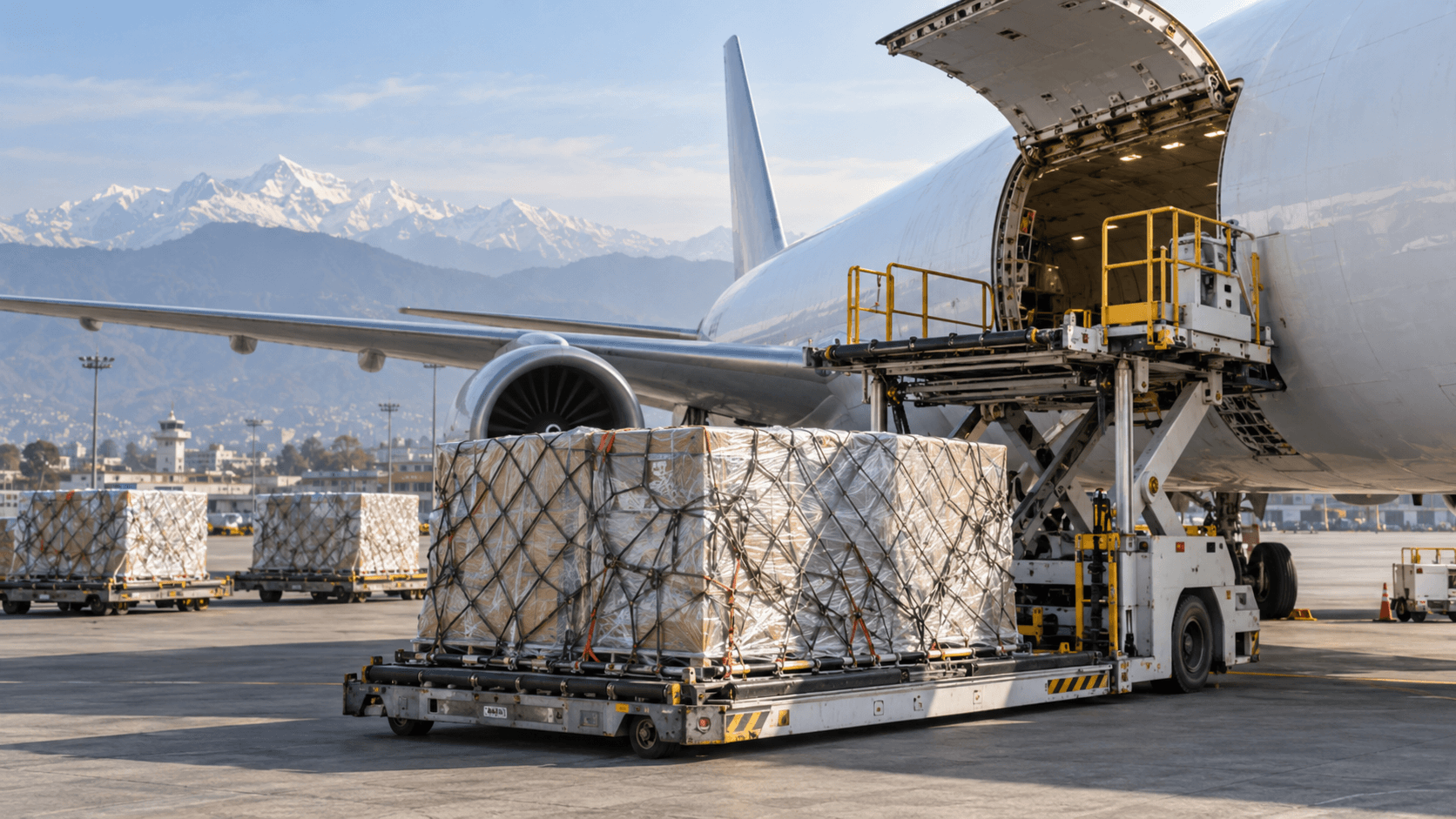
Air freight is useful when a stockout, production stoppage or customer deadline would cost more than faster transport. Typical candidates include replacement parts, samples, electronics, fashion and approved perishable or temperature-sensitive goods. Larger shipments can also travel by air when aircraft capacity and the business case support it.
A typical inbound movement runs from supplier pickup to the origin airport, airline acceptance, flight or connecting flights, arrival at Tribhuvan International Airport, Nepal customs clearance and local delivery. Space, screening, cargo acceptance and connections influence the schedule.
Airfreight pricing commonly uses chargeable weight: the higher of actual gross weight and the applicable volumetric weight. Give the forwarder the final packed dimensions and weight for every piece. Oversized, dangerous or temperature-controlled cargo needs a separate acceptance check.
- Confirm whether timing is airport-to-airport or door-to-door
- Include export handling, airline charges, arrival handling, clearance and delivery in the comparison
- State any temperature range, battery content, magnetized material or liquid content before booking
- Verify warehouse release and delivery availability around holidays and weekends
Use a current route quotation for the estimated delivery window. A few days of flight transit does not guarantee delivery within the same period. See Sea Sky’s air freight services.
5. Sea Freight Through Indian Gateways
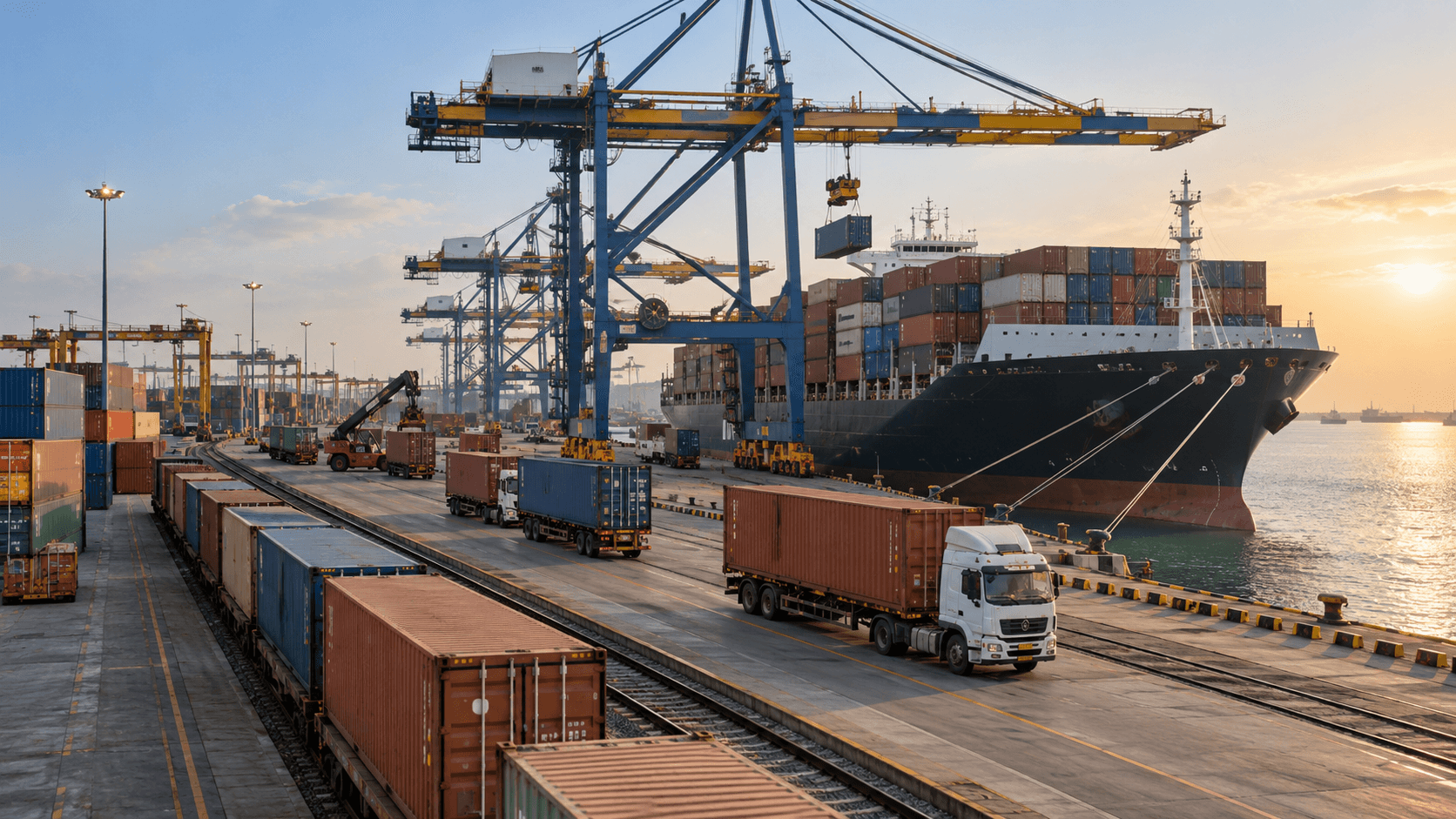
Sea freight is often compared for heavy, bulky or less urgent business cargo. Nepal has no seaport, so the plan must cover ocean transport, Indian port handling, approved transit to Nepal, Nepal clearance and final delivery.
Kolkata/Haldia and Visakhapatnam are established Nepal transit gateways. Do not assume every Indian port or inland route is available on the same terms. Confirm the gateway, nominated customs point, carrier arrangements and through-transport scope before the supplier ships.
FCL gives the business use of a container, subject to the equipment and booking terms. LCL shares container space with other shipments and adds consolidation and deconsolidation steps. The most economical choice depends on the complete quotation, handling exposure and cargo characteristics; there is no universal volume threshold.
Indian customs supervision of transit cargo is distinct from release for consumption in India. Nepal-bound goods also require the relevant Nepal import formalities. The Kolkata Customs Nepal transit page provides treaty and procedure references.
- Identify where an LCL shipment will be deconsolidated and who arranges onward movement
- Confirm rail or road transit and the terminal or border handoff
- Check storage, demurrage, detention and empty-container return terms
- Plan unloading equipment and delivery access before the container reaches Nepal
Compare the full port-to-warehouse movement with the ocean freight service team, and use the demurrage and detention guide when reviewing free time.
6. Road Freight from India and China
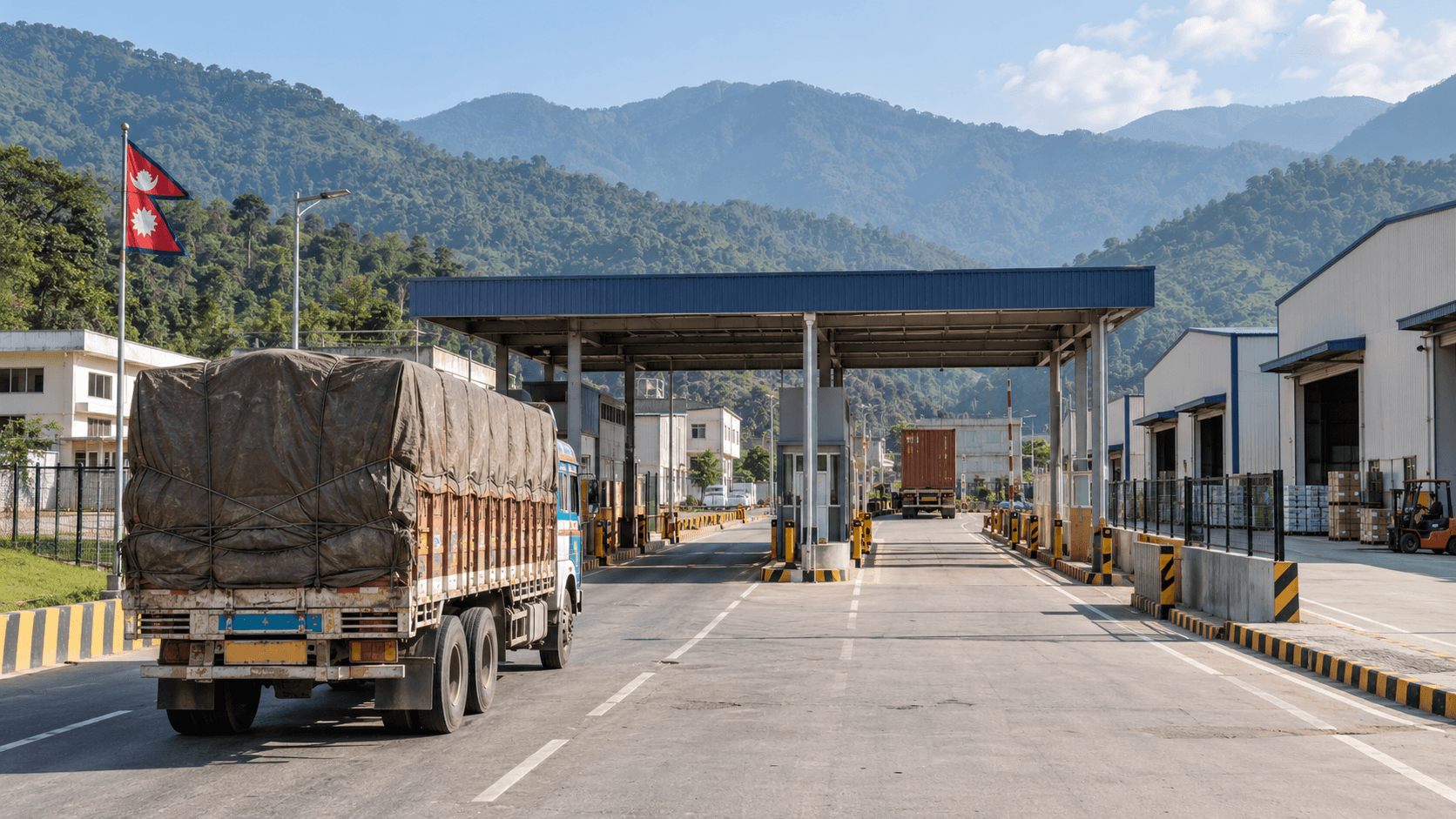
Road freight connects regional suppliers with Nepal warehouses through selected land customs points. It can suit raw materials, mixed commercial inventory, machinery and scheduled replenishment. The correct vehicle depends on payload, dimensions, packaging, road conditions and unloading access.
India-linked cargo may use Birgunj, Biratnagar or another suitable crossing. China-linked road movements require confirmation of the specific northern border, approach roads, permitted cargo and transfer arrangements. Border opening, road condition and commercial service availability are separate checks.
A road quotation should explain whether one truck completes the movement or cargo changes vehicles, and whether loading, unloading or border transshipment is included. Those details matter for fragile goods, machinery and moisture-sensitive products.
- Check full-truckload versus shared-truck options against cargo readiness
- Specify weather-resistant packaging and securing requirements
- Confirm border brokerage, permits and the consignee’s import readiness
- Review the final approach road, vehicle size restrictions and warehouse appointment
Transit estimates should be tied to the actual origin, border and delivery address. Use the road freight service page to discuss the route and receiving conditions.
7. Multimodal Delivery and Split Shipments
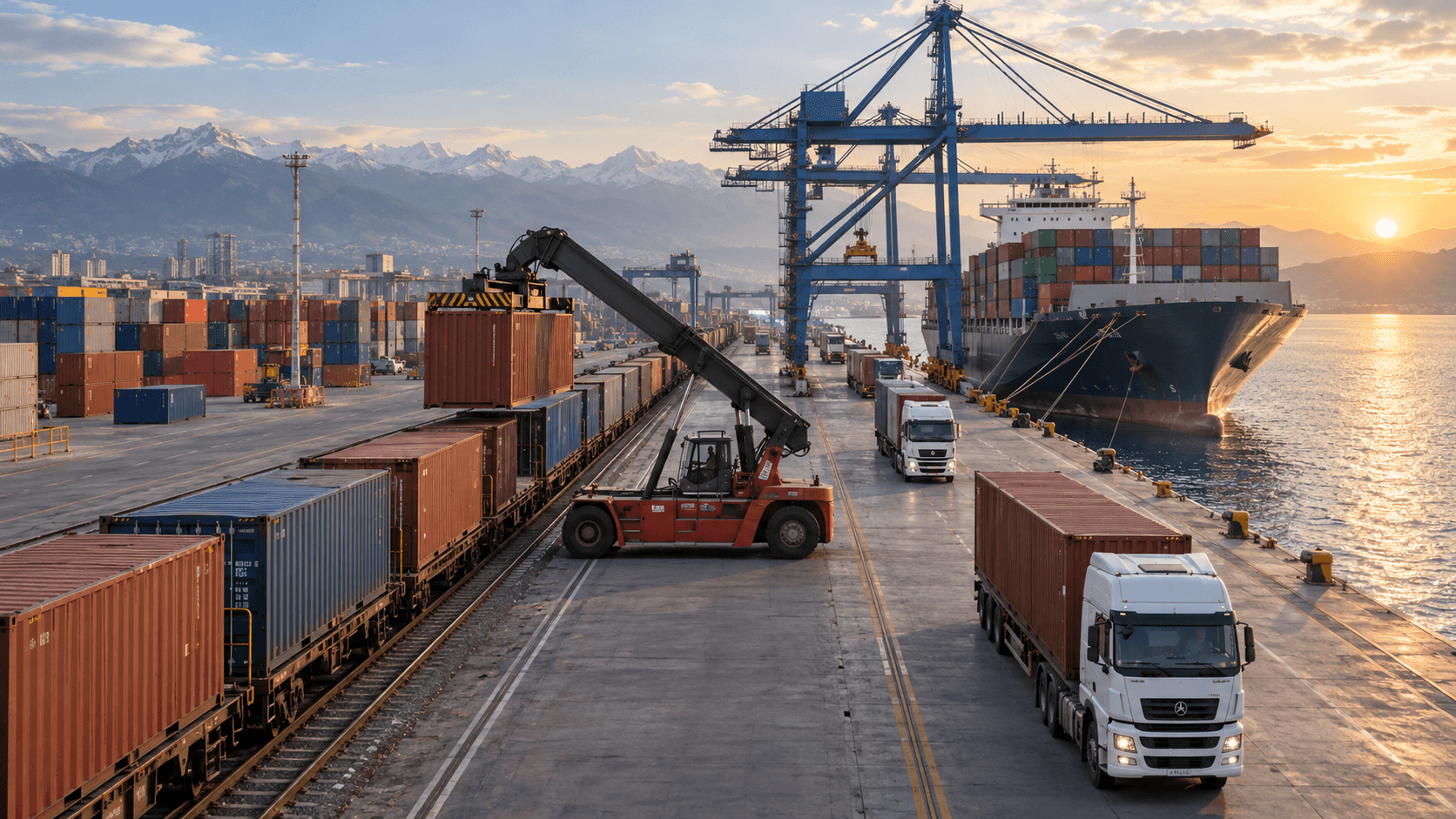
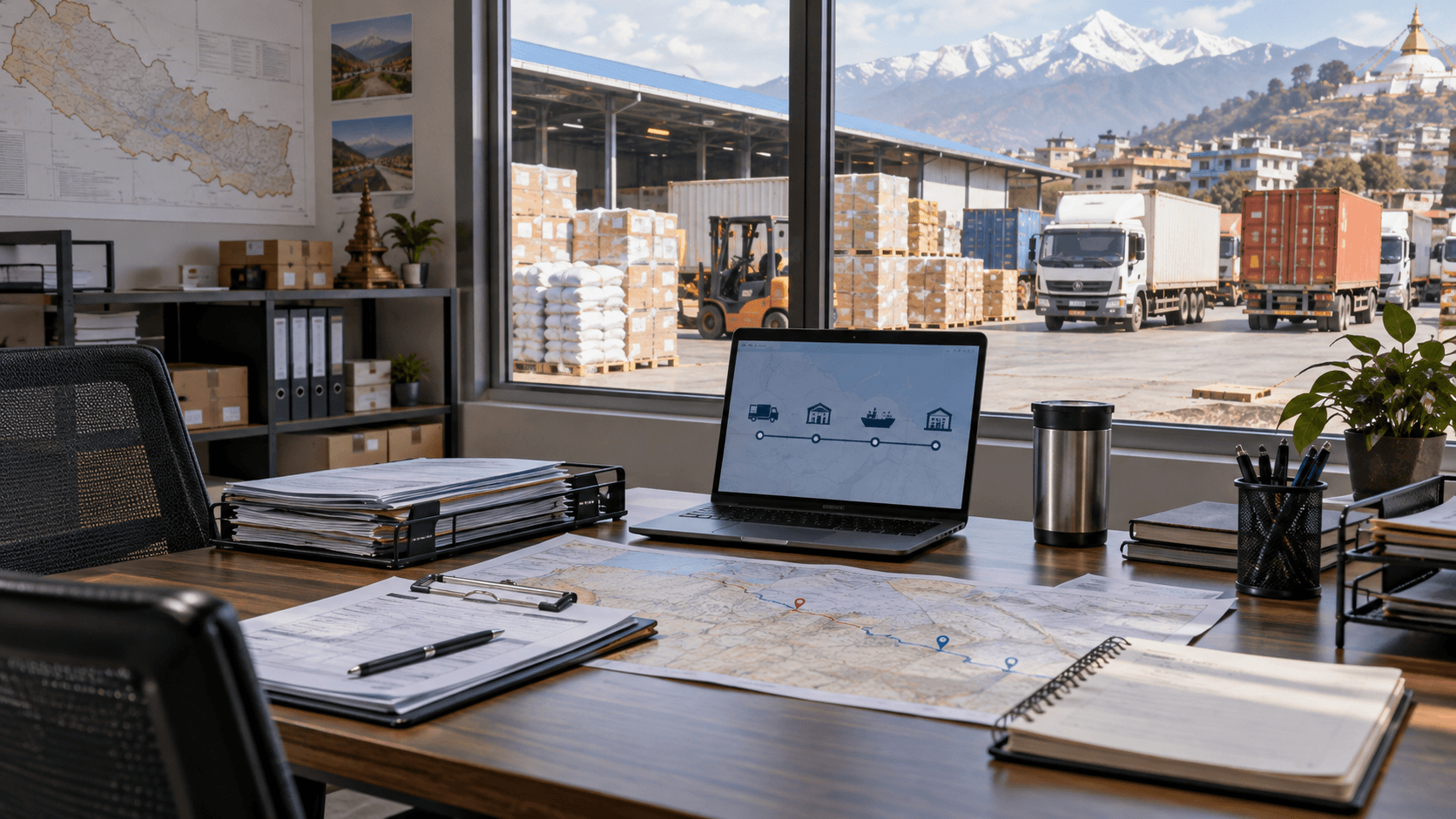
Multimodal logistics combines transport modes in a coordinated movement. Sea freight to an Indian port followed by rail or road to Nepal is a common example. An air shipment to Kathmandu followed by delivery to a regional warehouse also combines modes.
A split shipment is another purchasing tool: a business may send a small urgent quantity by air and the remaining stock by sea or road. Compare the extra handling and documentation with the cost of running out of stock. Not every order needs the same speed.
Before booking, assign the pickup, export clearance, transit, Nepal clearance and final delivery responsibilities. The chosen Incoterm should name the place and edition, while the freight quotation should show which services are actually contracted.
- Use compatible consignee and shipment references across documents
- Identify the party responsible at each carrier or terminal handoff
- Agree milestone updates and escalation contacts
- Allow time for transfers between modes, including weekends and storage exposure
The aim is a workable end-to-end schedule. A low price for one transport leg can be outweighed by a missed connection or an unplanned destination charge.
8. Documents Businesses Need for Cross-Border Delivery
Prepare the document pack before pickup. Requirements vary with the commodity, origin, destination, payment terms and route, so use a shipment-specific checklist. See the freight-forwarding documents guide for a fuller explanation. An HS code should be supported by product facts such as composition, technical specifications and intended use. Copying a supplier’s code without review can create a mismatch with Nepal’s tariff classification. Do not assume every listed certificate is required for every shipment, or that a simple invoice replaces a permit. Confirm the exact document names, issuing authority, validity and original-versus-electronic requirements with the handling team. For a representative’s appointment, use the agent authorization letter guide. Keep a controlled final document version so the bank, carrier and clearing agent work from matching information.
| Document or record | What to check |
|---|---|
| Commercial invoice | Buyer and seller, precise goods description, quantity, value, currency and agreed terms |
| Packing list | Package count, contents, gross and net weights, dimensions and marks |
| Transport document | Air waybill, bill of lading or applicable road/rail document with consistent parties |
| Business and importer details | Registration, PAN/VAT status as applicable, and EXIM registration where required |
| Origin evidence | Required certificate or preferential proof for the goods and claimed treatment |
| Insurance evidence | Cover, insured value, exclusions and claims procedure where insurance is arranged |
| Product approvals | Applicable food, plant, animal, medicine, telecom, chemical or other approvals |
| Transit documents | Prescribed customs transit declaration or electronic process for the approved route |
| Agent authorization | Consignee authority for the appointed customs representative |

Compare the Full Cost of Your Business Shipment
Share your cargo details, route and deadline. Sea Sky Cargo can compare freight options and identify the document and delivery requirements.
9. Customs, Import Taxes and Landed Cost
A business needs a tax estimate before placing the order, then a confirmed clearance calculation using the shipment’s actual classification and valuation. Customs duty is product-specific. Avoid using a generic machinery or consumer-goods percentage as a substitute for the correct tariff line. Check the Department of Customs integrated tariff for the current fiscal year, applicable duty, exemptions and product-specific levies. VAT treatment and the taxable base must also be confirmed; the Inland Revenue Department’s VAT Act resources are the statutory reference. Import cash outlay = goods value + freight and insurance not already included + applicable import taxes + handling, clearance and delivery charges. Add storage, permits, banking, inspection and unloading costs where relevant. Prevent double counting by checking which costs are already inside the purchase or freight price. Worked Planning Example The following USD-equivalent example is hypothetical, not a machinery tariff or freight quotation. It assumes a customs-value estimate of USD 50,000, duty of 10%, VAT of 13% on value plus duty, no excise or other import levy, and local costs shown as complete allowances. Replace every assumption with the actual goods, exchange rate and quotation. Nepal assessment and payment use the applicable official valuation and exchange-rate rules. Recoverable input VAT may be treated differently from inventory cost in the business’s accounts; keep cash required at import separate from the accounting treatment agreed with your finance adviser. Use the landed-cost worksheet guide to connect the tax estimate with delivery charges and cost per saleable unit.
| Component | Calculation | USD equivalent |
|---|---|---|
| Customs-value estimate | Assumed goods, freight and insurance basis | 50,000 |
| Customs duty | 50,000 × 10% | 5,000 |
| VAT | (50,000 + 5,000) × 13% | 7,150 |
| Port, ICD and handling | Illustrative allowance | 1,500 |
| Inland delivery | Illustrative allowance | 2,000 |
| Total cash-outlay estimate | Sum of the above | 65,650 |
10. Business Delivery from India
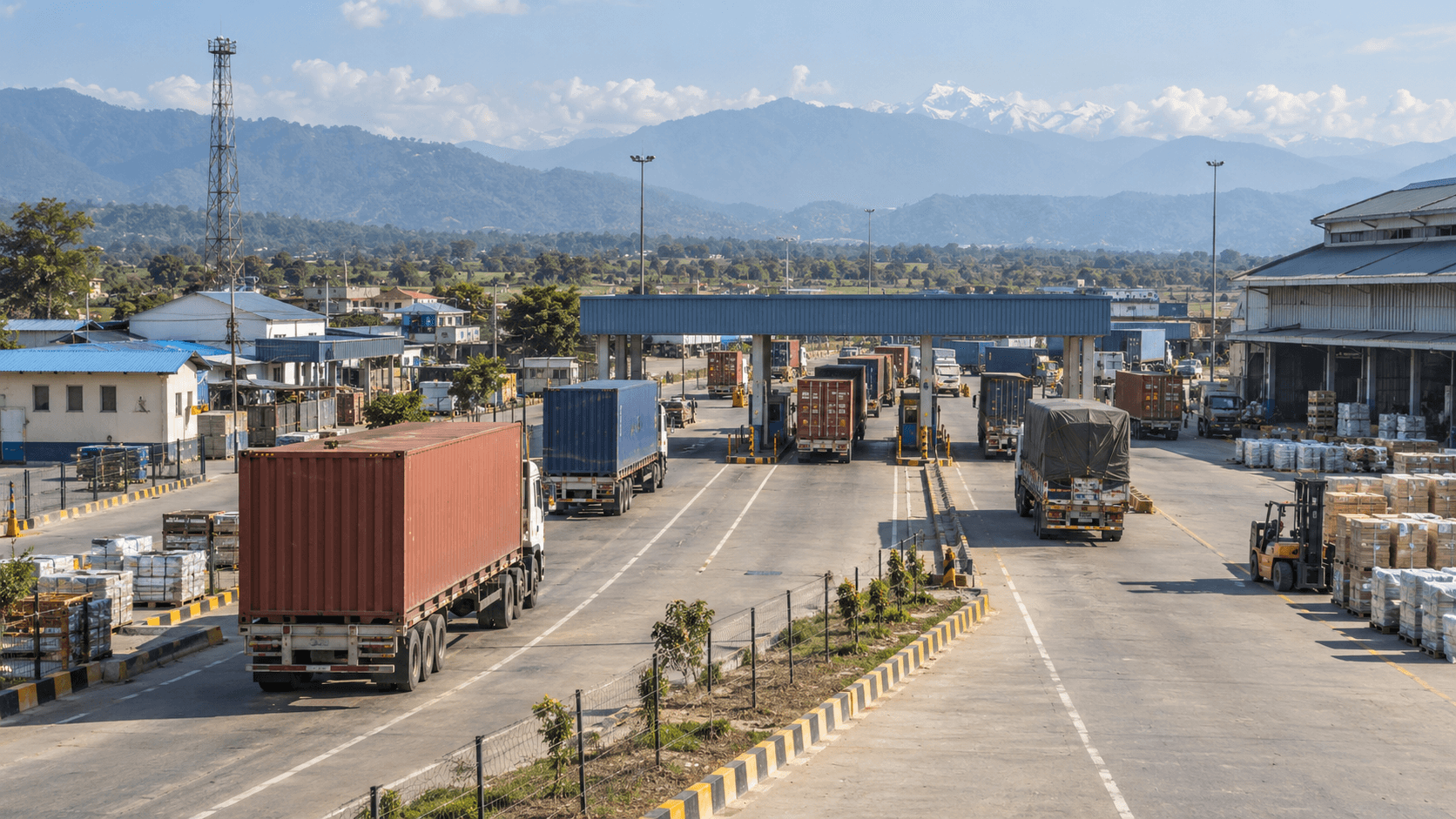
India-to-Nepal delivery often begins with a regional supplier and ends at a factory, distributor or warehouse. Road transport may be suitable for finished goods and raw materials; rail or air can be compared where the cargo, origin and available service support them.
Distinguish goods bought from an Indian supplier from third-country cargo merely transiting India. The paperwork and customs treatment are not interchangeable. An Indian purchase does not automatically require the same transit document pack as an ocean shipment routed through an Indian gateway.
For goods claimed to be of Indian origin, confirm the applicable trade treatment and origin evidence. Dispatch from India alone does not establish preferential origin.
- Name the actual pickup city and Nepal customs point in the quote
- Clarify supplier loading, export documentation and border handover
- Confirm truck availability, cargo transfer arrangements and final delivery access
- Allow for holidays, inspections and border or road congestion
A short border distance does not guarantee a short door-to-door lead time when the supplier is far inland or documents are incomplete. Build the delivery estimate from each stage.
11. Business Delivery from China
China sourcing can involve road, air or ocean freight, depending on the supplier location, shipment size and urgency. A supplier near a coastal consolidation hub may have a different cost balance from one closer to an overland dispatch point.
For northern road corridors, verify the current operating status of the proposed crossing and its approach roads before dispatch. Rasuwagadhi, Tatopani and Korala should not be treated as interchangeable options: cargo eligibility, capacity, vehicle arrangements and the onward route need confirmation.
This guide does not present any crossing as currently open or as a guaranteed alternative. Request a dated operational update from the handling team and relevant authorities, especially during heavy rain or after road and bridge disruption.
Air freight can be compared for urgent replenishment. Ocean freight through an approved Indian gateway can suit less urgent volumes, but includes additional port and inland transit stages. Compare the total route from the actual supplier address.
- Combine orders only when supplier readiness and product compatibility permit
- Confirm batteries, liquids, chemicals and other restricted cargo before collection
- Check item-level invoice descriptions against the packing list
- Use realistic stock buffers and agree a trigger for changing the route

12. Business Delivery from Europe
European suppliers may ship machinery, components, fashion, cosmetics and specialist goods to Nepal by air or by sea through an Indian gateway. The suitable departure airport or port depends on pickup location, carrier schedules, cargo acceptance and the full delivered cost.
Confirm who handles the export declaration and any product-specific export controls. CE marking should not be presented as a universal Nepal import requirement; the exporter’s obligations and Nepal’s product approvals must be checked for the actual item.
REX is an origin self-certification system used in specified preferential trade arrangements. It is relevant, for example, to eligible Nepali exports claiming EU GSP preference, subject to the scheme’s conditions. It is not a blanket requirement that grants Nepal duty relief to goods shipped from Europe. See the European Commission’s REX explanation.
For Nepali exporters, agree destination import responsibility, origin evidence, labeling and product compliance with the overseas buyer before dispatch. For imports, reserve time for supplier collection and export handling as well as the main journey.
The France-to-Nepal shipping guide gives a worked route-planning framework for a European origin.
13. How to Reduce Business Delivery Delays
Delay prevention begins before booking. A quoted transit time normally assumes cargo is ready, accepted for carriage and supported by usable documents. Keep a simple milestone plan that names the responsible party and the latest acceptable completion date.
Before Shipping
- Confirm production completion, packing and pickup access
- Review invoice, packing list, classification and permit requirements
- Confirm space, cutoff dates and shipment acceptance
- Arrange importer funds, broker instructions and warehouse unloading
- Set a stock buffer based on actual route variability
During Transit
- Track pickup, departure, arrival, customs submission, release and delivery milestones
- Respond promptly to document queries through one agreed contact
- Check free-time deadlines and container-return appointments
- Escalate when a milestone slips, with options and cost implications
After Delivery
- Record package count, visible condition and proof of delivery
- Follow the agreed carrier and insurer procedures if damage or shortage is found
- Compare actual charges and lead time with the plan
- Update reorder timing and supplier instructions for the next shipment
For recurring imports, measure performance from cargo-ready date to warehouse receipt, not only the flight or sailing duration. That gives procurement a more useful reorder lead time.
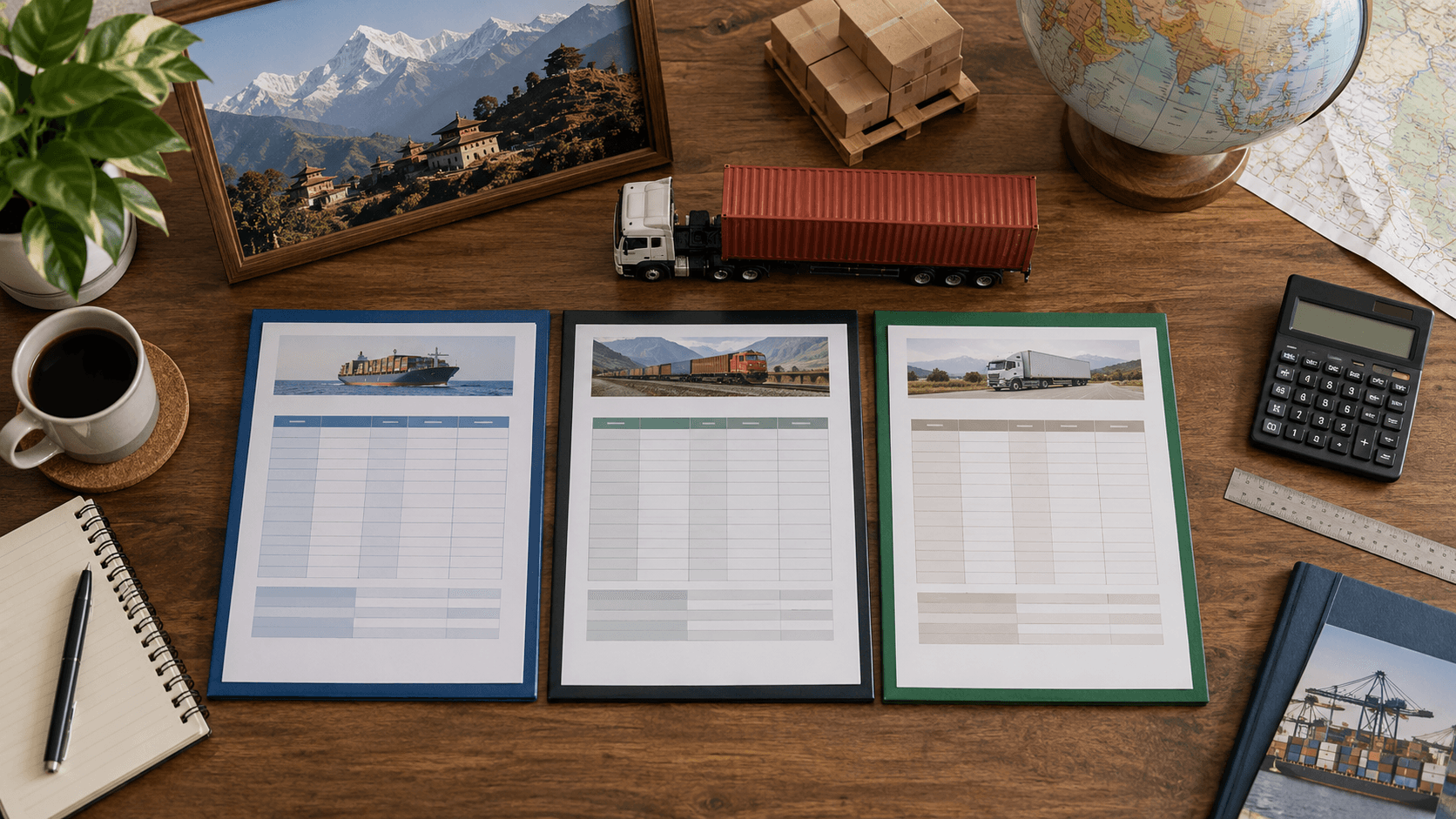
14. How to Compare B2B Logistics Quotes
Give every provider the same shipment brief: commodity, HS-code information, origin, destination, Incoterm, package count, dimensions, weight, value, cargo-ready date and deadline. Ask for the quotation validity, currency, exchange-rate basis and exclusions. Separate government import taxes from brokerage and service fees. A single line called customs is hard to compare because it may combine different items. For the same goods, value and tax treatment, a lower tax estimate needs an explained classification or calculation difference. Illustrative Quote Comparison These invented figures show how to compare scope; they are not current prices or offers from real providers. Assume identical ordinary cargo, pickup and Kathmandu delivery, the same chargeable weight, and no storage or special handling. Government taxes, cargo insurance and unloading are excluded equally.
| Quotation line | What to compare |
|---|---|
| Pickup and origin handling | Address, loading, export documents and terminal charges |
| Main freight | Mode, route, weight/volume basis and surcharges |
| Destination and transit | Port/airport/ICD charges and border or inland movement |
| Clearance service | Broker fee, document work and exclusions |
| Duty and other taxes | Same classification, valuation and assumptions |
| Final delivery | Exact address, unloading, appointment and access |
| Risk and visibility | Insurance options, liability, milestones and escalation contact |
15. How Sea Sky Cargo Helps with B2B Logistics
Sea Sky Cargo can coordinate a Nepal-linked business shipment from route planning through freight, document review, customs handoffs and final delivery. Its company information records a business established in 1988 with air, ocean, road, rail and project-cargo services.
- Compare courier suitability, air, ocean, road and multimodal options against the cargo and deadline
- Coordinate pickup, consolidation, container loading and carrier bookings within the agreed scope
- Review shipment documents and identify missing product or importer information
- Arrange clearance coordination and port, airport or border handoffs
- Plan warehouse delivery, access and unloading requirements
- Agree shipment milestones, update frequency and escalation contacts
Confirm the availability and service scope for the specific origin and Nepal delivery site. Tracking arrangements, storage, insurance, special handling and account support should be stated in the quotation rather than assumed.
To start, share the goods description, origin and delivery addresses, packed dimensions and weights, purchase terms, shipment value, cargo-ready date and required arrival date. Include specifications or photographs when the item is unusual, oversized or regulated.
Need reliable B2B logistics in Nepal? Sea Sky Cargo can coordinate cross-border delivery, freight forwarding, customs documents and final warehouse delivery for your business. Request a business shipment quote.
16. Frequently Asked Questions
What is B2B logistics in Nepal? It is the movement and coordination of business cargo between suppliers, factories, warehouses and other commercial locations. Cross-border movements also involve freight, customs, documents and delivery planning.
Can a courier deliver a commercial shipment? Yes, when the goods, package size, destination and service terms are accepted. Commercial invoices, import taxes and product approvals may still apply. Compare the courier’s complete offer with freight options.
Is freight forwarding only for large shipments? No. Forwarders can arrange smaller air or consolidated shipments as well as containers and project cargo. The suitable service depends on dimensions, urgency, restrictions and total cost.
Does Nepal-bound ocean cargo clear customs in India? It undergoes the applicable Indian transit formalities and supervision, then Nepal import clearance. Transit through India is different from importing the goods for use in India.
How long does cross-border business delivery take? The answer depends on the supplier location, cargo-ready date, mode, connections, border conditions, documents and delivery address. Request an end-to-end estimate with milestones rather than using one time range for every route.
Which documents should I prepare first? Start with the commercial invoice, packing list, importer or exporter details, product specifications and permit checks. The transport and transit documents follow the booked mode and route.
What is the cheapest way to ship business cargo to Nepal? Compare the complete cost for the shipment. Road can be practical for regional supply, sea for suitable bulk cargo, and air for urgent or high-value goods. Stockout cost and handling risk may change the decision.
Can Sea Sky Cargo arrange warehouse delivery? Warehouse delivery can be included in an agreed shipment scope. Provide the exact address, access restrictions, appointment requirements and unloading needs so the team can confirm the arrangement.
Need Reliable B2B Logistics in Nepal?
Sea Sky Cargo can coordinate cross-border delivery, freight forwarding, customs documents and final warehouse delivery for your business.
Related posts
1970-01-01
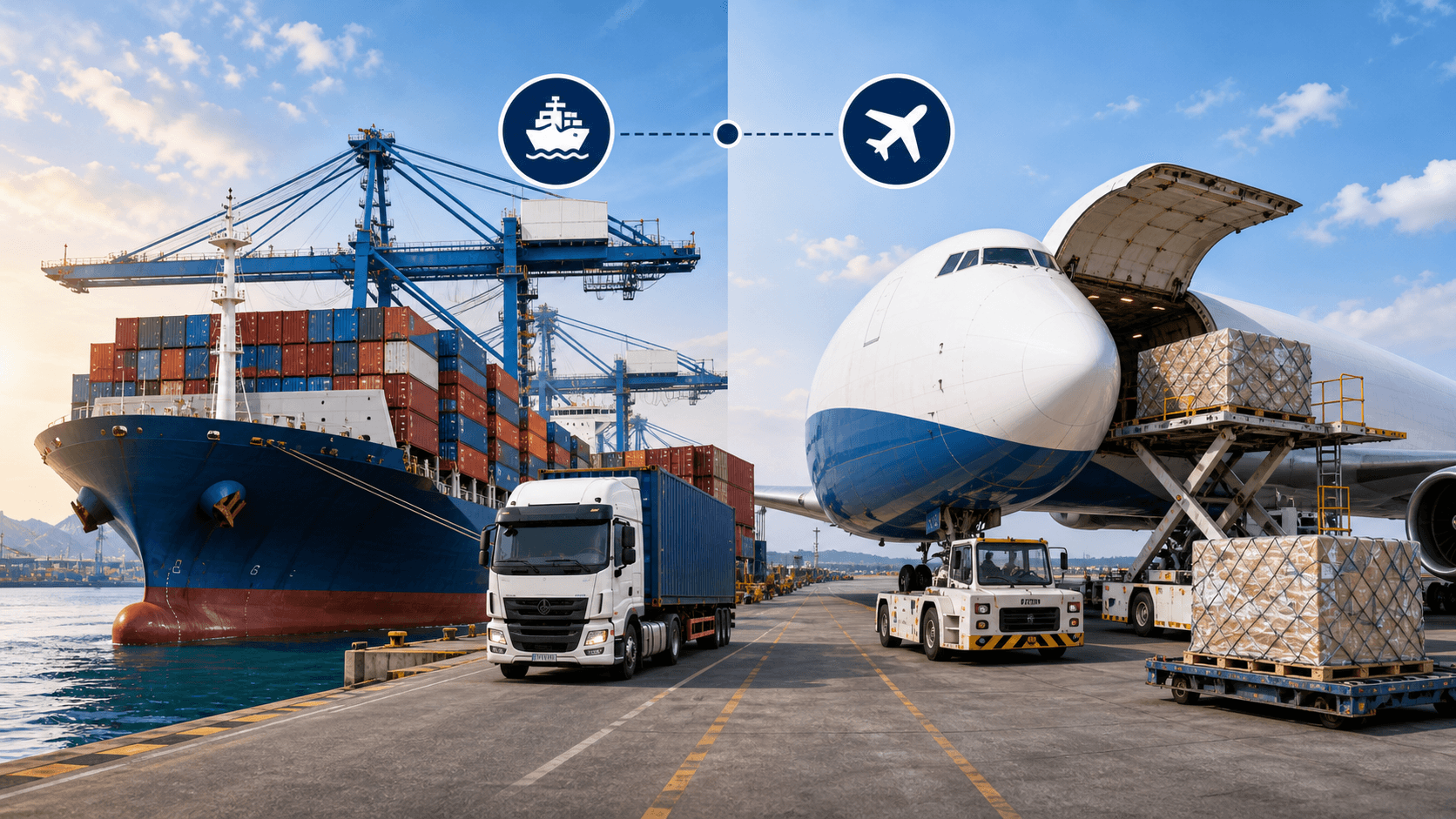
Sea + Air Freight: How SeaSky Helps Businesses Ship Smarter
2026-10-12
France to Nepal Shipping Guide: Air Freight, Sea Freight, Customs and Documents
2026-10-08
Italy to Nepal Shipping Guide 2026: Freight, Customs and Documents
2026-10-07