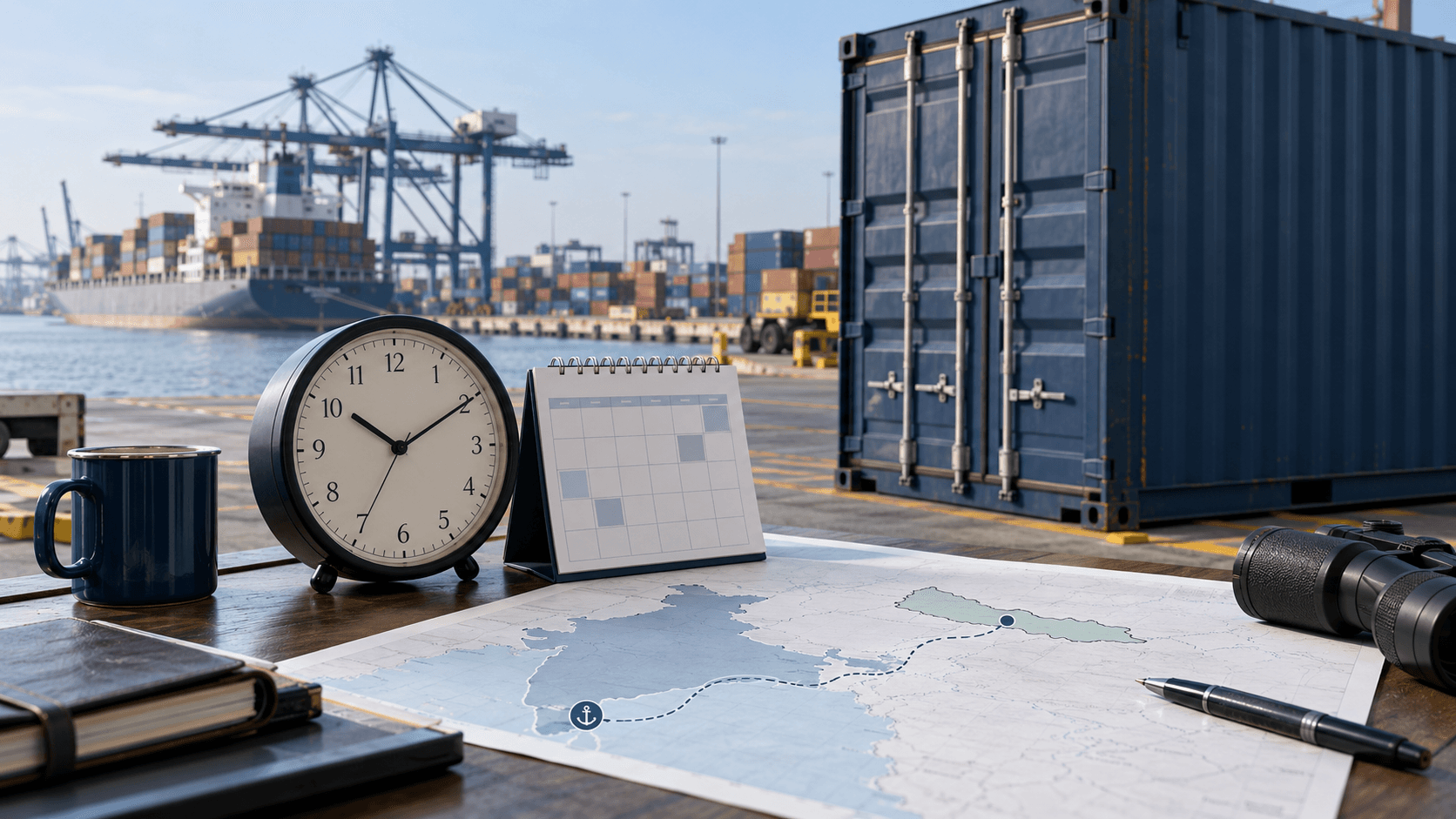
1. What is demurrage?
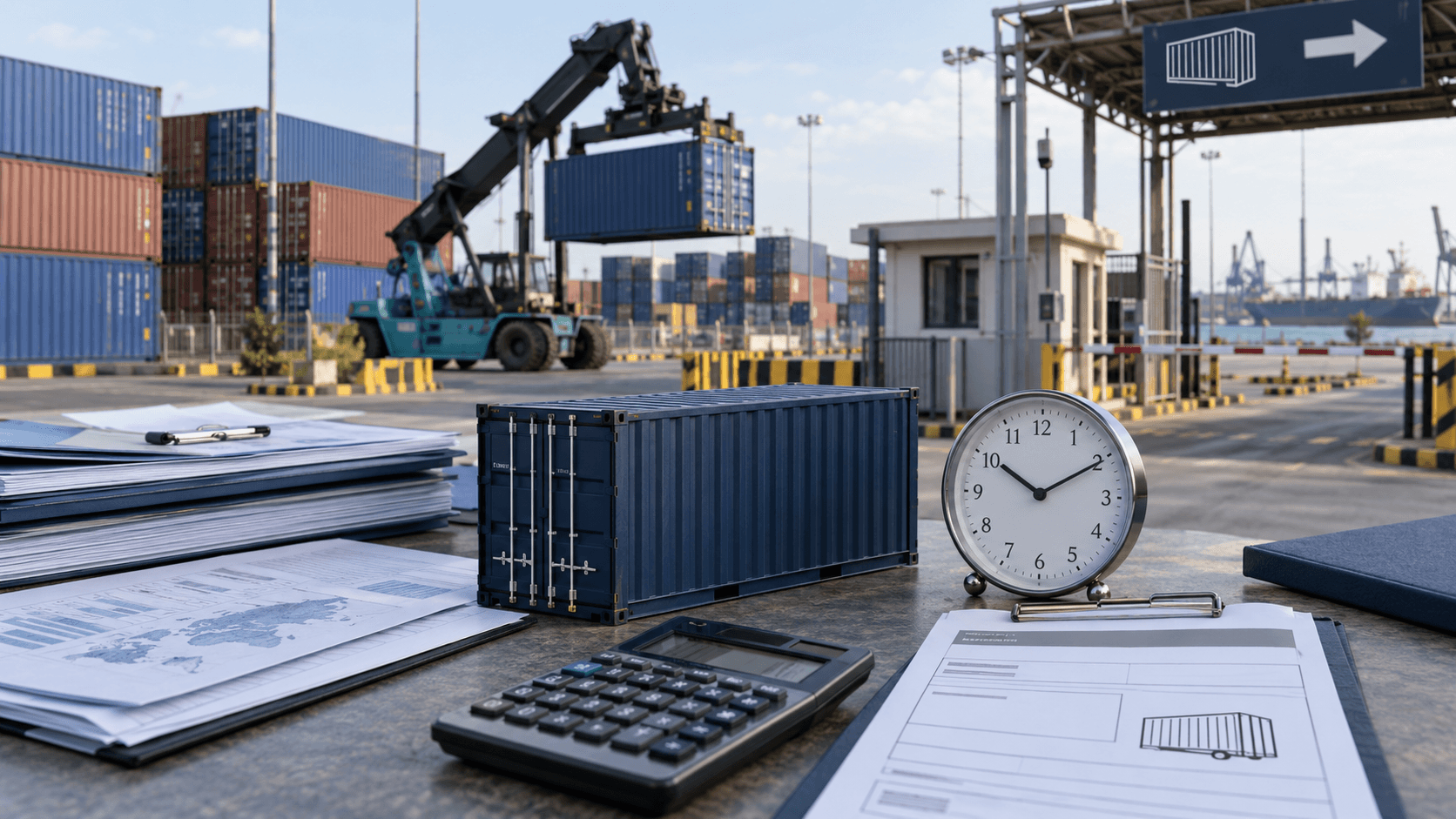
A low ocean-freight quotation does not always mean a low final shipping cost. If a Nepal-bound container remains at a port, inland terminal or importer’s premises longer than permitted, additional charges can begin accumulating daily.
Two of the most commonly misunderstood charges are demurrage and detention. Importers may also encounter port storage, terminal handling, container-ground rent, warehouse storage and other delay-related expenses. These terms are connected, but they do not necessarily refer to the same charge.
The risk can be greater for Nepal imports because sea cargo normally enters through an Indian port before continuing inland. A shipment may pass through the shipping line, port terminal, customs-transit process, rail or road transport, a Nepal inland container depot and Nepal Customs before reaching the importer.
A missing document or unplanned delay at any stage can reduce the available free time and increase the total landed cost.
This demurrage vs detention Nepal guide explains the difference between the two charges, how free time works, why FCL and LCL shipments face different risks and how importers can reduce avoidable charges.
Importing through an Indian port? Ask Sea Sky Cargo to review your documents, free-time conditions, customs plan and inland delivery arrangements before delay charges begin.
Demurrage generally applies when a loaded import container remains inside a port, terminal or other carrier-controlled facility beyond the permitted free-time period.
For example, a container reaches an Indian port for onward transit to Nepal. If it cannot be released or moved within the allowed period because of incomplete documents, customs issues, payment delays or transport problems, demurrage may begin after the free time expires.
Demurrage can increase quickly because charges commonly rise by time bands. The daily amount during the first chargeable period may be lower than the amount applied after a longer delay.
The exact definition, location and calculation depend on the shipping line, terminal, container type, trade route and contract. Importers should therefore check the applicable tariff instead of assuming that every carrier follows the same rule.
The inside-versus-outside explanation is a starting point for separately defined charges. Where a carrier uses combined terms, its equipment clock may run across both stages. Check the booking-specific rules before using the labels to calculate a bill.
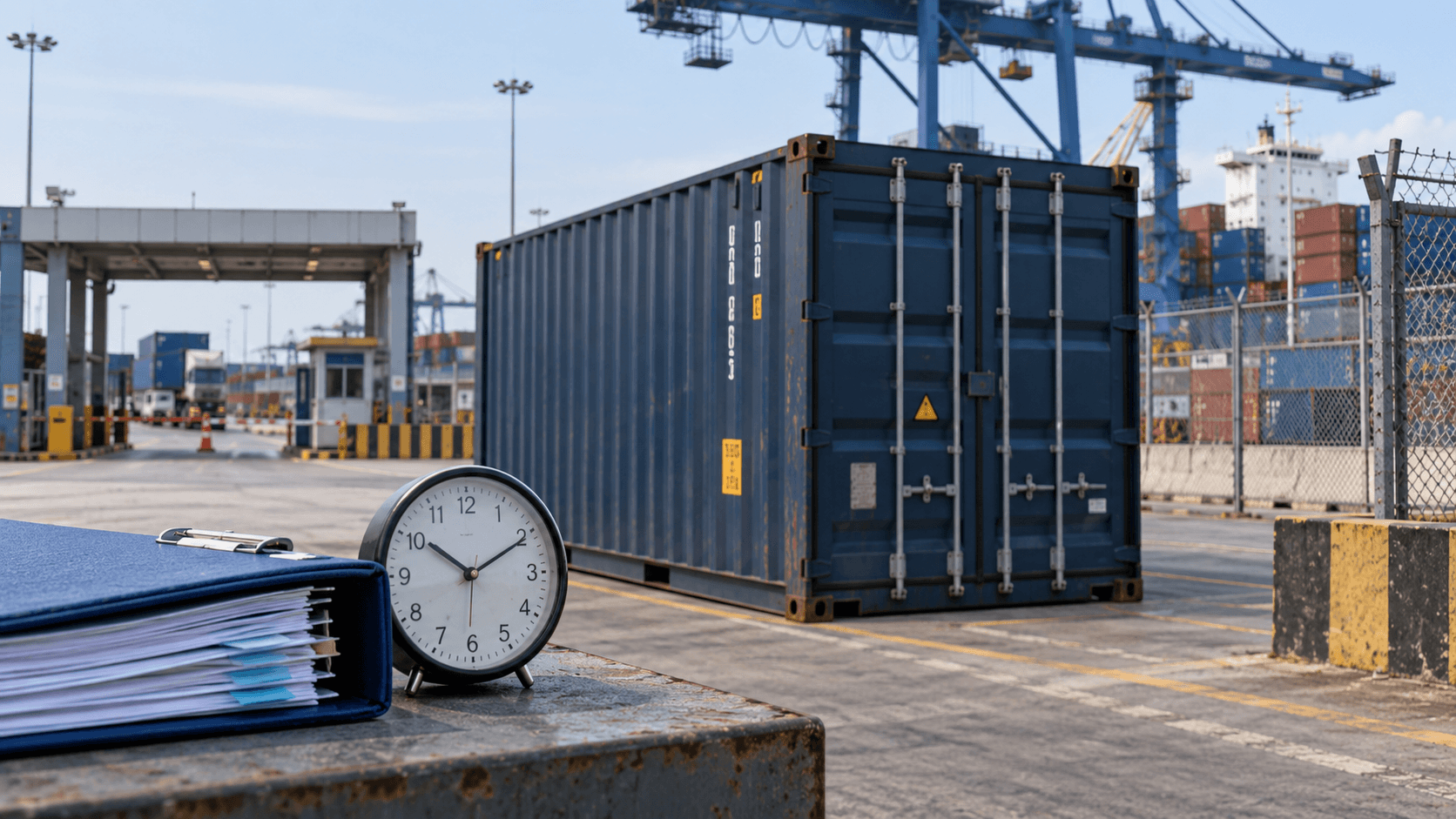
2. What is detention?
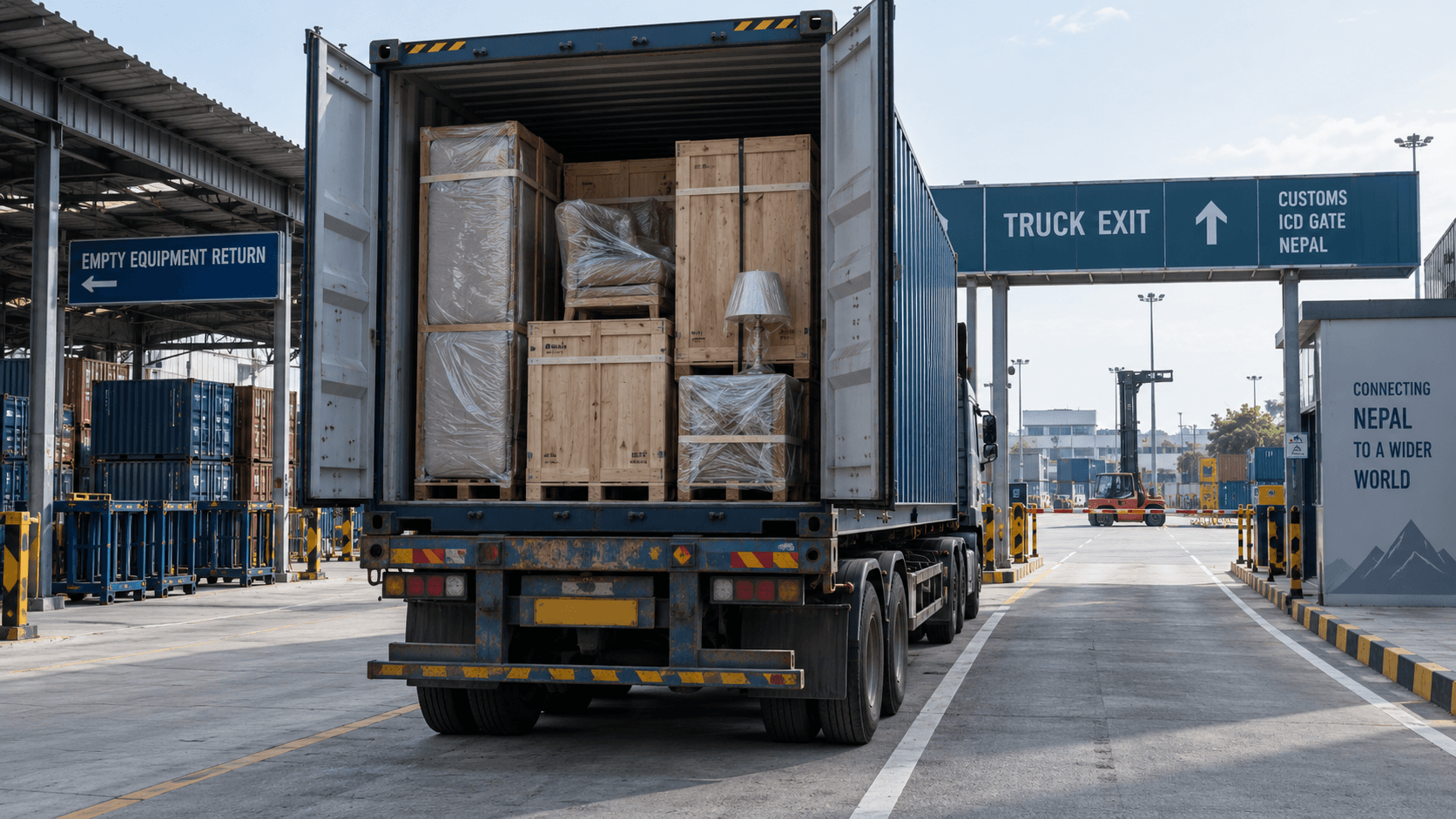
Detention generally applies when the container has left the port or carrier-controlled facility but is not returned to the shipping line’s designated location within the permitted time.
For example, an importer receives a loaded container after clearance and transports it to a warehouse. The cargo is unloaded, but the empty container is returned late. The shipping line may charge detention for the additional days that its equipment remained outside its control.
Detention can occur because:
- The warehouse was not ready
- Unloading labour was unavailable
- A forklift or crane was not arranged
- The delivery road was blocked
- Cargo inspection took longer than expected
- The empty-return depot was unclear
- The truck missed the depot’s operating hours
- A holiday delayed the return
- The container was damaged during unloading
Importers should arrange unloading and empty-container return before the loaded container leaves the terminal or inland depot.
Empty does not automatically mean returned. Keep the depot acceptance record or equipment interchange receipt (EIR), including the container number, date and time. A truck arriving at a depot that cannot accept the unit may not stop the carrier’s clock.
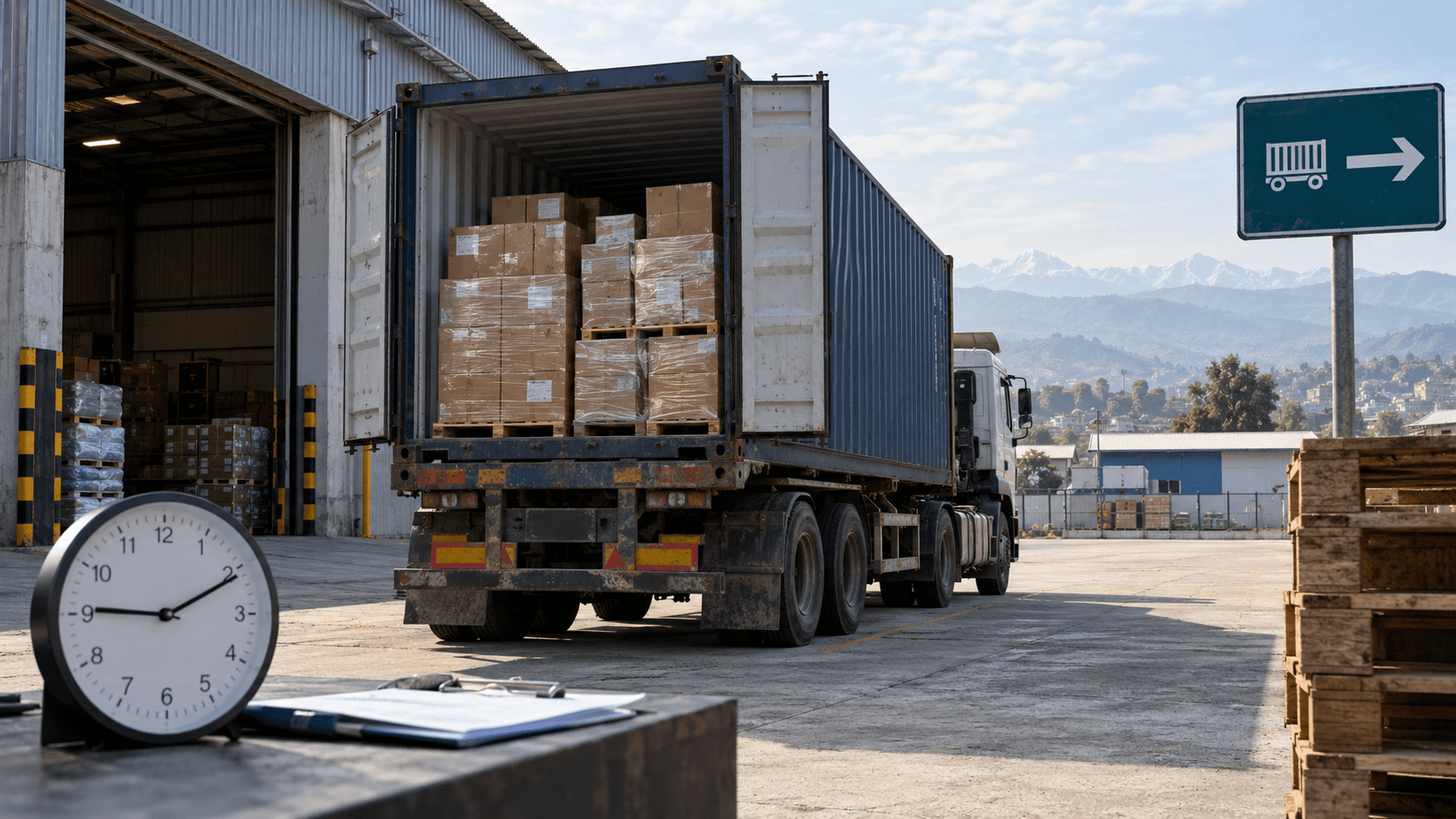
3. Demurrage vs detention: the main difference
The simplest distinction is: However, actual carrier terminology can differ. Some shipping lines offer separate demurrage and detention periods, while others provide combined free time or combined demurrage-and-detention terms. Always confirm: When the free-time clock begins Whether demurrage and detention are separate or combined Which calendar days count Whether weekends and holidays count Where the container must be returned What event stops the charge Which tariff applies after free time Whether the terms cover the Indian port, inland terminal or both Do not depend only on a verbal explanation. Request the applicable conditions in writing. A current carrier example shows why the wording matters: Maersk’s India import terms describe demurrage as including terminal storage and combined detention as running from discharge across the inside and outside periods. That India tariff is an example, not an automatic tariff for a Nepal-bound booking. Check the actual bill of lading, contract, destination and Nepal import terms.
| Charge or arrangement | What it usually relates to | What to verify |
|---|---|---|
| Separate demurrage | Carrier container held inside the specified terminal beyond free time | Start event, terminal boundary and stop event |
| Separate detention | Carrier container outside the specified facility beyond the permitted period | Gate-out rules, empty-return depot and acceptance record |
| Combined demurrage and detention | One equipment allowance covering time inside and outside facilities | Whether discharge, inland transit and empty return share one clock |
| Port, terminal or CFS storage | Space occupied by a container or cargo | Whether billed separately or already included in another tariff line |
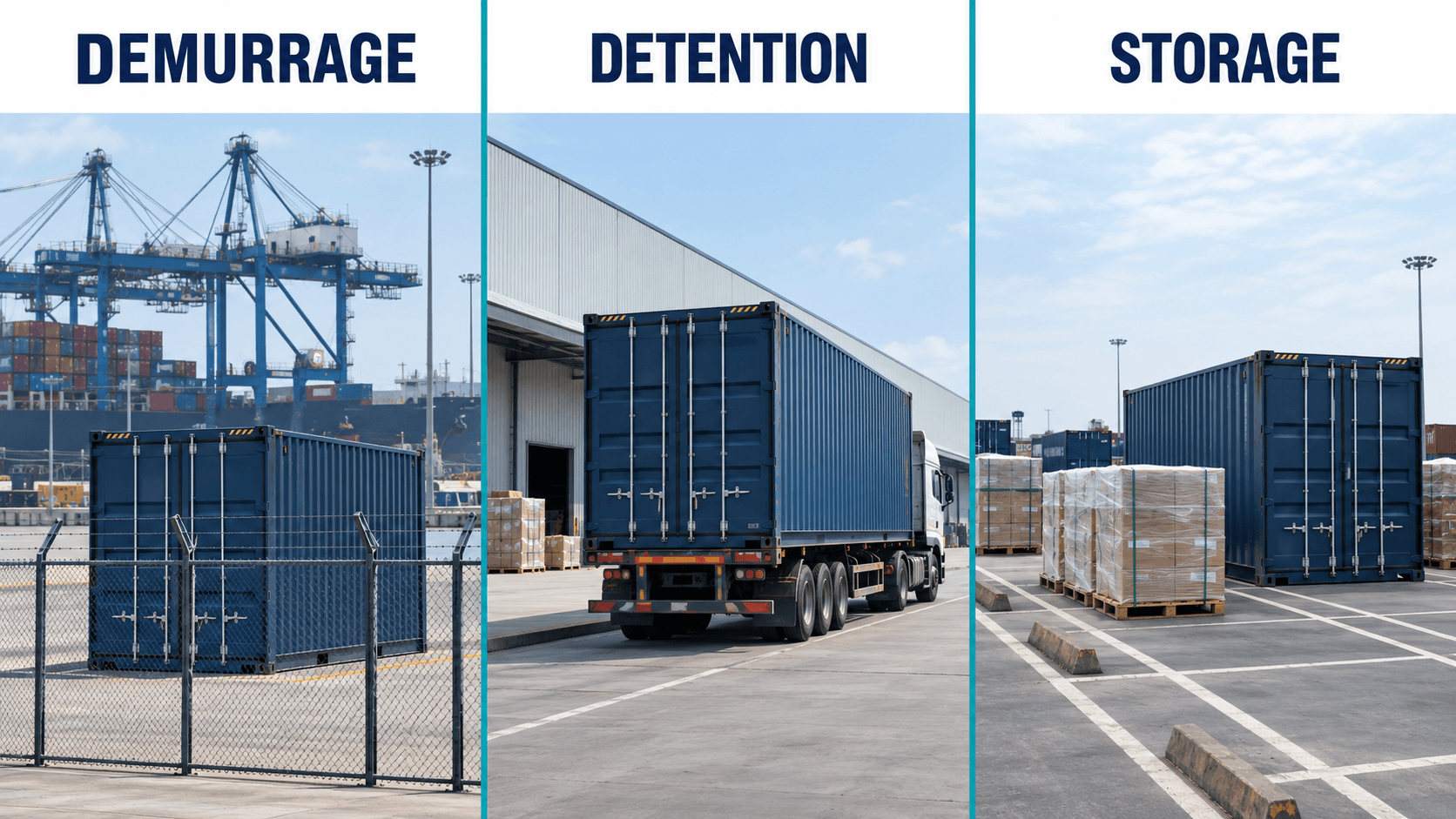
4. Container free time: when does the clock begin?
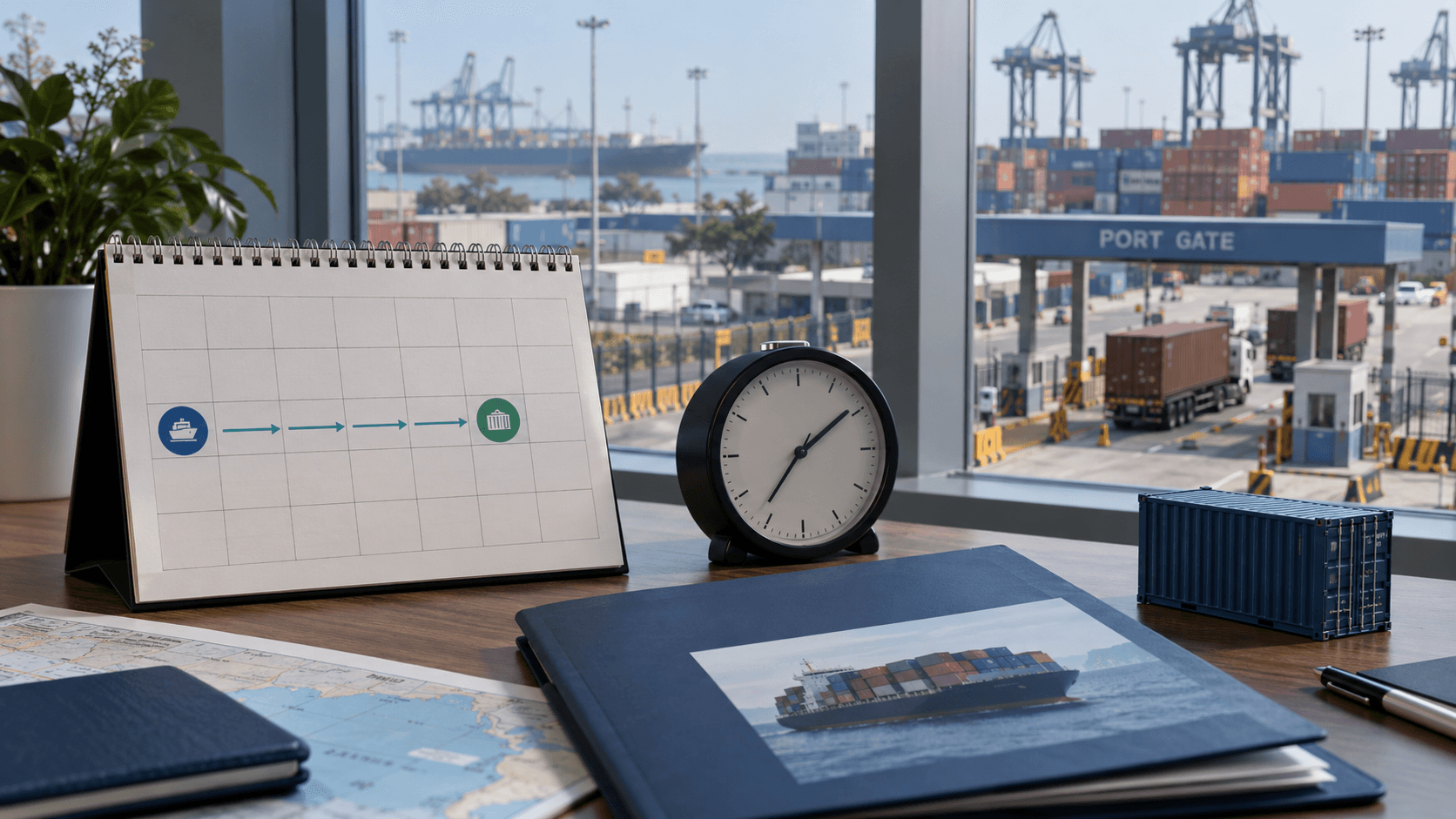
Free time is the number of days during which the shipping line allows the container to remain at a specified location or outside its control without applying demurrage or detention.
Free time is not universal. It may change according to:
- Shipping line
- Origin and destination
- Container size
- Dry, refrigerated or special-equipment container
- Import or export shipment
- Port or inland terminal
- Negotiated freight contract
- Commodity
- Combined or separate charging terms
- A specific carrier offer or approved exceptional arrangement
Free time should be checked before booking—not after the vessel arrives.
For Nepal-bound cargo, importers should also ask whether free time continues during inland movement and how the carrier treats containers moving through Indian territory under customs transit.
When does free time begin?
The starting point depends on the carrier’s tariff and shipment terms. It may be connected to vessel discharge, container availability, terminal arrival, gate-out or another defined operational event.
This distinction matters because an importer may receive an arrival notice after the free-time clock has already started. If the original documents, payment or customs file are not ready, several days may already have been lost.
Before dispatch, ask the freight forwarder or shipping line to confirm:
- The event that starts free time
- The number of free days
- Whether calendar or working days apply
- The start of chargeable time
- The daily charge bands
- The required empty-return location
- The evidence used to confirm return
Keep this information with the shipment file.
Record the last free date, the first chargeable date, the local time or cut-off and whether partial days count. Do not assume arrival at Birgunj resets an allowance that started at the Indian port. Customs holds, holidays and transport disruption do not automatically pause a tariff clock; any relief must come from the applicable terms, rules or written approval.
Maersk’s Nepal import page specifies a calendar-day basis and notes that SPOT booking conditions may differ from standard terms. It also requires specific free-time agreements to be approved and recorded in its system. A remark typed into a bill of lading is therefore not a substitute for carrier confirmation.
For another carrier, use its own published source, such as the Nepal entry in Hapag-Lloyd’s detention and demurrage tariff directory. Select the correct effective version and obtain written booking confirmation.
5. Are port storage and demurrage the same?
Not necessarily.
Demurrage is usually associated with the shipping line’s container equipment remaining at the terminal beyond free time.
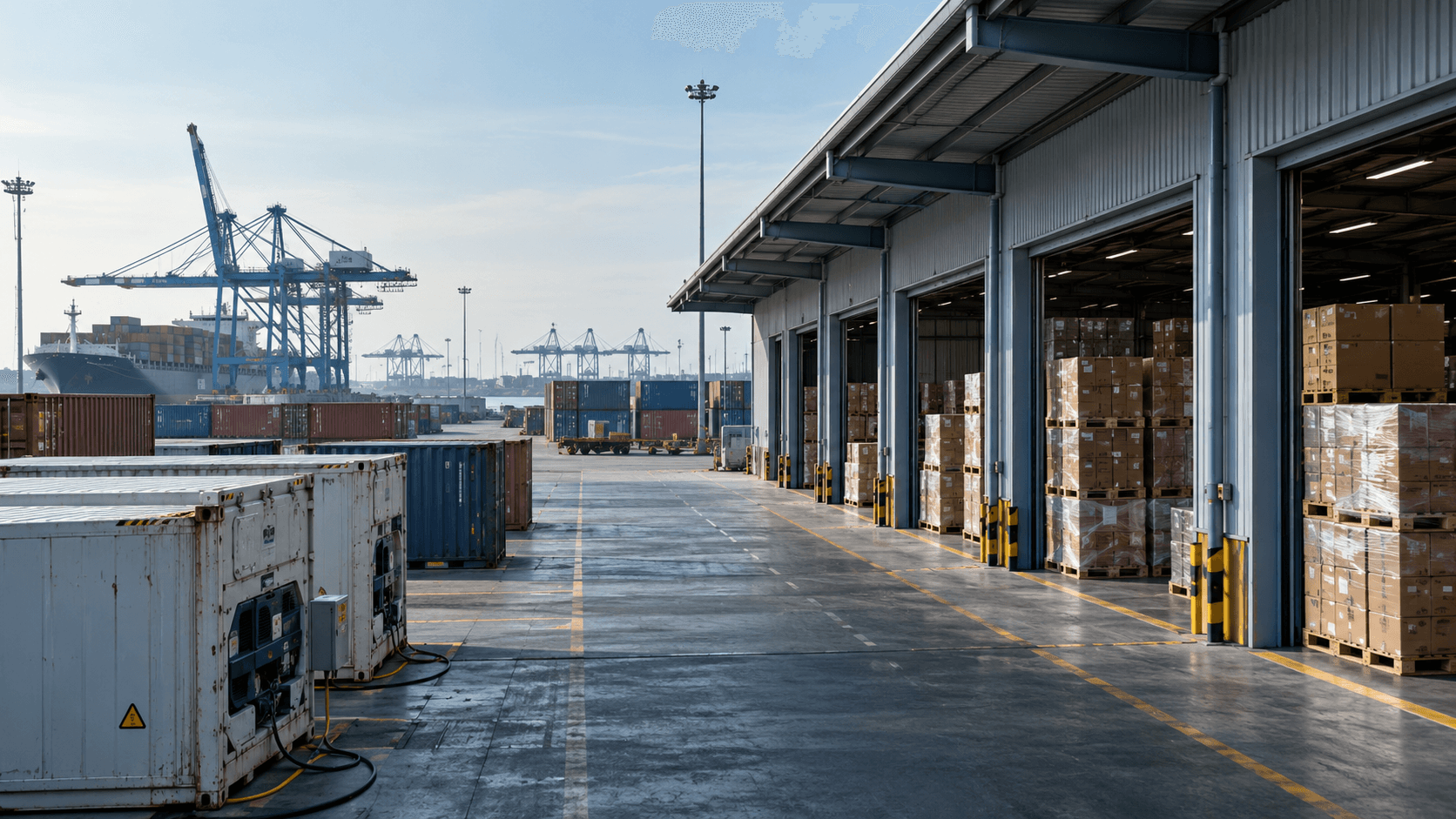
Port or terminal storage may be charged by the port, terminal, container freight station or inland facility for occupying space beyond its permitted period.
An importer may therefore face more than one delay-related charge on the same shipment. Depending on the route and circumstances, possible charges include:
- Shipping-line demurrage
- Container detention
- Port storage
- Terminal storage
- Container freight station storage
- Ground rent
- Reefer electricity or monitoring charges
- Documentation amendment charges
- Customs examination expenses
- Truck waiting charges
- Rail or inland-terminal charges
This is why an importer should request a complete destination-cost breakdown rather than asking only for the ocean-freight rate.
Ask who invoices each line and what it covers. Some carrier tariffs include terminal storage within demurrage; others treat storage separately. Reconcile the underlying tariff and invoices before adding charges together. Handling, document amendments and examinations can also be separate service or event charges rather than daily delay charges.
For the Nepal inland facility, the Nepal Intermodal Transport Development Board publishes facility information and Birgunj dry-port tariff documents. Confirm the current operator’s applicable schedule, cargo category, effective date, tax treatment and storage allowance for the actual shipment.
6. How Indian-port delays affect Nepal imports
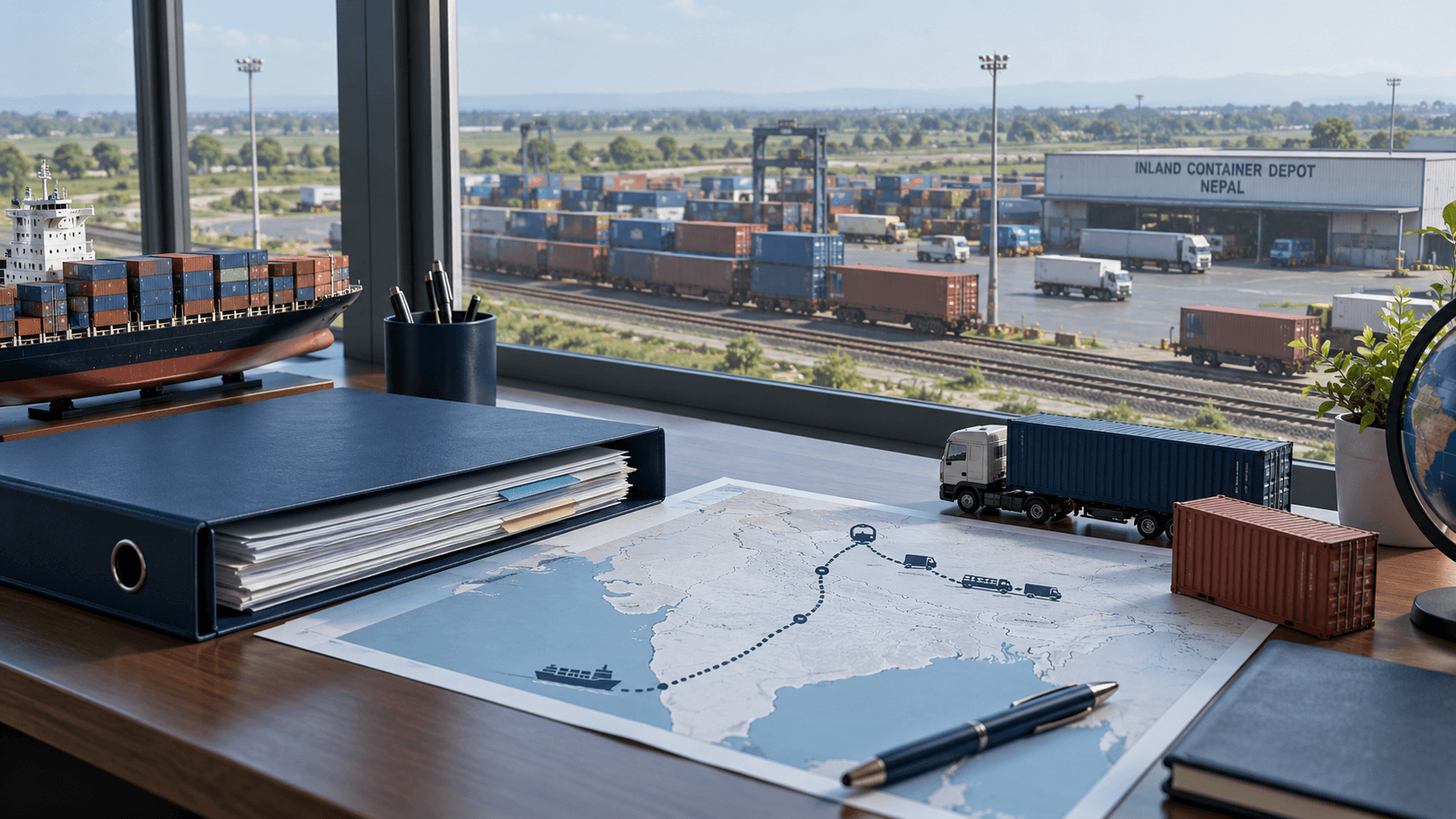
Nepal-bound sea cargo commonly enters through an Indian gateway port and then continues toward Nepal by rail or road. Depending on the route and booking, cargo may move through Kolkata, Haldia, Visakhapatnam or another suitable gateway before reaching a border point or inland container depot.
A typical journey may involve:
- Vessel arrival at the Indian port
- Container discharge
- Shipping-document processing
- Delivery-order or cargo-release formalities
- Indian customs-transit procedures
- Rail or road allocation
- Inland movement toward Nepal
- Arrival at a Nepal ICD or customs point
- Nepal customs clearance
- Delivery to the importer
- Container unloading and empty return
A delay at one stage can affect later stages. For example, an incomplete transit document can postpone inland movement. A delayed customs declaration in Nepal can hold cargo after arrival. A missing unloading plan can then cause detention after release.
The safest approach is to prepare the complete movement before the vessel arrives.
The exact sequence and responsibility change with carrier haulage, merchant haulage, the agreed place of delivery and the customs-transit arrangement. Use the port-to-door cargo service guide to assign each handoff before booking.

7. Demurrage and detention risks for FCL cargo
FCL means Full Container Load. One shipment uses the container rather than sharing it with unrelated consignments. The booking and transport arrangements determine who organizes movement and empty return and who bears each charge; the importer should confirm these responsibilities in writing.
Common FCL delay risks include:
- Original bill-of-lading or release problems
- Supplier-document discrepancies
- Late delivery-order processing
- Customs-transit delays
- Rail or truck unavailability
- Missing import permits
- Wrong HS code or unclear product description
- Customs inspection
- Duty-payment delays
- Warehouse-access problems
- Slow unloading
- Late empty-container return
FCL can reduce cargo handling compared with LCL, but the cost of delay can be significant because the importer is using the shipping line’s complete container.
Before booking FCL cargo, confirm both the clearance plan and the empty-return plan.
If cargo is unpacked at a terminal and delivered loose, the return arrangement can differ from container delivery to the importer’s warehouse. Ask the sea freight service team to confirm the actual delivery method, carrier equipment terms and empty-return responsibility.
Check free time before delay charges begin
Share your route, carrier, container type and shipping documents. Sea Sky Cargo can review the free-time conditions, customs plan and inland-delivery handoffs.
8. Storage risks for LCL cargo
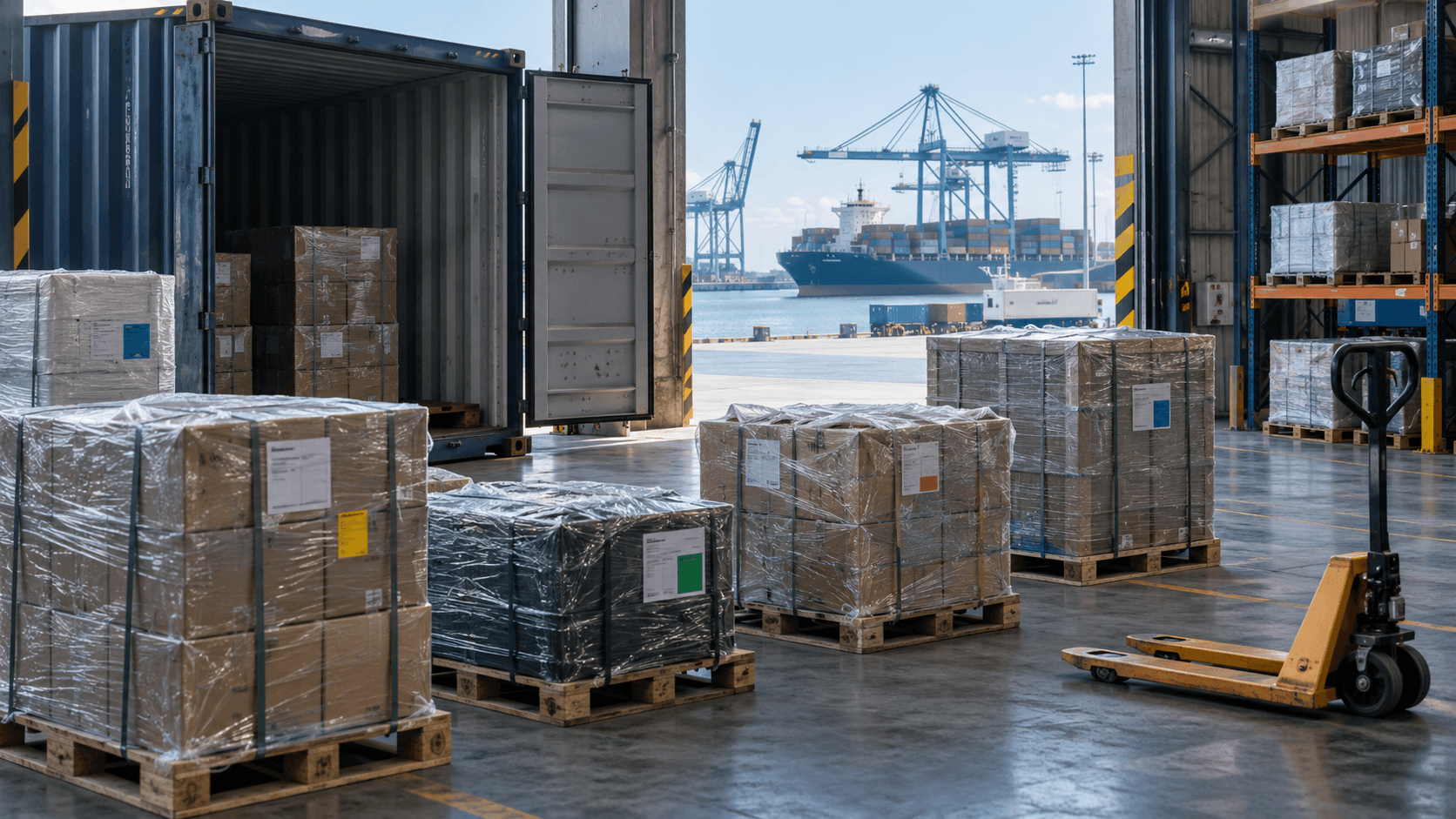
LCL means Less than Container Load. Several importers’ shipments share one container. After arrival, the consolidated container is deconsolidated and each shipment is handled separately.
An LCL importer does not normally take the shipping line’s full container to their premises. Therefore, traditional container detention may not apply directly in the same way as an FCL shipment.
However, LCL cargo can still attract:
- Container freight station storage
- Warehouse storage
- Deconsolidation charges
- Handling charges
- Documentation charges
- Examination expenses
- Delayed pickup charges
- Other consolidator or destination-agent fees
LCL cargo can be delayed when another shipment in the consolidation creates operational complications, when documents do not match or when the consignee does not complete clearance promptly.
Before booking LCL cargo, ask:
- Where will the cargo be deconsolidated?
- How much storage-free time is available?
- When does storage begin?
- What minimum charges apply?
- Which destination fees are excluded from the freight quote?
- Who will notify the importer when cargo becomes available?
A low LCL rate can become misleading if destination handling and storage are not included in the comparison.
A consolidator may pass through container-related expenses under its contract even when the importer never takes the shared container. Request the contractual basis and itemized allocation; do not assume LCL means no exposure to delay costs.
Compare LCL shipping to Nepal on the full destination cost. The charging unit may depend on weight, measurement or a minimum: the CBM in shipping guide explains cargo-volume preparation.
9. Common causes of demurrage and detention
Incomplete documents
Missing invoices, packing lists, certificates of origin, permits or transport documents can delay clearance or inland transit.
Bill-of-lading problems
Incorrect consignee details, delayed surrender or unresolved amendments may prevent timely release.
Product-classification questions
A vague description or questionable HS code may result in additional customs review.
Import-permit delays
Food, medicine, chemicals, batteries, telecom equipment and other regulated products may require authorization or supporting certificates.
Customs valuation questions
Customs may request purchase records, catalogues, payment evidence or other documents when reviewing the declared value.
Late duty or tax payment
Cargo may remain uncleared if the importer is not financially ready for the assessed charges.
Transport shortages
Rail schedules, truck availability, strikes, road disruption or port congestion may slow inland movement.
Warehouse problems
Restricted access, insufficient labour, unavailable lifting equipment or lack of storage space can delay unloading.
Poor communication
If the shipping line, forwarder, clearing agent and importer do not share updates promptly, important deadlines may be missed.
For official customs notices and document requirements, consult the Nepal Department of Customs. Have the appointed agent check customs clearance in Nepal against the actual product and route before dispatch.
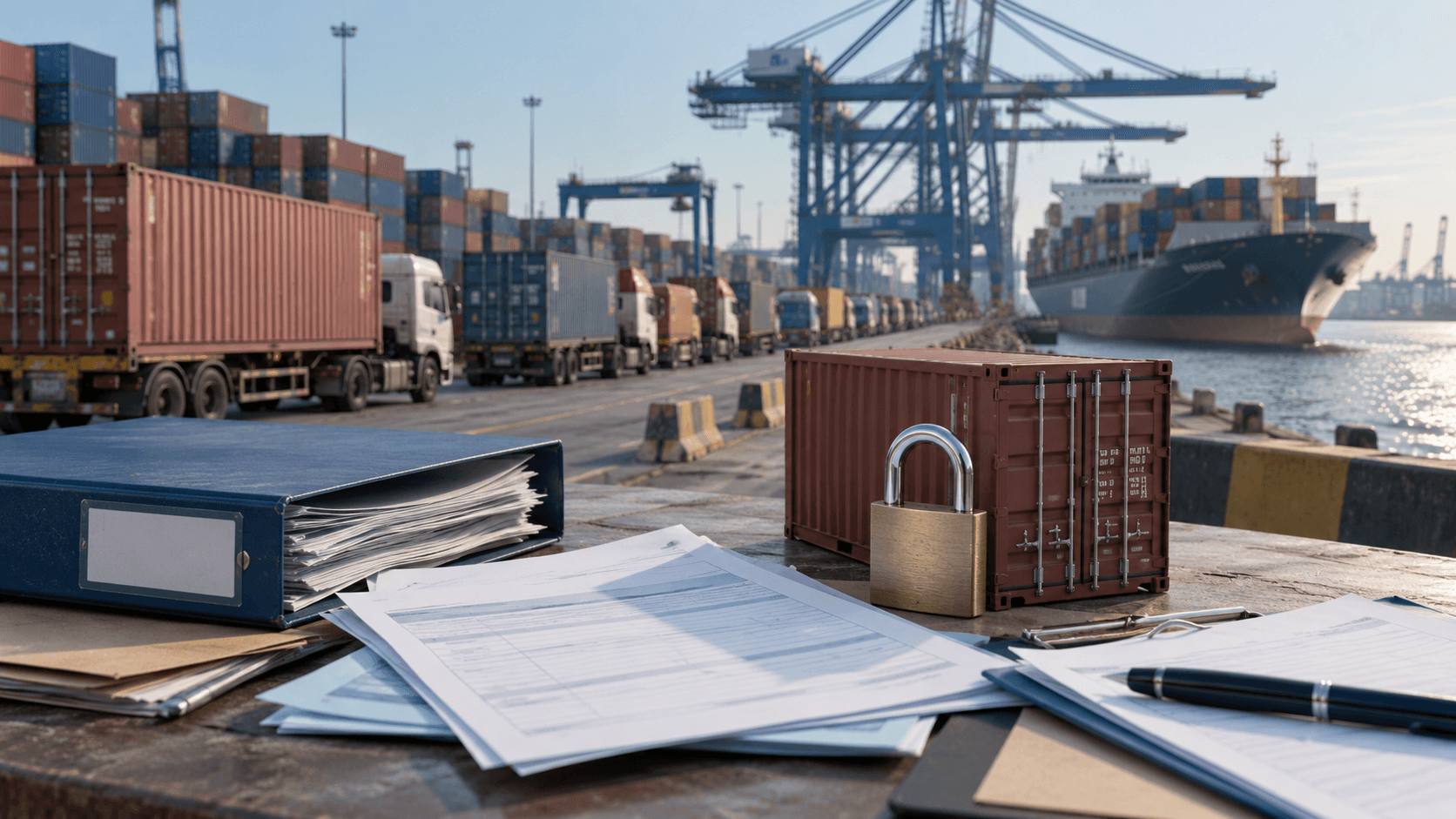
10. How importers can avoid extra charges
Confirm Free Time Before Booking Ask for the free-time terms and chargeable tariff in writing. Confirm whether the offer provides separate or combined demurrage and detention. If the route is complex or the product needs special approval, consider negotiating additional free time before confirming the booking. Approval is not guaranteed, but the request is easier to discuss before cargo moves. Review Documents Before Dispatch Check the commercial invoice, packing list, product description, consignee information and shipping terms before the supplier dispatches the cargo. All documents should agree on: Product name Quantity Package count Weight Value Model or specification Buyer and seller details Country of origin Shipping terms Correcting documents at origin is usually easier than correcting them after vessel arrival. Check Permits and Product Requirements Early Do not wait until the container arrives to ask whether the goods require an import permit, recommendation, registration or technical certificate. Confirm requirements before paying the supplier or booking freight. Prepare the Customs File Before Arrival Provide the clearing team with documents early enough to review the file. The HS code, estimated duty, permit status and technical description should not be first discussed after arrival. Track the Vessel and Inland Movement Monitor: Vessel departure Estimated arrival Actual discharge Cargo availability Document-release status Customs-transit processing Rail or road allocation ICD arrival Customs-clearance progress Delivery schedule Empty-return deadline One shipment coordinator should maintain this timeline. Arrange Funds in Advance Importers should estimate customs duty, VAT, clearance costs, inland freight and destination charges before arrival. Payment delays can consume valuable free time. Prepare the Delivery Site Before the container is released, confirm: Warehouse access Delivery time Labour availability Forklift or crane requirements Unloading space Temporary storage Container-turning space Empty-return arrangement For machinery, furniture or project cargo, unloading may take longer than expected. Include that time in the delivery plan. Return the Empty Container Promptly Confirm the empty depot, working hours and return procedure before unloading begins. Request proof when the container is returned and keep it with the shipment records. Keep this milestone record with the international freight booking file. One coordinator should follow the separate carrier-equipment, terminal-storage and delivery deadlines until the return is accepted.
| Milestone | Record to keep | Assigned action |
|---|---|---|
| Booking confirmation | Written free-time terms and tariff version | Confirm allowance and any approved extension |
| Actual discharge or defined start event | Carrier or terminal timestamp | Record last free date for each applicable charge |
| Transit and ICD arrival | Transport updates and document status | Prepare Nepal customs and delivery resources |
| Loaded gate-out | Gate receipt and delivery appointment | Monitor unloading and return allowance |
| Empty acceptance | EIR or depot receipt | Confirm the carrier records the correct stop event |
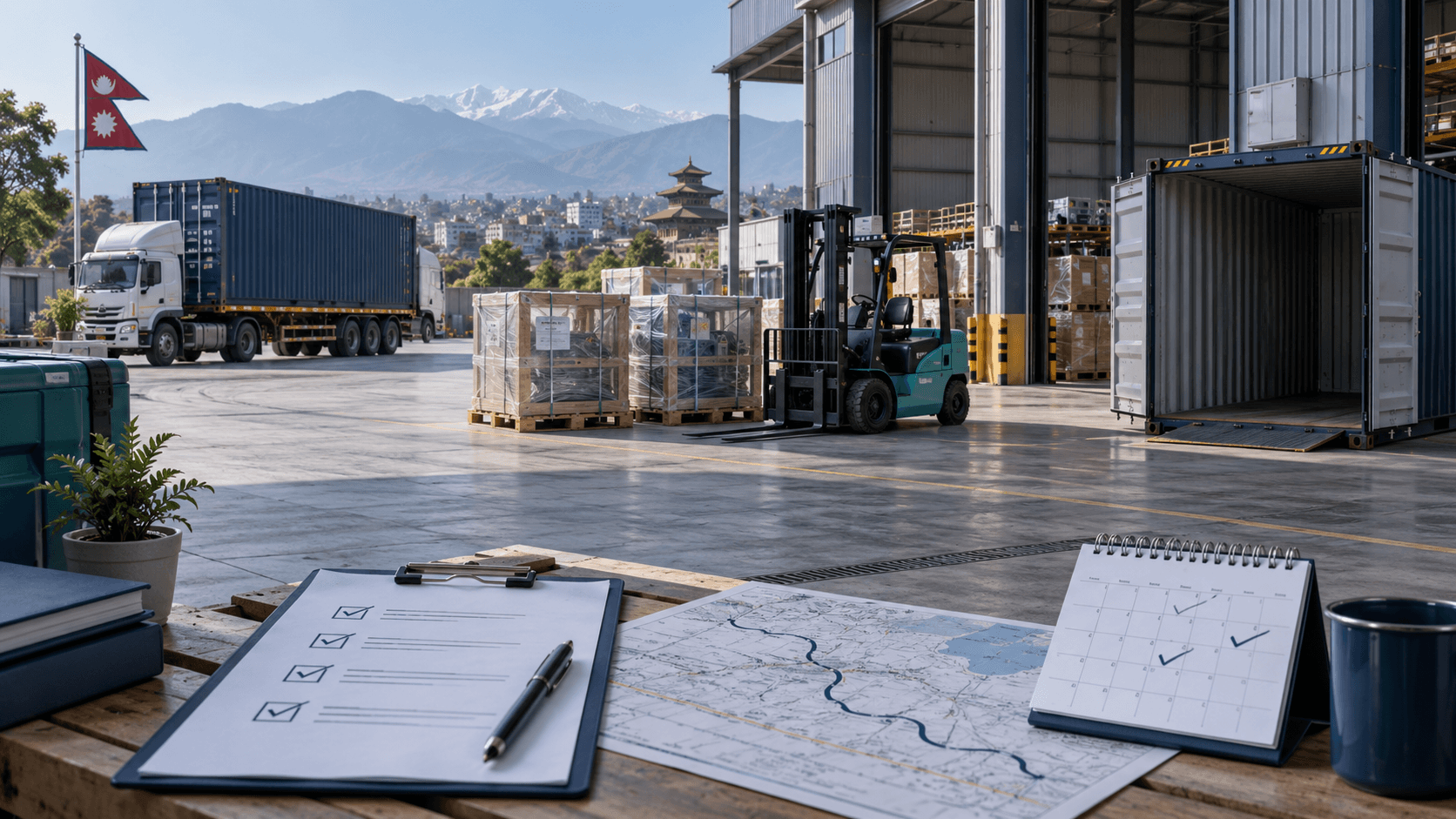
11. What to do if a delay has already started
If the shipment is already delayed, first identify which charge is accumulating and who is applying it. Do not assume every amount is demurrage.
Request:
- Current container or cargo status
- Free-time expiry date
- Applicable tariff
- Daily charge period
- Current accrued amount
- Required action for release
- Empty-return deadline
- Supporting invoices
Then prioritize the step that stops or reduces further charges. That may involve resolving a document issue, paying an assessed amount, securing a truck, arranging unloading or returning the empty container.
Importers may request additional free time, charge review or waiver consideration when a delay occurred for documented reasons. However, approval is discretionary and should never be assumed.
Check the invoice line by line: container number and size, tariff version, free-time approval, start and stop timestamps, chargeable days in each band, currency, taxes and any overlapping charge. Save arrival notices, gate receipts, correspondence and rejected-return evidence before disputing a calculation.
Do not wait for a waiver decision while further charges accumulate. A billing review and the operational action needed to stop a clock can proceed together. If a depot refuses an empty or changes the return location, ask the carrier for written instructions and document the attempted return.
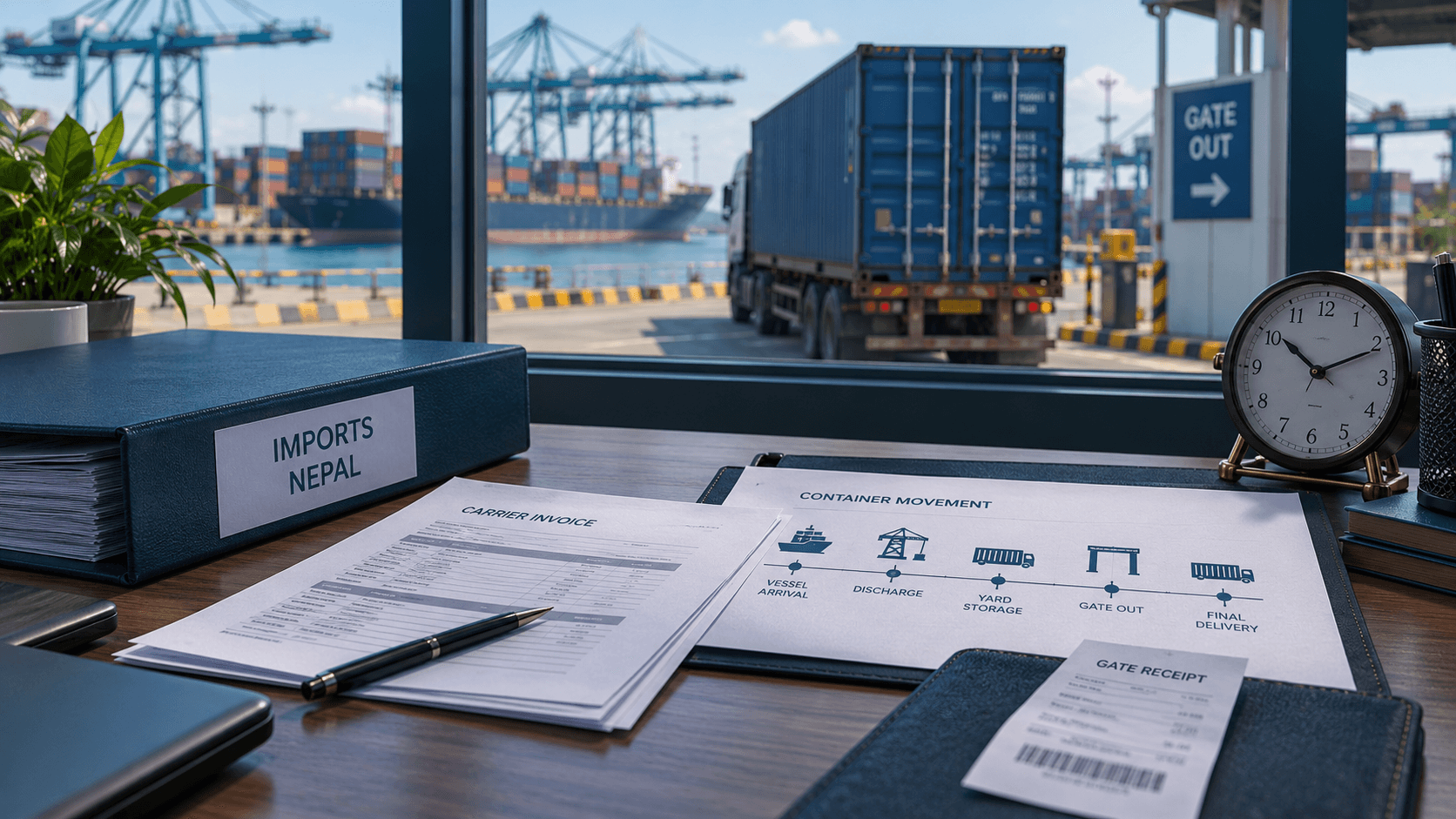
12. How Sea Sky Cargo helps Nepal importers
Sea Sky Cargo helps importers coordinate freight, documents, customs and inland delivery before cargo reaches a chargeable delay.
Depending on the agreed service scope, support may include:
- Sea-freight planning
- LCL and FCL comparison
- Indian-port-to-Nepal coordination
- Free-time condition review
- Commercial-document review
- Customs-clearance coordination
- HS-code guidance
- Transit-route planning
- Birgunj ICD and inland-delivery coordination
- Warehouse-delivery planning
- Empty-container-return coordination
Final customs decisions, carrier tariffs, port charges and waiver approvals remain under the responsible authorities, terminals and service providers. Sea Sky Cargo’s role is to help connect the shipment stages and reduce avoidable delays.
Demurrage and detention are different charges, but both can increase the landed cost of Nepal imports. Demurrage generally relates to a container remaining inside a terminal beyond free time, while detention generally relates to keeping the container outside the terminal too long before returning it.
Nepal importers must also watch for port storage, CFS storage, terminal charges and other expenses that may apply separately.
The best protection is preparation: confirm free time before booking, review documents before dispatch, prepare customs clearance early, track the shipment and plan unloading and empty return before the container is released.
For the wider coordination role, read the freight forwarding in Nepal guide. Send the bill-of-lading or booking reference, carrier, container type, route, current location, written free-time terms, last free date, document status and delivery address for a useful initial review.
Frequently asked questions
What is the difference between demurrage and detention? Demurrage generally applies when a container remains inside a port or specified terminal beyond free time. Detention generally applies when it remains outside the terminal and is returned late. Carrier definitions and combined terms may vary.
How many free days do Nepal importers receive? There is no universal number. Free time depends on the shipping line, route, container type, terminal and negotiated booking terms. Verify the written conditions for the specific shipment.
Do weekends and holidays count toward free time? They may. Some tariffs count calendar days, while other terms may be structured differently. Importers should check the carrier’s exact conditions.
Can both demurrage and port storage apply? Yes. Shipping-line demurrage and terminal or port storage can be separate charges. More than one charge may apply during the same delay. Some tariffs include storage within demurrage, so check what each invoice line covers before adding them together.
Does detention apply to LCL cargo? LCL importers usually do not take the entire shared container to their premises. Traditional container detention may therefore not apply directly, but warehouse, CFS, handling and storage charges can still arise. A consolidator may also pass through container-related costs where the agreed terms allow it.
Can demurrage or detention be waived? A carrier may consider a waiver or reduction, but approval is not guaranteed. The importer should provide evidence and act quickly to stop additional charges.
How can Sea Sky Cargo help? Sea Sky Cargo can help review free-time terms, shipping documents, customs readiness, inland transport, delivery and empty-container-return planning.
Importing through an Indian port?
Sea Sky Cargo can review your documents, free-time conditions, customs plan and inland-delivery arrangements before demurrage or detention begins.
Related posts
1970-01-01
Sea + Air Freight: How SeaSky Helps Businesses Ship Smarter

2026-10-01
Freight Forwarder vs Customs Clearing Agent in Nepal: Which Do You Need?

2026-09-28
E-commerce Logistics Nepal: Cross-Border Shipping from China, India, and the Gulf

2026-09-27