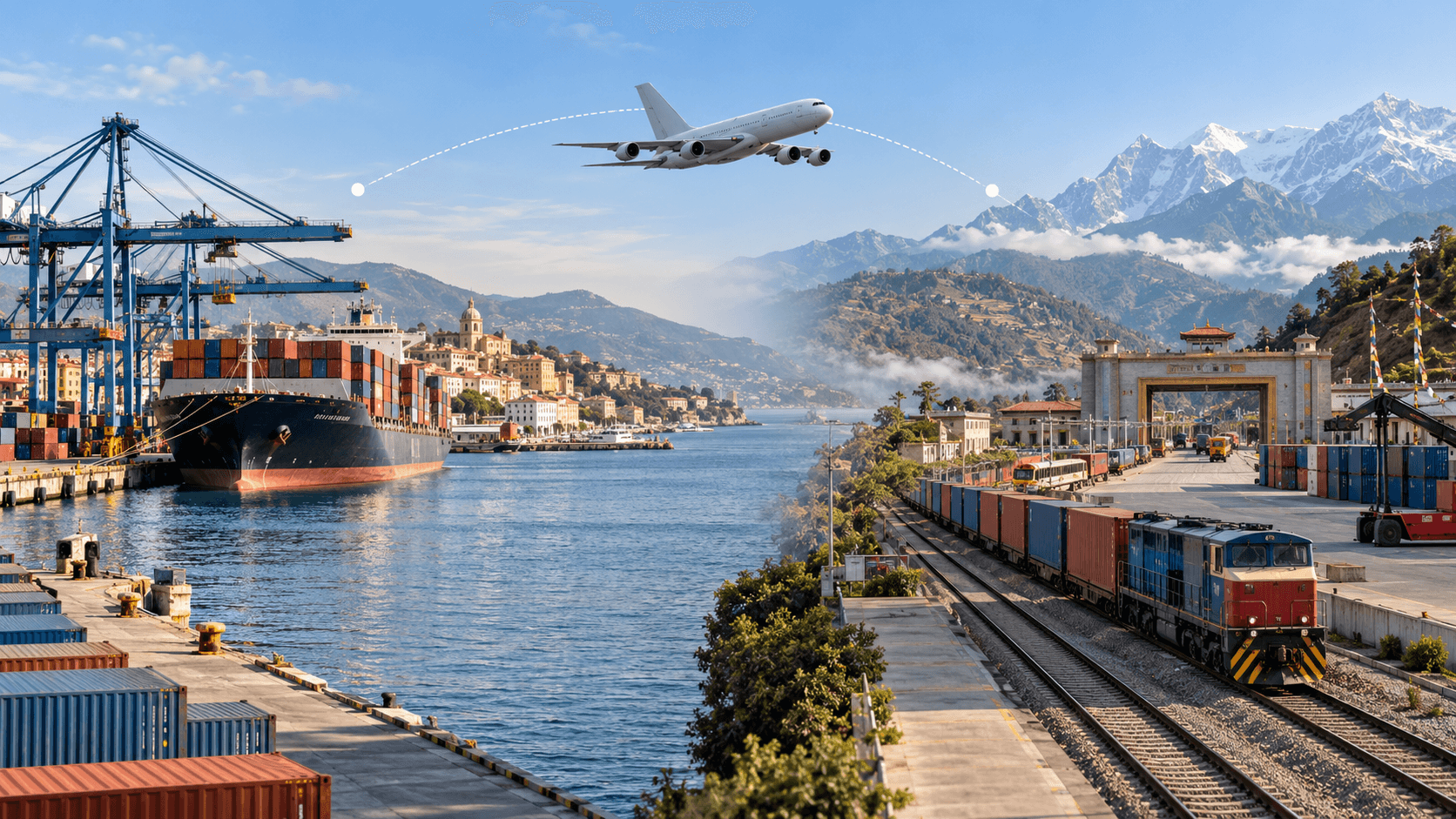
1. Italy–Nepal Shipping at a Glance
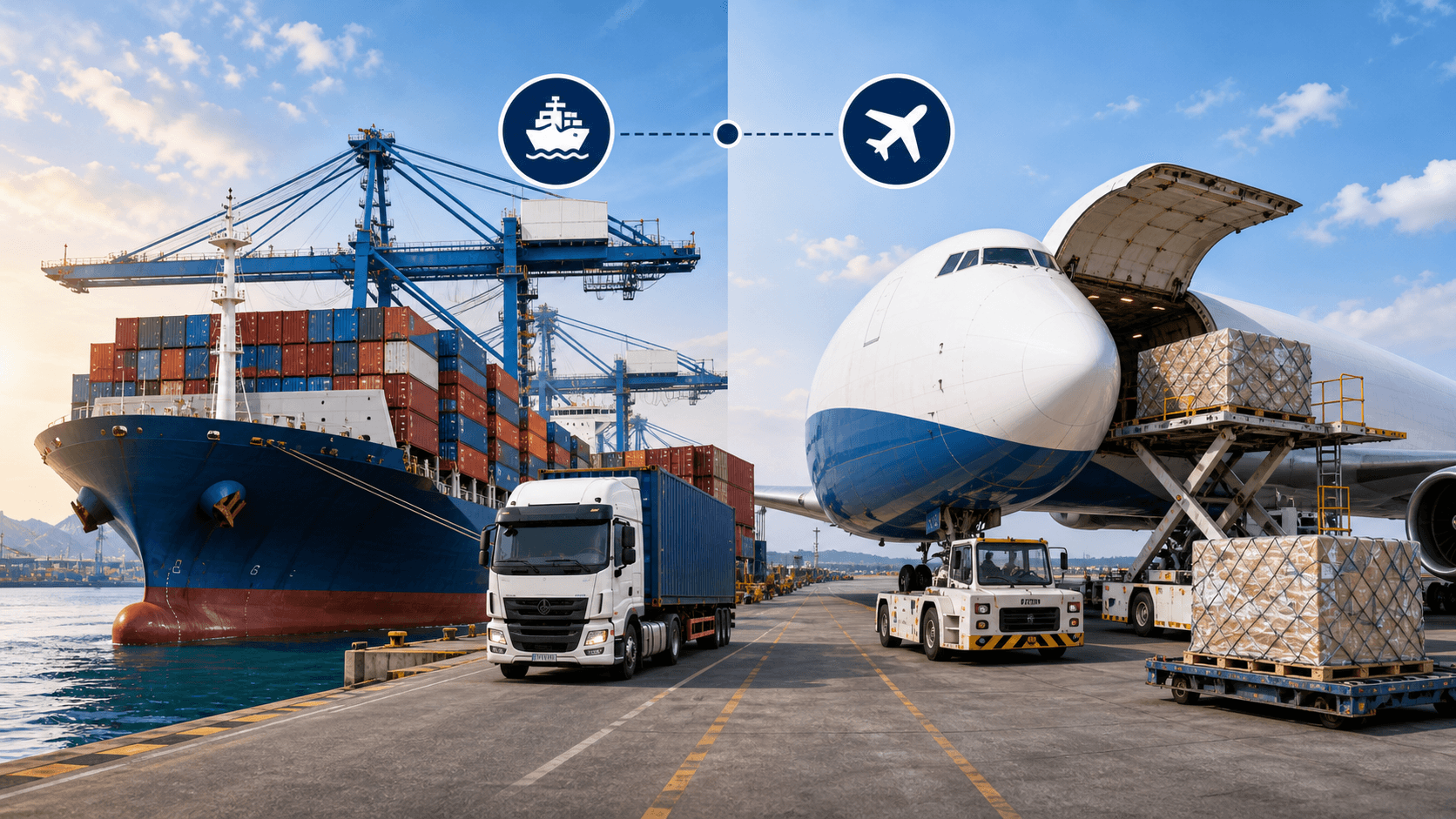
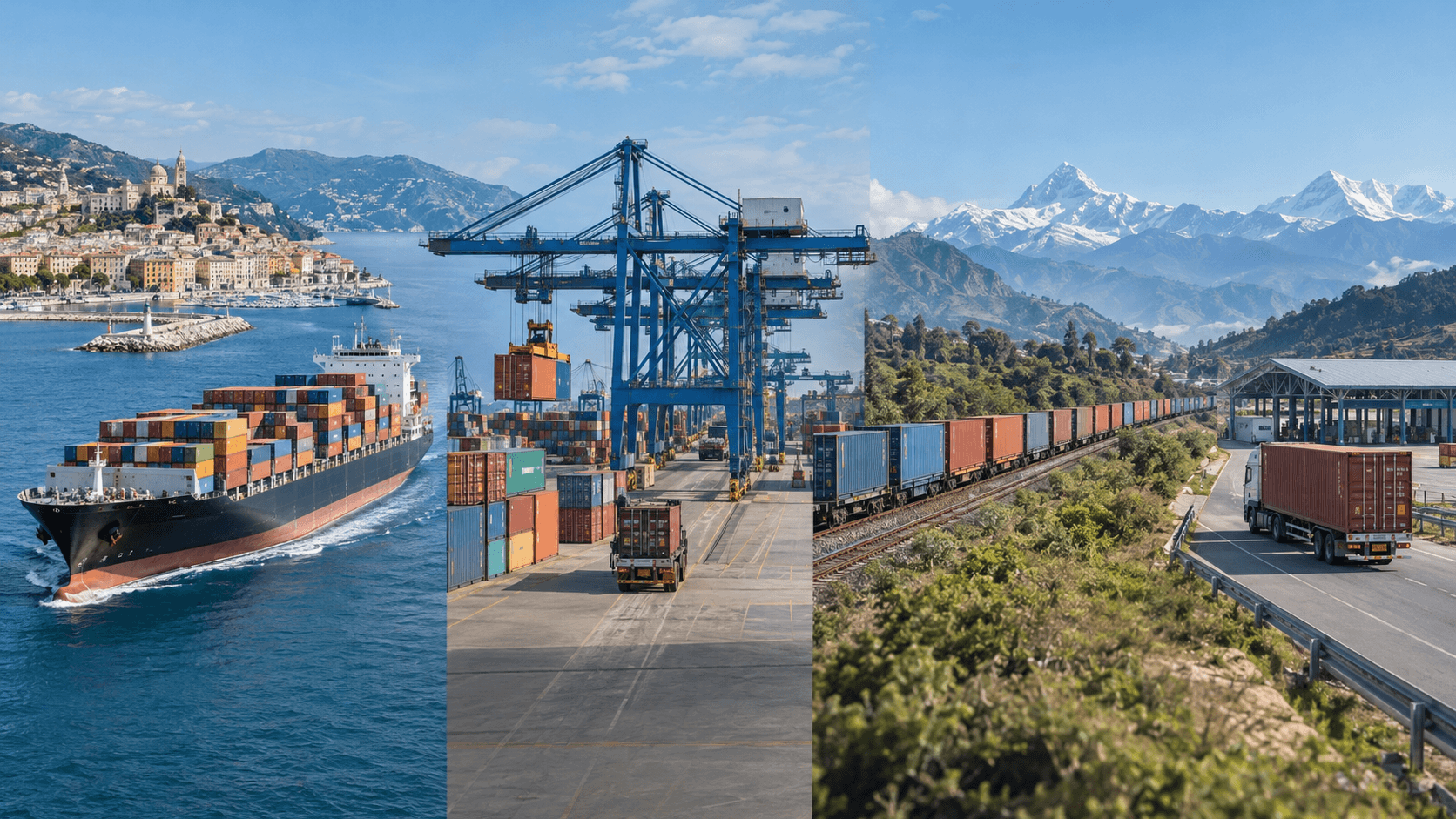
Shipping between Italy and Nepal is a multimodal movement. Air cargo normally reaches Tribhuvan International Airport in Kathmandu through a European or Middle Eastern connection. Sea cargo leaves an Italian or nearby European gateway, arrives at a permitted Indian port, and continues under customs transit toward a Nepal customs point before final delivery. That geography makes the full route more important than the international freight rate alone. A useful plan covers supplier pickup, export handling, the main air or ocean leg, Indian transit where applicable, Nepal customs clearance, and delivery to the consignee. The route should be selected only after confirming the commodity, packed dimensions, gross weight, Incoterm, cargo-ready date, required delivery date, importer status and product approvals. Sea Sky Cargo’s best shipping route guide explains how these factors change the choice. This 2026 guide uses planning ranges rather than guarantees. Carrier schedules, capacity, port rotation, border conditions, customs review and final delivery access can all change after a quotation is issued.
| Planning question | Air freight | Sea freight |
|---|---|---|
| Best fit | Urgent, lighter or higher-value cargo | Heavy, bulky or less time-sensitive cargo |
| Main Nepal entry | Tribhuvan International Airport | Designated Nepal customs point after Indian-port transit |
| Pricing basis | Chargeable weight | Container, volume, weight and route charges |
| Typical planning horizon | Usually measured in days | Usually measured in several weeks |
| Main risks to manage | Space, connection, screening and permits | Sailing, transshipment, port, transit and inland delays |
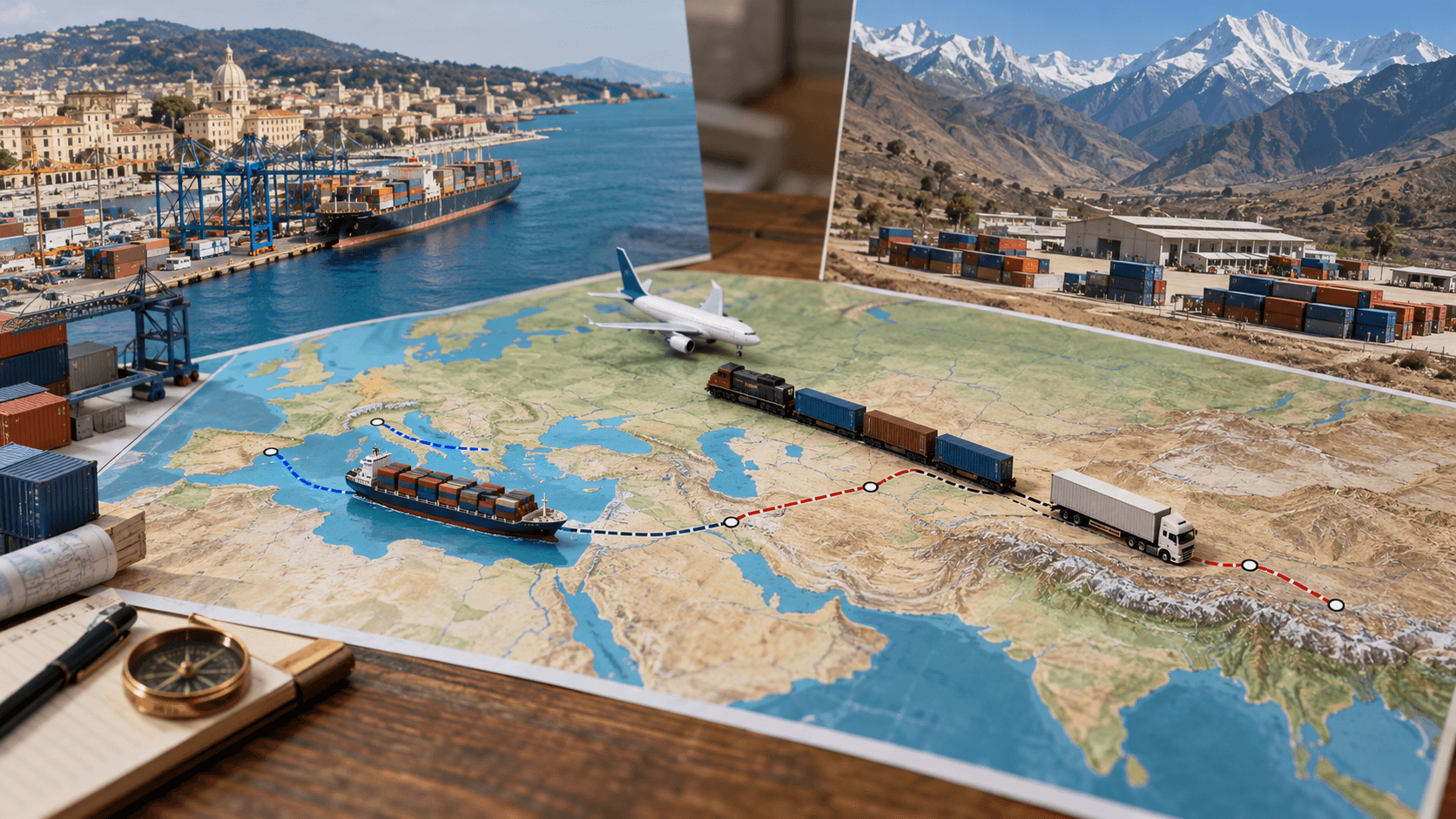
2. Products Commonly Shipped Between Italy and Nepal
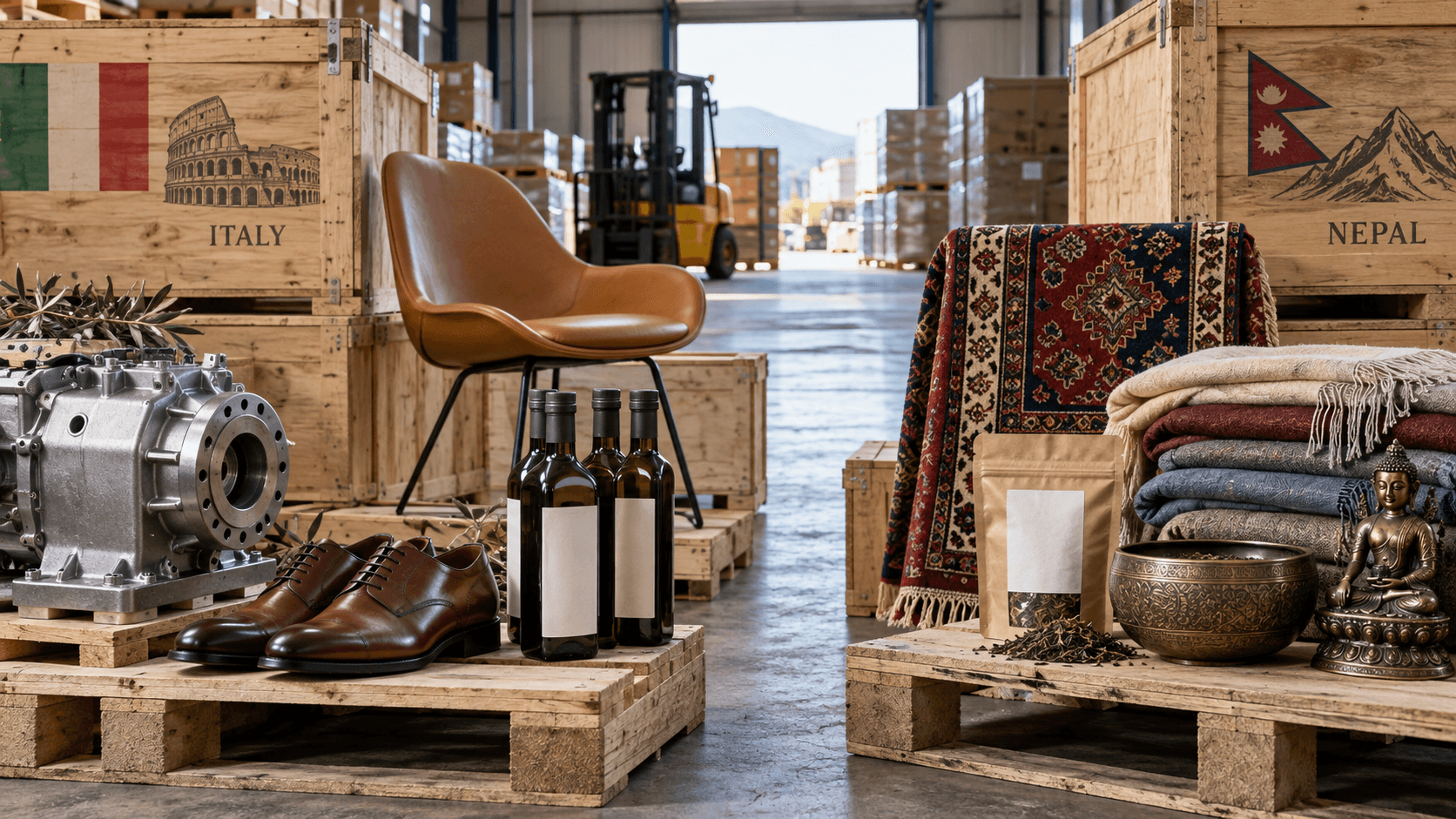
The trade lane can serve industrial buyers, retailers, hospitality projects, specialist importers and Nepali exporters. The correct mode depends on the actual shipment rather than the product name alone, but several categories appear regularly in planning discussions.
Italy to Nepal Cargo
- Machinery, production equipment and spare parts
- Electrical components, controls and industrial electronics
- Furniture, lighting, tiles and interior products
- Leather goods, footwear, garments and fashion accessories
- Automotive parts and workshop equipment
- Food, beverages, olive oil and wine where import approvals and labels are ready
- Hotel, restaurant and specialist retail supplies
Nepal to Italy Cargo
- Handicrafts, metalwork, woodwork and handmade décor
- Pashmina, wool products, garments and textiles
- Hand-knotted carpets and rugs
- Tea, coffee, spices and processed foods that meet EU entry requirements
- Paper products, gifts and artisan goods
- Samples and small commercial consignments for Italian buyers
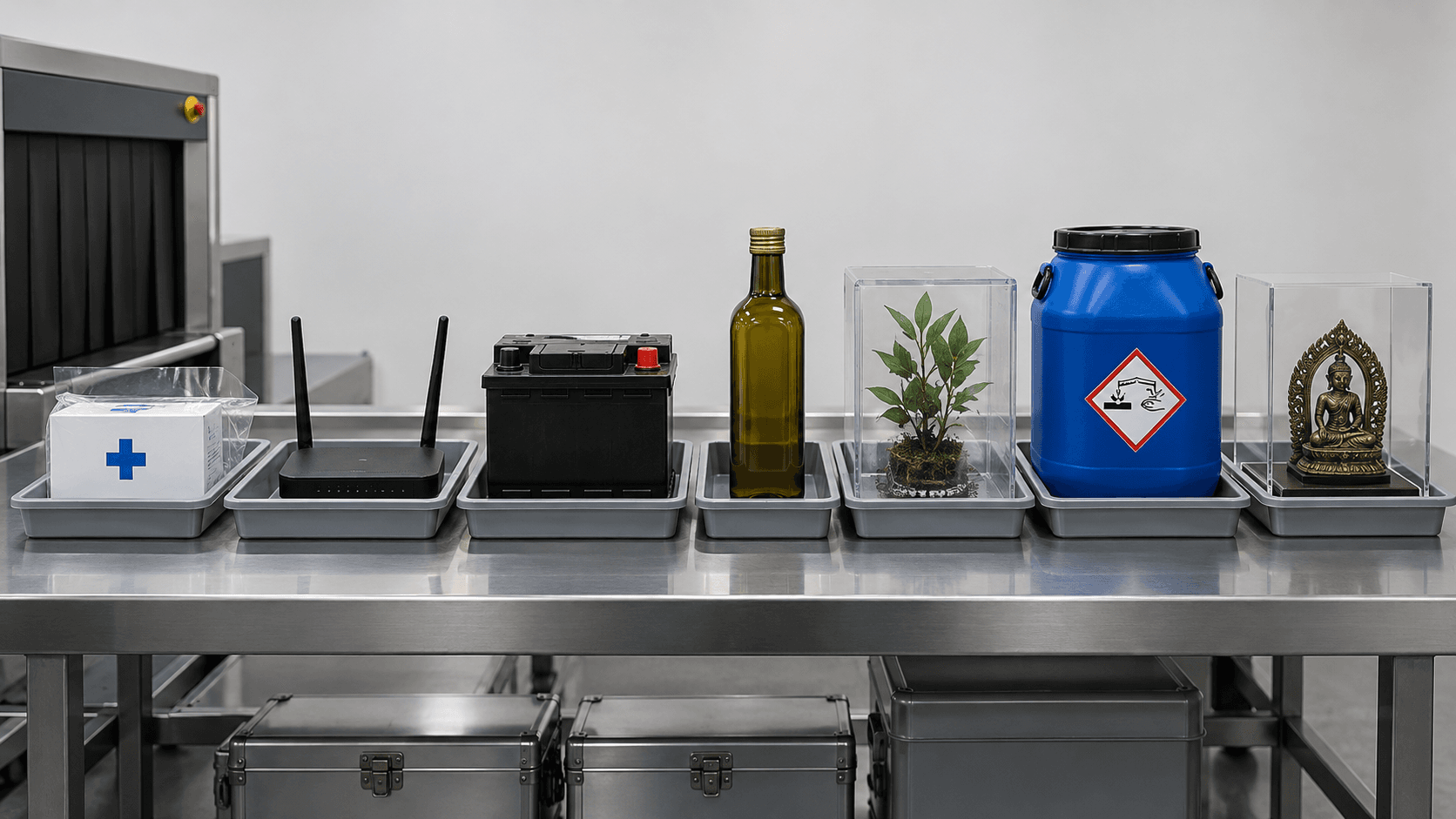
Regulated products need more than ordinary freight documents. Food, plants, medicine, wireless equipment, alcohol, chemicals, batteries, cultural goods and animal-origin materials may require approvals or certificates before booking.
Give the forwarder a precise product description, material, function, model, country of origin and intended use. Vague labels such as “parts,” “samples” or “handicrafts” are not enough for classification, acceptance or permit checks.
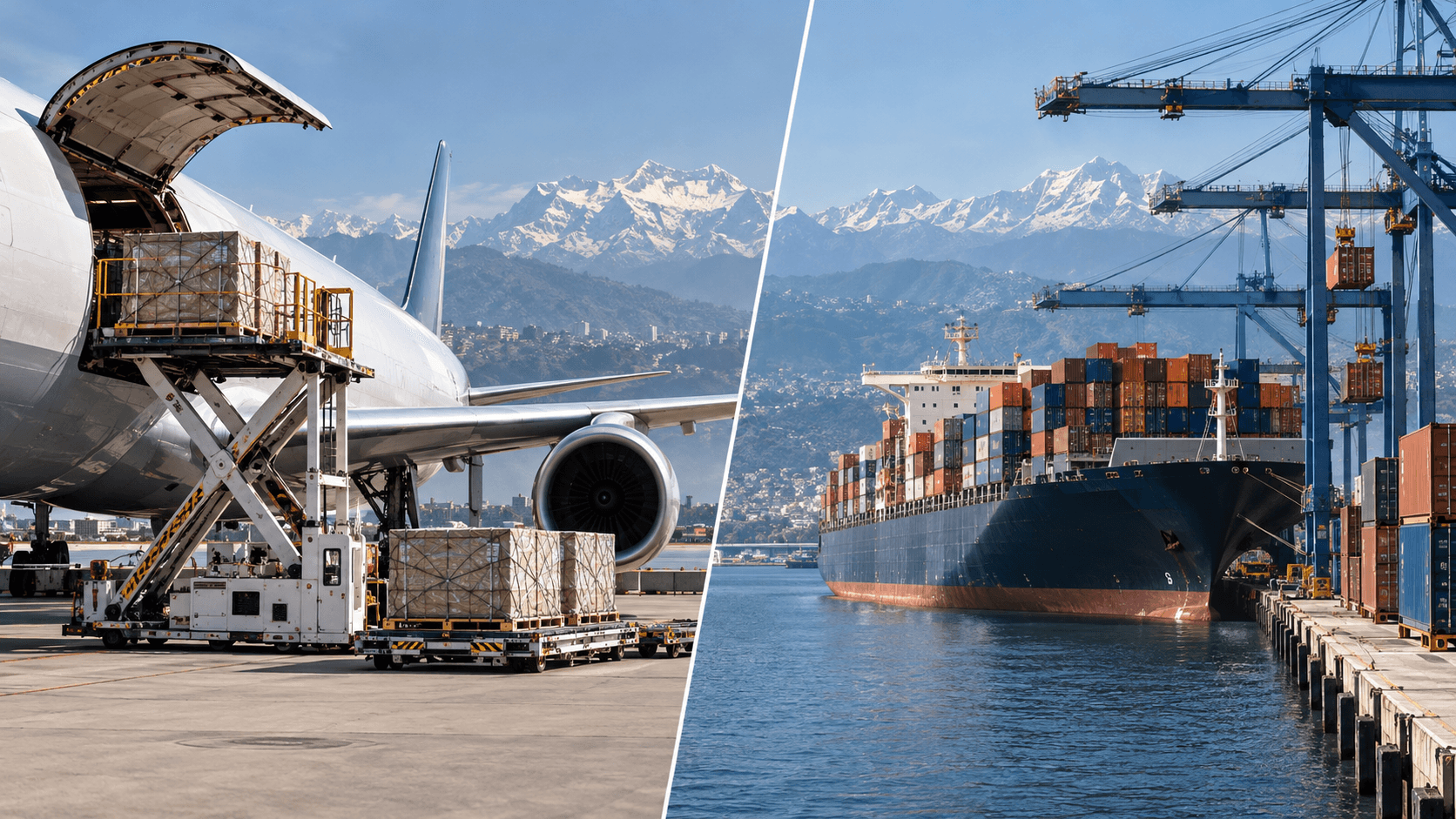
3. Air Freight vs. Sea Freight from Italy to Nepal
Air Freight Air freight is normally the first option to compare for urgent spare parts, samples, electronics, fashion items and other cargo where delivery time matters more than the lowest transport cost. Pickup may begin in Milan, Bologna, Rome, Turin or another Italian city, with departure from an appropriate European gateway and one or more flight connections before Kathmandu. Airlines charge on chargeable weight, which is the greater of actual gross weight and volumetric weight under the carrier’s rules. A light but bulky carton can therefore cost more than its scale weight suggests. Confirm final packed dimensions and gross weight before requesting rates Identify batteries, magnets, liquids, powders, chemicals and other restricted air-cargo contents Check airport acceptance limits for oversized or dense pieces Allow time for export screening, connection and Nepal customs clearance Compare airport-to-airport and door-to-door inclusions separately Sea Freight Sea freight is usually more suitable for machinery, furniture, construction inputs, larger orders and other cargo that can tolerate a longer lead time. Shipments may use Italian gateways such as Genoa, La Spezia, Trieste or another carrier-selected European port, then connect to a permitted Indian gateway for Nepal transit. The ocean rate is only one part of the cost. Origin pickup, terminal handling, documentation, container or LCL charges, transshipment, Indian-port handling, transit movement, Nepal customs, inland trucking and destination handling must all be mapped. Use Sea Sky Cargo’s air freight guide and ocean freight guide to compare the handling and pricing logic in more detail.
| Choose air when | Choose sea when |
|---|---|
| The delivery deadline is tight | The cargo can travel on a longer schedule |
| Cargo is lighter or high-value | Cargo is heavy, bulky or container-friendly |
| Inventory shortage is expensive | Transport cost per unit matters more |
| Airline acceptance is practical | Port and inland handling are practical |
4. How Sea Cargo Reaches Nepal Through India
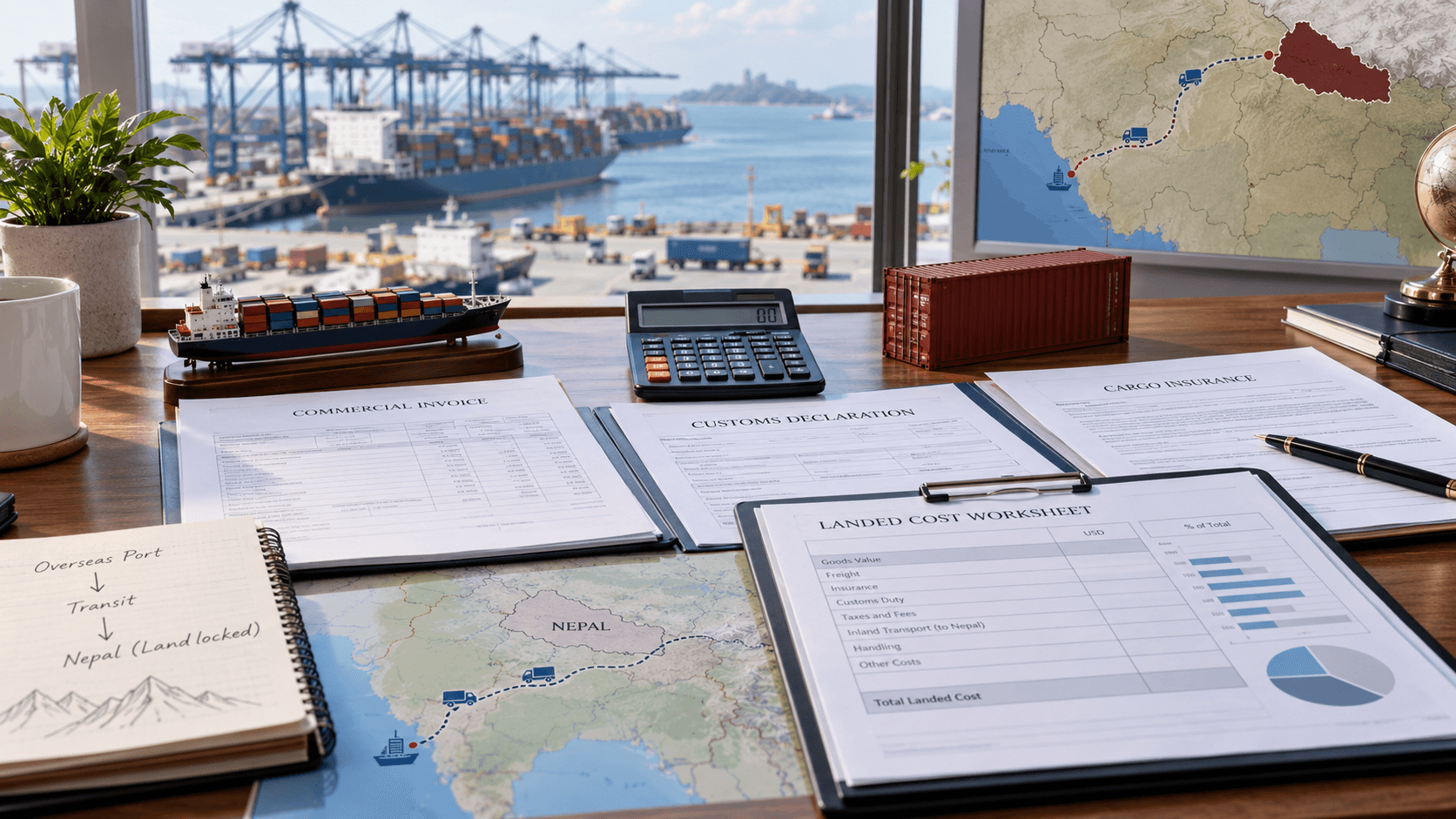
Nepal has no seaport, so Italy-origin ocean cargo needs an Indian gateway and an inland transit plan. The 2023 India–Nepal Treaty of Transit memorandum lists agreed routes and procedures, including movements connected with Kolkata/Haldia and Visakhapatnam. The booked route must match the current carrier service, customs procedure and approved transit corridor. Do not assume every container goes to Birgunj or that every LCL shipment deconsolidates there. Some services may deconsolidate at an Indian CFS, while others may continue under a different contracted transit arrangement. The quotation should name the port, CFS or dry port, border point, transit mode and party responsible for each handoff. The Customs Transit Declaration supports third-country cargo moving through India. The importer and forwarder should agree who prepares or supplies each input before the vessel arrives. Sea Sky Cargo’s port-to-door guide and Birgunj–Kathmandu trucking guide explain the destination sequence.
| Stage | What happens | Planning check |
|---|---|---|
| 1. Italy pickup | Cargo moves from the supplier to the nominated warehouse, airport or seaport | Ready date, Incoterm, export party and package details |
| 2. Export handling | Cargo is received, screened or loaded and export documents are completed | Cut-off, marks, dangerous-goods status and export declaration |
| 3. Ocean transport | The container or LCL shipment moves through the carrier’s scheduled route | Port rotation, transshipment and estimated arrival |
| 4. Indian gateway | Cargo is discharged and prepared for the permitted transit movement | Port, release documents, handling and CTD responsibility |
| 5. India–Nepal transit | Sealed containerized cargo or the contracted shipment moves by an approved rail or road arrangement | Route, seal, carrier, border or dry-port destination |
| 6. Nepal clearance | Nepal Customs reviews the declaration, value, classification, permits, duties and taxes | Importer records and complete shipment file |
| 7. Final delivery | Released cargo moves to Kathmandu or another Nepal destination | Vehicle, unloading, access and delivery appointment |
5. LCL vs. FCL for Italy–Nepal Sea Freight
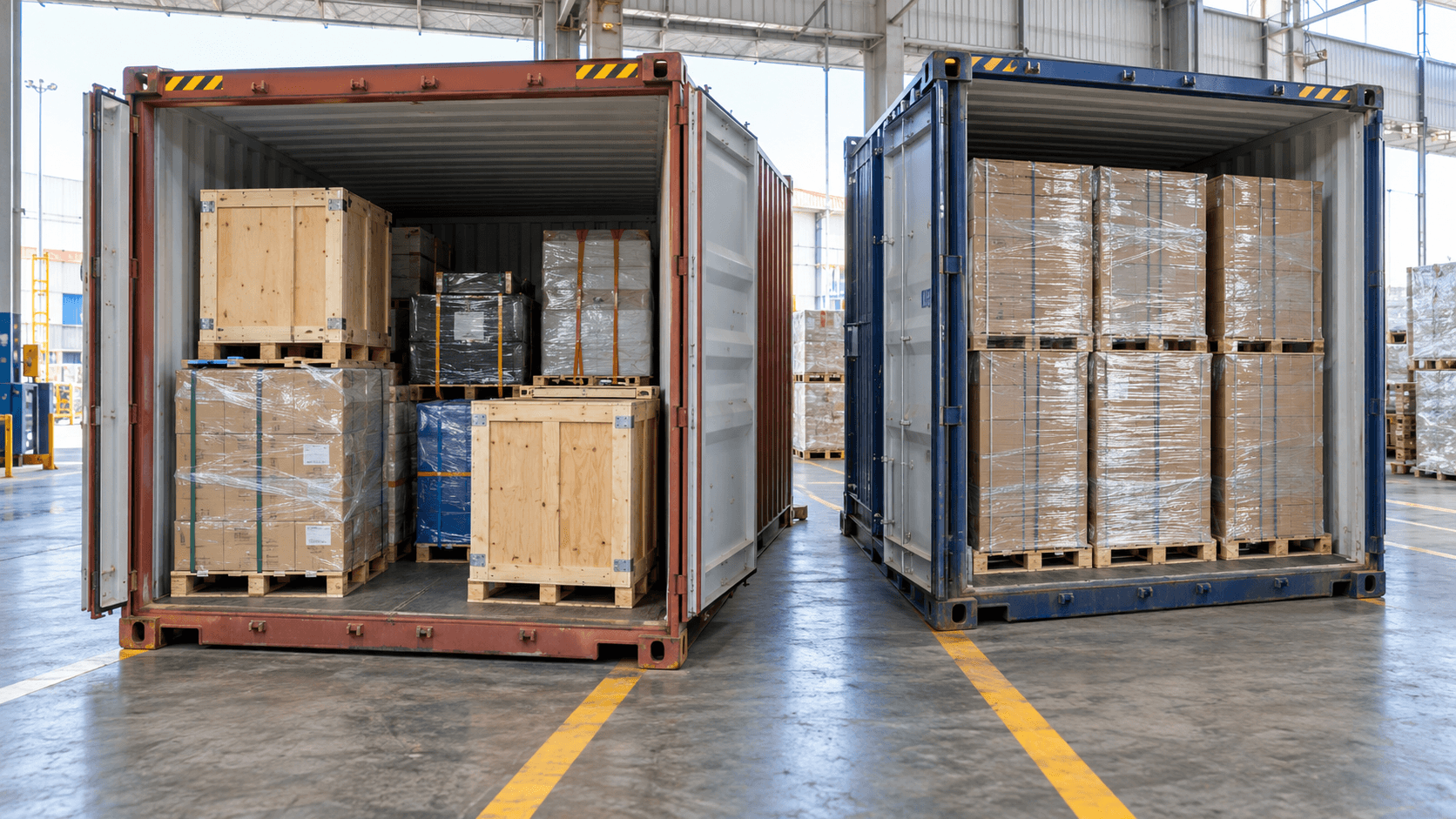
Less than Container Load (LCL) lets several shippers share a container. Full Container Load (FCL) gives one shipper the booked container, subject to the carrier’s terms and weight limits. The better choice depends on total landed cost, cargo compatibility, handling risk, schedule and control—not on one universal CBM breakpoint. When LCL Can Work Well The shipment is well below container capacity Cargo is stackable and compatible with shared handling The supplier can meet the consolidation cut-off The importer accepts a longer and less predictable handling chain All origin and destination charges are visible in the quote When FCL Deserves a Comparison Cargo volume is approaching economical container use The goods are fragile, awkward or should avoid repeated handling One supplier can load and secure the container properly The business needs clearer control over loading and seal records Several LCL shipments can be combined into one planned order Ask for both quotes before deciding. Compare pickup, packing, origin CFS or terminal, ocean freight, destination handling, transit, customs support, unpacking and final delivery. The LCL shipping guide and freight consolidation guide provide deeper checklists.
| Factor | LCL | FCL |
|---|---|---|
| Space | Pay for shipment volume or weight under the tariff | Book the full container |
| Handling | More warehouse and deconsolidation handling | Usually fewer cargo-level handling points after loading |
| Timing | Depends on consolidation and deconsolidation cut-offs | Depends on container availability and sailing schedule |
| Best fit | Smaller, compatible and non-urgent cargo | Larger orders, controlled loading or sensitive cargo |
| Cost comparison | Lower entry cost but more local charge lines | Higher booking cost but can reduce unit cost at sufficient volume |
| Documentation | House and master shipment records may apply | Container booking and seal details apply |
6. Shipping Documents for Italy and Nepal
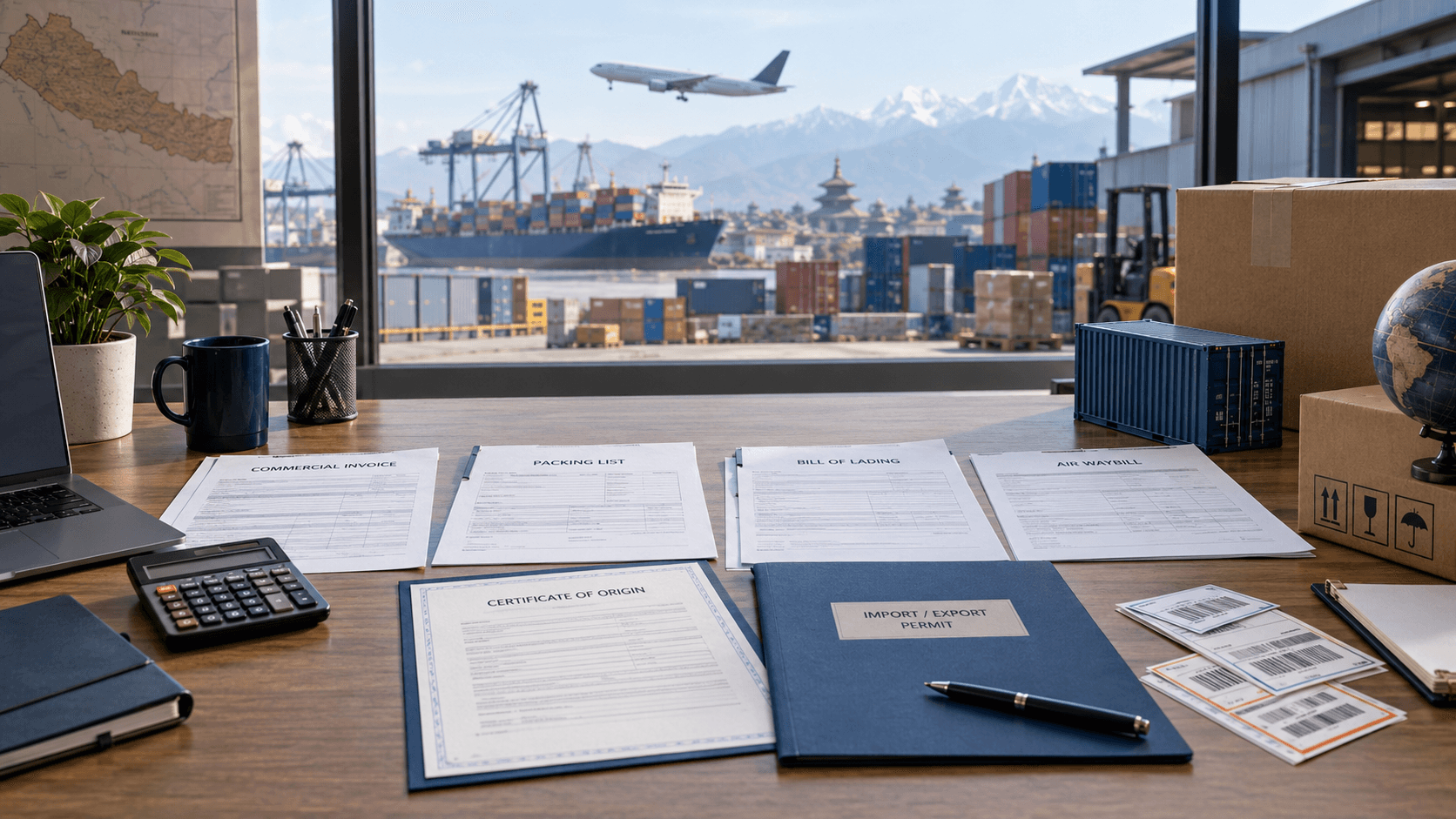
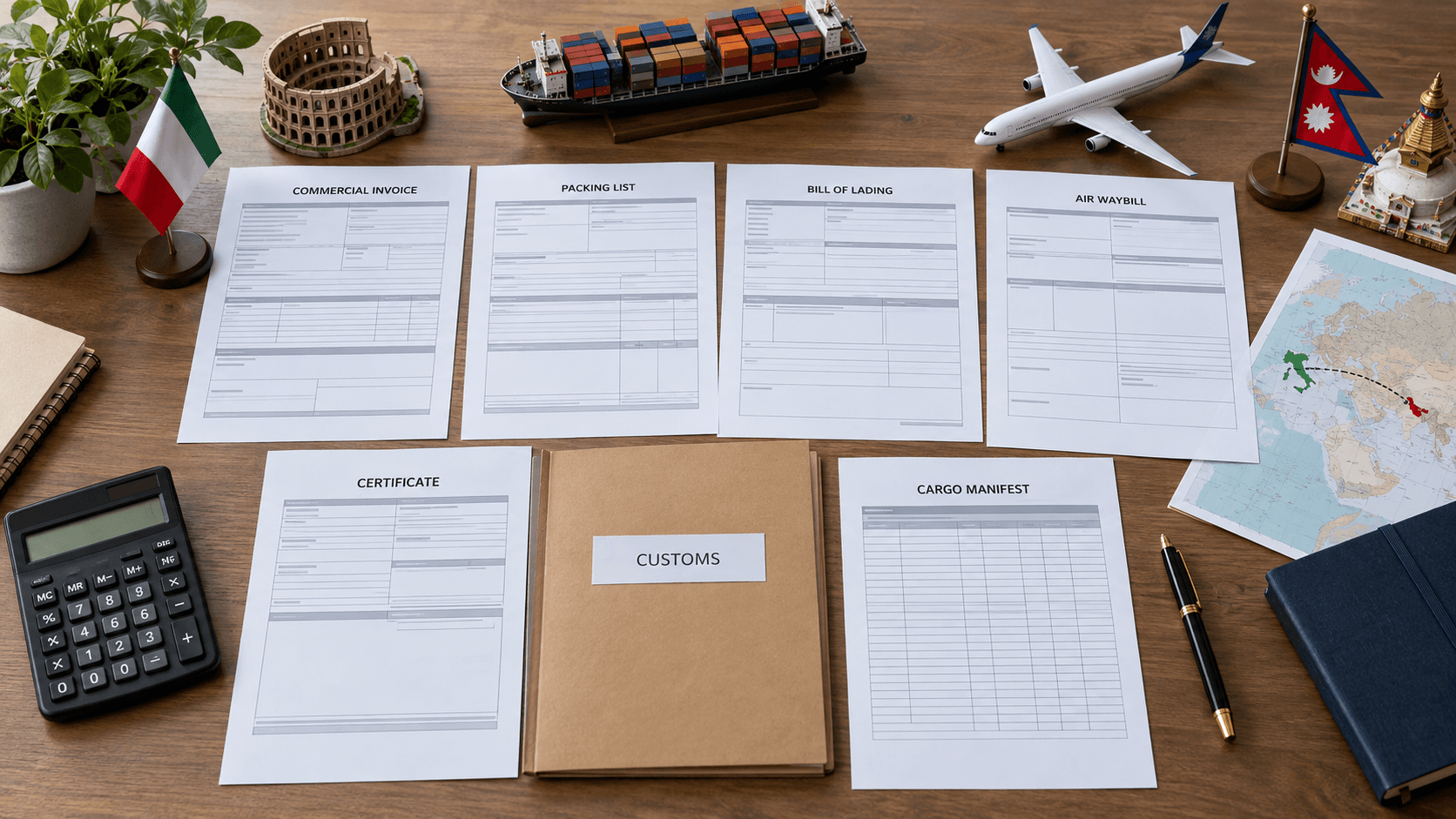
Documents should describe the same transaction consistently. Product name, model, quantity, value, package count, gross and net weight, origin, buyer, seller and transport references should agree across the file.
Common Documents for Importing from Italy to Nepal
- Commercial invoice with seller, buyer, currency, Incoterm and detailed product lines
- Packing list with package count, marks, dimensions, gross weight, net weight and contents
- Bill of lading for sea freight or air waybill for air freight
- Certificate or evidence of origin where required for the goods or transaction
- Insurance certificate when coverage is arranged separately or needs to be evidenced
- Importer PAN/VAT information and Nepal EXIM registration
- Customs-agent authorization and declaration support documents
- Product catalogue, model sheet or technical specification for classification
- Import permit, registration, recommendation or test certificate where the product requires it
- Transit and release documents for sea cargo moving through India
Nepal Customs operates an official Importer Exporter System for EXIM registration. Registration alone does not replace product-specific approval or the customs declaration.
Common Documents for Exporting from Nepal to Italy
- Commercial invoice and detailed packing list
- Air waybill or bill of lading instructions
- Nepal export declaration and exporter registration details
- Origin evidence or statement on origin where a preference claim is available and the rules are met
- Product-specific health, phytosanitary, quality or testing certificates
- Cultural-property permission where goods could fall within protected categories
- Buyer instructions and EU product, packaging, labelling or safety evidence
Nepal is scheduled to graduate from UN least-developed-country status in November 2026. The EU’s Generalised Scheme of Preferences and any applicable transition rules must be checked for the shipment date and HS code. Do not promise duty-free treatment from a generic certificate of origin. Use Access2Markets for product-level EU tariffs, origin rules and formalities.
Sea Sky Cargo’s freight documents checklist explains how to build a consistent shipment file.
Compare Italy–Nepal air and sea freight before booking
Share the cargo type, packed dimensions, supplier location, Incoterm and delivery deadline. Sea Sky Cargo can map the full route and quotation scope.
7. Nepal Customs Duty, VAT and HS Code Planning
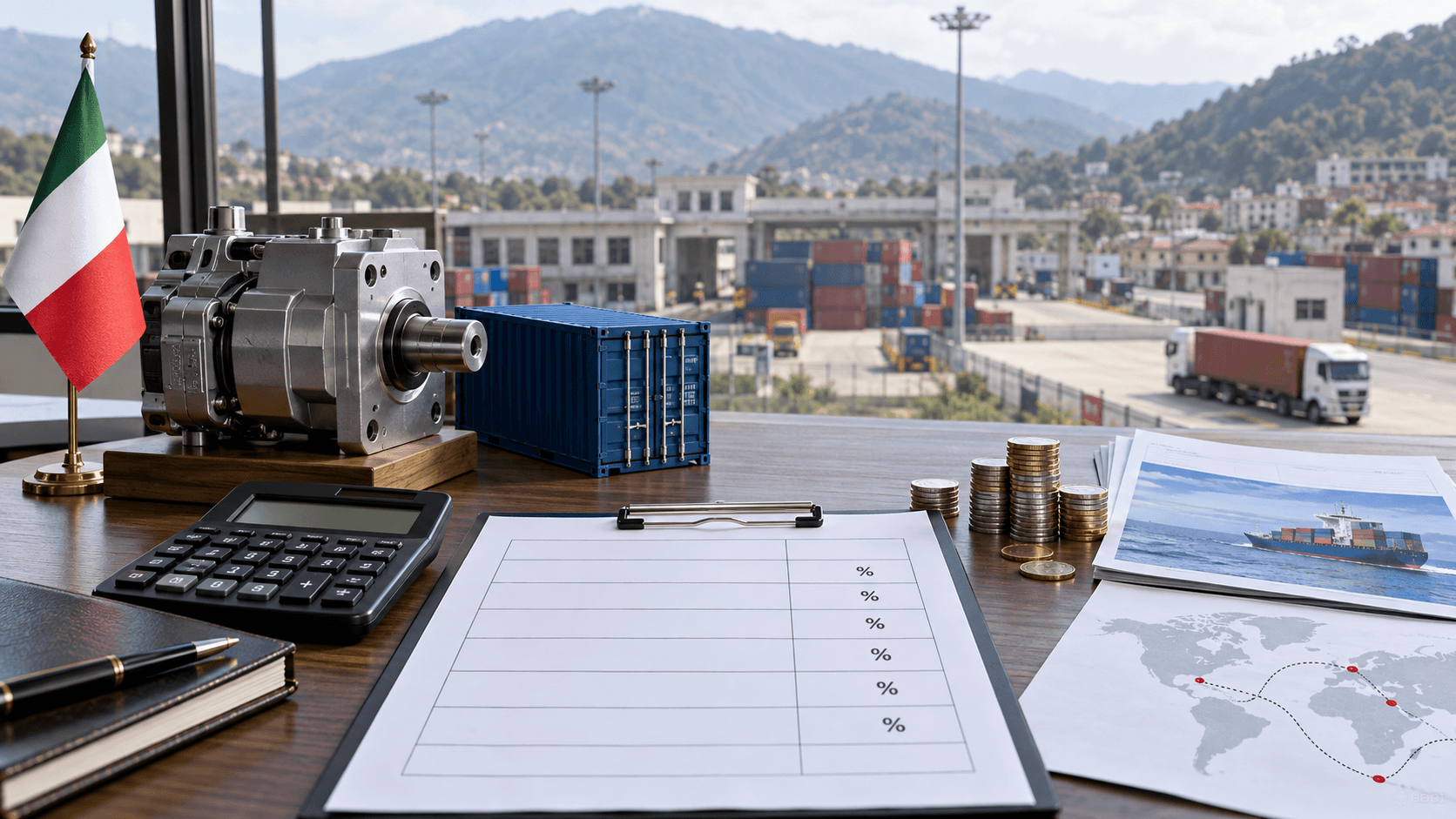
Nepal import tax cannot be estimated safely from a product nickname. Customs duty, VAT, excise and any other levy depend on the current HS code, product characteristics, customs value, origin treatment and fiscal-year rules. The Department of Customs publishes the Integrated Customs Tariff for fiscal year 2083/84. Use that schedule for current planning and confirm the declaration position before dispatch. Final classification, valuation and assessment remain with Nepal Customs. A Hypothetical Calculation This example is arithmetic only. The 10% duty rate is not a promise for machinery or any named product. The example excludes excise, other levies, Indian-port charges, transit costs, customs-service fees, storage, demurrage and final delivery. The actual VAT base can include other applicable taxes or charges under current law. HS Code Checks Before Booking Confirm material, function, model and technical specification Separate products that have materially different classifications Check whether the HS code triggers a permit, standard or restriction Use the same defensible description on the invoice, packing list and permit Keep catalogues, photographs and specifications ready for customs review Use the 2026 Nepal customs tariff guide, landed-cost worksheet and wrong HS code guide before relying on a supplier’s remembered percentage.
| Worksheet line | Illustrative amount |
|---|---|
| Customs value (CIF) | USD 50,000 |
| Illustrative customs duty at 10% | USD 5,000 |
| Illustrative VAT at 13% on CIF plus duty | USD 7,150 |
| Illustrative duty and VAT total | USD 12,150 |
| Illustrative value after duty and VAT | USD 62,150 |
8. Transit Times and the Costs That Change Them
Transit time begins and ends at defined points. A carrier’s airport-to-airport or port-to-port schedule is not the same as supplier-to-warehouse time. Request a quote that separates the planned main-leg transit from origin handling, connections, customs and delivery. These are commercial planning ranges, not service guarantees. A direct-looking itinerary can still change because Nepal sea cargo depends on the vessel network, Indian gateway and inland movement. Ask for the live schedule and cut-off when the cargo is ready. Main Cost Drivers Origin pickup location and access in Italy Final packed weight, volume and dimensions Air chargeable weight or sea container/LCL basis Special handling, dangerous goods or temperature control Italian terminal, warehouse and export charges Airline or shipping-line capacity and seasonal surcharges Transshipment and Indian-port handling Rail or road transit to the Nepal customs point Duty, VAT, excise and product-specific levies Customs examination, storage, demurrage or detention if incurred Final delivery distance, vehicle and unloading requirement Cargo insurance and the chosen insured value Ask whether the quotation is EXW, FCA, FOB, CFR, CIF, DAP or another Incoterm-based scope. A cheap ocean rate can leave large origin or destination costs outside the figure. Use the FOB vs. CIF guide to compare supplier terms.
| Mode | Practical planning range | What can extend it |
|---|---|---|
| Air freight | Often about 5–10 days door to door for ready, standard cargo | Pickup, airline cut-off, connection, capacity, screening, permit or customs query |
| Sea FCL | Often about 40–60 days door to door | Equipment, sailing, transshipment, port handling, transit and customs |
| Sea LCL | Often about 45–70 days door to door | Origin consolidation, sailing, destination deconsolidation, transit and customs |

9. Restricted and Regulated Goods
Check the exact product before pickup. A freight booking confirms transport capacity; it does not prove that the goods may be imported, exported or transited.
Goods That May Need Extra Nepal Approval
- Food, beverages, supplements and alcohol
- Medicines, medical devices and health products
- Wireless, radio and telecommunications equipment
- Seeds, plants, timber, agricultural goods and animal-origin products
- Chemicals, pesticides, dangerous goods and controlled substances
- Vehicles, batteries and certain used goods
- Products subject to Nepal standards, labelling or testing controls
The Department of Food Technology and Quality Control provides official information for food permits, monitoring and food import/export services on the DFTQC website. Other products may involve the Department of Drug Administration, Nepal Telecommunications Authority, Plant Quarantine and Pesticide Management Centre, Department of Archaeology or another competent agency.
Goods That Need Care When Exporting to Italy
- Food, tea, coffee, spices, plants and animal-origin products
- Organic products or goods making protected claims
- Textiles and consumer goods subject to EU labelling or safety rules
- Wood packaging requiring ISPM 15 compliance
- Antiques, cultural property and protected religious objects
- Wildlife-derived material controlled by CITES
- Batteries, chemicals and dangerous goods
EU requirements depend on the Combined Nomenclature code, composition, intended use and importer arrangements. The Italian buyer should confirm the destination requirements through Access2Markets and the relevant Italian authority before the cargo leaves Nepal.
Sea Sky Cargo’s Nepal import permit guide is a useful preparation checklist, but shipment approval comes from the responsible authority.
10. How Sea Sky Cargo Coordinates Italy–Nepal Freight
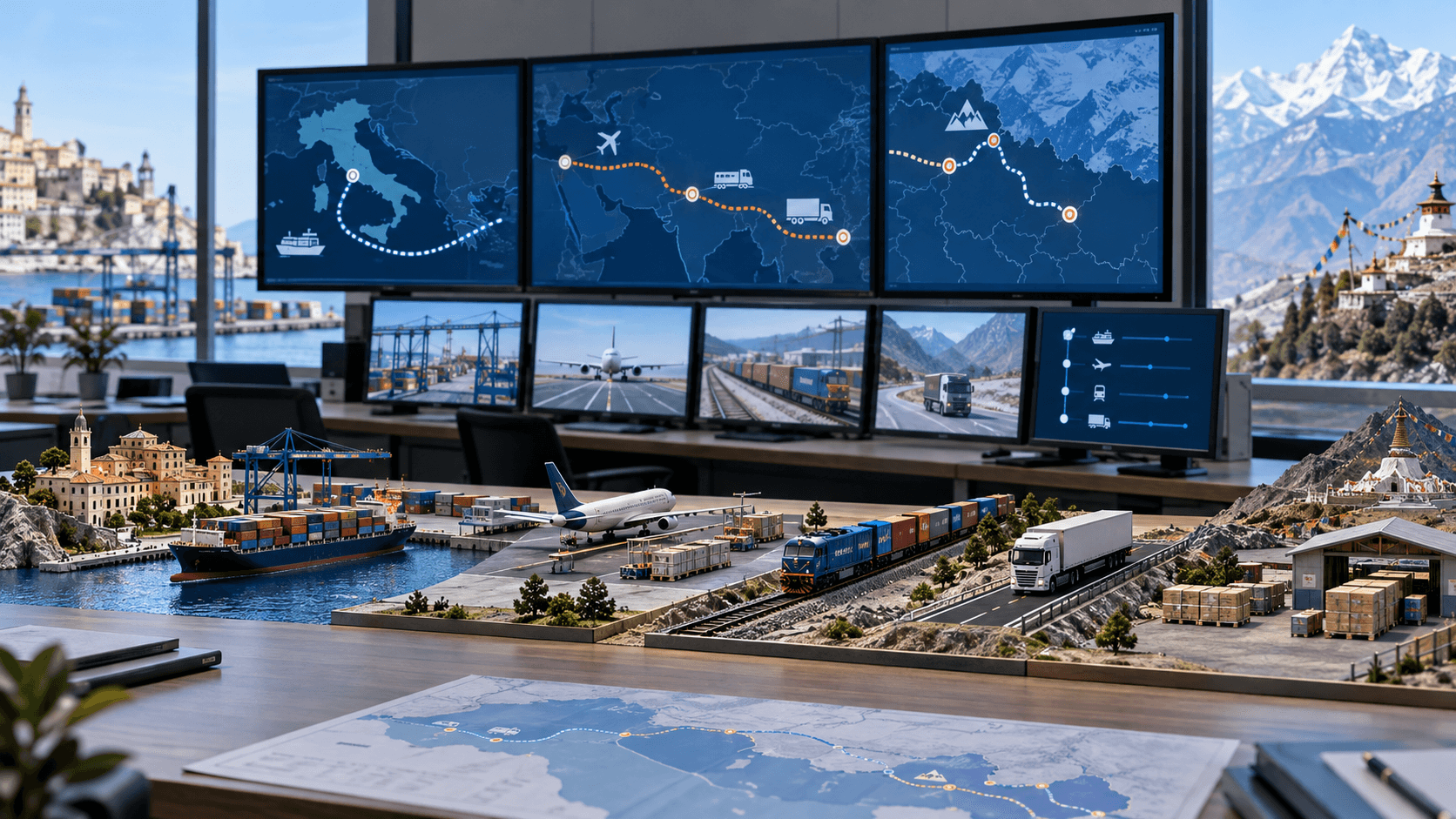
A workable Italy–Nepal shipment assigns responsibility before the supplier releases the goods. Sea Sky Cargo can coordinate the parties and handoffs while the importer, exporter and competent authorities retain their legal responsibilities. For a useful quotation, send: Supplier pickup address and Italian postal code Nepal delivery address Detailed product description and HS code if known Package count, dimensions and gross weight Cargo-ready date and required arrival date Commercial value, currency and Incoterm Stackability, fragility and special handling needs Battery, liquid, chemical or dangerous-goods information Available permits, certificates and product specifications Sea Sky can then compare the full route rather than quoting a disconnected freight leg. The aim is to expose assumptions, handoffs and exclusions before cargo begins moving.
| Stage | Sea Sky coordination |
|---|---|
| Shipment review | Collect product, package, value, origin, Incoterm, deadline and permit information |
| Route comparison | Compare air, sea LCL and sea FCL around the cargo profile |
| Italy origin | Coordinate supplier contact, pickup, warehouse or terminal delivery and export handoff |
| Carrier booking | Confirm capacity, cut-off, routing, cargo acceptance and document instructions |
| Document review | Check invoice, packing list, transport details and permit readiness for consistency |
| Transit planning | Map Indian gateway, CTD inputs, rail or road handoff and Nepal customs point |
| Nepal clearance | Coordinate with the importer and licensed customs representatives for declaration and release |
| Final delivery | Arrange the appropriate truck, appointment, unloading plan and proof of delivery |
Frequently Asked Questions
How long does shipping from Italy to Nepal take? Ready standard air cargo is often planned around 5–10 days door to door, while sea cargo commonly needs roughly 40–70 days depending on FCL or LCL, sailing, transshipment, Indian transit and customs. Confirm the live schedule for the actual shipment.
Is air or sea freight cheaper from Italy to Nepal? Sea freight usually offers a lower transport cost for heavy or bulky cargo. Air can produce a better total outcome for urgent, lighter or high-value goods when inventory delay is costly.
Can Italy-to-Nepal sea cargo use Birgunj ICD? Some services use a permitted Indian gateway and onward transit toward Birgunj, but the exact port, CFS, route and customs point depend on the booked service. Confirm them in the quotation.
Which Italian ports can be used? Carrier options may include Genoa, La Spezia, Trieste or another European gateway. The best origin port depends on supplier location, equipment, schedule, cargo acceptance and the onward Indian-port service.
Is LCL always best below a fixed CBM figure? No. Compare LCL and FCL when volume grows because local charges, handling, schedule, cargo sensitivity and container use can change the total cost.
What documents are essential? A commercial invoice, packing list and bill of lading or air waybill are core records. Origin evidence, insurance, EXIM details, permits, technical information and transit documents may also be required.
How much customs duty applies in Nepal? The rate depends on the current HS code, customs value and applicable fiscal-year rules. Check the 2083/84 Integrated Customs Tariff and confirm the exact product before dispatch.
Can Nepali goods receive preferential entry into Italy? A preference depends on the EU scheme in force on the import date, the product, origin rules and correct proof. Nepal’s November 2026 LDC graduation makes shipment-date verification especially important.
Can Sea Sky Cargo arrange pickup in Italy and delivery in Nepal? Sea Sky can coordinate origin pickup, air or sea booking, document review, Indian transit where needed, Nepal customs handoffs and final delivery based on the agreed service scope.
Shipping cargo between Italy and Nepal?
Sea Sky Cargo can coordinate supplier pickup, air or sea freight, document review, Indian transit, Nepal customs handoffs and final delivery.