
1. What Is Freight Consolidation?
For many importers and exporters in Nepal, a small or medium shipment is expensive when booked as a standalone movement. Freight consolidation—also called groupage shipping—combines several smaller consignments into one larger transport unit so each customer buys only the space or chargeable capacity used.
The idea appears under several names:
- Groupage shipping
- Consolidated cargo
- LCL or Less than Container Load consolidation for sea freight
- Consolidated air cargo
- Road groupage or part-load transport
A consolidator normally receives cargo at an origin warehouse or Container Freight Station (CFS). Each consignment remains identifiable through marks, labels and documents, while the combined load moves under a shared master transport arrangement. At the nominated destination handling point, the load is separated and each shipment continues through its own customs and delivery process.
Consolidation is broader than sea LCL. LCL is one sea-freight form of consolidation; air and road services can use the same shared-capacity principle. Sea Sky Cargo’s LCL shipping guide explains the sea-specific process in more detail.
The commercial goal is simple: avoid paying for unused capacity. The operating process is less simple because every shipment still needs compatible cargo, accurate measurements, complete documents, secure packing, cut-off coordination and a clear handoff plan.

2. Why Freight Consolidation Matters in Nepal
Nepal’s geography makes the full transport chain important. Sea-linked cargo usually depends on an overseas port, an Indian gateway and onward transit before it reaches a Nepal customs point. The official Birgunj dry-port overview confirms that the Sirsiya facility is connected to Raxaul through the Indian rail network and includes customs, storage and rail infrastructure.
Consolidation can help when:
- An SME does not have enough cargo to fill a 20-foot or 40-foot container
- A retailer or e-commerce seller needs regular replenishment instead of one large seasonal shipment
- An importer buys smaller batches from several suppliers
- Air cargo is urgent but too small for a dedicated booking
- Regional cargo does not justify a full truck
- Inventory risk makes smaller, more frequent shipments preferable
The benefit is access to shared capacity. A business can use scheduled freight services without waiting until it has enough goods for a full container, truck or large air allotment.
That benefit comes with extra coordination. Cargo may wait for a consolidation cut-off, move through more handling points and depend on the documents of each participating shipment being ready. Consolidation is a planning tool, not a shortcut around customs or product rules.
For companies replenishing online inventory from several markets, the cross-border e-commerce logistics guide provides a broader sourcing and fulfilment context.

3. How Groupage Shipping Works Step by Step
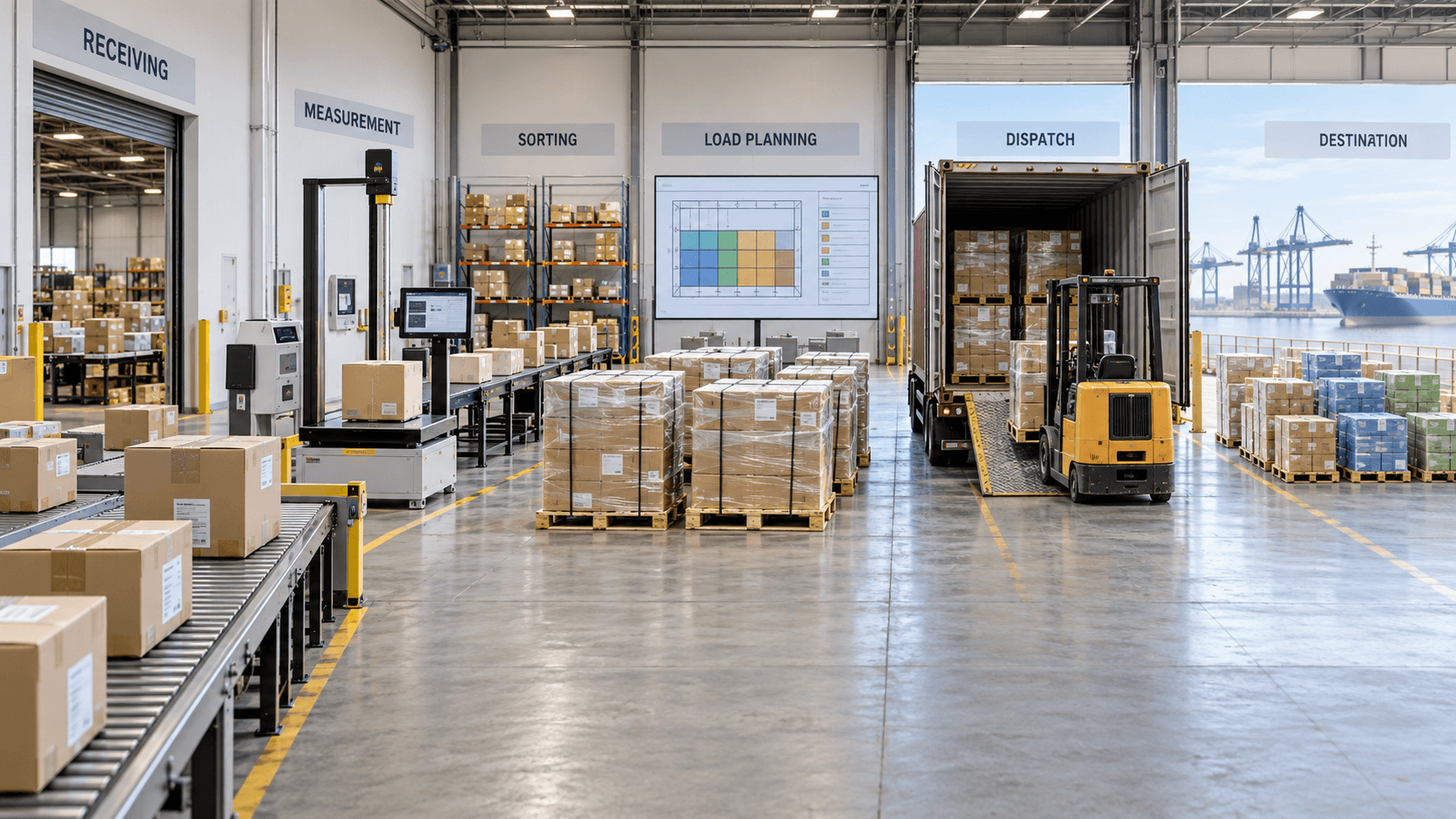
The physical cargo may travel together, but the commercial invoice, packing list, classification details, permits and consignee instructions remain shipment-specific. Combining boxes does not automatically combine customs liability or eliminate the need for separate records. Ask where consolidation and deconsolidation occur. For sea freight, some services deconsolidate at an Indian-port CFS and arrange onward movement for each shipment; others may keep a container intact for transit to a Nepal dry port under the service’s contract and customs procedure. The quotation should name the actual route and handling points. Nepal Customs describes the Customs Transit Declaration as the record used for third-country cargo moving through Indian territory to or from a designated Nepal customs point. The Birgunj Customs FAQ provides the official explanation.
| Step | What happens | What the shipper must confirm |
|---|---|---|
| 1. Booking and supplier plan | The forwarder confirms the route, cut-off, cargo acceptance and receiving warehouse | Supplier locations, ready dates, Incoterms, package data and special handling |
| 2. Origin collection | Individual consignments arrive at the consolidation warehouse or CFS | Every package is marked and matched to its invoice and packing list |
| 3. Measurement and screening | Cargo is weighed, measured and checked for visible condition and acceptance restrictions | Final weight, dimensions, CBM, commodity and dangerous-goods status |
| 4. Sorting and load planning | Compatible cargo is grouped by destination, mode, urgency and handling needs | Stackability, segregation, temperature and moisture requirements |
| 5. Consolidation | Sea cargo enters a shared container, air cargo is built into a consolidated shipment, or road cargo shares truck space | Cargo marks and partitions preserve each consignment’s identity |
| 6. Main transport | The combined load moves under the booked sea, air or road service | Tracking milestones and handoff responsibilities |
| 7. Deconsolidation | The load is opened at the contracted CFS, terminal, warehouse or other handling point | Release documents, fees and destination handling location |
| 8. Customs and delivery | Each consignment follows its applicable declaration, assessment, release and last-mile delivery process | Importer records, permits, duties, taxes and delivery instructions |
4. Sea LCL Consolidation for Nepal
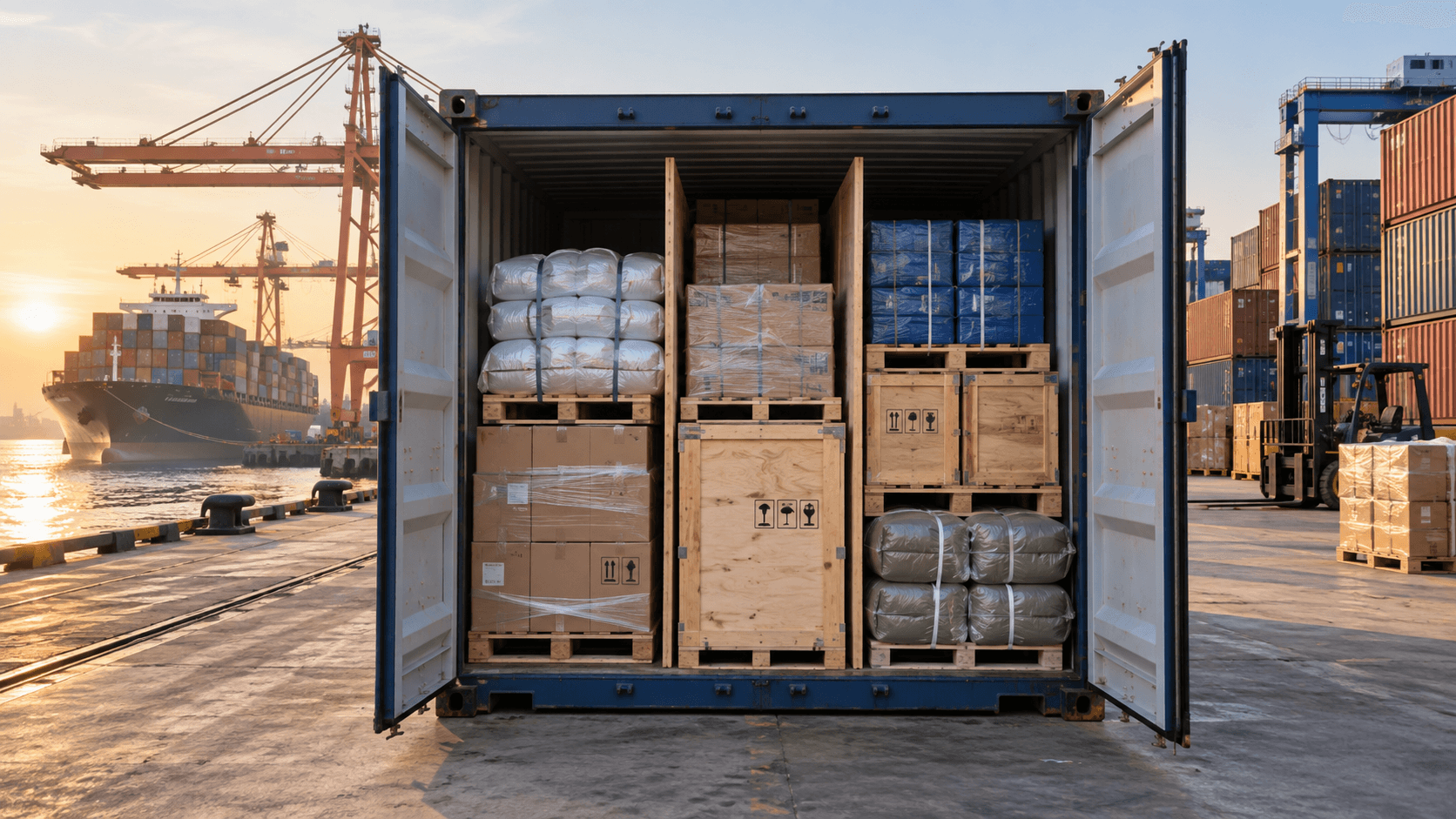
Sea LCL is designed for cargo that is too large for parcel or courier movement but does not efficiently fill a container. Several shippers share a 20-foot or 40-foot container, while the consolidator manages the master booking and the individual house consignments.
Sea LCL Is Often Suitable For
- Non-urgent or planned inventory
- Heavy or bulky cargo that is expensive by air
- Regular supplier batches below full-container volume
- Seasonal stock and product launches with controlled lead time
- Multiple suppliers whose cargo can reach one origin consolidation point
How Sea LCL Is Charged
Ocean LCL freight is commonly rated on a weight-or-measure basis, often using the greater of volume and weight under the provider’s tariff, subject to minimum charges. The full quotation can also include origin pickup, receiving, CFS handling, documentation, export services, ocean freight, destination handling, deconsolidation, transit movement and Nepal delivery.
Measure every final package before booking. The CBM calculation guide explains how length, width and height become the volume used in a sea-freight estimate.
Route and Handoff Questions to Ask
- Which origin warehouse or CFS receives the cargo?
- What is the cargo cut-off for the planned sailing?
- Which port and CFS handle the destination side?
- Does the quoted service deconsolidate at the Indian port or move onward under another arrangement?
- Which charges are prepaid and which are collect?
- Who arranges transit, Nepal customs clearance and final delivery?
- How much free time applies before storage or other delay charges begin?
The official Sirsiya dry-port introduction confirms the rail connection and facilities at Birgunj, but a dry port’s existence does not mean every LCL service follows the same route. Confirm the booked product, not a generic map.
5. Air Cargo Consolidation for Nepal
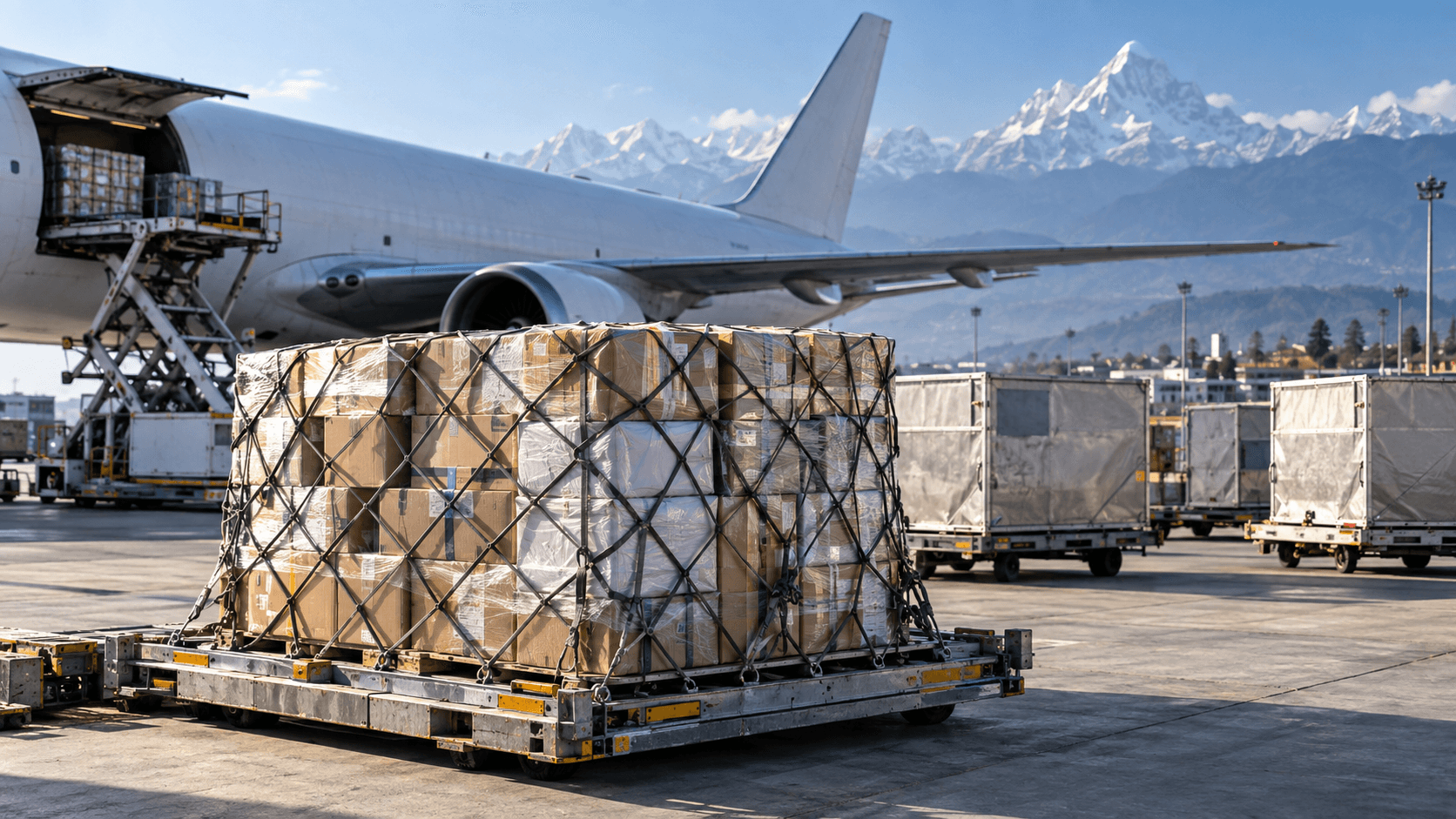
Air consolidation combines several consignments into a larger air-freight booking. Cargo may be assembled on a pallet, in a Unit Load Device or as a consolidated loose-cargo movement, depending on the airline, aircraft, route and handling provider.
Air Consolidation Is Often Suitable For
- Urgent inventory that does not justify a dedicated charter or premium direct booking
- High-value, low-weight goods
- Electronics, garments, samples and spare parts
- E-commerce and retail replenishment
- A time-sensitive portion of a larger order
Air pricing depends on chargeable weight. The chargeable figure is normally the greater of actual gross weight and volumetric weight under the carrier’s applicable divisor and rules. Dense cargo may price on actual weight, while light bulky cartons can price on volume.
A consolidated air shipment may cost less per kilogram than a small standalone booking, but it can add time for receiving, build-up, flight scheduling, breakdown and release. Do not promise a fixed door-to-door transit time until the origin cut-off, flight routing, arrival handling and customs plan are confirmed.
Check aircraft and ULD limits for oversized or dense pieces. Sea Sky Cargo’s air cargo containers and pallets guide explains common ULD and pallet considerations.
At destination, each consignment still needs the correct consignee details, invoice, packing list, classification support, permits and release instructions. The consolidated master movement does not replace these shipment-level requirements.
6. Road Groupage for Regional Cargo
Road groupage combines consignments from multiple shippers into one truck or line-haul movement. It can suit smaller loads from India and other regional origins when a full truck is unnecessary.
Road Groupage Is Often Suitable For
- Small pallet and carton shipments
- Regular stock from Indian suppliers
- Cargo collected from several suppliers near one regional hub
- Door-to-door movements with planned border and customs handoffs
- Loads that need more flexibility than a fixed sea schedule
Pricing may use weight, volume, pallet positions, truck space, origin and destination zones, border handling and minimum charges. A low line-haul rate can become expensive when pickup, transshipment, unloading, border fees and delivery are excluded, so compare the complete door-to-door scope.
Cargo compatibility matters. Food, chemicals, batteries, fragile goods, temperature-sensitive products and high-value items may require separation or a different service. Strong restraint and stackability rules are especially important because mixed cargo experiences repeated loading and road vibration.
Northern road routes can be affected by border status, road capacity and seasonal disruption. Verify the currently available route, vehicle type and handoff plan rather than assuming every China–Nepal corridor accepts groupage cargo at all times.

Compare shared and dedicated freight before booking
Share your supplier locations, cargo measurements, ready dates and delivery deadline. Sea Sky Cargo can compare sea LCL, consolidated air, road groupage and dedicated options.
7. Consolidation Costs and Business Benefits
Consolidation can reduce the amount paid for unused capacity, but the total price includes more than the shared line-haul rate. Build the quotation from every handoff. Potential Benefits Pay for the space or chargeable capacity used instead of an entire unit Use regular scheduled services for smaller volumes Combine supplier orders at one hub Replenish inventory in smaller batches Compare sea, air and road options for the same supply plan Reduce coordination work when one forwarder controls the origin file and handoffs Simplified coordination does not mean simplified documents. Every supplier should issue accurate commercial records, and the forwarder should map each package to the correct house consignment and consignee. Compare the quote with the total landed cost, not freight alone. The landed-cost worksheet shows how freight, handling, duty, VAT, clearance and delivery fit into one model.
| Cost layer | Typical items to confirm |
|---|---|
| Origin | Supplier pickup, warehouse receiving, weighing, measurement, palletization, storage and export handling |
| Consolidation | CFS or terminal handling, sorting, documentation, loading, security and consolidation fee |
| Main freight | Ocean weight/measure charge, air chargeable weight or road groupage line haul |
| Destination | Terminal or CFS handling, breakdown, deconsolidation, release and storage |
| Customs and transit | Transit records, customs-agent fees, duties, taxes, permits and inspections where applicable |
| Final delivery | Inland transport, unloading, forklift, site access and proof of delivery |

8. Consolidation vs. Full Container or Dedicated Air
There is no universal volume at which consolidation stops being economical. A “15–20 CBM” rule of thumb can be misleading because the answer changes with route, cargo density, container availability, origin and destination charges, free time, handling risk and the urgency of the goods. Use Consolidation When The complete shared-service quote is lower for the required delivery date You need smaller and more frequent replenishment Several suppliers can deliver to one consolidation hub The cargo can tolerate the extra handling and scheduled cut-off Consider Dedicated Capacity When The shipment fills or nearly fills the available unit Control over loading, sealing and dispatch is valuable Cargo is fragile, incompatible, oversized or difficult to stack Destination consolidation charges erase the line-haul saving A fixed operational deadline justifies the premium Ask the forwarder for side-by-side scenarios using the same endpoint and service scope. A cheap origin rate and a full door-to-door price are not comparable.
| Decision factor | Consolidation | Full container or dedicated air |
|---|---|---|
| Volume | Small or medium consignments using part of the capacity | Large load that fills or nearly fills the transport unit |
| Schedule | Depends on receiving and consolidation cut-offs | More control over dispatch once cargo and equipment are ready |
| Handling | More origin and destination handling points | Fewer cargo-level handoffs when sealed for one shipper |
| Cost structure | Shared line-haul capacity plus consolidation and deconsolidation charges | Full equipment or booking cost, which may be efficient at higher volume |
| Supplier plan | Useful for combining several small orders | Useful when one supplier or coordinated load can fill the unit |
| Cargo sensitivity | Best for compatible, well-packed cargo | More control for sensitive, high-value or difficult cargo |
| Urgency | Scheduled shared service | Dedicated or premium service may suit exceptional deadlines |
9. Packaging, Documents and Common Consolidation Risks
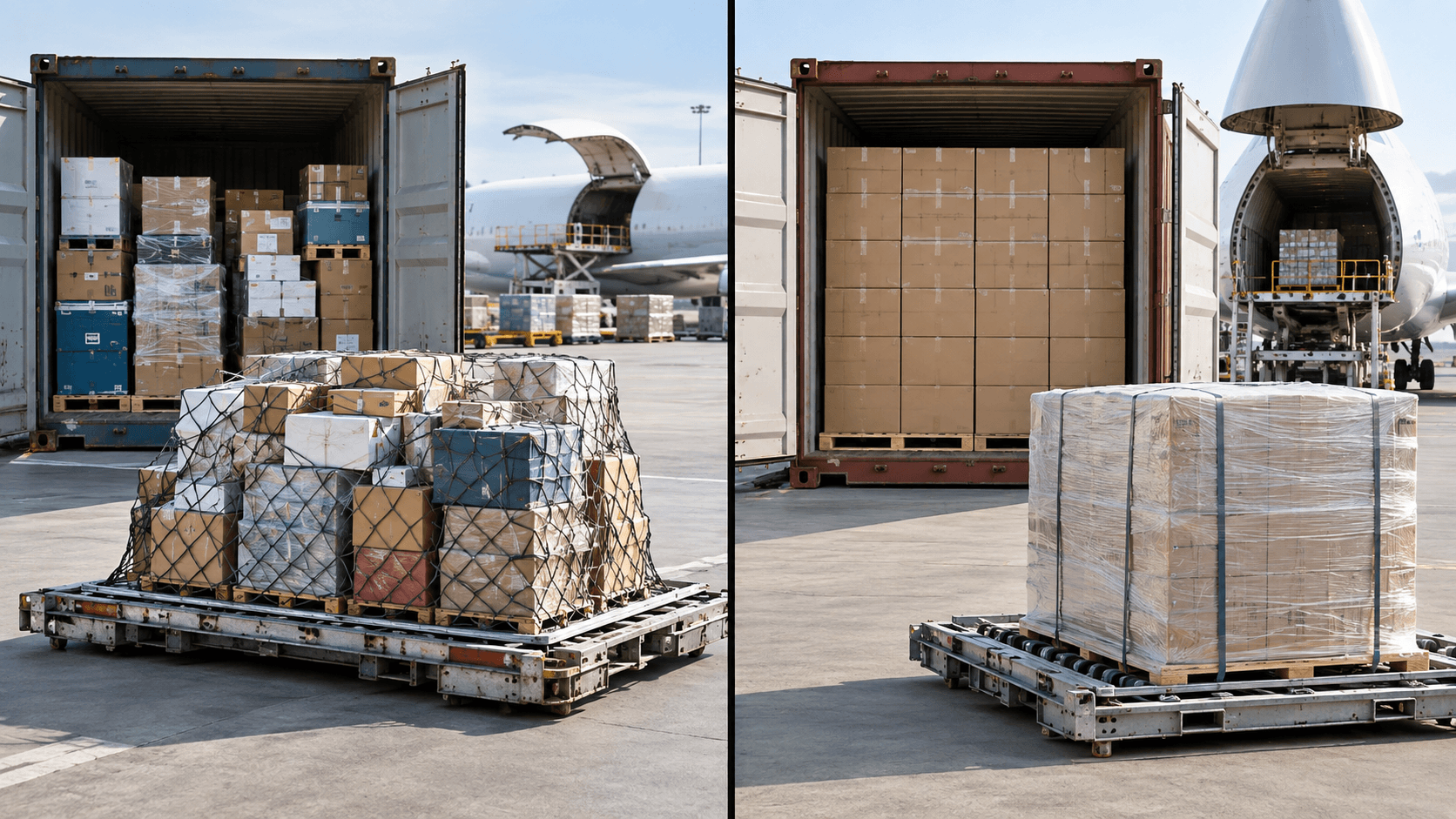
Protect Cargo for Repeated Handling Use strong, stackable cartons or suitable crates Add corner protection, pallet wrap and straps Protect cargo from moisture and condensation on long routes Keep heavy items below light or crushable packages Mark non-stackable, fragile or orientation-sensitive cargo clearly Use tamper-evident seals where appropriate Photograph packing and package condition before handover Keep Every Consignment Identifiable Each package should connect to the correct shipper, consignee, invoice, packing list and transport reference. Inconsistent marks can cause cargo to be assigned to the wrong house shipment during deconsolidation. Use the freight-document checklist to align names, quantities, package counts, weights, values, origin records and permits before cargo enters the shared load. Common Risks and Controls A problem with one consignment can affect shared handling or release timing, although the exact impact depends on where the issue occurs and how the service separates cargo and documents. Early document review and clear escalation contacts reduce that exposure.
| Risk | Practical control |
|---|---|
| Waiting for consolidation | Book against a stated cut-off and ask whether departure requires a minimum load |
| Damage during handling | Upgrade packaging, disclose non-stackable cargo and document condition |
| Measurement adjustment | Provide final dimensions and allow warehouse verification before the quote is treated as final |
| Incompatible cargo | Disclose commodity, batteries, chemicals, temperature and odor or contamination risks |
| Document delay | Review every house shipment before the master load closes |
| Limited visibility | Agree on milestones for receipt, consolidation, departure, arrival, deconsolidation and delivery |
| Destination surprise charges | Request itemized origin, freight, transit, destination and delivery amounts |

10. How Sea Sky Cargo Plans Freight Consolidation
Sea Sky Cargo can help importers and exporters compare sea LCL, consolidated air cargo, road groupage and dedicated options for Nepal-linked shipments. A workable plan can include:
- Supplier pickup and origin-warehouse coordination
- Cargo measurement and chargeable-weight checks
- Compatibility and special-handling review
- Consolidation cut-off and departure planning
- House and master document coordination
- Indian-port, transit, airport or border handoff planning
- Customs-clearance coordination for each consignment
- Deconsolidation and final delivery
- An itemized estimate covering origin, freight, destination and last mile
For multiple suppliers, share each supplier’s location, cargo-ready date, invoice, packing list, package count, dimensions, gross weight, commodity and Incoterm. Sea Sky can then test whether one hub and one planned departure improve the overall result.
For a route comparison, also provide the required delivery date and the consequence of delay. The lowest transport price is not the best plan if it creates a stockout or misses a sales window.
Freight charges, schedules, routing and cargo acceptance depend on current provider terms and operating conditions. Customs treatment remains subject to the actual goods, documents and responsible authorities.
Want to reduce freight costs with consolidation? Sea Sky Cargo can design a groupage plan for sea LCL, air cargo or road freight and coordinate the shipment from origin pickup through delivery to the agreed Nepal destination.

Frequently Asked Questions
Is freight consolidation the same as LCL shipping? LCL is a sea-freight form of consolidation. Freight consolidation also includes shared air cargo and road groupage services.
Is there a minimum shipment size for groupage cargo? Minimum charges and acceptance limits depend on the consolidator, route, commodity and mode. Ask for the service’s minimum billable weight or volume before booking.
Can I consolidate purchases from several suppliers? Yes, when the suppliers can deliver to the nominated hub before cut-off and every package has matching marks and documents. Different origins may require separate collection plans.
Does consolidated cargo use one customs declaration for every importer? Sharing transport space does not automatically combine customs liability. Each consignment normally retains its own commercial documents and follows the declaration and clearance process applicable to it.
Is consolidation always cheaper than a full container? No. Compare the complete origin-to-destination cost. At higher volumes, destination handling and deconsolidation charges can make a full container more economical.
How long does consolidated freight take to reach Nepal? Transit depends on the origin receiving period, consolidation cut-off, carrier schedule, route, port or airport handling, customs and final delivery. Request a shipment-specific plan rather than relying on a fixed generic estimate.
Can dangerous goods or temperature-sensitive cargo be consolidated? Only when the carrier and consolidator accept the commodity and the packing, declarations, segregation and handling controls satisfy the applicable requirements. Some cargo needs a specialized or dedicated service.
How can I reduce damage risk in groupage shipping? Use strong stackable packaging, disclose handling restrictions, protect against moisture, label every package consistently and record its condition before handover.

Reduce freight costs with the right consolidation plan
Sea Sky Cargo can coordinate supplier pickups, consolidation, customs handoffs and delivery for small and medium shipments moving to Nepal.
Related posts
1970-01-01
Sea + Air Freight: How SeaSky Helps Businesses Ship Smarter

2026-10-06
Freight Forwarding Documents in Nepal: Complete Import and Export Checklist

2026-10-05
Landed Cost in Nepal: A Step-by-Step Import Cost Worksheet
2026-10-04