Custom Clearance 2083 in Nepal: What Importers and Exporters Need to Know
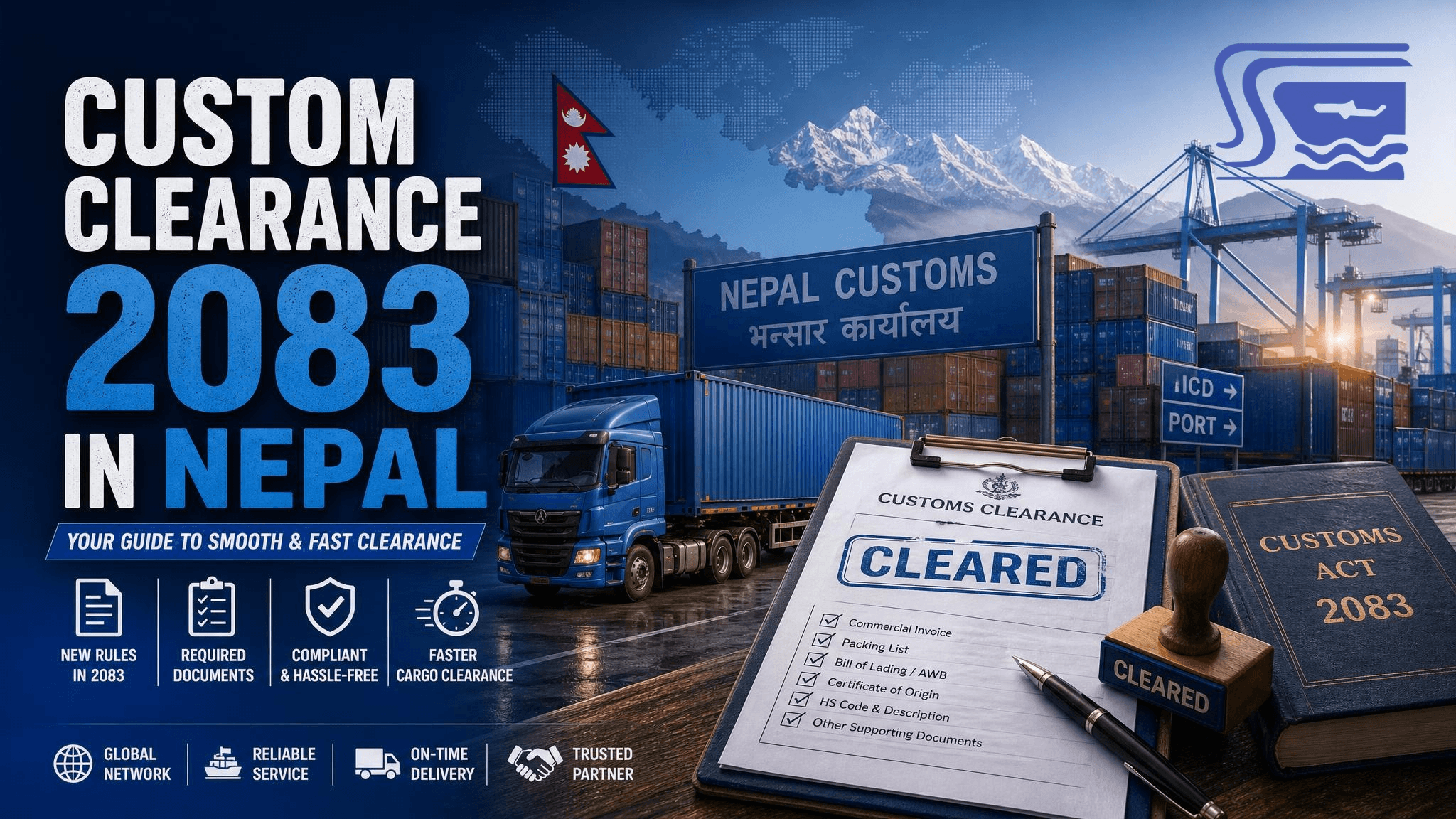
Nepal’s customs clearance system in 2083 is designed to be more digital, risk-based, and predictable than the old framework. The new Customs Regulation 2083 replaces the earlier 2064 regulation and introduces changes such as selectivity channels, advance rulings, trusted trader treatment, and more structured customs valuation procedures.
For businesses, this matters because customs clearance is no longer just a document-checking step at the border. It is now more closely tied to risk profiling, digital systems, pre-arrival planning, and correct product classification from the start.
What changed in 2083
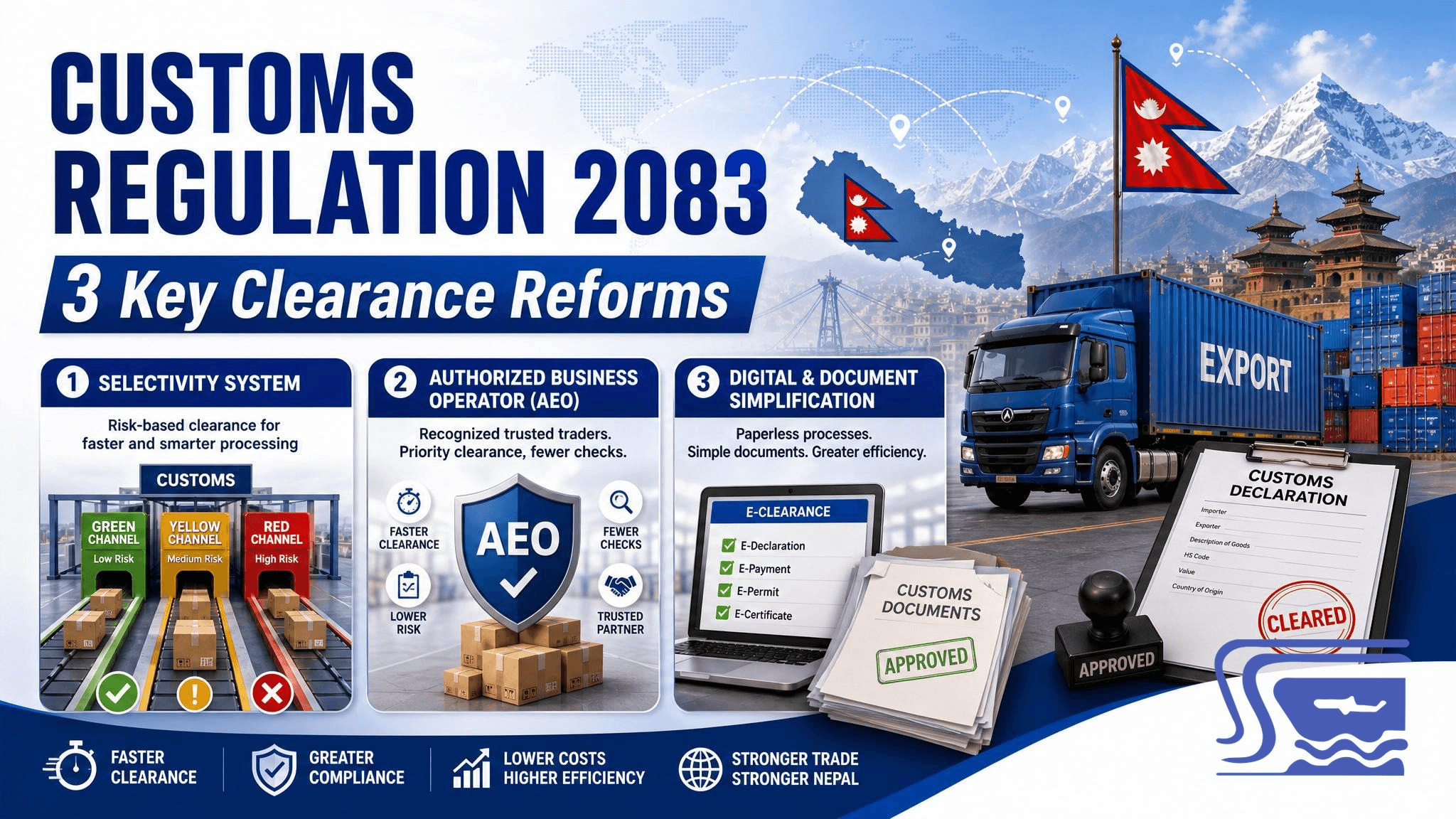
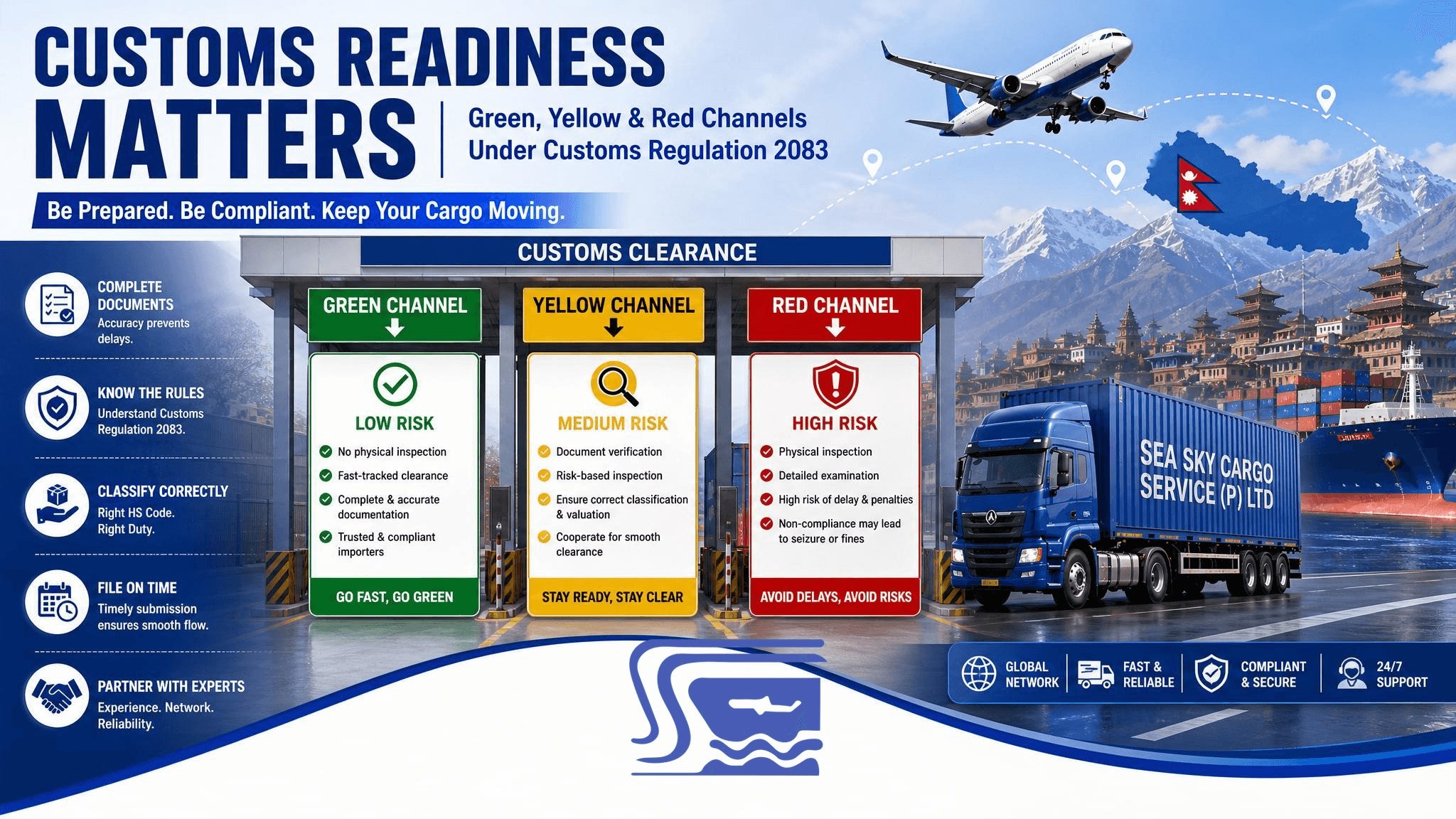
One of the biggest changes in Customs Regulation 2083 is the introduction of a selectivity system for customs clearance. Under this system, consignments are routed through green, yellow, or red channels based on risk, with low-risk goods released faster and high-risk goods subjected to more detailed checks.
The regulation also introduces the idea of “authorized business persons,” which is a trusted trader concept for businesses with a strong compliance record over the past three years. Those businesses may receive priority facilities such as dedicated customs areas and clearance options before or after normal office hours.
Another important reform is the new advance ruling system. Importers can request an official decision on classification or origin at least 45 days before import, and the ruling remains valid for two years, which helps reduce uncertainty before the shipment reaches customs.
Risk-based clearance
The shift to green, yellow, and red channels changes how importers should think about customs readiness. A low-risk shipment with consistent documents and accurate declarations is more likely to move quickly, while a shipment with unclear classification, doubtful value, or missing documents may be flagged for inspection.
This makes preventive compliance more valuable than ever. Businesses that prepare the file early, use the correct HS code, and keep product descriptions consistent across all documents have a better chance of faster release.
Documents required
The basic customs file in Nepal still depends on complete and matching commercial documents. Common requirements include the commercial invoice, packing list, transportation document such as a bill of lading or airway bill, customs declaration form, insurance document where relevant, and company or VAT registration papers.
Depending on the cargo, importers may also need a certificate of origin, import license, quarantine or quality certificates, banking documents, and an appointment letter if an agent is filing on their behalf. For restricted or regulated goods, extra permits are often the reason a shipment gets delayed, not the freight movement itself.
HS code and valuation
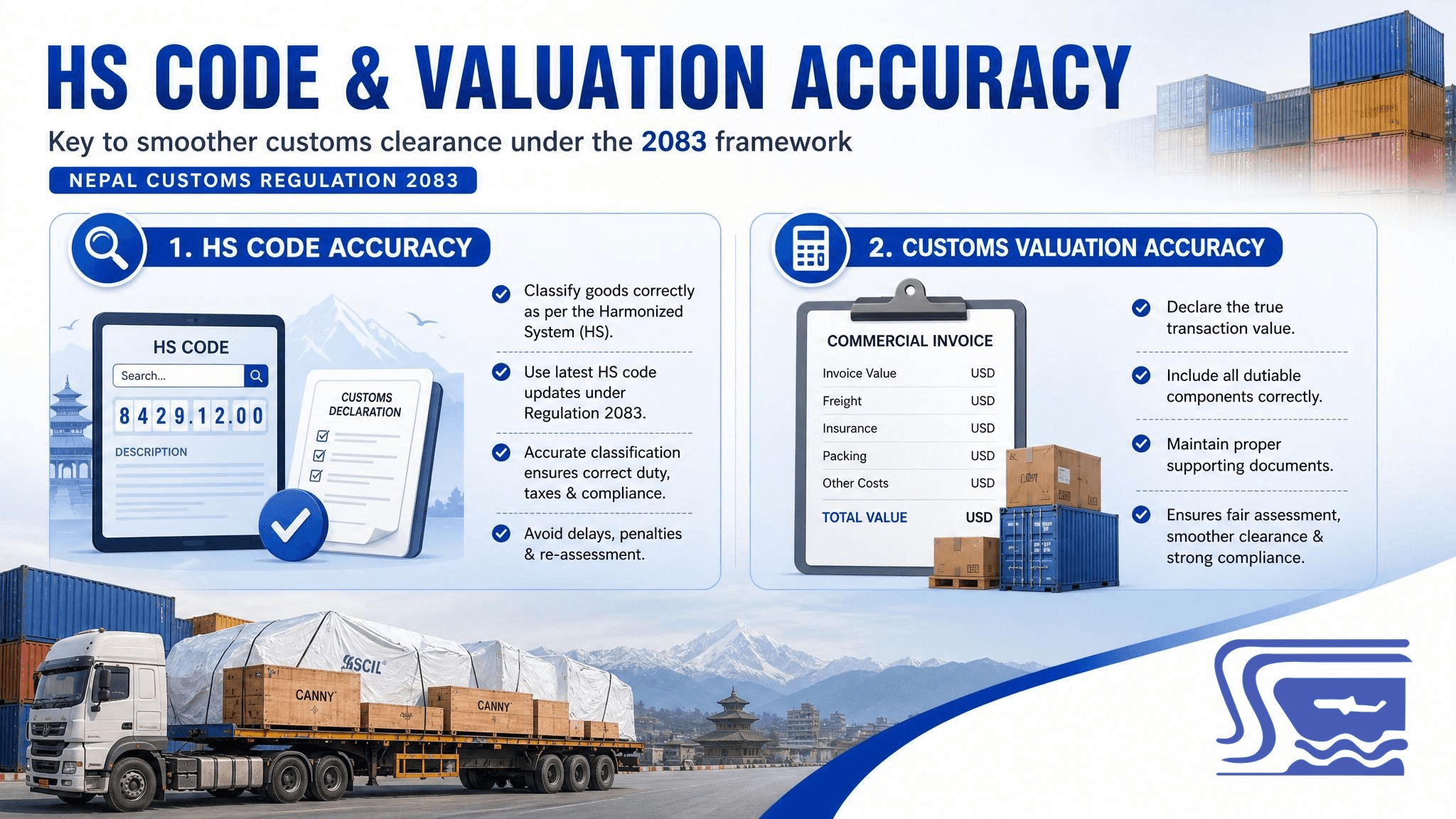
Under the 2083 framework, HS code accuracy remains central because customs uses classification to determine duty rates, controls, and document requirements. Nepal uses structured tariff and HS-code systems, and incorrect classification can lead to reassessment, delay, or dispute.
Valuation is also becoming more system-driven. The new regulation sets out detailed methods for customs valuation, including transaction value, identical goods, similar goods, deductive value, and computed value methods, while an electronic database is being developed to verify price authenticity. In early 2026, Nepal also began shifting valuation toward an online database linked with ASYCUDA, using recent declared price history to support more transparent assessment.
Single Window and digital systems
Customs Regulation 2083 also incorporates the National Single Window system, which is meant to integrate customs-related agencies on a single digital platform. A coordination mechanism under the government is set to oversee implementation, which should reduce duplication and make document handling more efficient over time.
For traders, this means customs is moving further toward digital filing and cross-agency coordination. In practice, that can reduce avoidable waiting time, but only if the importer’s document set is complete and correctly entered from the beginning.
Budget and tariff effects
The broader 2083/84 policy environment also affects customs clearance because tariff simplification and tax changes influence the final clearance bill. Nepal’s 2083/84 budget reduced the customs duty structure from 11 slabs to 7 and removed excise duty on 360 product categories, while also replacing some scattered customs-point levies with a unified green tax.
These changes are important for importers because clearance cost is not only about release speed. Simpler tariff bands and fewer side charges can make landed-cost planning easier, especially for manufacturers importing raw materials or equipment.
Common delay points
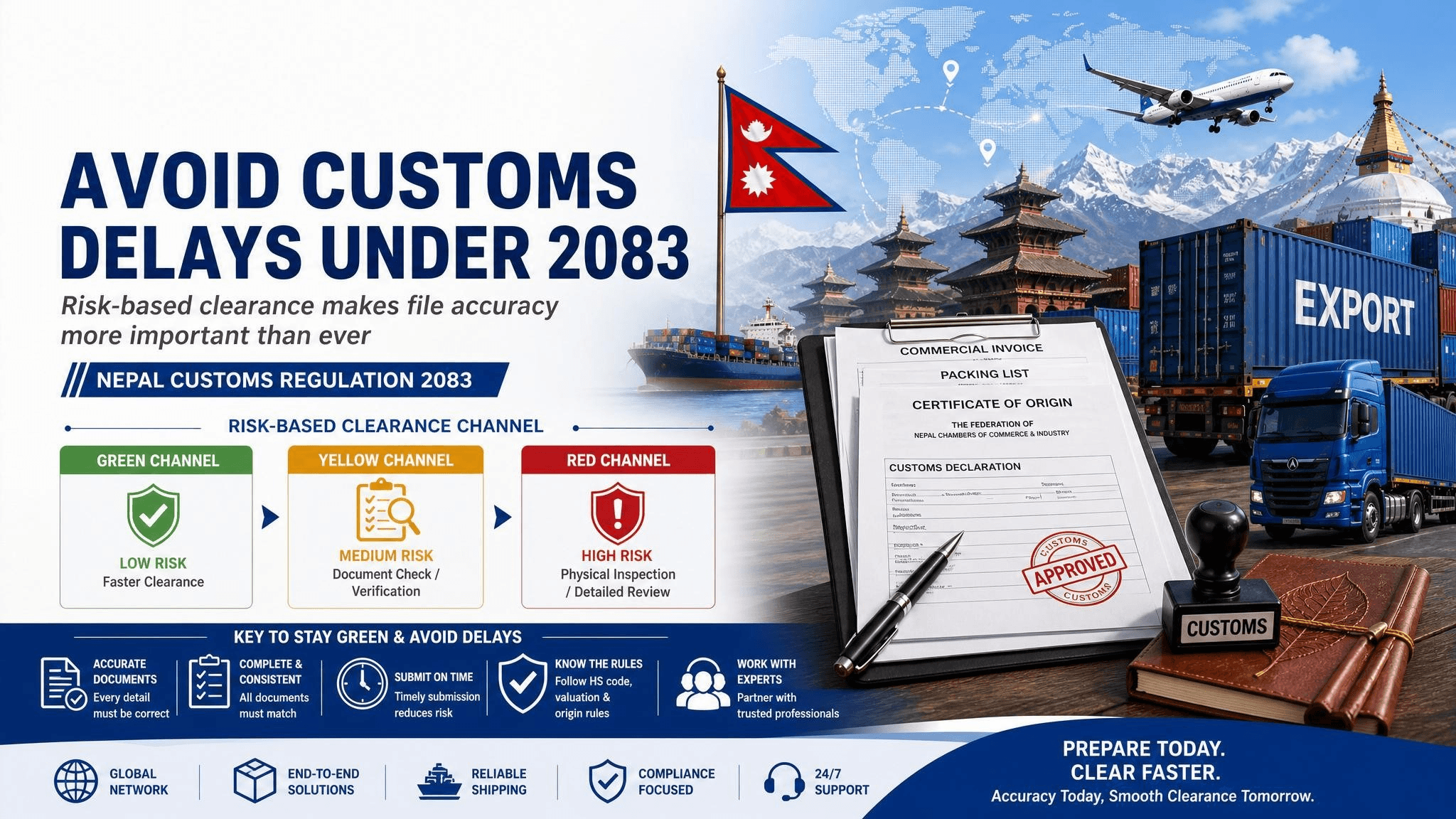
Even with the 2083 reforms, the most common causes of customs delay remain familiar: incomplete documents, wrong HS codes, value disputes, missing permits, and cargo descriptions that do not match across forms. The new risk-based model may actually make these mistakes more visible, because inconsistent files are more likely to be flagged into yellow or red channels.
Another practical issue is that many importers still wait until the cargo is near arrival before reviewing the file. Under the new system, the businesses that benefit most are usually the ones that classify, document, and verify the shipment well before customs submission.
How businesses should prepare
The smartest way to handle customs clearance in 2083 is to treat it as a planning process, not just a border process. Businesses should confirm the HS code early, prepare the invoice and packing list carefully, check whether licenses or certificates are needed, and consider advance ruling when classification or origin is likely to be questioned.
It also helps to review current tariff data through Nepal’s official customs tariff tools and stay alert to valuation and compliance updates. Importers that work proactively are more likely to clear quickly and avoid unnecessary storage, demurrage, or reassessment costs.
Conclusion
For companies moving cargo through Nepal, customs clearance in 2083 is becoming more technical, not less. Sea Sky’s customs guidance emphasizes document checking, HS code support, valuation awareness, and coordination across customs, transport, and inland delivery, which is exactly where many shipment delays begin.
That kind of support is useful because a shipment can be physically ready but still stall over classification, valuation, or permit issues. In the 2083 customs environment, businesses benefit from partners who understand both freight movement and the compliance side of clearance.
Contact SeaSky for hands-on customs clearance help and support with HS code classification, customs documents, route planning, and border coordination under Nepal’s 2083 customs framework.
Get Quotes
Built for freight forwarders handling FCL, OOG, heavy or project cargo into Nepal and South Asia. Use it to check routes, documents, handoffs and risk points before quoting your client.