What is port to door cargo service?
Port to door cargo service means the shipment is managed from its arrival port to the importer's final delivery address. For Nepal-bound sea cargo, that normally starts at an Indian port and continues through port release, inland transit, Nepal customs and delivery to a warehouse, factory, shop or project site.
The service can include:
- Port arrival and release coordination
- Bill of lading and supporting document checks
- Container, seal and cargo-status verification
- Road or rail-linked inland movement
- Transit and border coordination
- Customs clearance support in Nepal
- Final delivery and unloading planning
This differs from port-to-port shipping. A port-to-port quote usually ends when the cargo reaches the destination port or terminal named in the transport contract. The importer must then arrange release, local charges, transit, customs and final delivery separately.
A port-to-door plan does not mean every possible charge is automatically included. The quotation should state exactly which port, customs, transport, delivery, detention, storage and unloading items are included or excluded.
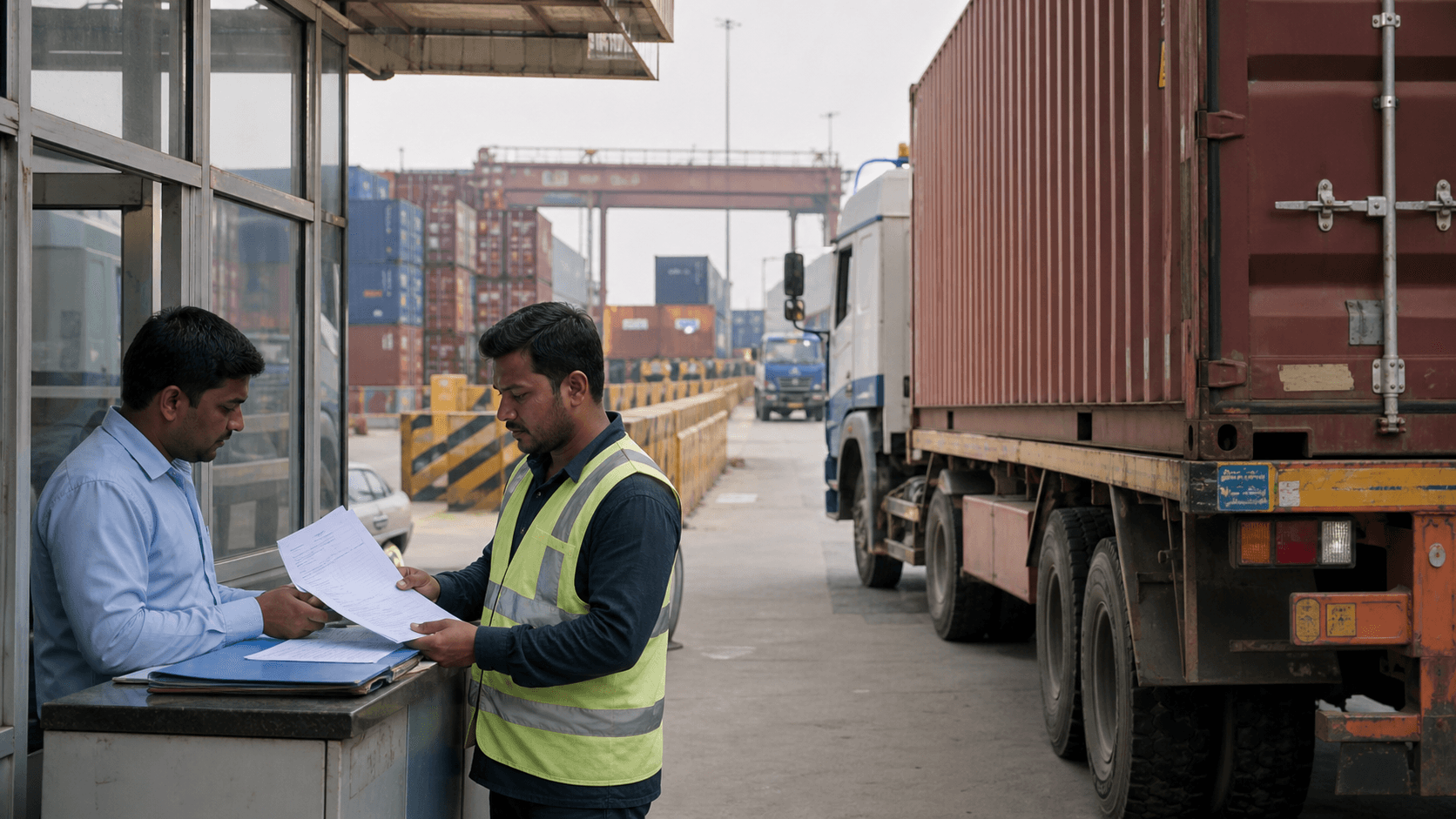
Why Indian ports matter for Nepal cargo
Nepal is landlocked, so most international sea cargo needs a transit gateway before it can enter the country. Indian ports connect the ocean leg with inland road and rail-linked routes toward Nepal's designated customs points.
Kolkata and Haldia have long been important for Nepal transit cargo. Visakhapatnam and other suitable gateways may also be considered according to the current routing arrangement, carrier service, cargo type, inland connection and delivery location. Importers should confirm the actual permitted and operational route before booking rather than selecting a port from ocean freight price alone.
The official India-Nepal Treaty of Transit describes the framework for traffic in transit, while Nepal Customs offices explain that a Customs Transit Declaration is used for third-country goods moving through India to a designated Nepal customs point. Current procedures and route details should be checked for the specific shipment.
Port choice affects vessel schedule, transshipment risk, destination charges, container availability, rail connection, road distance, border point and final delivery. A port with a lower ocean rate may create a higher inland or handling cost for the importer.
Sea Sky's sea freight to Nepal page provides the wider service context. The port-to-door review should begin before cargo leaves origin, because the bill of lading, transit plan and consignee information need to support the intended route.
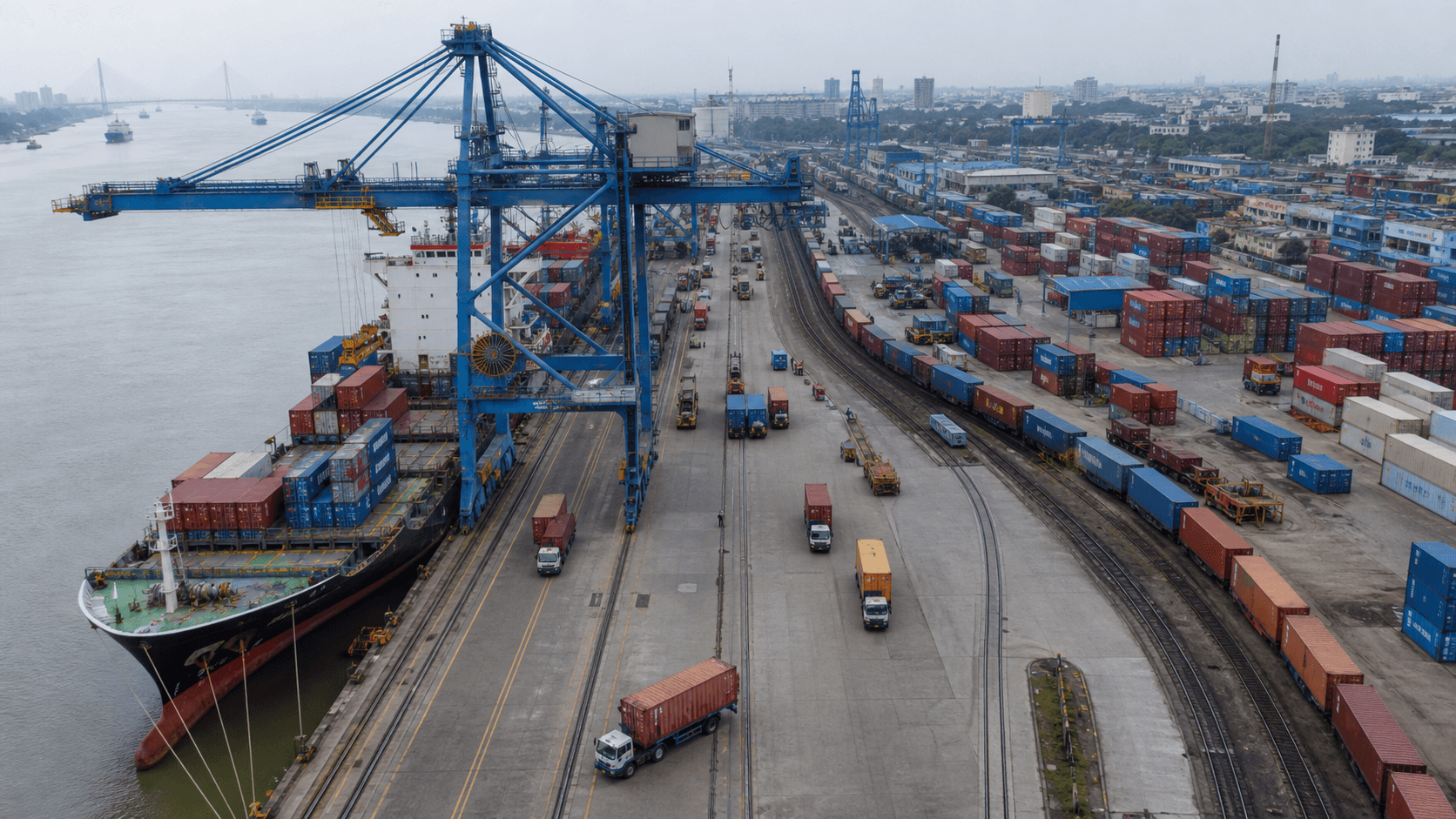
How Indian port shipments reach Nepal
A typical port-to-door movement has several linked stages. The exact order changes with the port, carrier, container type, inland mode and Nepal customs point, but the planning sequence usually looks like this:
- The vessel arrives and the shipping line or agent issues arrival information
- The consignee or authorized agent completes the release requirements
- Port, terminal and document status are checked
- The container or cargo is released for the approved inland movement
- Cargo moves by road, rail-linked service or a combination
- Transit and border procedures are completed
- The shipment reaches the designated Nepal customs point
- Import declaration, assessment, payment and inspection are completed as applicable
- Released cargo moves to the warehouse, factory or project site
- The container is returned or the equipment is closed out according to the carrier arrangement
The critical point is continuity. Port release, transit documents, vehicle or rail booking, customs preparation and warehouse receiving should not be treated as unrelated jobs. A delay in one stage can create storage, demurrage, detention or rebooking cost in another.
Plan the complete route before the vessel arrives. Confirm who receives arrival notices, who holds the original or surrendered bill of lading, who pays destination charges, who arranges the transit movement, which Nepal customs point will be used and who accepts the final delivery.
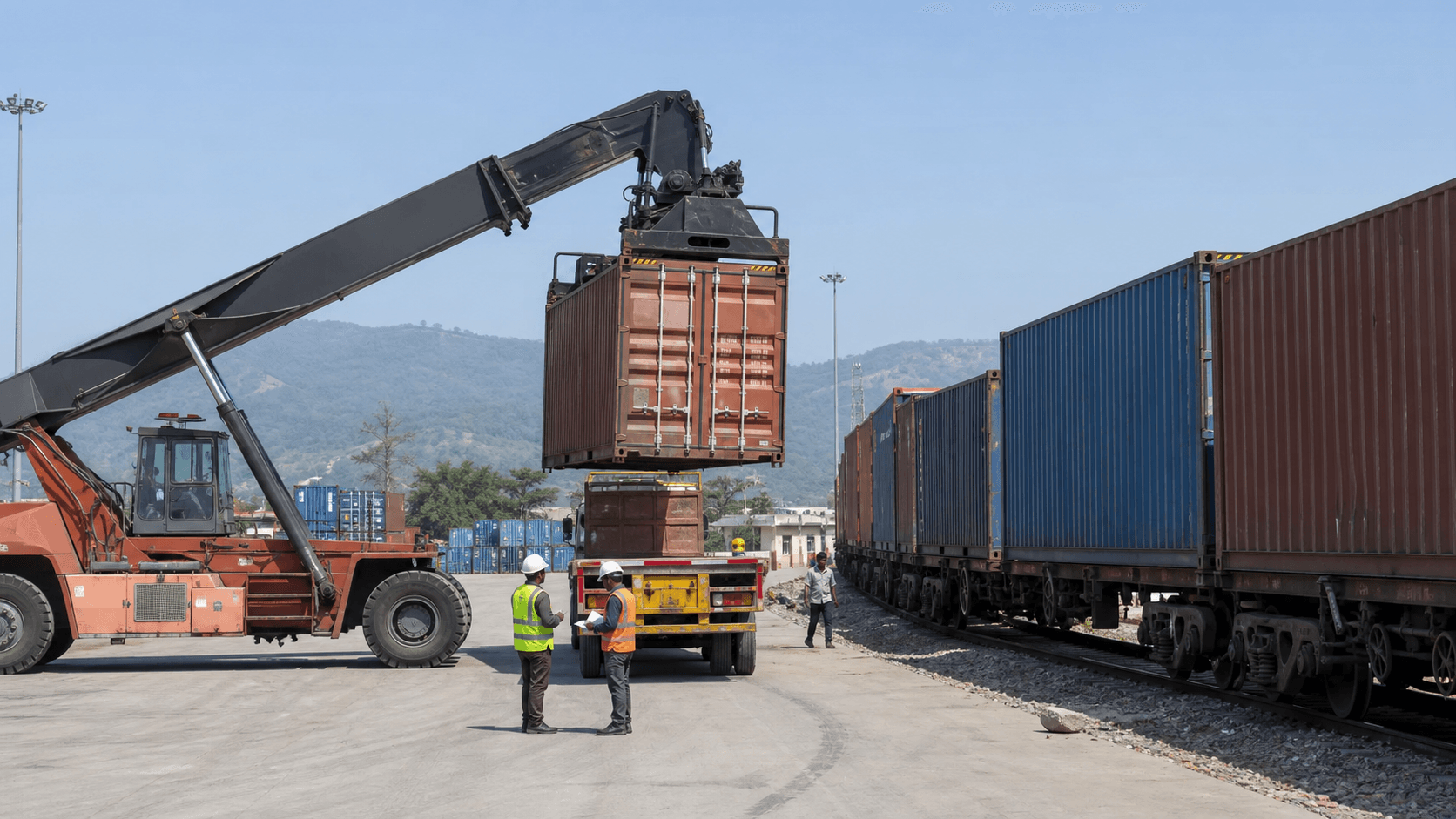
Cargo types suited to port-to-door service
Port-to-door coordination can help any importer who does not want the shipment plan to stop at the Indian port. It is especially useful for cargo with multiple handoffs, high storage exposure, special delivery needs or expensive equipment commitments.
Common cargo includes:
- Commercial goods and retail inventory
- Machinery, spare parts and industrial equipment
- Raw materials and production inputs
- Construction materials and building systems
- Furniture, garments and textiles
- Electronics and packaged consumer goods
- Full-container-load and less-than-container-load shipments
- Project cargo, heavy pieces and oversized equipment
FCL cargo usually stays in the container until the approved unloading point unless customs or operational requirements call for examination or transfer. LCL cargo has consolidation and deconsolidation stages, so the importer must know where the cargo is separated, how it is released and when inland delivery can begin.
Heavy and oversized cargo needs an earlier site review. Vehicle type, axle limits, permits, route clearances, cranes, forklifts, unloading surface and warehouse access can determine whether the final delivery is possible.
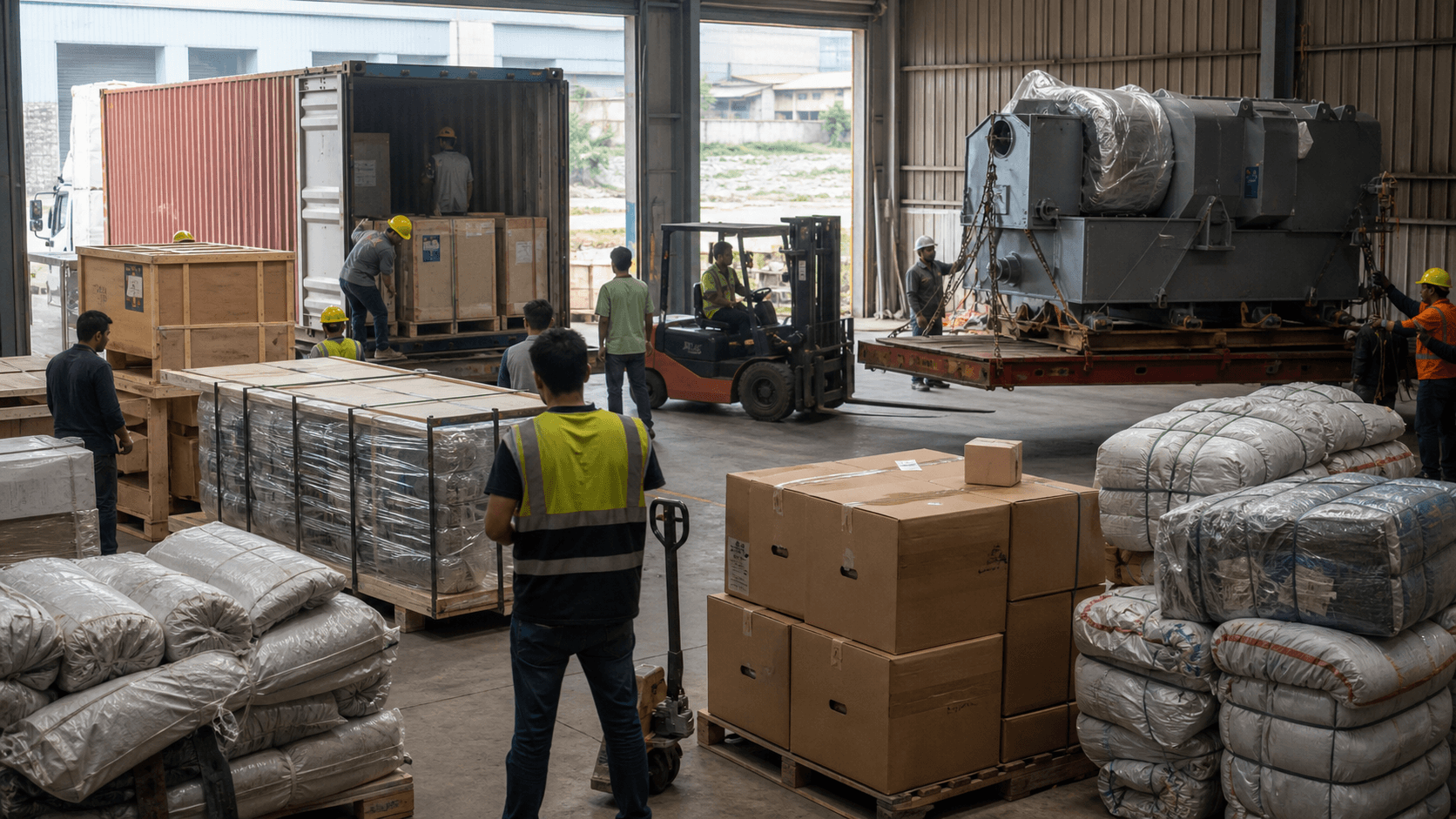
Road vs rail-linked inland movement
After port release, cargo may move by road, rail-linked transport or a combination. The decision depends on port connectivity, container service, cargo volume, schedule, border point, final delivery location and current operating conditions. Rail is not automatically cheaper and road is not automatically faster. Compare the complete route, including terminal handling, waiting time, container commitments and the last-mile delivery. Review Sea Sky's road freight service in Nepal and rail cargo to Nepal pages for the service options. A practical plan also keeps a fallback in mind. Equipment shortages, rail schedules, road disruption, border congestion or documentation problems can affect the intended inland mode.
| Planning factor | Road freight | Rail-linked movement |
|---|---|---|
| Typical strength | Flexible pickup, routing and direct final delivery | Efficient container or bulk movement on an operating corridor |
| Best fit | Time-sensitive, irregular, site-specific or door-delivery cargo | Containerized, repeat, bulk or cost-sensitive cargo |
| Main handoff | Port or terminal directly to road vehicle | Port rail connection, inland terminal and final road leg |
| Risk to plan | Road conditions, permits, queues and vehicle availability | Train schedule, terminal handling and road transfer at destination |
| Final delivery | Can continue directly when vehicle and access are suitable | Usually still needs road transport from rail terminal to the consignee |
Documents needed for port-to-door cargo
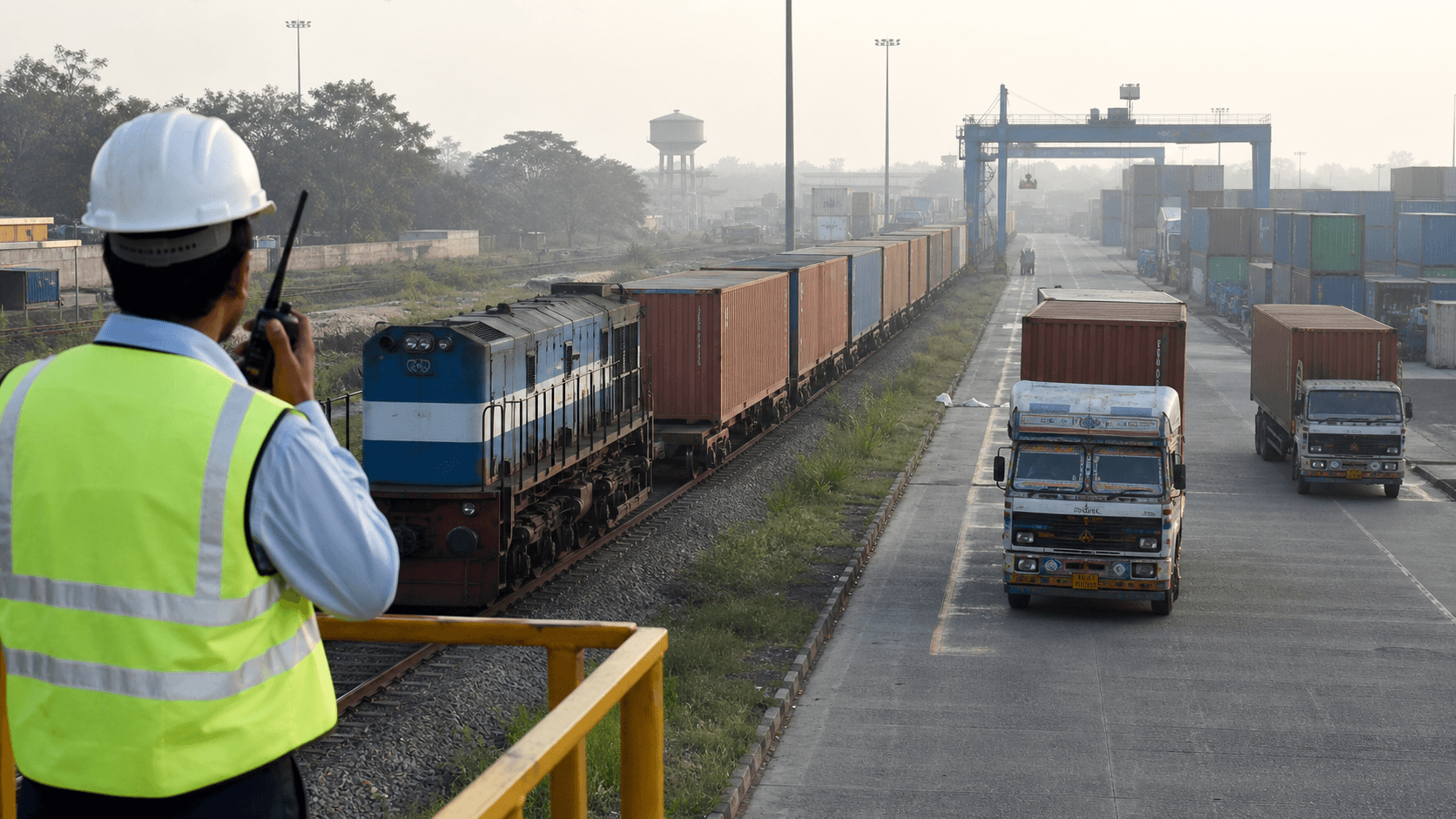
Documents connect the ocean shipment, port release, transit movement, Nepal customs and final delivery. Missing or inconsistent information can stop the container even when the physical route is ready.
Common documents and records include:
- Commercial invoice
- Packing list
- Bill of lading and arrival or release information
- Certificate of origin when required
- Correct HS code and detailed product description
- Importer PAN, VAT and EXIM information as applicable
- Insurance document when cover is arranged
- Import permit, registration or authority approval when required
- Product catalogue, specification or technical sheet when useful
- Authorization letter for the clearing or forwarding agent
- Customs and transit declaration records
The invoice and packing list should match the physical shipment. Product name, model, material, use, quantity, package count, unit value, total value, weight and consignee details must be clear. Avoid generic wording such as 'parts,' 'materials' or 'general goods' when a precise description is available.
The Birgunj Customs Office explains that CTD means Customs Transit Declaration and applies to third-country goods moving through India to the designated Nepal customs point. The forwarder should confirm the current transit document process for the actual port and route.

Importing cargo through an Indian port?
Share the port, bill of lading, cargo details and Nepal delivery point. Sea Sky Cargo can review the documents and plan the inland route before arrival.
Customs clearance in Nepal
Cargo cannot move to unrestricted final delivery until Nepal customs clearance is completed. The declaration should be prepared before the shipment reaches the customs point, especially when the goods need a permit, certificate, valuation support or technical clarification.
Customs clearance can involve:
- HS code and product-description verification
- Invoice, packing list and origin review
- Customs value, duty, VAT and charge assessment
- Import permit, registration or certificate check
- Declaration submission through the applicable system
- Document query, inspection, sampling or examination when required
- Payment and cargo release
The Department of Customs provides official notices, customs information and access to Nepal's customs systems. Product rules, tariff measures and documentary requirements can change, so importers should verify the current position for the actual shipment.
A wrong HS code can affect duty, VAT, permits and clearance treatment. Review Sea Sky's HS code Nepal and custom duty in Nepal guides, then confirm the final classification using the real product specifications.
Sea Sky's customs clearance in Nepal service can help coordinate the customs file with the inland and final-delivery plan. The objective is not only to submit a declaration, but to keep the cargo, documents and delivery schedule aligned.
Common problems in port-to-door cargo
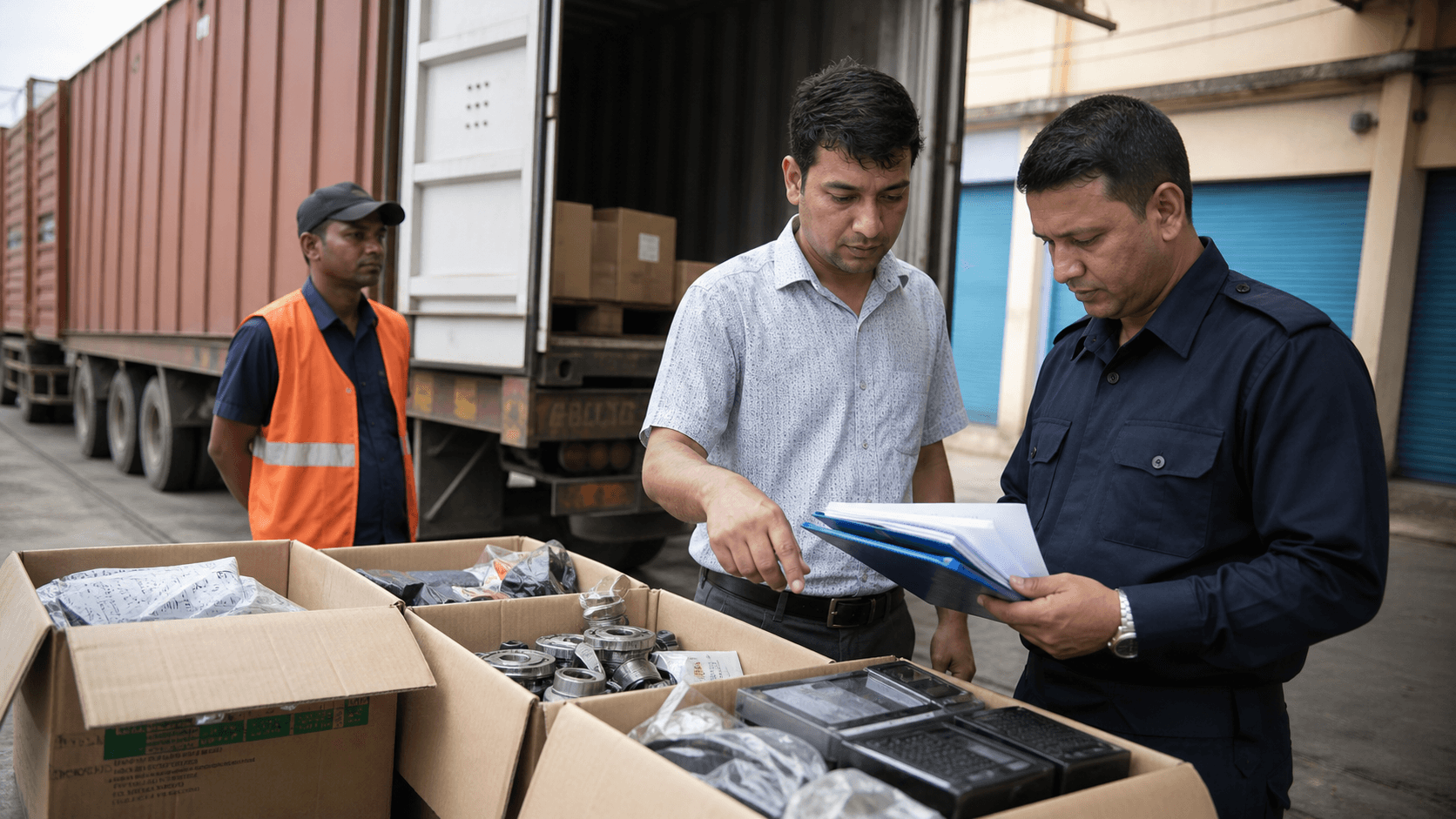
Port-to-door shipments can be delayed by a small information gap that becomes expensive once the container is inside a terminal or committed to equipment. Many problems are avoidable when responsibility is assigned before arrival.
- Missing or unreleased bill of lading
- Unpaid or unclear port and carrier charges
- Wrong HS code or vague product description
- Invoice and packing-list discrepancies
- Import permit or approval not prepared
- Container seal or cargo-status discrepancy
- Port storage, demurrage or container detention
- Road or rail booking arranged too late
- Wrong vehicle or equipment for the cargo
- Customs clarification or valuation request
- Final address, access or unloading equipment not ready
Track free time, release status and equipment responsibility in writing. Demurrage, detention and storage are different concepts and may be charged by different parties. The quotation or shipment instruction should identify who monitors each deadline.
Do not wait until cargo reaches Nepal to prepare customs. Product classification, permits and value support should be reviewed while the vessel is still in transit, leaving time to correct documents before the inland movement begins.
Why total landed cost matters
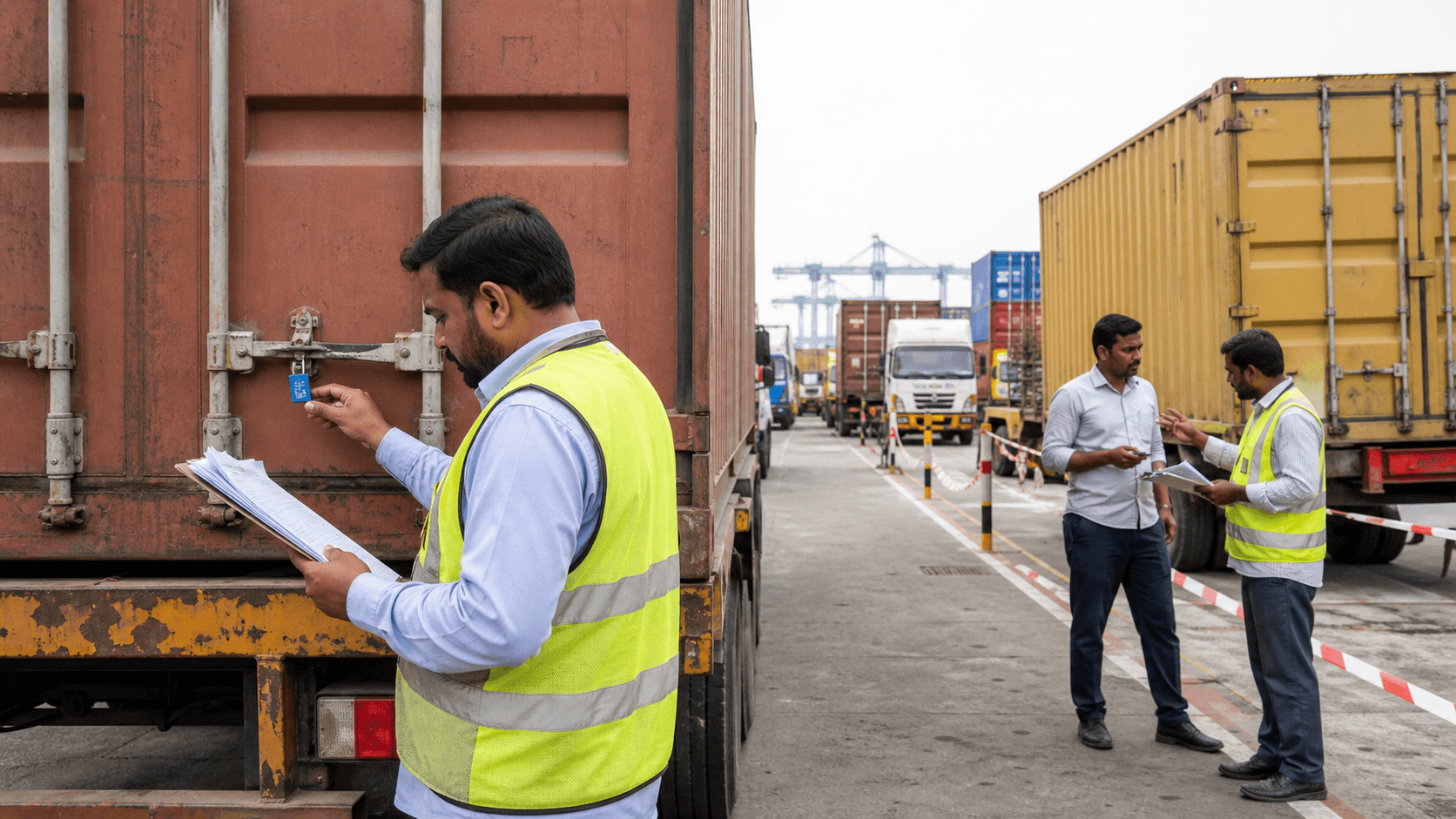
Importers should compare the total expected cost to the warehouse, not only the ocean freight or truck rate. A cheaper main-freight option can become more expensive after port handling, waiting time and an inefficient inland route. Ask for a written scope that separates included charges, estimated charges, customs taxes and costs that arise only when there is a delay or special handling requirement. This makes competing quotations easier to compare. A realistic landed-cost estimate needs the port, container type, cargo description, packed weight, dimensions, value, Nepal customs point, delivery address and unloading plan. Without those details, the lowest-looking figure is often only an incomplete one.
| Cost area | What it may include | Planning question |
|---|---|---|
| Ocean and carrier | Sea freight, surcharges and carrier destination charges | Is the quote port-to-port or does it include destination items? |
| Port and terminal | Handling, documentation, release, storage and examination | Which charges are fixed and which depend on time? |
| Inland transit | Road, rail-linked movement, terminals, permits and escorts | Does the rate cover the complete approved route? |
| Nepal customs | Duty, VAT, declaration, inspection and authority charges | Has the product and HS code been checked? |
| Final delivery | Truck, unloading, crane, forklift, waiting and site access | Is the warehouse ready for the vehicle and cargo? |
| Delay exposure | Demurrage, detention, storage and rebooking | Who monitors free time and release deadlines? |
Importer checklist before cargo reaches port
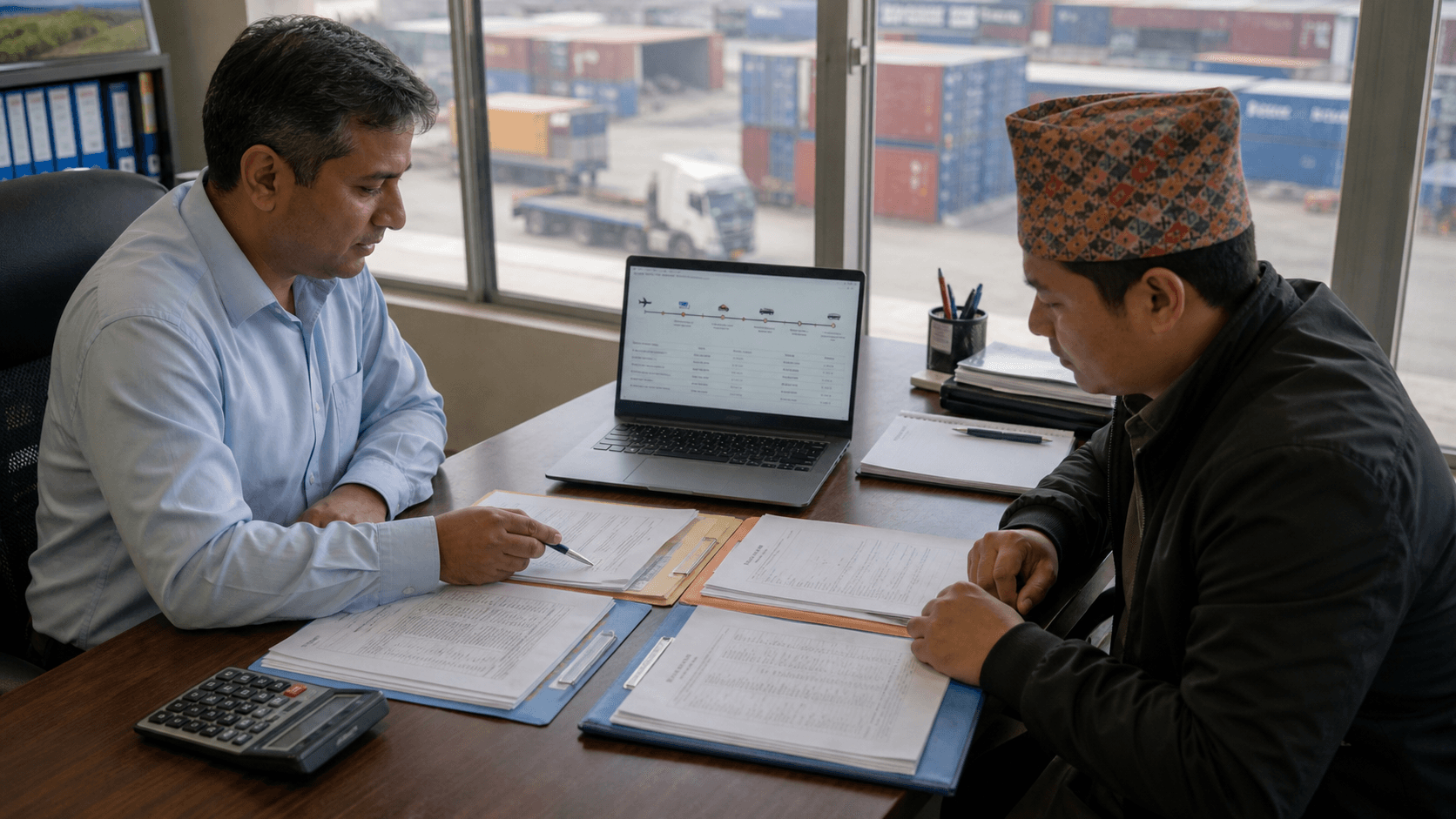
Use this checklist before the vessel arrives at the Indian port:
- Confirm vessel, port and estimated arrival information
- Check bill of lading status and consignee details
- Finalize the commercial invoice and packing list
- Verify the HS code and expected customs duty and VAT
- Confirm permits, registrations and certificates
- Choose the road, rail-linked or combined inland plan
- Confirm the Nepal customs point and clearing contact
- Record container free time and return responsibility
- Confirm final address, access road and receiving hours
- Prepare forklift, crane, labor or unloading equipment
- Review insurance and high-value cargo controls
- Share one contact list for port, transit, customs and warehouse teams
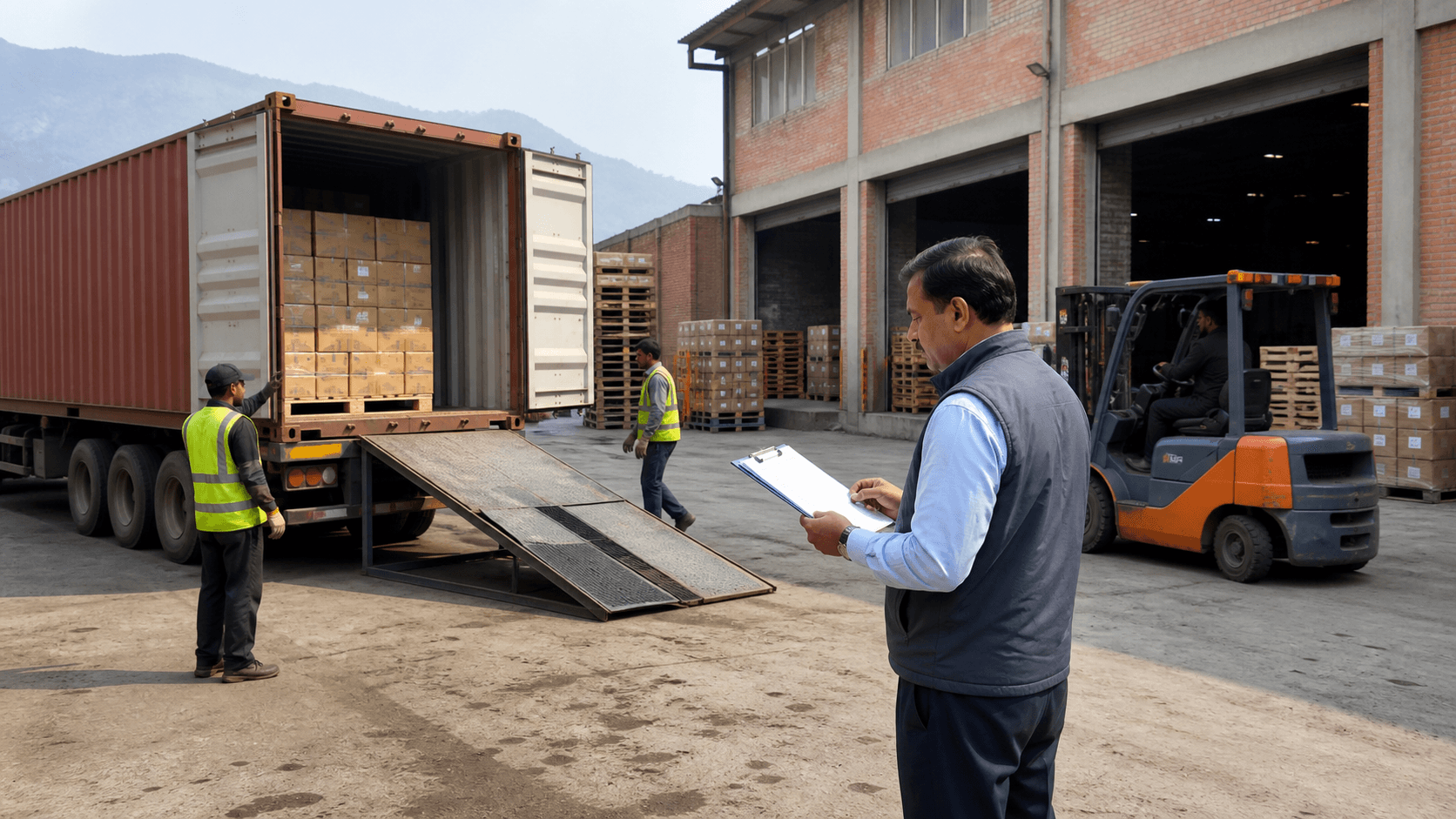
The warehouse should know the container or vehicle dimensions, cargo weight, pallet or crate count and unloading method. Confirm whether the container can enter the site, turn safely, wait without blocking access and unload on a stable surface.
For machinery or project cargo, inspect the site before dispatch. A truck reaching the correct address is not a completed delivery if the gate is too narrow, the crane is undersized or the consignee has no secure place to receive the cargo.
How Sea Sky Cargo helps
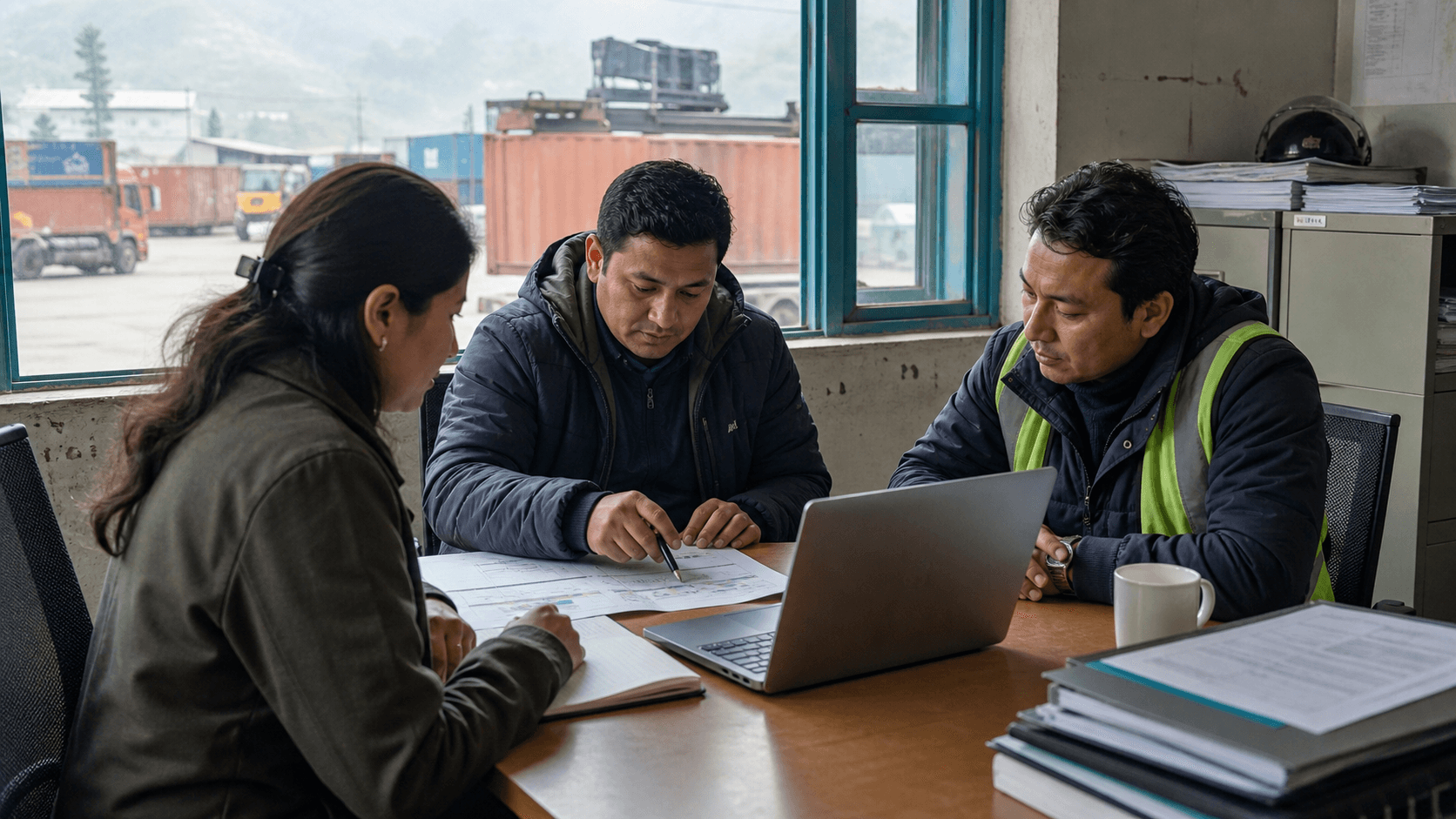
Sea Sky Cargo helps importers, freight forwarders, manufacturers and project teams plan port-to-door cargo movement from Indian ports to Nepal. The review begins with the shipping document, cargo details, port, container type, arrival date, customs requirement and delivery point.
Support can include:
- Indian port-to-Nepal route planning
- Sea freight and arrival coordination
- Road and rail-linked inland planning
- Bill of lading, invoice and packing-list review
- HS code, duty and permit preparation support
- Customs clearance coordination in Nepal
- Container, heavy-cargo and project-cargo planning
- Final warehouse, factory or site delivery coordination
A useful enquiry includes the port, bill of lading status, commodity, number of packages, weight, dimensions, value, importer details, Nepal customs point and final address. Photos or technical drawings are especially helpful for machinery and oversized cargo.
Use the get a quote form before the vessel arrives. Sea Sky can identify missing information, compare the inland options and build the release-to-delivery plan around the actual shipment.
Frequently asked questions
What is port to door cargo service in Nepal? It is the coordinated movement of cargo from an Indian arrival port through inland transit and Nepal customs to the importer's warehouse, factory, shop or project site.
Which Indian ports are used for Nepal cargo? Kolkata and Haldia are established gateways, while Visakhapatnam or another suitable port may be considered according to the current route, carrier, cargo and inland connection. Confirm the approved and operational route before booking.
Does port-to-door service include customs clearance? It can include customs support, but the scope must be confirmed in the quotation. Duty, VAT, permits, inspection charges and government fees may be separate from the transport rate.
Is road or rail better from the Indian port to Nepal? It depends on port connectivity, cargo type, container volume, schedule, border point and final address. Rail-linked movement still normally needs road transport for final delivery.
Which documents are needed? Common documents include the commercial invoice, packing list, bill of lading, HS code, certificate of origin when required, importer records, transit documents and product-specific permits or approvals.
Can Sea Sky Cargo arrange final warehouse delivery? Sea Sky can help coordinate port-to-door planning, Nepal customs, the inland route and final delivery according to the agreed service scope and cargo requirements.
The safest approach is to make one party responsible for the overall plan while keeping every charge and operational responsibility clear. Port release, transit, customs and receiving preparation should be ready before the vessel arrives.
Need delivery from port to warehouse?
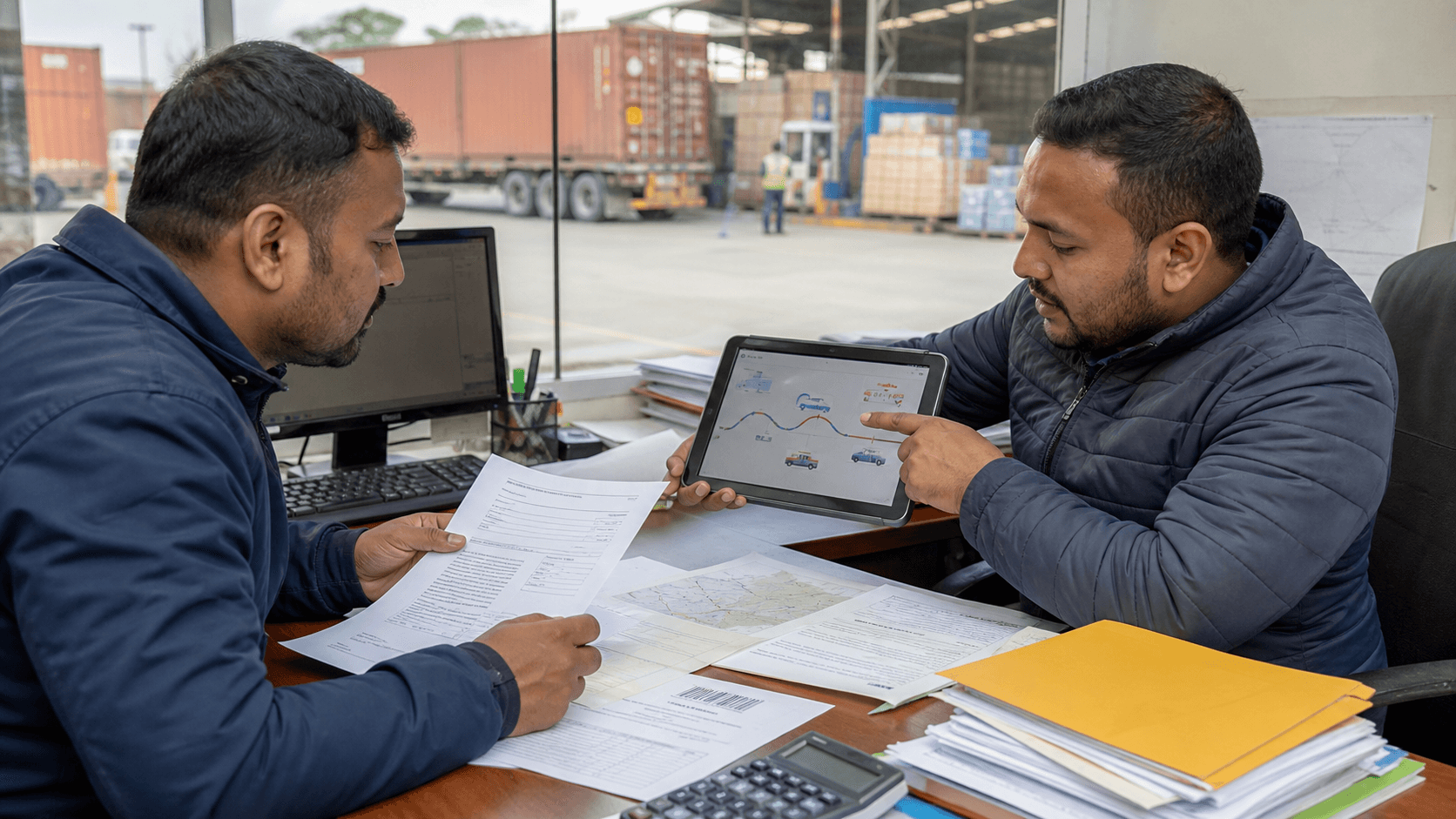
Sea Sky Cargo can help connect Indian port handling, road or rail-linked movement, Nepal customs and final delivery into one practical shipment plan.