1. How e-commerce logistics in Nepal is different
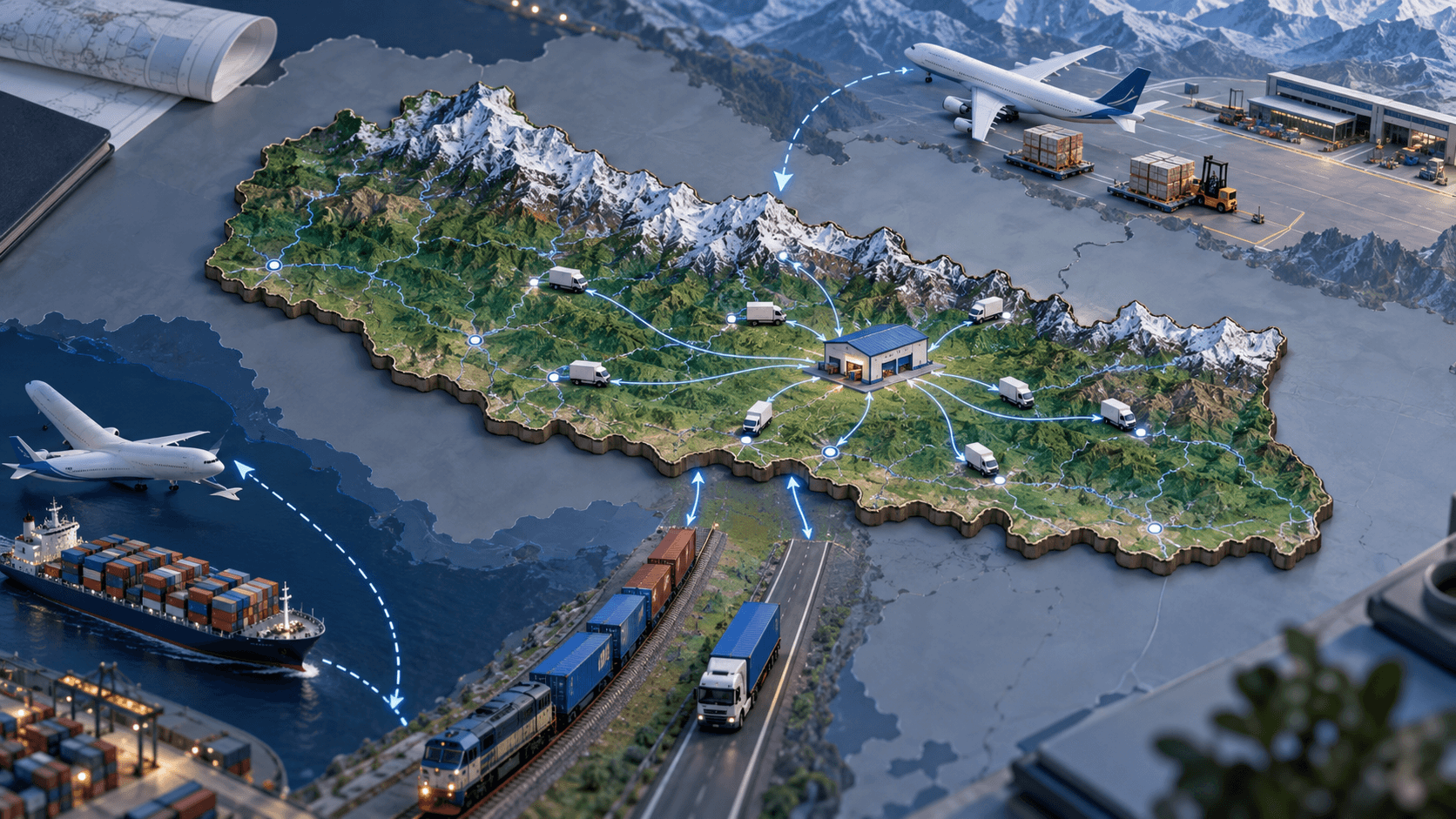
E-commerce logistics is not simply wholesale freight in smaller cartons. An online seller may carry dozens or hundreds of SKUs, replenish fast-moving products every week and promise delivery from stock already in Nepal. A missed inbound shipment can therefore affect many customer orders at once. The first planning rule is to separate cross-border replenishment from domestic fulfillment. International freight ends when stock is cleared and delivered to the Nepal warehouse. Customer fulfillment begins with receiving, put-away, inventory accuracy, picking, packing, last-mile delivery and returns. A fast international parcel does not repair a slow warehouse, and a good fulfillment operation cannot sell stock that is still waiting at customs. Nepal’s Electronic Commerce Act, 2081 creates a formal legal framework for electronic trade. Sellers should align product information, commercial terms, customer service and return or refund processes with current legal requirements. This guide focuses on logistics; legal, tax and consumer-protection questions should be checked with the appropriate adviser. A useful operating model has three clocks: supplier preparation time, international replenishment time and Nepal fulfillment time. Measure each separately. If a supplier takes nine days to prepare an order, advertising a five-day air movement as the complete replenishment lead time will produce stockouts. Start with SKU-level demand. Classify products as fast-moving, stable, seasonal, new or low-velocity. Protect proven sellers with more stock cover, test new products in small batches and avoid filling expensive freight capacity with items that rarely sell.
| Planning factor | Traditional wholesale shipment | E-commerce replenishment |
|---|---|---|
| Order pattern | Larger, less frequent purchase orders | Smaller and more frequent batches across many SKUs |
| Stock priority | Whole shipment often has similar urgency | A few fast movers may be urgent while long-tail items can wait |
| Delivery promise | One consignee and receiving appointment | Many customer orders depend on local stock availability |
| Data need | Purchase order and shipment milestones | SKU velocity, stock cover, landed cost, failed delivery and return reason |
| Reverse flow | Usually an exception | Returns, exchanges and undelivered orders are part of normal operations |

2. Cross-border shipping options by origin and volume
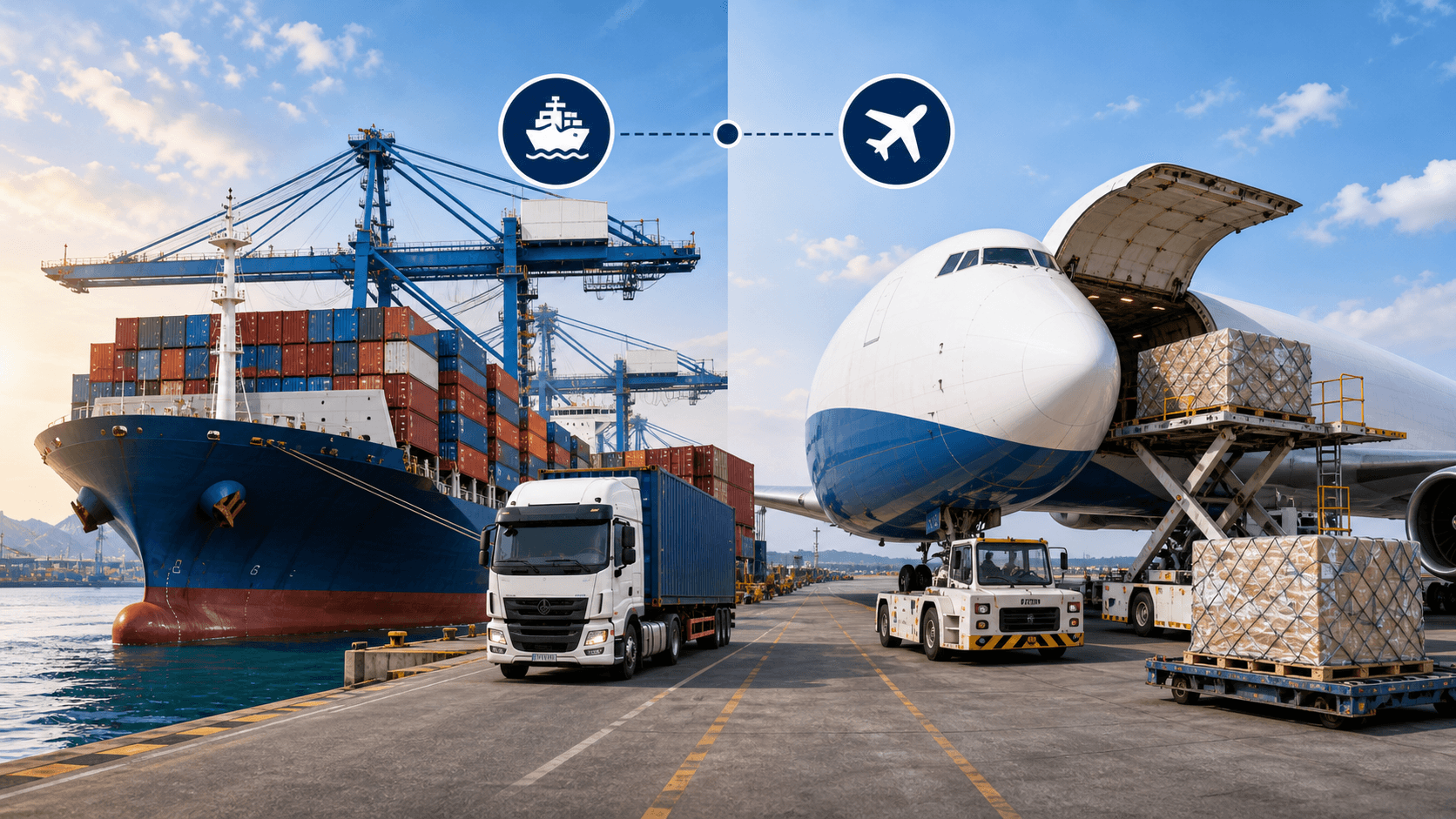
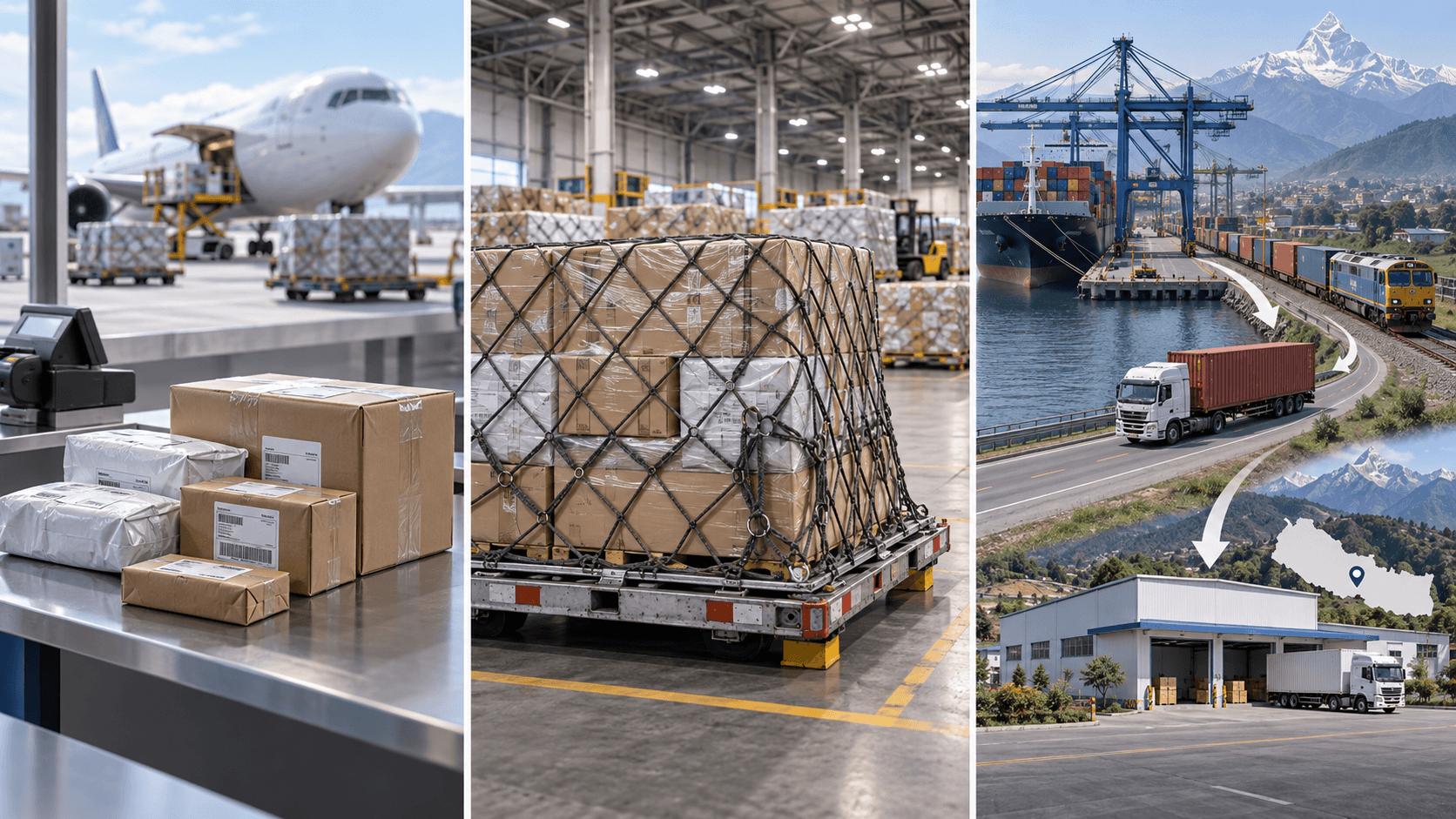
Mode choice should follow the origin, shipment size, value, urgency, product restrictions and stockout cost. The terms also matter. LCL means less-than-container-load ocean freight. The air equivalent is normally described as consolidated air freight, where cargo from several shippers moves under a consolidated air waybill arrangement. Express courier parcels Courier is useful for samples, product tests, documents, spare parts and emergency top-ups. It offers pickup, tracking and a relatively simple handoff, but the rate per chargeable kilogram can be high. A planning range of roughly 3–7 days from a major regional hub to Kathmandu may be reasonable when uplift, documents and customs align, but it is not a promise. Restricted goods, remote pickup, flight capacity, holidays and customs questions can extend the cycle. Consolidated air freight Consolidated air cargo suits stock that is too large or costly for routine courier but still needs a faster cycle than sea. The forwarder combines shipments at origin, books airline capacity, arranges documents and coordinates destination handling. A rough planning range of 5–10 days from cargo handover to Nepal delivery may suit some established lanes, subject to origin cutoff, flight schedule, customs readiness and final delivery. Compare the complete door-to-warehouse cost rather than the airport-to-airport rate. Sea LCL Sea LCL allows an importer to buy part of a container. China- or Gulf-origin cargo can move to an Indian transit port and continue toward Nepal by rail or road after the required transit process. A 3–6 week planning range may be useful for early inventory planning, but sailing frequency, transshipment, port dwell, documentation, rail or truck connection, customs and Nepal delivery all affect the result. LCL also creates origin and destination handling charges that must be included in the comparison. India-origin inventory India-origin stock usually moves directly to Nepal by road, rail, air or courier according to the supplier location and cargo. It generally does not need a detour through an Indian seaport. Road consolidation can be effective for mixed cartons and regular replenishment, while air may protect urgent stock from distant Indian cities. For wider route context, compare the cross-border shipping guide, air freight process, sea freight guide and LCL guide for small importers.
| Origin | Practical options | Typical use |
|---|---|---|
| China | Courier, consolidated air, road where operationally suitable, or sea LCL through an Indian transit port | Product testing, fast-moving inventory and planned base stock |
| India | Direct road, rail, air or courier; sea only where the geography and shipment justify it | Frequent replenishment, mixed cartons and regional sourcing |
| Gulf | Courier, consolidated air or sea-linked freight through an Indian gateway | Branded goods, electronics, spare parts and planned stock |
3. Cost and transit-time comparison
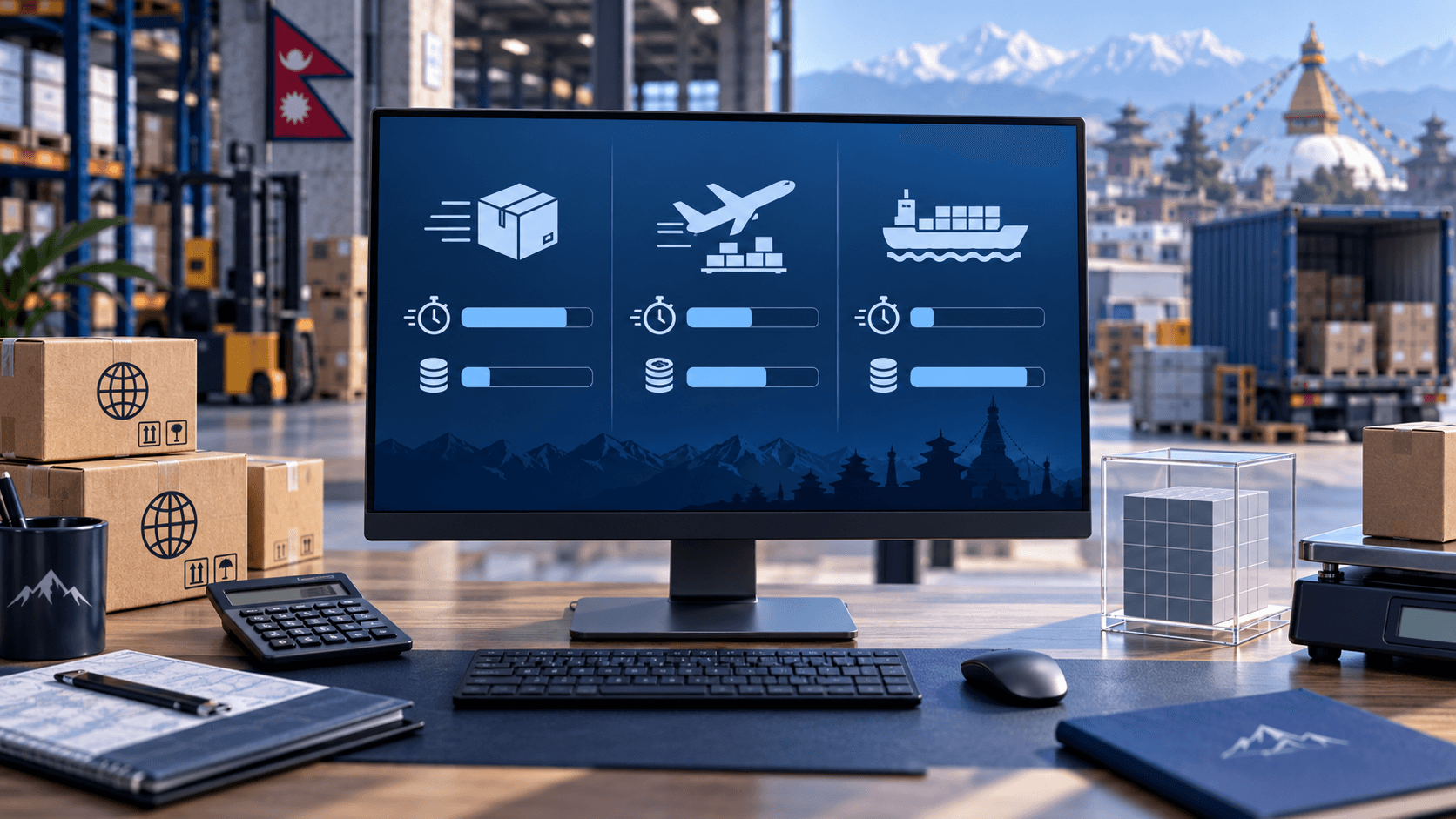
The lowest freight quote is not automatically the lowest landed cost. Compare every option to the same endpoint: supplier pickup through customs clearance and delivery to the Nepal warehouse. Then add the commercial effect of carrying too much or too little stock. Air chargeable weight is normally the higher of actual weight and the applicable volumetric weight. Sea LCL is commonly priced from volume, with a weight-to-measure rule used by the carrier or consolidator. Dense products and bulky lightweight products can therefore behave very differently in a quotation. Build a landed-cost sheet that includes the product price, origin pickup, export handling, international freight, insurance, transit charges, customs duty and taxes, clearance, local delivery, warehousing and expected damage or return cost. Confirm which items are included in the quote and which are payable to another party. Use a hybrid inventory strategy: move predictable base demand by the economical lane, protect selected fast movers with consolidated air, and reserve courier for tests or genuine exceptions. Sending every SKU by courier hides weak forecasting; sending everything by sea can turn one late vessel or popular product into a stockout. A simple starting point is: reorder point = average daily sales × protected replenishment days + safety stock. Protected replenishment days should include supplier preparation, origin consolidation, international movement, customs, final delivery and a realistic variability buffer. Review the formula after promotions, festivals or a change in supplier performance. Transit ranges in this guide are planning references only. Obtain a shipment-specific schedule and quotation before promising a customer date.
| Mode | Speed profile | Main cost basis | Best fit | Charges to check |
|---|---|---|---|---|
| Express courier | Fastest for small accepted parcels | Actual or dimensional chargeable weight | Samples, tests and emergency top-ups | Remote pickup, fuel, clearance, duty and tax, special handling |
| Consolidated air | Fast, with warehouse and flight cutoffs | Chargeable weight plus origin and destination handling | Small-to-medium urgent inventory | Pickup, screening, airline, terminal, clearance and delivery |
| Direct India road | Often efficient for regional sourcing | Vehicle, weight, volume, lane and consolidation | Regular India replenishment | Origin pickup, border handling, unloading, waiting and final delivery |
| Sea LCL | Slowest and most variable | Volume or weight plus multiple handling stages | Planned, non-urgent base stock | Origin CFS, documentation, ocean freight, destination CFS, transit and Nepal delivery |
4. Customs treatment for parcels and commercial inventory
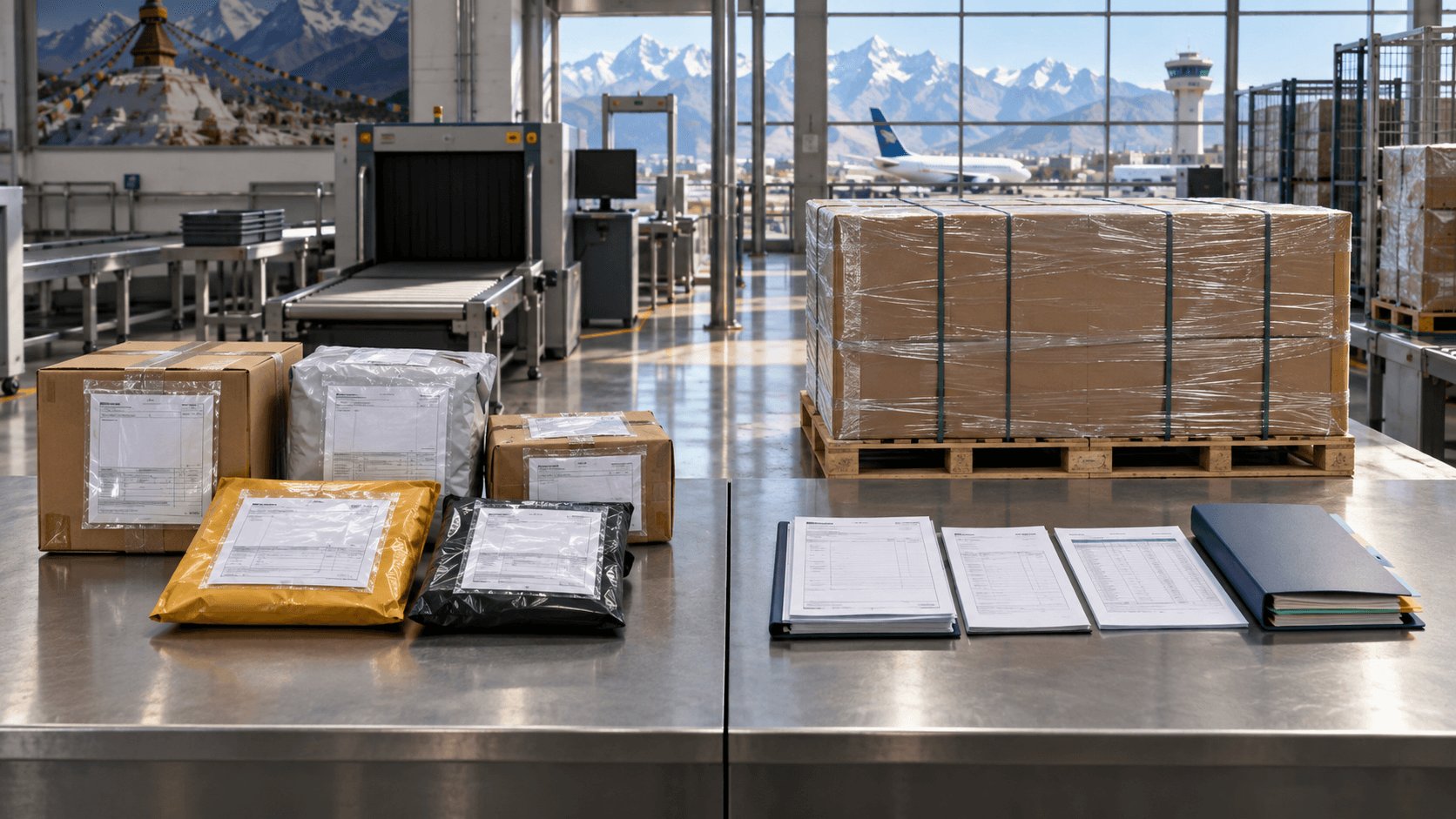
Do not assume that a small commercial parcel is duty-free or outside normal import rules. Nepal Customs assesses the commodity, value, origin, importer status, documentation and any permit requirement. Courier convenience changes the handling channel; it does not automatically remove duty, VAT or product controls. The Department of Customs publishes the current Integrated Tariff 2083/84 and Customs Regulations, 2083. Check the current sources for the shipment date because tariff lines, rates, procedures and restricted goods can change. An official Biratnagar Customs FAQ describes a simplified declaration for private-use goods valued up to NPR 5,000 and certain personal baggage. That is not a general tax-free threshold for routine e-commerce inventory. Business stock should be declared with the commercial purpose and importer requirements properly addressed. Use specific invoice descriptions such as material, model, function and quantity. “Accessories,” “gift” or “sample” may be too vague to classify the goods. Keep the purchase record, payment evidence, packing details and product literature available. Regulated foods, cosmetics, medicines, wireless products, batteries and other controlled items can need permits or special acceptance before dispatch. The Birgunj Customs FAQ explains CIF as cost, insurance and freight and lists common import documents. The final customs value and assessment follow Nepal’s applicable law and the facts of the shipment; a seller’s low invoice value is not automatically accepted. Consolidating orders may reduce duplicated handling and create a clearer shipment file, but it does not automatically lower the applicable tax rate. Before ordering, review the customs tariff guide, duty calculation guide, import permit guide and customs agent guide.
| Issue | Express parcel | Consolidated commercial shipment |
|---|---|---|
| Customs status | Still subject to classification, valuation, duty, tax and controls | Subject to the same core customs principles with a fuller freight file |
| Documents | Commercial invoice and transport data at minimum; permits depend on goods | Invoice, packing list, transport document, origin and permits as applicable |
| Importer setup | Commercial shipments may still require the appropriate business and customs registration | Importer registration, EXIM arrangements and agent appointment as applicable |
| Cost visibility | Convenience fees and taxes may appear late if terms are unclear | Charges are easier to model when the complete consolidation file is prepared |
| Best use | Samples, tests or urgent small quantities | Repeatable inventory replenishment and multi-carton stock |
Choose the lane before stock becomes urgent
Share the origin, product list, shipment size and required stock date. Sea Sky Cargo can compare practical courier, air, road and sea-linked options for Nepal.
5. Returns and reverse logistics
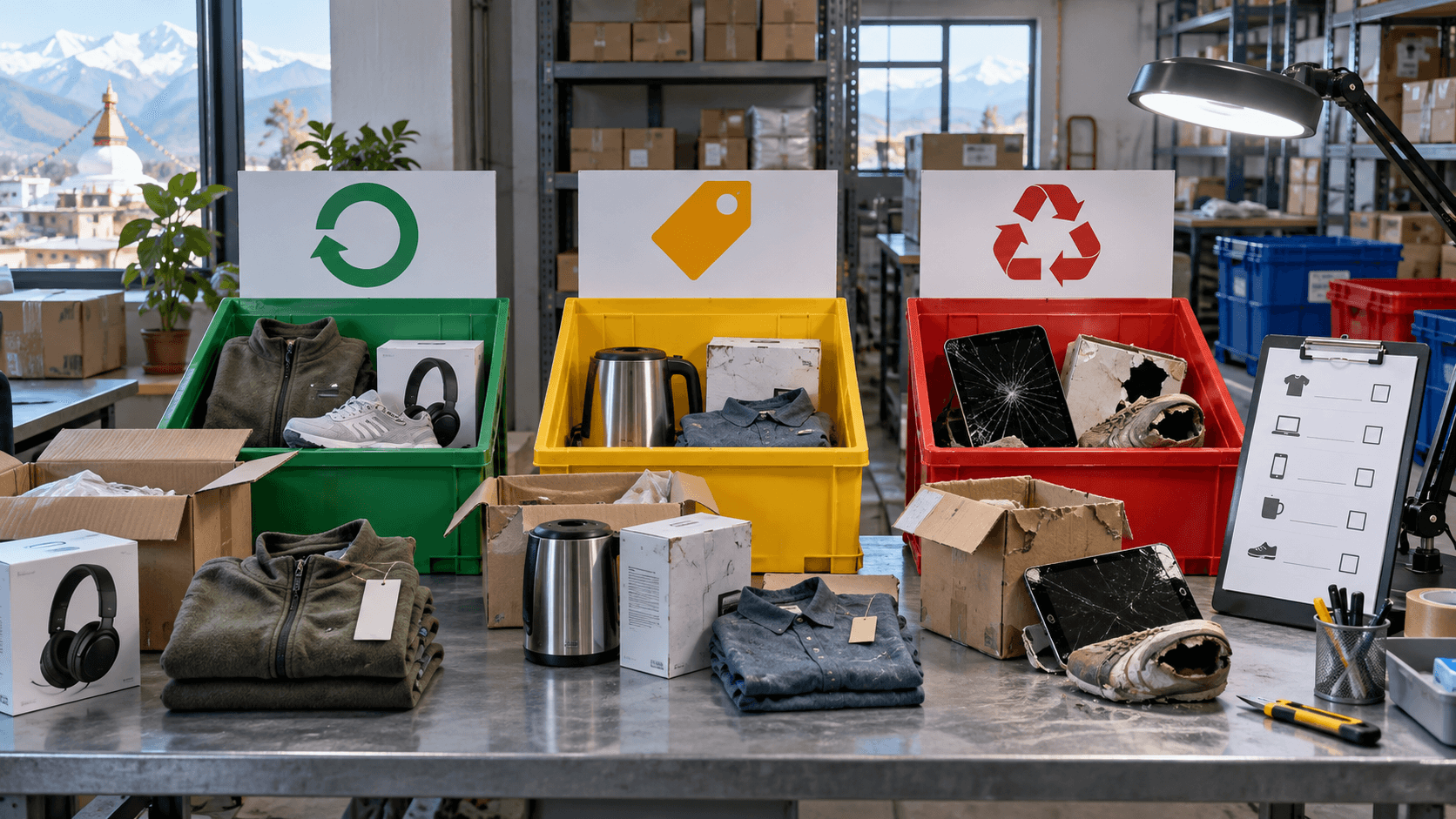
Returns are an operating flow, not a warehouse corner. Decide what happens before the first order ships. A returned item may be unopened and ready to restock, suitable for inspection or refurbishment, sellable at a discount, unsafe to resell, or subject to a supplier quality claim. A local-first return policy is often more economical than sending single items back across the border. Negotiate supplier remedies such as replacement units, spare parts, batch credits or consolidation with the next order. Cross-border return is more practical when the product is high-value, repairable, regulated or covered by an agreed supplier process. Track return reason codes: wrong item, customer changed mind, damage in transit, product defect, description mismatch, failed delivery and address problem. The pattern tells you whether to fix supplier quality, packaging, product information, picking accuracy or last-mile confirmation. Measure return rate, failed-delivery rate, refund cycle time, restock time and recovery value. The seller’s published return and refund terms should match the current Electronic Commerce Act and other applicable consumer rules.
| Return outcome | Warehouse action | Cross-border implication |
|---|---|---|
| Restock | Inspect seal, packaging, serial number and condition; return to available inventory | None if the item remains in Nepal stock |
| Refurbish or repackage | Record labor, replacement packaging and new condition grade | Supplier may provide parts, guidance or a commercial credit |
| Discount or alternate channel | Separate from full-price inventory and disclose condition | Usually handled locally if legally and commercially suitable |
| Quarantine | Hold damaged, unsafe, regulated or disputed goods in a controlled location | May require insurer, supplier or authority instructions |
| Return to supplier | Prepare serial, condition, reason and value evidence | Re-export and replacement import need transport and customs planning; do not send informally |
| Dispose | Authorize and record compliant disposal | Use only when resale, repair or return is unsuitable |
6. Common mistakes to avoid
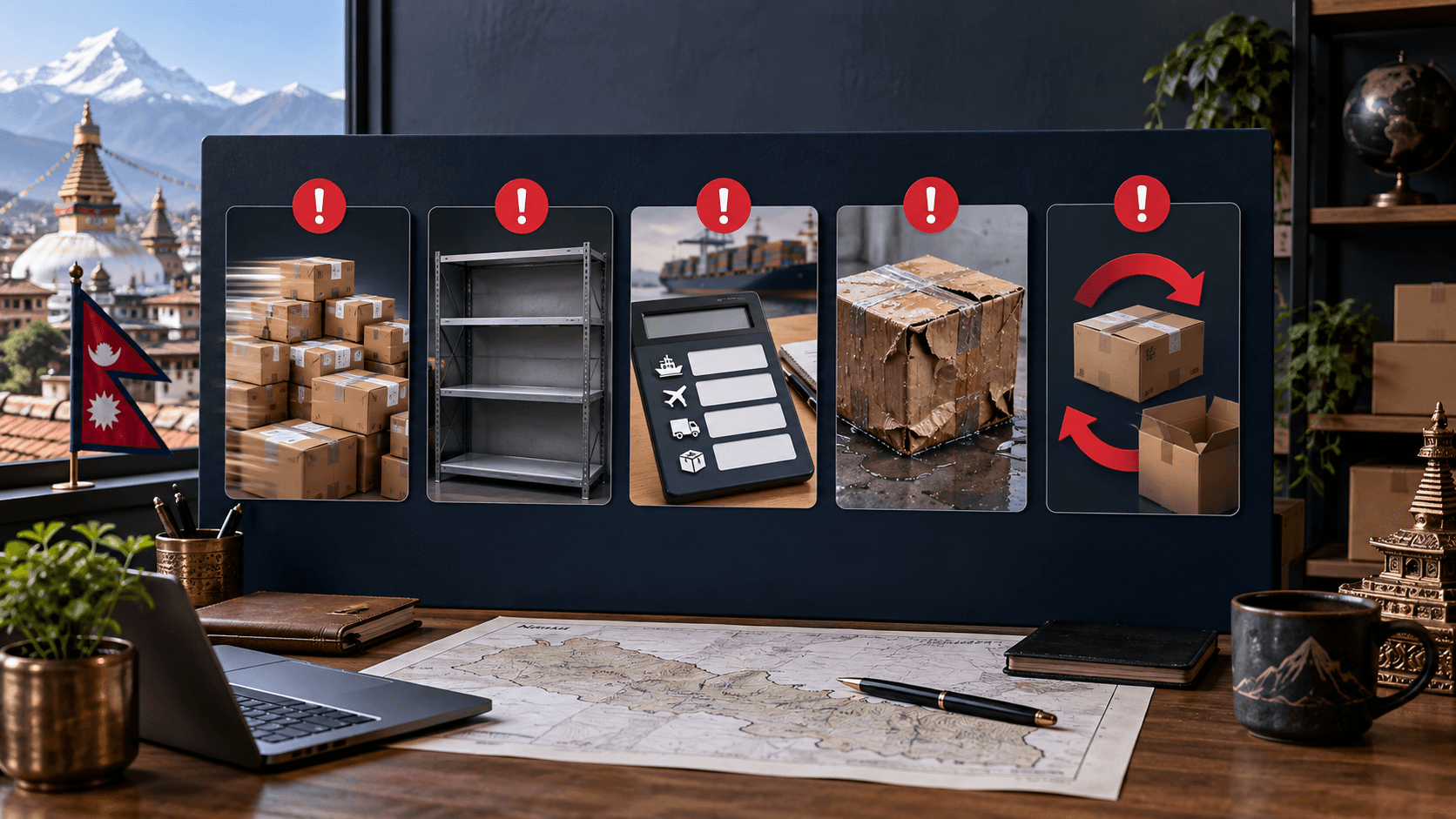
Most expensive e-commerce logistics problems begin before the freight booking. They come from ordering without a SKU forecast, accepting an incomplete quote or dispatching goods before the import file is ready. Also avoid buying a large quantity only because sea freight makes the unit shipping cost look low. Include working capital, shelf life, storage, markdown and demand uncertainty. A smaller shipment at a higher freight rate can be the better decision for a new product. Keep one shipment record with the purchase order, supplier contacts, invoice, packing list, permits, transport document, quotation, customs entries, tax receipts, delivery proof and exception notes. That file makes cost review and the next replenishment faster.
| Mistake | Why it hurts | Better control |
|---|---|---|
| Using courier for every replenishment | High cost per unit becomes hidden inside product margin | Reserve courier for tests and exceptions; compare consolidated air or road for repeat stock |
| Comparing only freight rates | Destination handling, customs and delivery appear later | Compare door-to-warehouse landed cost on identical assumptions |
| Treating every SKU equally | Slow products consume cash and fast freight while bestsellers stock out | Classify SKUs by velocity, margin and stockout impact |
| Vague invoices or guessed HS codes | Customs questions delay release and create assessment risk | Use precise descriptions and validate classification evidence before dispatch |
| Ordering before permits are checked | Controlled goods can be held, returned or incur storage | Confirm registrations, permits and carrier acceptance before supplier pickup |
| Weak packaging | Cartons fail during consolidation, rain exposure or repeated handling | Specify inner protection, carton strength, labels and palletization for the route |
| No returns process | Damaged and unopened goods mix together and lose resale value | Create inspection grades, reason codes, ownership and disposal authority |
| Promising the carrier ETA to customers | Supplier, customs and last-mile variability are ignored | Promise against a protected stock-available date with a buffer |
7. How Sea Sky Cargo supports e-commerce logistics
Sea Sky Cargo helps Nepal online sellers turn a product order into a practical movement plan. The work starts with the origin, commodity, dimensions, weight, value, target stock date and importer readiness. From there, the team can compare suitable lanes and coordinate the shipment through delivery. From China, the choice may be courier or air for testing and top-ups, road where the current route and cargo allow, or sea LCL for planned inventory. From India, direct road consolidation is often the starting point, with air or courier for urgency and rail where the lane and volume support it. From the Gulf, air serves urgent or valuable stock while sea-linked freight can support planned volume. Provide dimensions as well as weight. Air and courier quotes depend on chargeable weight, while sea LCL depends heavily on volume and handling points. Also share whether the shipment contains batteries, liquids, cosmetics, food, wireless devices or branded goods so acceptance and permit questions can be checked early. Sea Sky Cargo coordinates logistics and customs handling based on the agreed scope. Final classification, valuation, permits, tax assessment, carrier acceptance and release remain subject to the importer, authorities and service providers involved.
| Need | How Sea Sky Cargo can support |
|---|---|
| Mode and route comparison | Compare courier, consolidated air, road, rail-linked and sea-linked options for the actual origin and stock date |
| Origin coordination | Work with the supplier on pickup, cutoff, carton details and export handoff |
| Consolidation | Combine suitable cartons or purchase orders to reduce repeated handling and create a clearer freight plan |
| Customs preparation | Review the logistics document set and coordinate with the appointed customs process; authority approval remains outside the forwarder’s control |
| Door-to-warehouse movement | Coordinate international freight, border or airport handoffs and Nepal delivery according to the agreed scope |
| Shipment visibility | Share milestones and exceptions so the seller can adjust stock and customer communication |

8. Plan the next replenishment before the stockout
A useful quotation request is more than “How much per kilogram?” Send the supplier city and country, pickup terms, carton count, dimensions, gross weight, product descriptions, invoice value, target warehouse date and expected order frequency. Add the current Nepal stock cover for each important SKU.
Frequently asked questions
What is the best shipping mode for an e-commerce seller in Nepal? There is no universal best mode. Courier fits samples and emergencies, consolidated air fits time-sensitive stock, direct road is often effective from India, and sea LCL suits planned volume. Compare landed cost and stockout risk.
Are low-value courier parcels automatically duty-free? No. Do not assume a general commercial de minimis exemption. Customs treatment depends on the goods, value, origin, importer, documents and current law.
What is the difference between courier and consolidated air freight? Courier provides an integrated parcel network and is convenient for small shipments. Consolidated air freight combines cargo at a forwarder’s warehouse and can be more suitable for multi-carton inventory, with separate origin, airline, destination and customs stages.
Should India-origin goods move through an Indian seaport? Usually not. Supplier location and cargo determine the route, but direct road, rail, air or courier normally makes more sense for India-origin inventory.
How long does sea LCL take to Nepal? Use 3–6 weeks only as an early planning range. The actual schedule depends on origin pickup, consolidation cutoff, sailing, transshipment, Indian port handling, Nepal transit, customs and final delivery.
What should a seller send for a quotation? Send origin, product details, carton dimensions, weight, value, target date, Incoterm or pickup terms, permit status and delivery address. Photos or technical sheets help when the commodity needs acceptance or classification review.
Use the protected replenishment date to decide the mode. If base stock can wait, keep it on the economical lane. If a selected fast mover will run out before arrival, compare a small air top-up instead of moving the entire purchase order by air.

Building your e-commerce logistics plan?
Sea Sky Cargo can help compare routes, consolidate inventory and coordinate customs clearance for cross-border e-commerce shipments to Nepal.