1. Why monsoon changes everything for Nepal freight
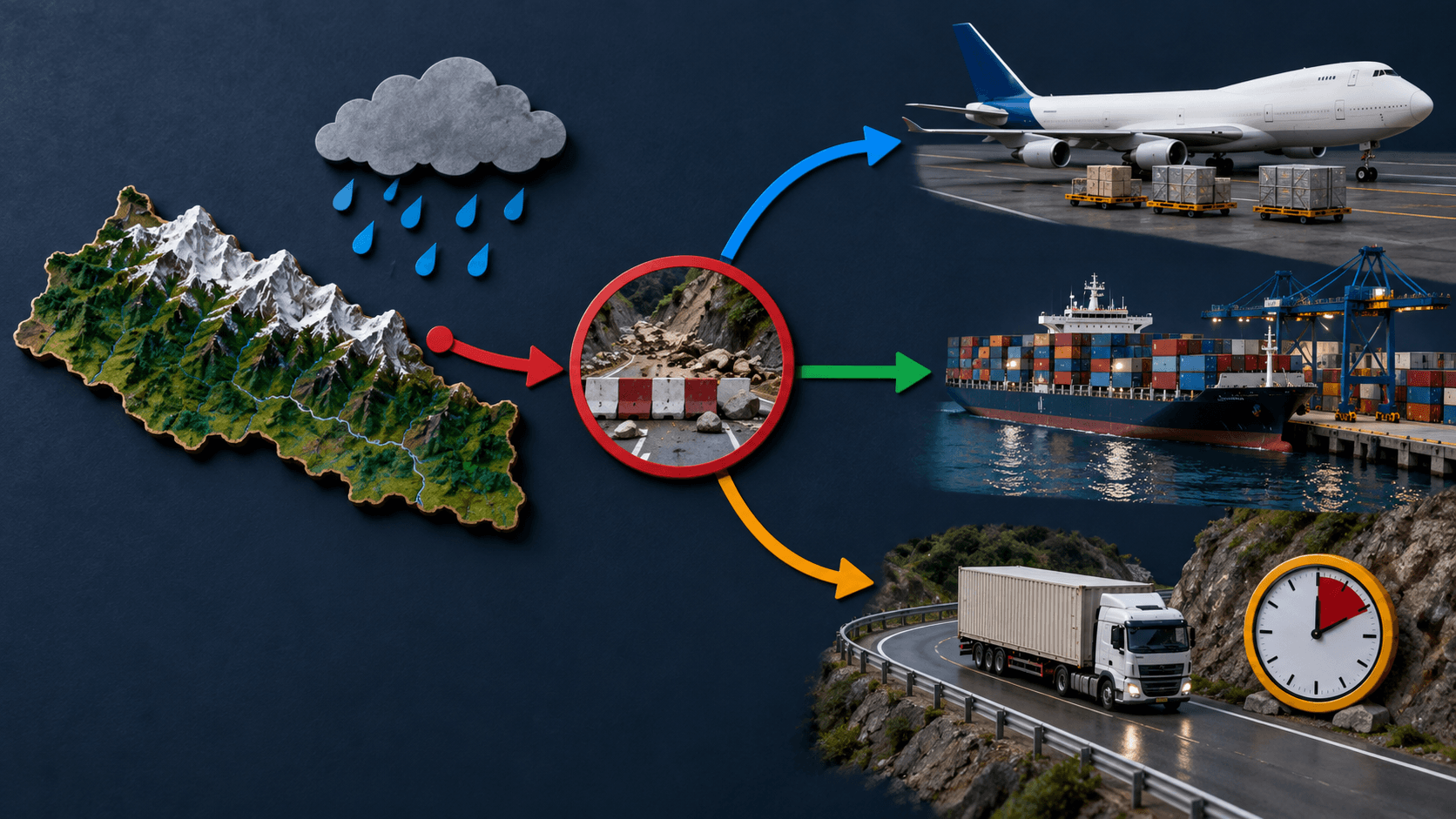
Nepal’s main rainy season normally falls between June and September. The Department of Hydrology and Meteorology (DHM) notes that this season delivers most of the country’s annual rainfall and is associated with floods and landslides. The exact onset, withdrawal and intensity vary by year, so a calendar date alone cannot describe the risk. For importers and exporters, the important issue is network exposure. Nepal is landlocked, mountain highways follow steep slopes and river valleys, and many international shipments depend on a small number of border, port and inland corridors. Heavy rain in one district can stop a truck far from its destination, while a damaged bridge or river-cut road can reduce capacity for days after the rainfall ends. DHM publishes a national seasonal monsoon outlook, while the National Disaster Risk Reduction and Management Authority (NDRRMA) approved a national monsoon preparedness and response plan for 2083. Businesses should translate those public warnings into inventory, transport and customer-service decisions before cargo is moving. Treat the monsoon plan as a chain of decisions rather than a single “extra days” number. The route, cargo sensitivity, inventory cover, customer deadline and recovery options all matter.
| Exposure | Why it matters in monsoon | Business consequence |
|---|---|---|
| Mountain highway | Slope failure, rockfall, debris and river erosion can block or narrow the road | Truck delay, route closure or transloading |
| River crossing | High flow can damage approaches, bridges and low sections | Long recovery time and limited detours |
| Border or ICD | Closures and road disruption can create yard congestion | Storage, detention and uncertain release-to-delivery time |
| Indian seaport | Heavy rain or Bay of Bengal weather can affect marine and landside operations | Vessel, terminal and rail or truck schedule changes |
| Kathmandu delivery | Valley traffic, drainage and restricted warehouse access add last-mile variability | Missed appointments and vehicle waiting |
2. Typical monsoon risks by trade corridor
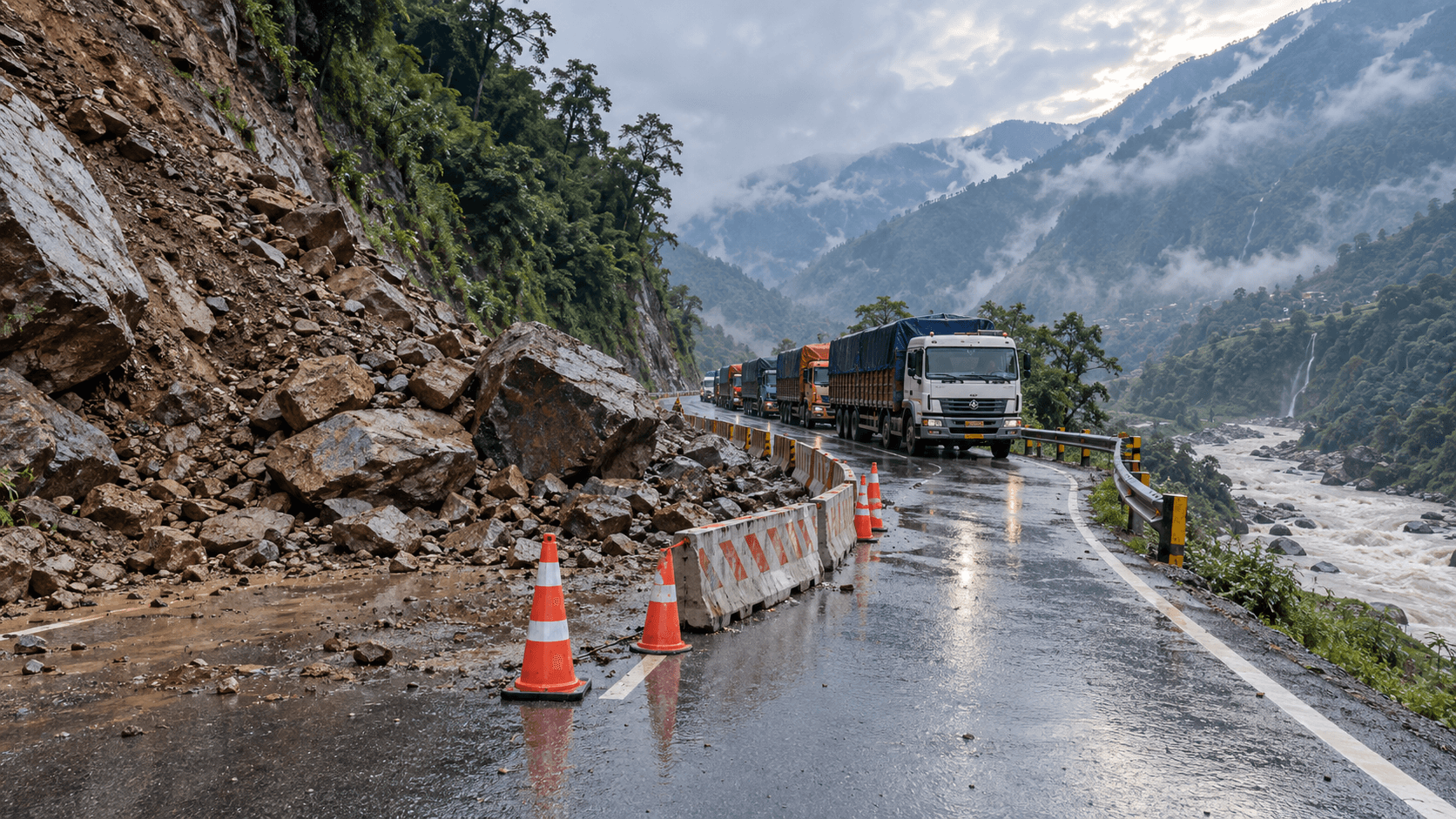
China–Nepal road corridors: Rasuwagadhi, Tatopani and Korala Northern corridors combine steep terrain, river valleys, high-altitude weather and constrained alternatives. Landslides, rockfall, road subsidence, bridge damage or an official border closure can stop cargo even when conditions elsewhere are normal. Korala may be an option for suitable cargo and current procedures, but it is not a universal substitute: the detour, road capacity, vehicle arrangement, customs process and final destination all need checking. Recent 2026 events show why businesses need more than one plan. After the 26 August Rasuwa flash flood, Nepal’s Ministry of Foreign Affairs reported major loss of life, infrastructure damage and missing persons and opened an official emergency control room. On 27 August, NDRRMA warned of continuing flood risk after satellite analysis indicated that blocked flow about 18 km upstream of Rasuwagadhi had formed an approximately 0.11-square-kilometre lake. For freight planning, the lesson is simple: conditions can change after the first event, and only current authority notices should trigger dispatch or reopening decisions. India–Nepal and Birgunj–Kathmandu corridors Sea-linked cargo from Kolkata, Haldia or Visakhapatnam can reach Birgunj and clear customs while the onward road movement remains exposed. The central trade corridor through the Narayanghat–Mugling and Prithvi Highway system can face landslides, river erosion, accidents, roadworks and congestion. Low-lying Terai roads and some border approaches may also flood. The Arniko Highway belongs to the Tatopani route and should not be used as shorthand for Birgunj traffic. Use the Department of Roads real-time road incident dashboard and official highway update page before dispatch. In September 2026, the Department reported that destructive Trishuli floods had damaged about 100 metres of the Prithvi Highway at Krishnabhir before the section was restored for full traffic. A reopening notice confirms a specific section and time; it does not guarantee that the whole route remains suitable for the booked vehicle. Indian seaports used for Nepal cargo Kolkata, Haldia, Visakhapatnam and other gateways can experience heavy rain, reduced visibility, landside flooding and cyclone-related operating controls. The India Meteorological Department publishes cyclone information and official bulletins. Importers should also follow the shipping line, terminal, rail operator and port advisories for the actual booking.
| Corridor | Primary monsoon exposure | Useful fallback question |
|---|---|---|
| Rasuwagadhi or Tatopani | Landslide, debris flow, flood, bridge or border closure | Can urgent future cargo move by air, and can non-urgent future cargo use a sea-linked route? |
| Korala | Long detour, limited capacity, high-altitude road and procedure constraints | Is the route operationally and legally suitable for this commodity and vehicle? |
| Birgunj to Kathmandu | Prithvi corridor incidents, congestion, river erosion and warehouse timing | Can delivery wait, use a confirmed alternative road or adjust the warehouse slot? |
| Indian seaport to Birgunj | Port weather, terminal backlog, rail or road connection changes | Is the container free-time and inland booking protected if the port schedule slips? |
3. How monsoon affects transit time, cost and cargo condition
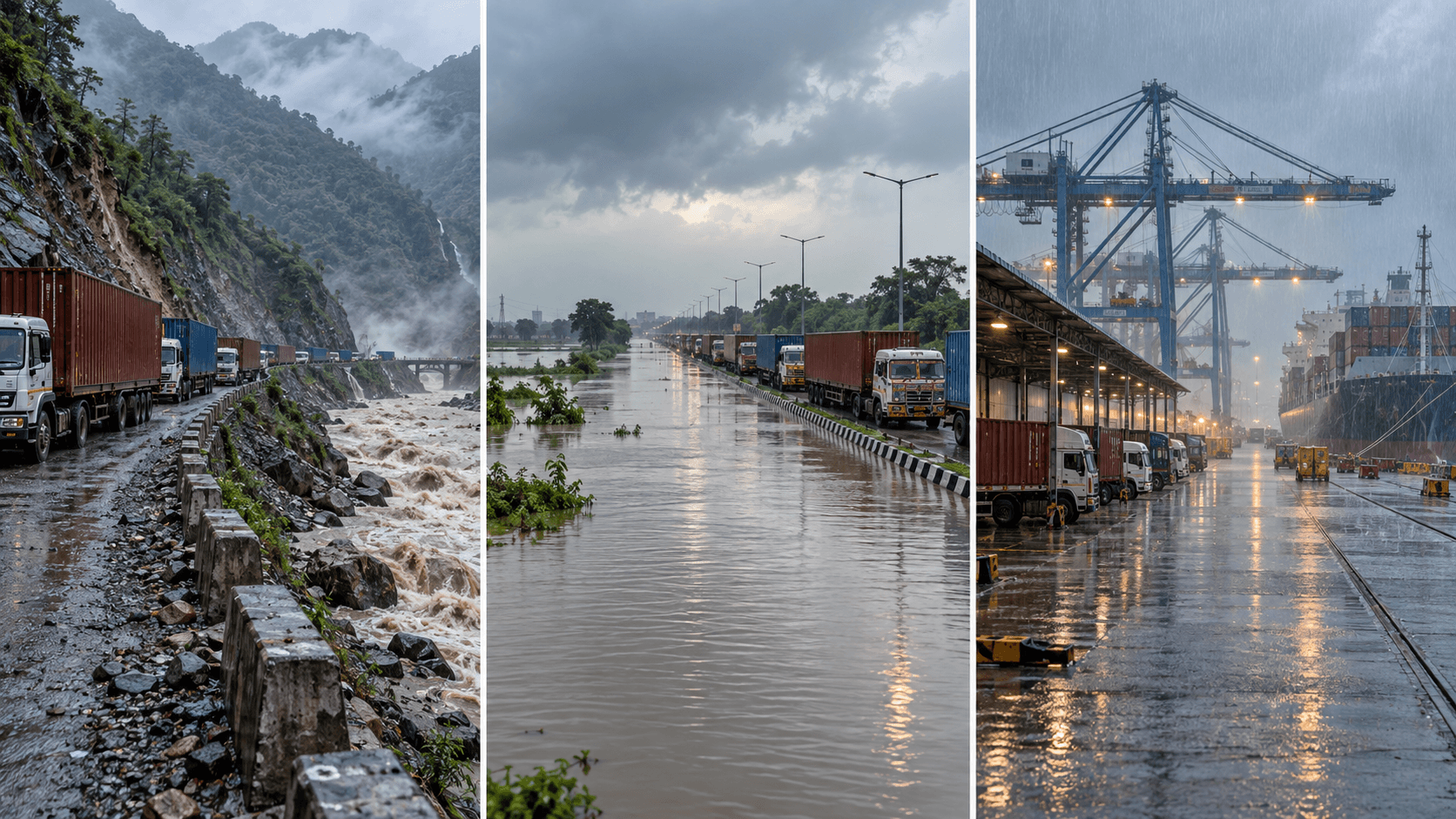
A monsoon delay is rarely one isolated event. A road closure can cause a truck queue; the queue can miss a warehouse appointment; the late unloading can affect empty-container return; and the extended cycle can reduce truck availability for the next shipment. That is why cost and time become more variable even when the base freight rate does not change. Avoid quoting one universal penalty such as “monsoon adds seven days.” A lane can run normally one week and close the next. Use a base transit range, a separate buffer for the current risk tier, and a written statement of what resets the estimate. When comparing alternatives, calculate cost of delay, not freight cost alone. Include lost sales, production downtime, contractual penalties, spoilage, emergency purchasing and the cost of holding more inventory. A higher air rate may be rational for a small critical shipment while remaining wasteful for routine stock. Cargo condition also needs active management. Waterproof outer wrapping, sealed liners, pallet covers, moisture control and covered loading reduce exposure, but no packaging makes unsafe transport acceptable. Inspect containers and vehicle bodies before loading, photograph condition at handoffs and report damage within the policy or carrier notice period. The freight cargo insurance guide explains common coverage questions and claim evidence. Actual flood, landslide and water-damage coverage depends on the wording, exclusions and endorsements in the specific policy.
| Impact | How it appears | Commercial exposure |
|---|---|---|
| Transit variability | Normal movement alternates with unpredictable stoppages | Delivery promises become ranges rather than fixed dates |
| Storage or detention | Cargo or equipment waits at a port, ICD, border yard or consignee | Extra charges may begin after contractual free time |
| Rerouting or transloading | Cargo uses another corridor or transfers to a different vehicle | Added handling, mileage, labor and damage risk |
| Emergency mode change | Critical goods move by air after a road plan fails | Higher freight cost but possibly lower business-loss cost |
| Water and moisture exposure | Rain enters through weak packaging or cargo sits in humid conditions | Wet cartons, corrosion, mold, label damage and rejected goods |
| Insurance event | Flood, landslide or handling causes loss or damage | Survey, notice and claim-document requirements |

4. Lead-time buffers: how much extra time to plan
The following ranges are business planning starting points, not official forecasts or delivery guarantees. Increase or remove the estimate when an authority has closed the road, a bridge is damaged, the border is suspended or the carrier cannot confirm capacity. Build the customer commitment from the protected date, not the optimistic carrier ETA. If a normal lane takes 12–16 days and the agreed monsoon buffer is five days, promise against the buffered range and explain what official closure would trigger a new date. Use a three-tier operating rule: Green: no relevant warning, route open and capacity confirmed. Move with the routine monsoon buffer. Amber: heavy-rain watch, recent incidents, partial opening or unstable ETA. Increase buffer, protect capacity and require a dispatch-day route check. Red: official closure, bridge or road failure, border suspension or unsafe access. Stop treating the movement as a normal transit estimate; hold safely and activate the agreed alternative. DHM’s rainfall watch map provides rainfall thresholds associated with potential landslide and high-flow risk, but it does not replace a road-status check. Weather, road, border and carrier signals must be read together. Revisit the buffer weekly and again at each handoff: supplier dispatch, vessel arrival, port release, ICD release, border transfer and truck gate-out. Buffer days are useful only while someone owns the decision.
| Lane or stage | Routine wet-season starting buffer | High-risk trigger response |
|---|---|---|
| China–Nepal road cargo | Add about 5–10 days to the normal, evidence-based lead time | At an active warning or repeated closure, use 10–15+ days only as a planning reserve, or hold and change mode for urgent future cargo |
| Indian port or Birgunj to Kathmandu inland leg | Add about 3–7 days | For critical stock in peak monsoon, consider 7–10+ days and confirm the road before truck dispatch |
| Air freight to Kathmandu | Add about 1–3 days for weather, capacity, customs and final delivery | Protect uplift early and keep a road-access contingency for delivery after airport release |
| Warehouse receiving | Reserve a flexible slot and at least one backup day | Keep labor, equipment and contacts ready for an ETA that changes after departure |

5. Mode shifts: when to move from road to air or sea
A mode shift works best when the trigger, decision owner and budget limit are agreed before disruption. Waiting until stock is already trapped at a border can remove the practical alternatives. Road to air: use air when the economic loss from delay is higher than the air-freight premium. Typical candidates include production spares, urgent samples, high-value replenishment and temperature-sensitive goods that airlines can accept. Do not assume every product, battery or chemical can fly. Road to sea: for China-origin cargo, sea is a forward-planning option rather than a rescue route for a truck already stranded near the border. It reduces dependence on a northern mountain crossing, but adds port, transit and inland handoffs and still leaves a Nepal road leg. Mixed strategy: pre-position critical spares before the heaviest rain, move base inventory on the economical lane and preserve air capacity for exceptions. Define the SKU, quantity and disruption trigger so every delay does not become an emergency air shipment. Compare the best shipping routes to Nepal, air freight process and sea freight guide before locking a backup mode.
| Situation | Possible action | Check before approving |
|---|---|---|
| Small urgent shipment; northern road closed or unstable | Move future or replaceable cargo by air to Kathmandu | Chargeable weight, airline acceptance, dangerous-goods rules, permits and TIA clearance readiness |
| Large non-urgent China-origin cargo not yet dispatched | Compare a Chinese seaport to Indian seaport route with onward Nepal transit | Longer total lead time, port pairing, transit documents, container free time and Birgunj-to-destination risk |
| Routine inventory plus a few critical SKUs | Split strategy: base volume by sea or road, urgent top-up by air | Separate documents, minimum shipment cost and stock-allocation plan |
| Cargo already at a disrupted border | Hold safely or use only an authority-approved, operationally confirmed alternative | Whether customs, carrier, equipment and cargo can legally transfer; avoid speculative rerouting |
| Kathmandu inland road disruption after Birgunj release | Delay gate-out, adjust receiving or use a confirmed alternative road when suitable | Storage, detention, driver safety, vehicle restrictions and current DoR advice |
Build the buffer before the weather warning appears
Share your route, cargo priority and required delivery date. Sea Sky Cargo can compare road, air and sea-linked options and prepare a monsoon contingency plan.
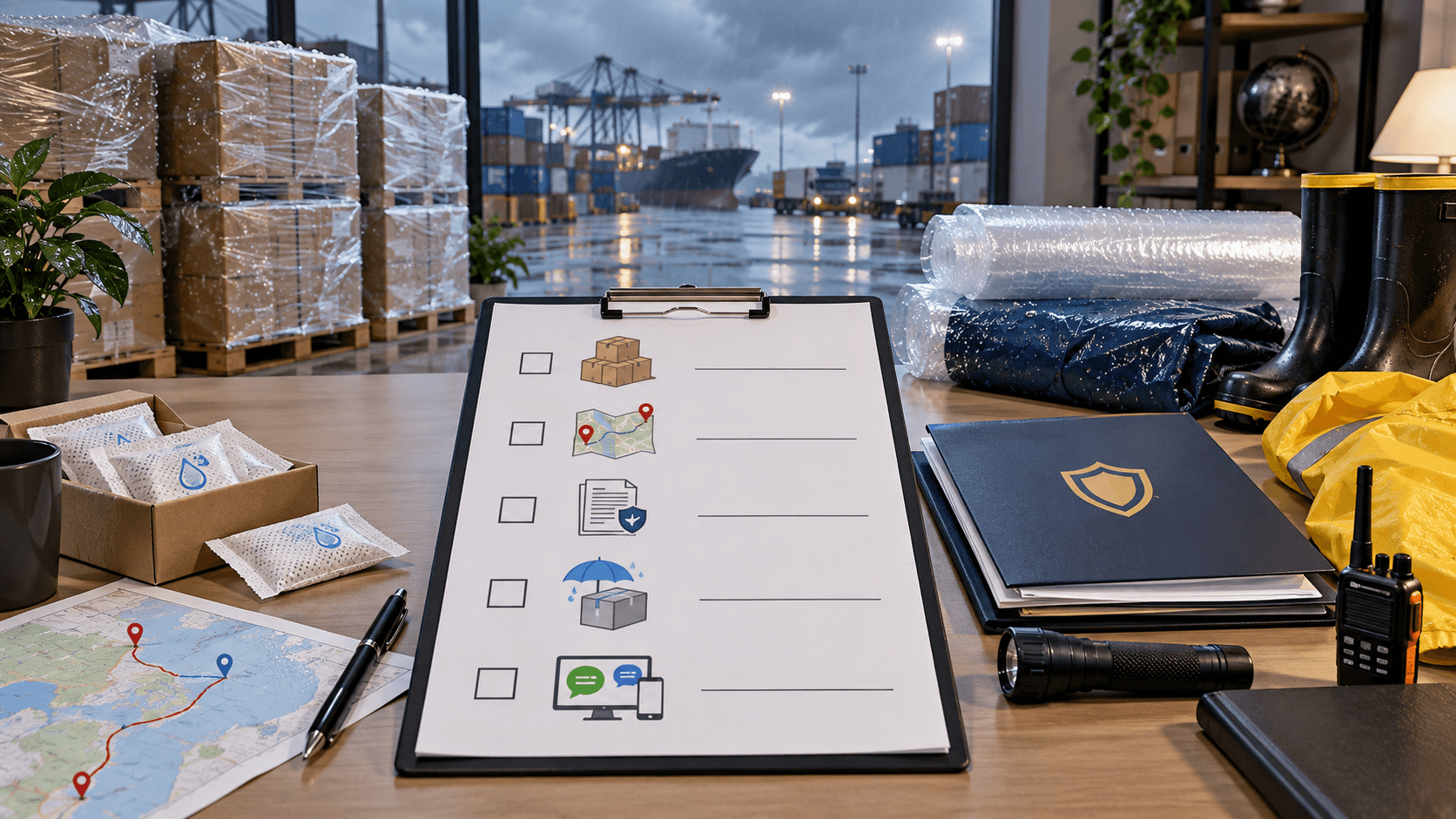
6. Pre-monsoon checklist for importers and exporters
Complete this review by May where possible, then refresh it when DHM issues the seasonal outlook. NDRRMA’s 2026 response command post also emphasized completing preparedness actions and implementing the national plan before incidents escalate.
Inventory and demand
- Identify SKUs that stop production, affect patient care, expire quickly or create the largest lost-sales risk.
- Bring forward festival, production and contract-critical stock when shelf life and cash flow allow.
- Set safety stock from real consumption and lane variability rather than a generic percentage.
- Name which items can be substituted, deferred or sourced locally during disruption.
Routes, modes and capacity
- Map the exact port, border, ICD, highway and final-delivery road for each major lane.
- Document one feasible alternative and the conditions under which it becomes usable.
- Pre-agree mode-shift triggers, quotation contacts, budget authority and maximum acceptable delay.
- Check truck, air and warehouse capacity before festival demand overlaps with monsoon disruption.
Documents and customs
- Confirm importer or exporter registrations, product permits and agent appointments remain valid.
- Standardize product descriptions, likely HS codes and supporting evidence to reduce avoidable queries.
- Prepare shipment-specific invoice, packing list, origin, insurance and transport records early.
- Know who handles clearance at TIA, Birgunj and each planned border point.
Packaging, storage and insurance
- Use sealed inner liners, water-resistant outer protection, pallet covers and moisture controls appropriate to the product.
- Keep cartons off wet floors and use covered loading and temporary storage.
- Inspect container roofs, doors, seals and drain paths before loading.
- Review policy territory, flood and water-damage terms, exclusions, deductibles, valuation and notice deadlines with the insurer or broker.
Communication and authority
- Create one weekly monsoon review with logistics, procurement, finance, sales and operations.
- Name who can approve extra storage, alternate trucking, air freight and customer-date changes.
- Use one verified update channel and record the source and time of every route status.
- Prepare customer messages that state facts, current impact, next checkpoint and revised range.
7. During monsoon: weekly practices that reduce disruption
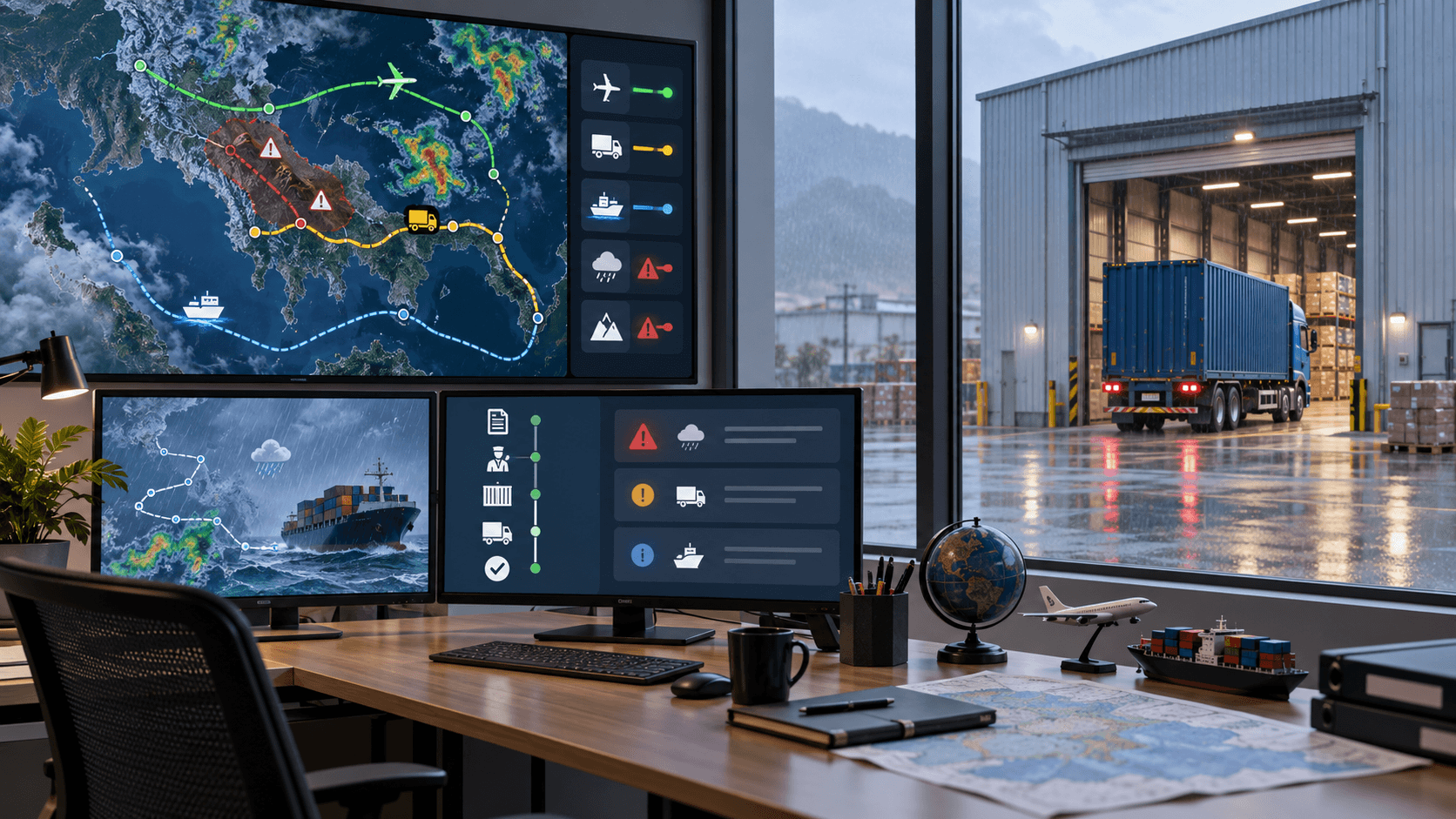
Preparedness becomes useful only when the team maintains it. Use a short weekly cycle, increasing to daily or event-based reviews when DHM, NDRRMA or the Department of Roads issues a relevant warning. Use primary alerts. DHM provides the weather and hydrology signal; the Department of Roads provides road incidents and openings; NDRRMA provides disaster coordination notices. A social-media post can flag something to investigate, but it should not be the only reason to send a truck onto or away from a route. For every shipment, record five milestones: last safe handoff, current physical location, customs status, next confirmed movement and next update time. “Delayed due to monsoon” is not an operational update. Book earlier than normal when capacity is tightening, but avoid sending a truck simply to join an unsafe queue. Safe holding at the correct terminal or warehouse may be better than premature gate-out. After a serious incident, compare the planned trigger with the actual response. If the team switched too late, lacked approval or could not reach the warehouse, update the playbook while the evidence is still fresh.
| Practice | Minimum output | Decision it supports |
|---|---|---|
| Weather and river review | Relevant DHM outlook, rainfall or flood alert with timestamp | Whether corridor risk moves from green to amber or red |
| Road and border review | Official DoR status plus carrier or border operating confirmation | Dispatch, hold, reroute or revised ETA |
| Shipment triage | Critical, standard and deferrable list with required dates | Which cargo receives scarce capacity or mode-change budget |
| Capacity check | Confirmed truck, airline, consolidation and warehouse availability | Whether the plan is bookable rather than theoretical |
| Customer communication | Affected order list, current range and next update time | Which promises must change before they are missed |
| Incident review | Cause, response, cost and improvement action | How the next disruption is handled better |

8. How Sea Sky Cargo supports monsoon logistics
Sea Sky Cargo can help importers and exporters turn public warnings and shipment facts into a practical operating plan. The service scope depends on the route, cargo, partners and current authority instructions.
- Route-risk review: map the booked corridor, current handoffs, known weak points and feasible alternatives.
- Mode comparison: compare road, air and sea-linked options using total time, cost, cargo acceptance and operational readiness.
- Customs and terminal coordination: align documents and milestones with the customs agent, TIA, Birgunj or the relevant border and terminal parties.
- Capacity and dispatch planning: match the risk tier with vehicle, airline, consolidation and warehouse availability.
- Milestone alerts: report release, hold, departure, route progress, revised range and next update time.
- Cargo protection: review packaging and handoff evidence requirements with the shipper and service partners.
- Claim-document support: help collect transport records, photographs, notices and handoff evidence when cargo is damaged; policy interpretation and claim decisions remain with the insurer or broker.
For regular lanes, Sea Sky Cargo can document a monsoon playbook with contact roles, risk tiers, buffer rules, alternate quotes and customer communication checkpoints. The plan is then refreshed against current official information rather than treated as a permanent route guarantee.
The China–Nepal border disruption guide, Birgunj-to-Kathmandu trucking guide and cross-border shipping guide provide route-specific detail for the most common handoffs.
9. Planning your monsoon shipments?
Monsoon timing is broadly predictable; each incident is not. Businesses protect supply by deciding in advance which cargo is critical, how much time and stock they can absorb, which alternate mode is genuinely bookable, and who has authority to act. Send Sea Sky Cargo the origin, destination, cargo description, weight and dimensions, preferred mode, required delivery date, inventory impact and current booking status. The team can assess the exposed handoffs and prepare an itemized plan. Frequently asked questions Sea Sky Cargo can help assess route risks, design lead-time buffers and arrange road, air or sea options to keep your supply chain moving.
| Question | Practical answer |
|---|---|
| When is Nepal’s monsoon season? | The main monsoon season normally runs from June through September, but onset, withdrawal and intense rainfall vary. Use the current DHM outlook and warnings. |
| How many buffer days should an importer add? | Use a lane-specific starting range: often 5–10 days for China–Nepal road cargo, 3–7 days for the India-port or Birgunj inland leg, and 1–3 days around air, customs and delivery. Increase or replace the estimate when official closures occur. |
| Should urgent China cargo always move by air? | No. Compare urgency, cargo acceptance, permits, chargeable weight, value and cost of delay. Air suits some critical shipments but not every commodity or budget. |
| Can sea freight avoid all monsoon risk? | No. It can reduce reliance on northern mountain roads for future China-origin cargo, but port weather, Indian transit, Birgunj handling and Nepal inland delivery still carry risk. |
| Where should businesses check current road and weather status? | Use DHM weather and hydrology products, the Department of Roads incident dashboard, NDRRMA notices and shipment-specific carrier or border confirmations. |

Planning imports or exports during monsoon?
Sea Sky Cargo can help assess route risks, design lead-time buffers and arrange road, air or sea options to keep your supply chain moving.