Why Guangzhou is an important origin for Nepal imports
Guangzhou and the wider Pearl River Delta give Nepal importers access to dense manufacturing, wholesale and export-support networks. Suppliers in Guangzhou, Foshan, Dongguan and Shenzhen can feed one air-freight plan when the cargo, documents and export responsibilities are coordinated before pickup.
Common commercial cargo sourced from the region includes:
- Consumer electronics, accessories, LED products and small appliances
- Ready-made garments, fabrics, trims and fashion accessories
- Packaging machines, light industrial equipment and replacement parts
- Retail, household, promotional and seasonal goods
- Samples and urgent inventory for product launches or customer orders
Air freight is strongest when the shipment is compact, valuable or time-sensitive. It may also protect an importer when a missed selling season, production stoppage or stock-out would cost more than the air-freight premium.
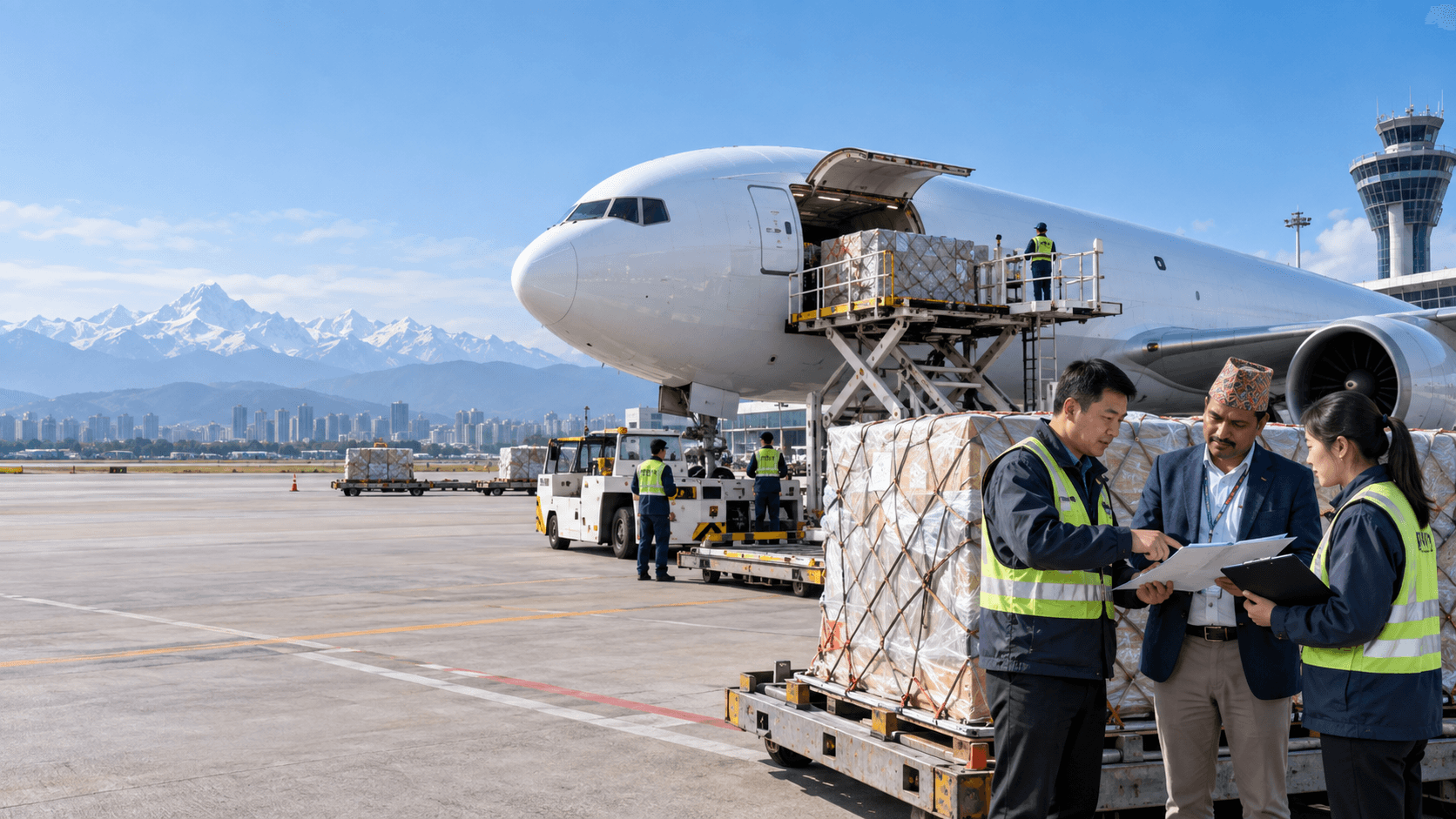
The route is more than an airport pair. A complete plan can include supplier pickup, consolidation, China export handling, airline acceptance, security screening, the flight to Kathmandu, Nepal Customs and delivery to the buyer's warehouse.
For the broader process, review Sea Sky's air freight service and the detailed air freight in Nepal guide.

Air freight options from Guangzhou to Kathmandu
Cargo normally departs through Guangzhou Baiyun International Airport and arrives through Tribhuvan International Airport in Kathmandu. The available plan can change with airline schedules, aircraft type, cargo restrictions and current capacity.
A quotation may use:
- A nonstop service when a suitable flight, space and cargo acceptance are available
- A one-stop or connecting service through a regional hub
- A consolidated service that combines compatible shipments before uplift
- A priority option for urgent cargo with tighter handling and connection planning
- An airport-to-airport, airport-to-door or complete door-to-door scope
Fewer connections can reduce handling and missed-connection exposure, but a connecting service may offer better capacity or a more workable rate. Compare the full arrival plan rather than assuming that the shortest-looking flight is automatically the best choice.
Ask the forwarder to identify the proposed airline, number of connections, estimated departure, cargo cutoff, destination handling scope and whether the booking is confirmed or still subject to space.
Flight availability should be reconfirmed close to the cargo-ready date. A route shown in an early quotation is a planning proposal, not a guaranteed schedule.
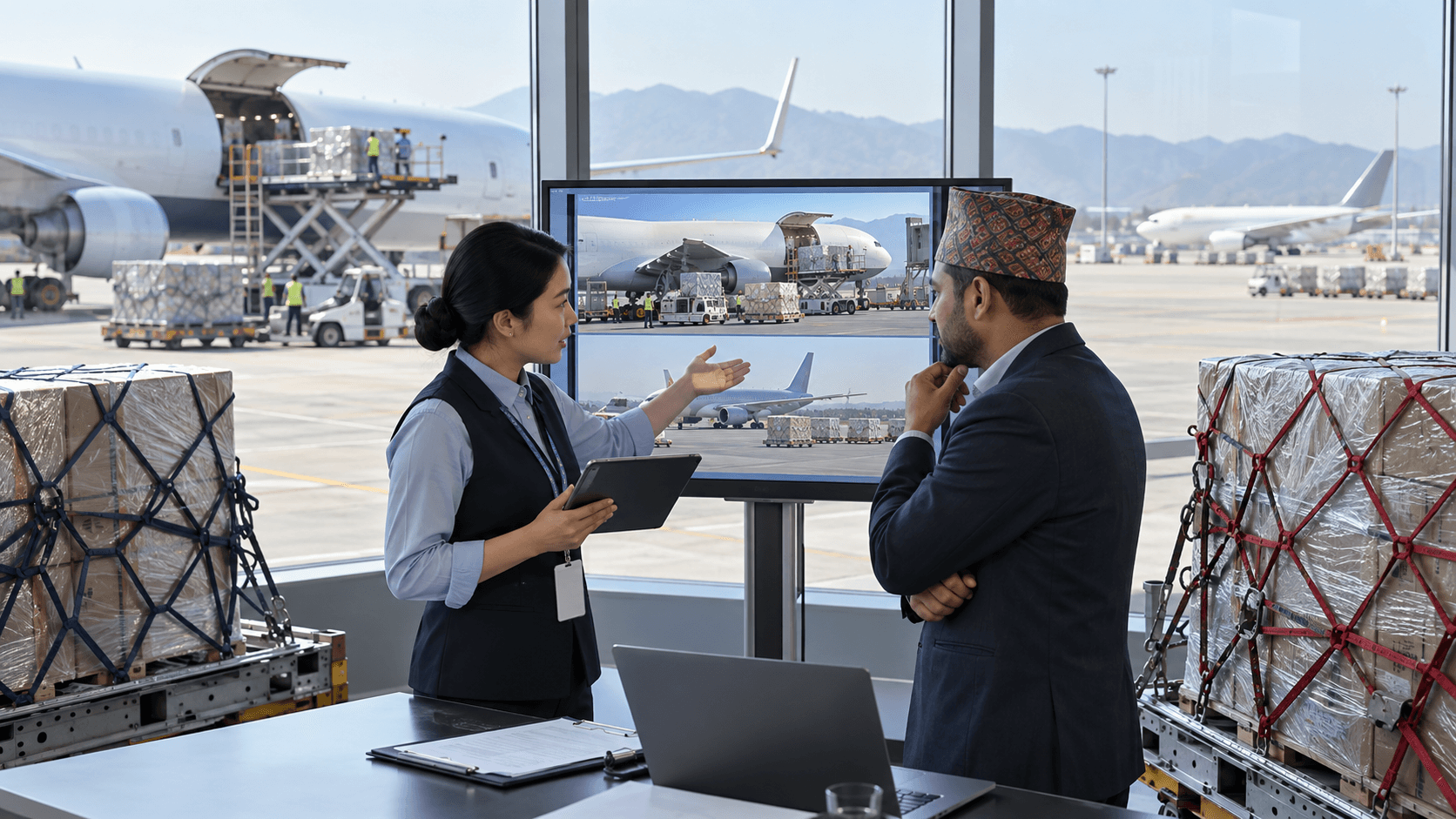
Transit time and capacity planning
Transit time should be measured from the agreed pickup point to the delivery point, not only from aircraft departure to arrival. Supplier readiness, export processing, airline cutoff, screening, connections, TIA handling, Customs and final delivery can each add time.
For early planning, an urgent door-to-door shipment may be estimated at roughly 3 to 6 business days, while a standard or consolidated movement may require about 5 to 10 business days or longer. These are indicative windows only. The confirmed route, cargo acceptance, documents and Customs outcome decide the actual timing.
Capacity and rates can tighten around:
- Dashain and Tihar inventory deadlines
- Year-end retail and e-commerce demand
- Major sourcing fairs and factory production peaks in southern China
- Factory closures and holiday periods
- Weather, airspace or operational disruption
- Periods when road-route uncertainty moves urgent cargo to air
Book early when the delivery deadline is fixed, the cargo is non-stackable or the pieces are large. A booking request can still be rejected or rolled when the final packed dimensions, dangerous-goods status or commodity description differ from the quotation.
Build a small buffer for document questions and Customs. Promising a customer the airline arrival date as the delivery date leaves no room for destination handling or release.
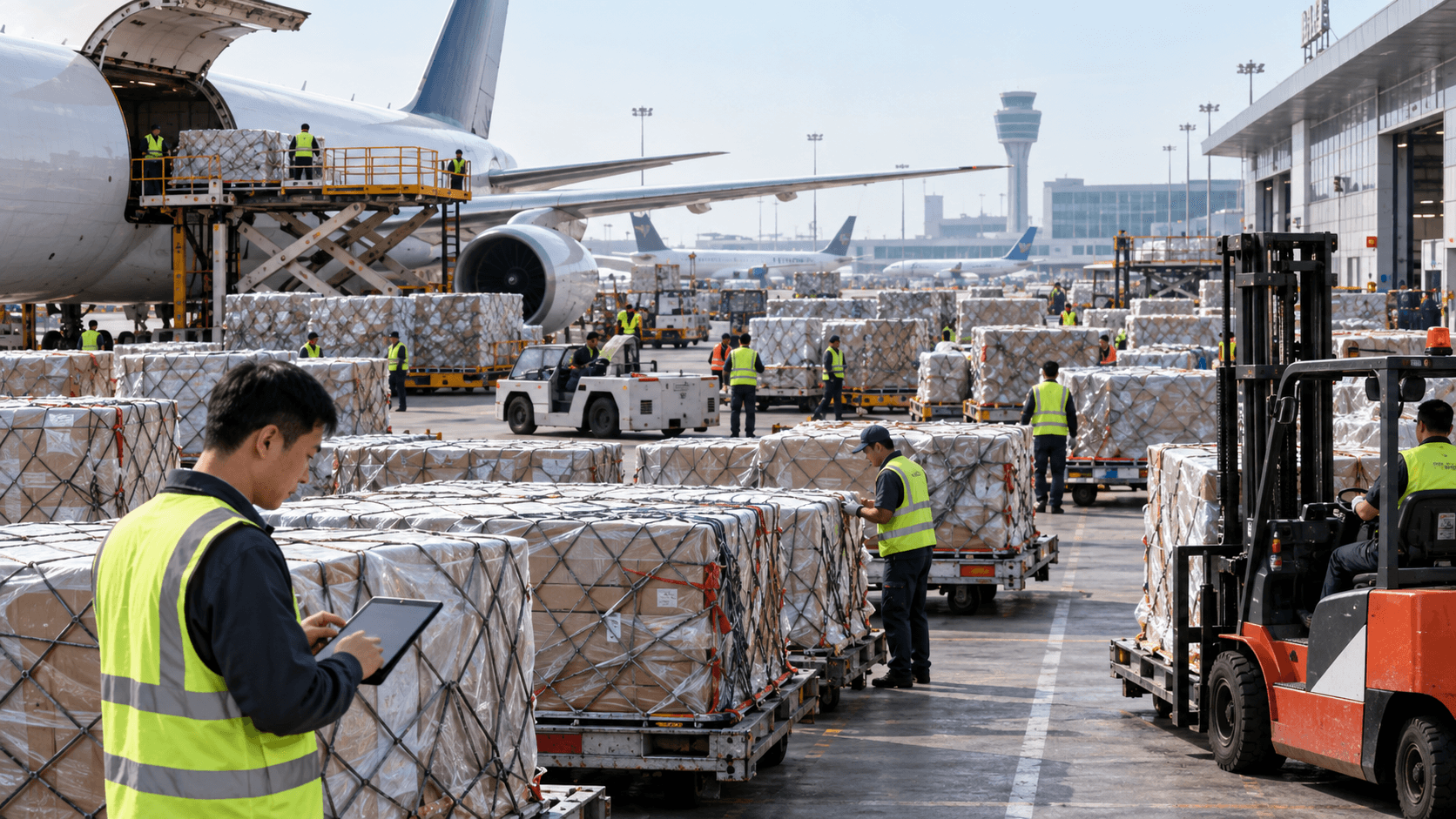
How Guangzhou-to-Nepal air freight costs are calculated
Air cargo is generally rated using chargeable weight. This is normally the higher of the actual gross weight and the volumetric weight, subject to the airline's tariff, minimum charge, divisor and rounding rules.
A common planning formula is length x width x height in centimetres divided by 6,000. IATA material uses 6,000 as the general volumetric rule, but the booked carrier's calculation must control the final quotation.
For example, a carton measuring 100 x 80 x 60 cm occupies 480,000 cubic centimetres. Using an illustrative divisor of 6,000 gives 80 kg volumetric weight. If the actual packed weight is 55 kg, the planning chargeable weight may be 80 kg. This example is not a live CAN-KTM tariff.
The complete cost can include:
- Supplier pickup and Guangzhou warehouse handling
- Export documents, screening and terminal acceptance
- Base air freight plus fuel, security and carrier surcharges
- Origin and destination terminal charges
- Customs support, permits, inspection and storage exposure
- Duties, VAT and other government assessments
- Airport collection and delivery inside Nepal
- Cargo insurance when arranged
Compare complete scopes. An inexpensive airport-to-airport rate can cost more after pickup, terminal handling, clearance and delivery are added. For government-charge planning, use the Nepal import duty guide.
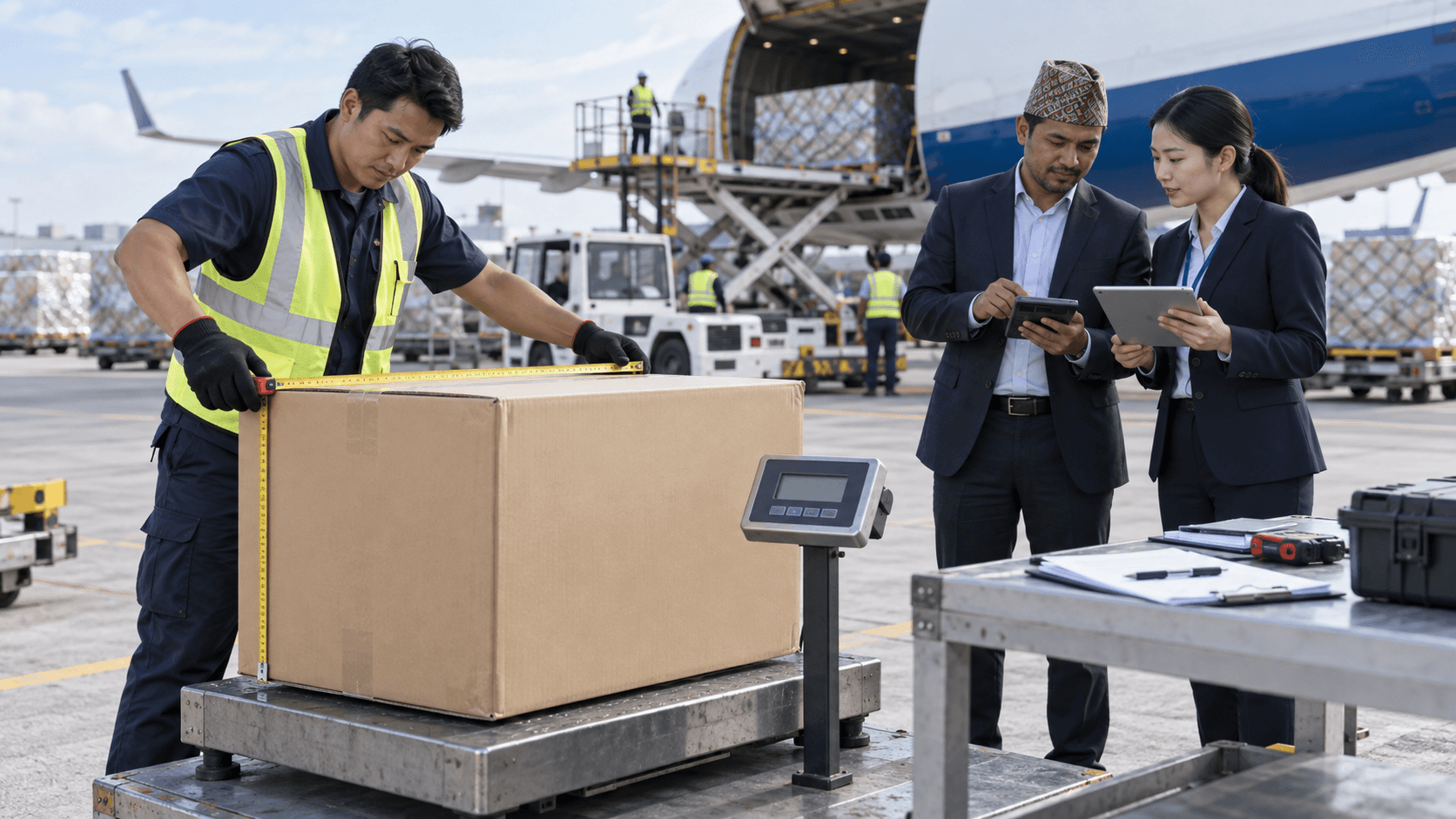
Documents required before the cargo leaves Guangzhou
A clean document file should be prepared before pickup or airline delivery. The exact list depends on the product, seller, buyer, export arrangement and Nepal import requirements.
Commercial shipments commonly require:
- Commercial invoice with seller, buyer, precise product description, value, currency and Incoterm
- Packing list with package count, contents, dimensions, net weight and gross weight
- Air waybill with shipper, consignee, route and cargo information
- Certificate of origin when required
- China export records and authorization under the agreed supplier or exporter arrangement
- Nepal importer registration and Customs authorization where applicable
- Insurance certificate when cargo cover is purchased
- Product-specific licence, permit, test report or health and safety certificate
Product names, model details, quantities, values, weights and package counts should agree across the invoice, packing list, booking and permits. Descriptions such as 'parts', 'accessories' or 'samples' are usually too vague on their own.
Confirm the HS classification before dispatch, but remember that Customs retains final authority. The wrong HS code guide explains how classification errors can affect duty, permits and release.
Keep supplier and importer names consistent. A last-minute consignee change can require revised transport documents and may delay arrival processing.

Quoting Nepal-bound cargo for a client?
Share the route, cargo type, timing and open questions. Sea Sky can check the destination path before you promise a rate.
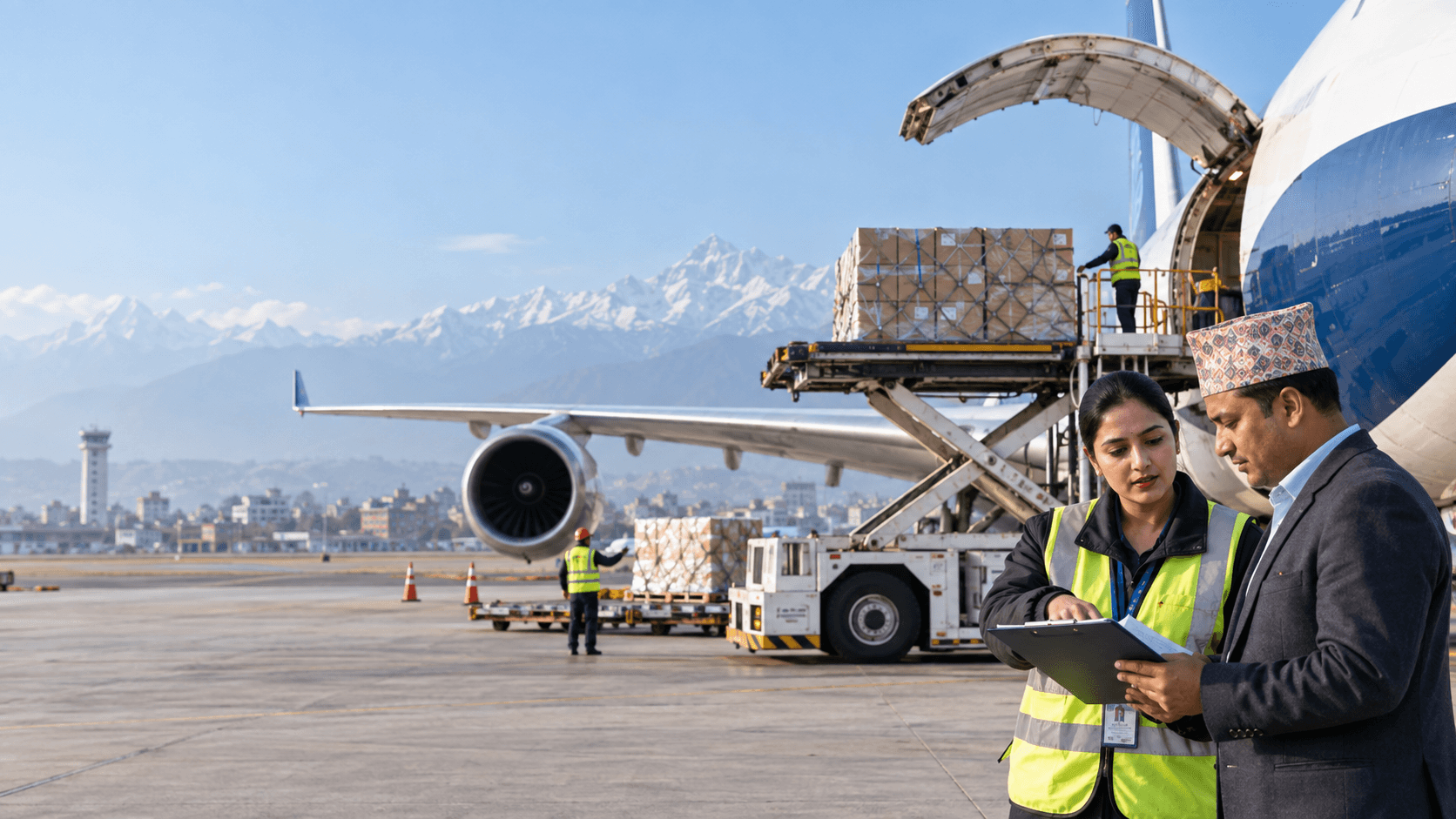
Nepal Customs clearance and final delivery from TIA
Destination preparation should begin before the aircraft arrives. The consignee and appointed customs professional need the invoice, packing list, air waybill, product details, permits and authorization early enough to identify missing information.
Nepal Customs uses NECAS for goods declarations and has an air-cargo manifest process at Tribhuvan International Airport. Advance data can support pre-arrival work, but it does not guarantee release or prevent Customs from requesting information or inspection.
The arrival process can include:
- Matching the manifest, air waybill and consignee details
- Confirming product classification and customs value
- Submitting licences, certificates or other approvals
- Responding to document queries or physical inspection
- Paying assessed duties, VAT, terminal and handling charges
- Obtaining release and arranging airport collection
- Delivering to the agreed Kathmandu or out-of-valley destination
Customs authorities make the final decisions on classification, valuation, admissibility, inspection and release. A forwarder can coordinate the file and communicate with the licensed professionals, but it cannot promise a Customs outcome.
For delivery outside Kathmandu Valley, confirm vehicle type, road access, unloading responsibility, receiving hours and any temperature or security requirement before arrival.
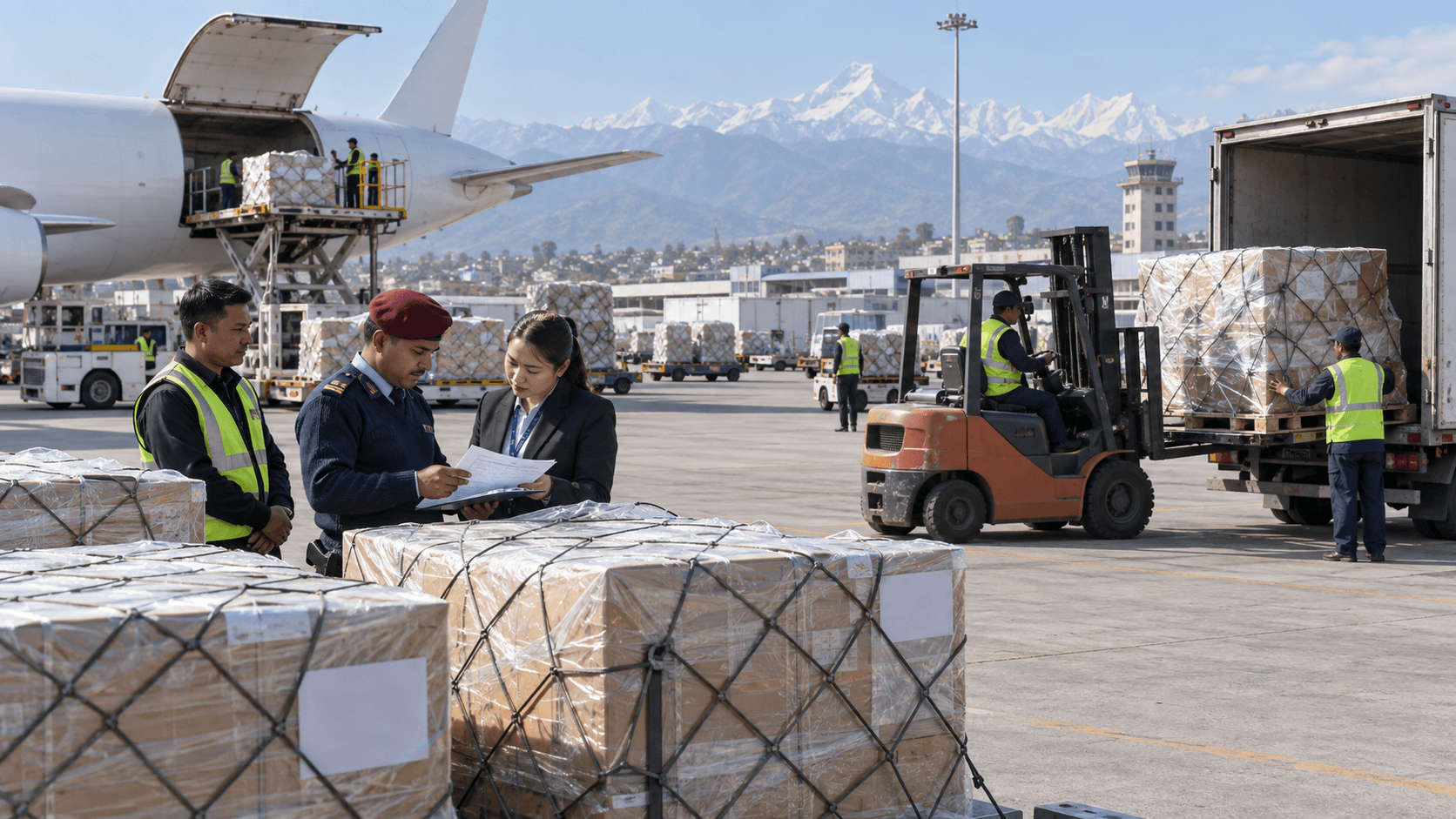
Restricted and sensitive goods need advance acceptance
Never wait until airport delivery to disclose a battery, liquid, chemical, magnet, medicine, food product or other regulated characteristic. The airline, route and countries involved may impose different acceptance, packaging and documentation conditions.
Goods that commonly need extra review include:
- Lithium, sodium-ion or other batteries and battery-powered equipment
- Liquids, chemicals, aerosols, magnets and dangerous goods
- Telecom and radio equipment that may need type approval
- Medicine, medical devices and temperature-sensitive products
- Food, cosmetics, supplements, plants and animal-origin products
- High-value electronics and fragile precision equipment
IATA's 2026 battery guidance reflects current dangerous-goods requirements, including changed conditions affecting some batteries packed with equipment and battery-powered vehicles. Classification, state of charge, testing, packing, marking and documentation can all matter. Use the current rules and the booked carrier's variations, not an old supplier template.
A supplier saying that an item is 'not dangerous' is not enough evidence. Obtain the technical product information and have the shipment reviewed by a competent party before booking.
High-value and sensitive cargo also needs an insurance decision. Carrier liability can be limited, so review the freight and cargo insurance guide before the shipment risk begins.

When to choose air freight instead of sea or road
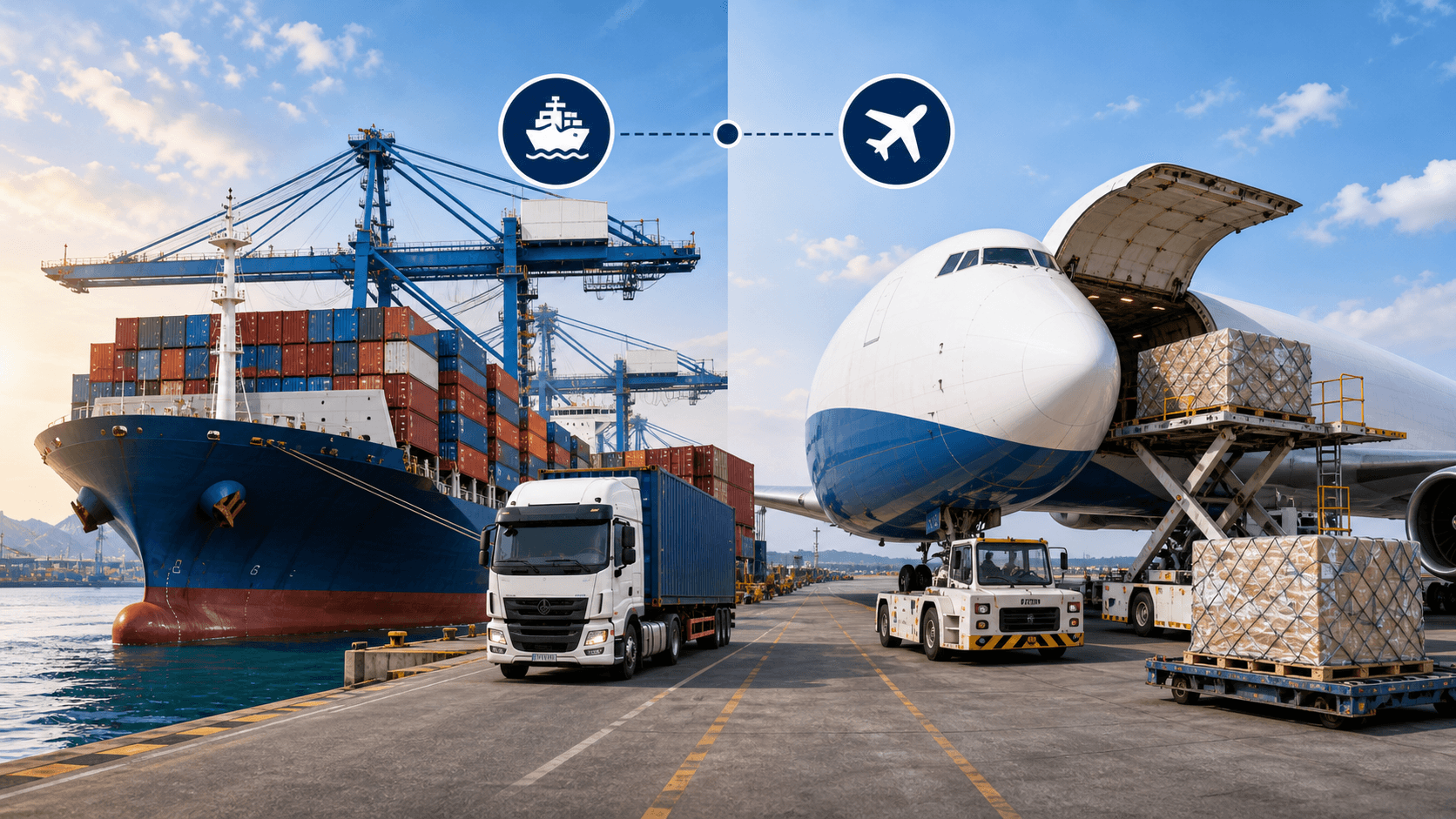
Air freight is usually the first mode to compare when urgency, product value or business interruption matters more than the lowest transport rate. Sea or road can be more suitable when the cargo is large, heavy or planned far enough ahead.
- Choose air for urgent spares, launch inventory, compact electronics, samples and approved time-sensitive cargo.
- Compare road for regional China-Nepal cargo when border, road, permit and weather conditions are workable.
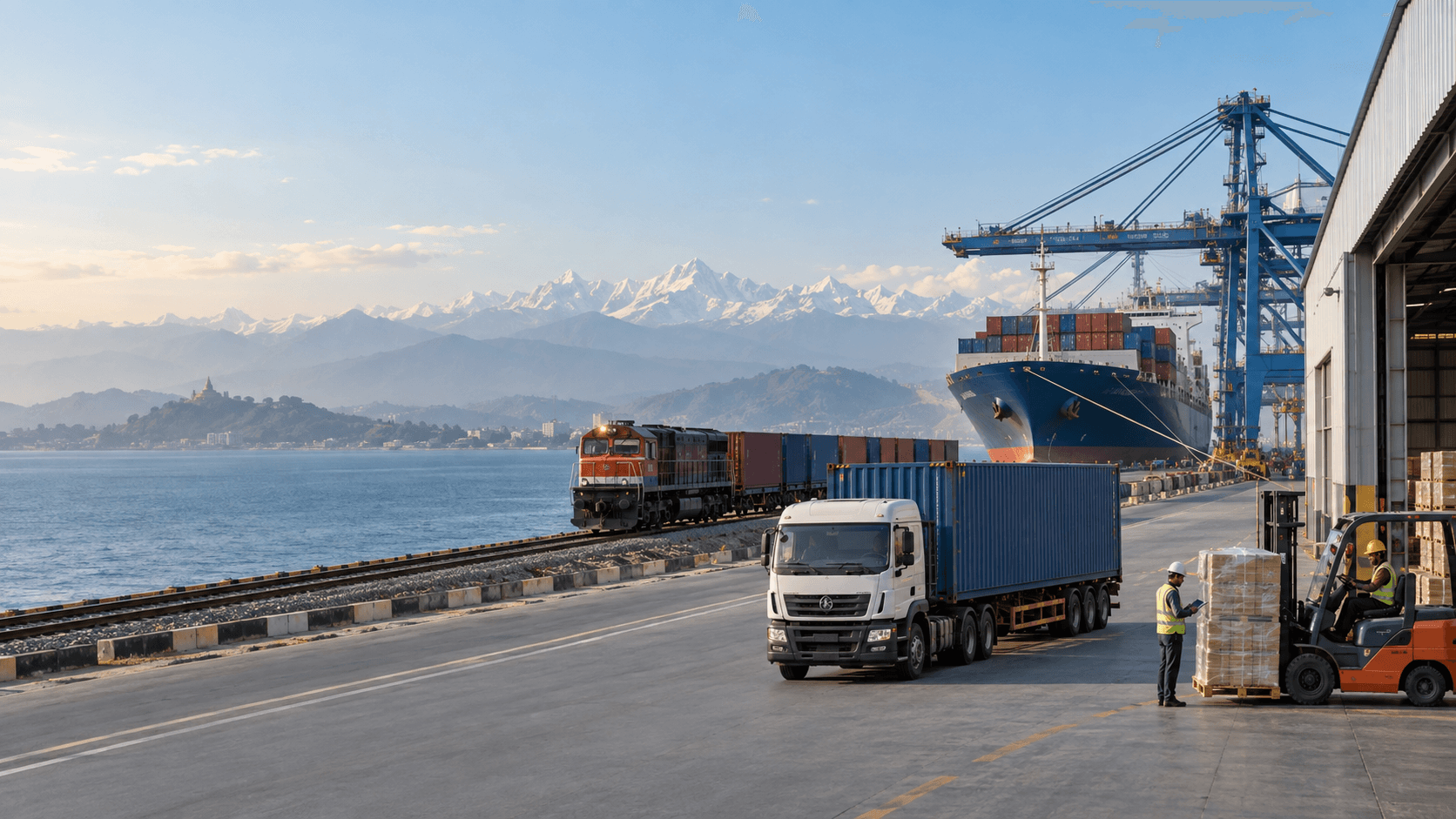
- Compare sea plus inland transit for larger planned orders that can tolerate a longer lead time.
- Consider a split shipment when a small urgent quantity can move by air and the replenishment balance can use a lower-cost mode.
A northern road route should be checked near dispatch because weather, maintenance, border operations and vehicle availability can change. The China-to-Nepal road cargo guide explains the road-side planning questions.
For sea cargo, include the ocean leg, Indian gateway, transit documents and inland movement into Nepal. The sea freight guide explains the complete chain.
Compare total door-to-door cost and time, not an air rate against an ocean or truck rate that stops at a different point. The cross-border lane comparison provides a practical mode-selection framework.

How Sea Sky coordinates Guangzhou-to-Nepal air cargo
Sea Sky Cargo can coordinate the shipment through its origin-side providers, airlines, handling teams, Nepal customs professionals and final-delivery partners under the written quotation. The exact companies and responsibilities should be clear before pickup.
A practical workflow is:
- Collect the exact commodity, package, value, Incoterm, deadline and special-handling facts
- Confirm supplier pickup and whether multiple orders need Guangzhou consolidation
- Compare priority, standard, nonstop or connecting options that are actually available
- Review documents and product restrictions before cargo acceptance
- Book space and coordinate export handling, screening and airline delivery
- Track departure, connection and arrival milestones
- Prepare the Nepal Customs file before arrival
- Coordinate release, airport collection and final delivery
For repeat imports, a standard product file can reduce avoidable questions. Keep current model descriptions, HS-code working notes, permits, supplier details, packaging standards and verified dimensions, but recheck the rules and booking for every shipment.
Door-to-door does not automatically mean delivered-duty-paid. If a quote uses DDP or similar wording, identify the importer of record, who obtains import permits, who pays duties and VAT, and which party bears the risk of an unexpected assessment. ICC guidance treats DDP as a high seller obligation and warns against using it when the seller cannot complete import formalities.
Sea Sky coordinates the route and parties but does not control airline capacity, Customs decisions or regulatory approvals. A good shipment plan states those dependencies honestly.

Common mistakes, quote checklist and FAQs
Avoid booking before the final package size, product restrictions and importer documents are known. Most preventable problems begin with incomplete cargo facts rather than the flight itself.
Common mistakes include vague descriptions, understated values, unconfirmed HS codes, hidden batteries, provisional dimensions, late peak-season booking and uncertainty over who handles Nepal Customs.
For a usable quotation, provide the Guangzhou pickup address, Nepal delivery address, cargo-ready date, required delivery date, exact commodity, material and use, package count, final dimensions, gross weight, value, Incoterm and available documents. Disclose batteries, liquids, chemicals, temperature limits and permits.
How long does Guangzhou-to-Nepal air freight take? An early door-to-door plan may use roughly 3 to 6 business days for urgent service and 5 to 10 business days or longer for standard or consolidated service. These are estimates subject to pickup, booking, screening, flight operation, Customs and delivery.
Is there a direct Guangzhou-to-Kathmandu cargo service? A suitable nonstop option may be available in some schedule periods, while other shipments use a connection. Confirm the live airline, aircraft, frequency and cargo acceptance for the actual cargo-ready date.
Can batteries and electronics move by air? Some can, but classification, test evidence, state of charge, packing, marking, documentation, airline rules and permits may apply. Submit the technical details before booking.
Does Sea Sky offer DDP from Guangzhou to Nepal? A door-to-door or DDP-style scope must be confirmed shipment by shipment. The written quote should name the importer of record, permit responsibility, duty and VAT payer, exclusions and destination partner roles.
What makes an air-freight quote change? Final dimensions, chargeable weight, capacity, carrier surcharges, commodity acceptance, storage, inspection, delivery location and a change in service scope can all affect the price.
Need a route-specific plan? Send the complete shipment facts through the air freight quote form before the supplier dispatches the cargo.
Before you quote Nepal-bound cargo, get the free partner kit.
Built for freight forwarders handling FCL, OOG, heavy or project cargo into Nepal and South Asia. Use it to check routes, documents, handoffs and risk points before quoting your client.