Shipping, Customs, and Ecommerce Logistics to Nepal
Are you a business owner looking to tap into Nepal’s fast‑growing demand for international products? Or an individual wanting to ship items from the US, Europe, or Asia to family, friends, or customers in Kathmandu?
Nepal is a landlocked country with strong appetite for cross‑border goods from electronics and fashion to health supplements and auto parts but shipping here involves unique routing and customs rules. At Sea Sky Cargo Service, we’ve spent more than 38 years moving freight in and out of Nepal, so we know how to make imports smooth, fast, and worry‑free, whether you’re sending one ecommerce parcel or a full container.
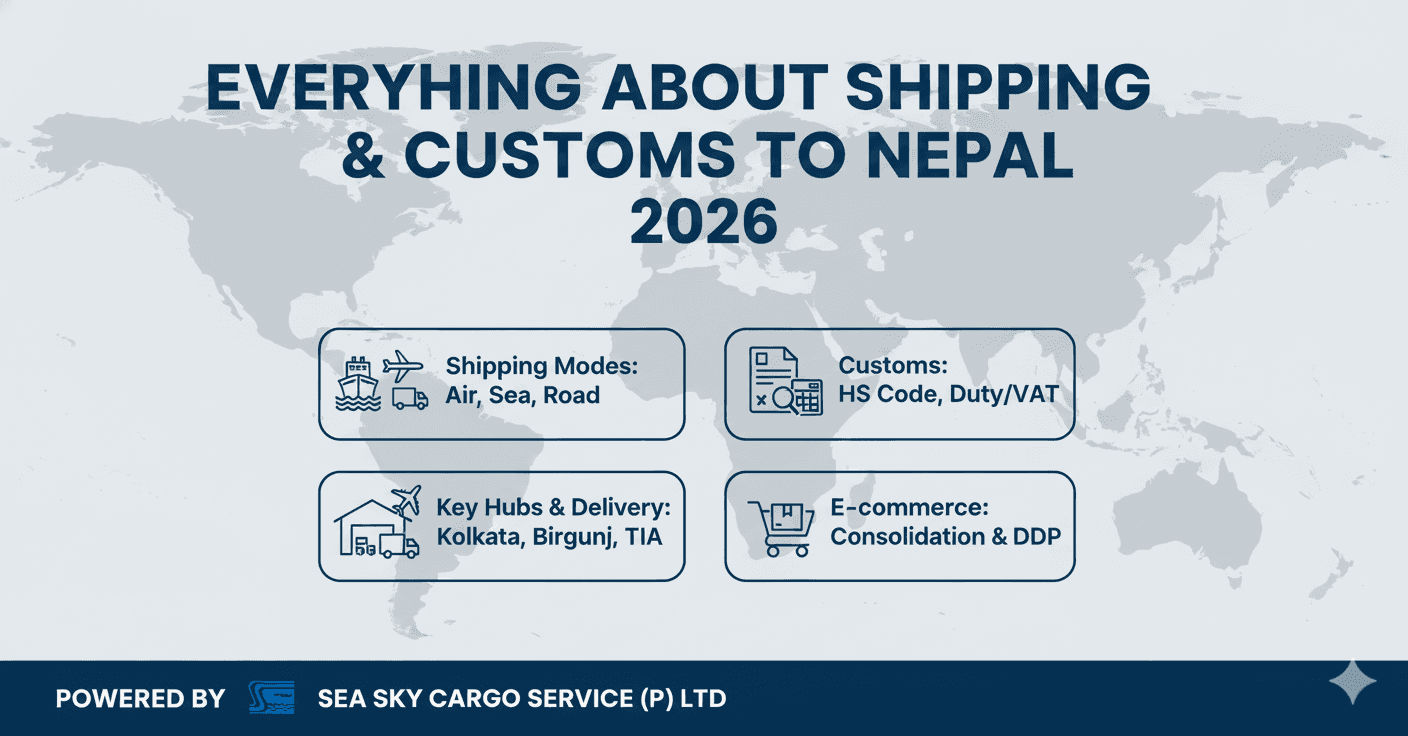
This 2026 guide breaks everything down in simple language: shipping options, customs duty and VAT, documents, ecommerce logistics and how Sea Sky can manage the hard parts for you.
How Shipping to Nepal Works in 2026
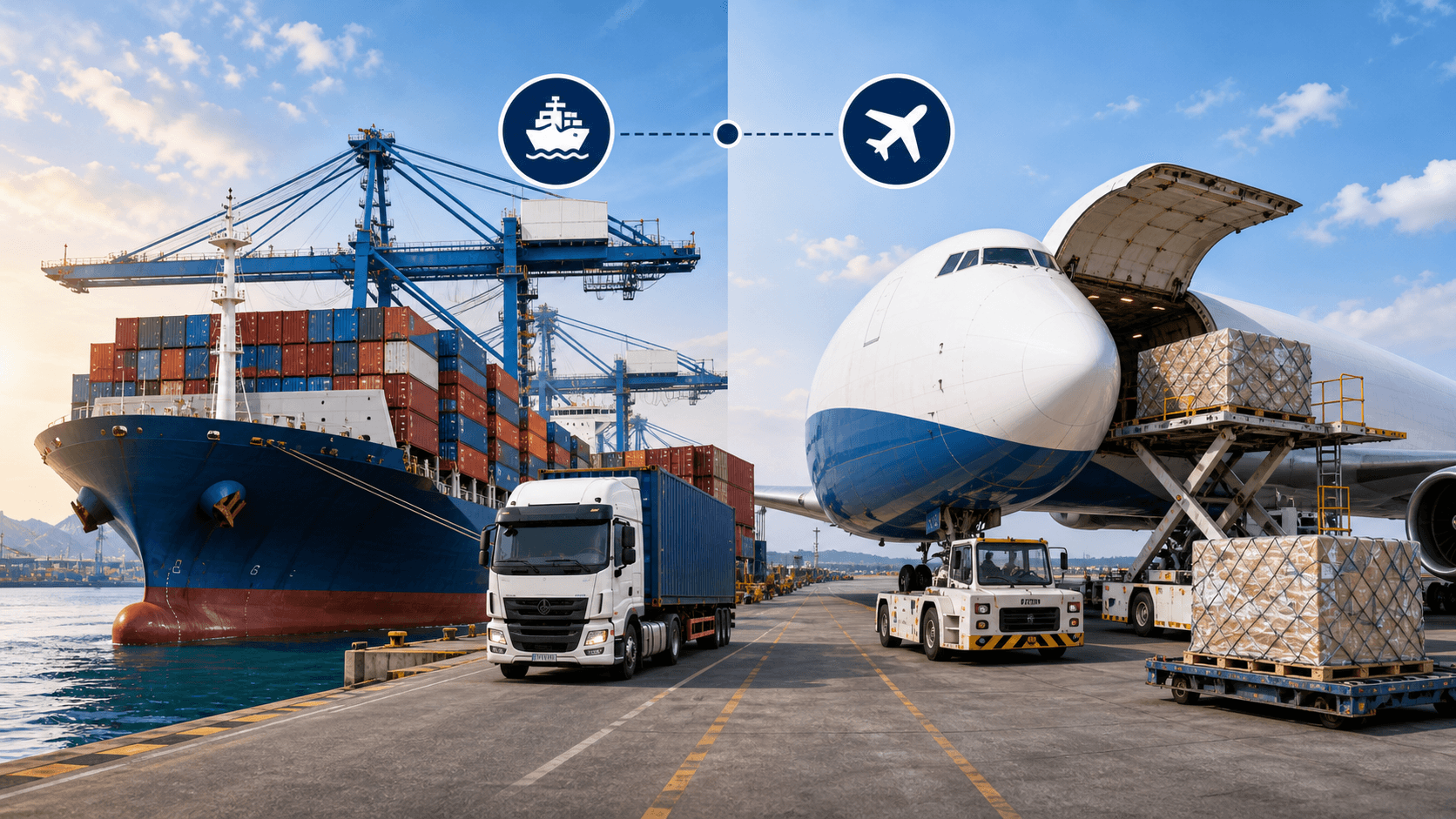
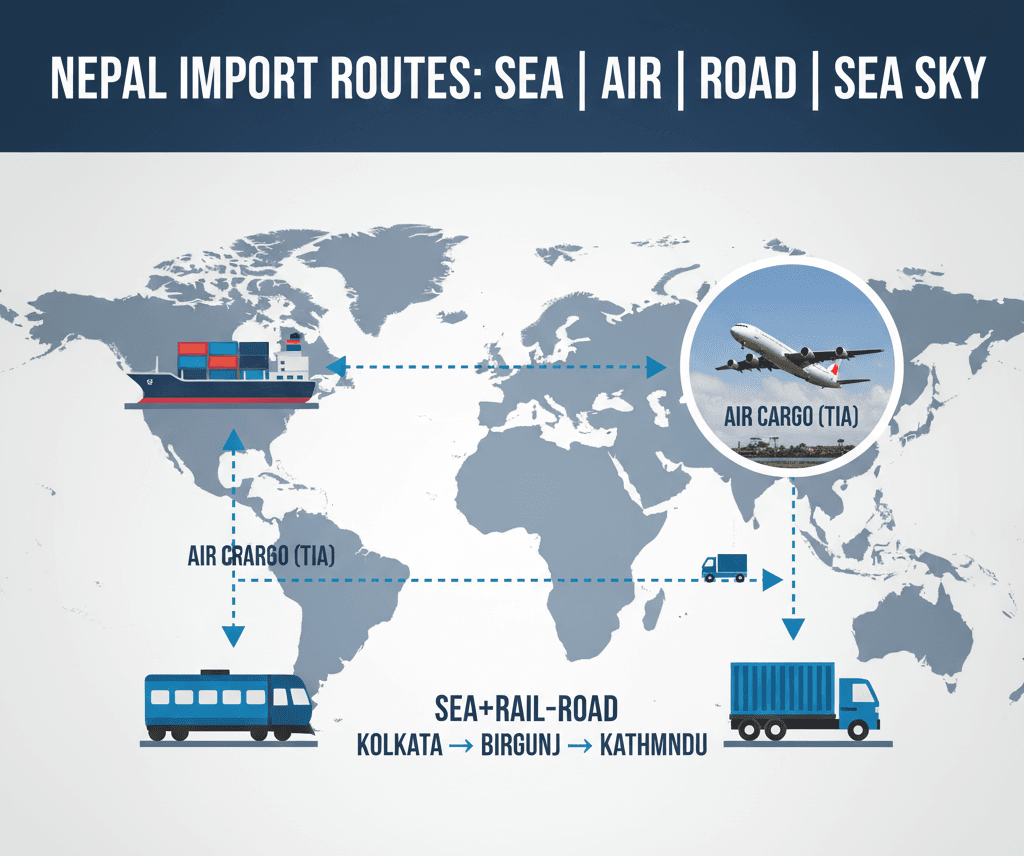
Because Nepal has no seaport, almost all international cargo arrives by:
- Air freight to Tribhuvan International Airport (TIA), Kathmandu
- Sea freight via Indian ports like Kolkata, Haldia, Vizag, and Mundra, then overland to Nepal
- Courier/express services (DHL, FedEx, UPS, regional couriers) that combine air + last‑mile delivery.
Sea Sky uses all three, plus rail and road, to design routes that balance speed, cost, and reliability:
- For urgent or high‑value shipments (documents, electronics, samples), we use air freight to TIA.
- For heavier, non‑urgent loads (machinery, bulk stock, wholesale orders), we route sea containers to Kolkata/Mundra, then move by road or rail via Birgunj into Nepal.
- For small ecommerce parcels, we combine international couriers with Sea Sky’s customs and local distribution so orders reach customers across Nepal, not just Kathmandu.
Your Main Shipping Options to Nepal
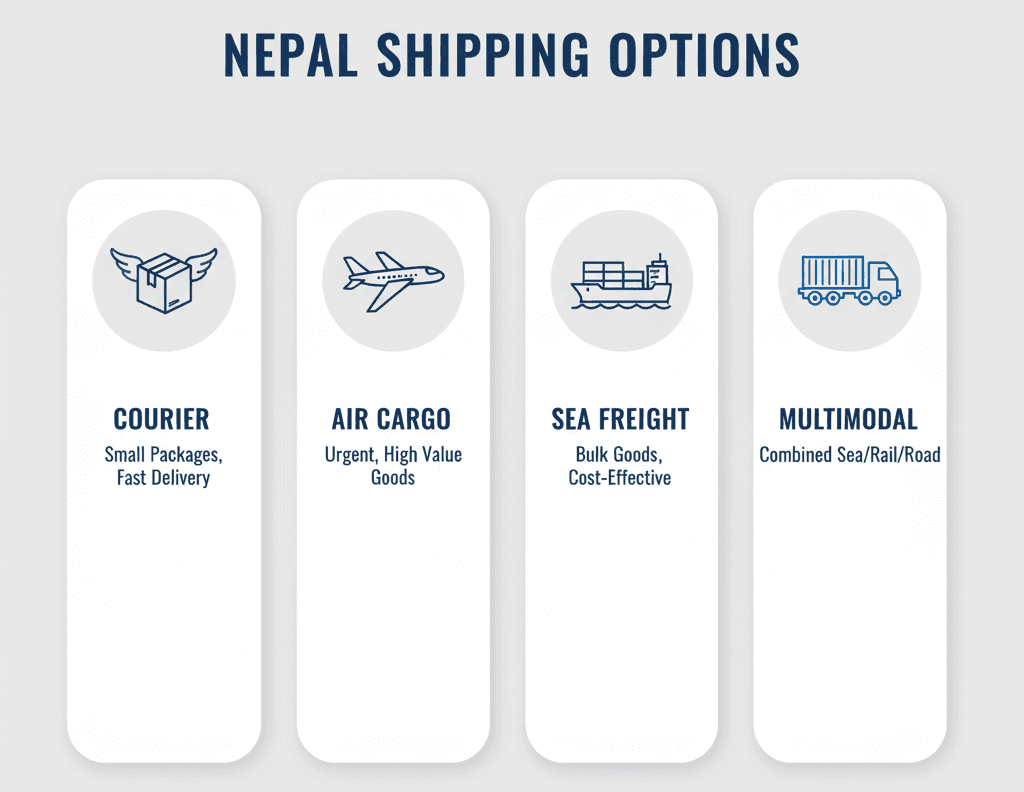
A. Courier/Express (Door‑to‑Door Parcels)
Best for:
- Small ecommerce orders (1–30 kg)
- Samples, gifts, urgent personal shipments
Features:
- Transit time: ~6–16 days depending on origin and service level.
- Pros: All‑in price, tracking, relatively simple process.
- Cons: Higher cost per kg; and Nepal has no duty‑free “de minimis” threshold almost every parcel is subject to 13% VAT plus customs duty based on HS code.
Sea Sky helps by advising the correct description and HS code so your parcels don’t get stuck for under‑valuation or mis‑classification at customs.
B. Air Freight to TIA (Airport‑to‑Airport or Door)
Best for:
- High‑value goods (electronics, branded fashion, pharma, urgent spares)
- B2B shipments needing fast replenishment
Key points:
- TIA handles tens of thousands of tonnes of cargo per year, with connections via regional hubs to Europe, North America, and the Middle East.
- Typical transit from major hubs (Dubai, Doha, Istanbul, Frankfurt) is 3–7 days airport‑to‑airport.
- Rates are usually charged per chargeable weight (actual vs volumetric).
Sea Sky can:
- Consolidate smaller shipments into one master air waybill to lower your per‑kg rate.
- Provide airport‑to‑door delivery with customs clearance at TIA.
C. Sea Freight via Indian Ports
Best for:
- Full containers (FCL) and big LCL shipments
- Heavy machinery, raw materials, bulk stock for distributors
Typical flow:
- Cargo is loaded in a 20ft or 40ft container at origin.
- It sails to Kolkata, Haldia, Vizag or Mundra.
- Sea Sky’s clearing agents handle Customs Transit Declaration (CTD) and formalities at the Indian port.
- Container moves by rail or truck to Birgunj dry port or another border point.
- Nepal Customs charges duty/VAT, then Sea Sky delivers to your warehouse or door.
This is the cheapest way to ship heavy or bulky freight to Nepal, especially if you plan ahead and don’t need “express” timing.
D. Multimodal (Sea + Rail + Road + Air Combos)
For some lanes—like US or Europe to interior Nepal cities Sea Sky designs mixed routes:
- Sea to Kolkata → rail to Birgunj → truck to your city
- Sea to Mumbai or Colombo → air to TIA for the last leg (useful when time is tight but full air is too expensive)
This can cut costs by 30–40% compared to pure air while still delivering faster than all‑sea to a remote inland destination.
Customs, Duty, and VAT When Shipping to Nepal
Whether you import one parcel or a container, Nepal Customs uses the same core logic:
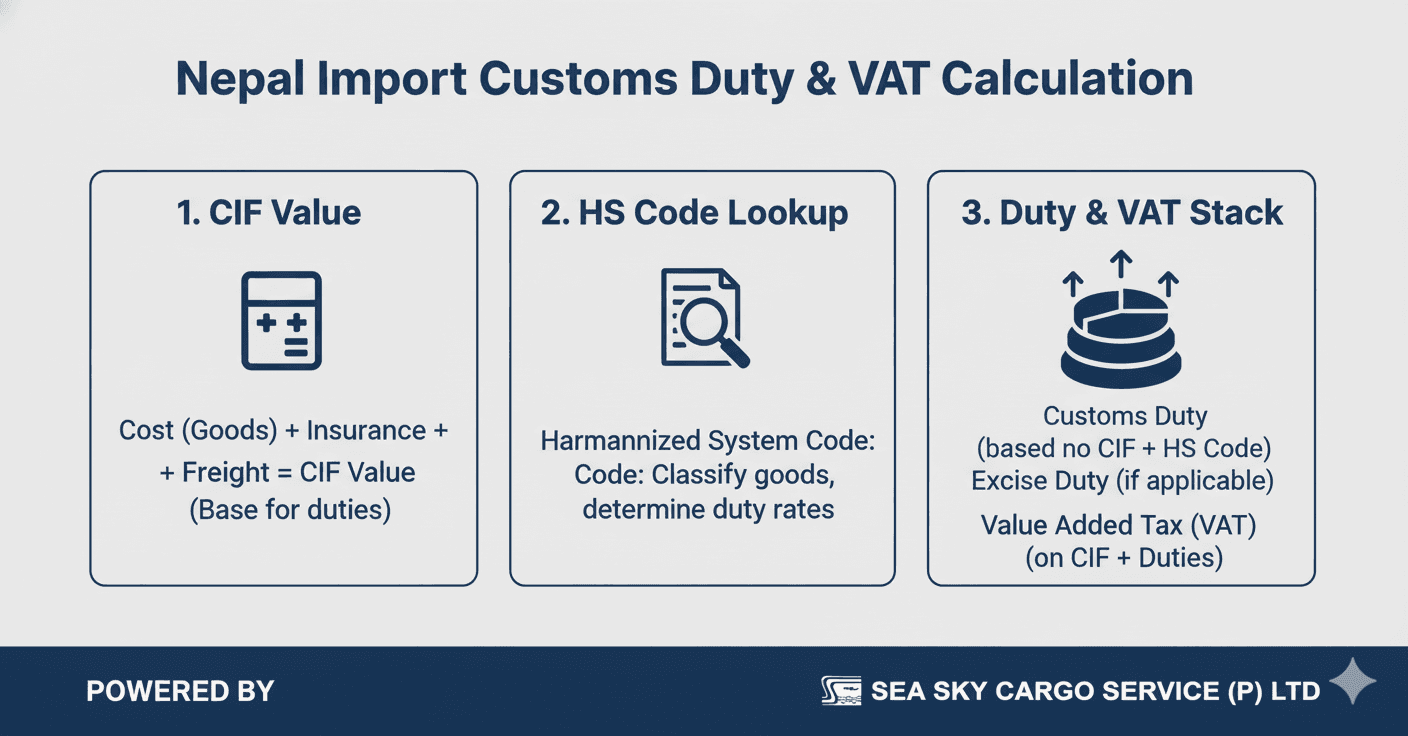
A. CIF Value
Duties and taxes are based on CIF value:
CIF=Cost of goods + Insurance + Freight
This CIF value is declared on the customs form and is the starting point for all calculations.
B. HS Code (Harmonized System)
Every product has an HS code (usually 8 digits for Nepal). That code tells customs which duty rate to apply. Getting this code wrong is the most common cause of:
- Overpaying tax
- Under‑payment and later penalties or re‑assessment
- Shipments getting held for clarification
Sea Sky’s documentation team checks HS codes for you and aligns them with the 2082/83 Integrated Customs Tariff.
C. Duty and VAT Ranges
According to recent tax and trade guides:
- Customs duty in Nepal can range from 0% on some medicines and essentials to around 80% on luxury vehicles, depending on HS code and policy.
- Many common consumer and industrial items fall in the 10–30% band.
- On top of duty, most imports pay 13% VAT, calculated on CIF + duty + any excise or fees
For ecommerce parcels there is no low‑value exemption: even small orders can attract both duty and VAT.
Sea Sky can estimate your total landed cost including duty, VAT, clearance fees and inland transport before you ship, so you can set your selling price correctly.
Import Documents You (or Your Supplier) Must Prepare
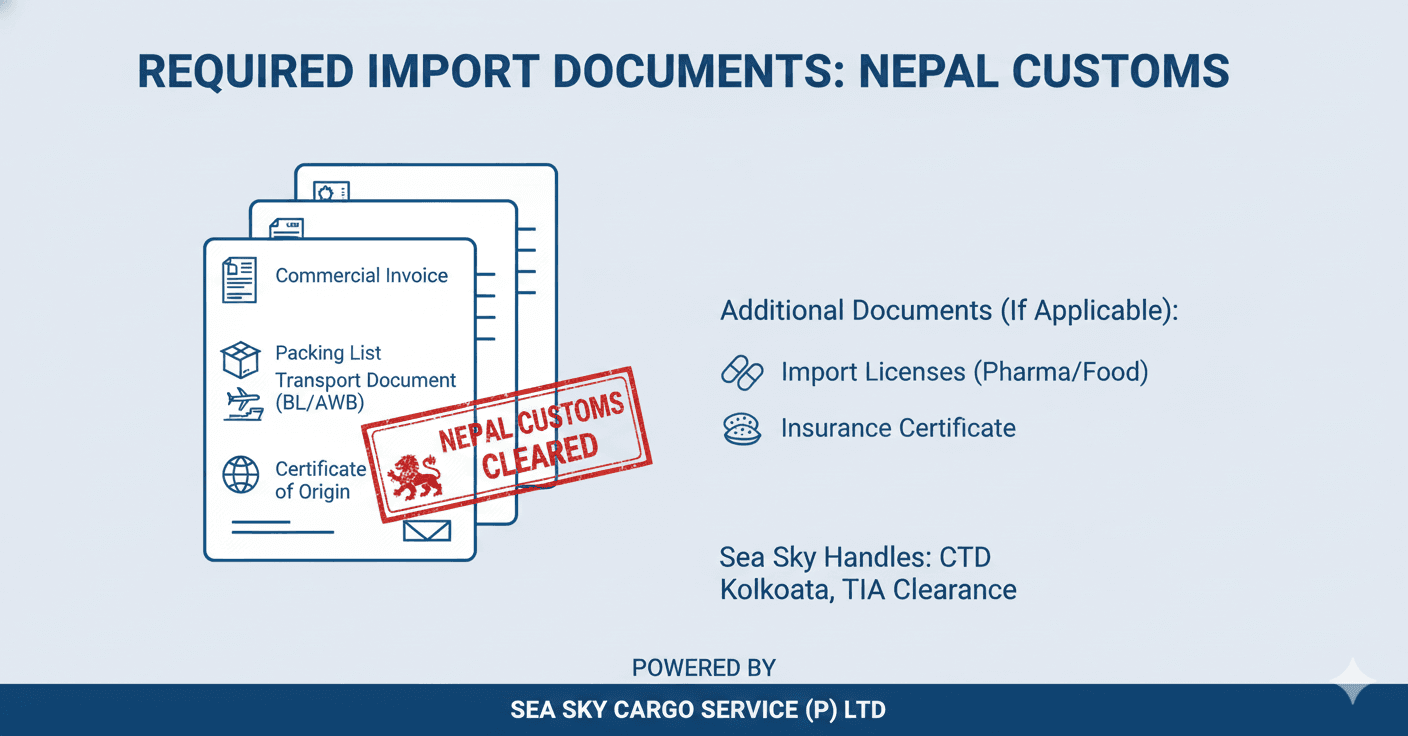
For smooth customs clearance, you need accurate paperwork. Common documents include:
- Commercial Invoice – seller, buyer, description, unit price, total, Incoterms.
- Packing List – number of cartons, weights and dimensions, item breakdown.
- Transport document – Air Waybill (air), Bill of Lading (sea), or courier label.
- Certificate of Origin – especially if you’re using trade preferences (e.g., from certain SAARC or MFN countries).
- Insurance Certificate – for higher‑value shipments.
- Import License or permits – for restricted items (pharma, food, cosmetics, telecom equipment, etc.).
For sea freight via India, there is also a Customs Transit Declaration (CTD) and specific forms at Kolkata/Indian Customs that Sea Sky and its clearing agents handle on your behalf.
Ecommerce Logistics: Shipping Parcels into Nepal
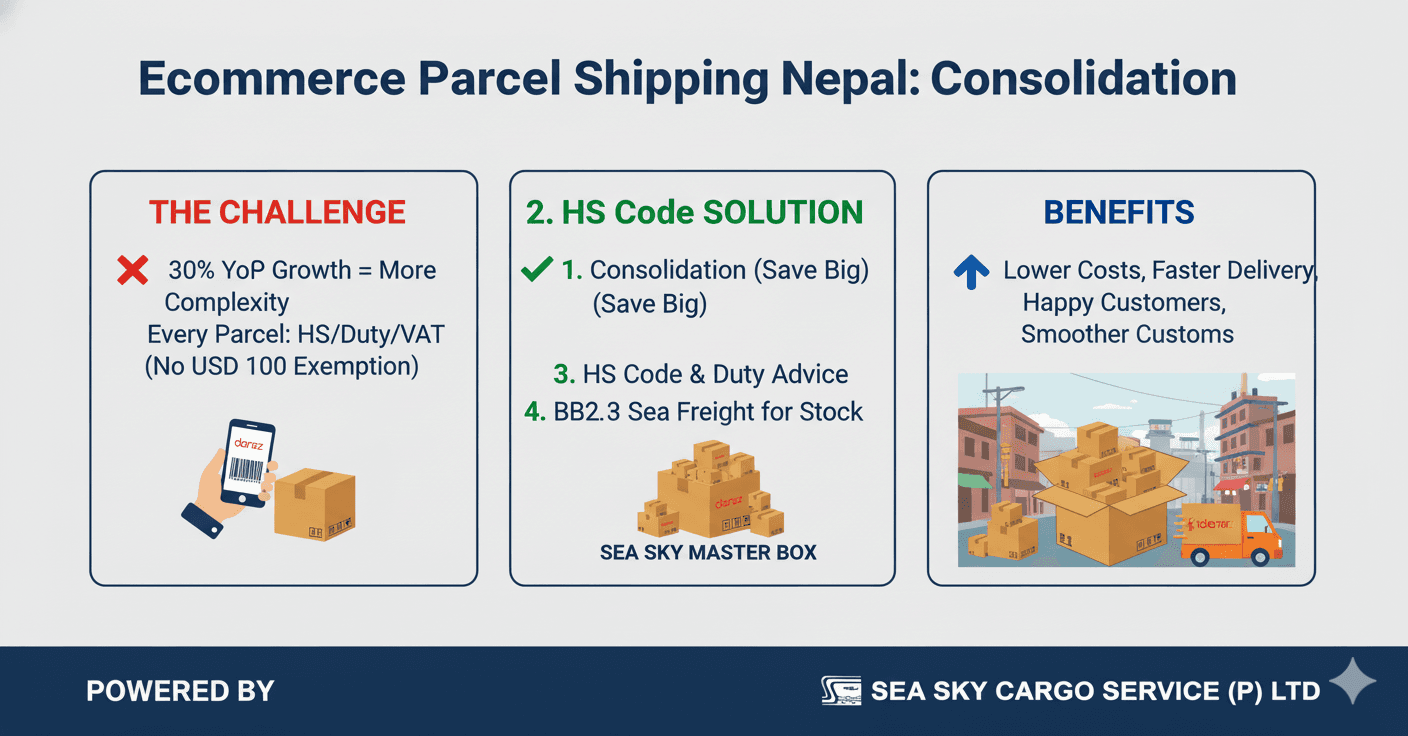
Nepal’s ecommerce market has been booming, with volumes reported up over 30% year‑on‑year and platforms like Daraz, SastoDeal, and newer marketplaces seeing strong growth.
Key ecommerce realities for inbound shipments:
- Every parcel is checked for HS code, duty and VAT there is no “tax‑free under USD 100” rule like some countries.
- Delivery times of 6–16 days are typical if documentation is correct; wrong descriptions or missing invoices can add weeks.
- Certain items (batteries, chemicals, medicines, firearms, some electronics) are restricted or require special approval.
Sea Sky helps ecommerce sellers and shoppers by:
- Advising correct HS codes and descriptions so customs doesn’t treat parcels as “suspicious”.
- Offering consolidation combining multiple parcels into one shipment to cut per‑kg costs, then breaking them down in Kathmandu for last‑mile delivery.
- Handling returns logistics when customers refuse parcels due to unexpected duty bills.
For brands who want to sell regularly into Nepal, Sea Sky can even support B2B or B2B2C models bringing bulk stock by sea, clearing it once, and then distributing domestically via local couriers.
How Sea Sky Cargo Service Makes Shipping to Nepal Easier
Sea Sky is not just a carrier broker we’re a full logistics partner focused on Nepal and the region:
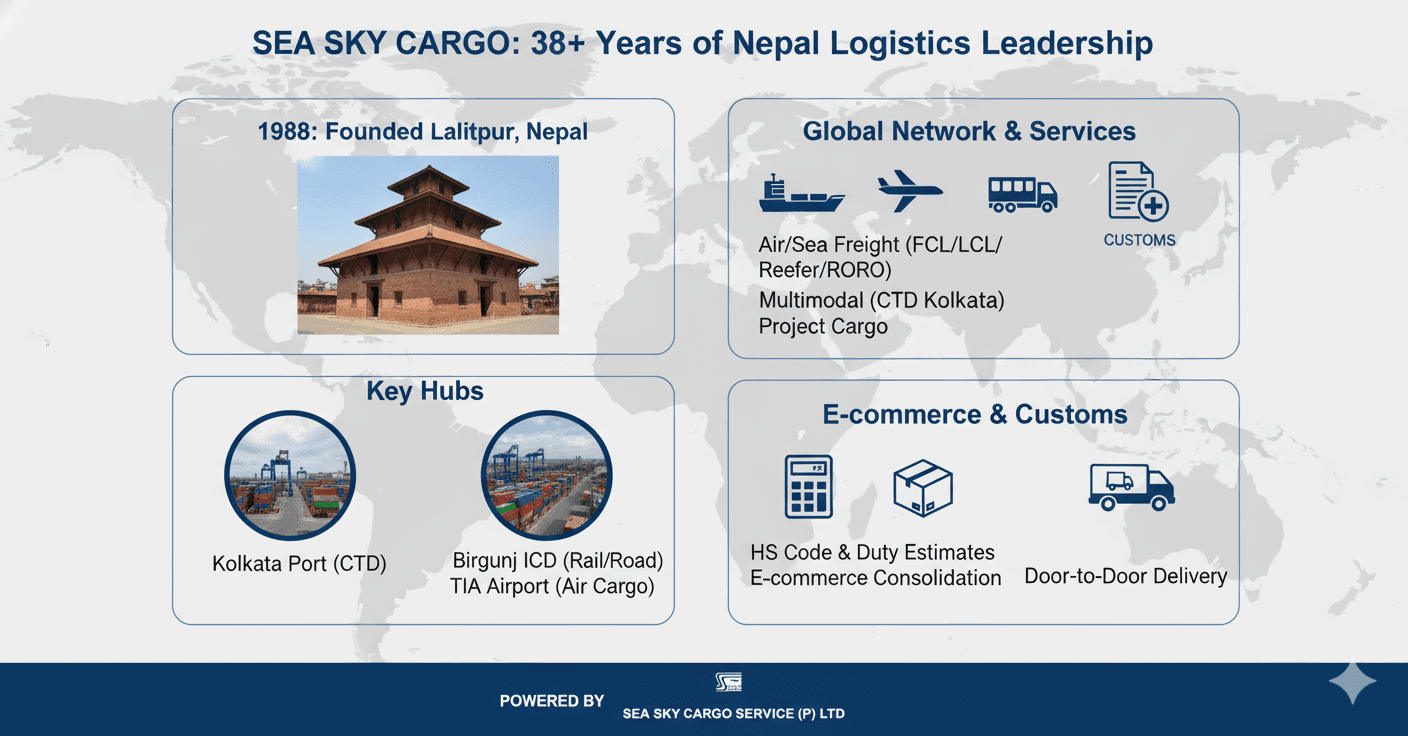
- Established in 1988, based in Lalitpur (Patan) with a branch at Birgunj ICD, and a network across India, Bhutan and the wider region
- Services include air and ocean freight, FCL/LCL, break‑bulk, project cargo, reefer and dangerous goods, RORO, and cross‑border trucking.
- We specialize in complex routes: Nepal–India–Bhutan, Nepal–Afghanistan, Nepal–Maldives, plus standard lanes to Europe, the US and the Middle East.
For importers and ecommerce shippers into Nepal, Sea Sky offers:
- Route planning and quotes
- We compare air vs sea vs multimodal to find the best cost–time mix for your lane.
- Customs duty & HS support
- We review your product list, assign HS codes, and estimate duty + VAT + fees before you commit.
- Documentation and clearance
- Our teams and partners in Kolkata, Birgunj and TIA prepare and file CTDs, declarations and permits, reducing delay risk.
- Door‑to‑door delivery
- From supplier warehouse overseas to your warehouse or customer’s doorstep in Nepal, with full visibility.
- Ecommerce integration
- Solutions for regular parcel flows, consolidation, returns and inventory support for brands selling into Nepal.
Practical Tips Before You Ship to Nepal
To finish, here are quick, actionable tips you can share with your suppliers or team:
- Always put full descriptions on invoices, not just “goods” or “samples” include material, use, brand, and model.
- Ask Sea Sky to check HS codes for your top SKUs and build a simple “duty sheet” so you know your margins.
- For ecommerce, show taxes and fees clearly at checkout or in your pricing so customers aren’t surprised at delivery.
- Plan extra time (especially for sea freight via India) to account for port congestion, weather, and customs checks.
- Start with a small test shipment, learn how duty and clearing works for your product, then scale.
Get in touch
If you’d like help planning your first shipment or want to fix problems with an existing one Sea Sky Cargo Service can walk you through the options step‑by‑step.