Why containers and pallets matter in air freight
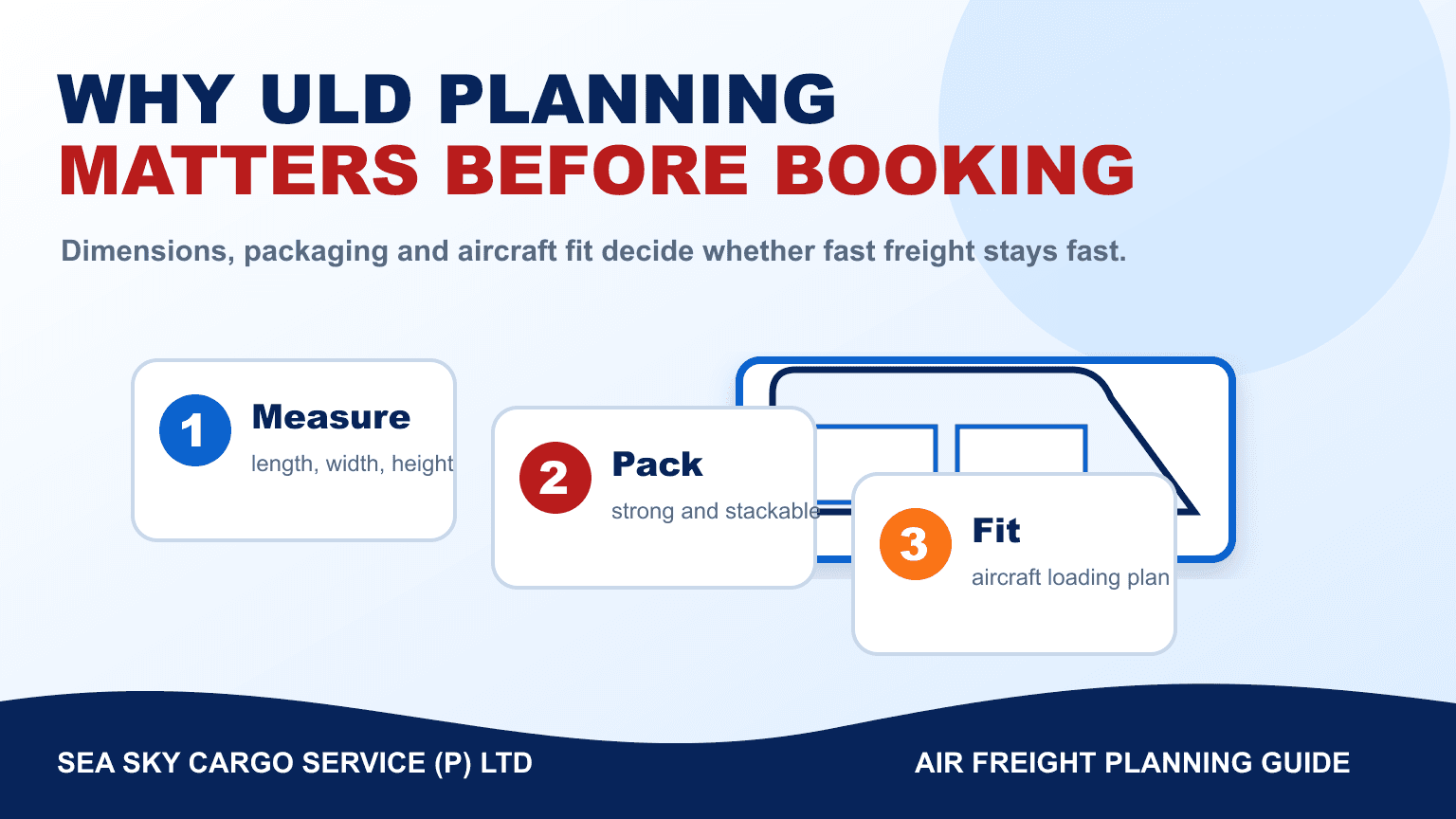
Air freight is fast, but the cargo still has to fit the aircraft, handling equipment and airline loading plan. Before a shipment can travel by air, it must be packed, measured, secured and documented correctly.
Many shippers focus only on weight and delivery time. Airlines also look at dimensions, packaging strength, stackability, product restrictions, aircraft type and whether the cargo can move as loose freight, on an air cargo pallet or inside an air cargo container.
Understanding air cargo containers and pallets helps importers and exporters plan shipment size, cost and handling more realistically. It can also prevent cargo rejection, repacking, extra cost or a missed flight.
For a route-level overview, start with Sea Sky Cargo's air freight service page and the wider international shipment guide.
What are air cargo containers and pallets?
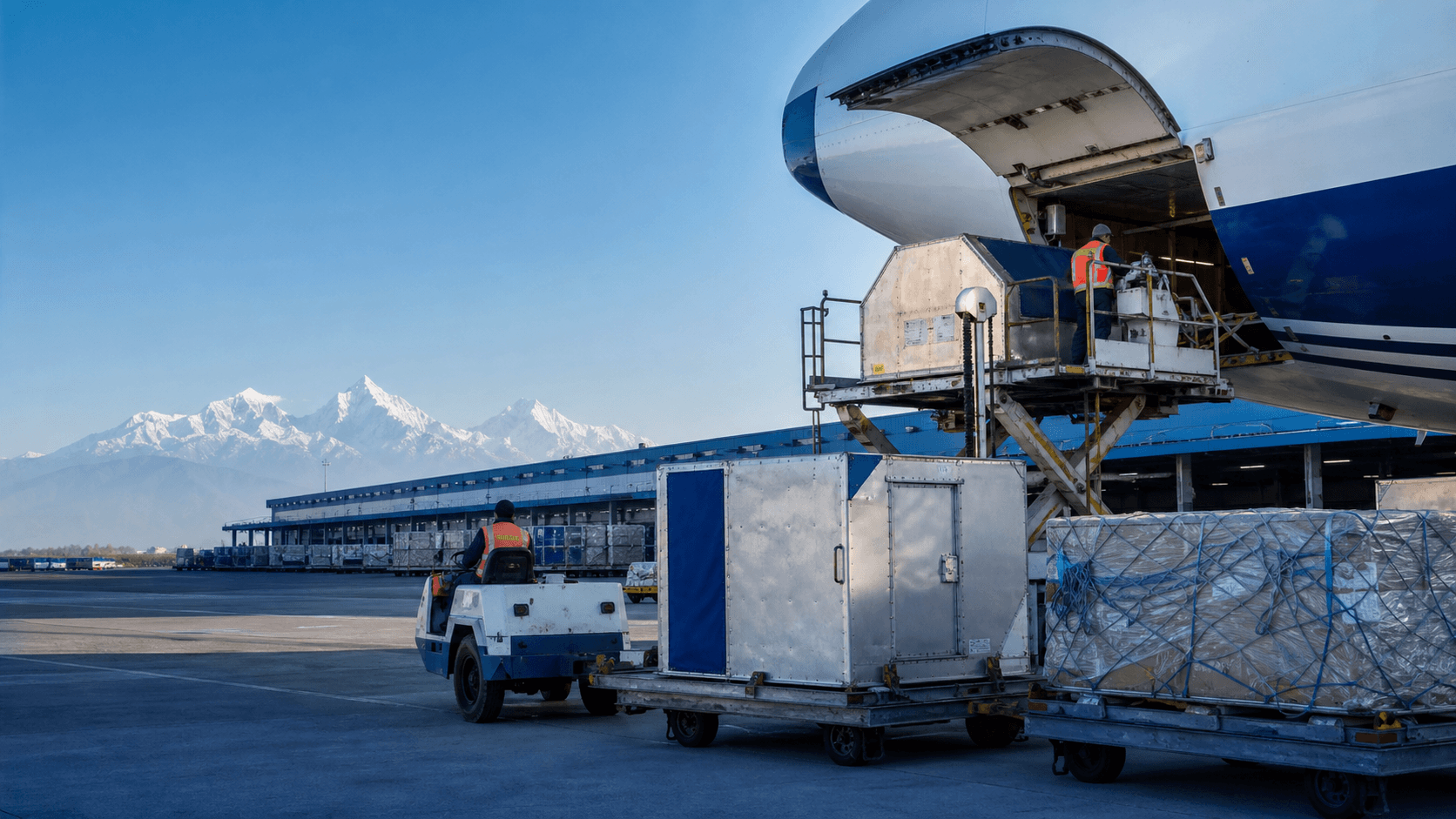
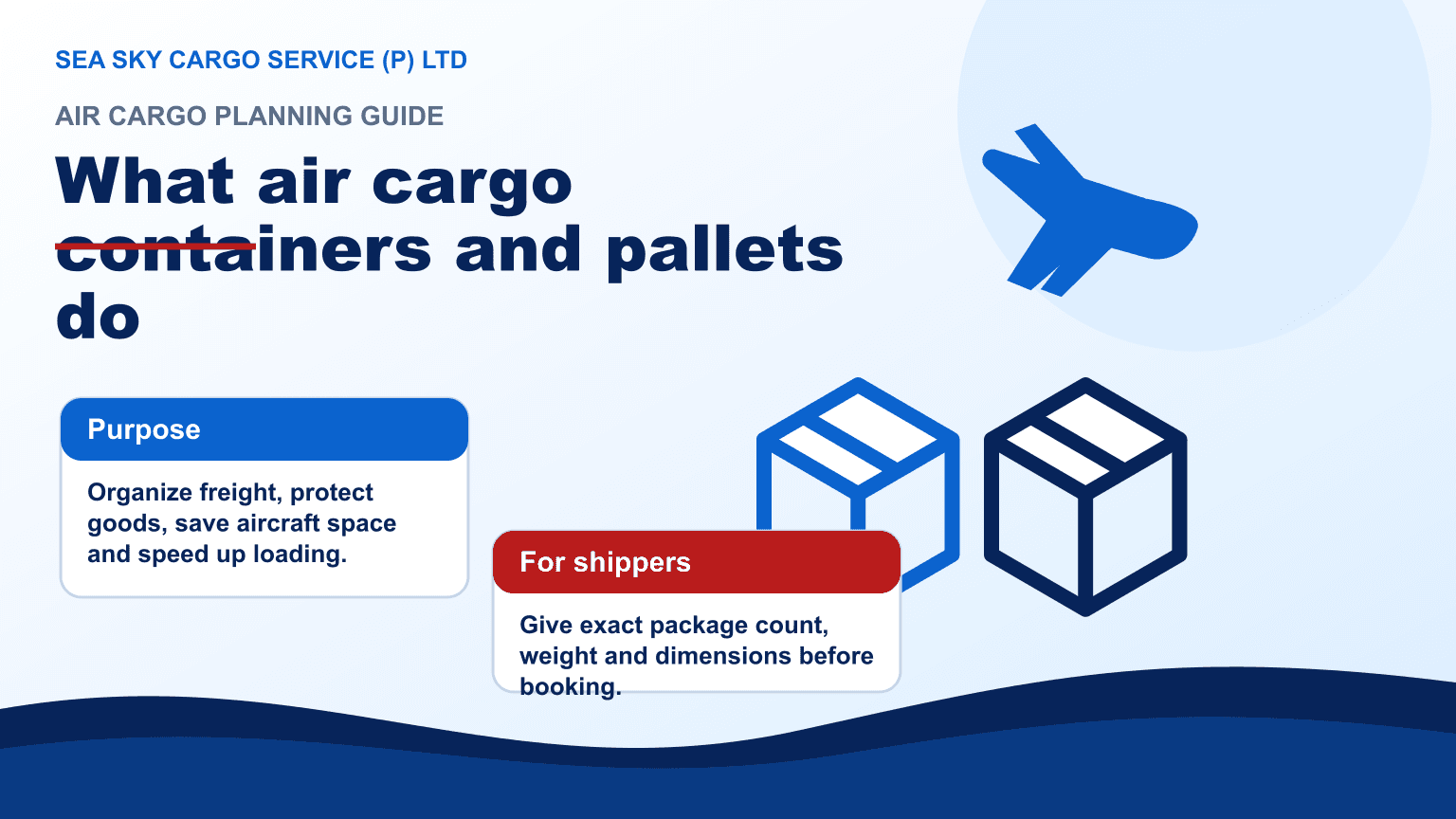
Air cargo containers and pallets are loading equipment used to organize, protect and secure freight inside an aircraft. They help airlines use aircraft space efficiently and reduce separate manual handling at the airport.
Air cargo may be loaded in four common ways:
- Loose cargo packed in cartons, crates or bags
- Cargo secured on air freight pallets
- Cargo loaded inside air cargo containers
- Special cargo packed in temperature-controlled, secure or regulated units
The right method depends on cargo size, weight, product type, airline acceptance rules, aircraft type and handling risk. A small carton shipment may move loose, while a larger commercial shipment may need palletization or containerized loading.
The most important shipper responsibility is accuracy. If the packed dimensions, gross weight or package count change after booking, the airline may need a new loading plan or may not accept the cargo on the intended flight.
What is a ULD in air freight?
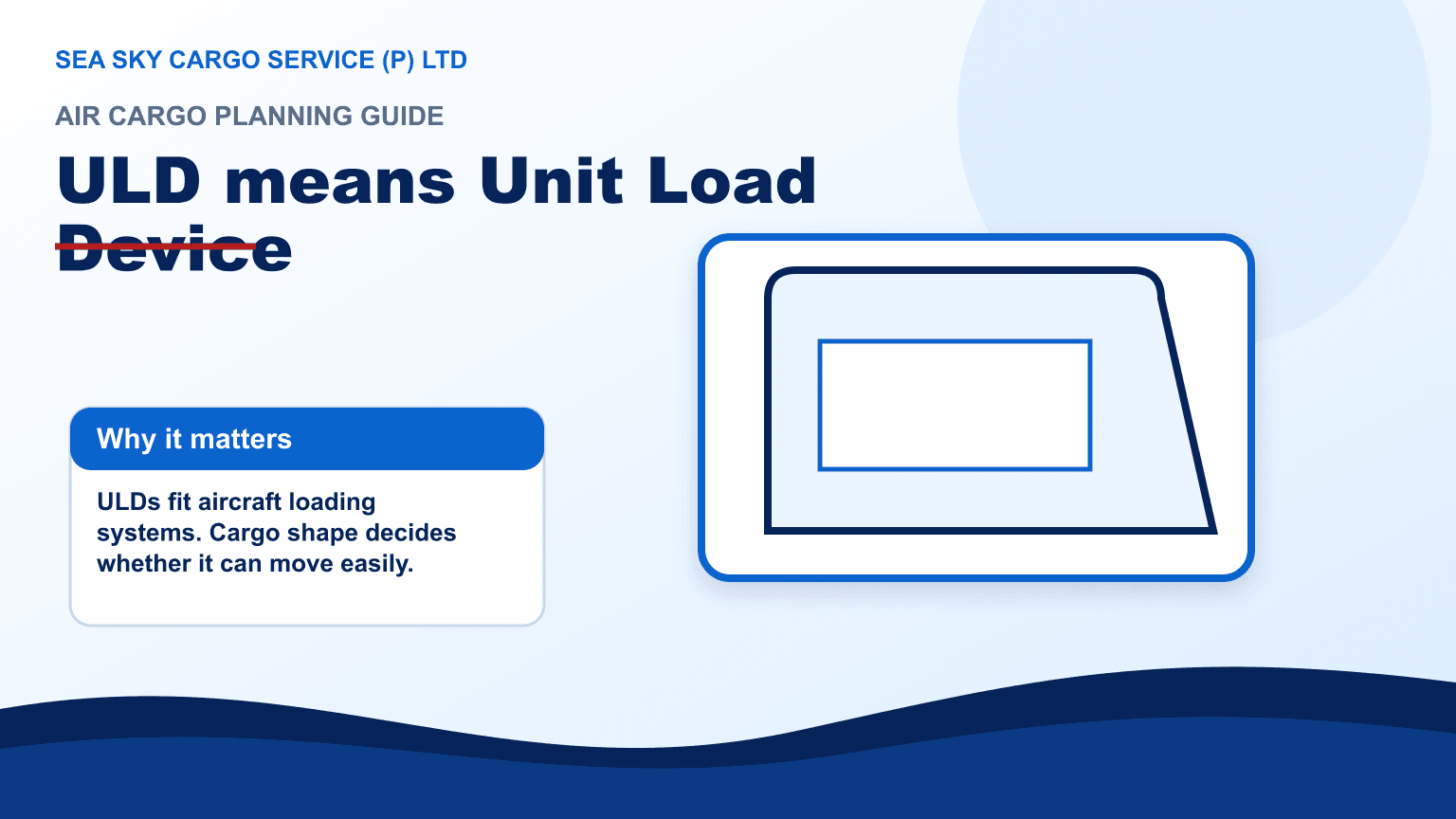
ULD stands for Unit Load Device. A ULD is a certified aircraft loading unit used to move cargo, baggage or mail. In practice, a ULD can be a shaped air cargo container or a flat aircraft pallet with cargo secured by a net.
ULDs are designed around aircraft contours and loading systems. Some containers have curved sides so they fit the lower hold of passenger aircraft. Larger pallets and containers are used on freighter aircraft, especially for main-deck cargo.
ULDs help airlines:
- Load and unload faster
- Use aircraft space more efficiently
- Protect cargo during airport handling
- Reduce individual package handling
- Secure cargo during flight
- Organize cargo by destination or flight sector
For shippers, the exact ULD code is usually selected by the airline or freight forwarder. The shipper still needs to provide accurate cargo details so the forwarder can check whether the shipment is practical for the planned aircraft and route.
The IATA ULD program explains the role of ULDs in safe and efficient aircraft loading.
Common air cargo container types
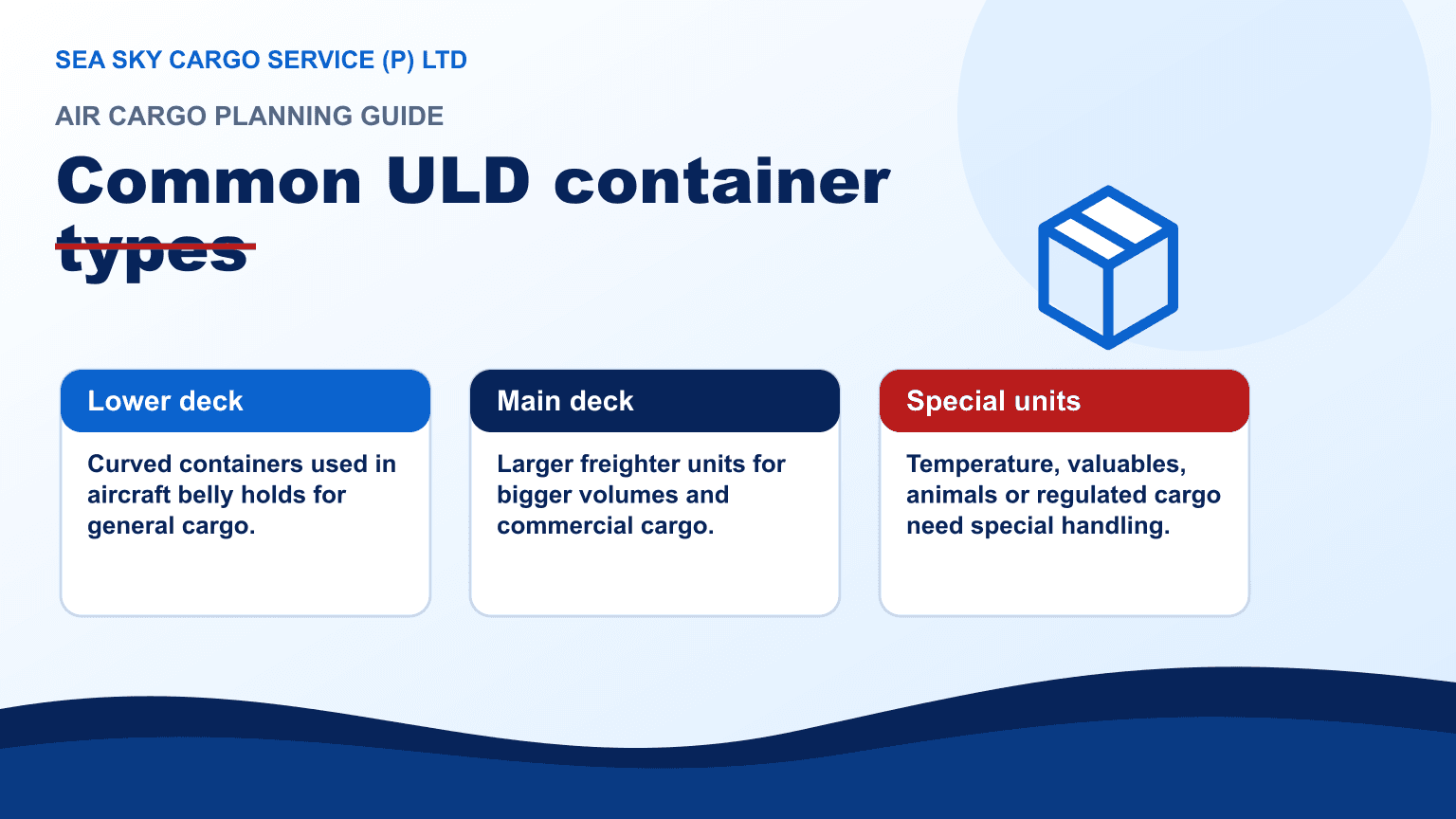
There are many ULD types, and airlines use different fleets. Shippers do not normally choose the exact unit by code, but it helps to understand the main categories. Names such as LD3, AKE, LD6, LD7, PMC and PAG are common in air cargo discussions. The usable internal dimensions, contour, maximum weight and acceptance rules depend on the airline, aircraft and route. Treat any public ULD size table as a planning guide, not a final acceptance guarantee. Airlines may apply different operating limits, build-up rules, overhang restrictions or special-cargo requirements.
| ULD category | Common examples | Typical use |
|---|---|---|
| Lower deck containers | LD3 / AKE, LD6, LD7 containers | General cargo in the lower hold of passenger or cargo aircraft |
| Main deck containers | Larger freighter containers | Higher-volume cargo on main-deck freighter space |
| Aircraft pallets | PMC, PAG, P1P and other pallet codes | Cartons, crates, machinery parts and cargo secured with nets |
| Special ULDs | Temperature-controlled, secure or regulated units | Medicine, perishables, valuables, live animals or dangerous goods where accepted |
Air cargo pallets and dimensions
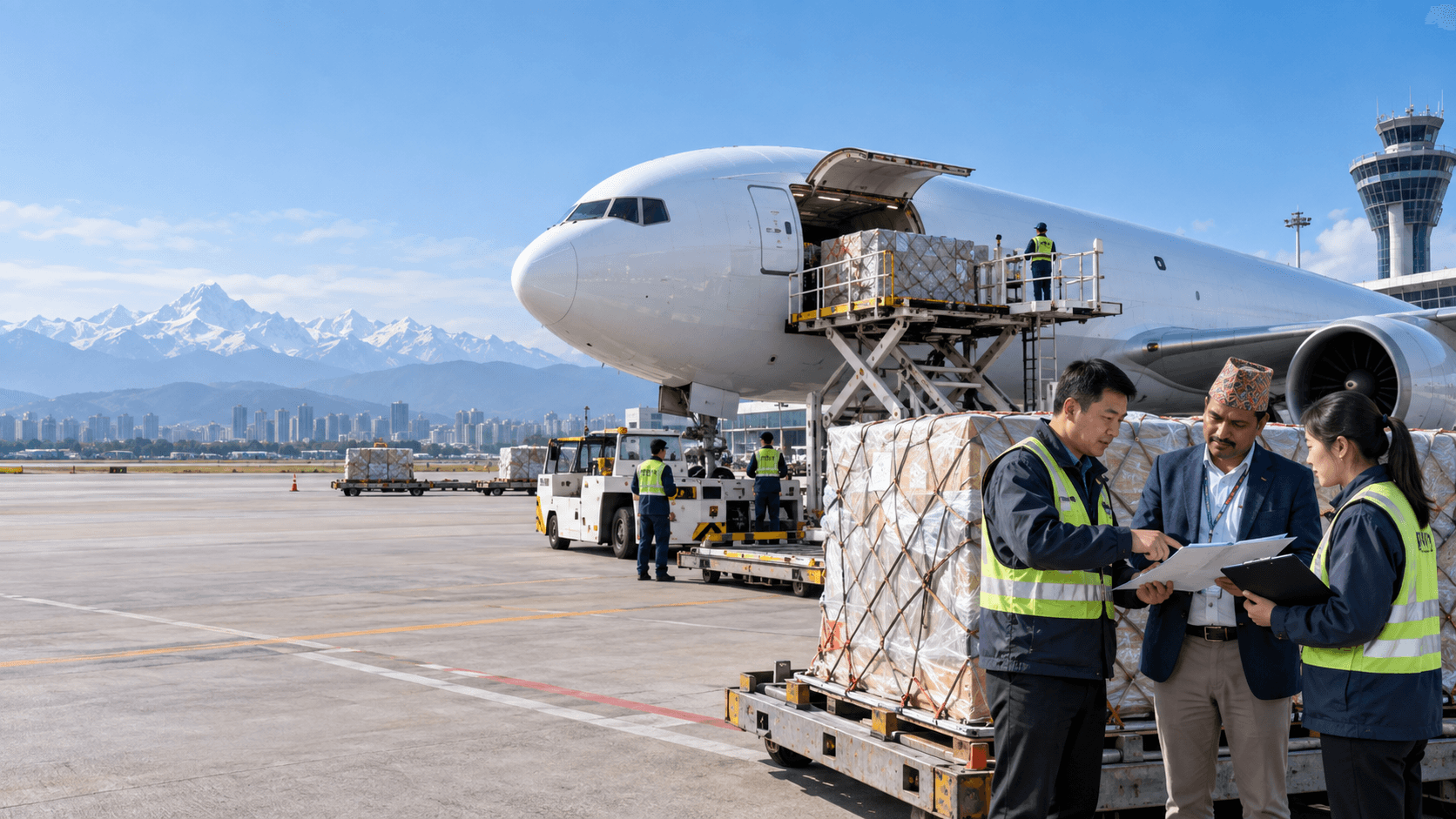
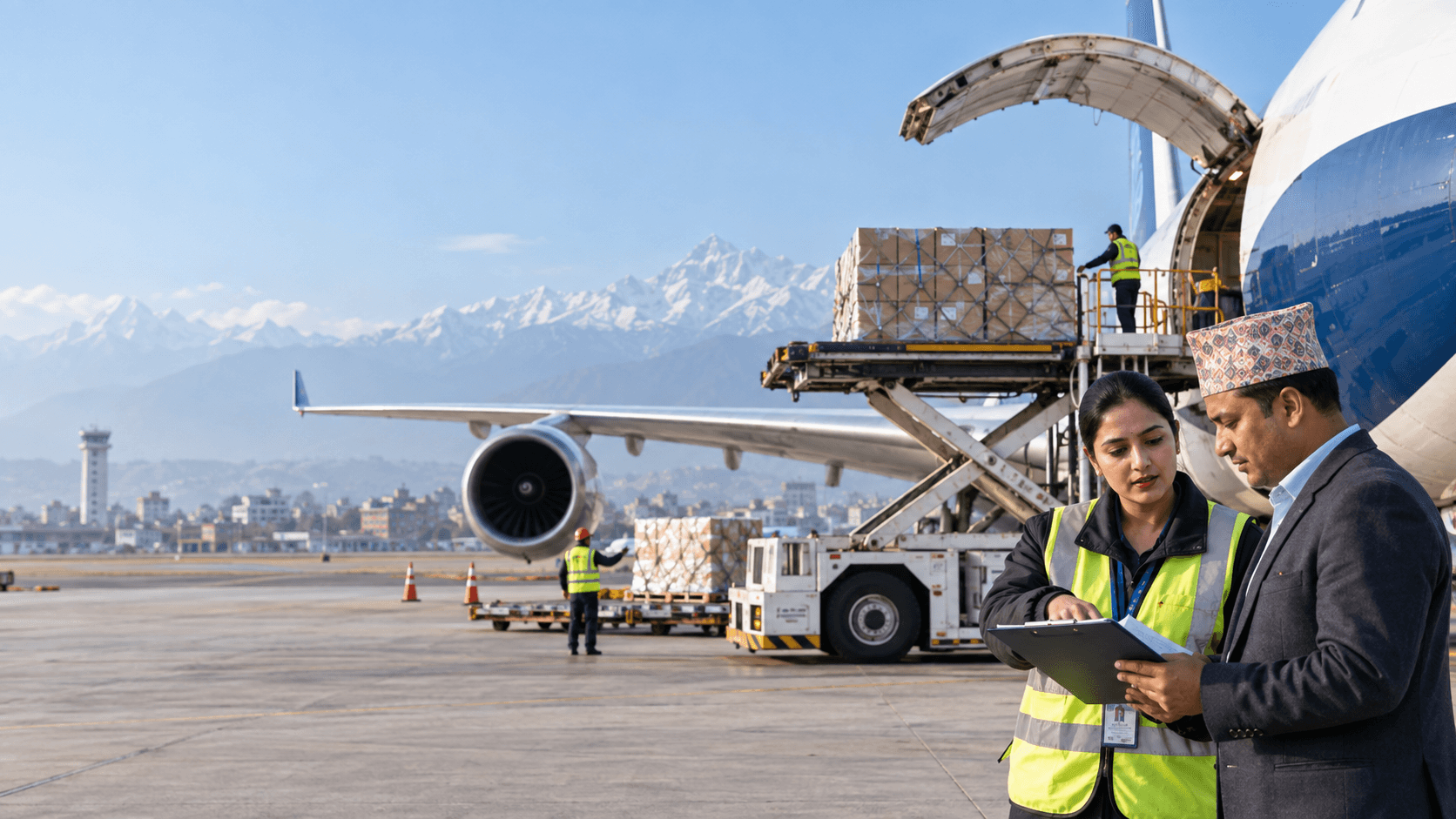
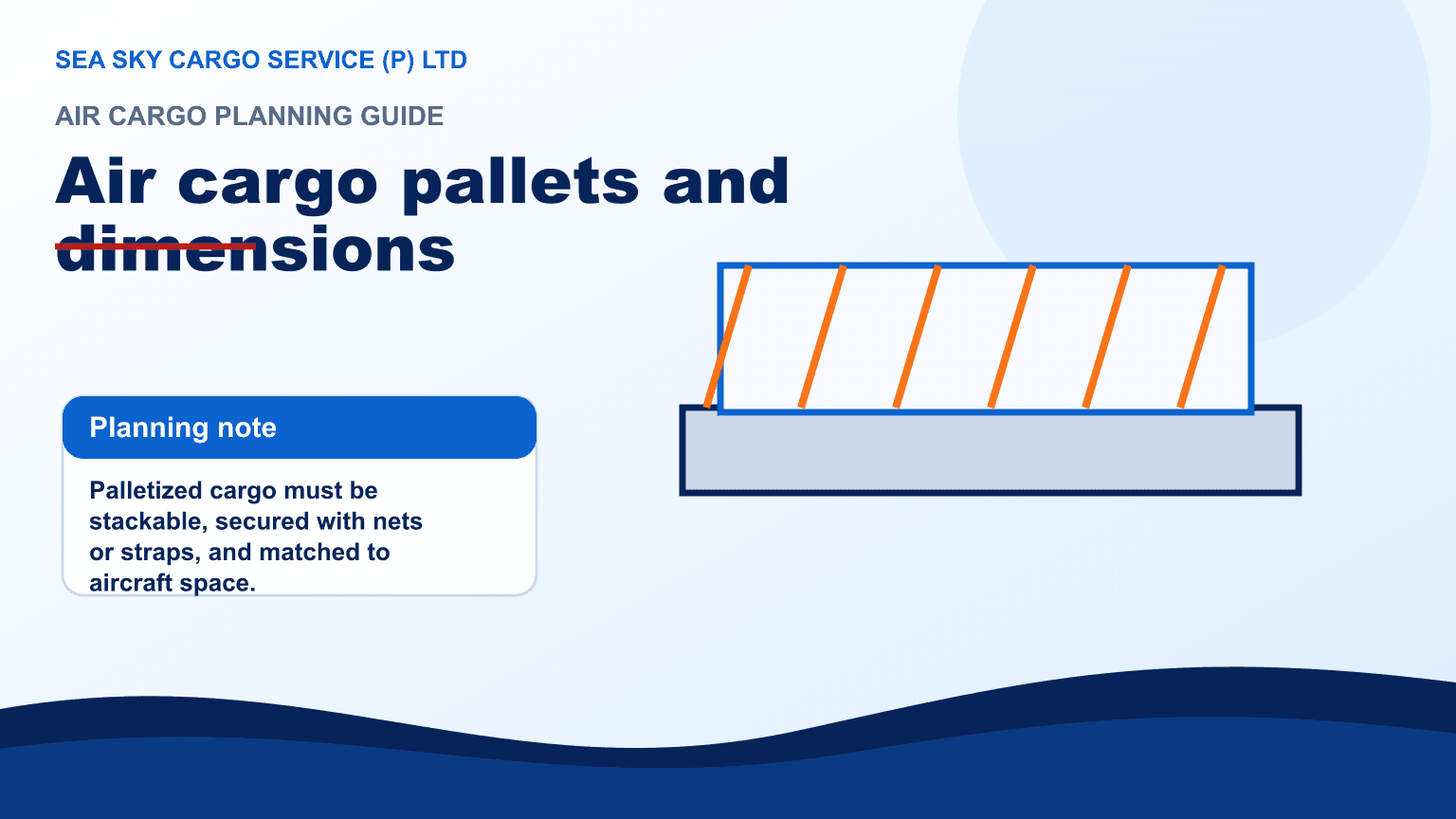
Air cargo pallets are flat platforms used to hold cargo for aircraft transport. Goods are stacked on the pallet and secured with nets, straps or covers so they can move safely through the airport and into the aircraft. Air cargo pallets are commonly used for cartons, crates, machinery parts, garments, electronics, industrial supplies, commercial goods and cargo that does not fit neatly inside a contoured container. Some common aircraft pallet bases are around 96 x 125 inches, but usable cargo height and contour vary. Always confirm the real packed length, width, height and gross weight with the forwarder before booking.
| Planning item | Why it matters |
|---|---|
| Pallet footprint | The aircraft pallet footprint and permitted build-up shape affect whether cargo can be accepted |
| Cargo height | Tall cargo may require main-deck freighter space or special handling |
| Gross weight | Weight affects aircraft loading, handling equipment and chargeable weight |
| Stackability | Weak cartons or uneven crates can create handling and damage risk |
| Restraint method | Nets, straps and covers must keep cargo secure during movement |
Loose cargo vs ULD cargo
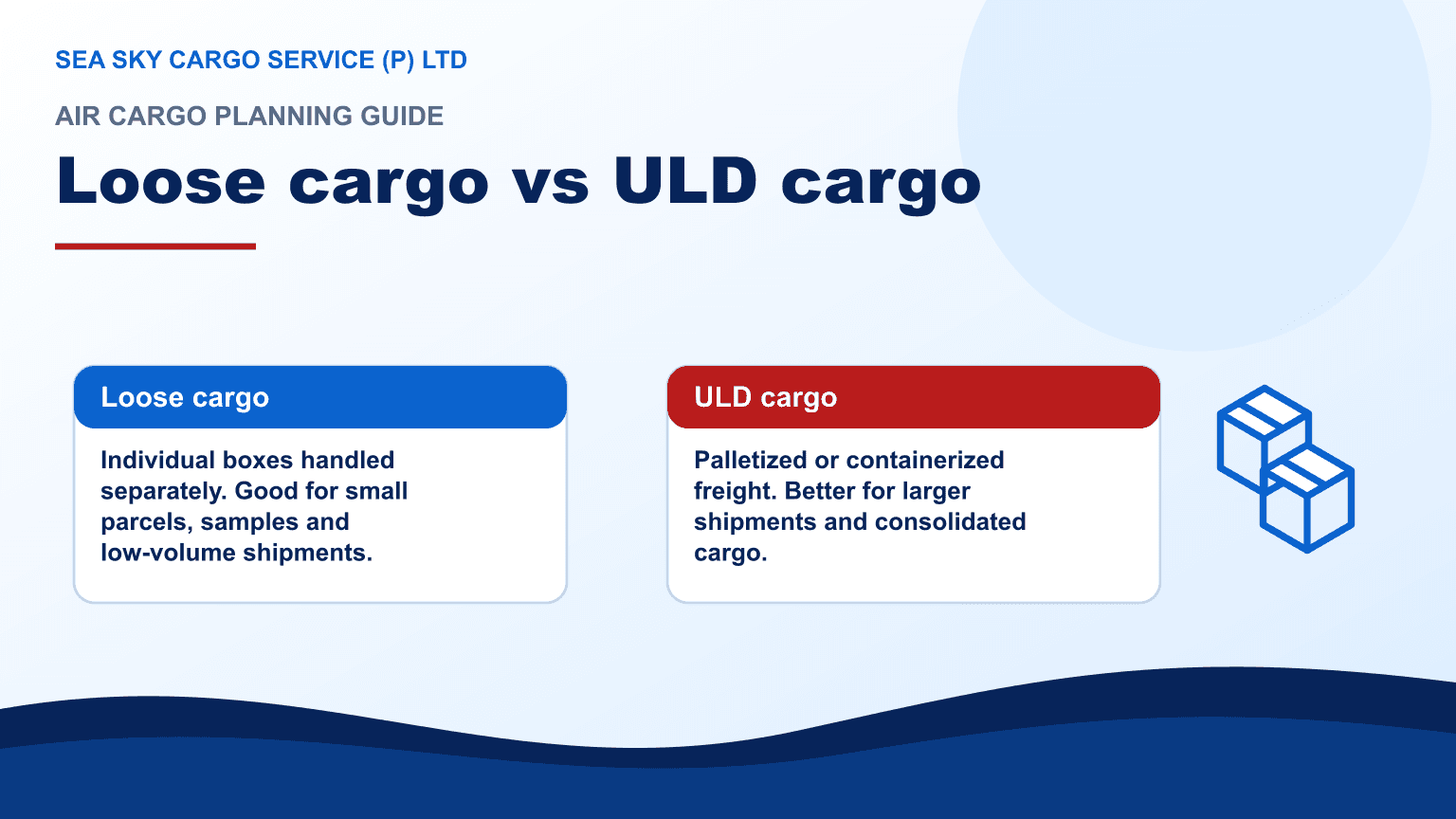
Not every air shipment needs a ULD container. Smaller shipments may move as loose cargo, especially when they are individual cartons, samples, documents or low-volume packages. Loose cargo means packages are handled separately. It can work well for smaller shipments, but it usually involves more individual handling. ULD cargo means the shipment is built into a container or secured on a pallet, which can be better for larger commercial cargo or consolidated shipments. A freight forwarder may consolidate several shipments into one ULD. That does not mean every shipper needs to pay for a full container or pallet, but the cargo still needs packaging that can survive the shared handling process.
| Factor | Loose cargo | ULD or palletized cargo |
|---|---|---|
| Best fit | Small parcels, samples, documents, low-volume shipments | Large carton lots, commercial cargo, consolidated freight |
| Handling | More individual package handling | Less individual handling after build-up |
| Space planning | Flexible for smaller shipments | Needs fit check against ULD or pallet plan |
| Risk point | Package damage or lost pieces if poorly labeled | Wrong dimensions can disrupt build-up or flight loading |
Which shipments need containers or pallets?
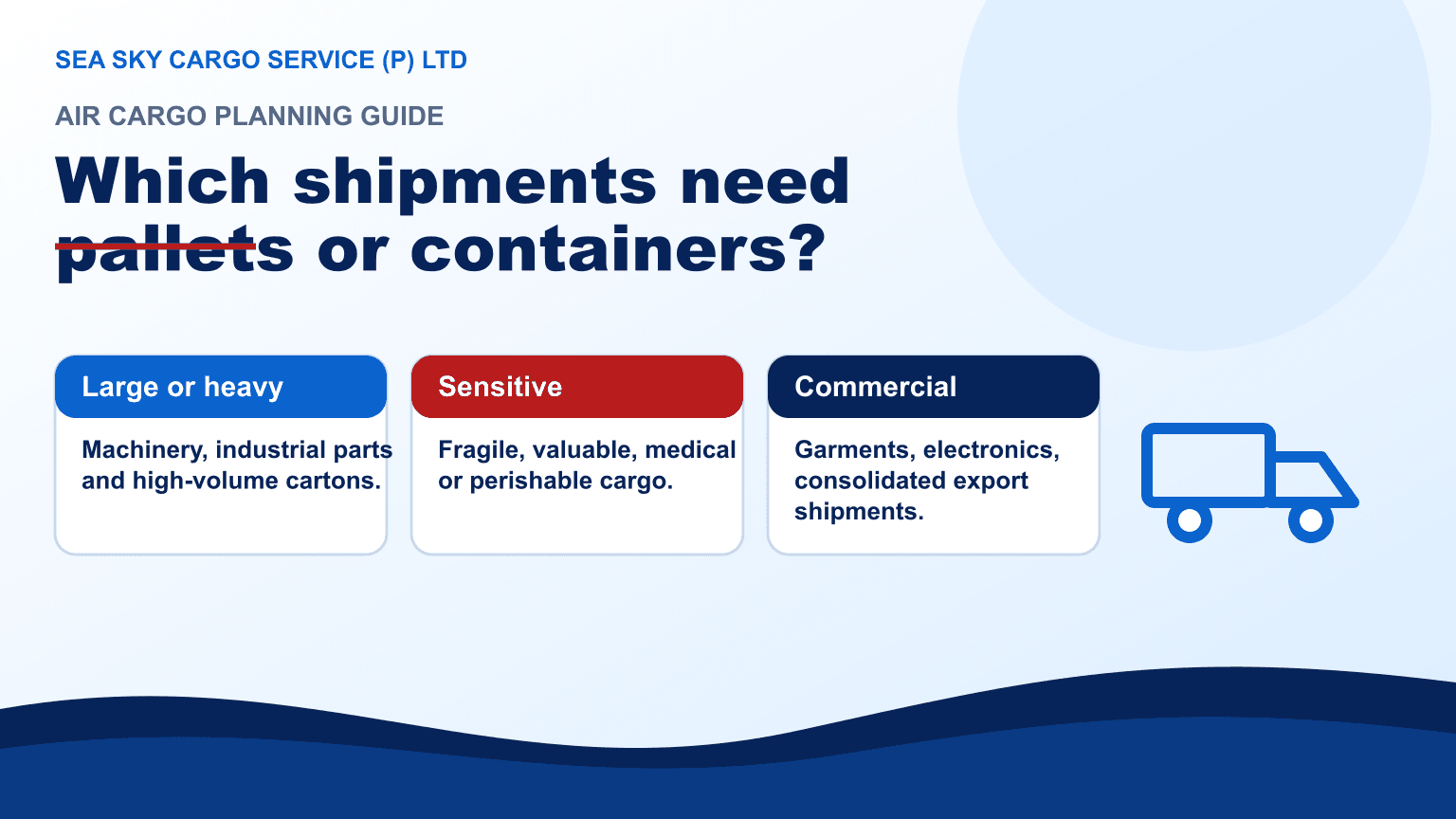
Air cargo containers or pallets may be needed when a shipment is large, heavy, high-volume, fragile, valuable, time-sensitive or difficult to handle as loose packages.
They are commonly used for:
- Commercial export shipments
- Large carton shipments
- Electronics
- Machinery parts
- Garments and textiles
- Medical goods
- Perishable cargo
- High-value cargo
- Industrial supplies
- Consolidated shipments
- Time-sensitive business cargo
If cargo is small, it may not need a full pallet or container. If the shipment has many packages, unusual dimensions or special handling needs, palletization can make loading and tracking more controlled.
For medicine, food, flowers or other sensitive goods, also review Sea Sky Cargo's temperature-controlled cargo guide before booking.
How cargo size affects air freight cost
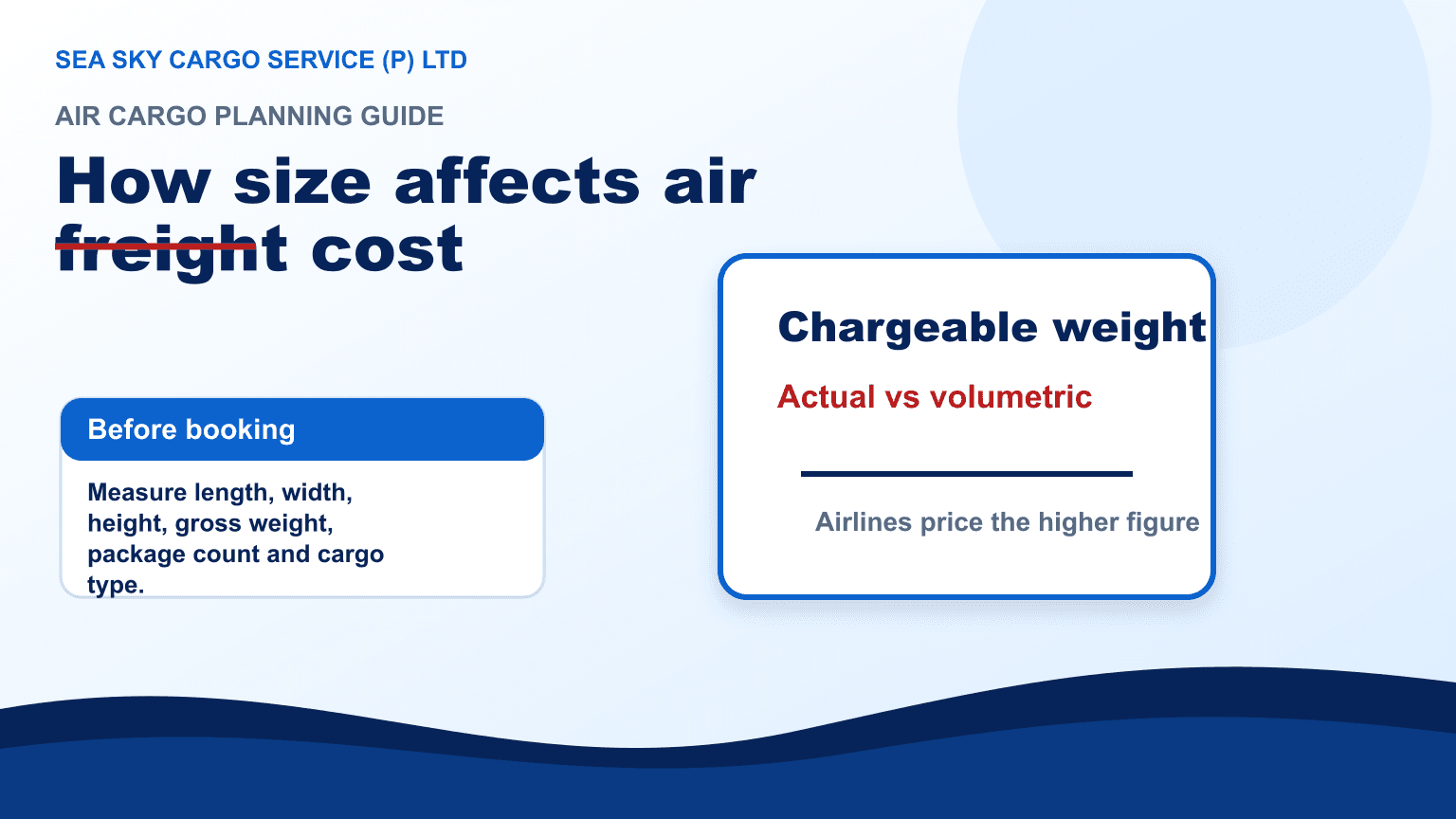
Air freight cost is not based only on actual weight. Airlines also calculate volumetric weight because aircraft space is limited. The pricing weight is often called chargeable weight. Chargeable weight is usually based on whichever is higher: Actual gross weight Volumetric weight calculated from shipment dimensions This means a large lightweight package can cost more than expected. Bulky foam, garments, packaging materials or display items may be light on the scale but expensive in aircraft space. For Nepal-linked cargo, also review duties, VAT, HS code and clearance timing before the shipment arrives. Sea Sky's cargo services in Nepal guide explains how air freight connects with customs and delivery.
| Before booking, provide | Why it matters |
|---|---|
| Length, width and height | Used to calculate volumetric weight and aircraft fit |
| Gross weight | Compared against volumetric weight for chargeable weight |
| Number of packages | Needed for handling, labels and build-up plan |
| Cargo type | Checks airline restrictions and packaging risk |
| Pickup and delivery details | Helps plan full route and customs timing |
Need to check if your cargo fits airline space?
Share the packed dimensions, weight, package count and urgency. Sea Sky Cargo can review whether loose cargo, palletized cargo or special air freight planning makes sense.
Air cargo packaging requirements
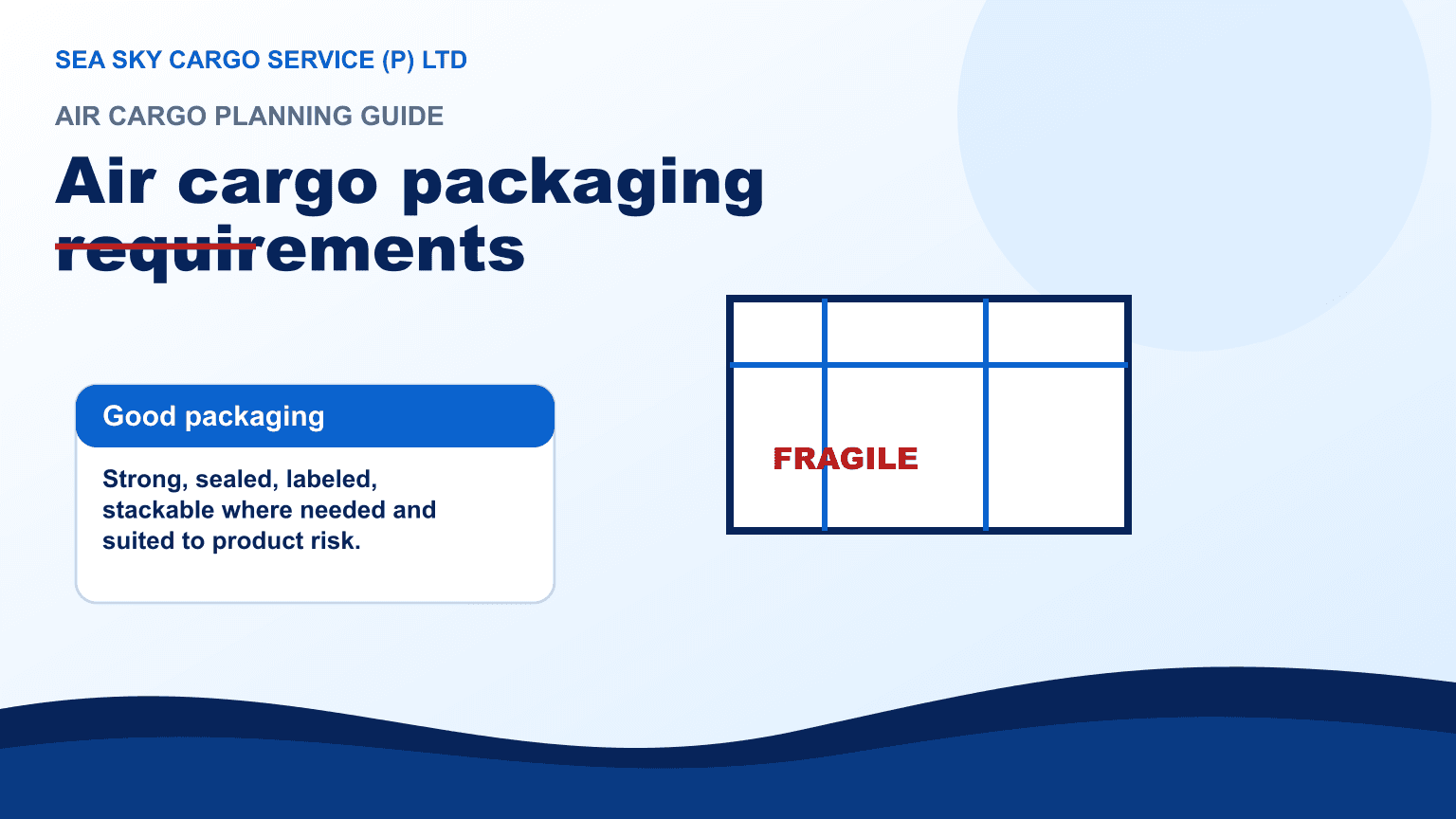
Air cargo moves through warehouses, airport terminals, loading equipment and aircraft holds. Packaging must be strong enough to protect the goods through repeated handling.
Good air cargo packaging should be:
- Strong and suitable for the product
- Clean and properly sealed
- Clearly labeled
- Suitable for stacking when required
- Protected from moisture or impact
- Matched to temperature, fragility or security needs
- Safe for airport and aircraft handling
Fragile, liquid, medical, perishable, valuable or dangerous goods may need special packaging. Temperature-sensitive cargo may require insulated boxes, gel packs, dry ice where accepted, data loggers or validated packaging.
Weak cartons, poor taping, old boxes or uneven crates can create a cargo hold or damage risk. If cargo will be palletized, make sure it can be secured without crushing or shifting.
Documents needed for air freight shipments
Air freight shipments need correct documents before cargo can move internationally. Missing or unclear paperwork can delay even an urgent shipment.
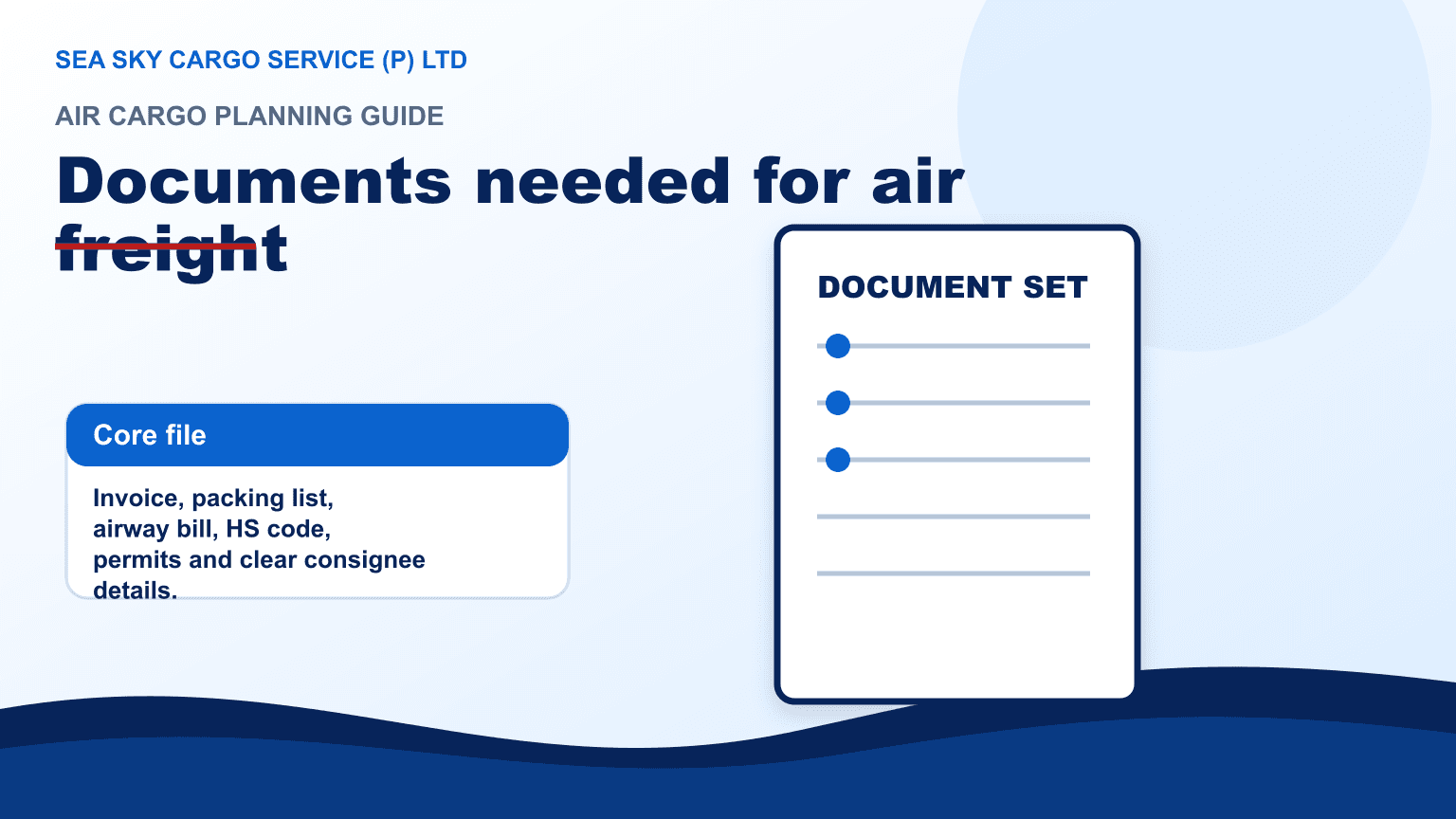
Common documents include:
- Commercial invoice
- Packing list
- Airway bill
- HS code
- Certificate of origin if required
- Export declaration if required
- Import permit if needed
- Product certificate if required
- Insurance document if applicable
- Shipper and consignee details
- Clear product description
- Weight and dimensions
For Nepal-linked shipments, importers should check customs duty, VAT, HS code and permit requirements before cargo arrives. Review Sea Sky's customs clearance in Nepal service and HS code Nepal guide when preparing the file.
The invoice and packing list should match the cargo exactly. Avoid vague product descriptions, missing model numbers, mismatched weights or unclear consignee details.
Special air cargo: perishables, medicine and dangerous goods
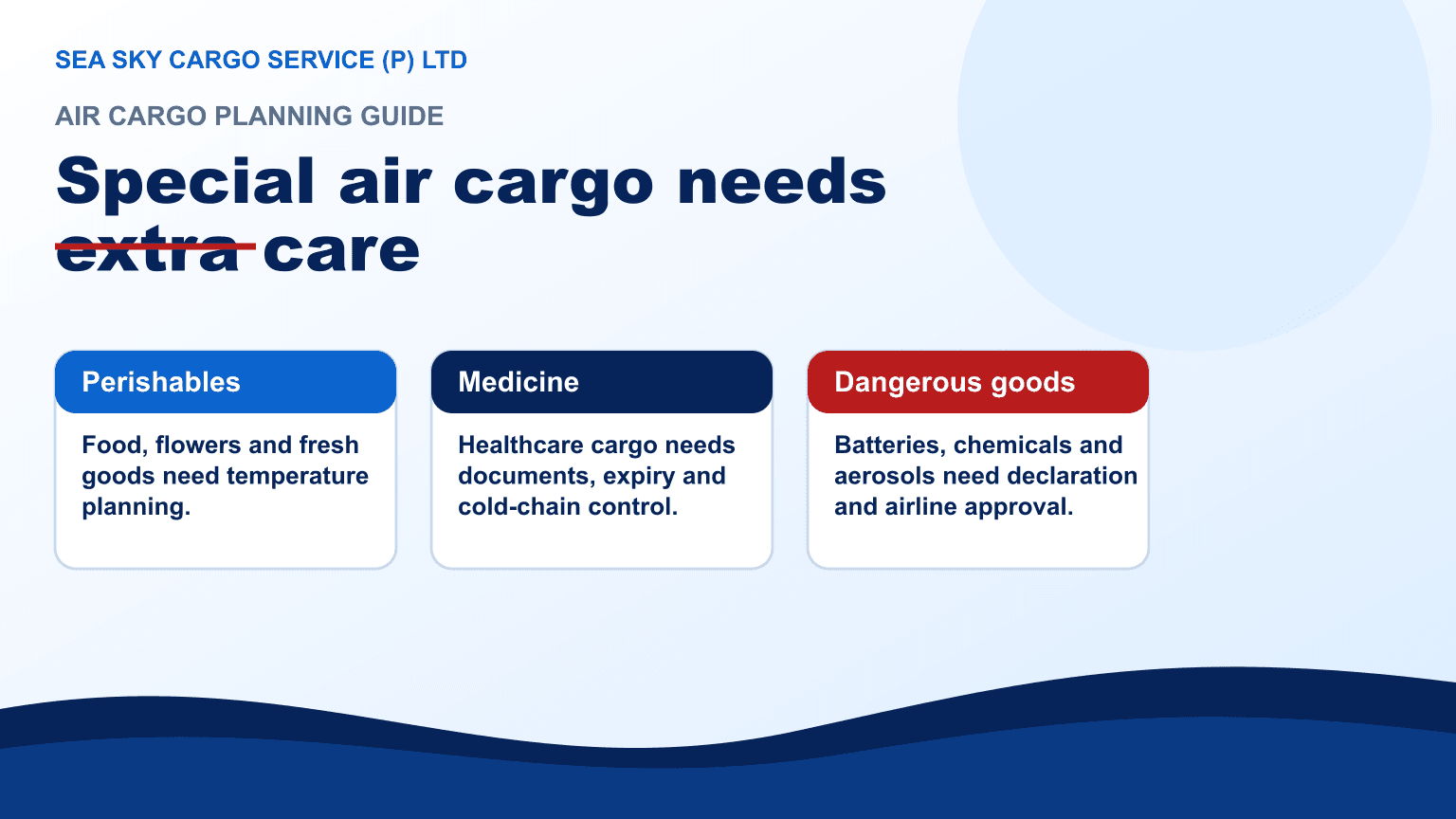
Some air cargo needs extra planning before booking. Perishable cargo may include food, flowers, fruits, vegetables and other products that lose value quickly.
Medicine and healthcare cargo may need temperature control, expiry details, product documents, careful packaging and handling notes. Dangerous goods may include batteries, chemicals, aerosols, flammable goods or other regulated materials.
Shippers should never hide or mislabel special cargo. Wrong declaration can cause airline rejection, penalties, delay, safety risk or cargo return.
Before booking special cargo, confirm:
- Whether the airline accepts the product
- Packaging and label requirements
- Temperature range or handling instructions
- Dangerous goods declaration needs
- Transit time and storage exposure
- Customs or import permit requirements
Common mistakes when booking air cargo
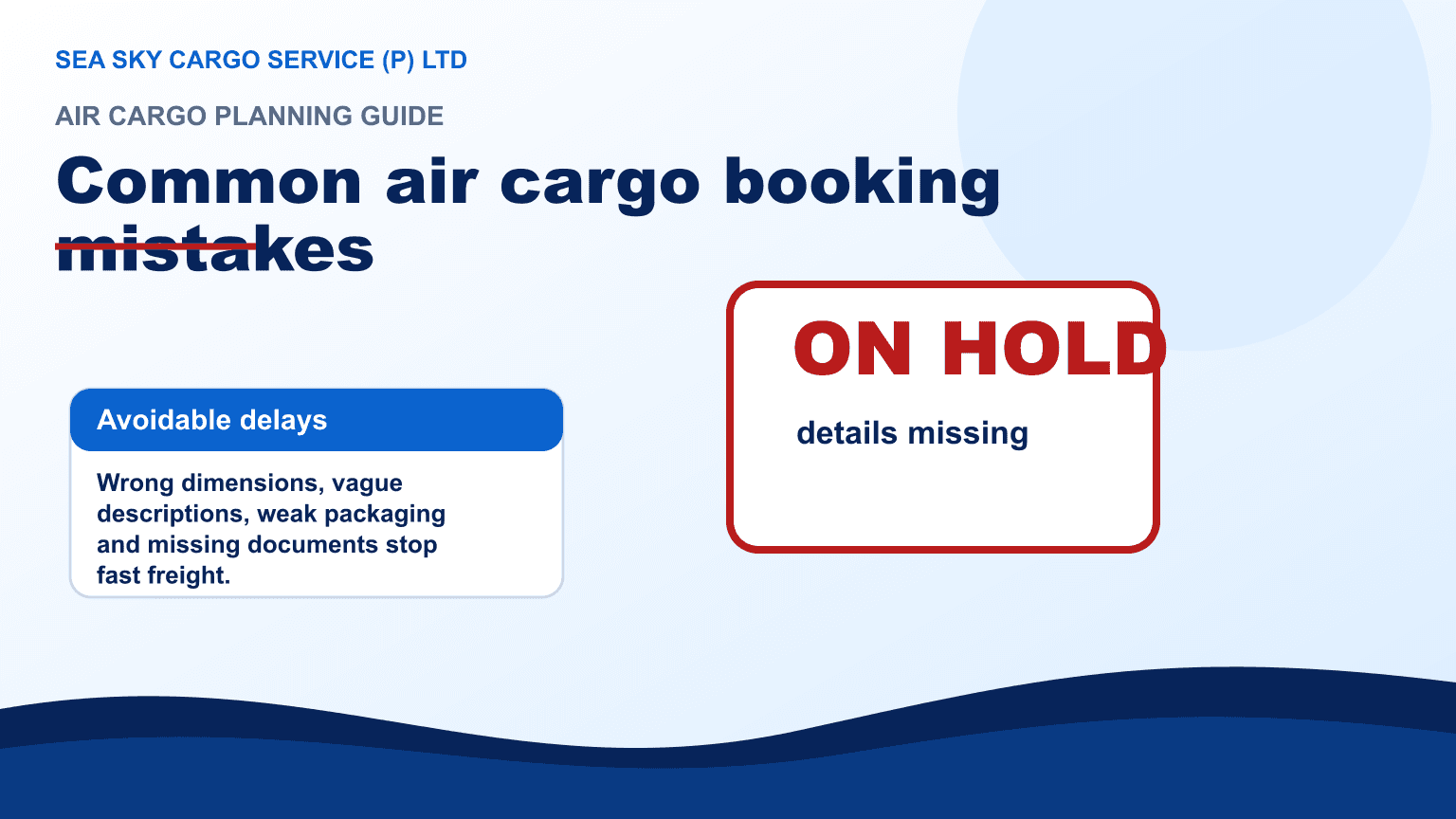
Many air freight problems happen because cargo details are incomplete before booking. Air freight is fast only when the shipment is ready for airline acceptance, customs and handling.
Common mistakes include:
- Giving wrong cargo dimensions
- Forgetting volumetric weight
- Using weak packaging
- Not checking airline restrictions
- Missing HS code
- Using vague product descriptions
- Not preparing invoice and packing list
- Shipping batteries or liquids without checking rules
- Not planning customs clearance
- Waiting until the last minute to book space
The most expensive mistake is assuming that an airline can accept any cargo because the shipment is urgent. Oversized, restricted, fragile, temperature-sensitive or incorrectly declared cargo needs review before booking.
Send photos of packed cargo, dimensions and documents early. A small correction before pickup is easier than repacking or rebooking after cargo reaches the airport.
Air freight checklist before booking
Before booking air cargo, check:
- Exact product name
- Number of packages
- Gross weight
- Length, width and height
- Cargo value
- Packaging type
- Urgency
- Pickup and delivery address
- HS code
- Commercial invoice
- Packing list
- Import or export permit if required
- Airline restrictions
- Customs clearance requirements
This checklist gives the freight forwarder enough information to review the cargo plan, estimate cost and identify risks. It also helps avoid preventable airport delay.
If cargo is moving to or from Nepal, include the consignee details, customs point if known, product use, invoice currency and whether the shipment needs door delivery after airport arrival.
A complete booking request does not need to be fancy. It needs to be accurate. Weight, dimensions and product description are the little details that decide the big plan.
How Sea Sky Cargo helps with air freight planning
Sea Sky Cargo helps importers, exporters, freight forwarders and businesses plan air freight shipments with cargo review, document checking, route coordination and Nepal customs support.
Sea Sky Cargo can support with:
- Air freight service planning
- Cargo size and weight review
- Air cargo container and pallet guidance
- Urgent shipment planning
- International air cargo coordination
- Document review
- HS code guidance
- Customs clearance support
- Temperature-sensitive cargo planning
- Nepal-linked import and export shipments
If you are unsure whether your shipment should move as loose cargo, palletized cargo or special air freight, Sea Sky Cargo can review the packed cargo details before booking.
Use the get a quote form with cargo type, dimensions, gross weight, package count, urgency, origin, destination and document status. The earlier the cargo is reviewed, the easier it is to avoid repacking and airline acceptance issues.
Frequently asked questions
What is an air cargo container? An air cargo container is a ULD used to hold and move cargo inside an aircraft safely and efficiently.
What does ULD mean in air freight? ULD means Unit Load Device. It refers to air cargo containers and pallets used for aircraft loading.
What is an air cargo pallet? An air cargo pallet is a flat platform where cargo is stacked and secured with nets or straps before being loaded into an aircraft.
Is air freight charged by weight or size? Air freight is usually charged by chargeable weight, which may be based on actual weight or volumetric weight, whichever is higher.
Do all air shipments need a ULD? No. Small shipments may move as loose cargo, while larger or consolidated shipments may use ULD containers or pallets.
Can Sea Sky Cargo help with air freight shipments? Yes. Sea Sky Cargo can help with air freight planning, cargo measurement, document review, HS code guidance and customs clearance support.
Air cargo containers and pallets help airlines move freight safely, quickly and efficiently. For shippers, the safest plan starts with accurate cargo dimensions, packaging, documents and customs readiness.
Book air freight with the right cargo details ready.
Sea Sky Cargo can help with air freight planning, ULD guidance, cargo measurement, documents, HS code review and Nepal customs coordination before booking.