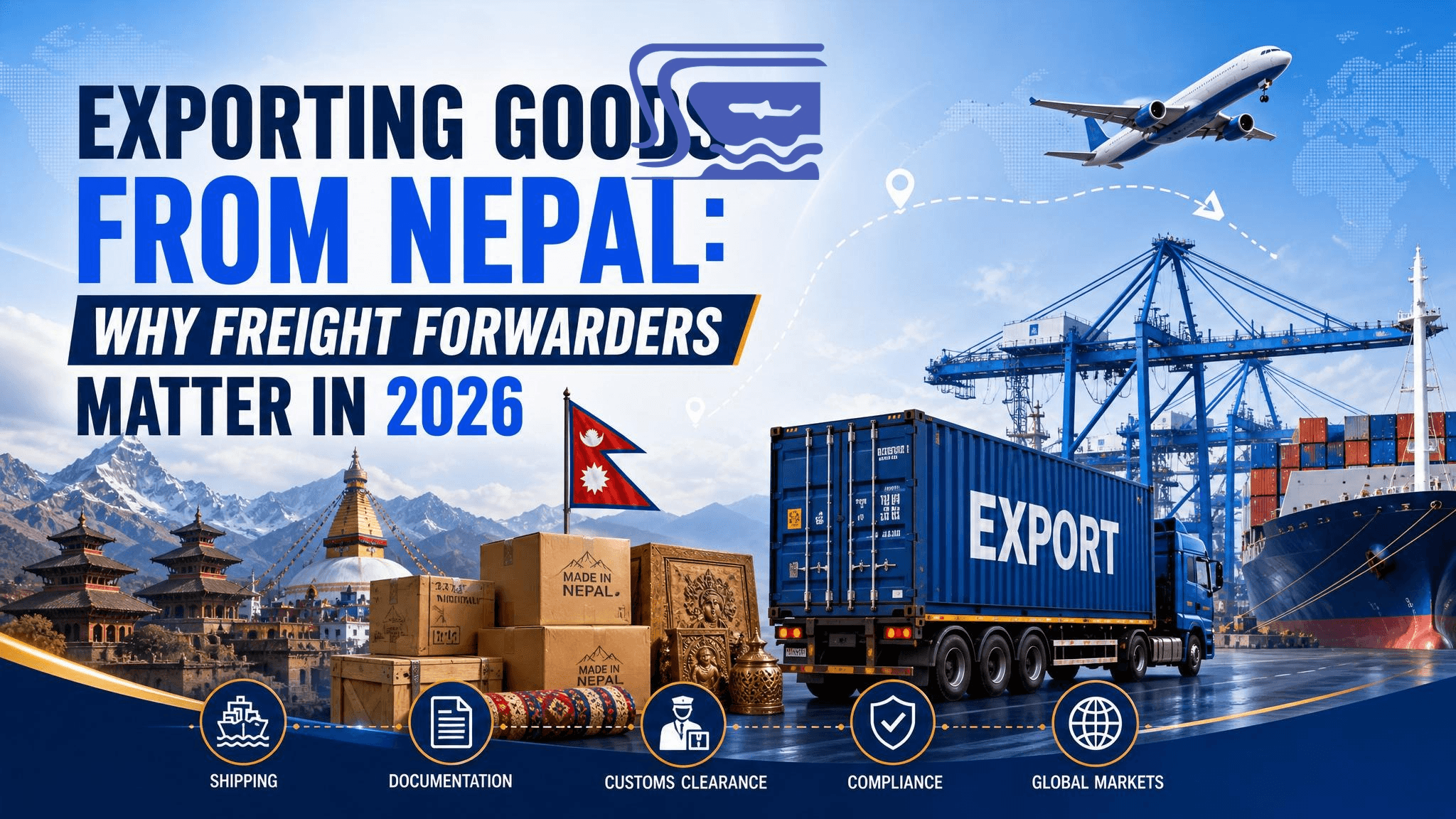
Exporting Goods from Nepal: Why Freight Forwarders Matter in 2026
Exporting goods from Nepal in 2026 is more accessible than ever, but it still requires careful planning, accurate documents, and the right logistics partner. For many exporters, the real difference between a smooth shipment and a delayed one is not the product itself, but how well the freight forwarding process is managed from pickup to customs clearance.
Freight forwarders help connect the exporter, the carrier, and customs authorities so that cargo can move without unnecessary delays. In Nepal, that support is especially important because export cargo often depends on air, road, and sometimes sea-linked routes through neighboring countries.
What a freight forwarder does
A freight forwarder acts as the logistics coordinator for your shipment. The forwarder can arrange cargo booking, inland transport, export documentation, customs filing, warehousing, insurance, and freight consolidation.
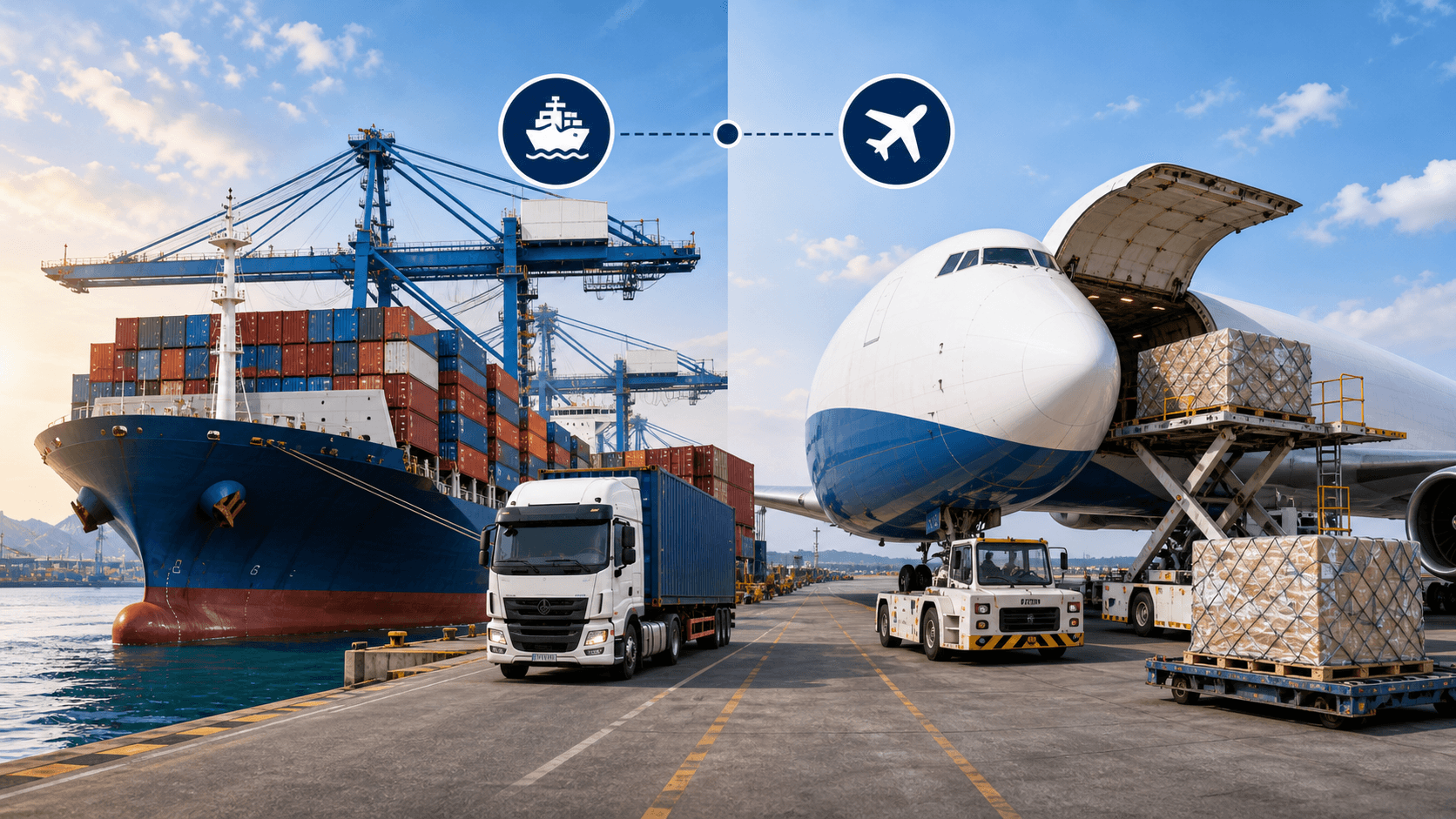
For exporters, this means less manual coordination and fewer last-minute surprises. A good freight forwarder also helps choose the right shipping mode, whether the cargo should move by air, road, or sea through a regional gateway
Why Nepal exporters need one
Nepal’s export process involves customs rules, banking documents, certificates, and shipment coordination that can become complex quickly. When the invoice, packing list, transport document, and certificate of origin are not aligned, customs processing can slow down or stop the shipment altogether.
Freight forwarders reduce that risk by checking the paperwork before cargo moves. They also help exporters choose the most efficient route and avoid unnecessary cost from storage, rework, or clearance delays.
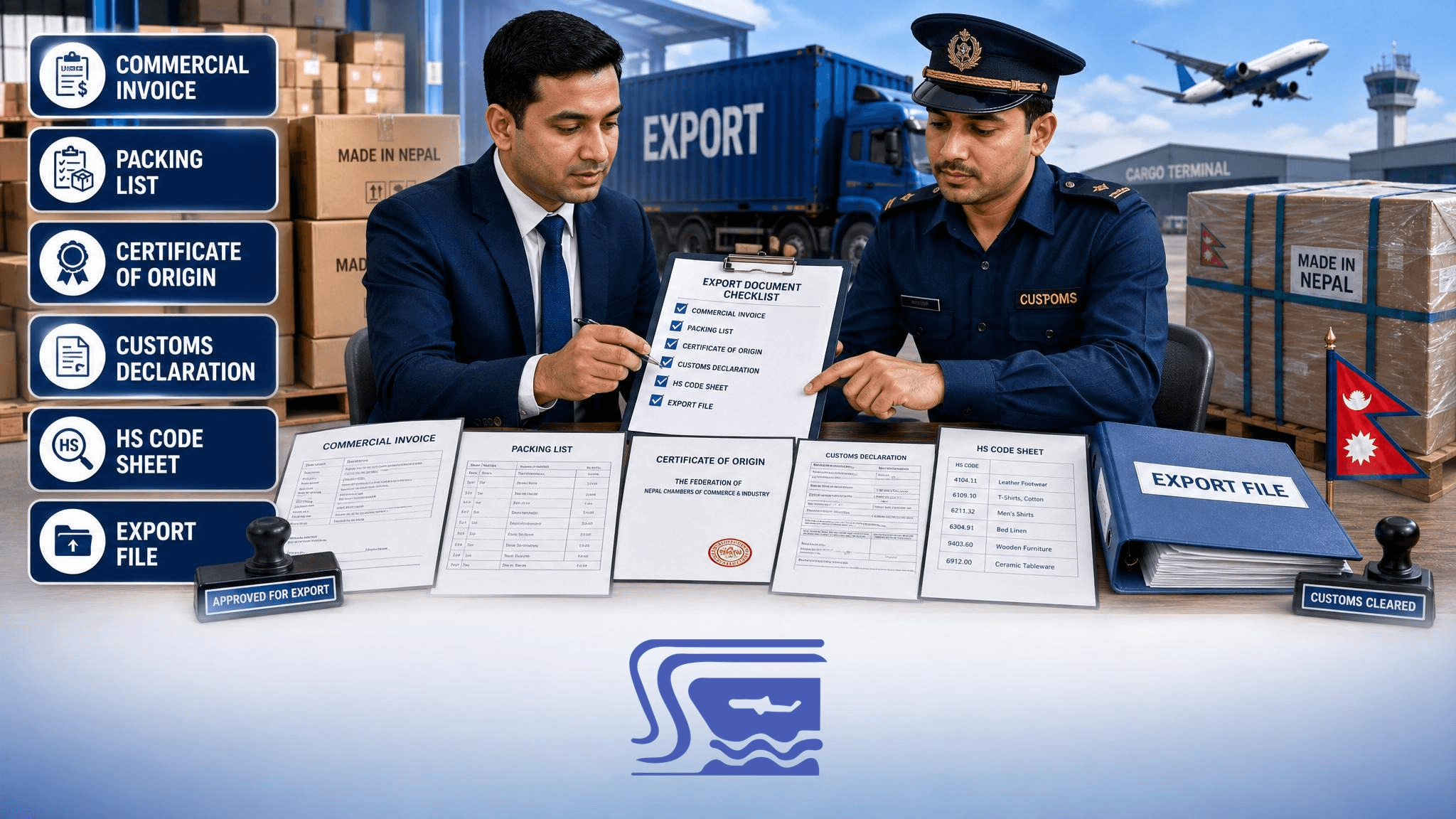
Export documents
Common export documents from Nepal include:
- Commercial invoice.
- Packing list.
- Customs declaration form.
- Airway bill or bill of lading.
- Certificate of origin.
- Export license, if the goods are restricted.
- Foreign exchange declaration or bank confirmation where required.
Some products need additional approvals. For example, garments, handicrafts, herbs, textile products, or regulated goods may require special letters, permissions, or association certificates before export clearance. These extra requirements make freight forwarding support even more valuable for Nepal exporters.
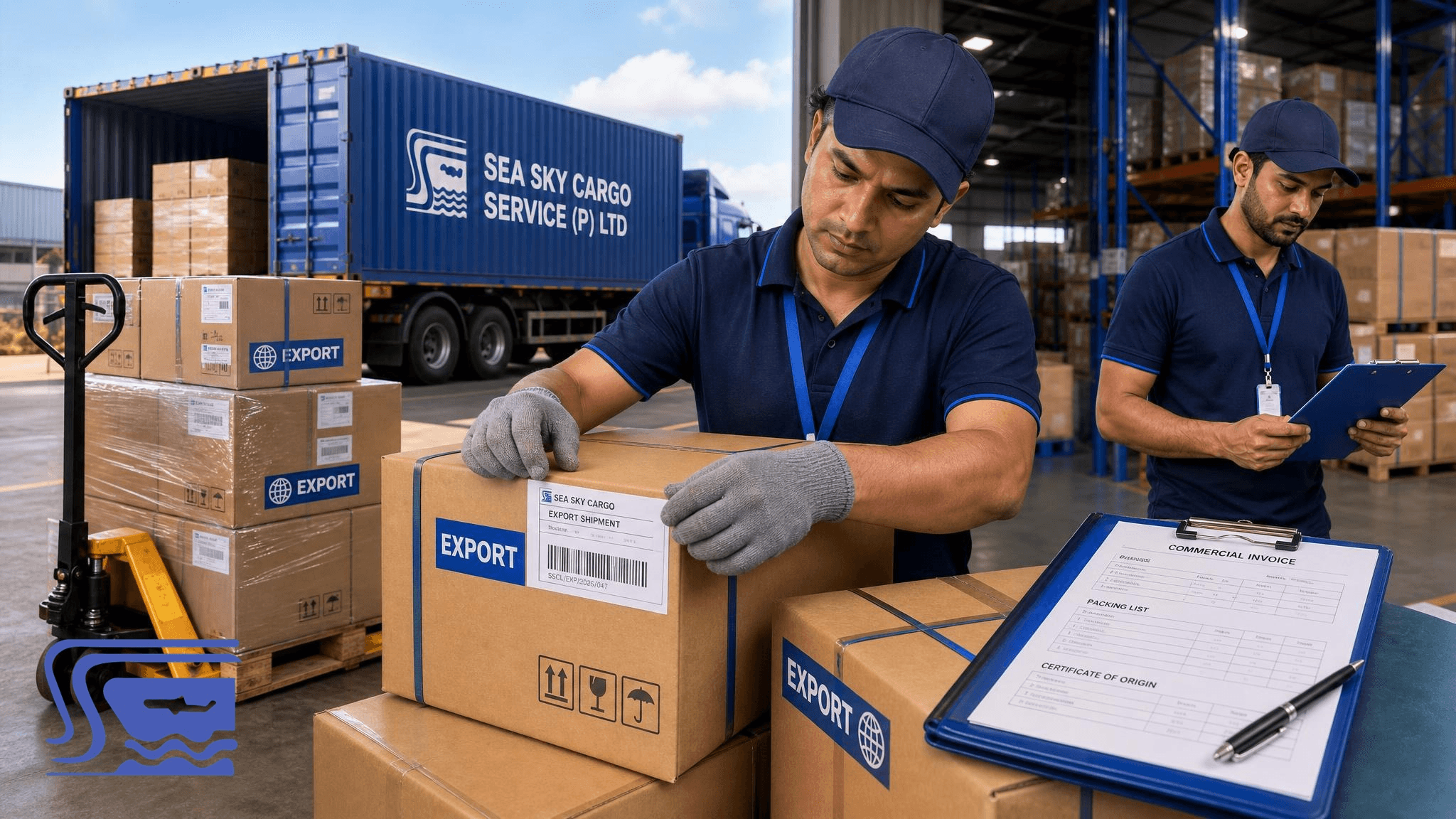
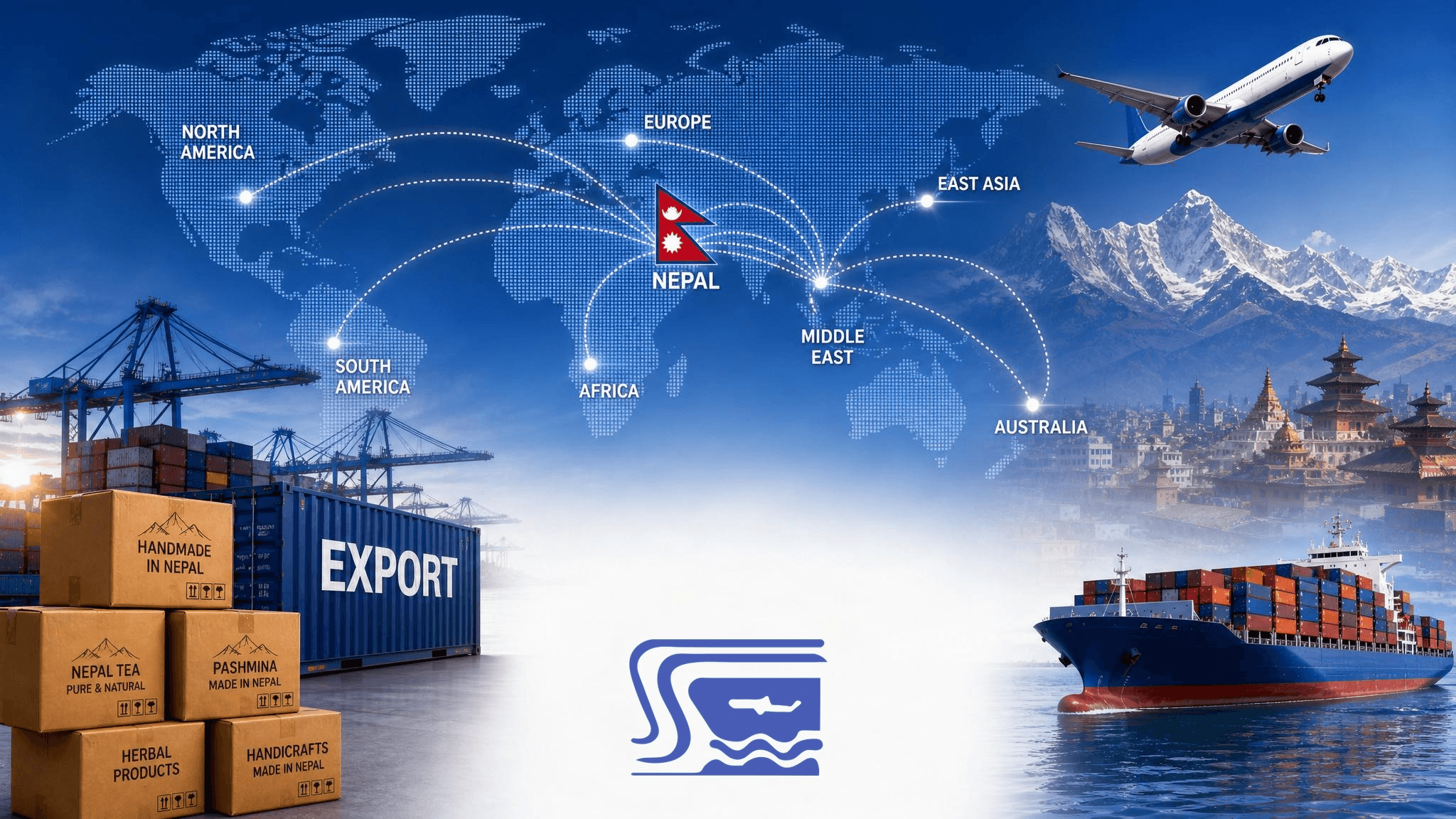
What products are exported
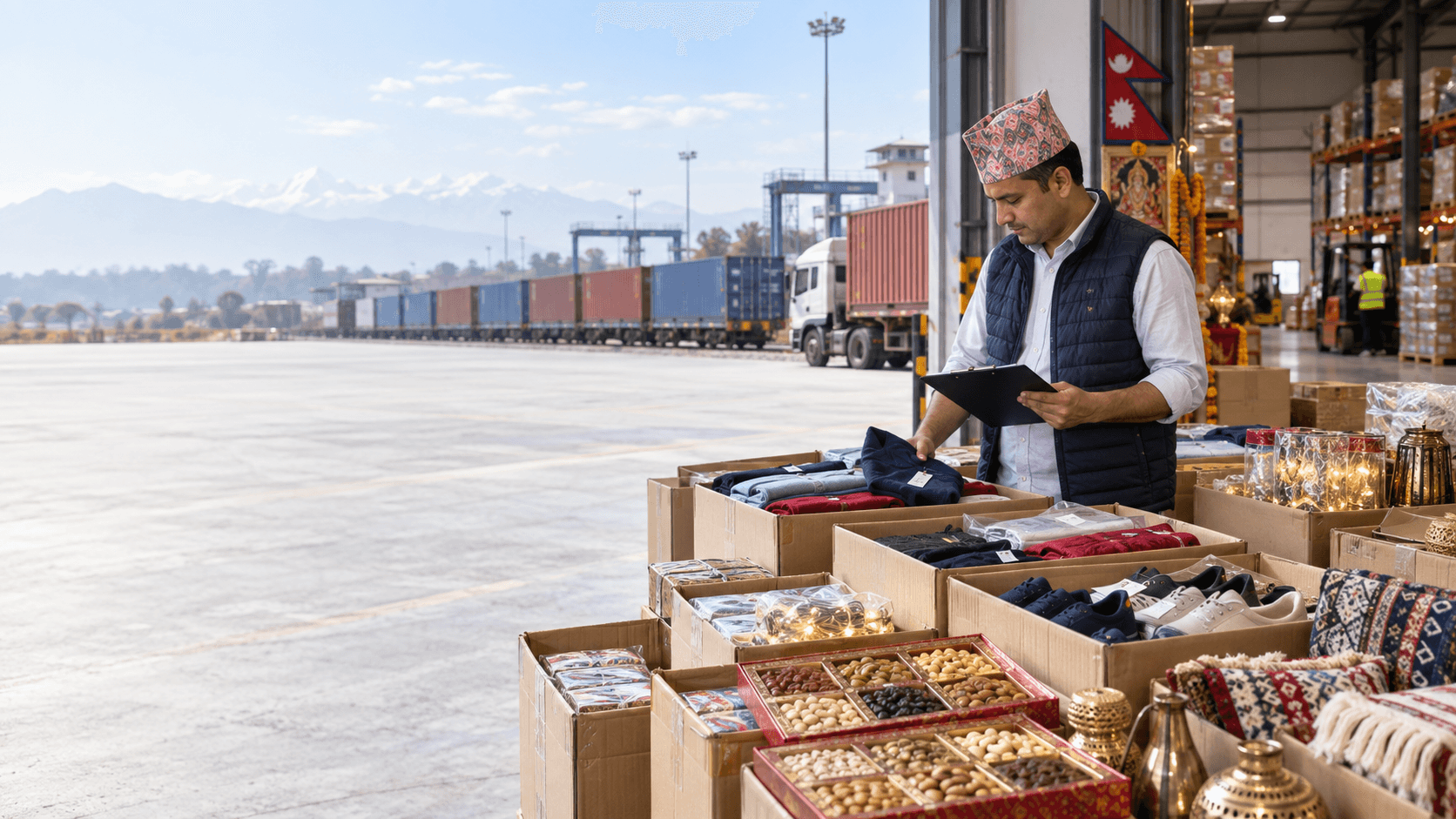
Nepal exports a wide range of goods, including garments, carpets, handicrafts, herbs, textiles, and specialty products. These products often need different logistics strategies depending on value, volume, fragility, and destination market.
Exporters sending apparel to Europe or the U.S. may benefit from preference documents and origin support, while exporters of carpets or handicrafts often need careful handling and packaging for international transit. Freight forwarders help match the product with the right transport and customs path.
How the process works
The export process usually begins with a buyer order or confirmed shipment request. The exporter then prepares the invoice, packing list, certificate of origin, and any required permit or license before the freight forwarder books transport.
Next, the forwarder arranges pickup, export customs filing, and shipment handoff. Once the cargo clears, the goods move by air, road, or sea-linked routing depending on the destination and urgency.
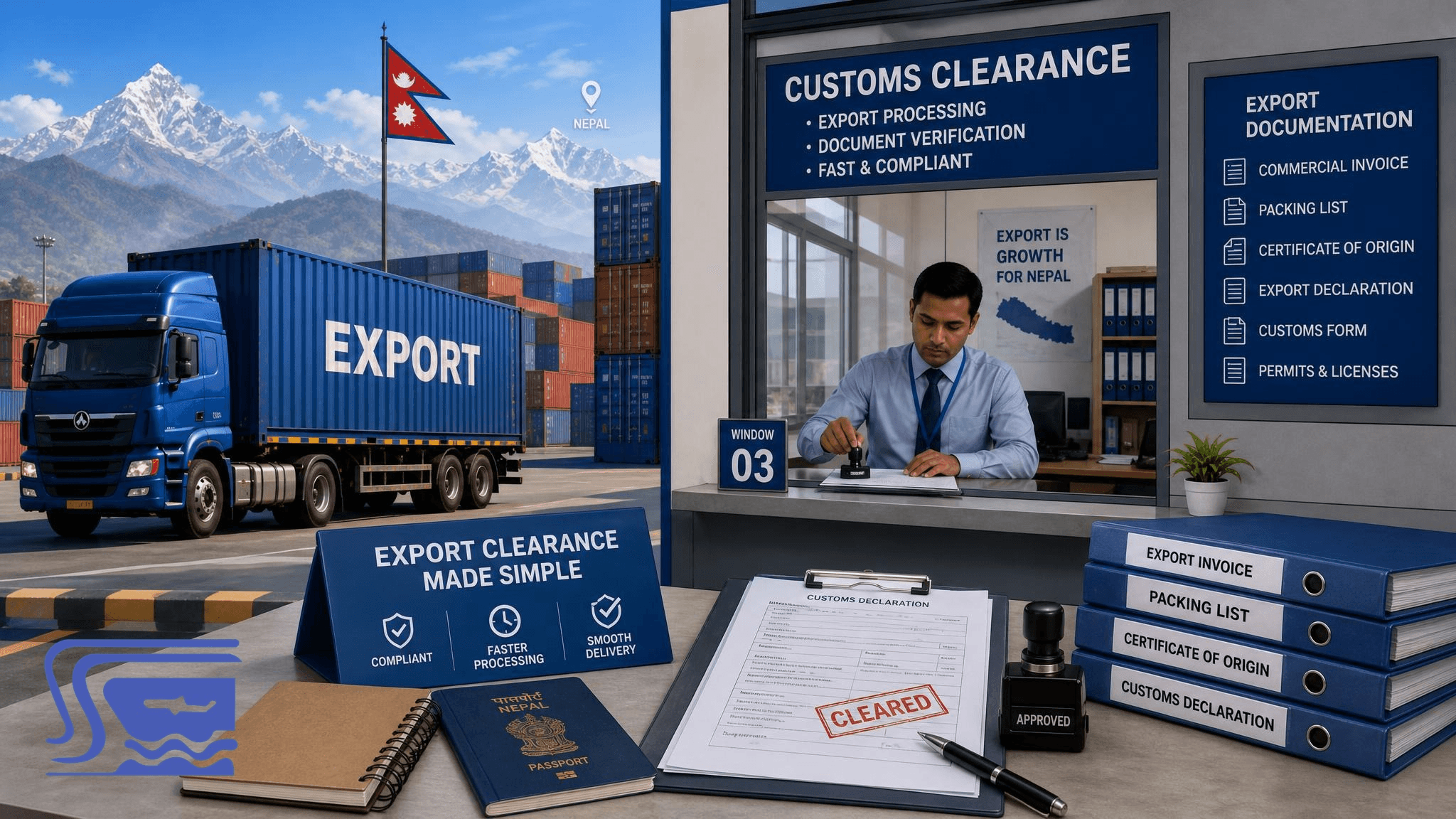
Common challenges
The biggest challenges for Nepal exporters are missing documents, incorrect product descriptions, restricted items, and poor timing between the cargo and paperwork. Even small errors, such as a mismatch between invoice and packing list, can create delays at customs.
Route selection is another challenge. Some shipments move best by air because they are urgent, while others are better routed by road or sea-linked transport to save cost. A freight forwarder helps avoid the mistake of choosing a transport mode that looks cheaper upfront but becomes expensive later due to delays or rework.
How Sea Sky helps
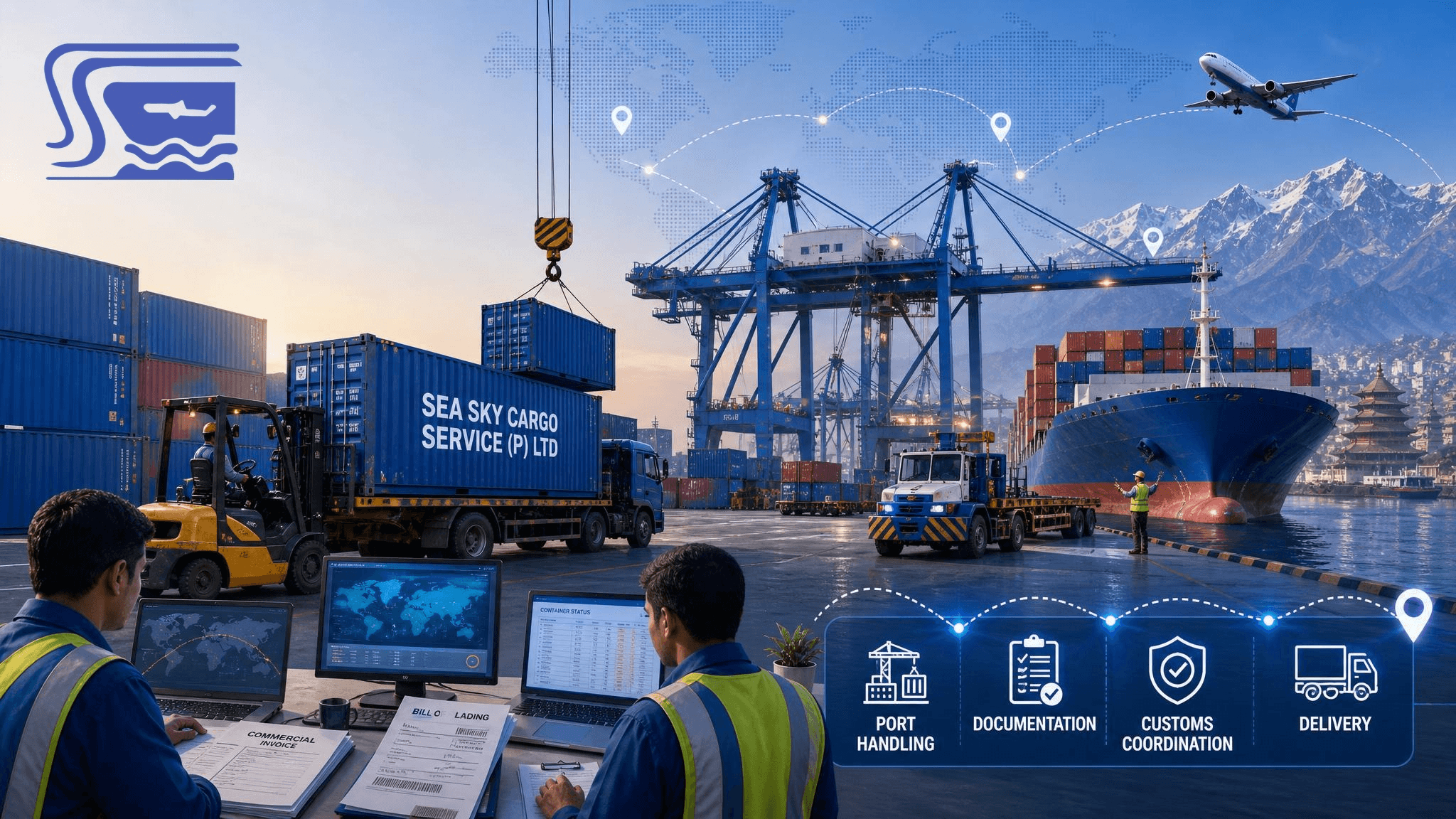
Sea Sky Cargo Service supports exporters with customs coordination, freight booking, document review, route planning, and cargo supervision. The company’s public materials show experience with project cargo, regional cross-border movement, and export logistics across air and ocean channels.
For exporters, that means one partner can help manage the shipment from warehouse to final export handoff. That is especially useful for business cargo that must move quickly, comply with customs rules, and arrive without avoidable handling problems.
Conclusion
Freight forwarders are a key part of successful exporting in Nepal because they bring together transport, documentation, customs, and shipment planning in one process. For businesses that want fewer delays and more predictable export execution, the right forwarder can make a major difference.
Contact SeaSky for hands-on customs clearance help and export support for Nepal-origin cargo that needs reliable freight forwarding, route planning, and documentation management.