Plan backward from the festival selling date
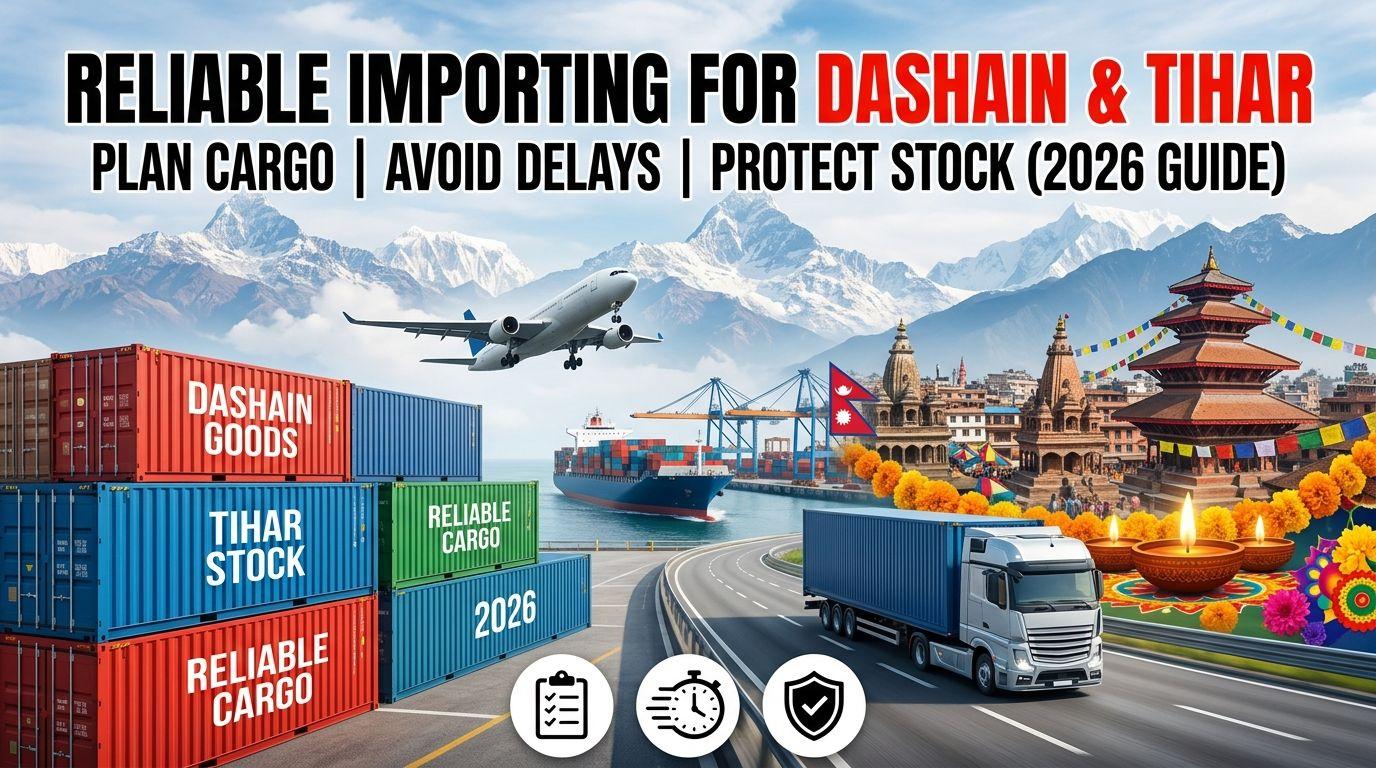
Dashain and Tihar can be among the busiest sales periods for Nepal retailers. Demand rises for clothing, footwear, electronics, decorative lights, gifts, dry fruits, chocolates, kitchen products and home accessories. The commercial deadline is not the vessel arrival date or the day cargo reaches Birgunj; it is the day stock is unpacked, checked, priced and ready for customers. Work backward from that shelf-ready date. Allow time for supplier production, export packing, origin handling, ocean transit, vessel changes, Kolkata or Haldia processing, India transit, Birgunj ICD customs clearance, delivery, warehouse receiving and distribution to shops or online fulfilment points. Add a buffer for steps outside your direct control. Do not build a retail promise from a normal transit average. Festival demand can tighten carrier space, consolidation schedules, rail or truck capacity, customs yards and warehouses at the same time. A practical plan uses a range, names the assumptions and identifies the last date when the route can still meet the business deadline. If part of the order is coming overland from China, read the separate Dashain and Tihar China-route update. This guide focuses on the sea-led Kolkata or Haldia to Birgunj corridor so the two pages answer genuinely different planning questions.
| Planning question | Why it matters |
|---|---|
| When will customers start buying? | Stock should be available before the sales curve rises |
| When must goods reach the warehouse? | Receiving, counting, labelling and branch distribution take time |
| Which products are must-arrive items? | Urgent bestsellers may justify air freight or an earlier lot |
| What is the latest safe booking date? | A carrier departure is useful only if every earlier step is ready |
| What happens after a delay? | A backup route, stock split or local substitute protects sales |

Why the Kolkata or Haldia to Birgunj corridor matters
Nepal is landlocked, so ocean imports normally discharge outside the country and continue through an approved transit route. Kolkata and Haldia are established Indian gateways for Nepal-bound cargo. The India-Nepal transit framework provides for cargo movement toward the Raxaul-Birgunj corridor, including rail-linked movement to Birgunj Inland Clearance Depot, also called Sirsiya Dry Port.
Birgunj ICD connects international transit with Nepal customs and onward road delivery. For a small business, that can turn several transport stages into one coordinated plan: ocean freight to the gateway, port release, India transit, terminal arrival, customs clearance and delivery to the receiving location.
- Planned retail stock that is too large or expensive for air freight
- LCL consignments with several cartons or pallets
- FCL inventory orders needing a complete container
- Bulky household, garment, footwear or general merchandise
- Goods requiring coordinated customs and final delivery in Nepal
- Businesses that want one written scope across multiple handoffs
The 2023 Treaty of Transit protocol states that the Trustees of the Port of Kolkata shall allow seven days of free time for removal of Nepal transit cargo, including containerised cargo, and notes that continuation of the provision may be reviewed. Treat that as a legal framework, not a promise that every shipping-line, CFS, terminal, handling or storage charge is free. Ask for the operational last-free date and charge rules in writing for the actual shipment.
Rail or road availability, terminal cut-offs, equipment and cargo acceptance must also be reconfirmed near dispatch. Sea Sky's port-to-door cargo guide explains the destination stages after an Indian gateway in more detail.
How cargo moves from the supplier to your Nepal shop
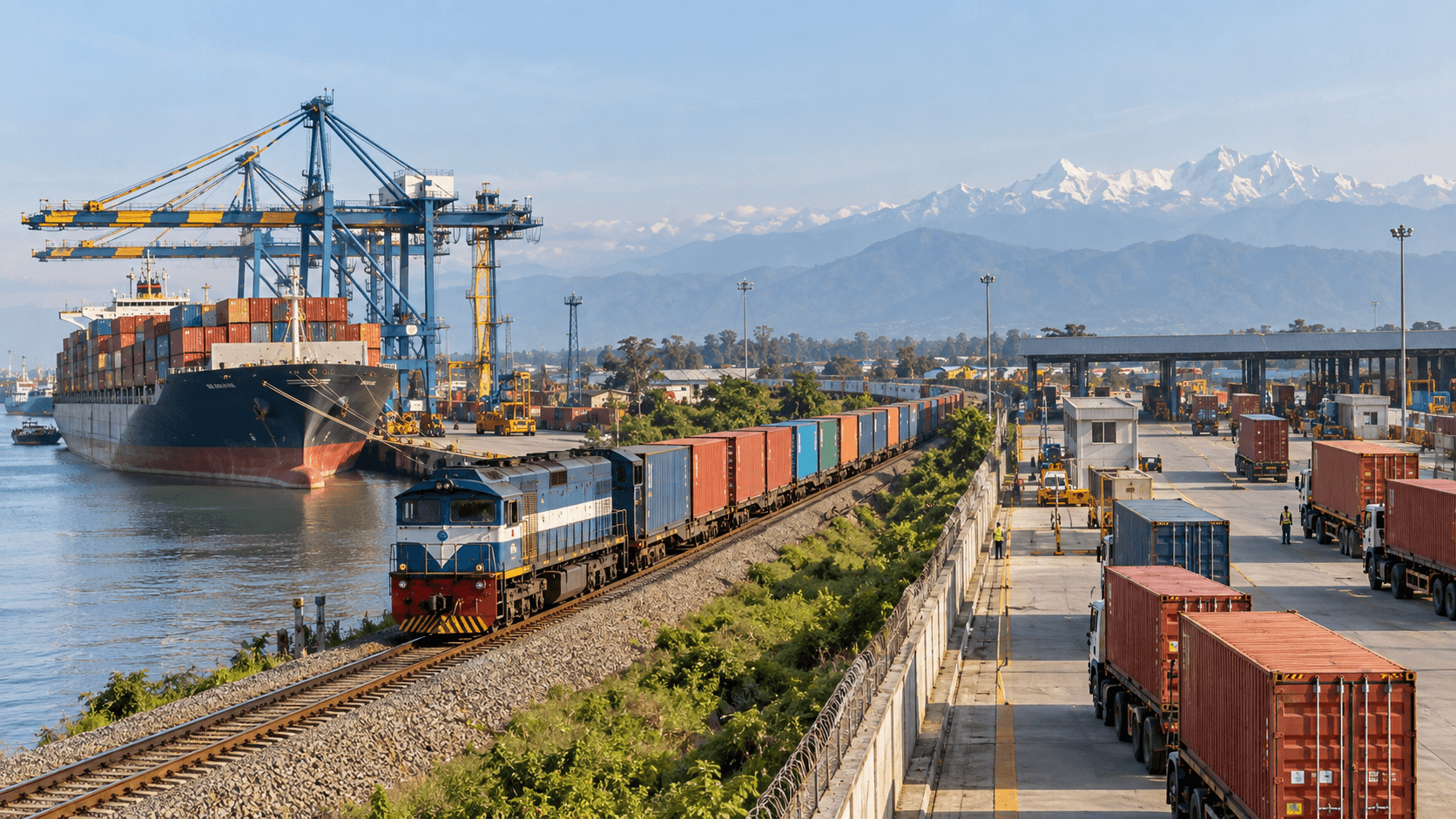
The route becomes easier to manage when every milestone has an owner, required document and decision date. The exact sequence varies by origin, carrier, Incoterm and whether the shipment is LCL or FCL, but most sea-led festival imports follow the structure below. For LCL cargo, add consolidation and deconsolidation milestones. The shipment may be received at an origin warehouse, loaded with other consignments, unpacked at a destination facility and released as individual packages. These extra handoffs make package strength, labels and document accuracy especially important. A tracking update such as "arrived at port" is not the same as stock availability. Ask for milestone language that identifies the current facility, release status, next responsible party and expected action.
| Stage | Operational work | Importer checkpoint |
|---|---|---|
| 1. Supplier readiness | Confirm goods, final packing, marks, dimensions, weight and cargo-ready date | Do the invoice description and physical goods match? |
| 2. Origin booking | Arrange pickup or handover, export procedures, consolidation and vessel space | Are cut-off dates and booking validity written down? |
| 3. Ocean movement | Cargo travels to Kolkata or Haldia under the carrier schedule | What route, transshipment and arrival range were quoted? |
| 4. Indian gateway | Complete shipping-line, port or CFS release and Nepal transit formalities | Who controls documents, deposits, free time and next movement? |
| 5. India transit | Move by the confirmed rail or road arrangement toward Raxaul and Birgunj ICD | Is the container or cargo accepted for the selected movement? |
| 6. Nepal customs | Submit the declaration file, answer queries, complete assessment and obtain release | Are permits, taxes and payment authority ready before arrival? |
| 7. Final delivery | Arrange the right vehicle, warehouse appointment, unloading and proof of delivery | Can the receiving site accept and check the cargo immediately? |
Choose LCL, FCL, air freight or a split shipment
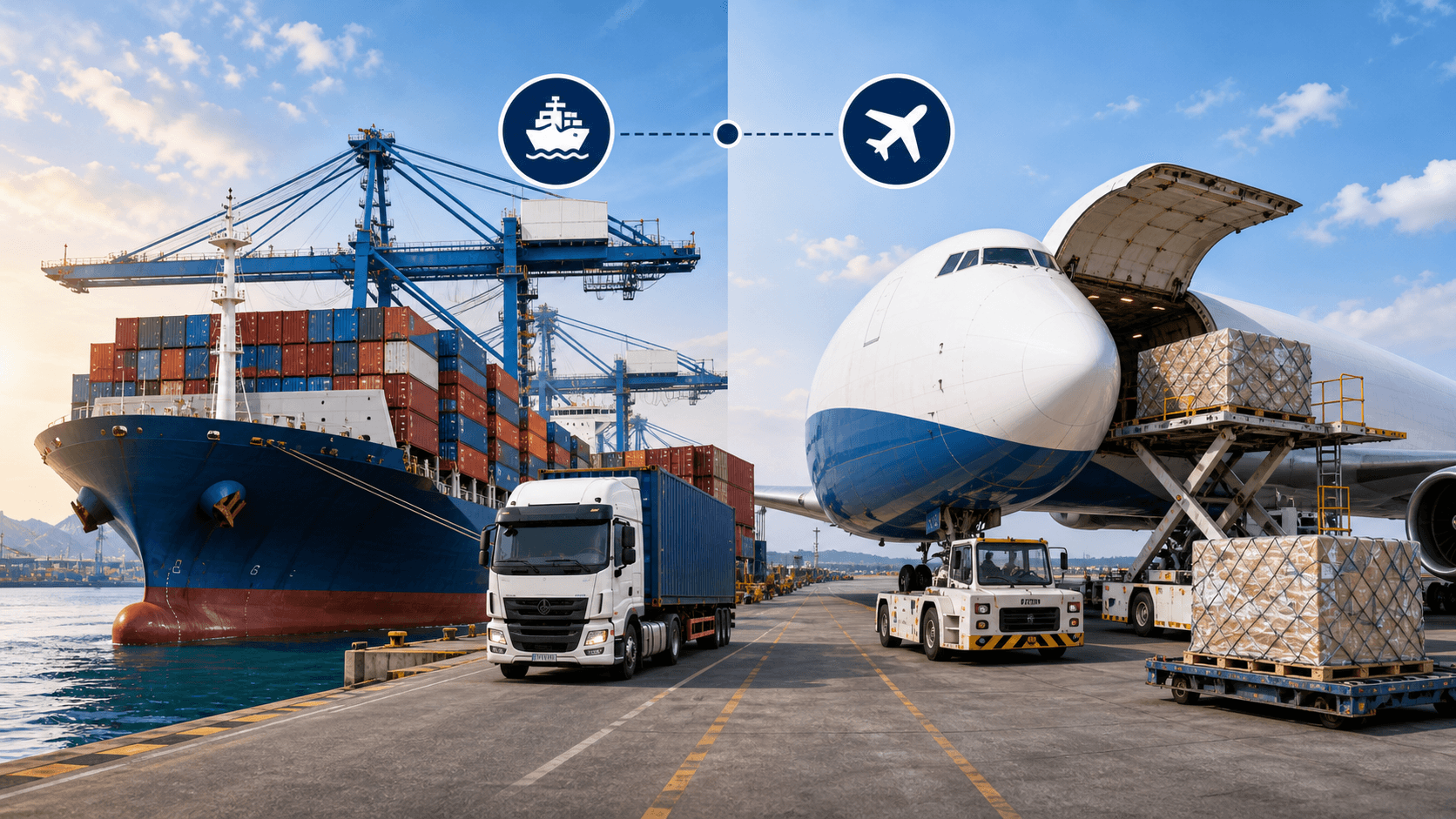
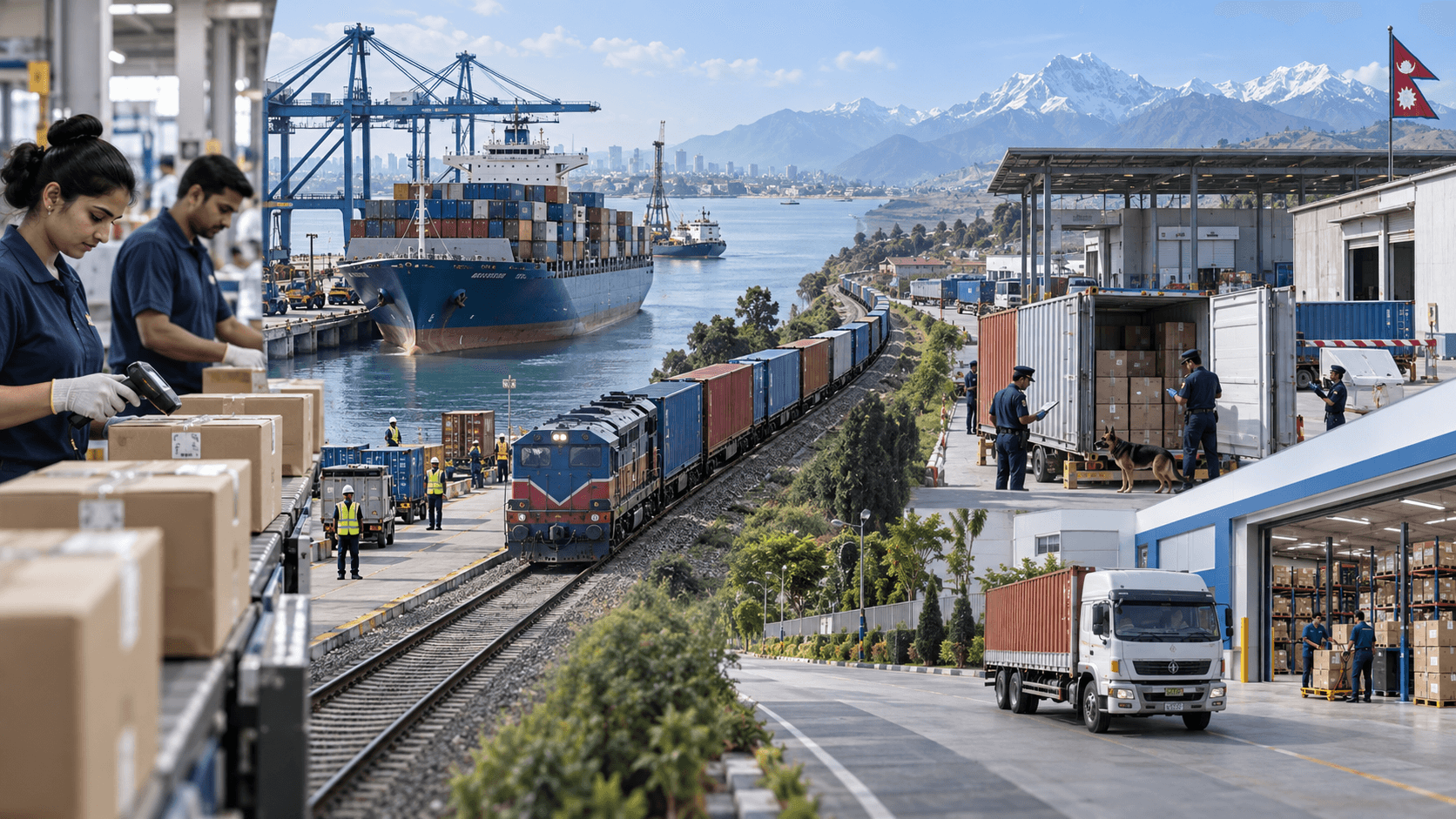
A small business does not need to fill a container to use ocean freight. LCL allows several shippers to share container space, while FCL reserves the complete container for one shipment. Air freight can protect urgent or high-margin stock when the selling deadline is too close for the sea-led route. Compare total landed cost and shelf-ready date, not just the freight rate. LCL can be attractive for a smaller volume but may carry destination minimums and consolidation time. FCL can offer more loading control but creates container free-time and return responsibilities. Air freight should be used where the saved sales or avoided stockout justifies the premium. A sensible festival split might send top-selling garments, mobile accessories or samples by air while decorations, household goods and reserve stock move by sea. The LCL shipping guide explains shared-container planning, while Sea Sky's ocean freight service is the route contact point.
| Option | Often suitable for | Trade-off to check |
|---|---|---|
| LCL sea freight | A few cartons, pallets or a product test order | Consolidation schedules, minimum charges and more handling points |
| FCL sea freight | Larger or bulky festival inventory | Container utilisation, free time, unloading and empty return |
| Air freight | Urgent, compact, valuable or fast-selling products | Higher cost, chargeable weight and airline restrictions |
| Sea and air split | One order with must-arrive and routine stock | Two bookings and customs files, but lower deadline concentration |

Prepare the customs and shipping file before dispatch
Incomplete or inconsistent documents can turn a manageable route delay into a missed selling season. Review the draft invoice and packing list while the goods are still at the supplier. Corrections become slower after a bill of lading has been issued or the cargo enters a controlled facility. Do not write only "festival goods," "accessories" or "electronics." Use descriptions such as LED decorative string lights, polyester festive dresses or packaged dried-fruit gift boxes, then add the model, material or composition needed to identify the goods. Clear descriptions support HS classification, permit checks and customs valuation. Use the HS-code error guide and the Nepal import-duty worksheet before relying on a supplier's remembered code or tax percentage. Final classification, valuation and assessment remain with Nepal Customs.
| Document or data | What should be clear and consistent |
|---|---|
| Commercial invoice | Seller, importer, detailed product, quantity, value, currency, origin and Incoterm |
| Packing list | Packages, contents, dimensions, net and gross weight and shipping marks |
| Bill of lading | Shipper, consignee, notify party, ports, cargo description and container details |
| HS-code support | Material, function, model, composition, catalogue and photographs |
| Importer file | Company registration, PAN or VAT, EXIM-related records and authorization as applicable |
| Origin and permit records | Certificate of origin and product-specific licence, recommendation or certificate when required |
| Insurance | Commodity, packages, insured value, complete route and responsible party |
| Delivery instructions | Final address, contact, vehicle access, unloading and receiving hours |

Will your stock be shelf-ready before customers arrive?
Share the cargo-ready date, product list, packing details and sales deadline. Sea Sky Cargo can compare the route, document needs and delivery scope before you book.
Avoid the mistakes that make seasonal cargo late
Festival imports usually fail through several small planning gaps rather than one dramatic event. The best control is to identify each assumption while alternatives are still available. Ask what happens if the nominated vessel changes, the LCL consolidation misses a cut-off, a rail slot is unavailable, Customs requests clarification or the receiving warehouse closes for a holiday. The answer should name the next action, responsible party and potential cost instead of offering a vague guarantee. Keep a small decision reserve. When timing tightens, it may be commercially better to air-freight a limited quantity, change the product mix or postpone low-priority stock than to pay emergency charges on the entire order.
| Mistake | Better decision |
|---|---|
| Booking after the retail deadline is already close | Work backward from shelf-ready date and book before capacity tightens |
| Choosing only the lowest base freight | Compare the same origin-to-warehouse scope, assumptions and exclusions |
| Using vague invoice descriptions | Name the actual product, model, material and use |
| Accepting an unverified HS code | Check Nepal's current tariff against technical product evidence |
| Waiting for arrival to arrange permits | Resolve product controls and documents before supplier dispatch |
| Putting every bestseller in one movement | Split must-arrive stock from slower or lower-priority inventory |
| Treating port arrival as final delivery | Track release, transit, Customs and receiving milestones separately |

Budget the complete Kolkata to Birgunj landed cost
An ocean freight number is only one line in the import budget. Ask for an itemised quotation with the named origin, gateway, customs point, final delivery place, charge basis, validity and exclusions. Two totals cannot be compared fairly if one ends at Kolkata and the other includes Birgunj clearance coordination and warehouse delivery. Record whether each amount is fixed, estimated, reimbursable or excluded. Confirm the currencies and exchange-rate method. For LCL, check the minimum charge and destination calculation. For FCL, understand free time, container detention, demurrage and empty-return responsibility. Use the landed-cost worksheet before setting the retail price. The cost per sellable unit should include expected damage, unsellable samples, local distribution and any promotion required for the festival season, not only Customs and freight.
| Cost area | Items to confirm |
|---|---|
| Supplier and origin | Pickup, export handling, consolidation, documentation and origin terminal |
| Ocean freight | LCL chargeable volume or FCL container, surcharges and transshipment |
| Indian gateway | Shipping-line release, port or CFS handling, documentation and deposits |
| India transit | Rail or road movement, terminal transfer, handling and tracking |
| Birgunj ICD | Terminal handling, Customs service, examination and release-related work |
| Government charges | Customs duty, VAT, applicable excise and product-specific levies |
| Final delivery | Truck, waiting, access, labour, unloading and proof of delivery |
| Risk costs | Insurance, storage, demurrage, detention and rehandling exposure |

Protect festival stock during handling and delay
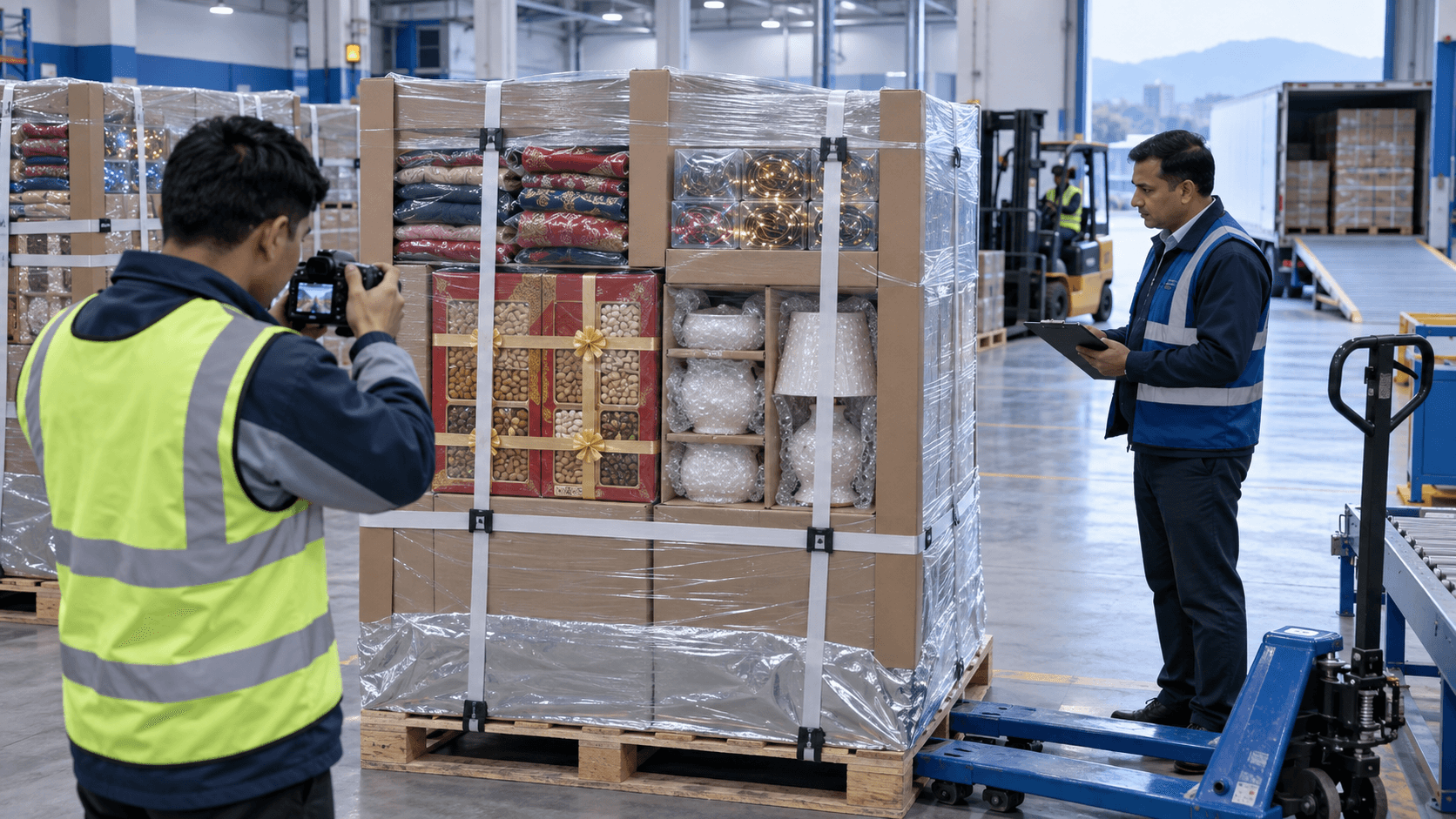
Festival merchandise may pass through supplier handling, consolidation, a vessel, an Indian gateway, rail or road transit, Birgunj ICD and final delivery. Packaging should be designed for the complete route and possible storage, not only for the trip from factory to origin port.
- Use cartons strong enough for stacking and repeated handling
- Add moisture barriers, liners or shrink wrap where the product needs them
- Palletise cargo when it improves stability and handling control
- Use corner protection and proper strapping without crushing cartons
- Separate liquids, fragile items and products that can stain or contaminate others
- Place durable package marks on more than one visible side
- Ask the supplier for dated packing and loading photographs
- Record package count, gross weight, dimensions and seal details
- Keep the receiving warehouse dry, accessible and ready to inspect immediately
Cargo insurance should be arranged before the risk begins and should match the real route, value and cargo. Ask how the policy treats moisture, theft, partial damage, storage, transloading, general average and inland movement. Carrier liability and forwarding liability are not substitutes for cover on the full commercial value.
The freight and cargo insurance guide explains policy questions and claims evidence. Keep invoices, packing records, photographs, delivery notes and incident reports together so damage can be documented promptly.
How Sea Sky Cargo supports festival import planning
Sea Sky Cargo helps Nepal businesses connect the ocean, Indian transit, Birgunj customs and final-delivery stages under a shipment-specific scope. Support depends on the commodity, origin, Incoterm, volume, schedule and services accepted by the relevant carriers and facilities.
- Compare LCL, FCL, air and split-shipment options
- Work backward from the required shelf-ready date
- Review cargo descriptions, invoice, packing list and shipping instructions
- Flag HS-code support and possible permit questions for early review
- Coordinate ocean freight to Kolkata or Haldia
- Plan the confirmed India transit and Birgunj ICD handoffs
- Coordinate Customs preparation and destination release
- Arrange the quoted Nepal road delivery scope
- Identify storage, free-time, detention and insurance questions
- Report milestones and exceptions from booking to delivery
The strongest enquiry includes the supplier address, cargo-ready date, detailed product list, package count, dimensions, gross weight, value, Incoterm, preferred mode and final Nepal delivery address. Add the date when the stock must be available for sale, not simply when you hope it will arrive at port.
Sea Sky coordinates services through the carriers, customs stakeholders and destination partners named in the agreed plan; it should not be assumed to operate every vessel, train, terminal or government process itself. For road delivery options after release, see the verified road freight service.

Frequently asked questions
Can a small business import through Kolkata or Haldia to Birgunj ICD? Yes. A smaller shipment may use LCL, while a larger order may use FCL. Feasibility depends on the product, volume, documents, carrier acceptance, current route and importer readiness.
How does sea cargo reach Nepal from Kolkata or Haldia? After port or CFS release and Nepal transit formalities, cargo moves through India under the confirmed rail or road plan toward the Raxaul-Birgunj corridor, reaches Birgunj ICD for Nepal customs and then continues by road after release.
What is Birgunj ICD? Birgunj Inland Clearance Depot, commonly called Sirsiya Dry Port, is an inland cargo terminal where rail-linked containers and other eligible cargo can be handled and processed for Nepal customs clearance.
Is LCL suitable for Dashain and Tihar stock? It can suit smaller seasonal orders, but consolidation and deconsolidation add schedule and handling steps. Book early and confirm the cargo cut-off and expected consolidation departure.
Should I choose air freight or sea freight? Air can suit urgent, compact, valuable or fast-selling goods. Sea freight is often more economical for planned bulk or heavy stock. A split shipment can protect must-arrive products while controlling the cost of the main order.
Does the seven-day Kolkata provision make port handling free? No. The transit protocol's Kolkata free-removal provision does not automatically remove shipping-line, CFS, handling, documentation, storage, demurrage or detention charges. Confirm the live terms and last-free date for the shipment.
Which documents are normally required? A commercial invoice, packing list and bill of lading are common. Importer records, HS-code support, origin evidence, permits, insurance and authorization may also be needed according to the goods and transaction.
Can Sea Sky guarantee a festival delivery date? A responsible forwarder can plan and monitor a route but cannot guarantee government processing, weather, carrier changes or terminal capacity. The quotation should state the schedule range, assumptions and excluded risks.
Can Sea Sky arrange delivery beyond Birgunj? Sea Sky can quote onward road delivery to the agreed Nepal destination, subject to cargo, vehicle and site-access details.
When should I request a quote? As soon as the supplier can provide credible product and packing information. Early review leaves time to compare modes, correct documents and reserve capacity before the festival rush.
Dashain and Tihar reward businesses that make stock available before demand peaks. Build the route from the retail deadline backward, prepare documents before dispatch, protect the cargo and compare the complete landed cost. Then book the option that makes commercial sense for the actual inventory, rather than the one with the prettiest base-freight number.
Share the shipment facts through the get quote form for a route-specific review before booking.

Plan festival imports before the rush
Sea Sky Cargo can help compare LCL, FCL, air and mixed options, review the shipment file and coordinate the Kolkata or Haldia to Birgunj delivery plan.