Reliable Importing for Dashain and Tihar: Nepal Cargo Guide 2026
Importing for Dashain and Tihar requires more than finding the right supplier and booking freight. Festival-season stock must arrive early enough for customs clearance, warehouse receiving, distribution, and retail sales, especially when China–Nepal trade routes are under pressure.
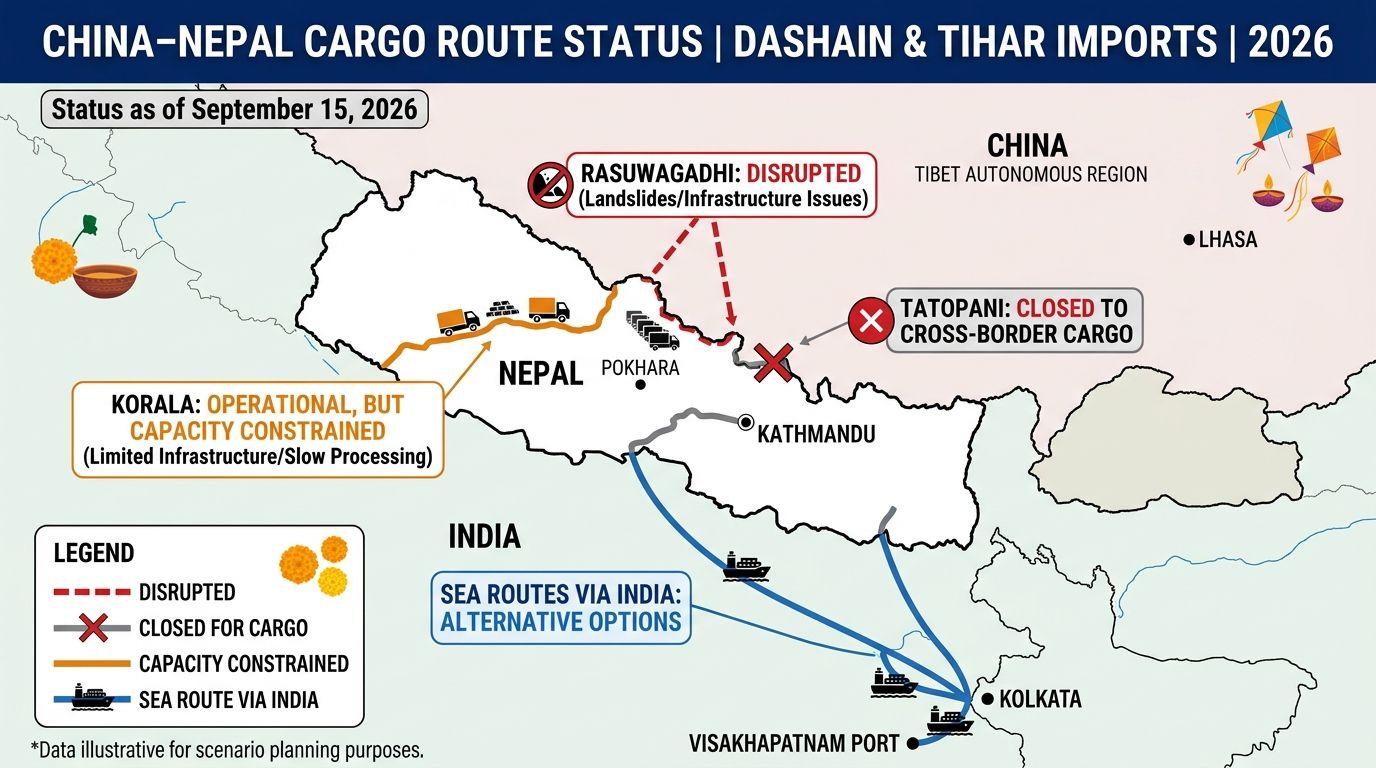
In September 2026, the Rasuwagadhi–Kerung corridor remains severely disrupted after flood damage, while Tatopani–Zhangmu has been closed to cross-border cargo because of continuing landslide risk. Korala in Mustang is operating as the principal overland alternative, but its infrastructure and customs capacity are under intense pressure from diverted cargo. Importers should therefore treat every shipment as a route-specific logistics plan rather than relying on normal seasonal timelines.
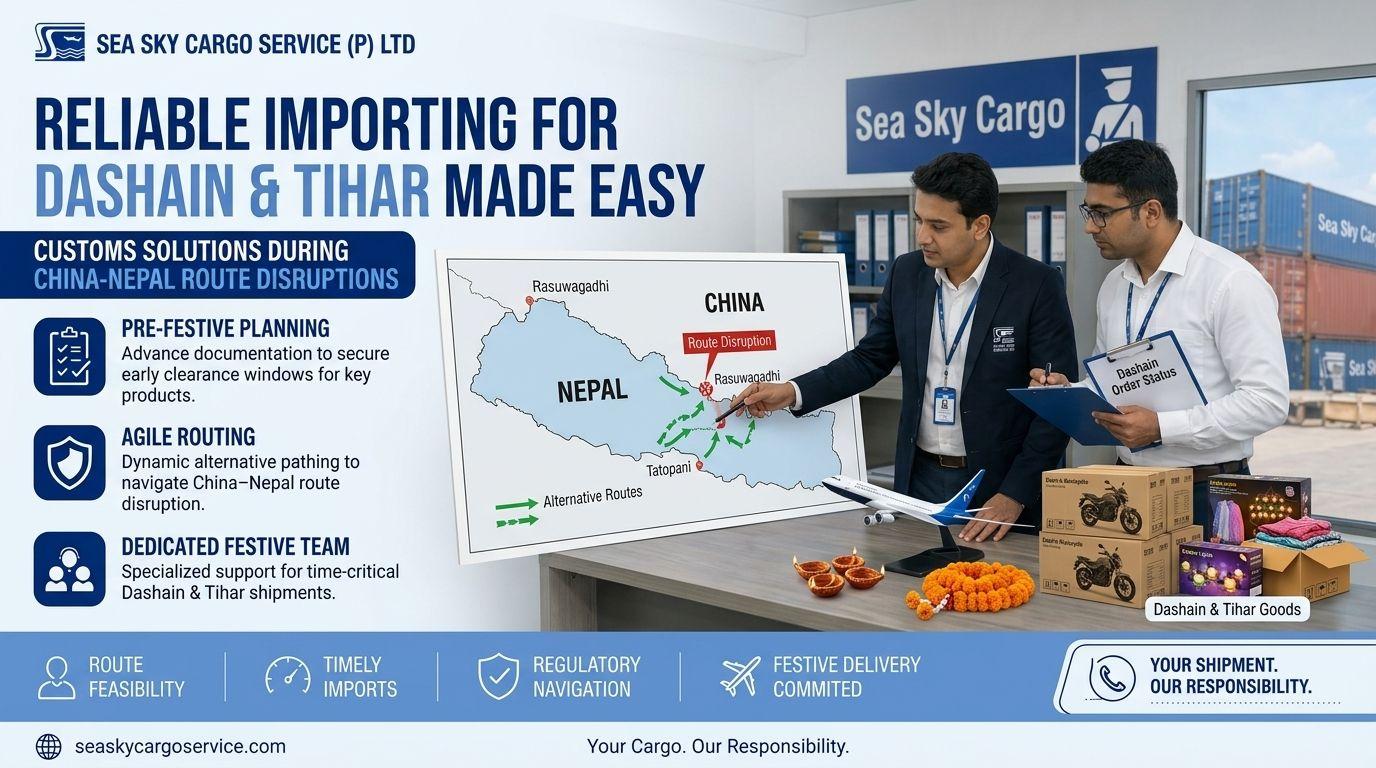
Why festival imports need earlier planning
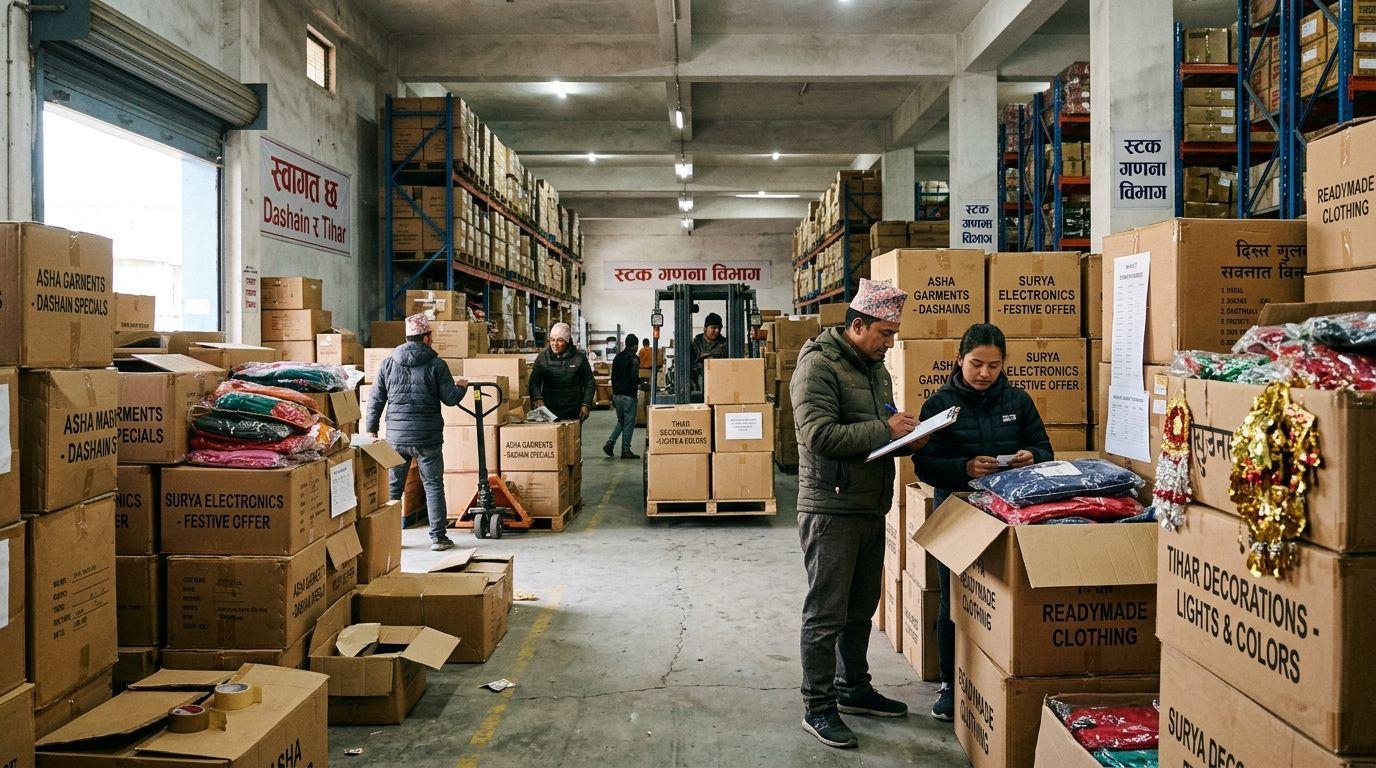
Dashain and Tihar increase demand for a wide range of imported goods, including garments, footwear, electronics, food products, fruits, decorations, household items, vehicle parts, and retail inventory. Reports from the current disruption specifically identify festival-bound cargo, including clothing, shoes, electronics, fruit, garlic, onions, ginger, and electric vehicles, among goods affected by the Rasuwagadhi route damage.
During a normal period, importers may rely on predictable road transit from China through Rasuwagadhi or Tatopani. That is no longer a safe assumption. The destruction of Rasuwagadhi and instability at Tatopani have created longer routing, congestion, extra storage, and uncertainty around customs timing.
The practical lesson is simple: importers should plan festival stock earlier, build time buffers into every shipment, and avoid promising retail delivery dates based only on the supplier’s dispatch date.
Current China–Nepal route update
Rasuwagadhi–Kerung
Rasuwagadhi–Kerung was Nepal’s main overland trade gateway with China, but the late-August flood caused major infrastructure damage. Current reporting says the corridor remains out of normal commercial operation, and Sea Sky’s own September route advisory recommends that importers not route new commercial cargo there without written operational confirmation.
For Dashain and Tihar importers, this means cargo should not be sent toward Rasuwagadhi based on old freight arrangements or historical transit estimates. Even if some local movement resumes later, recovery will take time and commercial capacity should not be assumed.
Tatopani–Zhangmu
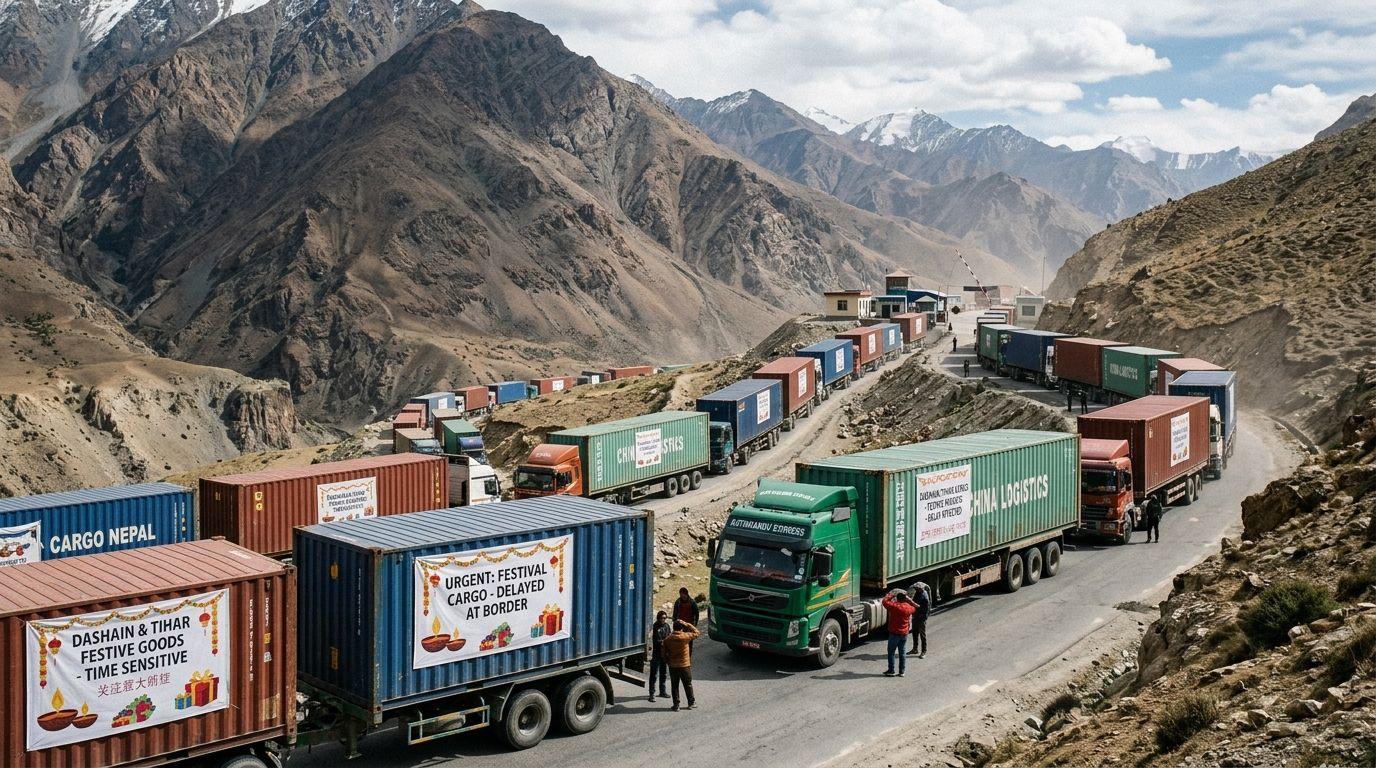
Tatopani briefly resumed limited movement after earlier landslides, but China closed the Zhangmu port to cross-border import and export cargo from 30 August because of landslide concerns around Liping on the Nepali side. Reports describe containers, including fruit cargo intended for festival sales, stranded on the Chinese side of the route.
Tatopani should therefore be treated as unavailable for normal cargo planning unless there is a sustained, official reopening and operational confirmation for the specific shipment.
Korala–Lizi
Korala in Mustang has become the principal operating overland alternative for trade with China. Nepal’s Customs Department has directed cargo that would have used Rasuwagadhi or Tatopani to use Korala where feasible, and more than 360 diverted consignments had reportedly received approval by early September.english.
However, Korala previously handled relatively limited commercial activity. Customs officials have sought added staff and equipment as diverted cargo increases, meaning importers should expect capacity constraints, truck queues, longer transit, and extra coordination needs.
Why cargo may be delayed
A cargo delay during Dashain and Tihar season can occur before the goods even reach Nepal customs. The current risks include destroyed roads, border closures, diverted freight, constrained customs capacity, and uncertain truck availability.
Key reasons include:
- Rasuwagadhi route damage: The flood destroyed major infrastructure on the principal Kerung route, preventing normal cargo movement.
- Tatopani cargo closure: Cross-border trade through Tatopani–Zhangmu was suspended indefinitely due to landslide concerns.
- Korala congestion: Korala is taking traffic from two major crossings but has limited facilities and resources compared with the traditional routes.
- Longer road distance: Diverted cargo may need to travel substantially farther through the Tibet–Korala–Mustang corridor, increasing transport time and cost.english.
- Festival demand: Import pressure rises before Dashain and Tihar, increasing competition for trucks, border capacity, storage, and customs processing.
- Cargo storage risk: Goods may wait in supplier warehouses, Chinese inland depots, border yards, customs-controlled areas, or temporary storage facilities.
- Documentation errors: An incorrect invoice, unclear cargo description, missing permit, or wrong HS code can add an avoidable customs delay after the route issue is resolved.seaskycargoservice
A shipment may technically be “on the way” while still being several steps away from useful delivery to a Kathmandu warehouse or retail outlet.
What to check before paying suppliers
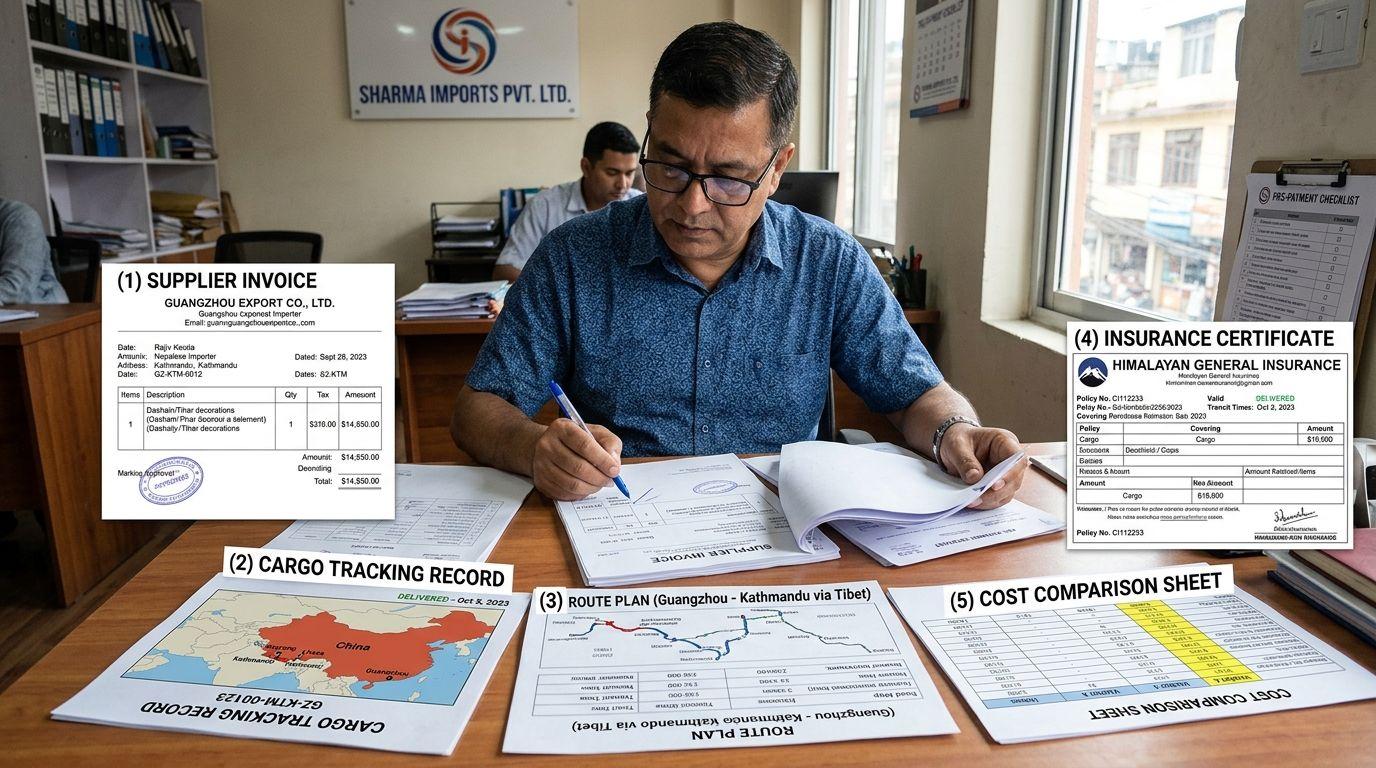
Before making final payment or authorising supplier dispatch, importers should confirm the physical movement plan not merely the product availability.
Use this pre-payment checklist:
- Confirm the exact supplier warehouse address and cargo-ready date.
- Ask whether the goods have already been loaded on a truck or are still at the factory.
- Confirm the original planned route and whether it relied on Rasuwagadhi or Tatopani.
- Request the current cargo location, including city, warehouse, border yard, truck number, or container number.
- Ask whether Korala can accept the product, vehicle type, and cargo size.
- Compare road freight via Korala with air freight and sea-led alternatives.
- Confirm who pays for rerouting, storage, truck waiting time, detention, transloading, and insurance claims.
- Review the agreed Incoterm, such as EXW, FOB, CIF, DAP, or DDP, to understand where responsibility transfers.
- Obtain an itemized estimate of additional disruption-related costs.
- Confirm cargo insurance before the goods are dispatched.
A reliable importer documents these answers by email, contract addendum, or written freight quotation. Verbal assurances are not enough when route changes, flood damage, or storage claims are involved.
When air freight is worth considering
Air freight may be the safer option for urgent festival stock, high-value electronics, samples, critical spare parts, fashion items, or small quantities needed to avoid a retail stockout. It can bypass disrupted mountain crossings, but importers must account for the higher cost, airport handling, customs procedures, and airline restrictions.
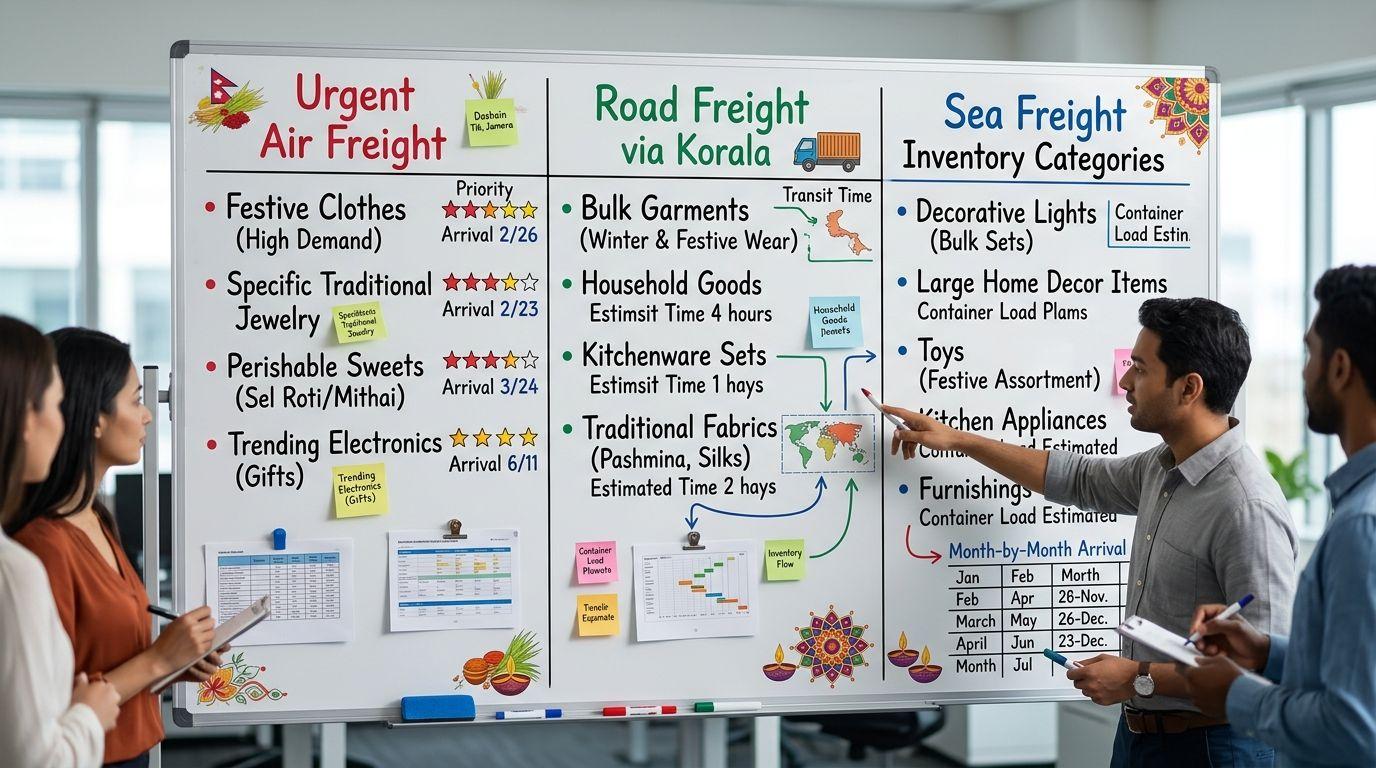
A useful strategy is to split the order: move urgent top-selling stock by air and send slower-moving or bulk items by sea or a route that becomes operational later.
Prepare documents before cargo moves
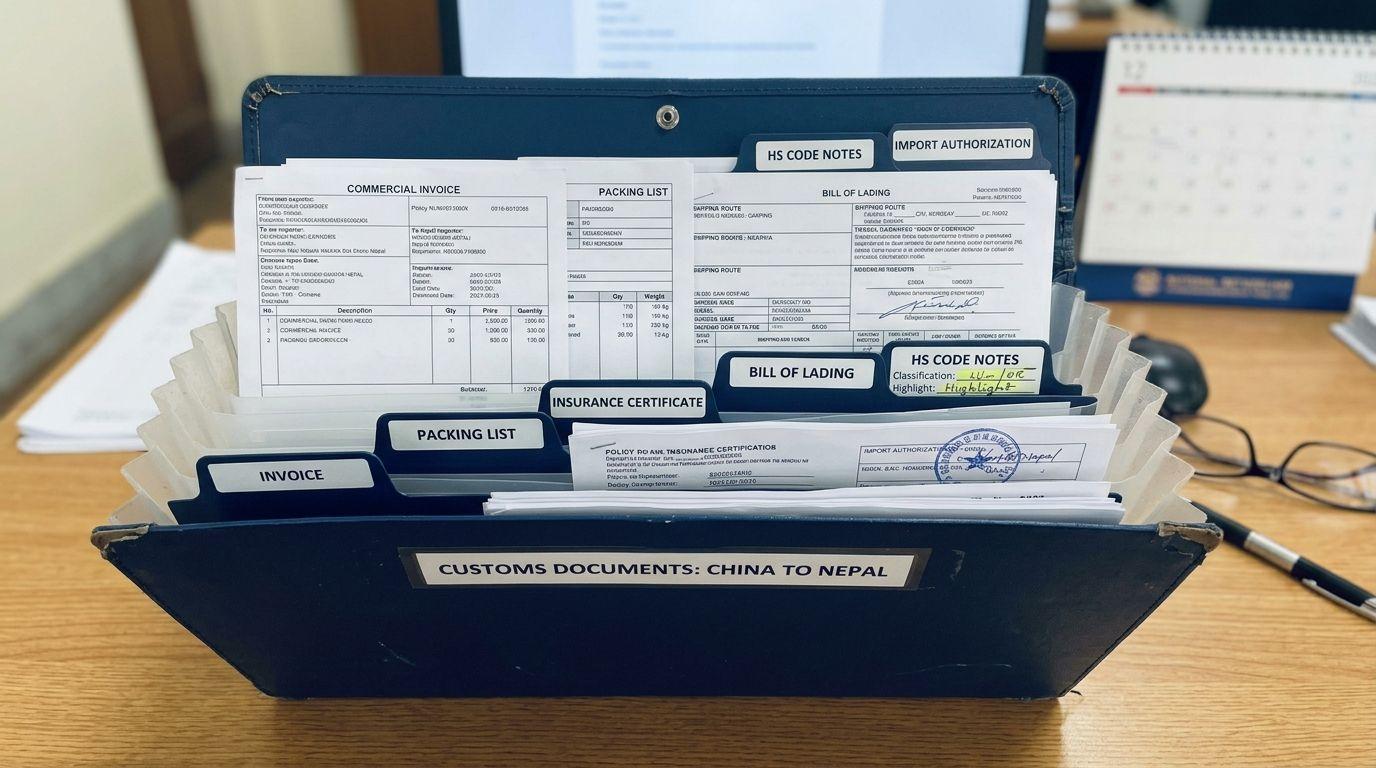
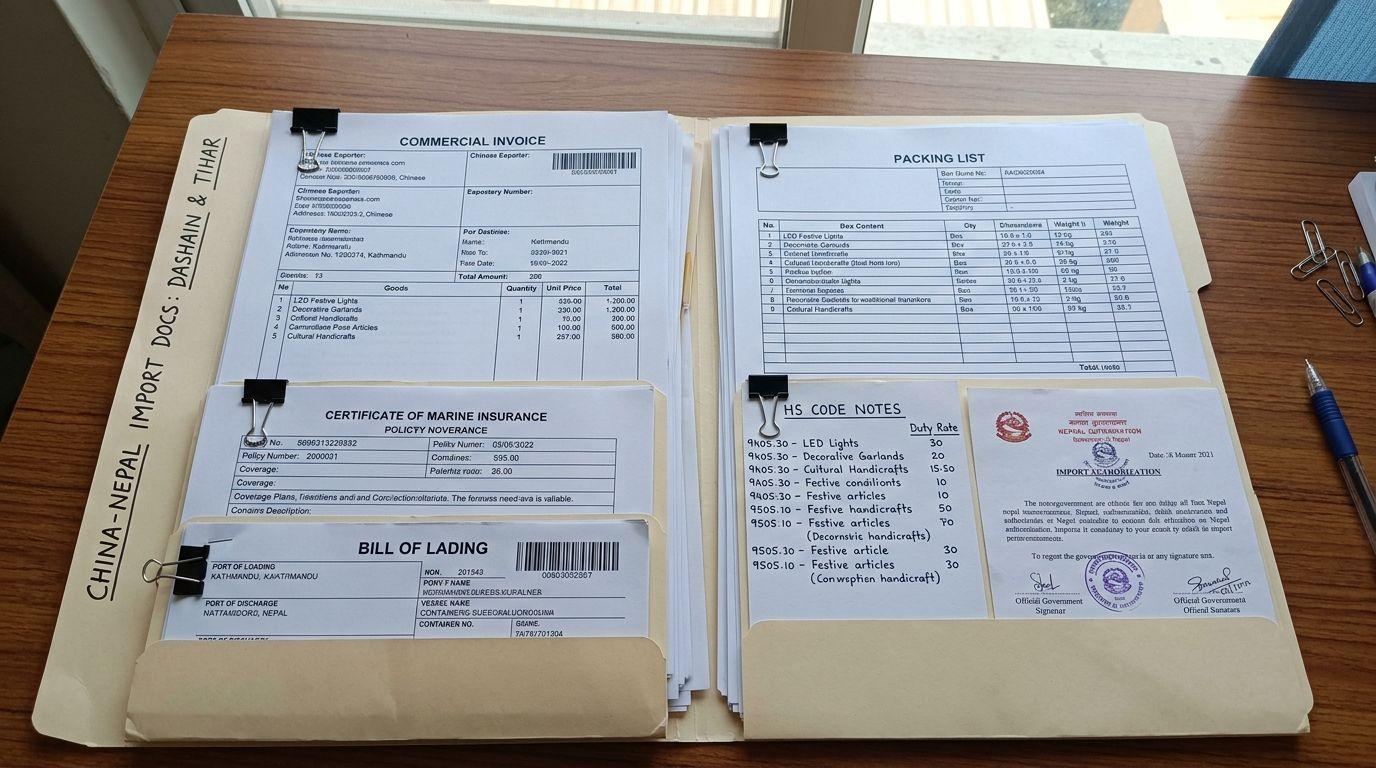
Reliable importing depends on document accuracy. Border disruption is not a reason to delay paperwork; it is a reason to complete it earlier, because an incomplete customs file can turn a route delay into a longer and more expensive clearance problem.
Prepare and review:
- Commercial invoice with clear product descriptions, values, currency, and Incoterms.
- Packing list showing cartons, pallets, gross weight, net weight, and dimensions.
- Correct HS codes for every product category.
- Bill of lading or airway bill for sea or air freight.
- Road, transit, or border transport documents where applicable.
- Certificate of origin, if required.
- Importer company registration, PAN/VAT, and EXIM-related details.
- Product permits, approvals, licences, or technical certificates for regulated cargo.
- Cargo insurance certificate.
- Agent authorization letter if a customs agent or freight forwarder is acting for the importer.
- Updated consignee and final-delivery details.
- Revised route instructions if the cargo must move through Korala or an Indian port.
Every document should show matching product names, quantities, weights, values, consignee information, and route details. Customs can ask for clarification if invoice details conflict with the packing list, transport record, HS code, or physical cargo.
Reduce damage, loss, and storage risk
Flood and landslide disruption increases the chance of cargo being stored for longer than expected, moved between facilities, rerouted, or exposed to moisture and rough handling. Importers should take practical steps before dispatch.
Use stronger packaging
For retail and festival goods, use durable cartons, moisture barriers, shrink wrapping, pallets, corner protection, and clear labels. Goods may be unloaded, stored, reloaded, and transferred more often when the original route is blocked.
Confirm cargo insurance scope
Cargo insurance should be reviewed before dispatch. Ask whether it covers:
- Flood and water damage.
- Landslide and road-accident loss.
- Theft and pilferage.
- Storage at warehouses or border yards.
- Transloading and rerouting.
- Partial damage and total loss.
- Inland movement, sea freight, air freight, and final delivery.
Insurance terms differ by policy. Importers should not assume that standard freight liability covers the full commercial value of damaged goods.
Keep evidence ready
If cargo is delayed or damaged, request:
- Current photographs and video.
- Container, truck, or waybill number.
- Warehouse or border-yard location.
- Seal condition and package count.
- Written storage terms.
- Carrier or forwarding updates.
- Incident report and survey details, if applicable.
This record is important for insurance claims, supplier discussions, customs questions, and recovery planning.
Build a festival-season import plan
Importers should avoid putting the full Dashain or Tihar inventory on one route or one delivery date. A better plan divides cargo based on sales importance and urgency.
A practical approach is:
- Identify “must-arrive” products, including top-selling, higher-margin, or limited-stock items.
- Move those products by the fastest reliable method, which may be air freight or a verified Korala route.
- Send bulky, lower-priority, or slower-moving stock by sea freight or another longer but more predictable option.
- Hold a backup quantity at the supplier warehouse until route conditions are confirmed.
- Build buffer time for customs clearance, warehouse receiving, labelling, distribution, and retail delivery.
- Confirm insurance and storage procedures before cargo leaves China.
- Recheck route status immediately before loading—not only when the purchase order is created.
This reduces the risk that one blocked route prevents the entire festival inventory from reaching the market.
How Sea Sky Cargo can help
Sea Sky Cargo can help businesses plan China-to-Nepal shipments around current border disruption by checking route status, reviewing documents, and comparing viable freight alternatives before cargo moves.
Support can include:
- Checking whether Rasuwagadhi, Tatopani, Korala, air, or sea routes are practical for the planned shipment date.
- Reviewing invoices, packing lists, HS codes, permits, and insurance certificates.
- Comparing cost and transit implications of Korala, air freight, sea freight, and multimodal options.
- Coordinating with suppliers, freight partners, and customs stakeholders.
- Helping assess storage, handling, and cargo-damage risk.
- Advising on cargo splits for urgent and non-urgent Dashain or Tihar inventory.
- Providing shipment updates after dispatch.
Sea Sky’s published advisory identifies Korala as the active overland alternative while Rasuwagadhi remains disrupted and Tatopani is closed to goods; it also recommends route confirmation, document review, and risk planning before dispatch.
Related posts
1970-01-01
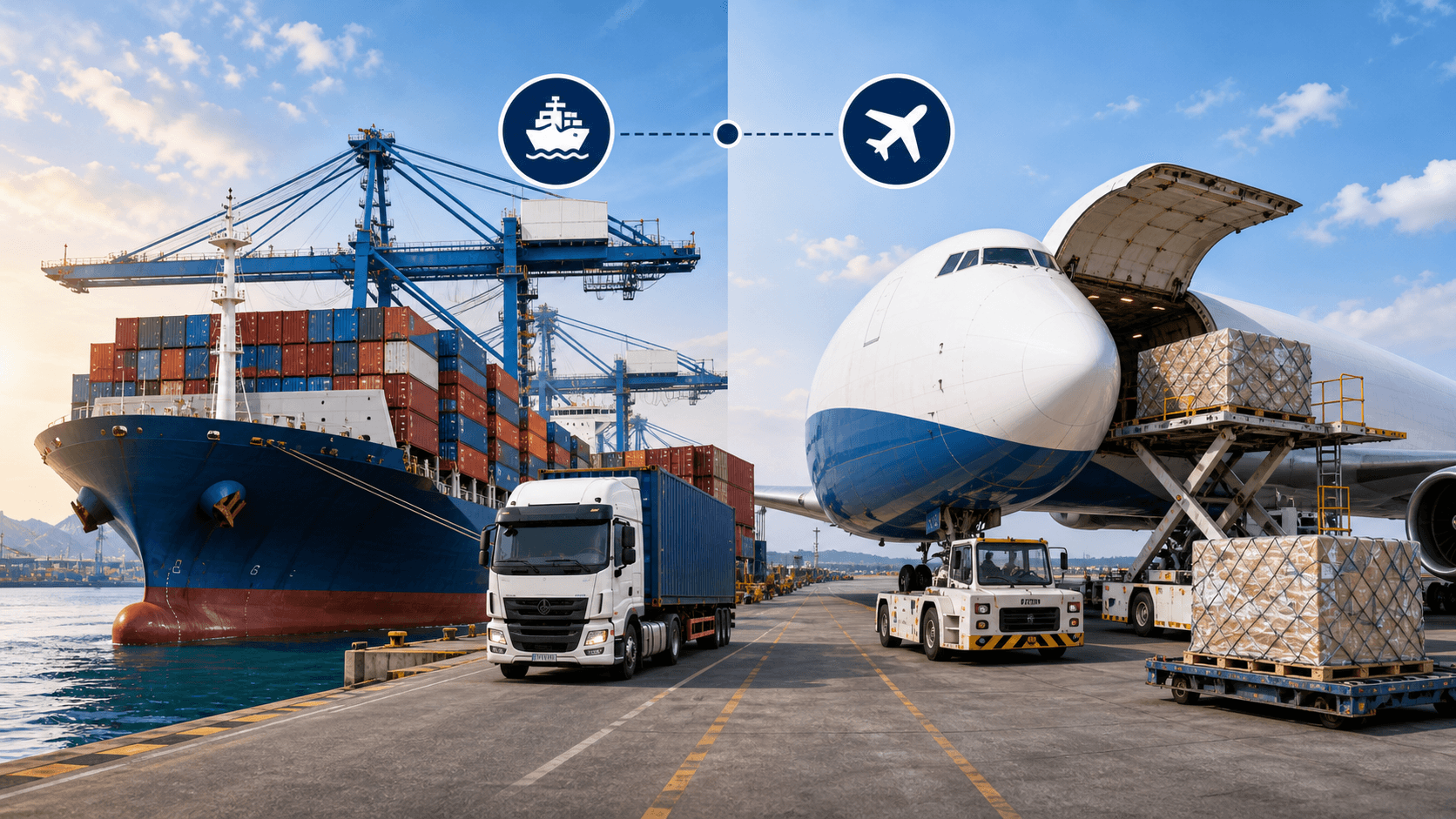
Sea + Air Freight: How SeaSky Helps Businesses Ship Smarter
2026-10-15
Last-Mile Delivery in Nepal: How Businesses Can Reduce Delays and Delivery Costs
2026-10-13
Last-Mile Logistics in Nepal: Challenges, Costs and Solutions
2026-10-12