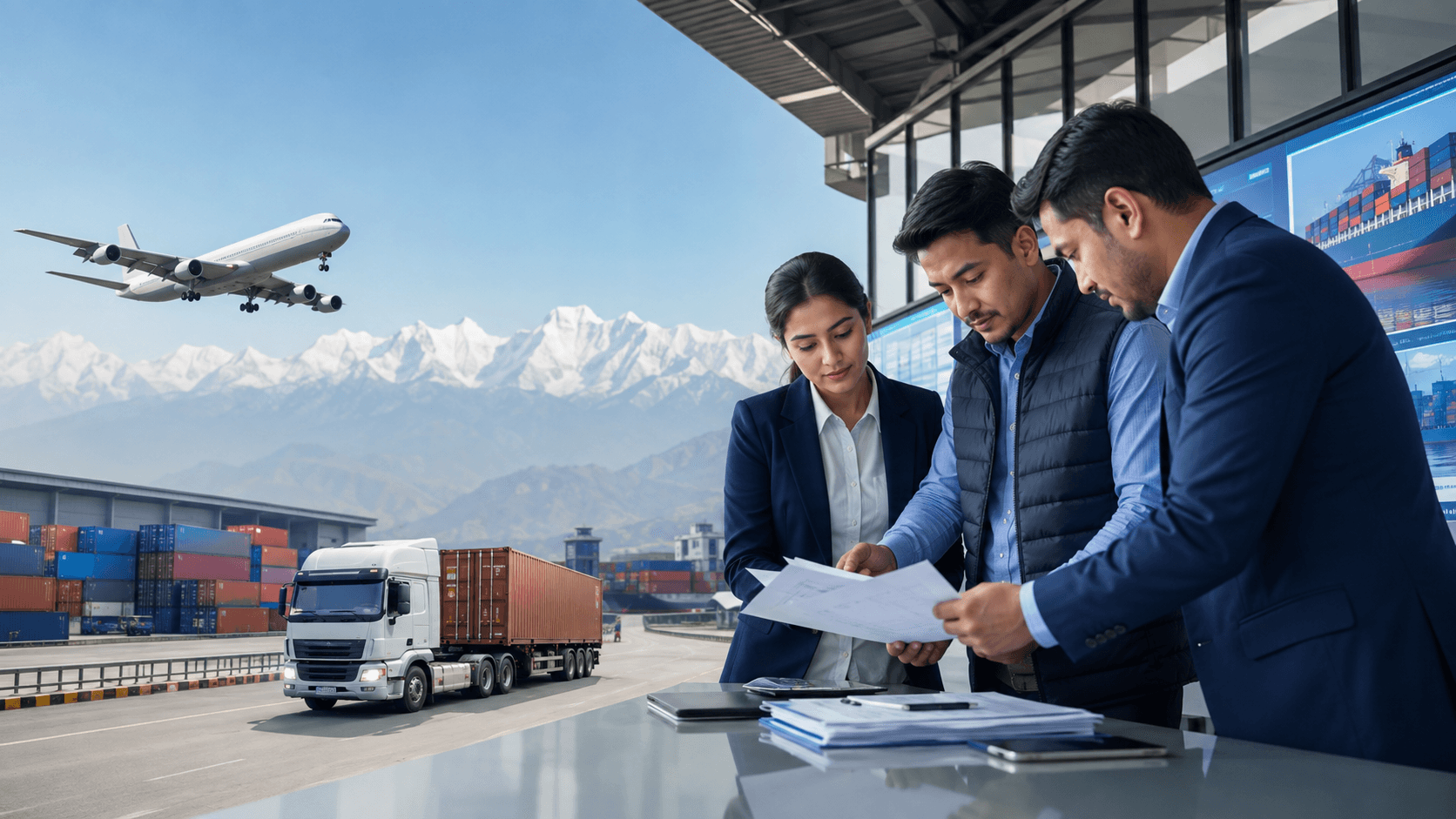
What freight forwarding in Nepal actually includes
Freight forwarding is the planning and coordination of cargo from its agreed origin to its destination. A freight forwarder may arrange supplier pickup, carrier space, consolidation, transport documents, customs support, transit through ports or borders, inland vehicles, storage and final delivery under the scope written in the quotation. For Nepal, this coordination is especially important because an international shipment may pass through several countries, carriers and facilities before delivery. Ocean cargo normally needs an Indian gateway and inland transit. Regional cargo may cross India-Nepal or China-Nepal land borders. Air freight still needs airport handling, customs clearance and delivery after arrival. A forwarder is not simply selling a truck, container or airway bill. The value is in connecting the individual services into a plan that the cargo, documents, budget and required delivery date can actually support.
| Forwarding task | What it means for the business |
|---|---|
| Route design | Selecting a workable origin, transport mode, port or border, customs point and final-delivery sequence |
| Carrier booking | Requesting space and coordinating cut-offs with airlines, shipping lines, truckers or consolidators |
| Cargo preparation | Checking package count, weight, dimensions, labels, handling needs and acceptance restrictions |
| Document coordination | Aligning invoice, packing list, transport document, permits and consignee information |
| Customs support | Preparing the declaration file and coordinating with the authorized parties responsible for clearance |
| Shipment control | Monitoring milestones, exceptions, handoffs and arrival readiness |
| Final delivery | Arranging the appropriate vehicle, access, unloading and proof of delivery |
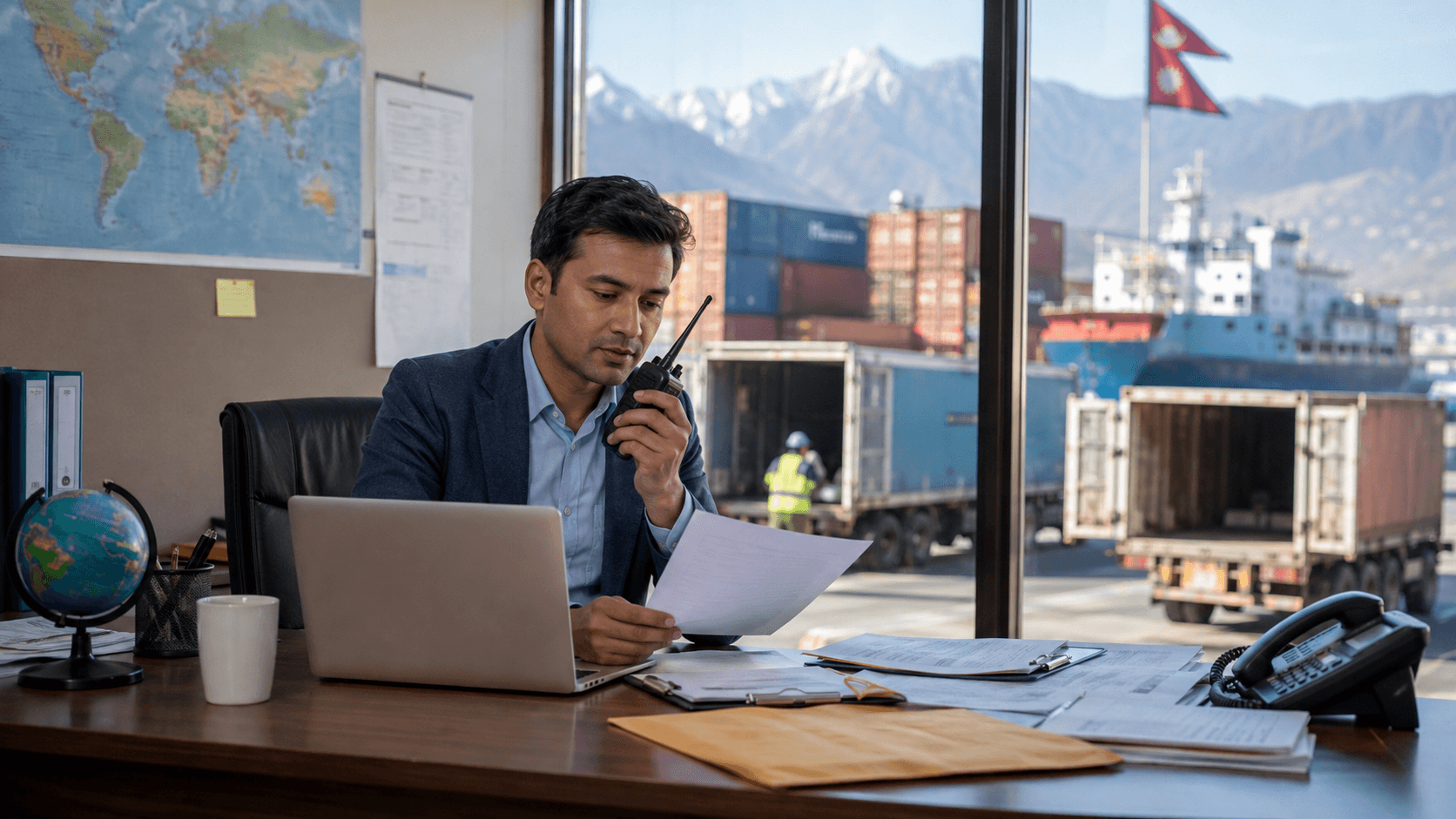
Freight forwarder vs carrier, broker and importer
Several businesses can participate in one international shipment, but their responsibilities are not interchangeable. The forwarder coordinates the agreed transport scope; the physical carrier operates the aircraft, vessel or vehicle; the importer or exporter remains responsible for the commercial transaction and accurate information; and an authorized customs representative handles defined declaration work. Ask who is responsible at every handoff. A door-to-door phrase does not by itself explain who pays duties, obtains permits, provides unloading equipment, returns an empty container or bears costs caused by missing documents. When the consignee cannot act as importer, review Sea Sky's Importer of Record support before dispatch. An IOR service is a separate legal and commercial arrangement, not another name for ordinary customs clearance.
| Party | Typical role | Important limit |
|---|---|---|
| Importer or exporter | Owns the trade decision and provides truthful product, value, party and permit information | Cannot transfer legal compliance simply by hiring a forwarder |
| Freight forwarder | Designs and coordinates the agreed transport, handling and document workflow | Only the written quotation and service terms define what is included |
| Carrier | Physically carries cargo under its transport contract | Does not automatically manage every customs or final-delivery task |
| Customs representative | Prepares or submits declarations and coordinates clearance within its authorization | Works from the commercial facts and documents supplied by responsible parties |
| Importer of record | Accepts the legal import responsibility when a valid IOR arrangement applies | Must be agreed before shipment and cannot be assumed from destination handling |
| Warehouse or handler | Receives, stores, consolidates, loads or releases packages | Facility limits and charges depend on cargo and contract |

The end-to-end forwarding process
A reliable forwarding process starts before the supplier releases the cargo. Early review preserves choices: the packing can still be corrected, the Incoterm can be understood, permits can be obtained and the route can be priced before storage or missed cut-offs create pressure. The sequence changes by mode and Incoterm, but the principle stays the same: commercial facts, cargo facts and transport documents must describe one consistent shipment. Changes should be communicated before they affect carrier acceptance or customs.
| Step | Operational action | Business checkpoint |
|---|---|---|
| 1. Shipment brief | Collect origin, destination, commodity, packages, dimensions, weight, value and dates | Is the information based on final export packing? |
| 2. Compliance review | Check HS-code support, restrictions, permits, consignee status and document needs | Can the goods legally enter or leave on the proposed route? |
| 3. Route comparison | Compare air, sea, road, LCL, FCL or multimodal options | Does the estimate include the complete origin-to-destination scope? |
| 4. Booking | Confirm carrier space, cut-offs, handling acceptance and instructions | Are schedule, validity, exclusions and cancellation terms understood? |
| 5. Origin handling | Pick up or receive cargo, verify condition and complete export handoff | Do package count, marks, dimensions and documents match? |
| 6. International transit | Monitor departure, connection, arrival and any exception | Is the destination team ready before the cargo arrives? |
| 7. Customs and release | Submit the clearance file, respond to queries and obtain release | Are taxes, permits and inspections planned? |
| 8. Delivery | Arrange inland transport, unloading and proof of delivery | Can the receiving site accept the vehicle and cargo safely? |
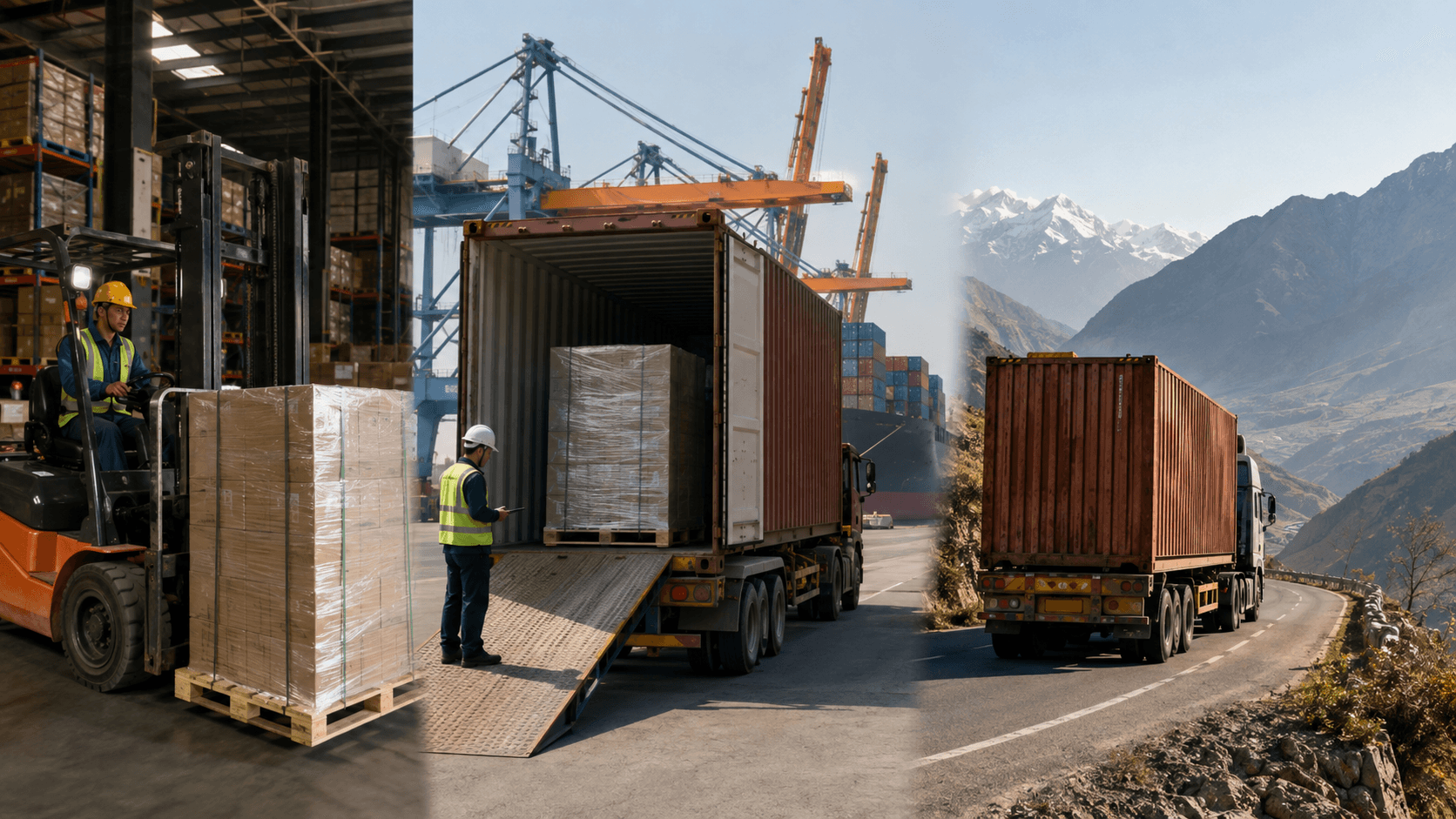
Choosing air, sea, road or multimodal freight
Mode selection should start with the commercial consequence of time, not a generic rule. Air freight can be worth its premium when a missing component stops production. Sea freight can reduce unit cost for planned stock. Road freight is central to regional trade and the inland stages of almost every Nepal route. Sea Sky's verified service pages cover air freight, ocean freight and road freight. For small ocean consignments, the LCL shipping guide explains shared-container handling and cost. A business can also split a purchase across modes. Urgent launch stock may move by air while routine replenishment travels by sea or road. The forwarding plan should show how both shipments affect inventory, customs and delivery.
| Option | Often suitable for | Questions to resolve |
|---|---|---|
| Air freight | Urgent, high-value, compact or time-sensitive cargo | Chargeable weight, airline acceptance, airport handling, customs and final delivery |
| Sea freight | Large, heavy, planned or cost-sensitive international cargo | LCL vs FCL, gateway port, transshipment, free time and India-to-Nepal transit |
| Road freight | India-Nepal, China-Nepal, domestic and final-mile movements | Border, vehicle capacity, road condition, permits, weather and delivery access |
| Rail-linked movement | Eligible container or bulk flows using an available inland corridor | Terminal sequence, service availability, onward truck and cargo compatibility |
| Multimodal freight | Shipments requiring connected sea, rail, road or air stages | Handover responsibility, document continuity, tracking and insurance scope |
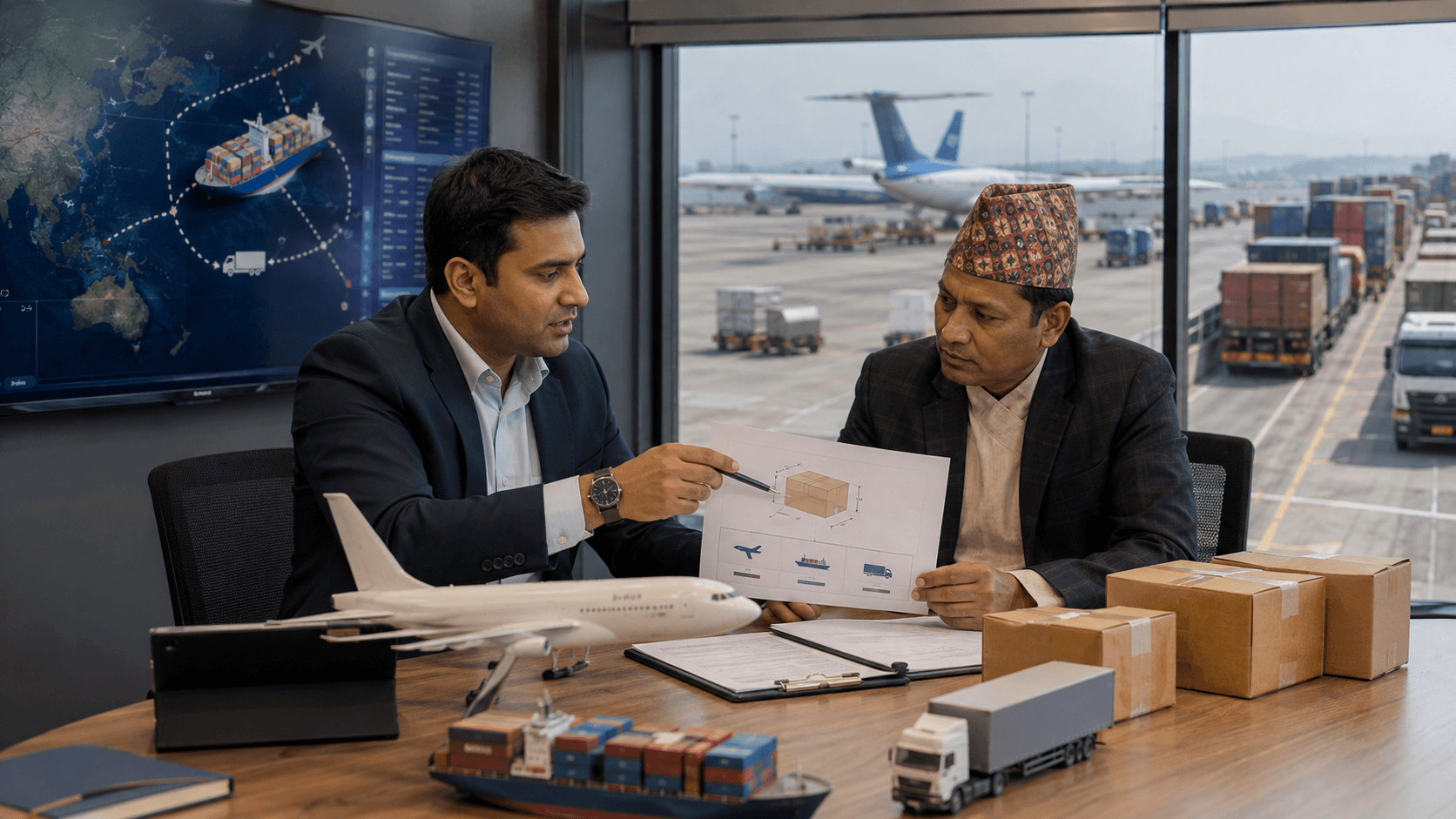
Why Nepal routes need extra coordination
Nepal's landlocked geography adds handoffs that are easy to miss in a simple international freight quote. Ocean cargo discharges outside Nepal and continues through an approved transit and inland arrangement. Air cargo arriving in Kathmandu still requires destination handling and delivery. Regional road cargo must match the selected border and customs point.
- Confirm the exact Indian gateway and inland plan for ocean cargo
- Identify the border, dry port or customs office before dispatch
- Match the container, trailer or truck to weight, dimensions and road access
- Check route and border conditions again near the cargo-ready date
- Prepare destination release and customs documents before arrival
- Define who controls the cargo during each transfer or storage period
- Include the final Nepal delivery point instead of pricing only to the port or border
- Align cargo insurance with every country, mode, handoff and storage point
For China-linked cargo, route status, seasonal weather and border operations can materially change the plan. Use the China-Nepal service page as the internal contact point, then request a current route confirmation for the actual cargo-ready date.
For ocean imports, the freight forwarder should coordinate the vessel leg with port release and the inland corridor. The port-to-door cargo guide explains what happens after cargo reaches an Indian gateway.
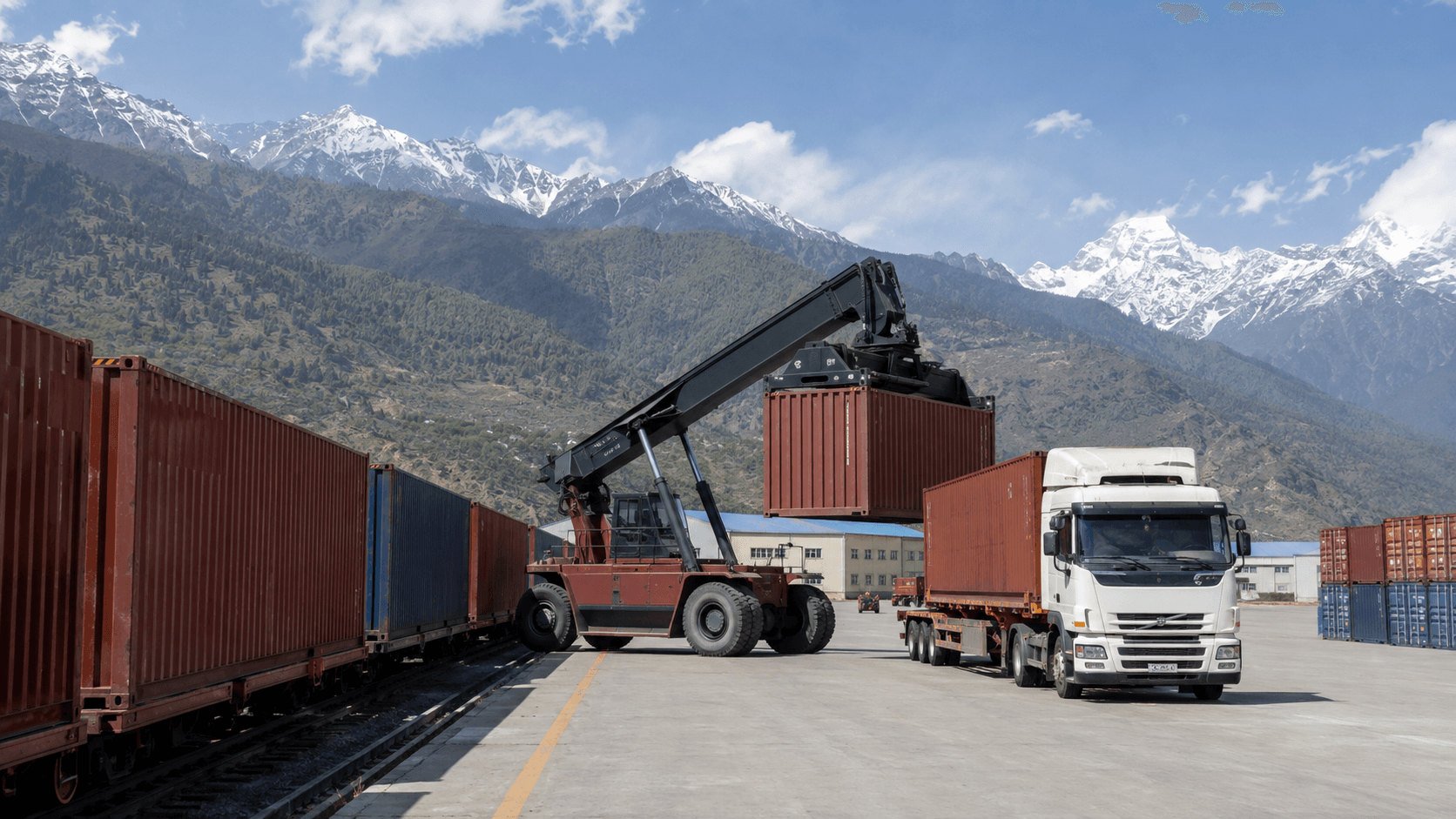
Need a route and document check before dispatch?
Sea Sky Cargo can compare air, sea, road and multimodal options, review the available shipment documents and define the Nepal customs and delivery handoffs before cargo moves.
Customs clearance and document coordination
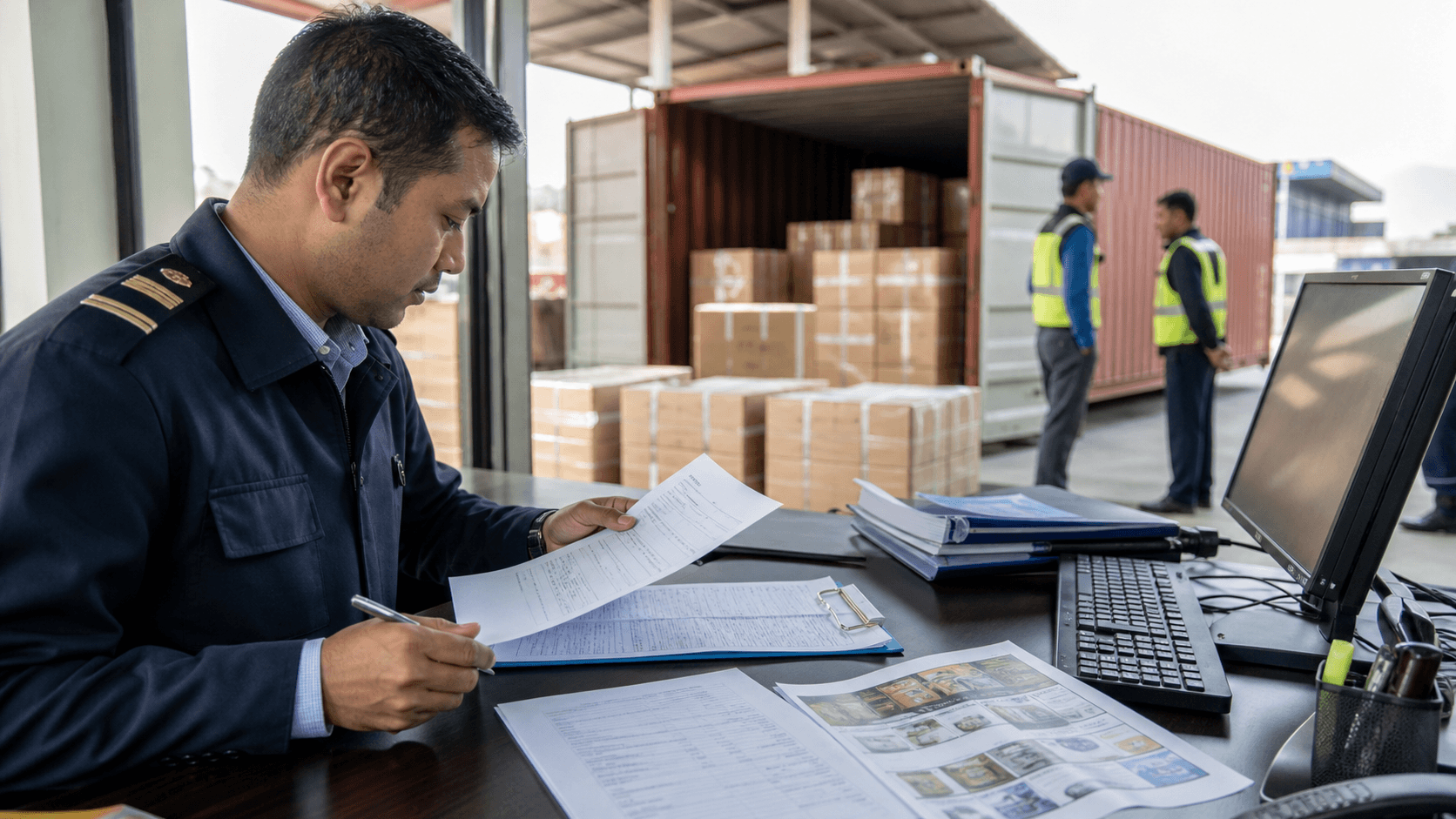
Customs clearance is not a formality added after transport. Product classification, valuation, origin, permits and importer details can influence whether the proposed route and timeline are workable. Review them before the booking becomes difficult to change. Nepal Customs uses an automated customs environment for goods declarations, assessment and release. A shipment may be selected for document review or physical examination based on the applicable process. Accurate documents support clearance, but they do not guarantee a particular channel or processing time. The HS code cannot be confirmed from a vague product label alone. Provide the specification needed for classification and check the current tariff, tax and permit position for the actual transaction. Sea Sky's IOR and customs-related support can help define the appropriate service scope, but the responsible importer must still provide complete and truthful information.
| Document or data | What should match |
|---|---|
| Commercial invoice | Buyer, seller, detailed product, quantity, value, currency and Incoterm |
| Packing list | Package count, packing type, dimensions, net and gross weight and marks |
| Transport document | Shipper, consignee, notify party, origin, destination and cargo description |
| HS-code support | Material, function, model, composition, catalogue and technical specification |
| Certificate of origin | Goods, exporter, origin criteria and issuing details when required |
| Permit or recommendation | Correct product, quantity, importer and validity period for regulated goods |
| Importer and banking file | Registration, PAN/VAT, payment documents, authorization and responsible parties |
| Insurance evidence | Commodity, value, packages, route, modes and beneficiary |
How to compare freight quotations and total cost
A useful freight quotation states the route, chargeable basis, service scope, assumptions, exclusions, validity and payment terms. Two prices cannot be compared fairly when one ends at a port and the other includes customs coordination and delivery to the warehouse. Provide final packed dimensions and weight whenever possible. Sea and road options depend on CBM, payload and equipment; air pricing compares actual and volumetric weight. Sea Sky's CBM guide shows how to prepare a reliable volume figure. Compare the expected landed cost and delivery range, not only the base freight. A slightly higher forwarding quote can be commercially stronger when it includes clearer responsibility, fewer handoffs, realistic local charges and a route suited to the cargo.
| Quote area | Questions to ask |
|---|---|
| Origin scope | Is supplier pickup, export handling, clearance, terminal work and documentation included? |
| Main freight | Which carrier service, route, chargeable weight, CBM, container or truck basis applies? |
| Destination handling | Which airport, port, CFS, depot, border and release charges are included or estimated? |
| Customs | Does the price include only service fees, or also an estimate for duty, VAT, permits and examination? |
| Inland delivery | What final address, vehicle, waiting time, labour and unloading assumptions were used? |
| Delay exposure | What free time, storage, demurrage, detention or cancellation terms may apply? |
| Risk | Is cargo insurance included, optional or excluded, and what route does it cover? |
| Commercial terms | Which currencies, exchange-rate rules, validity, taxes and payment deadlines apply? |

How to choose a freight forwarding company in Nepal
Choose a forwarder by evidence that it can manage your specific cargo and route, not by a list of countries or a promise of the lowest price. The right partner for standard cartons may not be the right partner for pharmaceuticals, oversized machinery or controlled goods.
- Ask the company to explain the complete route and every planned handoff
- Confirm experience with the actual origin, Nepal customs point and final destination
- Check whether it can compare more than one mode or service level
- Request a written scope showing inclusions, exclusions and third-party charges
- Ask how cargo measurements, restrictions and permits are checked before booking
- Confirm who issues updates and how exceptions are escalated
- Review insurance options and the limits of carrier or forwarder liability
- Check support for the required LCL, FCL, special cargo or delivery equipment
- Ask for realistic ranges rather than guaranteed transit claims that ignore customs and disruption
- Confirm the party legally responsible for importing, exporting and customs declarations
Warning signs include an unwillingness to identify the route, a quote with unclear local charges, instructions to misdescribe cargo, a request to dispatch before permits are checked or promises that customs can always be completed without the responsible importer's documents.
Common importer mistakes are choosing only by price, using estimated dimensions, accepting a vague invoice, waiting until arrival to discuss HS classification, ignoring final delivery access and assuming every loss is covered by the carrier. A strong forwarding company identifies these issues early instead of hiding them inside fine print.
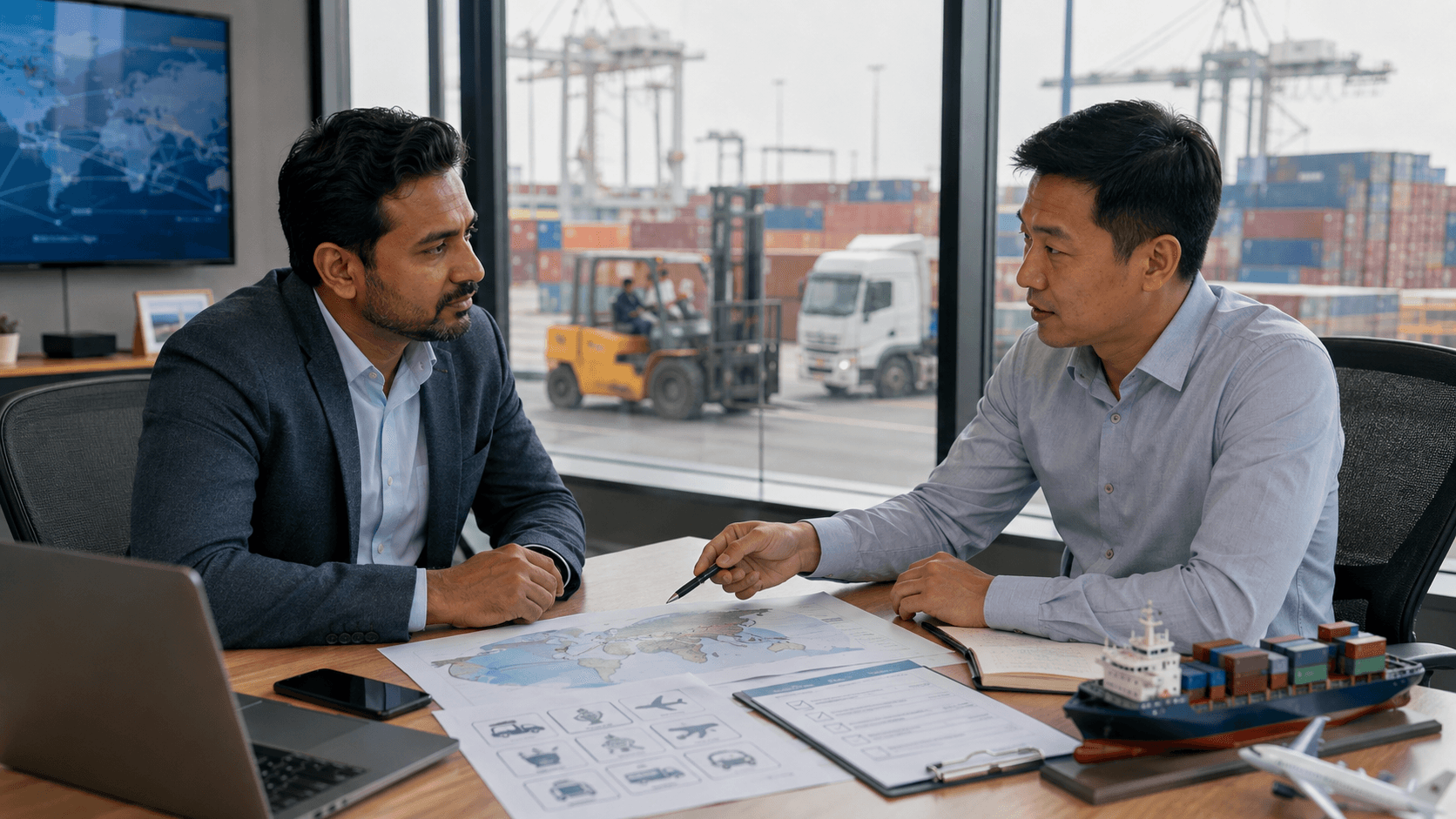
Sea Sky Cargo support and frequently asked questions
Sea Sky Cargo supports Nepal-linked imports and exports with route comparison, air, ocean and road coordination, cargo-information review, customs-related planning, Indian-port transit, China-Nepal logistics and final delivery under the agreed quotation. The process begins with accurate shipment facts, not a one-line request for the cheapest rate.
For a useful review, provide the supplier and delivery locations, cargo-ready date, required delivery date, exact commodity, packages, final dimensions, gross weight, value, Incoterm and available documents. Also disclose batteries, liquids, chemicals, temperature needs, dangerous-goods status, fragile packing, non-stackable pieces and oversized dimensions before booking.
What is freight forwarding in Nepal? It is the coordination of cargo transport, handling, documents, customs-related tasks and delivery across the air, sea, road or multimodal stages needed for a Nepal shipment.
Why does a Nepal business need a freight forwarder? A forwarder connects carriers and local service providers, helps compare routes, checks the operational document file and coordinates handoffs that would otherwise be managed separately.
Does Sea Sky Cargo provide air, sea and road freight? Sea Sky Cargo coordinates air, ocean and road services based on cargo, route, timing and the written service scope. The company also supports specialised and multimodal movements where appropriate.
Can Nepal use sea freight? Yes. Ocean cargo can discharge at an approved Indian gateway and continue inland under the applicable transit arrangement before Nepal customs and final delivery.
Which documents are normally required? The usual starting file includes a commercial invoice, packing list, transport document, importer or exporter information, HS-code support, banking or payment papers, insurance and any required origin certificate, permit or authorization.
Can a freight forwarder choose the HS code? A forwarder or customs specialist can help review classification information, but the accepted code depends on the product facts and customs rules. The responsible parties must provide accurate specifications and declarations.
How is freight cost calculated? It depends on mode, route, chargeable weight or volume, container or vehicle, handling, customs service, taxes, storage risk and final delivery. Request a complete scope rather than comparing only the international line-haul price.
Can Sea Sky arrange port-to-door delivery? Yes, subject to the confirmed cargo, route and quotation. The plan can connect Indian-port handling and transit with Nepal customs coordination and delivery to the agreed destination.
When should I contact a freight forwarder? Ideally before the purchase order or dispatch is finalized. Early review gives the business time to correct packaging, documents, permits, Incoterms and route assumptions.
Does freight forwarding include cargo insurance? Not automatically. The quotation should state whether insurance is included, optional or excluded. Insurance terms should match the commodity, value, packing and complete route.
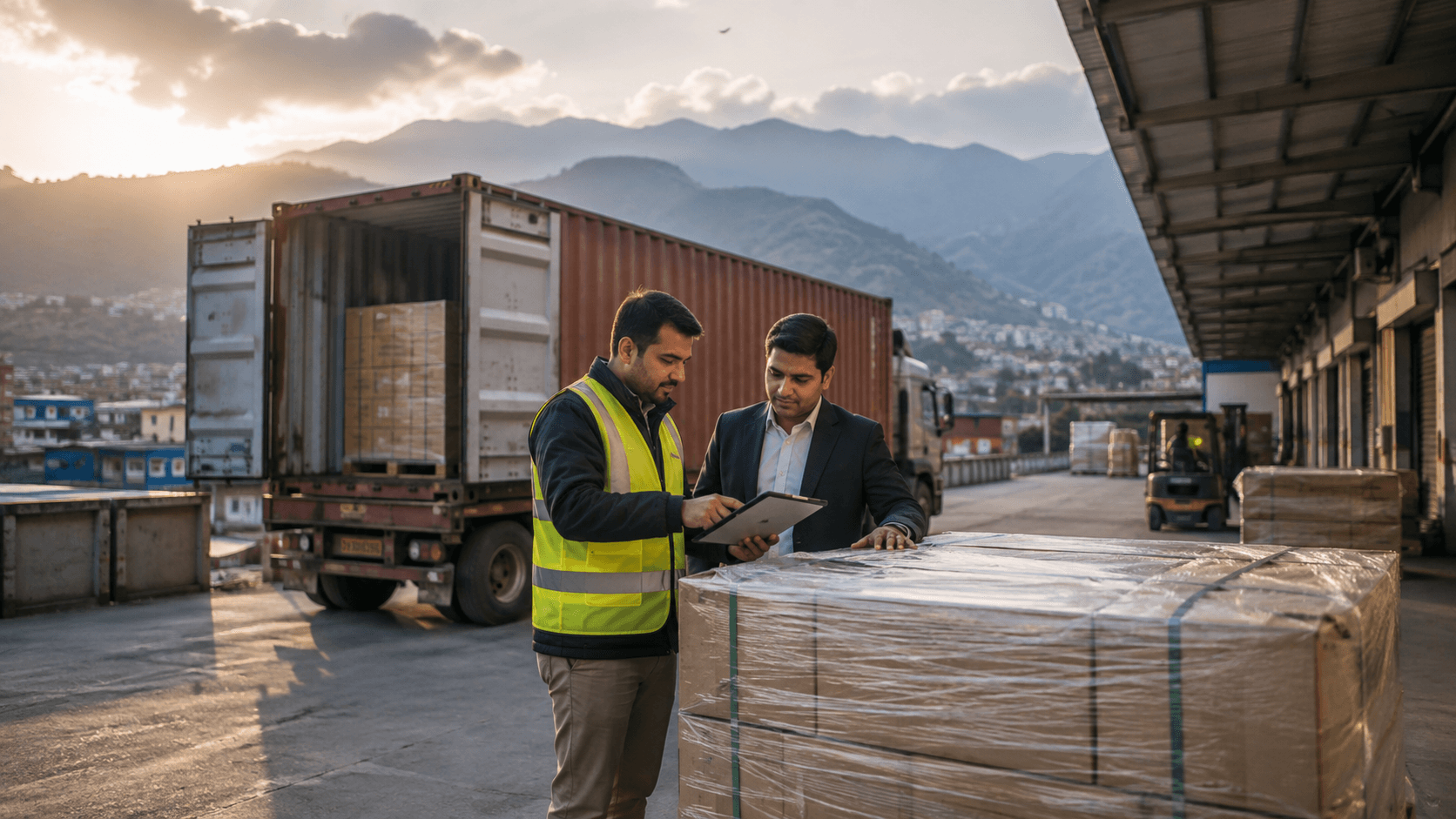
Build the complete freight plan before booking
Share the origin, destination, commodity, packages, weight, dimensions, value and required delivery date. Sea Sky Cargo can prepare a route-specific scope for your Nepal shipment.
Related posts
1970-01-01
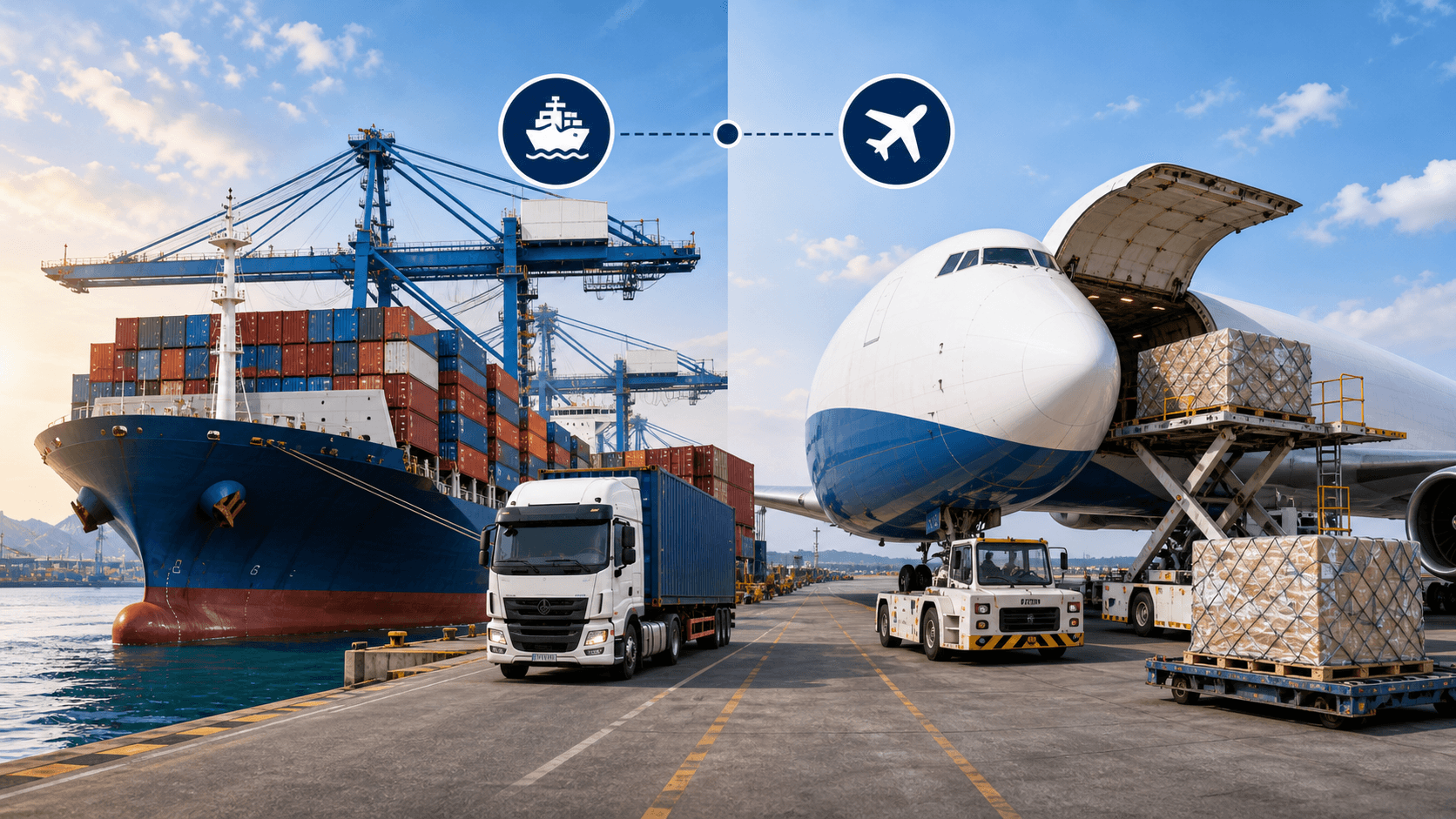
Sea + Air Freight: How SeaSky Helps Businesses Ship Smarter
2026-10-15
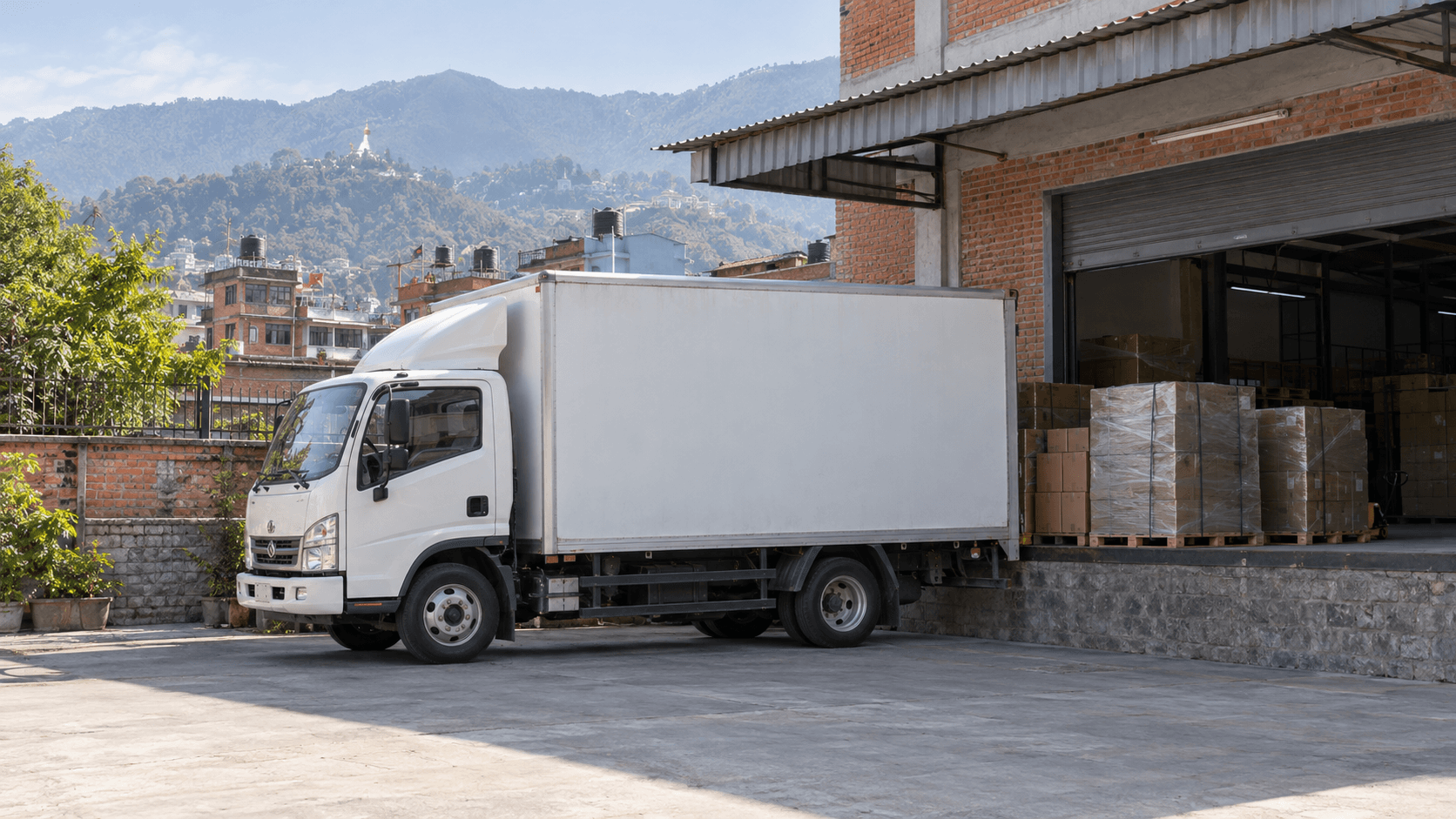
Last-Mile Delivery in Nepal: How Businesses Can Reduce Delays and Delivery Costs
2026-10-13
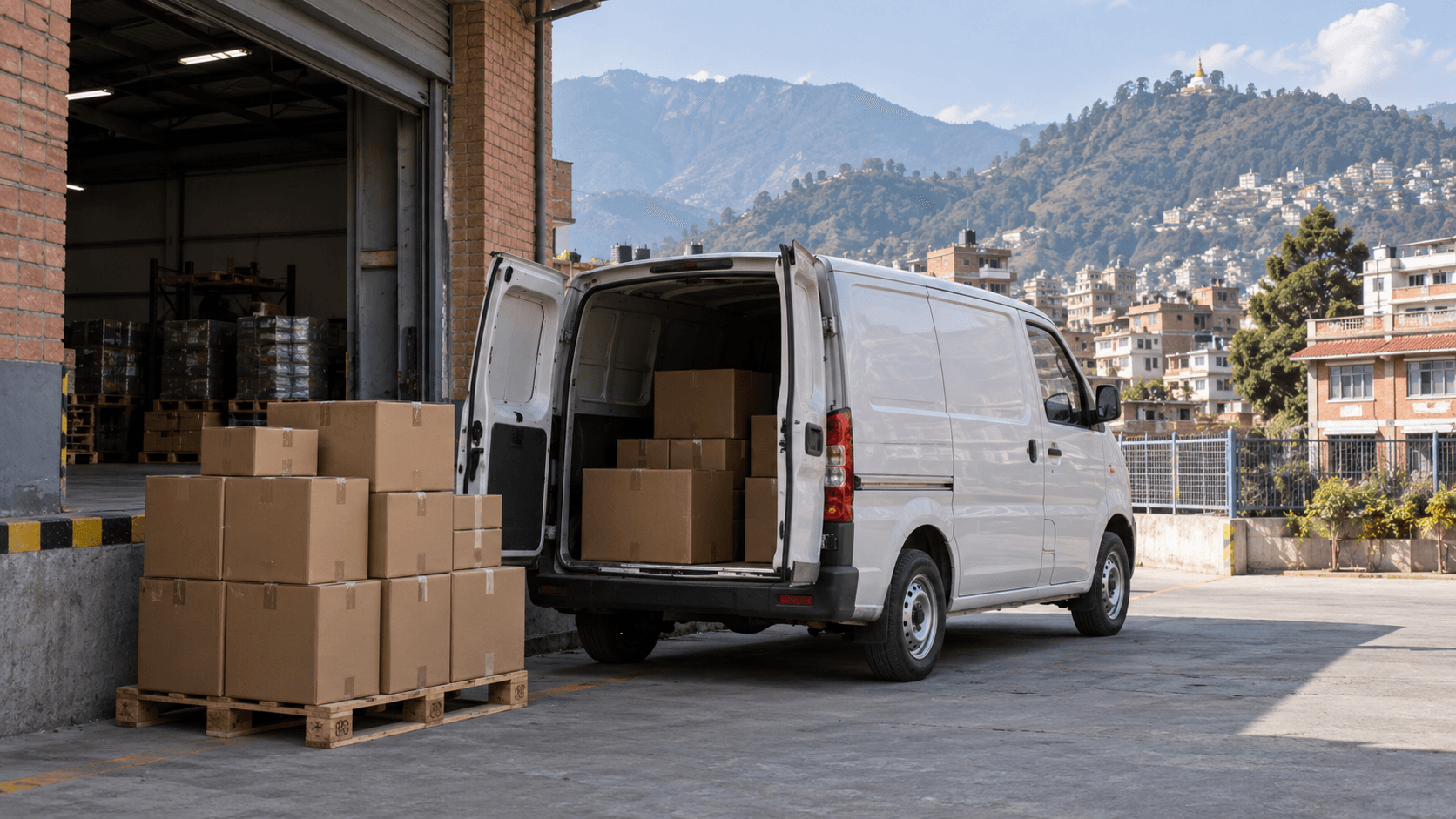
Last-Mile Logistics in Nepal: Challenges, Costs and Solutions
2026-10-12