What a freight forwarder actually does
Choosing a freight forwarder in Nepal should involve more than comparing two prices and selecting the lower one. A capable forwarder can connect carriers, terminals, customs professionals, warehouses and inland transport under one shipment plan. A weak plan can leave the importer with hidden charges, unclear responsibilities and document problems after the cargo is already difficult to redirect. A freight forwarder is a logistics coordinator. It may arrange the transport, handling, documentation and communication needed to move cargo from the agreed origin to the agreed destination. It does not necessarily own the aircraft, vessel, railway, terminal or every truck used on the route. The quotation should make clear which services the forwarder performs, which it arranges through partners and where the customer's own responsibility begins. The forwarder should turn separate transport stages into one understandable chain. That includes naming the parties, facilities, documents, handoffs and assumptions behind the price. It does not mean the forwarder controls weather, customs decisions or every carrier schedule. Sea Sky's broader freight forwarding guide explains the end-to-end process. This article focuses on a different decision: how a Nepal business should evaluate the company it may trust with that process.
| Forwarding task | What the shipper should expect |
|---|---|
| Route planning | A route based on cargo, deadline, risk, origin, destination and total cost |
| Carrier booking | Confirmed space, service, cut-offs, equipment and cargo acceptance |
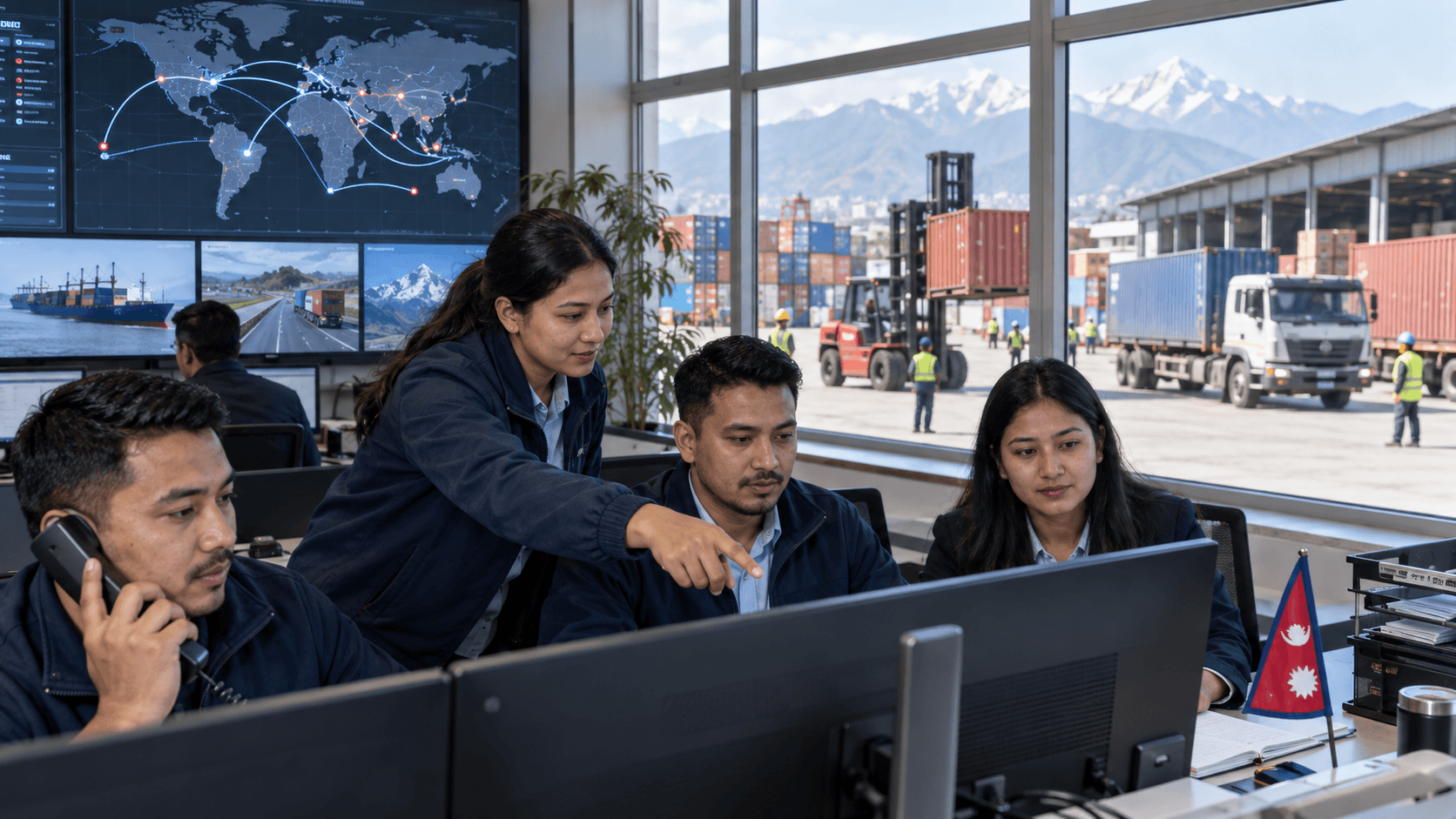
| Cargo review | Package count, dimensions, weight, commodity, value and special handling needs |
| Document coordination | Checks across invoice, packing list, transport document, origin and permit records |
| Customs support | Coordination with the authorized customs parties and a clear importer or exporter role |
| Handling and storage | The agreed consolidation, warehousing, loading, transfer and release scope |
| Tracking | Milestone updates, exception notices and a named contact for decisions |
| Delivery | The vehicle, final address, access, unloading and proof-of-delivery plan |

Why Nepal shipments need stronger coordination
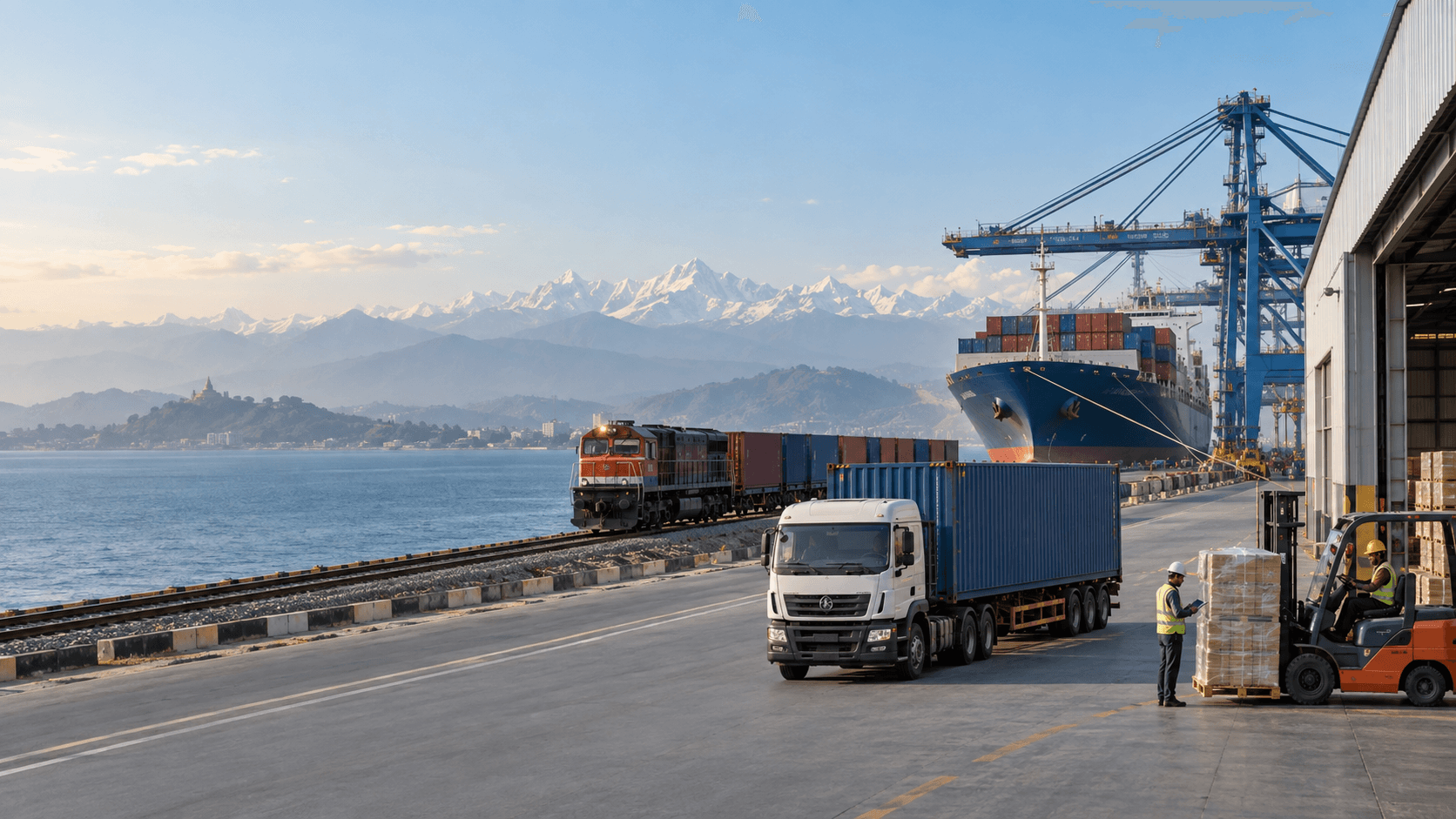
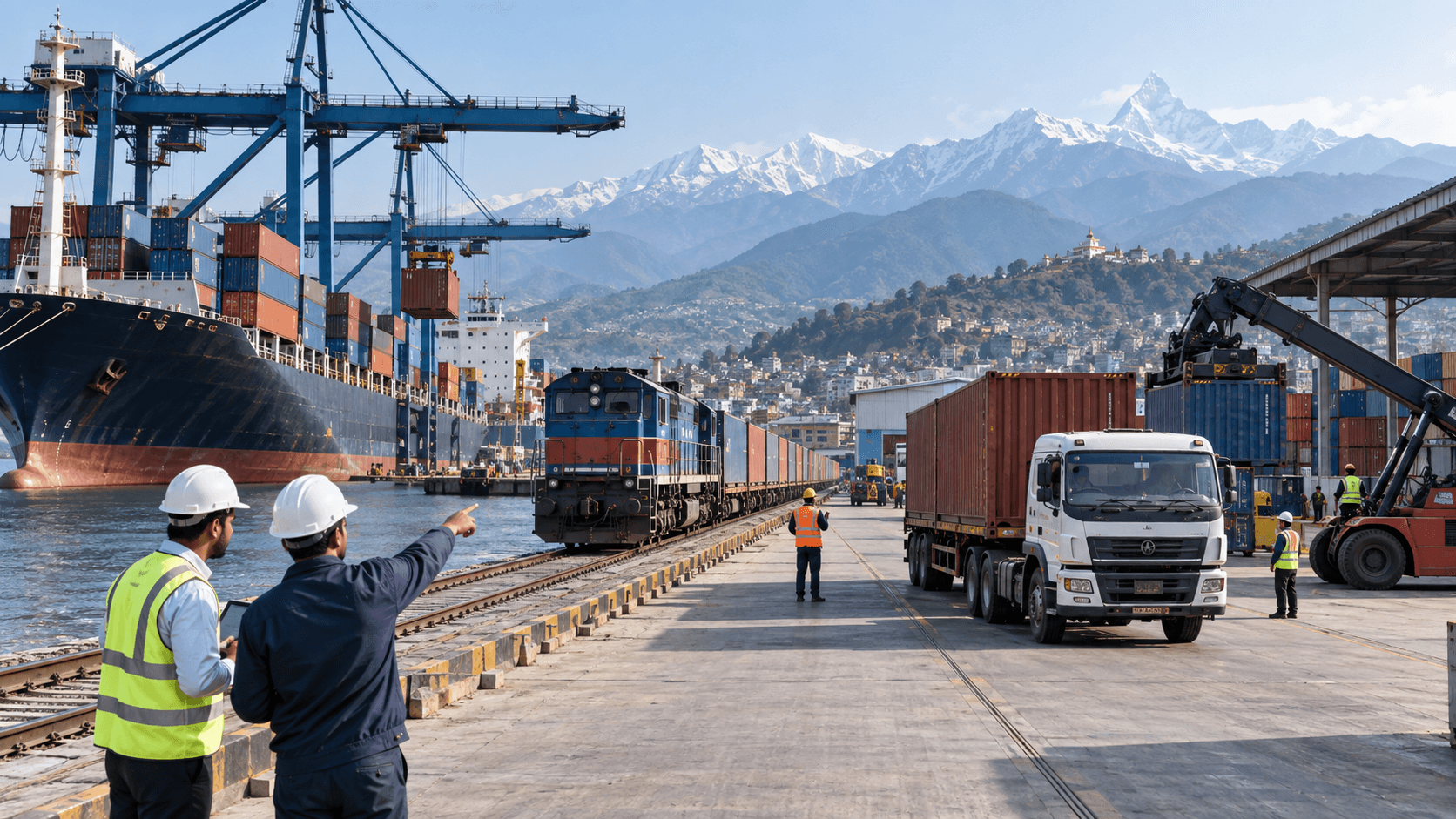
Nepal's international cargo routes often contain more handoffs than a port-to-port shipment between coastal markets. Ocean cargo normally discharges at an Indian gateway before continuing under an accepted India-Nepal transit plan. Regional road cargo crosses a land border. Air cargo still requires airport handling, customs release and final delivery after arrival. A single import can involve supplier pickup, an origin warehouse, consolidation, a main carrier, a transshipment point, an Indian port or terminal, transit documentation, rail or road movement, a Nepal dry port or border point, customs clearance and delivery to the warehouse. Every handoff creates a point where package marks, documents, instructions and responsibility can fail to match. For regular importers, forwarding is part of supply-chain planning rather than an emergency service used after cargo arrives. The forwarder should know the stock deadline, production consequence, storage limits and receiving capacity so the route is commercially useful, not merely technically possible. No company can promise that customs, weather, ports or borders will always behave on schedule. The more useful test is whether it identifies realistic risks early, communicates changes quickly and gives the customer enough information to make a decision.
| Nepal route risk | What a good forwarder should do |
|---|---|
| Landlocked ocean route | Connect the vessel leg with the accepted port-to-Nepal transit and final road plan |
| Multiple customs environments | Keep cargo and document details consistent across the route |
| Border or terminal delay | Report the actual status, next action, owner and cost exposure |
| Monsoon, flood or landslide | Review timing, road condition and a practical contingency where available |
| Special commodity control | Check permits and carrier acceptance before supplier dispatch |
| Final delivery constraint | Match the truck and unloading plan to the receiving site |
10 questions to ask before choosing a freight forwarder
Use the same ten questions with every freight forwarder you evaluate. Ask for answers tied to your actual commodity, origin, destination and deadline. A polished company profile is useful, but shipment-specific evidence is much more valuable. 1. Can you explain the complete route and every planned handoff? Ask where the shipment begins, where it will be consolidated, which main carrier or service is proposed, whether it changes vessel or vehicle, which port, airport, border or dry port is used and how it reaches the final Nepal address. The answer should identify who controls each handoff. 2. Do you have experience with my cargo type and route? Experience with ordinary cartons does not prove capability for pharmaceuticals, batteries, chemicals, fragile instruments, oversized machinery or high-value electronics. Ask for relevant examples without expecting the forwarder to disclose another customer's confidential records. 3. Can you compare more than one mode or service level? A good recommendation may compare air with sea, LCL with FCL, direct road with a consolidated service, or a fast service with an economical one. The forwarder should explain the trade-off in cost, timing, handling, acceptance and risk instead of forcing every enquiry into one route. 4. What exactly is included and excluded in the quotation? Request written origin, main-carriage, destination, customs-support and final-delivery scopes. Check duty, VAT, permits, insurance, storage, demurrage, detention, waiting, examination, labour and unloading. The word all-in is not a cost breakdown. 5. How do you verify measurements, restrictions and permits before booking? The forwarder should ask for final packed dimensions, package count, gross weight, commodity, value and handling needs. Batteries, liquids, chemicals, food, medicine, plants, telecom equipment and dangerous goods may require additional documents or carrier acceptance. 6. Who will provide updates and manage exceptions? Obtain the name or role of the operating contact and agree when updates are sent. A useful exception message states the current location, release status, reason for the problem, next action, responsible party, expected decision time and possible cost. 7. What insurance options and liability limits apply? Carrier liability, forwarder liability and cargo insurance are different. Ask what route and risks the proposed policy covers, how the insured value is calculated, what exclusions apply and which records are needed for a claim. The cargo insurance guide provides a fuller checklist. 8. Can you handle my LCL, FCL or special cargo correctly? LCL needs consolidation controls; FCL creates container and free-time responsibilities; project cargo can need a route survey, permits and lifting plan. Temperature-controlled and dangerous cargo need suitable partners, equipment and formal acceptance. Relevant capability matters more than a very long generic service list. 9. What transit time is realistic, and what can delay it? Ask for a planning range rather than a guaranteed date that ignores cut-offs, connections, customs, weather, border conditions and terminal congestion. The forwarder should distinguish carrier transit from door-to-door delivery time. 10. Who is legally responsible for importing, exporting and customs declarations? Clarify who is the seller, buyer, exporter, importer, declarant, customs agent and payer of duties and taxes. Confirm what authorization is required and who responds if Customs requests evidence or changes an assessment. A forwarder can coordinate the process without becoming the importer or exporter of record by assumption. Write the answers beside the quotation. That small discipline makes competing offers easier to compare and exposes vague promises while there is still time to choose another provider.
| Question | Evidence to request |
|---|---|
| 1. What is the complete route? | Named origin, carrier, transfer points, border or terminal, customs point and final delivery |
| 2. Have you handled similar cargo? | Relevant commodity, equipment, route and shipment-size experience |
| 3. Can you compare options? | At least two suitable modes or service levels with stated trade-offs |
| 4. What is included and excluded? | A written charge scope, assumptions, validity and exclusions |
| 5. How is cargo checked before booking? | Measurement, weight, packing, restriction and permit review |
| 6. Who communicates with me? | Named contact, milestone plan and exception process |
| 7. What insurance and liability apply? | Coverage option, insured route, limits, exclusions and claims procedure |
| 8. Can you handle this shipment type? | LCL, FCL, project, dangerous, perishable or controlled-cargo capability as relevant |
| 9. What timing is realistic? | A range with cut-offs, connections, customs assumptions and common delay points |
| 10. Who has legal and customs responsibility? | Importer, exporter, declarant, broker, payer and authorization roles |

Compare air, sea, road and multimodal capability
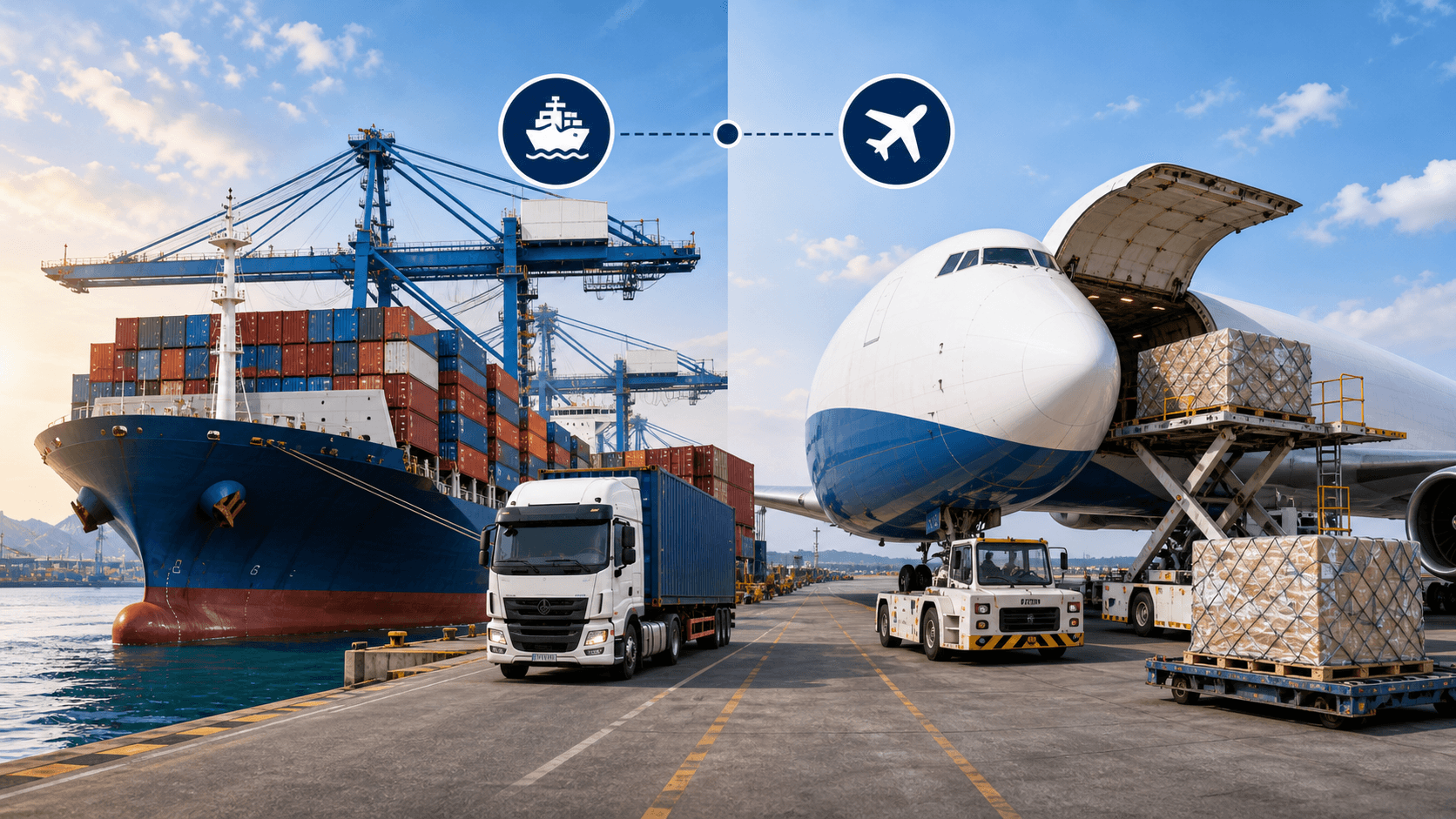
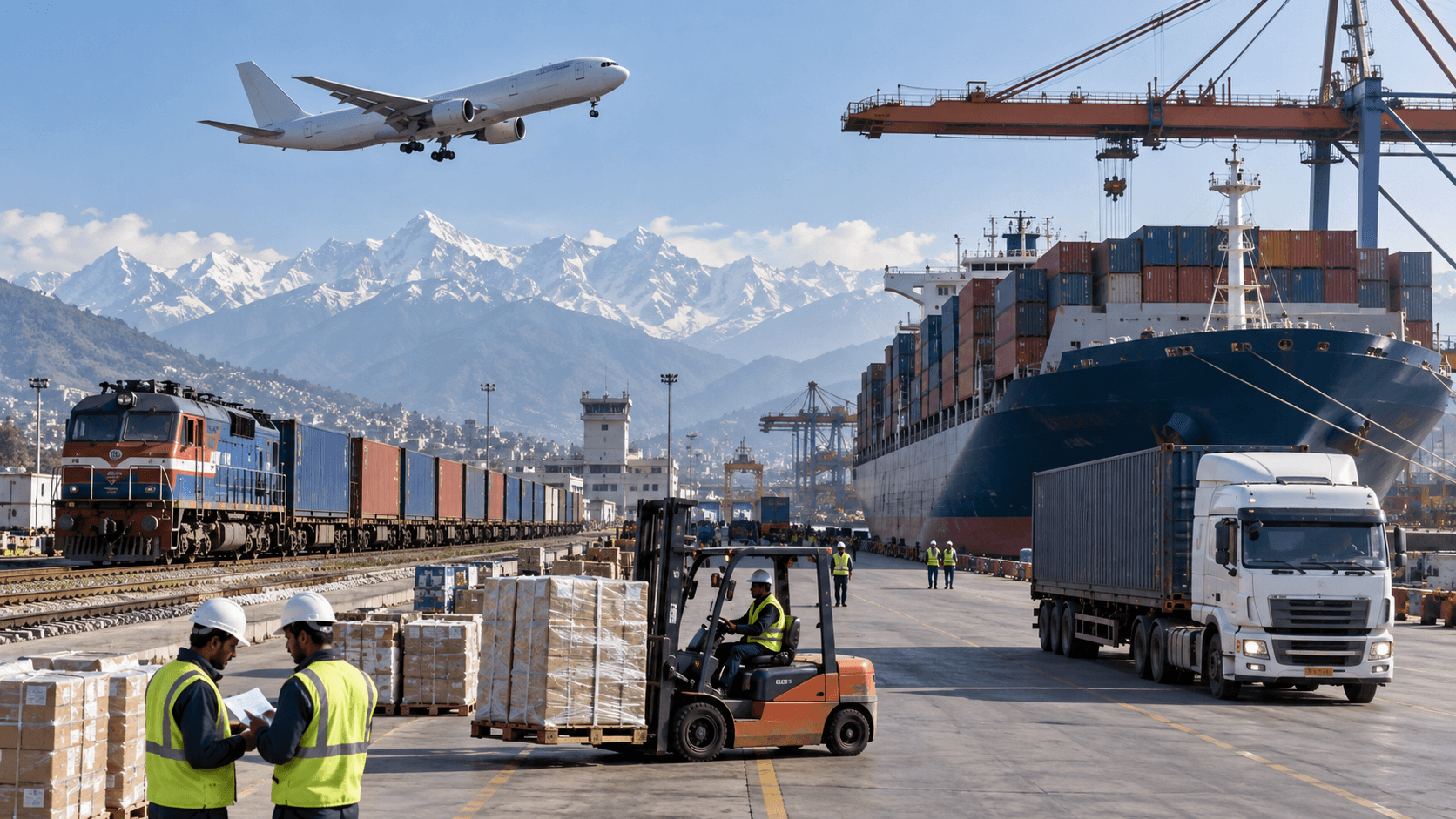
The best freight forwarding company for a shipment is the one that can explain the suitable options and their limits. It should not recommend air, sea or road merely because that is the service it sells most often. Air may be commercially cheaper when a missing part stops production. Sea may reduce unit cost for planned inventory. Direct road can remove port and vessel stages from an India-Nepal shipment. LCL may suit a small importer, while FCL may reduce handling and unit cost at sufficient volume. A split shipment can protect urgent stock while routine volume uses a slower route. Use the verified Sea Sky pages for air freight, ocean freight and road freight when requesting current options. For smaller ocean cargo, read the LCL shipping guide. Ask whether the company has actually checked carrier acceptance and partner availability for the proposed cargo-ready date. A route on a brochure is not the same as a bookable shipment.
| Mode | Often suitable for | Questions to resolve |
|---|---|---|
| Air freight | Urgent, compact, high-value or time-sensitive cargo | Chargeable weight, airline acceptance, airport handling, customs and delivery |
| Sea freight | Large, heavy, planned or cost-sensitive international cargo | LCL or FCL, gateway, transshipment, free time, India transit and Nepal delivery |
| Road freight | Regional trade, direct loads and most inland or final-delivery stages | Border, vehicle, route, permits, weather, waiting and destination access |
| Rail-linked movement | Eligible container or bulk flows using an available inland corridor | Terminal sequence, current service, cargo acceptance and onward truck |
| Multimodal freight | Shipments connecting two or more transport modes | Handoff ownership, document continuity, tracking and insurance scope |
Check customs and document support before dispatch
Customs preparation is not an activity to begin after cargo arrives. Product classification, valuation, origin, importer records, permits and transaction documents can affect whether the proposed route is workable. A reliable freight forwarder should ask document questions before accepting the booking. A forwarder or customs professional can help review the file, but the importer or exporter should understand its own declarations and legal role. Final classification, valuation, admissibility and assessment remain subject to the relevant customs authority. Use the HS-code error guide, Nepal import-duty guide and agent authorization guide to prepare questions before booking. Avoid vague descriptions such as parts, samples, accessories or machine; name the actual product, material, model and use. Ask who files the declaration, who pays government charges, who supplies missing evidence and who communicates if Customs requests an examination or valuation review. These answers should appear in the agreed service scope, not be invented at the border.
| Document or data | What should be checked |
|---|---|
| Commercial invoice | Parties, detailed goods, quantity, value, currency, origin and Incoterm |
| Packing list | Package count, contents, dimensions, net and gross weight and marks |
| Transport document | Shipper, consignee, notify party, route, cargo and equipment details |
| HS-code support | Material, function, model, composition, catalogue and photographs |
| Importer or exporter records | Current registration, tax, EXIM, banking and authorization records as applicable |
| Origin evidence | Country of manufacture and any required certificate or declaration |
| Product permit | Applicable food, drug, plant, animal, telecom, standards or other approval |
| Insurance | Correct commodity, packages, route, insured value and beneficiary |

Do you have a quote that needs a second look?
Share the cargo details, origin, destination, deadline and current quotation. Sea Sky Cargo can compare the route, scope, documents and exclusions before you book.
Compare freight quotations on the same scope
The lowest quotation is not necessarily the lowest shipment cost. One offer may include supplier pickup and final delivery while another ends at an airport, port or border. Normalize each quote to the same origin, destination, cargo, route and service level before comparing totals. Check the measurement basis as carefully as the rate. Air freight may use chargeable weight. LCL may use volume, weight and a minimum charge. FCL uses container and equipment charges. Road freight depends on vehicle capacity, route, tolls, permits and waiting. Non-stackable, dangerous, temperature-controlled or oversized cargo can change every calculation. Ask for a planning delivery range and compare the business effect of time. A slightly higher rate can be better if it protects production, inventory or a contractual deadline. A cheaper service can be appropriate when the cargo is planned and the business can absorb variability. Keep every clarification in writing. If the scope changes, ask for a revised quotation rather than relying on a chat message that contradicts the formal terms.
| Quote area | Comparison questions |
|---|---|
| Origin | Are pickup, loading, consolidation, export handling and origin documents included? |
| Main freight | Which carrier, route, service, equipment, charge basis and surcharges are assumed? |
| Destination handling | Which airport, port, CFS, depot, border and release charges are included or estimated? |
| Customs | Does the amount include only service fees, or an estimate for duties, taxes, permits and examination? |
| Delivery | What address, vehicle, waiting time, labour and unloading assumptions were used? |
| Delay exposure | What free time, storage, demurrage, detention and cancellation rules apply? |
| Risk | Is cargo insurance included, optional or excluded, and what route does it cover? |
| Commercial terms | What currency, exchange-rate rule, validity, tax and payment deadline apply? |

Warning signs of an unreliable freight forwarder
One imperfect email does not prove a forwarder is unreliable. A pattern of vague answers, changing scope and pressure to book without shipment facts is more meaningful. Pause before handing over cargo when several of the following signs appear.
- The quotation says all-in but does not name its start point, end point or exclusions
- The company promises a guaranteed delivery date without customs, weather or carrier assumptions
- No one can explain the proposed route, handoffs or operating partners
- The price was issued without packed dimensions, gross weight or a useful product description
- Restricted, dangerous or temperature-sensitive cargo is accepted without technical questions
- The company will not explain insurance, liability or claims evidence
- Important instructions remain only in calls and are not confirmed in writing
- Communication becomes slow before the booking even though cargo is not yet moving
- The business is pressured to pay or dispatch immediately without time to review the scope
- The forwarder treats duty, VAT, permits or customs decisions as guaranteed numbers
Be cautious of a quotation that is far below every comparable offer. It may be genuine, but first check whether origin charges, destination handling, transit, delivery, insurance, duties or equipment costs are missing. Ask what event can change the quoted amount and how the customer will be notified.
References and memberships can support due diligence, but they do not replace a shipment-specific review. Confirm the legal business identity, contact details, operating address, quotation validity and payment instructions. For high-value or complex cargo, consider an independent inspection, survey or insurance review where appropriate.
A trustworthy forwarder can still say no. Refusing cargo that lacks permits, safe packing or carrier acceptance is a stronger sign than promising to move everything immediately.

How Sea Sky Cargo supports Nepal shipments
Sea Sky Cargo Service (P) Ltd. was established in 1988 and operates from Lalitpur, Nepal. The company coordinates Nepal-linked air, ocean, road, rail-supported and multimodal cargo, with additional experience in project, oversized and specialized shipments.
Support begins with the shipment facts: origin and delivery locations, cargo-ready date, business deadline, commodity, packages, packed dimensions, gross weight, value, Incoterm and available documents. Sea Sky can then define the suitable route options and a written scope for the services it will perform or coordinate.
- Compare practical air, ocean, road, rail-linked and multimodal options
- Review LCL, FCL and special-equipment requirements
- Check cargo descriptions, dimensions, weights and handling disclosures
- Review the available invoice, packing list and shipping instructions
- Identify HS-code support and possible permit questions for early action
- Coordinate carrier, terminal, transit and destination-partner handoffs
- Support customs preparation through the agreed authorized parties
- Arrange the quoted final-delivery and unloading scope
- Provide shipment milestones and exception communication
- Discuss cargo insurance and project-specific risk controls
For oversized or heavy cargo, Sea Sky's project cargo service covers route and handling planning. For ordinary international shipments, the selected carriers, terminals, customs stakeholders and destination partners should still be named or described in the accepted quotation.
Sea Sky does not claim to operate every vessel, aircraft, railway, terminal or government process itself. It coordinates the agreed chain and communicates through the responsible providers and authorities. That transparency is the same standard businesses should request from any freight forwarder in Nepal.
Frequently asked questions
How do I choose a freight forwarder in Nepal? Compare route knowledge, relevant cargo experience, written scope, quotation transparency, document support, communication, insurance options and responsibility for each handoff. Use the same shipment facts and questions with every provider.
Should I choose the cheapest freight forwarder? Choose the lowest suitable total cost, not automatically the lowest base rate. A cheap quote may exclude pickup, terminal handling, customs support, transit, delivery, insurance or delay-related charges.
What information should I provide for a freight quote? Provide origin and destination addresses, cargo-ready and required-delivery dates, product description, packages, final dimensions, gross weight, value, Incoterm and special handling or permit information.
Can a freight forwarder handle customs clearance in Nepal? A forwarder can coordinate with authorized customs professionals and help prepare the operational file. The quotation should name the service, declarant role and importer or exporter responsibilities. Customs retains authority over classification, valuation, admissibility and assessment.
Does a freight forwarder need to own trucks or aircraft? No. Freight forwarders commonly arrange services through carriers and logistics partners. What matters is whether they select appropriate providers, define responsibility and coordinate the complete route effectively.
How can I verify a forwarder's experience? Ask for comparable cargo and route examples, operating procedures, a clear quotation and references where confidentiality permits. For special cargo, ask who performs the survey, packing, lifting, temperature control or dangerous-goods work.
What is the difference between a freight forwarder and a customs broker? A forwarder coordinates transport and logistics across the route. A customs broker or authorized customs agent focuses on declarations and clearance within its legal authority. One company may coordinate both services, but the roles should remain clear.
Should cargo insurance be purchased through the forwarder? It can be arranged through the forwarder or another suitable provider. Review the insured party, value, route, risks, exclusions, deductible and claims process before the shipment risk begins.
How often should a freight forwarder send updates? Agree on milestone updates for booking, pickup, departure, connection, arrival, release and delivery, plus immediate notice of exceptions that require a decision or create cost exposure.
Can Sea Sky Cargo compare multiple shipping routes? Sea Sky can review the cargo, deadline and delivery scope and compare suitable air, ocean, road or multimodal options, subject to current carrier, partner, border and terminal availability.
The right freight forwarder makes the shipment understandable before it moves. Ask the ten questions, compare complete scopes and keep important answers in writing. Then select the company whose plan fits the cargo and business consequence, not the company with the shortest promise.
Share the origin, destination, cargo details and deadline through the get quote form for a route-specific review.

Choose the forwarder before cargo starts moving
Sea Sky Cargo can prepare a route-specific plan and written quotation for your Nepal import or export, including the agreed transport, customs and delivery handoffs.