The cheapest route starts with total landed cost
The cheapest way to ship from South India to Nepal is not the route with the smallest freight line on a quotation. It is the route that places usable cargo at the Nepal delivery point for the lowest acceptable total cost, within the business deadline and without exposing the shipment to unnecessary handling or compliance risk. A Chennai, Bengaluru or Hyderabad supplier may quote only factory-to-terminal transport. An ocean quotation may stop at an Indian port. A rail quotation may end at Birgunj ICD. A complete comparison should use the same starting point, destination, cargo details and service scope for every option. Time also has a cost. A slow route can create stockouts, idle machinery, missed project milestones or expired sales opportunities. A faster route can cost more in freight but less to the business overall. Set a latest acceptable warehouse-delivery date before asking which mode is cheapest. Ask each forwarder to state inclusions, exclusions, charge basis, currency, quotation validity and assumptions. A port-to-port price and a door-to-door price are not competing totals, no matter how temptingly they sit next to each other in a spreadsheet.
| Cost layer | What to include |
|---|---|
| Origin | Supplier pickup, loading, packing, export or dispatch documents and origin handling |
| Main transport | Road, domestic rail, ocean, air or the selected combination |
| Transfers | CFS, terminal, port, rail ramp, transloading, lift-on and lift-off charges |
| India-Nepal transit | Transit documentation, sealed movement, border or dry-port handling and waiting |
| Nepal clearance | Customs service, examination, duty, VAT and product-specific government charges |
| Final delivery | Truck, labour, waiting, difficult access, unloading equipment and proof of delivery |
| Risk | Insurance, storage, demurrage, detention, damage exposure and delay contingency |

Road, rail, sea or air: compare the right mode
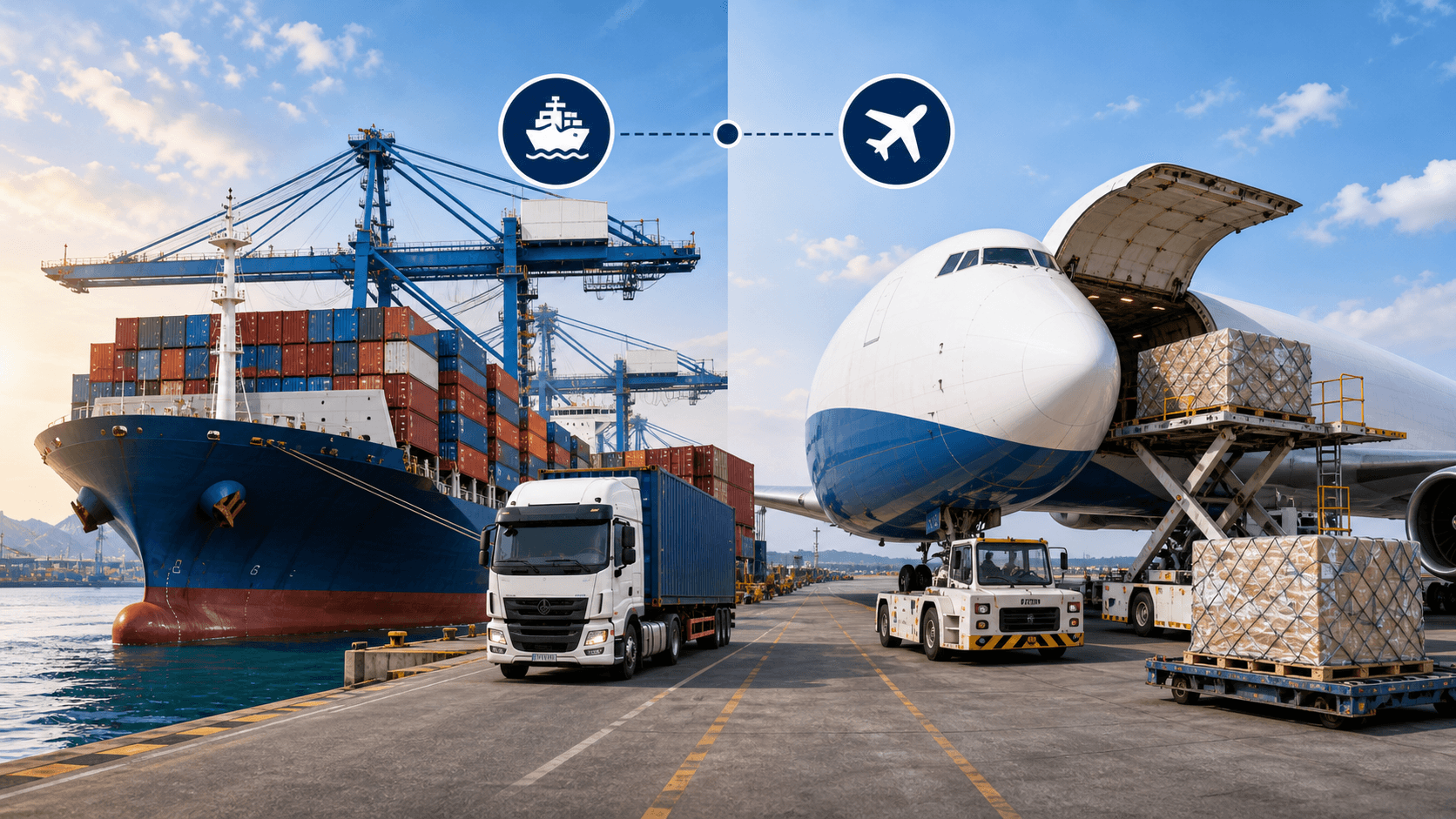
South India-to-Nepal cargo can move by direct road, a road-and-rail plan, a sea-led route through an approved Indian gateway, air freight or a multimodal combination. The practical choice depends on volume, density, value, urgency, product controls, handling tolerance and the final location in Nepal. Direct road can be simpler because it avoids a seaport and vessel schedule, especially for Indian-origin goods. Sea freight may reduce the main-carriage unit cost for a large shipment, yet the supplier still has to reach a suitable port and the cargo still has to travel inland to landlocked Nepal. Rail can be efficient for eligible containerised flows but should not be treated as an always-available substitute for road. Air freight belongs in the comparison when delay would be expensive. A small urgent component that restarts production can be commercially cheaper by air than a low-rate surface route. Businesses can also split an order: urgent units by air, routine volume by road or sea. Use Sea Sky's verified road freight service and ocean freight service pages to discuss the current operational options. Freight rates, train acceptance, vessel schedules and border conditions should be reconfirmed before dispatch.
| Mode | Often suitable for | Main cost or planning question |
|---|---|---|
| Direct road or dedicated truck | Commercial cargo needing pickup-to-destination control, machinery and time-sensitive stock | Long-haul fuel, tolls, permits, border process, waiting and vehicle utilisation |
| Shared road freight | Smaller consignments that do not justify a full truck | Minimum charge, consolidation schedule, transloading and delivery coverage |
| Rail-linked movement | Heavy or regular containerised cargo where an accepted service is available | Terminal access, wagon or train schedule, handling and final road legs |
| Sea plus rail or road | Larger, non-urgent or containerised cargo | Origin port leg, ocean schedule, gateway charges and India-Nepal transit |
| Air freight | Urgent, compact, valuable, fragile or temperature-sensitive goods | Chargeable weight, airline acceptance, handling controls and airport delivery |
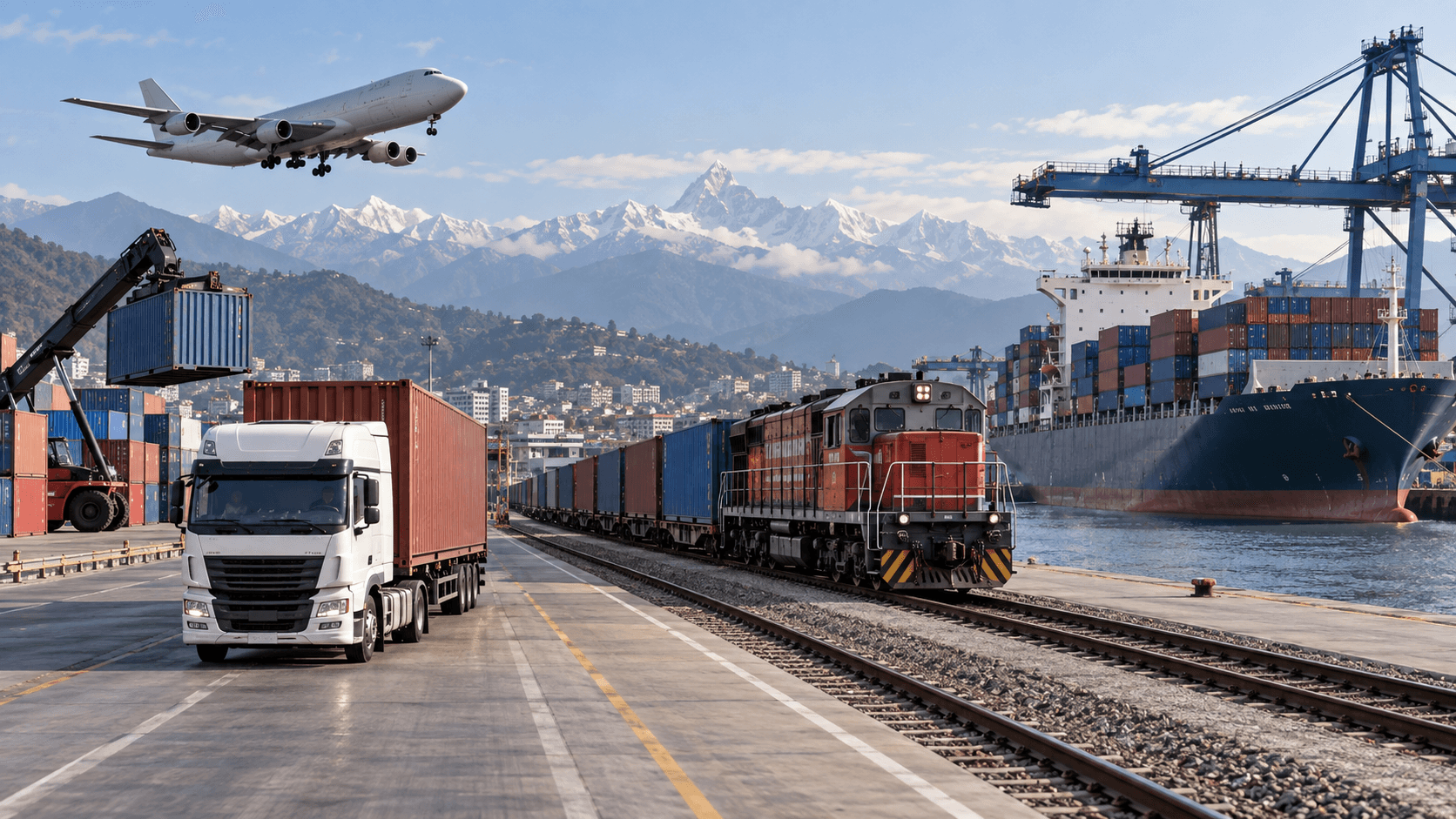
Shipping from Chennai to Nepal
Chennai combines a large manufacturing base with road, rail, airport and port access. Typical business cargo includes automotive components, industrial machinery, electrical products, textiles, furniture, chemicals, spare parts and factory equipment. That range is precisely why there is no one Chennai-to-Nepal answer.
Direct road is often worth pricing first for Indian-origin commercial goods, smaller loads, machinery that benefits from fewer transfers and cargo that must move on a controlled pickup-to-delivery plan. The quote should identify the truck type, loading responsibility, expected border gateway, driver or vehicle document needs, waiting terms and Nepal delivery scope.
A sea-led option from Chennai can make sense for suitable high-volume cargo, but it introduces an origin port, vessel schedule, possible transshipment or coastwise connection, destination-gateway handling and an inland Nepal transit leg. The apparently low ocean rate can lose its advantage after these charges are added. Confirm the actual carrier routing and whether the cargo is accepted for the proposed Nepal transit arrangement before booking.
- Price direct road from the named Chennai pickup point to the named Nepal delivery point
- Check whether domestic rail can support part of the Indian movement without excessive transfers
- Compare Chennai-origin sea routing with the current Kolkata, Haldia or Visakhapatnam gateway plan
- Use air freight for urgent samples, high-value parts or a controlled first lot
- Record every transfer because fragile machines and furniture may cost more to handle than to carry
For machinery, provide photographs, packed dimensions, centre of gravity, lifting points and individual package weights. For chemicals, batteries or controlled products, obtain an acceptance and permit review before the supplier hands the goods to a carrier.
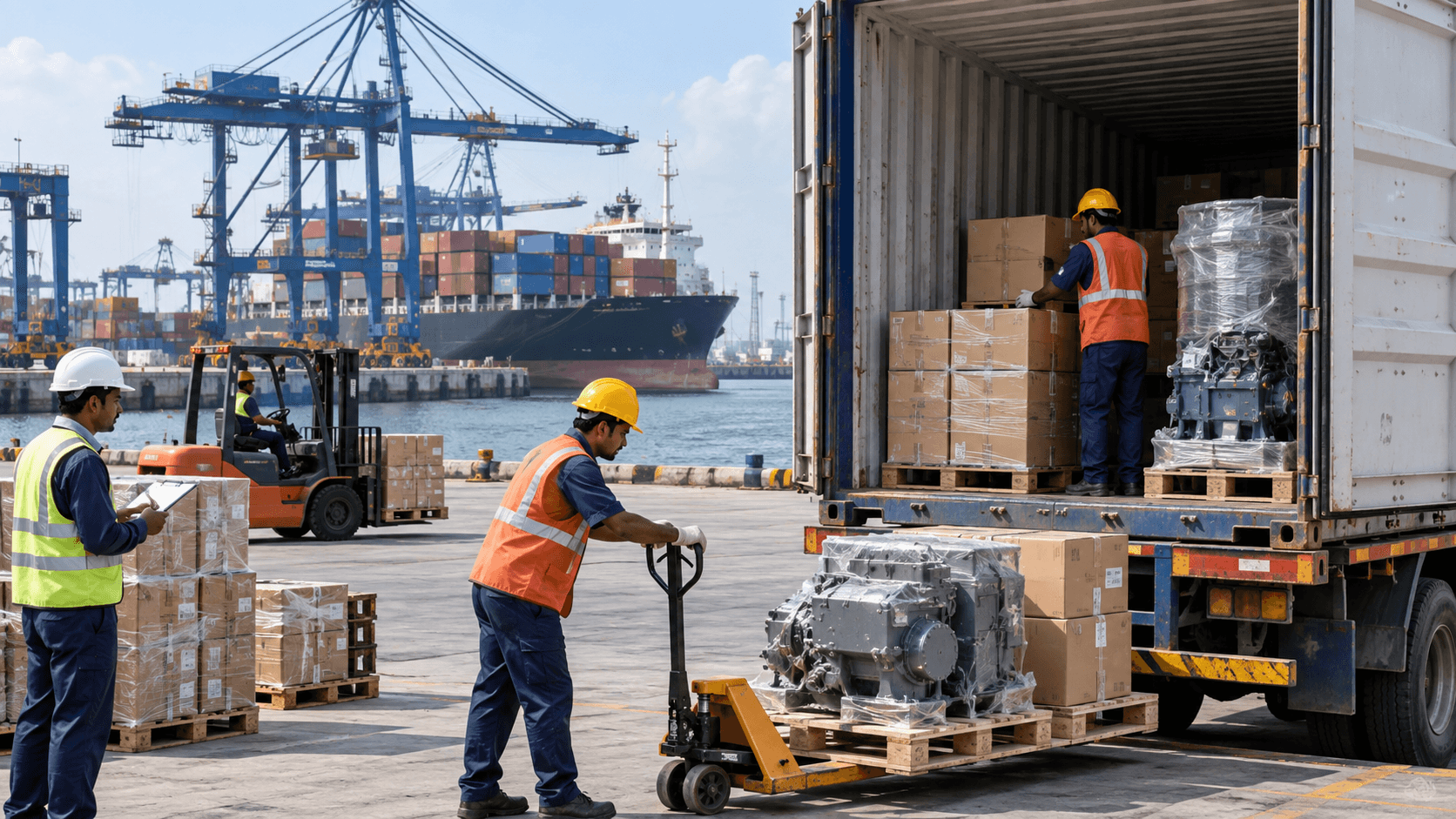
Shipping from Bengaluru to Nepal
Bengaluru, also widely searched as Bangalore, is an inland origin. Electronics, technology equipment, precision machinery, medical devices, garments, furniture, aerospace components and business inventory normally begin with a truck or domestic rail connection to a consolidation warehouse, airport, terminal or seaport. That first leg matters. A quote described only as Bangalore-to-Nepal may hide whether supplier pickup, city access, loading, consolidation and origin-terminal delivery are included. For several suppliers, a controlled consolidation plan can reduce duplicate long-haul movements, but it requires package marks and documents that identify each purchase order clearly. Small and medium consignments may fit shared road freight or LCL. High-value, compact and urgent goods may fit air. A full truck or FCL may suit regular stock, larger machinery or cargo that benefits from one loading plan. Sea options require a feeder road or rail leg to the selected port, so compare that complete route with direct road rather than comparing ocean freight alone. Prepare serial-number lists, model details, values and technical descriptions where relevant. Electronics and medical equipment can trigger permit, valuation or classification questions that should be resolved before pickup, not when the shipment is already waiting at a terminal.
| Bengaluru shipment profile | Option to investigate first |
|---|---|
| Urgent electronics or production parts | Air freight or priority road, subject to value and acceptance |
| Several cartons or pallets | Shared road or LCL with a written consolidation schedule |
| Regular commercial volume | Dedicated truck, FCL or a rail-supported multimodal plan |
| Fragile precision equipment | The route with the fewest uncontrolled handling points |
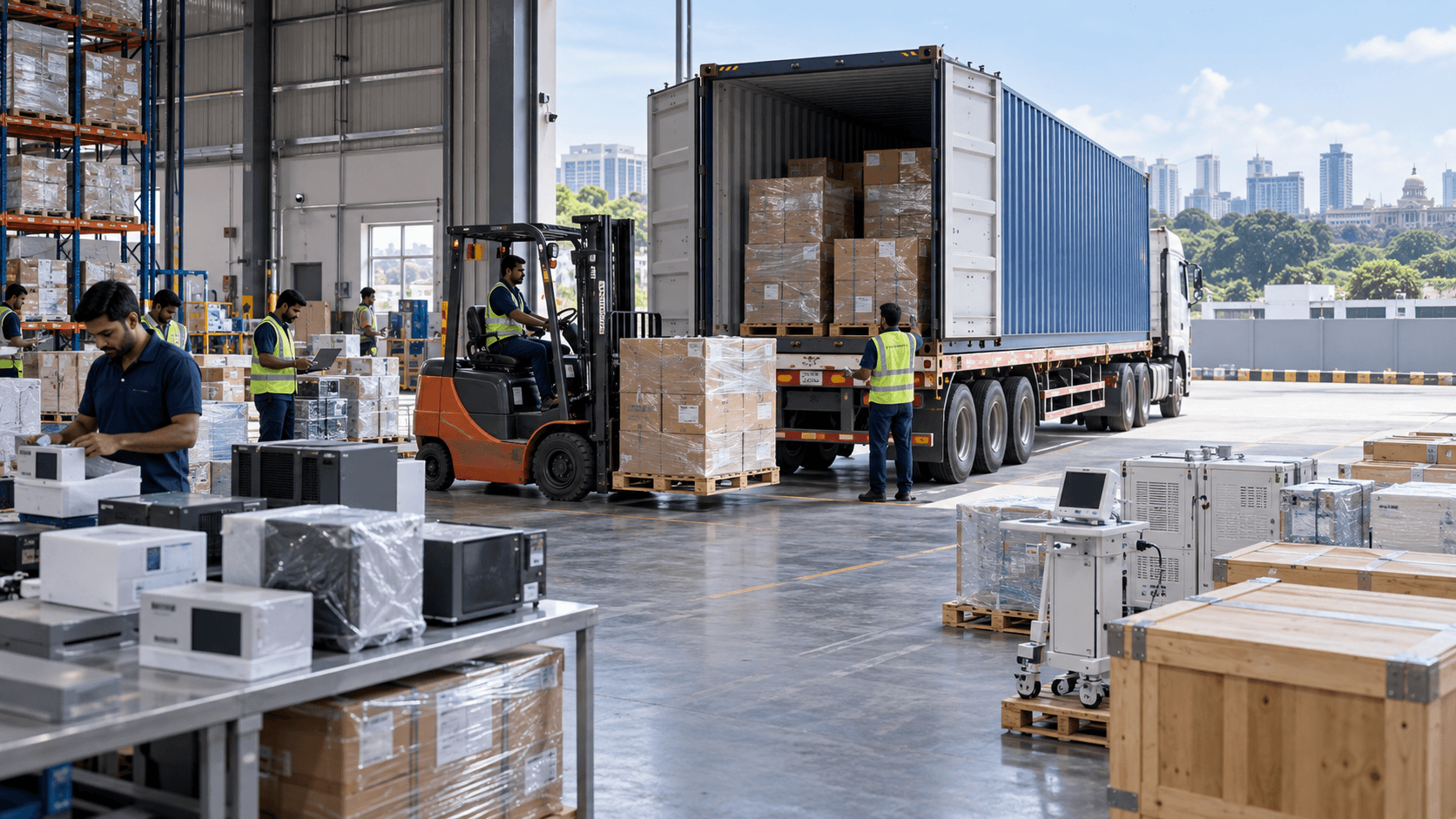
Shipping from Hyderabad to Nepal
Hyderabad is a major source of pharmaceuticals, healthcare products, chemicals, machinery, electronics, food products and industrial equipment. Direct road, domestic rail-linked movement, air freight and a sea-led route via a suitable gateway can all be relevant, but commodity control often matters as much as price.
Visakhapatnam may be geographically useful for some Hyderabad cargo and is recognized in the India-Nepal transit framework alongside Kolkata and Haldia. That does not make every Visakhapatnam plan automatically available or cheaper. Confirm the shipping schedule, sealed-container requirement where applicable, terminal process, inland rail or road acceptance and final Birgunj movement for the actual booking.
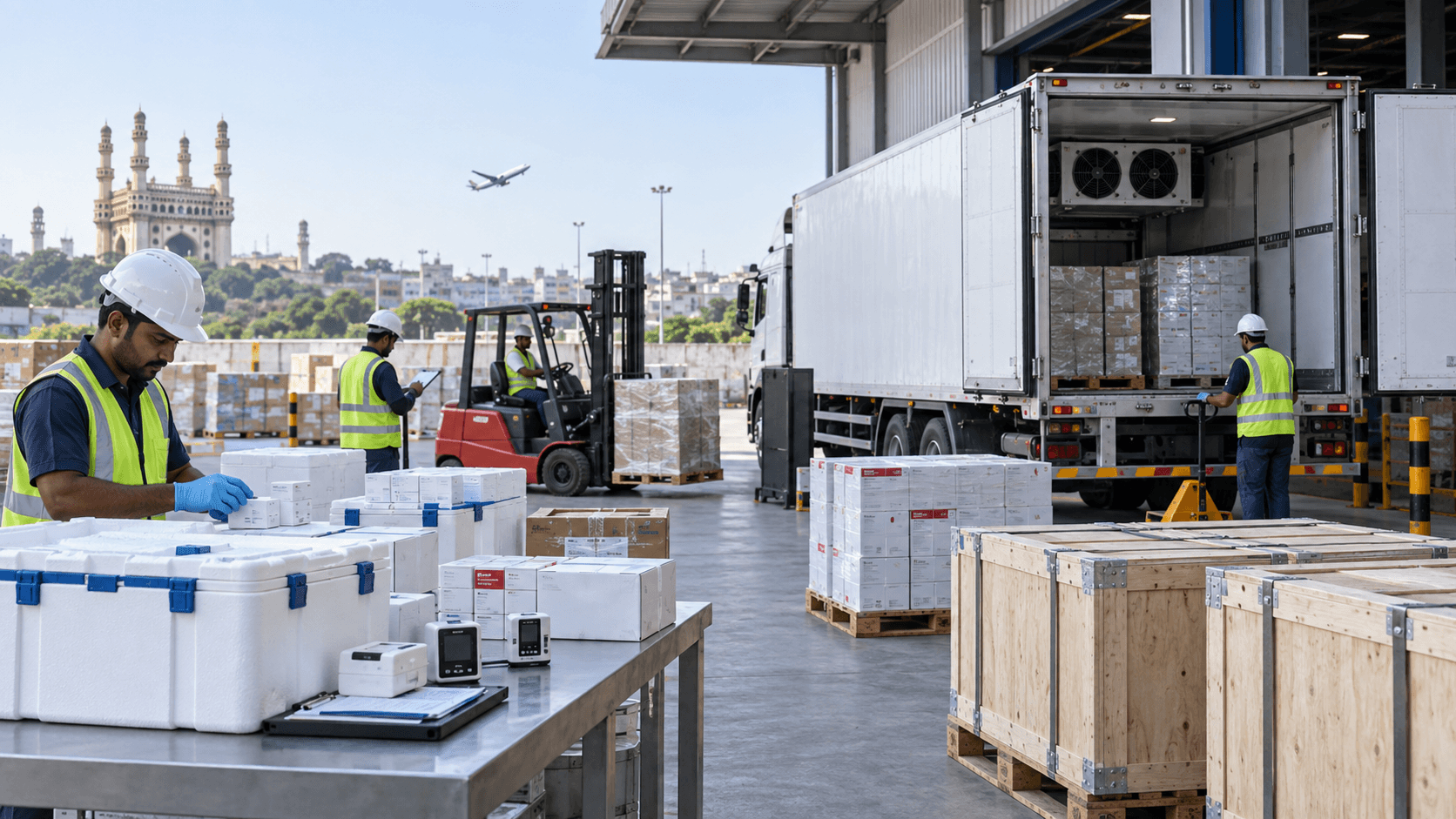
Pharmaceutical, medical and temperature-sensitive shipments need a lane assessment covering allowed temperature range, preconditioning, packaging qualification, monitoring, handoff time, storage exposure and contingency procedures. A low-cost route that breaks the required environment is not a saving.
- Use air when product urgency, value or stability window justifies the premium
- Use a temperature-controlled road plan only after confirming equipment and monitoring responsibility
- Consider Visakhapatnam, Kolkata or Haldia only with a current carrier and transit plan
- Separate dangerous goods from ordinary cargo and obtain formal carrier acceptance
- Give the forwarder the product data sheet, storage condition and permit status before pricing
Industrial machinery from Hyderabad should be surveyed for loading, restraint and route dimensions. The high-bed trailer guide explains when a standard vehicle may be unsuitable for tall or heavy cargo.
Which South India route is cheapest for your cargo?
Send the pickup city, packed dimensions, weight, commodity and Nepal delivery address. Sea Sky Cargo can compare road, rail-linked, sea and air options on the same delivery scope.
Build the gateway route from port to Birgunj
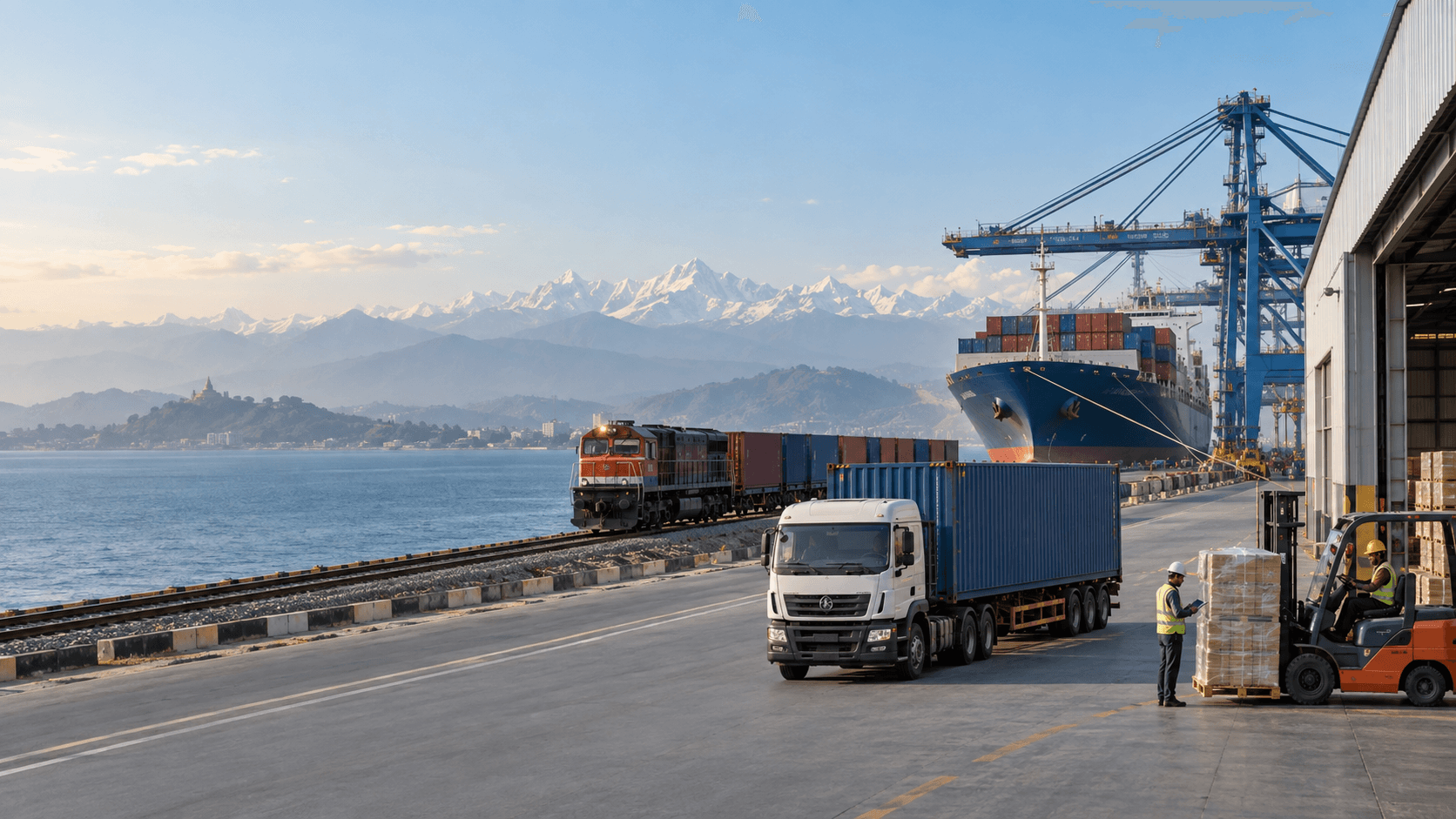
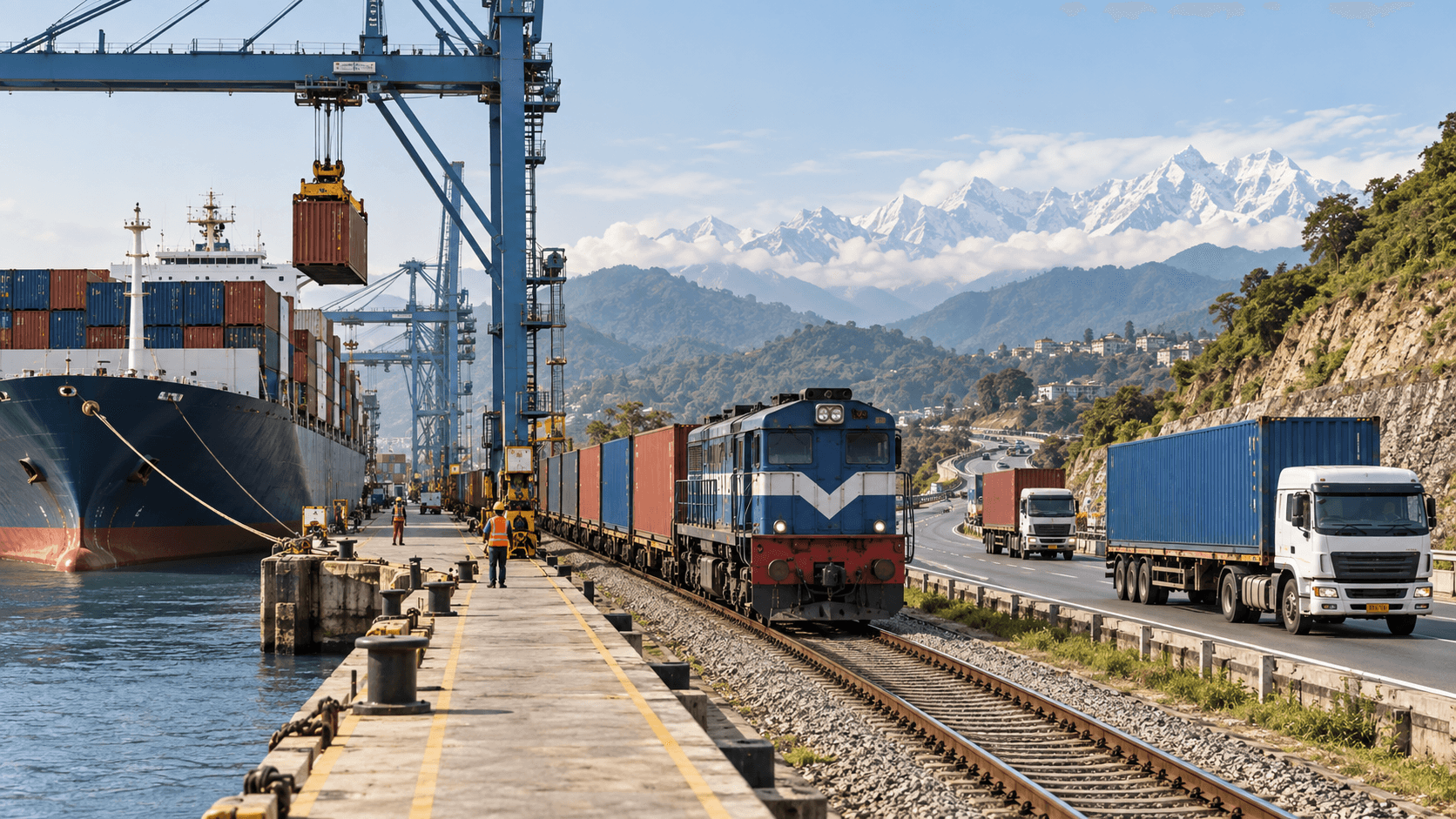
Nepal is landlocked, so a sea-led import continues beyond the vessel discharge point. Kolkata, Haldia and Visakhapatnam are recognized Indian transit gateways for Nepal cargo under the India-Nepal transit framework. The selected route may then use an accepted rail or road movement toward a Nepal border customs point. Birgunj Inland Clearance Depot, commonly called Sirsiya Dry Port, is rail-linked through Raxaul to the Indian railway system. Official Nepal intermodal material describes rail services between Kolkata, Haldia or Visakhapatnam and Birgunj under the India-Nepal Rail Services Agreement. The 2023 transit protocol also identifies direct train movement from Kolkata or Haldia to Birgunj via Raxaul and provides for Visakhapatnam-to-Birgunj rail operation under that agreement. That legal and infrastructure framework does not guarantee a train for a specific container. Current equipment, service acceptance, cut-offs, terminal congestion and operating arrangements must be checked close to booking. A road alternative or terminal contingency should be named where schedule risk matters. Use the port-to-door cargo guide to examine the Indian gateway-to-Nepal handoffs in more detail. The lowest-risk plan gives each handoff an owner and keeps the commercial invoice, packing list, transport document and cargo description consistent from origin to final clearance.
| Route stage | Question the quotation should answer |
|---|---|
| South India pickup | Who collects, loads and delivers the cargo to the first terminal? |
| Origin port or terminal | Which facility, cut-off and handling charges apply? |
| Ocean or domestic movement | What carrier, schedule, transfer and arrival range are assumed? |
| Transit gateway | Who controls release, transit papers, deposits, free time and onward booking? |
| Raxaul-Birgunj movement | Is the cargo moving by confirmed rail, road or a stated alternative? |
| Nepal delivery | Where does the quoted service end and who unloads at destination? |
Use LCL, FCL and CBM correctly
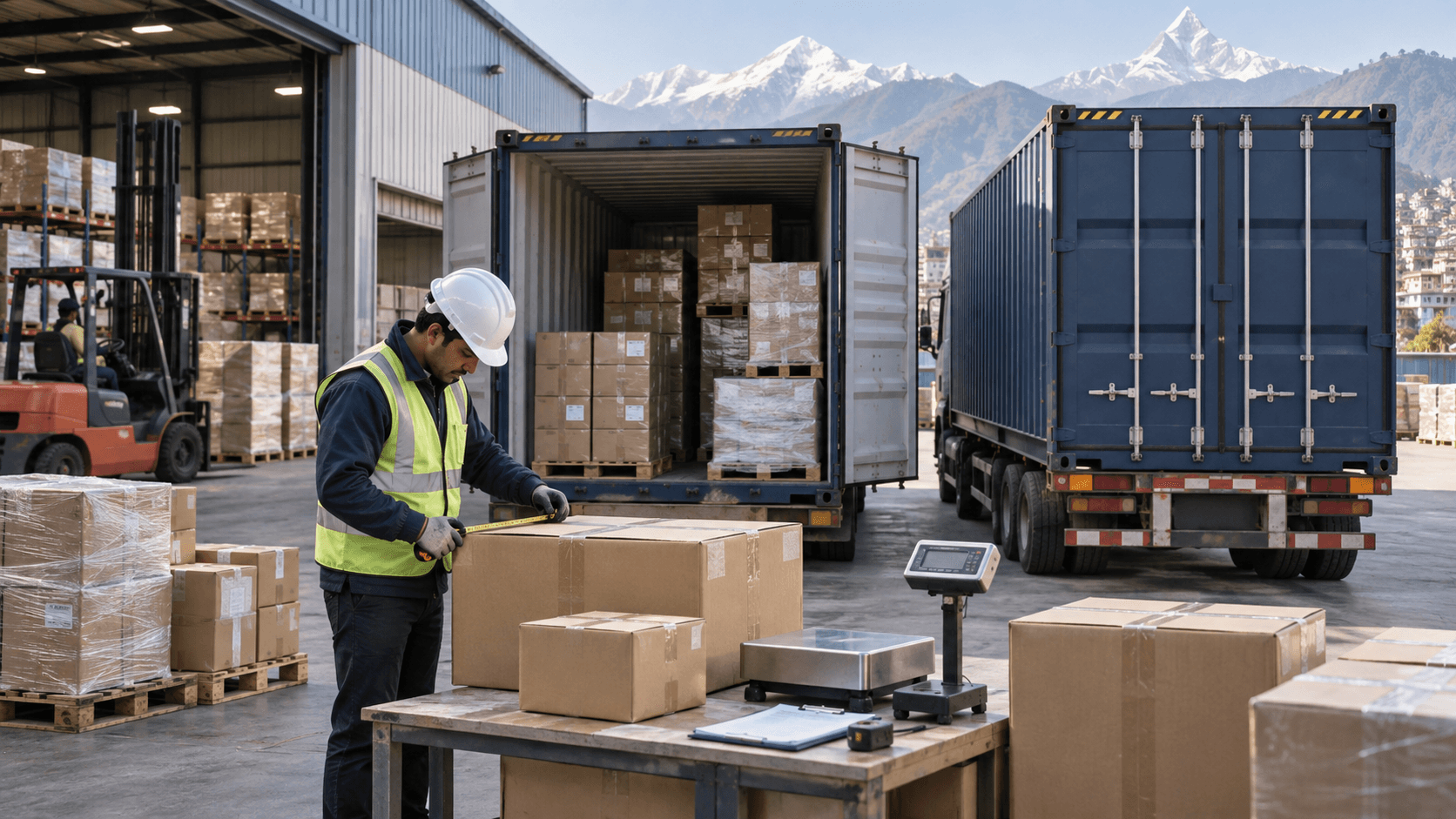
LCL, or Less than Container Load, lets a shipper pay for space in a shared container. FCL, or Full Container Load, reserves the container for one shipment. Neither term identifies the complete route or guarantees the lower landed cost. LCL can suit trial orders, several cartons, a few pallets, spare parts, garments and furniture components. It also creates consolidation and deconsolidation steps, minimum charges and more package handling. FCL can offer better loading control and a lower unit cost at sufficient volume, but the importer must understand container free time, detention, demurrage, unloading and empty-return obligations. CBM means cubic metre and is calculated from the packed external dimensions: length multiplied by width multiplied by height, converted to metres, then multiplied by the number of identical packages. Measure after pallets, crates, padding and protrusions are included. The forwarder may still price on chargeable weight or apply a minimum according to the mode and tariff. There is no dependable universal per-CBM rate from South India to Nepal. Origin pickup, density, commodity, consolidation schedule, port, terminal, transit, customs and final delivery all change the result. Use the CBM calculation guide and LCL shipping guide before requesting a quote.
| Question | LCL | FCL |
|---|---|---|
| Space | Shared with other consignments | Reserved for one shipper's cargo |
| Pricing basis | Usually chargeable volume or weight plus minimum and handling charges | Container rate plus handling, transit and equipment-related charges |
| Handling | More consolidation and deconsolidation contact | Fewer cargo-level handoffs when loaded and sealed well |
| Best fit | Smaller non-urgent commercial shipments | Larger, bulky, fragile or regular shipments |
| Risk to check | Minimums, delays, damage and destination charges | Poor utilisation, free time, detention and unloading |
Plan project and sensitive cargo separately
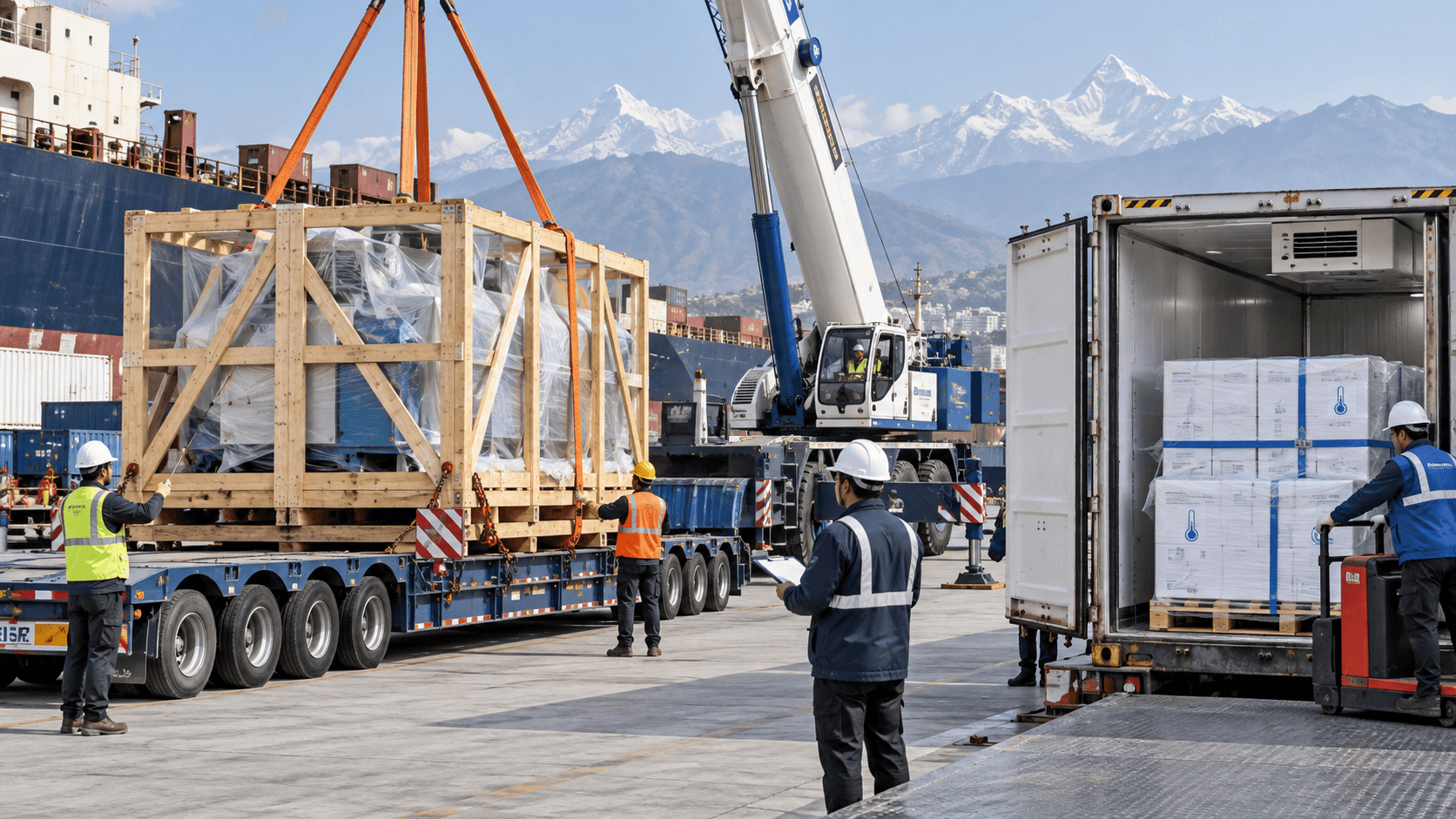
Project cargo, oversized machinery and sensitive goods should not be forced into a general-cargo rate comparison. A generator, transformer, production line, medical device or temperature-controlled shipment can require a route survey and handling plan before any transport mode is selected. The cheapest project route is often the one with fewer lifts, verified road access and the correct trailer, even if the headline freight is higher. A failed lift, bridge restriction, unsuitable delivery site or missing permit can erase the saving and damage the cargo. Insurance should match the commodity, full route, insured value, packing and handling method. Standard carrier or forwarder liability is not the same as cargo insurance. Review the freight and cargo insurance guide before risk begins, and agree what photographs, survey records and delivery evidence will be kept.
| Cargo type | Planning information to provide |
|---|---|
| Oversized machinery | Packed dimensions, individual weight, centre of gravity, lifting points and drawings |
| Heavy equipment | Axle-load plan, trailer type, route clearance, permits, crane and site access |
| Fragile equipment | Shock or tilt limits, internal bracing, moisture control and handling method |
| Pharmaceutical or medical cargo | Product name, permit status, temperature range, stability data and monitoring plan |
| Chemicals or dangerous goods | Safety data, UN classification where applicable, packing group and carrier acceptance |
| Food products | Shelf life, hygiene controls, packaging, temperature and Nepal import requirements |
Prepare CTD, customs and product documents early
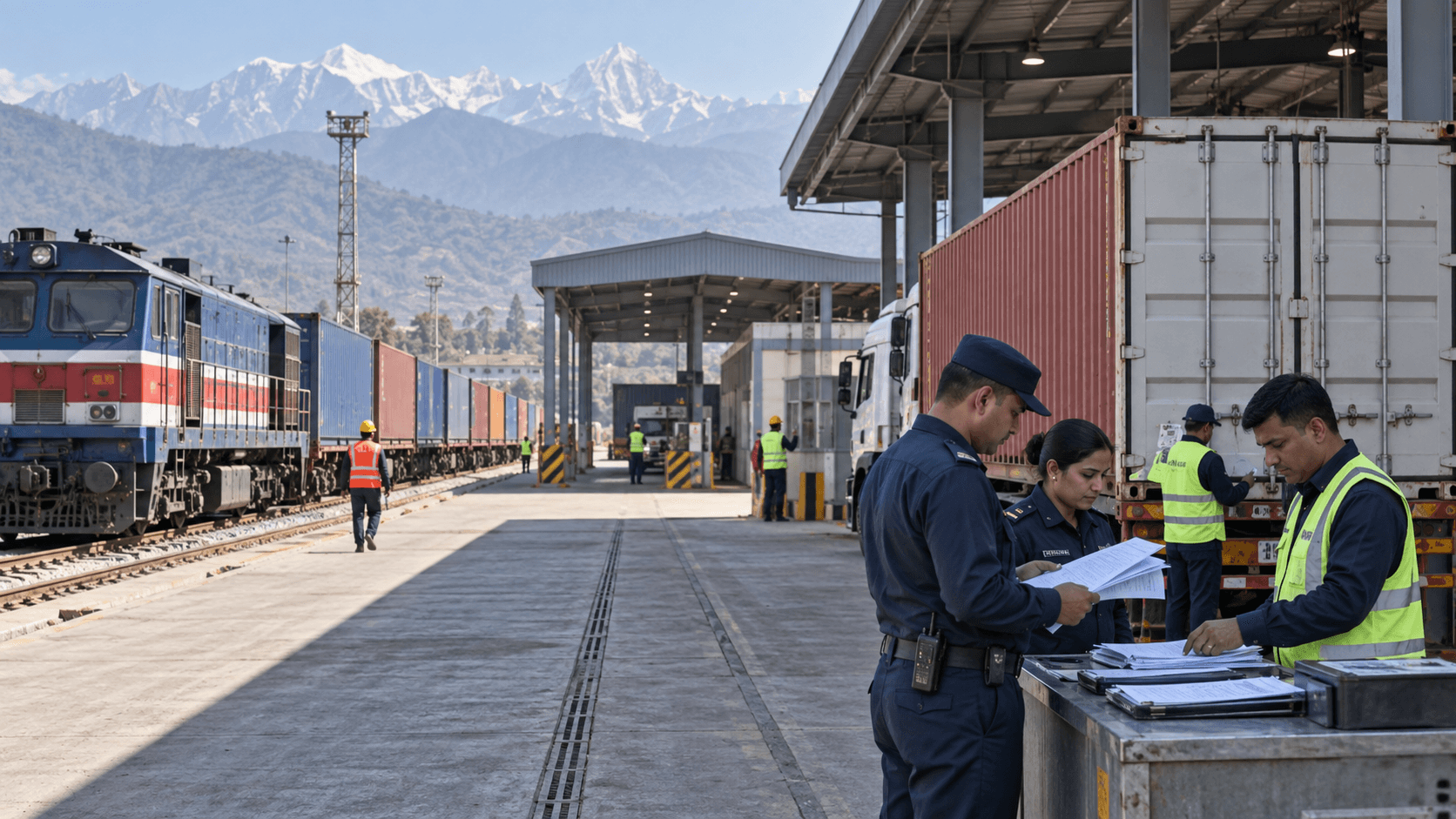
Document work should begin before supplier dispatch. Nepal Customs describes the Customs Transit Declaration, or CTD, as the form used for third-country goods moving through Indian territory between an agreed port and a designated Nepal customs point. The exact transit file depends on origin, commodity, carrier, route and current customs procedure. Indian-origin goods moving from South India to Nepal and third-country goods routed through an Indian port are not the same transaction. Do not assume the same transit treatment, evidence of origin or document set. Give the forwarder the purchase contract, origin facts and proposed route so the shipment can be classified correctly before booking. Descriptions such as parts, samples, accessories, machine or medicine are too vague. Use the actual product, model, material and purpose. The HS-code error guide and Nepal import-duty guide can help businesses prepare, although final classification, valuation and assessment remain with Nepal Customs. Keep names, quantities, weights and values consistent across the purchase order, invoice, packing list and transport document. Correcting a draft before dispatch is usually faster and cheaper than explaining a mismatch after cargo reaches a controlled terminal.
| Document or data | What to verify |
|---|---|
| Commercial invoice | Seller, Nepal importer, detailed product, quantity, value, currency, origin and Incoterm |
| Packing list | Package count, contents, dimensions, net and gross weight and shipping marks |
| Transport document | Consignor, consignee, notify party, origin, destination, cargo and equipment details |
| Origin evidence | Country of manufacture and certificate or declaration required for the transaction |
| HS-code support | Material, function, model, composition, catalogue, photograph and technical sheet |
| Importer records | Current company, PAN or VAT, EXIM and authorization records as applicable |
| Transit file | CTD and supporting records required for the confirmed third-country transit route |
| Product permits | Licence, recommendation, health, plant, food, drug, telecom or other approval where required |
| Insurance and delivery | Insured route, value, beneficiary, final address, access and unloading contact |
Choose the route with a business decision checklist
Start with shipment facts, not a preferred mode. Give every forwarder the same cargo-ready date, pickup address, product description, number of packages, packed dimensions, gross weight, value, Incoterm, permit status, delivery address and required delivery date. Then compare at least two route-specific quotations with matching scope.
- Choose direct road when control, fewer transfers or a firm pickup-to-delivery plan outweigh long-haul cost
- Choose shared road or LCL when the shipment is smaller and the consolidation schedule fits the deadline
- Choose FCL when volume, fragility, loading control or regularity justifies a complete container
- Choose rail-linked movement only after the cargo, terminals and current service have been confirmed
- Choose sea-led routing when the complete origin-to-Nepal landed cost beats the surface alternatives
- Choose air for compact urgent cargo when the value of time is greater than the freight premium
- Choose a split plan when one part of the order is urgent and the remaining volume is cost-sensitive
Common mistakes include comparing only base freight, using estimated unpacked dimensions, ignoring LCL minimums, selecting a port before checking onward acceptance, assuming rail is always cheaper, omitting final delivery and arranging project-cargo unloading after arrival. A written inclusion-and-exclusion sheet catches these gaps before they become charges.
Sea Sky Cargo can compare Chennai, Bengaluru and Hyderabad pickup options, review LCL, FCL, road, rail-linked, sea and air plans, check the shipment file, coordinate accepted India-Nepal transit handoffs and quote final delivery through the carriers, customs professionals and operating partners identified in the agreed scope. Sea Sky does not operate every vessel, train, terminal or government process itself; availability and clearance remain subject to the relevant providers and authorities.
What is the cheapest way to ship from Chennai to Nepal? Direct road may be competitive for smaller, direct or time-sensitive Indian-origin cargo. A sea or rail-supported plan may reduce the unit cost for larger loads, but only after port, terminal, transit and delivery charges are included.
Is Bengaluru-to-Nepal LCL suitable for a small importer? It can be. Confirm pickup, minimum charges, chargeable volume, consolidation schedule, handling, customs transit and final delivery rather than relying on a single per-CBM number.
Can Hyderabad cargo move through Visakhapatnam? It may be possible for a suitable shipment under a confirmed carrier and Nepal transit arrangement. Current schedule, sealed-container acceptance, rail or road connection and total cost must be verified before booking.
Is road freight cheaper than sea freight to Nepal? Road can be cheaper for smaller or direct shipments because it avoids port and vessel stages. Sea can be economical for high-volume cargo, but the answer changes with origin pickup, port charges, inland transit and Nepal delivery.
What is Birgunj ICD? It is a rail-linked inland clearance depot at Sirsiya, Birgunj, connected through Raxaul to the Indian railway system and used for eligible Nepal trade and transit cargo.
How do I get an accurate South India-to-Nepal quote? Provide packed dimensions, package count, individual and gross weights, commodity, value, pickup address, cargo-ready date, Incoterm, permit status, final delivery address and business deadline. Ask for a route, charge basis, validity, inclusions and exclusions in writing.
Can Sea Sky arrange final delivery in Nepal? Sea Sky can quote the agreed onward road-delivery scope, subject to cargo, vehicle availability, destination access and unloading requirements.
Are online rates and transit times guaranteed? No. Fuel, carrier capacity, train schedules, port charges, border operations and customs requirements change. Request a live shipment-specific plan before dispatch.
The cheapest route is the one that works for the actual cargo and the actual business deadline. Share those facts through the get quote form before the supplier books a truck or delivers goods to a terminal.
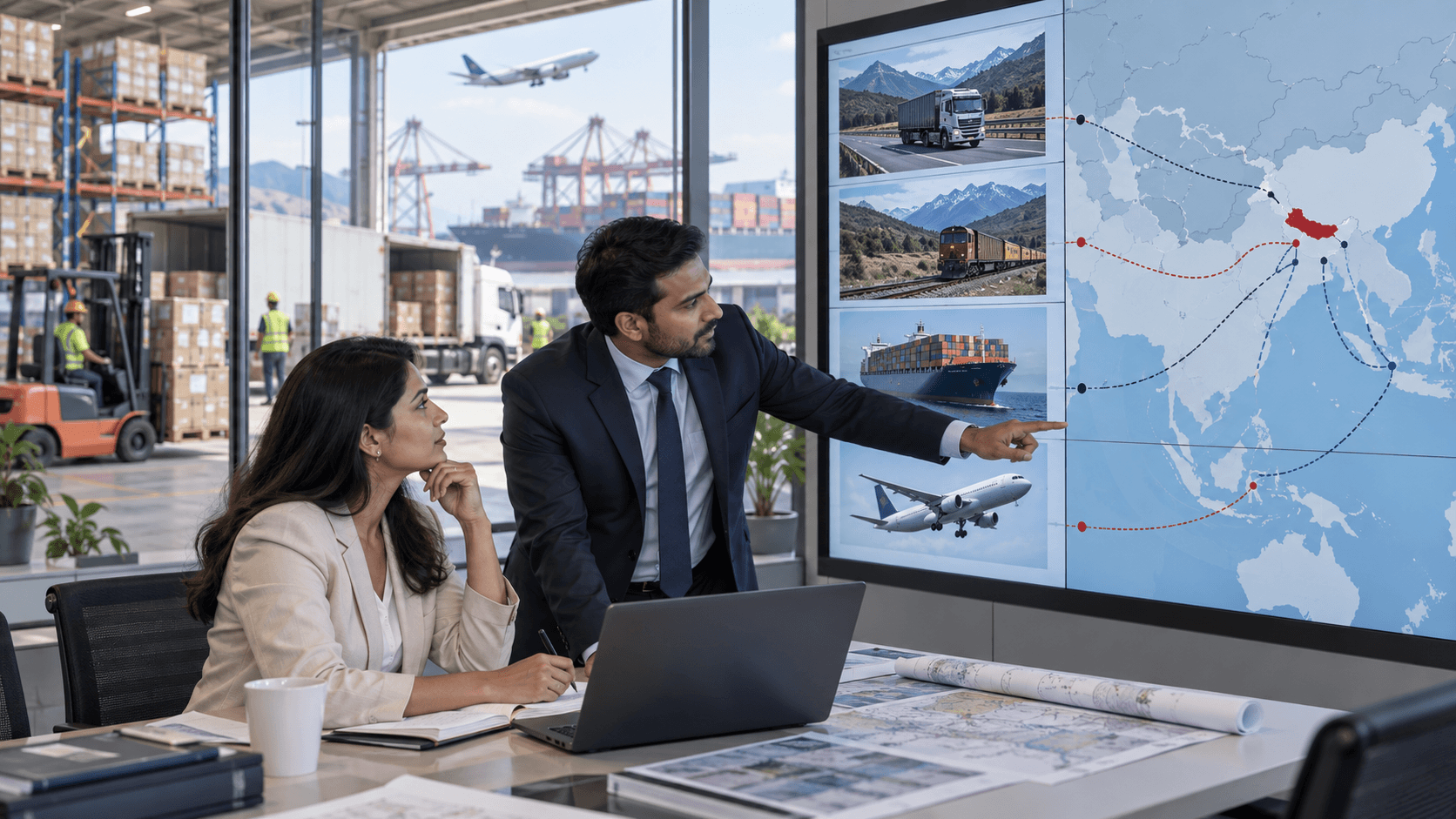
Price the complete route before you book
Sea Sky Cargo can review your shipment file, identify suitable gateways and prepare a route-specific quotation from South India to your Nepal destination.