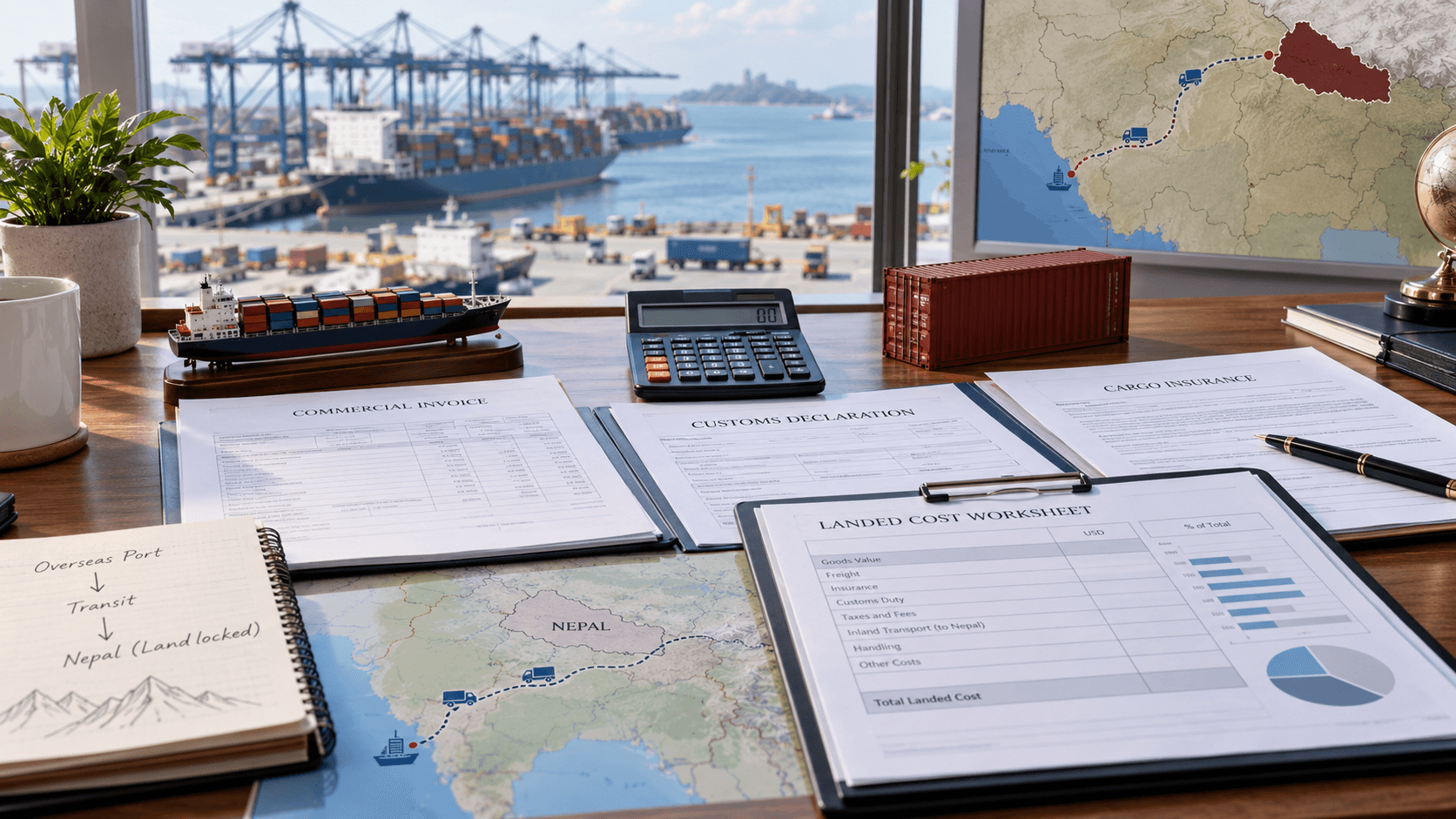
1. What Is Landed Cost?
Many importers in Nepal focus on the supplier’s product price, but the real cost of getting goods into the warehouse is higher. Landed cost is the total cost of bringing a product from the supplier to the location where it is ready for sale or use.
A useful landed-cost model can include:
- Product purchase price
- Origin pickup and export charges
- International freight by air, sea or road
- Cargo insurance
- Customs duty
- Excise duty and other import taxes where applicable
- VAT
- Port, terminal, ICD, CFS and handling charges
- Documentation and customs-agent fees
- Inland transport to the warehouse
- Bank, inspection, storage and other shipment-specific costs
Landed cost is broader than CIF. CIF is a customs and shipping value concept built from cost, insurance and freight. Landed cost starts with the relevant customs value and adds government assessments, logistics charges and delivery costs until the goods reach the chosen destination.
The scope must be written at the top of the worksheet. “Landed at Birgunj ICD,” “cleared at Kathmandu airport” and “delivered to the Kathmandu warehouse” are three different cost endpoints.

2. Why Landed Cost Matters for Nepal Importers
Knowing the full import cost in Nepal supports five decisions before cargo moves:
- Pricing: set a selling price from the actual cost per unit.
- Margin analysis: compare expected revenue with the complete import cost.
- Budgeting: prepare cash for freight, duty, VAT, clearance and delivery.
- Supplier comparison: compare two offers at the same delivery point and Incoterm.
- Mode selection: see whether a faster route still makes commercial sense after all charges are included.
A low product price can lose its advantage when freight, volumetric weight, tariff classification, permits or destination charges are added. Compare complete landed scenarios rather than supplier invoices alone.
VAT also needs a separate accounting view. VAT paid at import may be eligible for input-tax treatment for a properly registered taxable business, subject to Nepal law, valid documents and the business’s circumstances. It is still a cash requirement at clearance, so the worksheet should show both cash landed cost and net accounting cost instead of quietly removing it.

3. Prepare the Worksheet Before Calculating
Use one currency and one clear cost endpoint. For a customs estimate, convert foreign-currency amounts to Nepalese rupees using the exchange rate applicable to the customs declaration. Keep the supplier’s invoice currency and the conversion rate in separate cells so the calculation can be updated without rewriting every line. Collect these inputs: Use the same basis when comparing suppliers. An EXW quote and a CIF quote cannot be compared fairly until origin freight, insurance and destination costs are placed into the same worksheet.
| Input | What to record | Why it matters |
|---|---|---|
| Product and classification | Detailed description, material, use and proposed HS code | Duty, excise, VAT treatment and permits depend on the product |
| Commercial terms | Incoterm, invoice currency and included services | Prevents freight or insurance from being omitted or counted twice |
| Shipment data | Packages, gross/net weight, dimensions, CBM and container type | Drives freight and handling estimates |
| Customs inputs | Customs value, exchange rate, duty rate, excise and other applicable taxes | Builds the government-assessment layer |
| Destination costs | Port/airport/ICD, clearance, storage, delivery and unloading | Completes the cost to the chosen endpoint |
| Allocation key | Units, kilograms, CBM, selling value or another defensible basis | Determines cost per SKU or unit |

4. Step 1: Product Purchase Price
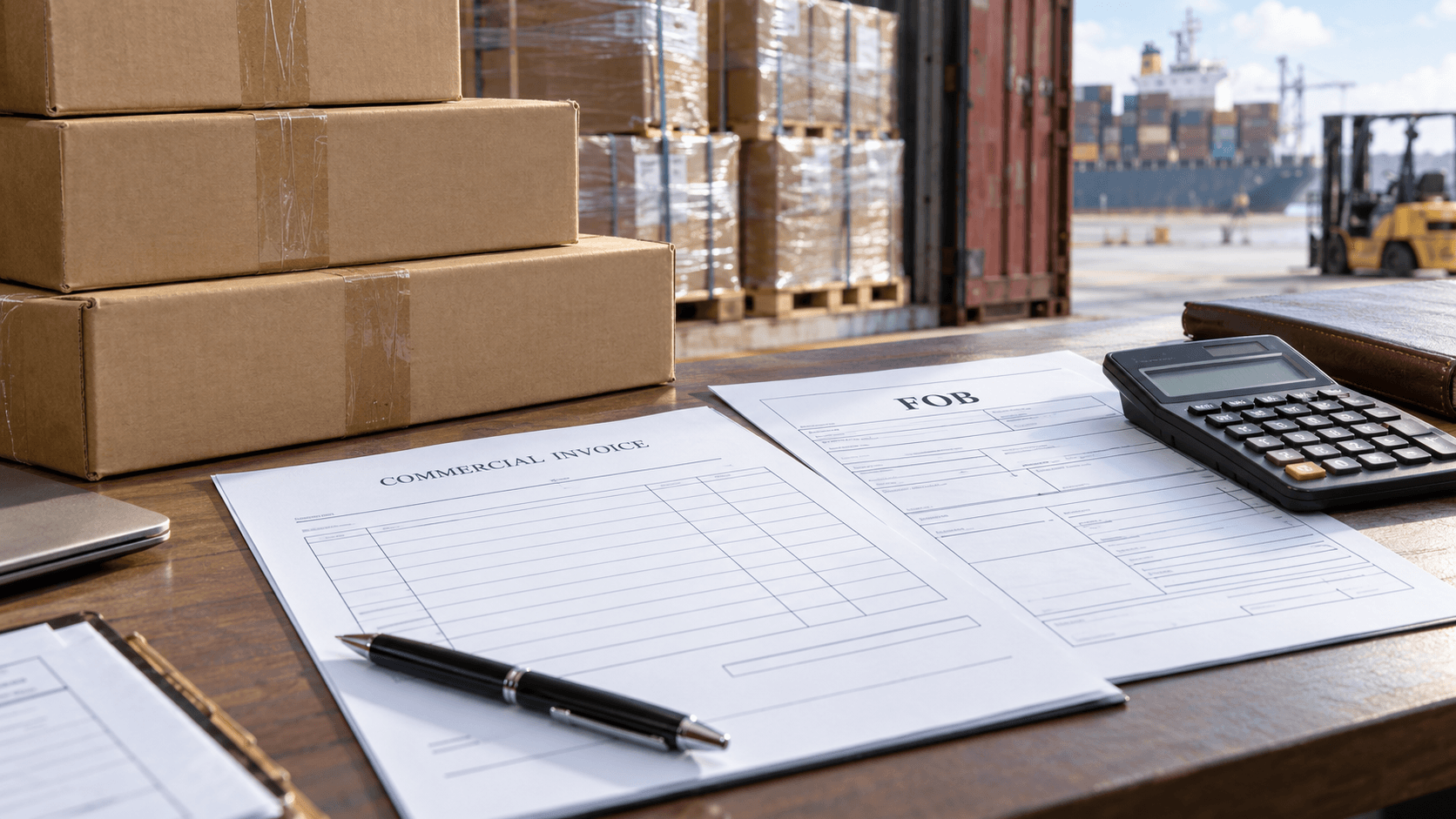
Start with the commercial price paid or payable for the goods and identify the Incoterm. EXW normally leaves origin pickup and export movement to the buyer. FOB normally includes delivery and export handling to the named port of shipment. CIF includes cost, insurance and freight to the named destination port, but it does not mean the goods are cleared and delivered in Nepal.
Record separately any tooling, assists, packing, commissions, discounts, royalties or buyer-supplied items that may affect customs valuation. A commercial invoice total is an input; it is not always the final customs value.
Illustrative Input
Product price, FOB Shanghai: USD 10,000. This number is hypothetical and is not a recommended value for any product.
5. Step 2: Freight to the Nepal Customs Point
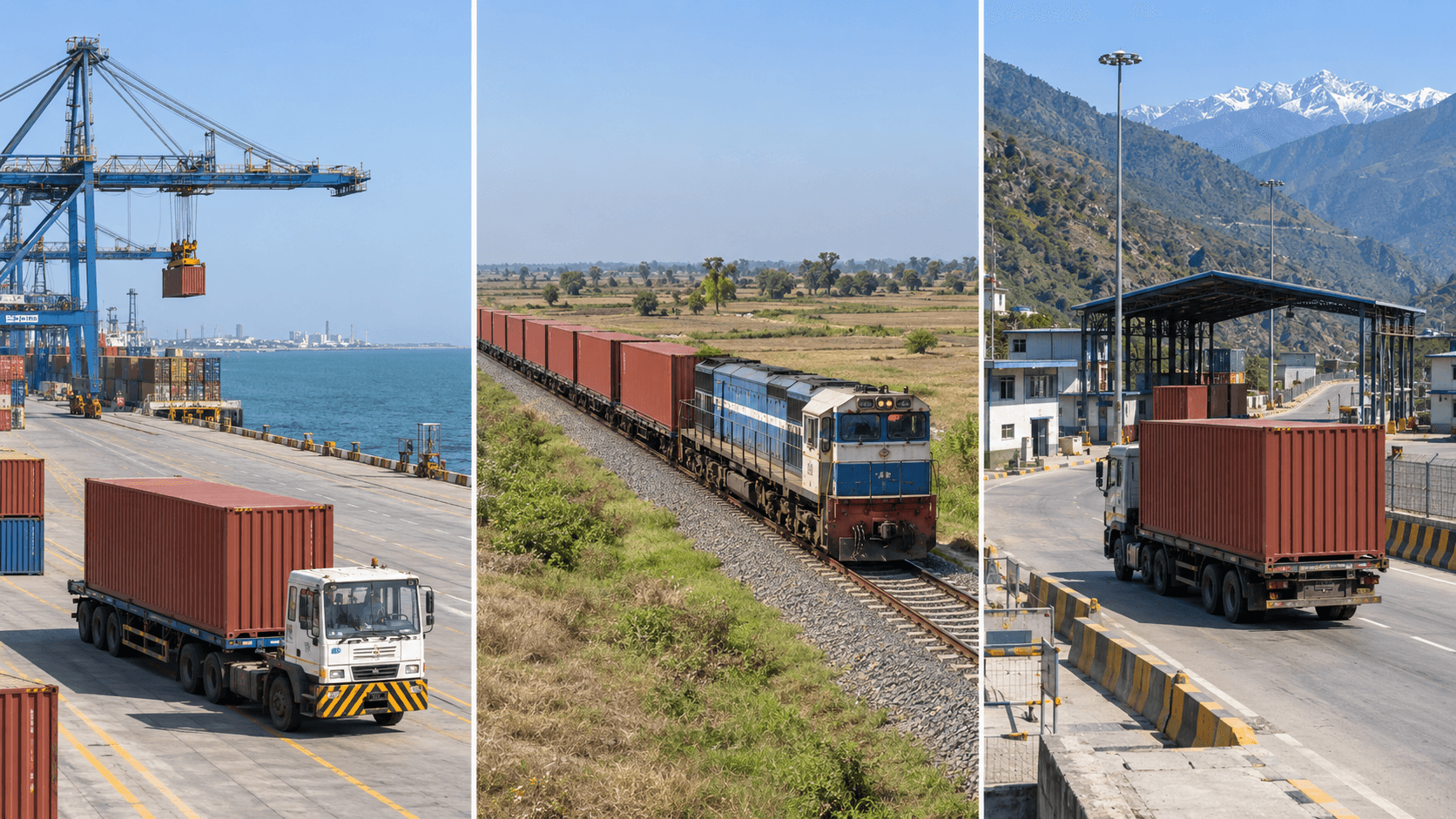
Add every transport leg not already included in the purchase term. Depending on the shipment, that may include origin pickup, export handling, ocean or air freight, Indian-port charges, rail or road transit and movement to the Nepal customs point.
- Sea freight may be quoted by container or by CBM/weight for LCL.
- Air freight is usually based on chargeable weight.
- Road freight may be quoted per vehicle, route, weight or volume.
- Multimodal cargo needs each handoff and included service written down.
Do not double-count freight already included in a CIF or delivered quotation. Also do not mistake a port-to-port rate for the full cost to Nepal. Use the port-to-door cargo guide to map the handoffs.
Illustrative Input
Freight and transit included in the customs-value estimate: USD 1,500.
6. Step 3: Insurance
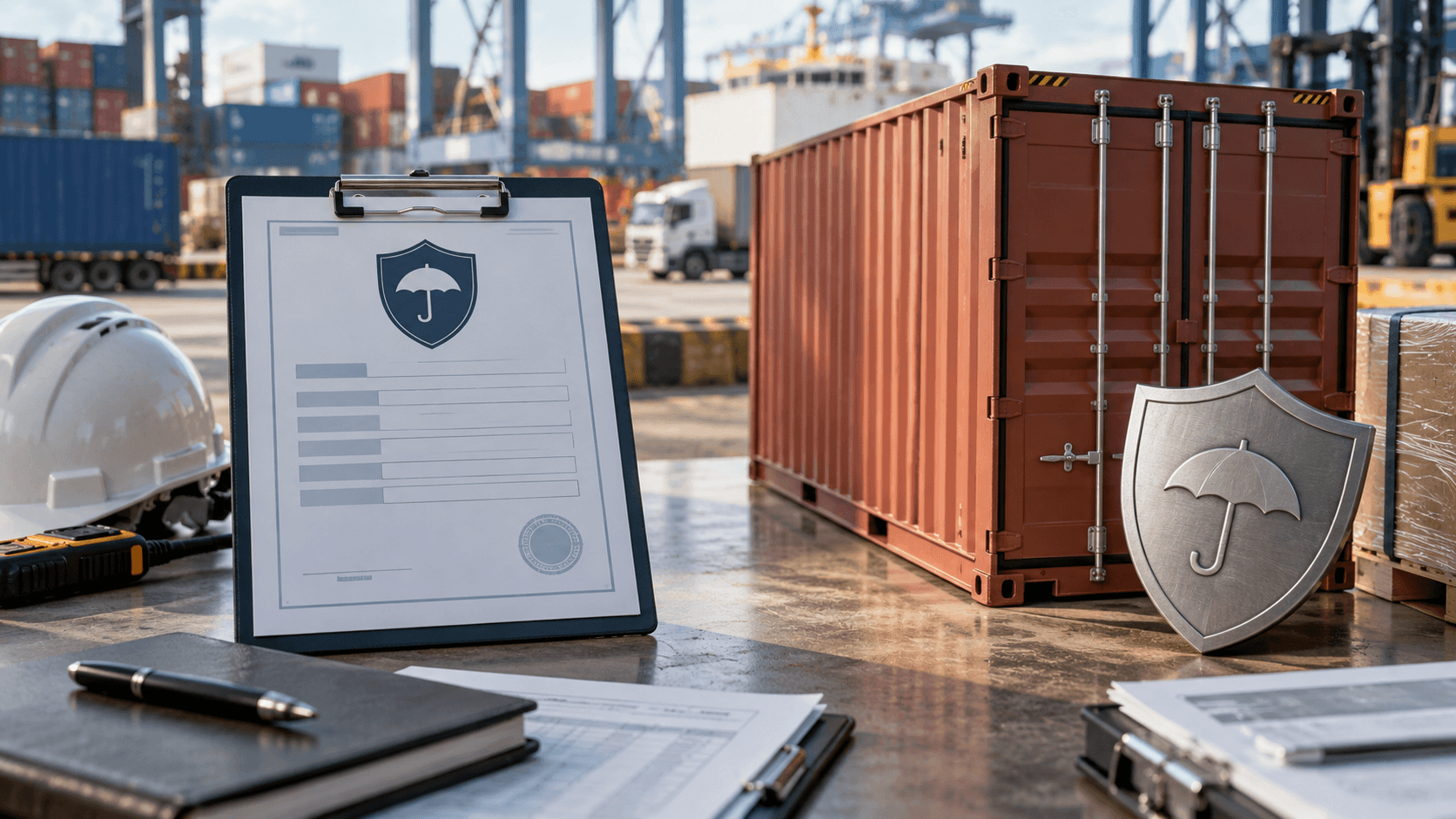
Add the cargo-insurance premium when it is purchased separately. If the supplier or carrier quote already includes insurance, record that fact and avoid adding it twice.
Insurance should match the cargo, route, insured value, exclusions and claims requirements. Carrier liability is limited and is not a substitute for checking cargo insurance.
Illustrative Input
Cargo insurance: USD 200.
7. Step 4: Calculate the Customs-Value Estimate
Simplified planning formula: product value + freight + insurance = estimated CIF/customs-value starting point.
Illustrative Calculation
USD 10,000 + USD 1,500 + USD 200 = USD 11,700.
For a worksheet-only exchange rate of NPR 140 per USD, the converted amount is NPR 1,638,000. The actual declaration must use the applicable customs exchange rate and valuation rules at the time of clearance.
Customs may make additions or apply valuation methods required by law. Treat the CIF figure as a planning estimate until the shipment-specific customs value is accepted. Keep evidence for freight, insurance, payment, discounts and the transaction terms.
8. Step 5: Calculate Customs Duty
Customs duty depends on the product’s classification and the tariff provisions in force for the fiscal year. Confirm the complete HS code, product description, unit, origin and any concession or specific-rate rule before using a percentage.
Planning formula for an ad valorem line: customs value × applicable duty rate = estimated customs duty.
Illustrative Calculation Only
Assumed duty rate: 15%. NPR 1,638,000 × 15% = NPR 245,700.
The 15% rate is an example, not the rate for a named product. Check the current Nepal Customs unified tariff, the Sea Sky tariff guide and the import-duty calculation guide, then confirm the shipment-specific position before dispatch.
Check the assumptions before cargo moves
Share the product, route, Incoterm, weight, dimensions and delivery point. Sea Sky Cargo can help build a shipment-specific planning worksheet.
9. Step 6: Calculate VAT on the Correct Base
Nepal’s general VAT rate is currently 13%, while exemptions and special treatment may apply to particular goods or transactions. For imports, the taxable value is broader than simply “CIF plus duty”: the Value Added Tax Act refers to the import value including transport, insurance, agent and other commissions, import duty, equalization duty and other import taxes where applicable.
Use the actual customs assessment sequence. A simplified worksheet can show:
VAT base = accepted import value + customs duty + excise/equalization duty + other import taxes or amounts included by law.
VAT = VAT base × applicable VAT rate.
Illustrative Calculation
Assume no excise, equalization duty or other import tax in this example. VAT base = NPR 1,638,000 + NPR 245,700 = NPR 1,883,700. VAT at 13% = NPR 244,881.
Check the Inland Revenue Department VAT guidance and section 12 of the Value Added Tax Act for the legal framework.

10. Step 7: Add Excise and Other Product-Specific Taxes
Some goods are subject to excise duty or another product-specific levy. The rate may be ad valorem, specific or structured through the current schedule. Vehicles, alcohol, tobacco and other listed products need a product-specific calculation.
Do not enter zero merely because excise was absent from a previous shipment. Confirm the current fiscal-year tariff against the complete HS code and product facts.

11. Steps 8 and 9: Add Port, ICD, Clearance and Delivery Costs
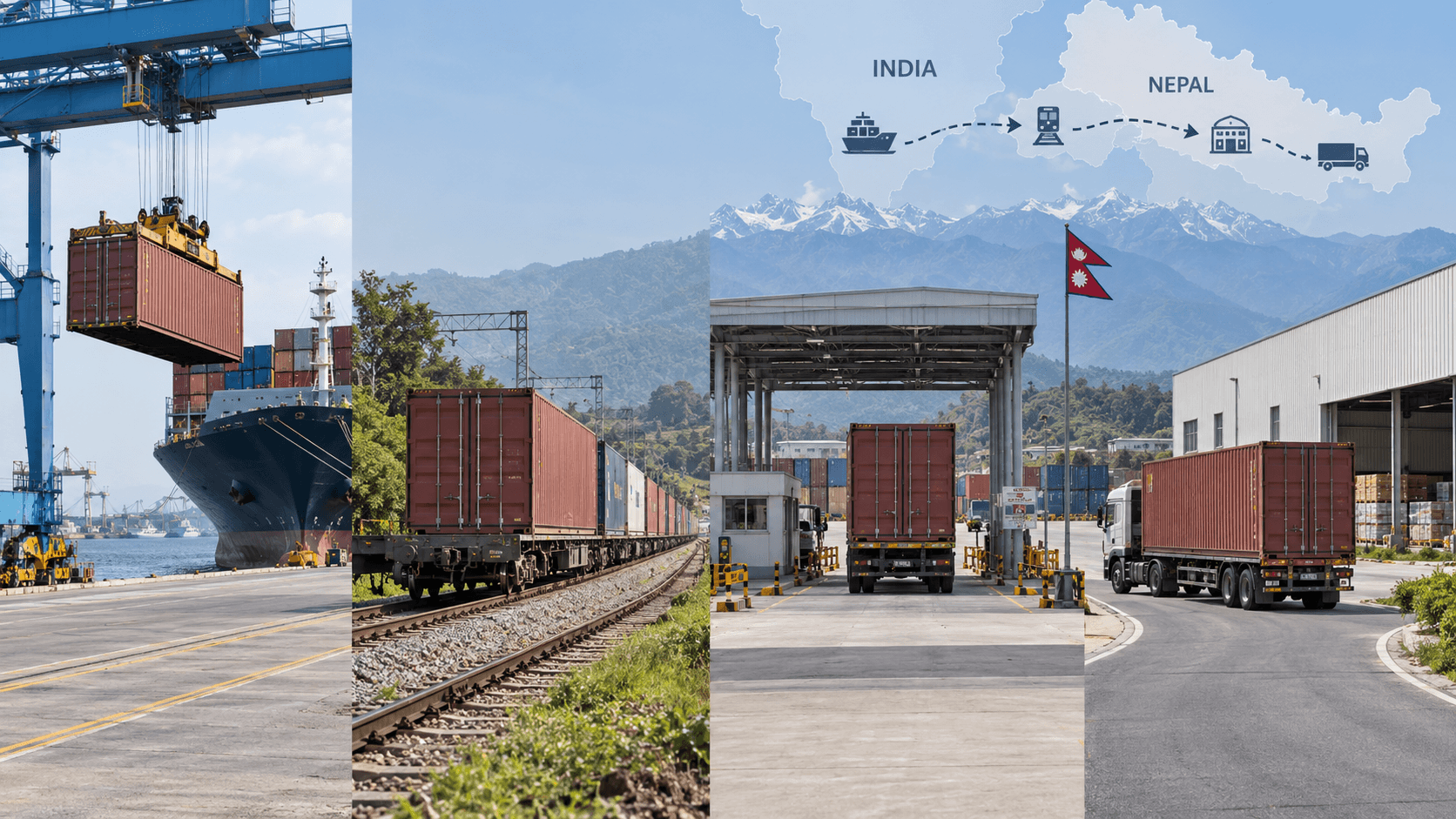
Government taxes do not complete the landed cost. Add logistics and service charges through the chosen endpoint: Port, terminal, airport, CFS or ICD charges Container handling, lifting, scanning and gate charges Delivery order, documentation and customs-agent fees Storage, demurrage or detention if incurred Rail, road or transshipment charges not already included Inland trucking to the warehouse Unloading, crane, forklift and site-access costs Bank fees, inspection, testing or permit charges where relevant Separate confirmed charges from allowances. If a line is uncertain, show a range and a contingency rather than hiding it. The demurrage and detention guide explains why free-time assumptions belong in the model. Example: Destination Costs Through the Kathmandu Warehouse The following figures demonstrate how to build the two destination-cost subtotals used in the worksheet. They are hypothetical planning inputs, not current tariffs or quotations. For an actual shipment, replace every row with a named provider’s current quotation or the charge supported by the applicable tariff. Add storage, demurrage or detention only when the scenario includes that exposure.
| Example cost line | Amount (NPR) | Subtotal group |
|---|---|---|
| Port, ICD and terminal handling | 42,000 | Clearance and handling |
| Customs-agent and documentation fees | 28,000 | Clearance and handling |
| Lifting, scanning and gate charges | 20,000 | Clearance and handling |
| Inspection, bank and administration allowance | 22,000 | Clearance and handling |
| Clearance and handling subtotal | 112,000 | Steps 8 and 9 |
| Birgunj-to-Kathmandu container trucking | 150,000 | Inland delivery |
| Unloading, forklift and site-access allowance | 18,000 | Inland delivery |
| Inland delivery subtotal | 168,000 | Steps 8 and 9 |
| Total example destination costs | 280,000 | NPR 112,000 + NPR 168,000 |
12. Step 10: Total Landed Cost and Landed Cost per Unit
Add every non-duplicated line through the selected endpoint. The simplified example below uses a hypothetical exchange rate, duty rate and logistics charges. It is a method demonstration, not a quotation or customs assessment. For 1,000 identical units: NPR 2,408,581 ÷ 1,000 = NPR 2,408.58 per unit. For mixed products, allocate shared freight and handling using a defensible driver such as chargeable weight, CBM, quantity, purchase value or a combination. Heavy and bulky SKUs should not receive the same allocation as small, high-value items without a reason. Keep a separate column for recoverable input VAT if relevant to the business. That preserves the cash-flow requirement while allowing the accounting team to model net inventory cost correctly.
| Component | Illustrative amount (NPR) | Calculation note |
|---|---|---|
| Product price | 1,400,000 | USD 10,000 × 140 |
| Freight and transit | 210,000 | USD 1,500 × 140 |
| Insurance | 28,000 | USD 200 × 140 |
| Estimated customs value | 1,638,000 | Product + freight + insurance |
| Customs duty | 245,700 | Illustrative 15% × customs value |
| Excise/other import tax | 0 | Assumed not applicable in this example |
| VAT | 244,881 | Illustrative 13% × NPR 1,883,700 VAT base |
| Port, ICD, clearance and handling | 112,000 | Illustrative allowance |
| Inland trucking | 168,000 | Illustrative allowance |
| Total cash landed cost | 2,408,581 | Through the stated warehouse endpoint |
13. Practical Ways to Reduce Landed Cost
- Compare complete air, sea, road and multimodal scenarios, including delivery and stockout risk.
- Optimize packaging to reduce airfreight volumetric weight or LCL CBM.
- Confirm the HS code and permit path before the supplier dispatches cargo.
- Consolidate suitable orders when the saving exceeds added inventory and waiting costs.
- Negotiate written free time and destination inclusions before booking.
- Review insurance against cargo value and route exposure.
- Prepare documents, duties, warehouse access and unloading before arrival.
- Track estimates against actual invoices and update the model after every shipment.
Cost reduction should not depend on understating value, using an unsupported HS code or removing required insurance and compliance steps. A clean model shows where commercial savings are possible without creating clearance risk.
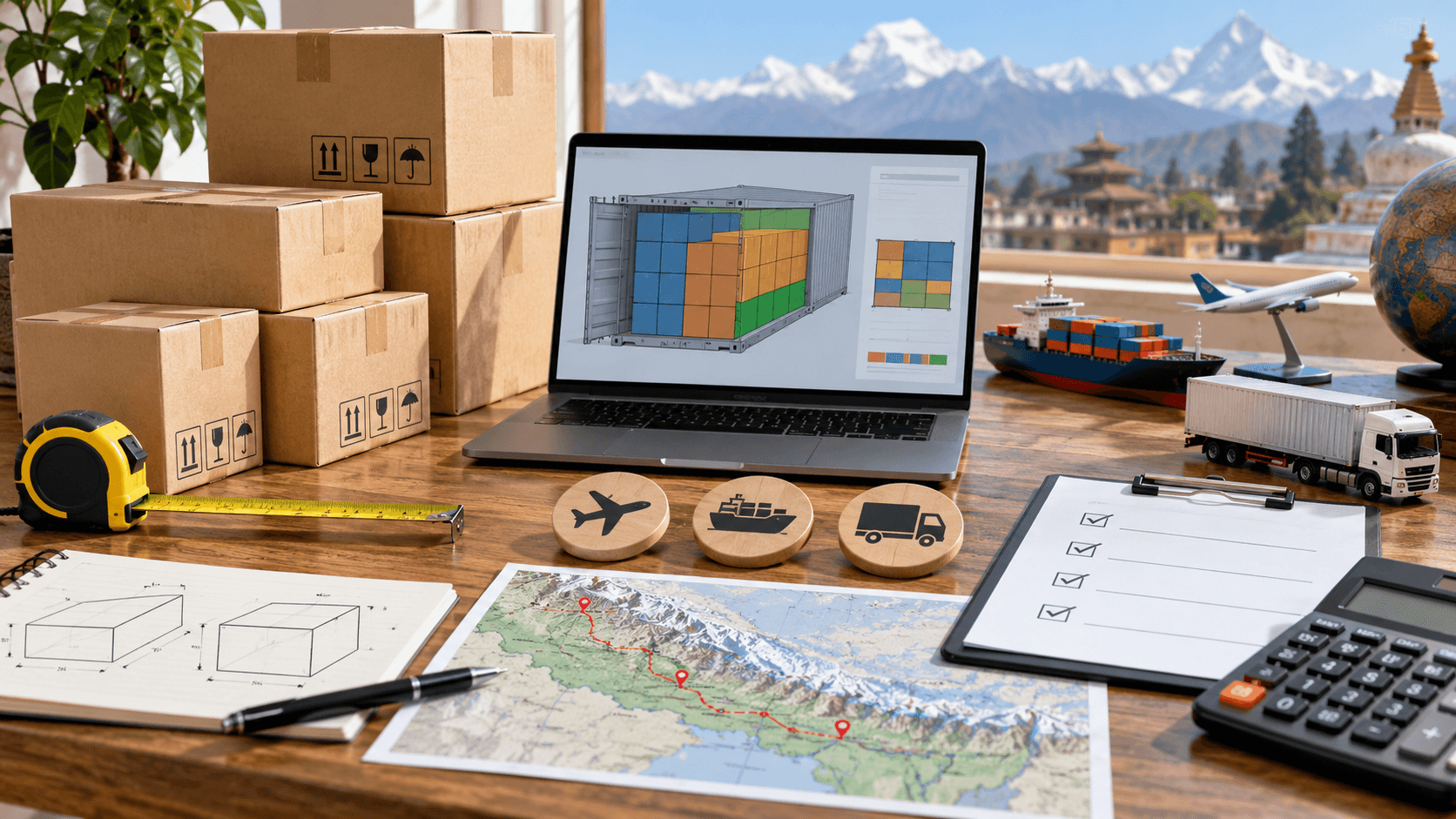
For volume-based freight, use the CBM calculation guide before requesting quotes.
14. Common Landed-Cost Calculation Mistakes
- Mixing EXW, FOB, CIF and delivered quotes without normalizing the scope.
- Using a bank or budgeting exchange rate instead of the rate applicable to the customs declaration.
- Treating the commercial invoice as the final accepted customs value.
- Applying a duty rate to a partial HS code or vague product description.
- Calculating VAT only on CIF when other amounts belong in the VAT base.
- Omitting excise, permit, inspection, bank or product-specific charges.
- Ignoring port, ICD, CFS, storage, handling and final delivery.
- Counting freight or insurance twice.
- Dividing mixed-SKU costs equally without a defensible allocation rule.
- Removing import VAT from the cash plan merely because it may later qualify as input tax.
Use the wrong HS code guide and the Nepal customs clearance guide to test the assumptions behind the worksheet.

15. How Sea Sky Cargo Helps with Landed-Cost Planning
Sea Sky Cargo can help importers build a shipment-specific cost model before booking. Depending on the agreed scope, support may include:
- Route and freight comparison
- Cargo measurements and mode selection
- Commercial-document review
- HS-code and tariff planning support
- Customs-clearance coordination
- Indian-port, ICD and inland-transport estimates
- Delivery and unloading planning
- A reusable estimated-versus-actual cost worksheet
Customs classification, valuation and assessment remain subject to the responsible authorities and the actual goods and documents. Freight, terminal and transport amounts also depend on the quotation and operating conditions. A useful worksheet therefore shows its sources, assumptions, effective dates and exclusions.
To request a useful review, share the detailed product description, proposed HS code, invoice, Incoterm, origin, destination, package count, weight, dimensions, value, preferred mode and delivery location.

Frequently Asked Questions
What is included in landed cost for a Nepal import? It normally includes the product price, applicable origin and international freight, insurance, customs duty, excise or other import taxes where applicable, VAT, clearance and handling, and delivery through the endpoint defined in the worksheet.
Is landed cost the same as CIF value? No. CIF covers cost, insurance and freight to the named destination under the relevant term. Landed cost adds duties, taxes, handling, clearance and delivery costs through the chosen endpoint.
Is Nepal import VAT always calculated only on CIF plus customs duty? No. Nepal’s VAT law describes a broader import taxable value that can include transport, insurance, commissions, import duty, equalization duty and other import taxes where applicable. Use the actual assessment sequence for the shipment.
What customs duty rate should I use? Use the rate and rule for the complete HS code in the current Nepal tariff, considering the product description, unit, origin and any applicable concession or specific-rate provision. The 15% figure in this article is only an illustration.
Which exchange rate should be used? For the customs estimate, use the exchange rate applicable to the declaration and keep it as a visible worksheet input. A commercial budget can also show a separate bank or payment rate for cash planning.
Should recoverable import VAT be included in landed cost? Show it in the cash landed cost because it is paid at import. If the business expects valid input-tax treatment, show that separately in the accounting view after professional confirmation.
How do I calculate landed cost per unit for mixed products? Allocate shared costs using a documented driver such as chargeable weight, CBM, quantity, purchase value or a combination that reflects how the cost arose.
Can Sea Sky Cargo prepare the final customs assessment? Sea Sky can help with planning, documents and clearance coordination. The final classification, customs value, tax assessment and release decisions belong to the responsible authorities.

Calculate your landed cost before you import
Sea Sky Cargo can review your product details, estimate freight and destination costs, and coordinate the customs and delivery plan for your shipment.
Related posts
1970-01-01
Sea + Air Freight: How SeaSky Helps Businesses Ship Smarter
2026-10-04
Demurrage vs Detention for Nepal Imports: Free Time, Indian Port Charges and How to Avoid Them

2026-10-01
Freight Forwarder vs Customs Clearing Agent in Nepal: Which Do You Need?

2026-09-28