LCL Shipping Explained: A Complete 2026 Guide for Importers and Exporters
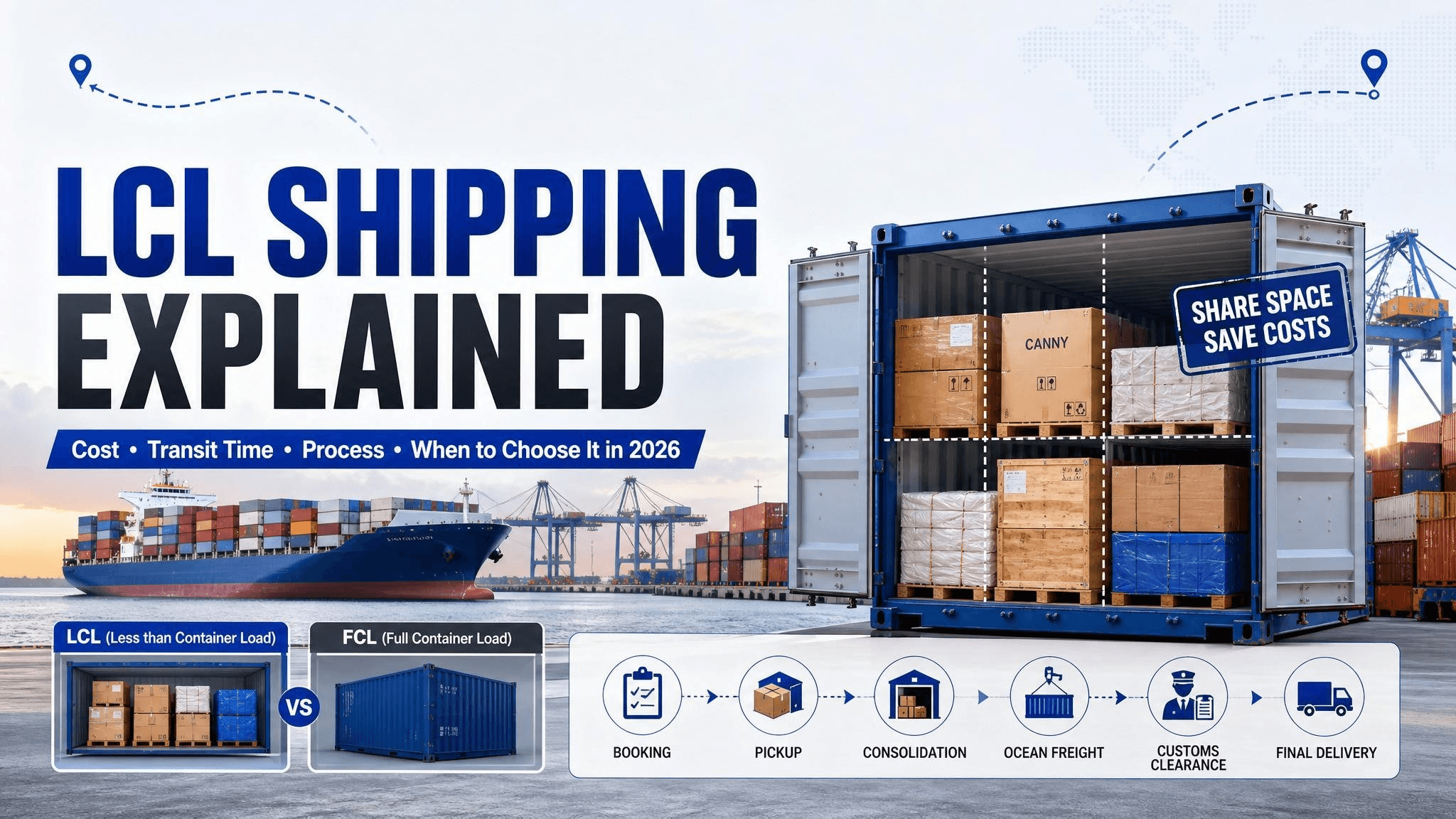
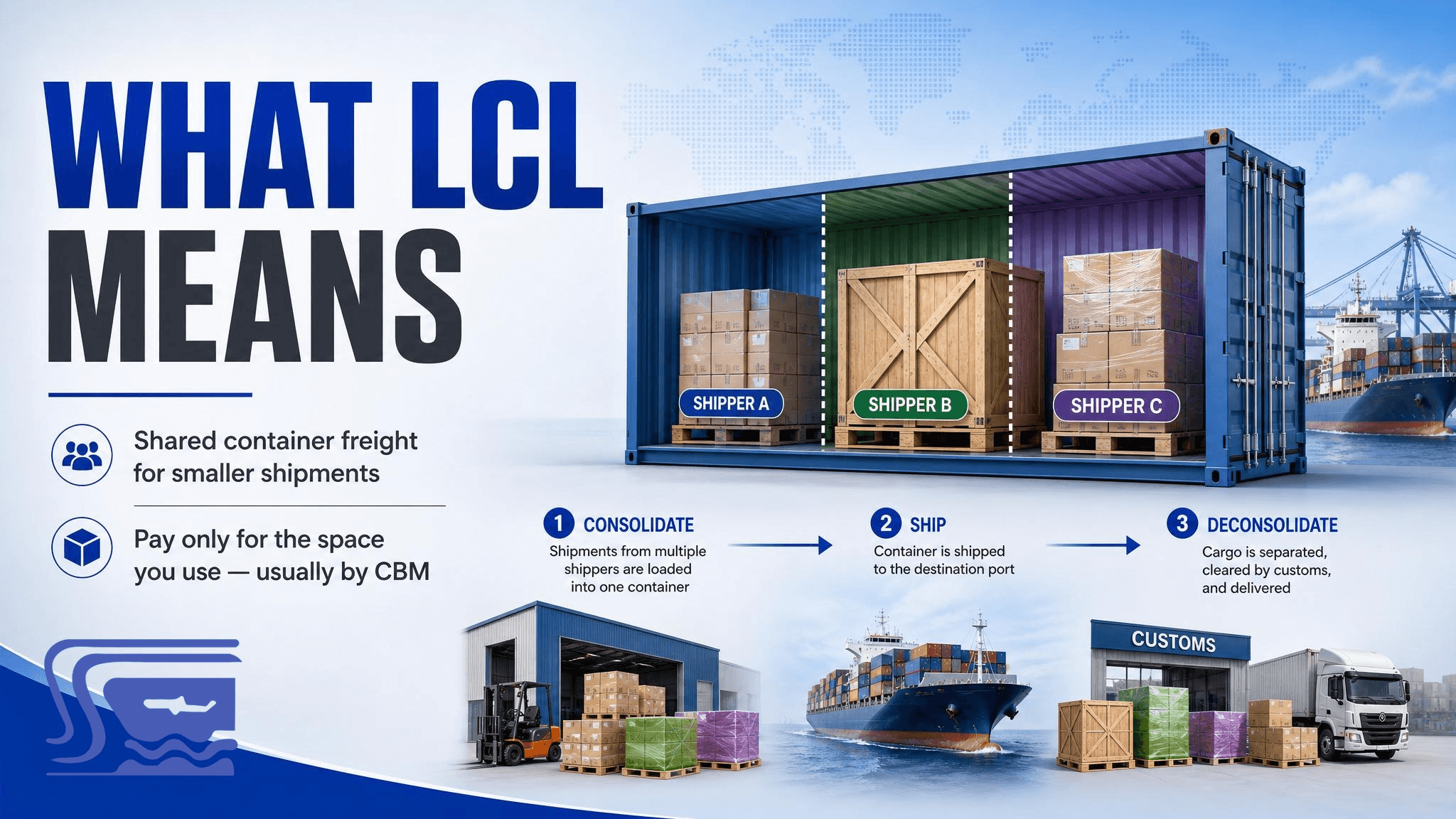
LCL shipping stands for Less than Container Load, which means your cargo shares container space with shipments from other customers instead of filling a whole container by itself. This makes LCL one of the most practical ocean-freight options for businesses that want to move smaller volumes without paying for a full 20-foot or 40-foot container.
For many importers and exporters, LCL is the best fit when shipment size is too big for air freight but too small for FCL. In 2026, it remains a cost-effective option for smaller commercial cargo, samples, replenishment stock, and mid-volume international trade.
What LCL means
In LCL shipping, a freight forwarder consolidates cargo from multiple shippers into one shared container at origin. At destination, that container is unpacked and each shipment is separated for customs clearance and final delivery.
Because the space is shared, the shipper pays only for the portion of the container their cargo uses, usually measured in CBM, or cubic meters. Many LCL services also apply a minimum charge of 1 CBM, even if the cargo volume is smaller than that.
The main appeal of LCL is flexibility. Instead of waiting until you have enough cargo to justify a full container, you can ship smaller quantities more often and manage cash flow more efficiently.
How LCL works
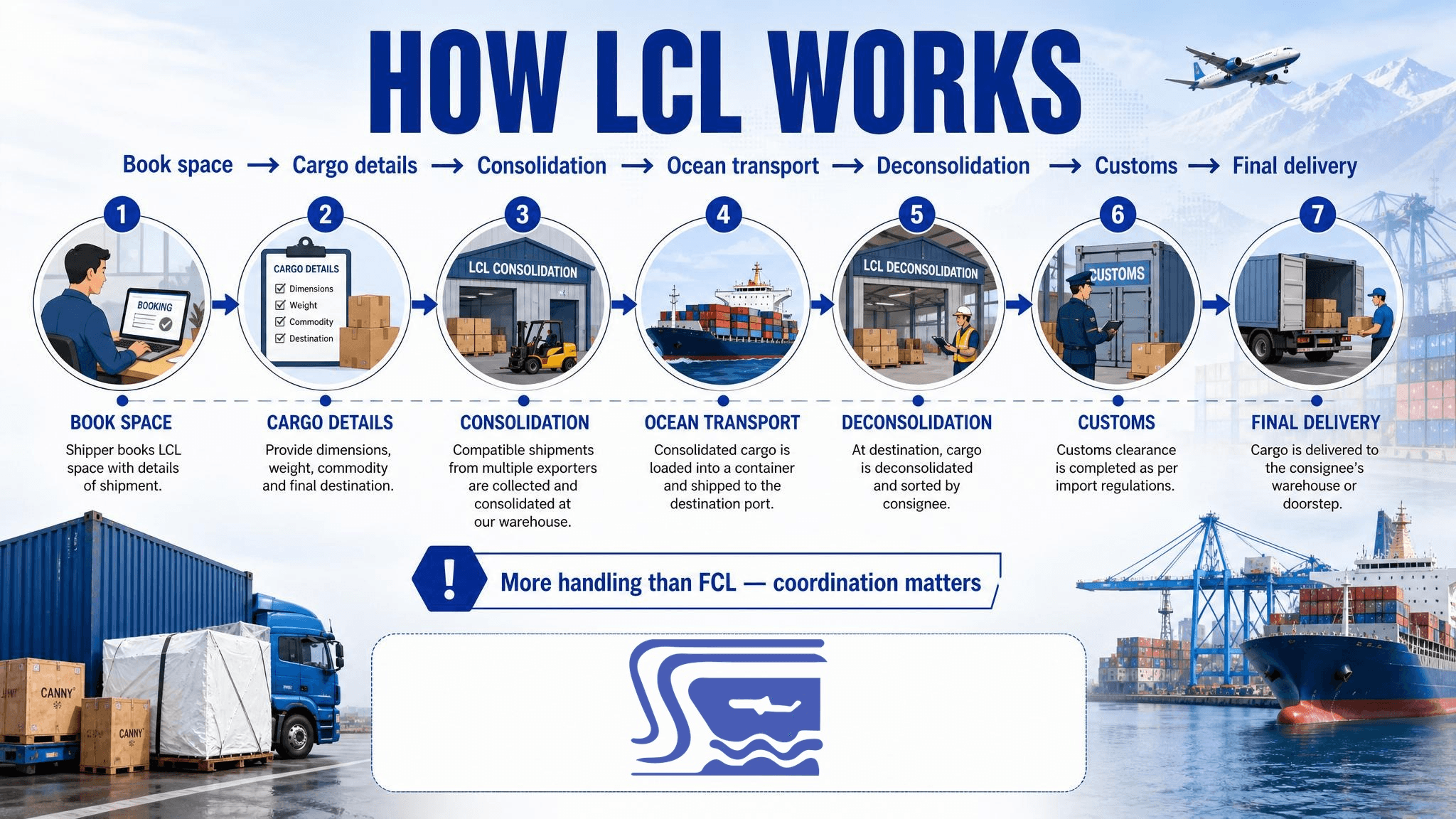
The LCL process usually starts when the shipper books space with a freight forwarder and provides cargo details such as dimensions, weight, commodity type, and destination. The forwarder then collects the cargo, consolidates it with compatible shipments, and loads everything into one container for ocean transport.
After the container reaches the destination port, it goes through unloading, deconsolidation, customs processing, and distribution to the final consignee. This extra handling is one of the main differences between LCL and FCL, and it explains why LCL can take longer even when the ocean voyage is the same.
The process is efficient, but it requires coordination. Since multiple shipments are grouped into one container, timing, labeling, packaging, and documentation need to be more precise than many first-time shippers expect.
Transit time
Transit time for LCL is usually longer than FCL because the shipment must be consolidated at origin and deconsolidated at destination. Several 2026 guides indicate that these steps can add about 5 to 10 extra days around the core ocean transit.
Typical sea-freight transit for LCL often falls around 25 to 40 days on many long-haul lanes, although the exact timing depends on the route, season, and port congestion. Door delivery can take longer once final handling and inland transport are added.
This means LCL is not usually the best option for urgent shipments. It works better when cost savings matter more than the fastest possible transit time
LCL vs FCL
The biggest difference between LCL and FCL is how container space is used. In FCL, one shipper controls the full container, while in LCL, multiple shippers share it. In simple terms, LCL saves money on smaller shipments, while FCL becomes more efficient when the volume is high enough or when the cargo needs tighter control.
| Factor | LCL | FCL |
|---|---|---|
| Container use | Shared with other shippers. | Full container for one shipper. |
| Pricing | Charged per CBM or W/M. | Charged per container. |
| Best volume | Usually under 15 CBM. | Usually above 13–15 CBM or when control matters more. |
| Transit time | Longer due to consolidation and deconsolidation. | Usually faster with fewer handling steps. |
| Handling risk | Higher because cargo is handled more often. | Lower because the shipment stays together. |
Best use cases
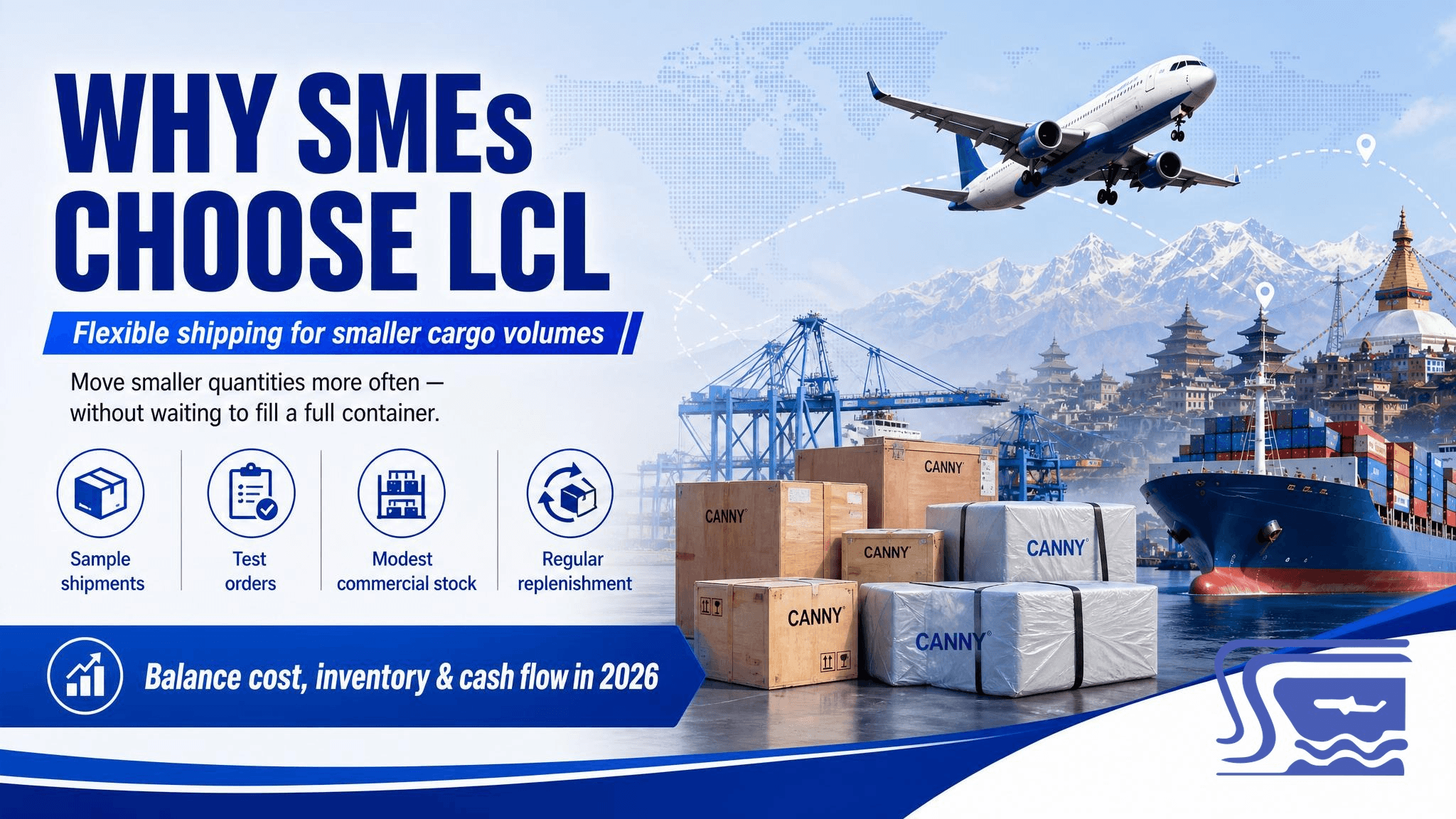
LCL is a strong choice for small and mid-size businesses, especially when they do not have enough cargo to fill a full container. It is commonly used for sample shipments, test orders, modest commercial stock, and regular replenishment cargo.
It also works well for businesses trying to keep inventory lean. Instead of waiting to accumulate a large order, the shipper can move smaller quantities more often and respond more quickly to actual demand.
That flexibility is one of the biggest reasons LCL remains popular in 2026. It helps businesses balance cost, inventory, and cash flow more carefully than all-or-nothing full-container shipping.
Risks and challenges
The tradeoff with LCL is that shared shipments involve more touchpoints. Consolidation, unpacking, relabeling, and multiple consignee handoffs create more exposure to delay, misrouting, or damage than a single-shipper container usually does.
Documentation also matters more than many shippers expect. Because several shipments are moving together, incorrect labels, weak packaging, or inconsistent paperwork can affect not just one cargo lot but the entire handling flow.
This is why many businesses rely on experienced freight forwarders for LCL cargo. Good coordination at origin and destination often makes the difference between efficient consolidation and expensive delay.
Conclusion
For Nepal-based shippers, LCL can be especially useful when export or import volume is not large enough for a full container. Sea Sky’s ocean-freight positioning includes LCL and FCL support as part of its broader multimodal and customs-coordination services, which is useful when cargo moves through India-linked gateways before reaching final overseas ports or Nepal delivery points.
That support matters because LCL shipping is not only about getting a low rate. The shipper also needs correct documentation, customs alignment, destination planning, and realistic expectations around timing and handling.
Contact SeaSky for hands-on customs clearance help and support with LCL booking, cargo planning, and ocean-freight coordination.
Get Quotes
Built for freight forwarders handling FCL, OOG, heavy or project cargo into Nepal and South Asia. Use it to check routes, documents, handoffs and risk points before quoting your client.