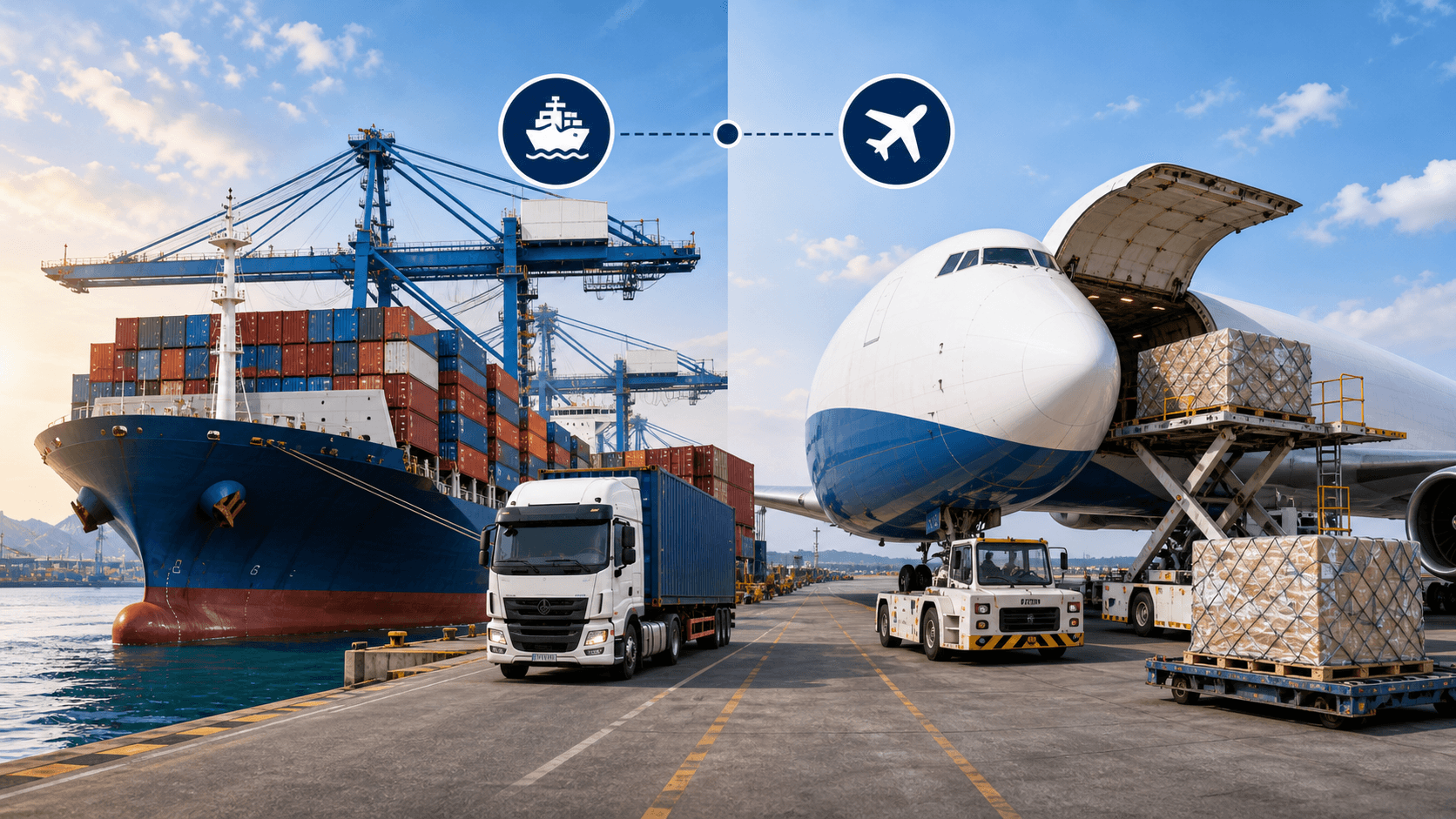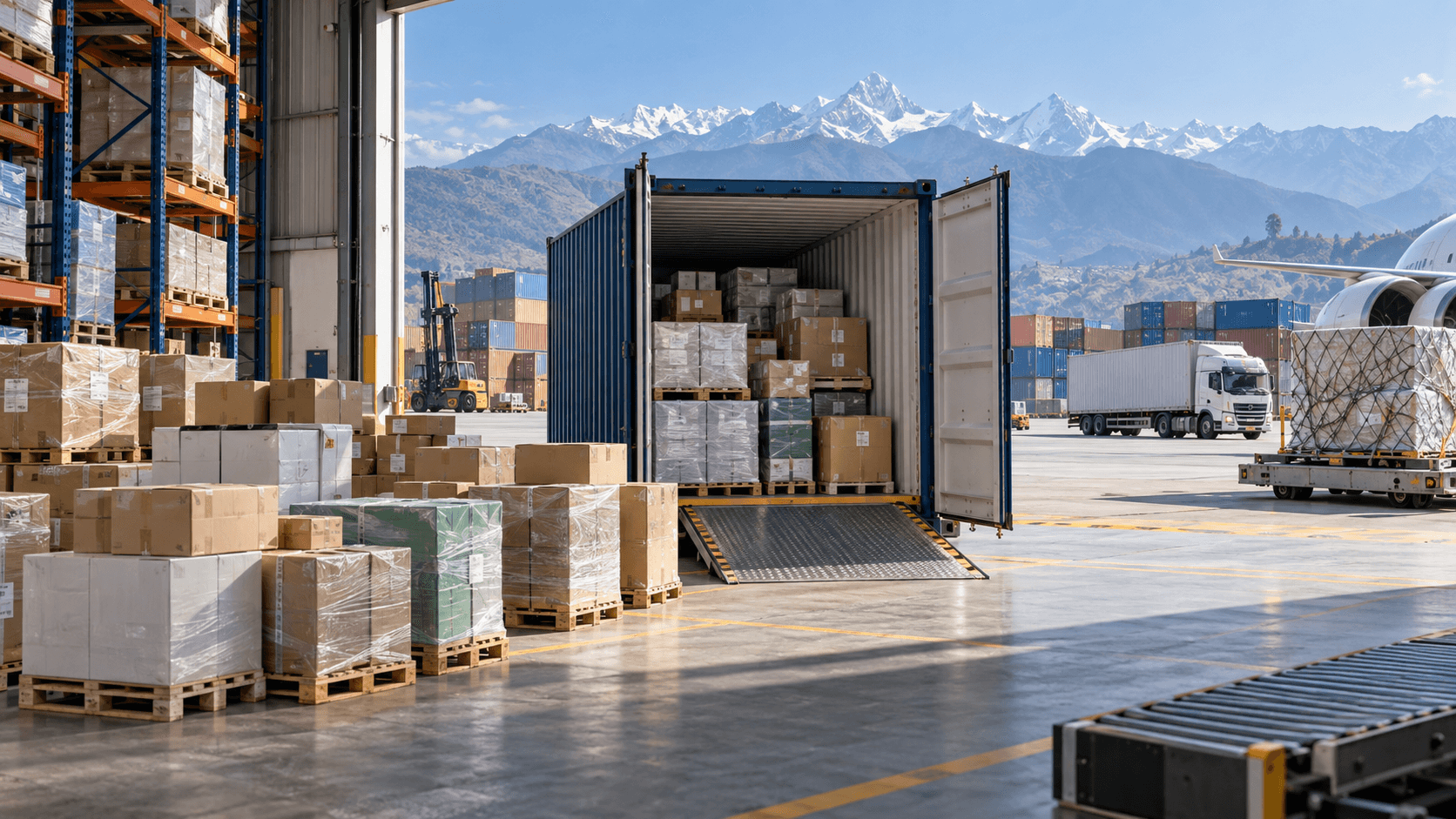
What LCL shipping actually means
LCL means Less than Container Load. Several shippers place separately documented consignments into one shared ocean container, so a business can move a few cartons, pallets or crates without paying for the whole 20-foot or 40-foot unit.
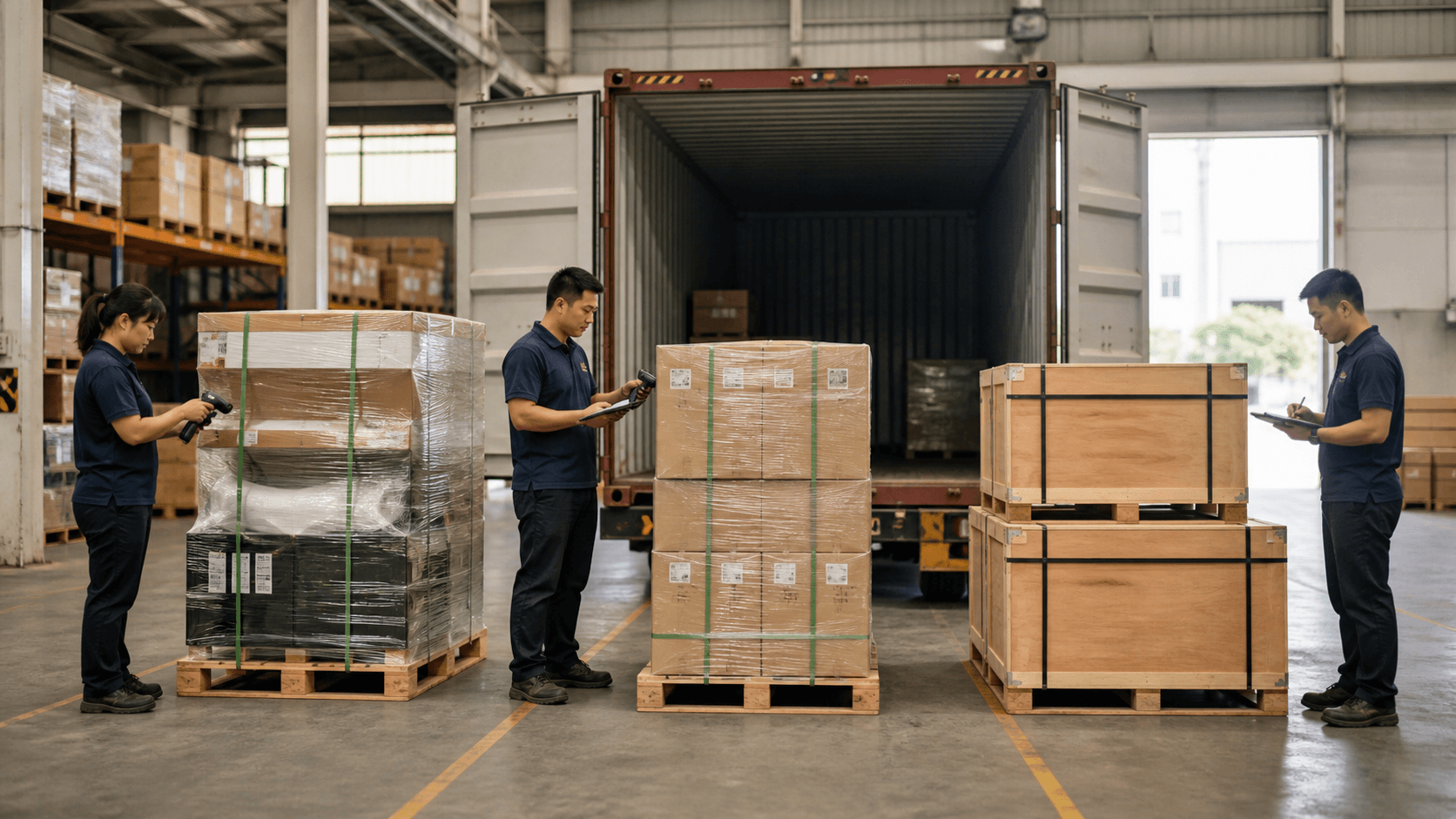
The freight forwarder or consolidator receives each shipment at a container freight station, checks the booking details, groups compatible cargo, loads the shared container and issues the shipping documents. At the destination side, the container is deconsolidated and each consignment follows its own release, customs and delivery process.
LCL is often useful when a shipment is too large or heavy for economical air freight but does not use enough container space to justify FCL. The Maersk LCL overview describes the same basic model: compatible boxes and pallets are consolidated with other businesses' cargo, and the shipper pays for the space used.
- Trial orders from a new overseas supplier
- Seasonal or demand-based retail stock
- Ecommerce inventory and packaged consumer goods
- Garments, footwear and accessories
- Spare parts and small machinery components
- Commercial cartons, crates or pallets
- Irregular orders that cannot wait for a full container
Shared space does not mean shared ownership or shared customs documents. Every consignment still needs a clear shipper, consignee, product description, value, package count, weight and supporting import file.
How a shared container moves from supplier to Nepal
A Nepal-bound LCL shipment has more operational handovers than a simple port-to-port description suggests. The exact route depends on origin, consolidator, shipping line, Indian gateway, transit arrangement and final customs point, so the forwarder should map the journey before cargo is delivered to the origin warehouse. Do not assume every LCL service deconsolidates at the same place or uses the same inland process. Ask which container freight station controls the cargo, who issues the delivery order, whether the shipment remains consolidated for part of the inland movement and where the importer receives the released packages. A connected sea freight service and port to door cargo service quote should identify these stages instead of showing only an ocean line-haul rate.
| Stage | What normally happens | Importer check |
|---|---|---|
| Supplier handover | Cargo is collected or delivered to the nominated origin CFS | Cut-off time, packing, labels and receiving address |
| Origin consolidation | Packages are measured, checked and loaded with compatible consignments | Confirmed CBM, weight and cargo acceptance |
| Ocean movement | Shared container moves on the booked vessel and any transshipment route | Sailing, transit estimate and tracking reference |
| Destination handling | Container is processed and cargo is deconsolidated at the nominated CFS or route point | Local charges, free time and release documents |
| Transit toward Nepal | Cargo moves under the applicable India-Nepal transit and inland arrangement | Mode, customs point, handling responsibility and expected milestones |
| Nepal clearance and delivery | The consignment is declared, assessed, released and delivered | Taxes, permits, vehicle, unloading and final address |
LCL vs FCL: choose by total cost and control
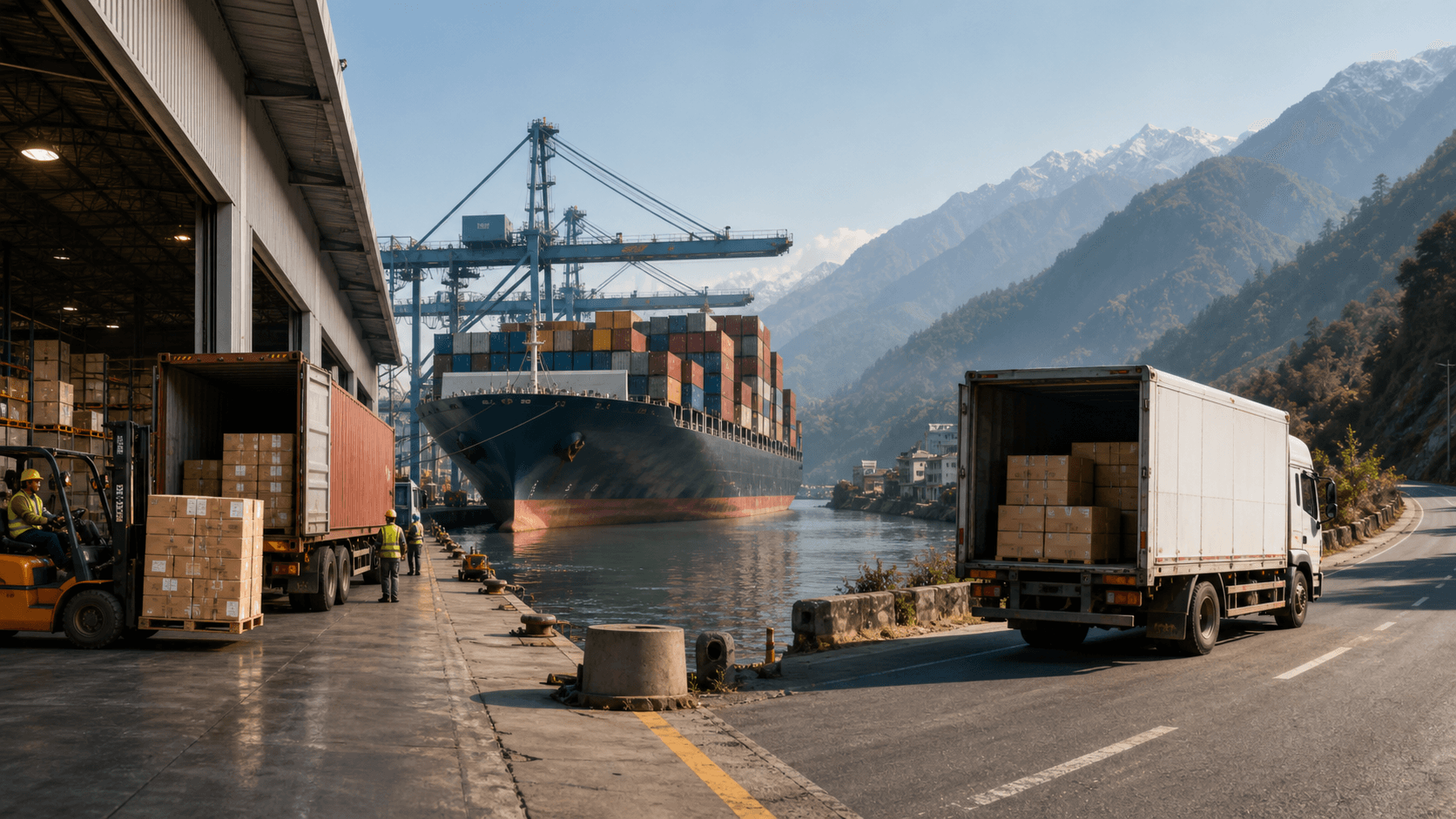
FCL means Full Container Load. One shipper books the complete container and normally controls how its cargo is packed inside. LCL combines multiple consignments and charges each shipper for its part of the shared movement. There is no universal CBM where FCL becomes cheaper. Carrier pricing, minimum LCL charges, cargo density, route, CFS fees, container availability and final delivery all affect the crossover. A carrier may describe LCL as suitable below a particular volume, but that is a service guideline rather than a rule for every Nepal shipment. Compare both options when the cargo begins to occupy a meaningful part of a container, contains fragile or non-stackable pieces, or has high destination handling costs. Sea Sky's detailed LCL vs FCL shipping guide explains the operational trade-offs.
| Decision factor | LCL | FCL |
|---|---|---|
| Typical fit | Small or irregular volume | Larger volume or dedicated-container need |
| Pricing basis | Chargeable volume/weight plus origin and destination handling | Container rate plus container and local charges |
| Handling | More CFS touches for consolidation and deconsolidation | Usually fewer cargo-level touches after stuffing |
| Container space | Shared with compatible consignments | Reserved for one shipper's cargo |
| Schedule dependency | Depends on consolidation cut-off and enough compatible cargo | Depends on container, vessel and terminal cut-offs |
| Security and control | Individual packages move within a shared unit | Dedicated seal and loading plan |
| Best comparison | Door-to-door landed cost and lead time | Door-to-door landed cost and lead time |

CBM and chargeable weight: calculate both
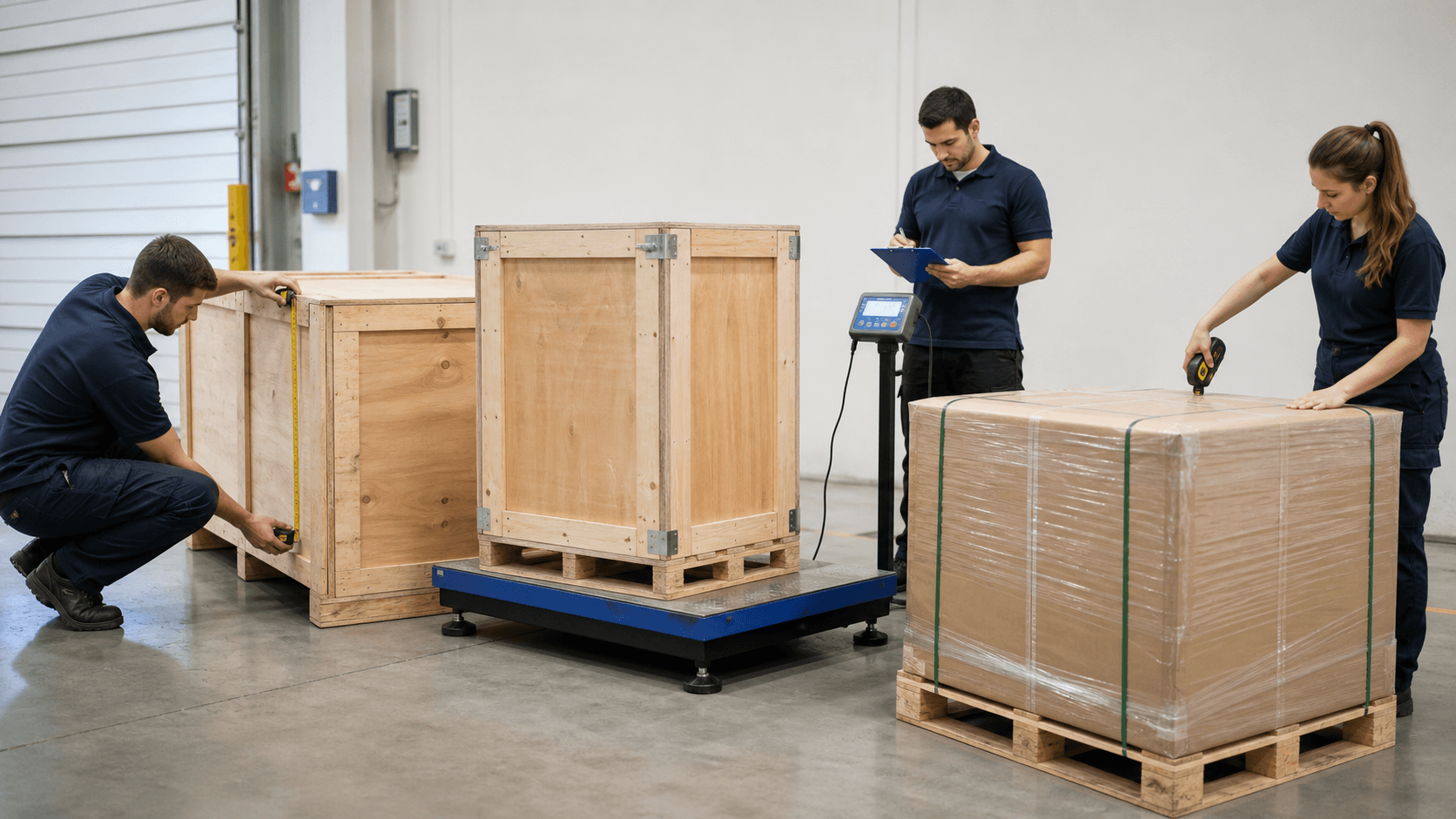
CBM means cubic metre and describes how much physical space the packed cargo occupies. Measure the final shipping package, not the loose product or the supplier's unconfirmed estimate. For one rectangular package, calculate length x width x height in metres. Multiply by the number of identical packages, then add packages of other sizes separately. Many LCL tariffs use weight or measurement, often written W/M or revenue ton. A common ocean comparison treats 1 CBM as equivalent to 1,000 kg and charges whichever produces the higher chargeable quantity. Minimum charges can also apply. Pickup, delivery and special handling may use different ratios or tariff rules, so the actual quotation controls.
| Package example | Calculation | Volume |
|---|---|---|
| One crate: 1.20 m x 0.80 m x 1.00 m | 1.20 x 0.80 x 1.00 | 0.96 CBM |
| Four cartons: 0.60 m x 0.50 m x 0.40 m each | 0.60 x 0.50 x 0.40 x 4 | 0.48 CBM |
| Combined shipment | 0.96 + 0.48 | 1.44 CBM |
The full LCL cost is more than the ocean rate
A low per-CBM ocean rate can be a small part of the final invoice. LCL has cargo-level handling at origin and destination because individual consignments must be received, consolidated, documented, separated and released. Ask whether every line is prepaid or collect and whether it is fixed, estimated or passed through at the prevailing tariff. Currency and exchange-rate assumptions also matter when one supplier quote is in USD, destination charges are billed in another currency and Nepal taxes are paid in NPR. The fairest comparison gives LCL, FCL and air freight the same origin, cargo-ready date, final Nepal address and customs assumptions. That turns a headline freight rate into an estimated landed-cost decision.
| Cost group | Items to request in writing |
|---|---|
| Origin | Pickup, CFS receiving, export handling, documentation, weighing, consolidation and export clearance |
| Ocean | Base freight, bunker or market surcharges, security and transshipment-related charges |
| Destination/CFS | Deconsolidation, destination handling, documentation, delivery order, storage and release fees |
| India-to-Nepal transit | Transit documents, inland vehicle or rail-linked movement, border/dry-port handling and route coordination |
| Nepal customs | Declaration, agent service, duty, VAT, excise or other applicable taxes and inspection costs |
| Final delivery | Vehicle, labour, unloading, restricted access, waiting and proof of delivery |
| Risk costs | Cargo insurance, repacking, storage, demurrage/detention exposure and delay contingency |

Documents and customs clearance for Nepal LCL cargo
Sharing a container does not combine the importers' customs declarations. Each consignment needs its own commercial and transport file. In a typical consolidation, the ocean carrier issues a master bill of lading for the consolidated movement and the consolidator or NVOCC issues a house bill for the individual shipment. The exact document structure must be confirmed with the forwarder and bank before dispatch. Nepal Customs uses the NECAS/ASYCUDA-based system for goods declarations, assessment and clearance. Customs can review the declared description, classification, value, permits and taxes even when the shipment is only one pallet. Small volume does not create a commercial-import exemption. Check the HS code for Nepal customs, permit position and estimated taxes before the consolidation cut-off. Sea Sky's customs clearance in Nepal service can coordinate the document file with the LCL route and release plan. Current government notices remain available through Nepal Customs.
| Document or data | What to verify |
|---|---|
| Commercial invoice | Buyer/seller, exact product, quantity, value, currency and Incoterm |
| Packing list | Package count, dimensions, net/gross weight, packing type and marks |
| House and master bill details | Shipper, consignee, notify party, ports/places, packages, weight and freight terms align |
| HS code support | Catalogue, composition, function, model and technical details support classification |
| Certificate or permit | Origin certificate, product approval or import recommendation is ready when required |
| Importer and agent file | PAN/VAT, banking documents, authorization and final delivery details are correct |
| Insurance evidence | Insured value, route, package count and claim beneficiary match the shipment |

Not enough cargo for a full container?
Sea Sky Cargo can compare LCL, FCL, air freight and road freight using your actual cargo size, weight, urgency, customs requirements and final Nepal delivery point.
When LCL can save money for a small importer
LCL creates value when it lets a business buy the quantity it can actually sell instead of overstocking merely to fill a container. Smaller, more frequent orders can reduce inventory cash, warehouse space and product-obsolescence exposure even when LCL costs more per CBM than FCL.
- The order is a few cartons, pallets or crates rather than most of a container
- Air freight is too expensive for the cargo weight and urgency
- The business is testing a supplier, product or market
- Demand is seasonal and a full-container order would create excess stock
- The cargo is standard, stackable and accepted by the consolidator
- The importer can work with the consolidation and deconsolidation schedule
- A complete origin-to-Nepal quote is available before purchase confirmation
LCL may stop saving money when the shipment attracts high minimum and handling charges, uses much of a container, is very dense, needs non-stackable space or requires special handling. A small reduction in ocean freight can also disappear if the cargo waits at a CFS or misses a document cut-off.
Compare inventory cost as well as transport cost. The best choice may be the mode that keeps stock available without tying up cash, even if it is not the lowest freight line on one shipment.

Packing, shared handling and cargo insurance
LCL cargo is handled as individual packages at both ends of the sea journey. It may move by forklift, pallet jack, truck and CFS equipment before and after sharing the container. Packaging must protect the goods from stacking pressure, vibration, moisture, puncture and repeated handling.
- Use export-quality cartons or crates sized for the actual product weight
- Palletise loose cartons when the route and receiving facilities allow it
- Use edge protection, strapping and stretch wrap without hiding package marks
- Keep the base strong enough for forklift and pallet-jack handling
- Add moisture barriers, desiccants or corrosion protection where appropriate
- Mark fragile, upright, non-stackable or centre-of-gravity requirements clearly
- Record package condition, dimensions, weight and seal/strap details before handover
Cargo compatibility is a consolidator decision. Food, chemicals, liquids, odorous goods, dangerous goods, high-value cargo, non-stackable pieces and temperature-sensitive products may need special acceptance or another service. Do not deliver restricted cargo to the CFS before written approval.
Insurance should cover the real route and package-level risks, including origin handling, sea transit, Indian-port/CFS handling and inland movement to Nepal where required. Carrier liability is not a substitute for cargo insurance and may be limited by the transport contract.

Cargo that fits LCL and cargo that needs another plan
LCL works best for manageable, properly packed general cargo that can share a dry container safely. Suitability is determined by more than commodity name: package dimensions, weight per piece, stackability, value, regulation and handling equipment all matter. Do not split a cargo into unsafe packages only to meet a standard LCL limit. If one crate is too heavy for CFS equipment or cannot be stacked, compare a dedicated container, flat rack, air freight or specialised cargo route.
| Cargo profile | LCL starting point | What to check |
|---|---|---|
| Retail cartons, garments and household goods | Often suitable | Strong packing, moisture protection and clear marks |
| Palletised spare parts or packaged components | Often suitable | Pallet dimensions, weight, stackability and forklift access |
| Small crated machinery | May be suitable | Point load, lifting points, value and non-stackable surcharge |
| Fragile or high-value goods | Needs case-by-case review | Crating, security, insurance and handling reduction |
| Dangerous goods or regulated chemicals | Only with written route/carrier acceptance | Classification, SDS, packing, labels and segregation |
| Temperature-sensitive or perishable cargo | Standard dry LCL usually unsuitable | Validated temperature-controlled alternative |
| Oversized, very heavy or awkward cargo | May need breakbulk, flat rack or project solution | CFS limits, equipment, route and lifting plan |
Transit time and delay planning for shared containers
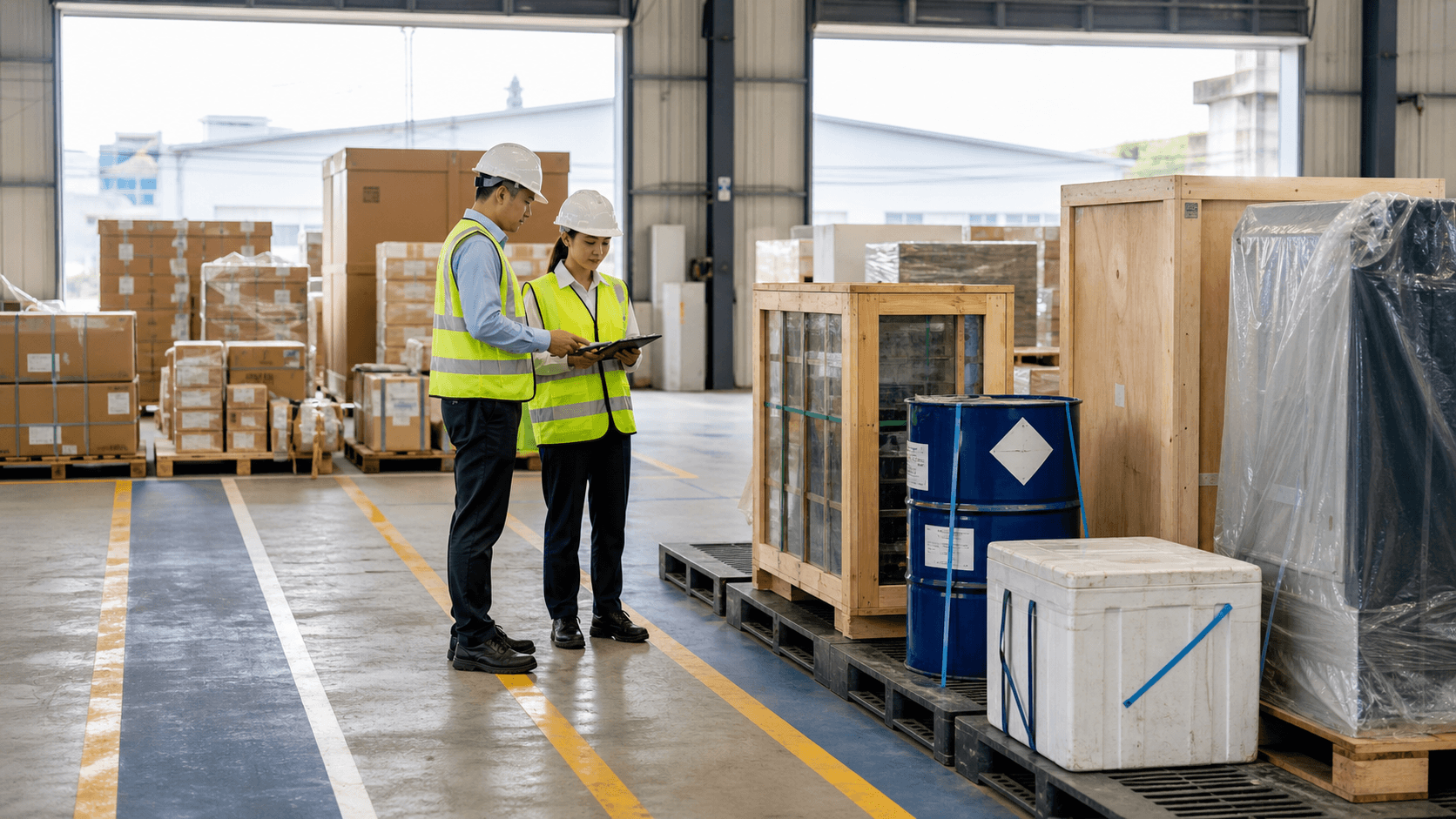
LCL is normally slower and less direct than an equivalent FCL movement because the shipment must meet CFS cut-offs, wait for consolidation, follow the selected sailing and pass through deconsolidation before individual release. Less common routes may also use a consolidation hub. Ask for a range rather than treating an estimated transit time as a guaranteed delivery date. The business should also know which date starts the estimate: supplier pickup, CFS receipt, vessel departure, Indian-port arrival or final Nepal delivery. Use air freight when the commercial cost of delay is greater than the freight saving. Urgent spare parts, launch inventory, high-value low-weight goods and time-sensitive products can justify the faster mode even when LCL is available.
| Time component | Possible delay cause | Planning action |
|---|---|---|
| Origin receiving | Late supplier delivery, incorrect labels or booking mismatch | Confirm cargo-ready date and CFS cut-off |
| Consolidation | Cargo misses planned container or needs repacking | Build buffer before vessel cut-off |
| Ocean/transshipment | Schedule change, rollover or missed connection | Review route and tracking milestones |
| Deconsolidation | Container availability, CFS queue or document hold | Prepare release documents before arrival |
| Transit to Nepal | Route, border, vehicle, rail or transit-document issue | Confirm responsible partner and milestone plan |
| Nepal customs | Classification, valuation, permit or inspection query | Review the import file before shipment |

LCL booking checklist and Sea Sky Cargo support
A useful LCL quotation begins with accurate cargo information. A request that says only "five cartons from China" cannot reveal the chargeable basis, CFS acceptance, customs risk or final delivery cost.
- Supplier pickup address or nominated origin CFS
- Exact product description, material, use and HS-code information
- Package count and packing type
- Length, width and height of every package
- Gross weight per package and total gross weight
- Stackable or non-stackable status and handling restrictions
- Cargo-ready date and required delivery date
- Commercial invoice value and selected Incoterm
- Permit, dangerous-goods or special-handling status
- Nepal customs point and complete final delivery address
- Loading/unloading access and equipment requirements
- Requested insurance scope
Sea Sky Cargo can use these details to compare LCL with FCL, air and relevant road/multimodal options; confirm the consolidation and Indian-port sequence; review customs documents; and coordinate final delivery under the agreed scope.
For first-time importers, start the international freight booking conversation before paying the supplier or delivering cargo to a warehouse. Early review preserves more options for packing, Incoterms, permits, insurance and route selection.

Frequently asked questions
What is LCL shipping? Less than Container Load shipping combines separately documented cargo from multiple shippers in one shared container. Each shipper pays for the chargeable part of the service rather than the full container.
Can Nepal importers use LCL sea freight? Yes, when a suitable consolidation and India-to-Nepal transit service exists for the origin, cargo and final destination. Confirm the complete route and deconsolidation point before booking.
How is LCL freight calculated? Quotations commonly use cargo volume, weight or W/M chargeable measurement, plus minimums, CFS handling, documentation, surcharges, inland movement, customs and delivery. The specific tariff and quote control.
How do I calculate CBM? Multiply the packed length, width and height in metres for each package, then multiply by quantity and add all package groups. Use the final export packaging dimensions.
Is LCL always cheaper than FCL? No. LCL can be economical for small volume, but FCL may be better as volume, density, handling charges, non-stackable space or security needs increase. Compare door-to-door cost and lead time.
Can several suppliers be combined into one LCL shipment? A forwarder may offer buyer's consolidation or multi-supplier coordination, but it must be planned in advance. Supplier locations, cargo-ready dates, documents and compatibility must align.
Does LCL take longer than FCL? Often yes, because cargo must be received, consolidated and deconsolidated. The difference depends on route, frequency, hub connections, cut-offs and document readiness.
Which documents are required for Nepal LCL cargo? Common documents include the commercial invoice, packing list, house/master bill details, HS-code support, importer registration, banking documents, origin certificate, insurance and any required permit or authorization.
Is LCL suitable for fragile or high-value cargo? It can be accepted in some cases, but the importer should compare stronger packing, insurance, security and lower-handling alternatives such as FCL or air freight.
Can Sea Sky Cargo arrange LCL delivery in Nepal? Sea Sky can review the route, coordinate the agreed forwarding and customs scope, and arrange final delivery based on the cargo, origin and destination details.

Price the full journey before you book
Share your supplier location, package count, dimensions, gross weight and Nepal delivery address. Sea Sky Cargo can review the LCL route, handling, customs documents and estimated landed cost.