Introduction
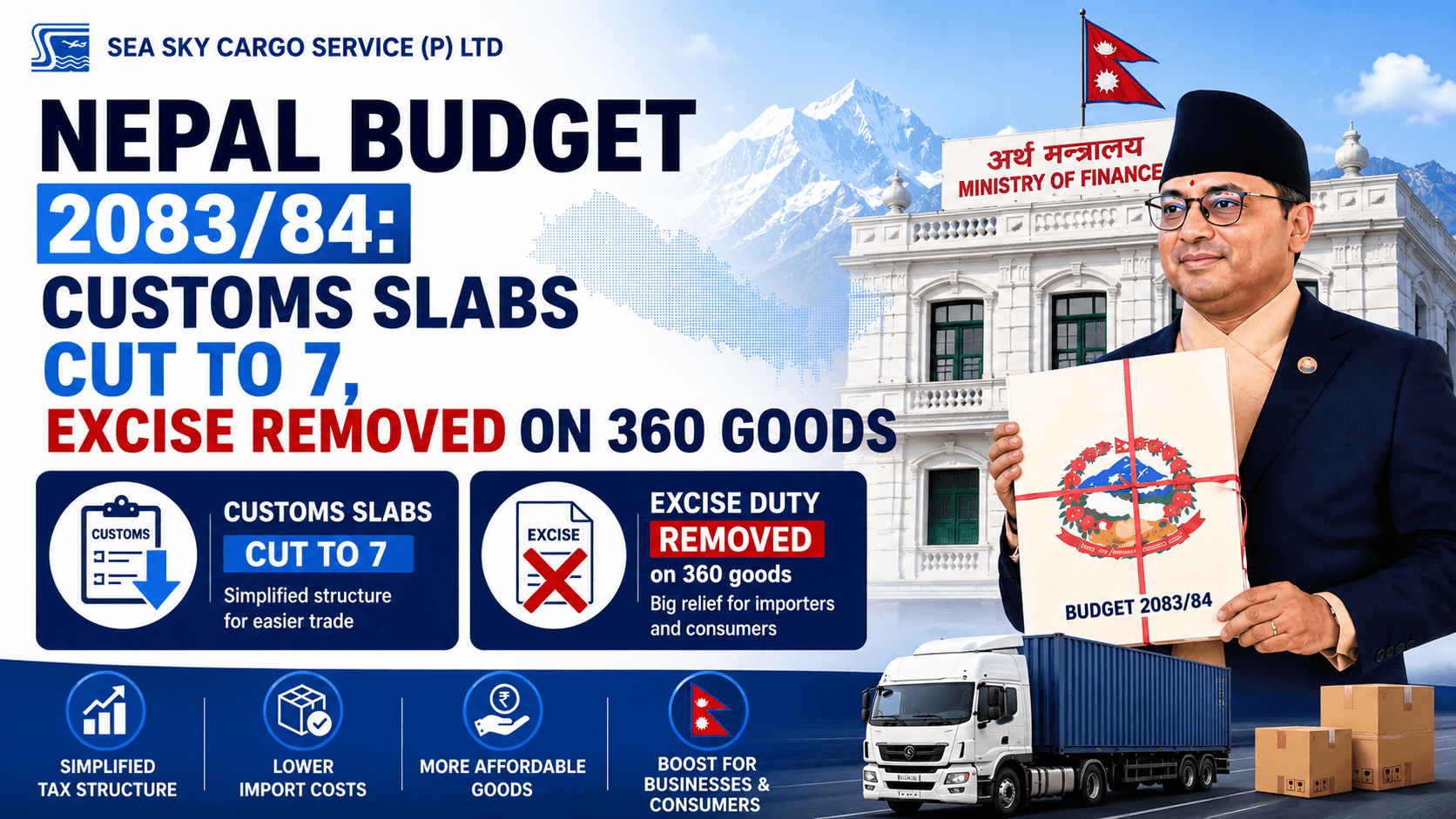
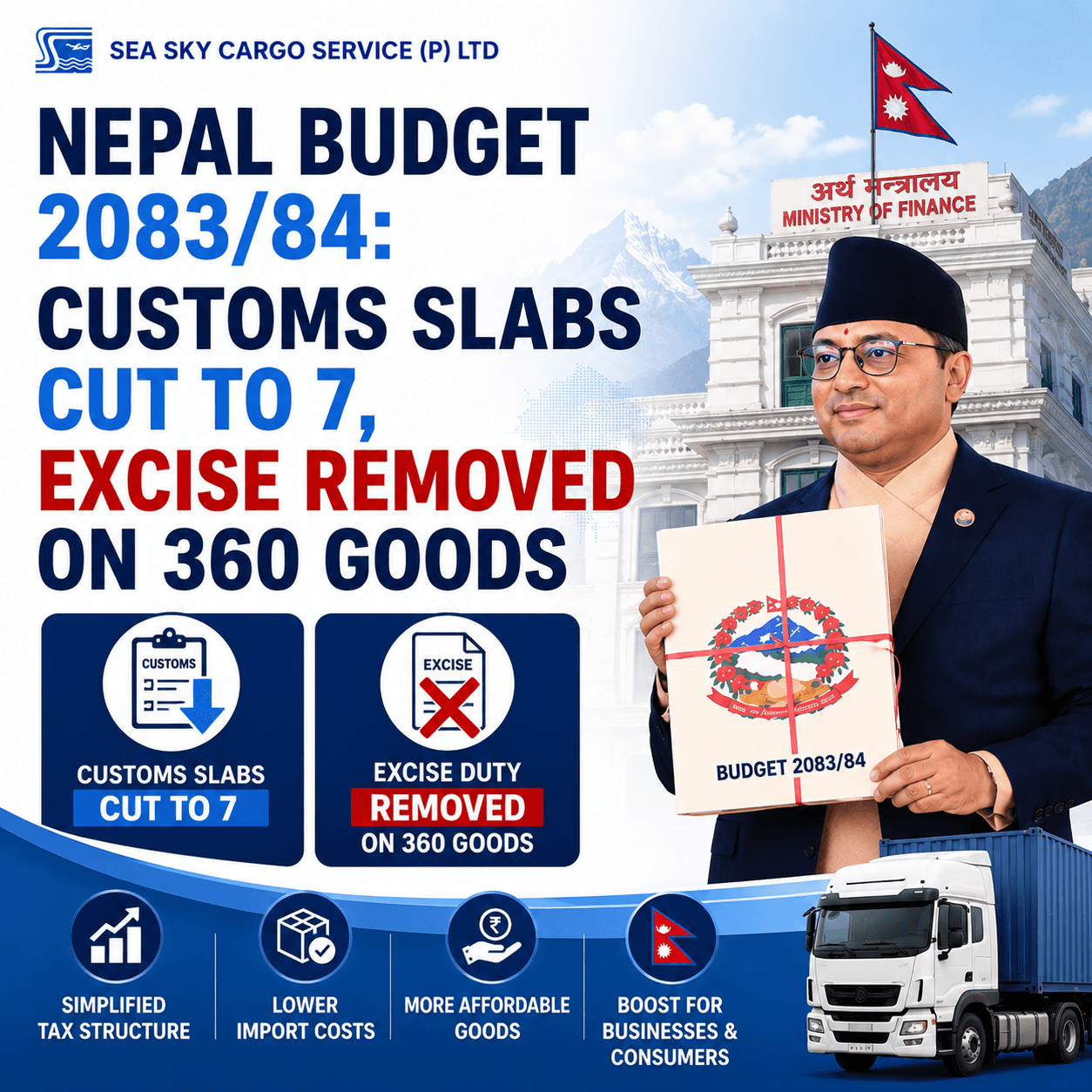
Nepal’s 2083/84 budget brings one of the biggest tax simplifications in recent years. The customs structure has been compressed from 11 tiers to 7, and excise duty has been fully abolished on 360 product categories to support domestic manufacturing and reduce business costs.
This reform is not just a technical tax update. It changes how importers, manufacturers, and consumers experience border taxation, pricing, and production cost planning across Nepal.
What changed
The biggest headline is the customs tariff simplification. Nepal has reduced its customs duty structure from 11 tariff slabs to 7, while also lowering customs rates on 273 items, especially industrial raw materials.
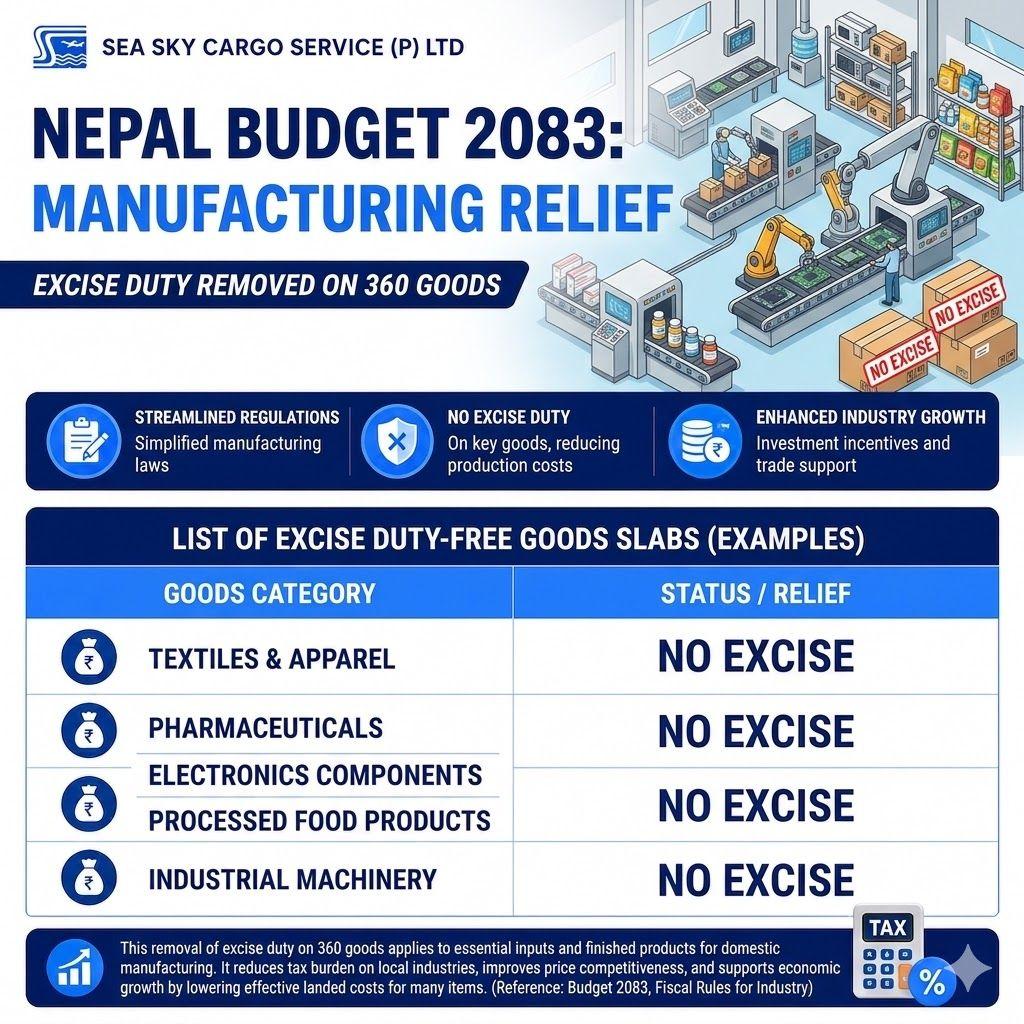
At the same time, excise duty has been abolished on 360 items. Budget coverage and official reporting agree on the scale of the change, though the item-by-item lists are tied to the Finance Bill schedules.
Why it matters
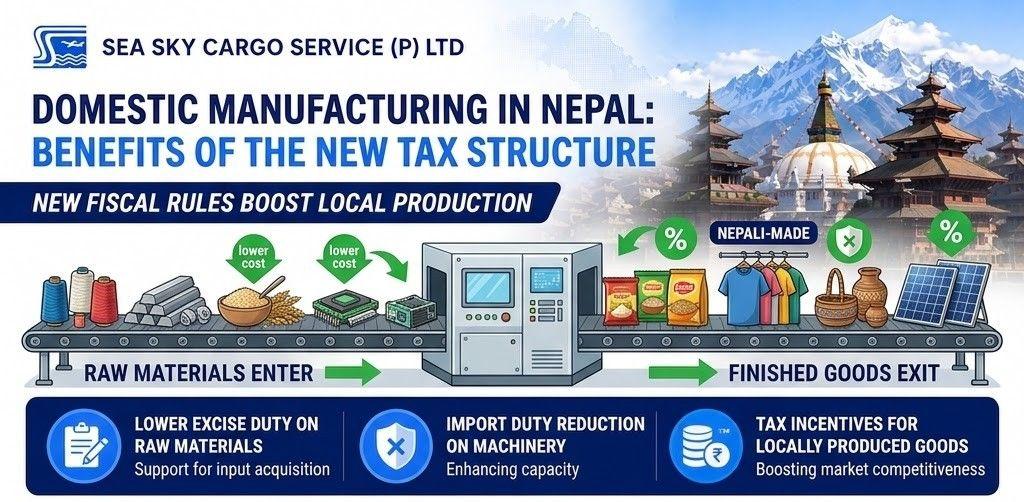
This reform is designed to support domestic manufacturing by making raw materials cheaper to import than finished goods. It also aims to lower production costs, reduce disputes at customs, and make the border tax system easier to understand.
For businesses, the practical result is a more predictable import structure. For consumers, the long-term effect may be lower prices on products made in Nepal with tax-relieved inputs.
Green tax system
The budget also replaces scattered customs-point levies such as infrastructure development tax and road maintenance fees with one unified green tax. This should make border clearance simpler because fewer separate taxes will appear on the final bill.
The full rate breakdown still depends on the product category, so businesses should check their HS codes and the final Finance Bill schedules before making pricing decisions.
Who benefits
Manufacturers are the main winners. If a company imports raw materials, processes them in Nepal, and sells the finished products locally or abroad, the lower customs and removed excise can improve margins.
Consumers may also benefit later if those savings are passed on through lower product prices. But the effect will depend on each industry, because transport, packaging, finance, and retail costs still matter too.
What stays the same
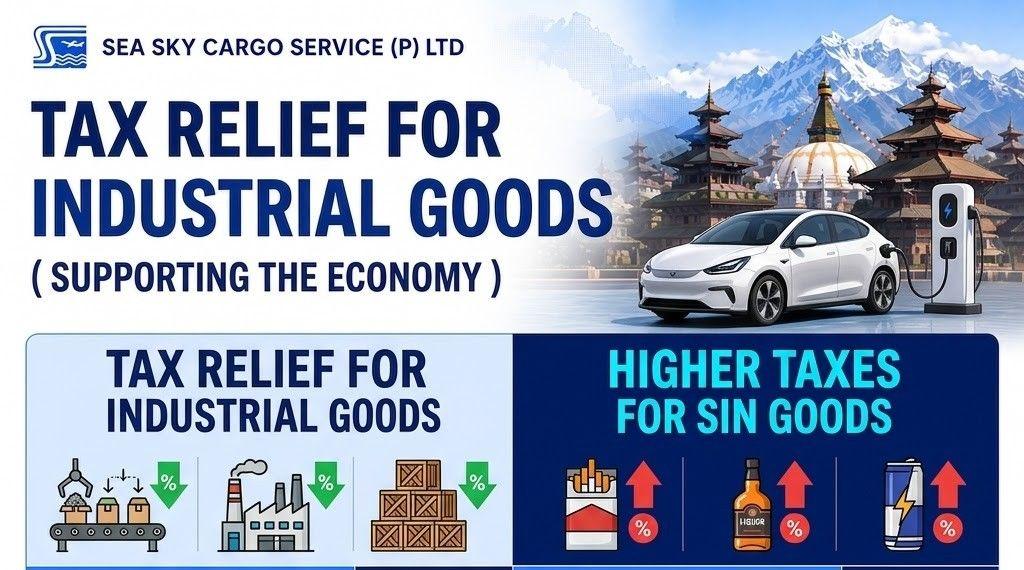
Not everything is cheaper under this budget. Excise on sin goods like alcohol, cigarettes, and tobacco has increased, so the government is clearly targeting some products for higher tax rather than giving a blanket cut to all imports.
That means businesses must check their own HS code and product type before assuming any benefit. The actual tax impact depends on whether the item is in the lower-duty list, the 360 excise-free list, or a category with higher tax.
Simple takeaway
This budget is about making Nepal’s tax system easier and more business-friendly. Customs is now simpler, excise is removed on many goods, and manufacturing inputs are cheaper to import.
In short, the government wants businesses to produce more in Nepal and spend less time dealing with complex border taxes.
If you import goods, the next step is to check your product’s HS code and see how the new 7-tier customs system affects your landed cost.
Get Quotes
Built for freight forwarders handling FCL, OOG, heavy or project cargo into Nepal and South Asia. Use it to check routes, documents, handoffs and risk points before quoting your client.